James Conroyd Martin brings to life one woman we should all know better in his multi-award-winning, epic novel, Fortune’s Child: A Novel of Empress Theodora.
Like Cleopatra, Empress Theodora was a legend in her own time. And also, like Queen Cleopatra before her, Empress Theodora’s life and accomplishments were distorted and maligned by the male historians of her own time. Even after death, men who couldn’t bear or couldn’t believe that a woman, particularly a woman of the lower classes as Theodora was, could possibly have accomplished the things she did or wield the power she had.
Fortune’s Child, the first book of a projected duology, Theodora, near death, determines to leave behind an accurate chronicle of her life and work. She’s desperate to get a step ahead of the official biography already being written by a man who hates her, everything she came from, and everything she stands for.
What’s an empress to do?
As Claudius does in Robert Graves’ landmark I, Claudius, Theodora intends to tell her own story before it is too late. A terrible cancer that will eventually claim her life significantly weakens Theodora. She lacks the strength to write the biography herself. So she commissions an old friend, the scribe, historian, and palace eunuch Stephen, to write it for her.
After all, he was there for a great deal of it. So much of it, in fact, that Theodora placed him into prison to keep him quiet about it all and has now released him to have him set the record straight.
An empress in the making.
As Theodora tells Stephen details of her past, both before they met and after, the reader experiences her hardscrabble childhood. One comes to understand that before all else, Theodora was a survivor.
Everything she did, every decision made, every hard path she took, points to a woman who wanted to survive. In the truest form of survival, Theodora wanted to make a better life for herself, and if possible, for the women who came after her.
James Conroyd Martin masterfully brings the 6th century Eastern Empire to life. From Africa to the Levant to the glittering gem of Constantinople, the reader sees the sprawling successor to the Roman Empire through the eyes of a woman whose story began at the bottom as an actress and a prostitute. Despite the humble background, the Empress determines to rise to the top by any – and every – means available to her.
Empress Theodora’s story will resonate with modern readers.
The determination to make a far better life for herself, based on her own gifts and on her own, Theodora’s proto-feminism makes her an easy character for contemporary readers to identify with as she rises to dizzying heights and unprecedented power. As she discovers loyal friends and makes desperate enemies on all sides.
The facts and figures of Martin’s masterpiece are not hidden. They are for all to uncover. Theodora’s life and accomplishments are not nearly well enough known. The adventure, the danger, the drama, and the glitter swallow readers whole into this recreation of a world that is long gone and an empress who should be better remembered.
Fortune’s Child is a brilliant historical biography rendered in full color, vibrantly animated by its author, James Conroyd Martin. Theodora’s life story is so significant, in fact, that it will take more than one volume to tell all there is to tell. And that is simply glorious.
James Conroyd Martin won the Overall Grand Prize in the 2019 CIBA Awards, the Best Book of the Year, for Fortune’s Child: A Novel of Empress Theodora.
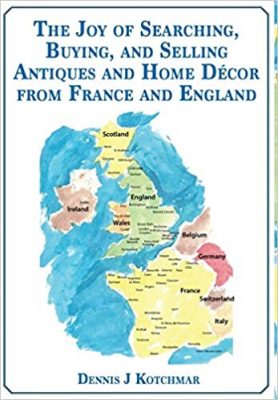
If ever a love letter could be written in the context of a solid how-to guide in the antique business, Dennis Kotchmar has done a marvelous job in The Joy of Searching, Buying and Selling Antiques and Home Décor from France and England.
Dennis recalls his beloved wife Laura and the remarkable life they shared as they traveled the world locating, buying, selling, and displaying household treasures from candles to couches to credenzas.
Dennis met Laura (now passed away) in 1971 when he was in the military, and she was an assistant elementary school principal in the Virginia Beach school system in Virginia. They shared a love for sporty cars and soon, for each other. Laura had already begun to demonstrate a zeal for collecting and selling interesting objects. With Dennis at her side, she grew this interest into a full-scale business, Chelsea Antiques. It began close to home, going to local auction sales seeking items of unusual interest. With no business experience, they took advantage of the development of Brightleaf Square, a former tobacco warehouse district converted into a charming marketplace in downtown Durham. The Kotchmars secured a space there and began building inventory.
Laura had an eye for décor and arrangement, and before long became a display artist with a fine instinct for desirable products that seemed to come naturally to her.
Her enthusiasm soon led the couple farther afield; noting that antiques and art objects from the English countryside were enjoying popularity, they made reliable contacts there and traveled to and from London where they resided at the time several times a year. From there, they began to buy and sell, remotely at first and then by on-site visits, in France. The work was a continually growing success and, as Kotchmar notes, a continual surprise. Travel could be a joy – or a problem. Laura was once stuck on a plane whose engines were attacked by a flock of birds; there were unavoidable delays for such things as airline strikes; and perhaps most memorable, ten days spent trapped in France and England, just after 9-11.
Kotchmar’s vivid color photos grace the narrative, with a stand-out being views of Monet’s garden including the famous lily pond; he and Laura were touched and amazed that ordinary folk can still visit such storied sites. His book also contains nitty-gritty details of the business, including the contacts made and lost, back roads explored, and the truly spectacular range of items to be discovered, marketed, and enhanced.
Kotchmar composed this memoir as a paean to Laura.
In doing so, he has come to appreciate her intelligence and intuition all the more. He concludes that Laura did what she loved, and working together, they created an aura of romance and adventure that few couples can even dream of. His book will be of interest to fans of antiques and the antique business, as well as to North Carolinians, who will admire the ambition and artistry of Laura Kotchmar, one of their own.
Pipelines—large industrial pipelines through which pour oil, gas, and other natural elements—are not the usual stuff that writers tackle for intelligent, sophisticated international high-stakes spy novels. But then again, most writers aren’t John Feist, whose lawyering background in, yes, global pipelines and related industries such as steel, coal, and shipping companies make him the perfect choice to turn these typically pedestrian subjects into absorbing books. His work introduces us to complex issues involving international trade at the highest level, greed, murder, and above all, the intricacies and rewards of multinational, prominent, and sometimes multiracial families.
In Doubt and Debt, lawyer Brad Oaks is now the president and CEO of California-based Elgar Steel.
He and his wife Amaya have adopted an 11-year-old Canadian girl, Kozue, whose parents died in a mass shooting in Toronto. She is a perfect fit for the Oakes, both in their mid-40s, both in business and personal relations in Japan. Amaya is the half-sister of the two sisters who own the steel company which manufactures high-grade steel pipes through which the mineral wealth of nations pours. She is half-Japanese, grew up with the racial issues of her home country, and is also best friends with Japan’s current woman premier.
In the first two books, the family-owned business was vital in developing the Wishbone Pipeline that brings water and oil from Canada to the U.S. (Any similarity to the now real-world defunct Keystone XL pipeline is purely coincidental.) That project, and the international consortium necessary to build it, involved players including Oaks, the chief architect of the complex trade pact, Japan’s prime minister, her steel-manufacturing brother, secret agents from China, a red-headed femme fatale who is also an engineering brainiac, etc.
Brad Oaks is once again the target of a murder attempt.
In this third volume, the same players face a new challenge: a proposed pipeline that would send Iranian oil money to North Korea, both blacklisted players on the international scene, and violate sanctions imposed by the United States and Japan. Brad’s life is threatened—he thinks by someone involved in the new pipeline negotiations. In other words, if he’s out of the way, then a potential block to the illicit deal disappears.
As the investigation commences, one of the Elgar sisters, June, becomes involved with a scheming, unscrupulous businessman, Bob Hager. He charms her into a business decision that puts her in debt, positioning her to potentially delivering her significant portion of the company to Hager and his greedy associates and thus wresting control of the family-owned business into the hands of absolutely the wrong people. Can there be a solution that will keep the Elgar business in the family and not subject to the business predators that want to tear it apart?
Feist pays attention to the importance of multi-cultural understanding in business.
Underlying it all, Feist delivers a multi-part dialog that runs through all three books about family, commitment, cultural differences, and ethics. Virtually every central character in the series finds him or herself conscious of the morality of their decisions, whether it be Brad’s wife’s constant tug between her new life in America and her old life in Japan, Japanese Prime Minister Yuko Kagono relationship with her steel-magnate brother Iseo, Iseo’s secret relationship with red-headed American Cynthia and his clinging to the glory of old Japan, and June’s flakiness and twin sister Sarah-Jane’s steadfastness.
The business negotiations between the various parties are of a high order, both complex and yet intriguing. They offer insights into how the Great Game between multinational companies and governments plays out, written clearly from the position of someone who has been there as a player. The multiple discussions between the characters, whether American to Japanese or American to American or Japanese to Japanese, have the ring of truth.
In parallel to all this are the intricate relations between the various characters on a personal and business basis. These are people whose lives require thinking on multiple levels, as their decisions about how they live affect them personally, socially, and globally. They live a three-dimensional chess-world life and must live up to the standards of the game.
Do yourself a favor and pick up the first two books in the series, Night Rain, Tokyo, and Blind Trust before you dive into Doubt and Debt, and find out for yourself why John Feist writes novels we love.
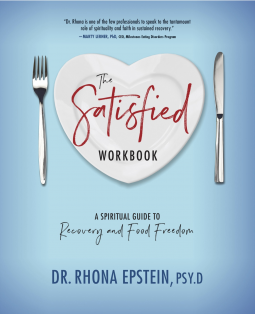
Dr. Rhona Epstein, PsyD, CAC is the leading expert on Food Addiction Recovery.
She is a therapist who has recovered from the problems she now focuses on, seeking to help those who suffer from food addiction to recognize their problem and solve it with spiritual guidance.
Epstein has based this manual around the 12 Steps, a program originally geared to alcoholism and based on Christian principles, but gradually secularized to facilitate outreach to a broader group. The 12 Steps take the addict, of whatever sort, through a series of deepening inner questions and resolutions. Initially, the addict must admit he or she has an addiction – in this case, to food and overeating, resulting in bingeing and other disorders such as bulimia. From that point, there will be a diligent search for relief, aided by faith in God’s care, and concluding with the possibility of helping others with the same problems.
Epstein has organized her book extremely carefully, each chapter considering one of the steps.
The chapters contain an initial Overview followed by Real Talk by Dr. Rhona, who speaks with two voices. As a psychologist, she recounts case studies concerning people whose problems illustrate the need for the steps. As a former food addict, she recalls her ways of dealing with, or dodging, the issues. It took her several years to conquer her overeating and related compulsions, and, as she reminds her readers, the need for diligence, or what she calls “daily housekeeping,” is a constant. For each step, she offers Recovery Questions, makes challenges, and sometimes presents multiple pages of Scriptural Meditations since her work and wisdom are heavily steeped in a Christian viewpoint. Throughout the book, she will urge her readers to give their burdens to God while also suggesting some secular solutions such as meditation and music, attendance in group therapy, and individual counseling, both professional and friend-and-family based.
The author, who has a doctorate in clinical psychology and many years of experience counseling in the field of food-related addiction, references food as both a physical poison that can lead to and perpetuate addiction and as a symbolic spiritual satisfaction when it comes, as healing, from the grace of God.
As a recovered addict, Dr. Rhona is frank about the work it may take at times to acknowledge and overcome food obsessions fully. It is precisely this perspective that gives her strategies credibility. Anyone experiencing food or other addiction problem may benefit from reading Epstein’s highly relevant work. The questions and exercises contained within the book would make an excellent tool for therapeutic workshops.
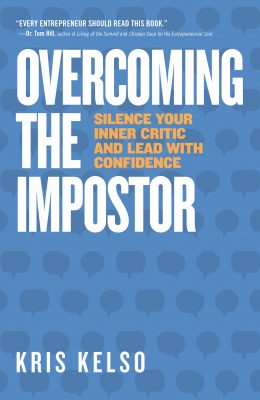
Author and entrepreneur Kris Kelso made a discovery about himself that he shares with others in his book, Overcoming The Impostor: Silence Your Inner Critique and Lead with Confidence.
The author was surprised in a first meeting at a new job to be referred to as an “expert.” It raised doubts in his mind about whether he had earned such a title, but it also forced him to do things he’d never done before and succeed in the process. But the voices in his head persisted, even as he went from accomplishment to accomplishment. His shadow, The Impostor, told him he didn’t know how to do a certain thing; moreover, he was making it up. The Impostor relentlessly mocked him, saying that just been lucky, he wasn’t a “real” businessman at all. When he learned about “Impostor Syndrome” – “a psychological pattern in which people doubt their accomplishments” – he realized that we all have an “Inner Impostor” that needs to be recognized, dealt with, and banished.
Kelso often faced “figure-it-out moments” for problems he’d never encountered before. That’s when The Impostor would creep in. But gradually, Kelso began to see that in those critical moments, hidden abilities came to light. Analyzing his past business history, he soon realized that those moments where The Impostor spoke the loudest were the most pivotal, positive steps in his career.
Soon, it became clear, challenges are often the pathways to growth.
At a meeting with new work colleagues, Kelso introduced himself and then gave a brief picture of the syndrome, and others quickly chimed in, expressing their own experience of it. He studied other people’s approaches to their Impostors, learning that even high achievers may be quite susceptible to The Impostor’s negative voice. Entrepreneurs are often beset by The Impostor’s negative messages. Instead of feeling proud of their unique abilities that lead to their successes, they often categorized their accomplishments as an anomaly.
In addition to numerous examples of the syndrome from his cohort of businesspeople, Kelso offers a ten-step process for dealing with and silencing The Impostor. First, Identify its presence; Remember that failure is part of success; Recognize that learning on the job is a strength; Avoid the trap of comparing yourself to others; Trust those who believe in you. Then act: Accept compliments, Say “I don’t know,” when appropriate, Find mentors, Be open and vulnerable, and, Share your own story. He advises focusing on one step at a time until your success becomes a habit.
Kelso’s dynamic, well-thought-out methods to revise and revitalize one’s inner self-confidence will undoubtedly be a wellspring of hope and encouragement, not just in the business world but to anyone seeking a fresh, creative approach to new projects and lifelong aspirations. Recommended!
Thirties: The Album in Portrait and Prose is a companion book to the album “Thirties” by Indie-folk singer Jill Andrews and both are very personal and poignant.
Thirties: The Album in Portrait and Prose features lush photography that illustrates the prose as any good coffee table book should. But it is more than a book of pictures and writing to add to your décor. The album was written during Jill’s transformative third decade of challenge and change, of love and loss. The book came from the feeling that there was more to tell that would “go deeper than a three-minute song” could take the singer/song writer and the listener and so the book idea was born to share the journey. There are times it feels like we are reading a personal journal as Jill struggles to come to terms with the ideals and dreams of her younger years, that in her “thirties” she would have all those things one imagines should be in place as an adult, a family, career, and a loving relationship.
The cover of both the book and the album hint at what is to come, a picture of Jill dancing, her arms around no one, but her shadow silhouette dancing with a partner.
The book starts after the birth of a new baby girl with a second partner, and the growing dark clouds of alcoholism and absence that are threatening to end this relationship. “He sleeps when it’s bright and beautiful outside, long after the baby’s first morning cry for milk.” As Jill navigates her journey through this crumbling relationship and all of the pressures of, once again, being a single mom, her joy and sadness are tangible.
Each chapter corresponds with a song on the album and lyrics are sprinkled throughout. The photographs are both glossy color and brilliant black and white, each choice enhancing the chapters they illustrate. Some of the photos harken back to a bygone era, with Jill in Vintage Riding clothes astride a beautiful horse (My Own Way) or in a 40’s style polka-dot two-piece in the river with dazzling red lipstick (River Swimming) to a haunting “evolution” photo of infant girl to Jill now (The Way to Go). Although the book is about separation and loss, readers (and listeners) will also find a deep longing and hope for the future, hope that there is still a chance for love.
Fans of Jill Andrews will find this book to be a perfect companion to the album and find the same hopefulness in the book as in her lyrics and those who pick up this book to read it may find themselves going to the “book extras” on the web page to listen to samples of the album and find a richer experience for it.
Katy Novacs is haunted, both by her past and the laughing specter that reminds her of it. When her friends bring her to Niagara-on-the-Lake in the hopes of lifting her spirits, she finds that their inn has a ghost of its own who has a tale that might save her.
Katy comes to the Niagara Inn in a mire of sorrow, fear, and trauma. Though her friends try to help her move forward with her life, to fall in love and open herself up to other people again, Katy’s stay at the inn only seems to drain her further. Both she and her friends question her sanity as she becomes certain that she’s sharing a room with the spirit of a dead woman, but when Abigail eventually reveals herself, it is to tell Katy a story that she needs to hear—that of Abigail’s life.
One hundred and fifty years ago, Abigail Kirby finds her own love in Will Bender. They cross the lines of class to be together, but Abigail’s story doesn’t end when she wins Will’s heart; there are far greater struggles, sorrows, and the dark shadows of the past waiting to fall upon her. What strings have fate wrapped around Abigail, and will Katy be able to find the message that she so desperately needs?
Abigail’s Window is threaded through with evocative descriptions. The cold and snow of Niagara-on-the-Lake surrounds the Niagara Inn, which is built up with foreboding and emotional energy that suffuses parts of the old house. Abigail’s story is even more expansive in its description, building the whole town as it was long in the past; this old picture gives the reader a strong sense of Abigail and the world that she lived in, from the small social circles of Niagara-on-the-Lake to an exploration of the far-reaching American Civil War.
Susan Lynn Solomon creates animated, complex characters whose personalities show through in everything they do and say. Katy’s emotional exhaustion is palpable on the page, shading the entire beginning of the story; her narration is intimately understandable even at its most troubled. Her experiences show a deep alienation from the people around her and draw the reader into her world which is, at least early on, truly private. Among that fear and isolation from Katy’s struggles, the story introduces a slow, powerful development of the friendship and emotional connection that Abigail and Katy share as they tell each other what they’ve both been through; their life stories carry parallels that help them understand one another while remaining distinct characters with their own voices and ways of seeing the world.
The reader learns the mysteries of Katy and Abigail at the same time the two women learn them, their stories interwoven. The pacing of Abigail’s Window is excellent. The story takes its time revealing Abigail, giving space for Katy to settle into the house and teach the reader about herself. Katy’s fear of the ghost doesn’t change to comfort all at once, but over time as Abigail becomes more and more present. Once they begin sharing, both of their stories are given the space they need to be told, to explore the feelings within them and show the reader who these characters were before they came to share a bedroom in the Niagara Inn. Those stories come together as Abigail’s Window picks up the pace for a tense and affecting climax.
Common themes connect Abigail and Katy. Abigail’s story is marked by fate, how what happened to her before could only have led to what came after, and how she tried to fight against it. Katy struggles to accept the love that’s waiting for her because of her own past. Abigail’s Window doesn’t shy away from the deep emotional pain of its characters, but the story is strung together with the idea that a true connection with someone else has the power to heal the soul, and the trust that love will survive, no matter what else.
Abigail’s Window is a touching, fascinating story of two wonderful characters, and the connection they form across a century and a half. This novel by Susan Lynn Solomon won Grand Prize in the CIBA 2019 Paranormal Awards for supernatural fiction.
Inuit of the Canadian Arctic are known for creating stone structures used as navigational points and message centers for fellow travelers. Some of these directional monuments provide a spiritual connotation meant to enrich the journey.
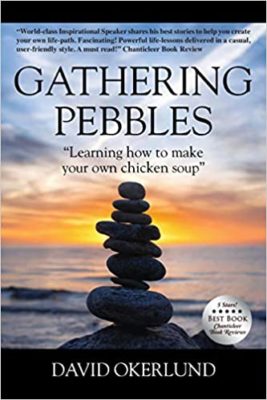
Gathering Pebbles is David Okerlund’s own “inukshuk” of sorts, a book filled with stories, recollections, and memorable life events that have become part of his personal road map for living. Okerlund, a world-class inspirational speaker, shares his best stories to help you create your own life-path. He shares this collection of nuggets in the interest of helping others along their chosen path and hoping to encourage their own “gathering” and sharing of valuable knowledge.
Okerlund directs his writing in a casual, user-friendly style. Each of the book’s chapters is highlighted as a pebble gathered on his winding life’s path. Titles are effectively posed as questions to help draw readers into the topic at hand. Each chapter is formatted with a variable mixture of contemplative quotes, poetry, recaptured historical moments, and personal experiences, to showcase qualities such as perseverance, retaining a sense of childhood wonderment, the importance of faith, and following your dreams.
Whether referencing the words of Pablo Picasso, Chuck Norris, Colin Powell, or Mario Andretti, Okerlund taps into thought from the world at large. From Presidents and self-help gurus to business moguls and religious leaders, the inclusion of such a broad range of sentiment represents a treasure trove of relatable wisdom. In a chapter on self-esteem and learning to be content with your present situation, even troubled starlet Marilyn Monroe’s ponderings ring true, “Wanting to be someone else is a waste of the person that you are.”
In a similar light, included poems, primarily authored by Okerlund, often provide a whimsical complement to a chapter’s focus. Whether the narrative rhyming verse of “A Single Arrow” that emphasizes a need to stay on target to reach our goals, or the musings of “The Child Within” suggesting we retain the charms of our childlike curiosity and resilience. The messages are clear and heartfelt. “My Legacy” proves a down-to-earth embodiment of sincere gifts like smiles, laughter, dreams, and blessings.
Okerlund weaves many of the classic and time-honored lessons amidst his storytelling.
One narrative about efforts to avoid traffic pointedly entertains a “stop and smell the roses” philosophy. Additional directives to readers include being responsible for your actions, how to approach situations with a balanced head and heart when making decisions, and realizing that failure is often a prerequisite to success. The book has an interactive appeal with questions to ponder and simple exercises to help in assessing the likes of values, priorities, and needs vs. desires in our daily lives. A touching story about an unexpected friendship between a student with down-syndrome and a star athlete focuses on the importance of little things and how simple efforts can create positive change.
While the core messages of this book may not be new, the shared information of Okerlund’s own deconstructed “inukshuk” proves an inspiring worthwhile effort to help others navigate life’s winding path. Such positivity is always a good thing.
Happy St. Patrick’s Day my dear Chanticleerians! We love all the myriad topics that this holiday brings to mind, Irish History, Mystery, Magic, Romance, and maybe a little beer!
A few fun facts about the holiday:
St Patrick’s is held on the traditional Day of Death, not St. Patrick’s Birthday
Singing happy birthday to St. Patrick is a great idea, but the actual date of his birth is unknown?
Interestingly enough, the color associated with St. Patrick used to be blue!
Why all the beer?
St. Patrick’s Day is often seen as a religious tradition, but a holiday in the middle of Lent can be a little prohibitive in terms of how it’s celebrated. So, the Church would actually lift the restriction on alcohol consumption and meat for the day, so bring on the green beer and Rueben sandwiches!
Why the clover?
The supposed history of the shamrock is that St. Patrick used the three leaves of the clover to explain the Holy Trinity when he preached.
Closer to Home
The US hosts the largest St Patrick’s Day Parade in the World in New York City, though of course that is postponed due to the pandemic. Oddly though, St. Patrick’s Day is only recognized as an official holiday in Suffolk County, Massachusetts, despite people all around the country choosing to celebrate it. However, we have declared March Irish Heritage Month since 1991.
It’s not easy being Green
Maybe skip the leprechaun outfits—no one likes to be a stereotype. Many Irish people, when they first migrated to the US during the potato famine of 1845-49, faced discrimination like most new arrivals here do to this day. They fought for both cultural and religious acceptance.
And Now!
Some of our favorite books we like to curl up with before the weather truly transitions to Spring.
Historical Fiction
To submit to one of our Historical Fiction Awards see the Chaucer Awards (pre-1750s Historical Fiction) here, the Goethe Awards (post-1750s Historical Fiction) here, and the Laramie Awards for Western Fiction here.
I’ll TAKE YOU HOME KATHLEEN by J.P. Kenna
Grand Prize Winner in the Goethe Awards
The 1800s was the age of expansion in the United States, and railroads played a major part in the efforts to move Americans and industry to the Western shores. By the 1860s, this great country, the American experiment as it was called, became engulfed in a brother versus brother bloody Civil War. As the century drew to a close in the late 1880s and early 1890s, America was still reeling from the emotional and economic damage the war had caused. J.P. Kenna uses this struggle as the backdrop for his book I’ll Take You Home Kathleen, the second in his series titled Beyond the Divide.
Kenna’s novel captures the years 1882 to 1898 with its focal point being the Irish immigrants who were seeking to escape famine, lack of land reform along with desiring religious freedom, came to America seeking a better life and more opportunity. The first wave of immigrants were seeking escape from one of the grimmest periods in Irish history–the Great Famine from 1845 to 1852. Author Kenna follows this hard-working group of immigrants who helped lead America into a post-Civil War, industrial, and economic boom that some have called the Second Industrial Revolution.
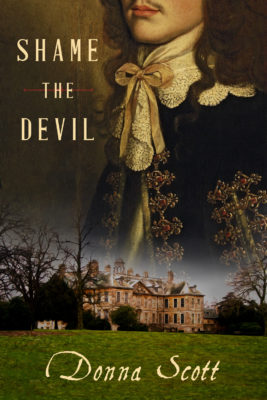
SHAME the DEVIL by Donna Scott
First Place Winner in the Chaucer Awards
Colin and Roddy Blackburne are sent into indentured servitude in England in 1643 with their father. Gavan Blackburne supported the divine right of King Charles I. Still, after the tragic death of his wife that both Colin and Roddy witnessed, he relinquishes his efforts to protect the remainder of his family.
The Blackburnes become stable hands at Appleton Hall, where the viscount’s daughter Emma quickly catches the eye of young Colin. Emma is curious about the young Scots in the stable and drags along Alston, the son of Lord Stillingfleet. The four children start a friendship that intertwines their lives forever.
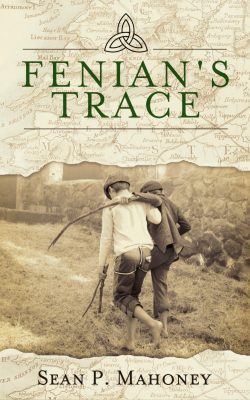
FENIAN’S TRACE by Sean P. Mahoney
First Place Winner in the Goethe Awards
Rory McCabe and Conor O’Neill are hard-working 12-year-olds, whose exploits and progress are narrated by the namesake of Clancy’s Pub who’s taken a liking to them. At times, he rewards the boys’ efforts with tales of their shared Irish heritage, its heroes and its glories. The boys have very different personalities, as Clancy discerns from their reactions to his lore. Rory is outraged as he hears of Ireland’s treatment by the British, while Conor accepts the information more quietly, studiously.
The two boys will soon meet a beautiful girl, Maria, the daughter of a well-to-do neighbor secretly aligned with a revolutionary resistance movement. Both will fall in love, but of the two, Rory will be the more open about his interest, while Conor will hold back, respectful but clearly smitten.
To submit to one of our Mystery or Thriller Fiction Awards see the Mystery & Mayhem Awards here, the Clue Awards here, and the Global Thriller Awards here.
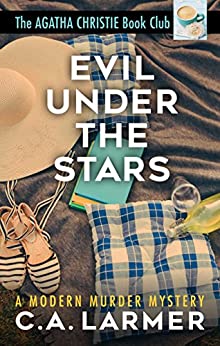
EVIL UNDER the STARS: The Agatha Christie Book Club (Book 3) by C.A. Larmer
First Place Winner in the Mystery & Mayhem Awards
Who commits a murder in a crowd of a hundred people relaxing in a park, and how did the Agatha Christie Book Club miss the entire thing from only a few feet away? In the trendy Sydney suburb of Balmain, Kat Mumford, social media interior design star, has been murdered during the inaugural Cinema Under the Stars. Her distraught husband, Eliot, is clearly the prime suspect, but at the time of Kat’s strangulation, he is nowhere near her. In fact, no one was sitting near Kat, and the crowd seems to have been so absorbed by the movie, Agatha Christie’s Evil Under Sun, that no one saw a thing out of the ordinary.
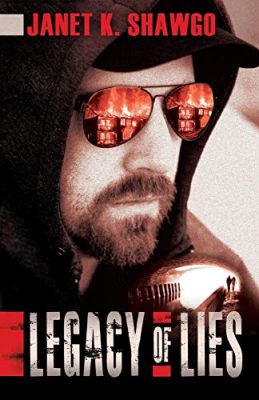
The question is not if history will catch up with you but instead, when will it attack with a vengeance. Characters with a Legacy of Lies discover they can run, but they can’t hide from past actions. When Caren Johnson sees her family and life literally explode in flames, her uncertain future falls into the hands of a mysterious Irishman. His name is Declan Malone, and he claims he’s been sent by her brother to save her from assassins determined to kill her too. How can that be when her brother’s death was reported ten years ago? Declan’s reasons for a hasty departure from Ireland appear suspect and put a target on his back too.
To submit to one of our Romance or Contemporary Fiction Awards see the Chatelaine Awards here and the Somerset Awards here.
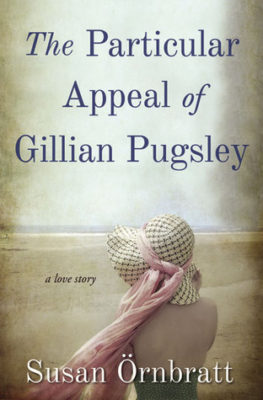
The PARTICULAR APPEAL of GILLIAN PUGSLEY by Susan Örnbratt
First Place Winner in the Chatelaine Awards
Irish-born Gillian McAllister knew she was meant for bigger things than a quiet life among her large extended family. Leaving home at seventeen against her protective father’s wishes, Gillian is looking for adventure – and that’s exactly what she finds. She was a nanny for a maharaja, a caretaker for WWII internees, and a nurse on the Isle of Man before finally becoming a wife, mother, and grandmother in London, Canada, where she spent the majority of her eighty-nine years.
However, with only weeks to live after being stricken by cancer, she knows her time with her beloved granddaughter and namesake is truly precious. Before she goes, she wants to pass on the poems that capture her long, adventurous life to the junior Gilly in hopes the girl will use the poems to write about her adventure – her hidden love story.
BLAME it on the BET (Whiskey Sisters, Book 1) by L.E. Rico
First Place Winner in the Chatelaine Awards
Twenty-six-year-old Hennessy O’Halloran should have it all. She should be enjoying her overpriced apartment in St. Paul, Minnesota, her successful legal career, and her “friends with benefits” neighbor, but in the month since her father’s sudden death, all of those things have become unimportant.
She thought she and her sisters had some time to figure out what to do with Jack’s legacy, an Irish pub he and their deceased mother built from scratch. Still, when they discover a substantial loan agreement secreted away in Jack’s belongings, they realize they only have six weeks to come up with over $100,000, money he borrowed against the business to help finance various expenses on his daughters’ behalves. She finds herself back home in Mayhem, Minnesota, living above the pub and trying desperately to find the funds to save the business.
Choileach, Chanticleer’s Irish cousin, wishes you this:
May your heart be light and happy, may your smile be big and wide, and may your pockets always have a coin or two inside!
Happy St. Patrick’s Day from Sharon & Kiffer & David and the whole Chanticleer Team!
And Remember! You can join the Chanticleer Family Anytime!
Sign up for our Newsletter here! Join our online community, The Roost, here for discounts and special offers!
Join us at our (Virtual) Chanticleer Authors Conference April 21-25, 2021. Read more about our headliners and workshops for that here!
VCAC 21 will feature Bestselling Crime Author Cathy Ace, J.D. Barker – Master of Suspense, C.C. Humphreys – Historical Fiction with a twist, Jessica Morrell – Top-tiered Developmental Editor, and more!
Check out our Editorial Services here and our Manuscript Overviews here, OR, if your work is already polished to a fine shine, it’s time to submit to our Editorial Reviews here and our Chanticleer International Book Awards (CIBAs) here!
Chris Karlsen’s new work, The Ack-Ack Girl, is the first in her World War II series, Love and War, and serves up plenty of story on both sides of that equation in its portrayal of Ava Armstrong, the “Ack-Ack” girl of the title. And what a story it is!
Bombs are dropping on London in the heat and fire of the infamous Blitz. Shells are falling, as are the buildings that surround them, while fires spring up in the wake of the bombs that never seem to end. But when they finally stop, Ava and her friends are determined to get their loved ones somewhere safe and to find a way to serve up some revenge on the Germans.
The action follows Ava as she enlists in the Auxiliary Territorial Service, the women’s branch of the British Army. She hopes to do more than just “her bit,” but to do it in one of the new ways that become available to women as the men are called to war.
Through Ava’s eyes, we experience her training as one of the “Ack-Ack Girls,” the women who crewed the anti-aircraft batteries placed on the English coasts. In her duties as a spotter, a predictor (calculator), and a gunner, Ava garners respect, pride in her accomplishments and those of her crew – both male and female. One day, love blooms between Ava and an RAF pilot. The new relationship thrills and frightens her at the same time, loving a man who has a dogfight with death every other day.
There are and will be, plenty of World War II stories.
In recent years there has been a plethora of such books featuring the contributions of women to the world-wide war effort, contributions that have frequently gone unsung until now. What makes The Ack-Ack Girl stand out above the crowd is the freshness of its voice and the world as it is seen through the perspective of its titular character.
Ava Armstrong is neither a pampered princess nor a bird in a gilded cage when the story opens. She’s respectably middle-class and has no pretensions. Ava’s doing her best to balance her love and respect for her widowed mother with her strong desire for independence and the need to make something of herself for herself.
The description of the selection and training process for the Ack-Ack crew is both fascinating and delightful because Ava is such a realist. It’s a treat to read about someone who discovers a job, learns they are good at it and is proud of their accomplishments. Nevertheless, Ava struggles over whether to marry or stay in her position where the need could not be greater. Her struggle feels authentic and, therefore, will likely resonate with 21st-century readers.
Chris Karlsen is a master at weaving pulse-pounding action scenes of battle into the heartwarming story of one woman who follows her heart and takes us with her. The Ack-Ack Girl is superb storytelling and one World War II-era novel we highly recommend.

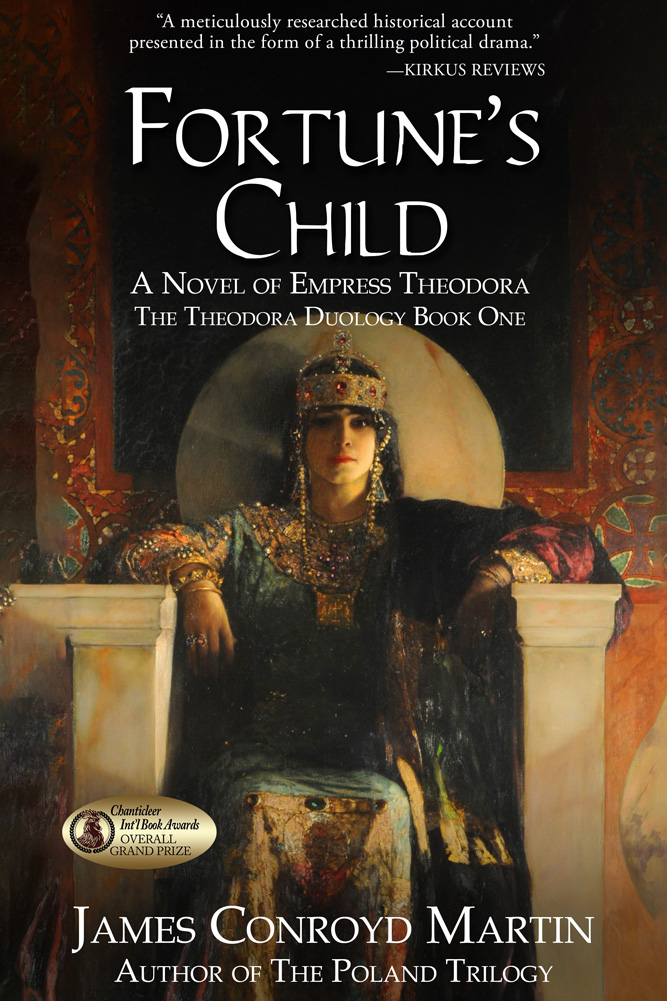
 James Conroyd Martin brings to life one woman we should all know better in his multi-award-winning, epic novel, Fortune’s Child: A Novel of Empress Theodora.

 If ever a love letter could be written in the context of a solid how-to guide in the antique business, Dennis Kotchmar has done a marvelous job in The Joy of Searching, Buying and Selling Antiques and Home Décor from France and England.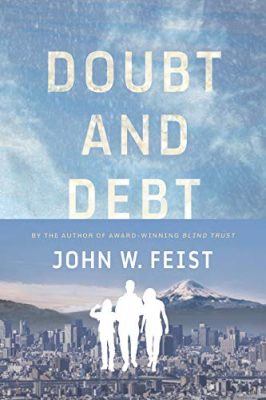


 Katy Novacs is haunted, both by her past and the laughing specter that reminds her of it. When her friends bring her to Niagara-on-the-Lake in the hopes of lifting her spirits, she finds that their inn has a ghost of its own who has a tale that might save her.