In Peggy Sullivan’s award-winning book, The Moon and Star: Lessons From a Cat, readers learn how a charming, tiny white cat finds solace in her connection with the Moon as she goes through life’s challenges and changes.
Star lives happily with a tall girl and two other cats. She runs, dances, and hunts for goldfish in a backyard pond. But this mindful cat soon realizes that life is full of unpredictable circumstances. Though she moves to a college town and has new and fun experiences, Star feels sad when she loses a feline friend, even more so when the tall girl goes off on her adventures.
Luckily Star is a cat with an attraction to the Moon. Its magical glow helps the little cat gain a sense of calm. The peacefulness Star feels stays with her, regardless of changes in her life or surroundings. Though Star and the tall girl move many more times, this sensitive cat realizes the light of the Moon offers a unique sense of serenity wherever her journey takes her.
In the first story, Midnight and Moonlight, Sullivan focuses on friendship and differences.
In this next adventure, the author shows us positive and relatable life lessons explored through the eyes of our furry friends and shares them in a gentle and entertaining format. While it can be challenging to write for a young audience and tell a well-crafted story with little words, humor, and grace, all while relating a universal message, Sullivan has the knack. Her background and experience as a mental health counselor and child advocate make for a rich and holistic reading experience.
As in all of Sullivan’s Children’s books, the images match magnificently with the story.
Here the text is easily followed, and accompanying drawings feature the colorful antics of an adorable, big blue-eyed Star. Several images of this gentle little cat pondering a quiet respite beneath the night’s starry, moonlit sky are sure to help deliver an essential message to youngsters. Ultimately the Moon serves as Star’s sanctuary and ideally reveals to readers that small moments of comfort and joy surround us if we just take the time to look.
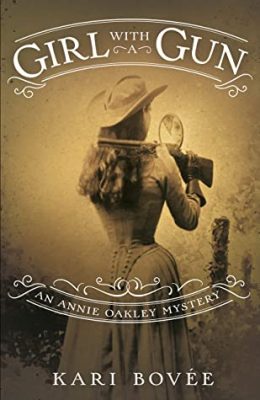
From humble beginnings in rural Ohio, fifteen-year-old Annie Oakley becomes a household name when she competes in a sharpshooting competition against the renowned marksman Frank Butler. Her life changes wildly from that day on in Kari Bovée’s mystery novel, Girl With a Gun: An Annie Oakley Mystery.
Colonel Cody, also known as Buffalo Bill, asks Annie Oakley to join the Wild West Show after the event. While reluctant to leave her family – who need her support – she can help them a lot more with an impressive salary. Annie becomes the new star of the traveling show.
Along with her beloved horse Buck, Annie settles into the Wild West Show lifestyle. She immediately befriends her tent-mate Kimi and her infant daughter Winona. When Kimi turns up dead soon after, Annie suspects that something more sinister than a tragic accident killed her. She begins investigating the matter herself when no one else will. As she looks into the murder, her horse Buck and others around the camp fall ill, and it seems like someone is trying to hurt Annie and her standing in the Wild West Show. Can she figure out who wants her gone and what happened to Kimi before the murderer can strike again?
Girl with a Gun brings readers right into its historical setting, with memorable figures like Buffalo Bill, Frank Butler, and of course the protagonist Annie Oakley. The real-life facts and chronology of Annie’s life change and move around for the sake of the story, as Kari Bovée adds to the historical fiction genre with a fun mystery series that reimagines the life of the talented sharpshooter.
Annie first appears as a loveable and relatable character, and her depth becomes clear as the story continues.
Fictional news headlines reflect the story’s events in exciting tones. These headlines add flavor to the drama and underlining mystery the characters face, and reflect the public’s opinion of the conflicts within the traveling Wild West Show.
Annie’s character defines the story around her. She cares deeply for her family and friends, and strives to protect them. Readers will get wrapped up in the trials and tribulations she faces at every turn, including a whirlwind romance.
Dr. Nerida Green travels across Australia, tending to struggling communities and connecting with her wife Mari – as well as the three spirits who Mari channels through her body, in Miki Mitayn’s climate-fiction novel The Conscious Virus: An Aedgar Wisdom Novel.
Nerida works sporadic jobs as a doctor, from the mining community of Newman to the small town of Fitzroy Crossing, and back east to a disappointing stint at a naturopathy clinic in Byron Bay. Between her working hours, Nerida speaks with M’Hoq Toq, the Native American medicine man, Bartgrinn the Celtic druid, and Aedgar, an ancient being of the Earth. Nerida asks the spirits for their opinions on topics as broad as climate change and as narrow as her personal matters, engaging them in deep conversation.
While Nerida and Mari travel, the Coronavirus makes its appearance on the world stage, and shortly after that, Australia. Nerida manages to find them a safe place to live through quarantine, but her role as a doctor weighs heavily on her as the pandemic picks up steam. She turns to the advice of her ephemeral friends, who at once soothe her heart and spark her worries.
The Conscious Virus tackles current global issues, both through Nerida’s personal experience and the wisdom of the spirits.
Climate Change hurts the vulnerable people whom Nerida cares for, and as the spirits tell her, disrupts the natural systems and energies of the planet. Covid-19 spreads amongst people who are profoundly unprepared for a pandemic, while the entities try to communicate the metaphysical nature of the pandemic.
All three spirits have distinct voices, filling their conversations with personality and the unique word-choice of people who haven’t walked the Earth in centuries. Their beliefs mesh with Nerida’s as often as they clash. She connects with them through their philosophy and deep thoughts on the world, but she struggles to understand their often very unscientific perspectives. How much of what they say is metaphorical, and how much is literal? Will Nerida side with the wisdom of the spirits or with the research and knowledge of her peers?
Between Nerida’s lengthy conversations with the spirits, she and Mari experience the beauty and difficulties of the material world. Mitayn paints Australia with beautiful descriptions, full of color and heat and smells. The world becomes tangible as Nerida walks and drives through it. Her life with Mari is a grounded and realistic one, concerned with whether the air conditioning will keep working, how they’re going to find a place to stay along their travels, and how they should treat each other to maintain a relationship of love and respect. They meet and reconnect with many interesting people, creating a collection of vignettes across their journey.
This story explores many facets of the modern world and its struggles.
The lives and work of Aboriginal people often take center stage, as Nerida – an Aboriginal woman herself – understands the unique challenges they face. Nerida, Mari, and the spirits tell an engaging and deeply thoughtful story about LGBT+ identity, racist systems, and how entire groups of people are pushed down by the interests of the rich and powerful. Mitayn takes none of these issues lightly but instead gives them the time and consideration that they deserve.
Jumping between past, present, and future, The Conscious Virus creates not just a compelling image of the modern world – but also of how the future might play out depending on whether people face their trials with wisdom and compassion – or something so pointless as greed.
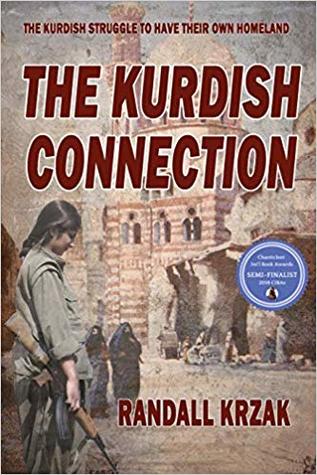
International writer Randall Krzak addresses one of the world’s saddest ongoing tragedies in The Kurdish Connection, a thriller about the plight of the Kurdish people and a desperate plan to free them from their fate.
In a world awash with refugees, perhaps no greater tragedy exists than the ongoing fate of the Kurds of the Middle East, roughly 30 million sect members spread between Iraq, Iran, Syria, and Turkey. Connected by language, religion, and history, this group has no country to call their own. The Kurds have been the subject of several attempts by international agreements to help them create a haven, the most recent in northern Iraq’s no-fly zone. Meanwhile, all four host countries have ruthlessly suppressed Kurdish hopes and dreams politically and especially militarily.
Among the most vicious suppression efforts were those of the late Iraqi dictator Saddam Hussein, who used deadly sarin nerve gas against them, most notably in the village of Halabja, in which up to 5,000 Kurds perished and another 10,000 were wounded.
The Kurdish Connection takes us deep inside that struggle.
Two young Iraqi Kurds, Dersim and Ismet, scavengers by trade and refugees from Halabja with searing memories from their youth of Saddam’s gas attack, accidentally stumble on a large cache of sarin gas canisters leftover by Saddam’s army. The pair are stunned by the possibilities of what can be done with it. They, in turn, make their finding known to a group of Kurdish mullahs who find themselves torn by the possibilities of how the weapons can be used.
Eventually, they agree that the sarin gas might help them free a powerful mullah named Muhammed Baziyan, imprisoned for many years under tight security by the Turks. The Kurds believe that this one man could be the leader to pull them together and unite them as a single voice.
Meanwhile, half a world away, a new international counterterrorism group called Bedlam assembles in Washington D.C. to explore a rumor from on-the-ground intelligence that an Iraqi sarin gas cache exists. Its goal becomes a frantic effort to locate the canisters, disable or destroy them, and stop them from falling into the wrong hands.
With few intelligence assets on the ground, Bedlam assigns their operatives to travel to Turkey, Iraq, and Syria. Using various identities such as amateur archeologists, members of MSF (Médecins Sans Frontières/Doctors without Borders), and cultural tourists, they use their limited information plus sophisticated chemical detectors to try and locate the deadly cache.
At the same time, the mullahs make plans to use the gas to disrupt Turkish military forces and other pressure tactics, including kidnapping foreigners to show the world some of the brutal tactics used by military forces against Kurds. In the most recently reported event, they want to show the world how Syrian troops viciously put down a peaceful Kurdish demonstration over bakery prices, which the Syrian government claimed was an attack instigated by the Kurds.
The mullahs’ overall plan is to instigate several near-simultaneous attacks in Turkey to draw out Turkish military forces and disguise their main effort, to free the mullah Baziyan from his well-guarded Turkish prison. Using sarin gas to kill Turkish troops seems like a good plan, but no one wishes to harm civilians. Not everyone agrees with the deployment of sarin gas.
The action is set against the exotic, fairytale-like landscape of Capadoccia, Turkey, with its soaring natural towers, and Gobekli Tepi, an archeological dig of an ancient temple built 6,000 years before Stonehenge. Equipped with sophisticated chemical detectors, built James Bond-like into their gear, the Bedlam teams ready themselves for their mission. A further refinement of Bedlam’s plans is to substitute phony sarin containers for their more dangerous counterparts.
Randall Krzak delivers an exciting cat-and-mouse game between the Bedlam team, suspicious Kurds, and equally suspicious Turkish government spies.
The Kurdish Connection soars in the detailed accounts of towns and villages, the people there, and even the weaponry and vehicles used. Readers will find themselves in the middle of the action as the Kurds successfully bomb a Turkish oil field, terrorize a soccer stadium, and stage a murderous assault on the prison where the mullah is kept. Krzak takes us into the dank caves and sewers where the Bedlam teams go to locate and sabotage the horrific sarin canisters from being used by anyone.
Above all, The Kurdish Connection offers readers a compassionate look at one of the world’s most intractable social conflicts, wrapped in the pages of a thriller that will keep readers glued to its pages until the final sentence. The Kurdish Connection is the first book in Krzak’s Bedlam series. Please read our reviews of the following books by clicking on their titles: Dangerous Alliance and Carnage in Singapore.
Not many people can capture the emotions that coincide with war, but Vicki Cody joins the ranks of those who do in her wartime memoir, Fly Safe: Letters from the Gulf War and Reflections from Back Home.
This powerful memoir shows us the behind-the-scenes lives of the women, children, and families left at home while their soldiers set off for war, bringing us close to their raw vulnerability. Fly Safe fascinates as it informs readers of what one wife experiences as her commander husband leads his battalion to the middle east.
Cody takes us back in time to the early 1990s when the first President Bush called up troops in an operation called “Desert Shield,” which turned into Desert Storm. She captures the events that led up to our first conflict in the middle east, but far from being strictly pedantic and historical, centers on the warmth, love, and fears that most of the wives were experiencing. Her letters from her husband – and her journal entries read like daily affirmations and blend well in telling this story.
The memoir shines as a first-person account of the ins-and-outs of a military family’s life during war.
Cody succeeds 99% of the time in duties that correspond to her husband’s, and she knows how to help other wives and her community. But in this memoir, we are privy to the times she falters.
We can’t be strong all the time. We can fake it – suppress, deny, and avoid our emotions – for only so long. Eventually, there is a trigger, a tipping point, and it all comes pouring out.
The reader becomes witness to the terror and fear of war, born from the first “real-time” news reporting of such a conflict. She expertly relays her first shock at seeing the footage of skirmishes on TV before her husband’s letters have reached her. It’s difficult for the contemporary reader to imagine a time before cell phones, WiFi, and constant connections. Her experience was marked by waiting for letters to arrive through the mail. Deployment into battle meant weeks of delays in postal delivery, and the not knowing would gnaw at your confidence until your mind almost breaks.
Through all the days and nights without her husband, the love story between them lies at the heart of the memoir.
Difficulties arise for most returning troops: the power struggles, the reconnection after the war, the acclimation to ordinary home life after battle – and the author does not hide these issues. What she shows us most of all is a brave man’s journey to war and a brave woman’s support and love to keep the home fires burning.
Military wives will recognize the feminine side of war shown here. The memoir is not about women going into battle in the literal sense, rather, what it is like for the wives as they navigate the real dangers of losing soulmates and the fathers of their children. Cody never loses sight of her obligations and considers them an honor to bear. In fact, her role in the war effort gives us a glimpse of how deployed troops’ wives coped.
The father’s military tradition continues as their sons grow up to follow in his footsteps.
The boys’ deployments to the middle east provide a glimpse into the role that a mother plays as her children are put in harm’s way to protect their homeland and our freedoms. Cody’s pride is evident in every word and line of this well-crafted memoir. We see it all through the eyes of the wife and mother, who relays her husband’s and son’s exploits with all the love, honor, respect, and pride that she holds in her heart.
This book is a boon to military wives and mothers whose sons go to battle for our country. It is also a boost of patriotism for those readers who do not have that connection to military life. It shows readers the raw emotions that drive the women left behind, and it does so with humor, tact, and most of all, love.
Peggy Sullivan’s Midnight and Moonlight: A Children’s Picture Book is a delightful and inspiring book about a friendship that develops between two very different four-footed felines.
Midnight and Moonlight are two well-named cats on opposite sides of the spectrum. Like night and day, Midnight is small, sleek, and black, while Moonlight is big, white, and fluffy. They first meet at a pet store, then they are taken to the same home where they quickly become friends, even though their differences are many.
Moonlight appears the quieter and more passive one; Midnight is a more active and curious type with a sweet tooth and penchant for doughnuts. When the furry pair and their human owners move to a new house, the cats settle in quite nicely, still maintaining their individuality. Midnight does make friends on the outside with an orange Tabby, but Moonlight remains his best friend.
Sullivan’s clear and concise text and whimsical illustrations work in perfect harmony to attract early readers.
While the solid and direct narrative of Midnight and Moonlight flows easily, the charming visual accents like a shared yellow food dish, a bright blue moving van, and a lime green tuna can, add a colorful and complementary touch.
With the story’s relatable message about friendships beyond differences and personal likes and dislikes, the book lends itself well for an ideal read between a parent and child, or perhaps a teacher and young students in a classroom setting. Here a fun and entertaining animal tale offers an opportunity for further discussion about unlikely friendships that can form in all walks of life, whether in the human or animal realm.
The book’s final words prove a true testament to the story’s heartfelt sentiment about friendships.
Ultimately, Sullivan’s well-crafted picture book delivers a positive, thought-provoking, and enlightening message for all ages. A message perfect for today. Midnight and Moonlight: A Children’s Picture Book by Peggy Sullivan won the CIBA Little Peeps Grand Prize for Children’s Literature – and comes highly recommended!
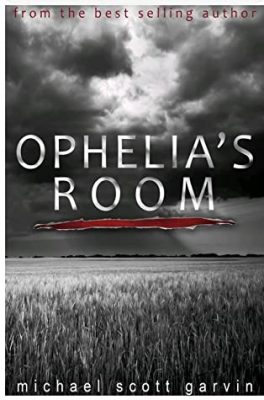
Ophelia’s Room by Michael Scott Garvin begins with a bang – and a child’s whimper.
A frantic, distraught father pounds on a bolted chapel door in a small country hospital…. A tiny, two-day-old infant cries in peril…. A deranged grandfather sees demons in every shadowy corner.
The opening scene read like something out of a young parent’s nightmare. Will their child be healthy? Will they grow up to be successful? Will the child be safe in their grandparents’ arms? Questions that any new mother and father ask themselves. In Garvin’s Ophelia’s Room, the answers are terrifying.
An ominous heaviness looms over this atmospheric psychological thriller, pulling readers along until the novel’s storm-wracked climax.
Welcome to 1969, Parsons, Kansas – a conservative backwater middle-American town skeptically views the changes in the outside world – an ongoing Vietnam conflict, a battle for civil rights, and women’s liberation – as the deviant workings of the devil infecting America.
The Mulls’ family tragedy expands well beyond the child’s monstrous murder when the townsfolk come to blame the baby’s death on her young mother, Delia. Rumors spread that the devil is living among them – and the suffering mother invited the evil entity into their town.
Ophelia’s Room burns throughout with suspense and trepidation. Michael Scott Garvin’s psychological thriller depicts the foreboding sense that a similar fate could happen to anyone – in any town, on any day. This in-depth character study slowly peels back the brittle surfaces of the novel’s cast of Parsons locals.
From one perspective, Ophelia’s Room reads like a recital of small-town life with its sense of camaraderie and community and, occasionally, petty, gossiping meanness as people move through the mundane motions of everyday living. Only in Garvin’s Parsons, Kansas, dread creeps through every turn of the page like some suspenseful Hitchcock film.
Two characters dwell in the heart of the story: the infant’s mother, Delia – and her troubled father, Lloyd Hudson – a convicted murderer imprisoned down the highway at the Kansas State Penitentiary.
As the story begins, Delia emerges from a deep trough of grief to discover that her friends and neighbors align with fear and religiosity instead of compassion. She struggles with the knowledge that her life will never be the same.
All the while, her father remains imprisoned. A compliant, God-fearing man, Lloyd preaches the gospel to his fellow inmates. But underneath his calm exterior, demons haunt him. To survive, Lloyd must take murderous steps to exorcise them. The struggle between the man’s better angels and his haunting demons lays the battle lines of this horrific tale. Pity the poor souls caught in his path.
Beware – Read with care and keep the lights on. You’ll need them!
Jessica H. Stone delivers a killer first book in her new murder mystery series, Blood on a Blue Moon: A Sheaffer Blue Mystery.
Somewhere on the line between Kinsey Milhone and Stephanie Plum, sails insurance investigator Sheaffer Blue on her sailboat Ink Spot. Probably sailing a bit closer to Plum’s chaos magnetic style than Milhone’s more professional demeanor as a fellow insurance investigator. But then, it’s the madcap nature of Plum’s investigations that makes her series so much fun – and the same is certainly true for Blue.
Blue’s job as an insurance investigator starts out as temporary as every other job she’s ever held. She’s just there to save up enough money to get her beloved Ink Spot’s back dock fees paid off. Once that happens, she will sail away to Mexico, live on part-time work, and sail as much as she wants.
Can you live on a dime in Seattle?
Even living aboard a boat in a low-rent dock slip, as Blue does, nearly breaks the bank. She needs funds to live her dream, and that’s where her current job comes in – and it very nearly takes her out.
The case starts out small. A fire on a houseboat where an elderly woman dies of smoke inhalation. Open and shut, right? Not so fast. There’s a big fish who’s pressuring Blue’s boss to solve the case pronto. He’s been eyeing the lakeshore property with plans to develop it into a playground for the wealthy. All he needs is a swift settlement and the rest of the houseboat owners gone.
Everyone wants the case solved.
Blue wants to do her job and get the boss off her back. She’s one step closer to sailing away, but the cops – or at least one cop, Detective David Chen, doesn’t believe the case is as straightforward as it appears – or as someone wants it to appear. And there are plenty of clues to make the reader’s detective hackles rise along with the cops, even if it takes Blue a bit to get there.
That’s what makes the story so fascinating, and the mystery so compelling. The more that both Blue and Detective David Chen poke into the life of the victim, and the more that the wealthy developer pokes into Blue’s boss, the more tentacles of the case begin to slither and the more the coincidences pile up.
And the more the reader is on the edge of their seat.
While the police detective brings his professional knowledge and detachment to this investigation, Blue’s style owes a lot to Stephanie Plum’s more chaotic process, or mostly lack thereof. In fact, her amateur detective status gets her into trouble – a lot of trouble. And this is what makes the novel work spectacularly.
Blue’s style of controlled chaos allows her to see things that the detective misses. Through her slapdash methods, readers understand why Shirley, the original victim, was the kind of person who fought great battles, inspired great friendships, and put herself in the crosshairs of a long-ago tragedy that resulted in her murder.
Award-winning author, Jessica H. Stone builds her characters with plenty of spark and mayhem – enough to carry an entire series. Readers looking for a female detective to follow now that Kinsey Milhone has left her alphabet unfinished, or who love the madcap and sometimes maddening methods used by Stephanie Plum and just can’t wait for her next number, will find a lot to bite their nails over in Sheaffer Blue’s first – but hopefully not last – case.
Hello Chanticleerians and we hope you are enjoying your Three Day Weekend for Labor Day!
For many of us who write, it’s a full time job on top of the day job we already have. And, as writing is a full time business, we deserve a little recognition for all the work we put in on top of any other labor we already do. Let’s look at the history of Labor Day and some stories that remind us how far we’ve come, and others that show us possibly how far we may be able to go!
First off, while Grover Cleveland officially signed Labor Day into law in 1894, people aren’t sure if it was Peter McGuire or Matthew Maguire, the cofounder of the American Federation of Labor and a secretary of the Central Labor Union respectively, who actually began the holiday. While there are more Maguires there than in the new Spiderman movie, there is no confusion on why Labor Day started. You can learn more from the Department of Labor here.
While Tobey Maguire was a great Spiderman, that’s not who were talking about here.
Labor Day is a celebration of the achievements, both social and economic, of workers in the United States. The holiday recognizes the contributions these workers make to the nation’s prosperity and well-being. Now, more than ever, it’s clear that our essential workers deserve recognition, celebration, and a thriving wage.
In describing the need for Labor Day, History.com says:
People of all ages, particularly the very poor and recent immigrants, often faced extremely unsafe working conditions, with insufficient access to fresh air, sanitary facilities and breaks.
Remembering Labor Day is a great way to remind ourselves that conditions can always be better for workers across the board.
The Ferengi Rom facing down his brother Quark and forming a union in Star Trek: Deep Space Nine’s episode “Bar Association”
When we think of the history of labor in this country, ways people can make a difference right now, and where we might be going, there’s a whole world of books that opens up to us! Here are just a few that we recommend!
Working Fiction
Infants of the Brush By A.M. Watson
A little boy is sold into an apprenticeship as a chimney sweep in eighteenth-century London, and soon learns the horrors of that profession.
Six-year-old Egan lost his father from an accident at sea, and now, may lose his little sister from illness. The only way his penniless mother can save her daughter is to sell Egan into an apprenticeship in order to purchase medicine. As a small boy, he will make an ideal “broomer;” a businessman named Armory gladly takes Egan into the fold. Under Armory’s absolute dictatorship he will sleep with other wretched boys on soot sacks, eat gruel, get bloody beatings for the slightest infraction, and risk his life almost daily.
The Selah Branch By Ted Neill
First Place Winner in Cygnus Awards
The Selah Branchcombines two surprising stories into one enthralling whole.
It begins with a ripped from the headlines feel, diving deeply into issues of race, class, poverty, and hopelessness in Selah Branch, WV. A town whose brighter future of uplift, integration, opportunity, and prosperity was wiped out one summer night in 1953 when a chemical explosion destroyed the promising university town and replaced it with a hazardous waste site. Like Chernobyl, only with a smaller footprint and chemical residue substituting for nuclear waste. But just as deadly.
The story views Selah Branch through the eyes of Kenia Dezy, an African-American public health student on a summer practicum. She’s to determine if a simple app can steer people towards healthier food choices and better health outcomes in a town empty of jobs, filled with poverty and hopelessness, marooned in the middle of a food desert.
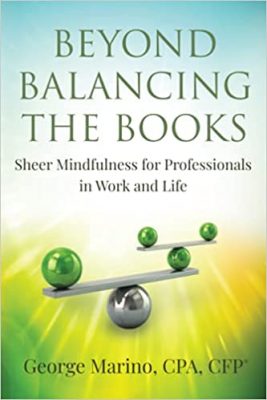
Beyond Balancing the Books By George Marino, CPA, CFP
George Marino, a practicing CPA and Mindfulness Coach, explores the possibilities for sustainable positivity in one’s work-life through mindfulness principles and practices in his new book,Beyond Balancing the Books: Sheer Mindfulness for Professionals in Work and Life.
It would be difficult to find a profession more fraught with detail, deadlines, and distress than a typical CPA. Applying to that particular realm the idea of mindful meditation is a challenge that author Marino has taken on because it is a process he has lived. He opens his book by comparing two CPAs and their approaches to life and work-life.
Thomas Wideman, the author of this dynamic self-help manual,Welfare Cheese to Fine Caviar: How to Achieve Your Dreams Despite Your Upbringing, rose from poverty and dismay to a life of security and personal achievement through techniques he shares with readers who can incorporate them into their own life plans.
Wideman came from an impoverished African American family wracked by confusion, chaos, and, at times, criminality. His mother had three sons by three fathers, and he would come to know his own father only peripherally, eventually learning that the man murdered people and subsequently died in prison. The boy grew up in tough neighborhoods and ate “welfare cheese” (a block of pre-sliced heavy American cheese that supposedly melted well). Every month, making ends meet became more and more difficult. In an early chapter of this finely woven chronology, we see him taking food from trains parked along the railroad tracks and running from the authorities. In this, as in each new chapter, he speaks of confronting severe issues and finding ways to resolve them. In the case of the theft and other childhood incidents of fighting, experiencing bullies, and battling racism, he speaks of making up his mind that “my circumstances need not be my limitation.”
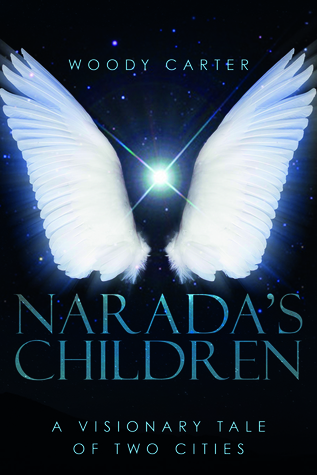
A colorful fable resonates with contrasting modalities of mysticism and social action, exploring how culture and religion can separate us or bind us together.
Narada is a traveler and a stranger when he first meets the lovely Hohete and her people in the ancient city of Ja’Usu. Given water, food, and shelter by Hohete’s family, Narada is sharply questioned by village elders who are stymied by his forthright statement that he is a representative of a deity named The Great Mystery. So they conspire to remake him as a storyteller, to reduce his power and profit from his talent for spinning yarns by selling refreshments to his audience.
Have a great story about workers and overcoming adversity?
When you’re ready,did you know that Chanticleer offers editorial services?We do and have been doing so since 2011.
Our professional editors are top-notch and are experts in the Chicago Manual of Style. They have and are working for the top publishing houses (TOR, McMillian, Thomas Mercer, Penguin Random House, Simon Schuster, etc.).
If you would like more information, we invite you to email Kiffer or Sharon at KBrown@ChantiReviews.com or SAnderson@ChantiReviews.com for more information, testimonials, and fees.
We work with a small number of exclusive clients who want to collaborate with our team of top-editors on an on-going basis.Contact us today!
Chanticleer Editorial Services also offers writing craft sessions and masterclasses. Sign up to find out where, when, and how sessions being held.
A great way to get started is with our manuscript evaluation service, with more information availablehere.
And we do editorial consultations for $75. Learn morehere.
If you’re confident in your book, consider submitting it for a Editorial Book Reviewhereor to one of our Chanticleer International Awardshere.
Also remember! Our 10th Anniversary Chanticleer Authors Conference (CAC22) will be April 7-10, 2022, where our 2021 CIBA winners will be announced. CAC22 and the CIBA Ceremonies will be hosted at the Hotel Bellwether in Beautiful Bellingham, Wash. See the latest updates here!
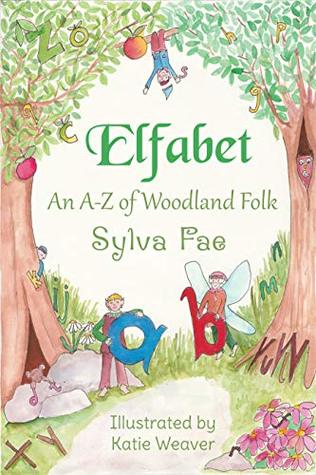
Sylva Fae helps early readers learn their alphabet with another delightful children’s book, Elfabet: An A to Z of Woodland Folk.
Little Eric, king of Ladybirds, also known as ladybugs, needs a way to learn his letters to spell many dazzling words. Little Eric uses the world of the forest folk around him as inspiration for his elfabet. Get ready to meet a whole trove of fantastical creatures from dragons to pixies, to fairies and goblins, and many more for every letter of the elfabet!
Fae’s Elfabet charms readers and fills us with love on every page. Just like in Rainbow Monsters, where readers got to learn about colors by getting to know a rainbow of monsters, Fae makes learning the alphabet fun and engaging. Everyone knows that “A” is for apple and “D” is for dog, but now readers will get to explore a whole new and fantastical world. A world where “A” still stands for apple but is collected by elves, and “D” is for fire-breathing dragons!
Both Sylva Fae and illustrator Katie Weaver dedicate this book to their children, who inspire their work.
In her illustrations, Weaver uses an array of bright colors and draws various subjects to encourage creativity in children. On each page, the drawings are within each corresponding letter, and readers will wonder and daydream about what magic lies beyond the edges of each letter. By the time children reach the end of Elfabet, they will be inspired to write and draw their own stories of the woodland folk.


 In Peggy Sullivan’s award-winning book, The Moon and Star: Lessons From a Cat, readers learn how a charming, tiny white cat finds solace in her connection with the Moon as she goes through life’s challenges and changes.





 International writer Randall Krzak addresses one of the world’s saddest ongoing tragedies in The Kurdish Connection, a thriller about the plight of the Kurdish people and a desperate plan to free them from their fate.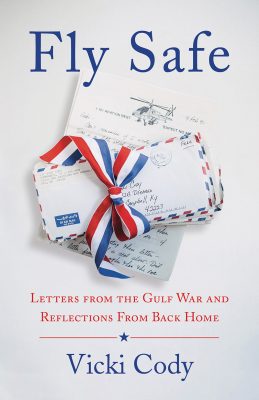

 Ophelia’s Room by Michael Scott Garvin begins with a bang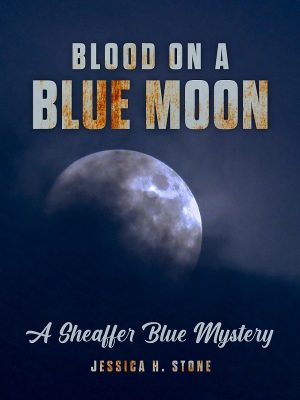






 Sylva Fae helps early readers learn their alphabet with another delightful children’s book, Elfabet: An A to Z of Woodland Folk.