Category: Reviews

  • THE MOONSTONE GIRLS by Brooke Skipstone – Young Adult, LGBTQ+ Literature, Coming of Age

    THE MOONSTONE GIRLS by Brooke Skipstone – Young Adult, LGBTQ+ Literature, Coming of Age


    In The Moonstone Girls, award-winning author Brooke Skipstone unravels a story about seventeen-year-old Tracy Franks. Tracy has a secret that in 1968 could have deadly consequences. You see, Tracy is gay.

    In her hometown of San Antonio, Tracy is forced to hide behind the “girl next door” facade, never allowing her true identity to emerge. Her only confidante is her brother, Spencer. He understands her turmoil exactly because Spencer is also gay.

    Neither teenager feels free to talk about their true feelings with their family, especially their father, Art. Art constantly scolds his son for his feminine behavior, his desire to become a pianist instead of joining the military. Though he also shows his displeasure with Tracy, she, unlike her brother, fights back, but only in the privacy of their home.

    Tracy keeps her secret from everyone–until the night she is kissed by her friend Ava at a party.

    Ava and Tracy decide their relationship is worth exploring, but the two must do so in secrecy, and Tracy decides to pass as a boy whenever she and Ava go out in public. However, their charade is soon discovered, and Tracy’s life becomes a great deal more complicated.

    Before long, Tracy will make decisions that will be life-changing and impact her entire family.

    The uplifting theme of perseverance in this coming-of-age novel is a treasure. Tracy’s astounding bravery comes from wisdom beyond her seventeen years. She wields immense courage against every challenge, even though she sometimes doubts her abilities.

    When Tracy can no longer play on the girls’ basketball team, she immediately plans to join the boys. Despite her frequent and painful injuries, she overcomes and, more importantly, never complains. She refuses to allow the stereotypical beliefs about the mental and physical limitations of her gender stop her dreams and ambitions.

    Later, when Tracy plans a solo trip to Alaska, she buckles down and does what she must to reach her destination, a destination that also shapes who she truly is.

    This emotional flexibility strengthens her character. Tracy “goes with the flow,” never allowing obstacles to remain obstacles. She chooses instead to make these stumbling blocks into life lessons that pair nicely with her already indestructible self-will.

    Tracy and Spencer’s relationship juxtaposes them, in heartwarming and heartbreaking ways.

    The two have much in common, but their differences become even more defining. Tracy stays strong under their father’s cruelty. At eighteen, the older of the two, has aspirations of Juilliard. Playing is the only time he feels secure and accomplished.

    Their father’s harsh criticism weighs heavily on Spencer in a way only a parent’s disappointment can. To please his father, he must deny his self. Unlike his formidable sister, Spencer cares about his father’s approval. He will go to extreme lengths to chase Art’s blessing. He might even disregard his dreams and give up his chance at real love to please a man who refuses to acknowledge reality.

    Though Tracy admits feeling awkward in her own skin, she never allows that to impede her desires. Especially when her father pushes her toward a lifestyle she can never maintain.

    The Moonstone Girls reveals the innumerable difficulties faced by young gay people, male and female, in our society today – and in the past. By witnessing these two young people – so diverse in their coping mechanisms – allows readers to understand more deeply the struggles towards authenticity that many in the LGBTQ+ community share.



    Chanticleer Book Reviews 4 star silver foil book sticker

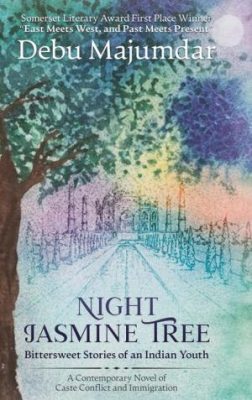
  • NIGHT JASMINE TREE by Debu Majumdar – Asian American Literature, Multi-Cultural and Interracial, Multi-Cultural Romance

    NIGHT JASMINE TREE by Debu Majumdar – Asian American Literature, Multi-Cultural and Interracial, Multi-Cultural Romance


    Somerset Blue and Gold First Place Badge


    Shankar, a recently retired professor of physics, and his wife, Durga, have left Michigan to resettle on Long Island with their son’s family in Debu Majumdar’s award-winning novel, Night Jasmine Tree.

    While the migration from the Midwest to the East Coast is a small one, considering both characters moved from India decades before, the move spurs Shankar to ponder the life he left behind and to reassess his relationship with his sisters and parents.

    In India, there are many different cultures, the main sprouting from the Hindu faith and political structure, the caste system.

    In the West, we may be familiar with this caste system, we mostly are all aware of the ‘untouchables.’ However, what we may not understand, is how rigid the caste systems truly are. Durga and Shankar are not from the same caste. Shankar is Brahmin, his wife is of a lower caste. This difference is enough for Shankar’s family to reject her outright and disown him.

    The pain he sustains by their rigid beliefs hurts him deeply, and that pain sustained years of estrangement. Now, however, a letter from his sister causes him to reassess his own role in the dissolution of his family even as he enjoys spending time with his son, daughter-in-law, and young grandchildren.

    Carefully organized, the novel is arranged into five parts with the chapters designating a time and place.

    Since the plot occurs on two continents, this framework is helpful to the reader. The author adroitly dovetails the past and present by having Shankar share stories of his own childhood with his grandchildren. And what stories they are! Sweet and funny, often involving animals, and the children are riveted by their grandfather’s tales of a childhood spent in India. Shankar was a good student but not above getting into mischief or naively causing trouble. India comes alive for the children as they hear about an encounter with a tiger, the annual celebration involving kite fights, and a haunting but hilarious ghost story. The reader turns the pages as eagerly as the children beg to hear another story.

    Consideration of Shankar’s past also involves his having grown up in a household in which the ancient traditions of Hinduism are sacred duties, and any failure to adhere to them is a moral failing.

    It is difficult for Shankar to come of age wanting to do what makes him happy but feeling tremendous fear that he won’t live up to his father’s exacting standards. Will he become a “tejya putra,” a son who is rejected by his own father? There’s no worse fate for a Brahmin male. And, yet, shouldn’t his father love him simply because children deserve love, and not because Shankar will one day perform the essential funeral rites for his parents?

    Regardless of how affectionate and attentive Shankar’s mother is toward him, he knows that she will always defer to her husband. She will let him dictate the terms of his sisters’ marriages, and she will never allow Shankar to disobey his father. The classic tension between duty and desire is artfully and affectingly rendered. All readers will be able to relate to the hold the past has on us. And like us, until Shankar resolves old animosities with his family, he’ll never indeed be free.

    The author is a master craftsman of descriptive writing, especially when contemplating natural settings.

    Debu Majumdar deepens characterization by connecting Shankar’s interior and exterior worlds. While contemplating existence through his main character’s eyes, the author gives us a work of lush and searing beauty, wondrously told with compassion, empathy, and truth. Night Jasmine Tree is a highly recommended reading for all.

    Night Jasmine Tree won 1st Place in the 2018 CIBAs in the Somerset Awards for Literary Fiction.


    Somerset Literary and Contemporary Chanticleer International Book Awards 1st Place Winner oval Gold Foil sticker

    Chanticleer Book Reviews 5 Star Best Book silver foil sticker


  • BEHIND the MASK by Dana Ridenour – Terrorism Thrillers, Police Procedurals, Women’s Crime Fiction

    BEHIND the MASK by Dana Ridenour – Terrorism Thrillers, Police Procedurals, Women’s Crime Fiction


    Blue and Gold Clue 1st place badgeLike a high wire performer working without a net, Dana Ridenour’s captivating and provocative yarn, Behind the Mask, carefully treads that fine line between fact and fiction and does it with aplomb.  

    Between the covers of this contemporary, detective thriller, is a well-crafted plot revealing alarming aspects of animal enterprise practices, and militant animal rights advocacy. Set in Los Angeles, it is peopled with believable, engaging characters, and taps into sights, smells, and flavors unique to that area.

    When 29-year-old, FBI Special Agent Alexis Montgomery, or Lexie, as she prefers to be called, reaches LA, she has one goal in mind—to make her bones. A fledgling undercover operator, newly trained and on her first assignment, she must infiltrate a militant ALF cell and ensure its terrorist members are brought to justice.

    In her assumed identity as a vegan, animal-rights extremist, who drives a battered Volkswagen bug, and lives in a modest Venice Beach apartment, Lexie ingratiates herself with local activists. Over time, an unanticipated friendship with Savannah Riley, whom she meets at a vociferous demonstration, helps her nail it. Just as her FBI mentor predicted, she fits right in with those crazy vegans.

    Savannah, raised in a traditional southern family, declined The Citadel, in South Carolina,  in favor of SoCal, with one goal in mind— to exchange the same old, dull routine of Pawley’s Island, South Carolina, for the mystery and exhilaration of California life. In school, studying for a career in the film industry, her roommate introduces her to the world of animal rights activism. Meeting Lexie, a kindred spirit from the south is an unexpected plus.

    As members of the local, militant cell, Lexie and Savannah learn hard lessons. After a night watchman dies in a liberate and destroy operation at the UCLA animal lab, their lives are changed forever.

    During their ensuing months under the California sun, Savannah loses her love, her trust, her innocence, and comes close to losing her freedom; Lexie emerges from the dark side a wiser woman, tempered and honed, with deeper understandings of herself and the human condition.

    Ridenour’s realistic portrayal of opposing worldviews, replete with tangible danger, and intense, fanatical emotion, in Behind the Mask challenges the status quo. It is a novel of the here and now. Its well-drawn characters, complex plot, and true-to-life setting will resonate with the reader long after the book is finished.

    Behind the Mask by Dana Ridenour won 1st Place in Category in the 2016 CIBAs in the CLUE division for Thrillers and Suspense novels.

    Clue CIBA First Place Winners gold foil sticker image

    Chanticleer Book Reviews 5 Star Best Book silver foil sticker


  • Waking Up Lost: The Adirondack Spirit Series Book 4 by David Fitz-Gerald – Historical Fantasy, Native American Fiction, Coming of Age

    Waking Up Lost: The Adirondack Spirit Series Book 4 by David Fitz-Gerald – Historical Fantasy, Native American Fiction, Coming of Age

    Seventeen-year-old Noah Munch craves acceptance more than anything in David Fitz-Gerald’s coming of age novel, Waking Up Lost.

    As a biracial boy growing up in a small village in upper New York, Noah doesn’t feel that he belongs to either part of his heritage. Having lost his Native American father before he was born, Noah has spent his short life trying to connect with that missing part of himself. Meanwhile, he has to keep the peace with the Wilmington villagers who find his native side offensive. Noah also protects a family secret. His mother, Mehitable, speaks with spirits and his brother, Moses, has an uncanny ability to predict disaster and show up with inhuman speed to prevent it.

    As a result of his complex home life, Noah spends a great deal of time alone. He dreams of someday being a mountain man, living off his wits and the nature around him. However, Noah can’t stop himself from admiring Arminda, the prettiest girl in town. He doubts he will ever have a chance to court the blonde beauty, especially considering the meanest young man in town, Erastus Moss, has spoken for her.

    Erastus, whose grandparents died at the hands of Native Americans on a journey out West, begins to harass Noah when he notices Noah’s interest in Arminda.

    Noah endures taunts, feeling the burden of prejudice and simultaneously the inadequacy of being the only “normal” member of his family until the night he wakes up on top of a mountain.

    He begins to experience strange episodes, which he believes are sleepwalking fits. One night appears inside the home of his beloved Arminda. Once the town discovers his odd behavior, suspicion and fear turn even more people against him, and Erastus uses it as an excuse to escalate his torture. Can Noah stop the crazed man and find a way to control his abilities before it’s too late?

    The fourth installment of the Adirondack Spirit Series revolves around Noah’s coming of age.

    In true bildungsroman style, Noah embarks on both a physical and spiritual journey. He suffers the distance between himself and other boys, including his twenty-year-old brother. Noah, small, scrawny, and by his own admission, doesn’t have the physical presence that others expect of a boy his age. Though often the most handsome boy in Wilmington, Noah’s dark hair and olive skin set him apart in his racist town.

    However, Noah never knew his father’s people, so he has nobody other than his white neighbors to socialize with. He can’t see himself as anything other than a clumsy daydreamer who will never fit in, driving him to live alone in the mountains as his father had done years ago. Noah yearns to connect to the father he resembles, but when he isolates himself, nature and man conspire to bring him right back to the town he hates.

    He finds no solace in his mother and brother, even as they assure him that he possesses great power.

    Even amongst his family, Noah doesn’t fit. He despairs his ordinary nature with a mother who guides spirits to the afterlife and brother with inhuman speed. If he could rely on a secret talent, he could tolerate his neighbors’ prejudice. But when he does develop an unexplainable ability, it proves nightmarish and deadly. Noah never knows when it will happen or, more importantly, where it will take him. Ironically, this strange power becomes paramount in discovering the very purpose he longs to find.

    Faith and trust in God frame Noah’s life.

    Noah often relies on his faith to carry him through the unbelievably tricky situations in his life. In pain, he turns to prayer for comfort and reassurance, and later when he commits a crime (albeit justified), he only frees himself of the burden when he seeks absolution from God. Though his episodes sometimes prove horrific, Noah realizes his power borders on the miraculous.

    He searches for God’s plan for his life even while questioning how he will know it when he sees it. When Noah hits his lowest point, fearing for his life, he feels the “warmth” of God physically and hears His message that Noah isn’t alone. Noah becomes God’s servant, and he begins to understand that he must become what God expects, not what he wants.

    The supernatural elements in the story set it apart from the typical novel of this genre, creating a hybrid between historical and paranormal.

    The family members’ unusual abilities heighten their outsider status. Mehitable raised her biracial sons in a town of hate and prejudice for seventeen years. Though she does have a few staunch supporters, these people can’t always keep the wolves at bay. She and her sons suffer from the racism so prolific during the 1800s in America. Compounding her pariah-like treatment, she speaks to spirits and must keep her gifts secret for fear of further mistreatment. Moses must also keep his powers hidden. Noah suffers for his gift. Though he has no control over its occurrence, the townspeople practically exile him, leaving the young man to find a way to bridge this chasm between himself and others.

    Chanticleer Book Reviews 4 star silver foil book sticker

  • REMEDY for a BROKEN ANGEL by Toni Ann Johnson – Latino American Literature, Black and African American Urban Fiction, Mothers and Children Fiction

    REMEDY for a BROKEN ANGEL by Toni Ann Johnson – Latino American Literature, Black and African American Urban Fiction, Mothers and Children Fiction

    Remedy for a Broken Angel by Toni Ann Johnson is an intense examination of the troubled personal histories of two beautiful and talented women of color.

    Their stories are told in alternating chapters which reveal the mother’s and her daughter’s attempts to reclaim and understand their broken pasts. Each chapter is a revelation into the pain and damage caused by unknown family secrets. Both women struggle with a legacy of shame and self-blame for the price they’re paying for never hearing the truth. Each must learn the lessons found in past years of failure to communicate.

    The beautiful mother, Serena, is a successful Bermudian jazz singer and songwriter who is consumed by anger over feeling unloved as a child. Years later, her hurt and confusion over being abandoned by her family cause her to repeat the past by leaving her own marriage and abandoning her twelve-year-old daughter.

    Artie, Serena’s lovely daughter, is an excellent photographer who constantly battles with the same destructive demons of abandonment, loss, shame, and betrayal as does her mother. She finds herself at age twenty-six in a psychiatric hospital in Malibu, California. There, she receives caring support from her psychiatrist, Dr. Phoebe Ligon, in trying to understand her rage and need for revenge against Serena.

    Serena’s and Artie’s struggles through the years are a deep, painful journey as they each must try to learn to forgive the other. Somehow, they must bridge the chasm of mutual feelings of betrayal caused by misconceptions, falsehoods, and many lost years with no communication.

    Remedy for a Broken Angel is an extraordinary novel about digging out from years of suppression to find forgiveness and to forgive. Johnson writes with authority about the world in which the characters in her novel live as they endure an endless struggle for the truth. She deftly exposes the many faces of patterns of abuse and how the “unseen hand” perpetuates and feeds the demons within in this literary work of contemporary women’s fiction from Nortia Press.

    Remedy for a Broken Angel by Toni Ann Johnson was nominated for a 2015 NAACP Image Award for Outstanding Literary Work by a Debut Author. She won the 2015 International Latino Book Award for Most Inspirational Fiction and is a winner of a Humanitas Prize for promoting human dignity for her screenplay, Ruby Bridges. Johnson’s professional experience in dance, music, film and stage production lends authenticity to the sonorous background and subtext of the work. As you read Remedy for a Broken Angel, you might just hear the strains of jazz composer Charles Mingus’ music seeping throughout Johnson’s novel in its refrains and riffs of the complications of relationships.

    5 Stars! Best Book Chanticleer Book Reviews

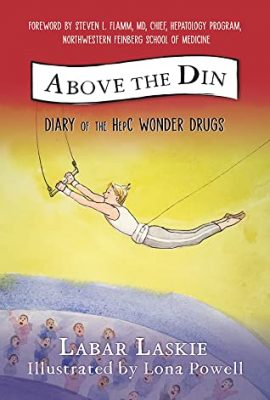
  • ABOVE THE DIN (Diary of the HepC Wonder Drugs) by Labar Laskie – Memoir, Hepatitis C Cure, Insightful and Transformative Non-Fiction

    ABOVE THE DIN (Diary of the HepC Wonder Drugs) by Labar Laskie – Memoir, Hepatitis C Cure, Insightful and Transformative Non-Fiction


    Labar Laskie closely explores the experience of chronic HepC in her unique memoir, Above the Din.

    These days, Hepatitis C infection is curable with a simple treatment that lasts only a few months. In 1999, when author Labar Laskie receives her diagnosis, she sees no good option. The only possibility for a cure lies in a treatment with dismally low success rates and poses a significant danger. Not wanting to jeopardize her life, Labar embarks on a fifteen-year-long search for an alternative cure, hoping to find a wonder drug. Her waiting ends in 2014 when she begins her three-month-long treatment of two pills daily while keeping a journal of each day’s progress.

    She goes through a string of doctors, many urging her to do the toxic treatment.

    Labar tries every alternative treatment under the sun, but only if they don’t pose any known adverse effects. Eventually, she meets Dr. Right, who supports her choice to pursue other treatments. They work together on her care for over a decade. During this time, Labar and her young daughter become hooked on flying trapeze. The activity helps her manage the mental strain of her chronic illness. These precious moments with her daughter make the journey to recovery doable.

    Above the Din‘s short, easy-to-read chapters come accompanied with illustrations by Lona Powell.

    Humor and honesty abound in this story despite the grim topic of severe chronic disease. Labar’s years of research and connecting with people like her provide valuable insight and knowledge. Beyond that, she does an excellent job of including disclaimers about not being a medical professional herself and for people to do their own research. Her purpose for writing this story is to help others find strength, hope, and inspiration.

    As Labar’s story progresses, the past and present intermingle.

    Her early days dealing with shock and fear juxtapose her abundant present-day knowledge and wonder drug treatment. The best example of this comes in the chapter where Labar learns the extent of her liver disease. The treatment is working. This takes the uncertainty of the end of her Hepatitis C story away and enables her to focus on the journey itself.

    Something positive comes out of her Hepatitis C diagnosis: through trapeze, Labar learns to overcome her fears and stand up for herself instead of just going along with the opinions of others to keep the peace. Hopefully, Hepatitis C will be outdated one day, but these critical lessons Labar learns along the way are universal.


    5 Star Best Book Chanticleer Reviews round silver sticker


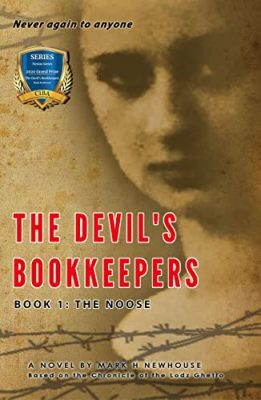
  • The DEVIL’s BOOKKEEPERS: Book 1: The Noose by Mark H. Newhouse – Jewish Historical Fiction, Jewish Holocaust Fiction, Jewish Literature

    The DEVIL’s BOOKKEEPERS: Book 1: The Noose by Mark H. Newhouse – Jewish Historical Fiction, Jewish Holocaust Fiction, Jewish Literature


    CIBA Grand Prize Series Badge

    Mark H. Newhouse has created an intense, harrowing, story of love and loyalty surrounding life within the Lodz Ghetto in Poland, established to control a sizeable portion of the Jewish population under Nazi domination in the first book in the series, The Devil’s Bookkeepers: The Noose.

    The author’s viewpoint is focused through the lens of Bernard Ostrowski, an engineer who will join three other men chosen for their related skills to report on daily happenings in the ghetto while secretly codifying incidents that the Nazis would not have wished to have recorded. Ostrowski and his cohort – the distinguished but embittered Oskar Rosenfeld, a noted Zionist, Julian Cukier, a journalist, and Oscar Singer, the youngest of the crew and the most impulsive. As Ostrowski opines privately, “Two Jews are a debate. Three, an argument. Four? A war.” Yet the four will co-exist, all trying in their separate ways to fulfill their assignment and please their highly controversial boss, Chaim Rumkowski.

    Rumkowski was the real overseer of the Lodz Ghetto.

    Some hated him since the people under his sway were starving and dying in disproportionately high numbers even as he commanded them to work for the German cause in German-run industries. Others, like Ostrowski and his companions, did their best to obey him despite many strong reservations, seeing him as the only hope, if faint, for their people’s survival. In their workday, the four men would learn of ever-increasing horrors taking place in the home where they’d been consigned. From very young people shot by German police or Jewish police under Nazi dominance to more people brought in by the thousand when all within the ghetto barely survived, strange, disturbing rumors arose about urns of Jewish ashes being sent to relatives in the ghetto from the concentration camp at Buchenwald.

    Ostrowski has other palpable worries as the story evolves in the chaos around him.

    His young wife Miriam wants a baby, and her pregnancy makes their deprivations even more distressing. Though they love one another, she is suspicious, as are many in the ghetto, of Rumkowski and his motivations. As her husband willingly works for and accedes to Rumkowski’s wishes, a line between them grows. In his role as “the engineer,” Ostrowski believes he is helping to keep his co-workers more concentrated on hard realities from an objective, constructive viewpoint. Miriam’s criticism torments him. Singer secretly suggests to Ostrowski that he take Miriam, their new daughter Regina and flee the ghetto. As the “noose” tightens, this begins to seem like the only realistic plan. But carrying it out would risk their three lives.

    An award-winning writer and educator, Newhouse was born in Germany, the child of Holocaust survivors.

    Gifted by his mother with a considerable narration entitled The Chronicle of the Lodz Ghetto (translated and edited by Lucjan Dobroszycki, Yale University Press, 1984) and seeing that his parents had had a personal attachment to the account, he read it, and within a short time, he had begun this trilogy, of which The Noose is Part One.

    Much of the Chronicle was composed by unknown scribes. Newhouse decided on a fictional treatment speaking for its many authors and encompassing its vital, often horrific, truths. His wide-reaching story of conditions in and feelings about the Lodz Ghetto is educated and realistic. Newhouse deftly combines historical fact with a vibrant portrait of high-minded human beings caught in the trap of being “chosen” – but for what? – and trying their best to fulfill religious and family expectations while suspecting their efforts will all be in vain.

    The Devil’s Bookkeeper series won the CIBA 2020 Grand Prize for Series.


    Chanticleer Book Reviews 5 Star Best Book silver foil sticker


  • OH DADDY CHRONICLES: The Tasting by Barry Robbins – Political Satire, Political Humor, Political and Popular Culture Lampoon

    OH DADDY CHRONICLES: The Tasting by Barry Robbins – Political Satire, Political Humor, Political and Popular Culture Lampoon


    For those of you who still have heartburn from the last administration, Barry Robbins, sharp-as-a-whip satirist, has come to our rescue with his new short work lampooning Donald J. Trump, #45, in his uproarious short story, Oh Daddy Chronicles – The Tasting.

    This book draws from two earlier books, Oh Daddy Chronicles and Oh Daddy Chronicles 2: Return of Covfefe. These enlightening and downright hysterical parodies place readers squarely in the Oval Office and at Mar-a-Lago, respectively.

    Oh Daddy Chronicles: The Tasting samples each previous book plus some new material. They come together in a hands-down, laugh-out-loud lampooning of #45 – and everyone else in sight. From Ivanka to Jared, Vladimir to White House staffers, Robbins pulls no punches and hits his target every time. Even Elizabeth Warren and Bernie Sanders are fair game along with Fauci and the Cheneys.

    Robbins sees the funny everywhere, and thanks to him, so do we.

    With episode titles like Hydroxy and Me, Billy Bob and Bobbie Sue, Cheneys vs. Trumps, to name a few, Robbins gives readers material in which we can frame those years and put them in a manageable perspective. We learn how much #45 hates the color blue – and why. Readers also learn why his special relationship with the Russian dictator may be more worrisome than any of us previously thought, and oh so much more.

    Robbins’ unique and engaging short work will no doubt drive readers to the first two books.

    Another way Robbins engages his readers is via a poll. Readers get to choose which answer they like best from a number of possibilities given by political figures mentioned in the book to the question of, “Why did the chicken cross the road?” Simply brilliant.


    5 Stars! Best Book Chanticleer Book Reviews sticker

  • The CRYSTAL SKULL: A Sentinel 10 Novel by Daniela Valenti – Thriller and Suspense Action Fiction, Romantic Action/Adventure, Psychic Thriller

    The CRYSTAL SKULL: A Sentinel 10 Novel by Daniela Valenti – Thriller and Suspense Action Fiction, Romantic Action/Adventure, Psychic Thriller


    Med student Amanda Griffith can see the supernatural world in Daniela Valenti’s supernatural thriller, The Crystal Skull: A Sentinel 10 Novel.

    Over a year ago, Amanda joined a secret group of people with similar gifts, becoming a Sentinel 10. They fight the evil that normal humans can’t see. As a Sentinel 10, she strikes fear in entities seeking to harm her world. With the support of her fiancé James, a fellow Sentinel, Amanda has defeated every challenge – until now.

    Someone or something kills lower-level Sentinels around the globe, draining them of their powers and their lives.

    Wrongly accused herself, Amanda debates whether she wants to help the Committee. However, when the entity attacks her and her mentor, Basil, Amanda knows she has to fight. She finds an unlikely ally who bears a striking resemblance to her dead fiancé, Alain. He makes Amanda question her feelings for her current fiancé.

    With her emotions in tatters, Amanda has to protect her best friend, Lydia, a Sentinel 4, when she becomes the next victim. Uncertain whether or not she can win and doubted by those she cares for most, Amanda decides to take the fight to the one responsible. But will she be enough to save humanity?

    The relationship between Amanda and James presents a strange duality, fraught and uncertain.

    James, a war veteran with his share of emotional scars, has an innate need to protect. His physical strength belies a significant emotional weakness. The ravages of war in the Middle East have left behind a neediness that far outstrips his prowess.

    He often projects this neediness onto Amanda and disguises his over-protectiveness as love. James wants a wife raising his children at home, not saving lives in the hospital or with her psychic power. He becomes upset when she saves him, threatening the traditional male-female roles.

    Amanda, though not physically potent, wields abilities incomparable to any other Sentinel.

    Though she has doubts at times, Amanda possesses a mental confidence in her power. She knows her role in the group and her duty to the world. However, she still needs to feel loved and comforted. She needs that from James even if he can never give her exactly what she desires.

    With a shared loss of their first fiancés, Amanda and James understand loss in a way most couples do not. They both know that their current love can never reach that of first loves. For a time, the relationship between the two creates its own balance. The two lovers metaphorically complete each other, not soulmates – never that – but the “next-best” thing.

    Betrayal becomes a major theme in Amanda’s story.

    At every turn, Amanda feels that harsh sting. Her initial betrayal begins in the first novel of the series with the death of her fiancé, Alain. Alain and Amanda shared a unique, eternal love. He was the first man to show he loved and needed her, and his loss causes a resonating pain.

    The darkness within Alain takes him from Amanda when he takes his own life. Her soul-deep love suffers, and throughout this novel, she continues to feel it.

    When she reunites with a resurrected Alain, she again endures betrayal at his refusal to acknowledge her. He denies any memories of their life together and physically pushes her away. This resurgence of love for a dead man makes her feel as though she betrayed James, an arguably worthier partner than Alain had ever been.

    She spends her days trying to force away a love that cannot be.

    Worse yet, Amanda’s feelings of betrayal extend beyond her love life. When the monster attacks the Sentinels, Amanda becomes a possible suspect. Despite Amanda’s shock and disgust, her beloved mentor Basil does not defend her. In the short time that Amanda has been a Sentinel, Basil has become a father figure to her.

    His lack of protection when others attack her integrity makes Amanda question her own loyalty to the Committee and its goals.

    After she clears her name, Amanda’s fellow Sentinels betray her with lack of trust in her ability. Even James doesn’t think she can defeat the creature who attacked them. The Committee’s twenty-four-hour deadline doesn’t bolster confidence in the others. Only Amanda knows that she can defeat this evil and overcome this betrayal.


    5 Star Best Book Chanticleer Reviews round silver sticker


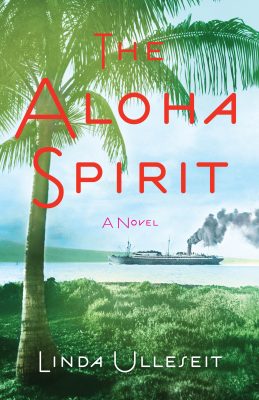
  • THE ALOHA SPIRIT by Linda Ulleseit – Hawaiian Cultural Fiction, World War II Historical Fiction, Women’s Divorce Fiction

    THE ALOHA SPIRIT by Linda Ulleseit – Hawaiian Cultural Fiction, World War II Historical Fiction, Women’s Divorce Fiction


    A blue and gold badge for the 2020 Grand Prize Winner for Goethe Post-1750s The Aloha Spirit by Linda Ulleseit

    In Linda Ulleseit’s novel The Aloha Spirit, we meet the plucky heroine, Dolores, as her father leaves her.

    “Dolores’s father deemed her useless when she was seven. Neither he nor her older brother, Pablo, ever said that, but every detail of their leaving told her so. Papa had tried to explain the Hawaiian custom of hānai to her. All she understood was the giving away, leaving her to live with a family not her own.”

    Her story starts in 1922; the place, multiethnic, multilingual Hawaii. Papa, a sugar cane cutter from Spain who worked in Hawaii, decides to take his son Pablo with him to seek his fortune in California. His wife died five years earlier. He leaves 7-year-old Dolores with a large family on Oahu in an arrangement called hānai, an informal adoption. Dolores doesn’t know the family well. She feels abandoned, with no idea when or if her father will send for her or return.

    There follow years of drudgery in which she works as an adult, laundering clothes for many people at least six days a week as part of her hānai arrangement. The hard-working couple she lives with struggles to survive. Befriended by Maria, an older hānai girl, Dolores escapes her situation when Maria leaves to marry Peter. Dolores goes to live with them, to help Maria through her pregnancy, and for a while, she gets to share their happy family and have some things of her own.

    At age 16, Dolores marries Manolo Medeiros, a boy she met on the beach and barely knows.

    She becomes part of his large, extended Portuguese family, which includes Alberto, a nephew four years younger than Dolores. She hopes the Medeiroses will be the family she always wished for. When she met him on the beach, Manolo gave his interpretation of the aloha spirit: “Aloha begins with love.”… “Love yourself first.”… “Love the land.”… “Love the people.”… “Aloha is the joyous sharing of life’s energy.”

    Dolores has her first child at age 17. But Manolo’s serious drinking problem, anger, and physical abuse of Dolores estranges him from her and the family, forcing her to take more control of her own life and protect her daughters. As Manolo’s behavior worsens, Alberto steps up to support Dolores, and they fall in love. But as part of a devout Catholic family, Dolores can’t possibly divorce Manolo.

    Novelist Ulleseit gives us a vivid picture of the life of a hard-working Hawaiian woman and her community in the early decades of the 20th century.

    Anyone interested in the history of Hawaii or in women’s history will enjoy this book. This book centers on abuse, overwork, and alcoholism as major themes, described in a matter-of-fact way. Dolores lives through interesting times, including the bombing of Pearl Harbor and the United States’ entry into the war, rationing, and the removal of Japanese Americans from Hawaii. Dolores goes to California and visits the World’s Fair, so we get to see the fair through her eyes. A glossary at the end of the book provides translations and a pronunciation guide for the many Hawaiian and Spanish words.

    Linda Ulleseit was born and raised in Saratoga, California, and taught elementary school in San José. In addition to The Aloha Spirit, she wrote Under the Almond Trees, another historical novel, which takes place in California starting in 1896. She has also written a series of Flying Horse books, young adult fantasy books set in medieval Wales. She has an MFA in writing from Lindenwood University, serves as marketing chair of Women Writing the West, and is a founding member of Paper Lantern Writers.

    Linda Ulleseit’s The Aloha Spirit won Grand Prize in the 2020 CIBA Goethe Book Awards for post-1750s Historical Novels.

    5 Star Best Book Chanticleer Reviews round silver sticker