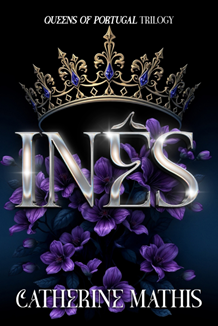
 Inspired by a true story, Catherine Mathis’s incredible novel, Inês: The Queens of Portugal Trilogy, follows the forbidden love of Ines de Castro and Infante Pedro, and their indelible connection to one another even after a most tragic death.
Alfonso, the rightful heir to the Portuguese throne in Chao da Feira Palace in Santarem, nearly loses his crown to his stepbrother. Goncalves, a courtier, rescues the situation, earning him the king’s undying loyalty. Alfonso puts his son Pedro under Goncalve’s care to learn the moral code and values of the royal court. As the heir to the Portuguese throne and an only child, his father arranges a royal union for him with Infanta Constanza, a Castilian noblewoman.
Love, however, does not conform to alliances or compromise. The arrival of 15-year-old Ines de Castro of Castile in 1339, a lady-in-waiting to Infanta Constanza, creates a precarious rift between a father and his son. Pedro falls madly in love with Ines despite being already married to Constanza. He begins an affair that displeases the king and fuels palace gossip among the nobles. Fearing for the independence of his nation and possible revolts, King Alfonso is forced to take drastic measures that fan power struggles, betrayal, dishonor, and even death.
Catherine Mathis takes a blazingly smart and deep dive into an era of history that still resonates today.
With rich, robust, and evenly matched characters, she offers a historically accurate plot that is voyeuristic in all the right ways. Being fictionalized, in part, there is a lot to relish in the author’s creative craft, such as the introduction of minor characters who propel the plot into a sweeping conclusion. Plunging readers into the royal heart of a love story that has shaped history, Inês: The Queens of Portugal Trilogy is sublimely sensual with a captivating sense of charm.
Although it has a well-trodden conflict alongside it, this romance between a royal heir and a lady-in-waiting will gratify readers. Mathis excels through an abundance of tense and evocative dialogue, balancing it with the right amount of lively banter. The result is a tour de force that is surefooted and rich in human emotion.
The book’s details are brilliant and perceptible, whether they are used to describe the culture, sounds, attitudes, or smells of 14th-century Portugal.
The text’s most imperative scenes, within the palace walls, exude the intrigues of an institution that influences every sphere of society.
Inês: The Queens of Portugal Trilogy is a compact tale of love, loss, vengeance, and justice, delivering a swift kick to the heart. Exquisitely researched and told at a rapid pace, Mathis’s debut offering is a sweep of grace and virtuosity in its genre.



 Norah Lally’s upper middle grade novel Back to Bainbridge sees unstable family life through the eyes of thirteen-year-old Vicki Hanlon. The story opens as her single mother has just lost another boyfriend, and the family is being evicted from their house in upstate New York.

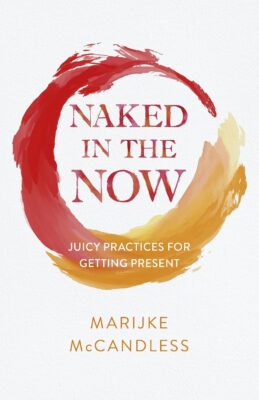
 Naked in the Now: Juicy Practices for Getting Present by Marijke McCandless is a spiritual and psychological journey for restless minds to find authenticity, awareness, and how to be fully alive—an intimate quest and relational bridge between oneself and others.


 John DeDakis’s Enemies Domestic explores the pain, conflict, and intrigue behind the glitzy corridors of power, exploring with striking honesty and emotional depth the delicate battle between truth and artifice.