Category: Reviews

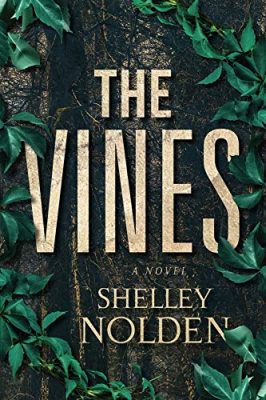
  • THE VINES by Shelley Nolden – Medical Mystery, Suspense, Historical Fiction


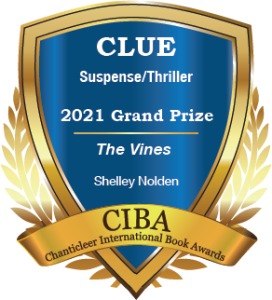
    Clue Grand Prize Badge for The Vines by Shelley Nolden

    Shelley Nolden’s debut novel, The Vines, embraces multiple genres as it chills, fascinates, and horrifies, from historical and magical realism to fantasy and horror.

    Nolden has melded fanaticism, medical anomalies, and the frailties of human behavior together with a historic setting, creating a narrative Kudzu vine that grows rapidly and spares nothing in its path. This particular vine consists of two main branches that intertwine, bridging time and linking parallel realities, one past, one present.

    The Gettler men of Long Island, New York have shepherded a secret medical research project for generations, with the exception of Finn, the youngest man in the family.

    Beginning with Otto, Finn’s great-grandfather, who worked at the Riverside Hospital on North Brother Island at the turn of the 20th century, this family has been consumed by unanswered medical questions about universal conditions that impact the human race.

    Years after Otto’s death, the Riverside Hospital was ultimately closed, leaving North Brother abandoned, subject to the ravages of rats, birds, and vines. However, Finn’s father and grandfather secretly continued Otto’s research at the now crumbling, empty medical facility.

    Although aware of their secret research, Finn had always been excluded from the details, despite his curiosity. What exactly were they doing? And why?

    In 2007, the 28-year-old Finn clandestinely crosses the East River to North Brother. Instead of learning about his family’s secret research, he encounters an unfriendly, mysterious woman, her body scarred from previous physical abuse, yet fit and strong, bathing in one of the abandoned buildings.

    More than a century ago in February 1903, Coraline McSorley, Cora to most, is infected with typhus and quarantined at Riverside Hospital, New York City’s most notorious pesthouse.

    The ensuing story skips back and forth in time, slowly revealing itself through flashbacks, real-time, and places in between. As it grows, The Vines becomes more engaging. Nolden utilizes historical people, places, and events associated with North Brother Island to create a story in which Cora, along with the island itself, are sympathetic characters irrevocably tied to a family whose fanatical, convoluted curiosities dominate every aspect of their lives.

    Several chapters into the book, the hook is set deep, pulling the reader in close and holding them there.

    The Vines offers readers a mystery to be unraveled, connecting dots back and forth in time as the pace and action increase. Rather than ending with a conclusive resolution, The Vines leaves questions for the reader to ponder, matching the curiosity of the story’s characters.

    Readers pulled into this mystery will be glad to find another baited hook dangling just beyond the gateway to the future, as Nolden suggests a sequel is in the works.

    The Vines by Shelley Nolden won Grand Prize in the 2021 CIBA CLUE Awards for Suspense and Thriller Mysteries.


    5 Stars! Best Book Chanticleer Book Reviews

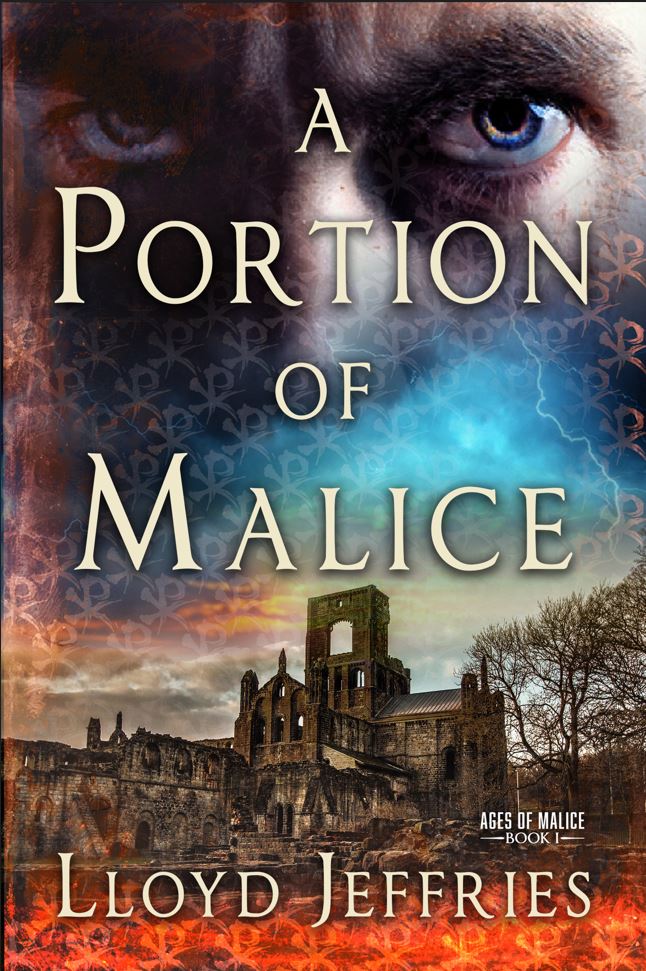
  • A PORTION OF MALICE by Lloyd Jeffries – Paranormal, Christian Thriller, Action, Suspense


    God visits a punishment of immortality on three men in Lloyd Jeffries’ A Portion of Malice, the first in the Ages of Malice series. The leader of these immortals, Cain the first murderer, seeks to even the scales by taking all of God’s children away from Him.

    In the modern day, Emery, a renowned journalist fallen on personal tragedy, was planning suicide before the immortal Roman Longinus found him. Longinus brings him to meet Thaddeus Drake, a man with the uncanny ability to make peace between warring nations. Drake reveals himself to be the biblical Cain and offers Emery all the money and luxury he could ever need if he simply tells Cain’s story. Emery agrees, and upon seeing the terrible mark on Cain’s hand, can’t deny the truth of his immortality.

    Cain and Longinus introduce Emery to their fellow immortal, Igneus. While Emery learns more about these strange men and how Jesus rejected Cain’s begging for forgiveness, earning his eternal rage, he becomes pulled into their far-reaching conspiracy. Cain and his companions long ago formed the secret organization X’Chasei, and over two millennia have become the undisputed masters of the world. However, Cain is not content with this power alone, and as he begins to enact the prophecies of Revelations, Emery realizes how dangerous these people truly are.

    The plots of X’Chasei catch Emery in a whirlwind of power, implication, and scripture.

    While Cain holds a deep hatred for God, he also understands Him far better than anyone else could; he has walked with God, has heard His voice, and knows the true extent of His word. John the Apostle was also made immortal, given a sacred task by Jesus, and in retribution, Cain exiled him to Patmos and stole a record of divine visions given to John. Cain remains a mysterious figure throughout the story, keeping Emery guessing as to his true plans, and whether there could be any way to stop him.

    Longinus and Igneus serve Cain’s plot, though both Emery and the reader only get to see the final, disconnected steps of it. This story becomes a mystery of biblical proportions, with disparate plotlines winding together for the climax.

    Even as he orchestrates murder and revolts to get his way, Cain remains a sympathetic character. His companions share that humanity, making a fascinating cast of villains.

    For millennia, Cain wandered the Earth as a vagabond, unable to settle in any one place, with the guilt of his brother’s death hanging around his neck. Even so, he sought forgiveness from the son of God. When he’s rebuked, the reader sees the extent of his despair, his suffering, and even some truth to his claim that “God prefers blood.” His fury mingles with a deep longing, a loneliness that defines him. While, two thousand years later, he rejects the idea of God’s forgiveness, he desperately wishes to make amends to his brother Abel.

    While Longinus enjoys his place of power over the mortals of this world, he cows to Cain, showing a hint of vulnerability even as he kills for the sake of X’Chasei. However, Igneus is the only one of them who truly connects with Emery. Smaller and prone to fear, Igneus has spent his eternity dwelling on the cruelty he’s surrounded by and finds a kindred spirit in this mortal man brought into their circle.

    Author Lloyd Jeffries offers beautiful and painful descriptions of both the modern world and biblical times.

    The characters’ emotions become palpable, and they speak to each other with weight behind their words. The climax could have delivered more completely on the themes of Cain’s story, but A Portion of Malice holds a strong tension that will keep readers excited to follow all of these people – mortal and immortal – to the next part of this imaginative series.

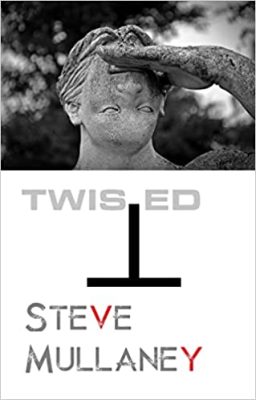
  • TWISTED by Steve Mullaney – Psychological Thriller, Internet Crime, Horror


    In Twisted, Steve Mullaney gives readers a tale of fear, cruelty, and perversion, involving those who lurk in the darkest corners of the internet.

    Readers are first introduced to Derek, a man who roofies women in order to record his sexual activities with them for profit on the dark web. He runs a complete operation to peddle his illegal media, including ways to cover his identity and launder the money as well as maximize his profits through technical skills and better equipment to up his production quality.

    Meanwhile, Ned, a philandering family man, gets an offer to work remotely for three weeks each month away from his family. At his new job, he gives in to temptation and starts a romantic relationship with a woman named Gina. This relationship will lead him to cross paths with Derek, and become entwined in his horrific world.

    Mullaney explores themes of depravity and assault, and the consequences of such activities through the eyes of both victims and offenders. Readers walk through the systems of rationalization that even the vilest characters assemble to justify their actions.

    Ned, the character who holds the point of view for most of the story, starts as a narcissist who cares for no one but himself. His self-centered ways are put to the test when their consequences fester to the point where he must deal with them whether he wants to or not.

    Mullaney does a great job painting a grim picture of how business in the dark web functions, as well as providing believable details of how a man can hide the fact that he has a family and kids in another state while dating single women. At times, the details can feel gratuitous, but they add a strong sense of realism that heightens the horror aspect of this story.

    Overall, Twisted will give readers a feeling of grime, leaving them to wonder if and how characters like Ned will pay for their actions.

    Anyone looking for a trip along the darker wires of the web will find just that in the pages of Twisted. Mullaney has penned a delightfully ‘twisted’ thriller with serious bite that will drive readers page by page to the end.

  • AFTER The RISING And BEFORE The FALL by Orna Ross – Historical Fiction, Irish Civil War, Family Saga


    Goethe 2021 Grand Prize Winner Badge for After the Rising by Orna RossAward-winning Irish author Orna Ross has created a volume comprising the first two novels of The Irish Trilogy, drawing from her Irish birth and upbringing for a special grasp of the country’s history, how its wars and political strivings have affected its people directly, personally, over multiple generations.

    Her two books take on a span of time rooted in the early 1920s and delve deeply into the interlocking fate of the extended family and ancestry of Jo Devereux. Jo, the book’s central narrator, leaves Ireland in her twenties, only returning in her forties in 1995 when she learns that her mother is near death.

    The journey back will draw her into the family’s complex relationships, and reacquaint her with Rory, her former, and perhaps only, true love.

    Reading through old family papers, Jo will find out more about her mother, her grandmother, and some of the men from her past. These family secrets are compelling and often painful, driving Jo to discover more, eventually uncovering a murder with people she knew and cared for possibly at its center.

    Underpinning the drama among her closest and most cherished people is her growing understanding of her home country. Ireland’s war for independence from England has always found most emphasis in its popular lore, but the far-less publicized conflict that followed, the Civil War, may have killed more people than the one that preceded it and lingers even today in bitter memory.

    Jo will have to absorb all of these revelations about her forebears while she copes with the ever-changing modern culture in her new home of San Francisco.

    The insider’s gaze at 1960s gay culture and feminism are significant sidebars in both past and present portions of Ross’s vibrant and varied narrative. The book ends with Jo contemplating her future, with some crucial questions yet unanswered, begging a sequel.

    Ross is a highly practiced wordsmith; this series has already garnered recognition, awards, and the attention of the media.

    She is able to mix, match and contrast evocative elements of romance, warfare, women’s rights, men’s feelings, historical nuance, and human-scale humor (especially highlighting that aspect of the Irish conversational flow), all in their appropriate historical niches, developed deftly to keep her story in full motion. This is a book for dedicated readers of any age or clime and will have them waiting attentively for the final installment.

    After the Rising by Orna Ross won Grand Prize in the 2021 CIBA Goethe Awards for post-1750s Historical Fiction.


    5 Stars! Best Book Chanticleer Book Reviews

  • IN The UNDERWOOD by Kourtney Spadoni – Graphic Novels, Mental Health, Coming of Age Memoirs


    In the Underwood by Kourtney Spadoni is a memoir in graphic novel form, a thoughtful and gentle story about a young girl struggling with mental health issues, and learning how to keep them at bay as she grows up.

    What if Alice’s adventures in the strange and fabulous Wonderland were the result of a mental health crisis instead of a story? In the Underwood draws metaphors inspired by Alice’s Adventures in Wonderland by Lewis Carroll and evokes the mood of Robert Frost’s classic poem “Stopping by Woods on a Snowy Evening.”

    Author Spadoni relates with a simple narrative and delicate art style how as a child she was prone to severe bouts of anxiety, leading to her crying uncontrollably in her classes and avoiding other children in social situations.

    She describes episodes in which she withdraws and attempts to hide within herself. A cat, in Wonderland and in real life, appears and acts as an occasional guide through the fantasy land, where a mad queen in red tells her over and over again that she’s not good enough, that she’s weak, before she eventually learns to stand up to the queen.

    Ultimately, she manages to tell herself that despite her fears, “it’s not the end of the world.” This phrase becomes her personal talisman. Through her ups and downs, she steps forward and through the darkness before coming out on the other side, addressing her fears and eventually conquering them.

    In the long run, Spadoni comes out of her shell, gains friends, develops a group with whom to share similar interests, and learns how to control and deal with the anxiety that overwhelmed her when she was younger.

    However, later on, depression comes for a visit, and she has to step up for another fight—a fight she is now better equipped to win.

    The art and coloring of In the Underwood match the mood of the work, and like the Frost poem, they conjure the depth and even the darkness and stillness of the night. The words themselves seem to swirl in a mist, sometimes vivid and sometimes faint, reflecting the author’s mind, both when it’s at its lowest and darkest and when it’s at its strongest.

    Kourtney Spadoni’s tale about battling mental illness as a youngster, told in vibrant graphic novel form, is a winning combination and should be a go-to for young people in crisis.

    In the Underwood by Kourtney Spadoni won First Place in the 2021 CIBA Shorts Awards in the Graphic Stories category.

    5 Stars! Best Book Chanticleer Book Reviews

  • SEEING GLORY: A Novel of Family Strife, Faith & the American Civil War by Bruce Gardner- Christian Historical Fiction, Civil War, American Slavery

    Seeing Glory by Bruce Gardner is a sweeping, thought-provoking Christian historical novel of the American Civil War. The novel portrays the critical roles of family ties and religious faith in shaping personal attitudes and actions towards the horrors of slavery and the war itself.

    Spanning the era from the famous abolitionist John Brown’s Pottawatomie Massacre in 1856 through the end of the war nine years later, Seeing Glory focuses on the gut-wrenching conflicts over slavery and the southern way of life faced by David, Emma, and Catherine Hodge, fictional siblings, raised on a wealthy plantation in Virginia.

    David returns home from a prestigious northern college filled with radical new perspectives. He challenges his father’s and his southern church’s assurances that the Bible says slavery is approved by God. When David calls out the truth as he now sees it, he ignites a firestorm that tears him away from his family at the beginning of the Civil War, sparking huge changes in their individual destinies. Soon after meeting Abel Bowman—an ardent abolitionist and follower of John Brown—David moves north to Ohio and becomes an embedded war reporter with Abel’s Union army regiment. Mutual zeal for the abolitionist cause abounds, but will it help or hinder the two men’s endurance of horrific battlefield violence and scandalous personal accusation?

    Devastated by David’s departure from the plantation, his younger sister Emma is torn between the realities of slavery and her Christian faith. Unable to bear the cruelty that she sees her family’s slaves being subjected to, Emma flees north with her maidservant Sallie, one seeking freedom, the other seeking purpose.

    Meanwhile, the elder Hodge daughter, Catherine, strives to be the perfect southern plantation mistress after her mother’s death.  After marrying a Confederate officer, she is forced to manage both her ailing father’s and her 0wn plantation once her husband is off to war. The pressure of her siblings’ abandonment weighs on her as the war creeps closer, threatening to destroy everything she’s worked for.

    Christian beliefs were a big part of the historical abolitionist movement. In Seeing Glory, each of the Hodge siblings and Abel Bowman face their own personal issues of faith, privilege, and forgiveness. It is through the lens of faith that these engaging characters discover their unique paths for surviving the war and supporting the abolition of slavery in the United States. On their journeys, they become involved in many historical events, interacting with famous people like Frederick Douglass, Abraham Lincoln, and Angelina Grimké—a former plantation daughter from South Carolina who eventually became a nationally known abolitionist, journalist, teacher, and women’s rights advocate.

    Although Seeing Glory falls within the Christian Historical fiction genre, Gardner doesn’t shy away from describing how the Bible was too often used by southern politicians, pastors, and churches to justify slavery—but on the other hand how ardent commitment to a “glorious cause” like abolition could at times be taken too far. Likewise, Gardner doesn’t downplay the brutality of slavery nor the destruction and devastation of the Civil War, though his novel is not excessively gruesome or overly explicit in its descriptions.

    Fans of historical fiction will appreciate the compelling mix of fictional and historical characters woven through the emotion-packed saga of Seeing Glory, eager to discover what will happen next. Highly recommended!


    5 Stars! Best Book Chanticleer Book Reviews

  • JUS BREATHE by B. Lynn Carter – Black Historical Fiction, 1960s Historical Fiction, Family Life Fiction


    A young woman strives to survive without a home, even as she must fight herself and her instincts, in Jus Breathe by B. Lynn Carter.

    “It’s more like I walked away,” I said, fractured memories of the day I left surging into my mind. “My mother married herself a husband. It’s like the tale of the evil stepfather, I guess.” The words were spilling out. “On the first day that we moved in with him, he almost broke my jaw. So I left. She had to let me; you know – the survival thing. She knew. We both knew.”

    In New York City during the tempestuous 1960s, Dawn flees an abusive family situation after her father leaves the family and her mother remarries. Determined to stay in education, she couch-surfs with friends and explores her contacts through school. Dawn manages to live and even graduate. With the help of sympathetic teachers and a social worker who believes in her, she goes to college. Dawn finds friends and boyfriends and makes her own way toward adulthood.

    And then her life goes awry again, though this time, she has a harder time choosing whether to run.

    An overwhelming and toxic relationship with handsome Danny, a low-level drug dealer with ambitions, has Dawn making mistakes and second-guessing her plans, a journey made more complex with an accidental pregnancy. Throughout her young life, she’s had a term, “leaving time,” a point wherever she is and whomever she is with that indicates she has to gather her belongings and find a new situation. With a new life to take care of, Dawn finds that Danny ignores her own ambitions. Is it leaving time?

    Despite the obstacles that she encounters on her journey toward adulthood, Dawn establishes her goals and works toward them, even though at times she seems to work against her best interests.

    Dawn’s struggles to get through school and become an adult are harrowing and draw the reader to experience those struggles with her.

    She remains relatable, with complicated reasons for the decisions she makes. Dawn’s world – specifically, her friends, her foes, and the people around her – are fully fleshed out, and the mysteries and surprises that she encounters, both pleasant and unpleasant, all work toward helping her grow into her own power.

    Author B. Lynn Carter’s tale about a young woman growing up in a time of social unrest in a city in turmoil is heartwarming and thought-provoking, giving a glimpse into the trials and tribulations of young adulthood.


    5 Stars! Best Book Chanticleer Book Reviews

  • THE OUTLAW GILLIS KERG: A Tale of Physics, Lust and Greed by Mike Murphey – Time Travel, Murder Mystery, Sci-fi Thriller


    Be careful what you wish for, because it may turn on you in The Outlaw Killis Kerg by Mike Murphey.

    It’s midway through the 21st century, and time travel is spreading. Who doesn’t want to travel back in time to change their present? However, the best plans can often bring dire consequences. When those in the present invent time travel, then people in the future also have the same ability. What might the future impose on the past to change the course of humanity?

    Marta Hamilton and Marshall Grissom believe their time-traveling days are soon coming to an end. But while vacationing on their boat, they’re attacked by a group of intruders; they leap into action to defend themselves, and after defeating their attackers they recognize one of them from the time travel office. Someone ordered this attack. The intrigue begins, energizing Marta and Marshall on a journey to overturn the political machinations of a powerful partnership between government and corporate power. Their search leads to the ultimate confrontation against the cult of vengeance and The Outlaw Gillis Kerg.

    Despite the high stakes, Marta and Marshall keep their biting sense of humor.

    When they discover a federal judge murdered, the clues indicate what they most feared. This murder was committed by an agent from the future, but how do you prove something like that? Marta and Marshall must find a way to do so, and catch the killer.

    They are pushed, as a team, to risk their lives for the truth. Even when they realize they’re walking into a trap, they must move forward, with creative precautions. Marta and Marshall are a thrilling pair, diving into the storm, defying the forces against them, including those powerful opponents who sometimes act in unfamiliar, futuristic ways. Their challenging confrontations are an exciting read.

    Author Mike Murphey has continued his epic Physics, Lust and Greed series with this fourth book that treats his readers to the same high level of action.

    The author’s witty humor is laced throughout the dialogue, with pointed political satire. Readers will cheer for Marta and Marshall from the beginning, and find the other characters, including the US President, unique and entertaining. Some of these other characters may seem outrageous, but each follows their own motives.

    Writing about all the past, present, and future actors invading different times could become overwhelming, but Murphey is very clear in his plotting and makes the action easy to follow.

    Will Marta and Marshall prove the killer of the judge, come from the future? Can they catch that killer? How will they confront The Outlaw Gillis Kerg?

    Mike Murphey’s series Physics, Lust and Greed was a Finalist in the Chanticleer 2021 Series Book Awards.


    5 Stars! Best Book Chanticleer Book Reviews

  • THE SPIRITUAL FOREST: Timeless Jewish Wisdom for a Healthier Planet and a Richer Spiritual Life by Andy Becker – Gardening, Ecological Protection, Spiritual Philosophy


    Andy Becker, a small-town lawyer in Washington State, found solace from the demands of his career through the joys of gardening, the forests of the Pacific Northwest, and the spirituality of Judaism. He shares this sensibility in The Spiritual Forest

    In this sequel to The Spiritual Gardener, Becker delivers a quiet, meditative offering that showcases the special connection between ancient Biblical values and the modern concepts of environmentalism.

    The narrative is both informative and thought-provoking. To show the connection between our spirituality and the sacredness of our planet Becker uses questions for the reader as a guide, provides resources to take action in protecting natural treasures, and encourages us to share this knowledge with future generations. In a nod to Dr. Seuss’ cautionary tale, The Lorax, Becker stresses the importance of teaching youngsters about a love and respect for the Earth.

    While Jewish traditions teach that we must care for the Earth to preserve what God created, and the great Chasidic Masters often wrote of their connection to the forest and their love of trees, Becker is quick to point out that this reverence is not restricted to any one religion or culture.

    When a forest is artfully likened to “the greatest synagogue God ever created,” it could just as well be a cathedral. Here he ethereally describes a walk through a grove of old sequoias, their beauty lending a palpable divinity amidst the softness of the forest floor and the shafts of light streaming down.

    In veneration of the author’s Northwestern home state and its far-reaching apple industry, Becker appropriately focuses on the popularity and historical relevance of the “King of all fruits.” In equal fairness, he references the significance of all blooming fruit trees and their embodying principle of shared beauty and bounty.

    Within this slim volume, each of the 18 chapters opens with a relatable and provocative quote ranging from the philosophical words of religious leaders and environmentalists, to those of entertainment moguls, or the simple, yet profound Joyce Kilmer musings that declare, “I think that I shall never see a poem lovely as a tree.” This wide array of voices helps to broaden Becker’s intentions.

    Captivating black & white photographs help introduce each new topic and illustrate in particular the solemn beauty of trees within their natural landscape.

    The images of trees range from a giant entity that extends upwards and out of the roof of a ruin at Angkor Wat, intertwined with its anchoring roots, to a favorite family catalpa tree known to drop its jasmine-scented blossoms like summer snow. Each selection, whether a burned-out forest, a close-up of budding fruit, or a high-angle tree canopy provides a noteworthy accompaniment to Becker’s pondering revelations.

    In his effort to raise awareness about religious thought and the ethereal divinity of our planet, Becker provides an even balance in speaking to our hearts and minds while keeping our souls and spirits rooted.

    A compact, contemplative companion, The Spiritual Forest highlights a gentle yet knowledgeable perspective on blending pious thought and the need to save our natural environment. A powerful book for nature lovers and faithful believers.


    5 Stars! Best Book Chanticleer Book Reviews

  • DELPHIC ORACLE, U.S.A. by Steven Mayfield – Small Town Fiction, Family Saga, Contemporary Fiction

    The Mark Twain Grand Prize for Steven Mayfield and his book Delphic Oracle U.S.A.The Coen Brothers meet Garrison Keillor in Steven Mayfield’s quirky, offbeat, and often hilarious Delphic Oracle, U.S.A.

    One June afternoon in 1925, seventeen-year-old Maggie Westinghouse, out walking alone as was her custom, comes upon a stranger in a railroad switch-house asleep on a pile of gunnysacks. Maggie, who has always stood a little apart from the town, has recently begun to experience visions that come upon her “in a leisurely way,” ending in a swoon and a restless sleep filled with exotic talk of which she later has no memory. No one knows what to make of it, but they soon will. After this afternoon’s chance encounter with July Pennybaker, a charming grifter on the lam, her world will never be the same. Neither will the town of Miagrammesto Station.

    Eighty-nine years later, in the days leading up to and following the July 4th weekend, domestic dramas are playing out across Delphic Oracle, Nebraska (nee Miagrammesto Station).

    Teddy Goodfellow, given to periodic fits of restlessness, has done a runner only days before the Fourth of July parade. Francis Wounded Arrow, attempting to change the battery in his nearly cherry 1929 Chevy pickup, has gotten his arm stuck and remains there at Peaseblossom Implement & Auto Parts throughout the afternoon, chatting nonchalantly with the various townsfolk, some of them family who wander by. Beagle Gibbs embarks upon his Religious Period and begins interviewing the different denominations in the town, to see which might suit.

    When Teddy bolts, the town responds as it always does. They hold a pool, friends and neighbors, and family each predicting a date and time for his return. The countdown begins. When Francis holds court in Big Bob’s garage, pretending that nothing is amiss—and after he’s privately called upon the Great Father and several of the pantheon of Blessed Uncles to no avail—the entire Delphic Oracle Fire Department is galvanized into action and very nearly saves the day. And Beagle, after a tour of all that the different churches in town have to offer, loses his religious ardor in an unfortunate and rather painful mishap with a nail-gun on the roof of his mother’s house.

    But what happens is only part of the fun. It’s how it all happens—the droll language, the turns of phrase, the reactions of the townspeople—that makes the story.

    This is not a novel to be rushed. This is a novel for those who love tall tales, yarns, sitting on a summer evening on the wide porch, fanning against the heat, and passing the time telling stories. It’s a novel of reflection and escapade. A novel to be savored.

    Structurally, the story is a twist of two timeframes, two narratives. In one, a story that began three generations in the past unfolds. In the other, a bustling town is brought to life through the concurrent stories of several members of the same extended family. The historical strand drives relentlessly forward, those two lives unfurling and intertwining, time passing. The contemporary strand ripples outward, taking in the town and its inhabitants in a luxurious and unhurried manner over a period that encompasses, in storytime, only a few weeks, but that covers, in reflective time, much more than that.

    Time, too, is in a twist.

    It sieves back and forth and collapses in on itself. The past informs the present; and the present (for us readers), the past. Most of our primary present-day characters, the ones we live with over the course of a few weeks in July and August of 2014, remain anchored solidly in time. But the many characters who move like constellations about those steady poles—those we often encounter plucked out of their own timelines—are typically out of sequence.

    This is a novel where a child new to the world, a toddler wailing in a crib, is elsewhere in the tale of the grandfather, long deceased. The stalwart man remembered in the present as the founder of the town puts in an appearance in the past, sixty-odd years after that founding, as a doddering grandfather who’s soiled himself. Another of those long-ago individuals was the flesh and blood precursor to the decades-old human skeleton partially unearthed by Regretful Peasebottom’s dog in a nearby vacant lot two days before the parade.

    The same events sometimes reappear from different perspectives, and we put the full stories together like puzzle pieces, fitting now a future piece, now a past. A prism-puzzle, these pieces twirl and refract the light off themselves and one another, until we understand that the story of one forms a part of the story of all and the story of all reaches into the story of each.

    The effect is a fully fleshed-out town of long acquaintance, filled with people who seem to live and breathe on the page. The author becomes not so much a novelist, as through his narrator an amanuensis. And to spend time with this novel is not so much to read a story as to take up residence in the town for several madcap weeks, every bit at home as though, like the narrator, you’d never truly lived anywhere else.

    Delphic Oracle U.S.A won Grand Prize in the 2022 CIBA Mark Twain Book Awards for Humor and Satire.


    5 Stars! Best Book Chanticleer Book Reviews