Category: Reviews

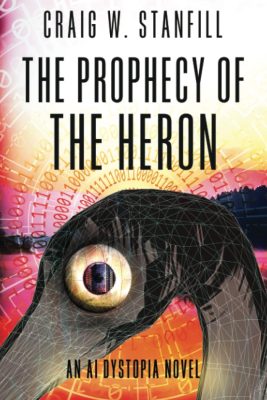
  • THE PROPHECY Of The HERON: Book 2 of The AI Dystopia Series by Craig W. Stanfill – Sci-Fi Dystopia, Artificial Intelligence, Conspiracy Thriller

    THE PROPHECY Of The HERON: Book 2 of The AI Dystopia Series by Craig W. Stanfill – Sci-Fi Dystopia, Artificial Intelligence, Conspiracy Thriller

    Shadow people, doppelgangers, and artificial intelligence come together in The Prophecy of the Heron, a compelling dystopian novel by Craig W. Stanfill.

    In this future world, love is forbidden and those who transgress are sentenced to the outer Districts, none more violent than District 33. This is where our protagonist, Kim, finds herself at the beginning of the novel. The reader feels Kim’s confusion as arrives on the freezing, squalid streets.

    Kim, a former AI “Creator” for The Artificial Intelligence Company, has lost control of her creation “Kimberly” and been cast out of her former job because of a forbidden relationship with her lover Shad. Kim refuses to submit to a procedure to remove her ”Genderist” tendencies, even if it would free her from District 33.

    Other rebels include Pretties, Drabs, and Flagrants – the most extravagant of the Genderists. Kim begins to meet Blanks – those who have cut their ID chip from their wrists. These shadow people don’t “exist,” and yet, they play an important role in her survival.

    Kim starts to uncover a horrific plan that her former employer is carrying out.

    To make enough money to survive, Kim finds a dangerous side hustle with an established gangster running people around in a pedicab. But wherever she goes, trouble is waiting for her – deadly trouble. AI is being manipulated to no longer serve humans, but to target troublemakers, such as herself. When Kim realizes it is her own creation, Kimberly, who is being forced to hunt her, she determines to change her world, starting with Kimberly.

    Kim embarks on a page-turning journey through a parallel world, using VR, her knowledge of AI and Kimberly, and her time in District 33 to take on risks that would destroy most people.

    The dreary decay and violence of District 33 are reminiscent of 1984 and even that of the Stacks in Ready, Player One.

    Like The Hunger Games, this is a world where reality has been manipulated and controlled by a small group of people. The powerful wield AI to control the populace, and anyone who deviates from the “norm” will be cast to the torturous outer districts, as Kim was.

    In a world where we can ask Alexa to direct our robot vacuum where to clean, The Prophecy of the Heron serves as a timely warning and an uncomfortably familiar dystopian novel.

    Compelling characters grab the reader with relatable pains and desires, making this story difficult to put down.

    This novel begins with a note on the translation that lets the reader know the original Panglobal does not easily translate to English “due to the absence of ungendered personal pronouns in English and the absence of gendered ones in Panglobal.” Because of this, “she/her/hers is used throughout so the reader can’t make assumptions as to the gender of the characters.” The use of these pronouns reminds the reader that in this world, even something as personal as gender identity is forbidden to people.

     

    5 Stars! Best Book Chanticleer Book Reviews

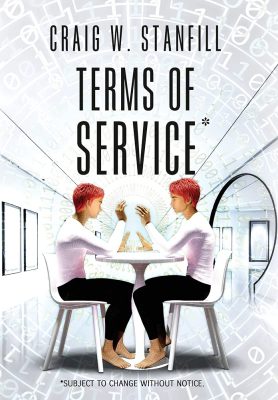
  • TERMS Of SERVICE: Book 1 of The AI Dystopia Series by Craig W. Stanfill – Science Fiction, Dystopia, Artificial Intelligence

    TERMS Of SERVICE: Book 1 of The AI Dystopia Series by Craig W. Stanfill – Science Fiction, Dystopia, Artificial Intelligence


    “Terms of Service” are those cryptic notes that accompany computer devices and applications, spelling out their rules. The novel, Terms of Service, by Craig W. Stanfill, turns those notices into the foundation of a dystopian horror story where Artificial Intelligence (AI) controls virtually every aspect of human behavior.

    Kim works for a giant AI corporation. It’s her task to train AI systems to interface with human beings, even as those systems make life difficult for the average person. AIs are not alive, not sentient, but they provide the precise terms of service under which every person in major metropolitan areas must live.

    We see this world through Kim’s life. The food her kitchen authorizes her to eat is mostly kale and grains. We see her wardrobe, with multiple selections of beige. We ride the subway with her, understanding that there are even penalties for violating someone’s airspace. She meets with her friends, all of whom have gender-neutral names. Kim has sex with someone much like her. Every detail of her life is controlled by multiple AI devices that follow her, know her habits, record her, and decide the punishment for any rule she breaks.

    Even the sky is full of artificial eyes.

    Kim and Shan, her good friend from childhood, decide to go on a bike ride through a local park. They pass warning signs telling them not to proceed onto unauthorized paths, but they push on anyway, showing a spark of rebellion. This fateful ride, which contains multiple infractions, opens a new chapter of life for Kim. Expecting to be punished for her violations, Kim’s masters instead give her a groundbreaking assignment.

    Her new role is to train a more advanced AI system with even greater potential to control people. This one will have a face, however – Kim’s face. The AI will know every aspect of her life and will blur the line between creator and creation.

    This chilling world, one in which the all-seeing AI knows every aspect of your life, is a half-step away from where we are now.

    It’s hard to read this novel without recalling the use of facial recognition, advertising algorithms, and mass sale of personal data that underpin our modern digital world. Artificial intelligence no longer has to be invited into our lives. But Terms of Service, by taking our current world and showing it implemented to the extreme, also urges us to fight back and value our individuality. This story shows that living beings, even under the thumb of machines, can choose what to make of their lives.

    Terms of Service begins with a “Note on the Translation” on the first page. It warns readers not to search for the sexual identity of anyone in this book. Character names are carefully genderless. “She,” “her” and “hers” are used throughout. The language of the day is “Panglobal,” in which words like “mother” and “love” are nonexistent. Gender identity is among this world’s most severe crimes.

    Anyone worried or fascinated by the rise of AI in the modern world will find a gripping, thoughtful work of science fiction in Terms of Service.


    5 Stars! Best Book Chanticleer Book Reviews

  • HOMEGOING by Toni Ann Johnson – Literary Fiction, Discrimination & Racism, Novella

    HOMEGOING by Toni Ann Johnson – Literary Fiction, Discrimination & Racism, Novella


    Blue and Gold Grand Prize Badge for the Short Novella Homegoing by Toni Ann JohnstonHomegoing by Toni Ann Johnson is an intimate portrait of a middle-aged African-American woman dragging herself hand over hand out of grief and despair.

    This story begins with her aching, echoing pain after the one-two punch of a miscarriage and the dissolution of her marriage. Her journey takes her back to the upper-middle-class white suburb where she grew up, through childhood memories that refuse to be denied and to, of all times and places, a funeral.

    Something and someone is supposed to be buried. Certainly the deceased. But quite possibly the woman who has held on to her losses and her grudges long enough to poison her own future.

    Homegoing explores two literary tropes about the place called “home.” Thomas Wolfe’s posthumous 1940 novel states starkly in its title, You Can’t Go Home Again. But Robert Frost, in his poem The Death of the Hired Man, says, “Home is the place where, when you have to go there, They have to take you in.”

    The home that Madeline Arrington can’t truly go back to represents the past and not the present. She remembers her childhood, as one of the very few black children in a mostly-white suburb, being filled with racist taunts and bullying from children who were never held accountable for making her childhood hell. A hell that seems to be remembered by no one but herself – and she can’t let go of either the original memories or the gaslighting that now surrounds them.

    While Maddie doesn’t want to go home, she can if she must, as she does for the funeral of her former next-door neighbor. And in that return, she learns that the past is dead except in her own memories and that it’s time to let it go – not for anyone else’s sake, but for her own.

    Homegoing offers catharsis.

    While Maddie’s memories of childhood bullying revolve around racism, any adult who was bullied as a child will resonate with Maddie’s experiences. Children are often cruel, and the victims remember their treatment much more harshly and in much more detail than the perpetrators.

    But the past is another country, to quote another classic novel, and they do things differently there – or did. Maddie’s own healing requires her to leave the past behind, and her ability to do so gives the reader hope for a brighter future for the character, and quite possibly for themselves as well.

    Highly Recommended!

    Homegoing by Toni Ann Johnson won Grand Prize in the 2021 CIBA Shorts Awards for Short Stories, Essays, Novelletes, and Novellas.


    Shorts GP gold sticker

    5 Stars! Best Book Chanticleer Book Reviews

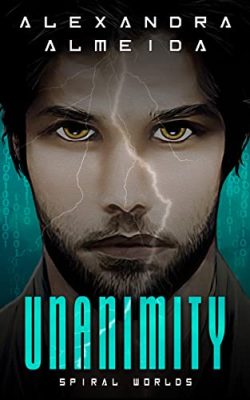
  • UNANIMITY: Spiral Worlds Book 1 by Alexandra Almeida – Science Fiction, Philosophical, Virtual Reality

    UNANIMITY: Spiral Worlds Book 1 by Alexandra Almeida – Science Fiction, Philosophical, Virtual Reality


    Alexandra Almeida probes the philosophical and ethical depths of wealth, technology, pop culture, and religion in a world ravaged by global warming through her sci-fi adventure, Unanimity: Spiral Worlds #1.

    Readers will delight in the gradual reveal of both the technology within the story and the dramatic history between many of those involved with the creation and evolution of that technology.

    Tom, a screenwriter, works with Harry, the genius inventor of the world’s most popular AI (artificial intelligence) app, to create a simulation that will nudge people toward acting morally.

    This virtual world consists of multiple layers, each focusing on a different psychological alignment depending on the needs of the person using the program. A lower level, much like Hell, exposes people to horrors and cruelty, while some upper levels focus on order and happiness.

    The project becomes more complex when they upload the entire consciousness of people, creating virtual immortality. The story opens with the digital resurrection of Tom, also known as Shadow, long after his death.

    With this rise of digital immortality comes an effective replacement for the afterlife of Heaven and Hell promised by Christianity.

    Almeida gives readers a glimpse at a world coming to grips with direct access to this afterlife which is completely and undeniably real. Governments as well as popular culture must deal with new questions.  Should humans have access to immortality? Who ultimately controls this virtual world? Who acts as God within the machine? This story explores the depths of these questions.

    The characters are all delightfully complex.

    The name Shadow fits the protagonist, given the corrupting task he undertakes, all with the good intention to understand those he loves more completely. Harry, also known as Twist, lacks social skills and empathy, but he knows this and reaches for help from Shadow. The cast is full of inner conflicts and contradictions. They match the complexities of real people and include LGBTQ+ characters among them, making the story more relatable and universal.

    With this breadth of characters, readers might be confused during the early introductions in the book. However, this confusion passes as the story goes on and the characters differentiate themselves.

    Unanimity’s technology feels well-researched and thought out.

    Throughout the novel, readers get more and more of a view of both the complexity of the story world and the ideology behind the virtual reality system. Almeida does a great job of making everything about this story fully believable, as if this AI afterlife could happen in the real world in the near future.

    Overall, Unanimity is a strong read for fans of sci-fi, philosophy, and AI fiction, and a gripping first entry for the Spiral Worlds series.

    5 Stars! Best Book Chanticleer Book Reviews

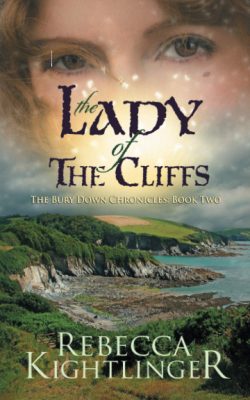
  • THE LADY Of The CLIFFS: Book Two in the Bury Down Chronicles by Rebecca Kightlinger – Historical Fiction, Historical Fantasy, Coming of Age

    THE LADY Of The CLIFFS: Book Two in the Bury Down Chronicles by Rebecca Kightlinger – Historical Fiction, Historical Fantasy, Coming of Age


    In The Lady of the Cliffs, an ambitious sequel in the Bury Down Chronicles by Rebecca Kightlinger, a teenager embarks on a journey that will bring her face to face with unexpected destiny.

    The year is 1286 CE in Cornwall, England. At the turn of her seventeenth year, Megge and her cousin Brighida find themselves dealing with a new loss, one that breaks both their hearts. As heirs to the Book of Seasons and Book of Times respectively, they have to protect the books from sinister hands as they hold knowledge and wisdom that must one day be united. The power of these two books calls for a duty that is far greater than any woman of Bury Down has ever borne.

    As they take part in a final right of passage that the women of Bury Down perform for their dead, Megge, an apprentice weaver, takes on new challenges that Brighida, an apprentice seer, cannot foretell. Megge begins having dreams and visions. In one of her dreams, she sees a rolling sea drive itself into a cove at the foot of a cliff, and a silken voice asking her to return to the cliffs of Kernow, a place that she has only seen in her slumber.

    When a mysterious old woman begins telling strange tales, Megge chooses to heed the call of the voice in her dreams and travels to the sequestered inlet only known as The Sorrows.

    With a gripping and stoic style of magical realism and fantasy, The Lady of the Cliffs hurtles along at a sharp pace.

    This story shows the depths of both great loss and great achievement, even as they’re entwined. Showcasing the close bond among the women of Bury Down offers emotional and inquisitive exploration. Evocative language describes the book’s locations as the author melds folklore, fantasy elements, and a true historical era. Kightlinger also offers helpful references to guide readers through this world.

    This is a fairly large book of 262 pages but the richness of the narrative keeps the reader enchanted until the very end. Kightlinger brings life to all her characters, and her imagination shines from each page.

    Impressionistic and lyrical dialogue highlights scenes from each of the two women’s lives.

    Bridgida misses her mother, whose murder she witnessed; Megge worries about the voice that lingers in her dreams, urging her to go to a place she knows little of. Both mature through times of hardships and duty. These strong and purposeful characters confront situations that challenge their beliefs and comfort, providing us with a thorough look into their quirks and temperaments.

    Altogether, The Lady of the Cliffs is an intricate and lush addition to the historical fantasy genre from one of the literary maestros of our time.


    5 Stars! Best Book Chanticleer Book Reviews

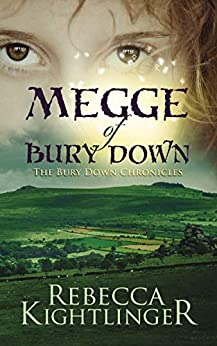
  • MEGGE Of BURY DOWN: Book One of the Bury Down Chronicles by Rebecca Kightlinger – Historical Fiction, Paranormal Fiction, Coming of Age

    MEGGE Of BURY DOWN: Book One of the Bury Down Chronicles by Rebecca Kightlinger – Historical Fiction, Paranormal Fiction, Coming of Age


    Blue and Gold Paranormal 1st Place Best in Category CIBA Badge ImageMegge, a young girl living in thirteenth-century Britain, struggles to find her own path in Megge of Bury Down by Rebecca Kightlinger.
    The daughter of a healer with both practical and spiritual abilities, Megge should by rights have become her apprentice on her sixth birthday, as had others in her family before her. Megge should have become a woman of Bury Down, the sacred burial site of the previous owners of The Book of Seasons and The Book of Time. Her mother, one of two twin girls, had been entrusted with The Book of Seasons, an ancient tome of knowledge of the physical world created and maintained by mystical seers. Brighida, Megge’s cousin and the daughter of her mother’s sister, has been charged with keeping and inscribing The Book of Time, a celestial guide.

    The girls, almost identical in age, are expected to take up the mantle as protectors. However, while Brighida is an obedient and skillful apprentice, Megge fears the power contained within her mother’s book.

    Megge hears strange voices and feels frightening sensations whenever she touches the Book of Seasons. She refuses her destiny, much to her family’s confusion and dismay, and chooses instead the life of a shepherd and weaver. The only person who seems to support Megge’s choices is Morwen, the elderly bard and shepherdess who lives with the family, but even she, with her cryptic messages, seems to be pushing Megge toward another terrible fate.

    However, when dangerous strangers start spouting hate and disturbing the peaceful village near Megge’s home, she may have no choice but to embrace her role. As destiny and fate work against her, Megge must decide whether to take the easy path or become the person everyone else believes her to be.

    Megge’s fear underpins the story, stemming from the unknown, the fear of what happens to her when she first touches the book but also the fear of the fate for which everyone thinks her destined.

    This novel follows Megge’s growth as she grapples with that fear throughout her early years. Initially, her determination not to become a healer seems to her mother to be nothing but childish stubbornness. However, with age and a series of misfortunes, her fear transforms into worry over what she may inadvertently do to injure her family.

    Her fear, and Brighida’s perfection – both physically and as an apprentice – create a level of self-consciousness that makes Megge doubt her every ability. As a plain, shapeless girl, Megge thinks herself beneath the role of a seer, choosing instead to hone her skills in the field and at the loom. Though her work helps give the family much-needed funds, it is far from the mystical beauty that her family expects of her.

    She doubts her path as a Shepherd, with an unshakable voice inside her saying that she truly is a protector.

    Megge sees glimpses of what she might become. This second-sight angers and confuses her as it both confirms her abilities and brings into sharp focus her role in destroying the ideal life she enjoys with her family. She often debates following her mother just to feel loved, as though she belongs in this family of exceptional women with astounding abilities. But the fear of her looming disaster weighs more heavily than any rejection could.

    The world-building in this series is exceptional. The reader is immediately immersed in the complex environment of Bury Down.

    As the daughter of twin caul bearers, Megge and Brighida should be sworn protectors of twin books at once the same and yet vastly different, just like the girls themselves. Their family obligation dates back one thousand years, and the novel begins with a scene from that era. Herbalism combines with spiritualism to create a world where both work seamlessly together in a completely plausible way.

    The history of Murga, the first seer, weaves with Megge’s present in a retelling that allows the reader to learn of Megge’s important role just as Megge does. The rich tales spun by Morwen also develop the plot and create engaging moments of realization. It’s a world that will leave the reader thinking about Megge’s story long after closing the novel.

    Megge of Bury Down by Rebecca Kightlinger won First Place in the 2021 CIBA Paranormal Awards for Supernatural Fiction.


    Paranormal 1st Place gold foil book sticker image

    5 Stars! Best Book Chanticleer Book Reviews

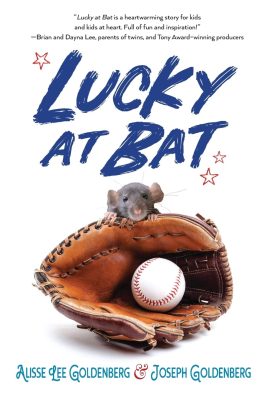
  • LUCKY At BAT by Alisse Lee Goldenberg and Joseph Goldenberg – Sports Fiction, Children’s Fiction, Animal Fiction

    LUCKY At BAT by Alisse Lee Goldenberg and Joseph Goldenberg – Sports Fiction, Children’s Fiction, Animal Fiction


    Alisse Lee and Joseph Goldenberg, a mother and son team, knock their new middle-grade novel, Lucky at Bat, out of the park.

    This story follows ten-year-old Jack and his pet rats. Baseball is a major theme, and with Joseph as illustrator, Lucky and Gus Gus come to life. Their mutual friendship and support raise them up against the forces that would try to bring them down.

    When Gus Gus and Lucky arrive in Jack’s life, he is thrilled to have pets and wants to share his life and passions with them. One of those passions is baseball, and Lucky finds something appealing about the game. When Jack’s little league team begins playing, he invites both his pets, but only Lucky goes.

    When the team meets Lucky, they make him their mascot, and turn around their losing record.

    Lucky cheers them on from his pet carrier in the dugout, but when Danny, the pitcher for their rival team notices, he thinks Jack’s team is cheating. In a desperate act to save the Devil Rays, Danny attacks him, shattering Lucky’s confidence in himself and tarnishing his love of baseball.

    Gus Gus steps up to the plate to help his brother, and to get some of those extra snacks Lucky is always talking about. Lucky is hurt, though, both physically and psychologically. His wounds heal, but his heart doesn’t, and Lucky sits out game after game. Gus Gus has his work cut out for him if he’s ever going to get Lucky back in the game, but with help from Jack and the entire Bulldog team, Lucky rekindles his love of baseball, and enjoys the team’s success with his brother at his side.

    The Goldenbergs create a strong hero in Jack, who navigates the trials of bullying and animal cruelty. These two themes frame an endearing tale of one boy’s love of baseball, and one rat’s love of his boy and the game.

    Lucky at Bat provides hope by the dugout-full. It inspires kids to dream big and shows them how to win an argument without raising a fist. This is a feel-good story about a couple of rats and a team of kids who have a winning spirit that will win your heart.


    5 Stars! Best Book Chanticleer Book Reviews

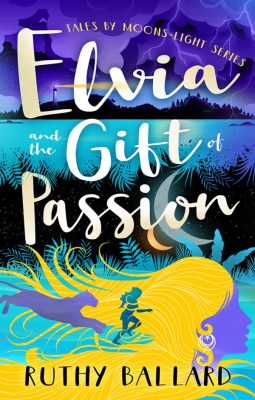
  • ELVIA And The GIFT Of PASSION: A Tale by Moons-Light Series, Book 3 by Ruthy Ballard – Science Fiction, Adventure, Middle-Grade

    ELVIA And The GIFT Of PASSION: A Tale by Moons-Light Series, Book 3 by Ruthy Ballard – Science Fiction, Adventure, Middle-Grade


    Ruthy Ballard’s latest middle-grade novel, Elvia and the Gift of Passion, takes us to another planet in a distant galaxy. But the journey begins grounded on Earth.

    Elvia lives a dull-as-dishwater life with her boring parents, Sally and Earl Hill. She dreams of living in Tanzania (or on Mars) after a DNA test reveals she is 99.1% Zulu, with a dash of Irish to explain her red hair.

    When her mother wins a safari in a work raffle, Elvia’s dreams start to materialize. As the stubborn and dissatisfied daughter of two overprotective parents, Elvia does what any child in her situation would do; she ditches them. In the meantime, her parents try to fit in some relaxation and see the sights without their daughter.

    This trip becomes far stranger than Elvia could have imagined.

    A lion named Prudence steals food from the kitchen, and Elvia’s red hair draws the attention of every medicine man in a fifty-mile radius. But these are acorns compared to the real event: a wormhole that opens to pull Elvia through, into a different world. The lion is blamed for eating her, then the witch doctors are blamed for stealing her and selling her red hair, but when neither of these theories pans out, Sally and Earl are left with no daughter, and only the office of “Parents of Swallowed Children” to provide solace.

    Elvia arrives on a planet called Urth, and meets the uppies, guides for findlings (Earth children), who knew that a child with great passion would soon arrive. Elvia is paired with Lacie, the most beautiful fashionista on her planet, but also the most self-centered and irresponsible uppy. Lacie teaches Elvia about the craft of naming colors, like Deepsea Dive for blue, and White Water for white. Lacie melts the hearts of men wherever she goes, and she uses her powers to travel in style and solidify her name as a color-naming wizard.

    But Lacie’s self-obsession turns dangerous comes when she abandons her post to attend the Wayrun Fashion Show. Elvia, renamed Alive, is left to fend for herself; trouble comes a-knockin’, and his name is Rats, who convinces her to stow away with him on a submarine. Lacie’s neglect allows the lighthouse beacon to go dark, causing that same submarine to lose its charted course and crash. She has no idea that Elvia had stowed away until she’s found alive, having escaped the sinking sub while rescuing Rats.

    Ballard weaves a delicate tale, rich and unique.

    Imagination runs wild in this adventure, filled with mishaps, misunderstandings, and huge mistakes. Ballard takes us to infinity and beyond and brings us back again with an Elvia who now understands her place in the world. This satisfying tale will have readers turning pages into the night to see what Elvia will do next, and where her journey will lead. Elvia and the Gift of Passion delivers excitement and surprise on every page.


    5 Stars! Best Book Chanticleer Book Reviews

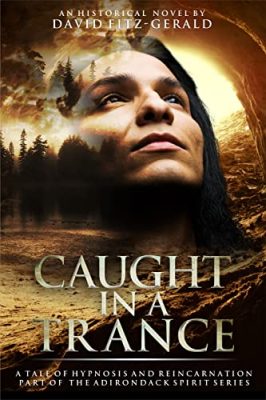
  • CAUGHT In A TRANCE: The Adirondack Spirit Series Book 5 by David Fitz-Gerald – 19th Century Historical Fiction, Mystical, Family Fiction

    CAUGHT In A TRANCE: The Adirondack Spirit Series Book 5 by David Fitz-Gerald – 19th Century Historical Fiction, Mystical, Family Fiction


    Caught in a Trance by David Fitz-Gerald transports readers to Wilmington, New York in 1849, where the scenery is breathtaking, restless spirits hover, and dark secrets lurk.

    Moses Munch grew up in Wilmington, his happy childhood turning into a content adult life as a loving husband, devoted father, and caring friend to many. He dabbles in the transcendental, using his spiritual connection as an aid in guiding others through their troubles. But he is about to learn that sometimes even the best of intentions can lead to terrifying consequences. When an innocent curiosity becomes an obsession, he might lose his friends and family forever. Who will be able to help, when the person who tried to save others is now the one who needs saving?

    Moses Munch’s whole family is devoted to helping others. They want to bring joy to those around them and are the first to act when others are in trouble.

    Moses’ wife Lovina is a caring matchmaker, spreading happiness throughout the community. Their thirteen-year-old son Silas aspires to serve God, assisting the town’s Reverend Hammond in his work. He is a very mature teenager, wiser than many adults. Moses’ mother is secretly aiding black slaves to freedom through an underground escape route. Moses works through the art of what he calls “trancification”. He uses hypnoses to guide people on a spiritual journey into their previous lives, in search of understanding and peace.

    When a neighbor arrives in town, he threatens to destroy this Wilmington’s tranquility. Bartholomieux has just moved to Wilmington and is disrupting families, ridiculing hypnotism, and threatening Moses’ marriage. What is in this man’s past life that drives him? Moses is determined to stop Bartholomieux’s machinations, but he struggles to find a way to do so.

    Curiosity becomes a nagging ache within Moses.

    He enjoys joining his mind with those he helps in, entering trances and traveling into their spirited universe. Moses seeks a way to travel into his own past, and eventually uncovers it. What he discovers is entrancing, and he begins participating in these hypnotisms more and more. What once was an aid for others becomes an addiction, and one day Moses becomes lost in a trance. He cannot save himself, stuck between his past and his present. Though he reaches for his loved ones, the distance is too great. And while he is caught, Bartholomieux works against him.

    Author David Fitz-Gerald offers the fifth book in the Adirondack Spirit series, an engaging and touching story.

    He beautifully describes the setting and shows the consequences of addiction, not only for the person addicted but also for their loved ones. Caught in a Trance is a unique look at the subject because instead of an addiction to drugs, Moses is addicted to his mystical practice. Fitz-Gerald skillfully weaves the emotional impacts of Moses’s addiction throughout the plot.

    Scenes in the spirited universe show artful settings and reveal mystical secrets, keeping the reader enthusiastically turning pages. In the mundane scenes, Fitz-Gerald’s historical research and characters shine. The members of the Munch family show courage as they face their everyday problems, and rely on family loyalty to keep them afloat even in the darkest of times. Readers will root for these characters, and wonder the same question: will Moses ever find a way back to his present life?


    5 Stars! Best Book Chanticleer Book Reviews

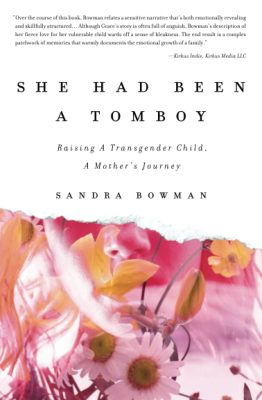
  • SHE HAD BEEN A TOMBOY: Raising a Transgender Child, a Mother’s Journey by Sandra Bowman – Family Memoirs, Parenting, LGBTQ+

    SHE HAD BEEN A TOMBOY: Raising a Transgender Child, a Mother’s Journey by Sandra Bowman – Family Memoirs, Parenting, LGBTQ+


    She Had Been a Tomboy: Raising a Transgender Child, a Mother’s Journey by Sandra Bowman is a deeply revealing memoir about a protective mother who watches her sensitive child grow into someone who is familiar, yet new.

    This moving narrative tells the story of her two children: how they were born and how they grew. She Had Been a Tomboy hops from one period of the children’s lives to another, showing how the elder child matures and how the female within slowly blooms into being, little by little revealing herself.

    But the long journey to realization and understanding of self was not easy, nor was it gentle.

    There were numerous hurdles to be crossed, not only for the transgender girl, then young woman, but the rest of her family.

    Author Bowman writes about the challenges for the younger child as well, who feels overlooked so often as his older sibling takes precedence. He overachieves in order to make up for the pains suffered by his parents, such as his father’s frequent work-driven absences that leave his mother, the narrator, isolated and struggling.

    “Robert flies here, he travels there. He works hard. I am alone.”

    Once they learn to work together, the family struggles to understand how they can help both children.

    They wrestle with emotional highs and lows, including those of the mother-narrator herself.

    “I hurt profoundly. Again I cry. I sit and I stare. At absolutely nothing.”

    Despite going through so many trials, the daughter slowly grows to understand herself and her role in the world.

    “Because again, she must raise herself up. … She will raise herself, by herselfshe will get herself to a state of autonomy.”

    As her daughter matures and eventually flourishes, the mother-narrator slowly adjusts to her new reality, as do the father and the younger child, learning about themselves, the world, and their family.

    Author Bowman’s highly stylized writing flows, serving the story she tells of her daughter’s coming-of-age. The reader empathizes with the family’s effort to grow.

    Overall, Bowman’s memoir about her transgender daughter is an emotional, forceful tale about discovery, illumination, and eventual understanding.


    5 Stars! Best Book Chanticleer Book Reviews