Category: Reviews

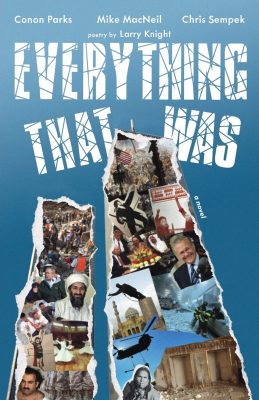
  • EVERYTHING THAT WAS by Conon Parks, Chris Sempek, Mike MacNeil, Larry Knight – Terrorism Thriller, Satire, Political Fiction

    EVERYTHING THAT WAS by Conon Parks, Chris Sempek, Mike MacNeil, Larry Knight – Terrorism Thriller, Satire, Political Fiction


    The Grand Prize Somerset Badge for Everything That Was by Conon ParksEverything That Was
    echoes myriad broken emotions born of the world in turmoil after 9/11, intricate and politically bold, and as disturbing in its brutal humanity as it is satisfying with witty jests.
    The 9/11 terrorist attack has shattered the psyche of the American people. A volcanic eruption of questions demands the whys and hows of the attack. From this anger, a massive war on terror begins. This historical fiction reflects the chaos of 9/11 and its ensuing global chaos – resulting in a series of violent endeavors and events. Throughout Everything That Was, one can find a swarm of fragmented ideologies, mini memoirs of war veterans, and witness accounts – all screeching reasons for the attack, the ensuing war, and its consequences: political, ideological, and theological.

    The book’s very structure expresses the central ideas of its content, making for an affecting read.

    The prose presents fragments of thoughts from the characters, broken grammar cutting sentences together and leaving emotions unexplained. Using a similar framework, Larry Knight’s introspective poetry gives an alternative form of expression to this story’s deep thoughts. In both forms, this structure points towards the lack of clarity in human conscience and the unsettling nature of a world riddled with war and havoc.

    The characters appear to be in a trance, and several of their comments end in interrogative or rhetorical questions. Andre joins the National Guard, furious at the loss of innocent lives. But when he arrives at the camp, he has no idea what he signed up for or what the day is. There is no finality or closure to these pluralities of thought; each moment only flows until another idea or rhetorical question replaces it.

    Everything That Was faces readers with the automation of war and its devastating impact on individuals.

    In a variety of concepts, the book suggests that the fears of being taken over, perceived as powerless, or overrun by women regulate human societal behavior regardless of character. Instinctive and unconscious support for the war grows, as does widespread confusion and skepticism. Andre muses on the battle at hand, questioning whether it is “WWII? Korea? The Viet Cong? Sandinista? Drug War? A War on Drugs?”

    Everything That Was represents both the separation and simultaneity of consciousness prevalent in the world. No single meaning can claim to be the ultimate answer in a plethora of conflicting notions. Many internal and external battles result from the interplay between religion and politics, and the diverse interpretations of those aspects by different characters.

    As the book unfolds, its discourses allude to several historical events. In its desire to reach emancipation through infinite perspectives, this story proves its attention to the details of history. As a classic example of gonzo journalism, a literary form used by Hunter S. Thompson, the text is a frazzled amalgamation of first-person experiences that rouse incredulity at the brutality and defamiliarization of war and its chessmen in the religious and political spheres. All of these complex internal reactions to external horrors come wrapped in biting irony, peppered with tragicomedy.

  • THE CHAMELEON: A Jake Palmer Novel by Ron McManus – Global Thriller, Nuclear Weapons, Action & Adventure

    THE CHAMELEON: A Jake Palmer Novel by Ron McManus – Global Thriller, Nuclear Weapons, Action & Adventure


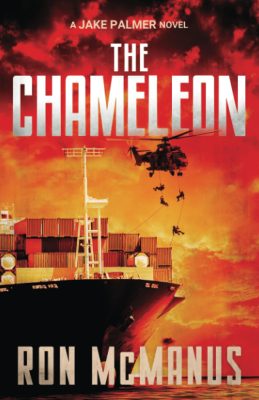
    Global Thriller Badge for Ron McManus's book The Chameleon, the 2021 Grand Prize WinnerThe Chameleon: A Jake Palmer Novel by Ron McManus takes on one of the most terrifying issues in the modern world: nuclear weapons in the hands of terrorists.
    Amidst the ongoing conflict between India and Pakistan, the world’s superpowers recognize that both nations possess large nuclear arsenals, which intelligent, well-armed fanatics threaten to steal for their own nefarious purposes. If these weapons went off, they could easily lead to World War III. To prevent this, the U.S. eagerly takes on the role of supervising the security of these weapons in both countries.

    In this terrorism thriller, India and Pakistan clash over the disputed Kashmir region. Pakistan’s leaders decide to secretly deploy a variety of nuclear weapons to the front, sending them along backroads in unmarked trucks. But in a carefully planned attack, terrorists kidnap one of these vehicles containing three nuclear weapons, before substituting a precise duplicate truck to take its place. The theft is not discovered until the decoy truck reaches its destination.

    Jake Palmer, a decorated former SEAL, attorney, and investigative consultant, returns again in this fourth installment of the Jake Palmer series.

    U.S. military Command assigns Palmer to oversee the security of Pakistan’s nuclear weapons during the conflict. He arrives in Islamabad, Pakistan, just as the terrorists pull off the truck switch. A chance satellite photo captures a mysterious road incident involving the truck, giving Palmer and U.S. Intelligence a hint that something has gone wrong.

    It’s now up to Palmer and his team to follow up on this report and sift through myriad unconnected details to discover the theft, and more importantly, where and how the terrorists plan to use the weapons.

    McManus offers a grounded, complicated thriller full of intrigue and intense danger.

    The Chameleon tells its story with remarkable attention to detail and a clear depth of research, giving readers a full understanding of historical, armament, military, and political situations. This well-constructed narrative shows the reader a variety of perspectives and a realistic view of the world’s potential conflicts.

    Palmer is a professional. He’s not given to glib conversation, patriotic speeches, or sentiment. Even a possible romance doesn’t take his laser-like focus away from identifying the crime and stopping its horrific potential. This story stands both as part of a series and on its own. Unfamiliar readers can jump right into this volume and not miss a thing, but instead find a new series to explore.

    The best thrillers shine with authenticity, and The Chameleon is no exception.

    You walk through the crowded streets of Pakistan, join meetings in command centers in Washington and London, and ride the cramped trucks where terrorists do their dirty work. Readers will understand the jargon, the agony that comes with making the right decision at the right time, and the sweat of fear when something goes horribly wrong.

    This mystery holds some of its secrets even to the end. We never meet The Chameleon, nor see what happens from their point of view. The brilliant, evil puppet master who planned these events remains an enigma, but perhaps a subsequent volume will tell their story.

    For readers who enjoy an intelligent thriller that draws much from the real world, The Chameleon is a must-read.

    The Chameleon by Ron McManus won Grand Prize in the 2021 CIBA Global Thriller Awards for High Stakes Suspense.


    5 Star Best Book Chanticleer Reviews round silver sticker

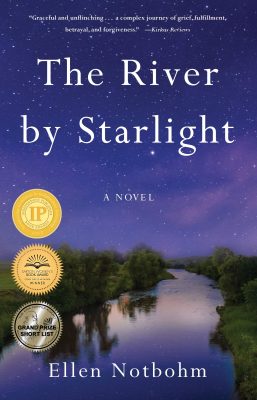
  • THE RIVER By STARLIGHT by Ellen Notbohm – Historical Fiction, Family Fiction, Homestead Era

    THE RIVER By STARLIGHT by Ellen Notbohm – Historical Fiction, Family Fiction, Homestead Era


    Set in the early twentieth century, The River by Starlight by Ellen Notbohm follows Annie (Analiese) Rushton, a woman struggling against her lot in life.

    After a messy divorce leaves her separated from her only child, Annie returns home to her emotionally unavailable and dying mother. A betrayal of Annie’s own mind destroyed her marriage and took away any hope of seeing her daughter again. When she finds a letter from her oldest brother hidden in a drawer by her mother, she decides to join him on his homestead in Montana. Once settled into her new life, she soon forms a whirlwind romance with local business owner Adam Fielding.

    After they marry, Annie wants nothing more than another child, despite the certain risk of her postpartum psychosis returning.

    A string of losses and sickness keeps the passionate couple from their dream of a family until the stress drives them apart. After a jarring separation, Annie gives birth to and loses custody of a little girl she names Nora. Once Annie becomes a member of society again, she works hard to get Nora back from the orphanage and builds a life where they can be together.

    The River by Starlight is historical fiction at its finest. Parenthood and mental health frame this contrast of love and loss.  Throughout the story, Annie is asked how she can just forget the past and move on so easily. The reality is that she does not forget, she must move on to survive. The pain of the past is a character of its own in the story. Its presence and weight are held between Annie, those she loves, and those who love her. Annie struggles to swim her way through troubled waters in a world that believes it would be better off if she drowned. She embodies strength against all odds and the power of love that never dies.

    The River by Starlight by Ellen Notbohm won First Place in the 2018 CIBA Goethe Awards for Post-1750s Historical Fiction.


    5 Stars! Best Book Chanticleer Book Reviews

  • OUR BRAIN by Hari Hyde – Satire, Absurdist Fiction, Adventure

    OUR BRAIN by Hari Hyde – Satire, Absurdist Fiction, Adventure


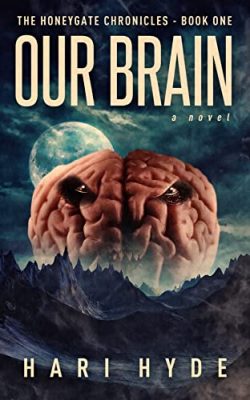
    Our Brain, the first in a three-volume series, is an epic fantasy adventure in a bizarre, allegorical world.

    This world is ruled by Our Brain, also known as The Guv’ner, a huge pinkish mass seated in a mountain range that came about through the collective will of its people. It leaped into reality from the realm of thought. And the particular thoughts that birthed Our Brain were, in the novel’s language, to “ever grow and strengthen the righteous power of government to control our lives for the common good.”

    The people that benefit from this collective thinking are the Soose. Yes, pigs, but a mutated form that, while still loving mud baths, walk on their hind legs, go to college, and carry “snappers” or what we might call personal computers. Their opposite numbers are the Nags, descended from horses, who champion individualism and want to wipe out the collective sentiments of the ruling tribe.

    Four Nags hatch a plan to change the direction of Our Brain and create a world of their liking.

    The hero of the book, a Soose named Hennie Honeygate, sets out to discover their plan and, to his great surprise, finds himself following them inside the fleshy mass of Our Brain. Hennie and the Nags embark on a picaresque adventure.

    Be prepared to have an illustrated anatomy source at hand as Honeygate chases the villains through the neurological pathways. Portions of the brain take on personalities of their own, such as a demon named Obex, labeled here as the “fabled ruler of hell” in the mythology of the Soose. The obex, in anatomy, is a canal-like structure in the upper part of the brainstem that connects the fourth ventricle to the third.

    Our Brain offers political thought, social satire, and sheer nuttiness.

    This story will likely appeal to those with conservative political views. Readers will find fantasy adventure mingling with satire such as that of Orwell’s Animal Farm, Swift’s Gulliver’s Travels, and traces of George Will, Michael Crichton, and Terry Gilliam in these pages.

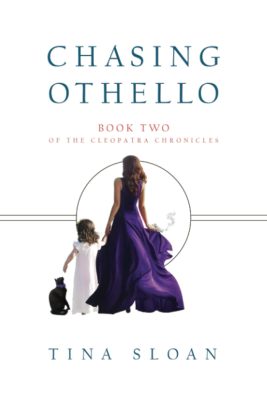
  • CHASING OTHELLO: Book 2 of the Cleopatra Chronicles by Tina Sloan – International Mystery, Action & Adventure, Global Thriller

    CHASING OTHELLO: Book 2 of the Cleopatra Chronicles by Tina Sloan – International Mystery, Action & Adventure, Global Thriller


    Chasing Othello by Tina Sloan has lies and spies, betrayal and espionage, love and hate, all wrapped up in a story that grabs the reader on the very first page and doesn’t let go until the last.

    Forty-something Cleopatra is shattered after discovering that one of her best friends was a terrorist who had planned to blow up Pearl Harbor. When she discovered his intentions, she was forced to kill or be killed. Her Krav Maga training allows her to win that battle.

    Shattered by the betrayal, Cleo retreats to her father’s estate in Dubai, only to find out  she  is pregnant at age forty-four.

    Life on her father’s vast estate is a respite, but when her ex-lover is shot in the process of bringing down yet another terrorist, Cleopatra returns home to Honolulu with her now two-year-old daughter, only to discover that she is the target this time.

    There are deceptions and red herrings aplenty in this compelling thriller.

    The CIA focuses on the terrorist while the mastermind of the plot hides in plain sight. He has his sights firmly fixed on Cleopatra long before anyone knows that she is in danger. The tension ramps up high as the clues are painstakingly pulled together by a movie director who thinks that Cleopatra’s secrets might be a great hook for his next movie.

    The story is told through multiple first-person points of view. The narrative focuses in turn on each of the main characters, from Cleopatra to her former lover’s wife, to his newly-fledged CIA son, to the film director, to the mastermind. Each voice is distinct, and the flip from perspective to perspective keeps the story moving at a breakneck pace, while providing a plethora of clues to fascinate along the way.

    Chasing Othello is a thrill ride from beginning to blistering, bittersweet end.

    Readers will laugh, cry and cheer as Cleopatra Gallier manages to save her own day – with a bit of help from the CIA – and find her own way to happiness after much danger and death.

    She should enjoy her peace while she can, because there are plenty of hints at the end that storm clouds still gather on her horizon. Readers who have fallen in love with her and her world will be left eagerly anticipating what those storms might bring in her future.

    This story begins where the first book in the Cleopatra Chronicles ends and is more than friendly to newbies who want to jump right into this second volume – although once someone has visited Cleopatra Gallier’s world they will be itching to return – if only to see what details they missed.


    5 Stars! Best Book Chanticleer Book Reviews

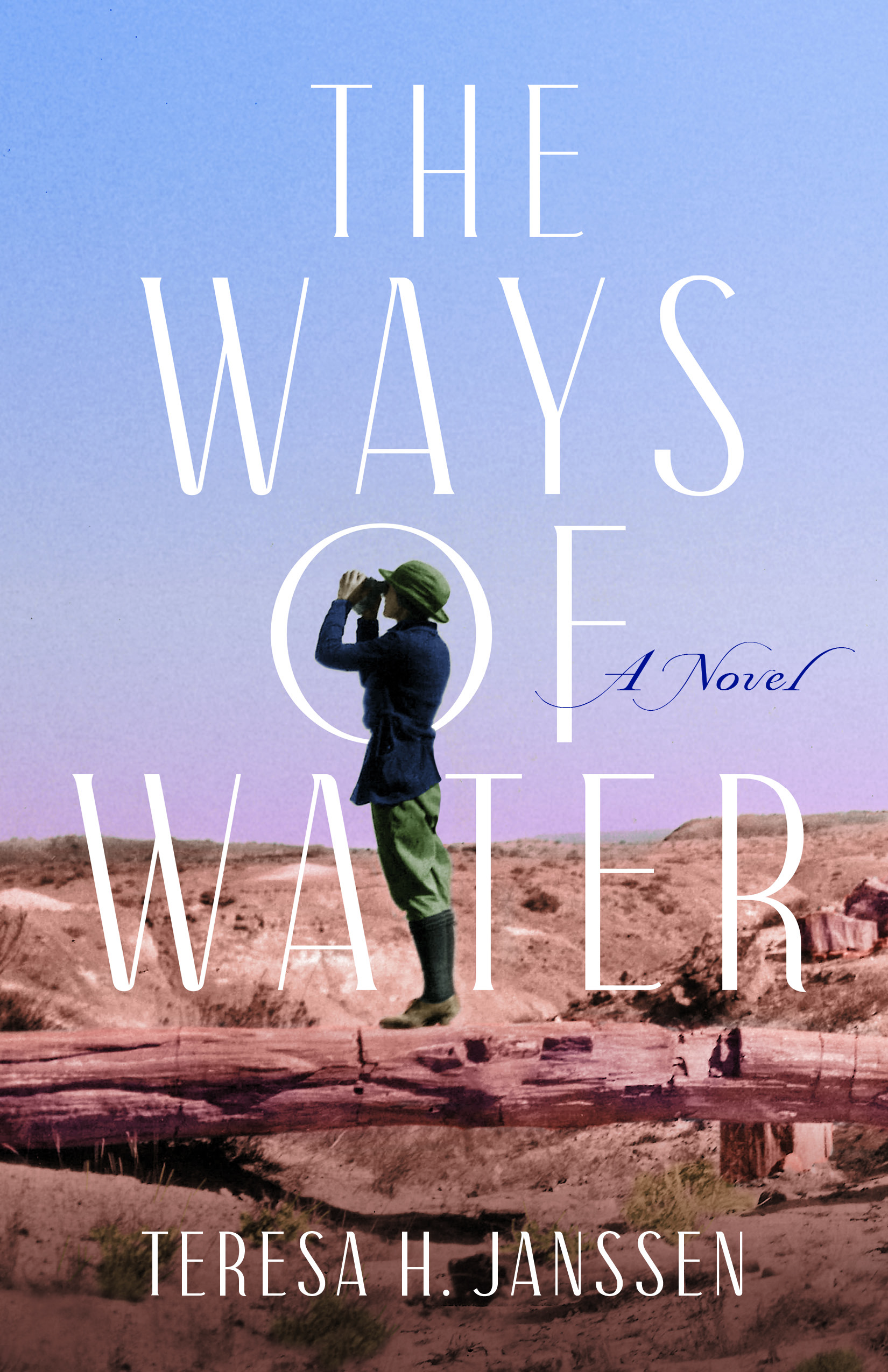
  • THE WAYS Of WATER: A Novel by Teresa H. Janssen – Biographies of Women, Early 20th Century, Coming of Age

    THE WAYS Of WATER: A Novel by Teresa H. Janssen – Biographies of Women, Early 20th Century, Coming of Age


    In The Ways of Water, a meticulously crafted coming-of-age novel, author Teresa H. Janssen drops the reader a hundred years back in time, into the American southwest where water is scarce and the survival of the fittest is a reality.

    In this place, “Life is a kettle of sadness, but along with it comes lumps of sweetness that are so exquisite… they give a girl courage to dream.”

    Josie Belle Gore was only four when, in 1906, she traveled with her mother and three siblings from Texas to their new home in the Arizona desert to live the life of a railroad family.

    Over time, her family wandered from desert to desert—in Arizona, New Mexico, Texas, and Mexico—wherever Papa’s job took them. The interplay of those harsh, yet enchanting lands of the American southwest with the human condition during the beginning of the twentieth century molded Josie’s character. Early on, she understood “…nothing on this earth comes easy. You just have to do what needs doing.”

    For Josie, it seems natural and expected that after her mother dies, she, as the eldest daughter in the home, assumes responsibility for her siblings. However, when her father decides to marry her off at age fifteen to a much older man, Josie can do nothing else but run away. Drawing upon her own internal resources and wits, she makes friends, travels to new places, gains useful skills, and ultimately finds her destiny in post-WWI California.

    This story flows with twists and turns much like those of a river.

    Although atypical in regard to story structure, character development, and denouement, it works well. The authentic voice, rich sensory imagery, and often lyrical, poetic language create an emotional and descriptive feast. Inspired by the life of the author’s grandmother, this is a skillfully presented fictional autobiography.

    In many ways, Janssen’s book echoes Mary Antin’s sentiment in The Promised Land (1911) “…We love to read the lives of the great, yet what a broken history of mankind they give, unless supplemented by the lives of the humble…”


    5 Stars! Best Book Chanticleer Book Reviews

  • EXITS by Stephen C. Pollock – Poetry, Nature, Spirituality

    EXITS by Stephen C. Pollock – Poetry, Nature, Spirituality

    Exits by Stephen C. Pollock embodies the malleable nature of poetry, balancing the reflective, spiritual, personal, and primal. It changes from rhyme to free verse, even within one poem, and shares thoughtful observations.

    Some poems ask the reader to reflect on nature and human reactions to it. Arachnidæa: Line Drawings blends rhyme, stanza lengths, and free verse with the brutal truth of damaging trespasses that humans have taken into the natural world. Metamorphosis continues this theme as it shows the beautiful cycle of life from bloom to decay, and it challenges us to consider how our human intervention can render that cycle barren.

    “The butterfly bush on our berm… grew to resemble some great green sphere / whose blooms and perfume intoxicate the senses / of black-veined yellow swallowtails….But in May — Roaches! Panic! Pesticide spray / for the house…Now the butterflies are gone… It’s a shame to be sure, and surely no one’s to blame, / though our berm, and world, will never be quite the same.”

    Many of these poems reveal a darker side to nature, a struggle with health issues that can consume a person.

    Syringe references the chaste nymph Syrinx of Greek myth who was turned into hollow reeds, and the poem itself juxtaposes pastoral images of a serene pond and horsetails with the experience of living with multiple sclerosis, creating a powerful visual lyric.

    Spine of Dorian Gray alludes to the decaying of Dorian’s portrait in his attic, tied to the destruction of the speaker’s spine as the disease progresses. Nasal Biopsy compares the terrifying procedure that will reveal a possible cancer diagnosis with a spiritual experience of the sacrament and poses questions of faith in the face of nature.

    Exits offers a unique and thematically rich collection of poetry, and each reading reveals more insights for the reader to contemplate.

    5 Stars! Best Book Chanticleer Book Reviews

  • LIES In BONE by Natalie Symons – Psychological Mystery, Contemporary Social Issues, Family Saga

    LIES In BONE by Natalie Symons – Psychological Mystery, Contemporary Social Issues, Family Saga


    Blue and Gold Badge or Lies in Bone Grand Prize Winner of the Somerset AwardsFrom the first paragraph of Lies in Bone, Natalie Symons’ debut novel delves into human darkness.

    Lies in Bone, set in a factory town in 1986 Pennsylvania after its industrial boom faded, is told from the point of view of a girl who struggles with more than usual teenage angst. Symons relentlessly reveals the fear, ignorance, and poverty which often suffuse a community left behind.

    The residents of Slippery Elm, Pennsylvania, were bewildered and ill-equipped to deal with their new reality when the steel mill shut down seven years before, leaving many unemployed and discouraged.

    Frances Coolidge, known as Frank, knows the struggle of being left behind.

    This fifteen-year-old has helped her hapless father raise her young sister, Boots. She had to step up after her pregnant mother left their family. No matter that Boots was an infant, no matter that they needed her, she abandoned them.

    Close to Christmas, 1986, thirty-four-year-old Chuck moves Frank and a six-year-old Boots from the only home they’ve ever known in Troy, New York, to his hometown, Slippery Elm. Frank has no idea what to expect. She does know she doesn’t want to move — and she does know fear. Her mother is gone, moved away to Florida to fight her demons, according to Chuck. Their grandmother, Ruth, lives in Slippery Elm, but Ruth has cancer, and their father has decided they need to move in and help care for her.

    After the move, Chuck’s family history begins to surface in bits and pieces, and Frank questions his painful secrets.

    She learns that Chuck had a younger brother, Danny, who mysteriously disappeared. Ruth mourns for Danny, her lost son, seeing Chuck as a monster who should have disappeared instead. She calls Chuck a liar, and prays for God to have mercy on his soul, leaving Frank with the simple question, why?

    Frank is haunted by her own family trauma, the memory of her mother’s departure. Chuck won’t discuss it, nor will he talk about his childhood. He drinks too much and frequently disappears for hours without explanation.

    What ensues is a tightly written, fast-paced tale that reveals a side of humanity driven by madness, lust, zealotry, and more. And just when a metaphoric light glimmers at the end of the tunnel, it suddenly explodes.

    The motley cast of well-developed characters melds into Frank’s past and future, creating a story that stretches readers’ imaginations. The more Frank learns, the more she realizes that things are not always as they seem, that random events have hidden meanings, and that actions from the past exist as long as there is someone left to remember them.

    Lies in Bone, in some ways reminiscent of Dennis Lehane’s work, will likely have a place among classic neo-noir books — and  Natalie Symons seems destined to join Lehane among the ranks of celebrated writers of the genre.

    For readers who appreciate well-written, well-plotted psychological mysteries that dive deep into the human condition, Natalie Symons’ Lies in Bone is a keeper.

    Lies in Bone by Natalie Symons won Grand Prize in the 2021 CIBA Somerset Awards for Literary & Contemporary Fiction.


    5 Stars! Best Book Chanticleer Book Reviews

  • SISTERS Of CASTLE LEOD by Elizabeth Hutchison Bernard – Historical Fiction, Sisterhood, Women’s Biographies

    SISTERS Of CASTLE LEOD by Elizabeth Hutchison Bernard – Historical Fiction, Sisterhood, Women’s Biographies


    Sisters of Castle Leod by Elizabeth Hutchison Bernard tells the story of Lady Sibell Mackenzie, Countess of Cromartie by her own rights, and the implacable, lifelong sibling rivalry between Lady Sibell and her younger sister Constance, in a fictionalized biography.

    The two sisters became equally famous – if not equally wealthy or respected – in early 20th century Britain in entirely separate spheres while sniping at each other all along the way. As their story moves from their childhood rivalries to the adult consequences of their actions, the sisters grow further apart and more resentful of each other. Or so it seems. The story is told entirely from Sibell’s point of view. The reader never learns Constance’s true motives, only what Sibell believed they were.

    They were opposites in every way.

    Sibell was a serious intellectual who took her many responsibilities – including those to her younger sister – equally seriously. While Constance seemed to be a person of action without thought to consequence. It seems the younger sister expected someone else to always take responsibility for her actions – her father when they were children, and her sister now that they are adults.

    Their divide was exacerbated by the conflict between Constance’s inability to believe in anything that she couldn’t see or touch while Sibell held a deep and abiding respect for spiritualism. Sibell pursued her beliefs ardently, shaping the course of her life. When their story comes to an end, the best hope that Sibell has for reconciliation with her often estranged sister lay only in the next life.

    The most fascinating part of this story of sibling rivalry is that, at its heart, it’s all true.

    Sibell and Constance Mackenzie were not only real people, but they truly were famous in their day, if in opposite ways, for the historical events told in Sisters of Castle Leod.

    While there are brief periods of rapprochement, Sibell and Constance are too different in nearly every aspect of their personalities to overcome the initial rivalry over who held the most of their father’s affection. Each believed it was the other and never moved on from that belief.

    The reader’s sympathies lie with Lady Sibell, as hers are the eyes through which the story is told. At the same time, Lady Constance is a much more vivid and active character, but because Lady Sibell sees all of her sister’s actions and motivations through the lens of their long-held resentments, the reader never knows whether Constance was quite the villain her sister made her out to be.

    Many of Sibell’s thoughts, motivations, time, and attention are paid to her spiritualist beliefs.

    She was certain that the spiritual world influenced the material world around her. Readers who share her beliefs or who are open-minded about spiritualism may find her digressions compelling. However, readers who, like Constance, confine their beliefs to the pragmatic aspects of the world may wish that the story had focused more on the world as Sibell actually saw it than the world that she believed was unseen but revealed only to her.

    In either case, the story of the Sisters of Castle Leod presents a compelling portrait of two very real women in the early years of the 20th century who were famous – not on account of who they married but because of what they, themselves thought, believed, and did. Even if, in spite of their sisterhood, they never did manage to believe in each other.

  • PLAGUE Of FLIES: Revolt of the Spirits, 1846 by Laurel Anne Hill – Historical Fantasy, Old West, YA Magical Realism

    PLAGUE Of FLIES: Revolt of the Spirits, 1846 by Laurel Anne Hill – Historical Fantasy, Old West, YA Magical Realism


    Ozma Grand Prize Badge for Plague of Flies by Laurel Anne HillSixteen-year-old Catalina Delgado’s hopes of marrying her love are troubled by strange, unnatural dangers, in Laurel Anne Hill’s novel, Plague of Flies.

    Like every dutiful daughter in 1846, Catalina worries about her reputation. However, she must also gain the approval of Ángelo Ortega’s family. Unfortunately, when three strangers ride onto her family’s small ranch in Alta California, she knows that more than her dreams are at risk. Alta California has just been invaded by the men of the Bear Flag, and Catalina fears what will become of her homeland now that it has been claimed by the Yankees. The nearby ranch owned by the valiant General Vallejo has been raided, owners and their servants terrorized and held captive. Plus Bear Flaggers have murdered additional friends of Catalina’s family on a beach.

    In connection with the recent killings, the three strangers are harbingers of a dire prophecy repeated to Catalina by a dying vaquero. Catalina is destined to be carried off by a spirit man riding a black Andalusian stallion. She will be tasked to do the bidding of Coyote, a trickster spirit who is trying to stop the advancement of the Bear Flaggers. Catalina grapples with her uncertainty and disbelief, but she desperately wants to save her family. When Spirit Man appears to her, she must ask herself how far she is willing to go to keep her loved ones alive.

    As a teenage girl in a repressed age and society, Catalina should be fearful of everything. And though in many ways she has been sheltered, she has also learned the ways of the vaquero, roping and riding alongside her brothers.

    Her strict upbringing is meant to protect her virtue and to keep her reputation spotless until she is given in marriage. Catalina’s mother takes this obligation so seriously that she locks her daughter in her room at night to protect her. Catalina is meant to obey and isn’t even allowed to speak openly with her father or grandfather. As the head of the family, these men wield complete control over Catalina’s life and destiny. But now, this strange prophecy claims her future. She is chilled by the whispers of the dying vaquero who had taught her many of her skills.

    His voice seems to remain with her past his death, speaking warnings and wisdom inside of her head.

    When the strangers reveal themselves as Oljon natives and close relatives of Catalina, her entire self-image is upended. Thinking of herself as a Costanoan rather than a proud Mexican of Spanish descent makes her doubt her worth and lose hope of claiming the love of Ángelo Ortega, whose father will likely not agree to the match when he hears of her heritage.

    She prays for courage in her meeting with Spirit Man, not yet realizing she already possesses more courage than any of the men in her life. Again and again, she rides with the magical being who forces her to find Coyote’s gold. Though she constantly fears Spirit Man’s abilities, she faces him, even questioning his directives and, at times, refusing to do as he commands. She believes her role in the prophecy will save her land from Bear Flaggers, and even though she has difficulty reconciling her religious beliefs with the Spirit Man’s appearances, she continues with her mission.

    Catalina even risks her life and Spirit Man’s anger to rescue Ángelo when he joins the army and is taken by the Bear Flaggers. Regardless of the danger and the fear, Catalina accepts the rapid changes in her fate and future.

    Plague of Flies surrounds Catalina with questions of destiny, and her place in it.

    Catalina’s well-laid plans are wiped out by a series of events that seems relatively unconnected to her life. Just like falling dominoes, these events collapse Catalina’s dreams and fulfill a prophecy older than Catalina herself. The question, however, is whether the future of her homeland is likewise connected. Catalina must decide whether to follow the prophecy as an inevitability, or to chase her own dream of a simple ranch life with a husband and children. If Catalina refuses the call of Spirit Man, will all of Alta California suffer? Is she willing to save the land while losing herself?

    Plague of Flies by Laurel Anne Hill won Grand Prize in the 2021 CIBA OZMA Book Awards for Fantasy Fiction.


    5 Stars! Best Book Chanticleer Book Reviews