Category: Reviews

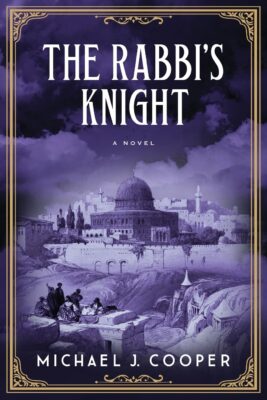
  • THE RABBI’S KNIGHT by Michael J. Cooper – Historical Fiction, Mystic Theology, Adventure


    Knight Templar Jonathan St. Clair bears two messages for Rabbi Samuel of Baghdad, one of mortal treachery and another of mystic wonder. In The Rabbi’s Knight by Michael J. Cooper, they journey across the Holy Land to Jerusalem while divisions of faith portend the bloody conclusion of the Crusades.

    Games of knowledge and influence play across the Mamluk Sultanate, as the Latin Kingdom holdout city of Acre braces for its last fight.

    Samuel and another Rabbi, Solomon Petit, stand opposed in a bitter debate within Judaism concerning the integration of philosophy and science with religious tradition—a controversy sparked by the writings of the medieval philosopher Maimonides.

    Samuel plans to excommunicate Petit for burning the writings of Maimonides and desecrating his tomb. Petit doesn’t intend for him to get the chance. Before Samuel can arrive in Acre, Petit makes a deal with the nearby Emir to kill Samuel in exchange for the secrets of Acre’s defenses as the last city under Christian rule will soon be put to siege.

    Petit’s pupil, Isaac, realizes his teacher’s betrayal only after he helps him carry it out. He rushes to stop the scroll on Acre’s defenses from reaching the Emir, aided by William Wallace, a young Scottish pilgrim bound for Jerusalem.

    Meanwhile, St. Clair and Samuel elude the Emir’s soldiers by hiding in a leper colony on the shores of the Galilee.

    Throughout their adventure, Samuel teaches St. Clair some aspects of the mystic tradition of Kabballah—guiding the knight to an understanding of the inscription on the ancient scroll that St. Clair had brought to Samuel to unlock the hidden secrets of Jerusalem’s Temple Mount.

    The Rabbi’s Knight weaves together fictional characters and fictionalized historical figures into a dynamic, lively cast.

    Each of the central characters brings a distinct view of their world into the story, multifaceted and endearing in their own way. Isaac’s clever and welcoming nature makes Petit’s cruelty against him keen, and his friendship with Wallace—a newcomer unfamiliar with the region—pushing both young men to consider how they relate to the broader conflicts around them. As intrepid underdogs, their side of the story is particularly exciting to follow.

    We also gain insight into the motivations of the villains, as bound by histories of violence as they are willing to perpetuate them. Rabbi Petit ruminates on the burning of Jewish holy texts in France while plotting the death of his own chosen ‘heretic’. Emir Abdullah and Prince Khalil, son of Qa’la’un, both use the coming siege of Acre as leverage to grasp at the Mamluk Sultanate throne.

    St. Clair and Samuel share a confluence between their faiths, nurturing a friendship that underpins their journey, though disagreeing in the face of Zahirah—a Mamluk woman who joins their pilgrimage from the leper colony. Samuel tries to convince St. Clair that his growing affection for Zahirah is a sanctification of God, rather than a betrayal. Zahirah herself embraces her desire for St. Clair, dedicated to her own bold will despite how much it clashes with her culture’s expectations for women.

    Readers get the pleasure of growing familiar with these good-hearted people through their complicated negotiations with religious philosophy and the various social structures that shape their world.

    Cooper relishes in historical detail, welcoming readers to the lived-in corners of 13th-Century Palestine.

    Isaac maneuvers through the cosmopolitan port of Acre while its Templar defenders are supplied by sea for the looming attack. The narrow alleys of Jerusalem reveal remnants of ancient history beside the works of restoration and craftsmen. Wallace chafes with his gaudy disguise as a Genoese merchant. Lepers cling to the hope that Rabbi Samuel’s examination will declare them clean.

    The Rabbi’s Knight opens with a helpful map of the Holy Land in 1290. As the characters journey through it, readers get to explore living cities and hallowed landmarks through reverent sensory descriptions.

    Despite how far in the past this story takes place, the setting feels suitably ancient to the characters themselves. They and readers share the experience of trying to understand a long-past but still relevant time.

    Beneath its adventure, suspense, and history, The Rabbi’s Knight embraces a mystic philosophy of the pan-human search for the divine.

    Jewish theological debate defines the conflicts between Rabbis Petit and Samuel, while Samuel’s instruction of St. Clair introduces readers to some Kabalistic concepts—uncovering the layered emanations of God’s essence. In his role as teacher, Samuel refutes the sectarian divides between and within different religions, insisting that each faith is dedicated to understanding the sacred pattern of creation.

    The characters themselves grow to reflect this philosophy, risking all to help one another, they come to a far greater understanding of the world than they ever could have alone.

    A thoughtful and rewarding tale, Michael J. Cooper’s The Rabbi’s Knight will satisfy lovers of history and theology alike, all on a well-paced adventure to the Holy City. Readers can follow the story further, centuries into the future, through Cooper’s earlier novels Wages of Empire and Crossroads of Empire.


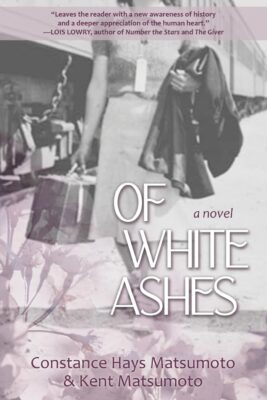
  • OF WHITE ASHES by Constance Hays Matsumoto and Kent Matsumoto – WWII Historical Fiction, Asian American Literature, Romance


    When the world is upended by war, the important pieces of your life fall around you, victims of a swirling wind. This is the story of Of White Ashes by Constance Hays Matsumoto & Kent Matsumoto.

    Just as radioactive ashes smothered Hiroshima after the United States dropped its first atomic bomb on Japan in August 1945, the unimaginable effects of war press down on Ruby and Koji, two kids on opposite sides of the Pacific.

    Ashes caught in swirling wind become a metaphor for the romantic story of these two children. Their mirrored journeys reveal layers of their identities they never knew existed, while the demands of their warring countries reshape their lives.

    Grounded in historical accuracy and part love story, Of White Ashes begins in 1939 with Ruby and Koji both living happily, Ruby in a beachfront Hawaiian town and Koji on his family’s farm near Hiroshima. Both will have their carefree childhoods taken from them after the 1941 attack on Pearl Harbor.

    Ruby and Koji share Japanese heritage and American citizenship, but far divergent attitudes to both.

    Ruby is an all-American girl, only vaguely aware of her heritage, largely from Japanese-American community. Koji, in contrast, only finds out about his American citizenship when he discovers his parents’ secret history of living several years in the U.S. All the while, Japan, the country he calls home, plunges headlong into the war.

    Ruby is ripped from her peaceful life, first by her mother’s sudden death and her father’s quick remarriage, then by forced incarceration due to the United States’ Executive Order 9066.

    Made a prisoner because of her race, Ruby grows embittered about her government’s willingness to persecute rather than protect all U.S. citizens because of its entrenched racism. Her fight is both philosophical and personal, and becomes more extreme when she is told by her father that she must emigrate with him back to Japan after the war. As a child she is powerless to make her own decisions.

    Koji, on the other hand, is curious and fascinated about his American heritage even though he must act like the standard-issue, politically faithful child expected by Japanese government and society.

    He sees his government’s harsh demands for people to scrimp for the war effort, taking every scrap of metal in their households for weaponry, and forcing children to leave school to make rifles in factories. Once the war ends, he manages to immigrate to the U.S. where he learns to speak English, goes to college, and even volunteers to serve in the U.S. Army during the Korean War. Despite the horrors of World War II, and his early life in Japan, he emerges as a proud U.S. citizen.

    Constance Hays Matsumoto and Kent Matsumoto’s Of White Ashes develops a beautifully complex love story through Ruby and Koji dealing with their deeply held differences.

    Their diametrically opposed philosophical stances cause years of heartache and stress after they meet and fall for one another. There is no easy path to pave over their conflicts no matter how many years have passed. However, as they couple, uncouple, and finally find a lasting path together, their story becomes a warm, relatable search for the goodness deep within themselves and each other that makes being together possible.

    Of White Ashes by Constance Hays Matsumoto and Kent Matsumoto won Grand Prize in the 2024 CIBA Hemingway Awards for 20th Century Wartime Fiction.


  • Inês: The Queens of Portugal Trilogy by Catherine Mathis – Historical Fiction, Romance, Courtly Intrigue


    Blue and Gold Chaucer 1st Place BadgeInspired by a true story, Catherine Mathis’s incredible novel, Inês: The Queens of Portugal Trilogy, follows the forbidden love of Ines de Castro and Infante Pedro, and their indelible connection to one another even after a most tragic death.

    Alfonso, the rightful heir to the Portuguese throne in Chao da Feira Palace in Santarem, nearly loses his crown to his stepbrother. Goncalves, a courtier, rescues the situation, earning him the king’s undying loyalty. Alfonso puts his son Pedro under Goncalve’s care to learn the moral code and values of the royal court. As the heir to the Portuguese throne and an only child, his father arranges a royal union for him with Infanta Constanza, a Castilian noblewoman.

    Love, however, does not conform to alliances or compromise. The arrival of 15-year-old Ines de Castro of Castile in 1339, a lady-in-waiting to Infanta Constanza, creates a precarious rift between a father and his son. Pedro falls madly in love with Ines despite being already married to Constanza. He begins an affair that displeases the king and fuels palace gossip among the nobles. Fearing for the independence of his nation and possible revolts, King Alfonso is forced to take drastic measures that fan power struggles, betrayal, dishonor, and even death.

    Catherine Mathis takes a blazingly smart and deep dive into an era of history that still resonates today.

    With rich, robust, and evenly matched characters, she offers a historically accurate plot that is voyeuristic in all the right ways. Being fictionalized, in part, there is a lot to relish in the author’s creative craft, such as the introduction of minor characters who propel the plot into a sweeping conclusion. Plunging readers into the royal heart of a love story that has shaped history, Inês: The Queens of Portugal Trilogy is sublimely sensual with a captivating sense of charm.

    Although it has a well-trodden conflict alongside it, this romance between a royal heir and a lady-in-waiting will gratify readers. Mathis excels through an abundance of tense and evocative dialogue, balancing it with the right amount of lively banter. The result is a tour de force that is surefooted and rich in human emotion.

    The book’s details are brilliant and perceptible, whether they are used to describe the culture, sounds, attitudes, or smells of 14th-century Portugal.

    The text’s most imperative scenes, within the palace walls, exude the intrigues of an institution that influences every sphere of society.

    Inês: The Queens of Portugal Trilogy is a compact tale of love, loss, vengeance, and justice, delivering a swift kick to the heart. Exquisitely researched and told at a rapid pace, Mathis’s debut offering is a sweep of grace and virtuosity in its genre.

    Inês: The Queens of Portugal Trilogy by Catherine Mathis won First Place in the 2019 CIBA Chaucer Awards for Pre-1750s Historical Fiction.


    5 Stars! Best Book Chanticleer Book Reviews

  • BACK To BAINBRIDGE by Norah Lally – Middle Grade, Contemporary Fiction, Friendships & Family


    Norah Lally’s upper middle grade novel Back to Bainbridge sees unstable family life through the eyes of thirteen-year-old Vicki Hanlon. The story opens as her single mother has just lost another boyfriend, and the family is being evicted from their house in upstate New York.

    Vicki’s memories, recalled as the family travels on the interstate down to grandmother’s apartment in the Bronx, shows the tumultuousness of her young life so far. It has left her with a world view based on disappointments, leaving friends, and the absence of a secure home.

    To say Vicki’s family is dysfunctional would be an understatement. She can predict her life circumstances based on her mother’s relationships with men: happy, bereft, flirty, angry. As the eldest child, she cares for her siblings when her mother can’t despite how young Vicki herself is. Judith, her younger sister, wears her scars in the form of mistrust and cynicism, while her ten-year-old brother Dylan still clings to his stuffed bear as a small piece of reliable comfort.

    Vicki’s mother deems their stay at grandmother’s home temporary, but also realizes she needs to change her life for her children’s sake. She promises this new beginning will be good for them all. Vicki can’t believe her, but one minute after meeting her grandmother she realizes this no-nonsense woman means business, and they need her for their very survival.

    Vicki wants a stable home life, but she wants friends and a sense of belonging even more.

    That first night in her grandmother’s home, she hears the voice of an angel. She opens the window and meets Rosa, the daughter of the building’s superintendent. They form an instant bond, and Vicki has her first friend inher new neighborhood. Then she meets James, the skater-dude whose problematic parents abandoned him to live with his aunt in the same apartment building. His parents’ past unruly behavior has left a bad impression on the other tenants, an unfortunate reputation that sticks to James like stale perfume. No one trusts him, not even Rosa, but Vicki won’t let anyone tell her who she can and cannot be friends with. She immediately sees something she likes in James and gives him the benefit of the doubt.

    Vicki even refuses to judge her cranky downstairs neighbor, Mrs. Kirby, based on other people’s opinions. Word on the block is that she’s an old witch, but Vicki embraces everyone—a trait that proves invaluable as her friendships begin to blossom and change her view on the world.

    When the talented Rosa leaves for a cultural-artistic summer camp, she entrusts the keys to her secret hideout with Vicki so that she can feed the rescued cats living in the basement against building rules. Vicki agrees but she has an ulterior motive for wantingthe keys; the ability to gain access to the basement storage units, especially the one holding her mother’s magenta bag. She suspects her mother has been keeping secrets about her father, whom she dreams of reuniting with in California.

    What Vicki discovers in her exploration of the storage units surprises her. She uncovers forgotten treasures that tell the stories of her neighbors’ hidden lives, and as Vicki learns more about the multi-dimensional humans whom she sees each day, she realizes that there is truly more to everyone than what meets the eye, and she has empathy for them all.

    Through her experiences, Vicki comes to respect the people of Bainbridge Avenue, and she becomes a builder of bridges, not walls, until even her own mother opens up to her and they grow closer.

    The changes that occur over the course of this novel in Vicki, her family, and her new friends on Bainbridge Avenue show us the power of respect and understanding to heal and create lasting bonds. Vicki embraces acceptance and forgiveness, even after she learns about family secrets that her mother and grandmother have tried to keep shrouded due to shame and fear of being judged. In the end, the family is able to support one another and look ahead to better days.

    Lally writes lovingly with great respect for kids and their real-life challenges, and the diverse urban setting of the Bedford Park neighborhood in the Bronx (where Lally’s own grandmother lived) is brought to life in intimate and vibrant detail. But the greatest gift you will receive by going Back to Bainbridge with Vicki in this book is the simple but profound recognition that everyone is deserving of being seen for who they are, afforded the grace to stumble and get back up again, and having  a place to call home where they can feel a sense of safety and belonging. This charming debut novel is must-read for kids and adults alike.

    Back to Bainbridge by Norah Lally won Grand Prize in the 2024 CIBA Getrude Warner Awards for Middle Grade Fiction.


  • A PAWN’S GAME by Julie Lomax – Psychological Thriller, Serial Killer Thriller, Suspense


    In A Pawn’s Game by Julie Lomax, David Morgan wants a fresh start. He moves his family to Chicago, hoping to break his wife Liv away from her habitual affairs. But the Windy City doesn’t offer easy salvation.

    Emily, his teenage daughter, is angry in their new home, and David soon notices Liv’s eye wandering towards their neighbor Eric. Not only is his family life falling apart, but he soon discovers his coworkers have stolen his idea and presented it as their own.

    David finds peace only during his early morning runs. When David decides to play chess with Lehman, an elderly man he meets in the park, he never imagines that the game will draw him onto the board of a devious serial killer. Each lost piece tears away at more of his life, and casts David as nothing more than a pawn himself.

    As he starts to run out of moves in this game of real-life consequences, David must learn to rely on himself and become the king of his own destiny before he loses everything.

    David’s “punching-bag” mentality leads to an avalanche of problems, beginning with his wife’s infidelity that now focuses on their new neighbor Eric.

    He abandons a long-term job and forces Emily to leave behind her friends and her position on the cross-country running team. David can clearly see that Liv is a problem and that she will never change, but rather than separating from his disrespectful, unfaithful wife, he chooses to make both himself and Emily miserable. When Eric makes a pass at Emily, David has the perfect opportunity and reason to confront him, yet he doesn’t, choosing instead to brood angrily.

    It is only after playing chess against Lehman that David begins to understand the need to leave his perpetual defensive position.

    Rather than allowing Lehman’s game to completely destroy his life, he begins to devise a strategy of his own. Lehman is clearly the better player, but David refuses to go down without a fight. He begins to control of his own board, taking daring gambits despite the risk.

    Julie Lomax’s A Pawn’s Game is a bold psychological thriller where one wrong move can end the game for good. It fuses the elegance of chess with raw human emotion. From a seemingly supernatural chess game to a manhunt for a serial killer, readers will enjoy this cat-and-mouse competition.


  • NAKED In The NOW by Marijke McCandless – Personal Transformation, Meditation, Mindfulness

    Naked in the Now: Juicy Practices for Getting Present by Marijke McCandless is a spiritual and psychological journey for restless minds to find authenticity, awareness, and how to be fully alive—an intimate quest and relational bridge between oneself and others.

    Naked in the Now takes readers to landmarks of practice and reflection towards transcending the pressure of external achievements and cultivating instead present contentment within. Refusing the tonality of “fix yourself,” this guide invites one to rediscover their naked self, with several chapters acting as open letters to read and linger over.

    The introductory chapters focus on basic mindfulness and ease, while the later ones expand their scope to cover relationships, communication, and intimacy. A blend of poetic and practical styles ushers readers towards personal discovery in a way that balances firm instruction against a gentle directing hand. What coalesces by the end is a manual that calls forth one’s intrinsic goodness and connection through self-acceptance, playfulness, and vulnerability.

    The Buddhist idea of Dukkha (dissatisfaction) opens the journey, with McCandless referencing a nagging feeling of missing out on something despite being superficially affirmed in life.

    Ascribing this disillusionment to a “conditioned mind,” McCandless infers the solution to be in resting in the present moment. Aesop’s fable North Wind and the Sun, illustrates this idea through the power of warmth (awareness) over force.

    Naked in the Now goes on to explain mindfulness and meditation in an intrinsically playful manner: employing tactics of finding four-leaf clovers and watching rainbows as childhood memories, highlighting the real joy found in the process rather than the results.

    Metaphors of meditation as a “mini vacation” and “intimacy with lover” complement the intrinsically playful philosophy with practices such as breath watching, golden light relaxation, and sensory awareness. Journaling, self-inquiry, and devotion-based prayer further prepare readers to dismantle harmful mental conditioning.

    Further along, Naked in the Now takes a deeper turn–the inner striptease–guiding readers with suggestions on peeling off their social masks, roles, and ego identities.

    Tools such as Tarot/I Ching offer a novel perspective on the self. The focus then shifts to relationships, with pink light meditation, Tibetan tonglen (inhaling suffering and exhaling love), and love-letter exercises all reinforcing the idea that healing involves both oneself and one’s connection with others.

    Centering the interplay of communication and presence, practices such as reflective listening, gestures of a smile, sacred spaces, soul gazing, and mirror meditation all work to transform vulnerability into strength.

    The final stop is reaching the stage of “getting naked,” to lay bare one’s real desires and fears without filters through a gentle, moment by moment unfolding.

    This is a call to meet with a raw and vulnerable being, but also the most authentic and beautiful version of self.

    Each chapter cries out the motto of “Ease Over Effort”: real transformation dawns in coming home to oneself and surrendering, not in a tireless hunt for self-improvement.

    A tranquil sitting with inner restlessness becomes the goal, instead of forceful control of that chaos. Corresponding themes show in Naked in the Now’s advocacy for childhood wonder over stifling adulthood. This reminds us of how mindfulness isn’t necessarily a boring or rigid practice, but can be a joyful game. Conversely, the metaphor of the inner striptease emphasizes the significance of sober authenticity and vulnerability, with oneself and others.

    This book caters to readers who aspire to slow down from an over-scheduled life.

    It’s a soft entry point to meditation and mindfulness, a compassionate alternative to traditional and often tedious self-help narratives. Transcending aloof philosophy, this work is an experience-based, practice-oriented guide. It invites readers to learn the ways to a life of ease, love, and wonder.

    “Learning how to be still, to really be still and let life happen—that stillness becomes a radiance,” this quote by Morgan Freeman captures the essence of Naked in the Now. A guide that asks not for harsh effort but for an open-hearted willingness to nestle in inner moments and accept, without judgments, one’s emotions and desires.


  • RALPHY’S RULES For LIVING The GOOD LIFE by Talar Herculian Coursey – Children’s Animal Stories, Children’s Self-Esteem Books, Picture Books


    Ralphy’s Rules for Living the Good Life by Talar Herculian Coursey teaches big lessons about seeing yourself and the world with kindness through an approachable, gentle, and colorful story for young readers.

    Joey the squirrel isn’t just grumpy but downright cranky. He’s weighed down by pessimistic thoughts about himself like “I’m not good at math” and “I’m funny looking.” But Joey bumps into Ralphy, a happy dog who introduces Joey to his different, empowering perspective, Ralphy’s Rules for Living the Good Life. Ralphy teaches him critical lessons on emotional resilience, which are communicated in a way that any child can identify with.

    Ralphy’s Rules for Living the Good Life stands out among its peers for its easy and flowing writing.

    The rhythm of dialogue between Joey and Ralphy makes reading aloud feel like you’re overhearing a conversation between two friends, one a little wiser than the other.

    Meri Andreasyan’s bright, warm, and expressive pictures make Joey’s frowns and Ralphy’s cheerful energy come alive.

    Through them young readers can easily understand Joey and how he changes as he learns. His initial words and way of seeing the world may remind you of moments as a child or even as a grown-up when you have muttered to yourself or to others about how you are not enough.

    The themes of kindness, resilience, self-love, and understanding others are clear but never heavy-handed.

    These lessons are not only for children but adults as well. They remind readers not to take things so personally, not to be so hard on themselves, and sometimes to be just a little bit braver.

    Ralphy’s Rules for Living the Good Life by Talar Herculian Coursey is cheerful, encouraging, and real. It’s a story that gives children life lessons they can adopt right away, and one that parents will appreciate for its lingering message of kindness to oneself.


  • A PLACE CALLED HOME by Nora G. Ho, Illustrated by Marlon at GetYourBookIllustrations – Picture Books, Children’s Animal Stories, Children’s Cat Stories


    A Place Called Home, a kitten leaves his barn to adventure around the redwood forest, looking for somewhere he belongs among the diverse wildlife.

    The pond’s singing frogs and leaping trout draw his interest, but kitten certainly wouldn’t fit in underwater. He gets nervous in the woods, so vast around him, but also decides against a bunny burrow because it’s not nearly big enough. After intruding on a skunk’s dumpster and a bear’s cave, kitten finds his way back to the farm. Even the friendly pigs are too muddy for his fur.

    His journey returns to the barn with his mama and siblings, where kitten finds home waiting for him.

    Ho’s writing creates an easy and educational read-along for young children.

    Each line fits into a simple rhyming scheme. Frequent use of synonyms makes this book an effective introduction to new vocabulary, with a glossary in the back for less familiar words like ‘furrow’. Onomatopoeia words like “ribbit” and “oink” create an engaging and multisensory world of imagination for the readers.

    A Place Called Home teaches kids about the living habits of different species, from burrowing bunnies to slimy slugs. The book ends with further rhymes about each animal, along with a message on respecting wild creatures and the importance of the Redwood trees. Children interested in nature will share in the kitten’s curiosity throughout his journey.

    The art by Marlon at GetYourBookIllustrations gives vibrant personality to both the places kitten goes and the animals he meets.

    Landscapes stretch wide around the little kitten, each with its own visual identity. Pastel blue waters ripple around the frogs, titanic Redwoods reach far above the edge of the page, a skunk guards the colorful contents of its dumpster.  The imposing stones of the bear’s cave give way to a familiar green farm and finally the warm-lit wood and hay of the barn.

    Marlon depicts each animal with realistic shapes in motion, stylized enough to show their reactions to kitten. With his black fur, kitten pops against the bright colors of the background, highlighting the attention to detail in his dynamic feline mannerisms—the fuzzy attitude that any cat lover will recognize.

    An educational romp through nature and comforting bedtime story, Nora G. Ho’s A Place Called Home will be loved by any young reader.


  • ENEMIES DOMESTIC: Lark Chadwick Mysteries Book 6 by John DeDakis – Political Thrillers, Suspense Thrillers, Mystery


    John DeDakis’s Enemies Domestic explores the pain, conflict, and intrigue behind the glitzy corridors of power, exploring with striking honesty and emotional depth the delicate battle between truth and artifice.

    Beneath political headlines, a human story unfolds. Book Six in the Lark Chadwick Mystery series, Enemies Domestic comes out as a contemporary political thriller that exposes the politics of the White House amidst one woman’s personal anguish, professional stress, and inner strength.

    Lark’s shattered self-confidence flounders beneath the expectations of the world. She must balance the shadows of her past, media intrigues, and power machinations as she goes from being a journalist to a political spokesperson.

    We meet Lark Chadwick in her role of Press Secretary to the President of the United States, whose every word is weighed, every silence analyzed, and every gesture can become national news.

    Power in this world, as Lark soon finds out, is measured not just by truths revealed, but those withheld. Every question in the press room is wrapped in politics, and inside the White House there is a strategy hidden behind every smile. Many times, Lark is forced to decide whether to tell the truth or become part of a system built on constant deception. In Enemies Domestic, enemies are not seen but felt.

    Managing such a sensitive environment, Lark must hide a grief that has shaken her mental stability to show only strength in front of the world.

    Tensions rise as political storms converge with personal ones. A press scandal, a security leak, and a private investigation challenge Lark on every front. She questions whether even the people she trusts are another sham. By the time she gets closer to the truth, she’s already many steps behind. Enemies Domestic gradually builds a sense of restlessness, binding the reader and forcing them to think each action through alongside Lark.

    DeDakis’s clear, precise narrative style reflects his lived experience in journalism.

    Short chapters balance a quick pace and deep plot. His naturalistic dialogue achieves meaning above dramatization through polite but sensitive language. Even in complex political discussion, the word-choice remains graspable.

    Three central themes guide the story’s emotional weight: the contrast of power against helplessness, the role of the media, and the process of healing from grief.

    Lark’s story reveals how, even at the height of power, a person may be breaking inside. In public life, vulnerability isn’t just rare; it’s dangerous.

    Her inside knowledge as both journalist and representative highlights that power of media to not only report fact but also to shape public perception, even twisting the definition of truth.

    As she becomes mired in political schemes and performance, Lark confronts grief as more than only internal, but as something that can deeply affect our professional decisions and persona. She can’t defer her sorrow forever.

    Enemies Domestic by John DeDakis is a daring take on the familiar ground of political thrillers.

    Lark Chadwick faces off against immense social and political pressure to forge a path of truth for herself. Her story makes us think about how often true emotions and human stories are hidden from the unclosing public eye.

    This is a thriller that blends urgency with introspection. It not only excites but upholds compassion, truth, and courage, leaving readers with the lingering question—who is the real enemy?

    Enemies Domestic by John DeDakis won Grand Prize in the 2024 CIBA Clue Awards for Suspense and Thriller Mysteries.


  • RALPHY’S RULES For FEELINGS by Talar Herculian Coursey and Riley Herculian Coursey, illustrated by Meri Andreasyan – Picture Books, Children’s Educational Books, Children’s Emotion Books


    A gentle and thoughtful picture book, Ralphy’s Rules for Feelings by Talar Herculian Coursey and her son Riley Herculian Coursey, illustrated by Meri Andreasyan, helps young children understand and manage their emotions.

    Ralphy the cheerful school bus-driving dog takes along Jackson Johnson, a wise and compassionate “Furrapist” (furry therapist) for the first day of school. As children board, Jackson gently encourages them to name their feelings and reminds them that all emotions are welcome.

    Jackson introduces a creative way for the children to embrace their feelings as normal while taking some control over how they start their year.

    Some of the kids are scared, some sad, some tired, and others nervous or embarrassed—only one of them hops onto the bus excited. Instead of telling the children to push aside their negative emotions, Jackson tells them it’s okay to feel that way and that they can sit their feelings down next to them. Once they get to school, they can choose to take the feeling with them or leave it on the seat.

    Ralphy’s Rules for Feelings teaches children how to recognize their own emotions and the thoughts behind them.

    One of the kids feels sad because she misses her mom, but through Jackson’s gentle guidance shifts her focus to the fun she’ll have jumping rope with her friends at school.

    The idea that you can feel your feelings but don’t have to be controlled by them is both powerful and comforting to children in a world that often tells them to simply behave or stop crying.

    Ralphy’s Rules for Feelings nails this concept, reassuring kids that it’s okay to first acknowledge their emotions, then study them, and finally decide on how they want to change them. In capturing this insightful message, the book proves to be more than just a story but a practical tool for emotional regulation.

    Meri Andreasyan’s, gentle yet vivid illustrations render Jackson’s lessons both playful and soothing.

    The characters’ facial expressions capture their feelings without needing lots of extra words, making this book especially welcoming to young children.

    Parents, teachers, and counselors can use Ralphy’s Rules for Feelings as a springboard for conversations about difficult emotions, particularly with children who are starting school, navigating change, or dealing with anxiety.

    Ralphy’s Rules for Feelings by Talar Herculian Coursey and Riley Herculian Coursey guides kids through its memorable strategies with age-appropriate language and a kind, encouraging tone.

    An essential read in every home, classroom, and library, Ralphy’s tale will also help adults talk to children in a more thoughtful way. This friendly and concise lesson in an essential life skill comes highly recommended for ages 3–8 and any adult who wants to teach emotional intelligence in a clear and joyful way.