Category: Reviews

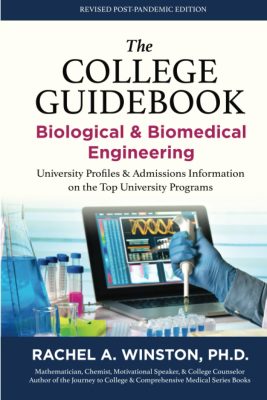
  • THE COLLEGE GUIDEBOOK: Biological and Biomedical Engineering by Rachel A. Winston, PhD – Education, Guidebook, Inspirational

    THE COLLEGE GUIDEBOOK: Biological and Biomedical Engineering by Rachel A. Winston, PhD – Education, Guidebook, Inspirational

    The College Guidebook: Biological & Biomedical Engineering by Rachel A. Winston, Ph.D., is a unique and useful college admissions guidebook with invaluable information on internships, testing, interviews, and scholarships, along with research and profiles of 56 universities that offer programs in biological and biomedical engineering.

    Dr. Winston wrote this book to give her engineering students, and aspiring biomedical engineers like them, the tools to pursue their interests. This work will give curious students insight and inspiration to achieve their goals, such as various methods by which to present their abilities and talents to admissions committees. The author, an educator for nearly forty years, has been a chemist, research scientist, mathematician, college professor, and more, and has the know-how and expertise to guide students through the labyrinth of academia. All the while, Winston peppers the work with inspirational quotations, such as “Scientists dream about doing great things. Engineers do them.” —James A. Michener

    Young people must ask themselves what they want to do with their life, and a handy reference book like this one is a rare, valuable boon in helping help them find the answers.

    The College Guidebook provides a remarkably comprehensive view of its chosen fields: a broad explanation of biomedical engineering and its past, present, and future; the expectations and training for the field (such as high-tech healthcare, nanotechnology, informatics, prosthetics, and mimetics); how to prepare academically; the summer programs and internships for high school and undergraduate students; university options and which programs are best suited for those interested; college admissions, tests, essays, resumé, and recommendations; how to pay for the education; the employment outlook; a list of the accredited biological, biomedical, and chemical engineering programs; the top programs in adjacent engineering fields; and more. This guidebook offers everything those students may find useful.

    This book offers encouragement to those students with questions, and comfort to those who have concerns about which schools offer the subjects they need and with which companies they can find employment post-graduation.

    “The future is yours. Choose a path that makes sense for your life goal. The information contained in this book will lead you on your way and, hopefully, inspire you as a leader who empowers others along their educational pathway,” Winston reminds the reader.

    Dr. Rachel Winston’s deep understanding of biological and biomedical engineering allows her to guide prospective students through all the possibilities in these fields.


    5 Star Best Book Chanticleer Reviews round silver sticker

  • AMBITION, ARROGANCE And PRIDE: Families & Rivals in 18th Century Salem by Sandra Wagner-Wright – Audio Book, Revolutionary War, Biographical Historical Fiction, Family Saga

    AMBITION, ARROGANCE And PRIDE: Families & Rivals in 18th Century Salem by Sandra Wagner-Wright – Audio Book, Revolutionary War, Biographical Historical Fiction, Family Saga


    Sandra Wagner-Wright’s historical fiction novel, Ambition, Arrogance and Pride tells the story of two powerful families during the founding of America – now brought to life in audio format by award-winning voice actor Christa Lewis.

    Wagner-Wright’s fluid prose lends itself to being read aloud, and listeners will be wholly transported by this tale of early Americana. Life in the Salem/Boston area at the birth of our nation takes wings as Lewis breathes energy into this engaging cast of characters.

    Ambition, Arrogance and Pride explores a few select families as they merge through marriage to form privateering empires. The focus on the women’s point of view gives us a unique perspective on the lives of the powerful men in these families. From the inception of their dreams and aspirations, we follow their journeys in a time without electricity, running water, or antibiotics, a life rustic yet gentle.

    The excellent choice of narrator for this project accentuates the limited role of women in this time and place – as partners to their husbands.

    Wagner-Wright imagines a world where these partnerships are egalitarian, with these women having a say in all aspects of life, from buying real estate to running and investing in business ventures.

    The daily lives of women running households, giving birth, and preparing for funerals bring us back to a time when infant and childbirth mortality were high and tuberculosis ran rampant, with no effective treatment. We grow to care for the central characters and must grieve with them in the face of these losses.

    We explore the United States’ independence story through the eyes of Mary, whose personal ties to the conflict illuminate many of its causes and details. She’s terrified for her family, especially her husband, as the colonies and the sovereign crown of England clash over high taxes and unfair tariffs. After the Boston Tea Party, Mary switches her drink from sweet tea to bitter coffee.

    Wagner-Wright and Lewis pair up to give a rendition of Ambition, Arrogance and Pride that gives us a place within the drawing rooms of the Derby and the Crowninshield families.

    We face the fears and hardships of their seagoing lives, and learn how uncertain and dangerous the future of the American colonies was.

    This historical and somewhat biographical novel based on early American roots provides a glimpse into the lives of people who dared to fall in love, venture into uncharted waters, and create dynasties. We meet merchants who develop trade routes halfway around the world and gamble their life savings on trade with China, India, and beyond. 

    This audio version of Ambition, Arrogance and Pride shines as the well-crafted story unfolds through a reading that deeply understands it. Fans of historical fiction, Americana, and Revolutionary narratives alike will be gripped with interest throughout this book. A must-have for Wagner-Wright fans and readers who want a great listen on long walks, commutes, or road trips.

    You can read the review of the print version of Ambition, Arrogance and Pride here.


    5 Star Best Book Chanticleer Reviews round silver sticker

  • COLD PEACE: A Novel of the Berlin Airlift, Part 1 by Helena P. Schrader – Historical Fiction, Post-WWII, Military Aviation Fiction

    COLD PEACE: A Novel of the Berlin Airlift, Part 1 by Helena P. Schrader – Historical Fiction, Post-WWII, Military Aviation Fiction


    Amidst the ruins of Post-WWII, Berlin struggles to rebuild from the ashes, torn apart and facing down the promise of another bloody dictator. A myriad cast, all shaped by that same war, become entwined with the broken city as its hour of need approaches.

    Just as Germany is divided between the Americans, British, French, and Soviets, Berlin has been cut into pieces. But the balance of the occupation powers tips eastward as the Soviet Zone surrounds the city, giving them control of all ways into and out of Berlin – save for the air. The occupation currency is worthless thanks to Soviet over-printing, leaving Berlin on a barter system of cigarettes and black-market trading. In order for Germany to recover, the Western Allies plan to introduce a new currency, even if it angers the Soviet bear.

    To fight over the city with tanks and planes would mean a third world war and a battle for Berlin that the overwhelming Soviet military force would win without question. This fight must be one of resources and diplomacy. But the Soviets have little interest in rebuilding Germany, preferring to loot from, starve, and rape the defeated Berliners as their means of taking ‘reparations.’

    Amidst gridlock in the Allied Control Council and a populace that largely refuses to elect Soviet sympathizers, SMAD (Soviet Military Administration in Germany) tries to push the Western powers out through intimidation and ever-harsher strangling of transit along the streets and railways.

    Berliners and occupation forces alike try to build their own future, while bearing the weight of the city’s future.

    Robert “Robin” Priestman takes a position as Wing Commander in Gatow, a former Luftwaffe airfield now used by the RAF – located in the British Sector of Berlin – that is, deep inside the Soviet Zone of Occupation, which surrounds Berlin. Memories of his time as a POW haunt him, and he doesn’t understand what the purpose of RAF Gatow even is. However, when a Soviet pilot crashes into a British civilian plane, and as SMAD makes greater plays for unilateral power over Berlin, Robin prepares to use his planes and runway to keep Western opposition alive, for the sake of the Berliners.

    David Goldman’s disapproving father weighs him down with a massive inheritance, forcing him out of the RAF and into a business of his own. But heavier on his shoulders are the old properties owned by his aunt and uncle in Germany – before they were murdered by the Nazi regime. David faces a former Nazi officer in the home that holds so many of his childhood memories and resolves to bring the man to justice.

    Charles “Kiwi” Murray, David’s closest living friend, helps him to build an air ambulance business, AAI (Air Ambulance International). Berlin needs such a service desperately, its hospitals hopelessly overwhelmed, and Robin gladly offers them use of Gatow’s runway. Kiwi’s struggle with alcoholism nearly tears this dream – and his friendship with David – apart. But he won’t lay down and let that happen, pushing himself to get their ambulance off the ground, even as David’s own struggles wear him thin.

    Emily Priestman hopes to reconnect with Robin in Gatow as she helps him with his duties. But she’s even less versed in the diplomacy of the rich and powerful than he is, and knows that she needs to find another purpose, for her own sake as much as that of the ruined city around her. That opportunity presents itself through old friends and new, as she joins AAI to fly their ambulance, saving those who had no chance of survival in Berlin.

    Fear and despair hound the people left in WWII’s wake, kept at bay by the hope for a better life tomorrow.

    Charlotte Walmsdorf lost much of her family, and lives in Berlin’s desperation, refusing to even try crossing the Soviet Zone. But her cousin Christian arrives, and though his hope seems naïve to her, she feels a flicker of her own as she teaches Emily Priestman German, joins AAI, and finds herself drawn to David.

    WAAF Galyna Borisenko, whose father was taken from her by the Soviet Union, makes an unlikely connection with Hero of the Soviet Union, Mila Levchenkova. Both Ukrainian women take the considerable risk of meeting with each other, for the chance to speak honestly with someone who understands the pain of life beneath the USSR. Mila’s strength and courage inspire Galyna, as they form a deep and emotionally impactful friendship.

    The City Council of Berlin refuses to back down to the minority Soviet-controlled Socialist Unity Party (SED). Jakob Liebherr, an ardent councilman, holds firm against Soviet misinformation, arguments with his son, and his own terror. He suffered in a concentration camp for his resistance to Nazi power and knows of the tens of thousands kidnapped by the Soviet Union, doomed to a similar fate. His commitment to democracy contrasts the grim state of Berlin with a gripping sense of integrity and determination.

    As Soviet control tightens, each character will have to act with courage and clarity to withstand their grip.

    Helena P. Schrader blends her character’s internal struggles and desires with the traumas of Berlin, creating a powerful and cohesive read.

    WWII left its mark on each of these people, through the ghosts of dead loved ones, injuries that will never leave them, and responsibilities greater than they ever imagined. Some, like Robin and Emily, reckon with the destruction of Berlin as its former enemies. Blackened shells remain where once there were homes, entire stories are missing from those buildings that still stand.

    And yet, restaurants open with only one floor, people make dinner in their kitchens and keep warm beside the stove. Neighbors lend clothes to one another, and even black-market smugglers can be convinced to give away that which they can’t use. Just as Berlin must make life from its ruins, so must all the people within this story.

    Schrader’s attention to detail illuminates a fascinating place and time in history. Her engaging characters and the tense history offers a gripping blend of fiction and reality that makes the complex political/military situation in post-WWII Berlin approachable and clear for readers, regardless of familiarity with it.

    Helena P. Schrader weaves a tapestry of human resilience and courage against the backdrop of post-WWII Berlin. Cold Peace promises to be a captivating journey that will leave readers yearning for the next installment in this important historical-fiction series.

     

    5 Star Best Book Chanticleer Reviews round silver sticker

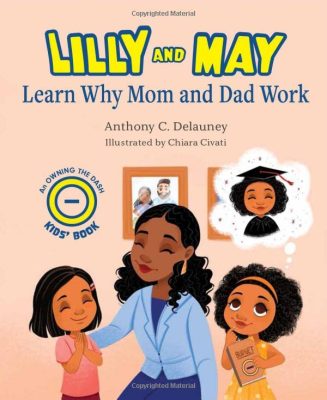
  • LILLY And MAY LEARN WHY MOM And DAD WORK, the Owning the Dash Kids Series by Anthony C. Delauney – Children’s Money & Finances, Picture Books, Children’s Educational Books

    LILLY And MAY LEARN WHY MOM And DAD WORK, the Owning the Dash Kids Series by Anthony C. Delauney – Children’s Money & Finances, Picture Books, Children’s Educational Books


    Lilly and May both wish that their parents didn’t have to leave for work day after day. Discover the power of money and its impact on family in the delightful Lilly and May Learn Why Mom and Dad Work.

    They’re both upset one morning, as Mom and Dad go to work yet again instead of staying home with them. Lilly and May’s mother assures them that they will be back later, but they have to go and earn money to support the family. Before leaving, their mother teaches Lilly and May all the ways they need and use money. She shows how it impacts the people and community around them.

    This heartwarming tale packs a lot of information into a few short passages.

    Explaining finance and economics to children may seem daunting, but Delauney makes it easy and fun in this story. Lilly and May learn about the price of essentials like food and clothes, and that money also pays for the services of others so that they can then support themselves and their families in turn. This short tale even explains how taxes support public services in the community such as libraries, schools, and judges.

    Anthony C. Delauney’s Lilly and May Learn Why Mom and Dad Work is a sweet story that builds foundational financial concepts, valuable lessons for children to have a healthy financial future.


    5 Stars! Best Book Chanticleer Book Reviews

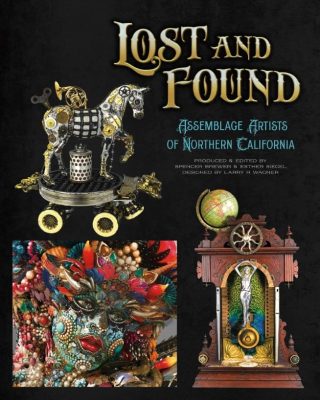
  • LOST And FOUND: Assemblage Artists of Northern California by Spencer Brewer & Esther Siegel – Artist Collection, Art History, Photographs

    LOST And FOUND: Assemblage Artists of Northern California by Spencer Brewer & Esther Siegel – Artist Collection, Art History, Photographs


    Spencer Brewer and Esther Siegel’s Lost and Found brings simple items into an extraordinary new context. This inspiring book is a gallery of enticing photographs, featuring the creative sculptural designs of eight highly accomplished Northern California assemblage artists.

    If ever there was a group of individuals who colored outside the lines, they are undoubtedly represented here. Their assemblages range from the subtle to the shocking, inferring messages serious, poignant, humorous, and whimsical.

    Each artist discusses their work along with their own creative inspiration. They repurpose objects to create a new form, whether to illuminate an imaginary idea, tell a story, or make a forceful statement. Piqued by the castoffs of everyday life, these three-dimensional assemblage pieces are comprised of objects ranging from the likes of jewelry and feathers to kitchen utensils, vintage toys, musical instrument parts, or even skeletal bones.

    Each of these pieces is unique and provocative, both in terms of the artist’s approach and in the medium used.

    Some, like Spencer Brewer and Sean O’Donnell, have a background and/or fascination with musical instruments. Brewer’s “Toot Suite” incorporates bells from 19 wind instruments and honors the patriotic music of John Phillip Sousa. There’s humor in O’Donnell’s “Pistol Whipped” featuring a 1950s cap gun with an electric beater blade extending from the barrel.

    Self-described “later in life” artist Esther Siegel shows, within her narrative, that she is “actually painting a picture with objects.” Clearly a fan of renowned Mexican artist Frida Kahlo, Siegel often weaves images of the artist into her work. A climbing monkey image is undoubtedly a nod to Kahlo’s pet, Fulang Chang.

    A rich combination of work that resonates and work that contrasts pulls the reader inexorably forward through this anthology.

    Artist Hans Bruhner considers himself a hunter/gatherer, assembling pieces that reveal the essence of an animal within salvaged wood. Such creations appear as both real and imaginary creatures.  In stark contrast, Larry Fuente makes strong social commentary with his assemblage constructed entirely of implements intended for killing. Diane Hoffman’s work often links nature and the industrial, and balances light and dark. She personifies inanimate objects, such as in her piece “She Rode in on an Elephant”, in which an oil can serves as the pachyderm’s head.

    Often blending materials like paper, plastic, and wax, “late bloomer” Cat Kaufman, who began her art career at 42, seeks to evoke an emotional response from viewers. In her sculpture “Music For A Rainy Day,” she shows the quiet comfort to be found in wax-infused teabags, wood, string, and violin parts. And from the mind of Monty Monty, cold construction hand-tools create a variety of assemblages as in “Old Road Blues Bike,” a motorcycle crafted from a sax, bells, tires, rims, and gears, or “Running Rooster”, comprised of utensils like forks, spoons, a can opener, and a Swiss-army knife.

    With over 200 pages, fine arts photographer Larry R. Wagner exquisitely captures the eight artists’ work. Wagner’s images keeps clear focus on individual sculptures, showing the detailed nuances that shape and highlight each construction’s imaginative power.

    Lost and Found is a wondrous portrait of collective creativity.

    For those who appreciate art in all its glorious forms, and those who want to understand the visual mindset of artists who embrace the potential in three dimensions, this book will not disappoint. Fans of art history will appreciate a brief, yet knowledgeable section on the development of assemblage arts from their beginnings in the 1900s to the present day. Lost and Found shows the power of art to enrich our lives and nurture the possibilities of future creative work.


    5 Star Best Book Chanticleer Reviews round silver sticker

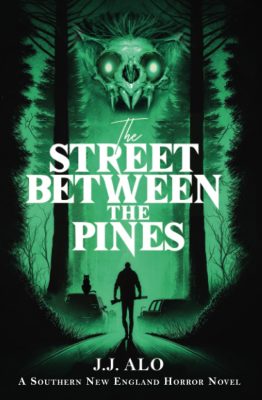
  • THE STREET BETWEEN The PINES by J.J. Alo – Psychological Thriller, Paranormal, Horror

    THE STREET BETWEEN The PINES by J.J. Alo – Psychological Thriller, Paranormal, Horror


    Something strange and terrible stirs in Frank Cavanaugh’s basement, in J.J. Alo’s psychological-thriller, The Street Between the Pines.

    The giant hole at the bottom of Frank’s house wasn’t there before. Something so very ugly and dangerous is down there. Something with bright, glowing eyes. Adrenalin pumps through Frank’s aging body as he scrambles for the exit. Behind him, a low gurgling growl.

    In suburban Connecticut, Iraqi war veteran Curtis is still fighting to surviving on multiple fronts. Curtis struggles with severe PTSD, visions of the war that continually overwhelm him. Now, after being released from jail after a manslaughter conviction, having caused a fatal auto accident, he struggles to put his life together. All the while, he navigates a shaky relationship with his wife Amy, and a complex connection to his autistic son Wes.

    If that weren’t enough, Curtis’s house will soon be condemned for an unspecified government project being built on a nearby piece of land.

    These elements whip together into a story that is rich in detail even as it delivers punch after horrific punch. We feel Curtis’ remorse for the accident that cost the life of a young woman, and the weight of being an ex-convict who must cling to a job that keeps him away from his family for weeks at a time. He shows the texture of life in his suburban community as it once was, but strange events are eating away at this social fabric. From unexplained deaths to hordes of cats seemingly guided along the streets by a group intelligence, this once safe and secure life is melting away.

    Curtis accidentally finds out more than he should have about the clandestine government laboratory that threatens him and his neighbors with its eminent domain authority. Is it a scientific facility researching how the natural world—animals, insects, fish, even the creation of new species—might provide mankind with groundbreaking medicines and technologies? Or is it a place of terrible experimentation, perhaps even the source of the killings, the unknown thing capable of ripping people to pieces as if they were cellophane?

    Can Curtis even trust his own eyes? His traumatic visions invade his nights and his days, leaving him unable to distinguish between what is or isn’t real.

    Do not expect to solve all the mysteries of this book until the last line of the last page. And no cheating! This novel will scratch readers’ horror itch like the writing of H.P. Lovecraft or modern-day master Stephen King. If you want a non-stop, spine-tingling thriller, the kind that keeps you up late at night jumping at every unknown noise in your home, then The Street Between the Pines will deliver in spades.


    5 Stars! Best Book Chanticleer Book Reviews


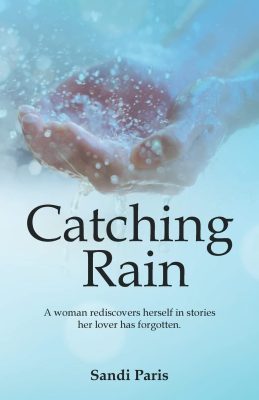
  • CATCHING RAIN: A Woman Rediscovers Herself in Stories Her Lover has Forgotten by Sandi Paris – Memoirs, Surviving Loss, Dementia

    CATCHING RAIN: A Woman Rediscovers Herself in Stories Her Lover has Forgotten by Sandi Paris – Memoirs, Surviving Loss, Dementia


    Sandi Paris’s Catching Rain is a remarkable tribute to life and all that it brings.

    The opening sentence of the first chapter, “My lover has left me” introduces the anguished voice of the author who feels abandoned when her beloved husband forgets her secrets.  This powerful memoir weaves provocative and inspiring memories of the past through stages of her husband’s rare dementia. Paris uses humor and occasional rage to fuel her journey through the catastrophe of his illness, while readers are invited to laugh through tears.

    A diagnosis of FTD (Frontotemporal Deterioration) shatters the beautiful life Sandi Paris and her husband Randy Brown created. Having an explanation of why his brilliant mind and athletic, 6’3” body are faltering at such a young age does not prepare them for the devastation to come. Careers end and dreams of the future crumble while bank accounts are drained. The spectacular wildlife garden they developed together is still young when it becomes clear that their community cannot meet the growing challenges of FTD.  As Randy’s bizarre behaviors increase, Paris desperately seeks the care her devoted life partner is denied. Once that care is secured, she must fight to maintain it.

     The vivid memories that weave through Catching Rain are told in the style of epistolary writings to the author’s spouse when he no longer remembers how she became the woman he loved. Readers are immersed in both past and present when vignettes rise during poignant or outrageous present-day experiences with dementia. Retelling her stories infuses the author with love and determination.

    This consciously focused literary composition exposes gaps in the safety net of dementia care and end-of-life choices. It also reflects on broader societal issues that continue to be relevant today. By revisiting the values shared with her husband, Paris resurrects the deep intimacy and trust their relationship took root in. The heart wrenching story of her disabled son’s birth reminds her to stand and speak for Randy when he loses his voice. Revisiting experiences of religious intolerance prepares her to protect him from people who attempt to override his personal values and wishes.

    By retelling horrifying generational experiences of misogyny and patriarchy, Paris is reminded how Randy himself made changes that gave her hope.  Describing his anguish over the brutal murder of their gay friends, brings focus to the ongoing need to ensure  social and racial justice for everyone, including our LBGTQ communities. Catching Rain promotes change by infusing personal experiences with broader social advocacy.

    Sandi Paris and others like her are relentless in their pursuit of respectfully compassionate care for those facing devastating conditions like FTD. Catching Rain will resonate and impart wisdom and grit to readers who feel alone with their own struggles through end-of-life care and decision making. It also serves as a resource for caregivers and loved ones by providing detailed descriptions of Randy’s disease progression along with suggestions for financial survival and creative management of dementia behaviors or administrative mishaps.

    What begins as a head-on confrontation with FTD dementia eventually surrenders to the inevitable. Acceptance brings a measure of peace at the end of Randy’s life. These intensely intimate stories are intended to honor both tragic and joyful moments.  Readers are encouraged to get uncomfortable and accept unexpected burdens.  Paris challenges us to climb the damn mountain!

    Sandi Paris lights a light with Catching Rain that illuminates her journey of love in action. It is highly recommended!

    Catching Rain by Sandi Paris won First Place in the 2022 CIBA Journey Awards for Overcoming Adversity Non-Fiction.


    5 Star Best Book Chanticleer Reviews round silver sticker

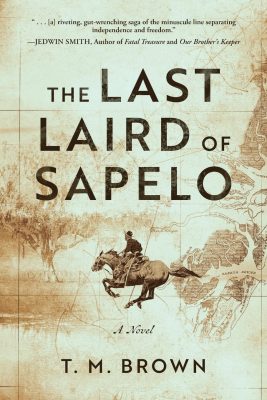
  • THE LAST LAIRD of SAPELO by T. M. Brown – Biographical Fiction, U.S. Civil War, Military History

    THE LAST LAIRD of SAPELO by T. M. Brown – Biographical Fiction, U.S. Civil War, Military History


    The Last Laird of Sapelo, by T. M. Brown, is the story of one man’s tragic death in pursuit of justice, as his way of life, too, dies in the flames of a war that he had tried his damnedest to avert.

    Sapelo is one of the barrier islands off the coast of Georgia. As this story opens, the War Between the States has just begun, and the Confederacy plans to use those islands as a bulwark against the Union gunboats that assuredly will extend their blockade of Savannah all the way down the coast. If the blockade succeeds, then the South’s cotton, the fuel of its economic engine, will languish in Southern warehouses instead of sailing to buyers and allies across the sea.

    Colonel Randolph Spalding, the last laird of the title, committed to the war despite arguing vehemently against it. Now an officer in charge of building a garrison on his own land, he’s caught between military duty, and personal responsibility.

    As the Laird of Sapelo, Spalding is duty-bound to protect his family and his property, including more than three hundred enslaved people. .

    The Spaldings consider themselves ‘enlightened’ slaveholders, giving their slaves more time and ‘freedom’ to work for themselves and have leisure, as well as sturdy houses and decent food. Their neighbors call them fools. The Confederate soldiers see the slaves as their rightful prey.

    His military duty is to keep those soldiers in line. His personal duty is to keep his people safe. When those lines get crossed, he moves Heaven and Earth to make it right. Even if those lengths will cost him his own life.

    This fictionalized biography illuminates a little-known, but pivotal, part of the U.S. Civil War: the defense of the Confederate coastline as it happened on the ground, in tiny communities.

    Spalding draws readers into his own story, telling it through letters and diary entries over the first year of that terrible war. His first-person perspective on those early months, at a point when hopes were high but organization was lacking, foretells the inevitable cost of this fight. The Civil War will exact a bloody cost no matter who triumphs on the battlefield.

    Despite the deplorable cause for which he fights, Spalding’s internal conflicts, filled with intense emotion, make him a riveting character. He faces the scant triumphs and ultimate tragedies of a man who fights to preserve his world, only for it to disintegrate in his grasp.

    The Last Laird of Sapelo will fascinate readers interested in the unsung facets of the U.S. Civil War, those looking for a nuanced approach to the origins of the conflict, and anyone interested in the details of military organization – or lack thereof – in 19th-century warfare.

    The Last Laird of Sapelo comes out August 15, 2023, and is available for pre-order now wherever books are sold!

    5 Stars! Best Book Chanticleer Book Reviews

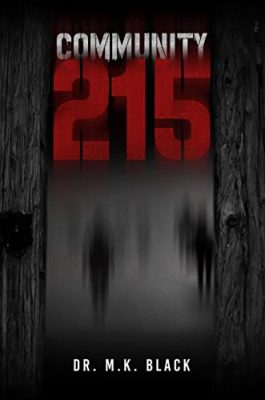
  • COMMUNITY 215 by Dr. M.K. Black – Sci-fi, Dystopian, Romance

    COMMUNITY 215 by Dr. M.K. Black – Sci-fi, Dystopian, Romance


    Dr. M.K. Black’s Community 215 is a fast-paced, sci-fi/dystopian novel about a world that was torn apart, and the people struggling to survive it together.

    Black gives us two teen protagonists, Rhea and Brooks, whom we grow to love. She creates a world both believable and terrifying. As our heroes collide with life inside and outside of the community, their world leaves readers wondering who the two can possibly trust.

    Rhea once tried to climb the wall to get out of their community when she was a little girl. But her father, the leader of the community, caught her and has since that day drilled obedience to the rules into her head. However, she takes the risk of disobedience again at eleven years old, when she catches someone climbing the wall into the community. He begs for her help. She’s caught again and disciplined for trying to protect Brooks, a boy who seeks refuge from the Outcasts who live outside the wall.

    Black masterfully develops Rhea’s community, and the people within it.

    Though Rhea’s is only one such community of hundreds, Brooks is a reject of them all. Having lived outside of any community, he is considered a dangerous Outcast. He tries to convince Rhea that another world exists beyond the walls, a world where people are free and make their own decisions. But Rhea’s education, and the painful brand she received for saving Brooks, have taught her that only obedience and total honesty to her community will keep her alive.

    Over several years, Brooks and Rhea grow close. The testing time is upon them, ready to determine the paths of their lives. Rhea hopes that, like her father, she will become the next leader. And, though she has never heard the word ‘love’, she wants the tests to show that her mate will be Brooks.

    Brooks, however, knew that it was love “at first sight” when he laid eyes on Rhea, as children. He could have opened the gates and let in the leader of his Outcast tribe of warriors right then, but he waited, taking the time to train Rhea in hand-to-hand combat, preparing her to survive the attack.

    Brooks thinks only of Rhea and her well-being, and of their future together outside of the walls of the community.

    Will Rhea believe him when he finally tells her that the communities are actually prisons to keep people docile at the mercy of the leaders? Their survival in this dangerous world is threatened by Rhea’s struggle to discover what is true. Whom should she believe, Brooks, or her father, the only leader she’s ever known?

    Black’s enthralling plot will keep readers turning page after page. The ending of this story seems a bit abrupt, but Black could very well be setting us up for a follow-up book in what would be a dynamite series.


    Chanticleer Book Reviews 4 star silver foil book sticker

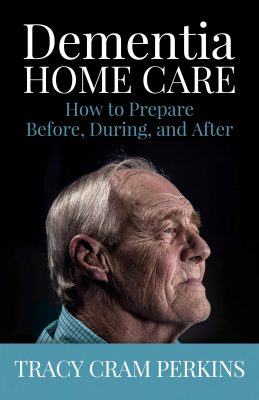
  • DEMENTIA HOME CARE: How to Prepare Before, During, and After by Tracy Cram Perkins – Patient Caregiving, Alzheimer’s Disease, Surviving Loss

    DEMENTIA HOME CARE: How to Prepare Before, During, and After by Tracy Cram Perkins – Patient Caregiving, Alzheimer’s Disease, Surviving Loss


    Instruction & Instight Blue and Gold 1st Place BadgeDementia Home Care: How to Prepare Before, During, and After, by Tracy Cram Perkins, offers the lived experience of a caregiver, sharing the experiences that impressed upon her the enormity of the physical, emotional, and psychological task she undertook.

    These same experiences made Perkins aware of the dearth of practical resources for the novice embarking on this journey. She hopes to fill that gap with this comprehensive, “user-friendly” guide that goes well beyond the limits of a self-help book, impersonal how-to manual, or clinical tome. From Dementia Home Care, readers will gain new insights into human behavior and how to become an effective caregiver without sacrificing their own well-being.

    Perkins’ written voice captivates from the beginning. Her first-person accounts of caring for afflicted loved ones are both relatable and authentic. The reader will find themself laughing aloud, or filled with dread, as the author recounts actual experiences that are otherwise hard to imagine happening to oneself.

    Perkins’s book explores issues that can stymie the well-meaning, ill-equipped caregiver.

    Unexpected situations and/or inexplicable behaviors tend to push one to react first and reflect later. Dementia Home Care not only reveals the sublimated emotional reactions which can skew a caregiver’s perception–and reactions–but also reaffirms the uniquely human qualities of caregiving that often go untapped and unrecognized.

    This amazingly comprehensive book seems to address all questions a reader might have.

    It contains sections from the commitment of a caregiver and the realities of hands-on challenges, to what happens when the loved one dies, and everything in between.

    Perkins includes chapters dealing with legal nuts and bolts, as well as details that one might not have thought about. From emergency preparedness to closing social media accounts to dealing with social security, creditors, and the tax man. She even discusses one’s own emotional functioning after their caregiver role has ended.

    Readable, practical, and informative, Perkins’ book is a valuable tool not only for the “home” caregiver, but for any facilities providing eldercare, and for individuals as they move along their personal paths toward old age.

    Dementia Home Care by Tracy Cram Perkins won First Place in the 2022 CIBA I&I Awards for Instruction & Insight Non-Fiction.


    5 Star Best Book Chanticleer Reviews round silver sticker