Category: Reviews

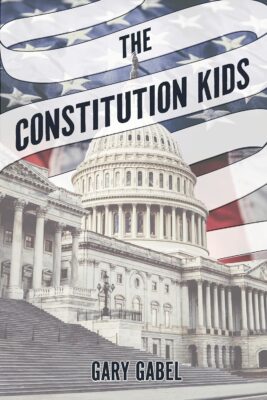
  • THE CONSTITUTION KIDS by Gary Gabel – US History, US Politics, Educational


    The Constitution Kids by Gary Gabel aims to make learning the United States Constitution not only easy, but fun, too!

    Plenty of adults in the US—even well-educated ones—have a limited knowledge of what’s in the US Constitution. Children and teens are even less likely to know much about the country’s foundational set of laws. That dense legal document, plus its 27 amendments, doesn’t exactly make for peaceful bedtime reading. Still, the Constitution helps explain how the US is meant to function, and what’s happened when that functioning breaks down. While it’s aimed at younger readers, adults can also get a worthwhile education from picking up this book.

    At just under 200 pages, The Constitution Kids is appropriately short and approachable. However, it’s also comprehensive in its examination of the Constitution and its every amendment.

    Some of the most interesting sections deal with lesser-known amendments, which readers may not be familiar with. For example, in the 1960s, the 24th amendment banned poll taxes in elections after a successful push by John F. Kennedy’s administration. Before the adoption of that amendment, people often had to pay to vote, which was a major barrier to equity.

    Gabel recounts the reason for the 24th amendment in vivid, memorable prose. He shares how poll taxes were often used to block Black Americans from voting and even connects this history to ongoing issues now. “Although this amendment made a big difference, even today states get involved with various strategies to reduce minority turnout at elections.” (pg. 166)

    Gabel cleverly employs historic figures as characters who recount how the Constitution and every amendment came to be, and why they matter.

    The Constitution Kids centers on three American high schoolers who go looking for information about the Constitution. In the process, they discover a magical library book, from which these historical characters emerge and take them on journeys into the past. Famous people like Benjamin Franklin and John F. Kennedy, as well as lesser-known figures like Quaker suffragette Alice Paul, guide the “Constitution kids” through American history.

    The Constitution Kids doesn’t read like a typical, plot-driven novel with vivid descriptions of the settings and events as they unfold, but this simple style of storytelling excels in highlighting the core information. The historical figures explain different constitutional arguments with a quick and focused pace.

    We follow the kids through their favorite activities as they learn about the Constitution, like browsing the library, ice skating, and a bit of teenage rebellion, but the book’s not really about the kids themselves—it’s about what they learn. Teachers could easily use chapters of The Constitution Kids in a school lesson plan.

    The greatest strength of Gary Gabel’s The Constitution Kids is its use as a reference guide. The Constitution takes center stage rather than active scenes of character development. When a certain amendment pops up in the news, or when historical curiosity strikes, this book is an excellent source of information on constitutional issues. Many families, whether with kids in the house or not, would find The Constitution Kids a valuable addition to their bookshelves.


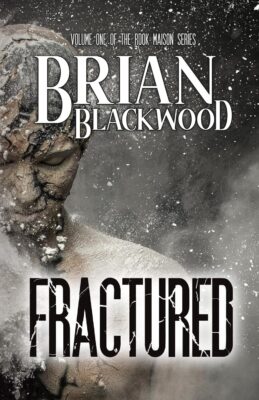
  • FRACTURED by Brian Blackwood – Urban Fantasy, Historical Fiction, Dark Fantasy


    A genre defying debut, Fractured by Brian Blackwood tells the story of Rook Maison, who sustains his life by ripping out peoples’ souls to steal their bodies for himself. This unique ability comes with one cataclysmic side effect. Each time Rook replaces a soul, those souls—and Rook’s own—become increasingly fractured.

    The forces of Heaven and Hell rely on a carefully maintained balance, and Rook has pushed that balance to a breaking point.

    Originally a Catholic monk during the emergence and upheaval of Lutheranism, Rook has become increasingly disillusioned towards his religion and the purpose of his endless mercurial life. As the centuries passed by, Rook became a shell of who he once was, doing anything and taking whatever bodies necessary to continue his existence.

    Rook grew hellbent on finding every scrap of information about his mysterious origins. But now, with a target on his back, Rook must decide if finding the truth is worth destroying the worlds of the living and the dead.

    Fractured will entice those who root for the morally grey and antiheroes, as Rook Maison is a deeply interesting example.

    Readers experience him in many different forms, from his devout beginnings and guilt-ridden conscience at having to take soul to a villainous disregard for the lives of others in favor of selfish survival. The plot jumps around in time as it reveals Rook’s backstory, building a sense of mystery and foreboding.

    Some chapters focus on the perspective of the Angels, a fascinating angle on the story as they join with Hell to stop the fabric of the universe from being destroyed.

    Placing Fractured within one genre would not do it justice. Its blend of urban fantasy, historical fiction, horror, and religion creates something unique and exciting for a variety of readers.  

    Brian Blackwood’s background in theory and screenwriting shines through his cinematic prose.

    Illustrations at the beginning of each chapter set the tone for the pages that follow and piques interest in the central mystery that is Rook Maison.

    A thought-provoking wild ride, Brian Blackwood’s Fractured is not to be missed. It asks complex questions through a well-developed character while providing the entertainment of a time-traveling adventure. An excellent choice for fans of urban fantasy, historical thrillers, and gothic religious horror. Rook Maison is one hell of a force to be reckoned with.


  • TO CONQUER DEATH by Richard H. Moon – Myths & Legends, Epic Fantasy, Ancient Egypt


    To Conquer Death by Richard H. Moon follows brothers Koshei and Tyfon—and Doryah, a barbarian woman—on a mythic quest across ancient Egypt and beyond, to a place where Egyptian myths come to life and rouse the dead. To restore balance to their world, the trio may have to sacrifice everything from their homes to their very souls.

    From the very first page, this story is built on love and loss. Koshei and Tyfon—mere children at the time—face the prospect of life without their beloved father after his body is returned to them from war wrapped in linen. Doryah lost her mother, and the funeral leaves the grieving daughter with the impression that only flames can subdue the dead when they attempt to rise again.

    The brothers, now young men, have followed in their father’s footsteps as warriors and joined the army. Supposed invaders have come from across the Great Green Sea, but after the battle they are discovered to be refugees rather than aggressors. Among them is Doryah, who warns Koshei and Tyfon that they have fled a dark and ancient force that can bring corpses back to life. At Pharoah’s command, the three lead an expedition back across the sea to Achea, through abandoned communities, until finally they reach a frozen wasteland. An army of the dead awaits them, along with a god whose games mortals have very little hope of winning.

    Moon’s descriptions of the ancient lands these characters traverse, as well as the cultures and customs they practice and encounter, anchor this story to history. From this solid foundation, the mystical and supernatural elements thrive.

    Even without any prior knowledge of ancient Egyptian hierarchies and social conventions, readers will easily immerse themselves in the story and learn as they go. Moon makes a point to include information such as how the Egyptian New Kingdom’s civil calendar was structured and how the Nile’s annual flood cycles determined the seasons, ensuring historic authenticity beneath the rich world-building.

    The dynamic cast imbues large, otherworldly conflicts with a myriad of human personality.

    Where Koshei is measured and almost always perfectly in control, Tyfon has grown up to become more reckless. Their relationship is relatable despite the distinct challenges they must undergo. Doryah contributes unique, equally developed perspectives to round out the narrative. While the story takes place in the ancient world, like many historical novels they often utilize more modern turns of phrase when speaking to one another, the characters work hand in hand with the supernatural setting to weave a suspenseful plot.

    Combining the scope of epic fantasy with intimate personal conflicts, Richard H. Moon’s To Conquer Death tells a timeless story of characters who face insurmountable trials, endure profound loss, and forge bonds that outlast even death itself.


  • The Adventures of Mrs. Crockess and Ivy: No Pockets? No Problem! by Julia Kolouch and illustrated by Petros Bouloubasis – Picture Books, Children’s Humorous Books, Animal Stories


    The Adventures of Mrs. Crockess and Ivy: No Pockets? No Problem! by Julia Kolouch, illustrated by Petros Bouloubasis, is a wacky tale of innovative solutions to one of life’s greatest struggles: pockets!

    A joyful lesson in problem-solving and independence, this is the perfect story for young readers who want to do things all by themselves. They’ll want to hear it over and over again—and then learn how to read it on their own.

    The adored Briggs’ family dog, Mrs. Crockess, is a snuggly reading partner to Mrs. Briggs, an extra hand (or paw) in the kitchen to Mr. Briggs, and a rock n’ roll bandmate, slushy enjoyer, and flower-picker to her best friend, little Ivy Briggs. Together, Ivy and Mrs. Crockess are a force to be reckoned with.

    When a string on Ivy’s guitar breaks in the middle of their jam session, they have to rush to the music store so they can keep rocking out. But—oh no! Mrs. Crockess lacks an essential item for their mission: a pocket!

    Without a pocket, she can’t hold her money, her keys, her phone, her map, her bone, or her lip balm. The best friends put their noggins together to come up with a creative solution to the pocket problem. But when that idea falls through, they need another… and another … and another … and another! They only have until the music store closes to come up with the perfect solution.

    Tag along with lovable Ivy and fantastic Mrs. Crockess as they learn to solve big problems with lots of love, silliness, and patience for each other.

    Packed with Petros Bouloubasis’s colorful illustrations and goofy details, No Pockets? No Problem! will make kids laugh out loud and ask important questions like: “Why does a dog need lip balm?” “What kind of word is “Phwump’?” and, “How in the world does a dog play the drums?”

    Inspired by stories imagined by her 3-year-old niece, No Pockets? No Problem! by Julia Kolouch will have kids and adults alike wondering what in the world Ivy and Mrs. Crockess will do next.


  • THE DAY WE FOUND YESTERDAY by Tamara Dever, illustrated by Missi Jay – Children’s Books, 1980s, Picture Books


    Tamara Dever’s The Day We Found Yesterday is a blast from the past, a picture book for both young readers and nostalgic GenXers to experience the ’80s. Dazzling funky illustrations with 500+ music references will catch anyone’s eye and instantly transport readers back to the days of “I want my MTV!”

    Eileen, Mickey and Eddie love their grandparents, Nana and Papa. When they overhear them grieving something special they lost long ago, the grandkids set out on a mission in their grandparents’ hometown to find it. They visit their grandparents’ friends at their local businesses, hoping that one of them will have the answer to the question of the missing treasure.

    Their journey quickly turns into a time-traveling adventure as they gather stories of their grandparents’ ’80s childhoods from the friends and family who watched them grow up.

    The shops are covered with ’80s music callbacks, like “Karma” the Chameleon in the pet store, the travel agency slogan, “On the Road Again,” and a reminder on the doctor’s office wall that “every breath you take keeps lungs healthy.”

    Each page of The Day We Found Yesterday, illustrated by Missi Jay, is a universe of detail.

    Colorful signs and carefully hidden objects cover every inch, inviting children to pore over the pages, pick out favorite illustrations, and giggle over silly puns. New readers will find ’80s slang like “atomic” and “funky” to be an exciting challenge!

    Once the kids’ adventure has come to an end, there’s more to explore at the back of the book.

    Young readers can treasure hunt through the pages for tiny items like bells and hamsters. Meanwhile, adults can search for references to songs, artists, and even spot cameos from ’80s celebrities like Corey Hart, Debbie Gibson, and the lead singers of Men Without Hats, A Flock of Seagulls, and Led Zeppelin’s Robert Plant. Mark Goodman, Nina Blackwood, Alan Hunter, and Martha Quinn also show up in colorful images as the original MTV VJs.

    The Day We Found Yesterday by Tamara Dever opens opportunities for children to learn more about their parents’ and grandparents’ lives, sparking connection beyond generational boundaries in a fun, colorful adventure. This is a story that will last through the decades!


  • A CLAN CHIEF’S DAUGHTER: She Who Rides Horses Book 2 by Sarah V. Barnes – Historical Fiction, Ancient World, Metaphysical Fiction

    Caught in the midst of a succession crisis, Naya sacrifices much of herself to be the dutiful girl she thinks her father expects. In A Clan Chief’s Daughter by Sarah V. Barnes, Naya’s kept in the dark while enemies plot her family’s downfall.

    In the previous book of the series, She Who Rides Horses, Naya began the monumental task of bonding with the wild horses of the Pontic-Caspian Steppe. Guided by dreams of purpose alongside the red filly Réhda, they’d gone so far as to gallop free together. But returning to her clan after a winter apart, Naya finds a terrible captivity waiting for both her and the horses she loves.

    A confluence of tragedy and treachery leaves Naya’s father, Potis, vulnerable in his role as Chief.

    The clans of the Plānos tribe are soon convening for their annual Gathering. As this year’s host, Potis is expected to supply a plentiful animal sacrifice, especially since he hopes to claim his late father’s position as Plānos Chief of Chiefs. That would be hard enough after a brutal winter, but without warning much of the clan’s livestock are slaughtered in a senseless and suspicious attack.

    The stage set, a captivating young man arrives as the clan’s seeming savior. Wailos, son of Potis’s main rival, helps the clan capture a herd of horses that had become habituated to humans—the very same whose trust Naya earned. They are to be sacrificed in place of the clan’s missing livestock.

    Wailos shows interest in Naya, who’s begun preparations to be presented as a young woman at the Gathering. He promises a rich bride price of livestock, and such a marriage could prove a valuable political alliance in itself. Naya disregards her own reservations about Wailos in the hopes of helping her father and maybe even sparing the horses.

    Naya’s self-denial extends to her loved ones and her very purpose, as she holds herself responsible for the suffering of the horses in captivity.

    She refuses her grandmother Awija’s lessons on the importance of dreams and following one’s own heart. Visiting the horses is more than she can bear, especially as it brings her close to Aytal. While Naya holds deep resentment towards the young man, she can’t forget the connection and affection that grew between them over the winter.

    Naya’s mother Sata leaves the clan for her childhood home alongside Oyuun, Aytal’s father, and Naya refuses to see it as anything but a betrayal of her and Potis. She turns away from the pain of her conflicted feelings and into the role of a clan chief’s daughter.

    When the promises of that role unravel around her, she risks losing her freedom, her loved ones, and her heart’s deepest desire forever.

    Barnes builds a societal conflict with complicated systems of alliance and tradition, enriching the story and historical detail through their combination.

    The contest for power as Plānos Chief of Chiefs is well-grounded in the immediate and daunting challenges Potis faces as he struggles to stabilize his people. All the while, threads of conspiracy close in around Potis and Naya alike, with the villains always a step ahead. Potis decides not to reveal the danger Wailos poses to Naya, building a powerful sense of dread as Wailos uses the social expectations of their tribe to draw her into a cruel trap.

    This conflict revolves around a theme of cooperation versus competition. Potis understands the necessity of maintaining peaceful bonds within and beyond their tribe, but he faces people who are willing to destroy anyone to grasp power.

    A Clan Chief’s Daughter shows the injustice of strict gender roles and the vital importance of fighting against them. Barnes uses her rich characters to illuminate different facets of this oppression.

    Awija and Sata both hope to turn Naya away from accepting what is expected of her—to be traded away as a commodity through marriage. But though Sata’s struggle to understand her desires against social stricture mirrors Naya’s own, Naya can’t listen without confronting the parts of herself she wants only to escape.

    Throughout Naya’s preparation for the Gathering, Awija tries to instill an understanding of self-possessed womanhood in her and the other girls. Having come from a different culture in her youth, Awija contrasts the beliefs of the Plānos. She implies how such gender roles are not essential facets of nature but rather tools of control and power consolidation—tools that this story’s villains wield to harrowing effect.

    After months trying to put her wants and fears aside to better serve her expected role, Naya is betrayed completely. She hopes that there might yet be friends she can turn to, but will only reach them if she learns to trust herself again.

    Naya’s inner journey takes her through despair at how much she loses, but also an enlightening catharsis. She sacrifices her connection to the horses in a way that mirrors Aytal’s earlier sacrifice of his skill as a bowman, making A Clan Chief’s Daughter an effective rejoinder to the themes established in She Who Rides Horses.

    Once Naya accepts that she cannot separate her love, anger, and grief from one another, she can finally begin to brave her nightmares to recover her own destiny.

    In its well-crafted combination of vulnerable personal journey, well-researched ancient setting, and commentary on social roles that still manifest in our world today, A Clan Chief’s Daughter by Sarah V. Barnes will fascinate and satisfy in equal measure. A worthy successor to the first book in the series, She Who Rides Horses.

    Buy it now through Bookshop.org!

  • HE FOLLOWS ME by Kathryn Caraway – Suspense Thriller, Stalking, Mystery


    When a monster can’t be contained, the only way to protect yourself is to become invisible.

    Terror forces Kathryn Caraway to trade in her previous life as a victim for one of secrets when her sadistic stalker, Todd Bennett, is released from prison in He Follows Me.

    After years of fighting for her freedom against this relentless monster by proving the severity of the threat to the dismissive US criminal justice system, Kathryn has no choice but to disappear. She relocates to a small New Zealand town, only able to rely on her new federal relocation “watchers”. But Kathryn wonders: Who can she trust? Is starting over even possible? And to what lengths must she go to protect herself?

    Picking up where Caraway’s debut novel Unfollow Me left off, He Follows Me will further captivate readers in Caraway’s masterfully-constructed mysteries and compelling characters.

    While Unfollow Me reads like a memoir narrating one woman’s desperate attempt to regain control over her spiraling life, He Follows Me is an action-packed thriller connecting storylines of political and military suspense through two distinct perspectives. Each line is a full-course meal. Caraway’s storytelling subme

    rges readers in a spectacularly rich world of intrigue, romance, and danger.

    Readers will empathize with Caraway’s self-insert character, Kathryn, in her struggles to regain independence and strength despite the traumatic paranoia that plagues her daily life. Everywhere she goes, Kathryn “feels panic claw at her like a living thing.”

    When Todd Bennett emerges from prison in her small town, more determined than ever to claim her as his own, Kathryn gives her life to the Victim Protection Program.

    She loses her name, identity, home, and everyone she knows to start a new life in Werneth, New Zealand. Over time, Kathryn is reborn as “Tara Quinn”, making new friends as a barista andeven re-entering the dating scene despite her horrifying memories.

    Meanwhile, Tara’s handler Deputy U.S. Marshal Wes Kade watches her every move. Cold and seemingly unfeeling, Kade’s motivation is unclear. To Kade, Tara is “Something to protect, something to fix, something he could break if he’s not careful.” This ‘protector’ declares his undying loyalty to her safety, but might yet be another dangerous man.

    No matter how far she runs, Tara isn’t safe from her past.

    Determined not to dismiss red flags again, Tara begins to see signs that Todd Bennett might have found her. Tara’s axis spins out of control yet again. She must decide who to cling to for safety and how far she is willing to go to protect her freedom. The hunted could even become the hunter.

    If you have trouble prying your fingers from the cover after you finish He Follows Me, have no fear: Tara’s trials will continue in a new series about her ongoing quest for justice. Readers can look forward to more harrowing adventures in each of Kathryn Caraway’s memorable novels.


  • RECALLED: The Adventures of Rhone and Stone Book 3 by Strider S.R. Klusman – Steampunk Fantasy, Middle Grade Adventure, Mystery


    Readers will fall instantly into Recalled, the third book in The Adventures of Rhone & Stone Series by Strider S.R. Klusman, as its rich world of steampunk fantasy blends with spy intrigue and some truly breathtaking character moments.

    Rhone, a young agent for the Office of Public Recrimination (OPR), has just completed his first mission when he’s suddenly summoned back to the capital city. But he’s ambushed in the thick, untamed forests on the way. He nearly loses his telepathic crystal companion, Stone, and ends up forming an uneasy alliance with the bandit Lev—a former OPR agent with grave warnings for him.

    A shadowy group called The Brotherhood—five power-hungry brothers—pulls the strings of government power behind the scenes. Each holds a shard of their late father’s shattered magical amulet and view for power within their own ranks.

    Rhone and his boss, Aundrea, realize that something is seriously wrong in the capital. They start digging into who’s watching them and why—drawing ever more dangerous attention.

    Recalled stands out for its character development.

    Rhone is still a bit young and naive—awkward, not exactly a master swordsman—but his resilience and authentic heart push him forward in confronting conflict from well before his own time. Stone, his crystal companion, is the perfect foil: grumpy, brilliant, and full of dry humor. Their banter is fun and engaging, and their bond deepens the emotional core of the story.

    Lev is guarded, clearly haunted by her past, but as she starts opening herself to Rhone, her caring nature will draw readers well into her corner. And the villains? Those five brothers add just the right amount of creepy, selfish, and mysterious to the story. You know they’re up to no good, but not quite how, and that tension hums under every scene.

    Klusman’s writing style is straightforward and familiar like someone telling you a story around a campfire. It’s not overly polished, but that rawness actually adds to the personal charm.

    He uses the steampunk setting to introduce intriguing details. Tiny mechanical creatures (think bug-sized automatons) shape the intrigue and give the world even more texture. This setting feels alive, always transforming with new technology.

    Themes of trust, redemption, what it means to be part of a family, and the corrupting nature of power resonate throughout Recalled.

    This is one of those stories that’ll keep you reading late into the night. It has action, heart, mystery, and enough emotional weight to make it stick with you long after the last page. Readers of the past two books in the series may miss Bella and the airship from the previous entry, but as Rhone’s world grows more connected and complex he learns the importance of calling on old friends.

    Recalled by Strider S.R. Klusman doesn’t leaves behind shadows, open questions, and the sense that The Adventures of Rhone and Stone are only beginning. Readers who love fantasy, secret plots, and characters who struggle and grow will find themselves enthralled—and maybe even left a little restless, wondering what comes next.


  • SARITA by Natalie Musgrave Dossett – Adventure Western, Suspense, Historical Fiction


    Set against the backdrop of Prohibition and Pancho Villa’s waning reign of terror, Sarita by Natalie Musgrave Dossett combines a page-turning western adventure and the coming-of-age of a bold young woman.

    Set in 1920 South Texas, 19-year-old Sarita has already been through tough times. She had to return from high school, and her dream of being a reporter, to care for her dying mother. As she deals with those losses, Sarita’s fiancé, Jackson Cage, deserts her.

    When the vicious tequila smuggler Javier Salsito de Ortega shoots her little brother, JJ, for their horses, Sarita finds herself alone in the face of grave danger.

    The Texas Rangers focus their resources on Prohibition and the border incursion of Pancho Villa’s rebels, lacking the manpower to go after JJ’s murderer. Sarita worries that her grieving father will sell their land to an oil speculator. Weak with a bad heart, he is unable to pursue justice, so Sarita takes matters into her own hands.

    Once Sarita crosses the Rio Grande, she stumbles into a situation much more treacherous than she’d imagined.

    It doesn’t take long for Sarita to realize she is in over her head, caught in the clutches of criminals and drunks who think women are only good for one thing. To her surprise, Jackson Cage comes to her aid. But he seems to be in league with those who killed her brother. Sarita joins a childhood friend and that friend’s great-aunt on the dangerous trek to Santa Rosa, where Sarita hopes to find Javier and get her revenge.

    As Sarita faces challenges beyond anything she was prepared for, she discovers an inner strength that chafes at the restrictions placed on women of her time. “A red-hot wave engulfed me. I was tired of being told what to do; of men taking what they wanted. I was tired of being threatened. I’d seen enough.”

    Sarita by Natalie Musgrave Dossett is a suspenseful novel that does not shy away from the brutality of the 1920s, the consequences that others could suffer at the hands of ruthless smugglers and Villa’s rebels just for being in the wrong place at the wrong time. The tension is palpable as Sarita navigates her journey to justice all the while hoping to show her father that she is capable of taking care of their land.

    Sarita by Natalie Musgrave Dossett won Grand Prize in the 2024 CIBA Laramie Awards for Americana Fiction. 


  • THE ZUCCHINI FAIRY MURDER: Salty Sister Mysteries Book 2 by Ann Philipp – Cozy Mystery, Amateur Sleuths, Murder Mystery


    Wherever zucchini grow, they grow with unstoppable vigor. Patricia Schuster and her mother face a legendary overabundance in The Zucchini Fairy Murder, Book Two in the Salty Sister Mystery series by Ann Philipp, but garden veggies are soon to be only a close second of their problems.

    They have more zucchini than any family, friends, neighbors, and possibly the entire population of the surrounding several counties could possibly go through in a season, no matter how much zucchini bread they make. Mrs. Schuster, in an absolute riot of an opening scene, cruises through their California hometown in the middle of the night looking for cars with open windows to drop bags of zucchini into.  

    This camouflaged, highly questionable type raid on the neighborhood distresses her daughter, who tries without success to discourage her mother from her nighttime activities. Such hilarity threads through the background action of the story, as Patricia does her best to calm her mother down, rein her in, and manage her crazy.

    Plot and humor merge when petty zucchini crime clashes with a murder investigation. 

    The mystery kicks into high gear as Patricia can’t resist trying to solve the case with the help of a group of golden-age ladies she inherited along with her grandmother’s house and antiques business. With nerves of steel, these formerly incarcerated elderly ladies now work for the FBI and are highly skilled in specialized areas like technology, firearms, languages, and psychology, and they have no problem breaking the law to solve a case.

    After Patricia’s first ‘case’, detailed in book one of the Salty Sister Mystery series, Grand Theft Death, Patricia and ‘the Ladies’ have got a way of getting to the heart of an investigation. Even when that way involves a bit of subterfuge, a lot of illicit snooping, and more than a few sets of lockpicks.

    In the best cozy mystery tradition, what makes The Zucchini Fairy Murder so much fun—besides the overabundance of summer squash—is the combination of spilling gossip about the small-town residents and their misdeeds with the one step forward, two steps back approach of an amateur sleuth.

    Along with humor and intrigue, this story builds eclectic but earnest bonds between its central women.

    We see sisterhood, motherhood, and cool aunt relationships between Patricia, her mother, and the four ‘Ladies’ of her grandmother’s generation who have taken both women under their wings. That web of relationships is sometimes nurturing, especially on the mornings when the Ladies make Patricia an excellent breakfast. 

    The Zucchini Fairy Murder by Ann Philipp is a zany romp where an amateur sleuth tries to figure out whodunit in spite of both herself, and the ladies who bring their specialized skills to the case.

    This is the sort of cozy small town setting more than a bit outside the modern problems of everyday life. A perfect read to leave the ordinary and go to a place where a little dash of luck and the lead to a happy outcome for everyone in spite of many false accusations, mistaken arrests, and midnight zucchini drops from an unseen “fairy” along the way.