Category: Reviews

  • SNARLING WOLF: Ghosts Along the Oregon Trail Book 4 by David Fitz-Gerald – Historical Fiction, American West, Mystical


    In Snarling Wolf, David Fitz-Gerald’s fourth installment of an adventurous migration to Oregon, wagon wheels sidewind along and through the serpentine Snake River.

    It’s summertime, hot and dangerous on the cross-country trails. Wild animals, and the titular Snarling Wolf, ominously share the wilderness with a caravan of travelers. The group has become accustomed to their daily routines, but their remote destination seems almost mystical, moving always farther away, taunting and driving them toward madness.

    Widowed Dorcas Moon is determined to do anything it takes for her beloved children to survive and thrive in a new life in a new land. But this difficult trip takes its toll on her family in surprising ways, and will leave them forever changed.

    Dorcas Moon deeply fears an animal attack on their unprepared people.

    As a native tribal member whose name loosely translates to Snarling Wolf follows their caravan, Dorcas even begins to suspect that he is a true two-legged wolf. Dorcas learns that, in truth, Snarling Wolf is a gentle and philosophical man, and cannot help but be drawn to him. But that doesn’t stop her worrying about the attraction between him and her daughter Rose, a vulnerable girl who believes she sees and aids the dead.

    Rose confesses a shocking action to her mother, which has Dorcas concerned if her daughter is telling the truth or going mad. Barely a teen, Rose and this young man Snarling Wolf proclaim they are destined to be together, convinced of this inevitability by the paranormal insights of guiding spirits.

    Dorcas has much to learn from Snarling Wolf. And the young couple have much to learn about life, promises, and the inevitability of fate.

    The slow-moving wagon train slithers along the Snake River, sometimes moving away only to meet it again miles ahead. There is no escaping the river’s coils—eventually they will have to plunge their wagons through this deep, treacherous water to reach the other side and, if they make it, onto the promise of the west.

    From the experience of the trail so far, Dorcas knows she can’t predict what’s going to happen next, leaving a tangible danger in the air. The ever-present threat of thieves hides all along the route, including the vicious Viper who is planning and biding his time to hit when he feels the wagons are most vulnerable.

    All Dorcas’s children are growing up in this wild adventure, and Dorcas is often surprised at how they each do so. Her two sons have had to step up after the loss of their dad, and the increased responsibilities bring both rewards and tribulations. Nightmares from the trail even visit Dorcas’s youngest daughter, no longer a babe in arms. One foot in front of the other, they face each day head on.

    As they trudge forward, Dorcas continues to wish for a new love, yet instinctively she hesitates to embrace affection with dear Agapito. She vows she must remain a single, independent woman.

    How will destiny propel this family and their fellow travelers through the wild country in the heat of the summer, and what will they find on the other side?

    Author David Fitz-Gerald skillfully continues an epic, historic tale about the people of the 1850 American West. He illustrates their dreams, sacrifices, fears, joys, persistence, and love against an exciting and suspenseful backdrop. Readers will revel in raw emotion shared with the vivid and diverse characters. They’re moving slow, and despite the heat of today, winter’s coming fast. Unknown secrets lay in wait, revealed by Snarling Wolf in the miles still ahead.


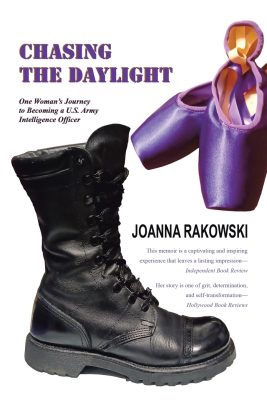
  • CHASING The DAYLIGHT: One Woman’s Journey to Becoming a U.S. Army Intelligence Officer by Joanna Rakowski – Memoir, Life in the Military, Inspirational


    Blue and Gold Badge Recognizing Chasing the Daylight by JoAnna Rakowski for Winning the 2023 Military and Front Line Grand PrizeChasing The Daylight by Joanna Rakowski is a revealing memoir that captures the rigor, intensity, and ferocity of military training in a salient style.

    Ever wondered what it takes to become a soldier in one of the most powerful armies in the world?

    Joanna Rakowski was born in Poland and grew up practicing dance from a young age, eventually becoming a professional classical ballet dancer and teacher. Upon her migration to the US in 1995 and the painful fallout with her friend and mentor, Chris, Joanna knew she needed to make a drastic change in her life. Her great awakening came when she decided to transform from a fragile and sensitive ballerina into a steadfast U.S. Army soldier, a goal that many close to her doubted she could accomplish.

    With arresting insights, the text builds from Rakowski’s striking introduction as it describes her first day of enlistment, which was filled with uncertainties.

    Despite having so many questions in her mind, she knew one thing for sure; that she had made the first step onto an important new journey. She would prove to everyone who doubted her that the common notion of fragility in artists did not actually have to be equal to an artist’s character and physical strength.

    Her accessible account details the intricacies of military training such as living in the platoon barracks, practicing new drills— both primitive and hi-tech— classroom learning, and army values, among many more. Rakowski even goes further to describe the demeanor of drill sergeants and army commanders, debunking some of the myths that surround these personalities.

    She does not shy away from mentioning the obstacles that come along with military drills, like training under the sweltering heat, extreme physical exhaustion, injuries, and sleepless nights.

    This will undoubtedly make one understand the significance that soldiers see in their purpose, to endure such difficulty.

    Despite the mental and physical challenges that she face in her four-year span in military training, Joanna would become a U.S. Military Intelligence Officer, demonstrating true resilience and fortitude.

    Chasing The Daylight is a majestic piece of writing.

    The narrative comes alive through Rakowski’s voice, which reveals her unfettered and unique collection of thoughts, allowing readers to draw from the well of her experiences, emotions, reflections, and attitude.

    Ample flashbacks along the pages give us a sneak peek into Rakowski’s life in Poland, as do the fine art photographs peppered across, indicating the credibility of the story herein.

    Rakowski affirms, “Life is a continuous cycle, full of glorious moments of light and moments of darkness. You never know where a new passion for life will come from. Then you become that passion that defines your existence. You become someone new and as you grow with love and within it; Eventually, you find your daylight”. Through these impactful words, she encourages her audience to keep chasing their dreams, no matter how insurmountable they may seem.

    Bold and eye-opening, Chasing The Daylight contains fresh information on basic training for those considering enlisting in the U.S. Army and for any citizen interested in finding out what it takes to mold an army recruit into a competent U.S. soldier.

    Chasing the Daylight by Joanna Rakowski won Grand Prize in the 2023 CIBA Military and Front Line Awards for Service to Others Non-Fiction.


  • THE DOCTOR’S VOICE by Dr. Pietro Emanuele Garbelli – Modern Healthcare, Professional Development, Advocacy


    Dr. Pietro Emanuele Garbelli speaks out on serious professional issues faced by modern healthcare workers, in The Doctor’s Voice.

    Doctors deal with overwhelming stress, leading to burnout, illness, many of them leaving the profession, and even a higher-than-average rate of suicide. The Covid19 pandemic both heightened and helped illuminate some of the causes of this stress, prompting author Garbelli to write this book as a set of advice for his colleagues and as advocacy for broader changes in hospitals and other healthcare systems.

    Garbelli highlights a common disconnect in communication—administrators and higher-ups telling doctors what to do while those doctors don’t have much opportunity to bring up the problems they encounter day-to-day.

    Planning made without doctor input leads to a near-constant state of crisis and under-staffing. Restrictions on what treatments a doctor is allowed to authorize—while sometimes established for patient protection—lead to consistent delays and create an atmosphere of mistrust. Corporate command structures obfuscate who even makes these significant decisions.

    Doctors take on major risk, without enough authority to justify it, nor enough protection to ease the stress of it. All the while, they deal with equally stressed colleagues, superiors who don’t always listen to their proposals, and countless little inefficiencies in a system often more interested in money than effective care.

    The Doctor’s Voice offers valuable advice, from the individual to the organization.

    Garbelli returns frequently to the idea of communication. How important it is to develop one’s own communication skills to be heard by those with power, as well as how damaging a one-way, top-to-bottom system is to an organization as a whole.

    He proposes the use of modern data technology to make it easy for doctors to record and share stumbling blocks they encounter. Discussing information systems as they are now, he points out the needless frustration of dealing with myriad incompatible programs to access something as vital as a patient’s medical records.

    Serving as a starting point for further discussion, The Doctor’s Voice stays true to its name—laying out problems that doctors, and healthcare workers in general, often suffer in silence.

    The author writes about these issues clearly and concisely, making the information easily graspable even by laymen. While directed primarily at other doctors, this book is a valuable read for anyone working—or even just interested—in healthcare, as it makes obvious how sorely change is needed.

    Garbelli maintains a broad scope, focused on showing how universal these frustrations are within his profession. The Doctor’s Voice ultimately encourages doctors to free themselves from restrictive senses of professionalism and speak openly about the stressors that need to be fixed.

    Impactful as advocacy for changing a broken system, and important as a frank discussion about the mental toll on individuals, The Doctor’s Voice sheds light on issues that will only become more important as time goes on.

    The Doctor’s Voice by Dr. Pietro Emanuele Garbelli won First Place in the 2023 CIBA Harvey Chute Awards for Business & Finance.


  • NUTSHELL REGATTA by Jonna Laster – Picture Books, Children’s Adventure Books, Imagination & Wonder


    Little Peeps 1st Place Best in Category Blue and Gold Badge ImageIn Nutshell Regatta by Jonna Laster, the narrator’s grandmother reveals adventures in nature that could easily be missed without her watchful eye.

    With her wise guidance, clouds turn into campers, dandelions hold moon yokes, leaves sing, and a broken branch takes on the form of a fox. Most importantly, twigs and pebbles become sailors who embark on a grand regatta in their nutshell sloops and sailboats.

    Three ships come to the forefront of the story. Two of them sink, their twig sailors swimming safely to a nearby lily pad, while one continues on. Its passengers Burt the pebble and Betula the birch twig encounter what appears to be disaster, but when they fall over a waterfall, the grandmother guides the narrator to listen close. When they hear a faint “yipeeeeee” from the bottom of the waterfall, it’s clear that all has turned out well.

    The narrator takes more ownership over the fantasy in the end, wondering aloud to their grandmother about where Burt and Betula might end up—downstream or even all the way to sea. The grandmother doesn’t miss a beat, suggesting the twig and pebble passengers might send a postcard. And indeed, the final illustration of the book is just that—a postcard from Burt and Betula!

    From beginning to end, Nutshell Regatta is an imaginative poem.

    Laster takes mundane aspects of nature—like twigs, pebbles, and common flowers—and turns them into lyrical images and dramatic adventures sure to captivate any child or child-like heart. The tension of Burt and Betula falling over the waterfall is just the right touch of stress, with a valuable resolution.

    Laster could have resolved the story with the grandmother or narrator scooping the nutshells out of the water to save them. Instead, she takes a different and more developmentally helpful direction: the little sloops fall down the waterfall, and the grandmother coaches the child on creating a happy outcome for the event (the passengers going on a new adventure). This resolution could help guide anxious children to find positive meanings in change and transition.

    The illustrations are wholesome and sweet, with little twig people peeking out of each picture even before they are introduced into the story.

    The images serve the story immensely by bringing to life the cheerful adventurers in all shapes and sizes.

    Regardless of what children take away on a conscious level, they will be delighted by the fantastical lens through which we see Burt and Betula’s adventures.

    But for discerning young readers, Laster’s direct message is that “there are passengers everywhere,” if only you might look for them.

    Children will surely come away from Nutshell Regatta inspired to make twig people and shell boats of their own the next time they find themselves in nature.

    Nutshell Regatta by Jonna Laster won First Place in the 2023 CIBA Little Peeps Awards for Early Readers and Children’s Books.


    Little Peeps 1st Place Gold Foil Sticker

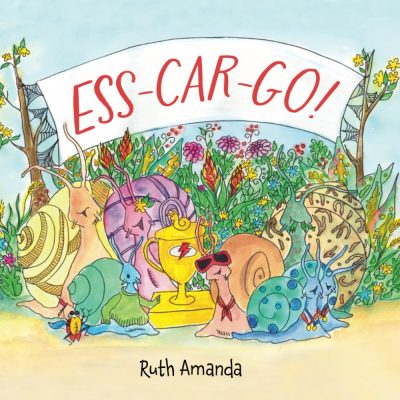
  • GECKOS In The GARDEN by Ruth Amanda – Picture Books, Children’s Animal Stories, Learning to Count


    Little Peeps 1st Place Best in Category Blue and Gold Badge ImageGeckos in the Garden by Ruth Amanda is a children’s counting book that takes readers through a delightful, rhythmic, aesthetically pleasing romp past a series of hidden geckos.

    Amanda starts out with just one gecko in the garden. Every page after, one more is added amongst myriad natural details such as flowers, a snail, a palm tree, garden taps, rocks, a mango tree, leaves, a gate, a bird’s nest, a pond, and more.

    Amanda demonstrates a natural sense of narrative arc even within a counting book—readers will feel the climax of the adventure when they arrive at the ninth gecko and read the line, “I spot one—two—no, six—no, more! Nine!” The escalation of the words’ momentum makes the ninth and tenth geckos more dramatic. Furthermore, the clever dénouement includes the narrator realizing the geckos might watch them just as much as they watch the geckos, and this is written alongside an adorable picture of a gecko looking in the window of the narrator’s home.

    The rhyme and rhythm of the story are extremely satisfying and feel natural, making the book effective at engaging children learning to count.

    The counting practice is not just in the words of the story, but in a scavenger hunt for each of the geckos in the illustrations. When a gecko is hidden in a challenging spot, hints like “I bet I’d find more geckos/If I hunted in the hedge” are integrated into the story. This is sure to create a game out of counting that will please children and adults alike. The images are beautiful and clear at the same time—perfect for ease in counting as well as maintaining interest.

    Pristine formatting helps the excellent writing style and lovely images to shine.

    The font serves the rhythm of the story, with bold words to guide readers toward the correct emphasis in the line. The images are balanced around the words in such a way that the pleasing layout draws the eye in the correct direction down the page. And finally, the consistent placement and slight tilt to the number on each page (“One!” and “Two!” etc.) creates a predictable and comforting routine for young readers to follow, even making it possible for them to anticipate the number that’s coming next.

    Geckos in the Garden is the perfect book for a child learning to count through playful means. Amanda makes it easy for an adult reader to read with a satisfying beat because of the balanced arrangement of words. Any child will surely be inspired to count geckos or other creatures like them upon sight even when the book’s covers have been closed for the day.

    Geckos in the Garden by Ruth Amanda won First Place in the 2023 CIBA Little Peeps Awards for Early Readers and Children’s Books.


    Little Peeps 1st Place Gold Foil Sticker

  • THE SPOON: The Story of Two Families’ Survival of the Hungarian Revolution by Lisa Voelker – Historical Fiction, Family Saga, Hungary


    Lisa Voelker’s historical fiction novel, The Spoon, takes us back to the 1950s in Hungary during the daring student uprising, and attempted revolution, in Buda and Pest. The author weaves historical facts with fiction in the form of family lore that has been handed down for generations.

    We follow scores of people whose lives intersected during this uprising of 1956. The revolution was, at its inception, a time of joyous upheaval, but in less than two weeks became one of devastating dissolution. People fled Hungary by the thousands, but not before giving the Soviet Union a taste of their discontent.

    Voelker introduces Rebeka, a member of the Varga family with old ties to the bourgeoisie, who lived a life of privilege on a farm east of Buda and Pest. As well as Peter, a member of the Turea family who attends Budapest Technical University, where students began demonstrating against the Hungarian Government that was under Soviet control.

    Voelker’s cast of characters stems from over a dozen families, some involving four generations, so even as this story focuses on Rebeka and Peter, we get the sense that it is truly the story of a nation. It’s the story of a people who are embroiled in the ramifications of a revolution attempt that was less than two weeks long but reverberated for decades.

    The national pride and courage of the demonstrators stands out.

    Their resilience and continued opposition against the Soviet super-power, pushed forward by the resistance fighters, never wavered. Voelker captures that loyalty and bravery on every page, just as her well-researched novel captures the imagination.

    The ultimate mystery of the book is based on actual family lore, and Voelker keeps us turning the pages to find out what the significance and importance of a particular object is. She gives clues that whet our appetites, and with perfect timing reveals the satisfying conclusion.

    Rebeka and Peter move through the uprising along with friends, family, and people they meet along the way. Voelker’s mastery in developing these interesting individuals keeps us invested in their stories and their successes— and yes, sometimes their failures.

    There are tragedies, as with any war-like situation, and this is an underdog story, much like many international news stories that we see today.

    As philosopher George Santayana wrote: “Those who cannot remember the past, are condemned to repeat it.” This idea has been paraphrased and passed down in many variations, but the truth behind it remains, and we commit this error at our own peril.

    Voelker plays with themes of liberty, freedom, nationality, family bonds, first love, war, and more.

    Her ambitious novel delivers an excellent read while also making connections between the past and the present, and showing us the strength of the family myth— stories that we pass down through generations.

    Lisa Voelker’s The Spoon matches the interest of any history buff, any war novel aficionado, or any reader who loves learning while they enjoy a good book.

    The Spoon by Lisa Voelker won First Place in the 2023 CIBA Goethe Awards for Late Historical Fiction.


  • NOT THAT KIND Of CALL GIRL by Nova Garcia – Contemporary Fiction, Mexican-American Fiction, Contemporary Social Issues


    Blue and Gold Somerset First Place Winner Badge for Best in CategoryIn Nova Garcia’s novel, Not That Kind of Call Girl, Julia Navarro-Nilsson balances a lot heavy responsibilities on her plate. She’s the supervisor of the Cascade City Chronicle call center, has just had her first child, and is dead set on saving her newest employee from a lifetime of abuse.

    As a Mexican-American, Julia knows first-hand how difficult life can be for a minority woman, so when Carmen Cooper shows up for a job interview, Julia is determined to hire the young college student even though her story and answers to Julia’s question are sketchy. This reluctance to share her personal information intrigues Julia, but Carmen’s life turns out to be much more challenging than Julia would have ever dreamed.

    Sussing out the truth behind the timid young woman’s clearly fictional story, Julia turns detective with the help of her reporter friend, Jerry. The two are dogged in their search and discover a secret so deep that it will rock Hollywood — that is, if she can juggle her new baby, her neglected husband, her sexually harassing boss, and an unending visit from her critical mother.

    Julia’s detailed character makes her easy to empathize with, especially as she faces issues that many women confront in the real world.

    Her biggest personal struggle is with motherhood. After the birth of Trey, Julia expects to be overwhelmed with her love and devotion to this tiny person. However, when she doesn’t feel those things — feeling almost the opposite actually — she is shocked and disappointed in herself. She has no immediate connection, instead suffering from postpartum depression.

    To add to her fears of motherly inadequacy, she endures multiple bouts of mastitis — landing her in the hospital on one occasion— and she finds that maternity leave feels like a prison sentence rather than a chance to bond with Trey. She hates that she is missing work and hates that she hates that! Julia’s muddled feelings leave her frightened and uncertain, far from her sense of self pre-motherhood.

    Like many women, Julia has a hard time accepting her body for what it is.

    She has never been a petite size four, like her still-attractive mother, who always pressures her to conform to a different standard of beauty. Julia is tall and full-figured, a curvy, sensual woman. Post-birth, she feels “fat” and unattractive. Because she has to continue wearing her maternity pants (another very common experience), Julie feels as though she has failed again in some way. Though her adorable, loving husband Charlie still tells her she is beautiful and shows her that he continues to find her desirable, Julia has a hard time engaging in any physical contact. Her mother’s comments don’t help the situation, and with her confidence in tatters, Julia stress eats, continuing an unhealthy cycle.

    Julia takes great pride in her position as call center manager for the local newspaper, but that position comes with near-constant harassment from her boss.

    She cares about her employees, knows their problems, and is fighting for their jobs as the newspaper owners negotiate a sale of the business. In fact, it’s this level of concern that leads to her involvement in Carmen’s tragic life. Julia takes her job seriously and maintains high expectations for herself, but at every turn her boss Carlton Cressey epitomizes a villain to all of womankind. He makes jokes about various body parts and propositions Julia directly for sex. Even though she is a hard-working employee, likely his best, he can only see her body and face, so not only is Julia worried about her employees losing their jobs, she is also worried about losing her own if she reports him to HR.

    Julia is a strong, normal woman. She’s not a superhero or a rich Country Club wife. She’s real, and many readers will identify with the problems she faces.

    Not That Kind of Call Girl by Nova Garcia won First Place in the 2023 CIBA Somerset Awards for Literary and Contemporary Fiction.


    Somerset Literary and Contemporary Chanticleer International Book Awards 1st Place Winner oval Gold Foil sticker

  • EDGED In PURPLE by John W. Feist – Myths & Legends, Historical Fiction, Romance


    Chatelaine 1st Place Best in Category Blue and Gold BadgeEdged in Purple by John W. Feist welcomes readers to a place outside of time and space, a liminal space where characters of myth wait to return to their fated stories.

    The Fold is a beautiful land, a near-utopia shepherded– literally– by Thetis and Peleus of Greek mythology. They raise the heroine of Shakespeare’s The Winter’s Tale, Perdita, after her father had accused her mother of betraying him with another, the whole sad story a product of his own paranoia.

    Perdita’s story is proceeding as it was written. She has already met Florizel, the man who should be the hero of her romance– when her story is intersected by another. Just as The Winter’s Tale features royal courts, doomed relationships, mistaken identities, and family murder, so too does an ancient Greek drama: the Oresteia of Aeschylus, the story of Agamemnon after the Trojan War.

    Orestes, the hero of that ancient tale, joins Perdita in the fold, pulling both of them from the paved road of fate.

    They fall in love. Florizel goes mad with jealousy and proves that she’s MUCH better off with Orestes– as he pursues the lovers out of The Fold and into a reality that none of them are quite prepared for.

    The reality they wake up in is that of the late 19th century, among the ruling class of the teetering Austro-Hungarian Empire of the Habsburgs, not far from Archduke Franz Ferdinand’s date with destiny.

    Edged in Purple begins as a whimsical combination of fantasy and mythology.

    Characters such as Orestes and Perdita’s adopted mother Thetis mingle with characters from the classics of literature– not just Perdita herself but nearly all of the personae from The Winter’s Tale. Peleus implies that characters from countless other stories have passed through The Fold on their way to their own endings, whether happy or not.

    This setting offers a wealth of possibilities for stories to mingle and morph, which Edged in Purple explores to excellent effect.

    It turns two familiar stories into one brand new adventure, transforming The Winter’s Tale into the kind of love vs. power romantic triangle that defines such stories as The Princess Bride, with Orestes, Perdita, and Florizel taking the roles of Wesley, Buttercup and Prince Humperdinck, respectively.

    However, the curtain of fantasy is pulled back and the characters must inhabit the bodies of very real historical figures. And yet still, they seek to control their own fates.

    After all, they managed it once, back in The Fold.

    But as fantasy transforms into historical fiction, their lives become fixed to moments in time. And as Orestes– now Franz Ferdinand– learns, the wheels of history can’t be steered as easily as a story.

    The two very disparate parts of Edged in Purple are equally compelling, and while that switch from fantasy fairy tale utopia to oncoming historical tragedy could send some readers for a spin, those interested in the blending of genres will be enthralled by this mirrored tale.

    For readers who do make the leap, Franz Ferdinand and Sophia’s impossible happy ever after is both compelling and heartbreaking. Recommended for readers who enjoy portal fantasy, historical fiction, and tragic romance.


  • TSARINA’S CROWN: The Nightingale and Sparrow Chronicles by Jerena Tobiasen – WWI, Historical Fiction, Romance, Espionage, Russian Revolution


    Jerena Tobiasen delivers a sharp, first-rate novel in Tsarina’s Crown, first installment in The Nightingale and Sparrow Chronicles, capturing a precise panorama of Russian politics and British espionage during a delicate period in time.

    The year is 1915 and Simon Temple, a young naval officer aboard the RMS Guardian— a British Royal Navy Ship— patrols the North Sea for questionable communications and marine activity. Months later, he is entrusted by the British crown to serve as a liaison on a covert mission in Petrograd, Russia. Simon is careful not to blow his cover as a young aristocrat while he is thrust into the world of international politics, the ruthless Russian Revolution, and becomes caught right in the middle of two powerful royal families.

    The mission turns out to be longer than Simon anticipated, and his life quickly becomes threatened as he tries to navigate a dangerous political labyrinth, all the while hoping to unearth the spy information that his King requires of him. But as the precarious wheel of mayhem and chaos churns in Russia, Simon’s only way to survive is to escape, realizing that his wit and intelligence might not save him from the tense political atmosphere. Things become even more complicated when he is joined by two other people who hope to flee.

    Told with verve and heart, the plot offers a raw and intimate portrait of events and activities bookended by the First World War.

    The tension and suspense are palpable in every chapter as Simon wrestles his way out of one dangerous situation after another.

    Tobiasen’s lucid writing and adept storytelling capture the culture and intricate details during one of the biggest social and political upheavals of the twentieth century. She takes us behind palace walls of both Britain and Russia, offering readers a globetrotting experience as we glimpse into the intrigues of the aristocracy amid controversy and fiery protests.

    The author does a remarkable job balancing vocabulary and syntax appropriate for this period while using modern language to make her text easily graspable. The meticulous research done before writing this novel is salient in her story and keeps the chronology accurate, a worthy indication of an author in command of her genre.

    Love becomes a central theme in the story, giving weight to the characters’ emotions and connections.

    An element of romance sparks between Simon and Mary, allowing characters to maneuver not just external conflicts but inner ones as well, pushing them to grow as people. Simon Temple is a character to cheer on, with admirable boldness and determination. The supporting characters are memorable and well-wrought too, adeptly playing their role in moving the story forward.

    Tsarina’s Crown: The Nightingale and Sparrow Chronicles is a striking start to a promising series, and one of the best espionage stories in modern historical fiction.

    Tsarina’s Crown by Jerena Tobiasen won First Place in the 2023 CIBA Hemingway Awards for 20th Century Wartime Fiction.


  • RADICAL BETRAYAL: How Liberals and Neoconservatives Are Wrecking American Exceptionalism by Anders W. Edwardsson – American Politics, Political History, Political Analysis


    Radical Betrayal by Anders W. Edwardsson explores American Exceptionalism and its echoes in today’s US politics and society. It offers a perspective on the nuances of the ideology and calls for its reworking towards a more united nation.

    Donald Trump’s unexpected win shocked a major segment of the USA populace in 2016, raising a big question about a complete neophyte’s victory. For some, he was a messiah to renew America’s standing. For others, he was a candidate with an unconventional campaign of blunt, rabble-rousing talk, who surprisingly took over the electoral term.

    What emerged as more remarkable is that, despite not winning the popular vote, the electoral college votes secured the 2016 US president his win. It added to the debate surrounding the election and highlighted the existing political divides in the states. Radical Betrayal examines why the 2016 election played out as it did, opening with its discussion of American Exceptionalism.

    American Exceptionalism is the belief in the unique global leadership of the USA. This book follows the evolution of this ideology, starting from the blend of the nation’s founding ideals of Enlightenment and Religion. It covers various historical periods and traces the idea’s development over several presidencies. This discourse presents the basis for the thesis, paving the way to answer the controversial win of the 2016 election.

    Radical Betrayal covers a labyrinth of movements like isolationism and interventionism in the 19th and 20th centuries, as well as the rhetoric of political leaders from George Washington and Theodore Roosevelt to Ronald Reagan and Donald Trump.

    What becomes clear is years-long tactic of harnessing American Exceptionalism to gain public support and justify policies. Not only this, the history highlights differences in how this strategy was approached, and its continued influence on shaping political takes and public views today.

    The work creates an inclusive argument for why Trump’s slogan “Make America Great Again” resonated with many people. To establish its position, Radical Betrayal works through the many political and cultural changes in American history that have created the appeal of this slogan. Different visions of Exceptionalism across history—inclusive and exclusive, active and passive—contribute to the debate on polarizing politics. They showcase a bridge between those conforming to two forms of this ideology—the more conservative form, and the broader, less focused version.

    This book invites readers to help shape the future discourse around American Exceptionalism and its influence on the US.

    Pointing to Trump’s presidency and the clear divisions in American identity during the era, Radical Betrayal suggests reassessing the power of Exceptionalism in shaping these national identities. It stresses the need to bridge historical ideals and modern realities toward a unified America. This journey to understand American Exceptionalism illuminates a potential for inclusivity in the nation’s rich tapestry of communities, races, and heritages.

    An analytical approach with an encouraging and didactic tone shapes the pages of this book. Idealistic and inspiring, it opens the opportunity for further enrichment with discussions on potential obstacles in the journey to political refinement and growth.

    The piece propels one toward reinterpretation and rejuvenation of American ideals, unity, and progress—the essence of American Exceptionalism itself.


    Reviewed by Chanticleer Book Reviews 4 Stars! round silver foil sticker