Category: Reviews

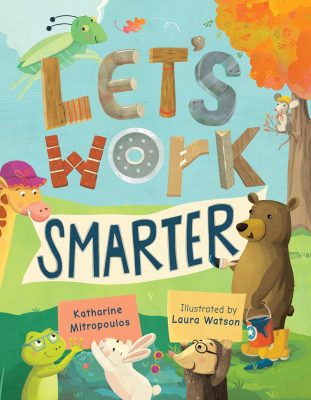
  • LET’S WORK SMARTER: Harmony Lane Adventures Book 2 by Katharine Mitropoulos, Illustrated by Laura Watson – Children’s Animal Stories, Picture Books, Creative Thinking Skills


    Katharine Mitropoulos’s Let’s Work Smarter, the second book of the Harmony Lane Adventures series, begins on a beautiful day at the Harmony Lane Farmer’s Market. There the residents are hoping to reach their fundraising goal to fix up the local playground.

    The next day, after having met their fundraising goal, Mouse takes charge dividing everyone into groups, each with their own job to do. Kangaroo, Frog, and Kitten are tasked with planting a flower garden, which turns out to be hard work! They decide they just need to work harder to get the job done but end up making a mess. Cheetah and Mole work hard while cleaning up the sandbox, causing sticks and leaves to get all over the place. Painting the fence are Giraffe, Bear, and Bunny, who all have their own plan for the design.

    By lunch everyone is no closer to finishing their tasks and everyone is exhausted! Mouse suggests everyone needs to work smarter instead of working harder. If everyone takes the time to think of creative ways to accomplish their tasks together and in an easier way, they will all be done fixing up the playground in no time!

    The Adventures of Harmony Lane came about from the author’s bedtime story she made up for her children. With a background in psychology, linguistics, and speech-language pathology, Katharine Mitropoulos has created stories that will help teach children the valuable lessons of teamwork and learning.

    At the end of Let’s Work Smarter parents will find several prompts they can use with their children to foster development and a love of learning. Based on the story, the suggestions provide insight into the value of the task along with an activity parents can incorporate into their child’s daily routine.

    Just as it was in the first Harmony Lane Adventure book, Ready…Set…Frog!, illustrator Laura Watson’s bright and colorful art creates a visually stimulating world. Her lighthearted, whimsical style is a perfect match for Mitropolous’s lively anthropomorphic characters, and the little details are a delight for children to find as the story is read.

    Following in what already feels like a rich tradition of Harmony Lane books, we see the animal residents come together to think creatively and work as a team to solve a task in an unexpected way. We see each group approach the solution to their task in a way that emphasizes mindfulness and planning ahead, which allows for parents and children to easily connect this story to their day-to-day life.

    Mitropoulos’ Let’s Work Smarter is a brilliant story about problem solving with vivid art. It teaches children the valuable lesson that not only can they accomplish their goals, but that any challenge can be overcome when you work together!


  • THE BEST I CAN DO: A True Story of Navigating the Complexities of Mental Illness and Homelessness by Cheryl Landes – Memoirs, Mental Illness, Family Dysfunction


    Cheryl Landes’s The Best I Can Do: A True Story of Navigating the Complexities of Mental Illness and Homelessness, follows the devastation of a happy marriage as mental illness slowly takes over the mind of her husband. Landes must then make the journey back to peace.

    Cheryl and her husband, Tom, had known each other since their college days. A classic love story, Landes does a beautiful job with the set up, and then delivers the tragedy of Tom’s spiral into paranoia as their plans for the future begin to fall apart.

    The Best I Can Do tells the story of what happens when Tom insists someone is trailing him, believing a car passes by his and Cheryl’s home every day even though no one else sees it. He claims someone installed listening devices in their house and refuses to speak unless his white-noise devices are on. As his paranoia increases he locks the refrigerator with a chain and a padlock to protect himself from the certainty someone—perhaps Cheryl—wants to poison him.

    When Tom is laid off from a job he’s had for ten years, he decides to switch careers from sales to finance. The shift takes the couple from Seattle to New York City, disregarding Cheryl’s objections. With compassion and love, we follow her journey to understand his illness as she sets the boundaries she needs to rebuild her life.

    But New York is only the beginning of a series of moves, all orchestrated by Tom’s inner voices.

    He wipes out their savings, spends money the couple doesn’t have, and before long, Cheryl’s resilience is tested as she finds herself homeless and regularly sleeping in her car. The story jumps around, back and forth in time, from Seattle to the East Coast and back again as it weaves the tangled web of Tom’s life into a narrative that resembles the clear struggle of Cheryl’s new reality.

    Pride keeps Cheryl from telling anyone at her white-collar job about her situation as Tom, thoroughly in the depths of his mental illness, is rarely seen. He pops up occasionally with no answers regarding his long absences or evidence of clarity. Cheryl’s inner voice attempts to warn her about her own downward trajectory, but not soon enough.

    Landes’s novel is a fascinating and grueling tale of navigating the complexities of living with a person dealing with mental illness.

    The Best I Can Do: A True Story of Navigating the Complexities of Mental Illness and Homelessness is a heart-breaking memoir. Cheryl Landes does a superb job of chronicling the ups and downs of her life as her husband becomes a prisoner of his schizophrenia.


  • DIAMOND: The Memoir of a Lost Daughter of Japan by Etsuko Diamond Miyagi – Inspiring Memoir, Post-WWII East Asia, Memoirs of Women, Resilience

    In a world ravaged by conflict and loss, Etsuko Diamond Miyagi’s memoir, Diamond: The Memoir of a Lost Daughter of Japan is a shining testament to the beauty of love and the human spirit’s ability to overcome adversity.

    Etsuko enjoys a peaceful childhood on the Philippine island of Mindanao, where her father owns an abacá plantation. But they are not safe when guerilla forces destroy her village murdering everyone and leaving her as the sole survivor. This deeply personal narrative of grief chronicles Etsuko’s harrowing journey to find solace and joy after the death of her parents.

    At first, passed from house to house, Etsuko is forced to work as a domestic servant until a kind family takes her in. However, her safety and survival is once again in danger when she’s forced to leave her adopted family and take a position at Chief Doming Apostol’s estate in Magpet. It is there Etsuko receives the name ‘Diamond.’

    Diamond works for years in the Apostol household where not all is terrible. She forms a loving bond as the caretaker for the youngest of the children. When their father is imprisoned, the household falls apart, but Diamond stays.

    In part, she has nowhere else to go, but mostly she stays for the children, abandoned by Doming’s wife after her husband’s incarceration.

    Three years later, Chief Doming returns, and Diamond officially becomes the children’s nanny—then Doming’s wife. Their marriage grows into a deep love, with many children added to the family. Political tensions during the 1960s and 1970s again threaten Diamond’s life. When tragedy strikes she again puts the safety and survival of her family first.

    The countless pressures and hard work in spite of them results in a strength created in much the same way as Diamond’s namesake.

    Decades after the devastating war and displacement that took her family, Diamond encounters a Japanese couple searching for their own long lost family members and, through them, she discovers information that fills in the gaps in her younger life. She learns where she came from, whether or not any family members still exist, and her birthname—Etsuko Miyagi.

    Diamond: The Memoir of a Lost Daughter of Japan shines as a richly composed memoir of inner strength and resilient love.

    With raw and evocative prose, Miyagi recounts the quagmire of heartache and despair of her early years. But she also reveals the remarkable path her life takes towards healing and happiness. Through vivid storytelling and introspection, Diamond: The Memoir of a Lost Daughter of Japan offers an inspiring exploration of how one can find light in the darkest of times and emerge to show their soul’s true brilliance.

    Fans of memoirs and historical non-fiction will be satisfied and astonished by Diamond: The Memoir of a Lost Daughter of Japan. Etsuko’s story plays out in the aftermath of World War II, and with many such books focusing on Europe alone, Diamond provides a crucial historical insight  into the long-term effects of a global conflict on the people of Southeast Asia.

    Etsuko Diamond Miyagi tells the true story of the creation of a diamond who finds a way to glow bright with love and humility.


  • SPLINTERED DREAMS: The Dare to Love Series Book 1 by Diana Lynn – Romance Fiction, Contemporary, Self-Discovery

    After decades spent in a loveless, broken marriage, Crisa wants another chance at love. In Splintered Dreams, a romance novella by Diana Lynn, she must first stumble through her own insecurities to find it.

    When Crisa’s husband, Alan, dies unexpectedly she is left with a stark emptiness inside her heart. Her marriage had been a sham. Her husband’s infidelity and lies crushed her idea of love and left her with questions about who she is, what she wants, and will she ever trust someone with her heart again. Casual sexual relationships can’t fill the void. She needs true love.

    Physical intimacy is only part of what Crisa desires. She yearns for the kind of love that lasts a lifetime.

    A chance at love falls in her lap when her friendly, affable coworker, Slade Doyle, finds her in the office cafeteria. Their friendly banter turns to flirting over coffee, followed by an intriguing invitation to dinner. The surprise relationship sprouts easily, but Crisa must push past her instincts to protect her vulnerabilities as she struggles to find a path to love once again.

    However, Crisa is not the only one who must tackle demons from the past. Slade’s had his own bumpy journey through a series of failed relationships and meaningless hook-ups.

    Splintered Dreams lays bare the familiar challenge of healing a heart and trusting yourself enough to love again.

    No matter how long it takes, or what mistakes are made along the way, Crisa and Slade begin to search for lasting love. By traveling this road together, they uncover layers of their own selves they would have otherwise never found.

    Older than most romance protagonists, Crisa and Slade develop a mature relationship based first on friendship. They stumble a few times in their decision-making, but don’t allow poor reasoning and motivation to stand in their way. Instead, communication leads them, and their conflicts opens the door to a deeper understanding of themselves, and each other.

    Crisa and Slade’s budding love draws readers in with unanswered questions behind the choices they’ve made in the past and how those same choices affect their own love story.

    Crisa chose to stay with her late husband after he offered her a more than generous divorce settlement twenty years before his death. And Slade, with his long history of short-lived, sometimes unhinged relationships leads us to wonder if something in his own personality was the cause of his failed adventures in dating.

    The journey to find these answers, and true love, makes Splintered Dreams a bright, thoughtful romance.

    Diana Lynn’s endearing love story explores the burgeoning relationship of two people who must break down the defenses they’ve erected through the years to protect their hearts so they can open the door to true love.


  • BOOK Of LEPRECHAUNS: The Lore Gatherers by Jonathan Uffelman – Myths & Legends, Middle-Grade Adventure Fiction, Fantasy

    OZMA 1st Place Blue and Gold BadgeThree leprechauns, Molly, Shaun, and Dorker, have their lives turned upside down when a sinister figure returns to their peaceful village with greed and revenge on his mind. In Jonathan Uffelman’s middle-grade fantasy, Book of Leprechauns: The Lore Gatherers, they embark on a treacherous journey to recover their lost home.

    Shaun McClanahan struggles to support his daughter Molly as she fails a crucial test for young Lore Gatherers—a subculture of Leprechauns who respect the power of stories. Though he’s weighed down by his responsibilities as the protector of his village’s communal gold stash, Shaun tries to overcome his worrying nature by trusting Molly to check on the gold by herself, hopeful that she can prove her worth to the village.

    But when Molly follows her father’s magical instructions to the letter, she discovers with horror that the treasure is missing, save one ancient Roman coin.

    The theft means exile for both Molly and Shaun, as gold is the catalyst for Leprechaun magic. A dangerous and unwelcoming world awaits them beyond the village’s protection.

    Shaun’s fear spirals into anger and mistrust towards Molly. The only Leprechaun who tries to speak on her behalf is Dorker—a gangly young teenager with a great big heart who has a great big crush on Molly. However, his efforts only serve to get him caught up in their banishment, where his reservoir of foolish behavior adds a lightness to their magical exile.

    In the shadows of the forest, they are small and vulnerable creatures. Shaun scrambles desperately to put together a plan to reclaim the stolen gold across time and space. If, of course, Poor Reynard the hungry fox doesn’t catch them first.

    Meanwhile, Molly rails against the injustice of it all—the village’s draconian laws of exile, her own father refusing to believe she told the truth about what happened, and how Shaun refuses to trust her again.

    On the trail to find the coins, our Leprechauns travel to Ancient Rome, hoping to connect Julius Caesar, whose image on the coin is the only hint they have, with the location of the missing coins. While Shaun’s magic can get them to the past, there’s no telling what—or who—might be waiting for them on the other side.

    Uffelman creates a strong fantastical atmosphere with his whimsical writing style, reminiscent of Lemony Snicket and Terry Pratchett.

    Book of Leprechauns is presented as an account of Lore Keeper history, using footnotes and references to other in-universe texts that pull readers into the setting.

    Filled with a lighthearted mix of dream logic, fairytale whimsy, and even some science fiction, the reader will find themselves laughing at even morose moments. Poor Reynard, the hungry fox, contemplates his place in the world as he follows the heroes on their journey, and Dorker even tries to help by picking up Latin but finds he has much more of an aptitude for the clucks of the strong-willed chicken, Gladys.

    The highlight of Book of Leprechauns is its cast of characters, each one unique and fleshed out in their motivations and actions.

    Evocative descriptions and distinctive banter bring these characters to life. Readers come to understand what drives and troubles them, giving interesting depth to even those who start as opponents, including Poor Reynard, Lucius the Roman legionary, and Julius Caesar himself.

    Readers will eagerly peer through the characters’ clever lies and half-truths to find the facts behind unreliable narrators. This tactic emphasizes the focus Lore Gatherers put on adding trickery to their own tales.

    Among these characters, Shaun and Molly go through a powerful emotional journey as they struggle to understand each other as family.

    Shaun lets his fear and anger create a gulf between him and his daughter. This is widened further by his refusal to talk openly about Molly’s late mother as he wrestles with guilt over her death. Molly wants desperately to be closer to Shaun and aims to prove herself by handling the responsibilities of their enchanted life. But Shaun slips deeper into a whirlpool of panic as their situation grows more dire.

    Shaun must find the courage to trust Molly again, which is the only thing that can repair their relationship.

    Molly herself is an exciting and relatable protagonist who has much to learn about the world and herself. Young readers will love her passion and fire at the journey’s beginning. Yet as those flames turn to anger, they threaten to consume more than she bargained for.

    Molly starts to learn that people are often much more complicated than she first gives them credit for. While anger might be a powerful force, she must push herself to empathize with the stories of those around her to truly do good for anyone—including herself.

    At its heart, Book of Leprechauns is a story about seeing the good in people.

    The heroes must all learn to trust not only each other, but themselves to achieve their mission. To get home they will need to move beyond their own fears and limitations.

    After all, Lore Gatherers know well the power storytellers have in shaping the world.

    Book of Leprechauns: The Lore Gatherers by Jonathan Uffelman won First Place in the 2023 CIBA OZMA Awards for Fantasy Fiction.


  • THE FROG-EYED GOSPEL: A Texas Exodus by Leslie DeBrock – Historical Fiction, 1960s, Coming of Age


    Blue and Gold Somerset First Place Winner Badge for Best in CategoryIn his debut novel The Frog-Eyed Gospel: A Texas Exodus, Leslie DeBrock weaves together the inspiring yet complex stories of a diverse cast of characters, all making their way through a tense Texas summer in 1965.

    Peter Loucas is the boy at the center of this story, a senior in high school bent on going to college and becoming the newest preacher in the Bible belt. His faith in God is passionate and strong — until his father is killed in an oilfield accident. In his grief, Pete finds himself suddenly questioning the teachings to which he had given himself blindly for years.

    The setting of the story couldn’t be more poised for conflict: Sabine Gap, a small town with religious intimidation and racism everywhere you look. The Vietnam war rages and veterans flock home traumatized. Supporters and protestors clash nationwide. The residents of Tin Cup —Sabine Gap, a small town replete with religious and racial rigidity. While protests roil the nation, veterans return, some walking; some not.

    As Pete begins to question his faith, he finds his world suddenly colliding with others.

    He works the summer at a wax plant, falls in love, and sees new sides of Sabine Gap. Witnessing firsthand the atrocities that Black Americans face gives him insight into the racist foundation of his town. And as Pete continues his journey to redefine himself and his beliefs, he is pressured by the threat of being drafted if he doesn’t attend college.

    This novel offers a look into the violence of the 1960’s. DeBrock does not shy away from hard truths of the times yet captures bittersweet moments in pockets of tragedy.

    Any reader who has escaped a stifling hometown can relate to Pete’s development as he learns the life he was born into is not one he can live with.

    The end of Pete’s journey not only captures the changes and traumas that he has gone through with emotional maturity and development, but also through a drastic change in setting.

    Fans of historical fiction, literary fiction, and suspense will find their favorite genres swirled together as DeBrock walks them through a tale of questioning the society around you. Pete may still be uncertain of his place in an open-minded world, but he knows that his own transformation is inevitable.

    The Frog-Eyed Gospel: A Texas Exodus captures the difficult journey of carving your own path in an intolerant town. DeBrock’s vivid and passionate characters seem like they’ve stepped right out of 1965 Texas, and each one brings perspectives that enlighten and inspire.


  • SUMMER STORM: Magic at Myers Beach Book 2 by Alan B. Gibson – Urban Fantasy, Romance, Fairies


    In Summer Storm, the second book of Alan B. Gibson’s Magic at Myers Beach series, local business owner Greta the Witch has a chance at fame, fortune, and fairytale love—if she can keep it all from being stolen first.

    Picking up cleanly after Summer Thunder (Book 1 in the series), this story opens with Greta worrying about her social life. Her best friend Lily has left on an extended honeymoon with her husband Theos the King. Fortunately, her acquaintance, Julie, moves back to town, and while they soon develop a close friendship, things get awkward when she learns that Julia received a massive financial gift from Lily and Theos, and she was left with nothing.

    Greta can at least focus on her business, the Witch’s Cauldron, and being the star of a reality show that’s planning to film her daily life. And when Greta meets a mysterious and charming man—Zsombor, or “Dos” to his friends—she finds herself rocketed to a level of stardom she couldn’t have imagined. She attends an opening gala for the renovated Fairy Kingdom tea house, and after a mixture of disastrous and fabulous public appearances she becomes Myers Beach’s rising influencer star.

    Summer Storm paints a cheeky but emotionally resonant portrait of stardom in the modern, fickle internet age.

    Greta’s sudden fame brings incredible business success and access to a world of fashion, connections, and glamor that dazzles her. But the internet audience constantly demands more posts and more of Greta’s witchy brand. She relies on Julie for her social media expertise, especially as the adoration of fans threatens to overwhelm her.

    Fame is a double-edged sword. And while Greta indulges in so many adoring eyes, that fame distances her from the people she truly wants to connect with. Her online persona dominates her presence among professional peers, and with all the time that her media presence takes to maintain, Greta falters in some of the most important relationships in her real life—most worryingly, her growing romance with the otherworldly Dos.

    When a major scandal break over Greta’s head, she faces an even darker side to notoriety. An accusation of murder, no matter how quickly proven false, staggers Greta’s image and sets her up for a much more focused, malevolent force.

    Greta meets unique, fantastical characters along her journey—friend and foe alike.

    Dos, despite his strangeness, proves himself capable of the seemingly impossible, as he charms Greta by connecting with the soul of the woods, bringing magic to her singing performances at a local retirement home, and even helping her fund her charity.

    Greta befriends the similarly magical Alias, who proves to be much more than the handsome beach bum she first imagines him to be. He and Dos maintain a sense of mystique and unpredictability, all while showing Greta a world of wonders and good fortune—before she even learns that they’re actually fairies.

    With yet more characters like the gossip star Rona Divine, skateboard prodigy Christophe, and of course the multi-talented Julie, Summer Storm fills its setting with a vibrant and exciting cast.

    But as Greta’s good fortune starts to turn, and the cruel sorceress Zsa Zsa Hajdu intrudes on her life, she struggles to hold onto her important connections.

    Greta’s idyllic adventure of romance and fame begins to unravel. Zsa Zsa wields great and terrible influence in both her personal and public worlds, and by the time Greta realizes the danger she’s up against, the true witch might be impossible to stop.

    Greta turns to her friends in the tug-of-war for Dos’s heart, but she’ll need to embrace her own strengths and authentic passions to stand up against supernatural danger.

    Readers will love Greta for her drive and fears alike.

    She becomes caught in the difficult questions of what truly matters to her in life, and what she’s willing to do or give up for it. Her layered, realistic personality plays well off when matched with Dos’s fantastical attitude, creating a romance that feels genuinely transformative for both characters.

    Ending with a sharp cliffhanger, Summer Storm will set readers up eagerly for the next installment of the series, Summer Lightning, with conflicts of the fairy kingdoms stepping into the spotlight.


  • ISLAND MOON by Ruth Amanda – Picture Books, Animal Stories, Children’s Mystery & Wonder Books


    Ruth Amanda’s Island Moon is a magical moment captured in a poem.

    The narrator lives on an island where the moon sings of fairies and the magic of the night. While out on a nighttime walk, the narrator breathes in the island scents and hears the waves kissing the shore. In the froth of the waves, and in the moon’s magical light reflecting on the water, the narrator sees the fairies dancing.

    While describing all the animals active during nighttime, the narrator sees a tired sea turtle coming ashore to lay eggs. The moon blesses the creature, calling in the tide to aid the exhausted turtle back home to the sea. The songs of the night birds and the rays of the moon’s light follow the narrator back to bed and into their dreams.

    The rhyming of the poem and illustrations are truly beautiful. In a few short lines and pages, you are transported to a tranquil night on the island of Barbados.

    Many readers will find comfort in the perfectly captured quiet peacefulness of night. Ruth Amanda herself calls the island of Barbados home and draws inspiration for her writing every day, even carrying around a notebook for when an idea strikes.

    The lively illustrations are also by Ruth Amanda, and her creativity shines throughout them.

    Readers will see all the active nighttime animals going about lives, from the curious green lizards climbing on the window blinds to the tired sea turtle coming ashore to lay her eggs.

    At the end of the story, Ruth includes a fact sheet about Barbados and the animals from the story, giving context to the story and teaching readers about her home island.

    Whether it is read as a bedtime story or on a lazy afternoon, young and old alike will adore Ruth Amanda’s Island Moon.


  • ROLLING HOME, Ghosts Along the Oregon Trail Book 5 by David Fitz-Gerald – Historical Fiction, Oregon Trail, Mystical & Supernatural Fiction


    Blue and Gold Badge recognizing Ghosts Along the Oregon Trail by David Fitz-Gerald for winning the 2023 Series Grand PrizeDavid Fitz-Gerald concludes the Ghosts Along the Oregon Trail series with a grand finale for an eclectic cast of characters, as the long wagon train is finally Rolling Home to their new lives in the wild west of Oregon.

    With the end of the trail just out of reach, however, their hopes dwindle and their hunger rages. The rigor of the western environment continues to test their determination and threaten vows of heartfelt romance. These weary people ache and mourn losses, while seeking new ways to survive and pull each other forward in the face of impending winter.

    This wagon train of travelers will also face venomous villains who have been lurking in the shadows, outlaws waiting for their best opportunity to pounce.

    Now they feel the traveling train is at its weakest, and strike without mercy. Dorcas and her family are in a desperate situation, clinging to the hope of a better life ahead. But even if they can hang on to reach that final destination, they doubt whether the life they’d planned in Oregon is still the future they want.

    Injured at the beginning of this final leg of their journey, Dorcas Moon struggles desperately to keep her family together.

    Her young children have had to rapidly grow up and take on responsibilities well beyond their years in order to keep pace with this treacherous, unpredictable life. Surrounded by perils, their joys are fleeting and cannot be taken for granted.

    Fellow travelers have become friends and family, tying their futures together, and Dorcas feels the weight of responsibility for all of their dreams.

    Dorcas’s children are pulled deeper into the world of spirits and the paranormal. Even Dorcas begins a tentative connection with those forces. She must also open herself to feelings in the material world— she had been resistant to embracing the love she has for Agapito, but now she can no longer hold back. Does he feel the same?

    The wagon train keep moving, but at times with a painful slowness. When they roll through snow on the trail, their fear becomes tangible. If they’re caught in the heights of the mountains when winter descends, warmth and safety will be impossible to reach.

    Disagreement among the travelers on the best way forward fuels those fears. Decisions need to be made and mistakes can be deadly. The dangers of river crossings claim Dorcas’ own belongings and wagon. And when the outlaws strike, Rose and Dorcas herself are both kidnapped. Precious lives are lost and more surprises yet wait in store. Will they ever see the promised land of Oregon?

    Our wagon master, author David Fitz-Gerald, has skillfully guided readers on an epic journey to a time and mode of travel that excites the imagination and pushes the limits of suspense.

    His story is compelling from the first book all the way through to this incredible end of the trail. The growth of the characters through their adventures, sacrifices, and joys along the way shows human nature’s persistence and people’s dedication to each other. As long as there is the glimmer of hope, Dorcas and her band will set their sights on the future, and set their wagon wheels Rolling Home.

    The Ghosts Along the Oregon Trail series by David Fitz-Gerald won Grand Prize in the 2023 CIBA Series Awards for Genre Fiction.


  • EVERYTHING WE HAD: No Merciful War Book 1 by Tom Burkhalter – WWII Aviation, Historical Fiction, Military History


    Everything We Had, book one of Tom Burkhalter’s No Merciful War series is an inexorable thrill that will grip readers tight. It starts with a poker game, through which a main character’s luck soon becomes evident. But will that luck hold out?

    Jack—the poker player—and Charlie—Jack’s older brother—have been separated by war, even though that war has yet to be declared. Everything We Had focuses more on the machinations leading up to US involvement in World War II than on actual combat. The gears of war that have so many young men caught in them move with gradual but inevitable force, and so Everything We Had takes a more thoughtful approach to a historic moment in time.

    Connecting with the characters is a gradual process as you get to know the intricacies that make up their individual personalities. This sets the reader up to feel the emotions of the characters as they face an uncertain fate, and throughout the book the author’s clear and methodical research shines with details such as specific views, locations, and—most notably—comprehensive descriptions of the airplanes Jack and Charlie pilot. This allows the reader to become deeply familiar with the motivations of the characters and the capabilities of the airplanes they fly.

    The importance of their family gradually emerges, too, through their mother’s letters and their memories of their father who flew racing planes. The more readers learn, the more attachment they feel to these characters, giving weight to the growing danger they face.

    Even side characters in Everything We Had have names, hometowns, and sweethearts they’ve left behind. This grants a sense of truth in the actual people who were lost to war.

    Readers may not track every last piece of information—especially the technical details of planes and flight—but the story remains accessible, with its most important details emerging with time. Like flying a P-26, it takes a bit of patience and skill to follow everything in this book, but Burkhalter trusts his readers to keep up.

    The perspective switches between Jack, Charlie, and occasionally Al, who becomes Charlie’s navigator. Al’s viewpoint lends interest at first, but Everything We Had focuses on Jack and Charlie’s narratives as they become more complex and dire.

    Through dialogue, readers start to piece together the puzzle: why Jack and Charlie’s father is gone, who Jack’s mysterious love interest is, and the strength of Charlie’s desire to be a leader. Burkhalter makes good use of dialogue for exposition as readers see how the war gradually unfolds, and how little information the men prepping for combat are told. For much of the book, Jack and Charlie aren’t even sure of each other’s whereabouts.

    Sensory descriptions help ground this intricate story.

    A few wonderful flying scenes—including Jack flying in challenge to a rival pilot—give physicality to the technical descriptions of planes. Small details, like a black Bakelite telephone, and a manila envelope holding mysterious contents, make the narrative even more tangible—not to mention historically accurate. Character descriptions remain simple, but with so many named characters in the story, this helps avoid overwhelming the reader with information.

    The book uses true-to-form period language and stereotypes of US enemies. While this can make for an uncomfortable read at times, it serves the book’s historically-accurate illustration of  a growing conflict. However, the main characters show their good hearts. They speak respectfully of women and, for the most part, of each other. In fact, a sense of camaraderie grows steadily even among former rivals as the war creeps closer.

    When the war arrives, late in the book, it shakes the reader like a stone thrown into the still pond of the characters’ lives, who wait for war with a growing sense of apprehension.

    With war, of course, comes injury and more death than these characters have ever seen.

    Yet Burkhalter steers away from lurid, bloody descriptions and instead focuses on how the violence affects Jack and Charlie internally as people. They come from a privileged background, with a healthy dose of luck, and have distinguished themselves each as leaders by the time war arrives. Yet it’s far from certain that these accolades will help protect them from the hopeless-sounding odds: the US is under-prepared and low on supplies, while the enemy has at least one ace in the hole.

    After such a carefully paced book, the ending comes quickly, and leaves some loose ends untied, nudging readers to continue with this fascinating series.

    Thanks to Burkhalter’s meticulous research, real events, places, and even people in the early Pacific war get a well-deserved remembrance in the form of fiction.

    The No Merciful War series by Tom Burkhalter won First Place in the CIBA Series Awards for Fiction Series.