Category: Reviews

  • MAYDAY: Land, Sea, and Air Series Book 2 by Sue C. Dugan – Middle Grade, Adventure, Time Travel

    MAYDAY: Land, Sea, and Air Series Book 2 by Sue C. Dugan – Middle Grade, Adventure, Time Travel

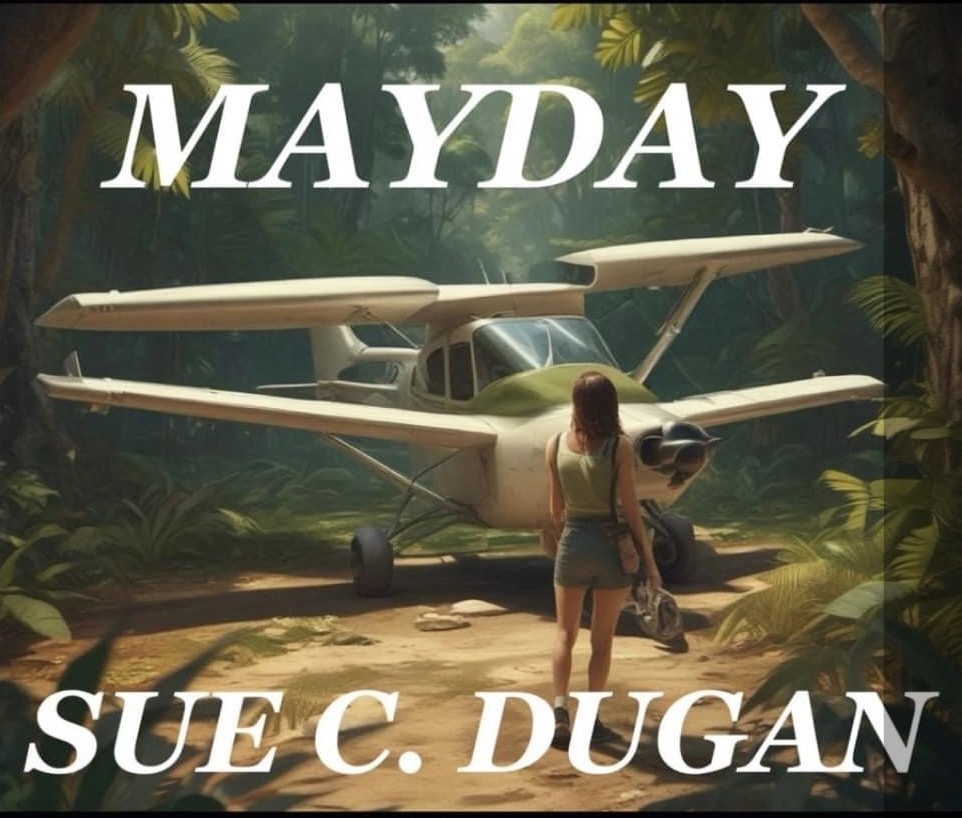
    In Sue C. Dugan’s middle grade adventure, Mayday: Land, Sea, and Air Series Book 2, thirteen-year-old Jessie and her father, Adam, take an unexpected detour when their plane crashes on a secluded island.

    On their final vacation before Adam begins chemotherapy for thyroid cancer, Jessie and her father take off in their Cessna aircraft over the boundless, azure Atlantic Ocean. Jessie’s anxiety about her father’s health is on high-alert during the trip, especially when she remembers her mother’s cancerous death.

    Twenty minutes into their flight, the sky grows gloomy, and the wind picks up speed from all sides.

    The storm rocks their plane, and her father hits his head, giving him a concussion and vision problems. With her father incapacitated, Jessie quickly realizes she needs to find a makeshift landing strip and get the plane safely to the ground.

    The closest area she can find without working equipment is a jungle with a thick layer of dampness and an earthy smell from disturbed soil. There are no boats, umbrellas, or people around, save for one old plane. Jessie and Adam hike a short distance to a village and, curious, explore it. More than twenty people, dressed in primitive and colorful clothing, suddenly surround them.

    As they look for help with gasoline, they realize they might have to spend some time on the island while they deal with mysteries that unexpectedly threaten to upend their journey back home.

    Jessie meets a memorable cast of characters on her adventure, and encounters the possibility of traveling through time.

    She learns that the old plane they found in the jungle—which might be the subject of years of investigation by time-travel experts—belonged to the mother of a woman named Bird. This time-travel concept is further brilliantly explored via the lens of a man whose disappearance from the real world spans six decades, despite his calculations suggesting otherwise.

    The most enjoyable aspect of Mayday is experiencing the adventure from a young girl’s perspective as she becomes lost in an unfamiliar, possibly hostile place with a sick father. This story’s rough and wild plotlines will introduce children to some risk, chaos, and challenges that inspire critical thought, reasoning, and sleuthing.

    Mayday: Land, Sea, and Air Series Book 2 is a pioneer in the middle grade mystery and fantasy genre.

    Mayday increases in tension from start to finish, using an enthralling narrative to tug at the reader’s emotions. Get a copy and let the lovely words of Sue C. Dugan mesmerize you!


  • DREAMS And ILLUSIONS: Gabrielle Dorian Mysteries Book 1 by Rebecca Olmstead – Paranormal Mystery, Women Sleuths, Murder Mystery

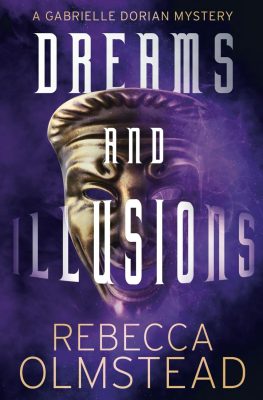
    DREAMS And ILLUSIONS: Gabrielle Dorian Mysteries Book 1 by Rebecca Olmstead – Paranormal Mystery, Women Sleuths, Murder Mystery

    M&M Blue and Gold 1st Place Badge Image

    Dreams and Illusions by Rebecca Olmstead is a delicate interplay of mysteries balanced on an emotional undercurrent, exploring the immutable ebb and flow of life to find resilience in the shadow of misfortunes.

    In the bustling town of Whitman, Gabrielle co-owns the boutique Belle Femme with her best friend, Kate. Radiating the tranquil aura of an empowered business owner, Gabrielle is a caring woman burdened with a secret she hides from everyone. Gabrielle is blessed—or perhaps cursed—with prophetic dreams.

    Almost as if they are a glimpse into the future, Gabrielle wrestles with dreams that foretell an ominous fate. Soon she is confronted with a series of distressing events that thrust her into a mystery.

    Suddenly, terrible news of her husband’s untimely death destroys Gabrielle’s world of normalcy.

    The grief of losing a loving partner soon intersects with fear, as another disturbing dream plagues Gabrielle. Her sister, Tina, is being held in custody, charged with theft and the murder of Mrs. Winnifred Everette, a wealthy elderly lady.

    Gabrielle’s absolute trust in the innocence of her sister falters when Tina emerges as the sole beneficiary of Mrs. Everette’s eighteen-million-dollar fortune.

    Gabrielle sets out to investigate the truth behind the murder. In a twist of fate, the buried secrets of the victim herself are revealed through the unravelling mystery—secrets that hold the key to a deep connection between the murder and Gabrielle’s fragile bond with her sister.

    Gabrielle emerges as a woman of many layers, presenting the human experience as a complicated experience of duality. She becomes the epitome of strength in the throes of painful upheaval, yet falls into inevitable vulnerability that comes with the unforeseen demise of a loved one and the accusations entangling her sister. Similarly, the forces of hope and despair, love and loss juxtapose in Gabrielle’s personal life, inviting readers to empathize deeply with her efforts to hold herself up long enough to solve this mystery.

    Rebecca Olmstead crafts a rich interplay between foreshadowing and psychological symbolism.

    She achieves this through Gabrielle’s premonitions, which illuminate much more than just subconscious fears and spooky occurrences. Each unsettling experience, such as the dream of eerie laughter, indicates a troubling revelation while symbolizing Gabrielle’s anxieties and inner turmoil. Olmstead’s vivid descriptions of emotion and action pull readers into these troubling visions.

    The story maintains a balanced rhythm of nail-biting action and calm character development.

    As the reader accompanies Gabrielle along her investigations into the murder mystery, they also connect with her emotional journey through personal reflections and conversations.

    Dreams and Illusions speaks of a woman who transcends the transient nature of suffering and builds on the quote by Aristotle, “It is during our darkest moments that we must focus to see the light.”

    Dreams and Illusions by Rebecca Olmstead won First Place in the 2023 CIBA M&M Awards for Cozy and Not-So-Cozy Mysteries.


  • WHEN WALLS TALK by Geralyn Hesslau Magrady – Contemporary Fiction, Family Saga, Family Relationships

    WHEN WALLS TALK by Geralyn Hesslau Magrady – Contemporary Fiction, Family Saga, Family Relationships

    Toni has the chance to start her own business in the building of her family’s old bakery. But history waits within those walls. In Geralyn Hesslau Magrady’s novella, When Walls Talk, Toni and her father uncover secrets they could never have expected.

    The Russo Bakery, with its 1920s architecture had been the family business since the four Russo brothers first opened its doors. Decades later, Toni and her widowed father plan a complete redesign of what their ancestors made to fulfill her dream of owning a bookstore. As the walls fall around the Russo family business, a long-hidden truth brings about profound personal changes for Toni.

    Toni takes this giant leap into the unknown, unsure if she’s even prepared to own a business. But the bookstore is the key to her hope for a better future, her only path to escaping a past tragedy.

    In the face of death and loss, Toni is crippled with a feeling of powerlessness. Fighting to never feel that pain again, she builds walls high within her spirit to shut out joy in her life, knowing that openness will only lead to more pain.

    The life Toni leads now is reduced to mindlessly putting one foot in front of the other, until a heartfelt promise, a secret, pushes her to act on her dream. The decision will demand more of her than she expects, and she’s not ready for the emotions she’ll face, but the promise compels her forward.

    Magrady draws readers immediately to Toni and her father Paulie, their conflicts a careful reflection of the human struggle we all share. Their friends are likewise compelling, bringing the periphery of their lives forward in the storytelling.

    Paulie eagerly joins his daughter’s project, working to manage the tension and strain that had once existed between them. Family ties have driven Paulie his whole love, paired with pride in his Italian heritage.

    Neither Toni or her father expected or wanted to learn the secrets they stumble across about their family, but history cannot be undone. They have each other and friends new and old to help absorb what the bakery-turned-bookstore has to say. As the walls tumble down, one can only hope Toni will find her own happiness, because the message heard When Walls Talk is a powerful one.

    Award-winning author Geralyn Hesslau Magrady gently weaves an emotional story of despair, surrender, and a glimmer of hope. When Walls Talk provides an insightful look at the human spirit, what it must face, and whether it can endure.

    The Chicago neighborhood comes to life as a character itself, artfully depicted with the Bakery as the heart of the story.

    When Walls Talk invites readers into a world where family secrets can forge new beginnings. The novella brings the loss, legacy, and uplifting power of hope in a family into beautiful relief. A perfect pick for anyone who relishes stories of resilience and indomitable spirit.


  • RUNNING AWAY From The CIRCUS: Confessions of a Carnie Kid (Who Tried to Become a Priest) by Nove Meyers – Memoirs, Coming of Age, Religion & Spirituality

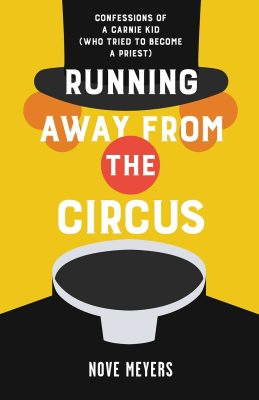
    RUNNING AWAY From The CIRCUS: Confessions of a Carnie Kid (Who Tried to Become a Priest) by Nove Meyers – Memoirs, Coming of Age, Religion & Spirituality


    blue and gold badge recognizing Running Away From the Circus by Nove Meyers for winning the 2023 Hearten Grand Prize

    Debut author Nove Meyers breathes life into the big tent of human aspirations and desperations, from his birth into a raucous circus atmosphere to his diligent study for Catholic priesthood.

    Running Away from the Circus is a vibrant chronicle that opens with a vignette of his grandmother, clad in sequins and flying on a trapeze. She spun like a top to enthusiastic applause under the circus tent, until the fateful day when she included her young child in the act, dropping her thirty feet to the sawdust-covered floor below. But this did not prevent Nove Meyers from being born and having a story to tell.

    The boyhood described was as wild as the circus acts. He was encouraged to smoke cigarettes like his father and watched in astonishment as his mother burned up paper money, possibly to protect his uncle, a counterfeiter. Yet despite his unusual upbringing as one of the family’s third generation of circus owners, Meyers was taken regularly to Catholic church services. There, he discovered God, an entity as mysterious as the traveling circus and carnie crowds he was raised among.

    While tending to an elephant in the backyard and working alongside tightrope walkers and a “human cannonball,” Meyers was signing on as an altar boy and making his first confession.

    At age eight he became determined to become a priest, but there were obstacles. When he took a summer job as a carnie, he discovered he would have to work on the Sabbath. He struggled to convince himself that God would understand. Even these early experiences foreshadowed the life that would slowly chip away at the spiritual armor he tried to don. And there were girls. To become a priest he would have to take a vow of celibacy, perhaps the largest barrier he faced.

    In college, after enjoying the companionship of a young woman, he confronted a priest about the celibacy issue, suggesting that celibacy was merely a church-based control mechanism. Advised by the priest to pray, the young Nove lay in bed and talked at length to God, promising to try his best to become a worthy priest, but also asserting that if he met the right girl, he would love and marry her. He wraps up saying, “I hope You’ll understand. Thanks for listening.”

    Meyers demonstrates a clear gift for wordsmithing and a flair for storytelling that expertly handles the quick changes and maneuvers he experienced in the parallel worlds of the church and life under the “Big Top.”

    Based on the paradox he faced from an early age between religious requirements and human behaviors, he creates an enthralling tale, kept buoyant with wry humor and fascinating behind-the-scenes depictions of circus and carnival life that may startle those unfamiliar with it as it charms those who have shared his experiences.

    The choices Meyers made in his progression between the often-enjoyable chaos of the Big Top to the quiet comfort of the religious sanctuary of the church are remarkable, not only for his lively examination of them but for his rational yet spiritually grounded conclusions. Meyers’ dynamic, frank, and amusing saga will have his readers hoping for a second encore to this captivating life.

    Running Away from the Circus by Nove Meyers won Grand Prize in the 2023 CIBA Hearten Awards for Inspiring & Uplifting Non-Fiction.


  • FINDING The LIGHT, Navigating Dementia with My Son by Kasey J. Claytor – Inspirational Memoirs, Living with Disease, Family & Relationships

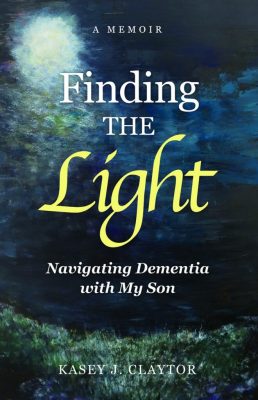
    FINDING The LIGHT, Navigating Dementia with My Son by Kasey J. Claytor – Inspirational Memoirs, Living with Disease, Family & Relationships

    Some stories are impossible to look away from, and from its very first sentence, Finding the Light, Navigating Dementia with My Son by Kasey J. Claytor proves itself one of them. “…when my 49-year-old son, Justin, was first diagnosed with a form of early-onset dementia, I was stunned.” Without hesitation, the book draws readers into a saga of family, illness, and resilience.

    Although a memoir, Finding the Light is in many ways an instructional text, too. Readers don’t need similar medical situations to draw from Claytor’s lessons of improvement. The conversational, approachable writing style serves this purpose well.

    Although it’s in chronological order, this is an unconventional, modern text.

    Traditional scene-based paragraphs are offset by poetry, informative sidebars, and even the full text of letters sent throughout Justin’s illness. Claytor deftly shifts between these sections, building a cohesive narrative from which readers can easily learn.

    The past is vibrant and immediate: Claytor chronicles events in rich yet simple prose as Justin falls deeper into frontotemporal dementia, or FTD.

    Yet Claytor also pauses often to address readers directly with a reflective tone from the present day. This gives welcome context to the book’s main narrative. She uses everything she’s learned to help readers understand Justin’s illness. FTD is a progressive, terminal disease—and a mysterious one, with no known cause. Finding the Light explains FTD patiently, without delving too far into medical details or terminology.

    Claytor’s an adept records-keeper, combining her carefully recreated personal experience with thorough research.

    The details she offers, from specific dates to particular images (piles of unopened mail, drives along the river road), give the story a tangible quality, as though readers are having this experience alongside her. Yet sometimes, the details come in the stark form of a list or a set of bullet points instead. These breaks from traditional prose offer a sense of the fractured, clinical experience that a terminal illness can become.

    At times, Claytor’s emotions burn bright, particularly in her frustrations with the poor training and management at several care facilities. Yet she quickly pulls back from these moments of anger or frustration, letting her present-day self take over with calm reflection instead. She explains her calmness well, however, instructing readers, through example, on the deep value of patience and compassion.

    Claytor truly excels at “finding the light,” just as the book’s title suggests.

    “Every time I read these words like ‘horrible’ about FTD, it hurts like a paper cut,” she writes. This book offers consistent positivity without the emotional artifice that self-help or instructional books sometimes resort to. Claytor accepts Justin’s changing situation, watching him revert in many ways to his child self, and even finds beauty in this process. She finds true acceptance. And throughout this book, readers may learn how to accept similarly challenging situations in their own lives.

    Finding the Light often feels like a long and enthralling conversation over coffee with a friend.

    Between its accessible writing style and the unpredictable medical situation, the book becomes impossible to put down. At each turn readers will find a surprising development, such as when Justin contends with COVID, or when he must repeatedly move to new facilities. And each development is carefully contextualized with compassion for Justin, for his caretakers, and for everybody touched by the impacts of FTD. A literary rhythm emerges: touching scene, thoughtful reflection, clear information.

    As Justin’s tale with FTD comes to a close, Claytor addresses the reader one last time, with a message for the painful, difficult turns in life.

    The final sections of the book are written in the second person, as Claytor wraps up the narrative with a set of clear, actionable takeaways. The last chapter, “7 Survival Tips for Rough Times,” is a welcome reminder that while everyone’s challenges are different, we must all face them. The test is how we navigate these experiences. Thanks to Finding the Light, readers will have a roadmap for travelling through whatever dark paths life has in store with grace, acceptance, and love.


    Reviewed by Chanticleer Book Reviews 4 Stars! round silver foil sticker

  • UNPAVED by Anthony Horton – Contemporary Fiction, Family Issues, Psychological Fiction

    UNPAVED by Anthony Horton – Contemporary Fiction, Family Issues, Psychological Fiction

    Somerset Blue and Gold First Place BadgeUnpaved by Anthony Horton is a pensive novel of how returning to one’s roots can reveal hints on how to move forward after a lifetime of grief.

    Russell Nowak-McCreary is a man whose life has been proudly shaped by formidable women. His mother, Judith, was a prominent cardiac surgeon at the reputable St. Bartholomew’s Hospital in London. His wife, Anna, thrived as a student of Judith’s and has risen to the top of Boston’s best medical campus. And Russell’s work partner Sarah Westroes joined his company, Datatel, as its CEO with a relentless drive to expand its footprint in the tech industry. His childhood was spent without a father figure, only excepting the fond memories of a single summer at his grandfather’s cabin in the Canadian wilderness.

    As he returns to the remote cabin of his youth to set his mother’s affairs in order, Russell takes this time alone to finally process all that he lost.

    His mother, Judith, died in her prime from pancreatic cancer. Russell’s only son’s life was taken too soon, and his marriage has fallen apart in the wake of it all. After several dark years enduring grief in compounding waves, Russell comes to wonder how he “felt so incredibly severed from that happy boy who had been satiated with the promise of the future”.

    Meanwhile, a corporate and romantic drama unfolds involving Sarah and Datatel. Russell has to reckon with fraud, insider trading, and illicit offshore bank accounts.

    While Russell isn’t convinced his lover is the one at fault, he finds it harder to trust Sarah after more of her personal life is exposed. As he ties loose ends on his mother’s will in Toronto, Russell struggles to decide: should he take Sarah’s place as CEO, or leave the company for good?

    Anthony Horton’s consistent lyricism gives an engaging rhythm to the story’s slow pace and puddle-hops through time — an arguably welcome reprieve from the typical hustle of an office drama.

    The corporate subplot in Unpaved proves to be the most entertaining and propulsive element of the book. Its rare appearance throughout Russell’s pilgrimage to Toronto and Teapot Lake provides the momentum needed to move our protagonist forward as he finds himself venturing into the backwaters of his past.

    For readers seeking a novel that sees them in their own grief, Unpaved is a thoughtful work that wades gently into the subject with grace. Horton’s careful prose allows us to take comfort in Russell’s unwavering confidence in the face of uncertainty as he determines how to begin the next chapter of his life on his own.


  • AN EMPTY HOUSE DOESN’T SNEEZE by David Scott Richardson – WWII Historical Fiction, Coming of Age, Pacific Northwest

    AN EMPTY HOUSE DOESN’T SNEEZE by David Scott Richardson – WWII Historical Fiction, Coming of Age, Pacific Northwest

    In David Scott Richardson’s YA WWII historical novel, An Empty House Doesn’t Sneeze, teenager Scott Johannsen—“Scotty” to his mom and friends—leads us on an adventure through the wartime Ravenna neighborhood in Seattle, Washington.

    Boeing manufactures B-17s, his grandparents and neighbors grow victory gardens, his parents build a bomb shelter in their basement, and mandatory blackouts occur every night. Scotty navigates a chaotic world filled with danger and wonder yet finds security with family and friends in this heartfelt story.

    Scotty runs with his pack—James, Marty, and Burr. We witness what lengths they will go to on a search for chocolate. With Ravenna Park as a backyard and Puget Sound just a short drive away, Scotty’s life is filled with exploration of the natural world. His fishing adventures with his dad in the Sound become an exciting way to supplement his family’s food rations as he dreams about netting a fighting salmon.

    Scotty’s peaceful life evokes a sense of innocence in another time. Readers see the responsibilities average citizens rose to in their attempts to safeguard their neighborhoods and families against a potential attack.

    Richardson masterfully relates the realities of coming of age in WWII America.

    Scotty’s older brother Eric and his younger sister Grace help him navigate this tumultuous time. Gas shortages, young men sent to battle overseas, and the loss suffered by a community when one of their own is killed in battle.

    Richardson also explores the plight of Japanese Americans during WWII. The loss of this part of his community directly impacts Scotty and his family when his friends and neighbors are sent to internment camps—regardless of their citizenship. To Scotty it seems incomprehensible and senseless, but Richardson confronts such an important historical fact directly.

    Yet more troubles intrude on Scotty’s world. We meet his nemesis, Simon Lashbaugh, a bully who lives on the other side of the park.

    He torments and confuses Scotty until he doesn’t know if he can trust his own brother. In his turmoil, Scotty confides in his sister and his buddies to help save his brother from the accusation that he is an arsonist setting fires during the city’s blackouts.

    Richardson brings to life the experiences of an average American kid who loves his hometown of Seattle—fishing with friends, running errands for his mom, and sharing secrets with his siblings.

    Our hero Scotty is not perfect. He’s a teenage boy who constantly thinks about girls, struggles with math, and tries to please his parents. He wants to survive school and adolescence and make sense of the chaos of WWII contrasted against his serene world.

    An Empty House Doesn’t Sneeze grabs readers’ attention with a depiction of the great apprehension and uncertainty experienced by America’s youngest citizens during World War II.

    Richardson’s characters leap off the page and will capture the hearts of all who enjoy a fast-paced historical war story about a struggling family and the boy who helps save his neighborhood.


  • IF TWO ARE DEAD: A Garnick & Paschal Mystery by Jeanne Matthews – 19th Century Mystery, Murder Mystery, Women Sleuths

    IF TWO ARE DEAD: A Garnick & Paschal Mystery by Jeanne Matthews – 19th Century Mystery, Murder Mystery, Women Sleuths

    An enigmatic raven-haired beauty mysteriously murdered and cast into a stranger’s grave, left for scurrilous resurrection men to uncover in the dark of night! In Jeanne Matthews’s historical mystery If Two Are Dead, Detectives Quinn Paschal and Gabriel Garnick take up this case of vicious murder and ignite a mire of secrets and resentment at the pinnacle of 1867 Chicago society.

    After catching the body-snatchers in the act of stealing a freshly buried corpse to sell for medical research, Quinn and Garnick realize the body found in Emmett Buck’s grave is by no means that of a young man, but that of a woman, whose bloody head and clean clothes point to a complex mystery. With only her appearance and some identifying jewelry, Quinn insists they can and will catch the killer of ‘Marietta A.V.’ Enlisting the help of an unscrupulous journalist, they locate her husband, a wealthy and influential doctor.

    The woman’s husband, Dr. Horace E. Vinings, offers them an incredible reward if they can find Marietta’s killer. But Quinn and Garnick suspect he might not like the answer he receives.

    Meanwhile, another case comes to the offices of Garnick & Paschal Private Detective Agency—one that might be even stranger.

    Fact meets fiction when famed author Charles Dickens takes a secret departure from his American book tour to recover his precious diary, stolen by a woman who he’s certain is working at the behest of his late brother’s widow. If the contents of that diary get out, it could mean terrible scandal for the beloved Victorian wordsmith, and his extramarital lover.

    Caught between the cooling leads of a murder and the incessant demands of Mr. Dickens, the detectives will have to push through danger, injury, and countless layers of deception to reveal the truth of both cases.

    Matthews brings readers into the chaotic, grimy streets of 19th-century Chicago with vivid detail and riveting suspense.

    If Two Are Dead fills your nose with the smell of slaughterhouse offal dumped in the rivers, conjures the chill of wind and rain kept at bay by thick coats and coal-burning stoves, and illustrates the city in all its tenuous juxtaposition of glittering grandeurs and industrial horrors.

    Making excellent use of a unique time and place, this clever story builds from its setting of a city in transition. Resurrection men supply the rapidly-expanding field of medicine with fresh corpses to examine. Charles Dickens tours like a modern pop star. The rich and powerful must hide their indiscretions against the social standards of the day.

    As Quinn and Garnick try to safeguard the reputation of Dickens, they also dig up long-buried secrets and cruelties to catch Marietta’s murderer. Even if it means potential disaster for Chicago’s most elite society.

    In this tale about the murky underworld of 19th century Chicago, every character has hidden sides to them—suspect, detective, and victim alike.

    Quinn must constantly reevaluate the motives and interpersonal connections that her suspects need to keep in the shadows. This is never truer than for the dead. The murdered Marietta’s own goals could illuminate what happened to her in her last days, but Quinn will have to parse words tainted by distaste and ignorance to discover who this young woman truly was.

    Regardless of the reward, Quinn dedicates herself to finding justice for Marietta. Her driven spirit and quick mind compel readers to root for her throughout the investigation.

    Quinn faces social and physical danger alike as a female detective in 1867. But even a brush with death and its lingering injury nothing will slow her down—especially as the pressure mounts in both investigations.

    More troubling, however, are the conflicts that start to grow between her and Garnick. As partners and lovers, they rely on each other. But Quinn isn’t sure if she wants the life of commitment that Garnick seems to desire. And as Quinn brushes off Garnick’s worries and trudges on despite the harm this murder case has already brought down on her, she fears she may have pushed him too far away. The arrival of someone from Garnick’s past forces Quinn to confront the choices she’s willing to risk for the sake of their relationship.

    If Two Are Dead interrogates how the unjust gender roles prevalent at the turn of the century dictate the lives of women—whether or not they choose to accept them.

    As an Irish woman, Quinn also faces more than her share of bigotry. But most keen in this story is the role of a wife. Quinn sees the terrible power that husbands wield over their spouses, how it defines the secrets behind Marietta’s death and the scandal of Charles Dickens’s stolen diary.

    Quinn doesn’t want a conventional life. She’s a detective first, and these investigations only give her more reason not to put such complete trust in anyone as to marry them. But, despite it all, she does want Garnick.

    Balancing flashes of grim violence with the excitement of discovery and the humor of a cantankerous Charles Dickens, Matthews delivers a satisfying murder mystery.

    Each new clue will spark burning questions in the reader’s mind. Matthews carefully constructs and expands the investigation, never quite giving the game away. And just as the answer begins to emerge from the fog, a new twist reframes what we know, rewarding those who share Quinn’s knack for catching subtle connections.

    If Two Are Dead is a gripping tale of family and professional betrayal set in the dangerous streets of Chicago that dredges up one secret after another. But even those secrets buried six feet under can be laid bare once more.


  • ROSES In DECEMBER: Hamilton Place, Book 2 by Mark A. Gibson – Family Saga, Contemporary Fiction, War in Afghanistan

    ROSES In DECEMBER: Hamilton Place, Book 2 by Mark A. Gibson – Family Saga, Contemporary Fiction, War in Afghanistan

    Roses in December is the epic conclusion to Mark A. Gibson’s compelling two-part family saga, Hamilton Place. Now focusing on the family’s next generation, James Hamilton Jr.—Jimmy—follows in the footsteps of the father he never met, a Vietnam War hero who died in battle, and ultimately finds his own path in life.

    Pressured by a conning mother-in-law only out for monetary gain, the elder Jimmy’s widow, Becca, is pushed to marry Mack Lee, her deceased husband’s older brother who proves to be a cheating and abusive husband. Trapped in this loveless marriage, Becca hopes that attending church will remove her son from the toxic influence of her new husband and set him on the right path to a good life. But it’s the discovery of young Jimmy’s superior photographic memory that opens the door to a brighter future, and he sets a course to an outstanding medical career, coupled with military service in Afghanistan.

    Gibson delivers the recent past with a great sense of immediacy, showing events that ripple into our contemporary world using pop references that are relevant in today’s world.

    There is no shying away from the thorny reality of world conflicts and tragedies, such as the 9/11 terror attacks. Jimmy’s budding empathy and photographic memory become both a blessing and a curse when all the best and worst parts of his life are only one visual recall away. This unique and imaginative narrative follows Jimmy as he grows into a man named James who must come to terms with his most painful experiences.

    Roses in December develops on the themes of love, loss, and resilience revealed in its predecessor, A Song That Never Ends, with thematic vines are grafted together into a deeply rewarding whole.

    Many of the same elements from the first book return in this two-part series, with its details now paying off, from a special photograph the Vietnam medic uses to cover a chest wound, to James referencing the unique bandage to his hospital interns. Roses in December is laced with connective details that immerse the reader in the lives of its characters as family mysteries come to light, including the long-held secret that Becca has kept from her son, James. And the story comes full circle when the adult James shares the full family history with his own children.

    While Roses in December can certainly stand on its own, reading Gibson’s books in sequence will help lay a solid foundation for this generational saga. It will also serve to impart a core of knowledge about the characters and their relationships, and their development within the family’s overall dynamic. Together these volumes prove a truly satisfying duo, with Roses in December blossoming into a beautiful conclusion to the Hamilton Place Series.

  • COMBAT MISSIONS by Burl D. Harmon – Wartime Memoirs, WWII Aviation, Military History

    COMBAT MISSIONS by Burl D. Harmon – Wartime Memoirs, WWII Aviation, Military History


    Gold and Blue Military and Front Line Awards First Place Badge for Service to Others

    Sometimes, a close and personal story can reveal the true weight of major historical events. Combat Missions, a memoir from WWII veteran Burl D. Harmon, achieves this by detailing how Europe’s vicious aerial battles shape a young boy’s entry to manhood.

     On December 7, 1941, Harmon is summoned to his high school’s auditorium to hear President Roosevelt proclaim it as, “a day which will live in infamy…” Soon after, his draft notice arrives. Harmon’s junior college studies and work at the local Rexall drug store are put on hold as he joins the vast flood of young American men and women conscripted into military service. Leaving his small Iowa town and a family mostly sheltered from the grim realities of the outside world, he travels to New York City with people from every imaginable background.

     With no prior mechanical experience, he works diligently to become a flight engineer, training to master a lexicon of manual tasks and learn the intricacies of air-to-air combat amidst bombing runs. His training takes him even farther from home, to Detroit, Lorado, Texas, Puerto Rico, and even Cuba.

    In these unfamiliar places, Harmon experiences other, more hidden sides of adulthood, including a visit to a notorious brothel in Havana. The reader feels his innocence shedding, but not his moral compass, which keeps him from indulging in many of the temptations that entice other draftees.

    Once trained, Harmon spends most of his deployment in Italy, where he flies a total of 38 perilous missions.

    He takes readers into the cockpit to experience aerial battle with first-hand, harrowing descriptions. But this memoir shows much more than just the violence of war. It’s also about the men he served with, the officers he served under, and the good and bad of both. He names beloved friends and respected officers, gives us glimpses of those who survived the war to live fruitful lives, and memorializes those who were lost in Europe’s battle-scarred skies.

    Harmon reveals the struggles and joys of his own life in the shadow of war.

    We see his quarreling parents in Iowa, the often tormented and confusing love life of a young man, and the family he befriends in Italy with the kindness they bestow upon him. At the conclusion of the war, he tells us of how it was to come home. He has to readjust to a quiet existence as he stumbles around trying to figure out a way forward until, ultimately, he discovers his love of teaching.

    Decades later, at 85, Harmon takes on a new challenge when he joins a group called Global Volunteers, which places him overseas once again. The adventure takes him back to Italy, near the place where he was stationed during the war. It’s a bittersweet return. He makes new friends but discovers the family that he’d spent time with during the war is gone, chased from their home by fleeing Nazis who rampaged villages and confiscated everything they could find ahead of the Allied force’s advances.

    This trim volume shows how the experience of war shaped Harmon’s character and the course of his life, looking back now at 97. Readers interested in the Greatest Generation, who risked their lives to win a war against a rising fascist power, this memoir offers fascinating and meaningful detail from that time. For those who want to understand the way war can change a young boy’s life, Combat Missions is a personal, compassionate must-read.

    Combat Missions by Burl D. Harmon won First Place in the 2021 CIBA Military & Front Line Awards for Narrative Non-Fiction.