
Category: Reviews

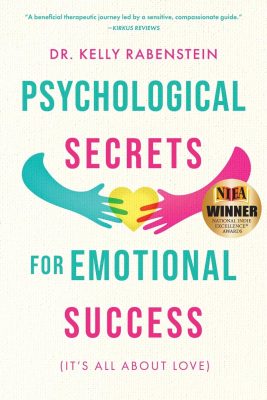
  • PSYCHOLOGICAL SECRETS For EMOTIONAL SUCCESS by Dr. Kelly Rabenstein – Workplace Culture, Interpersonal Relations, Success Self-Help

    PSYCHOLOGICAL SECRETS For EMOTIONAL SUCCESS by Dr. Kelly Rabenstein – Workplace Culture, Interpersonal Relations, Success Self-Help


    Blue and Gold badge recognizing Psychological Secrets for Emotional Success by Dr Kelly Rabenstein for winning the 2023 Mind and Spirit Grand Prize

    Do you often feel that you sabotage your personal and work relationships? In Psychological Secrets for Emotional Success, Dr. Kelly Rabenstein teaches readers exactly what psychological techniques will help them strengthen and maintain their interpersonal connections.

    Dr. Rabenstein is a licensed psychologist offering her extensive knowledge of how to make sound, conscious changes in mindset and perspective to help you thrive in relationships across the board. If a person can thrive, then they can be fully authentic to themselves and to those who surround them.

    Psychological Secrets for Emotional Success follows the structure of thoughtful explanations and emotional explorations, followed by insightful exercises at the end of each chapter to help readers understand and improve both their workplace culture and personal interactions. These questions reveal where we stand and how to develop a more balanced life.

    Dr. Rabenstein lays out the deceptively simple key to emotional success: a combination of awareness, education, and empathy.

    The book starts with the suggestion that the reader keep a simple journal, writing down a sentence or two to track daily happenings. These journal entries, plus mentally engaging questions within each chapter, bring clarity to your personal intentions. You can then begin to reform thought patterns and habits to better serve them.

    Empathy is a cornerstone of productive relationships, no matter which kind they are.

    Without compassionate listening and communication, relationships become stagnant as the wants and needs of others go unaddressed. While professional relationships aren’t put second here, Dr. Rabenstein offers particularly focused suggestions on communication between partners.

    This expert guidance clarifies the ins and outs of sending and receiving information between people. It also highlights the struggles that crop up when communication falls short, such as hiding needs or simply being dishonest. Any move toward improving or hampering communication in a relationship has a compounding effect, for the positive or for the negative.

    Our interpersonal relationships – business, romantic, and otherwise – are the paths to happiness. Psychological Secrets for Emotional Success opens our inner pathways wide for the reader who is ready to listen.

    Learn how to break down aspects of relationships, following clear and simple directions, and implement positive changes in each of them. It won’t be long until you reap the benefits of healthier connections and emotional success in every aspect of life.

    Psychological Secrets for Emotional Success by Dr. Kelly Rabenstein won the 2023 Grand Prize for the CIBA Mind & Spirit Book Awards!


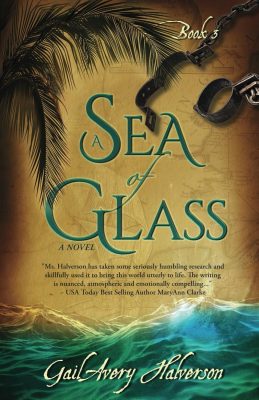
  • A SEA Of GLASS: The Stockbridge Series Book 3 by Gail Avery Halverson – Historical Fiction, Colonial America, Slavery

    A SEA Of GLASS: The Stockbridge Series Book 3 by Gail Avery Halverson – Historical Fiction, Colonial America, Slavery

    blue and gold badge recognizing A Sea of Glass by Gail Avery Halverson for winning the 2023 Chatelaine Grand Prize


    A Sea of Glass by Gail Avery Halverson is a sweeping historical novel that captivates readers as it takes us from the bustling world of Colonial Boston to the shores of Barbados. But the island’s burgeoning sugar industry harbors dark secrets for those trapped there, either by circumstance or by slavery.

    The colonial backdrop is brimming with conflict. Businesses struggle under British taxation enforced by the hated Red Coats. With the dangers of traveling through pirate—and privateer—infested waters, there are more than enough shifting winds to keep readers engaged until the very end.

    Lady Catherine Abbott-McKensie, her physician husband Simon McKensie, and their daughter Charlotte, enjoy the pace of life in Colonial Boston, but their peace does not last long.

    After a very personal tragedy, Catherine starts imagining life would be better in her homeland of England. But when a free black woman who works for the McKensie’s attempts to do something out of the ordinary, Catherine finds she has reason to stay in Boston and stand up for what she believes is right.

    Catherine’s not the only soul struggling in this tenuous world of Colonial America.

    Her brother Charles is planning to invest in a sugar plantation in Barbados. He soon sets sail with his wife, Arabella, to visit the plantation in person. But on their way, they are beset by pirates and are separated from each other. Eventually, Arabella makes her way back to Boston, but her trauma from the pirate attack renders her nearly mute.

    News of the plundered ship sends Simon to Barbados to find Charles, and they both discover the dark underside of the “Barbados Plan to Prosperity.” A plan with dire costs to both Catherine, Arabella, and the slaves who smolder at their unjust treatment.

    A Sea of Glass includes excellently researched details, but its greatest strength is the relationships between the characters.

    The reader will find themselves invested in everyone’s lives, both in their successes and perils. The rich emotion behind these characters will make readers empathize deeply with them.

    As the third book in the saga of Lady Catherine Abbott and Simon McKensie, A Sea of Glass artfully shares the details a new reader would need, while not frustrating returning fans.

    Any lover of historical fiction will find a meaningful read in A Sea of Glass, with the preceding Stockbridge Series fully living up to it.

    A Sea of Glass by Gail Avery Halverson won Grand Prize in the 2023 CIBA Chatelaine Awards for Romantic Fiction.


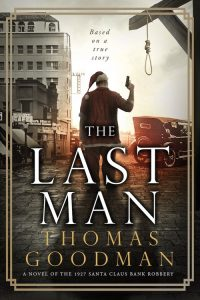
  • THE LAST MAN: A Novel of the 1927 Santa Claus Bank Robbery by Thomas Goodman – Historical Thrillers, Criminal History, Great Depression

    THE LAST MAN: A Novel of the 1927 Santa Claus Bank Robbery by Thomas Goodman – Historical Thrillers, Criminal History, Great Depression


    Blue and Gold badge recognizing The Last Man by Thomas Goodman for winning the 2023 Laramie Grand PrizeIn The Last Man: A Novel of the 1927 Santa Claus Bank Robbery by Thomas Goodman, four men in a small, depression-era Texas town lay in wait to carry out their unique plan for a holiday heist.
    It’s December 23 and a man in a Santa Claus suit walks into a bank. But rather than his bag full of Christmas surprises, he’s brought a gun. With the element of surprise on their side, the robber and his two partners would collect the cash, while another partner waited in the getaway car. It all seemed so simple.

    At the time, Texas bankers—in order to deter crimes such as this—promised a $5,000 reward for any dead bandits, “and not one cent” for the capture of a live one. Should anything go wrong, the possibilities for disaster were clear as a Greek tragedy, but what could go wrong?

    Guns blaze within minutes of entering the bank.

    Robbers are shot. Two lawmen—including a popular sheriff—die. In swift order, the criminals are captured, and Texas-style justice insures the death penalty is on the table for all four men.

    But that’s just the beginning of this 20th century western crime novel.

    Based on a true story, we learn the sad tales of the four men who came together, mostly as strangers, to commit the robbery. We follow each of them through their individual court trials, as the prosecutors howl for bloody vengeance and the defense battles to keep each of them from the electric chair.

    In the end, they all are found guilty and put on the court’s—and the public’s—“naughty” list. Two face the harshest possible punishment, and one dies at the hands of a violent mob who drags him from his jail cell and hangs him after an attempted prison escape goes terribly wrong.

    However, one of the four does survive his sentence.

    Despite multiple escape attempts and clashes with the law, the last of the four men avoids the harsh sentences handed down to the other robbers and instead gets a shot at a real life even with his criminal past.

    This book intrigues readers with each robber’s individual odyssey, their prison lives, escape attempts, and the unrelenting searches to bring them back.

    Particularly gut-wrenching are the descriptions of life for at least one of the men on Death Row. He awaits execution behind what the prisoners refer to as “the little green door,” an iron door that closes behind each condemned man as he faces the grim fate that looms just a few steps away.

    One of these condemned men watches as 13 of his fellow prisoners are executed. Man after man, they take that long walk to the little green door as gospel music from an old needle-drop phonograph announces the electric chair. We feel his anxiety as he wonders how many days are left until he will walk the same path. And as he watches the others take their final steps, he is propelled to a horribly rash and dark act.

    The Last Man brings readers into the center of these men’s lives through a poignant selection of details.

    Goodman not only presents the facts of their lives—he delivers the quality of those lives. These are no heroes. There’s not much to sympathize with. But they all deserve better than what they got under the harsh hand of Texas justice.

    Fans of true crime should put this book at the top of their list.

    The Last Man by Thomas Goodman won Grand Prize in the 2023 CIBA Laramie Awards for Americana fiction.

    Thomas Goodman’s The Last Man is on sale as a Kindle ebook for 99¢ until Saturday, Oct 26th, 2024.


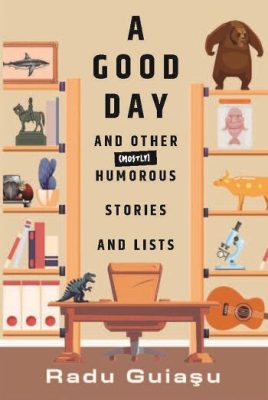
  • A GOOD DAY And OTHER MOSTLY HUMOROUS STORIES And LISTS by Radu Guiasu – Humor & Satire, Short Story Collections, Contemporary Fiction

    A GOOD DAY And OTHER MOSTLY HUMOROUS STORIES And LISTS by Radu Guiasu – Humor & Satire, Short Story Collections, Contemporary Fiction


    Through the thirty-six diverse writing efforts of A Good Day and Other Mostly Humorous Stories and Lists, Radu Guiasu masterfully combines wit, whimsy, satire, and personal contemplation.

    These vignettes cover a wide range of topics, styles, and techniques. While they often seem to be typical “slice-of-life” moments, Guiasu clearly has a knack for finding humor in even the most absurd situations.

    As a native Romanian now residing and teaching in Canada, Guiasu writes from his own knowledge and experience. He often broaches serious and meaningful topics, such as the world of academia, growing up under a dictatorship, and a love of nature.

    The book’s title story, written while the author was a graduate student, follows a central character who cheerfully muses on fellow graduates not pursuing careers connected to their degree. Choosing not to sell out, he furthers his education and teaches high school to troubled students rather than drive a cab. Ultimately, he loses both his job and his girlfriend, thus deciding to celebrate his newfound freedom by writing about it.

    In “My Mao Experience”, a 7th grade class is chosen to offer expressions of grief when Chairman Mao dies, as part of the national day of mourning in Romania.

    “The Day The Bear Came” focuses on two friends who are forced to overcome their differences when a wild carnivore confronts them on a camping trip.

    Guiasu incorporates a variety of writing forms into this anthology—from short story prose and primary dialogue pieces to creative rejection letters, invented submission guidelines, and thoughtful lists.

    After reading Guiasu’s work, and in particular his “lists”, readers will undoubtedly come away wondering why this quick-witted writer doesn’t consider a second career as a stand-up comedian. It’s easy to picture him on stage in front of a live audience extolling the virtues of “Life Lessons You Probably Won’t Find in Self-Help Books”; “Reasons for Giving an Amazon Book a Poor Review”; or “Clues That a Lion Tamer Job Is Not For You.”

    Guiasu’s underlying style is clear and concise. The stories do not need to be read in any particular order, and a shared thread of humor and satiric sentiment unites their many distinct ideas.

    A bevy of interesting characters fill this collection, including a young writer who is told by an elderly gentleman that he needs more life experiences before he can write; a masters student who works in the basement of a museum; a man quarantined until a SWAT team can capture the rabid squirrel that attacked a German Shepherd; and an individual trying to figure out which neighbor turned him in for leaving his home more than one day during the COVID pandemic.

    This compilation clearly demonstrates Guiasu’s remarkable talent and lighthearted, clever tongue.

    He turns simple observations into relatable tales using humor, irony, and exaggeration—simultaneously exposing flaws in modern society. An artful display of storytelling that will engage even the most stoic reader until they can’t resist a smile.


  • DOUBLE TAKEDOWN, (Mike Stoneman Thriller Series #6) by Kevin G. Chapman – Thriller/Suspense Fiction, Police Procedural, Crime Thrillers

    DOUBLE TAKEDOWN, (Mike Stoneman Thriller Series #6) by Kevin G. Chapman – Thriller/Suspense Fiction, Police Procedural, Crime Thrillers

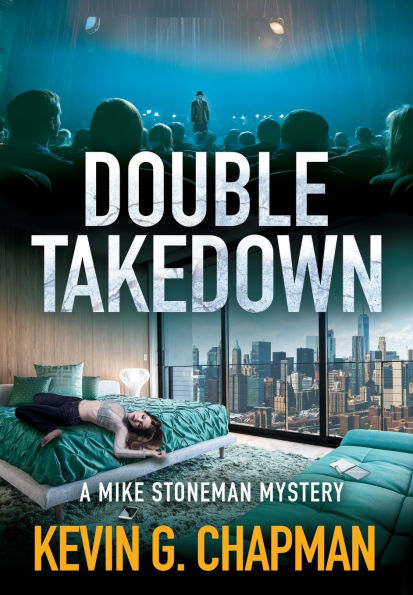
    In Double Takedown, book six in the Mike Stoneman series by Kevin G. Chapman, we follow two NY homicide detectives as they unravel a murder at a theater in an intricate dance of high-stakes suspense.

    Two years after the pandemic shut down the world, NY homicide detectives Mike Stoneman and his partner Jason Dickson are at a charity ballet for an evening out with their wives. When an audience member suddenly dies during the performance, they soon realize they are spectators to a murder.

    At first nothing looks suspicious about the death of Alex Bishop, lead actor in a moribund Broadway show, Godfather: The Musical. But with the cause of death uncertain, questions begin to swirl. Mike and Jason pick up the case to find out exactly what caused this mysterious death. The show’s director/producer had a motive and opportunity, and when the detectives find incriminating evidence on his personal laptop, the case is quickly closed. Or is it?

    From the first page, readers are pulled into this police procedural that doesn’t let up until the very last page.

    What seems to be a cut and dried medical case is scheduled for trial a year later, but when Mike and Jason are approached by a private investigator named Sterling Wright, they find the third act is just beginning. The case hits major snags, and Mike and Jason investigate Sterling’s accusations with private surveillance. The two partners begin with a list of people close to Alex, unraveling a complicated choreography of deceit and lies in which the dead man’s supposed friends tell a different story behind the scenes. As they dig deeper into Alex’s life, the detectives uncover connections that stretch throughout the boroughs of New York, turning this local case into a mystery that at first looks like an open and shut case, but takes a drastic turn to something more sinister.

    Double Takedown is a fascinating and involved police procedural that guides readers expertly through the investigative process.

    This stand-alone mystery will keep readers on their toes! Lovers of thrillers, suspense, and mysteries won’t miss a step if they dive into Double Takedown before reading the earlier books in the series. Chapman intricately weaves all the necessary details of his characters into the plot and subplot to present a complex tale of a police investigation his readers will relish. The pacing flows gracefully, keeping readers’ attention focused page after page. Other suspects emerge from the wings, presenting a stage full of interesting characters that provide nuance and balance to the story, and you’ll find yourself sitting on the edge of your seat whenever Mike and Jason drill down on a possible suspect.

    Chapman masterfully blends meticulous police work with high stakes suspense, delivering a richly layered narrative that will keep crime thriller fans guessing at every turn. With an intricate plot and memorable characters, Double Takedown stands out as a must-read for those who crave the perfect mix of action and intrigue.


  • SUMMER CYCLONE: Magic at Myers Beach Book 4 by Alan B. Gibson – Fantasy Romance, Urban Fantasy, Fairies

    SUMMER CYCLONE: Magic at Myers Beach Book 4 by Alan B. Gibson – Fantasy Romance, Urban Fantasy, Fairies


    The citizens of the three fairy kingdoms clash, forced to live shoulder-to-shoulder alongside ungoverned Outliers. In Summer Cyclone, fourth book of Alan B. Gibson’s Magic at Myers Beach series, unassuming tea-shop manager Stefán tries to find love while keeping all of fairy society from fracturing.

    The three fairy kings, Theos, Zsombor, and Christophe, evacuate their people to Myers Beach. It’s only here that they have any chance of recreating fairy dust after their old sources had been poisoned, and saving every fairy life. They take in the Outliers, remnants of a fallen kingdom, and at first find good will between the groups. But with thousands of fairies moving in, they have to keep everyone on a short leash or else risk humans catching wind of their new neighbors. Resentment of these strange Outliers builds.

    Stefán, a close confidant to Theos, struggles to keep anti-Outlier sentiment at bay with the help of some enigmatic and knowledgeable new friends. Rumors of him giving the Outliers special treatment grow stronger as some fairies begin to suspect that he’s actually one of them.

    As an orphan of asylum-seeking parents, Stefán doesn’t even know his true ancestry.

    But though his responsibilities weigh heavy on him, Stefán finds a bright spot in his life. He falls for Julie, the human woman who—even as a relative stranger—offered him kindness and support while he watched over Christophe’s recently-possessed sister, Princess Zoë.

    Julie herself hesitates to be honest about her feelings, a recent failed relationship fresh in her mind. They tip-toe around each other, but draw gradually closer. Stefán makes her morning coffee and teaches her to cook. Julie shares her love of skateboarding, and the adventures she and Christophe had while travelling together the past few months. And at first, they bond as they help Zoë recover despite having lost her magic and wings to the witch possessing her body.

    Julie worries, however, that Stefán and Zoë are getting too close. And with nearly all of her friends now fairies, it’s easy for her to feel like she has no lasting place in their world.

    All the while, a murderous figure from the past—the very man who poisoned the old fairy dust—returns to take advantage of the weakened kingdoms.

    Cross-kingdom tension builds beneath the surface until the fairies are nearly erupting. Agitators push greater and greater anger at the Outliers, empowered by the fear of a ticking clock. The royals only have a few weeks left to find the final ingredient to fairy dust before their people starve.

    Each time Stefán and his friends think they have a solution to one of their pressing issues, it leads to greater outcry from the populace and more opportunity for sinister forces to take control. The patience of their people wears thin, and eventually, so does the patience they have for each other. Even a loving group of friends can be made to turn on each other with the right combination of fear and magic.

    But with his willingness to tackle impossible tasks, and his deep desire to understand himself, Stefán opposes the destruction of his world while easily pulling readers into his shoes.

    He and Julie are both outsiders among the people they love. But neither of them lets that stand in the way when their friends need help, proving that even if they don’t have the title of fairy royalty, they have no shortage of strength or nobility.

    As it brings together both old friends and old foes from across the series, Summer Cyclone explores meaningful emotional threads.

    Myers Beach shines with the return of characters from previous installments, particularly the fairy royals Theos, Lily, Zsombor, and Greta. Their distinct personalities weave together and clash now that they’re a team with the weight of fairy society on their shoulders.

    Julie’s just happy to have her best friends back in her life, especially as Lily and Greta reveal that she’s going to be godmother to their future fairy children. But as a human, Julie’s as far from fairy royalty as someone can be. She has no magic. No authority. And as matters of state become overwhelming, she fears she’ll be left out of her friends’ lives once again.

    Stefán’s easy friendship with Theos and Alias—nearly his adoptive brothers—is tested by the conflicting demands of royalty. While they all want the same peace between the different fairy peoples, Stefán will have to learn how to navigate changing dynamics of power.

    Personal relationships blend into societal strife with dire stakes. Stefán and Julie lift each other up even as they struggle with their insecurities. And as the fairy kingdoms approach a vital choice in how their way of life will change—unity or division—Summer Cyclone delivers on the promises of its preceding books with a suspenseful whirlwind romance.

    Read the whole series of Magic at Myers Beach!

  • TOMMY ROCKET And The GOOBER PATROL by Thomas R. Kuhn – Children’s Adventure, Mystery, Sci-fi

    TOMMY ROCKET And The GOOBER PATROL by Thomas R. Kuhn – Children’s Adventure, Mystery, Sci-fi


    Tommy Rocket and the Goober Patrol by Thomas R. Kuhn follows Nate, a young boy growing up in the 1970s, whose friendship with the kid genius robot builder, Tommy Rocket, leads him into mysterious adventures.

    Tommy’s father invented the Prometheus chip that gives sentience to robots, and from a young age Tommy started creating a gang of robots called the Goober Patrol. Eccentric and wheelchair-bound, Tommy prefers to tinker with his robots at home. But he befriends Nate after he saves Tommy from bullies.

    When Tommy’s aptly named ‘Monster-bot’ gets loose, Nate is tasked with finding and securing the rogue bot before anyone finds out. But the two boys soon find out there is more at work than one missing robot. There’s another tinkerer in town and they’re building their own special group of robots—which look just like one of Tommy’s creations. Nate and Tommy have to find out who has gotten their hands on the Prometheus chip before it’s too late.

    Filled with 1970s nostalgia, Tommy Rocket and the Goober Patrol explores the best parts of childhood.

    School is just a thing to endure and kids are wrapped up in their own adventures with their friends.

    For these two kids, their adventures are more than playground games. This adventure has much more more at stake.

    Tommy’s robots are quirky, comedic characters, but the star of the story is undoubtedly Nate. He’s a normal boy who loves to read superhero comics and often procrastinates with his homework until the last moment. He’s also tenacious, sticking up for what’s right even if it jeopardizes his friendship with Tommy.

    An eccentric young kid, Tommy does not seem the easiest person to be friends with, but he cares for Nate in his own way, even reaching out with a coded message whenever they have a disagreement

    The mystery of the Monster-bot flows at a pleasant, consistent pace as its clues are revealed.

    This is a book for both kids who love going on adventures around the neighborhood with their friends, and for adults who grew up during the ’70s, making Tommy Rocket and the Goober Patrol a great book for children and parents to read together.

    For the comic book readers and the budding science fiction fans, Tommy Rocket and the Goober Patrol is not to be missed.


  • MINNESOTA POEMS From The OUTPOSTS by Hari Hyde – Poetry Collections, Spirituality, Natural World

    MINNESOTA POEMS From The OUTPOSTS by Hari Hyde – Poetry Collections, Spirituality, Natural World


    Hari Hyde reveals the mysticism of exploring chaotic nature and our human need to connect with it. He takes readers to sites of wonder, physical and conceptual, in his collection Minnesota Poems from the Outposts.

    “Part 1: Middle Rivers” illustrates the shared liminal states of people and the natural world.

    Aligning symbols of the turning seasons with people growing up in their communities, “Middle River, Minnesota” establishes our innate kinship with nature—as individuals and collectives. “School Bus” follows the transient days of childhood, while “Unruffled Railway” looks back from the end of an era, as the rails are now overgrown and unused. But, to be overgrown is to find life, and a new way of being after the end of that old cycle.

    Meanwhile, “Moon Over Thief Lake” illustrates the need to commune with nature through beautiful but distant imagery.

    Part 1 maintains a childlike playfulness in its use of language.

    “Goose Capital” and “Young’s Store” give in to flights of fancy about the little details of rural life, while a trio of poems “Ye Olde Depot Theater,  River Avenue”, and “Church Bell” fully immerse themselves in the charm of small communities.

    But Part 1 also touches on the difficult challenge of maturity. “Milking Holsteins” and “Angus Cattle” find peace in a world where each creature has a role to play. But, matching the use of rivers as a thematic force of eternal change, “Minnesota Highway 59” reckons with the fact that there are some deep yearnings a person will never be able to satisfy.

    These first poems open the book well, introducing both the setting of rural Minnesota and a focus on living in relation to its natural forces. Some of the themes in Part 1 could be expanded upon, but the warm poetic voice beckons readers to continue on.

    “Part 2: Smalltown Outposts” broadens its scope to include a variety of notable locations, embracing the culture and history of Minnesota.

    A mixture of compelling imagery and unique tones give each new location a sense of identity, especially in poems like “Split Rock Lighthouse (Lake Superior)”.

    This combines with whimsical renditions of local mythology in “Paulette Bunyan” and “Mankato Man and Nature’s Plan” to instill in readers Minnesota’s vital, defiant soul.

    Hyde also explores the human shadow of Minnesota’s history—the inner lives of those who made it—in “Minnesota’s Ten Millennial Girl” and “Blue Mounds State Park”. These poems describe the personality that history leaves to its locations but, at the same time, exposes the complexities that can’t be preserved over a long period of time.

    Where Part 1 embraced communion with nature, Part 2 creates a thematic duality by highlighting our inherent conflict with it.

    “Mankato Man and Nature’s Plan” puts this conflict in stark relief. The central figure defies his place as a tool in Nature’s hand. But “Red River Flood” shows how futile that fight can be, with the narrator choosing to become like the river itself rather than try to live in spite of it.

    The rhyming can create awkward lines sometimes, but this section’s beauty is in its clear familiarity with its locations, which maintain their grandeur.

    “Part 3: Inner Outposts” and “Part 4: Family and Faith” create another dichotomy—the inner self and its struggle to fit in with the outer world.

    “Private Ponds”, “Secret Snow Bones”, and “The Outside” encourage trusting the inner self, finding meaning beyond societal expectations and dogma. But “The Believable Distance” and “Last Love” both recognize the pain in being distant from others.

    These sections make playful use of metaphors, but in poems like “Guard Dog”, those become more complex and conflicted. The animal part of one’s mind tears and recoils at the chains that bind it.

    As a whole, Parts 3 & 4 step into darker territory. Pain and suffering are reframed as the necessary teachers of survival—from the mundane to the divine—in “Ancient Apathy”. “Corporal Counselor” grapples with pride and envy as truly inescapable sins, innate to the inner self.

    While there’s a return to some of the mysticism of childhood from Part 1, these later parts offer a more nuanced perspective on relationships.

    This is particularly true among the poems most concerned with death, “Elegy for a Nobody”, “Get Well Cards (Calibrated)”, and “A Little Light”. While the themes of family and faith don’t interact much in general, these death poems find interesting connections between how death changes our relationships to each other and the deep desire to understand one’s meaning in the universe.

    “Jonah and the Great Fish” stands out as a unique take on this section’s view of God. Here, animals are to humans as humans are to the divine. But the might of nature tests the boundaries of this metaphor. A great and terrible sturgeon reigns as a bloody demon, and it’s only through the help of nature’s small and wriggling things that the fish can be bested.

    This poem serves well as a transition point to the fifth and final part of the collection, “The Wild.” Here, the core ideas and writing style of Minnesota Poems from the Outposts both shine at their brightest.

    “Moose Head” grants intention and emotion to the forces of the natural world, while reinforcing its incompatibility with human society. This poem and “Arrowhead Northern Lights” create a compelling combination of descriptive language and poetic contrasts. All underscored by a palpable appreciation for the wilderness of Minnesota.

    “Into the Woods” and “Lake of the Woods” experiment most with structure and poetic flow, to fascinating effect.

    Both are much longer than any other poems in the collection, with lines and paragraphs shifting in size as they explore new parts of the wilds. They take this time to fully immerse a reader in their contrasting views of wilderness.

    The narrator finds that, to truly go “Into the Woods” and become a part of them, one has to give themselves up to the beautiful ways of nature. It’s a welcoming of the raw, physical world.

    “Lake of the Woods”, on the other hand, seeks divinity in the beasts of the water. Recurring symbolism aligns the lakes with the sky—a celestial realm, where humans can touch and even enter, but will find themselves reflected back in challenging ways.

    And yet, for all of the woodlands’ chaos and strangeness, people come.

    Here, in these final poems, Hyde returns to the incessant yearning. The distance between a person and the worlds of men and trees alike might be vast, but the quest to cross it is equally as meaningful.


    Chanticleer Book Reviews 4 star silver foil book sticker

  • SEA TIGERS And MERCHANTS: Salem Stories Book 2 by Sandra Wagner-Wright – US Historical Fiction, Family Saga, Maritime Historical Fiction

    SEA TIGERS And MERCHANTS: Salem Stories Book 2 by Sandra Wagner-Wright – US Historical Fiction, Family Saga, Maritime Historical Fiction


    Two families vie for power in mercantile 18th-century Salem. Sea Tigers and Merchants, the second book in Sandra Wagner-Wright’s Salem Stories series, returns to a world of treacherous storms, tantalizing wealth, and the demands of high society on its children.

    Elias Hasket Derby, Sr. has kept his promise to his wife Eliza—they rule Salem. Hasket’s merchant ships bring in great fortune, while Eliza holds court as the most influential woman in the city’s social spheres. And their ambitions have grown to meet their station. Hasket launches his riskiest endeavor—the Grand Turk, a ship so massive she’s nearly too heavy to be pulled out of the docks. Meanwhile Eliza, snubbed by George Washington’s stay at another family’s mansion, insists they build a house so grand it will put all others to shame.

    Such success, of course, draws the envious eye of Hasket’s competitor.

    The Crowninshield family has an uphill battle before them. The patriarch, George, Sr., is unable to employ all his own sons as captains of his small fleet—leaving them to work for their uncle Hasket. But George shares Hasket’s ambition. With the support of his wife, Hasket’s sister Mary, he builds greater ships of his own. If only he could get his eldest sons to follow his wishes, all his goals would fall into place.

    But the pressures of the Crowninshield family weigh heavy on its sons, Geordie and Edward.

    Geordie throws himself eagerly upon the waves to travel far from home. When he does walk the shore of Salem, he spends his nights at Ship Tavern, where he takes an interest in the newly arrived barmaid, Lizzie Rowell.

    Edward had all but left the family years ago, moving away from Salem and marrying into a fishing family of much simpler means. But escaping the control of a man like George Crowninshield isn’t so easy, even if serving on one of his ships puts him in serious danger. Duty to family is of the utmost importance in Crowninshield’s world.

    From the wealthiest merchant to an overworked barmaid, everyone must decide what they’re willing to risk for a better life.

    Lizzie Rowell risks her aunt’s fury, and the loss of her home and occupation, for the affection of Geordie Crowninshield. And when an unexpected complication arises between them, Lizzie finds herself at the mercy of those with more wealth and power than she could ever hope to touch.

    Wagner-Wright imbues Salem with authentic life, drawing readers into the last decade of the 18th century.

    Sensory descriptions flow in the cool sea air, carrying the smell of bridal fruitcakes and bitter hull-sealing pitch. We see the finery of wealthy dress, and the structure of lavish mansions as the characters wait on the shore for their far off dreams to come true.

    Moments of hardship and pain punctuate the seafaring journeys, reminding readers of just how difficult it was to run a ship in days past, and why the goods they carried were so valuable. The captains have to handle the material needs of a great wooden vessel and its crew, while dealing with ever-shifting markets and unstable—or even hostile—foreign governments.

    Readers get a view into the complexities of trade in the early days of the United States. Without a strong navy backing them, these American merchants have to tread carefully around both pirates and privateers. We also act as witness to the growing social world in the burgeoning country, with historical figures like George Washington playing his part as a living fixture of high society. Eliza rants about his visit upstaging her daughter’s wedding, while bemoaning his choice of residence.

    Sea Tigers & Merchants maintains its accurate image of life in Salem with clearly focused research and a deep fascination for the historical setting.

    Such a complex time in history could be difficult to grasp, but Wagner-Wright keeps the story clear and well-paced. She uses her grasp of the setting to carefully guide readers through the precarious world of trade and sailing in Early American history. By providing enough context for unfamiliar details, she prevents readers from missing key notes in the story. Which is especially impressive with such a large cast of characters.

    Family legacy shapes this cast of characters, defining every relationship they have.

    The new and old generation alike must make personal sacrifices for the sake of their family and reputation. Some begin to crack under that pressure, like Elias, Hasket’s heir, whose penchant for gambling leads him into mounting debt.

    Family and business become ever more complicated as they intersect. Hasket is not only George’s greatest rival, but also his brother-in-law. He employs his nephews as captains, despite knowing their father’s ambition is to topple him and his growing business empire. Even marriage can’t soothe these strained bonds completely. A person’s very attendance to their loved one’s wedding carries heavy implications.

    Stepping between the perspectives of its ensemble, Sea Tigers & Merchants gives a rich view of these characters’ inner lives.

    Their personalities shine through dialogue and thought. Each person has a unique understanding of the world, prompting readers to consider deeply what they think about the figures of this story. Although mistakes abound driven by selfishness, fear, or unrelenting pressure, it’s easy to empathize with everyone’s particular struggles.

    Captain Nathaniel “Nath” Silsbee stands out early on. Not a member of either powerful house, his own family has fallen on hard times, and it’s only by succeeding on the sea that he has any chance to saving his mother and siblings. He perseveres through misfortune, giving his voyages a gripping importance.

    As we see these characters grow through the years, a universal need becomes clear. Everyone seeks to follow their inner compass and yet be understood by those around them.

    Whether a character knows exactly what they want in life, or is in ways a stranger to themselves, they yearn for connection beyond the practical demands of power and wealth. This theme is never more pressing than in the question of marriage. The hope for a true partner shines on the horizon, but all could be lost by a person’s conflicts with their place in society, be it on land or sea.

    For some, the sea is a tool of commerce, a treacherous but bountiful place to build their fortune. For others, it tethers itself to the soul as a deep connection from which they cannot drift away.

    Each time someone sets out to sea, there’s no guarantee they’ll return. For those with a family, they risk leaving them behind without the means to support themselves. But for captains, especially those with shares in the ship or cargo, the reward is enough wealth to build an entire life. Readers will feel the desire and apprehension of these seafarers, while getting to see the myriad ways fortune can ebb and flow.

    But even if someone makes their fortune and comes to shore for good, their heart might linger forever on the waves. That life creates a distance between people. Wagner-Wright takes the time to explore in detail how the sea shapes each character’s view of themselves, and their connections back home.

    With the next generation starting households of their own, this series is poised to continue its expansive saga.

    Sea Tigers & Merchants concludes with exciting steps laid out before many of the characters, setting up the next part of the tale. Historical fiction readers will find a complex and satisfying tale in Sandra Wagner-Wright’s Salem Stories series.

    Read the review for book one in the Salem Stories, Ambition, Arrogance, and Pride here!

  • IF SOMEDAY COMES: A Slave’s Story of Freedom by David Calloway – Historical Fiction, African American History, Slavery & the Civil War

    IF SOMEDAY COMES: A Slave’s Story of Freedom by David Calloway – Historical Fiction, African American History, Slavery & the Civil War

    blue and gold badge recognizing If Someday Comes by David Calloway for winning the 2023 Goethe Grand PrizeDavid Calloway’s moving historical fiction, If Someday Comes: A Slave’s Story of Freedom, tells the true story of his great-grandfather George Calloway, born into slavery on January 8, 1829. in Cleveland, Tennessee.

    It is a tale of determination, perseverance, and achievement before and during the Civil War. If Someday Comes covers George’s final years in slavery; detailed accounts of the Civil War and its impacts on George and his family, both Black and White.

    It is a family saga of survival and endurance.

    The story begins in Cleveland, Tennessee, March 6th, 1857. We meet George and his family, his wife Elizabeth, their infant daughter Baby Caroline, and the stratified world of slavery in which they live. Thomas Howard Calloway (Marsa Thom), is their White owner who owns the East Tennessee and Georgia Railroad, the South’s only copper mines, and the local bank. He is one of Cleveland’s prominent town leaders.

    Lincoln wins the 1860 election and the White community reacts fearfully. Fort Sumter is attacked, the War begins. The families of East Tennessee are mainly pro union, including Thomas Calloway.  Cleveland is ‘occupied’ by the Confederate Army. The Union men flee to join the US Army or hide out in the nearby hills.

    George and his family begin to help ‘runaway’ slaves escape north, eventually helping White men to escape to the Union Army. The Confederates take all the guns and food from the Union families.

    Times get desperate: Marsa Thom is stripped of all his properties and must go into hiding among the caves in the mountains. George risks his life making repeated trips to the caves to take food and clean clothes to Marsa Thom for the duration of the war. Without the protection of Marsa Thom, George’s family is in constant danger of cruel punishments, violence, and exploitation.

    Union and Reb troops fight over the tiny town and vital rail line, with control passing back and forth between the two sides. Treachery and desperation add to the suffering of both the White Calloways and the Black Calloways.

    George becomes the undeclared head of both the White and Black families. With grit and determination, he provides for all, protecting them throughout the war.

    “I found that to understand America, you must first understand the Civil War. George was then, and remains, a hero of our family.” – David Calloway

    This account honestly and vividly depicts an era in history that should never be forgotten.

    Those that love the history of the Civil War will be fascinated by this retelling.

    David Calloway expresses his hope for the day when America will rise beyond the racist heritage that the founding fathers left behind. This award-winning historical masterpiece, If Someday Comes, combines the author’s relatives’ direct experiences and extensive, meticulous historical research to deliver a story that readers will appreciate through to the very end.

    If Someday Comes: A Slave’s Story of Freedom by David Calloway won Grand Prize in the 2023 CIBA Goethe Awards for Late Historical Fiction.