
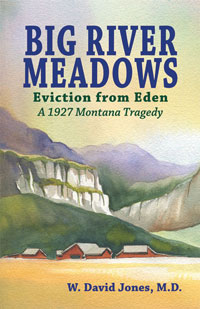
Big River Meadows: Eviction from Eden is a novella based on a true story written by W. David Jones, M.D. He tells the story of his father’s boyhood—a rancher’s son growing up on a large Montana spread. The story propounds that the vigilante law of the old West prevailed as late as 1927. (more…)
Category: Reviews
-
Borrowed Time: 75 Years & Counting by Carolyn Leeper
In Borrowed Time: 75 Years & Counting, A Memoir, Carolyn Leeper shares with her readers a heartwarming and uplifting memoir. Mrs. Leeper intersperses her own poetry with short prose pieces throughout her book. She recalls memorable experiences, the variety of caring relatives who raised her, and what times were like when she was young. She writes of coming of age passages and of how she continues to treasure each day—her borrowed time.
Books and workshops abound that offer guidance to seniors and social workers in evoking life review memoirs. Mrs. Leeper’s Borrowed Time is an excellent example of a life review memoir that is well-written, succinct, and a pleasure to read.
Leeper begins with the story of her birth, and her mother’s death just two weeks later. The tragedy is tempered by the author’s appreciation of the relatives who stepped in to raise her with love and care. Following sections focus on her early childhood memories, her grandparents, and her father, whom she did not meet until she was seven years old.
Her pieces entitled “Money” and “More Money”—where she describes understanding the concept of money, her pride in earning it, and discovery of how to save it— would make Suze Orman’s heart sing. Leeper’s respectful attitude in regard to money reflects that of many children raised by parents who lived through the Great Depression.
Mrs. Leeper, a freelance writer and newsletter editor in Bellingham, Washington, has a clear, conversational writing style. However, reading her memoir had me wishing that she would add more details along with expanding on her life experiences instead of the brief summaries. Clearly, she has led (and clearly, is leading) an interesting and fulfilling life. I wanted Leeper to share with me and her readers more references such as the ones about saddle shoes, the cost of candy, and how she learned to swim. These details and reference points would place her life more vividly in an historical perspective and engage the reader. And I do believe that the reader would enjoy reading more about her experiences.
While Borrowed Time will be most appreciated by Leeper’s family and friends, it stands as an uplifting and heartfelt example of life review and life lessons lovingly rendered.
[fusion_builder_container hundred_percent=”yes” overflow=”visible”][fusion_builder_row][fusion_builder_column type=”1_1″ background_position=”left top” background_color=”” border_size=”” border_color=”” border_style=”solid” spacing=”yes” background_image=”” background_repeat=”no-repeat” padding=”” margin_top=”0px” margin_bottom=”0px” class=”” id=”” animation_type=”” animation_speed=”0.3″ animation_direction=”left” hide_on_mobile=”no” center_content=”no” min_height=”none”][Editor’s note: Upon my first reading of Leeper’s memoir, I easily envisioned it as an illustrated children’s book that could share with young children what life was like for their elder grandparents, aunts and uncles when they were young. After my third reading, I am sure that properly “translated” it would make a cherished story for young children who are curious about how their elders dressed for prom, how much they paid to see a movie, what life was like before TV, cell phones, or computers. Her vivid description of the Seven Dancer Daughters had me imaging them in my mind’s eye. Her memoir would also impart lessons to be learned and applied in the young readers’ lives. I do hope that Mrs. Leeper will give consideration to this suggestion because I would love for my young nieces to read it if she does. ]
[/fusion_builder_column][/fusion_builder_row][/fusion_builder_container]
-
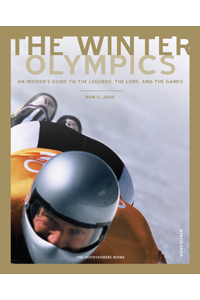
The Winter Olympics: An Insider’s Guide to the Legends, Lore, and the Games by Ron C. Judd
Flashbacks, gruesome accounts, victories relived, analysis, and competitors’ profiles of the Winter Olympics are revealed in Ron C. Judd’s captivating compendium titled The Winter Olympics: An Insider’s Guide to the Legends, Lore, and the Games.
Judd doesn’t just report the scores, the times, the winners and the losers. He relays the human drama that unfolds during the Games—the glorious victories and, yes, the gut-wrenching agonies—the very stuff that becomes tomorrow’s lore and legends.
Ron C. Judd is like a Joseph Campbell of the Olympic Games. He writes of transcendent experiences, of impossible feats, and, he says, “of moments that are beyond description.” But describing these moments is exactly what he does. Judd deftly captures and vividly relates the escalation of emotions, the split-second moments that separate the winners from the losers after decades of day-in and day-out grueling training, the sweaty reality of the Olympics along with the heady glory and magic he has witnessed and experienced first-hand.
The guide covers the history and beginnings of the Winter Games and the athletes who compete in them. Judd, a self-professed “ring-head” has been covering the Olympics as a journalist since the Nagano Games in 1998. He has been following the Games since he was in high school, which was when the 1980 Olympics took place in Lake Placid, New York.
Your interests about sport categories such as Curling will be piqued. Thanks to this entertaining guide, I finally understand how it is played and scored. And why it is an Olympic Winter Game. Judd also reveals tantalizing tidbits such as who are sex symbols of Curling. Yes, Curling has its idols too.
Discover the fun facts and interesting anecdotes of the Winter Games as Judd guides you through the intricacies of rules and strategies of sports such as cross-country skiing and Nordic combined competitions. Finding out how the first biathlon races got started (Hint: It has something to do with caribou.) is just one of the reasons why this book is such a fun and entertaining guide. It goes beyond the basics of regulations and scoring.
Judd addresses the age old debate that takes place mostly in pubs: The question of whether figure skating is a sport or an art. He describes how the Figure Skating competitions are judged or rather how they are supposedly judged. After reading his tome, you will agree with Judd that figure skating is not for the meek or the weak.
On that note, I was intrigued to see if he had anything to say about that Tonya Harding and Nancy Kerrigan debacle. He does. You, too, can read about the rest of the story in The Winter Olympics.
Judd treats his readers to the true insider’s account of “the agony of defeat” film footage. You know—the one that was shown over and over—on the opening of ABC’s Wide World of Sports program for what must seem like an eternity to the poor guy who was filmed crashing while ski jumping. And why did we as an audience watch him crash over and over? Because as Judd writes ever so eloquently: “He is us, and we are him…” in victory and in defeat.
The action-packed full-colored photographs that permeate The Winter Games are enough of a reason to purchase it just to have on your coffee table. However, it is an authoritative and intelligently written reference guide about the Winter Games. Judd continuously acknowledges that he is one fortunate guy to have witnessed firsthand history in the making. He never tires of the Games. And neither do the fans. This book is the superlative guide to the Winter Games.
It is Judd’s insider, behind-the-scenes stories of intrigue that entertain and educate us. The lore and legends that he has gleaned from his years as a dedicated “ring-head” journalist, along with his effusive admiration of the dedicated athletes who compete, earns The Winter Olympics: An Insider’s Guide to the Legends, the Lore, and the Games a gold medal.
-
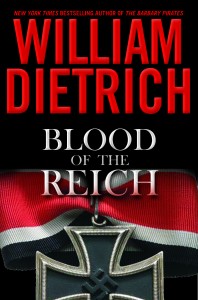
Blood of the Reich by William Dietrich
Prepare yourself for grand adventure as William Dietrich deftly blends the fruits of a fertile imagination and well-researched historical facts into a tale so well-crafted that characters and images seem to jump from the page in wide-screen 3-D. I was only 12 pages into Blood of the Reich when I became apprehensive that this hypnotic thriller would eventually come to an end.
From the golden, autumnal splendor of present day Washington State’s Skagit River Valley to the vivid color of prayer flags waving in contrast to the stark remoteness of Tibet, you’ll be there, deeply involved, wanting more. Blood, a major player in this complex mystery, will be as red as the trees of the Pacific Northwest are green.
Then find yourself in 1938 when a Nazi expedition journeys to the high Himalayas to determine if there is any truth to a myth that hints of an ancient city located there that cradles a source of immense power—power which could accelerate their plan of world domination. Close on their heels are the Americans, bent on decoding the satanic plan. Both parties are armed and dangerous. However, the Nazis have the advantage: a very old vial of blood.
In a saga that spans a turbulent seventy years of action, romance and intrigue, the historian-author maintains a high level of entertainment and page turning. Dietrich’s narrative is as informative and amusing as it is boldly exciting. Be prepared to fully surrender your sense of reality to a high velocity ride that crashes head-on with a sensational blood splattered finale.
Blood of the Reich deftly blurs the line between science and the paranormal as it exposes the veins of a twisted relationship between the human race and our own, often terrifying, technologies. With his memorable characters, dichotomy of modern technology and ancient Buddhist Tibetan temples, along with non-stop action, and thrilling plot, Dietrich delivers.
-
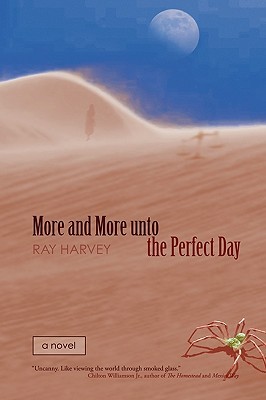
More and More unto the Perfect Day by Ray Harvey
Bizarre things are beginning to happen to Joel Gasteneau. A strange illness has left him feeling weak and haunted by vivid dreams, and he feels that he is being followed. Exhausted and fearful, he decides to abandon his life as a pensive drifter and focus on a long-neglected project: To find durable proof for the existence of God.
This pursuit will run Joel through a gauntlet of self-discovery, one that will challenge the very limits of his mental and physical endurance.
In a solid telling of a complex story of mystery and intrigue, author Ray Harvey assumes the role of master illusionist. Clues abound, but can Joel trust them? What is he really experiencing? Viral fever flashbacks? The eruption of long-buried memories? Reality? More questions than answers emerge as the reader is drawn into another world, where mysticism and philosophy tangle and clash across a stunningly-rendered, often other-worldly landscape.
The novel is stocked with well-developed, fascinating entities. Joel’s father, Neil, a brilliant and deeply ascetic man, has a weakness for violence and his own definition for the word “blood.” Has he killed in the past? And, if so, will he again, and soon? Another entity is a stranger that Joel encounters called Tom, a sort of human/alien hybrid, who seems to know too much about Joel’s past. Along with these characters are oddly-shaped, silver clouds that seem to be keeping a watchful eye on Joel’s whereabouts.
The story owns a unique lyricism; one of an eerily faint off-key melody constantly echoing through the richly orchestrated atmospherics. And there is a rhythm, a strong pulse, which propels the narrative to its startling and memorable ending.
With its frequent references to philosophy and literature, More and More Unto the Perfect Day can, at times, be a cerebral read. However, it ultimately offers a rewarding, rather hypnotic and moving experience—memorable and sufficiently haunting to merit additional readings.
-
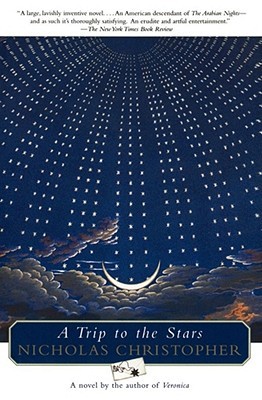
A Trip To The Stars by Nicholas Christopher
A Trip to the Stars will take you to exotic locales while introducing you to its realms of magic, music, memory and time travel. You will become acquainted with this mesmerizing story’s fascinating characters and their mysterious talents. Some of these are characters with whom you will wish could become life-long friends. Other ones you will vehemently desire that they could feel your wrath. And then there are those characters of whom you will pray never cross your path. Nicholas Christopher deftly weaves these threads to create this ensnaring mystical web of a story that crisscrosses the globe, the turbulent 60s and 70s, and the celestial sky.
The story opens with the young Alma and her ten-year-old nephew Loren enjoying an afternoon planetarium show. The drama starts when they are separated in a post-show tangle of exiting stargazers. The ensuing plot, enormously complex yet tantalizing, documents the next fifteen years of our protagonists’ separate, but seemingly cosmically-linked adventures. While under this book’s cosmic spell, you will be both educated and entertained as A Trip to the Stars sends you to the outer rings of love and destiny as this mystery unfolds.
As Alma and Loren narrate alternating chapters of this 499 page opus, they become Mala and Enzo. Name changes are only two of, what will be many, portents you will encounter on their esoteric journeys. Indeed, Christopher will connect many of his dots with a colorful variety of such talismans, the majority of them touching on notions of stars and constellations, perhaps as a reminder that subtle, yet influential, energies are at play.
Christopher, an accomplished poet, rendered in Mala and Enzo characters a vulnerability and an openness that propels them into captivating situations throughout their separate lives. Christopher’s direct and sure-handed prose is made from words so carefully selected and assembled that you may at times be tempted to pause your reading to relish in the fluent lyricism of a recently read poetic phrase.
As you share with Alma and Loren in their struggles toward growth and fulfillment, you will come to care about them deeply, and to hope for them that the biggest and brightest star in the cosmos will light the way to the convergence of their destinies.
This is a novel to be enjoyed again and again as each reading discovers new layers of intricacy and revelations. Warning: If you loan out your copy of A Trip to the Stars, you may never get it back. I am on my fourth copy of this treasure.