Category: Reviews

  • Nardi Point by Nancy LaPonzina

    Nardi Point by Nancy LaPonzina

    Love among the ruins: in this case, an archaeological dig at a new subdivision in North Raleigh, where rolling pastures and woodsy farms are giving way to housing developments such as Nardi Point. Here Laurinda Elliot and her live-in fiancé, Dan Riser, plan to buy a home and start a family—or at least, that is Laurinda’s intention, even as she watches Dan once again run “away from her gentle attempts to grow their lives.” Still, she presses on, seeing a family as the missing piece to her otherwise successful life: a high-level IT position, a silver Porsche and designer wardrobe, beauty to spare.

    Those pieces begin to break apart when Laurinda visits the construction site at Nardi Point with her closest friend. A highly sensitive Reiki practitioner, Leyla Jo Piper pokes around in the red-clay mud where Laurinda’s house will soon be built and finds pottery shards.  A vision of a Native American woman carrying an earthen pot, plus a flashback to her own orphaned childhood, drives her to contact the State Archaeology Office.

    Colson Mitchell, the construction company’s handsome supervisor, reacts differently. He’s aware of the scorched-earth mentality of his employer, but he’s also concerned that standing up to him could mean losing his job, causing hardship for the love of his life: three-year-old daughter Annabel. Initially, he fights the two women’s increasing concern about building on what may have been a camp or burial site for the area’s ancient peoples, but as his feelings for Laurinda intensify, he finds his own ethics in conflict.

    Dan, the brilliant technology geek Laurinda is living with, on the other hand, sees no conflict in taking the path of least resistance or being opportunistic when situations present themselves—especially those that he thinks will improve his social standing. And being with Laurinda has certainly improved his social standing. This pattern of over-riding selfishness soon has him leading a double-life.

    Once Leyla Jo engages Dr. Hal Jared, state archaeologist, in the pottery find, the richness of the narrative deepens. The author spent time as an archaeology office volunteer, and her knowledge shows: the details of the meticulous work of unearthing and classifying artifacts, along with the struggle between building for the future and learning from the past, makes for a fascinating read, and the discoveries play perfectly against the uncovering of Leyla Jo’s family history, which ultimately explains her visions.

    Nardi Point develops into a lovely, nuanced tale with the layers of relationships uncovered like strata of earth, revealing harsh truths and personal epiphanies. In the end, the pieces of Laurinda’s life finally fit together like the ceramic shards that touched off her journey, and from this vessel pours love and fulfillment.

    Nardi Point was awarded a First Place Blue Ribbon for Contemporary Women’s Fiction, Romance Category in Chanticleer Book Reviews’ 2012 Published Novels contest.

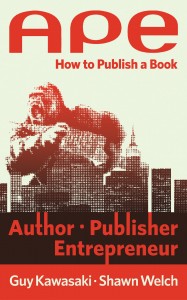
  • APE: Author, Publisher, Entrepreneur—How to Publish a Book by Guy Kawasaki and Shawn Welch

    APE: Author, Publisher, Entrepreneur—How to Publish a Book by Guy Kawasaki and Shawn Welch

    APE is the how-to compendium for today’s self-publishers.

    Authors will find APE an indispensable resource. Guy Kawasaki passes along his publishing experience in his “no-shitake,” but affable manner. Imagine having an extremely successful uncle in the publishing biz who also has a tech-wizard pal (co-author Shawn Welch) of digital publishing magic. Fortunately for us, this dynamic duo decided to share their publishing know-how.

    APE’s premise is that publishing is a parallel process “that requires simultaneous progress along multiple fronts.” Hence, self-publishers are challenged with how to: market, brand, design, promote, publish, distribute, and finance a book–all at the same time. Oh, and don’t forget the time required for actually writing the book. Indisputably, each self-publisher is an: Author, Publisher and Entrepreneur.

    Reading APE is like taking a condensed survey course in publishing; it addresses the range of topics that authors must know about self-publishing. APE covers aspects from the existential question of “Should I write a book?” to advice on how to create foreign language versions of your book, to guerrilla marketing techniques, and ideas for financing.

    Traditional publishers have long prided themselves on their art form and on their discernment abilities. Readers have come to expect and appreciate their expertise. APE’s tactics and techniques will enable self-published authors to deliver to readers books that will meet these time-honored and well-justified expectations.

    Kawasaki and Welch challenge self-publishers to take up the mantle of “artisanal publishing”—where authors who love their craft must dedicate the time and resources to “control every aspect of the process from beginning to end.” If authors engage this philosophy, their books should have a much improved chance on separating themselves apart from the chaff of the expected two million new titles that are expected to hit the English language market in 2013.

    APE admonishes that self-publishing isn’t easy or a way to get rich quick. But if you want a realistic, tactical, and, relatively, slim (300-pages) self-publishing guide that is profuse with handy resources and links (which actually work—this reviewer checked them) on how to do it right, then APE is the go-to guide for you.

    An additional remark from the reviewer:

    APE should be on every author’s desk or e-reader right along with The Chicago Manual of Style and The Copy-editor’s Handbook. As with the latter guides, it is one that you will refer to often as you find your way in today’s era of the Wild, Wild West of Publishing. It also addresses the particular formatting hurdles that non-fiction writers must clear when self-publishing.


  • Look For Me by Janet Shawgo

    Look For Me by Janet Shawgo

    A lantern, a medicine pouch, and a bell to stop the gunfire: That was all nurses took into the Civil War battlefields as they sought out injured men, boys, and women disguised as men. Among them is Sarah Bowen, a young healer from Georgia, whose use of herbal medicine brings her scorn from most field doctors even as it saves countless lives.

    Look For Me begins with young, affluent New York-er Samuel White, who has just embarked on his career as a war correspondent. Through an early incident between their fathers, he is also Sarah’s longtime pen pal.

    Meanwhile, Mack, a teenage girl traveling as a boy, delivers a letter from the youngest Bowen son to the family farm, lingering long enough to be tutored by Sarah and to fall in love with brother James before leaving to pursue her goal of becoming a Confederate spy. Soon after her departure, a band of traveling nurses comes looking for the local healer, and it doesn’t take much persuading for Sarah to realize her destiny. This is when all of the primary story-lines begin to intersect.

    It is with this wagonload of women that the story comes fully to life. Ruby Belle and Maud bring a boisterous energy that infuses the story with attitude, while the more fragile Leona and Emma embody the particular tolls that warfare takes on women.

    As the nurses set up makeshift hospitals in abandoned houses near the battle sites, Sarah gains confidence in her skills as she also gains the terrible knowledge of carnage. What the reader gains is an understanding not only of the medicinal uses of native plants, but of the women’s incredible resourcefulness. The homes of families killed by opposing troops are scoured for food, blankets, and clothing to use for bandages; root cellars and herb gardens replenish ever-dwindling supplies; while coffee and tobacco become particularly valuable to trade with soldiers for battle information, or with moonshiners for alcohol and barrels to fill with clean water. Here the author’s own background as a traveling nurse brings an earnest authenticity to the narrative.

    In short time, Samuel discovers the value of these “women who travel in war,” and the series he writes about them takes form alongside both his battle reports and his attempt to uncover the story of the Night Walker, the elusive spy who slips in and out of battle scenes and his own life. As the war concludes amid tragic losses, broken families are reunited and promises are kept beyond the grave.

    Told with both compassion and restraint, Shawgo’s Look For Me enlightens us by uncovering the critical roles women played in the Civil War: as soldiers, as spies, and, most importantly, as healers. Look For Me is a gripping well-researched and well-told Civil War story of espionage,  the battlefields’ terrible tolls, of healing wounds and timeless love.

    Look For Me by Janet Shawgo is a First Place  Blue Ribbon Award winning novel for Historical Fiction in Chanticleer Book Reviews Published Novels writing competition 2012.

  • Sacred Fires by Catherine Greenfeder

    Sacred Fires by Catherine Greenfeder

    Casey is a journalist who is trying to prove her reporting chops when she joins up with Miguel, a U.S. Customs agent whose mission is to solve the mystery of missing ancient artifacts and recent bizarre cult murders. Their leads take them to Mexico City and the lush, sultry tropics of Acapulco.

    Sparks fly when they both discover that they had been together as lovers in another lifetime in ancient Aztec Mexico. However, they were both sacrificed because of their forbidden love. Now, given another chance to be together, they must stay alive while they search for a cult killer who is sacrificing people like the Aztecs did so long ago. The suspense builds at a fast-pace that kept me turning the pages.

    What really drew me into this story was the Aztec history along with the overwhelming love the characters had for one another throughout lifetimes. The details of the ceremonies and sacrifices to the ancient gods were mesmerizing to read about. If you like a bit of history and ancient culture intertwined with a modern story-line, you will definitely enjoy reading Sacred Fires.

    Casey is the type of protagonist whom I love; she is not scared to go after what she wants even if it means she could get herself killed.  She is strong, loving and has a kind heart. Miguel is dashing and fearless—especially when it comes to protecting his soul mate.

    There were a few things that I thought were predictable in the story. However, I did not know when they were going to happen. Once I started Sacred Fires, I just had to keep reading it. I had to know what was going to happen to Casey and Miguel next. Will their sacred love survive?

    Sacred Fires is a well written and crafted romantic paranormal novel with elements of intrigue and suspense along with a story set in a lush locale with mystic Aztec undercurrents. Greenfeder has succeeded in writing a fast-paced romantic suspense novel that is refreshingly different.

    Sacred Fires is Chanticleer Book Reviews First Place Blue Ribbon Award Winner for Romantic Paranormal Mystery category.

  • Chocolate Yoga by Margaret Chester, MPH, RYT

    Chocolate Yoga by Margaret Chester, MPH, RYT

    “Take a few moments for yourself. Breathe.”  How often have we heard this advice? But, how often do we follow these sage words? If you are like me, not very often—if at all.

    So I began to read Chocolate Yoga expecting the ‘same ol’ same old.’ How to Lose Weight without Dieting or Exercising—just breathe! Yea, right and eat lots of chocolate while you are at it.

    However, I found that this book actually does take an entirely different approach to health improvement.  One that I, yes, even I, might incorporate into my unhealthy lifestyle. Margaret’s words soothed and nurtured me as I read them. I found myself picking up the volume and rereading passages. Chocolate Yoga became like a supportive friend who is always there for you reminding you that you will be okay. Not only will you survive, you will thrive. Just remember to breathe.

    Chocolate Yoga does not deny or belittle the stresses of our daily lives—especially with today’s hectic lifestyle. My work requires me to be at a computer keyboard for eight-to-twelve hours a day. Deadlines are the mainstay of my business.  I had gained weight at unprecedented rate this past year. I haven’t exercised in months. Oh, and did I mention the menopause thing?   You get the picture….

    This slim tome is filled with inspiring passages and techniques of how we can withhold snippets of our own days—just for ourselves. Margaret names these blessed moments “chocolate.” She uses chocolate as a metaphor for those moments in time that nourish the soul.  A few moments here, a few moments there when we are mindful of our breathing will make a difference. Exhale. Inhale. Breathe. These few moments a day of me nurturing me was making a difference.

    As I remembered to breathe (with Margaret’s gentle and nurturing nudging)using Chocolate Yoga’s techniques,  I found myself making time—taking the time—even if it was just a few more moments for exploring another stress reducing yoga technique or a meditation that Chocolate Yoga shares with us.  No special equipment or clothes are needed. Just you. Just breathe.

    “There are many paths up the mountain. Find what works for you,” is a sample of the encouragement from Margaret Chester that you will find in Chocolate Yoga that will embolden you to begin your journey for  better health for your  body, mind and spirit—one step at a time.

    Margaret Chester, author of Chocolate Yoga, is a MPH, RYT, certified yoga instructor. Her advice on how to get started on your journey to better health is: “Begin wherever you are.”

    [Reviewer’s note: And, yes, I am losing weight the Chocolate Yoga way.]

  • Package Deal by Kate Vale

    Package Deal by Kate Vale

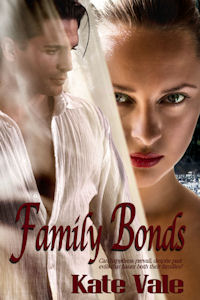
    When the beautiful Amanda Gardner arrives in the coastal town of Shoreville, Washington, her only expectation is to begin a new life with her nine-year-old daughter Cecelia and a new career as an English professor at Buckley College. The previous ten years have not been easy. Undaunted, Amanda supported her daughter and managed to get her PhD. Now the bright and lively Cece is enrolled at the Campus School, and her intelligent, attractive mother is preparing for her first class at Buckley. Surely life is full…or is it?

    The suspense begins when Amanda leaves Cece in her shared campus office with Carlton Winslow, her colleague and office mate while she attends a short meeting. Carlton is surly with Amanda, but queasily friendly with the blond, blue-eyed Cece.

    Intrigue begins to build on the romantic level when Amanda meets the handsome Marcus Dunbar, a friendly and witty journalism professor assigned to interview new faculty members. She is attracted to the handsome, athletic –looking man in spite of herself.  His eyes—so intensely blue—are a perfect match for Cece’s!  Marcus begins to win Amanda over when he takes her and her daughter on a tour around Shoreville. However, Cece appears jealous of Marcus’s intrusion in their life.

    But how can Amanda resist her feelings for Marcus? She feels torn between dreams of a loving husband and a caring father for Cecelia and nightmares that their life together might somehow be torn apart, as happened before with Cece’s father. Marcus has his own relationship demons to fight.  Then just as all three begin to open up to each other,  Cece inexplicably runs out from  her home into the street and is hit by a car,  suffering grave injuries. While the young girl recovers she suffers nightmares. She cannot, or will not, explain why she ran.

    Marcus draws on his journalist-investigative skills to determine what might have happened to Cece. He believes that Carlton Winslow—especially after he disappears—was involved, but the local police are not so convinced. Amanda does not know who to trust anymore—not even Marcus.  Nothing appears as it seems and danger looms over their lives.

    Vale keeps us rapidly turning pages in this contemporary novel that is as suspenseful as it is romantic. Package Deal is a riveting book–I could not put it down. Vale keeps the tension building, on multiple levels,  from  page one to the very end.

  • The Only Witness by Pamela Beason

    The Only Witness by Pamela Beason

    Seventeen-year-old Brittany Morgan’s infant daughter was taken from her car—an apparent kidnapping. Brittany’s young mind is quaking in attacks of hope, fear, guilt and desperation. Why would anyone take little Ivy from her? Where can Ivy be by now? Is she being held for ransom? Is she still alive?

    Detective Matt Finn hopes so. As a recent transplant from the mean streets of Chicago, where experience taught him to expect the worst, to the relative innocence of a small town in the Pacific Northwest, where everyone already has an Ivy-fate theory, he knows that this investigation is not going to go smoothly. His clue file is empty and the clock is his enemy. If only he could find a witness to the crime! Well, Dr. Grace McKenna over at the “Talking Hands Ranch” just left what she hopes was an anonymous tip that might be able to help the investigation. It seems that one of her charges witnessed the snatching of baby Ivy.

    In The Only Witness author Pamela Beason employs knowing doses of drama, humor, adventure and romance to polish her clever premise into a sparkling jewel; a friendly persuasion of plot and character development that maintains a high level of reader interest and fascination.

    Beason’s linguistic skills are evident in the often endearing scenes in which Dr. McKenna is patiently trying to coax some useful testimony from the agitated Neema who has a story to tell. Neema is the endearing gorilla that Dr. McKenna is teaching sign language to at Talking Hands Ranch. She is a dangerously strong and potentially aggressive “witness” with the IQ and attention span of a human five-year-old. Nevertheless, Neema knows how to negotiate for a banana and steal your heart while doing it.

    Beason manages to plunge deeply into the hearts and minds of her main characters without creating any interruption of narrative flow. Brittany Morgan’s teen angst, Matt Finn’s dealing with his wife leaving him as he adjusts to being a cop in a rural town, Grace McKenna’s worries about the future of her underfunded project, Neema’s feverish need to communicate: all intriguingly support and contribute to the smart pace of Beason’s hip and socially relevant who-done-it. Indeed the author has a good time taking well-aimed shots at some of the peculiarities of our priority-challenged culture.

    The Only Witness is a marvel of story-telling. Pamela Beason’s novel is one of those rare gems that is intelligent and informative but also embracing and charmingly accessible. The Only Witness is the Grand Prize Award winner of Chanticleer Book Reviews Blue Ribbon Novel Contest.

    5 Star Best Book Chanticleer Reviews round silver sticker

  • The Inn at Little Bend by Bobbi Groover

    Hardship has followed Grayson Ridge, a motherless girl named for the orphanage that took her in, from the moment she fought for her first breath. At fifteen, fearing she’s killed the man who “adopted” her as slave labor, Grayson bolts into the wilderness, where she steals clothes and cuts her hair to become River, a homeless boy on the run. Rescued from vicious vagabonds by a kinder, gentler drifter, River attaches to taciturn Drake Somerset—temporarily, she thinks, but their history has only just begun.

    What follows is a story of false identities, gender bending, and impassioned—if at times confused—love; Shakespeare’s As You Like It served up romance-style. Grayson’s many personae end up in classic predicaments, some truly horrifying and many nearly fatal, and she and Drake spend a good amount of time patching up each other’s wounds. That is, when they’re not challenging, exasperating, tormenting, and misinterpreting each other. The author has a fine ear for natural, quick-witted dialogue, and it’s one of the pleasures gleaned from reading this well-crafted tale.

    Ms. Groover has structured her narrative against backdrops that move effortlessly from Virginia’s plantations to the West and back again, fashioning her framework with details that are as unobtrusive as they are knowledgeable. The love story is rather refreshingly old-school: this is no thin plot on which to hang a string of bedroom romps.  Instead, it is the untangling of Grayson and Drake’s many masquerades and misunderstandings that intrigue the reader, although each character’s passions are given plenty of consideration—and yes, heat.

    Despite the quintessential American settings and psyches, a whiff of “Jane Eyre” blows through: the orphanage and the search for home; the young and moral woman resurrecting the heart and soul of a man who has closed himself off in tormented guilt; the themes of forgiveness and conscience over passion. What is decidedly different: the raw, almost desperate feistiness of River, the abundant humor, and the wonderful secondary character of Aggie, whose unrequited love for Drake never stops her from being Grayson’s friend and mentor.

    The Inn at Little Bend won first place in Chanticleer Book Reviews’ Published Novels Romance Western-Mystery category.

  • NOWHERE ELSE TO GO by Judith Kirscht – Contemporary, Literary Fiction

    NOWHERE ELSE TO GO by Judith Kirscht – Contemporary, Literary Fiction

    It’s the fall of 1968 and America is in the throes of rapid social change and cultural upheaval. Martin Luther King has just been assassinated and body bags filled with 18-year-olds boys are coming back from Vietnam at an alarming rate.  Political unrest and race riots are turning cities into war zones while suburbanites try to buffer themselves against the tumultuous times.

    Nowhere Else to Go by Judith Kirscht masterfully explores these momentous national issues by humanizing them on a personal scale in the small Midwestern college town of Norton Bluffs. The intransigence of the ruling suburbanite whites along with their fears meet head on with the anxieties of the disadvantaged blacks in the halls of education—where the effects of racial polarization are most profoundly felt and magnified in small towns.

    Principal Cassie Daniels, of Red River Junior High School, relentlessly tries to carry on classes, school dances and basketball games even as she encounters the shrapnel from these social upheavals in her beloved school, in her marriage, in her relationship with her two school-aged sons, and within her professional relationships.

    Principal Daniels and the RRJH faculty have already endured the difficulties brought on by racial integration and bussing.  But just when they thought that they had made it past the worst and even came out somewhat ahead with a new wing of classrooms, the Board of Education has more in store for RRJH. It seems that with a bit of “redistricting,”  Red River Junior High, due to its location on the edge of town, can serve as a buffer zone between disadvantaged, mostly black, neighborhoods and those of the affluent white ones.

    The hoped-for, by the town’s politicians, result from this redistricting maneuver is to return a sense of “normalcy” to the town of Norton Bluffs along with the prevention of any violence like last year’s riots at the high school.  And if the redistricting isn’t enough to throw RRJH into a tailspin, The School Board is dictating to use RRJH as a social experiment laboratory for testing some educational “new-think” concepts.  Fresh new teachers have been hired by the School Board for RRJH –and this is where things start to get really interesting.  These new teachers’ tutor in ‘advanced school room theory’ is Principal Cassie Daniels’ husband.  Ben Daniels is an ivory tower burnout hoping to put a new polish on his tarnished idealistic proclivities.  He’s already selected the feisty Louisa Norton as his favorite protégé.

    Principal Daniels can’t help but worry that the escalating racial tensions in her schoolrooms will erupt into violence.  Can she keep her divided faculty members on the same page?  Will those wide-eyed kids from the Flats be able to make “the jump” from the safety of their old elementary school into the open-jawed terrors of junior high?  And just what are Ben and the confrontational Louisa really up to?

    If Cassie Daniels is the strength of the author’s energetic narrative, the teenage students are its pulse, a Greek chorus chanting under the noisy howl of the games adults play.  As expected, a great deal of this novel is devoted to these adolescents’ emotional responses. Particularly endearing are Kirscht’s portrayals of how the kids try to cope with a world that they are too young to understand. Kirscht does an excellent job telling her story from many perspectives.

    No Where Else to Go is a tenacious read that captures the grittiness of the undertow of racism and prejudice.  However, some may find the first several pages a little hard to follow as you are taken instantly into the fray of the battle, but if you hang on, you will find this dense novel to be fast-paced and hard to put down.  I heartily recommend Nowhere Else to Go as a tightly woven and insistently engaging novel about racial prejudice and the blackboard jungle of the 1960s.

  • Tree Soldier by J.L.Oakley – Historical Fiction, FDR Era Work Camp, Pacific Northwest

    Tree Soldier by J.L.Oakley – Historical Fiction, FDR Era Work Camp, Pacific Northwest

    In this action-packed, emotionally charged historical novel titled Tree Soldier, J.L. Oakley takes us back to the era of the Great Depression. With millions of Americans unemployed, President Franklin D. Roosevelt devised a New Deal work relief program called the Civilian Conservation Corps.

    Some three million unmarried young men went to work in CCC camps across America—building roads and bridges, establishing flood control, and replanting depleted forests. Of the men’s $30 monthly paychecks, $25 was sent to help their desperately poor families.

    Oakley skillfully weaves this history into a suspense-building story of love, forgiveness, and redemption. The story commences with the arrival in 1935 of a new squad of “Tree Soldiers” at Camp Kulshan, a CCC forestry camp in the rugged North Cascades, near the little village of Frazier, Washington.

    While most of the new recruits are sort of rough teenagers from urban New Jersey and New York, our protagonist is a college student who left school and his farm home in eastern Pennsylvania to join up.  The strong and handsome John Parker Hardesty has more than a paycheck on his mind, however. The pensive young man, who sometimes seeks solitude in the forest, is trying to escape his nightmare memories of two tragic events in his life. His fellow recruits nonetheless respect the polite, clean-cut, Park who can also hold his own in the physically competitive proving ground environment of camp life. Many of the new recruits seek out his company, especially a wiry, 18-year-old Italian kid named Mario Spinelli, who takes the upper bunk above Park. Before long Park becomes the squad’s “straw boss.”

    Camp Kulshan is no fun summer camp. The physical training is tough, camp chores are boring, and not all the Tree Soldiers are easy to get along with. The boys of “Joisey Squad” (from the Jersey accents of several) are dubbed “foreigners” and suffer some rough hazing. However, camp life is not all work and no play. The people of Frazier appreciate the camp’s contribution to the community and in friendship arrange baseball games and picnics. The Tree Soldiers reciprocate with a dance in the mess hall. Boys meet girls, sparking romance, but also jealousy. Park is drawn to the dance floor by a pretty, auburn-haired young woman, Kate Alford. He breaks in on an arrogant, self-serving camp officer, David Callister, who has his eyes possessively on Kate. As Park takes Kate in his arms, Callister stalks off the floor.

    As the story’s pace increases, so does the emotion it evokes. Suspense builds as reputations are undermined, treachery and deceit threaten lives on the verge of redemption, while storms brew and forest fires erupt. Oakley’s characters come to life as their respective roles are defined with the drama of trials and tests of wills, and determination builds. Love blossoms, but not without thorns. Friendships are solidified, and trust and support are developed in the face of duplicity and enmity. In the final pages of this compelling book, Oakley introduces one more human trait, one she saw fit to include in its title—forgiveness.

    J.L. Oakley’s Tree Soldier will draw you in and keep you turning the pages.  Tree Soldier won Chanticleer Book Reviews Blue Ribbon Award of Grand Prize in our Published Novels Contest 2012 earning it a coveted CBR star.