Category: Reviews

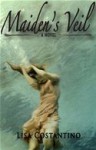
  • An Editorial Review of “Maiden’s Veil” by Lisa Costantino

    An Editorial Review of “Maiden’s Veil” by Lisa Costantino

    Lisa Costantino’s Maiden’s Veil is an entrancing tapestry of history, love, and sacrifice that spans the centuries from 1720 to modern times. The story exemplifies the psychological power that ancient rites have held and do hold over us, and the effects of these rites as they ripple through our consciousness or, more dangerously, our collective subconsciousness as they cross the barriers of time.

    Costantino deftly intertwines the stories of two star-crossed love affairs, building to a climax wherein the fates of all the four lovers are bound up together—making a seemingly chance encounter an event that will forever change their lives.

    A spirited and headstrong weaver’s daughter, Clarinda Asher is no fit match for Benjamin Keane, son of a prosperous merchant, even when they are paired as Maiden and King of their village’s May Day festival. However, it is when they are brought together to the circle of ancient standing stones to partake in a sacred fertility ritual that their lives truly begin to unravel.

    Three centuries later, Owen Calder, curator of the modern-day textile museum in England’s West Country, meets Jessamine Barlow, a traveling textile buyer from the U.S. Owen offers to take Jess to see the standing stones on the outskirts of the village. Unbeknownst to them, the circle’s power continues to resonate. Jess abruptly quits her corporate job to return to her first loves: weaving, and a pagan spirituality that echoes Clarinda’s faith. Owen longs to experience the more spiritual existence of his youth, one more in tune with nature, after having traded a life of poetry for “curatorial reports and funding proposals.”

    Costantino titled the story after the indigo veil that the virgin female must don during the pagan fertility ritual. But it is the natural beauty of the rural village that provides the crucial backdrop for both stories: Maiden’s Hill, where Clarinda is banished after her sacred tryst with Benjamin meets with disastrous results for the whole community; the River Guen that plays a fateful role in the tragedy; and the spring-fed pools where King and Maiden purify themselves—and where the two couples repeatedly return for strength to face their destinies, and bring life out of death, love out of sorrow.

    Maiden’s Veil was awarded 1st Place in the Women’s Fiction category, INDIE Awards, a division on the Chanticleer Blue Ribbon Awards 2013, for Costantino’s mesmerizing lyrical prose, her well-developed characters, and her compelling storytelling of a timeless and ancient theme.

  • “Magick by MoonRise” by Laura Navarre

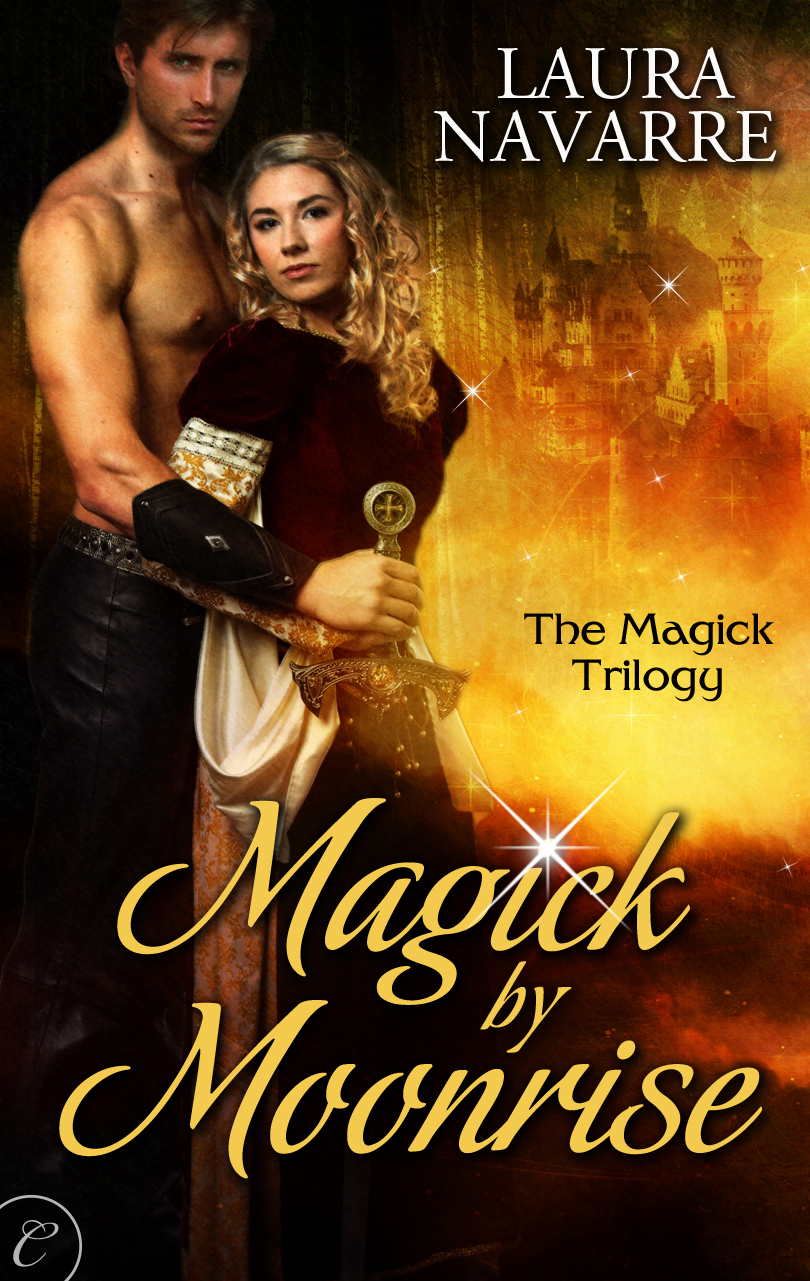
    “Magick by MoonRise” by Laura Navarre

    The daughter of King Arthur leaves the Summer Lands of Faerie to petition the Catholic Tudor Queen for a truce between worlds in this uber-romantic take on Arthurian lore. If you are a devotee of The Mists of Avalon by Marion Zimmer Bradley and you enjoy sensuous romantic heat that threads through a great story, you will relish immersing yourself in the world Laura Navarre created that intersects sixteenth century English historical fiction with some surprisingly fresh interpretations of Arthurian legends, and then blends a new element into the mix: angelic lore.

    Tasked by her mother, the Faerie Queen Maeve, to reach an accord with her human counterpart, Mary Tudor, Rhiannon le Fay crosses the Veil into Tudor England—a portal that is thinning as the millennial Convergence approaches. The intersecting of these two worlds, Faerie and the mortal realm, will bring endless wars between the two unless Rhiannon’s mission is completed.

    For the virginal half-Faerie, half-human princess, the timing is dire, as the Inquisition’s reign of terror is in full force. Even worse, Beltran, one of the “Blades of God,” who enforces the papal edicts has picked up Rhiannon’s trail. Intent on delivering to Bishop Bonner any soul suspected of devilry, Lord Beltran Nemesto makes quick work of Rhiannon’s escort as he captures the princess.

    Little did Beltran expect to be captured by Rhiannon. Her elfin beauty torments him far more than is seemly for a man of God. It is lust at first sight, but by the time Beltran reverses his original course and determines to protect Rhiannon from the inquisitors, it is too late.

    Eluding his custody at the country manor of the exiled Lady Elizabeth, Rhiannon makes her way to Hampton Court, where the sickly and pious Queen Mary believes her first an angel, and then a witch. Thrusts and parries of passion ensue on many levels as Rhiannon and Beltran’s loyalties and faith are tested at first by their honor bound by their respective duties to kith and kin, and then to each other—especially when the ultimate sacrifice is required from both of them.

    Navarre expertly employs “The Convergence” as a macrocosm of the religious struggle between the Faerie princess and the man called God’s Vengeance. Herein lays the crux of the novel, as Faerie magic and Christian dogma collide repeatedly across time and space.

    Magick by Moonrise’s romantic heat is sensual, stirring and puissant—enough to empower Rhiannon and Beltran to overcome the deep chasm that separates them.  Navarre’s lush writing style, which deftly appeals to the senses, describes the unbridled lust stirring in Beltran while he debates with himself over his duties, loyalties and honor. Alternatively, she artfully reveals the euphoria of feminine ecstasy that comes with submission of heart and soul.

    Book One of Navarre’s Magick Trilogy, Magick by Moonrise, will leave fans of fantasy and romance eagerly awaiting the series’ next installment.

  • “Unforgiving, The Memoir of an Asperger Teen” by Margaret Jean Adam

    “Unforgiving, The Memoir of an Asperger Teen” by Margaret Jean Adam

    In Unforgiving, The Memoir of an Asperger Teen, Margaret Jean Adam chronicles her own struggles with growing up with Asperger’s Syndrome in the early sixties, decades before it would be officially recognized by the medical profession. One of the syndrome’s hallmark symptoms is a lack of the ability to understand the subtleties of non-verbal communication. Social cues such as body language and facial expressions are opaque to its victims, whose resultant awkward and seemingly inappropriate behavior can leave them feeling isolated and misunderstood.

    Life at the totally dysfunctional Adams’ home was strict and laborious, leaving the young Margaret Jean little time to retreat into the world of reading, writing and religious thought that had become her sanctuary of survival. She had also been molested by a family friend at the age of fourteen, but acknowledged that her parents would not believe her. Life with Asperger’s is not something that anyone wants, but for Margaret Jean this experience was exacerbated by being sexually abused.

    As a teen, Margaret Jean devoured Shakespeare, which led her to find dignity and recognition in acting. Role playing suited her strong persona and resonated harmoniously with the fantasies of her inner sanctum. And, from her will to succeed in a daunting world came her self-appointed directive of staying on the rocky path to becoming “the best-possible Margaret Jean.”

    The memoir’s brave narrative, an inviting mix of diary excerpts and personal reflection along with some of her own very moving poetry, offers a clear view into the workings of the Asperger mind. As such, it provides drama, humor and surprise to substantiate a good novel. But it is mostly an expression of the author’s desire to help others via a generous sharing of her own experiences, a project that she manages brilliantly. Unforgiving: the Memoir of an Asperger Teen celebrates the beauty and resiliency of the human spirit.

  • “Dirty Laundry” by Liz Osborne

    “Dirty Laundry” by Liz Osborne

    Nothing seems to go right on Friday the thirteenth for Robyn Kelly, Patient Relations manager at Madrona Bay Hospital, when she collects professional and personal crises like a movie star collects fans.

    First, she is confronted by an injured homeless man who wanders into her office. Then nurses and a food service worker complain about a flasher patient, who turns up dead—murdered—when Robyn goes to his room to speak with him. On the personal front, her friend, Detective Pierce, injures his back hauling gardening supplies for her. And then her son announces he’s going to Africa as a volunteer for a company Robyn has never heard of. Next her father, who considers himself invincible, has to be convinced to come to the hospital to be evaluated after he collapses at his ranch.

    When Detective Pierce, now trussed up in traction, asks Robyn to quietly look into the details surrounding the murder of the patient, she begins to unearth unexpected issues related to the hospital. But, how can she investigate and get all her work done when the new hospital administrator insists Robyn take over for him in writing reports, presenting same, and participating in numerous meetings long on time-wasting? Meanwhile, situations on all fronts begin to escalate.

    Robyn begins to suspect someone in the hospital has to be involved. Is it the unpleasant contract nurse whose behavior at Madrona Bay and other hospitals is less than stellar? A hospital staffer who has it in for Robyn? The homeless man whose hospital room begins to look more like a pleasant hotel suite each day that he remains there?

    Can Robyn, with the help of Detective Pierce, still unable to walk, solve the case before his boss intends to charge her with the murder? Mystery buffs will thoroughly enjoy trying to identify the clues Robyn will need to put together before she gets herself killed by the real perpetrator.

    Dirty Laundry by Liz Osborne was awarded the First Place Blue Ribbon for Cozy Mysteries in the Chanticleer Book Reviews Writing Competition 2012. This is the second novel in the Robyn Kelly Mystery series. Cozy mystery fans will find Robyn Kelly an engaging amateur sleuth fighting crime, and sometimes fighting for her life, in a deadly arena —the hospital where she works. Readers will never look at hospitals in the same way again after reading this well-researched classic cozy mystery novel.

  • “Picking up the Pieces” by Wendy Dewar Hughes

    Picking up the Pieces opens with a short prologue so well done that we are anchored in its stellar writing and professional style. Immediately, readers pass through a portal, created with written words, transported into the living world of the story. Feeling a part of Jill Moss, we long to discover “how, who, what, where, when and why” as we begin chapter one, bracing for an emotional ride filled with suspense.

    Jill Moss loves and respects her eccentric Uncle Neil, an expert and fearless archaeologist.  He has discovered ancient artifacts in Mexico. Recognizing the danger if the artifacts fall into the wrong hands, he hides away. He deflects attention and involves his beloved niece, Jill—protecting her by telling her nothing, but trusting her to do as he asks. She suspects he is once again in danger and believes she has no choice. Uprooting her life, she embarks on Uncle Neil’s quest, one clue at a time.

    Readers walk in the foreign streets, sit in the cafés, sleep in the dwellings, sweat in the heat, smell the food, and drop exhausted with Jill, when she is overcome. Our hearts thump as we run with her to keep up. We can’t wait to get to the next page, but the words are so compelling, we cannot skip. Pulling for her, we try to solve the mystery and decide what she should do to stay safe.

    We are comforted when Jill’s trust in God along with her spiritual connection, guides her, allowing narrow escapes in a few of the many precarious situations. Biblical quotes augment the story, giving clues, as the reader slowly grasps the reason behind the intense desire of others who hunt the artifacts—at any cost. The plot keeps the story flowing, but jars us with surprises. Do we believe this story could happen? Absolutely.

    The main characters are well drawn and feel like family or people we know or have met. We don’t want to say goodbye when finished with the last page. In many scenes, we wonder whether the players are friend or foe. Even the sweet romantic element keeps us guessing until near the end.

    This reviewer looks forward to being captivated again by this author  and will watch for a sequel to Picking up the Pieces, or to the next  entertaining page-turner by Wendy Dewar Hughes.

    Wendy Dewar Hughes writes inspirational romantic suspense novels set in contemporary times. Picking up the Pieces was awarded a First Place Blue Ribbon for the Inspirational Romantic Suspense category, INDIE division from Chanticleer Book Reviews.

  • “Family Bonds” by Kate Vale

    “Family Bonds” by Kate Vale

    In this sweet and wholesome tale of true love, two college students must endure a gauntlet of family confrontations and secrets that test their belief in each other before they emerge smiling. It wasn’t easy.

    Chet Barton returned to his hometown in Washington State, riding in on a bad reputation that included womanizing, drinking, a slew of speeding tickets, and a disgraceful incident that impelled him to quit college after his junior year. When he attends his high school’s five-year reunion, he meets an unusual young woman: not-so-plain Jane Collins, who is not in the least swept away by his too-good looks and flirty charm. Naturally, he’s intrigued by her indifference, and after a few tentative coffee dates, he becomes highly motivated to continue reforming his wild ways.

    Jane, however, remains leery of his past. Raised by a mother who drank to cope with past abuses until her death at age 44, along with her late stepfather and Bert, her tenant and beloved father figure, inexperienced Jane is wary of all men, whose physicality frightens her. But Chet—ironically, given his past behavior—is different from the few other men she’s dated. Determined to not frighten her away, he is thoughtful, courteous, and above all, in control of his amorous impulses. Their courtship is old-fashioned and chaste, and they seem headed toward bliss.

    But obstacles arise, primarily in the form of Chet’s father Richard, a cruel and faithless man whose past misdeeds far eclipse those of his younger son. He isn’t above physical abuse, but when he verbally attacks Jane upon meeting her, the family dysfunction escalates. Jane and Chet continue to alternate dates—dinner and a movie—with cooling-off periods, until Bert’s illness forces them to consider their post-college plans.

    Then Jane discovers a shocking fact in her mother’s diary, one that has drastic implications for their future. Every strand of DNA that bonds both families together is tested as secrets begin to tumble out and life-changing decisions are made. The outcome, though predictable, comes with a kicker revelation that smooths the path to true love, and not just for Jane and Chet.

    Family Bonds is a bighearted tale with an old-school, if at times, ingenuous sensibility. This is your mother’s romance novel, and aficionados of traditional love stories will find that refreshing.

  • “The Gentleman Poet: A Novel of Love, Danger, and Shakespeare’s ‘The Tempest'” by Kathryn Johnson

    “The Gentleman Poet: A Novel of Love, Danger, and Shakespeare’s ‘The Tempest’” by Kathryn Johnson

    Historical romances have never been my favorite genre, but I’m now rethinking my previous hesitations to indulge in such stories after reading the entertaining and dramatic tale of The Gentleman Poet.

    In keeping with the seventeenth century recipes found in this book, the author mixes one maidservant heroine, Elizabeth, with a ship’s cook, Thomas, who really doesn’t know his herbs or spices, a mystery man whose first name is Will, his last name beginning with S (but, is he really Shakespeare?) and tosses them with another hundred-plus souls onto the good ship Sea Venture. Their destination? The Virginia colony in New Britannia. But a storm—we’ll call it a tempest—sends them off course and onto a chain of uninhabited islands, perhaps the Bermudas.

    Elizabeth knows how to cook and spices up her concoctions with local herbs, nuts, mushrooms, and the like, to the delight of the ship’s captain. Friend Will encourages her growing relationship with Thomas, the cook, to protect her from the more unruly sailors. Thomas’ courtship of the reluctant Elizabeth, who now prefers to be called Miranda, is described in language that felt delightfully Elizabethan to me.

    But their much-delayed arrival in Virginia threatens their relationship and is presaged by Miranda’s headaches. When tragedy strikes, our heroine experiences a true emotional tempest that carries the reader through to the end of the tale. In The Gentleman Poet, Kathryn Johnson poses an intriguing question: Did Shakespeare personally experience a shipwreck before he wrote The Tempest?

    For those who have not ventured into Shakespeare’s works, The Gentleman Poet, in this reviewers opinion, would make for a wonderful introduction to his literary feast. But whether or not you have or haven’t partaken, this delightful and clever tale is enjoyable in its own right.

  • “A Lesson in Love” by Heather Westing

    “A Lesson in Love” by Heather Westing

    A Lesson in Love is an engaging reminder that we all need forgiveness and love in our lives to fully meet the challenges and opportunities that life presents to us.

    A sheltered young woman, recently graduated from Bible College back east, is determined not to continue to live in a protective environment where she is shielded from temptation, but to live in the world as an example of her Christian faith.

    However, Holly Boardman learns quickly that her beliefs and values will be challenged at every turn–especially when she moves to Victoria, home of the Canadian Pacific Naval Fleet. One of the first hard lessons that Holly learned when she moved to Victoria was from Glenn, a handsome and, seemingly, charming young navy man. She still feels the emotional scars from his ridiculing of her beliefs and the heartbreak that she endured when she finally had to break off with him when he wanted more from her than she was willing to give. Not only did she lose him, but she also lost the circle of new friends that came with him. The close-knit Navy community that she was instantly part of when she dated Glenn immediately ostracized her upon the break-up.

    A few years older and a little wiser, Holly knows now that she did the right thing, but thinking about it is still hurtful. Holly had learned her lesson; she had sworn off from dating Navy men. That is until a widowed handsome young naval officer picks up his young son from the day care center where she works. She finds herself being swept up in Eric Larsen’s winsome ways and can’t stop smiling when she thinks about him. Will Holly take a chance on another seemingly well-mannered, handsome young man in uniform who may try to undermine her faith in the Lord?

    She is cautioned by her best friend, Yuko, to question whether or not Eric’s charm is just a façade like Glenn’s. Holly soon learns that to forgive and forget is easier said than done when she finds out that Eric has a predator reputation for smooth-talking women to bed.

    And will Eric believe that Holly is sincere in her Christian faith when he learns that she dated Glenn, who is known for his excessive drinking and partying? When Eric and Holly are confronted with each other’s past missteps and mistakes, will they each be able to forgive and forget? Will they learn the lesson of forgiveness and unconditional love? Will they open their hearts to the Lord’s will for their lives?

    A Lesson in Love  by Heather Westing is a well-written and well-crafted contemporary Christian love story that is both engaging and inspirational. Westing’s descriptions of life in Victoria are vivid and lively. She writes of realities and challenges that young adult Christians deal with in today’s dating scene, but she reminds us that with God’s help all things are possible.

    We hope to read more of Westing’s inspirational stories.  As an added note: This reviewer particularly appreciates how Westing navigates the intricacies of ranks, acronyms, and jargon of the Navy without skipping a beat.

  • Saving Hope by Liese Sherwood-Fabre

    Saving Hope by Liese Sherwood-Fabre

    It is a frigid night in Siberia in the year 2000. In their small apartment, Alexandra Pavlova is jerked awake by the sound of her small daughter’s struggled breathing. The mother’s tender caress of her forehead reveals a raging fever. Quickly Alexandra wakes her husband Yuri, and the parents bundle up Nadezhda for the drive from their city, bearing the Soviet-style name of Stop-100, to the regional hospital, 100 kilometers away.

    With expensive medicines that her parents must buy, Nadezhda (Hope, in Russian) recovers from this bout, but the doctor tells them that the girl desperately needs surgery in one of Moscow’s major hospitals. The loving mother is a lioness in her fierce determination to do whatever it takes to help her child, born with a heart condition that leaves her vulnerable to life-threatening infections. She guiltily fears that her earlier employment as a microbiologist in a Soviet biological warfare institute may have led to Nadezhda’s condition. Now she vows to save her life.

    Vladimir, a friend of both Yuri and Alexandra since childhood, willingly provides money for the trip to Moscow, and Yuri begins selling car parts to earn extra money. Alexandra gratefully accepts the secretarial job offered by Vladimir, who eventually confesses his lifelong love for her and his pain and even jealousy when she married Yuri.

    It is hard to see how this story is to evolve into the exciting spy novel that Saving Hope has promised to be, but author Sherwood-Fabre isn’t about to disappoint her readers. She comes through with flying colors, creating her cliffhanging thriller not only with literary skill and authenticity regarding life, crime, and medicine in Russia (Sherwood-Fabre lived and worked there), but also with great emotion and story-telling ability.

    We learn that the hard-working father and the generous friend have hidden their true characters—not only from us, but also from Alexandra, and even from each other. Even Alexandra, an unemployed microbiologist, is drawn into the nefarious Russian underworld that entices her with offers of a high salary and good medical care for Nadezhda.

    These activities do not go unnoticed by the Russian Federation’s intelligence arm, the FSB (successor to the former Soviet KGB). Agent Sergei Borisov tries to recruit Alexandra to help in his investigation by telling her how she has been betrayed. She is devastated as well as desperate, feeling there is no one she can trust. She is soon to discover that her fears—not just for herself and Nadezhda, but for the safety of the world—are well grounded. The deadly race is on.

    This reviewer’s heart was pounding as the final pages of this book flew under her fingers at 2:30 in the morning. Surely the evil that is encompassing her life and threatening the world must not reach fruition unchallenged, but what or who is going to stop it? Saving Hope is a great read, and not just to find out how it ends. There are sub-stories and sub-sub stories, built around characters I didn’t even mention in this review, that add depth and texture to this spy novel.

    Saving Hope by Liese Sherwood-Fabre is the Chanticleer Book Reviews 1st Place Blue Ribbon Award winner for the Suspense/Thriller category, Published Novels division.

  • Virtues of War by Bennett R. Coles

    Virtues of War by Bennett R. Coles

    A sci-fi thriller of physical and psychological combat, Virtues of War sends readers hurtling through space to find that our warlike nature has survived intact into the 26th century. This is no Star Trek mission of exploration, and there are no aliens: only long-established colonies in the Centauri system rebelling against Terran rule. Humankind’s technological evolution may have continued at breakneck speed, but social evolution has yet to catch up.

    Lt. Katja Emmes, fast-attack strike leader of the small but pivotal warship Rapier, leads her troops into a hot zone on Cerberus—a minor operation to target a Centauri spy. It’s her first mission, and it leads to her first kill. It also leads to a full-on war between Terran Astral Forces and Centauri’s colonies which, despite an outwardly peaceful existence, have developed robotic killing machines far beyond Terran expectations.

    Thus begins a narrative of nonstop action, swift pacing, and near-constant tension. Drops from space through planetary atmosphere are vicarious thrill rides that get the reader’s heart pumping, and battle scenes are wrought with suspense.

    The author, Bennett R. Coles, an officer with plus 15-years experience in the Canadian Navy, demonstrates a crisp writing style, an impressive knowledge of military tactics and techno jargon, and an imagination crossed with a study of physics that has produced believable weaponry and space travel of the future.

    Although action is clearly his strong suit, Coles has created an engaging set of characters. Katja Emmes has a chip on her shoulder placed by a cold-hearted father, and she’s constantly trying to prove herself against his Army bias. Lt. Cdr. Thomas Kane, Rapier’s captain, has a big heart, but he’s easily swayed by the promise of promotion and even more so by the scheming, power-hungry Lt. Charity “Breeze” Brisebois, a vixen of a villain. And sub-lieutenant Jack Mallory, whose disfigurement early on fails to dampen his sunny optimism, enjoys a steady climb in respect as his superior intellect transcends his boyish charm.

    The Astral Forces are filled with assorted men and women at every level of rank, and each, though briefly drawn, are clear individuals. War may still be ever-present in a society that is now intergalactic, but at least equality between the sexes has been achieved.

    Well into the story, exemplary soldier Katja ponders the incredible civilian death toll and the necessity of war. It is a potential turning point, and she nearly takes the next step into a desire for peace that one hopes could resound throughout humankind. But, luckily for Virtues of War readers, this is the first in a series, and such a step will take many more battles—both military and societal—before that possibility can be achieved.

    Virtues of War has earned the Cygnus Awards 2013 GRAND 2013-CygnusPRIZE for SciFi and Speculative Fiction Category,  a division of the Chanticleer Book Reviews Novel Competitions.