Category: Reviews

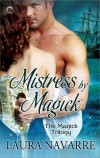
  • An Editorial Review of “Mistress by Magick” by Laura Navarre

    An Editorial Review of “Mistress by Magick” by Laura Navarre

    Alejandro Angelo de Zamorra—better known as Lord Calyx, the captain of the pirate ship Arcangel—is the Scourge of the Spanish Main.  The other captains in the Spanish Armada resent and distrust him, and not only because his mother is English.  His charge to lead the Spanish attack against Tudor England, under the orders of the royally appointed timid “Admiral of the Ocean Sea,” doesn’t sit well with him. But Calyx is a pirate, a mercenary who sells his sword and his ship to the highest bidder.

    The daredevil captain of the Arcangel, known for his amorous diversions, has more than the English to fight. Control of his ship is challenged by the conservative Spanish dons in his ship’s hold and, to his confoundment, in his own quarters—where he is outmaneuvered by the mysterious beauty his crew considers his latest mistress.

    His “mistress” is none other than the enticing Comtesse Jayne Boleyn, banished from court and country by her own cousin, the jealous Tudor Queen. Queen Elizabeth has taken Jayne’s son and given his wardship to her own favorite, Lord Robert Dudley. Jayne is coerced into infiltrating Spanish King Phillip’s royal court—and his royal Armada—as a spy in exchange for her son’s safety.

    Mistress by Magick, the concluding volume in Laura Navarre’s Magick Trilogy, captivated me from the beginning with its intriguing story line, along with Navarre’s lush writing style that makes every scene come vividly alive. She deftly interweaves the suspense of the impending Spanish invasion, the intrigue of two royal courts, the fantasy elements of fallen angels and the Fae, and deliciously pure seduction in this riveting tale of rivaling powers, deceit, and passion.

    And as if that wasn’t enough to tantalize her readers, Navarre’s cast of characters makes for a fascinating read.  Jayne has Fairie magick she can barely control, a legacy of her Boleyn heritage; Mordred of Camelot has returned from beyond the grave to reclaim his throne as the Faerie King, in secret accord with Spanish King Philip; Behometh—the captain’s black cat—has an uncanny ability to be everywhere and nowhere; lucky Lord Calyx charts his stars and reads omens; Arthurian legend is given a new twist—with fallen angels and the Nephilim thrown into the mix; and the fate of England is threatened.

    I was conflicted between the desire to languish in the smartly coy interplay and romantic liaisons between Calyx and Jayne, or sink into the sumptuous descriptions of the era, or turn the pages faster as Navarre deftly builds the tension around the impending battle that looms on the horizon.

    One would almost think these are too many story lines to weave together, but Navarre deftly does so with aplomb. She also navigates her way around sailing ships enough to please this diehard Patrick O’Brien fan.  Laura Navarre is a wonderful story teller who takes romance novels to a new level with her diligent historical research that enhances her stories. Her romance novels are a secret pleasure for those—do I dare say—who consider themselves not the typical romance novel readers.

    Make no mistake about it, the Magick Trilogy series are not YA novels. You may want to have your own Venetian lace fan close at hand when devouring these rapturously delicious books.

    “They were captor and captive, Spanish and English, ruthless pirate and reluctant spy….There was only tonight. Then they were enemies once more.”


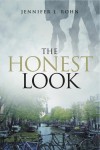
  • An Editorial Review of “The Honest Look” by Jennifer L. Rohn

    An Editorial Review of “The Honest Look” by Jennifer L. Rohn

    In The Honest Look, Jennifer L. Rohn has given life, as only a writer can, to one of the most important aspects of scientific research and science itself—the human aspect. For that reason alone, it is a significant novel about science, but it is also a very beautiful and touching story. The Honest Look could dramatically change the way readers who are not scientists understand the scientific method and what scientists must do in their pursuit of ground breaking research.

    When Claire Cyrus arrives in Amsterdam to begin her job as a senior scientist at a biotech start-up called Neurosys, she is immediately perceived as an interloper by her peers. She quickly falls in love with Amsterdam, only to realize after she takes an apartment there that, while the city is a great tourist destination, it’s not a comfortable place for most expats.

    Undaunted, Claire, perceived as an offbeat prodigy, responds to her outcast status by disappearing into her work, putting in long hours and often sleeping overnight in an armchair she commandeers for her lab. Enterprise and hard work seem to  pay off. She demonstrates that she can ready the company’s only drug to begin its Phase I clinical testing. Simultaneously, a most unlikely romance develops with one of the firm’s principals. But then, just when the success of her contributions promises to solidify her place in the company, she accidentally finds something that doesn’t fit into the working hypothesis on which the company’s only drug is predicated.

    What makes Rohn’s book so noteworthy is that it turns a negative result into a vivid human drama. Most of the time scientists focus on finding evidence that “supports” a general hypothesis, theory or principle, but they also understand that a single negative finding can ruin the generality of every principle and theory in science.

    When a slip of Claire’s thumb takes a sample outside the cells she’s studying, her curiosity and belief in the scientific method lead her to run the incidental sample through her apparatus instead of disposing of it. To her surprise, the analysis doesn’t come out the way the Universal Aggregation Principle predicts it should. And if the principle isn’t true, then Neurosys’ only drug shouldn’t work.

    Now what?  This is where research can get either nasty or exciting, and for Claire, it is both.

    Rohn’s sensitive and perceptive handling of characters’ feelings, a complicated love triangle,  evocative descriptions of Amsterdam, and a realistic glimpse of the daunting years that young scientists must endure to make their reputations add up to a compelling  and engaging read.

    The Honest Look by Jennifer L. Rohn is a thought provoking and riveting  “Lab Lit” novel that draws you into this specialized world and the competitive environment of research scientists.  Highly recommended.

  • An Editorial Review of “The Blue Virgin” by M. K. Graff

    An Editorial Review of “The Blue Virgin” by M. K. Graff

    Being very fond of British murder mysteries, in print and movies, and on PBS Mystery Theatre (most relevantly, the Inspector Lewis series), I was immediately drawn to M. K. Graff’s The Blue Virgin. Thanks to her personal experience while studying literature at Oxford University, Graff is able to set her first published novel in the historical university town with great accuracy.

    Graff’s considerable literary talent enables her to develop an intriguing cast of British characters—with one national exception: the feisty, attractive, and pregnant protagonist, Nora Tierney, an American writer. Having recently lost her fiancé in an accident, Nora’s spirits are raised by winning, as an essay contest prize, the opportunity to collaborate with British artist Simon Ramsey as an illustrator for her children’s book about fairies.

    As the story begins, the murder victim is still very much alive: Bryn Wallace, a gorgeous former fashion model turned talented photographer, is enjoying a glass of Merlot in The Blue Virgin, Oxford’s favorite alternative-lifestyle spot. Her lover Valentine Rogan, a textile artist, joins her, and the two soon head to Bryn’s trendy flat. Despite the excellent gourmet dinner Bryn concocts, the two later argue about their plans to move in together, and a morose Val leaves. A bit later, Bryn interrupts her kitchen cleanup to answer a knock at the door. “What…?” she exclaims. “You’d better come in….”

    Dawn is breaking when Detective Inspector Declan Barnes is called to Bryn’s flat and finds her lifeless body seemingly artfully arranged in the blood-spattered kitchen. After a bit of investigation, it isn’t long before he calls on Val Rogan as a suspect,

    Later that morning, Val calls her American friend Nora, who is staying at Ramsey Lodge in Bowness-on-Windermere, Cumbria. Her host, illustrator, and admirer, Simon, insists on driving her to Oxford to stand by Val. Much to his dismay, Nora immediately turns sleuth, determined to clear her friend Val of murder charges.

    The pace quickens as the plot thickens, when not just one but two more bodies are discovered! Nora is determined to continue sleuthing; Declan is equally adamant that she not intervene in his work, and Simon is plainly worried about Nora’s safety. The tension builds as the plot twists and turns on its way to a surprising ending.

    You’re in for a pulse-raising solid read that will leave you eager to delve into Graff’s next Nora Tierney mystery—with hopefully more to come!  Graff’s sophisticated writing interweaves eccentric characters, visually rich locales, epigraphs, and well-crafted dialog that together create a delightfully clever and intriguing mystery.

    “The Blue Virgin” by M. K. Graff is a First Place Category winner for British Cozy Mysteries in the Mystery & Mayhem Awards for Cozy Mysteries 2013, a division of Chanticleer Writing Competitions.

  • An Editorial Review of “Rules of Lying” by Stephie Smith

    An Editorial Review of “Rules of Lying” by Stephie Smith

    Bridget Jones fans can quit waiting for a sequel. Readers who enjoy humorous stories about single women now have a new heroine: Jane Dough, a bestselling romance author whose boyfriend dumped her—make that a former bestselling author.  It seems his carousing ways have given Jane a load of writer’s block. Instead of penning romance novels about rich dukes “hung like stallions,” Jane castrates her male characters. Her agent is not pleased, and Jane worries she will never sell a book again.

    In Stephie Smith’s fun to read mystery novel, Rules of Lying, Jane is tired of the deceptive ways of her mother and five sisters. However, that doesn’t stop Jane from posting a ‘Husband Wanted’ sign on her Florida property, even though the young woman has no intention of marrying. Jane just wants some of the muscles that come with a man–the kind of muscles that will clear her property to please the Home Owners’ Association. But somehow, despite her best efforts, her eyes are continuously drawn to the area around the thigh muscles of the more worthy applicants for the position. Even so, she is determined not to get distracted.

    Sue, Jane’s best friend, finally convinces her to keep an open mind and that “new doesn’t necessarily mean wrong.” And this is when the fun begins—with a rash in the- you-know-where.

    Enter a handsome doctor, a good looking cowboy, some newspaper articles that suggest that Jane has a racy past, a few obnoxious neighbors, a threatening banker, a hurricane,  a tomcat who adopts her, and then mix in Jane’s misguided good intentions and her family’s —well, you’ve got a laugh-out-loud story that will keep you entertained to the very end.

    While some romantic heroines tangle in a love triangle, Jane’s predicament grows into a polygon. Not only is Dr. Rossi a candidate for her heart, with his mansion and vintage Jaguar, the handsome neighbor Hank Tyler also offers Jane money to fix up her property along with his property clearing muscles. Even though Jane’s at risk of losing her home and swampy land, accepting money from others is not in her game plan.

    Gale force winds descend while she tries to discover the culprit  who is sabotaging her best laid plans to keep her home. Meanwhile, as Jane tries her best to keep her pants on, her friend Sue reminds her of the different kinds of sex she is missing out on: Sweet sex, fun sex, gorilla sex, make up sex…  Jane thinks the whole sex thing isn’t going to be that easy when she continuously finds herself looking goofy, once even sporting a muddy foot “complete with its own grass-sprouting wart” when the handsome and rich doctor came a calling.

    Readers who enjoy fun and randy mysteries about being caught in the bumbling world of love will greatly enjoy Stephie Smith’s Rules of Lying. Jane Dough is a charmer. I was surprised with the ending and am looking forward to reading more about Jane’s adventures and her new lease on love.

    Rules of Lying by Stephie Smith was awarded 1st place in the Mystery & Mayhem Awards, Humor Category; a division of Chanticleer Blue Ribbon Writing Competitions.

  • An Editorial Review of “Without Consent” by Bev Irwin

    An Editorial Review of “Without Consent” by Bev Irwin

    Bev Irwin immediately introduces her serial killer in Without Consent by having him carve out the kidney of a conscious woman. Irwin deftly interlaces Doctor Claire Valincourt, Detective Gerry Rosko, the numerous victims, and the killer himself in this descriptive medical-thriller.

    Dr. Claire Valincourt’s world changes after she finds the first body of a spree of killings, and she struggles to face death and horror outside of the sanitized environment of hospitals. Heading up the investigation is Detective Rosko, the surprisingly clement police officer who sparks with Valincourt from the moment they first shake hands. Their growing relationship is dogged by death and danger.

    Irwin presents a wide cast of memorable characters in Without Consent. From a charismatic sketch artist, to reporters that just don’t know when to quit, Irwin organizes the plot so that not a strand is out of place, and most everything dovetails. The terror of Rosko and Doctor Valincourt surrounded by suspects, one of whom is a brutal murderer, gives their lives a level of tension that could be cut with a scalpel.

    Suspense devotees will appreciate the details revealed about the killer’s inner workings. The foreshadowing at the beginning also points to Rosko and Valincourt being thrown together, and with each missing kidney, their romance blossoms against recent personal wounds and professional instinct. The effect could be considered comical if it was not for the constant threat of a brutal death looming over their shoulders.

    The story takes on even more of a sense of urgency as Rosko realizes the athletic brunettes who are piling up, sans one kidney, look suspiciously like Valincourt. The murders begin to be personal and move closer to home as they slide into the social circle of both characters. They fight and scrape to stay alive while closing in on the killer.

    Without Consent’s strengths are highlighted in its multifaceted characters. Valincourt, despite severe trauma in her past, rarely is a damsel in distress, and Rosko isn’t just a stereotypical detective, but has a gentle side and a solid presence that serves as a sea of calm in all the chaos.

    The journey into the killer’s mind always leaves the reader feeling unclean. Each point of progression fits logically when presented by a deranged, methodical man. Occasionally, the extra knowledge held by the reader sends shivers down the spine as the police cannot manage to see or prevent disaster before it happens.

    With each kidney the killer takes, he becomes more confident and certain that his path is the right one, while Rosko and Valincourt become more determined to discover any information on how to stop him.

    Despite some heavy foreshadowing, Without Consent will have you reading to the end. And, as in this case, knowing increases the pleasure of each tiny reveal that is carved out with Irwin’s razor sharp writing…like finding the perfect kidney at the end of a long day.


  • An Editorial Review of “The Memory Thief” by Emily Colin

    An Editorial Review of “The Memory Thief” by Emily Colin

    What if your life was all about the quest for adventure and danger in climbing the highest mountains, and then your passion killed you? That’s the question faced by Aidan James, who dies in an avalanche on Mount McKinley after promising his family he would come back from Alaska.

    What if the love of your life was a thrill seeker, and you begged him not to go this time because of a sense of foreboding, and he went anyway? And then was lost forever under tons of ice and snow. Maddie, Aidan’s wife, faces conflicting feelings of anger and grief and loss.

    In this eloquent first novel, each character has a personal avalanche of emotions to cope with. J.C., Aidan’s best friend and fellow climber, is racked by grief and survivor’s guilt, but as he strives to comfort Maddie, he also struggles with the secret that he has always loved and wanted her for his own.

    Even four-year-old Gabriel James has secrets he doesn’t know how to handle. His daddy visits him at night but says he cannot stay. He leaves behind a puddle of icy water that Gabe cannot explain to his mother.

    The fatal accident on the mountain even affects Nicholas Sullivan, a stranger who lives on the other side of the country. After a motorcycle accident, Nicholas awakes with no memories of his own life. Instead, his injured brain is filled with visions of fresh snow blowing down his neck, cold fingers wrapped around an ice axe, and a nearly unbearable longing for a mysterious woman and a tiny boy Nicholas has never met.

    Aidan James kept his promise to come back. He just didn’t expect to do it like this. And now everyone, including himself, must find a way to deal with his death, and find a way to move on with their lives. The Memory Thief is a beautifully written story, with evocative descriptions of a love for nature and adventure, a deep appreciation of friends and family, and heart-breaking expressions of regret and grief and lust and joy. This book is a haunting ghost story, but above all, it’s a memorable tale of how, even after a terrible tragedy, love lives on.

  • An Editorial Review of “Spider Catchers” by Marilynn Larew

    An Editorial Review of “Spider Catchers” by Marilynn Larew

    Lee Carruthers is sent to Fez, Morocco to find out what became of Alicia Harmon, a CIA analyst who has gone missing while investigating a potential new source of terrorist funds. So begins The Spider Catchers, Marilynn Larew’s first novel that deals with the battle between the CIA and terrorism.

    Carruthers bemoans receiving the new mission so quickly after just returning from Baghdad. However, she heads back into the field without much persuasion. Once in Fez, she meets with a hostile reception. Each answer she finds only leads to more questions as to why Harmon believes an untouchable Islamic politician is funding a new group of terrorists. Carruthers is methodical in the way she follows each lead, always taking the next logical path.

    While several characters play only incidental bit roles, Larew works hard to ensure between bombings and stakeouts that Carruthers’ important contacts are emphasized. Still, certain characters are sometimes lost in her sea of informants. The plot never falters, even when Alicia Harmon’s motivations are completely obscure to both Carruthers and the reader. The world is real with none of the antiseptic frequently found to ease the burden that comes with reading about terrorism.

    Readers who love a clandestine novel will be pleased with the way Larew weaves her mystery. She allows Lee Carruthers to gather hints and suspicions, but keeps the overarching web of conspiracy shrouded as she builds the tension. A dash of romance coupled with a healthy splash of righteous anger, and The Spider Catchers carries itself quite well. As Carruthers closes in on what Harmon is investigating, the attacks on her become more frequent. She has only a few trusted contacts to rely on, the majority of whom can only be trusted as long as she can pay them.

    The relentless determination with which Carruthers pursues her problems drives The Spider Catchers. Balancing between someone who wants out of Agency life, and someone who cannot stand the atrocities around her, Carruthers focuses on the task at hand with an impressive single-mindedness and a sharp tongue that leaves conservative Moroccans white-knuckled.

    The investigation into a CIA operation, and the suspicion between clandestine agencies places the reader in the same whirlwind of confusion Carruthers deals with on a regular basis. Each clue frustrates and worries the reader as much as it does her. Only in certain moments, as she narrates safely from the future, does Carruthers drop hints and foreshadows. Occasionally the glimpses of the future feel heavy handed, but in most cases they skillfully guide the reader to see clues that might otherwise be missed.

    The Spider Catchers works well within its spy-thriller genre, always maintaining the mystery of what happened to Alicia Harmon at the forefront. The slow clicking into place of all the pieces is a delight, and Carruthers oblivious attitude towards her own nature makes her quite the narrator. This book was a solid read, and the onset of a sequel is cause for excitement.

  • An Editorial Review of “Cities of Sand and Stone” by David and Neil Yuzuk

    An Editorial Review of “Cities of Sand and Stone” by David and Neil Yuzuk

    Loaded with grim brutality and remorseless betrayals, Cities of Sand and Stone will appeal to fans of action and temerarious exploits. A crooked police captain, Russian crime bosses, the harshness of Brooklyn’s mean streets lorded over by N.Y. Mafia kingpins and the brutal Florida underworld meet one Michael Frakes, an Iraq military hero who is the polar opposite: thoroughly rule-bound, honest, and brave police officer of Florida’s Beachside P.D.

    This mobster story defies specific categorization with its journalistic style and omniscient point of view. David A. Yuzuk and Neil L. Yuzuk, the father and son team who authored the Beachside P.D. series, cast the worst type of men bent on destruction in this prequel to the series. In the opening chapters, readers will learn about the historical and biographical information of these brutal characters—some who are probably psychopaths. Initially, without a main narrator, it may be a challenge to sort out who is a principal character and who has a minor role, so tracking characters may be mildly difficult in the beginning. But do hang on, as the story will come into focus.

    When the New York Mafia becomes concerned about goings-on in South Florida, they send down one of their own (the dangerously violent Angelo Tedeschi) to infiltrate the Beachside P.D. as an undercover officer working for Frakes.

    To intensify the brewing storm, enter Viktor Matyushenko, a Muscovite intent on expanding his empire into the new world– even if it means taking on the N.Y. Mafia–to become a force to be reckoned with in Florida’s underground. Vicious brutality and betrayals are prominent in this story: as reflected by the number of bodies and the amount of blood spattered throughout the hard-hitting pages. The bad guys and the good guys’ mettle are tested to the max as the ante increases on all fronts.

    Fans of Mafia tales and police procedurals will appreciate the authenticity from the authors’ experience with military and law enforcement. Readers are informed of the costs and brands of the mobsters’ clothing to descriptions of a wide range of weapons, blow-by-blow combat tactics, and police procedures and jargon.

    If you enjoy your novels with an intricate story line, lots of hard-hitting action, gritty dialogue, and authentic detailing, then the Beachside P.D. series by the talented Yuzuk father and son team is for you.  “Cities of Sand and Stone” (2012) is the prequel to the first two books in the series: “The Gypsy Hunter” (2011) and “The Reluctant Knight” (2011).

  • An Editorial Review of “Shadow Guardians” by Brett A. Lawrence

    An Editorial Review of “Shadow Guardians” by Brett A. Lawrence

    Shadow Guardians is a science fiction novel that steps away from warring aliens and warp drives to delve into individual potential.  The premise focuses on how one would react if extracted from normal life and inserted into a totally new construct of so-called “life” while retaining all of your previous life’s memories.  Would you take death instead?

    Lawrence starts his story with Abigail and Dennis Webster who have just celebrated their anniversary with a special dinner at a fine restaurant, ensconced in the warmth of their closeness in the cockpit of their Piper aircraft. They are taking off from Tacoma, Washington, toward their temporary home in Everett. Abby and Dennis’s affectionate reflections are interrupted by the raucous noise of another craft’s intrusion in their airspace. There is scarcely time for thought before a crash sends them heading downward into the frigid Puget Sound.

    That same evening, Lindsey Maguire, a beautiful but self-serving and arrogant bank executive, is abducted by a hired killer, destined to be pushed over a bridge railing to her death.

    Instead of dying, the would-be victims find themselves groggily awakening in the alien confines of an interstellar spaceship, the “Starlight Mistress.” Each reacts differently to the news that they have been rescued and transported by two representatives of the distant planet of Majora—Milankaar (or Mil), a humanoid born there, and his companion Miriam, a human rescued from Earth some time ago, who has joined Mil in his mission of learning more about Earth and its people.

    The fascinating difference between Lawrence’s captivating sci-fi novel and most others of this genre is his focus on the personalities and feelings of the rescued beings of our era and their reactions to the knowledge that their lives will be continued on the planet Majora. Their initial shock and disbelief evolve in different ways, which Lawrence deftly paints.  The survivors are offered an impossible choice that, regardless of their decision, ensures their old life is over. But Mil—an intelligent, generous, and thoughtful character—seeks to help his guests deal with their present reality and look forward to a new life on the relatively peaceful and pleasant planet of Majora—especially Dennis and Abby whose marriage threatens to crumble under the strain.

    The interspatial action heats up when a Chelonite slave-abducting ship attacks the “Starlight Mistress.” The pages fly by as fast as the spaceships when Mil draws the slavers to the rocky surface of the moon in an effort to evade or destroy their attackers. Lawrence’s precise descriptions of the lunar landscape, skillfully drawn from America’s moon landings and explorations, lend reality to the death-defying chase, skimming over mountains and diving through the Valles Alpes.  If Mil can’t out fly the Chelonite vermin, he’ll have to outwit them.

    As Brett Lawrence says in his bio, if all goes well for the Shadow Guardians, we might just see a sequel to this, his first published novel. This reviewer, for one, certainly hopes so, because Shadow Guardians gave me an exciting ride and a thought-provoking great read!

  • An Editorial Review of “Lost Antarctica” by James McClintock.

    An Editorial Review of “Lost Antarctica” by James McClintock.

    Lost Antarctica: Adventures in a Disappearing Land opens up an amazing world for readers, especially beneath the sea surface. You’ll meet bright orange “sea butterflies,” which can change sex from male to female, and read how scientists filmed soft corals actually walking from one place to another.

    Many readers will know that scientists from around the world come to Antarctica to study its unique environment, but we don’t often get to read about how they do that science and what the results mean. This engaging book delivers all that.

    The unique creatures that live in Antarctic waters have already been found to produce compounds that could fight cancer, AIDS, and influenza. Their body chemistry shows promise for new antibiotics. But if change continues at the current rate, all these species may be gone before we have a chance to understand them.

    How can a continent of more than 5.4 million square miles be “lost?” How could it disappear? Global warming is the answer. Antarctica is more than ice, so the land itself will never completely vanish, but the southernmost environment as we know it is already changing fast, and in ways that have drastic implications for the future of all life on earth. McClintock uses interesting descriptions and down-to-earth language to explain the situation for non-scientists.

    Take krill, for example—tiny crustaceans that form the majority of zooplankton near the bottom of the food chain. Juvenile krill feed on algae that grow on the underside of pack ice. With less and less pack ice each year, there are fewer and fewer krill. So what, you might be thinking—why should I care about krill? What eats krill? Bigger crustaceans, jellyfish, anemones, penguins, fish, seals, you name it. Even the largest animal on earth—the blue whale—depend on this food source.

    You’ll find out how more carbon dioxide in the atmosphere means more acidic ocean water, and how more acidic water means all shelled creatures are in danger of extinction.

    But this book includes more than just the results of experiments and their associated dire predictions. McClintock gives us a peek into the lives of the researchers. You’ll learn about living on board research ships and the fear and frustration of being tossed about in ferocious katabatic winds. McClintock describes how researchers camp out on ice shelves and challenge 1000-pound leopard seals for diving rights. The book details an invasion of king crabs and provides an explanation of “seal finger,” an injury that can be fatal. There’s even a warning of how the Norwegian delicacy, lutefisk, can permanently damage sterling silver (and possibly your insides).

    Professional scientists may want to know more about the various tests and methodology McClintock describes, so the author has thoughtfully included a Notes section, as well as a good Index. Unless you’re already familiar with the layout of Antarctica, you’ll be frustrated by the lack of a map in this book. Find or print out your own so you can follow along as McClintock describes the fascinating geography and the challenges of working in this rapidly vanishing environment.