
Category: Reviews

  • An Editorial Review of “Raven’s Run” by John D. Trudel

    An Editorial Review of “Raven’s Run” by John D. Trudel

    A covert CIA mission gone sideways, a harrowing post-WWI transatlantic flight, and a research facility with “remote viewing” capabilities: three seemingly separate stories woven across time and locations bring us to the brink of an attack that would annihilate North America in this entertaining and suspenseful novel titled Raven’s Run.

    John D. Trudel researched actual historical archives to tell the escapades of his uncle, George O. Noville, a Navy officer who made historical flights, explored Antarctica, became an oil executive, and eventually settled in Mexico to retire. It is through his voice that the reader ‘hears’ the story of forgotten U.S. history.

    Josie is a gentle soul with an incredible psychic ability (as well as a penchant for marijuana and going braless). All she has to do is have physical contact with an item to see its history, location, and actions occurring around it. The government, needless to say, sees her as a valuable asset and has her working in secrecy. Her viewings have sometimes left her comatose – she is especially sensitive to violence, and sees her own future in a mental institution if she doesn’t change the path she’s on.

    Wayne, who has been given the boot from the CIA, is given a second chance along with a new identity as Raven. He is tasked to protect Josie. While on his failed yet explosive mission in Iran, Raven had uncovered a diary belonging to Noville, with the title “Operation High Jump,” a major Antarctic expedition that occurred right after World War II.

    All evidence from the mission was destroyed, but the significance of the notebook is unclear. Josie is tasked with viewing the events surrounding the notebook, but the vastness of the great white ice continent makes finding any worthwhile data a huge challenge. While her talents are great, they are not unlimited.

    Meanwhile, Islamic extremists are racing toward a mission of their own in Antarctica, allowing nothing to stop their quest to rid the world of the “Great Satan” and infidels. With ties to oil executives, high level U.S. government officials, and a nuclear-powered icebreaking vessel, not much can stop them, not even one of their own. The suspense builds at a breakneck pace.

    Josie and Raven form an unlikely bond, breaking down the walls that he has had to build around himself out of necessity. Raven gains Josie’s trust, and she his. They start envisioning their own future together, but first they must complete this last, dangerous mission: solving the mysteries surrounding Noville, his death, and his diary. Will their love give them the strength to survive the ordeal, or add to their vulnerability?

    Mechanical techies will enjoy Raven’s Run’s detailing of weaponry and engine mechanics on airplanes and ships, in both military and private use. Trudel challenges some widely held positions on climate change, Islam, the JFK assassination, Vietnam, international incidents occurring between WWII and today.

    While this reviewer didn’t do any fact checking, Trudel offers a “Factoids and Fantasies” section to help the reader sort through historical fact and what is inspired in this work.  A post on Trudel’s blog sums it up nicely: “There is a lot of truth in fiction these days, and we live in interesting times.”

    Reviewer’s Note:  All in all, I give Raven’s Run five stars. The ending is awesome! I tried not to give too much away in the review because the unfolding and braiding of events adds to the reader’s pleasure of discovery. This reviewer is looking forward to reading Trudel’s sequel, Raven’s Redemption which will be out in 2015.


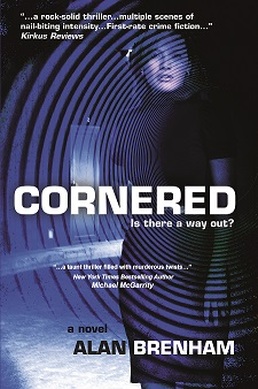
  • An Editorial Review of “Cornered” by Alan Brenham

    An Editorial Review of “Cornered” by Alan Brenham

    Detective Matt Brady of the Temple City police is up to his eyeballs with work. He has too many kidnapped women, no leads, and the chief of police is breathing down his neck with reminders of how the last time he worked a case like this, a woman died. As the kidnappers are always ten steps ahead, it’s looking like the time has come to hand the case off to the FBI, which would end Brady’s chance at redemption. So begins Alan Brenham’s detective novel, Cornered.

    Burt Smith and his henchmen, Weaver and Chiles, appear to be more than a match for Detective Brady at the start of the novel. The villains are loose-cannons, capable of anything, but they still have their own personal lives to deal with. Smith is attempting to escape an unhappy marriage, hounded left and right by his ex-wife, while Weaver and Chiles are cons trying to put their lives back together. It would be easy for the reader to feel sympathetic for them, if they didn’t spend their spare time committing heinous criminal acts. The focus on all the characters, not just the protagonists, is what sets Brenham’s story apart.

    The development of characters who would usually go unnoticed in other stories adds dimension to the novel. Brenham gives the reader an opportunity to connect with a little old woman yelling at Chiles and Weaver as they speed by her house, and to join Brady in reviling his least favorite detective who never shuts up. In giving the story that extra bit of depth though, Detective Brady and his romantic interest, a veterinarian named Tracy Rogers, lose a bit of the development they could have received in exchange for a fast and furious read.

    Since the reader knows from the get go who the villains are, the overriding theme is how far is too far for the detective to use his position to thwart the villains’ next attempt and what the reasons are for the kidnappings. Meanwhile, the clock is ticking; Brady’s ex-girlfriend has gone all “Fatal Attraction” on him; and anyone involved in any way with the kidnappings—innocents, hit men, criminals, good guys, or opportunists are all in the crosshairs.

    The switch between so many characters, whom the reader knows decently, keeps the excitement burning in the ever present question of what happens next. Moments where the reader expects to loathe the antagonists can elicit sympathy, where other scenes show their irredeemable qualities in vicious detail. The question of who will be saved and who will die, who will cut a deal and who will stick it out to the end, drives the story keeping the pages rapidly turning.

    Cornered is definitely a story that moves against the grain. The reader spends equal time with villains and heroes, making the story focus more on the people than the criminal acts being committed. The tension Brenham builds through the switching of viewpoints creates a novel that commands the reader’s interest, along with giving unique perspectives of the individuals involved.

    Cornered, Alan Brenham’s thriller novel is a winner and we look forward to reading more from this criminal law attorney and former law enforcement officer turned author.

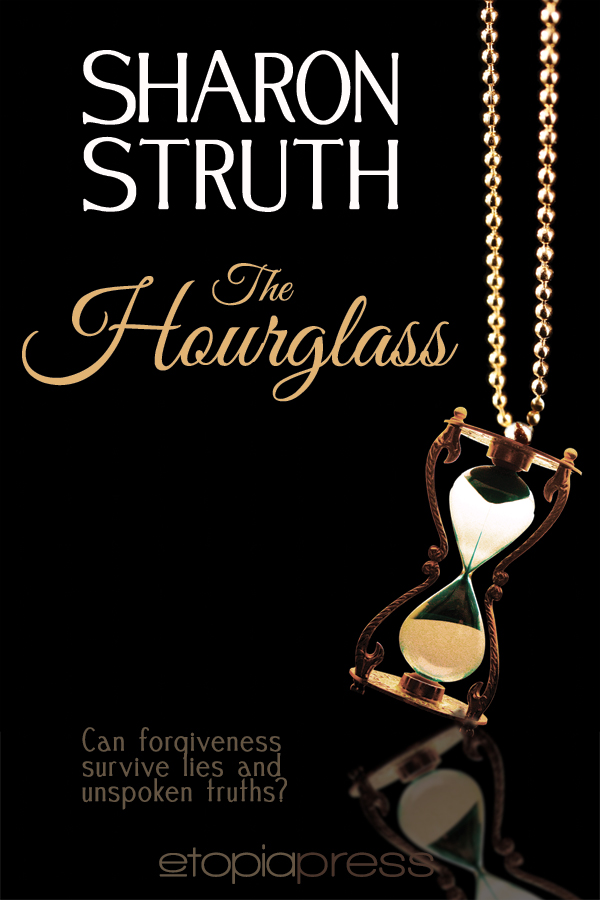
  • An Editorial Review of “The Hourglass” by Sharon Struth

    An Editorial Review of “The Hourglass” by Sharon Struth

    This debut novel could be said to be a story within a story: the male protagonist, CJ Morrison, is a best-selling author who pens a dark thriller called The Hourglass shortly after his wife’s death in a car accident that leaves CJ guilt-ridden, for reasons that are unclear. CJ hires Brenda McAllister, a relationship and sex counselor and self-help author as a consultant for his manuscript on the advice of his publisher, to help him move forward with the main character. The two instantly share a mutual, and in CJ’s case unwanted, attraction. The author, Sharon Struth,  has a knack for creating a palpable attraction between the two.

    When Brenda evaluates CJ’s other bestsellers, she realizes that the fictional character in CJ’s new story may reflect his personal demons. Brenda has her own baggage as well, not least of which is the recent death of her husband of 25 years, whose suicide is viewed by nearly everyone as proof that he was guilty of fraud at the Stamford, CT office of Global Business Systems. Brenda doesn’t believe it, but worries that the almost-violation of her marriage vows with her late husband’s best friend and colleague, Luc, might be why her husband took his own life.

    The main characters each possess a set of all-too-human flaws as well as other romantic interests which complicate their reactions to the attraction each feels during their work sessions, but each of them must conquer their personal demons before they can act on said attraction.

    Their repartee at each subsequent meeting is well-written and accurately reflects each of their conflicting push-pull emotions. These characters are in the midpoint of their lives, but how they react to each other, along with their respective sexual tension reads well without requiring that the author haul us into a bedroom with the characters. The motivation that keeps these characters working with each other is skillfully woven around Brenda’s need to clear her husband’s name even as Luc seeks to “help” her. Struth deftly adds some twists and turns to this contemporary romance as she ramps up the intrigue and the chemistry as Brenda discovers that her late husband’s work may not have been what she was led to believe.

    Struth has added touches of humor and quick-witted dialogue that makes for an entertaining read, while she presents very real-life situations and human frailties within this well written story.  The Hourglass will leave you thinking about it long after reading the last page. Throughout this suspenseful romance, the author provides clues that, by themselves, are easily missed, but which, when added together, resemble the gathering sands in an hourglass. We look forward to reading more of Sharon Struth’s contemporary women’s fiction.

    The Hourglass by Sharon Struth is a Chatelaine First in Category award winner for Romantic Women’s Fiction.


  • An Editorial Review of “19 Remarkable Northwest Women” by Carolyn Leeper

    An Editorial Review of “19 Remarkable Northwest Women” by Carolyn Leeper

    Carolyn Leeper’s newest work, 19 Remarkable Northwest Women, is an inspiring and motivational compilation of profiles of 19 women she has met through the years. These women have led very different lives, but they all have one thing in common: the ability to “evoke change through choice” (as Billie Miller states in the foreword).

    The book is composed of short vignettes, each profiling a different northwest woman who Mrs. Leeper finds inspirational. These women are very different; they range from entrepreneurs, to writers, private investigators, captains, CEOs and more.

    Each profile covers the featured woman’s career history, interests, what advice she would offer to other women, and ends with a short horoscope reading. The advice offered throughout the book is consistently uplifting and motivating, with an emphasis on action, involvement, and having the tenacity to grab opportunities as they arise.

    The book features women such as Robin Akkermann, Pamela Beason, Kathryn Brown, Deborah McFarlane, and Irene Roberts. Many of the women featured have held multiple and varied careers. All of the women have created change and success in their lives through conscious decision making, often at very difficult times. These are women who are lifelong explorers and learners; women who are actively involved in life. They are the kind of women that we interact with on a daily basis. These are not extreme sports athletes, or corporate moguls, or women who have survived devastating situations. They are women with whom most of us can relate to and that is the beauty of Mrs. Leeper’s slim volume. These are ordinary women who have had positive impact on many lives–especially in the Pacific Northwest. Mrs. Leeper’s passes their advice on to young women to follow their passions, never give up, and help each other along the way.

    19 Remarkable Northwest Women focuses on the work/life balance that many women feel they struggle with. Mrs. Leeper lets the reader know that women really can have it all…with a support network in place, the encouragement of other women, and the gumption to go out there and do it. As Mrs. Leeper states, “These women are living the lives they want…not just doing what others expect of them.”

    [Editor’s Note: The only item that I would add to 19 Remarkable Northwest Women is that Carolyn Leeper should round out the number to 20 remarkable northwest women. Mrs. Leeper, author and interviewer of this work is a published author, retired travel agent, an emeritus board member of Whatcom Writers and Publishers, a longstanding member of Washington Business and Professional Women organization, and an active volunteer with many non-profits.]

  • An Editorial Review of “Propositum” by Sean Curley

    An Editorial Review of “Propositum” by Sean Curley

    Many know the story of how Jesus Christ came and founded Christianity through the death, resurrection, and crucifixion, but do we know the full story, now millennia old? Sean Curley’s story, Propositum, unfolds to answer this question in a book that is part historical text and part political subversion. Caesars rise and fall by the decisions made by Proculus and Maximus, two great minds who subtly guide the ebb and flow of the Senate and the most powerful voices in Rome, just barely ahead of the crumbling empire.

    The Roman Empire is no longer a Republic; it is failing. Since the death of Augustus Caesar, each of his successors has proven weaker, feeble-minded, and unable to rise to the governance of the former Republic. Proculus, a former senator cannot bear to see his country fall into an inevitable civil war with Judea. His solution is to gather Saul, a young man who admires the senator greatly, his military friend Maximus, and Maximus’ daughter Curia. Each character carries a vital aspect of the plan to fruition. The plan? Create a way for gentiles (non-Jews) to be converted to Judaism without the need for the Jewish laws. Through uniting the two huge groups, Proculus and his allies seek to create a stronger Rome, unified by law and religion.

    The book is well-researched, with each Caesar a nod to history, the knowledge of Jewish communities most akin to Christianity, and Curley’s biblical information shows the clever way religion can be reinvented. The history will put some readers in the mind of the Book of Kings, or, for those less biblically versed, in the dusty classroom where they first had the classics explained to them. While for some, this will distract from the story, the historical distance emphasizes the parallel distance Proculus and Maximus feel from their goals. The disconnection from the reality of their actions proves highly effective as the book progresses.

    Curley plays the long game in the set-up for this book, just like Proculus with his propositum. Antioch is the setting for part one, focusing on Saul and Proculus developing this plan. Saul is the least informed member of the conspiracy, the Jew needed to spread the new religion, and who can be controlled and influenced by his Roman counterparts. Maximus doesn’t receive a proper introduction until Proculus’ first journey to Rome, where he proves himself as a respected and stalwart soldier, with more contacts than you can shake a stick at.

    Curia and Saul (who eventually changes his name to Paul), are two of the most interesting characters, as they are brought into the plan, Curia with full knowledge that a potential war between Judea and the Roman Empire might be just what is needed to solidify the sympathy of the Roman people with the Jews, and Paul none-the-wiser for his efforts. Curia and Paul are linked by Curia’s role as the eyes, ears, and center of the plan in Rome. Without her, Paul’s church of Christianity would wilt and wither, but Paul still cannot bring himself to reconcile one simple aspect of Curia’s personality: she is a woman. Paul’s sexism is often a point of tension between the rest of the group and the proselytizer.

    Most interesting is that this book makes no claim about the validity of religion. There are true believers in these pages who follow the teachings of Jesus Christ. There are visions, there are miracles, but the line between fact and fiction, between belief and self-deception is so blurred that this is a book with many interpretations. Its merit lies in the momentum of the plans, that once started, cannot stop. All of which is aided by Curley’s knowledge of the subject, which highlight and showcase subtlety well in his book. A worthwhile read.

    5 Stars! Best Book Chanticleer Book Reviews

  • An Editorial Review of “Choices” by Kate Vale

    An Editorial Review of “Choices” by Kate Vale

    Choices by Kate Vale is a modern day romance story set in small town USA about a seemingly perfect family that ends up experiencing the harder side of life. The story is heart wrenching, but it is ultimately inspiring even though it deals with divorce, infidelity, and relationships. This novel uniquely shows the gritty and often ignored side of what families with kids go through when a marriage breaks apart.

    Melanie, the main character, finds herself in a position that no mother or wife ever expects or wants: her husband has just walked out on their family and she is left alone to pick up the pieces. She finds herself having to support her three children by herself and her kids are blaming her for their dad’s disappearance from their lives.

    The reader is dropped right into the heart of the story from the very beginning when Melanie is confronted by her estranged husband telling her he wants “out” of their marriage. He declares couples counseling was simply a waste of his time and he wants the marriage to be over so he can move on with his life. Self-doubt creeps through Melanie’s mind and she wonders why her husband would want to leave after sixteen years of a seemingly good marriage and what she could have done differently.

    It’s not long after her husband deserts her and their children that she re-meets Sam. Sam, the detective, the single detective who is smitten with Melanie from the get-go. He immediately takes to her kids and wonders what it would be like to have the full life of a family, house and all the trimmings. He carefully pursues Melanie in hopes of a life with her and her children.

    But Sam and Melanie aren’t prepared for the troubled times ahead of them. Melanie finds herself with two angry and troubled teens, both acting out and getting themselves into some frightening situations. Sam finds work colliding with his personal life and his attempts to court Melanie. And Melanie’s ex-husband has become jealous and angry at the thought of another man stepping into his role as husband and father.

    Can Sam, Melanie, and her children be there for each other and help each other when tragedy strikes and life gets even harder?

    Vale’s Choices sincerely explores the pain and anger that can come with a messy divorce in a realistic and honest way. This is a novel that everyone who has experienced the sting of divorce and troubled teens can relate to.

    Choices by Kate Vale is a sweet romance novel with a truly heart-warming ending. Each character grows and changes from beginning to end in this novel, making it not only a great read, but an inspiring one as well. Vale wrote a page turning story that I wouldn’t hesitate to read again!

    Choices by Kate Vale received the Chatelaine Grand Prize Award 2013 for Romantic Fiction, a division of Chanticleer Blue Ribbon Writing Competitions.

  • An Editorial Review of “Mother Love” by Susan Colleen Browne

    An Editorial Review of “Mother Love” by Susan Colleen Browne

    Mother Love, written by Susan Collen Browne, is a romantic Irish story set in the colorful Village of Ballydara. She vividly portrays a written slice of contemporary life in Ireland with its pubs, puddings, pals and mams. Hers is a story of love, growth, and healing. It has just the right amount of chaos and family conflict, along with a good dose of  Irish humor, to make it a fun and entertaining read.

    Grainne knows exactly what her perfect man is like, down to each little detail—the only problem is her perfect man is getting married just as this book, and Grainne’s story, have begun. Grainne sadly acknowledges and grimly accepts the fact that her perfect man is about to become permanently unavailable. However, her biological clock is ticking and, on the eve of her 30th birthday, she is anything but reasonable.

    A complex and realistic protagonist, Grainne is plagued by her own family conflicts. Grainne’s relationship with her mam is strained to say the least. Having grown up feeling that she was less important than her sisters, Grainne does her best to avoid visiting her family home more than she deems necessary. She can’t even be in the same room as her mam without making the entire situation uncomfortable for everyone around. Yet for a young woman who avoids her mother, Grainne spends more time wishing for her mam’s acceptance and attention than not.

    Despite her tumultuous family life, Grainne is a devoted and doting nanny to three rambunctious kids whose own mother is too busy running a newspaper to pay them much attention. She finds happiness in her work as she dotes on the kids, but her wanting of her own family cannot be ignored.

    Grainne’s mam is keen to turn her home into a B&B and Grainne’s sister has guilted our protagonist into helping out with the venture. Grainne grudgingly helps out, thinking this may be a good way for her to get to spend some time with Rafe—the one that got away. Grainne and Rafe’s story seems destined to end before it ever begins, but sometimes you never know what life has in store.

    Rafe isn’t the only man in Grainne’s life. She’s also got good-guy Joe, a nice man with a decent job and only minor flaws and he has his eyes set on Grainne. And with all the family drama and emotional stress it’s a good thing Grainne has Justine—her best friend and flatmate—who spends her free time cooking and baking delicious food along with obsessing with the blog “Girl Talk.”

    Grainne must navigate her way through this crazy and tumultuous life if she is to find happiness.  Mother Love is a novel that lives up to the lore of Irish tales. If you like an entertaining light romance that is full of Irish humor and family fun, Browne’s story telling will not disappoint.


  • An Editorial Review of “An Ex to Grind in Deadwood” by Ann Charles

    An Editorial Review of “An Ex to Grind in Deadwood” by Ann Charles

    The Deadwood Mysteries by Ann Charles is a wickedly funny paranormal mystery romance series that takes place in its namesake city in South Dakota.

    Meet Violet “Spooky” Parker, a sassy single-mom real estate agent who is earning a reputation for selling haunted houses and finding dead bodies. And, now her agency’s boss is advertising that “she’ll show you a magic place that you’ll love…” on an interstate billboard. He also has her lined up to appear in a reality TV show featuring ghosts.

    But, Vi has more than her reputation to worry about when she gets a unsettling call from a mysterious women insisting that they meet immediately. When she and her sidekick Harvey arrive at the appointed place, all they find are ticking clocks, a shrunken head, and yet another dead body.

    Vi swears not to get involved especially after she is warned to keep out of the way by the police detectives on the case. She especially swears off the case when her ex decides to make a reappearance in her life. However, when she finds evidence that links her young son to the victim, all bets are off now that her child maybe in mortal danger.

    The Deadwood Mysteries offer a welcomed new twist for cozy mystery lovers! Fresh writing, lovable quirky characters, a good dose of randiness, peculiar situations (I have no idea how Ann Charles comes up with this stuff, but it makes for an entertaining read), and clever surprises at every twist and turn. An Ex to Grind keeps the laughs coming or the suspense building. Get ready for another hilarious and spooky suspenseful read from Ann Charles.

    [Reviewer’s Note: I LOVE the ending.]

  • An Editorial Review of “The Promise of Provence” by Patricia Sands

    An Editorial Review of “The Promise of Provence” by Patricia Sands

    The Promise of Provence can be said to be a beautifully phrased travelogue that is a pleasure to read. It can be highly recommended on that merit alone. You can almost smell the lavender, hear the bells on the goats tinkle, and sip the local wine as you escape into the story.  However, what truly makes this novel stand apart is how deftly the author, Patricia Sands, shares the gentle life lessons that we all could be reminded of especially nous les femmes d’us certain âge. This novel’s story particularly resonated with me.

    Sometimes you are heading along at full speed heading toward a known direction, and then someone, something, changes the track you are on without any warning. You are now heading someplace new and probably still at full speed. However, now you don’t know where you are going or where you will end up.  This is what happened to our protagonist, Katherine, when she came home expecting the usual traditional anniversary dinner with her husband James of twenty-two years only to find a note telling her that he has left her for another woman and that they are expecting a baby.

    This is when Kat’s awakening begins. This is when she realizes the importance of girlfriends, of getting help when you need it, of reconnecting with your loved ones, of finding new ways of doing things, and being open to new possibilities. Nevertheless, like all awakenings, Kat’s is not without its twists and turns and unexpected bumps.

    What I thought that was exceptional about “The Promise of Provence” was how Sands weaved in Katherine’s past life with her ex-husband.  She deftly intersperses how Kat relinquished control of her life to James bit by bit in many aspects from everyday little innocuous things, to influencing her relationships with her friends and her aging mother, to how their vacations and free time were spent.  The author does this sparingly and with aplomb so that the story moves forward, but she reminds us how easy it can be to give up our power and our dreams without even realizing it.

    We get to meet Anyu, Kat’s Jewish mother. We learn of Anyu’s family’s history in WWII Hungary and that Anyu barely escaped with her life. We learn, with Kat, that Anyu’s life was totally derailed when she was a teenage girl—never to be the same. Anyu finally shares with Kat her experience of a terrible betrayal and the horrors that she and her loved ones endured during the war, but as she does, she also gives Kat hope, gratitude, and optimism for the future.

    And, of course, girlfriends play a major part of the story: the inexhaustible and verbally expressive Molly, steadfast Andrea, and the new ones she makes along the way. Sands truly captures the camaraderie and support that true friendships can afford us. She gently reminds us that taking the time to nurture and value friends will make our burdens lighter and our joys greater.

    The allure of France helps to draw Kat out to explore and rediscover life’s pleasures along with the capacity to love again in this inspiring and satisfying novel.  We look forward to reading Patricia Sands next novel, Promises to Keep, to find out where Kat’s journey and new lease on life takes her—and us.


  • The INHERITORS by Judith Kirscht – Literary Fiction, Contemporary

    The INHERITORS by Judith Kirscht – Literary Fiction, Contemporary

    The year is 1980, and our introduction to Alicia Barron’s life begins with tragedy.  Alicia has recently returned to her childhood neighborhood to teach elementary school and her closest friend, Maria Sandoval, has died in a car crash along with her husband and their oldest child.

    Growing up in a largely Latino neighborhood where the cultural and family ties were extremely strong, Alicia always had the nagging doubt that her mother didn’t belong.  When she sided with the protesters against the Viet Nam Conflict, she found herself on the opposite side of many lifelong friends and family members—some who lost loved ones in the Korean War and in Viet Nam. It wasn’t long before Alicia found herself feeling ostracized even by her own mother, Carla.

    When Carla dies, Alicia inherits her grandfather’s house along with keys to unlocking her family’s past. Alicia sets out to learn more about her mother’s family in an effort to achieve greater understanding of her mother and give herself the roots and family history she so desires.  She has already learned and accepted that her mother was white, but what she learns next shakes the foundation of what she holds true—that family heritage may determine a large part of who we are.

    Growing up Alicia craved the kind of roots and dynamics that she thought a big strong family should have–such as the ones she saw growing up. She felt that her mother was unwilling to provide these things. Whenever Alicia would question her mother about who they were her mother would tell her she had a “Latin soul” and that was all that mattered.  Alicia spent the first part of her life believing she was a “Latina princess” while the other children in school whispered she was mestiza.

    Some readers may be unfamiliar with the term mestiza and it is never really defined in the novel.  The term mestiza roughly refers to someone of mixed racial or ethnic heritage and specifically refers to someone with mixed European and Native American heritage. Alicia is Chilean and European and therefore “mestiza” in the eyes of others, most notably the large Mexican population that makes up her neighborhood. Alicia finds herself in limbo feeling that she is not fitting in anywhere.

    Alicia must overcome several hurdles in her journey to learn more about her mother and herself, one of which is her boyfriend, Ricardo Moreno.  Ricardo is conflicted about Alicia’s heritage.  While he loves Alicia’s passion for life and dancing and her Latina heritage, he is unable to accept her “gringa” side.  This is a part of Alicia he wants to ignore completely (along with her mother) or at the very least, avoid as much as possible. But Alicia feels this is a rejection of a part of her that she cannot deny exists.

    Kirscht deftly tackles the sensitive issues of racism, cultural bias, and discrimination from, what may be considered by some, a new and different perspective. She shows through The Inheritors  timeline the ever changing nature of ethnicity, culture, and belonging. Readers are instantly dropped into the changing culture of Chicago under the prism of the 1960s through the 1980s with narrative flashbacks.

    The Inheritors by Judith Kirscht is a novel of one woman grappling to find her cultural and personal identity. Tolerance of others and the need for communication is required from each of us is an overriding theme in this second work of Kirscht’s that explores the complexities of human nature and family bonds.