Category: Reviews

  • An Editorial Review of “Find Me Again” by Janet K. Shawgo

    An Editorial Review of “Find Me Again” by Janet K. Shawgo

    Can true love conquer death? What happens when those that die have unfinished business? Is it possible for those that leave to help those still here with their unsettled endings?   Find Me Again is a story about love that dares to do just that.

    Find Me Again begins just over a year before 9/11; many of the mysteries in the story revolve in some way around that infamous day. Much of the story is not about 9/11, but a key player in the story proves to be tightly involved in the events of that day. The conspiracy theory and mysterious side to this story help make it a great read, but what intrigues me the most is how intricate the people are woven together in this story; most of them oblivious to these associations until well into it.

    Taylor comes home for his Aunt Beatrice’s funeral with a surprise that his uncle who had also passed had willed to him his controlling portion of the family business. The inheritance comes with strings attached, however. Taylor is to settle some unfinished business for his uncle; his request was to research his family history and seek out his ancestor’s (Samuel White) true love, a nurse from the Bowen family.

    Jace is the most recent relative that has chosen to follow in the footsteps of her ancestors of old.  She is a holistic nurse recovering from a bad divorce that left her broke. But Jace was also gifted by her mother’s family history that leaves her to believe that she must help settle the dead as well. Her research leads her to discover that the Bowen and White families are linked. Jace feels a strong obligation to seek the answers to several questions that surface in relation to her mission.

    While Taylor and Jace appear to be the key players in this story, they are far from the only ones. All of the characters developed in this story are intriguing and leave you wanting to know more of their story. From Jace’s cousin Zack with intelligence enough to get her into a high level government job, but country enough to allow her to fly through desert training and surpass expectations of her. Zach also has the unique gift of mind reading and she may also be an empath. Zack alone adds an amazing character to the story and she is just one of many.

    Find Me Again is a mystery, conspiracy theory and an amazing love story that crosses generations—all combined into one amazing read. It leaves you quickly turning the page wondering how each person really plays out in the story, and an ending that tells you this story is far from over. An awesome and entertaining story; this reviewer highly recommends it and is looking forward to reading the first two books in this fascinating and well-researched trilogy from Janet K. Shawgo: Look for Me and Wait for Me.

  • An Editorial Review of “I, James” by Mike Hartner

    An Editorial Review of “I, James” by Mike Hartner

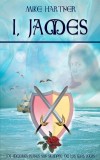
    James Crofter is born in Spain in the early hours of September 21, 1613. Rosalind Caufield is born the same day and same time in London. Their lives, families, and fortunes will forever be intertwined.

    I, James, is the second book in Mike Hartner’s historical young adult saga, a series designed to flow from the 16th century to the present time. It is a story of adventure, hardships, survival, heroics, and sweet romance.

    When Rosalind is just 10 years old, she and her mother are cast out of the family home. Her grandparents have died and her father is away at sea. Rosalind can’t understand how family can turn against family. She and her mother are shipped to Sarat, India, presumably to be met by her father.  Her mother dies and her father cannot be found. Rosalind, now alone in a strange city, is grabbed and trained, readied to be sold as a slave. Instead, her trainer decides to befriend her; she is put on a trade ship where she has some protection; she dresses as a boy and calls herself Sal. She becomes a sailor, a cook, a fighter, growing from child to young woman.

    James is a child of privilege, a prince, the second son of Walter, King of Northern Spain. On his eleventh birthday, James is snatched from his family, transported to Africa, and sold into slavery. James never gives up on the thought of taking revenge the man who took him from his home and made him a slave.

    Hartner takes us on the journey of James and Rosalind who are from these very different walks of life at the time of who rules the sea rules the world. Their lives and stories become entwined as they struggle with pirates, slaves and slavers, cruel masters, and just down-right evil bad guys as they each find their way with the help of compassionate friends, determination, hard work, and quick thinking. It is a book that will transport you back to the time of your childhood daydreams of faraway places and distant times.

    I, James is a captivating tale of survival, of helping others, of not letting others discourage you, and of never giving up hope. Fascinating historical details are woven throughout this classic coming-of-age story adding to its intrigue. Readers will find themselves rooting for Hartner’s feisty and resourceful protagonists. However, I, James, is told in a matter-of-fact tone throughout; the harshness and cruelty of the time period comes through in all its bleakness. During James’ time working on the tobacco plantation, he is whipped many times. James is reminded of his father’s stories but with fuller understanding of the hardships his father actually endured. As a small boy, James enjoyed his father’s stories of adventure, never expecting to experience such things for himself.

     I, James may be categorized as a middle school – young adult novel, but if you enjoy classic adventure stories, it will draw you in, no matter your age. You’ll also want to read the first volume in the series, I, Walter, and watch for upcoming books with new characters and new adventures in Mike Hartner’s Eternity series. Highly recommended.

  • An Editorial Review of “Tightwads on the Loose” by Wendy Hinman

    An Editorial Review of “Tightwads on the Loose” by Wendy Hinman

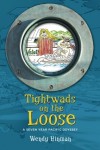
    Tightwads on the Loose – A Seven Year Pacific Odyssey opens with a map of the Pacific Ocean that showed the voyage of the sailing vessel Velella starting and ending in Seattle. Soon the reader is immersed in the plans of Wendy and her husband, Garth, to set sail on their open-ended adventure. And we wonder how long an introvert, whose motto is always be prepared,  can live in such tight quarters with an extrovert whose motto is let’s just wing it.

    These are not rich dot-com people on a yacht. Nor are they trust fund hippies, or newly retired people with a nest-egg, hence the title. But they are practiced sailors who believe in themselves and each other. Later in the book, Wendy made a statement about why it felt important to take the leap (and the risks); leave behind the meetings, deadlines, and emails; and set sail across the Pacific: “Perhaps the path of least resistance, while it offered a temporary respite from the struggles of life, ultimately held no great opportunity for growth, which was what made life most interesting.”

    And risks there were! The reader departed Seattle with them — against the tide. And then there were the shipping lanes to traverse in the fog; the breakdown of equipment needed to keep them alive in said fog; those squalls and mountainous waves, alternating with a total lack of wind. Then they endured scorching tropical heat; polluted harbors; and the possibility of pirates, fishing nets, rocks, and coral reefs. Did I mention the typhoons? The author shared events in a detached, dispassionate way that belies the sheer terror you would expect one to feel. Having sailed in gales, I found myself inserting my own fear and drama into their many near-death experiences.

    Yet the dangers were offset by countless magic moments and encounters. As they sailed from island to island in the South Pacific, they sometimes sailed naked through silence under silvery moons in perfect winds and temperatures. At each stop they were met with friendly, generous locals. Their days were filled with new friends, hikes, snorkels and dives. They enjoyed the camaraderie of fellow sailors, and found themselves immersed in the international racing scene. Also, while they did not set out on a “history cruise,” they encountered artifacts of World War II on almost every island. Details of those discoveries added interest and context to the account.

    In desperate need of equipment repairs and the funds to pay for them, Wendy and Garth took jobs on a U.S. Army base in the Marshall Islands. As they moved off Velella, worked at their jobs, and explored the island we learn the inside story about life on Kwajalein and those who lived there. Two years later, with their boat seaworthy once again, Wendy and Garth set sail for Japan via Saipan, Hong Kong, the Philippines, and Okinawa. Very few blue water cruisers visit this part of the world, and tourists rarely get to see the remote harbors where Velella stopped. This sets Tightwads on the Loose apart from most sailing narratives and adds value to the reading experience.

    Finally, the couple starts the arduous journey from Japan back to Seattle. They are faced with sailing 5,000 miles at the pace of a fast walk, with limited capacity for water or fuel, even food, and, of course, the possibility of a typhoon. They would have enough of everything —if all went well. This last, long voyage provided ample time on watches for Wendy to ponder what ‘reality’ would be like for them back in Seattle. After surviving the dangers of their ocean quest, how would do they do back on land and in day-to-day working life?

    This is good ol’ straightforward storytelling that doesn’t require literary flourish to be captivating. Just imagine spending 24/7 for months on end with your spouse in a 31’ foot sailboat. Just imagine that your world is always moving or changing in one way or another. Now imagine immersing yourself into post-9/11 America only to discover how much everything has changed when you finally return to your home-port.

    Tightwads on the Loose; a Seven Year Pacific Odyssey vividly details the highs and lows of life at sea and at port. It will definitely appeal to those who are curious about sea voyaging.  Armchair travelers will find a diversity of cultural experiences, historical details, and adventures for their entertainment and education.  Come on board and sail away with the intrepid Wendy Hinman and her humorous and ingenious insights about life at sea.

  • An Editorial Review of “Ray Ryan” by Aiden Riley

    An Editorial Review of “Ray Ryan” by Aiden Riley

    An engaging contemporary coming of age story, Ray Ryan by Aiden Riley, follows and is narrated by the main character, Ray. The writing style is quite conversational and very British in its syntax. As the novel progresses through Ray’s life from childhood to mid-30s, the reader will learn of Ray’s challenges and fears, hopes and dreams that create the choices he must make to find his own way.

    The reader is first introduced to Ray in the year 1994 when he is still in grade school. Riley drops the reader right into the middle of Ray’s life and loves: his mother, Janet, his best friend, Kevin, and his passion for writing. While the love of writing takes a backseat for most of the story, Ray’s relationships, especially with his mother and best friend become central to the novel.

    Flash forward four years:  Ray is now in secondary school, scared out of his wits because not only is his new school enormous and intimidating, but he is still one of the smallest students around. Ray doesn’t let his size dictate passiveness however, and quickly learns that standing up for himself will not only get him left alone a bit, it also feels imperative. For the first time, Ray is not in class with his best friend Kevin, which takes him out of his comfort zone. The first day in class he meets a new friend, Anna, and makes a new enemy.

    The novel continues through Ray’s life and, as he gets older, life becomes simultaneously more rewarding and more challenging. For every bit of happiness there seems to be a bit of sadness or stress to maintain a balance. Ray falls in love. His father makes a reappearance in his life, and not for the better. His mother gives birth to his little sister. His friends get involved in drugs and face some hard times.

    When tragedy strikes unexpectedly, Ray must learn to cope with his new reality. The suddenness of the events may be a bit jarring for the reader, but do ring true to life and how tragedy occurs in the real world. Ray’s life changes forever and, like all of us who have experienced hardship, he runs through a gamut of emotions and comes out the other end the same, but different.

    Three years later, now in 2008, Ray’s life seems to be taking a new path when old relationships and feelings reappear. Ray must once again navigate tragedy, and in so doing, discovers what is truly meaningful to him. Events toward the end of the novel concerning the reappearance of Ray’s father may take the reader out of the story due to their inconsistency with the flavor of the rest of the novel.

    Readers should be prepared for traumatic and dramatic events of the non-cozy type (psychologically disturbing events).  These jarring events reflect vividly circumstances that some people experience in real life and add to the novel’s overall realistic and true-to-life tone. This is a brief hiccup however, as the conclusion of the novel is both satisfying and returns to the previously established voice and feel of a contemporary literary novel.

    Ray Ryan by Aiden Riley is a contemporary genre blending novel that does not follow a typical plot based structure. Rather each section highlights the important, life changing, and character building moments that the main character experiences. Riley’s characters are relate-able and authentic. There are a few of Ray’s cohorts with whom readers may find themselves desiring to shake some sense into—if only they could. At the same time, they will find themselves urging Ray on to follow his dream.

    Ray Ryan is a solid debut novel by Aiden Riley, an engaging contemporary coming-of-age story.

  • An Editorial Review of “Coming Home” by Gloria Javillonar Palileo

    An Editorial Review of “Coming Home” by Gloria Javillonar Palileo

    Coming Home, by Gloria Javillonar Palileo, brings vividly to life the plight of the American born non-white people, and particularly those of mixed blood, who must find a place to exist between diverse cultures. The acute pain of this dilemma is faced by millions of children whose parents are immigrants to North American culture. Palileo is well qualified to enlighten readers about the particular struggle of identity and of the need to fit in that many first generation Americans must grapple as she herself is an immigrant.

    Inspired by the experiences of the children that she and her husband adopted from the Philippines, Coming Home is a story that needs telling.

    Juan de la Cruz, an American-born twelve-year-old with Filipino parents who immigrated. He suffers from the racist barbs of school bullies who call him a “chink,” and then discovers his friends also do not consider him an American. However, Juan likes to go to the mall, play video games, and hang out like his peers. He doesn’t see himself as different. However, some of his classmates do since they don’t quite know where to place him since he isn’t white; he isn’t black. It is here when Palileo broaches the subject of generational racism as the children who mock Juan are picking up their opinions and derogatory name-calling from somewhere. Is it inherent in the culture? Do the children pick it up from their parents? Is it peer pressure?

    The conflict between identities is increased by his parents—his father welcomes being in America, his mother wants to return to the Philippines. She believes her son will never be accepted as an American. Juan, desperate to be an American, insists on being called “John,” asks his mother for plastic surgery on his nose, and, finally asks to be circumcised—a request that causes further crisis in the family.

    When Mrs. de la Cruz decides to take “John” for a visit to the Philippines, Juan decides he will become Filipino, tan himself and begins learning Tagalong. He soon discovers, however, that his Filipino cousins consider him very much an American. Though they take him on their adventures and include him in their games, the poverty and strange customs of his parents’ homeland, plus tales of circumcision practices of the past, convince Juan that he wants to come home to America. It isn’t until he is home that he realizes he, after all, belongs to his family and that is where “home” is for him.

    The book also gives an interesting insight into history and customs of the Philippines, a culture seeking to rid itself of the influence of hundreds of years under oppressive Spanish rule. Coming Home focuses on the effects that a history of oppression and racism could have when it zooms in on one little first generation American boy and his immigrant parents. Those who are intrigued by the story’s backstory of Philippine history may find Palileo’s latest work titled The Indios of great interest.

  • An Editorial Review of “Prepare to Come About” by Christine Wallace

    An Editorial Review of “Prepare to Come About” by Christine Wallace

    Christine Wallace writes with great clarity and honesty–and at times, with humor–about weathering the highs and lows of navigating family, career, and love in her gripping memoir Prepare to Come About.

    Wallace chronicles her wildly successful perinatal business that brought her accolades and awards for business achievement, along with celebrity radio and TV interviews, and other accouterments that come with the lifestyle. As the business garnered awards, it began assuming a life of its own.

    Christine’s professional life skyrockets, while her family life plummets. Christine’s confesses to her readers that her children were often left to fend without their own mother as she worked to help other women become one and the conflict that she internalized. She unflinching shares the other not-so-bright sides that sometimes accompany commercial professional achievement: teenage children in crisis, endless exhausting days, family pressures, work demands, and, seemingly, black holes of chaos.

    Her full-throttle lifestyle comes to a grinding halt at the zenith of her success beginning with the day she received an award at the U.S. Chamber of Commerce Summit from President George W. Bush. The sharp contrasts between motherhood and professional accomplishment culminate during the awards ceremony in Washington, D.C. —thousands of miles away, one of her children must be admitted to the emergency room.

    As the economic tides turn, uncontrollable events broadside her business causing a devastating professional aftershock that amplifies her personal heartaches. Christine and her family struggle with a loss of control of everything in their lives. Christine struggles with her loss of identity as a successful professional, a role model, a caring mother, and a supportive spouse while she battles with the economic recession, personal depression, and, worst of all, her own loss of trust in herself and her capabilities.

    The fractured family makes an unorthodox choice that pivots them all into unfamiliar waters. Their lifeline comes in the form of a tall ship named Zodiac and its enigmatic captain. Life or death challenges and unforeseen moments of wonder and awe await Christine and her family. As they venture forth together in this new venture, the family members reconnect and rebuild their lives.

    This memoir illuminates the struggles and chaotic lives that many contemporary families are challenged with and then goes further. It inspires readers to look beyond society’s conventional solutions and rationalizations to plot their own course.

    Prepare to Come About by Christine Wallace is a story that restores faith in the strength and love of a family and will reaffirm your belief that a life lived on one’s own terms is the truest meaning of “achievement.”

  • An Editorial Review of “Rhythm for Sale” by Grant Harper Reid, Ph.D.

    An Editorial Review of “Rhythm for Sale” by Grant Harper Reid, Ph.D.

    Grant Harper Reid’s  Rhythm for Sale  tells the rags-to-riches story of his grandfather Leonard Harper, an extraordinary entertainer who danced, choreographed and produced his way to stardom in the frenzied years of The Harlem Renaissance, only to be forgotten after the last curtain call of that culturally transforming and iconic chapter in the history of American Musical Theater. Mr. Harper is considered the father of cabaret.

    In this fascinating biography, Dr. Reid’s decades of careful research, has managed to polish nearly a century’s worth of neglect from the image of his grandfather, the remarkable Mr. Leonard Harper. Dr. Reid is eager and happy to share the knowledge that he accumulated about this particular time in American history.

    The book’s tempo is fast-paced as the author condenses an encyclopedic amount of events, entertainers, prohibition gangsters, and the birth of a new genre of show business into its mere 242 pages. The well-documented facts and events often tap dance across the page with a fury, perhaps suggestive of the pace at which Leonard Harper worked his craft: He would often be involved in several stage productions simultaneously!

    Reid tracks his Alabamian grandfather’s career that began at 10 years-old when he was forced to enter show business full-time when his father dies. It was from his father that Leonard was introduced to performing. Prior to his father’s passing, Harper sang in church and danced for appreciative smiles and pennies along side his father. It seemed that young Leonard Harper had a natural talent for entertaining and a passion to perform.

    Reid shares his grandfather’s journey from dancing in broken hob-nailed “tap” shoes to making the Southern Circuit via “country road walking,” to working in Vaudeville, to basement gin-joints, and on to legendary venues such as The Cotton Club and the Apollo Theater. Reid also lets his readers in on the darker side of the Harlem Renaissance, a time of racial segregation, political corruption, and cultural clash that was prevalent during this time period of American history.

    Indeed this book stands tall, not only as a biography but as a reliable document of an important slice of American history. Reid also shares some of the fabulous lost photographs that he uncovered while researching his phenomenal grandfather’s journey in this penetrating work that mirrors the psychology of a nation in transition—one preparing for the coming Civil Rights movement.

    Much of the book’s inner light comes from the author’s, Grant Harper Reid, own, often humorous, observations, supplemented by a simply delightful parade of the celebrities and gangsters with whom Leonard Harper rubbed elbows. However, Reid doesn’t shy away from the deeper underbelly of Harper and his generation—white, black, or mixed.

    Grant Harper Reid, the author himself, was carried on stage as a ‘New Year’s Baby’ at the Apollo Theater by singer Jackie Wilson. And he remembers being around entertainers and show biz as a matter of course when he was a child. Later, the author worked professionally as a location scout and/or crewed for at least 40 films such as Fame, Mississippi Burning, and Do the Right Thing (IMDb). Reid’s latest project is Rhythm for Sale (2013), the biography of his late grandfather, Leonard Harper who came from a life of meager means in Alabama to become one of the great contributors to art and culture in the U.S.

    Like Harper himself, his biography, Rhythm for Sale is a vigorous and highly entertaining read that will transport its reader. Highly recommended.

  • An Editorial Review of “The Inscription” by Pam Binder

    An Editorial Review of “The Inscription” by Pam Binder

    Feisty and independent Amber MacPhee has a good teaching job, loving family, and nothing in the least messy, like love, to complicate things. But Amber finds herself smack in the middle of the biggest mess she’s ever been in after she crashes her car into Loch Ness and travels over 400 years into the past. The Inscription by Pam Binder is a heartwarming and sweet romance set in 1500’s Scotland.

    It’s Lachlan MacAlpin, immortal and laird of Urquhart Castle, who rescues Amber from the freezing waters of Loch Ness. He fears she will die like the many others he has pulled from the lake, but it quickly becomes clear that Amber will survive. As he pulls her from the Loch, Lachlan cannot help but notice that Amber, with her hair of “burnished gold” bears an uncanny resemblance to the woman of legend who will possess the knowledge of future generations and lead an immortal man away from the path of darkness.

    As Amber slowly allows herself to realize that she has not merely crashed her car and woken in the middle of an extremely dedicated historical reenactment, that she has in fact, woken up 400 years in the past, she faces an unprecedented set of challenges. She must learn what her place is in this alien world and try to find a way home. An explanation for her sudden appearance is quickly settled upon when Lachlan decides that the best way to keep her safe is to introduce her as his betrothed. As much as Amber hates the idea of relying on a man and false pretense to keep her identity safe, she cannot help but notice Lachlan’s broad shoulders and thick Scottish brogue.

    Amber tries to relax into her new environment and keep her head down while she tries to find a way back to her own time, but old habits die hard. She challenges Lachlan left and right, becomes the tutor to Lachlan’s younger brother, Gavin, and attracts the attention of more than a few men. She fears that there may not be a way for her to go home when she begins to suspect that she is not the first to travel back to this time.

    As Amber recovers and struggles to make sense of her sudden leap through time, Lachlan has his own battles to face. First, his lifelong enemy Subedei is closing in, and word is that he plans to attack and kill the MacAlpin’s for the punishment they bestowed upon him over a hundred years ago. Second, he feels the bloodlust that drove his father mad creeping ever closer and he is terrified of being possessed by it.

    Despite the challenges they face, Amber and Lachlan begin spending time together and soon get glimpses of each other through the walls they have each built around their hearts. Life moves on at a normal pace even as battle creeps closer to the castle. Are they the two the legend speaks of? Can Amber learn to love a man who may never grow old and die? And can Lachlan accept the healing power of love before Amber is sent back to her time, never to return?

    The Inscription is a heartwarming romance with more than one good twist at the end. Readers will find themselves rooting for not only Amber and Lachlan, but the solid cast of characters that supports this novel. This is truly a story of legendary love that spans the ages.

  • An Editorial Review of “How to Make a Pot in 14 Easy Lessons” by Nicola Pearson

    An Editorial Review of “How to Make a Pot in 14 Easy Lessons” by Nicola Pearson

    How to Make a Pot in 14 Easy Lessons by Nicola Pearson is the story of Joe, a potter, and Lucy, the British actress he has fallen in love with. Needless to say to anyone who has attempted pottery, throwing a pot together from lumps of earth is not easy—and that doesn’t take into inconsideration that the pot will survive the firing process! Hence, Pearson’s insightful basis for this delightful and unique love story.

    Lucy and Joe’s lifestyles could not be more different: Lucy is following a plan she has created for herself so she can experience working in theaters around the world, while Joe lives a simple life in the lush countryside of Western Washington, making his clay pots and expecting the unexpected with each firing of the kiln.

    Each phase of their relationship is based on the metaphor of making pots, a process that is as fluid and unpredictable as life.

    The story begins just as Joe has convinced Lucy to abandon her plan to travel to Australia to work as an actress and instead, move to Seattle. Even as Lucy agrees and boards the plane to fly out of Kennedy Airport in New York, she is troubled. One part of her is thrilled to be moving closer to Joe, while another part is worried that she has abandoned her passionate career plans for a man, something she promised herself that she would never do.

    Thus begins the journey of two people, one certain in the beginning that he wants to marry, the other troubled by emotions and impulsive decisions she doesn’t understand.

    While Lucy becomes more certain as time passes that she has made the right decision, Joe becomes less certain, less convinced that their relationship can work. Unpredictable events outside the couple’s control will force clarity on both, pushing them to confront their feelings and their relationship.

    Pearson has painted in vivid detail the lives of these two characters, as well as the ups and downs of a developing relationship. Her elaborate descriptions of the Pacific Northwest immerse the reader in the beauty of the Skagit Valley countryside where Joe builds his pots. Joe’s five acres, his home, and the minutiae of his daily life are depicted in such picturesque fashion as to bring the setting alive as a character in the novel. Readers will also enjoy the entertaining characters who add color and foils to Pearson’s captivating story.

    Pearson’s skill in describing the art of pottery making as a metaphor for the unpredictable nature of one’s life is unique and urges the reader to think about the lessons learned by the characters long after finishing the book. Fans of women’s fiction will certainly be waiting for more stories from this author.

  • An Editorial Review of “Mixed Blessings” by Harriet Cannon and Rhoda Berlin

    An Editorial Review of “Mixed Blessings” by Harriet Cannon and Rhoda Berlin

    What genuinely makes a difference in a couple’s ability and willingness to nurture and maintain their relationship? Rhoda Berlin and Harriet Cannon, both highly insightful psychotherapists, address this significant question through a series of fictional case studies of multicultural and multiethnic couples.

    Each couple’s story demonstrates a crucial concept, such as ethnocentrism, the belief that one’s own culture is always right; cultural universal, an element, pattern or institution that is common in some form to all human cultures, such as age-related roles; and acculturation, adapting to the patterns or customs of a new culture.

    Other impediments to relationship harmony that are illustrated by the couples’ case studies include: cultural loss, the experience of moving out of one’s culture, social class or ethnic enclave resulting in a sense of estrangement; subculture, membership in an in-group within the majority culture, such as the military or a sorority; cultural grieving, the inability to overcome the loss from migrating to another country or marrying into a different type of family culture; cultural identity, the culture we identify with and feel as a “second skin;” and code switching, the ability to move fluently from one language and cultural context to another.

    Children accomplish cultural shifts most easily, code switching from their family’s way of life to a new language or social mores within months. Middle-aged people tend to resist change, hanging on to their traditional life-ways. Older persons may never make a successful shift out of their traditional culture, religion or social class.

    Particularly revealing is the notion that people socialized in an individualistic culture, such as America, Canada, the British Isles, Australia, New Zealand or Western Europe, have a demonstrably different social context for relating than people growing up in a collectivist type society. For instance, the extended family remains a major concern for persons growing up in such areas as rural China, Asia, Eastern Europe or India.

    Rather than cherishing an improved career or making lifestyle improvements through geographic changes, as in individualistic cultures, extended family-oriented persons are unwilling to sacrifice traditional values of support, loyalty and social approval. For example, a partially acculturated wife who grew up with the expectation that she must cater to her culturally grieving mother’s unceasing demands will find her more successfully adapted husband very unsympathetic to such arrangements.

    Multicultural and multiethnic couples get especially hung-up in the shift from early to later stages of their relationship, such as when they encounter the extended family. Let’s highlight one case. William, an American, had an uncle who served in World War II and had returned from that war profoundly impacted by years of internment in a Japanese prison camp. William’s implicit family rule of “never buy Japanese” proved to be a serious drawback for his new companion, Eve, a Japanese-American woman, who had suffered the indignities of living as a child in an American prison camp simply because she was Japanese. Eve experienced “hidden trauma” as she confronted the family’s prejudice and discrimination, contributing to her withdrawal, but William insisted they work out their difficulties. Through counseling, Eve and William developed a “big picture” of their situation, encouraging the extended family to leave their ethnocentrism behind. Now, family members even buy Japanese cars!

    Social class differences can be nearly as disruptive as ethnic or racial distinctions. Take the situation of an Indian couple, one from a Brahmin family and the other from a middle class background. The authors portray how cultural differences in their parents’ cooking, gift giving, household décor or child rearing practices can readily upset a couple’s harmony.

    Mixed Blessings is a fascinating and educational guide to understanding and healing couples’ relationships under pressure from ethnic, geographic, racial, social class and other cultural disparities. Not only do the authors provide incredibly lucid portraits of couples’ differences that make a difference, but they also indicate steps couples can take to minimize or eradicate apparent diversities.

    I strongly recommend this book for its courageous leap forward to elucidate the “hidden culture” that separates and divides loving families and especially for the authors’ substantial skills in showing us the various ways of healing the breaches.

    Travelers, educators and students going abroad, along with business people who want a better understanding of how to recognize and bridge cultural gaps would also benefit from reading Mixed Blessings.