Category: Reviews

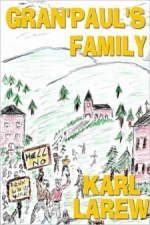
  • GRAN’PAUL’S FAMILY: Book 3 of the PAUL’S THREE WARS TRILOGY by Karl Larew

    GRAN’PAUL’S FAMILY: Book 3 of the PAUL’S THREE WARS TRILOGY by Karl Larew

    Gran’paul’s Family, the third volume of Karl Larew’s trilogy of the life of Paul Van Vliet and his family, as well as the wars he fought in as a member of the U.S. Army, is true to its title. While the first two volumes introduced readers to his family, we were often following Paul’s experiences in WWII and the Korean War.

    Part III, however, allows us to join the family circle, which grows considerably, as families usually do. Many of their experiences are similar to those of most of us, but some are quite unique, especially the musical careers of Paul’s wife Betty and her daughter Rosalie, and the military intelligence exploits of Paul’s nephew Ted Lauterbaugh (whose mother Dottie is Paul’s sister).

    I must describe Larew’s work as a fictional family biography–one that is variously romantic, exciting, cozy and warm, hurtful and cold, tragic and sad, but mostly always interesting although there are always a few plodding times that as a member you just have to get through. Remember, like actual biographies, this fictional one doesn’t have a plot but is a story that weaves together the characters and events.

    The story begins with Ted Lauterbaugh reminiscing about meeting his cousin (by marriage), Rosalie, when they were both 14. He immediately fell in love with this beautiful girl with the satiny red hair–who played the violin, accompanied by her mother, on Christmas Day. Just as happens for most 14-year-olds, their relationship dwindled, in their case, to that of cousins, exchanging Christmas cards at best.

    The novel is a written kaleidoscope of personal connections that span time and datelines across the globe. Paul’s own son Danny, who refuses to be drafted or leave the country, must deal with his family’s military history and find his own way. His protesting against the Viet Nam conflict creates estrangement within the family. Danny becomes the embodiment of the intersecting point of the fracturing that many families faced during this time of upheaval.

    Spying, philandering, homosexuality in a time of appalling repression, NSA sleuthing, the Viet Nam conflict and the 60s protests against it, the Civil Rights movement, Soviet espionage, and the ushering in of psychiatric sessions for those seeking help and happiness with many more story threads of the “Paul” family. Will the family be able to withstand the strains and stresses that the turbulent Sixties force upon them?

    This reviewer isn’t going to give away any more of this remarkable story. You know these people now—their character, their strength. You’ll want to find out how their lives evolve from this point. It is an evolution—with oldsters passing on and youngsters assuming family roles. Karl Larew has an important story for almost anyone to read–to learn and to enjoy.

    Gran’Paul’s Family  is preceded by two other compelling volumes that some may find to be faster paced reads:  Paul, Betty and Pearl (that’s Pearl Harbor and WWII) and  Daddypaul and the Yo-Yo War (the Korean War).

  • Metaphors of Healing by Dr. Harish Malhotra

    Metaphors of Healing by Dr. Harish Malhotra

    One rarely sees a self-help book from a practicing psychotherapist that offers more humor and appeal to the common denominator in all of us than this collection of brief stories: Metaphors of Healing : Playful Language in Psychotherapy and Everyday Life. Dr. Malhotra offers a simple, but brilliant, idea: Use the healing language of metaphor as a therapeutic strategy and a curative approach for daily life.

    Metaphors of Healing organizes metaphors by themes, including “The Daily Grind,” “Dating,” “Being a Better and Happier You,” and “Addiction,” among the 14 chapter titles. For instance, try reading “Is the Left Lane Too Fast?” as a metaphor for slowing down, easing the professional load, and getting reacquainted with our family. Its appeal is in the simplicity of applying the idea toward easing anxiety and cutting back on the “daily grind” most of us know too well. In addition, we gain a visceral sense of how the self-imposed pressure to succeed contributes to everyday unease and unnecessary fears.

    Another feature of Metaphors is how easily one remembers a story, but forgets most of the high-minded advice of a therapist. If the story fits (and most of these have the superb quality of fitting very well) a client can leave his therapy session with an entirely new way of dealing with his or her issue. For instance, he says, “A dead-end road is not the same as a dead end journey.” We can always find another route more effective than the lost cause we thought was our destiny.

    Malhotra’s training in both psychotherapy and behavioral approaches offered flexibility for initially coping with his patients’ various maladies. Shifting to metaphor when confronting dis-ease, he discovered, incorporated an even broader spectrum: healing words from unexpected sources. Who knew a figure of speech could have such transformative powers?

    Malhotra aims to move people beyond their negativity, beyond their holding on to old problems, and even beyond their expectations to achieve a lifestyle free of judgment and criticism. I found his ideas on marriage as mindfulness exercises very significant—he speaks of empathy as the path to marital happiness: “Walking in the moccasins of one’s spouse” contributes to compassion and forgiveness, opening the door to an enduring love.

    The author is not a Pollyanna, an everything-is-beautiful-if only-you employ-a-metaphor to your life issues. Change requires commitment and persistence. We all seek successful relationships, whether we are talking about a difficult boss, an annoying neighbor next-door or our beloved spouse. Malhotra stresses how precious any relationship can be when it is working, even when it is very challenging. The healing power of any relationship blooms only under certain conditions, however: practicing the difficult virtues of restraint and diligence.

    This is not a book to be read in one sitting or all at once. It is one that the reader will find herself/himself picking up again and again taking in a chapter or a metaphor to ponder and, perhaps, adapt. It will become, more or less, a gentle companion that guides and inspires. One will find, on reflection and on rereading, that these simple stories contain deep insight and wisdom. Clinicians and those seeking to increase their understanding of themselves and their fellow humans would benefit immensely from reading Metaphors of Healing.

  • INDIVIDUALLY WRAPPED by Jeremy Bullian

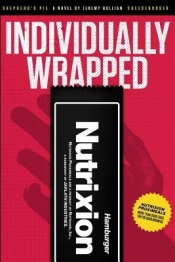
    INDIVIDUALLY WRAPPED by Jeremy Bullian

    Individually Wrapped tells us the bizarre tale of Sam Gregory’s descent over the condensed course of a couple of days. Set in a 21st century futuristic city, technology has permeated every aspect of the city dwellers’ lives. In some ways things are more efficient: cars drive themselves, doors open on voice command, money is exchanged via thumbprints. None of the technologies presented are far-fetched; many exist today.

    However, technology hasn’t made the city easier or safer to live in; traffic problems, vagrants, theft, and serial killers still abound. Workweeks include Saturday; workdays are commonly 10 hours. Sam has integrated his car’s computer system – dubbed Susan – into his home environment to simplify things. Only problem is, Susan is developing her own personality.

    Sam has been given the opportunity to pitch to an important client, Nutrixion, for the ad agency he’s worked at for eight years. Sam won an award for a campaign for a paid toilet system, but hasn’t done much since, and is suffering burnout. His former partner is now his boss: a lumbering, balding, donut- and pornography-indulging man who is growing weary of his subordinate’s slacking. If Sam can’t step up his game, he’s in danger of losing his job, and he knows it. But everything in the universe seems to conspire against his being able to get the job done, and he’s running low on excuses.

    Sam, and his story, is a vehicle for questioning the big-picture elements of life as we know it: Can we achieve a utopian society? How much control can we really gain over our lives, and is perceived control better than none? Are we just bits and pieces in a bigger machine controlled by a greater force? What liberties are we willing to give up in order to be free from mundane tasks and duties? What happens when what we created starts creating?

    Is technology our salvation? Ian, Sam’s coworker, thinks so, and uses it not only for work but for entertainment. He drags Sam out for a night at a club, where the patrons enjoy virtual realities of their own creation, although the alcohol is very real. By now Sam is stuttering intermittently, has headaches and numbness on one side, but doesn’t seem to take any of it as a serious problem; just side effects from a minor car accident and sleeping wrong. He still joins in the fun, and decides to become his spy-movie hero, Victor Nil. The near-comic events of the night continue his downward spiral, although he gains insight into his high-security account, setting off in him a course to take down the product, its parent company, and his agency.

    Sam sees himself as a hero, not unlike Victor Nil, but doesn’t give his plan a lot of due diligence, or pay much attention to his cautioning subconscious, with which at this point he is having out-loud conversations. He is also becoming paranoid, encouraged in part by the culture of his workplace. Self-delusion is an interesting state of mind, because everyone can see it except yourself, as it propels you ever deeper into oblivion, where not even technology can save you.

    An average guy with a college degree, Sam’s search for meaning and significance collide with his need for privacy, intimacy, and revenge, sometimes helped but more so hindered by technology. Individually Wrapped is a cautionary tale about the pitfalls of computers taking over in a modern world, showing how humans might not benefit from its intruding tendrils as much as technology proponents had intended in their quest for a utopian society.

    2013-SomersetIndividually Wrapped  by Jeremy Bullianwas awarded the Grand Prize in the Somerset Awards for Literary and Contemporary Fiction, a division of Chanticleer Reviews International Writing Competitions.

  • FAREWELL to a QUEEN by Don Douglass

    FAREWELL to a QUEEN by Don Douglass

    The sinking of the Queen of the North, a British Columbia ferry, in a remote area of the Inside Passage in 2006, was a commercial, financial, and political blow for the Canadian Government, an ecological disaster for the pristine area in which the boat sank, a personal catastrophe for passengers who lost their vehicles and possessions, and a fatal tragedy for the two passengers who lost their lives.

    The documented events reveal a disturbing lack of crew discipline and accountability, as well as a troubling inadequacy of timely response from Canadian authorities. Only the two crew members on the bridge that night know exactly what happened, and they’re clearly not telling the truth.

    The heroes of this true story are the rescuers from the tiny First Nations fishing village of Hartley Bay who transported and took care of the shocked and freezing travelers.

    This book is a fascinating study of the events before and after the ship collided with an island, followed by an astute analysis of the probable causes for the reason the navigator failed to make a routine course change. The author includes a variety of supporting documents, including photos, a radio log transcript, charts, and a detailed description of the trial that finally took place seven years after the sinking. The author of Farewell to a Queen dares to ask himself, “What really happened aboard the Queen that fateful night.”

    Don Douglass is well qualified to write about this lamentable event and the courageous rescuers who put their own lives at risk to save the Queen’s crew and passengers. Douglass himself has navigated over 100,000 miles at sea, and is an author of guidebooks and charts for the Pacific Northwest. He and his wife, Réanne Hemingway-Douglass, have plied these waters for decades. They have documented and navigated the British Columbia coastal waters and have taught others to do so.

    Douglass doesn’t shy away from asking the hard questions about what might have caused the flagship of the B.C. Ferries fleet to run aground and sink into the deep depths taking two lives with it and putting more in harm’s way.   He returns repeatedly to the fact that the two crew members on the bridge were former lovers. Some may find his account “politically incorrect” or a touch vitriolic. Nonetheless, ferry passengers may find themselves warily eyeing their boat crews and keeping life preservers close at hand after reading this well written and documented account of a modern disaster at sea.

    “When it got near the end, it rose up until the bow was vertical, absolutely pointing straight at the sky,” Captain Henthorne, the Queen’s captain, remembered. “Then, it just went straight down, straight as an arrow, disappeared, gone.”  [fusion_builder_container hundred_percent=”yes” overflow=”visible”][fusion_builder_row][fusion_builder_column type=”1_1″ background_position=”left top” background_color=”” border_size=”” border_color=”” border_style=”solid” spacing=”yes” background_image=”” background_repeat=”no-repeat” padding=”” margin_top=”0px” margin_bottom=”0px” class=”” id=”” animation_type=”” animation_speed=”0.3″ animation_direction=”left” hide_on_mobile=”no” center_content=”no” min_height=”none”][CBC News, B.C.]

     On March 22, 2006, The Queen of the North sank into the depths of Wright Sound, 70 nautical miles south of Prince Rupert, B.C.


     [/fusion_builder_column][/fusion_builder_row][/fusion_builder_container]

  • BURIED THREADS by Kaylin McFarren

    BURIED THREADS by Kaylin McFarren

    Blue and Gold Clue 1st place badgeFrom the alluring book cover depicting a Japanese woman holding a beautiful sword, to the twisty, explosive ending, Kaylin McFarren’s second novel in the Threads series, Buried Threads, takes you on an wild ride that will having you reading long into the night.

    Treasure hunters Rachel Lyons and Chase Cohen, first introduced in Severed Threads, return in this novel, racing against time and overwhelming odds to recover a long-lost Japanese treasure. The Buddhist monk Satoru Yamada, or Shinzo, has hired them to locate a valuable Templar stone embedded in the scabbard of a sword at the bottom of the ocean. The sword is one of three, robbed from the tomb of a prince. Rachel’s employer believes that its return will save the soul of the woman who originally robbed the tomb, and also prevent a catastrophic natural disaster that could kill millions.

    Fearlessly combining the influence of Japanese Manga with elements of romance, suspense, paranormal, and action-adventure, McFarren provides a fast-paced, scary, yet addictive reading experience. The author doesn’t mind bending the rules of craft or genre to present a complex, multi-layered story about fascinating characters – the beautiful yet numb geisha, the obsessed, vengeful Yakuza killer, the Buddhist monk who claims to see into both the future and the past, and of course, the intelligent and talented heroine, troubled by personal insecurities yet strong enough to expertly brandish a sword. As McFarren introduces you to each of these people against the backdrop of modern and ancient Japanese culture, you become hooked, soon kept in thrall of their unfolding stories and fearful of who will still be alive at the end.

    Buried Threads interweaves cross-genre these plot elements in a tale that nevertheless accurately depicts Japanese subcultures. McFarren obviously has done her research on this exotic setting, enriching each page with details of Japanese urban nightlife, modern feminist attitudes, as well as the mindset of a centuries-old warrior culture. Readers who love to learn about foreign locales will enjoy this aspect of the book.

    Because the author takes you so deeply inside the minds of multiple characters that are central to the plot, the back-and-forth among their points of view can at first be distracting. Typically, this would make it harder to connect with the characters. But McFarren draws intricate pictures of multi-faceted people, revealing their strengths as well as their fears and anxieties, so that you feel you know them instantly. The plot complications come fast and furiously, and you meet the large cast of characters quickly enough that you must pay close attention. This reviewer’s advice, though, is to be patient. Before you realize it, you’ll be well and truly immersed in this complex, edge-of-the-seat thriller.

    Buried Threads was awarded a CLUE Award for Steamy/Action Thriller, a division of the Chanticleer Reviews Internationals Novel Writing Competitions.

  • KNIGHT of JERUSALEM by Helena P. Schrader

    KNIGHT of JERUSALEM by Helena P. Schrader

    Knight of Jerusalem by Helena P. Schrader is the first in a trilogy of three biographical novels about the crusader Balian d’Ibelin. It is a story brimming with adventure and court intrigue. Set in the Holy Land after the Christians have won it in the first crusade (12th c.), Schrader’s novel covers a period of history not often visited in fiction.

    Balian was portrayed by Orlando Bloom in the Ridley Scott directed Kingdom of Heaven, but Schrader thought the real story was far more fascinating—the third son of an affluent man in Jerusalem, Balian inherited nothing yet somehow managed to rise to prominence and marry into the royal family. And it is.

    Schrader’s novel opens as Balian’s much older brother, Hugh, dies after falling from his horse. Hugh has raised Balian, and with his last breaths he tells him to go to the court at Jerusalem to make himself, because the king owes him a favor. Once he arrives at court, Balian is offered a position as a riding tutor to the king’s son Baldwin, who has leprosy. The assignment may very well be a death sentence, but Balian cannot in good faith turn it down. Indeed, in Jerusalem, leprosy is considered a mark of holiness, a sign that one has been touched by God.

    Balian provides faithful service to his courageous pupil and prince, whom he admires for his heroic perseverance, but he still yearns for adventure and to make his own mark. However, Balian is ostracized due to his close contact with the leper prince; he is an outsider at court. The only woman who will approach him is Maria Zoe Comnena, Baldwin’s beautiful young stepmother. This is when Schrader brings a fresh new perspective to this period of history with an unvarnished view that she deftly weaves into the subtext of the novel—a woman’s perspective of the subjugation and fettering of females that permeated the medieval times. The author is a scholar of this era and has earned her PhD. in History from the University of Hamburg.

    Intrigue and politics of the court ensue when the king dies suddenly. Balian finds his role at court becoming more vital, as Prince Baldwin takes the throne. When he finally reaches his majority and can cast aside his regent, Baldwin rewards Balian with the position of Constable of Ascalon, a prestigious but dangerous appointment that will require diplomatic skill as well as military prowess.

    As Balian must keep Salah-ad-Din’s forces away from his holdings, the story picks up speed, focusing on military battles and the budding romance between Balian and Maria Zoe, a woman he believes too far above his station to marry. The battle scenes ring vividly of scimitars, clashes of sword upon sword, of armored horsemen and horses charging at each other, and the brutality of combat.

    Before this, much of the novel’s action is summarized instead of immediate, as Schrader deftly covers a long period of time to get Balian to his position of influence and power. Readers will be awarded for their patience though. Aficionados of historical fiction will be pleased with the details that Schrader brings to Knight of Jerusalem making it a jewel to add their favorite reads.

    Schrader is clearly knowledgeable about the time period and ably weaves a portrait of an oft-overlooked figure from history. Her time spent in the Middle East as a diplomat shows in her striking descriptions of places and structures, mores and customs. While she adheres ferociously to historical accuracy of the times, Schrader finds balance with the narrative to keep the reader entertained—no small feat.

    The author brings romance, chivalry, the fury of battles, and the turbulence of the time vividly to life as she lays the ground work for the next two volumes that we hope will indulge us more about the fascinating Balian and his exciting true adventures in this little known time of great upheaval where East meets West and the future of today’s world is shaped.

    The Knight of Jerusalem earned the CHAUCER Awards High Middle Ages First Place Award 2014.

  • THE LAST DANCE by Lonna Enox

    THE LAST DANCE by Lonna Enox

    Lonna Enox’s The Last Dance is a twisty mystery set in small town Saddle Gap, New Mexico. When Sorrel Janes inherits an aunt’s house and art gallery in Saddle Gap, she decides to flee her big city secrets and start fresh. But this doesn’t turn out to be as simple as it sounds—when a young woman is murdered just outside the town bar, Sorrel becomes an important witness after her first night in town.

    Even as Sorrel works to renovate the gallery in time for a Memorial Day opening, complications begin to pile up. Originally intending to work as a local interest photographer, she starts her new career by getting called to yet another crime scene. It seems that murders are thick on the ground in this supposedly placid community.

    As the reader gradually discovers the secrets of Sorrel’s past, her skittish nature begins to seem more reasonable. An up-and-coming television crime reporter in Houston, Sorrel dealt with the less savory elements of society without fear. One day, however, she came home to discover her husband had been murdered. Out of fear that his death may be related to her career, she goes into hiding, assuming a new identity and a new life.

    With help from a friendly local woman who seems to be related to half the town, Sorrel begins to rebuild a life. Her attempts at normalcy are hampered by local sheriff Chris Reed, who is both dangerously attractive and persistent in pursuing Sorrel as a suspect in the first murder. Even as their relationship progresses, Sorrel cannot trust that his intentions are genuine.

    A series of petty crimes on Sorrel’s property as well as her job at the newspaper draw Sorrel deeper into the developing mystery. Has her past followed her to Saddle Gap? Determined not to run from a life she is beginning to discover she wanted all along, Sorrel resolves to stand her ground even in the face of turmoil. She is aided by guidance from her former photography professor, John, her only remaining connection to her former life.

    Charming secondary characters and the antics of Sorrel’s cat Flash add color and depth to the narrative, enhancing the small town feel. While the quick ending may disappoint some readers looking for a more complex mystery, Enox has a deft hand with atmosphere and characterization. This is the first in a new series of mysteries featuring Saddle Gap, and readers will find it a comfortable place to revisit.

    The Last Dance by Lonna Enox was awarded Best Debut Novel in the CLUE Awards for Mystery/Suspense/Thriller Fiction 2013, a division of Chanticleer Blue Ribbon Writing Competitions.

  • SOFT TARGET by John Trudel

    SOFT TARGET by John Trudel

    In this action-packed, rocket-paced, pistol-smart thriller, Soft Target is a harrowing journey involving high level U.S. government and military officials, the NSA, CIA, and FBI, Islamic terrorists, SEALS, NGOs and unexpected allies. Set aside any notions of how conspiracy theories begin: you’ll have a few of your own after reading Trudel’s heart-pumping tale of bio-weaponry, kidnapping, espionage and treason.

    We are first introduced to Mike, a Marine General who suffered great personal losses but an overall victory in Yemen years earlier. The incursion left him in a wheelchair for a time, but he remained useful to the administration. The story is set in an era of a more conservative government.

    President Hale suspects a leak from within his own congress–maybe from someone frequenting the ‘bubble’ for private exchanges. He assigns Mike the task of finding the source of the leak, which is putting an NSA project of high importance at risk. Mike is also tasked to protect the project’s manager, Gerry Patton. Both she and the project, headed by her father, have suffered under governmental bureaus that would just as soon see it, and her, disappear.

    Mike is escorting Gerry from her home when the real action begins, suddenly and shockingly. Although no war is declared, a war is on: it is one that can only be won via intelligence and communication. Not that tanks, fighter planes, helicopters, and guns (some of which are described in detail) don’t play a prominent role in Trudel’s  thriller.

    The Pacific Northwest sets the scene for a carefully planned infiltration of jihadists, picking on Oregon for its lax security and, what some consider, screwball laws protecting minorities from criminal investigation. Gerry’s father is in danger, and little can be done about it. Loopholes and “catch-22s” keep hands tied and responsibilities shifted until hard evidence can allow any action against the suspects.

    Soft Target does not hold back when it comes to exposing bureaucratic nonsense, mountains of red tape and petty frustrations that slow progress in a time-sensitive situation, but are also not limited to the US. No one really trusts each other when they first meet, especially when they are representing different branches of government. Bonds made long ago are still strong, and respect does develop between teams forced to work together. It’s safer not to trust anyone or share any information not absolutely necessary. Gerry and Mike test each other time and again, breaking down solid ramparts in order to work as a team. Even the reader is left out of some intel—sometimes we are in the bubble with the President, and sometimes we are waiting in the wings. But, Mr. Trudel does not leave us in the lurch forever.

    The story is driven mostly by dialogue, some of which delves deep into ancient history, exploring the first uses of intentional bio-weaponry, and thoughts about what really wins wars. The reader needs to pay close attention to detail to follow along in some of the more intense situations, as these details can be easily overshadowed by the whiz-bang actions of a high-consequence military action unfolding in present time.

    The relationships developed in the story are believable, the key players changing both for better and for worse. I grew to appreciate the “short, ugly woman” [fusion_builder_container hundred_percent=”yes” overflow=”visible”][fusion_builder_row][fusion_builder_column type=”1_1″ background_position=”left top” background_color=”” border_size=”” border_color=”” border_style=”solid” spacing=”yes” background_image=”” background_repeat=”no-repeat” padding=”” margin_top=”0px” margin_bottom=”0px” class=”” id=”” animation_type=”” animation_speed=”0.3″ animation_direction=”left” hide_on_mobile=”no” center_content=”no” min_height=”none”][sic] with the abrasive personality and hard-as-nails façade. I was rooting for Mike to be the superhero: kill all the bad guys and run off into the sunset with Gerry, but this is not a predictable story with a predictable ending.

    Soft Target will challenge your beliefs as to what you hear in the news, how events are spun, how perceptions are managed, and even what is moral and ethical when it comes to protecting and defending our country—no matter where on the political spectrum you find yourself.

    Trudel’s Soft Target is a captivating and entertaining cyber-thriller that takes place in a future U.S.A.[/fusion_builder_column][/fusion_builder_row][/fusion_builder_container]

  • THE SHELBURNE ESCAPE LINE by Réanne Hemingway-Douglass

    THE SHELBURNE ESCAPE LINE by Réanne Hemingway-Douglass

    The Shelburne Escape Line begins with MI-9 (British Military Intelligence) announcing “Bonjour tout le monde à la maison d’Alphonse” over the BBC shortwave French language service. The date: January 28, 1944. This announcement was a code for confirming the covert pickup of downed Allied aviators hidden by the French Resistance well within the Nazi occupiers’ patrol range.

    Once you pick up this book by Réanne Hemingway-Douglass, you will not be able to put it down.

    The author attended university in France in 1953. While there, she lived with a French family and heard their amazing stories about the French Resistance.  During subsequent visits, the more accounts were shared with Réanne, the more engrossed she became in the stories about the French Underground with its safe houses for the Allied aviators its members rescued and hid. Réanne also learned of the British Royal Navy’s clandestine pickups of downed airmen, and London’s MI-9 involvement.

    This is not a fictionalized tale of heroics, but one of everyday people who endangered their lives and those of their families, as they answered General Charles De Gaulle’s call to action to regain France and her liberty. And this meant fighting against her occupiers in any way possible. These ordinary people took extraordinary risks in creating an escape organization for the secret evacuation of Allied Forces.

    Escape routes became instrumental as more and more Allied airmen were shot down in Nazi-occupied France. Getting these men back to English soil was more than just humanitarian aid; it was imperative to get these highly trained aviators back into the fight for freedom against the Nazi forces as quickly as possible. We learn that other escape routes had been infiltrated and collapsed due to Nazi-sympathizers.

    The author shares the accounts told to her of the violence committed upon members of the various resistance groups in the Nazi’s effort to infiltrate and destroy them. She tells of the brutal treatment some underwent without revealing their secrets.

    This book is divided into two distinct sections.  Part II deals with a brief history of a small number of World War II French Resistance members and their staggering contributions to the escape and evasion efforts of Allied airmen, as well as the MI-9 agents and French patriots needing to escape to England. The Shelburne Escape Line, although short-lived, was the only such route never infiltrated by the Nazis.

    The author chronicles the selfless giving of assistance by the people who, prior to the war, were bakers, teachers, farmers, and mechanics.  We are reminded of the rationing and scarce food supplies these heroes shared with those they rescued and hid. They did this with the knowledge that, at any moment, their participation in the escape plans could mean their imprisonment in a horrid Gestapo prison camp or their execution as acting as spies for the Allied Forces.

    Part II of the book deals with first person accounts of Allied airmen and their stories of how they were assisted in their escape and repatriation back to England. Several of these stories tell the tale of the airmen from their point of view; about the circumstances of their downing into occupied territory; the hazardous rescues by the French Resistance; the apprehensive time spent in hiding—not knowing if they would be able to escape before being discovered.  The chance of being killed by enemy forces or friendly fire was immeasurable for everyone within the war-torn country.

    We also learn about the harrowing stories of families and children who had their lives turned upside down by the Nazi occupation and the requirements to “work for the fatherland.”  Each of these stories is a well-written account of a small slice of the war and the dangers and hardships, faced and overcome on a daily basis, by average citizens who endured the terrors of war in their own land. These are the unknown and unsung heroes of WWII who were instrumental in securing the freedom we have today.

    As this reviewer stated at the beginning, this is as fast-paced a read as any thriller or suspense novel that I have read. The Shelburne Escape Line: Secret Rescues of the Allied Aviators by the French Underground, the British Royal Navy, and London’s MI-9 is an enthralling and well-researched read about actual events and the real men, women, and children who were involved in them.

    Réanne Hemingway-Douglass has gathered this galvanizing collection of true-accounts, vividly portrayed historical details, and military tactics of these little known, but amazing, slices of WWII history.  Her adept writing reminds the reader of the human elements of war. Highly recommended.

    [fusion_builder_container hundred_percent=”yes” overflow=”visible”][fusion_builder_row][fusion_builder_column type=”1_1″ background_position=”left top” background_color=”” border_size=”” border_color=”” border_style=”solid” spacing=”yes” background_image=”” background_repeat=”no-repeat” padding=”” margin_top=”0px” margin_bottom=”0px” class=”” id=”” animation_type=”” animation_speed=”0.3″ animation_direction=”left” hide_on_mobile=”no” center_content=”no” min_height=”none”][Reviewer’s Note: This book includes:  a documented photo collection, a listing of the author’s interviews and correspondence, a comprehensive bibliography, a glossary of WWII military terms, and pilot accounts of missions flown. It also includes information about the Canadian military war efforts and the French Resistance’s perspectives of WWII. ][/fusion_builder_column][/fusion_builder_row][/fusion_builder_container]

  • “THE BOREALIS GENOME” by Thomas P. Wise and Nancy Wise

    “THE BOREALIS GENOME” by Thomas P. Wise and Nancy Wise

    When technology, genetics, biology, and the quest for eternal life combine, what could possibly go wrong? Quite a bit, it turns out. The Borealis Genome begins as a smooth, ambling tale told through the eyes of some of its characters in vivid detail. Scenes are intricately painted in warm, pacifying colors. However, these scenes are juxtaposed with psychological disconcerting subject matter along with some gruesome and disturbing events. With each turn of the page of this YA/New Adult thriller, the ticking clock speeds up.

    Brutally violent murders are plaguing Philadelphia, perpetrated in zombie-like fashion, mostly by adolescents. We relive a young boy’s torture by two of his own family members before he’s left in a pool to drown.  We see the world through the eyes of an observant 12-year-old boy, Tommy, trying to be tough enough to withstand the rough ‘play’ of the boys he is hanging with. We, the readers, wonder if he’ll meet a similar fate.

    If you listen to the news reports, all these deadly incidents are isolated: There is no zombie-virus; there are no zombies. Meanwhile, Tim has cause to think otherwise. The pursuit of some connection to the seemingly random killings across the Northeast becomes his obsession, involving his fiancée and his best friend via cryptic text messages and secret meetings. Will they find something to link these events together? And if they do, will they be able to do anything about it?

    Dr. Denat is the director of computing sciences at a facility researching cures for Alzheimer’s disease and he is Tommy’s father. Dr. Denat is the mastermind behind an artificially intelligent program that can restore memory function by transplanting those memories to a new “host.” In this way, the company, named Environmental Consciousness Ltd. (E.C.), can sell the means of extending one’s life through an engineered person made from your own DNA and memories, albeit edited – think Eternal Sunshine of the Spotless Mind – but even better. It’s similar in concept to Being John Malkovich – except that you have your own “John Malkovich” after you die.

    Tommy goes happily along with his dad to work, as he has before, and we can see his pride in his father as they enter the research facility. We see the center through Tommy’s twelve-year-old perspective as he fluctuates between being awed by the glass and architecture and his father’s position and then becoming bored when he is reminded by his father to sit quietly while in his office.

    The ancient Mr. Oldham, the owner of the company drops by and invites Tommy to view one of his experiments. Tommy obediently follows him to his lab where he views Dr. Oldham’s experiment, at first, with resignation, then curiosity, and then disgust. Dr. Oldham is pleased with Tommy’s inquisitiveness and patience. Tommy is sweetly naive, but intimidated in the research center’s sterile and laboratory surroundings. However, apprehensive begins to set in as he begins to comprehend what he was just shown by the ancient Dr. Oldham.

    We wish Tommy would have more apprehension—much, much, more.

    From here the story takes off at breakneck speed as we learn about the Dr. Oldham’s secretly intended purpose for the research. And he believes Tommy might just be the missing element that he has been searching for to achieve his own personal goals for his research.

    The reader is given glimpses of E.C.’s rosy marketing efforts to potential elderly clientele Jurassic Park-style – from a moving tram behind a protective barrier. What they don’t see is that sometimes biology throws in a monkey wrench by mutating its viruses, computer programs always have bugs, and human error, and other unpredictable elements come into play. E.C.’s artificially intelligent program, like HAL, becomes a self-protective force corrupted by the uploaded consciousness of many minds. Tim’s friends end up fighting not only for their own lives, but for the future of humanity.

    The Borealis Genome takes on a unique perspective of the zombie vs. humans’ tale. For it is a tale of the ancient quest for eternal life, but one using the latest in high-tech, state-of-the-art scientific research that creates its own type of Black Death.

    Tom and Nancy Wise’s children contributed to the book’s storyline; they provided the clever cover art and, undoubtedly, to the text messaging most adults would find undecipherable but adds credence to the story to YA and New Adult readers. Adults who also enjoy a good zombie story with a twist (that’s a little gory, but also intellectual) will enjoy this YA thriller. It might, just might infect your own thoughts and memories more than you might realize….

     The Borealis Genome won  the Grand Prize Award in the Dante Rossetti Writing Competition for YA and New Adult Fiction, a division of Chanticleer Blue Ribbon International Writing Competitions.