Category: Reviews

  • THE WATCHER by Lisa Voisin

    THE WATCHER by Lisa Voisin

    Mia Crawford is a vibrant, outgoing high school student in West Seattle with a close circle of friends. She shares most things in her life with them, but not the strange occurrences that keep her guessing her own sanity: cloudy dog-like creatures with menacing red eyes that chase her, voices cloaked in static, flickering lights, and even real people no one else sees. Mia’s family isn’t around much – Mom works a lot, her dad has a different life out of state, and her brother is away at college. She feels everything with deep intensity, as the smallest events trigger emotional responses landing on both ends of the spectrum.

    Two new boys arrive at her high school this year: the first is mysterious Michael, who experienced death after an accident but came back. He is beautiful, strong, and seems to show an interest in Mia, always showing up at just the right time. She quickly develops strong affections for him, but he does not reciprocate her feelings. Instead, he pushes her away, disappointing and confounding her, giving rise to her insecurities.

    Damiel, the other new boy, shows up dashing and debonair on his vintage motorcycle. All the girls swoon under his attention, and he pursues Mia persistently. Michael warns her to stay away from him, and she really doesn’t like Damiel. However, she is inexplicably drawn to him, in spite of being in love with Michael.

    Mia loves the study of ancient civilizations and literature. She lives out her painful crush through a classroom reading of Shakespeare’s Hamlet. Sometimes she has visions of another world, seeing at times a meadow, a loom, and large birds circling in a fight to the death. She also knows she has some kind of connection with Michael, and that he and Damiel have a history. But nothing could prepare her for knowing the truth of that history, and her role in it.

    Things become heated when Michael and Damiel confront each other in an other-worldly fight over Mia. When she finally discovers the truth, it sends her on a soul-searching journey of love and redemption, and into a supernatural battle of good and evil, involving angels and demons.

    Voisin transports us visually into Mia’s world with rich details, from places as mundane as a wall locker in a school corridor, to a thrilling winged flight high above the city. We ache with Mia for Michael’s touch when he is near, and feel Michael’s pain for resisting.

    The mundanity of high school life and petty spats gives way to an other-worldly realm with life and death significance. Mia and Michael have a tragic past that occurred before recorded history, resulting in Mia’s early death and Michael’s fall from his fold into hell and guilt-ridden remorse. Only Mia’s strength can save them in this lifetime; is she up to the task?

    The author draws from principles of many different sources, from the Bible and the Quran to Tarot cards, giving none any greater importance than the others, and without judgment.  The Watcher will keep you guessing, and feeling, and leave you with great hope.

     The Watcher by Lisa Voisin was awarded the Grand Prize Award for Paranormal Novels, a division of Chanticleer Reviews Novel Competitions.
  • BY the SWORD: SPOILS of OLYMPUS by Christian Kachel

    BY the SWORD: SPOILS of OLYMPUS by Christian Kachel

    By the Sword is an atmospheric and character driven coming-of-age story that takes place in the years immediately following the untimely death of Alexander the Great. The news of his death traveled quickly throughout the land. He was born to the King of Macedon and was tutored as a noble and later by Aristotle. When he died, his kingdom was one of the largest the ancient world had known—more than 2 million square miles. His unexpected death left a vacuum of power and chaos. Civil wars and power grabs from Alexander’s generals tore this great empire apart. This is when Kachel’s enthralling Hellenic military epic begins.

    Andrikos grew up during Alexander’s rule. Now everything has changed. The story begins in his village when he is an errant adolescent more interested in his next drink or round of sex. He is in no hurry to have the responsibilities of an adult. Kachel illustrates the ages-old influence that peers may have on young men and how they can affect them and their actions—changing their lives forever—for better or for worse. Young Andrikos hangs out with the wrong crowd and is swept up in their illicit behaviors and actions. He finds that he must flee his family and his home to save himself from an unintentional crime—forever changing him and his life.

    Andrikos has no real plans for his life. Suddenly he finds that the only option he has is to join the armies of Alexander to escape his past. However, he was unprepared for the brutal conditioning and the heartlessness of the recruiters whose job it is to ferret out the weak from the strong. Kachel vividly portrays these horrific and brutal experiences through the eyes and heart of Andrikos as he undergoes the physical and mental conditioning that is forced upon him and his fellow recruits. There is no turning back. The only way out is death or fight to live another day.

    Kachel captures what could happen when trained killers are left to their own devices and their own greed and bloodlust without guidance and a chain of command in this satisfying read. He also brings forward the importance of having a mentor can be to the young and inexperienced. Vettias is a confident and self-reliant warrior with a complicated background in gathering intelligence. He recognizes potential in Andrikos and takes on the mantle of becoming his mentor and teacher. Under Vettias’ guidance, Andrikos develops and matures into more than a foot soldier as he learns of honor and integrity, of treachery and deceit, and of friendship and loyalty.

    By the Sword is a well-researched military historical epic where Christian Kachel, the author, portrays the effect that chaotic, warring times have on women and children, on the weak and infirmed, and the men who are caught up in the violent and ruthless swells of battles, and then the heartrending aftermath that follows even on the heels of victory.

    One cannot help but think of the millions of young people who are going through their own coming of age throes in the heat of battles and skirmishes that are taking place at this very moment. Kachel, who has served three tours of duty in Afghanistan and Iraq, writes with compelling adroitness about what Andrikos experiences as he makes his journey from an oblivious youth to a young man whose eyes have been opened to the cruelty of war but still manages to maintain his empathy for his fellow man and holds on to his humanity.

    Be warned that Kachel does not whitewash the horrors of war, nor the rape and brutish treatment of women and children, nor the screams of pain and the blank eyes of starvation in the telling of his epic.

    Christian Kachel’s By the Sword is a fine debut novel that explores the little known, but fascinating, age of post-Alexandrian Greece. Its intriguing interwoven storylines of a young man’s coming of age, of alliances and espionage, and of harrowing battles scenes will be sure to captivate readers and keep them turning the pages even as they wince and grimace with Kachel’s no-holds- barred descriptions in this well-researched historical narrative. We look forward to reading more from Kachel about what awaits Andrikos in his next adventure.

    Historical Fiction: Military, Classical Age
    Targeted Audience: New Adult, military history buffs, Classical Studies

  • IN a VERTIGO of SILENCE by Miriam Polli

    IN a VERTIGO of SILENCE by Miriam Polli

    Debut novelist Miriam Polli has written an interwoven, multi-generational story, spanning four decades from the 1920s to the 1960s, of a grandmother who is a first-generation Polish American immigrant, her daughters, and her granddaughter.

    The novel moves back and forth in time, juxtaposing the granddaughter Emily’s story with those of her mother, her aunts, and her grandmother. As you are drawn into the lives of each of these women and the choices they made, you slowly begin to realize the impact on each successive generation and in particular, on Emily.

    As the grandmother is dying, a terrible family secret, one that dates from when Emily was just six weeks old, comes to light. How will this secret affect Emily’s life, once the truth is revealed?

    This novel deals with difficult subjects, such as alcoholism, abuse, and mental illness, which can damage a family in ways that only become clear after decades. It is an intimate, touching portrait of the daily lives of resilient women who are forced to cope with these problems during a time when such diseases were little understood.

    It is also a heart-warming, emotional depiction of the relationship between the matriarch of the family, the grandmother Marishka, and the granddaughter Emily. Polli has gifted us with exquisitely drawn characters who instantly become real people to us, drawing us into the beauty and tragedy of their lives.

    Readers who enjoy novels spanning several generations of a family, providing glimpses into its collective consciousness, will enjoy this lovingly rendered story with its themes of cruelty, loss and ultimately, tenacity. Anyone who has experienced the fractures that can occur over time in a family will be deeply moved by the stories of these strong, intelligent women.

    In a Vertigo of Silence by Miriam Polli resets the bar of excellence for debut literary women’s fiction.

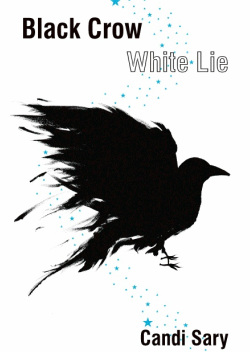
  • BLACK CROW WHITE LIE by Candi Sary

    BLACK CROW WHITE LIE by Candi Sary

    After years of moving from motel to motel with his alcoholic mother, Carson Calley has grown old enough to start questioning his gypsy life. The stories he’s been told – father died a war hero, a past life as a medicine man – slowly unravel as the 13-year-old begins to spread his wings.

    However, of all his mother’s stories (I’d wouldn’t lie,” she assures him, “the gods … plant things in my head”), Carson knew one was true – he did possess the gift of healing. Since his earliest days, his hands would fill with heat and then emit tiny “stars” that soothe his mother’s tortured heart and frequent hangovers. Yet despite this power, Carson also experienced rages that he can’t control, an anger seated in his mother’s frequent long absences. To distract himself, he grabs his skateboard and wanders the streets of Hollywood.

    Author Sary adroitly captures the real Hollywood: streetwalkers, grit and grime, tattoo parlors and head shops and gangs of idle youth. She also portrays its denizens free of stereotype and with a lyric eye: Carson’s mother “had a worn-out kind of beauty – like a thirsty flower.” Of Carson’s few friends, tattoo artist Faris “looked like a live page from a comic book,” while Casper, the albino owner of a local head shop, “looked like he had a light bulb inside of him.”

    Faris gives Carson gruff, fatherly advice, world-weary insight into his mother’s issues and stories, and the boy’s first tattoo: a small black crow to remind him of his father, who, he’s told, killed a crow with his bare hands. Casper offers something else: when Carson heals his deaf ear, the head shop proprietor sets up a back room where the boy can practice healing.

    Accepting her son’s readiness to heal, his mother arranges for him to work with a mentor: Lolo, a healer and an actress. Unfortunately, Lolo digs a little too deep into her part. She puts the idea of raising the dead into the teen’s mind, and he immediately decides to fly to Washington, D.C., and bring his father back to life. He needs to earn some money first, though, so in the meantime, he heals people during the day and skateboards with a gang of stoner kids at night. At school, a classmate, Rose, torments his heart. It’s a tenuous existence, but it’s all life offers Carson.

    And it doesn’t last. His mother’s drinking increases as her longtime boyfriend, Jackson, toys with her heart. When she goes into rehab, Carson questions the truth of all she’s told him. Lies begin to unravel. Carson makes the trip to D.C.’s Cemetery of Heroes, but what he finds is more painful truth, followed by an even greater shock when he returns home. Carson’s faith in all he knows is shaken to the core. Can the healer heal his own heart?

    A writer with a casual but empathetic voice, Sary succeeds in portraying teen angst without melodrama, in depicting compassion without sentimentality, and in creating a world of characters on the margins of society whose depth and complexity outshine any Hollywood hero.

    Black Crow White Lie by Candi Sary earned a First In Category position in the highly competitive Dante Rossetti Awards for Young Adult Fiction, a division of Chanticleer Reviews International Writing Competitions.

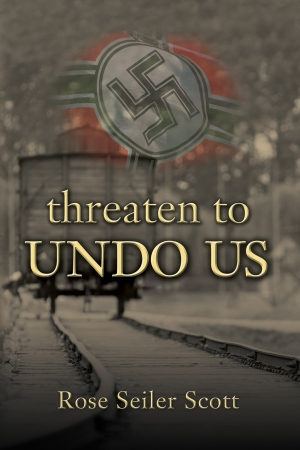
  • THREATEN to UNDO US by Rose Seiler Scott

    THREATEN to UNDO US by Rose Seiler Scott

    Born to an ethnic German family in Poland, Liesel Bauer is raised to appreciate the complex cultural differences of her tight-knit rural farming community. Friendships between families are generational, forged in the spirit of cooperation and extending back for centuries. But when politics turn to war Liesel learns that the bonds of shared lives are easily severed.

    Liesel’s story spans nearly three decades – from the time of the Bolshevik reprisals of 1919 through the aftermath of World War II. Her early years take place during a period of political calm, thus enabling the reader to follow Liesel’s growth from a clever and loving child to shy teen and, ultimately, to a woman who draws strength from both her faith and from her role as wife and mother. It’s with this strength that she will arm herself for the times ahead.

    As Hitler gathers his supporters and builds a case for war, Liesel’s town is cleaved in two. Neighbors lose trust in one another and friendships are dissolved.

    For the thousands of German families that have the foresight to leave Poland, an exodus is set in motion. Knowing no other life, Liesel and her family stay and she shows us that the bravest actions in war are rooted in the routines salvaged from everyday life.

    “Threaten to Undo Us” is a novel rich with meticulous historical detail mined from both primary and secondary sources. From the descriptions of daily farm life and cultural customs to the price that shifting political loyalties exacted on the war’s victims, the reader is immersed in a story that rings true on multiple levels.

    Author Rose Seiler Scott has delivered a thoughtful and vivid picture of the plight of ethnic Germans living in Poland during and after World War II. Caught between their birthrights on Polish soil and the call of the German fatherland they were stripped of their human rights and became refugees within their home country.

    Through the struggles of one woman and her family the author has crafted an homage to the millions of ethnic Germans, once living in Poland, who lost their property, their freedom and, in many instances, their lives. With a literary sleight of hand this quiet narrative deftly guides readers outside of their comfort zones, demanding that attention be paid to the follies of the past.

    [Reviewer’s Note: Historical Sources and Quote References are included.]

  • RAGGEDY MAN by Clyde Curley, The CLUE Awards Grand Prize Winner

    RAGGEDY MAN by Clyde Curley, The CLUE Awards Grand Prize Winner

    Detective Matt Toussaint is one of Portland, Oregon’s finest. Experienced and dedicated to the job of solving the violent crimes that plague his beloved city, his case clearance rate is one of the best. Because of his success, Toussaint is regularly asked to partner with and train new homicide detectives.

    As his latest murder investigation begins, he’s been assigned yet another new partner, Detective Missy Owens. Smart and known to be a rising star in the police department, Missy is nonetheless inexperienced at homicide investigations. Toussaint has his hands full, educating Missy about crime scene protocol while puzzling through the crime scene evidence.

    The murder victim, Ben Foeller, presents an intriguing contradiction: he is clean and neatly dressed, though his clothes are old and worn. His backpack contains literary works by some of the world’s famous writers, but Toussaint finds a vial of crack cocaine beneath his body. Is Foeller just a recent addition to Portland’s homeless community? Or was he under the bridge where his body was found for another reason, such as dealing drugs? And given that he’d recently traveled back to Portland from the East Coast, how does that connect with his murder in Toussaint’s fair city?

    Though the case appears at first glance to be a fairly typical crime associated with Portland’s homeless community, it quickly becomes apparent that the murder may have been committed for far more complicated reasons. As Toussaint digs ever deeper into the victim’s life, more contradictions arise. The cast of suspects is equally intriguing and includes members of Foeller’s own family, who are wealthy and influential, as well as a mentally disturbed homeless man whom Ben Foeller befriended. While some story elements reveal themselves logically as the police investigation unfolds, other details seem almost serendipitous, illuminating how simple circumstance can affect the outcome of any murder case.

    Mr. Curley has written an engrossing debut novel that immerses the reader in the lives of the characters and the city they inhabit. His story world is one that you don’t want to leave behind. His characters are fully-realized, living and breathing human beings struggling to make their way through days complicated by the best and worst of the human condition, and his writing is exquisite in its detail. I was disappointed when the book ended, and I am happy to know that Mr. Curley has written a second novel in the Detective Toussaint series titled A Cup of Hemlock. [fusion_builder_container hundred_percent=”yes” overflow=”visible”][fusion_builder_row][fusion_builder_column type=”1_1″ background_position=”left top” background_color=”” border_size=”” border_color=”” border_style=”solid” spacing=”yes” background_image=”” background_repeat=”no-repeat” padding=”” margin_top=”0px” margin_bottom=”0px” class=”” id=”” animation_type=”” animation_speed=”0.3″ animation_direction=”left” hide_on_mobile=”no” center_content=”no” min_height=”none”][Read Chanticleer’s review]

    Raggedy Man by Clyde Curley was awarded the CLUE Awards Grand Prize for Best Suspense/Thriller/Mystery Novel. The CLUE Awards is a division of the Chanticleer Reviews 2013-ClueInternational Novel Writing Competitions.
    [Editor’s Note: Clyde Curley’s  novels are prodigious—yes they come in at more than 500 pages, but you will be wishing it were longer—and are page turners that tackle and explore the big ethical and societal issues of today.  Curley’s deft use of murder mysteries to microscopically explore society’s ethical issues is nothing short of brilliant. Highly recommended.]

     [/fusion_builder_column][/fusion_builder_row][/fusion_builder_container]

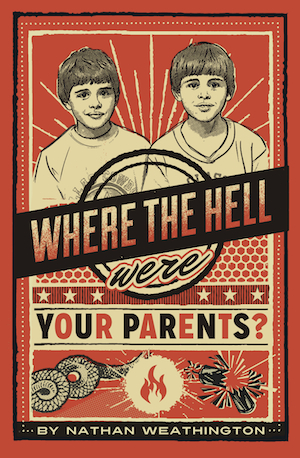
  • WHERE THE HELL WERE YOUR PARENTS? by Nathan Weathington

    WHERE THE HELL WERE YOUR PARENTS? by Nathan Weathington

    The folks in Bremen, Georgia will never forget 1979, the year the Weathington Boys came to town. The twin, sweet-looking seven-year-olds Nathan and Brian, take up residence with their parents in the Southern hamlet. Their father was the local high school’s football coach (in the South, practicality a priestly position) and their mother believed, apparently, that her boys could do no wrong.

    The Weathington mini-scofflaws and their pals quickly learned how to put the freedom of a long, hot summer to good use. And so begins, “Where the Hell Were Your Parents?” by Nathan Weathington

    Together, the Weathington Boys, tested the local limits of propriety and patience. The stories of their practical jokes are still repeated almost thirty years later in the author’s hometown as gospel truth. Plastic snakes and firecrackers quickly gave way to more outlandish and daring means of raining chaos with their ‘high stakes’ practical jokes. What would begin as a practical joke would have to be upgraded to the next level, as each new prank bore the responsibility of out-demolishing the previous one. Ah, this is definitely good ol’ boy humor. Indeed, the reader will only need to flip to page 58 to find a recipe for making a serviceable grenade from shotgun shells. And, fast-forward if you dare, to page 141 for directions into concocting the ultimate “sh*t bomb,” complete with authoritative help on selecting the proper level of viscosity for maximum effect. Mayhem and madness of epic proportions would ensue whenever Nathan and Brian, along with their partner-in-crime, Ray “Corndog” Womack, the kid who would drive the getaway car, would decide that things in the small town needed stirring up. If a TV show were to be made about these clever and delinquent boys, it would be a mash-up of “The Red Green Show,” “Mythbusters,” and “Dukes of Hazzard.”

    These outlandish hijinks are told by the author with stand-up candor, great witty humor and at least a tongue-in-cheek sense of self-deprecation. The scenes in which he, his brother Brian, and Corndog played out their ‘feral’ youth pranks have a palpable, you-are-there believability that will have you guffawing as you shake your head and wonder.

    And, yes, the author, Nathan Weathington swears the stories are the genuine original truth. You just can’t make some of this stuff up. When he would tell his wife about one of the infamous pranks, she would consistently ask him (and I quote the author), “Where the hell were your parents?” It is a question that he gets asked repeatedly by more folks than just his wife, hence the title of this hilarious work (as long as you weren’t on the receiving end of the pranks).

    Somehow, the boys did not end up in the county jail. Nathan graduated from Auburn with a Civil Engineering degree and a M.B.A. from Victoria University, B.C. Now the father of two young boys, Nathan also addresses another subject that he now takes as seriously as the pranks he used to pull back in the day: parenting. Embracing the nature versus nurture debate, he favors the former, as its laid-back parenting style being more in harmony with his “let ’em go out, get some cuts and bruises and learn about life” upbringing. As such, he is openly contemptuous of the current trend toward ‘helicopter parents’ who smother their offspring.

    In this book, his first, Nathan Weathington makes a good case for himself as a published writer and exceptional humorist, and I find most of his outspoken observations to be both substantive and relevant to the times. I’ll thank him now for some of the most gut-wrenchingly painful laughs I’ve ever had.

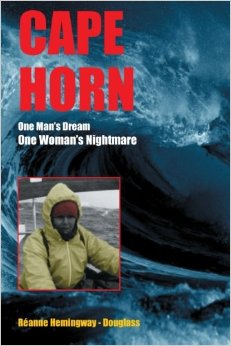
  • CAPE HORN: ONE MAN’S DREAM, ONE WOMAN’S NIGHTMARE by Réanne Hemingway-Douglass

    CAPE HORN: ONE MAN’S DREAM, ONE WOMAN’S NIGHTMARE by Réanne Hemingway-Douglass

    In Cape Horn: One Man’s Dream, One Woman’s Nightmare, Réanne Hemingway-Douglass vividly recreates a sailing voyage in which she and her husband Don set out to round Cape Horn. As the reader discovers, they never quite got there. Meanwhile, Hemingway-Douglass shares the heady magic of starlit nights and breathtaking dawns, grueling and toilsome days, emotions ranging from joy to absolute terror, and a determination not to give up hope when all seems lost.

    Situated on the southernmost tip of South America, Cape Horn is surrounded by some of the most treacherous waters on the planet due to its gigantic waves, lurking icebergs, strong currents, and high winds.  The Panama Canal was built at huge expense as a way to avoid Cape Horn. To this day, the Horn is a dangerous challenge for even the most experienced yachtsmen.  The author’s husband, Don, had dreamed all his life of rounding the Horn. Réanne Hemingway-Douglass knew this when she married him, and dutifully agreed to accompany him as crew.

    Five hundred miles northwest of Cape Horn, the Douglass’s 42 foot sailboat, Le Dauphin Amical, was pitchpoled by a monster rogue wave (more than 80 to 100 feet high) in a Force 11 storm. Hemingway-Douglass and her husband spent the next 42 days struggling to reach safety aboard their crippled vessel. Surviving each day was a miracle, a true adventure in living.

    In recounting their story, the author broaches the love-hate relationship of a ship’s captain and its crew. Captains are solitary humans driven by their own goals, agendas, and methods. The captain is the one who must make the hard decisions—no matter how difficult, dangerous, or demanding they are for the crew.

    Don Douglass, captain of the Le Dauphin, was no exception. Fortunately, he was also highly competent, extremely driven, and unrelenting—all characteristics required for survival in dangerous situations.

    A novice sailor, Hemingway-Douglass discovered that Don’s role of captain superseded his role as her husband and lover—for better or for worse.  I know of no other nautical book that accurately and honestly portrays this transformation.  It is a forthright perspective about life onboard that all sailors, captains and crews, should acknowledge before setting sail together.

    The author passionately captures and vividly describes her months at sea with her husband, her captain, in this page-turner true adventure that tested their endurance and their marriage. Highly recommended.

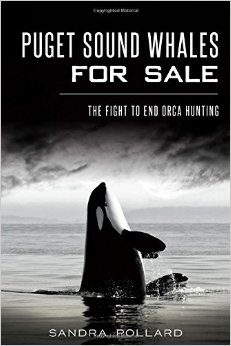
  • PUGET SOUND WHALES FOR SALE: The FIGHT to END ORCA HUNTING by Sandra Pollard

    PUGET SOUND WHALES FOR SALE: The FIGHT to END ORCA HUNTING by Sandra Pollard

    This is the history of two parallel and competing movements involving the beautiful Puget Sound orcas. One is the orcas-as-commodities commercial movement to capture the killer whales and sell them to marine parks all over the world, where they are kept in small pens and trained to perform for public amusement. The other is the growing appreciation of both scientists and the general public for orcas as intelligent, sensitive, family-oriented wild creatures deserving of protection.

    Packed with poignant details, such as a description of captive orcas in Seattle and Vancouver, B.C. talking to each other via a phone call, and reports of newly captured orcas crying so loudly and mournfully that one man said his cat tried to hide under a chair to get away from the heart-rending sound are accounted for in this expose of these cruel practices for the sake of entertainment. The brutality is painful to read about—when the first captures took place, the hunters used harpoons and wire nets to catch the orcas. Later, explosives were thrown into the water to chase the whales into a net. Needless to say, many orcas died during the capture process, and most who survived to be sold into captivity in small pens didn’t live long.

    But as the attendance and profitability of marine entertainment parks exploded, so did the protest movement to stop the brutal practice of capturing whales. Government agencies clashed, with the NOAA Office of Protected Resources enacting the Marine Mammal Protection Act and establishing rules to protect the orcas, while the National Marine Fisheries Service granted “economic hardship” exemptions to SeaWorld Inc. to capture even more whales. Scientists and commercial entities argued over the number of killer whales in existence. Soon it evolved into a media blitz and a court battle, with the state of Washington against the Feds from Washington, D.C. and SeaWorld to stop the practice of capturing orcas.

    Fortunately, the conservationists prevailed and today the orcas of Puget Sound swim free, their number sadly decimated after a decade of captures and killings, and now their small population threatened by human over-fishing and pollution.

    As Pollard points out, killer whales in other locations such as Iceland still face the danger of capture, and orcas are still penned up in amusement parks and forced to perform for entertainment.

    When are wild animals a resource to be harvested for profit? And when do they deserve to be protected from harm? When does capture of a species become kidnapping, training become torture, and captivity become imprisonment? When does the death of a wild animal at the hands of a human become murder? Readers will find themselves pondering these questions as they explore the history presented in this meticulously researched book.

  • WHERE the BONES are BURIED by Jeanne Matthews

    WHERE the BONES are BURIED by Jeanne Matthews

    Waiting for the other shoe to drop and looking over her shoulder is what cultural anthropologist Dinah Pelerin feels like she has spent the majority of her adult life doing. With a plum new job at the university in Berlin and Thor Ramberg, the James Bond-like Norwegian cop sleeping next to her, there should be plenty to keep her happy. And she is ready for a new lease on life.

    However, Dinah’s new found happiness flies out the door when she literally opens it to Swan Calms, her Seminole Indian mother, who has a tomahawk to grind with her ex-husband’s German business partner. The fact that her ex got an early ticket to the happy hunting ground in the sky or that she has no valid claim to the pile of money the partner has stashed doesn’t deter Swan.

    Armed with a gun and a half-baked plan Swan is intent on getting “her share” and she didn’t show up on Dinah’s and Thor’s doorstep alone. She’s managed to drag her former arch enemy and current sidekick, Margaret, along for the ride. Tension between the two older women immediately ratchets-up, leaving Dinah to wonder what planets must have collided to bring Margaret, also an ex-wife of the same drug-dealing man, and Swan together. With a pathological liar for a mother and murder in Margaret’s background, the outlook isn’t looking so good.

    Swan’s plan turns to blackmail, putting everyone’s life the line. Then the plan turns deadly and Swan becomes the focus of a murder investigation. Genetic ties and misplaced loyalties press Dinah to channel her inner warrior to track down the evidence needed to exonerate her mother. But what if the evidence proves her guilt?

    Secrets, lies, and betrayal weigh heavily in this fifth installment of the Dinah Pelerin series. And, Dinah knows well that the cruelest lies are those of omission. Like Dinah, each character in this rich, quirky cast has a story to tell but their truths rest dangerously below the surface. Dinah’s hunt for the killer tests her resolve and forces her to question her own truths. By releasing the secrets of her past, Dinah gains a new level of strength and confidence. Her final hurdle is one of trust, and readers will root for her as she grapples with a long-overdue leap of faith.

    With a strong sense of setting, author Jeanne Matthews invites the reader to travel vicariously with Dinah while she navigates her way through the sights, sounds and history of Berlin. As Dinah delves deeper into the city, the reader becomes privy to the eccentricities of a European sub-culture in love with the Native American past, and to the darker side of the antiquities trade.

    Where the Bones are Buried contains a large cast of characters, some fun and peculiar, some dark and tortured, all of whom have a hidden agenda. While the associated subplots are intricate, “red herring” aficionados will savor the challenge of bringing together the myriad clues of this clever and complex mystery. Matthews has, once again, crafted an entertaining, and, at times, humorous mystery that will have mystery readers enthralled.