Category: Reviews

  • The GREAT SYMMETRY by James R. Wells, a Science Fiction Thrill Ride

    The GREAT SYMMETRY by James R. Wells, a Science Fiction Thrill Ride

    At the dawn of the 24th Century, seven corporations or “families” known as the Sisters dictate every aspect of human life. “The Spoon Feed” spits out the latest curated news while Marcom, a marketing communications group, composes “The True Story,” their version of reality for public consumption. Tight control of information is necessary for total corporate domination of all planetary enterprises and the Sisters are willing to go to extreme measures to maintain their stranglehold on humanity.

    Driven by a thirst for new information, exoarcheologist Evan McElroy makes a discovery that takes him outside of the perceived safety of the “True Story” and hurls him into the nearest glome, a wormhole-like space portal, where he runs for his life.

    His discovery, an ancient artifact from the extinct Versari race, contains data with the potential to dismantle the control of the Sisters and destroy the carefully crafted society they’ve created. A discovery worth killing for.

    From the first sentence to the last, The Great Symmetry is a science fiction thrill ride. Opening with Evan in the crosshairs and missiles of Affirmatix (a family of companies within the Sisters), he is forced to take a leap of planetary faith. Evan sends out a final coded message then, with the artifact safely tucked into his EVA suit, he steps out of his runabout craft and propels himself into deep space to escape obliteration by the Affirmatix.

    With a dwindling oxygen supply his only hope is that expert pilot and longtime friend Mira Adastra will decode his message before death or Affirmatix takes him. But Affirmatix is already targeting all of Evan’s known associates and Mira has had her own run-ins with the Sisters. It’s only through the unlikely help of Evan’s ex-partner, Kate DelMonaco, that any of the three have a chance to make it out of Evan’s giant leap alive.

    In this stunning debut novel, James R. Wells has assembled a great cast of interesting and complex characters embedded in a well-planned dual narrative. Pitting the infoterrorists – seekers of reality and truth – against the corporate, profit-before-people decision makers of Affirmatix creates a dynamic “good versus evil” scenario that allows for a deeper understanding of the motivations that drive each side. The shifting narrative also enables the reader to travel between unique environments that reveal rich and clever world-building components.

    With its Kafka-esque view of an escalating, dominant corporate presence, James R. Wells’ The Great Symmetry echoes the timeless social messages of truth, freedom and sacrifice embraced by science fiction greats like Ray Bradbury, Robert Heinlein, and the author’s own great grandfather H. G. Wells. Its powerful premise gives voice to the perils and challenges of our current society and reminds the reader that even the smallest person can change the world. A great read!

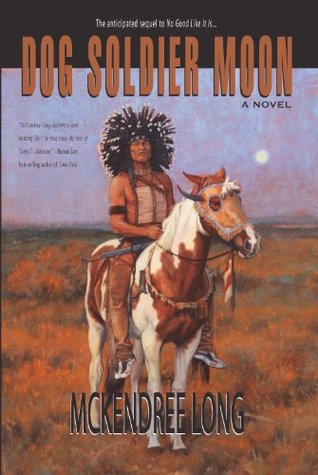
  • DOG SOLDIER MOON by McKendree Long – Historical Post-Civil War Western

    DOG SOLDIER MOON by McKendree Long – Historical Post-Civil War Western

    In this second novel of McKendree Long’s Western trilogy, the adventures of Thomas “Dobey” Walls and Jimmy “Boss” Melton continue, taking in the turbulent post-Civil War years on the Western frontier. An unforgettable read!

    The year is 1866, and the Gray Army has long since surrendered to the Yankees. Dobey and Boss’s friend, Jimmy Ridges, having recently ridden with General Stand Watie’s Confederate Cherokees, travels to Canadian Fort in north Texas, hoping to meet up with his sweetheart Amanda Watson. Along the way, Jimmy spends the night in a Cheyenne hunters’ camp and receives a gift from Chief Black Kettle, a woman named Serenity Killer. Aptly named, the young Cherokee has the potential to cause Jimmy all manner of problems with his lovely bride-to-be.

    Thus McKendree Long begins his second novel, Dog Soldier Moon, reuniting readers with the memorable characters of No Good Like It Is. We ride along with Dobey and Boss and their families as they struggle to make a life for themselves in post-Civil War Texas. Back East, the war may be over, but out West, resentments still run high. Divided loyalties during the war have now hardened into feelings of anger, resentment, and betrayal. Memories of wartime atrocities and injustices are festering wounds in the mind of Boss Melton and others.

    As with No Good Like It Is, Long goes far beyond the simplistic notion of the Civil War as told in American history texts to accurately portray the daily challenges faced by homesteading families, freed slaves, American Indians robbed of their ancestral lands, and ex-soldiers who face the disrespect of the Union army. Heart-warming and at times hilarious adventures are juxtaposed with gritty and emotionally wrenching moments such as Custer’s 1868 attack on Chief Black Kettle’s Cheyenne camp at Washita.

    In Dog Soldier Moon and its prequel No Good Like It Is, author McKendree Long displays a natural gift for storytelling that will delight aficionados of the Western genre and have them anxious to read the next in the series.


  • WAITING FOR LOVE by Alexandra Maria Proca – Collection of YA Short Stories on Contemporary Issues

    WAITING FOR LOVE by Alexandra Maria Proca – Collection of YA Short Stories on Contemporary Issues

    Waiting for Love is a collection of brief short stories by 16 year-old Alexandra Maria Proca. All told, there are eleven short stories, most about two pages, that cover topics ranging from war to Alzheimer’s disease. No matter the subject matter, Proca’s varied stories told from creative perspectives and are very original. The central theme for the collection is that the stories follow a similar pattern and end with a series of rhetorical, thought-provoking questions.

    A standout story is The Rules, a tale of a man with amnesia in a dangerous wilderness and the lengths he must go to in order to survive. There is some nice writing throughout, particularly description, as when Proca describes, “His innocent voice melts into my heart like as the soft bread rolls would sizzle with butter during our Sunday family gatherings.” Proca’s one longer story, the collection-ending The Fight, introduces more dialogue and delves into character with greater depth.

    Proca tackles these subjects with the fervor, but the brevity of her stories does not allow for much depth. Several of the stories have real potential and could be served well by a deeper exploration of their themes at greater length. The subjects she tackles are ones of such complexity that they cannot possibly be addressed satisfactorily in only a few pages. Perhaps these short stories are studies for longer works? Let us hope so. In particular, Forgotten, already heartfelt, feels ripe for a longer story. “Arms,” a very original story told from the perspective of the bars in a prison, demonstrates Proca’s ability to write from varying and creative perspectives. A longer piece from a similarly offbeat perspective could be incredibly interesting.

    Proca has an innate sensitivity that will serve her well in the future. Her stories demonstrate a keen observational awareness of the world around her. Perhaps Proca’s developing writing voice would be better served writing about subject matter more familiar to her—a day in the life of a teenager can be just as powerful as an insight into world issues if it is told with authenticity and heart. Introspective insights into the minds of today’s young people could make for a formidable collection–one that would be appreciated by teens and adults alike. Her empathy and awareness would make for a powerful voice.

    Overall, Proca’s effort displays heart and a passion for the written word. While the stories are clearly those of a 16 year-old, they are well written and show a passion for writing craft. Proca’s determination and follow through necessary to finish and publish a polished collection of short stories indicates that this is only the beginning for the young writer.

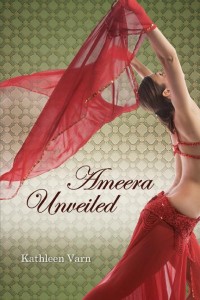
  • AMEERA, UNVEILED by Kathleen Varn – Chick Lit

    AMEERA, UNVEILED by Kathleen Varn – Chick Lit

    Ameera, Unveiled is inspirational story of how, with courage to chase her dreams, Kat transforms herself to become Ameera, the exotic belly dancer of the Palmetto Oasis Middle Eastern Dance Troupe. This is a story about of how exhilarating and frightening it feels to take yourself out of your comfort zone and chase your dreams, and the amazing experiences you can have just by trying.

    Kat spent most of her life doubting herself and her abilities–especially her ability to learn how to dance. Now at the age of 48, she finally feels comfortable enough in her life to finally pursue her dream of dancing by enrolling in a belly dancing class taught through the local high school. Through each lesson she timidly works up the courage not only to learn to dance, but to discard the self-doubt that she had burdened herself with for too long.

    Kat finds herself having to battle with her inner-critic’s heavy doses of self-doubt, and anxiety. The story reflects on how some women allow their inner critic to dictate their lives for far too long.

    Kat’s journey is about how hard it is to overcome years of believing you aren’t good enough to do something, but how what happens when you go ignore your inner self critic and follow your dreams. Kat realizes it’s not about a lack of talent that is holding her back, but her own self-doubt.

    The author, Kathleen Varn, skillfully weaves scenes of everyday women transforming into exotic belly dancers. She vividly portrays, with detailed descriptions of their well-practiced routines and dance moves, and how through their diligence they are able to wow their audiences.

    The dancers develop such a strong sense of individualism and self worth as they learn to move in exotic ways. The delightful interactions between each of the dancers is inspirational as they bond as a troupe.The camaraderie developed within the troupe is one of friendship and support that only a sisterhood of girlfriends could create.

    And the troupe will need all the support and confidence that they can muster when they are surprised by one of their dance gigs when it turns out to be held at a clothing optional resort in Jamaica. Kat finds herself out of comfort zone in more ways than one as do several others of the sisterhood. But with each other for friendship and motivation, they are all empowered to explore, take chances, and believe in themselves.

    Ameera, Unveiled by Kathleen Varn, is a coming of age story of a diverse group of middle-aged woman supporting each other to follow their dreams and to go outside their comfort zones and routines. Reading Kat’s journey made me want to put on a shimmery scarf, an exotic flowing skirt, and learn to move in a fashion beyond my own comfort zone. It is an inspiring and fun story that reminds us that it is never too late to pursue your dreams and unlock your inner goddess.

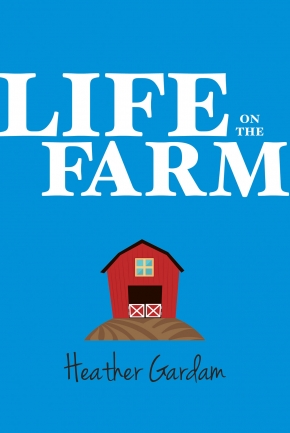
  • LIFE on the FARM by Heather Gardam, a Children’s Book about Farm Life

    LIFE on the FARM by Heather Gardam, a Children’s Book about Farm Life

    Ten-year-old Patti is a curious child who lives on a farm and longs for a horse. She also longs for her family to recognize that she’s growing up and isn’t a baby girl anymore.

    Patti is wakened on the morning of her tenth birthday to a ruckus in the barn. It turns out that a mink has snuck into the chicken coop. Patti immediately heads outside to help her dad and brother save the chickens and their baby chicks. Things don’t go quite right, but one chick is saved. Patti’s dad offers her the job of nursing it back to health. On the way back to the house, her parents and brother surprise her with a shiny silver and blue bicycle for her birthday. It isn’t the horse she longs for, but Silver is a wonderful present and it’s a big bike for her to grow into. And that everything is not perfect, nor does everything work out just right is the beauty of Gardam’s story.

    Patti spends her tenth year working hard to prove to her family that she is growing up. On her trusty bike,  Patti sets out on a series of adventures filled with discoveries that will delight any young person reading this book. Patti longs for her family to see her as growing up and able to pull her own weight around the farm. She wants to make a good impression as someone her family can count on and who will help out.

    Each chapter in this book is a snapshot of young Patti’s life.  Through the ups and downs of everyday life, we learn more about Patti and her family life on the farm. Patti works hard doing her chores around the farm, learning new skills like milking the cow and tapping trees for maple syrup. She is a curious and observant child and continually surprises her family with her knowledge and perseverance.

    Whether it’s working hard to put out a fire in the hay-field or serving dinner to the threshers, Patti proves that she can be counted on. She surprises her family when she trains Chicky for the Fall Fair and with her strength under pressure when her brother Jamie is hurt.  Patti impresses them with her level-headedness when she’s caught in a blizzard and deals with a bully.

    Patti discovers growing up isn’t easy and grown ups don’t always have the right answers. Everything continuously fascinates her: learning about bees, driving a tractor,  trying to figure out how grownups think, and understanding the strange things they say and do.

    Through a series of adventures that will entertain and delight young readers, Patti learns that people can be very different from each other and live very different lifestyles from her family’s. Patti also discovers she is stronger and smarter than she thinks and that she can make a difference in the lives of those around her. Most importantly, she learns that she belongs to a loving and supportive family that even includes her big brother.

    Gardam’s Life On The Farm will captivate young readers with its authentic voice and earnestness. Patti’s journey is filled with the curiosity, the adventures, and everyday delights that Gardam herself experienced as a child growing up in rural Ontario, Canada.

  • NO GOOD LIKE IT IS, Book One by McKendree Long, a post-Civil War Western

    NO GOOD LIKE IT IS, Book One by McKendree Long, a post-Civil War Western

    In his meticulously researched, debut historical Western, McKendree Long takes the reader on a journey to the Civil War era, as experienced by homesteaders and soldiers in the far-flung outposts of the Old West. A must-read for fans of the genre!

    Second Lieutenant Thomas “Dobey” Walls, a West Point Graduate, and Corporal Jimmy Melton, a non-commissioned soldier, meet at the military outpost of Fort Gibson, just off the Arkansas River, in 1859. As they work side-by-side to protect wagon trains traveling through their territory, fighting off roaming bands of raiders and Kansas “Jayhawkers,” the two men become fast friends.

    No Good Like It Is  follows the daily lives of these men as they work at the Old West outposts, journey to Texas to join up with the famous Texas Terry’s Rangers during the Civil War, and ultimately search for the remaining members of a Wall’s homesteading family in the wilds of Texas Panhandle country.

    Long’s gifted ear for the true vernacular of the time and his detailed descriptions of the Old West place the reader right in the middle of the action along with these two men and the colorful characters they encounter during their adventures.

    Walls and Melton embody the best of human values, exemplified through the valor of their actions, their honesty, and their determination to fight for what they believe to be just and right. These men leap off the page, remaining memorable long after the reader finishes the book.

    But above all, this is the story of men who meet and become friends, and whose characters are shaped by a series of dramatic historical events that defined our country.

    This novel goes beyond the typically simplistic view of the Civil War, delving into the divided loyalties of the homesteaders in the American West who found their families and friends fighting on opposite sides of the war. Long accurately portrays the dangers and shifting alliances of the Old West during the war, exposing the reader to a very different view of the war’s effects on the western states.

    No Good Like It Is, the first of three gritty action-packed novels that follow the adventures of Dobey Walls and Jimmy Melton, well written with historical accuracy and authentic dialog.  Readers will be eager for the sequels.

  • HAWKINS LANE, by Judith Kirscht, a literary romantic mystery

    HAWKINS LANE, by Judith Kirscht, a literary romantic mystery

    Judith Kirscht has penned a poignant story of two good people who struggle to escape their past and carve out a fulfilling life together. At its very core, this novel asks the compelling question of whether you can overcome the influences of family, and also, whether you can survive the consequences of your own actions.

    As far as the people of the small town of McKenzie Crossing are concerned, Ned Hawkins is from the wrong side of the tracks. And that’s putting it mildly—his father is a convicted murderer, his brother an alcoholic with a violent streak. Ned has spent his entire life feeling trapped and attempting to outrun his family’s legacy.

    As Hawkins Lane opens, Ned has escaped on his daily trek into his beloved Cascade Mountains to find peace and solace.  By chance, he comes upon a young woman, Erica Romano, fishing in a creek far from town. Erica is also escaping from the demands of her family, though their circumstances are very different: Erica is the daughter of the town’s new physician and related to the rich and powerful McDonald family, owners of the local mill.

    For both, it is love at first sight. Ned has grave reservations about exposing Erica to his family and wants to protect her by keeping his distance. Erica persists, convincing him that she needs him as much as he needs her.

    Unfortunately, family almost always finds a way to impact one’s life, and depending on the family, that impact can lead to tragedy. Ned’s brother, who has been spiraling out of control ever since their father was sent to prison, ends up in trouble with the law. Erica, who is by nature a risk-taker, places herself in danger far too often, and the mountains are not always a forgiving place. However, when Ned’s father is released from jail he spreads his own brand of poison, driving deep wedges and creating divided loyalties. Erica and Ned are challenged in ways that even they could not predict nor expect.

    Hawkins Lane is an excellent and, ultimately, a redemptive story about the heart-wrenching tragedies a family can survive, and about the healing powers of nature and friendship. The characters and the story will linger long after the last page is read and you will be captivated from the first page.

  • FIRE at WILL’S by Cherie O’Boyle, a West Coast Cozy

    FIRE at WILL’S by Cherie O’Boyle, a West Coast Cozy

    When a psychologist calls on her powers of observation to solve a murder, she uncovers a secret that some in her small eclectic Californian community would rather keep buried. Fire at Will’s by Cherie O’Boyle  introduces Estela Nogales as an amateur sleuth with a wry sense of humor,  a keen sense of observation, and two border collies  as sidekicks in this engaging new cozy mystery series.

    Estela prides herself on doing a good job of navigating the petty grievances and animosities of her Arroyo Loco neighbors. And if it weren’t for a few rule ­enforcing cranks she and her beloved dogs could enjoy all of the open space and clean air that her picturesque, coastal mountain community has to offer.

    Will Rosenblum, the neighborhood’s biggest grouch, has made it a habit to stick his nose where it’s not wanted, going out of his way to ignite the ire of every one of his Arroyo Loco neighbors, so when his house goes up in flames suspicion lands in all directions, including at Estela’s feet.

    As the ashes settle, a body—thought to be Will’s—is found at the back of the house. Also, Will’s memory impaired wife is missing. A round of finger pointing brings everyone’s actions into question causing Estela to realize that the only way to clear her name is to launch her own investigation.

    With so many suspects Estela starts to wonder if Will’s demise could have been an orchestrated community effort. Armed with her knowledge of human behavior and sharp powers of observation Estela examines the motives and actions of each person in Arroyo Loco and discovers an ugly secret.

    In this first installment of the Estela Nogales series the author uses a small, isolated location with a captive, vocal population to skillfully address the question of how well we really know our neighbors or, for that matter, our friends. Although some are locked into mistrust and others prefer denial, Estela’s unwillingness to allow wrong to prevail compels her to reveal the inconvenient details buried beneath the public facade.

    With humor and keen insight into human nature, author Cherie O’Boyle offers up a clever cozy mystery filled with a varied and quirky cast of characters. From the strudel-­baking Freda von Liesing to Arroyo Loco’s resident metaphysical hippie Sunshine Rainbow, each character is a classic slice of the diverse California lifestyle. O’Boyle’s inventive homage to the HOA rules-­gone-­crazy communities springing up all over the country makes Fire at Will’s laugh-­out-­loud fun!

  • The Man With the Overcoat by David Finkle; a contemporary NYC novel

    The Man With the Overcoat by David Finkle; a contemporary NYC novel

    Arts writer David Finkle’s anti-hero, Skip Gerber, has many obligations—lukewarm devotion to his sort-of fiancé, obedience to his smother-mother, loans to his ne’er-do-well brother, and a tedious job at a New York City law firm founded by his father. But in the space of twenty-four hours, all that could change.

    It starts with an overcoat, handed to Skip as he’s leaving work one ordinary late afternoon, shoved into his hands by an anonymous man with these words: “Here you go, and be very careful with it.” Minutes later, Skip realizes he’s stuck with the coat and starts trying to figure out how to get rid of it on his way to a supper date with his fiancé. He begins to examine the coat, tries it on, and finds it to be of unusually good quality and, also remarkably, a perfect fit. Inventorying various items he finds in the pockets, he embarks on a mission to return the coat to its rightful owner.

    He roams the city on foot and by taxi, being tailed in traffic by a mysterious black limo and, on the sidewalk, by two young thugs in hoodies, constantly checking his cell phone for calls from the increasingly peeved fiancé, his nagging mother, and his brother trying to cadge a loan. But Skip gradually gets too wrapped up in the enigma of the coat to care about these distractions.

    Everyone he encounters tells him what a great garment he has acquired. Voice mails remind him to take care of it. Hustling uptown, downtown, and all around the park, following clues seemingly emanating from the coat, he goes from a once grand building that might have offered a hint about the coat’s owner, to the statue of a man holding what looks to be the selfsame coat, to an abandoned tailor’s shop where perhaps the coat was created.

    As the hours pass—compulsively checked on his fake Rolex—his fiancé dumps him by voice mail, his brother divests him of some cash, and he drops his childhood nickname. The coat yields more intriguing clues: a weird stone that might be a Mayan artifact and a shiny Indian-head penny.

    David Finkle is a New York based writer (The New York Times, The New Yorker, The Village Voice) who knows his setting well, describing the city and its denizens vividly. He strews bon mots through the narrative like a man feeding pigeons in the park, and deftly guides the reader through the increasingly complex thought processes of an erudite Everyman with an overcoat that gradually becomes a symbol of quality—quality of cloth and tailoring, quality of life.

    Twenty-four hours after he was the coat was thrust in hands, Edward has followed his instructions to care for it, has chased down his clues, and knows what to do next. The Man With the Overcoat by David Finkle is an entertaining top-shelf work of contemporary fiction that blends mystery, fantasy, and comedy. This is a tightly written story with rich and complex subtext that makes reading it a sublime pleasure.


  • DEAD in DUBAI by Marilynn Larew; an international spy thriller

    DEAD in DUBAI by Marilynn Larew; an international spy thriller

    Larew has found a comfort zone in describing exotic settings, and her perspicacity for honing in on minute details gives her work a sense of authenticity. Through the eyes of her intrepid, intelligent heroine, we are treated to an insider’s view of locales like Dubai and Istanbul.

    In this second Lee Carruthers offering (The Spider Catchers provided the opening salvo), author Marilynn Larew again displays her prodigious knowledge of the international dealings in diamonds, deception and death that are hidden from the headlines.

    Employing her wry wit (“I disapprove of assassination, particularly my own”), Carruthers, a woman of a certain age (“my long brown hair had a few strands of silver”) is looking for a dead man. After quitting the CIA and vowing she wouldn’t go to Dubai to look for CIA operative George Branson, she is inveigled into doing just that by the appeals of Branson’s wife Cynthia, and possibly equally, by the little brass key that Cynthia gives her. Figuring out what that key unlocks will consume Carruthers; finding out why Cynthia plunges off a balcony to her death, and others will die while the hunt is on, will provoke far more troubling questions.

    Carruthers, a sort of female Bond, can identify a person’s borough of origin by his accent, and tell whether a man is an American or English by the way he takes his whiskey—with or without ice.  She knows where to get the best pastry, what wine to order, and in which Islamic enclave she can walk around without a head covering. She bribes passport control agents and befriends charming crooks. And she’s tough, always carrying a Glock, with a knife in a sheath on her leg.  She goes through several weapons in the course of this story, and uses a particular firearm to good effect occasioning one of the book’s better zingers: “Tears came to my eyes but they didn’t spoil my aim.”

    Carruthers is a person of principle, so when she gets caught up in a spy vs. spy morass, she keeps her own counsel and tries to do the right thing, though with the CIA and the Russian mafiya trying to outfox each other, she knows she may be seen as expendable. In the end, she has her ethics intact, a small bag of rough diamonds as compensation for her troubles, and some disturbing conclusions about who George Branson was, or is?—and who’s playing footsy with whom under the big table.

    In an age when national, ethnic and political identities and loyalties have blurred the lens of spy-craft, Larew’s heroine is right up to speed. And if the story line seems at times to move too fast and somewhat jerkily, it’s also true that there are few if any lulls in the action. Still, some readers may find the wrap-up final chapter rather mechanical, and may wonder why Carruthers, who keeps protesting that she quit the CIA in order not to be sent on dangerous assignments, hops on board for another missing-person case on the last page. But lucky for Larew’s readers that Carruthers accepts the assignments despite her better judgement.

    A sequel seems to be brewing that may perhaps reveal a softer side of Lee Carruthers. In this story there is a hint, but just: someone named Kemel, and a bloodstained pearl.

    Larew has built up steam with her fascinating femme-sometimes-fatale protagonist and her writer’s grip on the subtleties of international intrigue and double crossings that ratchets up the race against time in this spy vs. spy thriller.