Category: Reviews

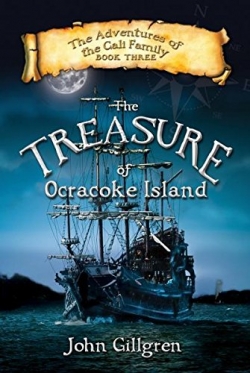
  • THE TREASURE OF OCRACOKE ISLAND by John Gillgren, third book in the Adventure of Cali Family Series

    THE TREASURE OF OCRACOKE ISLAND by John Gillgren, third book in the Adventure of Cali Family Series

    What could be more engaging for children and their families than a featured villain who impersonates the infamous pirate Blackbeard? Gillgren’s third book The Treasure of Ocracoke Island in The Adventures of the Cali Family series brings back old villains, introduces new plot twists, and puts more at stake to find lost treasure.

    It is the early 1700s, and Blackbeard prides himself on wreaking havoc, while also being an intelligent ladies’ man. However, his reign ends when a British ship invades, leading to his beheading at Ocracoke Bay; his treasure’s location is supposedly lost at sea. The year 1942 sails in, depicting the Russian ship Saratov being sunk by two torpedoes, which concealed a footlocker of gold that was going to pay the United States for war supplies.

    The reader is brought back to present day with the Cali family, who are forced to search for the lost treasure of Ocracoke Island. When the women in Carmine’s family are kidnapped by a sinister man resembling Blackbeard, him, Snail, Tommy Osawa, and NCIS Special Agent Moki Loo Tsing must battle against time to save their loved ones.

    Gillgren creates a stunning cast of villains that engage with the Cali family. The Blackbeard offender is both shocking and silly as he uses his faux accent to intimidate the women he kidnaps. Gillgren also brings back the dastardly villain Mr. Chang, who is determined to have his revenge on the Cali family for cheating him of money and opium. It becomes apparent as the novel progresses that Mr. Chang wants more than just wealth.

    This series continues to craft daring heroes and heroines. The women in the Cali family show resistance and strength against Blackbeard’s threat; emulating a sort of Charlie’s Angels attitude against a wannabe pirate with a ridiculous costume. Gillgren also continues to develop characters from his previous books, particularly in regards to Snail. Snail is a youth who shows great maturity when the kidnapping situation becomes intense, and he inspires the older men of the family to follow suit. Such characters are a great inspiration to how families come together in times of adversity.

    The novel contained enough tension and suspense to sink Blackbeard’s ship Adventure. The story contains multiple perspectives of different characters, leaving the reader with many cliff-hangers when the point of view shifted. Each character introduced new waves of anticipation.

    Gillgren’s children’s series The Adventures of the Cali Family offers another treasure travel story that pushes mystery, family, and adventure into new depths of fun.

    This reviewer highly recommends this book for children and their families who are interested in historical stories about adventure and family. Oh, and an ending that twists the tides of a plot.

  • I ONCE KNEW VINCENT by Michelle Rene, a historical fiction novel

    I ONCE KNEW VINCENT by Michelle Rene, a historical fiction novel

    Seven-year-old Maria Hoornik already knows more about life than she should, hiding in a curtained alcove whenever her alcoholic prostitute mother, Sien, brings customers home. One day, Sien brings home a different kind of man—an unknown artist, Vincent Van Gogh.

    Vincent, longing for stability amidst his frustrations and failures, is determined to create a cock-eyed semblance of family life with Sien, who is pregnant with another man’s child, and her daughter Maria, with whom he immediately bonds, admiring her critical honesty and calling her “Little Cat.”

    The three, and then Sien’s baby Wilhelm, form a fascinating ménage in new author Michelle Rene’s speculative novel based on considerable historical fact. Rene depicts Maria as a prodigy who comprehends her mother’s self-destructive habits all too well. Rene elucidates, through Maria’s curious gaze, the made-up family’s grinding poverty, Vincent’s stubborn insistence on doing his art his way despite his lack of economic success, and the constant quarrels over money and morals.

    The child unwillingly absorbs the distress when Vincent’s arrogant parents refuse to continue supporting their son’s liaison with a known whore, forcing Sien to revert to her old ways to provide food. Maria’s maturity is underscored in troubling vignettes: she sells her hair so they can all have one Christmas dinner, sacrifices a piece of cake to make a “soup” to feed baby Wilhelm when Sien’s milk runs dry, and rushes home in a thunderstorm to try to stop Vincent from discovering that Sien is once again up to her old tricks.

    Rene has designed Maria’s story with verve, splashing colorful images across a well-planned canvas: “Silence crept into the room and pulled up a chair for a nice long visit.” She deftly conveys a child’s perception of Van Gogh’s mental miasma: “Knowing what mood he would be in became a fine art in itself. I quickly became a master of that art.” The text is satisfyingly interspersed with the artist’s actual sketches and paintings of Sien, a notably ugly woman, and Maria, a serious, self-contained little girl rocking a cradle or sitting quietly while her mother sew; a little girl who, like Vincent, clearly wishes for the security of a real family.  

    Told through the eyes of a child, I Once Knew Vincent offers an imaginative study of a tormented genius who would create some of the world’s most recognized artworks. ​ ​


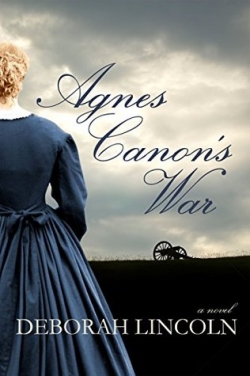
  • AGNES CANON’S WAR by Deborah Lincoln — a Civil War Novel

    AGNES CANON’S WAR by Deborah Lincoln — a Civil War Novel

    Agnes Canon is too intelligent, and too stubborn, to let others make decisions for her. No matter what the consequences, her choices will be her own.

    In this complex historical drama, schoolmarm Agnes Canon, refusing her father’s choice for a husband, leaves the safety of her Pennsylvania childhood home for the wilds of Missouri in the decade before the outbreak of the Civil War.

    On the way she meets, and eventually weds, Jabez Robinson, a medical man who has seen the wonders of the world and war at its foulest. Living in a territory with loyalties on both sides as the national conflict heats up, Jabez and Agnes, equally matched in intellect and stubbornness, abhor the Southern institution of slavery, but also despise the greed and interference of the North. Their struggles are real, and the chaos endured will pit their marriage against a dramatically changing civilization.

    ​Agnes is the pivotal character in this multi-layered story. She endures the pangs of childbirth and the deprivations of family life in a war zone. She watches as friends and neighbors go different ways in the war, and good men fight each other on the home front. She supports Jabez even as his publicly stated political ideals open them to harassment from violent, unprincipled militants.

    Deborah Lincoln, who has based this novel on the life history of her great grandparents, writes with emotional intensity about dark times in an embattled landscape.

    Unlike many Civil War sagas, this one takes no obvious sides. The focus is on Agnes—a vital, strong woman with feminist ideals, and Jabez, the only man smart and determined enough to gain her love. The romance is not overdrawn, though, and there is a complex skein of subplots providing scenes of rousing action and rich historical context.

    Agnes Canon’s War reminds us that war produces equal measures of bravery and barbarism, and those in its midst who hang on to their principles are rare and admirable. An excellent read that explores  love and societal schisms grown in the roots of cultural and political battles between the North and the South.


  • FRECKLED VENOM COPPERHEAD by Juilette Douglas — Best Debut Western

    FRECKLED VENOM COPPERHEAD by Juilette Douglas — Best Debut Western

    Straddling a big, gray horse, a young boy rides into White River, a small isolated town with few people. A town he fled years before. He is alone and sick.  Multiple questions percolate, but the first one is, “How can he carry on?” Readers who seek historical western adventures, will find Freckled Venom by Juliette Douglas a  satisfying read to be enjoyed by all ages of readers, youngsters or seasoned.

    Juliette Douglas writes with a unique Western voice, full of quirky phrases that establish character, humor, emotional content, and moves the story briskly along. The story is set in 1878, and the narrative revolves around the opposing goals of the town marshal and the obsessed bounty hunter. Its supporting characters are enjoyable, although some lean toward stereotypes, but this old-time Western presents an engaging hero and heroine.

    Tension and conflicts are layered and contain some violence. The Marshal Rawley and the venomous woman Lacy suffer as they’re jammed together against vile weather: rain, wind, cold and snow, while hunting three brutal socio-pathic brothers. While the villains provide gripping conflict and suspense, an underlying theme through the story is Lacy’s irreparable childhood damage.

    Rawley tries to break through her emotional barricade, but is returned with Lacy’s biting reactions. However, such interactions define these characters as they grow; both of them learning while searching for a way to deal with their dilemma. Two plots climax at the end of the dual hunts: the hunt for the murdering scum brothers and the hunt for a resolution to Lacy’s pain.

    As the narrative deepens, internal and external dialogue represents character reflections, and drives home. In almost every conversation with Lacy, Rawley uses a nickname, partly with affection, but also to taunt her, and the nickname becomes tiresome to Lacy and maybe to the reader also. However, the payoff for reading past these bumps is thoroughly enjoying a story that makes the Old West come alive.

    Douglas writes the physical senses organically; readers see, hear, touch, and smell everything in the setting, know the season, feel the weather, and can taste the dust.  Freckled Venom, Douglas’ debut novel, brings the Old West to life with vivid settings, believable adventures, and suspenseful plotting. She weaves together danger, Lacy and Rawley’s growth, their longing for intimacy, and induces reader empathy for Lacy and Rawley right to the end. Readers wanting to know more can look forward to Douglas’s sequel, Freckled Venom: Copperhead Strikes.


  • THERE’S SOMETHING ABOUT MARTY by Wendy Delaney – a Working Stiffs Mystery Series

    THERE’S SOMETHING ABOUT MARTY by Wendy Delaney – a Working Stiffs Mystery Series

    Part-time Deputy Coroner and full-time Prosecutor’s Assistant, Charmaine “Char” Digby has a secret. Her childhood heartthrob, hunky Detective Steve Sixkiller, is back in her life, not to mention under her covers. But the relationship comes with a catch.

    Char’s insecurities keep her from telling anyone about it, so it’s no surprise when her matchmaking best friend, Rox, works double time to fix her up with Port Merritt’s eligible and handsome ER doc, Kyle Cardinale. The good doctor goes out of his way to let Charmaine know that he’s up for the chase while Detective Sixkiller questions Char’s motives for keeping their relationship under wraps.

    Charmaine’s problems multiply when her boss sends her to interview the bereaved family of Port Merritt’s wealthiest businessman, Marty McCutcheon, who rolled over dead at his 63rd birthday celebration. With a life-long diet of double cheeseburgers and a sultry new wife twenty years his junior it’s no wonder Marty’s heart stopped.

    Health issues aside, his ex-wife, Darlene, is pointing fingers and crying “foul play.” Between his greed-driven progeny, a jilted girlfriend, and a last minute decision to change his will, Charmaine’s built-in lie detector is telling her it wasn’t the clogged arteries that took Marty out.

    As she pieces together the circumstances surrounding Marty’s “last supper,” Charmaine realizes that nearly everyone in his close circle has something to gain from his death. And when the cause of his death looks more and more like poisoning she presses an unconvinced County Prosecutor to open a formal investigation.

    Unable to make her case, and over Detective Sixkiller’s protests, Char takes it upon herself to dig into the McCutcheon family’s personal business. Her determination to learn the truth lands her smackdab in the middle of the killer’s radar, and as she mines the hidden corners of Marty’s past, the information she unearths may never see the light of day.

    Tightly written and packed with small town innuendo and gossip, Wendy Delaney’s action-packed novel moves beyond the simple cozy mystery genre. With a wink and a nod to the Shakespearean complexities of a duplicitous, wealthy family, There’s Something about Marty exposes the insatiable cravings and rivalries that arise when blood ties go bad.

    This third installment of Wendy Delaney’s “Working Stiffs” mystery series is an engaging, fast-paced read. Through her nimble use of wit and humor Ms. Delaney delivers rich, eccentric characters and clever plot twists that promise to keep the reader turning the page.

  • THE TREASURE OF CHING SHIH by John Gillgren, a children’s adventure novel

    THE TREASURE OF CHING SHIH by John Gillgren, a children’s adventure novel

    Gillgren continues to bring excellent children’s fiction as he combines elements of history, romance, and adventure into a new type of treasure hunt. His second book The Treasure of Ching Shih in The Adventures of the Cali Family series induces new waves of excitement and mystery.

    The Cali Family can’t resist the opportunity to go diving in Honolulu, Hawaii for another treasure hunt experience. After all, who could resist diving for stolen loot left behind by the notorious, female Chinese pirate Ching Shih?

    The reader sails into the year 1844 as Gillgren describes that dark, ruthless nature of Ching Shih. While female pirates existed throughout history, she proved herself unstoppable as she took command of her deceased husband’s 1,800 ships and led over 80,000 men. Her thieving knew no bounds as she robbed jewels and opium. However, before the treasure could safely transition to Hawaii, a natural disaster seized the land, and the treasure was lost at sea.

    Fast forwarding hundreds of years later, Mr. Chang visits the Cali family in California to ask for their help in finding Ching Shih’s missing treasure. Their treasure hunt journey is anything but easy. The Cali family deals with villains that have the ruthlessness of Ching Shih herself, and no characters are who they appear to be. In spite of the chaos, the family proves that courage can overcome obstacles, and that hardships can’t break the bonds of friendship and love.

    Gillgren continues to excel as he blends the realms of history and fiction. Ching Shih’s backstory is carefully woven into the plot, and has a huge impact on the story’s happenings.

    What sets this action adventure book apart is its brilliant characters. Carmine continues to be a protective, strong father for his family, and ends up being a great inspiration to his son, Snail, whose bravery allows him to escape when his family is kidnapped. Carmine also doesn’t hesitate to show love to his wife or children, which also inspires Snail to grow a soft heart for Teri, a beautiful Chinese girl connected to the dastardly events of the novel. Mr. Chang also makes a fantastic villain, but the reader can still laugh when Carmine insults him.

    Gillgren offers a fun, suspenseful, yet heartfelt read that will engage children and adults in the intriguing wonders of treasure hunting and sea exploration. Highly recommended for readers of any age who enjoy high sea adventures and a fun read. This is the second book in John Gillgren’s The Adventure of the Cali Family series. This reviewer is looking forward to reading and reviewing the third book: The Treasure of Ocracoke Island.

  • PRIVACY WARS by John D. Trudel – a cyber-tech thriller

    PRIVACY WARS by John D. Trudel – a cyber-tech thriller

    “You have zero privacy anyway. Get over it.”  Scott McNealy, CEO, Sun Microsystems, January 1999

    Thrust into a conference room with trigger-happy guards, Privacy Wars opens with negotiations taking place between a software company and one of its clients. The tension is high as this particular client demands special concessions for its privacy software that Cybertech refuses to offer. Fans of Trudel’s work will recognize Cybertech and John Giles from his book Soft Target.

    Set in the not-so-distant future, through a series of “astronomical deficits and a dark period of crony capitalism, corruption, socialism, and frequent national embarrassments,” America has lost its strength as a world power, and Asia has taken its place. Desperate for a solution, the U.S. president enters into secret agreements with Japan for a loan, deals which suggest treasonous behavior and abuses of authority. The biggest casualty will be Cybertech, whose software creates problems for those who think no information should be private.

    Cybertech realizes that it is being targeted through a series of bogus lawsuits and violation claims, crippling its ability to function. When “Iron John,” Giles’ son, Will, now CEO of Cybertech, realizes the attacks might be personal, he goes into hiding and heads for the hills, leaving everything behind, with minimal resources for surviving in the woods. Will is confronted by a mysterious woman who gives him instructions to ensure his survival, and he has little choice but to trust her.

    The attacks on Cybertech escalate from bureaucratic tyranny to an all-out physical war. An organization called the Peace Enforcers, which operates as though they are above any law, conducts acts of war on US soil with no provocation. In conjunction with a martial-arts trained killer named Tanaka, who enjoys torturing and killing, Cybertech staff find themselves at the Peace Enforcer’s mercy, and Will, who has no defensive training, insists on returning to the corporate offices to try to help his staff.

    The consequences of this action are a major turning point in the story: our hero finds himself assisted by ancient technologies of advanced civilizations, the Viracocha, who go back to the building of the pyramids. Fortunately for us, Trudel includes well-researched explanations into the theories after the end of the story: what might appear to be fantasy and science fiction may have some real-world credence.

    The dogged romantic pursuit of Will by his protector, Becky, who is described in favorable dimensions, complete with advanced degrees and connections in high places, adds a sense of intimacy to the story. Trudel has a mastery of using media’s humorous mis-reportings (as he puts them) that  create unintentional heroes. Each section of the book starts with a real attributed quote pertaining to the story line, some going back to ancient times, and others that are there for Trudel to remind the reader of America’s constitutional roots.

    Privacy Wars by John D. Trudel, explores and confronts the issues that are involved with absolute privacy in software, corporations and government from several perspectives with the need to balance personal privacy and corporate privacy with the need for national defense. Trudel is known for his catch phrase “Thrillers are fiction…until it happens.” And he knows how to write a thriller!

  • MRS. KAPLAN and the MATZOH BALL of DEATH – charming and funny cozy debut novel

    MRS. KAPLAN and the MATZOH BALL of DEATH – charming and funny cozy debut novel

    In classic Sherlockian style, author Mark Reutlinger introduces the reader to the clever and keenly observant Rose Kaplan through her side-kick Ida’s narration. At times more Lucy and Ethel than Holmes and Watson, with a soupcon of Miss Jane Marple, these geriatric sleuths manage to poke their noses into the personal and financial business of everyone connected to the senior home, solving minor cases along the way and uncovering, in the process a series of secrets that provide for some highly entertaining twists and turns.

    At the Julius and Rebecca Cohen Home for Seniors, Rose Kaplan is somewhat of an anomaly. In a residence fueled by one-upmanship and minor victories, Rose competes for nothing: not for friendship or affection or even a winning hand of cards. And without trying, her renowned Matzoh Ball Soup consistently earns top honors and a place at the home’s annual Seder table.

    Sadly, holiday celebrations can deliver unwanted surprises and this Passover serves up a doosey when reclusive resident Bertha Finkelstein is discovered, dead as a pickled herring, face-down in a bowl of Rose’s prize soup.

    But Bertha’s untimely demise is the least of Rose’s problem. When it’s determined that Bertha choked on a pilfered earring, Rose is the main suspect in the theft not to mention responsible for Bertha’s death. With more than just her culinary reputation on the line Rose enlists the help of her longtime friend and perennial snoop-in-crime, Ida Berkowitz.

    Together they put their unorthodox amateur sleuthing skills to the test and, when one of their most important allies is sidelined, Rose finds herself “bending” the law to get the evidence that she hopes will clear her name.

    In “Mrs. Kaplan and the Matzoh Ball of Death” author Mark Reutlinger delivers a well-developed supporting cast of rich, quirky characters. And in Rose Kaplan the author has created an endearing amateur sleuth who reminds the reader of the value of wisdom and knowledge acquired with age.

    Filled with wit and clever Yiddish colloquialisms, this delightfully engaging first installment of the Mrs. Kaplan Mystery series is as warm and inviting as it is laugh-out-loud fun!

  • THE LAST DESPERADO by Rebecca Rockwell –a tale of the last days of the Wild West

    THE LAST DESPERADO by Rebecca Rockwell –a tale of the last days of the Wild West

    His fame spreads with every train hold-up, bank robbery, horse theft, and whatever else he must do to survive. “The Last Desperado” by Rebecca Rockwell lassos the readers and keeps them on the ride into the last days of the Wild West in Kansas and Oklahoma Territories––a superb tale told in Bill Doolin’s perspective of how he became a notorious outlaw creating the legend of the “Wild Bunch” gang.

    The story begins when Bill ensures his widowed mother will get by before he leaves home and becomes a cowboy. A good son and a guy who cares. The intervention of railroads mercilessly cuts away swaths of land and usurps the need for cattle drives not leaving much opportunity for a young man in the West. Doolin’s boredom and anger mounts and he slides over time into the leadership of “The Wild Bunch” gang, drawing cowboy buddies and others he meets along the trail, into the gang with him. Foreshadowing, treachery, and betrayal keeps the tension mounting.

    Rockwell immerses readers in the life, loves, and deep friendships of Doolin, while they walk in his shoes, feel the rainstorms soaking through his clothes, understand his fears, and share in his love for his wife and child. She lets readers feel rides in the heat, the rainstorms and the crouch, hunkered down in the cramped dirt dugouts hiding from the “Lawdogs.” Instead of labelling him an “evil dude” we admire him, maybe wishing we could know a man like him, and we understand, and many forgive, when he is cornered and commits violence. Our hope grows along with Doolin’s when he finally yearns to change.

    The dialogue remains true to the time and place in history, their speech revealing who they are and their lifestyles. The words, like a time machine, take us back to the years surrounding 1892. The reader gets to know the characters by how and what they speak, and can feel the settings through the conversations.

    An excerpt and the set up: Bill Doolin gazes, eyes full of love, upon his wife Edith, and at his baby son in his arms. He feels the weight and the warmth and smells his son for the first time.

    He thinks, “I didn’t think I had enough room in me for all those feelings.”

    Rockwell brings this man and those he loves, along with a new perspective of the gang’s bad boys, vividly to life. Her readers will get to know them and care about them–a mark of a truly great novel. “The Last Desperado” is highly recommended for those who love westerns and top drawer historical fiction.

    “The Last Desperado” by Rebecca Rockwell is First Place Laramie Award Winner for Western Fiction.

  • THE PHILISTINE WARRIOR by Karl Larew, Ph.D. – War, love, politics, and the emergence of chariots

    THE PHILISTINE WARRIOR by Karl Larew, Ph.D. – War, love, politics, and the emergence of chariots

    There is definitely something for everyone in Larew’s The Philistine Warrior—war, love, politics, and history in the Middle East just before the rule of King David (c. 1,000 – 960 BCE).

    Many readers have enjoyed Karl Larew’s Paul’s Three Wars, the trilogy of U.S. Army Signal Corps officer Paul Van Vliet, and his family, from WWII through the Vietnam War. Larew is quite adept at giving his readers a portal into the very different lives of active military officers and their families (as in contrast with civilian life).

    In The Philistine Warrior, Larew  carries his exemplary skill in this subgenre of historical fiction to the portrayal of the military exploits and family life of an army officer further back in history—way back—to 1115-1110 B.C. While the chariots, arrows, and javelins of that era have been supplanted by tanks, rifles, and bombs, the camaraderie and rivalry among officers and the disruption of their families have remained much the same, changing only in form over the millennia.

    Captain Phicol, trying to escape the humid heat of Askelon, along the Mediterranean coast of Philistia (part of the territory of Canaan, later called Palestine), goes for an early morning swim in the sea. He spies a beautiful young maiden engaged in the same pursuit and watches from a distance as she emerges from the sea totally naked.  As she proceeds to enter the palace of his Uncle Zaggi, Phicol realizes that she is his young cousin Delai.

    Later called to Zaggi’s palace himself, Phicol encounters another officer just leaving. Meeting with his uncle, he learns first that the officer is Major Warati, a new protégé (hmm), and then that Zaggi has received a letter from Melek (King) Nasuy saying that Delai is desired as a bride for his younger brother, Ekosh, who is now a general in the service and the court of Egyptian Pharaoh Ramses IX. Phicol is to escort her to Thebes.  Over the lengthy trip, his feelings for Delai come to surpass those of a cousin, but of course he keeps them to himself, just as 16-year-old Delai does hers regarding marriage to the 45-year-old general.

    Phicol’s rivalry with (newly promoted) Colonel Warati escalates. Larew skillfully draws on his military knowledge to describe the military tactics (as he sees them) of the Philistine ground forces and charioteers, especially those led by Phicol. Returned to Askelon, Phicol is rebuked for engaging in a row with Warati by his uncles Maoch and Zaggi—the Sheren (Lord) and Chancellor, respectively, of Askelon, one of the sovereign cities that comprise Philistia.

    Meanwhile, back in Egypt, Delai has given birth to a healthy son, Akashou. She is convinced that the infant was protected in utero and at birth by the Goddess Inanna of a secret cult, in whom she was led to believe by the temple priest, Ibbi. The role of religion in this time and place, pervaded by politics, makes for a fascinating story in itself.

    When Ekosh’s elder brother, Melek Nasuy, dies, Ekosh is elected (in absentia) Melek of Philistia. Phicol travels to Egypt a second time, carrying this news to the royal couple. Ekosh worries about leaving the Pharaoh—weak as all the Ramses descendants have been since the great Ramses II and Ramses III.  A group of conniving priests will likely seize power, leaving the Pharaoh as a figurehead on the throne.

    When the Danites put the plains city of Ekron under siege, Ekosh, with his aide-de-camp, Phicol, lead the Philistine armies to the rescue. In the aftermath of a minor skirmish, the giant Danite leader Samson escapes in the confusion. An intriguing version of the biblical story of Samson and Delilah ensues that lays the foundation for more political intrigue, betrayal and subterfuge, and plot twists, which leads to more battle strategies and political and personal intrigue. Larew is excellent at giving his readers more insight into how religious dogma affects culture and government along with an interesting history lesson about the rise of nations in the Middle East and Northern Africa– long before the Roman or Greek Empires existed.

    After considerably more horror and sorrow, not to mention political twists and turns, including exile in Assyria, the matured Philistine warrior, his beautiful, loving, and supportive wife, their baby son Achish, and Ibbi—still with them as friend, priest, medical adviser, and not so accurate seer—find themselves welcomed back to a relatively peaceful Philistia.

    The author has come through again with the attention to detail he is known for, though perhaps more of it than some readers like, but fans of historical fiction will relish. His characters are drawn with precision, whether they are good, bad, or downright evil. My personal favorite is Ibbi. Two not mentioned in this review are Rachel, Delai’s slave, then servant, as well as friend and companion. Another is Amphimachus, the venerable yet unassuming High Priest of Dagon, always there when Phicol needs him most.

    Karl Larew, Ph.D. is a retired history professor, so readers should approach this novel (412 pages) as a comprehensive account of the times with introduction of new war technologies such a chariots and organized battle tactics, the long history of the numerous nations/tribes that been warring for centuries, and the events of the time. Larew’s telling from the eyes of a heroic young Philistine nobleman living in ancient Palestine gives readers a new perspective of this time and place in history. However, true to Larew’s style (He can write as deftly about passion and love as he does about battle tactics and military politics.), passion and romance is juxtaposed against the battle tactics and court intrigue, proving that the more things change, the more they stay the same.