Category: Reviews

  • RAVEN’S REDEMPTION by John Trudel — a cybertech paranormal thriller

    RAVEN’S REDEMPTION by John Trudel — a cybertech paranormal thriller

    Raven’s Redemption begins where Raven’s Run left off: Josie is recovering in a hospital in Oregon, and Raven, recuperating at a coastal estate in rugged Northern California. He feels responsible for putting her life in jeopardy. Josie is a sensitive paranormal who can do ‘remote viewings’ – but viewings involving violence, remote or otherwise, weaken her to the point of death.

    Raven is an undercover operative who tries to protect her. He receives his next mission from Goldfarb, his boss: Josie’s untraceable extraction from the medical facility. What none of them know is that sinister forces are at work to make sure Josie never gets out alive.

    Her services are desperately needed again, and this mission cannot fail: she is a non-expendable government asset. It’s a simple grab-the-girl and run – or should be – but when animal activists become involved, chaos reigns, and not everyone makes it out intact.

    The story shifts to another hospital – this time the President of the United States is hospitalized in a secret facility after being irreparably poisoned. After a brief period of rest and recuperation for Josie and Raven, Josie is tasked to work her viewings around the condition of the president. While in her viewing state, she encounters a dark force so powerful and evil she cannot penetrate it – and is afraid it would swallow her very life force if she got too close.

    Should the president die, this force, aptly named “The Abyss”, will be unleashed on the world, and with no stopping it. Unfortunately, all envisioned paths to the future lead to his death!

    Goldfarb’s team is able to use Josie’s information to track down those who want the president dead, but the real problem is knowing who is directing their actions, and why. Some familiar villains appear in this book – we get to be entertained with Vogel’s thick German accent and lack of empathy – and some new ones, who seem familiar enough that we might have read about them in the newspaper or seen a report on television.

    In between the heart-stopping, rag-tag, under-funded operations to rescue damsels and flush out the bad guys, Trudel gives us past examples of breaches of security in history to make plausible actions taken in his story. He relates the legend of General Blackjack Pershing’s pig-blood solution to jihad, though the historical authenticity of this event has been challenged where criticism of Islam is politically incorrect.  Occurring over a century ago, the incident – which has been neither proven nor disproved – provides a richer backdrop to the actions of an unanticipated (and unwitting) ally during a chilling nighttime raid.

    In light of recent terrorist events that leave us wondering “how could this have happened?” Trudel offers up examples of enemies hiding in plain sight, of churches that aren’t the peaceful sanctuaries one might expect, and of plans for evil that are much better funded than their defensive counterparts.

    Raven’s character is becoming less rogue. He is listening more to Josie rather than acting brashly every time. She desperately wants out of the business they’re in – “one more mission and we’ll retire” – how many times have you heard that one? This reader doesn’t remotely foresee a true retirement happening any time soon!

    Those who read Raven’s Run will be satisfied with this riveting sequel, but those who are new to Trudel’s work will enjoy it on its own if they are a fan of political intrigue, firearms technology – both new and old, espionage and a bit of other-worldliness to make this a true paranormal thriller.


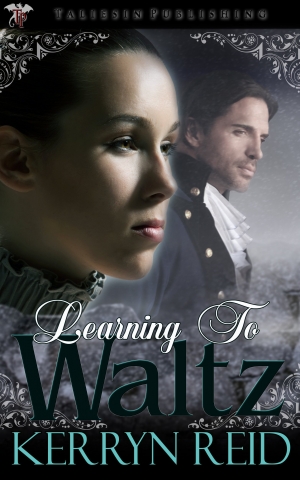
  • LEARNING TO WALTZ by Kerryn Reid, a stunning and refreshing novel in the Regency genre

    LEARNING TO WALTZ by Kerryn Reid, a stunning and refreshing novel in the Regency genre

    When aristocrat Evan Haverfield meets uncommon commoner Deborah Moore, she is in a panicked rush to find her missing son Julian. Evan finds the little boy just in time, near death from exposure, and takes an active, concerned role in his recovery. His escalating involvement with Julian parallels his fascination, perhaps obsession, with Julian’s mother, a reserved, intelligent woman who reads books and speaks with clarity and decorum despite her lowly station in life.

    Widow of a cold, fumbling small-town vicar, daughter of a brutal, profligate father, Deborah wants only Julian’s well-being. She is content to live alone, expecting only rejection and cruelty from men. She finds it difficult to smile for anyone except her son, yet Evan’s apparent interest in visiting, chatting, and offering small gifts is undeniably exciting.

    Evan insists on paying for the child’s schooling so his obvious mental gifts won’t go to waste; but his fixation remains on the dark-haired Deborah, so different from the wild-eyed, loose-mouthed flirts in his social circle. After she yields, once, to his charms, he impulsively asks her to marry him.  Their relationship changes, but not, as he’d hoped, for the better. Deborah is convinced she is no wife for quality. Evan, in a stew of anger, self-pity, and melancholy, hits the road.

    Kerryn Reid has set her engaging story in a place and time when the rich are often excessive in their habits, with prolonged house-parties often leading to debauchery, while the poor struggle for survival and find solace in alehouses and alleyways. Everyone tries to keep their place, as Deborah and Evan strive to do, against the yearnings of the heart.  It is this social tension that stokes Deborah’s refusal to become Evan’s wife—and in turn, provides the undercurrent that provokes in Evan a fear of how his parents will react to his alliance with a commoner.

    Reid’s focus is on her richly developed characters, not just costumes and carriages, though those are not lacking. She has filled her well-conceived saga with a complex and compelling cast: the arrogant well-born beauty who tries in vain to win Evan’s attention, Evan’s grizzled, philosophical “Man Friday” and his goodhearted sisters, Deborah’s earnest, if bumbling, house-helper, and little Julian, the brainy boy who loves books and horses in equal measure.

    Learning to Waltz reminds us that our forebearers also grappled with “modern” issues of abuse, angst, and aching hearts. This well-researched and beautiful Regency romance will appeal to anyone who has ever loved and (almost) lost. A stunning and refreshing novel in the Regency genre.

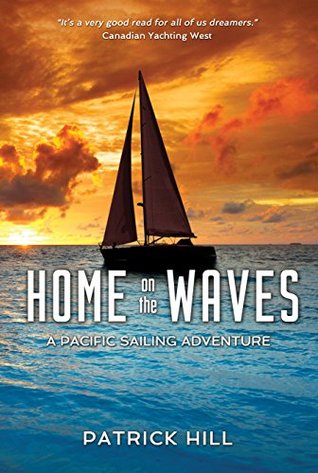
  • HOME ON THE WAVES: A Pacific Sailing Adventure by Patrick Hill

    HOME ON THE WAVES: A Pacific Sailing Adventure by Patrick Hill

    Family, love, and adventure are all tied together in Patrick Hill’s alluring travel memoir Home on the Waves. It’s a story set in the 1970’s that provides remarkable insight into the lives of a family exploring the open ocean and discovering new cultures and people.

    Hill’s memoir is an excellent read for everyone interested in reading about out-of-the-ordinary lifestyles and family adventures, even if they have never set foot on a boat.

    As a previous liveaboard and fellow sailor, I enjoyed reading a story that showed the family’s journey in becoming familiar with the sea. Their adventure starts with Patrick, a civil engineer, sitting in his office reliving fond memories of his days on the water.

    He decides to take action and create more treasured memories and to share his love of sailing with his wife and children. That momentous decision will disrupt his normal life with its mortgage almost paid off and a boss not expecting him to ask for an extended leave of absence just so he could go sailing.

    From start to finish, we see every step of Patrick and his family’s adventures in building the boat and getting it into the water. I particularly liked watching them build the boat in the backyard, and reading about all the BBQs they had and the friends they made (and neighbors they probably annoyed).

    A novel and compelling addition to this engaging memoir is his incorporation of his family’s perspectives. His wife, Heather, and his children Jeremy and Erica, voice their experiences, including both the happy memories and the frustrations of living together on a 42-foot sailboat with one head (toilet) over fourteen months and across 15,000 miles at sea while moving at an average speed of five miles per hour.

    This family travel memoir uses some technical terms of boating and lingo of sailors, adding to the genuine nautical ambiance of the story. I found it fascinating to read about sailing during the 70’s before computer technology was available to individuals. Cell phones, personal computers, chart-plotters, “epirbs” for satellite location, and other gadgetry didn’t exist. Noon sights had to be taken from hand-held sexton for navigation, printed charts were a must, and de-salinator water makers were not readily available, so gathering rain water using tried and true methods was essential.

    What really makes this memoir a special gem are all the nuances incorporated into the chapters. I learned about pleasingly random things such as how to make limes last longer and on which side to wear a flower in your hair when attending local festivities. As well, Hill is unflinchingly honest about the less glamorous aspects of sailing: trash on the shores, paying people off to get gas, and long johns. Are you wondering what they are (and they are not what you thinking)? Join Hill and his family to find out.

    The Hill family definitely was at home on the waves as they sailed down the coast from Vancouver, British Columbia to Mexico, over to the Marquesas, on to Bora Bora, and finally, back north to Alaska. As I sailed with them, I kept an atlas nearby to orient myself to major points. This gave me a deeper “armchair adventure” to the South Pacific and to Alaska. I was engaged quickly and then transported because there was never a dull moment in this Pacific sailing adventure and Hill graciously supplied photographs of the family’s journey.

    Home on the Waves brings life to exotic cultures, sailing, and family life in 1970’s America. It’s a true story that will inspire readers to seek their own adventures and find ways of making dreams come true. Here’s to the Hill family and their adventures, their boat, Sky One Hundred, and to all those who follow their dreams.

  • HOT WORK in FRY PAN GULCH (Honey Beaulieu – Man Hunter) Book One by Jacquie Rogers – Take a ride to the Old West

    HOT WORK in FRY PAN GULCH (Honey Beaulieu – Man Hunter) Book One by Jacquie Rogers – Take a ride to the Old West

    Feisty, independent Honey Beaulieu is nobody’s fool, and she darned sure isn’t any man’s plaything. So earning a living on her back at her mama’s Tasty Chicken Emporium is not part of her life plan. Problem is, she doesn’t know exactly what her plan should be.

    Fortunately for Honey, her no-nonsense mama sees the proverbial writing on the bordello wall and does her own brand of arm-twisting to get Honey a job at the town marshal’s office.

    Lazy Marshal Fripp is none too thrilled to have a woman invading his domain and if it weren’t for his day-long excursions to the Tasty Chicken he and Honey would be banging heads constantly. With Fripp out of the office, Honey straps on her “Peacemakers” and gets a leg up on the career ladder, climbing from clerk-and-cleaner to Deputy Marshal. But Honey learns the hard way that Fripp is not about to stand on the sidelines while she hops on the fast-track to success.

    Plus, “lawdoggin’” doesn’t come close to paying the bills, let alone paying for all of the stray livestock that comes her way. So when a wanted man rides out of town on the back of Marshal Fripp’s horse, Honey is faced with the most important career decision of her life.

    Should she stick it out as the deputy marshal of Fry Pan Gulch or should she trade in her badge and a steady paycheck for a chance to leave the marshal in the dust and make some real money bounty hunting?

    In this hilarious first installment of the Honey Beaulieu – Man Hunter series author Jacquie Rogers introduces a lively and engaging main character whose heart of gold shines brightly through her tough-as-nails façade. Saddled with a strong conscience and her own set of rules, Honey sets the good old boy franchise on its ear, proving that they’re no match for a resourceful and enterprising, sharp-shooting woman.

    In addition to her fresh, new Honey Beaulieu – Man Hunter series, award-winning author Jacquie Rogers is well known for her popular Hearts of Owyhee western historical romance series and for her highly entertaining story-telling.

    Set in the Old West’s rough-and-tumble Wyoming Territory, Hot Work in Fry Pan Gulch is a tightly-written, action-packed romp that delivers page after page of laugh-out-loud fun—and maybe even a bit of romance along the way.

  • GHOSTS OF MATEGUAS by Linda Watkins, haunting American Gothic

    GHOSTS OF MATEGUAS by Linda Watkins, haunting American Gothic

    Spellbindingly dark and suspenseful, Ghosts of Mateguas will captivate gothic fans and keep thriller addicts on the edge of their seats.

    An old and wizened Native American shaman reveals what the ancient ones knew: Mateguas Island is steeped in spiritual power. He speaks of the positive effects of the swirling vortexes that lie on and around the island, but also warns that “The same healing energy, when disturbed by outside influences, can create vortexes that have the opposite effect.” He continues to explain that there’s a terrible evil on Mateguas, and it has manifested itself in a toad-like creature known as the Aglebemu – an entity that is an omen of tragedy to come.

    The story has characters compelled to return to mysterious Mateguas by their previous forays on the island. Watkins pulls readers into the story to question and investigate secrets of the island: What is this island hiding? Why do people seem to be drawn back to it despite problems that have occurred there for each of them? Many questions are answered as Watkins deftly weaves them together in this eerie saga.

    When the protagonist’s son begins displaying odd behaviors, she begins to wonder if he could be the legendary Blessed Boy. Could this boy, who began displaying unbelievable powers upon coming to Mateguas, be a legend come alive? What does the Blessed Boy have in store for the islanders?

    This suspense-thriller is a follow-up to the previous two titles: Mateguas Island and Return to Mateguas Island. Linda Watkins continues to engross readers in her compelling world of supernatural intrigue with this third thriller novel, Ghosts of Mateguas.

    Although it’s not required to enjoy the storyline, I recommend reading the first two books in the series first to become well-acquainted with the intriguing characters. Even though I read the third book out of sequence, I had an entertaining and scary time exploring its contemporary American gothic world. I am looking forward now to reading the prequels for the series’ full impact. This romantic thriller novel contains some sexual content that may not be suitable for readers under the age of 18.  

    Ghosts of Mateguas Island is a haunting novel packed with realistic characters and unpredictable twists placed on the backdrop of a spooky, magical island. As one of the main characters states in the book: “Welcome to my world…Strange paths no one else can find, evil spirits…it’s a wonder we’re not all in the loony bin.” This gripping saga is highly recommended for horror and Gothic fiction enthusiasts and those who enjoy romantic thrillers.

  • WAIT FOR ME by Janet K. Shawgo – WWII Historical Romance

    WAIT FOR ME by Janet K. Shawgo – WWII Historical Romance

    Second in the three-book Look for Me series, Wait for Me has the strength to capture readers as a stand-alone story with its new characters and historical setting. References to characters in Look for Me, the first book set during the Civil War, give sufficient back-story for the generational story of the White, Bowen, and Keens families.

    After the prologue shows Pearl Harbor on December 7, 1941, establishing the World War II setting, the story begins on September 23, 1940 in New York.

    “Jean Anne White-Shaw was reading the newspaper, listening to Glenn Miller on the radio and waiting for her son to come downstairs.” Songs from the Glenn Miller era become a powerful sensory cue for many scenes, some may say too many, while others may enjoy the trip down memory lane.

    However, the author excellently executes with the dialogue, bringing readers into the events and the characters’ emotions. The dialogue, coupled with excellent characterization, carries the story. It is strong, realistic, and shares considerable insight into the families. Readers connect to the people, and quickly find themselves engulfed in their story.

    Larry White is a reporter, a great nephew of Samuel White, a reporter during the Civil War; Susan Bowen is a nurse, a great niece of Sarah Bowen, a nurse during the Civil War; and Dealer Johns connects to the Keens family, going back to Mack, Sarah’s friend in the Civil War.

    “These were Samuel’s last handwritten notes from Gettysburg. Phillip…carefully removed his mother’s Bible and placed it in front of him. In the Bible was an envelope that contained two items he needed to give to Lawrence. … the necklace and note that were in Samuel’s possession when his body was brought back from Gettysburg.”

    Readers, watching the characters’ paths intersect, will eventually learn the connections to the characters in the first book whose similar paths these characters now follow. The plots and sub plots at times get a bit confusing, but as readers continue, they will make the connections, finding a finished story that is both cohesive and very good.

    The often-unknown role of women in wartime as travel nurses and pilots, as well as the use of herbs for natural healing, adds interesting and relative historical content to the story. The WASP pilots and their active role in the war effort was particularly fascinating reflecting Shawgo’s vigilance with her medical and military history research. Readers may find it interesting that Shawgo, along with being an award winning novelist, is also a travel nurse who goes where and when she is needed for national disasters.

    The satisfying ending holds just enough mystique to give a taste of what will come in the concluding book of the series, Find me Again, as well as stirring curiosity to go back to the first book, Look For Me, for the complete story in this engaging historical romance American saga that spans generations.

  • THE CLOUD SEEDERS by James Zerndt, a dystopian-future novel

    THE CLOUD SEEDERS by James Zerndt, a dystopian-future novel

    Environmental dangers, such as recent droughts on the West Coast, motivate many writers to explore futures where significant resources are scarce. Imagine a world where water is a rare, precious gem that people are trying to snatch up. James Zerndt builds a dystopian future in his novel The Cloud Seeders where the lack of water, and more importantly rain, has resulted in a dictatorial regime with water police, severe punishments, and near total control.

    Enter Thomas, his little brother Dustin, and Thomas’ girlfriend Jerusha.

    Zerndt is an expert on point-of-view and he crafts memorable  characters who have unique assets and flaws. The juxtaposed positions of Thomas being a young enforcer for the water police  and Jerusha being a member of a secret society that resists the regime offers a fascinating view of young love and its willingness to put up with opposing worldviews. Dustin’s surprising  capabilities  further round out a strong set of diverse characters. Zerndt’s three-dimensional characters remind the reader that none of us are all good or all bad – we have faults and strengths that set the foundation for who we are and who we will become.

    A prose professional, Zerndt’s pages are filled with dynamic characters and scene building craft that grips the reader from the beginning to the end. The poems between chapters, written by the two brothers’ deceased mother, are carefully crafted and also capture the reader’s attention.

    The adventure the three characters go on is fraught with realistic and compelling subplots that pull you along and make you want to keep reading late into the night. The scenery has a fresh perspective that puts the reader into Orwellian territory as the devastation  to the country is revealed through the storyline.

    Even though this novel, which crosses the genres of science fiction, new adult, romance, and dystopian, presents a coming-of-age story, I would recommend it to either young adults with parental guidance (PG) or the 18-year-old and over audience because the coarse language, sexual content, and violence–while not gratuitous–still permeates this riveting story.  

    Readers will be enthralled by the novel’s climax, which is both clever and believable. The ending  begs the question of what’s next.

    The Cloud Seeders is a gripping dystopian-future novel that leaves us questioning just how far are we from a future of environmental chaos, and how blurred the line can be between fiction and reality.

  • SHAKESPEARE’S CHANGELING by Syril Levin Kline — the Shakespeare Debate

    SHAKESPEARE’S CHANGELING by Syril Levin Kline — the Shakespeare Debate

    A debate has long existed among Shakespearean scholars about the authenticity of the playwright’s works. Author Syril Levin Kline is well versed in this subject. Kline presents a credible version of what might have happened back in the 1500s to account for the belief that someone other than William Shakespeare wrote his famous plays.

    The novel’s premise arises from a decree of the time that no aristocracy may debase themselves by being involved in commoner pursuits, such as the theater. That doesn’t work for Lord Oxford, a passionate poet and playwright, who is also passionate about Queen Elizabeth. They secretly marry and conceive an heir to the throne, which haunts them beyond their deaths. But because of their liaison in life, Queen Elizabeth allows Oxford to indulge in his art behind the mask of another’s name.

    That person is Oxford’s devoted secretary, William Shaxper—an ambitious nobody enamored with the theater, who weasels into Oxford’s graces and rises from “bucolic obscurity” to Oxford’s business partner and official impostor. The ruse lasts for decades; and even when old Shaxper is dying, he is unable to confess his role because of the constant twists and turns of the times.

    What times they were—war, plague, rebellion, court intrigues, tortures, and hangings for sins and alliances that changed with the wind. In this era, plays, which we know today as just another medium of entertainment, were used as political weapons. So the masquerade risked dangerous consequences.

    The story is told from Shaxper’s viewpoint with occasional switches to other key players. These shifts allow the plot to proceed sequentially and build suspense. The writing is adept, and the narrative is compelling.

    The novel is enriched with extracts from Shakespeare’s works and supported by meticulous research. It takes the reader back centuries to the origin of our literary culture, at the same time amusing us with human strengths and frailties that haven’t changed a whit, and presenting serious societal issues to think about.

    Shakespeare’s Changeling is Elizabethan historical fiction at its finest—intriguing, entertaining, and erudite. Kline makes a strong case for this alternative viewpoint to this lively debate. 

  • THE  THINGS I LEARNED IN COLLEGE by Sean-Michael Green, a humorous reflection the college experience

    THE THINGS I LEARNED IN COLLEGE by Sean-Michael Green, a humorous reflection the college experience

    Sean-Michael Green looks like a typical college student; he meets new people, finds himself at parties on the weekends, and rushing to classes during the week. But Sean-Michael isn’t a typical college student he doesn’t stick around long enough for final exams.

    The Things I Learned in College delves in to the journey of a 34-year-old former Marine who spends one month at all eight Ivy League schools just for the sake of understanding what makes each individual university unique and what are its quirks and attractions. Along the way, in between classes, he finds himself at a strip club, a bar with a lesbian cast of The Wizard of Oz, and on the verge of more than a couple of altercations.

    Beyond the witty experiences, Green takes readers through the real ups and downs of the Ivy League, leaving them with a sense of the heartfelt relationships and meaningful experiences of college life. Anyone looking to attend college, whether or not he or she is applying to the Ivy League schools, should read this book closely to get a more realistic picture of university life: the parties, the relationships, the laughs, the tears, and the nights you find yourself without a way to get home at three o’clock in the morning.

    The work moves through Green’s rich experiences at each of these eight highly selective and most academically challenging universities: Brown, Columbia, Cornell, Dartmouth, Harvard, Penn, Princeton, and Yale. The Ivy League is known to attract the best and the brightest students from around the world and, by doing so, they shape tomorrow’s global landscape of business, politics, technology, medicine, science, mathematics, and the humanities. Competition is fierce and the stakes are high.  

    By reading Green’s engaging assessments, a prospective student would learn about things as mundane as which Ivy League college has the best pizza, to which ones are more liberal or more conservative politically, which ones live up to their academic and/or party reputations, along with more important ones such as which ones eschew fraternities for “eating clubs.”

    Green adeptly details the social landscape of each college to the point that anyone could jump in and understand how to get his or her bearings. Readers will discover the particulars that won’t be covered in college brochures; everything from which student newspapers have sway on campus, and how students actually view their professors, to which types of the ubiquitous fringe people who hang out by the different campuses, along with other idiosyncrasies that are distinct to each institution. In Green’s own words, he learned how to embrace a Zen-like state of acceptance when parking in Philly; that one should be wary of a smiling dog; that a cappella singing is sexy; and that marching band is not.

    Join Sean-Michael Green on his enlightening journey through the Ivy League to discover that there is so much more about life on campus to think about than what can be found in the college guides or the university websites. Anyone seeking to round out their information about student life at any of these eight colleges would be well served to read the candid, often humorous, but always informative, The Things I Learned in College.

    Next, we hope that Green tackles the science and engineering institutions of Cal Tech, M.I.T., Stanford, and ….

  • TIMBER ROSE by J. L. Oakley – 1900s historical fiction in the PNW

    TIMBER ROSE by J. L. Oakley – 1900s historical fiction in the PNW

    In the early 1900s, an independent young woman is forced to choose between family ties and romantic love, and face the consequences of her decision.

    Caroline Symington could live out the privileged life that her birth in a well-to-do family entitles her to, but her nascent notions of feminism take her on adventurous hikes and climbs in the northwestern mountains, where she meets a man whose grit matches her own. He gradually lures her to a far different destiny—one that she willing embraces over the path her parents have planned for her.

    Bob Alford, son of Scandinavian immigrants, is a tough logger sympathetic to the  union struggles with Caroline’s wealthy relatives. He loves hiking just like Caroline. She disguises her surname when they first meet, with near-disastrous consequences to their growing and mutual affection. ​Once the two acknowledge their feelings with total honesty, marriage is the next logical step, even though it will alienate Caroline’s family.

    Life for Caroline with her chosen mate (rather than a husband preferred by her father) will involve unexpected sacrifices. His new job as a forest -ranger will take him away from home for days at a time. Pregnancy looms as a hoped for event, while childbirth, alone in the wilderness, is a terrifying prospect.

    Luckily, there is a female soul-mate in the wings for Caroline, a fellow feminist named Cathy, and, for Bob, a mysterious and canny mountain man, Micah, who will provide rescue more than once. But before the young couple can really be free to live as they choose, they must face down the hypocritical, haughty Symington clan and prove that love can conquer both snobbery and scurrilous terror tactics.

    ​Spanning the years from 1907 to the rumors of the world war in 1916, this historical romance by award-winning author J. L. Oakley assuredly creates and sustains a magical love affair between Caroline and Bob, while successfully tackling a multitude of overarching themes: the determination of American working men to act collectively against self-seeking business titans; the will of American women to demand their autonomy despite the many subtle societal forces holding them back; and the formation of American national parks to preserve and protect nature’s beauty.

    Set at a time when the old ways were yielding to the industrial age on a number of significant fronts, Timber Rose is a timeless love story on a human scale, but one with a heart as big as the mountains of the great Pacific Northwest.