Category: Reviews

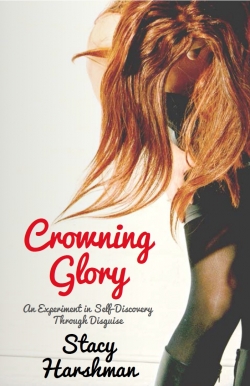
  • CROWNING GLORY by Stacy Harshman, an adventure memoir about self-image and anxiety

    CROWNING GLORY by Stacy Harshman, an adventure memoir about self-image and anxiety

    Hairstyles can speak volumes about your personality, or at least, that’s the idea Stacy Harshman explores in Crowning Glory: An Experiment in Self-Discovery through Disguise. A heartfelt portrayal of Harshman overcoming anxiety, her memoir is for anyone looking to read an uplifting story that’s also a sheer delight.

    Harshman spends weeks in New York City running an outrageous experiment: she records people’s reactions to the different colored wigs she wears. Her hairstyles range from a fiery redhead to a raven-haired goth. Her obsession with hair goes back to her adolescence:  “…my hair has been my archenemy since seventh grade. There was never enough of it, and what I had was wimpy.”

    In addition to the unusual experiment, readers are drawn to the author’s motivation to continue and complete her venture. Readers connect to not only the book’s premise, but to Harshman herself; readers advocate for her to succeed.

    However, beneath the hilarity of the experiment, readers see the author’s vulnerability:

    “I didn’t have a job to give me some sense of being a productive human being… I wanted to get one, but just the idea freaked me out…Before the depression, I had rehearsed and performed music…not being able to play out with my band killed me…just being around people was tough to impossible…I spent the rest of the day fighting panic attacks.”

    Readers also cheer for Harshman’s bravery to face and conquer her anxiety through finding her true self.  Her courage elevates the writing of this memoir, definitively distinguishing it from a self-absorbed story. The narrative reduces the stigma of mental illness that plagues so many people. The story offers hope and encouragement to those who have a mental illness, while bringing awareness and understanding to those who do not.

    The memoir demonstrates that appearance does play a role in social interactions to varying degrees. People’s feelings about their looks can become a determining factor in how others perceive them; a better understanding of self goes a long way in relationships.

    Some may find that the impact of the story is too diluted due to Harshman’s retelling of the experiment as she explores different looks. However, the book still resonates with emotion throughout, while still providing readers with a candid and fun experience.

    Readers get to embrace the past and present life of Harshman, sharing in her laughs, fears, and tears as she plays out her social experiment. An adventurous journey from start to finish, Crowning Glory provides fresh perspectives and insights about anxiety and self-image that might just inspire readers to conduct their own experiments with image in today’s society.

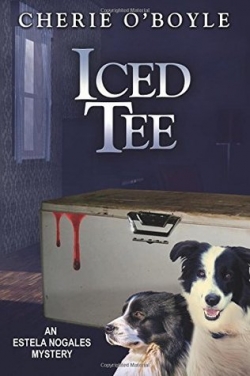
  • ICED TEE by Cherie O’Boyle, second installment of the Estela Nogales Mystery Series

    ICED TEE by Cherie O’Boyle, second installment of the Estela Nogales Mystery Series

    A freezer with blood trickling down the side. An inquisitive border collie. Cherie O’ Boyle stirs these intriguing images to bring readers another engaging mystery with Iced Tee: An Estela Nogales Mystery, the second book in her popular series. Boyle doesn’t fail to bring another fantastic narrative for cozy mystery fans.

    Readers are introduced to the quirky little community of Arroyo Loco located in the coastal mountains of California. A diverse community complete with its own obligatory Home Owners Association, filled with people you probably recognize from your own neighborhood: you have busybodies, town gossips, the obligatory community grouch, and the person who leads the association but no one really cares for them leading. Definitely a slice of California pie in this book!

    Our ensemble of quirky characters is topped off by one Estela Nogales who with her border collies Shiner and Scout, “live here happily in our weathered house under a big blue oak.” Estela is an amateur sleuth and psychologist by trade. At times self-deprecating, yet charming with a wry sense of humor, Estela really drives the story forward. Cherie O’Boyle crafts a character that makes the reader want to do two things: never put the book down until it is finished and pick it back up once completed.

    Estela’s perspective of the community is priceless and epitomizes the author’s desire to create a community that appears like any other real-life counterpart. Her descriptions are intimate and cozy, making readers feel right at home in the community in a feel-good type of way.

    The mystery unfolds rather quickly and humorously. Community member Tee is found dead, but this is certainly not your run of the mill death. Tee is discovered in a chest freezer. What ensues is a frankly hilarious exchange of community members on what resulted in poor Tee’s demise.

    The wild running theory is that Tee was killed over stolen ice cream; perhaps she was the ice cream thief. Did she fall backwards into the freezer, bumping her head, during this act of thievery? Was she startled by a fellow community member who caught her in the middle of this horrendous crime? After all, a broken camera was found in pieces on the floor near the chest freezer!

    You will have to pick up Iced Tee to find out what happens next. The narrative abounds with smaller challenges popping up in the background of the freezer mystery. If you enjoy puzzles presented in the form of a laugh out loud whodunnit, than this is this book for you. Cherie O’Boyle crafts another good old cozy mystery that will certainly appeal to a wide variety of readers and keep them guessing until the final page.
    Reviewer’s Note: This mystery was awarded the 2015 Chanticleer Book Reviews “Small Town Cozy” for Mystery and Mayhem Awards.

  • EVEN THE SMALLEST BIRD CASTS A SHADOW by Valerie Marie Leslie, a collection of youthful poetry

    EVEN THE SMALLEST BIRD CASTS A SHADOW by Valerie Marie Leslie, a collection of youthful poetry

    Spanning adolescence to the murky adulthood of the early thirties in each thematic chapter, Even the Smallest Bird Casts a Shadow also casts a light on the familiar struggles of maturity, romance, independence, doubt, depression, and further into the experiences of growing at the end of the last century. Altered little from their original creation, preserving the “dysfunctional integrity” of the youthful poems, Leslie varies the breathless experience with free form, rhyme, and lyrical verse.

    While plainly written for privacy and self-revelation, Leslie’s poems in nearly every form capture experience that might be known to any reader. Although each chapter covers roughly the decade and a half, there is a progression through the chapters that resembles the evolution of the narrative persona of Leslie. Back-to-school senses are evoked in the ramble of “During Science,” and there’s an affection to the poem “Hey Teacher,” which surely every high school writer has rendered some way. Heartbreak and romantic hope extend cover to cover but the early poems preserve the innocence of first attempts, culminating in the proud assurance of “The Ave Maria.”

    As the collection advances, the reoccurrence of life’s distresses, financial struggles, social pressures, miscommunication, failed expectations, and romantic disappointments, couple with resilience, ambition, and determination to reveal turmoil that’s as close as scented memory. The fallibility of human intention is confronted in Leslie’s poems at the same time as the loss of certainty in what she, we, seek from a life of surviving.

    The final chapters of supposedly reached adulthood still question the definition of that idea, and are laced with the aspirations and confusion of high school and college. The bitterness appears with simple sharp lines, “I didn’t get my degree for nothing,” and a young adult struggling to settle their purpose in life can find their frustration spoken from beginning to end in Leslie’s collection.

    Many of Leslie’s poems are untitled, and several throughout question, explore, or verify a sense of spirituality, connection, and security in God. These chapters plunge into the despair of doubt, guilt, and depression. In a life seeking love, Leslie expresses from an emotional pain felt in ages beyond the experience of her poems.
    Reading Leslie’s collection invited me to look back at memories and experiences of exactly the same time frame depicted, to question how I would define what I witnessed and learned then. The purpose of Even the Smallest Bird Casts a Shadow is to end a silence of self-doubt and shame, but it may easily motivate readers to delve into their past and youth for strength and inspiration.

  • The SILK and the SWORD by Ron Singerton – an epic journey from Rome to the Great Wall of China

    The SILK and the SWORD by Ron Singerton – an epic journey from Rome to the Great Wall of China

    Tacitus, the rebellious son of Gaius Septimus, learns too late that the temple that his gang has desecrated was his mother’s chosen holy place. Barely able to contain his murderous rage, Gaius issues an ultimatum to his son: Tacitus can spend the rest of his life as a slave, or he can work to redeem himself through military service.

    However, Tacitus has little time to absorb the shock of his punishment and his decision to join the military. Behind closed doors, Caesar’s consul, Marcus Crassus, makes a case for war and creating the need for many of the legionnaires. Tacitus is called to action, answering directly to the leadership of his centurion father, Gaius, who is Julius Caesar’s chosen “First Spear.”

    Cursed by his own arrogance and greed, Marcus Crassus’s military mission crumbles, leaving Gaius, Tacitus and a small band of surviving legionnaires to navigate uncharted foreign lands and savage cultures in their quest to return to Rome. With betrayal and deceit at every turn the soldiers suffer enormous physical and emotional beatings.

    Their survival, much less their success, hinges on the unlikely chance that Tacitus, an unrepentant son, and Gaius, an unforgiving father, will cast aside their differences and work shoulder-to-shoulder to restore order, hope and honor to their men.

    In this well-crafted follow-up to his first historical novel, “The Villa of Deceit,” author Ron Singerton delivers a cast of fresh, flawed, and completely believable characters through which he illuminates the universal strengths and weaknesses in all of us.

    Building upon the life story of his original main character, Gaius, the author invites the reader to investigate the events that have created a chasm between father and son. As Tacitus sheds his underdog status and takes the spotlight, we become invested in his trials and triumphs. And, as his respect for himself and his father grows, he becomes a hero worth rooting for.

    From the battlefields of Carrhae (now modern day Turkey), to the towering mountains and sweeping expanse of ancient Asia’s “Silk Road,” and on to the Great Wall of China, “The Silk and the Sword” is packed with vibrant historical and tactical detail.

    Culled from primary historical references as recorded by Plutarch, Pliny and Julius Caesar, the author illuminates the fascinating, multi-faceted private and public worlds of the Roman legionnaire. Fans of both historical fiction as well as Roman history will find Ron Singerton’s “The Silk and the Sword” to be a highly engaging, satisfying read about one of the most detrimental defeats in Roman military history.


  • BLIND FAITH: THE GAUNTLET RUNNER BOOK VI by S. Thomas Bailey, a powerful historical fiction novel

    BLIND FAITH: THE GAUNTLET RUNNER BOOK VI by S. Thomas Bailey, a powerful historical fiction novel

    Blind Faith: The Gauntlet Runner Book VI by S. Thomas Bailey is the latest in his award-winning series. This historical novel does well in carrying its readers through a part of the French and Indian War in 1759. We gain powerful insights, feeling the emotional swings and hazards faced by the characters. The author, a brilliant historian, weaves characters amidst historical facts, giving readers a view of the war’s colonist trackers and focuses on their leader, Jacob Murray––his tenacious endurance––and his dilemmas.

    The side story of his wife Maggie establishes her as a pioneering heroine. Their deep characterization inspires admiration when we consider the many folks who came before us––to settle North America. The underlying current of love gives us hope as we traverse through the agony of war and the challenges of the wild.

    Reader interest is captured on the first page. After the latest demoralizing battle defeat, Jacob’s compassion and disgust rises when he sees the pathos caused by inept British Officers. Jacob agonizes over his dilemma–stay and fight–or desert his men, including his son, to try to find his beloved wife, presumably lost to the north while searching for their child.

    Commissioned by the British Army, Jacob, and his fellow colonists operate as trackers gathering vital information for the British. He’s not a military man, but a settler who must fight in a British war. He leads his men using wisdom and strength but obeys commanding officers because he must. The secondary characters weave into the story either to support Jacob and Maggie or to be their foes––all characters have their own unique journey.

    The author truly resurrects the history of this war, making it alive and vivid. Readers are gripped within the reality of the fight. We feel the honor, courage, fear, horror, despair, and hope.

    Readers slog with Jacob and his men through the wilderness. Utilizing body language and dialogue, the author shows emotion and moves the story ahead. We feel their fatigue. We witness the unrelenting threat of attacks from the French and native warriors.

    In addition to battling human enemies, the men withstand rugged overgrown terrain and impassable waterways. They must obey officers of doubtful ability and endure the prejudice of the British against the lowly colonists. We see Jacob’s genius when he and his men work feverishly to prepare for the brutality of an advancing Canadian winter.

    Maggie engages readers in her own chapters. She forges through the wilderness amidst hostile Indians, searching for her two-year-old son.  Knowing she must shoot and kill to survive, Maggie pushes forward––on foot and in stolen canoes––against overwhelming odds. When hope waxes thin and she’s a captive of her circumstances, she ignores her suspicions and must trust others.

    We experience her vivid trials (similar to Jacob’s) in the wild tangled forests leading along the St. Lawrence River. She must reach Quebec City. We navigate the trails, get stuck in the waterways, and feel the impact of weather. We sympathize with her exhaustion and isolation. We can hear her smacking the swarms of mosquitoes and black flies.

    Jacob and Maggie can only groan inwardly, wondering about the fate of each other. Readers expect opposing forces during this mid-seventeen hundred French and Indian War. But a unique formidable foe arises––a traitor obsessed with revenge. He morphs within his growing depravity, turning into a deadly enemy spreading havoc and death.

    When we read the last words of the story, we are pointed to the next book in the series; we are left hanging in the midst of a crisis. So close, but not quite done. This reviewer is willing to wait for the next book for the outcome.

    Blind Faith by S. Thomas Bailey is an outstanding historical novel in its accuracy, craft, and ability to resurrect dynamic characters who are struggling to live another day.

  • WAKING REALITY by Donna LeClair, a courageous memoir about surviving abuse

    WAKING REALITY by Donna LeClair, a courageous memoir about surviving abuse

    Writing a memoir is more than merely putting facts down on paper and regurgitating the gory details of our painful past. We’ve all had heartbreak and joy, but the glue must be in the story. As American author Susan Shapiro (“Five Men Who Broke My Heart”) puts it, “A novel that is merely autobiographical is a great disappointment, but a memoir that reads like a novel is a great surprise.”

    Donna LeClair does the genre justice in Waking Reality, her page-turning memoir. It will make you appreciate full disclosure honesty rather than disparage over a writer evincing her suffering, which occurred mainly at the hands of men, including her father. This memoir is for anyone willing to go along for the ride with a writer who exposes her life’s nooks and crannies, some uplifting, and many horrifyingly unreal.

    Through engaging and well-written prose, LeClair relates the 1963 murder trial known as State of Ohio v. Bill Bush, a police sergeant who murdered three members of one family. Bush happened to be her uncle and the family he tore apart, hers. Due to the circumstances of the trial, LeClair and her sisters were in protective custody. Imprisoned at ten years old in her own home, she was forced to crawl so she “would not be within visual range of a shooter.” She stopped watching TV because the glowing screen alerted potential intruders when the family was home.

    Amid the horror, LeClair introduces the word “hologram” 27 times (I counted), evoking themes of truth, light, and above all, faith, as in this passage early in the book: “Lurking behind these seasoned holograms are withering spirits who weep in unfathomable chateaux, scrutinizing the tumbling of their gingerbread thoughts. None of our lives’ fantasies or any of our hearts’ desires can put crumbling pieces back together, but if you secure the courage to journey inward, the key to your happiness reflects there.”

    She doesn’t just tell us the story of her childhood fear, she sings it, using these fairytale-like passages: “I know angels carried me home that day because I was too young to make the journey unaccompanied, and hell is too far of a gallop for legs groomed not for devil’s track. Wings of godliness cloaked my thought’s defiance of belief and knowing; the communion of virtue and endurance heralded a sanctuary of nudities unbeknownst to my virgin eyes.”

    To some, the fantasy interludes may be a distraction; others will see the distorted sense of reality her child self endured. “Mirror, mirror of the truth, I beg of you, show no more. Why do I have to look inside? It would be easier to hide… Hide, if you wish, but there is no escape to all those things buried deep inside.”

    LeClair apparently honed her literary acumen in high school, but not by attending class and taking notes. Detecting a deep sadness in her student, LeClair’s English teacher excused her as long as she produced a short story or poem by the end of the day.

    Waking Reality is recommended reading for anyone looking for an engrossing account of a woman’s courageous story growing up in the 1960s. You will want to see that she emerges through the dark tunnel of abuse; LeClair has two children and three grandchildren and does lectures around the country.

  • THE DREAM JUMPER’S PROMISE by Kim Hornsby, a romantic thriller novel

    THE DREAM JUMPER’S PROMISE by Kim Hornsby, a romantic thriller novel

    A mysterious murder and vivid, strange dreams are the perfect recipe for an engaging story. Readers who enjoy a good adrenaline rush will find this a brilliant romantic thriller.

    Kristina (Tina) Green’s life was perfect. She owned a diving shop on the beautiful island of Maui, spending her days diving along the coasts and her nights with her loving husband.

    But when her husband disappeared, Tina’s life was uprooted, and ten months later she finds herself still unable to move on until she discovers what happened. Worse, her dreams relentlessly push her into the eerie depths of the ocean each night, and she is convinced that the ocean is trying to tell her something.

    As Tina desperately tries to move on from her husband’s assumed death and her mysterious dreams, someone from her past enters her life unexpectedly. The person has a preposterous offer of help by entering her dreams to determine what happened to her husband. Tina reluctantly accepts his aid, but her family and friends begin to act oddly. She finds herself on the brink of insanity as everyone loses her trust; she can only cling to the hope of resolving her husband’s mysterious disappearance.

    Kim Hornsby’s The Dream Jumper’s Promise begins with a heartbreaking premise and quickly envelops the reader in a cloud of intrigue. At first, the romantic energy of the novel and the developing background of each intriguing character is enough to keep the reader hooked. But soon it becomes clear that the death of Tina’s husband is a larger puzzle begging to be solved. Tina is a strong protagonist worth rooting for. As the mystery develops, Tina begins to lose herself, and the reader must advocate for the resilient woman to push through as she teeters between the waking world and the dream world.

    The narrative is further complicated by the strain put on Tina’s relationships with the people around her. The complexity weaves itself around Tina as she copes with her husband’s mysterious death, having someone invade her dreams, and trying to figure out whom she can trust. Readers are thrust into Tina’s mind as they’re left unsure with who and which world is telling the truth.

    The Dream Jumper’s Promise, the first in Kim Hornsby’s The Dream Jumper’s series,  is a sexy, paranormal thriller that gets the blood pumping and the heart racing.

  • JESSE by Glen Alan Burke, an impactful coming-of-age story

    JESSE by Glen Alan Burke, an impactful coming-of-age story

    Readers are transported to the 1960s in the deep South by Jesse, a gripping and engaging read. With a dynamic, inspirational protagonist amidst the struggle of segregation, Jesse is a compelling and gut wrenching fiction for anyone interested in past and present social issues.

    Jesse takes place primarily in Alabama, with some flashbacks to Louisiana. The protagonist Jessup Christopher Savorié faces the challenges of being a black youth growing up in the sixties. Life was not easy for Jesse, and Burke does a fine job bringing this fictitious character to life, while dealing with the pain and hurt of racism in the segregated South.

    As the story unfolds, Jesse’s life doesn’t start off so well. He is frequently called out by a class bully for having black lineage, but Jesse resists no attacks that come his way, either physical or verbal. Jesse initially is the only black student at Jess Rulam School, and he learns to be quiet and keep to himself.

    We get our perspective of Jessie through the eyes of a classmate named Matt. Matt is the narrator of the book and tells us early on,

    “The first time I felt pity was when I saw Jessup Christopher Savorié. Oh, I had felt the sympathy for farm animals that were hurt, birds that tumbled out of the nest and such in my brief six years, but this was different, and I didn’t like it. My young brain couldn’t quite process what I was supposed to do. Helping someone is what the grownups do, so I just sat in my seat and did nothing.”

    The racial abuse Matt witnesses is typical for the era only magnifies itself when the nearby, all black school named Orr closes and the black student population is sent to the white Jess Rulam high school. Things certainly aren’t getting much better, but there is one glimmer of hope for Jesse and his classmates. The book tells the tale of not only Jesse’s coming of age, but of a community struggling to overcome racial divide.

    Jesse can play football and he can play it well. Amidst all the hate and racial angst Jesse, reluctantly, draws the focus away from the social issues of the day and unites an entire community.

    As one character states, “Did you ever notice it’s always the ones with inauspicious starts that do things in the world— you know, the ones that make a difference.”  In one magical game Jesse caused a miracle. A miracle that drew the attention of Coach Bear Bryant of Alabama football lore.

    “That one huge dose of humanity known as Jessup Christopher Savorié had taught the entire school, town, and community what it was like to be a human being— to care for something other than yourself, to trouble yourself for others.”

    Pushing through the dense racism of the South stands a tall and proud character. Burke has crafted Jesse as a character that teaches us all a lesson in how to live harmoniously with our fellow man. Jesse is a fearless figure of equality in a time and place where racism ran rampantly.  

    Burke shines a light on a subject matter not often spoken of beyond hushed whispers amongst like-minded friends. He tackles sensitive social issues that we still face today in the United States. The narrative is vivid in its details and plucks at your heartstrings as you read about children facing adult issues at a young age.  

    A moving, coming of age story set in a hapless time, Jesse demonstrates how the power of love and friendship triumphs over discrimination in a place where all hope seems lost and the odds are against you.

  • DUST ON THE BIBLE by Bonnie Stanard, a moving coming-of-age story

    DUST ON THE BIBLE by Bonnie Stanard, a moving coming-of-age story

    A poignant tale from start to finish, Dust on the Bible by Bonnie Stanard is a vivid and emotionally captivating story about the strife of a family living in rural South Carolina in 1944.

    Lily, a twelve-year-old farm girl, wraps readers around her heart. While struggling to understand the mysteries of death, God, family, and school bullies, she endures poverty and agonizes over her missing father. Lily is hungry for knowledge, but a sixth grade bully turns school attendance into misery. Lily is an easy target; she is quiet, poor, and wears homemade feed sack dresses. This is Lily’s story, one year of her life when she transitions from childhood innocence to the edge of her awakening.

    Readers first see Lily on a cold, October morning, while she warms her backside in front of the cook stove. Stanard does a superb job in crafting imagery that evokes the senses; readers can see the small kitchen and feel the morning chill. The author’s descriptive words and phrases are fresh and easy to relish as readers follow Lily through the seasons, from bitter winter to scorching summer.  

    Lily’s consummate yearning to know what happened to her father moves the plot steadily forward. No one will talk to her about him, but she keeps asking. And every time she does, it causes trouble. Lily is bright, curious, and needs answers. When family members do reply to her questions, they keep comments short and simple; they shirk her questions to try to shield her from something they believe that she doesn’t need to know. But, this creates even more questions and adds fuel to her active imagination. Nonetheless, their answers paint character sketches of each person in the story.

    Grandpa owns the one-thousand-acre cotton farm that he runs without the help of a tractor. He and Grandma have opened their home for four of their five adult children, including Lily’s mother and Lily herself. The overcrowded home is without indoor plumbing, cold on frosty winter mornings, and oppressing with stifling heat in the summer. They all share the endless chores and the long days of hard-scrabble living for a meager living.

    Stanard creates a family with a non-nonsense way of life, but the family also carries a deep abiding love for each other; no matter what. Even when Lily’s youngest uncle, Archie, goes overseas, despite the family’s subdued fear, their love for him shines through in their reaction to the letters he writes to them.

    Stanard has created a strong protagonist in Lily—one  in whom we can feel the relentlessness and restlessness of youth as shown in one of my favorite lines in her work.

    “She daydreamed of sleeping late as she wanted to. Of swimming in Ma George’s pond. Of catching lightening bugs and building forts. Of shooting the .22 rifle.  Most of all she wanted Grandpa to teach her to change gears so she could drive the pickup.”

    A few paragraphs later, Lily’s reality ensues.

    “Don’t matter whether she wants to. Lily’s old enough to know what work means,” said Florence. [fusion_builder_container hundred_percent=”yes” overflow=”visible”][fusion_builder_row][fusion_builder_column type=”1_1″ background_position=”left top” background_color=”” border_size=”” border_color=”” border_style=”solid” spacing=”yes” background_image=”” background_repeat=”no-repeat” padding=”” margin_top=”0px” margin_bottom=”0px” class=”” id=”” animation_type=”” animation_speed=”0.3″ animation_direction=”left” hide_on_mobile=”no” center_content=”no” min_height=”none”][Lily’s mother replied to Grandpa when he told Florence that maybe it was too hot for the twelve-year-old Lily to work in the summer afternoons.]

    Stanard’s writing deftly shapes the narrative and the setting. Her pitch perfect dialogue conveys Lily’s “tween” age while conveying the social strata of her world. Readers are pulled into her thoughts, her reactions, and the family dialogue––walking through her world, seeing it through her eyes, and feeling it through her heart. Lily is a brave individual seeking to find her own place in the world while enduring difficult times on many fronts.

    Dust on the Bible is a moving novel with an honest perspective of what it was like for some who grew up in poverty in the South during the Second World War. The coming-of-age story of Lily is candidly related, drawing on all the senses. Lily’s story and her world will linger with readers long after they’ve finished reading the final pages.

     [/fusion_builder_column][/fusion_builder_row][/fusion_builder_container]

  • CHASING NATHAN by Jeanette Hubbard, a humorous suspense novel

    CHASING NATHAN by Jeanette Hubbard, a humorous suspense novel

    An epic convoy of bad men, good guys, tough women, and international operatives who zigzag across the Oregon wilderness chasing a truck-load of marijuana briquettes, a million bucks in cash, and one lovable border collie in this fast-paced satire by Jeanette Hubbard.

    Claudie, independent and relationship-weary, encounters Nathan, an affable bookstore owner, when the two camp side-by-side in what should be an idyllic woodsy retreat. Sparks of mutual interest waft over grilled salmon and chilled sauterne, until a nasty character named Hammer in a clapped-out truck decides to park nearby, barely squeezing in among the boulders. He’s loud and foul-mouthed, and he abuses his border collie. 

    The next morning, Nathan and his Winnebago are gone, along with Hammer – only the broken-down truck and the nervous collie remain. Claudie, a bit miffed at Nathan’s defection and suspecting foul play, stows the mistreated canine in her car and buzzes off to find the nearest lawman. Little does she realize that she has become part of a massive dope deal gone wrong, with Nathan and his old female friend Dani, an espionage expert, in the thick of it.  

    Claudie will learn a lot about Nathan, who, it turns out, is not just the jolly bookworm he appears to be; and there’s a lot Nathan will discover about the surprisingly intrepid Claudie. She worries about Nathan as she fends off the weirdos trying to take her dog away, while Nathan thinks of her fondly even as he makes a daring escape from the violent Hammer and his evil twin Sprocket.

    Author Jeanette Hubbard introduced Claudie, a seasoned sixty-something, in her first novel, Secrets, Lies and Champagne Highs. In this rollicking sequel, Hubbard displays her knowledge of highways, weaponry, dopers, and spies. Chasing Nathan criss-crosses genres: part hippie, biker, road-tripper’s fantasy, part thriller with intellectual undertones, love interest, and liberal lacings of humor.

    Claudie appeals as a gutsy heroine with one hand on the steering wheel, the other flipping a bird at the thugs who try and fail to grab the collie. But she has her smarmy side, too, secretly admitting that despite her best defenses against a new romance, Nathan makes her feel all warm and fuzzy.

    Chasing Nathan has a non-stop plot that celebrates the back roads, the great Northwest, and two saucy seniors who can flirt, fight, and floor the accelerator as the situation demands.