Category: Reviews

  • RIO – The STREET KID STARGAZER by Craig S. Wilson – a thriller coming of age story that takes place in contemporary Rio de Janeiro

    RIO – The STREET KID STARGAZER by Craig S. Wilson – a thriller coming of age story that takes place in contemporary Rio de Janeiro

    This international YA crime thriller, one that could have been ripped from the latest headlines, is set in beautiful Rio de Janeiro. Juxtaposed against the glamorous hi-life of the iconic city, the author—Craig S. Wilson brings into focus the city’s gritty and deadly underground crime scene with its drug lords and cartels.

    The destitute lives of 16-year-old Lucas and his siblings are already placed in turmoil when their mother passes away. But their troubles are exasperated when Lucas’ older brother is suddenly murdered in cold blood outside their squalid tiny hovel in the shanty town (called a favela) where they live a meagerly existence along with millions of other impoverished Brazilians.

    Instead of panhandling, young Lucas tries his luck at shining shoes. But in an impromptu moment, he steals his customer’s wallet. Daniel Burke, a visiting American, is his rube. Daniel traveled to Rio to reconnect with old family roots, but is now left with no money and is taken pity on by Gabriela, an enchanting airport employee whom he asks for help. Thus, Wilson begins weaving his tale of the Rio Street Kid Stargazer.

    Lucas, needing a permanent means of support for his younger sisters, turns to a widely-feared drug lord, Antonio Cruz Mendez—known as “Dez”–for work. When a drug deal turns violent and Lucas must flee, he is shocked when he bumps into Daniel again. When Daniel and Gabriela, simply trying to retrieve his wallet, they inadvertently become dangerously entangled in young Lucas’ life that now includes dealing with corrupt police and the underground crime syndicates turf wars.

    Wilson did hit a couple of road bumps with this first novel, including pieces of the plot and character motivation that some may find on the side of unrealistic. Some readers may decide that the author is telling the reader too much while and not “showing enough.” But many will find that these shortcomings do not diminish the likability of the protagonists or the investment in Lucas’ mental chess game with “Dez.”  Like his younger protégé, Dez is a product of his environment—the poverty stricken “favelas” in which it seems that the only way to escape is by succumbing to a life of crime or face a destitute future.

    Many will appreciate the novel’s honest snapshots of Rio de Janeiro, which includes its luxurious hotels and beautiful landscapes while thoroughly delving into the ugly underground and severe issues of such abject poverty. Wilson crafting of Daniel’s character is allows us to see Rio as a newcomer. We soon learn, as Daniel did, that this unique city’s charm has a lot to offer, but is quite risky for tourists and locals alike. Daniel’s character is developed as he becomes more connected with his roots to Rio and is forced to reconsider his life and his “success” as an employee of Lehman Brothers investment bank.

    Overall, Wilson’s cultural interpretation of Rio de Janeiro, along with his grasp of its extreme poverty level and the seedy underground that takes advantage of it, is reason to pick up this book for an informative cultural  read—especially with the aftermath of the 2016 Summer Olympics and the FIFA World Cup and the fall of Lehman Brothers. The romantic elements, along with the chaotic and complex action will have many readers looking forward to book two in this series that states “Sometimes good people do bad things for a greater good.”


  • WOLF EYE’S SILENCE – Book 1 by Elisabeth Ward – an enlightening and satisfying tale of the Old West

    WOLF EYE’S SILENCE – Book 1 by Elisabeth Ward – an enlightening and satisfying tale of the Old West

    This is a page-turning story of survival that takes place in the Old West. It is a story about one cultures struggle to maintain their identity while the other embarks on expanding their own. “Wolf Eye’s Silence” is the first in a five-book series by Elisabeth Ward. Set in the Wyoming Territory and covering the time period from 1864 to 1880 the story follows two brothers. Deeply entrenched in the interactions between the Cheyenne and the onrush of whites from the East are twelve-year old Samuel Ferguson and his thirteen-year old brother Johnny whom we follow over the course of twenty years.

    In the opening pages of the book the brothers are separated from their parents and wagon train which has been attacked by Indians. Their father is killed in the wagon train attack and they watch helplessly as their mother is led away by rope, a captive of the attacking Cheyenne. As first instincts take hold they do what anyway young boy would do: they run and hide. Eventually they are rescued by a US Army scouting party and taken to Fort Teton.

    The boys are taken in by the commanding officer, Major Armstrong and his wife, Bessie. The boys however handle the horrible event that they witnessed in opposite ways. Johnny readily adapts, pitches in to assist in day-to-day life, but Sammy becomes withdrawn, barely speaking or interacting with others. Major Armstrong imparts a respect for all inhabitants of the West including the Indians but sprinkles this with caution. Johnny in particular consumes this teaching and eventually joins the US Army.

    Sammy however takes a different life path. Major Armstrong begins to realize that in essence Sammy is being kept prisoner in the fort as he has no interest in the military life. Sammy is sent to live outside the fort on a homestead with “Miz” Lizzie Heiter and her son Josh. Lizzie Heiter is a widower who can stand her ground and becomes a central and enjoyable character to this tale.

    This engrossing story, like life contains, fleeting moments of joy sprinkled amongst the pain, anguish of losing family, and fear of what lies ahead with the Indian nations. Through it all Elisabeth Ward builds a compelling story that enlightens readers while keeping them engrossed in the daily struggles of an unpredictable and agonizing collision of cultures. Author Elisabeth Ward does an exceptional job bringing the very real struggles of survival to with of the story’s cast of fascinating characters vividly to life in this book.

    Sure to satisfy, this well-crafted and fast-paced story is aimed at an older young adult market and those who enjoy a satisfying Old West tale that takes place after the gold-rush and during the building of the First Transcontinental Railroad.


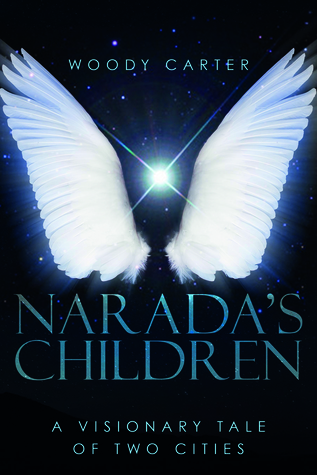
  • NARADA’S CHILDREN: A Visionary Tale of Two Cities by Woody Carter – exploring universal values

    NARADA’S CHILDREN: A Visionary Tale of Two Cities by Woody Carter – exploring universal values

    A colorful fable resonates with contrasting modalities of mysticism and social action, exploring how culture and religion can separate us or bind us together.

    Narada is a traveler and a stranger when he first meets the lovely Hohete and her people in the ancient city of Ja’Usu. Given water, food, and shelter by Hohete’s family, Narada is sharply questioned by village elders who are stymied by his forthright statement that he is a representative of a deity named The Great Mystery. So they conspire to remake him as a storyteller, to reduce his power and profit from his talent for spinning yarns by selling refreshments to his audience.

    Narada hoodwinks them, though. He gathers all the people, even the despised Oromo beggars, and arranges for the poor to be given food instead of buying it. He then weaves a wondrous story of another city, Oakland, California, in the early twenty-first century; there, Arthur Renfro, a community activist, is trying to improve conditions for his fellow African Americans.

    The people of Ja’Usu are magically able to “see” the story as Narada tells it, becoming immersed in the strange ways of a civilization where women have power, and rejected groups like the Oromo may be objects of social concern, not disapprobation.

    Narada subtly constructs his parable, measuring the relative power of religion, psychiatry, and social change to improve individual lives and using Ja’Usu and Oakland as contrasting examples. In Oakland, Arthur Renfro proposes meditation as a radical method to resolve the deep inner conflict within the spirits of his people. In Ja’Usu, the tale of Arthur’s quest for equality and aid for minorities will gradually break down ancient taboos, presenting the potential of liberation for women like Hohete and for the oppressed Oromo.

    Narrative theologian and author Woody Carter has worked with organizations concerned with the welfare of African Americans like those he depicts in Narada’s Children.

    Carter’s use of language is enchanting and emotive, evoking folk memory like a tribal griot. Like his audience in the fire-lit square of Ja’Usu, readers will be lulled and lured into his tale and see, perhaps, how their own perceptions accord with “the imperishable records of celestial light” from which the Narada draws his wisdom.

    Through the interactions of people in two great cities—one ancient, one modern—Narada’s Children explores the universal value of genuine fairness and equality. Masterfully written, this uplifting and encouraging work is a spiritually transporting tale that is much needed by those of all races and creeds—especially in today’s turbulent times.

  • DECODING the BUTTERFLY PROMISE: Regaining Our Sacred Power by Gail Siler, PhD. — a spiritual journey

    DECODING the BUTTERFLY PROMISE: Regaining Our Sacred Power by Gail Siler, PhD. — a spiritual journey

    People who feel a pull to go beyond what Dr. Siler calls “Normalville” will find treasures in this book. Devotees of Carlos Castenados will find this work particularly interesting. Followers of different paths can find gems to enjoy. I admire the author for sharing her extraordinary life with us.

    During intense seeking and searching for two decades during her unique spiritual journey, Dr. Siler strives to trust the process and not just the results. She feels a knowing pulsing within her and a compulsion to deliver a message, but before she can pass along the information, she feels that she must increase her spiritual energy. Fear and self-doubt block her, swinging her between the positive and the negative. Her supernatural mentors help her forge ahead through periods of deep devastation by easing her journey with intermittent gifts of joy, augmented by physical clues beyond coincidence—clues holding deep meaning for the Dr. Siler.

    The author includes a handy road-map to help navigate the book that is divided into four parts. Siler reminds us that this is not a work of fiction, but is an account of her personal experiences. She also warns her readers that at times they may be confused or find that the information meanders and wanders. However, she advises to keep reading as that was her intent so that the information she presents “will percolate” and will make sense as the readers’ minds awaken to flashes of insight.

    Dr. Siler tells us that her guides (spiritual and in the flesh) withhold enlightenment from her until she re-energizes her spiritual maturity and is ready to receive their wisdom. Clarity might come to readers like clarity came to the author, at the end of a stage in their spiritual journeys.

    Dr. Siler believes the time is at hand for the feminine energy, the right brain creative side in both men and women, to reach its fullness. She states that the attitude of inequality that lingers in some men and women must cease. And moreover, unequal treatment in the world at large must stop.

    Decoding the Butterfly Promise: Regaining Our Sacred Power by Gail Siler, PhD (an international consultant and social scientist) invites us to witness her unique spiritual journey. Our journeys are destined to take humankind from the negative to the positive—the power of love is the lesson that Dr. Siler imparts to her readers. Overall, this work will raise questions and open doors to different perspectives, and the satisfying ending promises more to come in the next of Dr. Siler’s series The Godmother Chronicles. 

  • THE EX LOTTERY by Kim Sanders – a clever twist on the modern day fairy tale

    THE EX LOTTERY by Kim Sanders – a clever twist on the modern day fairy tale

    When art teacher Tory Adams trades in her heartache for a lottery ticket romantic sparks fly in this humorous tale of misunderstandings, half-truths and the pot of gold at the end of the rainbow.

    Elementary school art teacher Tory Adams grew up believing in the power of love. But after three disastrous relationships, Tory realizes that the “love-at-first-sight” tales spun by her grandmother exist in a time and place of memory, far from the reality of Tory’s world. Or do they?

    On a whim Tory buys a lottery ticket, basing the numbers on the dates she was unceremoniously dumped, and when her numbers come up gold, men start crawling out of the cyberspace woodwork. With an overnight tally of 23 marriage proposals, Tory needs an out.

    Her best friend, Emma, prods Tory into a full head-to-toe makeover, trading in her small town Southern style for a sleek, new cosmopolitan look. And the new Tory “Victoria” Adams is transformed inside as well as out. She packs her designer bags and boards a plane to Ireland, in the hopes of buying the castle where her grandparents kindled their great love.

    Armed with her new attitude, a box of keepsakes and her grandmother’s Claddagh ring, Tory is determined to follow her dream and find the blue dragon of her childhood. But plans are never etched in the proverbial Blarney stone and when the world’s most eligible woman collides with the world’s most reluctant bachelor sparks do fly.

    Author Kim Sanders (“Shades of Gray”– a murder mystery) delivers a fun, eclectic cast of characters in this humorous tale of misunderstandings, half-truths and miscommunications. From Tory’s two geeky exes who are out to claim their parts of the lottery pie to the super-sexy Irish rogue, Shane, whose reluctance and secrecy could lose him the woman he loves, Sanders illuminates the human condition with a gentle insight that has the reader rooting for each character regardless of their motives. And then there’s Tory’s ex, Carter, a Special Forces man of mystery, whose revelations have the power to hurl Tory back into heartache.

    Set in the pastoral beauty and magic of the Emerald Isle, “The Ex Lottery” is a clever twist on the modern-day fairy tale, part rom-com, part travelogue and one hundred percent romance that demands a follow-up book. First Place in the New England Reader’s Choice Awards and Winner of the Chatelaine Award for Contemporary Romance, Kim Sanders’s “The Ex Lottery” is a must-read entertaining romp in the grass for anyone who believes in “romance and happily ever after.”

  • The BROTHERHOOD of MERLIN: Book One by Rory D. Nelson – an intriguing twist to Arthurian legend

    The BROTHERHOOD of MERLIN: Book One by Rory D. Nelson – an intriguing twist to Arthurian legend

    The book centers around a sort of feudal fantasy world, where guns mix with magic-ish swords, and King Herod and other dastardly villains of history plot against Merlin and his brotherhood, who seek to defend the righteous and the innocent. A couple of innocent girls are taken captive by a coalition of villains early on, and we meet a roving cast of heroes who seek to bring down these evildoers.

    Nelson has a real gift for action scenes. His action sequences are quick and brutal and carefully plotted out; as the characters run from arrows or crouch to prepare a shot or disarm (often literally) a roomful of weapon carrying warriors, you will feel your breath pound in your chest. It helps that Nelson has painted a brutal world, full of quasi-feudal warriors in service to various degrees of corrupt royalty, a world that only gets more corrupt and darker as the work goes on.

    However, the work loses momentum in the dialogue and the character development elements. Nelson uses a pseudo-Elizabethan constructed kind of slang, but it never stops feeling formal and slips into the constructions and the humor of actual slang. I think most readers will have issues connecting with the characters because of the way they talk. I’d have liked to see the slang toned down to a few different phrases. I was especially disappointed because some of the phrases seemed familiar, so I Googled “Ai cully” and a few other phrases and found out they are common slang from Stephen King’s “The Dark Tower.”

    Female characters were also a bit thin, with the most important one being a prisoner throughout the majority of the book, although, there was one wicked villainess. The male characters were developed as warriors, but I never quite felt like they were well-rounded, strong characters outside of the battlefield—most of the book focuses on their skills in battle and keeps returning to these gory action scenes.

    While this was a fun read for action–it’s obvious that Rory Nelson has potential as a talented writer as shown by his carefully crafted battle scenes, which are known to be difficult to write– I would like to see him bring this unique story concept to its full potential by developing his characters and make them more multi-dimensional along with original dialog to give them voice. Again, “The Brotherhood of Merlin” is an intriguing twist of Arthurian legend fantasy with science fiction elements with a lot of battle action.

  • BELIEVE by Annaliese Darr — Magical Realism & Mysteries

    BELIEVE by Annaliese Darr — Magical Realism & Mysteries

    Spring O’Flaherty has an unusual problem. From childhood she’s been not only clairvoyant, but also able to see auras. These are not just faint, she can see them if she squints auras, but vibrant auras, dark auras, life force fading auras –a virtual kaleidoscope of energies always swirling.

    Fortunately, she comes from a loving and religious family that understands her special talents and helps her deal with them the best that they can. Her father is a preacher in the Blue Ridge mountain country of western Virginia, and often takes the family on revival trips and her mother doesn’t discount her daughter’s unique “gift.”

    Even with her family’s support, Spring has some terrifying experiences in her youth that made her suppress her powers and reject God. (“Holding the person you love as he bleeds out is enough to turn anyone into a cynic,” she tells her mom.) She walks away from the painful past and works hard to build a normal life, becoming an attorney in Atlanta where she tries to block her “gift.” Her new world disdains and disavows the mysterious, intangible forces, which suits Spring just fine.

    That is, until she meets Jed Collinsworth, a charming, handsome, and well-bred Southern gentleman who is also a top-level district attorney from a wealthy family. When her dream comes true and he asks her to marry him, she then begins to balk from fear that learning of her powers will not only repel Jed personally, but that worries that her “gift” becomes public knowledge that it might ruin his career.

    So, she seeks help from a psychologist, who takes her back to the beginning. Through revisiting her memories, she starts to integrate who she was with whom she is, while hoping to find a way to live with her gift, and trying to be honest with the man she loves without scaring him off or ruining his career.

    Annaliese Darr, the author, writes of the Appalachian culture of tent revivals, blue grass & gospel music, and beliefs in “psychic gifts” and the old ways with a deftness and clarity that juxtaposes Spring’s new life chapter in the big city. Darr’s dialogue and characters are refreshing and captivating while her heartwarming story encompasses mystery and murder.

    The novel is split between her backstory, brought out through the counseling sessions, and the front story of how she deals with Jed and her powers (“I could feel the noose of destiny tightening around my neck”). The narrative is straightforward with no ruffles and flourishes, but is written sometimes with witty and loving banter and sometimes it is written with palpable sadness that steps the reader through a complex tale and time switches without confusion. Darr balances the mystery of “what happened?” with “what happens next?” as she capably builds the suspense and tension on several fronts.

    Spring’s refusal to tell Jed her secret is frustrating to him and to her—especially because Jed is someone whom we, the readers, can believe can deal with it. However, at the point her hesitation turns implausible, we recognize the true battle Spring is fighting. Readers will find themselves rooting for Spring (and for Jed) and for the bad guys to get what they so justly deserve in this very special story that will touch your heart and pull you in.

  • NAZI WEREWOOFS by Karl Larew — a zany and fun vampire spoof for adults

    NAZI WEREWOOFS by Karl Larew — a zany and fun vampire spoof for adults

    In Karl Larew’s second humorous and highly entertaining vampire spoof, the battle continues in which the Good Vampires seek to protect their own (and all good people) against the greedy aspirations of the power-seeking Bad Vampires.

    The Good Vampires, Lance Blodgett and sidekick Nigel, along with their normal human and gorgeously sexy girlfriends Carol and Becky, are called to action again.  The book has refreshingly laugh-out-loud humor with a smidge of the burlesque for the middle-age and over set who appreciate the irreverent early James Bond flicks, the original Wild Wild West and Star Trek series as opposed to the angst of the Twilight’s vampire and werewolf stories.  All in all, a hoot of (or should I say a “woof”) of a read to be enjoyed with your favorite cocktail.

    (If you’ve read Larew’s Bad Vampires, you already know of course that Good Vampires, while human in most respects, have a metabolic need for a periodic sip of human blood. [fusion_builder_container hundred_percent=”yes” overflow=”visible”][fusion_builder_row][fusion_builder_column type=”1_1″ background_position=”left top” background_color=”” border_size=”” border_color=”” border_style=”solid” spacing=”yes” background_image=”” background_repeat=”no-repeat” padding=”” margin_top=”0px” margin_bottom=”0px” class=”” id=”” animation_type=”” animation_speed=”0.3″ animation_direction=”left” hide_on_mobile=”no” center_content=”no” min_height=”none”][Carol has become Lance’s quite willing donor, as well as very human lover.] Bad Vampires, on the other hand, are common and uncommon criminals in every respect, not only hungering for money and power, but also cruelly biting and killing innocent humans to gorge on their blood.)  

    This second tale, an especially furry one, begins exactly where the first left off, with Lance and Carol snug in bed…that is, until they are abruptly interrupted by a pounding on their door. Lance finds a disheveled and distraught Becky, crying that she has been attacked and bitten by a Bad Vampire in Central Park. Lance and Carol get the tall, beautiful Nigerian to the Good Vampire Dr. Griswold. Seeing fleas on Becky, Dr. Griswold tells the three that he has just been informed by Arleigh Granville, head of the New York Association of Good Vampires, that a Bad Vampire in Germany has concocted a drug to turn people into werewolves (good hosts to fleas), who then infect their victims with ‘werewolfism’. Becky must be such a victim—a diagnosis immediately confirmed when she appears to be transforming into a werewolf. Becky, however, turns out looking more like a Labrador retriever and is soon recognized as a ‘werewoof’, wagging her tail. Fortunately, the good doctor Griswold has an antidote, injections of which return Becky to normal—thank goodness!

    When Mr. Granville learns what has happened, he explains to the foursome that a Bad Vampire in Bavaria, Baron Wolfgang von Verdammte, is behind the werewolf plot. He appoints the four as Good Vampire secret agents, and they are soon on their way to Europe, tasked with squelching the werewolf plot and its aim of a Bad Vampire takeover of the world!

    Starting in Paris, the action moves on to Germany, with Carol ending up at the Baron’s castle in Bavaria (perhaps Mad King Ludwig’s Summer Palace).  One incredible (believe it!) adventure follows another for the secret agents, with more human-werewolf or werewoof transformations, double agent and mole (not that little rodent) infiltrations of both the Good and Bad Vampire contingents (until neither side is sure who’s which!), a one-upmanship struggle over a coffin purportedly containing the remains of the Baron’s mentor, no other than Adolph Hitler (no kidding!), wild goose and car chases, one-sided shootouts (guess who always wins), and pussy galore (with even the werewoofs wanting their share). Be it known, however, that no matter how hard the Baron, aka Wolfie, craves Carol, both as his “little ginger snap” and as “the most Aryan uterus conceivable” (for his planned Fourth Reich), this sexy secret agent is one skillful evader whose heart belongs to Lance.

    If you’re not willing to join in this cock-eyed parody between the Vampires and cheer the Good Vamps on to victory, go find some other book (something by Mary Shelley, perhaps?). But if you’d like to laugh yourself to sleep, Larew’s zany tales—both Nazi Werewoofs and Bad Vampires—will offer you a fun and entertaining diversion.  Then you can ponder how this retired college history professor came to write these amusingly unconventional tales.  

     [/fusion_builder_column][/fusion_builder_row][/fusion_builder_container]

  • ENVOY of JERUSALEM by Helena P. Schrader, Ph.D. — Dramatic & Inspiring

    ENVOY of JERUSALEM by Helena P. Schrader, Ph.D. — Dramatic & Inspiring

    A page turner that pulls back the curtains on history, Envoy of Jerusalem reveals a vivid cast of characters and an intriguing account of the 12th century Crusades– a well-researched and compelling tribute. Fans and readers of historical fiction will find this work immensely satisfying.

    This is the third and final installment in a series of three books Schrader has written with the Crusades as her backdrop. This third volume begins in 1187 after the Christian armies have just suffered defeat at the hands of the enemy. To make matters worse they have lost Jerusalem and the mood is defeatist and gloomy. The story once more centers on the author’s heroic figure of Balian Ibelin, as well as his family and entourage. A quick search of history reveals that Balian is an actual historic figure who lived from 1143 to 1193. I thoroughly enjoyed Schrader’s thoughtful and vivid portrayal of Balian d’Ibelin.

    Envoy of Jerusalem is a perfect bookend to Schrader’s epic trilogy on this period in Christiandom’s history. As with the other two volumes, Helena’s masterful writing leads readers deeper into the intriguing storyline as each page turns. She sprinkles a huge cast of characters throughout, and breathes life into each one making them seem as if they will walk right off the pages. Her descriptive detail of each scene makes the reader feel as if s(he) is right there–an eyewitness to history in the making in this sweeping epic.

    History truly does come alive in this series. The Crusades were one of the most harrowing times in the early Middle Ages—kingdoms were at stake and religions were galvanizing, and future trade routes were in the making. The Crusades were a struggle both physically and financially as well. Whether they were effective or even necessary are still debated by historians. Yet one thing is certain: They left an undeniable mark on the course of human history. Very real battles occurred that affected very real people. Author Helena Schrader brings the human factor to the forefront in “Envoy of Jerusalem.”

    Yet action abounds as well, as it is a story with a major military conflict as its focal point, along with political intrigue, noble family dynamics, and power plays that that will pull readers in and won’t let them go. In short, Envoy of Jerusalem effectively takes on the tumultuous times surrounding the Third Crusade with the Holy Land as its setting, and Schrader portrays multiple aspects of life of this time and place vividly while maintaining historical accuracy.

    All of these inner workings of a massive military push are dealt with in this series of books that build up to the grand finale in Envoy of Jerusalem. It takes a very skilled author to take a topic as dense as the Crusades into a compelling read of well-researched historical fiction. Helena Schrader pulls it off with flying colors. Her success lies in the development of the characters.

  • The GOLDEN DICE (A Tale of Ancient Rome) by Elisabeth Storrs — passion, betrayal, & victories

    The GOLDEN DICE (A Tale of Ancient Rome) by Elisabeth Storrs — passion, betrayal, & victories

    Set in the 4th century BCE, this gorgeously-written, masterful blend of fact and fiction exposes the raw passions, betrayals and victories of three strong women as they navigate politics and corruption in an ancient world at war.

    With famine weighing heavily in the Roman territories and its war coffers depleted, Rome is once again on the move. Political as well as blood alliances forged in previous battles are shattered under the Roman Consular General’s Northern military drive – a tactical move to extend Rome’s borders and claim dominion over the 12 adjacent city-states. Veii, the closest and most powerful of the twelve is the first to feel Rome’s metal. Caught in the crosshairs of this ancient war are three women, one Roman, one Veientane and one walking the razor’s edge of conflicted loyalties, all with secrets that link their lives in ways they could never imagine.

    Caecilia, daughter of Rome, keeps her secret locked away in her heart. Decreed to wed Vel Mastarna of her rival city, Veii, Caecilia becomes a pawn in the politics of power. Having been previously recalled to Rome in a violent emotional tug-of-war, Caecilia’s love for her Veientane betrothed has only deepened, and from what Vel believes to have been a prophetic roll of his golden dice, Caecilia is back at his side. But Caecilia is a half-cast, straddling the wall between Rome and Veii, seen as a traitor to Rome and just another “Helen of Troy” to the people of Veii. And as the home and family she’s built in Veii is threatened she is forced to make choices that have the power to make history.

    Pinna, once the proud daughter of a Roman soldier, has lost everything except her will to survive. Reduced to the status of “night moth,” an unregistered prostitute, plying her trade among the gravestones, Pinna gathers knowledge and secrets that she uses to her advantage. And when a twist of fate opens up an unexpected opportunity Pinna calls upon her sly wit to breach the established Roman social hierarchy. But Pinna’s scheming does not go unnoticed and the secret of her “tomb whore” past threatens to be her undoing.

    Semni, a gifted Veientane craftswoman, craves the world of sensory experience. But her hunger for a fully sensual life leaves her with an illegitimate pregnancy and her cuckolded husband throws her into the street, penniless. Fate again intervenes, this time bringing Semni into Caecilia’s house as a servant. Although Semni’s circumstances are significantly reduced she has the opportunity for a new life and possibly for the first time, love. As Semni adjusts to the rhythms of her new home she turns a blind eye to what she thinks are minor indiscretions of another servant girl. But she soon learns that her silence endangers Caecilia’s household and may cost her the man she loves.

    “The Golden Dice” is the second installment of Elisabeth Storrs’s award-winning “Tales of Ancient Rome” series. In it the author delivers engaging, believable characters infused with compassion, intelligence and unrelenting strength with a level of historical detail, both fact and fictional, that transport the reader to all of the glory and turmoil of ancient Rome.

    Readers who’ve enjoyed the passion and extraordinary historical detail of Renault’s “Alexander Trilogy” and Thornton’s “The Conqueror’s Wife” will love “The Golden Dice.” A great read!