Category: Reviews

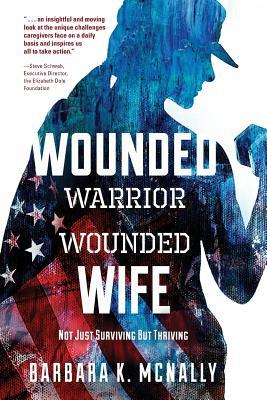
  • WOUNDED WARRIOR, WOUNDED WIFE: NOT JUST SURVIVING, BUT THRIVING – by Barbara McNally — a ground-breaking initiative

    WOUNDED WARRIOR, WOUNDED WIFE: NOT JUST SURVIVING, BUT THRIVING – by Barbara McNally — a ground-breaking initiative

    The critical issues surrounding post-traumatic stress among America’s wounded warriors is expanded here to include the challenges and concerns of military wives and families.

    Barbara McNally was working as a physical therapist when she watched helplessly as a man jumped off a bridge to his death. Feeling involved in his tragedy, she learned he was a wounded veteran. The experience spurred her to find out more about PTS and its effects on those who have participated in war.

    Gradually her attention focused on the plight of the wives of these wounded military survivors. This led to the creation of the Barbara McNally Foundation, dedicated to developing helpful strategies for those women she calls Fighters, who may never have been in the military, never been outside the US, but who struggle to bring a depressed, angry, and/or physically debilitated veteran back to a semblance of normal functioning, back to the role of parent, partner and lover.

    Her treatment plan, called SPA (Support, Purpose, Appreciation) brings these women together for a day or two of pampering—relaxation, massage, and a chance to talk with others in their same situation. For some, a SPA retreat is their first day away from the caregiver role in months or even years since their wounded partner returned.

    As women were able to vent with one another in the SPA atmosphere, their stories surfaced, some with happy endings, others still unresolved. These stories comprise much of McNally’s book, grouped in terms of the different ways that PTS can present itself: anger, coldness, and guilt are major emotional signs; in cases of physical injury, there are the pains and fears associated with prosthetic limbs, and the agonizingly slow recovery from traumatic brain injury. One wife had to deal with her husband’s increasing bouts of anger that grew into an alcohol addiction and finally into a suicide attempt. Another recounts waking up as her husband tried to strangle her, though he denied it later. Some stories highlight women’s efforts to recoup a sensual, satisfying sex life with a husband who, for physical or psychological reasons, does not feel able.

    The author says that the most important aspect of SPA is “self-care.” While the returned warrior may be offered various therapies, caregivers rarely have this choice, yet they need and indeed deserve time and attention for themselves. She also urges women to consider their options—to pursue their own careers, to leave or stay in a violent situation—objectively, without guilt.

    Along with the stories, McNally has assembled a substantial appendix offering lists of governmental, nonprofit and charitable agencies that help wounded warriors. There is also a study guide with questions relating to phases of PTS, making this book an excellent educational resource for individuals or groups. The author’s sincere wish is that the information she has gathered will be useful to the “wounded wives” and “hidden helpers” of those who have been injured mentally or physically while serving in the military.

    A ground-breaking initiative, Wounded Warrior, Wounded Wife, by Barbara McNally, offers advice and hope to those who are trying to understand and cope with war’s many aftershocks.


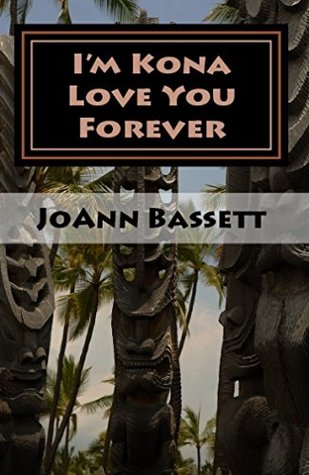
  • I’M KONA LOVE YOU FOREVER: Book 6 of the ISLANDS of ALOHA MYSTERY Series by Joann Bassett

    I’M KONA LOVE YOU FOREVER: Book 6 of the ISLANDS of ALOHA MYSTERY Series by Joann Bassett

    Sixth in the eight-book Aloha Mystery Series, “I’m Kona Love You Forever,” fits well into this highly entertaining cozy mystery sequence with locales of the islands of Hawaii. Most importantly, it shares a wonderfully executed stand-alone mystery, something so crucial in any excellent amateur sleuth series.

    Lili and David, both just months under 18, go to “Let’s Get Maui’d,” a wedding planning shop owned by Pali Moon, the protagonist of the series. The couple have set a wedding date three weeks away. They come armed with their birth certificates. David’s is certified, Lili’s is a copy. But Hawaiian law requires a certified copy of birth certificates in order for those under 18 to wed. Pali steps in and contacts a friend who works in the Maui Vital Records office to speed up the more than a month wait for a formal request so that the kids can marry on their chosen date.

    That’s when Pali discovers the birth certificate copy Lili holds is that of a girl who died at birth. “In early January it fell to me to tell the bride she was dead.”

    Pali is a sucker for young love and vows to help the kids out. As she digs further to track down Lili’s actual birth certificate and obtain a corrected copy, she goes to Kona, the place of Lili’s birth. The mystery only deepens and Pali uncovers so much more than anyone anticipates. Family secrets and deaths complicate the situation. What has Pali gotten herself into?

    Readers meet the people in Pali’s life (some of whom are quite quirky), along with Lili’s and David’s families and friends. JoAnn Bassett excels in bringing these characters to life and interspersing the vivid descriptions to immerse us into the Hawaiian locales.

    Subtle references to prior stories add a seamless continuation of the series, while not confusing the present story. This story certainly ensnares the readers in its mystery while immersing them in Hawaiian culture.

    The realistic dialogue, dashes of humor, and interesting subplots speed the progression of the main plot, which has plot twists that keep readers both guessing and involved within the story. The author does not disappoint with the surprising conclusion of this murder mystery. The rich sights and exquisite sounds – the overall experience of Kona on the island of Hawaii – the Big Island – are yours for the taking and enjoying from your favorite reading perch.

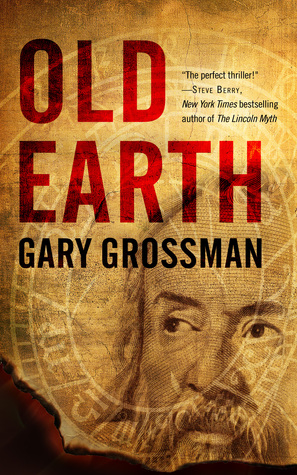
  • OLD EARTH by Gary Grossman – an ancient secret, a secret society, intrigue and espionage

    OLD EARTH by Gary Grossman – an ancient secret, a secret society, intrigue and espionage

    A historical fiction thriller in the vein of “The DaVinci Code.” An ancient secret, safe-guarded for 400 years discovered. A fast-paced thrill ride with a secret society determined to keep the discovery hidden from mankind.

    Old Earth is a gripping tale of historical intrigue and espionage that leads readers on a journey that spans 400 years. The book weaves science, politics and religion into a high-octane thriller. With locations ranging from a cave in Montana to Vatican City, Grossman has created a tale that often leaves you wondering if you are reading a work of fiction or an actual historical account.

    As the book opens, the year is 1601 and you find yourself crawling through a cave in Italy with none other than world renowned scientist Galileo Galilei. He discovers a mysterious black “wall” buried deep within the cave, something that will have implications later in the story and will impact many people. The composition of the wall fascinates Galileo as it absorbs all light and is covered in odd markings. In fact, this discovery plays a role (in Grossman’s telling) in Galileo being accused of heresy by the Catholic Church. What Galileo fears more than repercussions from the Catholic Church is the unprecedented turmoil on all fronts, including religious and secular governments, that will befall mankind if his discovery is revealed.

    The plot thickens as a secret society of powerful individuals is formed to safeguard this secret — a secret so big that, if revealed, will cause society to fall apart — for 400 years.

    Fast forward to the present when a group of students, led by Professor Quinn McCauley, is on an archaeological dig in Montana with high hopes of finding dinosaur bones. What they unearth instead is the well-guarded secret Galileo discovered some 400 years before, a black wall. When the secret society reveals itself, Dr. McCauley finds his life in danger. What ensues is a thrilling global quest for the truth that makes for a page-turning read.

    The book does have spots that take some effort to wade through. This mainly occurs during the early stages of the book where a fair amount of time is spent setting the stage for the story and developing characters. However, the reader’s persistence will be well rewarded in the end.

  • The UNEVEN ROAD: Book Two of First Light by Linda Cardillo —  a coming of age novel

    The UNEVEN ROAD: Book Two of First Light by Linda Cardillo — a coming of age novel

    Ringing with the changes from the deceptively placid 1950s to the turbulent 1960s, from the picturesque New England island of Martha’s Vineyard to the bloody jungles of Viet Nam, The Uneven Road is a sophisticated coming-of-age novel that intersects with historical events of this period.

    The second book of Linda Cardillo’s award-winning series, First Light, is written with verve and intelligence. Cardillo carefully constructs The Uneven Road with rich characterizations, diverging and interlocking plot elements, and fine attention to detail that explores family dynamics and the search for individual identity.

    This gripping saga continues when Izzy, Mae and Tobias’ seven-year-old daughter, contracts polio. Their twelve-year-old boy, Josiah, feels responsible not only for his sister’s pain, but all the troubles in his small world. Jo’s conflicted feelings escalate when he realizes that Mae’s island property, Innisfree, will be sold to pay for Izzy’s surgery. Even though he loves Izzy and wants her to walk without crutches, his parent’s cold-blooded willingness to part with Innisfree drives Jo to smash an important symbol of his past, the ceremonial Wampanoag drum bestowed on him by Tobias, and then runs away to Boston, where he stays with his Irish uncle, a policeman. Finally he enlists in the army, winding up as a medic on the killing fields of Viet Nam.

    Cardillo’s precise writing adds credibility to the vivid scenes that take place in Viet Nam where Jo struggles with the necessity to kill the enemy while charged with saving lives. Later, the author, again, deftly describes Jo’s very different experiences when he returns to the US, where he hangs out in a commune. No matter, Jo maintains his family contact mostly through Izzy, now in college on the mainland. Back on Chappy, Mae, going through her own changes, longs to see her son again. His journey home with Izzy and her friend Grace will re-connect him with his people, both Irish and Native American, and reveals to him that he and his mother are more alike than they ever thought possible.

    Captivatingly infused with often raw emotions and haunting memories of race, heritage, culture, and family dynamics, The Uneven Road, scatters its characters over time and place and draws them back together again with enduring values of family love and respect for heritage.

  • TIME TRAVEL TRAILER by Karen Musser Nortman – a quick fun read to take you on an armchair vacation

    TIME TRAVEL TRAILER by Karen Musser Nortman – a quick fun read to take you on an armchair vacation

    When Lynne McBrier acquires a vintage camping trailer, she can’t imagine that her camping trips will be journeys not just to new places, but to former times.

    Struggling to raise rebellious teenaged daughter Dinah after separating from her husband Kurt, Lynne buys the 1937 camper on impulse from her old friend Ben, who used it to take trips with his now deceased wife, Minnie. Dinah, who like most adolescent girls considers anything her mother wants her to do as boring, agrees reluctantly to go on one sentimental weekend camping trip before Lynne converts the trailer into an office.

    It’s pretty cozy as Lynne and Dinah settle into a local campground and tuck in for the night. But when they wake up, things around them have changed—there are no big trees, no paved roads, and the large cement bathhouse is gone, in its place, two wooden outhouses.

    They are forced to realize that, impossible as it seems, the trailer has transported them back in time; people talk to them about their fear of Russian spies, and everyone is dressed in outmoded costumes. Certain clues to the transformation allow them to reverse the process and return to 2014. They agree not to talk about their misadventure.

    But Lynne secretly takes a time trip on her own and Dinah wants to visit the past once more, having become obsessed with classic books about time travel. Each jump lands them in a different portion of the twentieth century. Lynne tries to get the truth about the trailer from Ben, but he is in hospital, raving incomprehensibly about Minnie. Then Lynne and Kurt are forced together to test the mysteries of time travel when Dinah goes missing, almost certainly carried away by the camper.

    Author Karen Musser Nortman has cleverly constructed this fantasy with many small but important particulars. Mother and daughter, whose testy relationship is realistically portrayed, visit a vintage store to get mid-century clothes and add an old-fashioned radio and other details to the camper so they’ll seem plausible to people they encounter in the 1930s, 40s, and 50s. Reminders of historical events—teen hobos in the Great Depression, Roger Bannister’s four-minute mile, the McCarthy hearings—contribute authenticity to the story, while touches like the strong family similarity in appearance and rebellious temperament between Dinah and her then teen-aged ancestor add poignancy.

    Well-drawn characters, tight plotting and the alluring possibility of returning to, and possibly changing, the past make The Time Travel Trailer an engaging, mind-tickling trip makes for a fun armchair vacation.


  • The ORDER of the LILY by Catherine A. Wilson and Catherine T. Wilson, a captivating and breathtaking14c tale

    The ORDER of the LILY by Catherine A. Wilson and Catherine T. Wilson, a captivating and breathtaking14c tale

    Twin sisters separated at birth, one cosseted in a lavish lifestyle, the other hidden away behind convent walls meet through letters. In Book 1, The Lily and the Lion, the sisters Cécile d’Armagnac and Catherine Pembroke begin to puzzle out the political reasons behind the separation. They finally are united, but soon their lives are threatened by the power-hungry William Montagu, Earl of Salisbury. Separation being safer than staying together, the sisters part ways once more, this time as fugitives.

    This second installment opens with Cécile and Catherine on the run with their protectors, the knights Simon Marshall and Gillet de Bellegarde. Cécile, having sacrificed her virginity to Edward, the Black Prince, to save her sister’s life, lies in the hull of an England-bound ship, sick from pregnancy and the rough seas. When the Prince’s men commandeer the vessel, Catherine quickly returns the favor by masquerading as Cécile. She’s whisked away to the Prince, while her sister continues to England.

    Lovers’ misunderstandings ensue in the two kingdoms. Cécile and Gillet spar prettily at his Kent family estate, passion and jealousy taking turns as her belly blooms and lovers both threatening and tempting appear. Catherine, on the other hand, quietly falls for Simon, who masks his affection as he keeps her safe from the Prince’s lustful eye. Catherine’s charade lasts only until Salisbury uncovers the truth, compelling Catherine and her cadre of protectors to find a way to escape.

    Their route, however, carries its own agenda. Simon takes Catherine first to a monastery, and then on to the Paris seat of the Knights Templar, as he continues his quest to find the missing, mysterious Lady of Scotland. It’s a subplot that fits into the sisters’ breathtaking saga when the Earl of Salisbury appears, seeking the Lady as well as Catherine. The chase ends at her beginnings, at the convent in which she grew up. Danger quelled for the time being, relationships are allowed to blossom, both for Catherine and for Cécile, whose day of happiness is embellished by an unspoken mission Gillet must attend in the near future.

    This teaser caps a string of events that carry the story forward with expert pacing, passionate entanglements, and a rich language full of clever colloquialisms and a good deal of humor. In contrast, however, the scenes of subjugation remind us of the maltreatment of women that was common and condoned by society. Early in the tale, Cécile is shocked to see Gillet’s sister-in-law routinely beaten by her husband, and then horrified to find her encased in a scold’s bridle. Cécile’s attempt to help the woman results in being subjected to harsh punishment for interfering.

    If there’s one positive outcome to this horrible subjugation is that Cécile stands up against injustice–no matter what the cost. And that is the arc of Book 2: the sisters finding their power in a cruel era of patriarchal oppression. To witness this maturation shines a hopeful light on the third book of the series, The Gilded Crown. The authors have written a captivating and historically accurate story with characters that are vividly portrayed.

    Historical romantics of all ages will enjoy this rollicking affair that continues the story of spirited twins who do battle with cruel relatives, nefarious noblemen, misunderstood suitors, and above all, the constraints on women’s power in 14th-century England and France.

  • DEATH at the END of the ROAD by John Morsell – an Alaskan murder mystery

    DEATH at the END of the ROAD by John Morsell – an Alaskan murder mystery

    If you enjoy being transported to the last frontier, and want to be taken for a dramatic plot ride on a boat called the Otterly Ridiculous, with DEA agents, a character named The Mole, and a couple of dead bodies, then you’re in for a treat with John Morsell’s novel “Death at the End of the Road.” A semi-retired biologist and environmental consultant, Morsell draws from his more than 30 years working and living in Alaska to craft this engaging and well-written piece of mystery fiction.

    As the story goes, Charlie Skyler, a boat-dwelling eco-tour guide and some of his unusual comrades, get tangled up in an adventure that involves murder, an eccentric drug lord, psychopathic assassins, and mysterious government agents. What makes the book even more compelling and appropriate, is that it’s set in Homer, Alaska, population 5,000, a small town known as a docking station for artists, fishermen, and ex-hippies.

    Often tagged “quirky,” Homer also has been referred to as “the end of the road” due to its geographical location on the Kenai Peninsula about a 220-mile drive south of Anchorage. And perhaps you know Homer from hometown notables like singer Jewel or writer Tom Bodett (it’s his voice in the ads for Motel 6). See? It’s quirky.

    With a knack for storytelling, first-time author Morsell is especially adept with dialogue, one of the most challenging aspects of fiction. Rather than revealing his characters through straight narrative, Morsell resorts to lively banter, in this case between two federal agents, one of whom is cranky, and an easy-going caretaker:

    “Do you mind if we look around?” [Agent Milford] Beverly asked.      “Actually, we have a search warrant, so it doesn’t matter whether you mind or not,” Agent March interjected.
    “Help yourselves. You can spend the whole winter here if you want,” Don [the caretaker] said as he handed Beverly a ring of keys and winked lasciviously.

    In some instances, Morsell shows further literary talent by employing alliteration (“The Lieutenant signaled the spooked soldiers…”). Also, he uses metaphor to disguise what could otherwise be construed as explicit language, as in this episode between two characters, one of whom has consumed a bit of herb:

    “Frank was not at all interested in the details of Brett’s horrible night. After colorfully suggesting that Brett perform[s] various anatomically impossible acts, he told Brett to make himself permanently scarce by leaving the state or possibly the country, implying that if either he or the authorities caught him he would likely not be long for this world.”

    Originally from Wisconsin, Morsell has taken a circuitous (read: quirky) route to fiction himself. In the mid-1970s, he moved to Alaska to work as a Field Environmental Specialist for the company building the Trans-Alaska oil pipeline and ended up staying for 30 years. He eventually formed his own small consulting company researching fish and aquatic habitats and went on to travel extensively throughout all regions of Alaska. Today, he lives in Washington state with his wife.

    “The characters are loosely based on actual people and events,” Morsell said in an interview on The Whatcom Wordsmith podcast. Further inspiration came in the form of Seldovia, another Alaskan city with its natural beauty, as in this passage halfway through the novel:

    “…Facing north toward the mouth of Seldovia Bay, Kate could see across Cook Inlet to the other side, where two volcanic peaks were visible, sunlight glinting off their snowy slopes. Artistic wisps of remnant fog completed the picture. A sea otter floated off the bow in casual nonchalance. A dozen gulls squabbled over a piece of food.”

    A delightful suspense with splashes of humor, and some romance, “Death at the End of the Road” is a book you won’t want to miss, especially if you yearn to live vicariously through characters of nontraditional lifestyles and appreciate the natural scenery of one of the most beautiful places in the US.

  • YISHAR KOACH: FORWARD with STRENGTH – the Story of Shoah Survivor Ferdinand Fragner by Susan Lynn Sloan

    YISHAR KOACH: FORWARD with STRENGTH – the Story of Shoah Survivor Ferdinand Fragner by Susan Lynn Sloan

    Did you know that only one percent of all Jewish children in World War II Europe survived the war?

    Yishar Koach: Forward with Strength shares the account of a man who was entrusted with inspiring some of these precious few orphans to find strength and hope after experiencing tremendous loss. At Aglasterhausen, a United Nations school for WWII orphans, Fred Fragner took on the mantle of principal and teacher at the school—a daunting responsibility for most, but not for Fragner—a fighter of the Nazi regime who was shot, captured, and interrogated by the Gestapo and then imprisoned for five years in Buchenwald Concentration Camp.

    The life of this most remarkable man of integrity and altruism was the inspiration for Susan Sloan to write Fragner’s biography—a five year project that she undertook with great passion after being introduced to him at a café in Bellingham, Washington. Sloan researched transcripts of lectures and speeches made by Fragner, she refers to newspaper clippings and documents about him, listened to audio and video tapes, and interviewed many who knew him as mentor, coach, friend, family member, and teacher. Most importantly, Sloan had access to Fragner’s own scrapbook about Aglasterhausen that vividly tells how “the children gave him his life back” as he tried to help restore theirs.

    The author took on this project with the hope that it will inspire others “to understand the importance of persevering even in the midst of the most daunting challenges.” Yishar Koach: Forward with Strength is a most timely and much needed reminder for today’s unstable times when there are the most people, worldwide, who have been forcibly displaced since WWII. (The United Nations reports 60 million people are currently displaced as refugees from brutal acts of war, political coups, and religious intolerance.)

    Sloan’s illuminating biography captures Fragner’s lifelong altruism and strength so that it may continue to shine for future generations to come and act as a guidepost and a cautionary tale for today’s challenges.

    ~~~~~

    A timely and thoughtful work that documents and honors Fred Fragner whose unconditional love, respect of others, and perseverance in the face of insurmountable odds still inspires and heals.  Yishar Koach: Forward with Strength, authored by Susan Sloan, is an illuminating biography of this amazing man who made a difference to so many people throughout his life. Sloan’s biography captures Fragner’s lifelong altruism and strength so that it may continue to shine for future generations to come and provides a guidepost for today’s challenges.

  • ALONG the WAY HOME by Christi Corbett — a harrowing cross-country journey in 1843

    ALONG the WAY HOME by Christi Corbett — a harrowing cross-country journey in 1843

    A headstrong young woman, her much younger brother, and their widowed father procure the services of a reluctant trail guide to take them from their well-to-do home in Virginia across the country to their new homestead in the Oregon territory in 1843.

    The wealthy Davis family, though burdened by the loss of their mother, is doing well tending to their profitable hardware business in Virginia. Kate Davis is quite happy spending her days helping her father take care of the business, despite the disapproval of those who thinks she should be more focused on finding a husband than balancing budgets. But Kate’s father shocks her and her brother one day by announcing his plan to sell family business and start anew in Oregon, packing up the life she has known and loved.

    Though they are able to find an experienced guide for their journey, they are starting late into the season missing opportunities to join up with a wagon train. The small party heads out on their own on the unforgiving Oregon Trail. 

    Their guide, Jake, finds himself struggling to convince a privileged family of the sacrifices they must make in order to make to survive the journey across country along with just how  untamed the Wild West is.

    Christi Corbett’s “Along the Way Home” is a thoroughly researched examination of the troubles and misfortunes faced by hundreds of thousands of settlers, ranchers, farmers and families that made their way across the perilous Oregon Trail in the mid-19th century. Though the plot has expected moments, they are scenes that many readers will not have seen coming. The unexpected pitfalls and sidetracks mirror the unpredictability travelers faced along the infamous route. 

    The historical plot and research definitely aren’t the only draw of this novel. Corbett’s characters are all layered with rich backstories and relate-able misgivings as they learn and adapt to the harsh journey. Kate is an easy heroine to get behind as she matures from being pampered by servants and overly concerned about societal expectations to transforming into a persevering young woman who endures pain and heartache while braving incredible dangers and taking risks. Readers will also root for Jake, a weary trail guide with a tragic childhood who respectfully and tirelessly helps the Davis family despite all that their ignorance of the dangers that awaits them, which puts him in harm’s way again and again as he rescues them from their own guileless ways.

    The rich and heartwarming romance that develops through connection during hardships and loss will be an endearing point for many readers. Natural dialogue and rich imagery make the novel flow well and allow the reader to focus on the plot and the adversities of the adventurers.

    Along the Way Home by Christi Corbett is sure to satisfy those seeking a heartwarming read but will really attract pioneer history buffs and those who enjoy reading about the real-life drama of the Wild West. It is a page-turning novel that accounts the harrowing cross-country journey of courageous pioneers whose risk everything to follow their dreams. 

  • DOCTOR KINNEY’S HOUSEKEEPER by Sara Dahmen — The LARAMIE Grand Prize winner – captivating and heartwarming

    DOCTOR KINNEY’S HOUSEKEEPER by Sara Dahmen — The LARAMIE Grand Prize winner – captivating and heartwarming

    A timeless and heartwarming romantic historical fiction amidst a dramatically painted panorama of pioneer life in America’s heartland.

    Recently widowed, easterner Jane Weber hopes for a secure, quiet position as a housekeeper to a physician in the newly forming Dakota Territory, never imagining the many turns that life has in store for her.

    Dr. Patrick Kinney welcomes Jane’s application because she did simple nursing chores during her late husband’s illness. Arriving in Flats Junction she is met by the auburn-haired doctor, the independent and rather acerbic general store proprietress Kate, and an enigmatic Sioux landlady, Widow Hawks.

    Each evening when she leaves the doctor’s house after their companionable supper, a cowboy named Bern walks her to Widow Hawk’s strange dwelling. To the doctor’s delight, Jane displays talents as a cook, gardener, and secretary. But, still depressed after a dutiful marriage and sudden widowhood, she cannot fathom that the Doctor would show an interest in her as a woman, believing instead that he is courting Kate.

    Soon she begins to perceive some fault lines in the pleasant exterior of Flats Junction, notably the violent prejudice of some people, including Bern, against Native Americans like her newfound confidante, Widow Hawks. And soon, too, Jane will have to reveal that she is pregnant with a child conceived shortly before the death of her husband.

    After a series of traumatic events force Jane to acknowledge her strong feelings for Patrick, she resolves to leave Flats Junction and start her life over yet again. But she doesn’t reckon on the good doctor’s equally strong feelings or the lengths he will go to in winning her over.

    Author Sara Dahmen has clearly researched the era, vernacular and settings of her richly complex story. She brings into focus the joys and deprivations of life on the American frontier, the rigid proprieties that pertained in relations between the sexes, and the cutting edge of racial hatred that rankled towards the local displaced and marginalized American Indians.

    She sheds light on fascinating small details of everyday life in 1881—cookery, clothing and medical care. Dahmen also conveys a keen awareness of the sometimes desperate needs of a woman’s heart, as her heroine wavers between her unexpected passion for Patrick and the possibility of a respectable, but unexciting, match with someone else.

    Captivating and vividly portrayed, “Doctor Kinney’s Housekeeper, ” is a delightful read that is refreshing and original as it is entertaining.