Category: Reviews

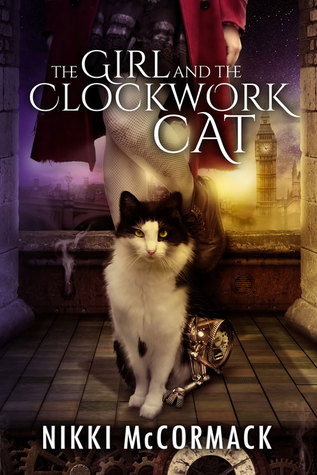
  • The GIRL and the CLOCKWORK CAT by Nikki McCormack – Captivating YA Steampunk

    The GIRL and the CLOCKWORK CAT by Nikki McCormack – Captivating YA Steampunk

    It’s Victorian England and Maeko is a young street kid with a talent for pick-pocketing and a drive to figure out where she belongs. When she comes across a little cat with an unusual enhancement on its leg, she follows it – right onto a murder scene.

    The Girl and the Clockwork Cat by Nikki McCormack is a charming Young Adult novel that offers up an intriguing mystery while adding a fun Steampunk twist. Set in Victorian London, the book leads the reader through a murder investigation and introduces the puzzling, quirky Clockwork Cat. But more than that, the novel deals with the struggles of growing up through the eyes of a scrappy girl who must deal with more crap than the average teenager.

    Maeko, separated from her mother at the tender age of seven, has lived on the streets with the notorious band of ruffians known to the police and upper-crust society as the “street rats.” Maeko is valued for her pick-pocketing and lock-picking skills in this group. In this dangerous world, she resigns herself to trusting no one but her mentor, Chaff. When she and Chaff are pursued by police during a robbery, they get separated. She hides in an alleyway and comes face-to-face with a friendly cat with an intriguing clockwork leg.

    As she seeks a better source of shelter for herself and the cat, Maeko meets a family of musicians who seem harmless enough, but when Maeko winds up in police custody again, she fears for the fate of the cat and its valuable leg. Luckily she escapes and tracks the cat right onto the scene of a double murder. It’s then she pairs up with the musicians’ son, Ash, to once again escape police custody to prove their innocence.

    McCormack’s writing is clear and captivating as she creates in Maeko a likable, empathetic character who is learning the art of growing up: who to trust, how to care for others without hurting herself, and how to handle more than one romantic urge. In Ash and Chaff, McCormack gives us two extremely charismatic characters who are vying for Maeko’s attention and caring for her safety. It’s so much fun!

    Though the novel is Y/A, the endearing characters, engaging mystery, and insightful writing moves us to recommend this novel to all audiences.

  • JANE SINCLAIR by Tom Edwards – 1800s romantic adventure

    JANE SINCLAIR by Tom Edwards – 1800s romantic adventure

    A rich romantic adventure set in late 1800s England that is suitable for Young Adults and fans of Romantic fiction, “Jane Sinclair” touches on personal themes of success and failure interwoven with major social and economic issues of the era.

    The tale’s heroine, Jane, is the only child of a Hampshire farming couple that dote on her and offer her every opportunity for education. Clearly exceptional, the girl soaks up learning so that by the time she encounters the upper-class Charles Cholmondelay, destined for study at Oxford, she proves herself his intellectual equal while charming his heart.

    However, his father, the brutal Sir Richard, is determined his son will have nothing to do with a commoner; his threats to her family cause Jane to run away to London, where, desperate and penniless, she fortuitously winds up in the household of a kindly man named Bob. Bob will all but adopt Jane, and, impressed by her honesty and intelligence, will help to set her up in a small business and, ultimately, in the management of a garment factory. There Jane shows her considerable entrepreneurial and leadership skills, and, recalling her own humble origins, demonstrates that she is well ahead of her time in wishing for her factory workers to have basic rights and to be treated more humanely—a cause which is ahead of its time.

    Making a name for herself as the lone female in a high-level business position, Jane meets again with Charles, now graduated and ready to work as a lawyer. They plan to marry soon, but Charles decides he needs one last adventure before he settles down. He sets off to sea with friends, while Jane goes to France and to inspect and purchase a new exotic clothing line. She also develops a friendship with members of the Suffragette movement and shows herself an admirable public speaker on their behalf. When she hears that Charles and his friends have been shipwrecked, though, her idyllic world collapses and she nearly dies from despair. Charles meanwhile is the captive of ruthless pirates, and escape seems all but hopeless.

    The author of this intricately layered saga, Australian Tom Edwards, is himself an artist and adventurer; the scenes he depicts of Charles at sea doubtless come from his own experiences in the Royal Navy, sailing around the world with friends in a small boat, and living in many unusual locales.

    On nearly every page of his tightly constructed story he demonstrates the care he has taken with historical detail, down to the soap brand Jane will use, the clothing she chooses to wear and manufacture, and even the toilets, or “WCs,” she insists on providing for her workers. The dialogue and use of idiomatic phrases also show much care, as does Jane’s a brush with a real person, Mrs. Goulden, mother of the noted English suffragette Emmeline Pankhurst.

    Jane Sinclair by Tom Edwards deftly combines an entertaining and well-conceived rags-to-riches story from the female viewpoint, with a passionate tale of love lost and regained, a stirring vision of manly exploits on the high seas, and a respectful acknowledgment of the ideals of the early feminist movement.

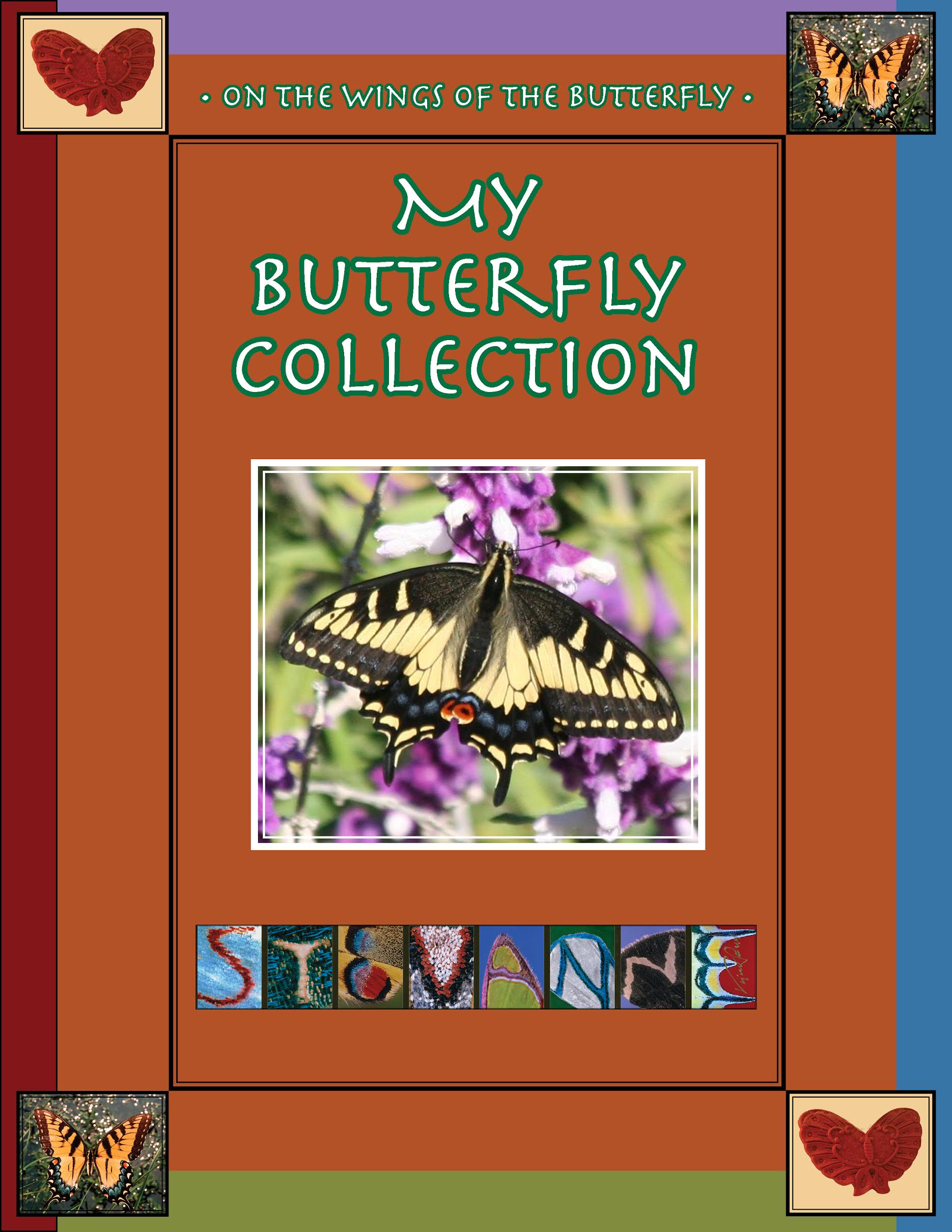
  • MY BUTTERFLY COLLECTION: On the Wings of a Butterfly by Stevanne Auerbach – Nature Books, Biology, Entomology

    MY BUTTERFLY COLLECTION: On the Wings of a Butterfly by Stevanne Auerbach – Nature Books, Biology, Entomology

    There are approximately 20,000 species of butterflies around the world, and this enlightening book is a compilation of all things butterfly. As well as delivering in-depth explanations of butterfly life cycles and species, the author, Stevanne Auerbach, PhD, teaches us that specific species are dependent on specific plants, and that butterflies need both host plants for caterpillars and nectar plants for the adult butterflies. Perhaps the most important lesson is that butterflies of the world are now dependent on us, the human species, for their very survival.

    To help readers become butterfly protectors, the author provides lists of suggested plants gardeners can grow to nurture butterflies dependent on species and geography. After reading this book, no gardener will look at caterpillars in the same way again, because killing a caterpillar means destroying a beautiful butterfly, moth or bee.

    The largest words on the cover of this book are My Butterfly Collection, which might cause readers to expect a book about an old-fashioned collection of preserved butterfly specimens on pins. Instead, this book is a tribute to the lives and worth of butterflies, as well as a celebration of the beauty and symbolism of butterflies through history. The “butterfly collection” actually refers to the author’s extensive personal journey, which led to her assembly of all this butterfly information, and objects decorated with butterfly motifs.

    The book contains lists of endangered and threatened species, as well as many color photographs of specific butterflies, most by famous photographer Kjell B. Sandved. The interconnection of butterflies and environmental health is emphasized in a moving foreword by David Seaborg, a prominent evolutionary biologist and founder/director of the World Rainforest Fund.

    Readers are treated to explanations about how butterflies have symbolized hope, transformation, and resurrection throughout the ages. The author even describes how she went through her own personal metamorphosis to become a lighter, healthier, happier individual.

    Bright art, illustrations, and paintings decorate the pages, which are also enriched with poems and literary excerpts from a variety of authors, including the author of this book. Some pieces are inspirational and uplifting; a few are eloquent, but sad, such as a reference to a collection of butterfly art and poetry by Jewish children imprisoned in a concentration camp.

    This rich collection includes extensive lists of organizations, gardens, and butterfly books for adults and children, field guides, butterfly garden books, and websites that the butterfly devotee can use to find more information. The biographies of the many experts who contributed to this book are listed in the back pages, along with a list of butterfly species around the world that may go extinct; a sobering reminder that butterflies are an indicator species of the health of our planet, and the fate of these magnificent “flowers on wings” is up to us.

    My Butterfly Collection: On the Wings of a Butterfly by Stevanne Auerbach, is a fascinating compendium of all things butterfly that educates and illuminates to its readers that “The health of the planet rests on the wings of the butterfly.”

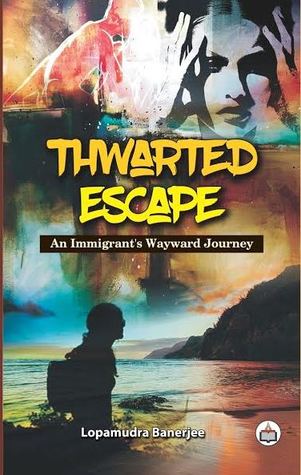
  • THWARTED ESCAPE: An Immigrant’s Wayward Journey by Lopamudra Banerjee – a stirring narrative

    THWARTED ESCAPE: An Immigrant’s Wayward Journey by Lopamudra Banerjee – a stirring narrative

    In her book, “The Art of Memoir,” Mary Karr recalls hearing novelist Don DeLillo once say that a fiction writer starts with meaning and then manufactures events to represent it, whereas a memoirist starts with events, then devises meaning from them.

    Lopamudra Banerjee does just that in her memoir “Thwarted Escape: An Immigrant’s Wayward Journey.” She takes us through a journey of achievements and sorrows while using words to make meaning of her spirituality, her femininity and her literary identity.

    Broken down into four volumes, the book is a collection of essays and articles, many of which were previously published in print, online anthologies and literary journals.

    Depending on which chapter you’re reading, you could say Banerjee is a memoirist, a creative writer, an essayist or a journalist. But no matter what label you choose for her writing, you will see Banerjee has major writing talent – the culmination of a passion that was borne at an early age when she considered words her playmates.

    “I have been in love with these moments of restlessness and release as these clusters have formed a pattern called words. I watched this written world of prose and verse, as with my hands, my body, I absorbed these nuances of creation,” she writes.

    Through the pages, Banerjee transitions from a small town girl in India who makes her way to the United States. She has traveled to many places throughout the US and in one chapter where she derives the book’s title, “Thwarted Escape,” she talks about her departure to Omaha, Nebraska, as in this stirring passage: “I am an ordinary, commonplace refugee in North America, and like many others of my ilk, have embedded myself in a family, far flung from what is called ‘original home.’ Like many others, I am striving to gain the status of the coveted Non-resident Indian, a legitimate work permit to survive in a distant land while my heart continues to ache with the desire to be rocked in the bosom of my mother and to revisit the havens of my childhood.”

    With the power of narrative in her life, Banerjee lives with the secret ambition to “get published” and to let the world read her stories. Thankfully, she has fulfilled her dream of compiling such a book and sharing with us her engaging and well-written stories of grief, death in her family, motherhood, and femininity.

    In a particularly moving section of the book, Banerjee introduces us to Taslima Nasrin, a Bangladeshi novelist and poet who has lived in exile since 1994 amid death threats for her outspoken feminist views and criticism of Islam. With admiration for Nasrin’s voice, Banerjee includes newspaper clippings (scans from the original print versions) of Nasrin and explains some of the abuse and hardship the activist has endured. As a graduate student of English literature, Banerjee harnesses Nasrin’s power and draws parallels to other literary greats.

    “I realize how [fusion_builder_container hundred_percent=”yes” overflow=”visible”][fusion_builder_row][fusion_builder_column type=”1_1″ background_position=”left top” background_color=”” border_size=”” border_color=”” border_style=”solid” spacing=”yes” background_image=”” background_repeat=”no-repeat” padding=”” margin_top=”0px” margin_bottom=”0px” class=”” id=”” animation_type=”” animation_speed=”0.3″ animation_direction=”left” hide_on_mobile=”no” center_content=”no” min_height=”none”][Virginia] Woolf, how Taslima [Nasrin], how Sylvia Plath, trapped and tangled in a women’s bodies, have suffered the heat and passion of their literary selves…”

    Banerjee ends the book with letters she wrote to her family and other people while she was pregnant and during other periods in her life. We readers are grateful Banerjee has found the courage and energy to publish all of these personal stories that are so moving, eloquently written, and significant in both her life and the lives of women.[/fusion_builder_column][/fusion_builder_row][/fusion_builder_container]

  • ZOOMBIES from PLANET X by Karl Larew – Vampire Special Agents to the Rescue!

    ZOOMBIES from PLANET X by Karl Larew – Vampire Special Agents to the Rescue!

    Another madcap adventure of the Good Vampires—especially the hilarious special agents of the New York Good Vampire Association—battling the mean old Bad Vampires to save the world from mayhem comes to us from university history professor and author of wacky spoofs, Karl Larew. Good Vampire-loving readers you know who you are! Prepare for a spookin’ and spoofing good time with this one. To newbies, join the party. You’ll have a rollicking good time. Larew has come through again with a fun read for adults who’ll surely appreciate this mash-up between James Bond, Inspector Clouseau, and Buffy the Vampire Slayer.

    This third volume in the Good Vampire Trilogy commences, not surprisingly, with Lance and Carol snug in bed. Lance pats Carol’s bare bottom before using his spring-powered lancet to make two neat little holes in one nicely rounded cheek and begins to suck her blood. The humanly handsome Good Vampire Lance Blodgett, now married to totally human Carol, leaves no bruises, causes his beloved partner little if any pain, and takes care not to be greedy. After all, Carol must produce more blood for her own needs now that she is pregnant. However, Lance (a professor of vampire lore at a university in New York City) has been away at an academic convention and requires at least a few sucks to appease the vampire’s metabolic need for a ‘nip’ of human blood now and then.

    Once satisfied, he applies a Band-Aid to Carol’s rear-end, and the loving couple turns toward each other with a passionate kiss. But no sooner has their love-making begun when the door buzzer sounds. Punching the intercom button, Lance learns that Nigel and Becky, their friends and New York Good Vampire Association special agent partners, have urgent news. As Lance lets them in the apartment, he can see the excitement in their lustrous, dark Nigerian faces—especially the pregnant Becky’s. (Yes, these newlyweds are expecting also!) Nonetheless, Lance and Carol can’t help but grumble about the exquisite timing of their friends’ unexpected arrival.

    “Sorry, Old Boy,” Nigel apologizes and snickers a bit. But, he explains, they’ve got to burn rubber and get to Headquarters. Their leader, Mr. Granville, needs them NOW. As they leave the building, they discover the legendary Arnold Robertson, Ace Special Agent of all Good Vampire branches in Europe, crumpled up on the floor by the mailboxes in the foyer. Robertson is barely able to mumble a message for Mr. Granville—“pyramid in Egypt-Nubia area…secret of mummies…chemicals for zombies…find pluh, an, et, X”—before dying. The NYC agents call a Good Vampire ambulance to come for Robertson’s body before heading out.

    Arleigh Granville’s Good Vampire hit men, Gladdy and Dizzy, admit the four special agents to the mansion, and they are soon closeted with their leader. Mr. Granville is saddened by Robertson’s death but realizes that it must be related to a new Bad Vampire plot in Europe and, apparently, Egypt, to overcome the Good Vampires and conquer the world. Noticing Carol’s and Becky’s ‘baby bumps’, he wonders if they’re up to accompanying their husbands to Europe to quell the plot (of course they are!), and proceeds to tell them that his wife Inge (a reformed Bad Vampire) is expecting also. Then Gladdy and Dizzy exclaim that their new wives (also reformed Bad Vampires), twins Delivah and Helovah, are suffering morning sickness. The group soon discovers that all five babies are due in October (just possibly on the 9-month anniversary of a super party celebrating the last victory of the Good Vampires over the Bad ones?). Then Lance, rubbing his chin, breaks the happy spell with the thought that perhaps Robertson was trying to say “Planet X” (wherever that is!).

    After a visit to the Good Vampire Laboratory of Doctor Lester Griswold—who presents them with his latest James Bond-like secret weapons: a pen enclosing a long poison-tipped ‘toothpick’ that can pierce mummy bindings; a pistol that shoots a hardening goo that can stop and stick a mummy or a zombie in its tracks; and another pen that is actually a laser gun, whose light makes these critters turn away in pain and might also set them on fire—the four special agents are soon flying across the Atlantic on their way to Paris. Annette in Paris (a Good Vampire) has reported that the Son of Elmer (a very bad vampire) is vowing revenge on all Good Vampires.

    With this news, the special agents’ task is spelled out. Although they team up with Annette and the Paris branch, the agents share a sneaking suspicion that the European group has perhaps been infiltrated by Bad Vampires. (It has happened before!) So, they decide to head to Egypt alone, where they team up with Mr. Granville’s contact, Professor Anwar Jones of the Egyptological Institute. They learn that the fiendish Son of Elmer has discovered a chemical formula that can turn mummies into zombies, who will be sent out to eliminate not only Good Vampires but also many good humans. Their bodies (even un-mummified) will be transformed by the chemical formula into more zombies, who will join the other zombies and the Bad Vampires in their maniacal plan to conquer the innocent human world—unless, that is, our special agents cunningly devise a way to stop them!

    As seasoned readers of Volumes I and II can guess, and newbies will soon discover, the two special agent couples and the professor make their way from one sticky adventure to another by every means of transport imaginable (even roller skates?)—cleverly skirting danger and generally dispatching their enemies with the aid of Dr. Griswold’s ingenious arsenal of James Bondish devices. Exploring a pyramid, they run into both mummies and zombies. The dummy mummies and lumbering zombies aren’t too hard to escape from until they meet up with a zombie on roller skates—he’s soon zooming right on their tails. By golly, he’s a ‘zoombie’!

    Cunningly escaping from the Egyptian zoombies, they head back to France—Alsace and Reims, then to the Rhineland in search of the Son of Elmer (aka “Ralphie”), back to the Paris branch (YES, there HAS been a Bad Vampire infiltration), and once more to Egypt—always remaining a RAT-A-TAT-TAT ahead of the zoombies, not to mention Ralphie and his henchmen.

    Don’t bite your fingernails too short reading all about that, because you’ll soon follow our agents to Nashville, TN. Why? A new venue for zombie business, that’s why, this time involving Vampire Cows, and Ralphie, of course. “Who writes this stuff?” (a voice out of nowhere asks). Enough!

    Remember all those babies due in October? Well, all five mothers-to-be go on maternity leave at a bucolic boondocks mansion in upstate NY, under the care of Dr. Griswold. Needless to say, the boondocks don’t remain bucolic, but you can read all about that, then join our agents in the maternity ward, and, finally, learn why this wild tale ends with a single, innocent-sounding word…breadsticks?

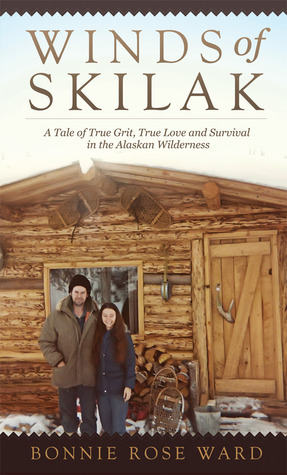
  • WINDS of SKILAK: A Tale of True Grit, True Love and Survival in the Alaskan Wilderness by Bonnie Rose Ward

    WINDS of SKILAK: A Tale of True Grit, True Love and Survival in the Alaskan Wilderness by Bonnie Rose Ward

    In this day and age of omnipresent cell phones and electronics, is it not the quintessential dream to quit one’s day job to seek the peace and quiet of the last frontier and live off the land?

    It wasn’t necessarily Bonnie Rose Ward’s dream, but her husband Sam’s to move to Alaska for a pure existence. However, her deep love and admiration for her mate led her to check out library books on how to live in the wilderness and finally make the difficult decision to leave their home in Ohio for a tiny island on Skilak Lake on the Kenai Peninsula of Alaska.

    In her beautifully written memoir, Winds of Skilak: A Tale of True Grit, True Love and Survival in the Alaskan Wilderness, Bonnie invites us into a routine that began in 1980 when she was 25 and Sam, 36. It’s an engaging and inspiring story ripe for anyone who has merely dreamed of a new life or for those similarly courageous enough to take the leap to remote living.

    Through Bonnie’s intimate excerpts, we learn how the couple, and their friend Bob who tags along, lived on Caribou Island in self-built cabins without running water, electricity or a phone. They deal with isolation and sub-freezing temperatures along with making new wildlife friends like a milk goat named Esther. Bonnie steps out of her comfort zone and learns how to shoot a .375 Holland & Holland Magnum.

    If you are wondering what a grocery list would look like for such an adventure, you’re not alone. The following passage is labeled a ‘Popular Highlight’ in the Kindle edition:

    We bought what we figured to be a year’s supply of dry goods,” Bonnie writes. “These staples included two hundred pounds of flour, a hundred-pound burlap bag of pinto beans, fifty pounds of sugar, thirty pounds of cornmeal, fifty pounds of rice, twenty pounds of noodles, several gallons of cooking oil, honey, powdered milk, salt, pepper, spices, baking powder, yeast, tea, several cases of three-pound cans of coffee, and powdered creamer. Anything else we needed must come from the land—must be what we could hunt, fish or grow.”

    In one episode amid their remote homestead, we learn what most likely influenced the book’s title of “true grit” and “true love,” both of which were prerequisites for the trio to survive the ensuing frost. A devastating logging accident puts Sam in the hospital and sidelines him as he accepts a painful recuperation. Meantime, the misfortune tests Bonnie’s faith in God (and in Sam), as she tells us with heartbreaking honesty:

    A brisk cold wind greeted us as we stepped out of the doctor’s office that day— a stark reminder that summers are short in Alaska,” she writes. “We had forty dollars left. It was all the money we had in the world, with nothing else coming. It couldn’t get worse. We were broke and living in a pup tent with winter on the way.”

    Fortunately, with the determination that got them out there in the first place, the couple sees the sun shine again. Through astute observations and crisp writing, Bonnie takes us on their 15-year wilderness journey treating us along the way to the Alaskan landscapes:

    After that first day, the clouds vanished from the mountains, and all remnants of foul weather fled from a sun-drenched sky. Skilak Lake calmed and grew at peace with itself. I stood at the water’s edge struck by the pristine beauty all around me. The color of the lake changed like a giant mood ring from a milky green to a brilliant peacock blue.”

    According to Bonnie’s website, which she maintains to promote the book, the couple has since moved to West Virginia to live a self-sufficient lifestyle on a farm where they enjoy raising goats and chickens and gardening and canning vegetables. Despite their exodus to the lower 48 to live closer to family and friends, Skilak Lake will always be in their hearts as it “has left its imprint deep within us and no matter where we go or what we do, neither time nor distance will ever change that.”

  • INSIDE: One Woman’s Journey Through the Inside Passage by Susan Marie Conrad – an adventure of mind and body

    INSIDE: One Woman’s Journey Through the Inside Passage by Susan Marie Conrad – an adventure of mind and body

    Blue Badge for the 2017 Journey Grand Prize Win of Susan Marie Conrad's Book InsideNonfiction at its finest as one woman faces her inner fears and the outward challenges of paddling solo up the Inside Passage.

    While many of us dream of setting off on an adventure, few of us ever do. But in mid-life, Susan Marie Conrad was determined to stop running from fear and sadness and start paddling toward something positive. Leaving behind a confusing and frequently cruel childhood, a failed relationship, and the cloak of anxiety that often held her in its grip, Conrad embarked on a quest to live her dream of kayaking the Inside Passage from Washington State to Alaska.

    Unlike some celebrated explorers, Conrad was well prepared with expert paddling skills, modern safety equipment, and charts notated by her cherished friend and mentor. But no amount of careful planning could prepare her for weeks of traveling alone.

    During her journey, she experienced the astounding power and beauty of Nature. She paddled in drenching rains, fierce winds, and violent seas. Extreme high tides forced her to rise in the darkness and stand in frigid saltwater holding her gear out of the water until the sea receded and she could sleep again. Grizzly bears prevented her from landing in choice camping spots. Black flies tormented her. Creepy men studied her from boats offshore. Every night she slept with her VHF radio, flare gun, knife, bear spray, cell phone, and SPOT satellite device in her tent, reasoning that if man or beast attacked, she would spray the intruder and fire her flare gun, cut an escape hole, call for help, and then press the 911 button on the SPOT so someone could locate her body.

    Inside brings the reader along on the adventure as Conrad battles her way up the Inside Passage, learning to cope with ever-changing moods of weather and sea, wildlife both friendly and fierce, and the mixed messages of her own mind. Within these pages of eloquent writing and striking photos, readers will sleep to songs of humpback whales, thrill to spectacular scenery, delight in the generosity of strangers, and share in the author’s joy as she discovers the courage and the deep gratitude that comes from experiencing the best and the worst of Nature and humanity. This is a book we highly recommend.

    Inside: One Woman’s Journey Through the Inside Passage won the 2017 GRAND PRIZE in the JOURNEY AWARDS.


  • ONCE in a BLUE YEAR by Michael D. Durkota

    ONCE in a BLUE YEAR by Michael D. Durkota

    Four friends fight for their country and combat their own hidden specters in this novel about underwater battles on a nuclear submarine and the struggle to live life on land.

    Dan is disaffected with the Navy and his life aboard a submarine carrying nuclear weapons where “there is nowhere to hide” – even from his friend, Trevor, who thrives on bullying him. When a freak accident releases him from duty, he becomes trapped in a different, more emotionally perilous way.

    Trevor, who often flies into inexplicable rages, wants to stay on board the sub when the Gulf War suddenly heats up as a way avoid facing Tara, a beautiful woman who loves him unreservedly.

    But Trevor doesn’t get his way when Nathan bumps him from the crew heading for the Persian Gulf. Nathan missed the birth of his first child. He has just begun to get to know him and renew his relationship with his wife Heather when he goes back to war, leaving everyone in a state of shock and surprise.

    And there’s Jags, the clown/philosopher of the quartet, who accidentally (or not) shoots himself in the foot to avoid going to the Gulf.

    Heather welcomes Dan, who had planned to live with Nathan. Dan becomes an awkward but kindly baby-sitter who watches as the abandoned wife of his good friend falls apart emotionally and needs more comfort than he is prepared to give. Trevor, forced to spend time with Tara, can no longer escape his childhood demons. Meanwhile, Jags has decided to marry a stripper. The three buddies on land are drawn even closer together as the subtleties of this multi-layered plot weave together. Nathan’s sudden return provides an unexpected opportunity for each to show his true mettle, not as warriors but as rehabilitated, redeemable people.

    The author, Michael D. Durkota, is a former submariner. In this hard-to-put-down debut novel he has crafted vivid descriptions of life inside a tin box carrying extremely dangerous cargo under the sea–from the bland meals, the surprisingly good coffee, and the sense of claustrophobia that for some is neatly balanced by a comforting sense of undeviating routine. Durkota has made each of his characters believable, each one coming to his private accommodation to the rigidly scheduled life in the Navy and the spontaneity and unpredictability of life on dry land. Too, Durkota depicts Heather and Tara as real, robust women with nearly broken hearts, trying to salvage the loves they thought were lost forever.

    Once in a Blue Year is a mesmerizing story of four friends who sometimes act like enemies and sometimes beat seemingly impossible odds to rescue their pals in a crunch.


  • The WARSAW CONSPIRACY by James Conroyd Martin – a political tale of gripping suspense

    The WARSAW CONSPIRACY by James Conroyd Martin – a political tale of gripping suspense

    This gem could be read as a stand-alone novel even though it is James Conroyd Martin’s conclusion to his gripping historical saga on Poland. The Warsaw Conspiracy  is preceded by Push Not the River and Against a Crimson Sky; you do not need to read the first two books in the trilogy to appreciate and enjoy it, but why would you cheat yourself out the total immersion?

    The book covers the Polish revolt of the 1830’s, known as the November Rising or the Cadet Revolt. Martin uses this tumultuous time in Polish history as the backdrop for his sweeping novel. It starts with an armed rebellion of young Polish officers in Warsaw and soon grows as the cadets are joined by other Polish sympathizers in a grandiose stand against the Russian Empire. The uprising is ultimately crushed by the Russian Army and Poland is placed firmly under Russian control. Martin expertly weaves historical figures and events with a cast of fictional characters that carry the story through to its emotional end.

    Martin centers his tale on one extended family giving the story the feel of a family saga set within the greater true-to-life struggle of a nation. This method lends well to the overall scope of the work and the overarching story contained within the pages of this lengthy 510-page novel. Yes, like the other novels in this saga, this book is huge, and will not disappoint readers who love to curl up with a thick juicy novel.

    The family dynamic is a key to the success of this novel. In particular, the relationships centered on Anna, one of the main characters, were fleshed out well, and in effect made her one of the book’s more endearing characters. To drive the story, Martin gives us an excellent Villain we love to hate: Viktor, the head of the Russian secret police, who is as complex and intriguing as he is dastardly. A family man who lovingly kisses his family goodbye in one scene, and in the next, we see him torturing Poles under the guise of extracting confessions. Add to the drama, brothers Mical and Jozef who find themselves caught up in a plot to capture the Grand Duke of Russia. Here you have a story filled with gripping tension that builds throughout the book.

    Author James Martin makes this well-known revolt in Polish history come alive, jump from the pages and captivate the reader. This book is nothing short of a true testimonial to the Polish people and their drive to remain an independent nation. Filled with unstoppable action, edge-of-your-seat suspense, and unforgettable characters, this breathtaking page-turner will remain with readers long after they close their books.

  • CROSSING into the MYSTIC by D.L. Koontz – a paranormal mystery that crosses genres

    CROSSING into the MYSTIC by D.L. Koontz – a paranormal mystery that crosses genres

    Grace MacKenna has a problem – actually, she has two. At sixteen, she loses her family and is sent to live in Boston with her greedy aunt. Then she discovers she has something called “subtle vision” that allows her to see spirits. But not the spirits of her family, who have crossed fully to the other side. Grace sees the spirits trapped in limbo on Earth, who must complete their business before they can escape.

    Her first spirit confrontation occurs when she inherits Crossings, her stepfather’s house in Maryland. It is haunted by William Kavanaugh, a young man murdered during the Civil War who needs her help in solving the mystery of his death so he can move on.

    It takes her a while to figure everything out, being distracted by the maneuvers needed to occupy her new home without her guardians and understand the “subtle vision.” When she trips over Clay Baxter, a recovering young veteran just home from Afghanistan, upon moving in, more conflict comes into play. He’s “a ruffian and a gentleman all in one package”; “night to my day, truck to my Volvo, grease to my silk, bedroll to my egg-roll.” He’s also twenty and can’t approach Grace as he desires because she’s a minor (and he happens to be engaged). To make matters even more complicated, Grace thinks she’s in love with William, who becomes progressively more solid as she masters her perceptive powers.Clay worries that Grace is being pulled, dangerously, more and more into the world of the dead.

    Grace’s physical and emotional reactions to the paranormal are convincingly portrayed by the author. Koontz grounds the story in the area’s history, teaching readers about the Civil War era while riveting us with suspense—all in a Gothic undertone of ghosts and graves, shadows and groaning doors. Grace is believably mature for her age while intermittently reverting to the normal insecurities of being at the crossroads of teenager and young adult. This makes her character even more to root for. The plot-line twists and turns adding suspense, the setting is, well,vividly haunting, and the author adds a dash of wit and humor to the mix while the characters are rich and complex.

    “Crossing Into the Mystic” is the launch volume of this paranormal mystery trilogy that crosses genres (YA+) told in a bright, new-adult voice. Also, while the central story is resolved nicely enough, there is plenty to entice the reader to look forward to the next two books.