Category: Reviews

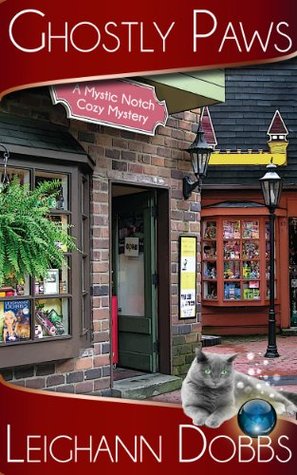
  • Ghostly Paws (Mystic Notch #1) by Leighann Dobbs – Cozy Mystery

    Ghostly Paws (Mystic Notch #1) by Leighann Dobbs – Cozy Mystery

    When murder comes to the sleepy hamlet of Mystic Notch, recently relocated crime journalist Wilhelmina Chance and her grandma’s crime-solving cat jump into the case with two feet and four paws.

    Mainly, Willa wants to start over. After her car accident left her with a temperamental leg and a strange ability to see ghosts, she hopes taking over her grandmother’s bookstore in Mystic Notch will offer her needed peace. That is, until, with the help of her grandmother’s cat, Pandora, Willa discovers Lavinia Babbage’s body in the library basement.

    When Lavinia’s ghost appears to her, Willa not only finds out that Lavinia’s death was no accident, but that someone in Mystic Notch is to blame. And Lavinia only leaves her with a few clues to determine who might have a motive to kill the local librarian.

    What Willa doesn’t know is that her cat, Pandora, is part of an elite species sworn to help humans—and that Pandora is just as intent on finding Lavinia’s killer as she is. With Pandora’s help, Willa starts putting the pieces of the puzzle together. She just has to hope that her investigations don’t get in the way of those actually getting paid to solve the crime—namely, her sheriff sister, Augusta, and the handsome but slightly intimidating sheriff, Eddie Striker (and his steely gray glances).

    This is the first in Leighann Dobbs’ “Mystic Notch: series, and the atmosphere Dobbs creates is exquisitely cozy. While there are a few hiccups in this debut novel, they can be forgiven as the series promises to deliver more enjoyable and affably cozy hours of reading–especially with a few of Dobbs’ few magical flourishes thrown in. Mystic Notch is a town that any cozy mystery fan can look forward to hanging out in. The story is enjoyable overall, especially in the last third. The reveals are delightfully unpredictable, and the ending offers a satisfying conclusion.

    The role of the cats also adds an intriguing element to the overall story and reveals important parts of the mystery in a way that not only fits with the plot but provides some surprises along the way. The cats also offer a significant source of humor, which is a winning element throughout the story.

    This debut novel of the Mystic Notch mystery series is perfect for cozy mystery lovers and looking for a humorous and feel-good escape.

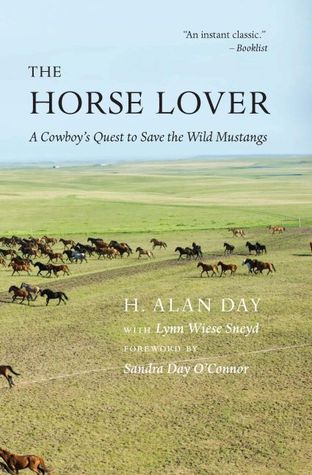
  • The Horse Lover: A Cowboy’s Quest to Save the Wild Mustangs by H. Alan Day with Lynn Wiese Sneyd – Non-Fiction/Memoir

    The Horse Lover: A Cowboy’s Quest to Save the Wild Mustangs by H. Alan Day with Lynn Wiese Sneyd – Non-Fiction/Memoir

    Thousands of wild mustangs now have a sanctuary to call home thanks to one man: H. Alan Day. This is his story.

    Perhaps you’ve heard of a horse whisperer: a person who gently and patiently communicates with an animal. Multiply that by 1,500 and you have H. Alan Day, a cattle rancher from the southwest turned horse herder who takes on what would seem to be an unimaginably huge project.

    The Horse Lover: A Cowboy’s Quest to Save the Wild Mustangs, is Day’s story of Mustang Meadows Ranch in the Sand Hills of South Dakota, the first government-sponsored wild horse sanctuary established in the United States.

    In beautifully vivid prose, Day transports us to the prairie, as in this passage: “The sun highlighted the horses, now twelve hundred strong, creating a canvas of golds, bronzes, beiges, blacks, and deep browns that stretched out before me.”

    Day’s youth played a critical role in his success and interest with horses as he grew up on a 200,000-acre cattle ranch straddling the high deserts of southern Arizona and New Mexico. After college, he returned to manage Lazy B, the family ranch, for the next 40 years. Later, he (hesitantly) purchased 35,000 acres in South Dakota and dedicated it as a horse preserve for 1,500 wild mustangs. Relying on a herd medication program he used at Lazy B, he trained the group of mustangs, those considered unadoptable, to follow a lead horse from the wild through the gates and into the horse meadow.

    However, it wasn’t always easy. Initially, Day scoffed at the idea. “Come on, wild horses? I was a cattle rancher…”

    Thanks to a heartfelt and informative introduction by his sister, Sandra Day O’Connor (the first female US Supreme Court Justice who retired in 2008 after 25 years on the bench), we learn that wild mustangs, formerly running free, breeding and multiplying, were being captured, sold, or destroyed. The Bureau of Land Management (BLM) took care of many of them; however, the remainder was considered unadoptable.

    Day remained stalwart facing dangers, frustrations, and heartbreak and had to deal with government red tape. Through his eloquent and moving story, he shows us the resolve and passion required for undertaking South Dakota ranching.

    It’s no surprise Horse Lover is well written and poignant; in 2002, Day partnered with his sister to co-author the family memoir, “Lazy B: Growing Up on a Cattle Ranch in the American Southwest,” which went on to become a New York Times bestseller.

    Horse lovers will not want to miss this book – and witness the magic of thousands of horses running wild. The rest of us will marvel at what Day was able to accomplish in this story of loyalty and hope.

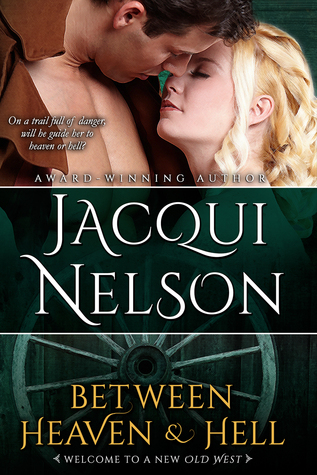
  • Between Heaven and Hell by Jacqui Nelson – Western Romance Drama

    Between Heaven and Hell by Jacqui Nelson – Western Romance Drama

    The year is 1841 when nine-year old Hannah watches the murder of her family by drunk white renegade men. She was found by native Americans and taken in. Thrust into a new and unfamiliar life that will challenge and change her forever. But over a decade later, a tragic event has left her on the run from the tribe she grew accustomed to and now she must find a way to make a living on her own.

    She and her trusted horse travel to Fort Leavenworth, Kansas – in other words, Hell – where she hopes to find a job. With the skills she learned from living with the tribe and her dead eye skills with a gun, she’s hoping to land a scouting job. There, she meets Paden Callahan, a seasoned traveler and military man who is looking for a replacement for his current scout, Dawson.

    After being taken at such a young age, Hannah finds it better to be strong and live independently than take up a typical woman’s profession. Hannah has honed her shooting skills and has an aim better than most men, which astonishes everyone and angers those she bests. But, despite her skill and strength, Callahan still isn’t too sure a woman can handle the tough trail life and also isn’t too sure he can control himself around a woman this beautiful.

    With little options to choose from, Callahan reluctantly allows her to come, but they both discover there are more dangers following Hannah than anyone realized.

    Between Heaven and Hell is an alluring romance that captivates readers in a time period where Pioneers fought for land and Native Americans retaliated in order to keep what was their home. Jacqui Nelson’s characters are multi-dimensional and drift between bridging the gap between the two groups.

    Hannah is an inspiring strong woman whose path represents the bridge between Natives and Settlers, and who spends most of the novel struggling to reconcile her two very different identities. Her life with the tribe has helped make her the woman she is, yet many of the settlers she must find a life with are those who do not understand, nor wish to understand, where she came from. Despite her personal battle and the difficulties she faces as a woman on her own, Hannah proves herself to be tough and resilient.

    Callahan is also haunted by his past, though it differs greatly from Hannah’s and he fights to understand her and how to help her. The connection that develops between them despite their differences makes their relationship worth rooting for.

    Nelson delivers a perfect, steady-paced book with poetic descriptions of romance and easy-to-follow fluidity of Callahan and Hannah’s journeys. Those who love romance and hot sensual scenes, along with the Western historical fiction, will find themselves enamored with this novel.

  • Robbing the Pillars by Kalen Vaughan Johnson – Historical Fiction

    Robbing the Pillars by Kalen Vaughan Johnson – Historical Fiction

    When James MacLaren flees his native Scotland, he leaves a body behind – but not his hatred of the upper class. In England, he meets and weds Emma, but will the skeletons in their shared past remain silent?

    Robbing the Pillars crosses the Atlantic and lands in Nevada City, California at the beginning of the Gold Rush, amidst the discovery of seemingly endless supplies of the precious mineral. James and Emma, now with their young daughter Charlotte, come out to California by wagon train accompanied by Emma’s best friend, Althea and her son Justin.

    Along the way and upon arrival in the region, they meet friends and ruffians including an entrepreneurial chancer with a conscience, an inveterate loser with a taste for alcohol and his eye fixed on Althea, and a Mexican who finds that MacLaren is the first white man he can trust.

    MacLaren involves himself in mining, engineering, and homesteading while Emma and Althea get a taste of town life and community activism. Their children meanwhile are growing up with a sense of true freedom that their European-born parents could never have known. In pursuit of his personal quest, Justin will come up against Althea’s past; and the beautiful, willful Charlotte and her father must learn to live with the pangs of lost love.

    Meanwhile, the territory is changing rapidly. Big men with big ideas are taking an interest in the fate of the new state and move to monopolize its resources. Into this mix, author Vaughan Johnson has expertly interwoven both fictional characters and real “empire barons” such as Leland Stanford, Collis Huntington, and Mark Hopkins into her epic tale.

    This first part of a planned series ends with the rumbling of war that splits the nation and brings about a sad parting that begs for a reunion in a later volume.

    Author Kalen Vaughan Johnson has created a large canvas; her knowledge of the region – its history, the mix of cultures, the lilt of varied accents, even the cuisine – highlights her obvious talent for creating richly detailed historical fiction. The title, for example, references an arcane aspect of mining in which, as the miners retreat from a played out vein, they risk dislodging the roof pillars as they go, endangering their lives by ferreting out every last flake of gold. Johnson depicts with equal verve and realism the lives of the rich, the wannabes, and those at the bottom struggling upward.

    A sweeping look at personal idealism and autonomy pitted against the forces of greed and manipulation, Robbing the Pillars is an emotive family saga solidly rooted in the American dream.

    5 Star Best Book Chanticleer Reviews round silver sticker


  • Five Guns Blazing: A Pirate Novel by Emma Rose Millar and Kevin Allen – Historical Romance

    Five Guns Blazing: A Pirate Novel by Emma Rose Millar and Kevin Allen – Historical Romance

    Containing exquisite historical imagery and diction in addition to brutal sensory detail of what life was like in 1700’s London and the Caribbean, particularly regarding the slave trade are portrayed in Emma Rose Millar’s and Kevin Allen’s Five Guns Blazing. The word choices, spelling, and dialogue are not only authentic to the time period, they contain a palpable amount of emotional heft.

    Laetitia Beedham, the daughter of a criminal, ends up on the ‘Revenge,’ piloted by known pirate John ‘Calico Jack’ Rackham. When Rackham and his two lady friends, Anne Bonny and Mary Read, are captured by pirate hunter Jonathan Barnet, Beedham must save her friends while a price hangs over her own head.

    Laetitia Beedham’s story begins at age 11 as she watches her chronically reprehensible mother sentenced to a workhouse. Since no provisions are made for the motherless at the time, Laetitia joins her mother in the workhouse disguised as a boy and referred to as “Nathaniel.” Her time in there is short and tragic, but she makes a few friends who introduce her to a life with a slightly better potential for a girl in her circumstances.

    After her mother offends the law again, both mother and daughter are tossed onto the brutal steer of a ship on its way to the Caribbean to work off the transportation sentence. As a temporary slave, Laetitia learns a few hard lessons about what existence is like for those poor people chained to a life of permanent servitude and unforgiving masters.

    Halfway through the book, the pirate ship arrives and Beedham’s mother, true to her nature, sells Laetitia for five guineas to the infamous pirate, ‘Calico Jack’ Rackham, in exchange for her daughter’s maidenhead. Known on the ship only as “Beedham,” Laetitia is constantly unsure of her place, looking for anyone to give her the nurturing that she didn’t get from her birth mother – especially from Pierre Bouspeut, who (like Jack, Mary, and Anne,) is a true-to-life character. In pirates, Laetitia finds unexpected allies, people who care for her and help her along the way. Much to the delight of the reader, these characters aren’t carbon-copy stereotypes of pirates we’ve come to know and expect.

    There are many elements of story that work to tie the character, Laetitia, firmly in place. We get to know her and grow to love her as the thread of her tale is woven into historical characters’ narrative. In Laetitia, we see a bit of Cinderella as well as many of the Caribbean folk tales, which only lends flavor and familiarity to her plight. Sometimes she has trouble reflecting and learning not to trust those who betray her, yet the authors’ purposeful use of significant poetic symbolism adds much-needed justice to Laetitia’s tragic tale.

    Though this book is advertised as a pirate novel, the pirates don’t show up until almost halfway through. When they do, though, the story picks up a significant pace. Knowing that Calico Jack, Pierre Bouspeut, Anne Bonny, and Mary Reed were real people adds to the overall historical appeal.

    Five Guns Blazing is a dark, rich, historical 18th-century tale that weaves real pirates into a fictional story with many unexpected twists and turns. A must read for those interested in immersing themselves in 18th-century life, textures, and shadows.

  • Lost Secrets of Master Musicians: A Window Into Genius by David Jacobson – Non-Fiction

    Lost Secrets of Master Musicians: A Window Into Genius by David Jacobson – Non-Fiction

    Told with assurance and passion, a tale of one man’s lifelong journey to connect with his own musical and artistic aesthetic unwinds across decades and touches upon the techniques of some of the best known musicians of modern times. Classically trained musicians and amateurs alike will find the techniques discussed in Lost Secrets of Master Musicians thought-provoking.

    In a chronological and easy-to-follow fashion, Mr. Jacobson begins by providing background for his insight into the existence of these lost secrets, describing his own introduction into musical study and detailing his experiences with various well-known mentors, eventually culminating with his study at the prestigious Curtis Institute while still a young teen.

    While not every classically trained musician or music educator will agree with his conclusions, Mr. Jacobson has the undeniable pedigree and real life experience to discuss the techniques of fine playing, specifically of the violin, and successful music pedagogy within his genre.

    Lost Secrets of Master Musicians attempts to answer the promise of its title. Any musician who has spent time studying the twentieth century masters: Jascha Heifetz, Nathan Milstein, and David Oistrakh, Vladimir Horowitz, and Glenn Gould will find their interest piqued by the re-discovery of playing techniques that Mr. Jacobson puts forth in his insightful and revealing, and yet, what some musicians may consider controversial, treatise.  

    As a performer, Mr. Jacobson begs the musician and the reader to recognize what has been lost and how it can be recovered. The included photographs of proper position when playing the violin aid in the many points covering body symmetry, tone in playing, and what is referred to as “mind/body flow.”

    Individual chapters are devoted to an instrument’s intrinsic value apart from the player, the role of authority in the face of the conductor or mentor, and the composer’s role in the modern repertoire. Each are examined through the lens of Mr. Jacobson’s new approach before the approach itself is compared to that of the well-known and controversial Suzuki Method, as well as Galamian instruction, a method of violin pedagogy found at both Juilliard and the Curtis Institute.  

    Mr. Jacobson’s unique idea, what he has termed the “bel canto instrumental technique,” eschews the idea of individual musical talent in favor of exploring – and challenging – how music itself is approached and taught from the most basic level of instruction to the pinnacle of performance.  

    A Curtis Institute graduate, Mr. Jacobson also holds a Master of Music Performance degree from Boston University and is the founder and director of the San Francisco Institute of Music.

  • Uzumati: The Tale of the Yosemite by Edmond G. Addeo – Historical Fiction

    Uzumati: The Tale of the Yosemite by Edmond G. Addeo – Historical Fiction

    Three thousand years of epic historical reach, Edmond G. Addeo presents Uzumati: A Tale of the Yosemite, an exceptionally well-crafted novel. The author’s enthusiasm and deep love for his subject matter pay off in a big way.

    Edmund G. Addeo is a master storyteller, talented in weaving historical figures with fictional and displaying the vast stage of the Yosemite Valley for all to enjoy. Readers will be both captivated and entertained by this fascinating story brimming with memorable characters.

    Uzumati is the name given by the Indians 1,200 years ago to the area commonly known as the Yosemite Valley. The book details how the valley was discovered by the Native Americans and then re-discovered by white settlers in the 19th century. This valley, striking in its beauty, proved to be a safe and plentiful site for those fortunate enough to find it and settle there.

    Although Addeo’s story focuses on a time period spanning 3,000 years, his skill as a storyteller is evident. Uzumati is both engaging and easy to read, especially when one considers the amount of time and work invested into bringing this story to print. Addeo spent 50 years researching animals, plants, Native American oral history, and news reports from the later years of the era to ensure the story’s accuracy.

    The book focuses on Choluk, “the discoverer” and his family tree which includes Chief Tenaya who plays an important role. Another memorable player is Major Jim Savage, of the US Army. As the story reaches its climactic conclusion, both Tenaya and Savage are well aware that tensions between the Native American inhabitants and the settlers will likely end in conflict. Readers will find it a struggle to choose a side, and in the end, witness a breathtaking conclusion of betrayal and political treachery.

    Heartbreaking and beautiful, Uzumati: The Tale of the Yosemite is a novel any reader will find hard to put down.

  • THE UGLY by Alexander Boldizar  – Contemporary Satire

    THE UGLY by Alexander Boldizar – Contemporary Satire

    Words thrown as hard as boulders are easy to catch – if you’ve had practice. Just ask our hero, Muzhduk the Ugli the Fourth in Alexander Boldizar’s new release, The Ugly.

    In the great tradition of existentialism, Boldizar brings us a book that is hard to classify. It has aspects of the existential with a fair amount of satirical wordplay and a bit of theater of the absurd thrown in.

    An interconnected story of a Siberian Slovak tribal leader looking for a way to save his land and his people, via Harvard Law School and the Tuareg uprising in Africa. Oh, and there’s dark magic and Winnie the Pooh thrown in as well.

    Muzhduk the Ugli the Fourth is a mountain of a man who comes from a tribe of Siberian Slovaks where honor is found in throwing boulders-yes, actual boulders-and either causing great damage to one’s opponent or catching said boulders without physically breaking.

    When his tribe has their land taken through the clever use of legal wrangling by an American lawyer, Muzhduk heads (on foot) to Boston to attend Harvard Law School. On the way, he floats on an iceberg to the Bering Sea, plays rugby for a college in Canada, and gets a perfect LSAT, which ushers him into Harvard where he hopes to learn the words that will help him win back his land for his tribe.

    It is during this part of the story that the wordplay and Muzhduk’s obvious lack of “sophistication” are most enjoyable. In this first year in law school, Muzhduk observes how words are used to challenge and crush the students, much like the boulder throwing at home. This extended metaphor of words as boulders that can be thrown and cause damage, especially in the world of law where words can be twisted and used within the multiple connotations, is where the book finds its best rhythm and is most enjoyable. It is also where Muzhduk meets an odd assortment of professors and students.

    Interspersed throughout the third person, past tense narrative of Muzhduk’s first year as a One-L at Harvard, is the first person account of his travels in Africa, looking for Peggy, his American girlfriend who has been kidnapped (or perhaps not) by the Tuareg in their war with the government.

    This part of the novel unfolds like layers of an onion. As the One-L year continues chronologically, Muzhduk’s journey in Africa and his reason for being there unfolds with new layers of complexity. Even now, Muzhduk discovers that the dangerous game of words as crushing boulders still is in play, but there are added dangers as well.

    There were times in this novel that it felt reminiscent of Heller or Beckett, as Muzhduk is challenged to understand the strange culture of Harvard Law and also navigate his way through a tribal uprising to accomplish his goals. In both places, Harvard and Africa, the story abounds in wordplay and existential ponderings. Just like reading Beckett or Heller or Buber (there’s a reference to his I-Thou theory in the book), or any other existential writer, The Ugly isn’t for everyone and it’s not an easy read. This eccentrically irreverent work, absurd in the very best sense of the word, will amuse and enlighten.

    Alexander Boldizar is the first post-independence Slovak citizen to graduate with a Juris Doctor degree from Harvard Law School. Born in Czechoslovakia (now the Slovak Republic) in 1971, he resides in Vancouver, British Columbia Canada where he writes, works his mad skills in the economic community of Wall Street, and brings meaningful commentary as an art critic. His writing has won the PEN / Nob Hill prize, represented Bread Loaf as a nominee for Best New American Voices, and been shortlisted for a variety of other awards. He has published over one hundred articles in a variety of venues. He states that his freelance writing pays for his son’s circus school.

  • CROSSING PATHS (Geneva Shores Book 2) by Kate Vale

    CROSSING PATHS (Geneva Shores Book 2) by Kate Vale

    Two lovers reunited after decades apart, after they were tragically separated, find they can’t pick up where they left off, but love is always worth fighting for.

    Kate Vale fans will be pleased with her latest book in the Geneva Shores romantic fiction series that takes place in the Pacific Northwest. It features soon-to-be divorced Trish who is overjoyed to be reunited with Denis, the father of her grown son, after a boating accident decades earlier tore them apart. But trying to renew their relationship is made complicated by the great distance between them as well as her pending divorce with Richard. She is also intent on maintaining good relationships both with her son, Chet, and her stepson with Richard, Ed.

    To make things harder for Trish, Richard does not want the divorce and he is willing to go to great lengths to stop it from happening. Meanwhile, Trish and Denis are falling deeper and deeper into love. Trish is a character who many will relate to as she struggles to dig her way out of a mess that leaves her vulnerable. Though her relationships are not always easy, she is a kind-hearted individual who fights to keep her family together as much as she can.

    Richard’s son Ed, who helps run Richard’s real estate business, starts learning that Richard does not always close deals by the book. And Ed is already unable to connect with his father as he is afraid to reveal a detail about himself that may destroy their relationship. Trish and Denis struggle to make it as complicated family relationships and meddling from Richard threaten to undermine their newly rekindled love.

    Crossing Paths is a novel about the struggles of real and difficult connections that are glorified and demonized and reflects the conflicts and rapport of myriad relationships, romantic, familial and otherwise. Kate Vale excels at writing classic romance novels. Readers who are wanting steamy sex scenes or action/adventure tales should look elsewhere. Vale delivers real-life scenarios and characters that real-life women can identify with and then supplies the hopeful endings that avid romance readers desire. Pour yourself a cup of tea or a glass of your favorite wine and enjoy.


  • WALLS for the WIND by Alethea Williams – The Orphan Trains of Hell on Wheels

    WALLS for the WIND by Alethea Williams – The Orphan Trains of Hell on Wheels

    A poignant tale set in the post-Civil War era of the United States in the rough-and-tumble boomtowns that follow the transcontinental railway as it was being built. The author focuses heavily on the often-forgotten plight of orphaned and immigrant children from the crowded cities of the East where they disembarked from the “coffin ships.” Many were packed on “orphan trains” heading west. The book leads off in New York City and eventually heads to Dakota Territory as readers learn about the plight of these orphans.

    Several children’s welfare movements began to deal with the thousands of homeless children of indentured servants and impoverished immigrants. One of these programs was a welfare program that transported orphaned and homeless children from the highly populated Eastern cities and placed them in foster homes located throughout the rural Midwest. These trains operated from 1854 to 1929 and relocated some 200,000 orphaned, abandoned or homeless children. Their plight is the core of Alethea Williams’ historical fiction titled Walls for the Wind.

    Kit Calhoun’s character, the protagonist, was created to portray one youngster among the estimated 34,000 children roaming the streets of New York City, enmeshed in despair and hopelessness in the 1850s. Kit eventually finds herself in the care of the influential Reverend Howe, founder, and director of the Immigrant Children’s Asylum. Kit is fortunate as she is given education and training as a young ward. As time passes and Kit grows older, she takes a job as assistant to the elderly director, Rev. Howe. Having felt the genuine love and care from a person to redirect the course of her own life, Kit passionately goes about the task of rescuing other homeless children.

    Kit finds the work empowering and important, but she also faces an inner struggle at times that the author, Alethea Williams, expertly develops. The author is adept at weaving historical fact, vivid descriptions of the times, and an engrossing plot-line through a young woman’s perspective in this male dominated time.

    The pace of the novel picks up when Kit heads west on an orphan train to help place children with farm families on the frontier. Obviously, Kit would like to see the children adopted by loving parents, but what she quickly discovers is the families the children are being placed with, treat the children as little more than indentured servants who are forced to pay for their room and board as farmhands and laborers with little nurturing or no time for education.

    Not being able to accept this fate for four particular children, Kit decides to adopt them herself when the Orphan Train reaches its destination in Colorado.

    Though her actions are noble, supporting her newly adopted children is a struggle. They live out of a tent and Kit must take in laundry to earn money. But it’s never enough. To make matters worse, she is assaulted by a gambler. At this point, Kit has total disdain for men as she has come to the belief that all men are users and want women for only one thing. When she finally encounters a man that breaks this mold she openly struggles with trust issues.

    A vivid and multi-layered take on the turbulent post-Civil War times that examines with wide open eyes the Wild West environs and the human cost of the “Manifest Destiny” that lead to Transcontinental railway and the U.S. expansion west.

    Author Alethea Williams’ characters portray the difficulties and challenges of these hard scrabble times with a refreshing perspective from a young woman who is trying to make her way. The closing chapters of this powerful tale play out this struggle in breathtaking fashion. An enlightening and informative read of the United States’ not so distant past.