
Category: Marketing

  • How He Increased Book Sales, Writes Realistic Dialogue, and Structures His Writing — Award-winning Author Peter Greene Shares His Tips and Tools

    How He Increased Book Sales, Writes Realistic Dialogue, and Structures His Writing — Award-winning Author Peter Greene Shares His Tips and Tools

    Goethe Grand Prize Winner – Peter Greene

    Meet Peter Greene, CIBA Award-Winning author of High-Seas Action Adventure novels that appeals to all ages!

    If you’ve ever been to a CAC (Chanticleer Authors Conference), you might recognize author Peter Greene. He’s the one that sits on the outside aisle, quiet and unassuming. Well kids, don’t be fooled! Peter has one of the best imaginations I know of—and there is a reason for his works are award-winning!  You’ll just have to read on to discover it yourself!

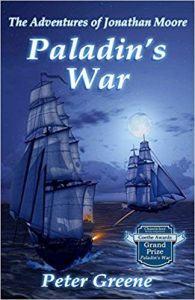
    Peter Greene took home the Goethe Book Awards Grand Prize in the 2017 CIBAs for Historical Fiction for Paladin’s War.
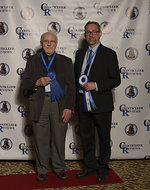
     

    CIBA 2017 Goethe Book Awards Winners Joe Vitovic & Peter Greene

    Chanticleer: Tell us a little about yourself: How did you start writing?

    Greene: My parents were both prolific storytellers, and they were amazingly descriptive, especially my Father. He would act out the voices and mannerisms of all the people. I learned a lot from trying to outdo them.  Then in high school, when I took a creative writing class, my teacher, Mrs. Beem, would just yell out something like “a story with lots of movement” or “use the words ‘freedom’ and ‘cheesecake’ in a short story” and I would just go. The other kids sat and struggled, but I already had a plot, characters, and all that in seconds. She gave me A’s all the way through.

    Structure: Pantzer or Plotter?

    Chanti: That sounds like a great way to be introduced to storytelling! 

    So just how structured are you in your writing work?

    Greene: Very structured, but only in the process, not in the structure of the piece.

    1. I first list “essentials” – just the essential things I want in the story, in no order, and some may make it in there, some may not. This way I get ideas out of my head before they are lost in the ether!
    2. Then comes some basic research, which is ongoing through the process of course, but I just want to make sure I’m building my fiction on a solid, believable foundation.
    3. I then outline like a madman, very detailed at times, sometimes with partial chapters written out, sometimes with crude drawings! These outlines are dozens of pages long, and I print them and literally wallpaper my office with them! The outline for Paladin’s War covered three walls in my office!
    4. Finally, I start the actual writing, usually in chronological order, but that is a rule I break depending on my mood.
    5. When I’m done, I have my wife read the book out loud to me so I can hear the rough spots-that is critical— I find so much that makes me cringe: from unnatural dialogue to foggy descriptions to just clunky passages. I judge a competition and this is the advice that I tell almost every beginning author who enters the contest.
    6. Then, I send to the editor for evaluation. But all of these steps are ‘writing’ to me. And I love all of it.

    Authors Who Have Influenced Your Work

    Chanti: That’s a good way to approach your writing! I like the Madman Outliner… sounds like the title of your next book! Name five of your favorite authors and describe how they influence your work.

    1) Kurt Vonnegut, mostly his later stuff, like Breakfast of Champions because he became so irreverent after his ‘mainstream’ success. He taught me that style can change, and be ANYTHING as long as it has something valuable to say.

    2) Erma Bombeck, again showing that style, if it is true, can let you do anything. I would read her columns, and even though I was about twenty-two years old and a single man in Los Angeles when I discovered her, I identified with her message and I laughed. Her writing seems so effortless! I miss her.

    3) Ray Bradbury! He is so creative and smartly expresses even the most obtuse ideas. And he is funny beyond comprehension, as in The Martian Chronicles, and then scary, as in Something Wicked This Way Comes, then poignant, like Fahrenheit 451. His descriptions are poetic. I have read all of his work.

    4) David McCullough. This is cliché, but he makes history come alive, and his writing voice (as well as his speaking voice), is so crystal clear. No extra stuff, just the best, most important things are covered in a wonderful manner that intrigues us. He never put his opinion in his works, because he doesn’t have to. History is history, and it is interesting enough.

    5) J.R.R. Tolkien because he is the best at everything: plot, character, situation, excitement, humanity, emotion, poetry, prose and adventure. I have read the Silmarillion at least ten times and Lord of Rings each year since I was fourteen. I am always amazed at the scope of his stories, and the languages – truly amazing. I have learned from him that no matter how good I think I can be at times, I am no master. He is the true master. I would never try epic fantasy because the bar has been raised so high.

    About Dialogue

    Chanti: Great insights – and choices! You’ve given us something to chew on. What areas in your writing are you most confident in? What advice would you give someone who is struggling in that area?

    Greene: Dialogue is pretty easy and natural for me, maybe because of my theatre training. As far as advice for others who struggle with dialogue, I’d say this: if you are always looking for a witty, snappy, clever, smart ways for your characters to speak, STOP! It will all come out cliché, and no one talks in clichés. It will read like an episode of some seventies, low-budget television series. J.D. Barker said at the last CAC19 that he sits in a Starbucks, has a cup of coffee and listens to what the people around him say, and he types it into his laptop! That is brilliant. It’s natural. I tried it. It was a blast!

    JD Barker presented at CAC19!

    Expanding Readership and Promoting Literacy

    Chanti: Ah, that’s my favorite thing to do! What do you do in your community to improve/promote literacy?

    Greene: For the Adventures of Jonathan Moore series, I specifically targeted YA readers. I consciously write each book to graduate the reader from the fourth-fifth grade reading level with Warship Poseidon, to the sixth-seventh grade level with Castle of Fire, then Paladin’s War finishes on the ninth-tenth grade level. If a youngster reads all three, he jumps several reading levels! I also donate books to schools and libraries in the area and have done a few talks to writing classes.
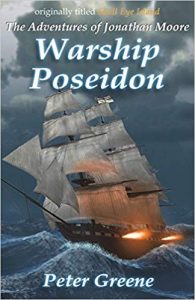
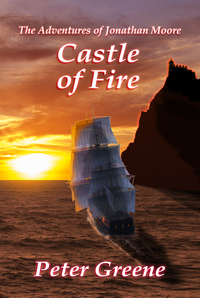
    Honestly, my book reviews from Chanticleer after my winning the Goethe award in 2018 and the (Chanticleer) review of Paladin’s War exploded my sales. I increased my sales by over 400%, so that worked for me! – Peter Greene

    Marketing and Sales Tips

    Chanti: That’s awesome! So, you give away books and present writing classes, what else do you do to market your books? What’s worked to sell more books, gain notoriety, and expand your literary footprint?

    Greene: I don’t do enough, but when I learn something, I do it. I enter contests that are legit. Advertising can work, it just depends on finding what works for you. Honestly, my book reviews from Chanticleer after my winning the Goethe award in 2018 and the (Chanticleer) review of Paladin’s War exploded my sales. I increased my sales by over 400%, so that worked for me! You just have to try everything, meet people, and spread the word – without saying “Hey, I wrote this great book, you should read it.” Let others speak for you, and most of all, let your writing speak for you.

    Let others speak for you, and most of all, let your writing speak for you. – Peter Greene

    How do you separate your books in a crowded marketplace?

    Chanti: That is incredible! I love that – especially how Chanticleer Reviews helped to boost your book sales by 400%! I think we need that on a t-shirt…

    What is different about your series from other YA books out there?

    Greene: Two things: I avoided all magic, superpowers and paranormal material. That’s all fun – but there is too much of it out there already. None of us will ever discover we have wizards or Olympians for parents or have a mystical ability. For this series, I wanted to point out that real heroes do exist, and they have throughout history.

    I also decided to take it easy on the terminology and more unsavory aspects of life at sea. I’ve always loved the classic sea stories in Stevenson’s Treasure Island, Forester’s Horatio Hornblower, and O’Brian’s Jack Aubrey series, but I couldn’t help thinking that for most of us, unless one had supporting texts and companion guides to get through all the jargon and technicalities, one could easily become lost-and maybe surrender to something easier to read. That would be too bad. And the things you do really need to know, well, wouldn’t it be best to learn that along with the characters? The ones that started out as land-lubbers just like you and your kids?

    The Adventures of Jonathan Moore books are about one would-be hero and his friends who try to succeed using only their courage, their wits and industry alone – no magic necessary. And though I will never fill the shoes of Stevenson, Forester or O’Brian, I can attempt to follow in their footsteps.

    Chanticleer: That’s great! But you never know…you may be the one to fill their shoes if  “Adventures of Jonathan Moore” are any indication!

    Now we would really do need to know a little bit more about when did you realize you that you were an author?

    Greene: I got my degree in Theatre from Illinois State, and a playwriting professor said I had a “knack for dialogue and physical humor.” That made me continue writing. I wrote screenplays after college, and a studio exec at 20th Century Fox pulled me aside and said “you really can write, keep it up” – then years later, my first novel, Warship Poseidon won the Adventure Writers Competition’s Grandmaster award, and Clive and Dirk Cussler chose the winner. When Clive announced my name, he said “I read your book, you know. Beautifully written.” THAT made me think that maybe I have a little writing ability. So when I write, I always think “maybe Clive and Dirk will read this so it better be my best effort.”

    Editor’s Note: Clive Cussler’s books have been published in more than 40 languages in more than 100 countries. They are New York Times and international bestsellers. He has written 17 books in a row that reached the New York Times’ fiction best selling list. He is of a select group of authors to achieve this status. Cussler has also published more than 50 novels—quite the back list that keeps him on the list of richest authors in the world.

    Chanticleer: Holy Moley, man! That’s Clive & Dirk Cussler! I can’t… I just need a moment… Okay then, what led you to write what you write?

    Greene: I write a lot of different stuff in different genres, because, why not? The Adventures of Jonathan Moore series is YA historical fiction, and it all happened by accident. One night, as I was putting my children to bed, I realized that I was tired of reading the books available on our bookshelf. Knowing they were crazy about the Pirates of the Caribbean movie, I just said, “Tonight I’m going to tell you a story about twelve-year-old Jonathan Moore who lived in a dark and filthy alley, and how he ended up a hero on a tall sailing ship.” I kept telling a little bit each night, making it up as I went. My wife, who was listening to the stories each night, suggested that I write it as a novel. Ten years later I have three books in the series!

    Chanti: And so the magic began… How do you come up with your ideas for a story?

    Greene: Good question! Usually, something just clicks that I observe or realize, and off I go. For example, I was thinking about hidden social casts in America and I thought “Wow. People don’t see it, do they?” So BAM! This Sci-Fi idea hits me for a novel, the characters came quickly and then a plot and now the outline is almost finished.  I’m starting it now. It’s a strong female character who uses history and propaganda to, well, you will have to read it!

    Chanti: A SciFi novel! We can’t wait to read it! Are you going to enter it into the Cynus Book Awards? 

    Greene: Definitely!

    Chanti: Thank you, Peter Greene with an “e,” and we look forward to seeing you at CAC20! 
  • A 280-word Halloween Writing Contest for ALEXA VOICE –  WIN $$ and Promotion in this Emerging Platform

    A 280-word Halloween Writing Contest for ALEXA VOICE – WIN $$ and Promotion in this Emerging Platform

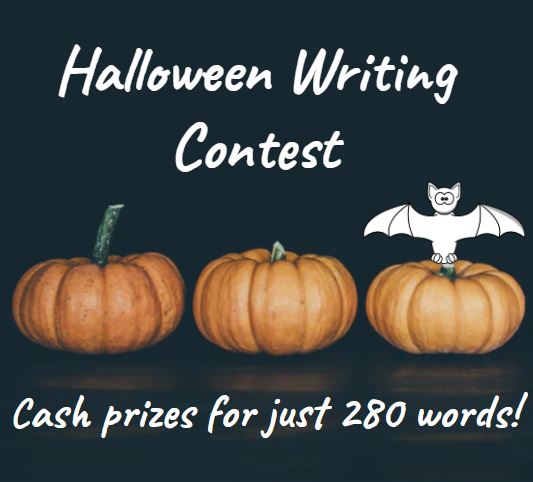
    Tellables is Sponsoring a Writing Contest for Halloween Micro-stories.

    I met Amy Stapleton, the CEO of Tellables, at the 2019 Digital Book World that took place in Nashville, Tenn. The Tellables’ exhibitor booth was adjacent to ours so we met and chatted. When she informed me about their contest for content, I knew that it would be a perfect opportunity for some Chanticleerians to experiment with Voice technology. So without further ado…

    VOICE-DRIVEN CONVERSATIONAL STORIES FOR TALKING DEVICES

    For those of you who are not familiar with Digital Book World conference, it is mainly a business-to-business conference that specializes in content distribution and platforms that includes books, ebooks, digital books, audiobooks, podcasts, audiovisual delivery, blockchain, voice, and other media delivery systems. And since Chanticleer prides itself expanding the authors who use our services digital footprint, we’ve found DBW to be indispensable for keeping us updated on the latest in publishing technologies.

    “Publishing is at the epicenter of digital disruption.” Paul Michelman, MIT & MIT Sloan

    Okay, back to Winning $$ and Tellables!

    (And, no, you do not need to own an Alexa to participate. And we love passing along these great opportunities to learn and perhaps win a little cash in the process. ) 

    Halloween Chocolate Stories

    It’s time for some spooky stories, or at least some Halloween action in the Tellables “chocolate shops.”

    For Tellables’ next assortment of conversational stories they are seeking haunting Halloween-themed tales, so they are offering a writing contest.

    And they are even offering cash prizes to the authors of the 1st and 2nd place stories.

    • Tellables is seeking stories that are short and sweet, just like a piece of Halloween candy.
    • The perfect story will be no more than 280 words, with the action set in or around a chocolate shop.
    • It can be any genre, but suitable for general consumption–much like you would hear on a radio station.
    • There is no entry fee. Two cash prizes will be awarded by Tellables.
    • Deadline for submissions is Saturday, October 19, 2019, at 12:00 a.m. Eastern Standard Time
    • Writing Tips for Voice Apps https://tellables.com/author-tips/
    • Link to Submission Form and more info here   https://tellables.com/2019/09/writing-contest-halloween-chocolate-story/

    So, what’s this Tellables all about? Tellables isn’t a traditional publisher. They don’t publish online or in print, or even in traditional audio format. Instead, they use Amazon Alexa to tell stories and engage listeners in a two-way conversation. 

    Writing Contest with Cash Prizes

    This Halloween writing contest is a great opportunity to dip your toe into the emerging world of voice technology. There’s no entry fee, and the best stories have a chance at one of two cash prizes, as well as inclusion in our next box of chocolate stories on Amazon Alexa.

    Perhaps your story starts out something like this, and is narrated by the chocolatier Coco:

    It was just three days before Halloween when a young woman came into my chocolate shop and started looking through the display cases. She had a surprisingly pale complexion, and I couldn’t help noticing that her eyes looked red and puffy. I was quite proud of my assortment of special Halloween treats and was anxious to point out my fresh batch of pumpkin spice truffles when the young lady suddenly burst into tears. I rushed off to find her a tissue, but when I came back just a few seconds later, she had vanished.

    What happens next?

    Visit Tellables blog post for complete details on the contest, online submission form, links to writing tips, and more sources of writing inspiration. Best of luck and Happy Halloween!

    Conversational Stories in an Imaginary Box of Chocolates

    Our newest experiment in conversational storytelling involves imaginary boxes of chocolate, where each chocolate represents a story. New assortments are published every month.

    Try out the stories by talking to Alexa on an Echo, a Fire tablet, the Alexa phone app, or anywhere Alexa resides. Use a friend’s if you don’t have one yourself. Just enable the free voice app–called “My Box of Chocolates”–by saying “Alexa, enable My Box of Chocolates.” 

    The stories in the My Box of Chocolates voice experience run less than two minutes. Each one is narrated by an imaginary chocolatier, using a synthetic text-to-speech voice (not human recordings). The storylines generally revolve around interesting or humorous occurrences involving the customers in the chocolate shop.

    A little bit more information about the Emerging Voice-Driven Devices and the Opportunities They Offer for Writers

    Voice assistants like Amazon Alexa are equipped with powerful speech recognition and language understanding. We leverage these technologies to help authors and storytellers engage audiences in new and exciting ways.

    While it’s still early days for voice technology, sales continue to grow for both the Amazon Echo and the Google Assistant line of smart speakers and smart displays. Consumers seem unfazed by media reports of privacy infringements, so it appears these devices are here to stay.

    Here is an article with 22 Takeaways for Authors from the Silicon Valley Annual Internet Trends Report – Kiffer Brown

    Voice technology offers new and exciting opportunities for storytellers and readers. Passive listening is no longer the only option. Now two-way communication between the storyteller and listener is possible. 

    Tellables has created a platform for “conversational storytelling,” where brief stories are followed by interactive questions. This two-way communication draws the listener more deeply into the story.

    As always, please email us at Chanticleer@ChantiReviews.com with any questions, concerns, or suggestions. Or leave a comment below.

  • What Literary Agencies and Acquisition Editors are Seeking in Manuscripts – Refreshing your Writer’s Toolbox from Jessica Morrell’s Editor’s Desk

    What Literary Agencies and Acquisition Editors are Seeking in Manuscripts – Refreshing your Writer’s Toolbox from Jessica Morrell’s Editor’s Desk

    What is it about a particular manuscript that makes it interesting to a literary agent (or the agent’s slush pile reader), acquisition editor, or professional reviewer?

    While it may take more than a crystal ball to figure out exactly what lit agents and publishing houses acquisition departments want and let alone reviewers, guidance can be had.  Line editors do understand what these gatekeepers want to see and, perhaps more importantly, what they do not want to see in a manuscript.

    Advice from line editors can be an author’s first line of defense in climbing out of the slush pile to gaining a gatekeeper’s interest. No crystal ball required.

    Jessica Morrell, a top-tier developmental editor for major authors and publishing houses, knows what these gatekeepers are seeking along with what makes them cringe.

    Editors, agents, and reviewers are word people, most were English or journalism majors in college and have a great love and respect for the written word. They will notice your level of craft within the first sentences, so your efforts must be polished, vivid and exceptional.

    Craft Tips & Techniques by Jessica Morrell, Editor

    (with Added Comments, from Kiffer Brown, publisher of Chanticleer Reviews magazine)

    • Your manuscript lives or dies on your opening sentences and each word must be perfect, precise, and weighted with meaning. 
      • (Most slushers (who work for agents and acquisition departments) do not read past the few pages of a manuscript. Don’t blame them for not reading more of your manuscript. Slushers have more works than they can possibly read in a month but have to slush in a given day. It is the writer’s job, neigh duty, to keep the slusher engaged. Slushers are professional readers who are panning for “gold and gems in the raw.”  This system is by design, btw.) 
    • Editors notice and are turned off by passive voice and wimpy verbs.
      • (Enough said.) 
    • Editors notice when the viewpoint jumps or shifts within a scene.
      • (This is a pet peeve of professional reviewers—an indication of lack of writing craft and skills.)
    • Editors notice too much telling (reporting or summary) and not enough showing in all types of writing including essays and memoir.
      • (A line editor can help with too much telling with comments and questions.) 
    • Editors notice when emotions are announced instead of dramatized.
      • (Reviewers call this “lazy writing.”)
    • Editors notice the frequent use of names in dialogue. Generally, leave out names.
      • (Multiple names, especially names that are similar, are irritating to reviewers. When the reviewer has to make notes about who is whom it had better be for furthering the plot significantly.) 
    • An editor notices sloppy punctuation such as excessive use of exclamation points, quote marks around inner thoughts, improper use of semicolons and ellipsis.
      • (Reviewers see this as the author not being professional about the work  (or his or her writing career) to have it professionally proofed – the most basic type of editing.) 
    • Editors notice protagonists who are not proactive, heroic in some way, and bigger than life. (
      • Reviewer’s Mantra – Novels are depictions of life without the boring bits.) 
    • Editors notice characters with a limited emotional range and expression.
      • (One-dimensional character and cardboard characters are uninteresting.) 
    • Editors notice large and small inaccuracies and inconsistencies—when the character has blue eyes on page 23 and green eyes on page 57; when a character drives an old, beat-up, pick-up truck that is inexplicably equipped with airbags; when an animal, plant, or species of any sort is misnamed or shows up in the wrong region of the country.
      • (Did the author care enough to do the background research for the work? These technical details’ correctness can make or break the construct of a story.)
    • Editors notice when technical details don’t ring true—such as in a mystery when police don’t follow standard arrest procedure; or when a yacht sinks from a single bullet hole; or explosive materials are used haphazardly.                  (See comment above.)
    • Editors notice vague descriptions (plant instead of ivy, a tree instead of oak) and generalities instead of details that bring the reader into a specific time and place.
      • (Vague descriptions are perceived as lazy writing which is not a reputation that an author would want to be known for.) 
    • Editors notice when writers don’t write for all the senses, especially leaving out smells.
      • (This is called the white room syndrome and it makes a manuscript about as boring to read as an old school telephone book.)
    • Editors notice small confusions such as misusing it’s and its, that and which, affect and effect, compliment and complement, lay and lie.
      • (With tools (apps) such as Grammarly and Grammar Girl, there is no reason for these misuses to occur. Additionally, these basics are covered thoroughly in The Elements of Style, a slim tome that is indispensable writers.) 
    • Editors notice overly long paragraphs and a general lack of white space. Generally, paragraphs are five or six sentences long and as taught in grade school introduce a topic, develop a topic, then conclude or lead on to the next paragraph.
      • (Edit, delete, cut your word count—as Stephen King says, “Kill your darlings.” The rule of thumb is that most manuscripts can be cut by 20 percent.)
    • Editors notice a lack of transitions—the words and phrases that announce a change in mood or emotion, time, and place so the reader can easily follow. They also know excess transitions as when you follow your characters across every room and along every sidewalk.
      • (Use transitions as you would salt and pepper—just enough but not too much. The correct amount of transitional phrases are the hallmark of solid writing.)  
    • Editors notice excess modifiers, purple prose, and too much description. The best writing is lean and economical and every word in every sentence has a job to do.
      • (Yes! Every word must move the story forward.) 
    • Editors notice a voice that is flat, inappropriate, or boring. Voice, whether it is the writer’s voice in an essay or the viewpoint character or narrator in fiction, must breathe life into the piece and hint at the person behind the words.
      • (Writing styles can mimick the guests at a cocktail party. There is always the bore who goes on and on and usually in too much detail also. The bore is the one guest who is the least tolerated even more so than the boisterous, the chatty, the tipsy, and even the know-it-all. But everyone loves the one who can tell a good story, or the who has a bit a mystery, and the one who is interested in others and respects others is always invited back. Respect your readers with your writing and your writing will earn respect.)


    Chanticleer Editorial Services

    Did you know that Chanticleer offers editorial services? We do and have been doing so since 2011.

    Our professional editors are top-notch and are experts in the Chicago Manual of Style. They have and are working for the top publishing houses (TOR, McMillian, Thomas Mercer, Penguin Random House, etc.). If you would like more information, we invite you to email Kiffer or Sharon at KBrown@ChantiReviews.com or SAnderson@ChantiReviews.com for more information, testimonials, and fees.

    We work with a small number of exclusive clients who want to collaborate with our team of top-editors on an on-going basis. Contact us today!

    Chanticleer Editorial Services also offers writing craft sessions and masterclasses. Sign up to find out where, when, and how sessions being held.

    Writer’s Toolbox


    Thank you for reading this Chanticleer Writer’s Toolbox article.

    Keep writing, keep dreaming, have heart. Jessica

    Keep on creating magic! Kiffer

  • What is Blockchain? And Why Authors and Publishers Should Care

    What is Blockchain? And Why Authors and Publishers Should Care

    Blockchain is the foundation of a New Era of the Internet —

    “Publishing is at the epicenter of digital disruption.” Paul Michelman, MIT & MIT Sloan.

    Why is blockchain important for commerce and business (and, lest we forget,  publishing is business)?

    Because

    It is a persistent, transparent, and its end goal is to cut down on middlemen, which is considered to be the new age of economicsCryptoeconomics.

    “Cryptoeconomics” is the practical science of building distributed systems, where properties of those systems are secured by financial incentives, and where the economic mechanisms are guaranteed by cryptography. It is the general term for the practice of designing and scaling blockchains like Ethereum and Bitcoin.

    Bookchain by Scenarex utilizes Ethereum for its digital bookselling platform. We will circle back around to Bookchain and Ethereum. But first, join me as I explore blockchain to try to understand this technology that is shaping the publishing industry.

    Blockchain is a type of internet network that runs on hundreds of thousands of computers worldwide. There are dozens of blockchain internet network platforms running 24/7 globally. And, yes, blockchain was invented to support bitcoin transactions. However, it is now being utilized for recording many different types of information.


    As for real-world applications, here is one that validates blockchain technology commercial use:

    Deloitte (a “Big Four” accounting organization) recently surveyed 1,000 companies across seven countries about integrating blockchain into their business operations. Their survey found that 34% already had a blockchain system in production today, while another 41% expected to deploy a blockchain application within the next 12 months. In addition, nearly 40% of the surveyed companies reported they would invest $5 million or more in blockchain in the coming year. – Investopedia

    Blockchain is a digital ledger on all platforms. Blockchain apps act as a third party and allow us to trade one-on-one but on a global scale.

    Arizona’s Electronic Transactions Act 2017

    “‘Blockchain technology means distributed ledger technology that uses a distributed, decentralized, shared and replicated ledger, which may be public or private, permissioned or permissionless, or driven by tokenized crypto economics or tokenless. The data on the ledger is protected with cryptography, is immutable and auditable and provides an uncensored truth.”

    It is decentralized. It isn’t controlled by any government or company.

    As we prepare to head into the third decade of blockchain, it’s no longer a question of “if” legacy companies will catch on to the technology — it’s a question of “when.”  – Investopedia

    [ Editor’s Note: In 2020, just a half a year away, Facebook is planning on launching its own cryptocurrency, Libra, on its own blockchain platform called Calibra. Whether are not that platform will be decentralized is a concern—a major concern. Google is also planning on launching BigQuery – with its own cryptocurrency. ]

    Reread: It is decentralized. It isn’t controlled by any government or company that is until Facebook and Google have their own platforms…Amazon can’t be far behind…

    Are you with me so far…? 

    Blockchain =  a block of digital information that is stored in a public database known as the chain.

    Illustration from Blockchain Simply Explained

    Each digital record is a “block.” Changes can only be made to the “block” by adding new information to the end that references previous transactions on that particular block. Each change is called a “hash.” Each block of information is added by a chain. 

    A “hash” is a unique fingerprint for each bit of added information to the chain of information (blocks)

    Rubygarage.org

    WHY, again,  am I reading this article? 

    The goal of blockchain is to allow digital information to be recorded and distributed, but not edited (or hacked or pirated). This is what makes blockchain a natural for ebook distribution.

    For our purposes, we are going to discuss Ethereum, the world’s leading programmable blockchain app.

    Now to circle back around to Bookchain by Scenarex and Ethereum. Bookchain uses Ethererum for its digital bookselling platform.

    COOL TIP > check out Eretheum just to see this new type of artwork called NFT (non-fungible token –NFTs also find potential use in digital art, by helping prove authenticity and ownership.) I don’t quite understand what it is, but the graphic is fun to watch as it morphs on the Ethereum.org site.  Blockchain has given rise to this new form of graphics and art. And allows the creators to benefit from their works.

    This logo joins together the artwork of five artists. You can see this artwork in motion at Eretheum.org @liliashka lead the art project.

    The Ethereum community is the largest and most active blockchain community in the world. It includes core protocol developers, cryptoeconomic researchers, cypherpunks, mining organizations, ETH holders, app developers, ordinary users, anarchists, fortune 500 companies, and individuals. 

    There is no company or centralized organization that controls Ethereum. Ethereum is maintained and improved over time by a diverse global community of contributors who work on everything from the core protocol to consumer applications. This website, just like the rest of Ethereum, was built – and continues to be built – by a collection of people working together.

    As of February 1, 2018, Ethereum was running on approximately 28,000 nodes (computers across the globe). That number has significantly increased in 2019.
    Ethereum is a global, open-source platform for decentralized applications. On Ethereum, you can write code that controls digital value, runs exactly as programmed, and is accessible anywhere in the world.

    Now, we can say that Ethereum is decentralized. It isn’t controlled by any government or company.

    Ethereum is a foundation for a new era of the internet that utilizes blockchain technologies:

    • An internet where money and payments are built in.
    • An internet where users can own their data, and your apps don’t spy and steal from you.
    • An internet where everyone has access to an open financial system.
    • An internet built on neutral, open-access infrastructure, controlled by no company or person.

    Are you still with me…? 

    “…attacks are further thwarted because the cost of changing the contents of old blocks is compounded by each new block that gets added to the chain. When a new block is made, it contains the hash of the one before it. Any changes in old blocks will result in invalid hashes for all subsequent blocks.  In that lock analogy, it’s as though the design for the lock at the end of the chain depends on all the locks that came before it. So changing one lock in the middle of the blockchain means having to find new keys for every lock after it.”  IEEE SPECTRUM

    “Ensuring irreversibility becomes necessary only when you invite anyone and everyone to take part in the curation of a ledger.” This is why blockchain technology platforms run on tens of thousands of nodes and computers. The information is decentralized, thereby making it almost impossible to steal, alter, or lose. 

    Blockchain

    Why authors and publishers should care about blockchain

    Any information (this includes books, novellas, short stories, graphics, photos, transactions…) that can be digitized can be recorded using blockchain technology. This digitized record can be referenced through a ledger entry on the intended blockchain platform which decentralizes it over its thousands of network nodes.  Any time the blockchain is accessed it is timestamped with another block of digitized information.

    As an author, the blockchain provides a way for you to securely publish your book and keep control of your digital rights. It allows your published book to be treated more like a physical book, allowing your readers to own the digital book forever (as opposed to being allowed to checkout via Kindle).

    How do I get my book published on a blockchain platform?

    There are a couple of different companies out there that provide the front end support to get your book published on the blockchain.

    Bookchain utilizes the Eretheum blockchain to create a brand-new platform bringing a refreshingly flexible way to publish and distribute ebooks, based on blockchain technology. Through smart contracts, the platform enables the configuration of the security, traceability, attribution, and distribution settings of an ebook. 

    The first four things to know and understand about the Bookchain platform are:

    1. You do NOT need cryptocurrency (aka Bitcoin, etc.) to sign up
    2. You will NOT be paid in cryptocurrency (unless you want to)
    3. It is endorsed and underwritten by the Canada Media Fund, NRC, and the Canada Ministry of Economie.
    4. It is secure!

    Why are we so into Bookchain?

    We became interested in Bookchain when one of OZMA Grand Prize winners, Susan Faw, informed us that she is now publishing on Bookchain because her books were pirated! Yes, pirated!

    Read about how and what happened to her and her published works here (from her blog posts on Chanticleer Reviews):

    PiracyNot Just on the High Seas  https://www.chantireviews.com/2019/06/14/piracy-not-just-on-the-high-seas-by-award-winning-author-susan-faw/

    CRYPTOCURRENCY – Protecting Your Coin from Pirates  https://www.chantireviews.com/2019/06/29/cryptocurrency-protecting-your-coin-from-pirates-by-award-winning-author-susan-faw-cryptocurrency-book-sales-book-marketing/

    Join us on the High SEAS to the New Territories of  DIGITAL BOOK PUBLISHING

    Sailing – making great time! Fair waves and following seas! All is good!

    What are your experiences? What are your thoughts?

    Do let us know!

    Links to Resources Used and Quoted in this Article:

    I have listed a few of the Youtube videos that I watched while trying to understand this new technology. They discuss what makes blockchain hard to hack and the concept of “consensus” that allows blockchain to exist. Stay tuned as we ride the waves of blockchain!

    Blockchain Simply Explained:  https://www.youtube.com/watch?v=SSo_EIwHSd4

    Blockchain for Dummies by Edureka:  https://www.youtube.com/watch?v=daQZt_klZhA

    IEEE SPECTRUMmagazine – by Morgen E. Peck

    Blockchains: How they work and why they will change the world https://spectrum.ieee.org/computing/networks/blockchains-how-they-work-and-why-theyll-change-the-world

    How Blockchains Work  https://spectrum.ieee.org/computing/networks/how-blockchains-work

    What’s in a Blockchain? With New Tools, Anyone Can Find Out   https://spectrum.ieee.org/tech-talk/computing/networks/whats-in-a-blockchain-with-these-new-tools-anyone-can-find-out

    Ethereum  https://www.ethereum.org/

    The Verge https://www.theverge.com/2018/3/7/17091766/blockchain-bitcoin-ethereum-cryptocurrency-meaning

    WIRED https://www.wired.com/story/ambitious-plan-behind-facebooks-cryptocurrency-libra/?mbid=GuidesLearnMore

    https://www.wired.com/story/guide-blockchain/

    And our own, Argus Brown, CTO & COO of Chanticleer Reviews & Media.

  • Hot Marketing Tips are Shared in the 10 Question Author Interview with MICHELLE COX – Author Interviews, Marketing, Craft of Writing

    Hot Marketing Tips are Shared in the 10 Question Author Interview with MICHELLE COX – Author Interviews, Marketing, Craft of Writing

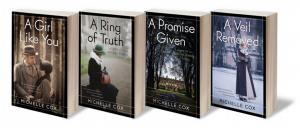
    Mystery & Mayhem Book Awards Grand Prize winner Michelle Cox graciously shares her writing life and knowledge with us along with some hot marketing tips and tools! Read on!

     “When I finally decided to try writing, the creativity within me, that divine essence, finally found its true home.  I’m happiest when I’m creating, and I hope I can keep writing for a long time.” – Michelle Cox

    Michelle Cox, award-winning author, at work in her writing lair

    Chanticleer: Thanks for coming by, Michelle. Tell us what genre best describes your work? And, what led you to write in this genre?

    Cox: Well, that’s a great question!  I usually at least place as a semi-finalist in three different categories at the Chanticleer awards, for example, so that should be a pretty good indication.

    Romance Fiction Award Post 1750s Historical Fiction Award Cozy Mystery Fiction Award

    My series is set during the 1930s in Chicago, so that qualifies it to be historical fiction, but it’s also mystery and romance.  I guess “romantic-suspense” would be the best way to describe the series, but without the bare-chested guys on the cover.

    They always say to write what you would want to read, and this is it!  I set the series set in my favorite era; added a little bit of mystery, a little bit of romance; flavored it with the haves- and the have-nots of the era, as well as a touch of the English aristocracy; and then stocked it with lots of characters and subplots weaving in and out . . . sheer heaven!

    Chanticleer: And that’s why we love you and your books! What do you do when you’re not writing? Tells us a little about your hobbies.

    Cox: I no longer have any! I used to have hobbies before writing took over my life. If I do have a few minutes here and there, I still love to garden and bake, but my real love, however, is board games.  I’m a fanatic and have become a sort of a collector now.

    Playing games with Michelle Cox! Did the butler do it?

    Chanti: That sounds like a lot of fun! So, how do you approach your writing day?

    Cox: As soon as my kids get on the bus at 6:50 am, I make my second cup of coffee and sit down at my desk.  I’m not allowed to do any social media, though I do always do a quick email check to see, you know, if I won the Pulitzer or something (it’s always no), and then I start working on whatever manuscript I’m currently on.  My brain is its crispest early in the morning, so I have to use that time for the work that takes the most concentration.  There’s something to be said about productivity when you know you only have a limited time to write.  There’s no room for writer’s block or procrastination.  When you know you only have so much time, you have a way of just sitting down and doing it.


    When I reach whatever my writing goal is for that day, I spend the next five to seven hours (until the kids come home) doing marketing and PR—anything from writing the blog or the newsletter or articles or interviews, taping podcasts, setting up events, answering email, attending to social media, etc.  It’s really a full-time job, though, sadly, the actual writing, the part I love, is the part I get to spend the least on.


    Chanti: Marketing pays off, right? Name five of your favorite authors and describe how they influence your work.

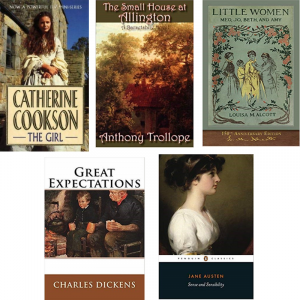
    Cox: My series is known for the plethora of rich characters scattered throughout and the big saga-like plots.  I was definitely influenced in this by my early favorites: Louisa May Alcott, Catherine Cookson, and Charles Dickens.  My other two favorites would be Anthony Trollope and Jane Austin for their subtlety in character and their overall ability to use language so beautifully.

    Chanti: I cannot argue with your choices. These are delicious authors – and novels!

    I know you gave us a snapshot of your work-day earlier, but could you give us your best marketing tips, what’s worked to sell more books, gain notoriety, and expand your literary footprint.

    Cox: Wow!  That’s a great question, but so hard to answer.  All marketing is pretty elusive, isn’t it?  It’s a constant process of throwing things at the wall and seeing what sticks.  It’s also important to remember that what works for one person, might not work for everyone.  It’s not an exact science.  If it were, we’d all be rich!

    But, in general, here are some good marketing tips that I have found to work:

    • Try to figure out where your readers are. Most of my readers, for example, are on Facebook, so that’s where I spend most of my social media time.
    • Think of yourself as a brand and try to match your posts accordingly. I post things about myself or the book or writing, but mostly old recipes, period drama news, or old stories from the past (which constitute my blog). Also, I’m very careful never to post anything religious or political.  This is a business, and the more you see yourself that way and follow basic business protocols, the more successful you’ll be.

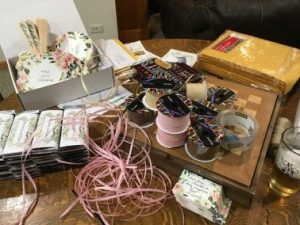
    • Try to build your newsletter list by offering a freebie (such as free story, writing tips, a webinar, a prequel). Personally, I do it by running contests with really big prize packages. I make sure to state that the contest winner will be picked only from my newsletter subscribers.  I pay a designer to create a beautiful graphic of the prizes, post it on FB, and then boost the post.  Not only does this get me a lot of new subscribers (sometimes up to 1,000!), but it exposes the series to new readers as well!
    • Build your network. Join online author groups (I am part of a fabulous private FB group organized by my publisher, She Writes Press. We all share ideas, marketing tips, and offer support and advice, especially to the newer authors just coming on board.  It’s a collective wealth of information.) or real-world groups in your area.  Don’t be jealous of the success of others, but help each other as much as possible. As my publisher, Brooke Warner has said, “There’s room for everyone at the table.”
    • Show up at other authors events, write reviews, help promote whenever possible.  Go to conferences to meet not just readers, but other authors who can potentially help you.  Remember that you are a business, and you need to do work within your community to begin standing out.

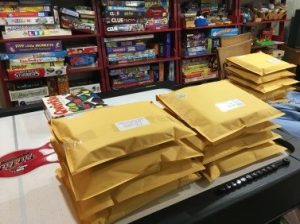
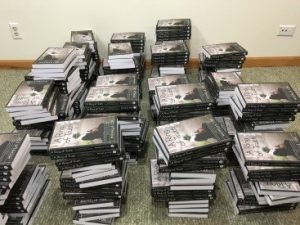
    • For example, my publisher and I overprinted Book 2 of my series, so, as per my contract, when the first year of publication had passed, I was faced with having to pay a storage fee for these extra books (a couple of thousand), have them shipped to my garage, or have them destroyed.  I decided, instead, to send them to libraries and conference organizers.  It was a lot of work and expense, but it got my book into the hands of hundreds, if not thousands, of potential readers, and hopefully, they’ll come back for more and buy the rest of the series.  You have to be willing to take risks.


    • Also in this category would be to try to get a Bookbub deal, which, as we all know is really tough.  Again, for Book 2 of the series, we submitted four times, trying to get a deal with the book being priced at .99 cents.  I finally decided to offer it for free, and we cleverly put a buy link to book 3 at the end of Book 2.  Bookbub then offered me a deal, and I had over 55,000 downloads in one day!  Hopefully, a lot of those people will go on to buy Book 3 at full price.

    • Lastly, if the first book of your series is free, either permanently or occasionally, you can join Book Funnel, in which you “bundle” your book with others of a similar genre with each author promoting the bundle to their social network, which exposes your series to a whole new crop of readers.  Readers are able to download your free book in exchange for their email address.  So not only are you getting readers hooked on your series (hopefully!), but you’re building your subscriber/newsletter list.


    Chanti: You could teach a Master Class on this at CAC20! Let’s chat about this later.
    Chanti: What are you working on now? What can we look forward to seeing next from you?

    Cox: Book 5 of the series is currently in production and scheduled to be released in Spring 2020.  I said I was going to take a break from the series after that, but I admit, I’ve already started sketching out Book 6 –  I can’t help it!

    But what’s really exciting is a new stand-alone novel, The Love You Take, that I wrote, also based partially on a true story and set in Chicago in the 1930s.  It’s a really fabulous book if I do say so, about a “backward” girl who has to go and live at a home for “bad girls” after she unwittingly becomes pregnant. I’m currently querying agents for it.

    Chanti: Sounds intriguing. Please keep us updated. Who’s the perfect reader for your book?

    Cox: Though some men enjoy my books, the primary audience is women. Anyone who loves Downton Abbey; Upstairs, Downstairs; Miss Fisher’s Murder Mysteries, the old black and white films, like The Thin Man . . . basically any period drama or old movie . . . will love my series.  I can’t tell you how many people have written to me to tell me that the series is so visual, that reading it was like watching a movie.  It’s delightful escapism; people tell me all the time they feel like they’ve been transported back in time after reading them.

    Chanti: I know that’s why we read your books #delightful! What is the most important thing a reader can do for an author?

    Cox: Tell a friend!  Research shows that the number one thing that influences people to buy books is word-of-mouth.  If you like a book, recommend it to friends or your book club.  The second best thing is to write a review!  People seem wary of doing this, telling me that they’re nervous about what to write.

    “Nonsense!” I say.

    A review can be one sentence: “This was a great book; I enjoyed it!”

    There.  Done.

    You don’t have to go into a lengthy reworking of the synopsis (why do people do this?) or delve into symbolism or themes or whatever.  Just give your one-sentence opinion!

    Chanti: I’ve been telling my non-writing friends this for years… Do you ever experience writer’s block? What do you do to overcome it?

    Cox: Not really!  I have a lot of story ideas in my head, and thus I usually have the opposite problem.  This is where outlining can really help.  If you have a pretty weighty outline sketched out, then when you sit down to write each day, you pretty much already know what you’re supposed to write that day.  Likewise, I enjoy taking an evening walk (or I try to, anyway!), during which I think about tomorrow’s chapter and what needs to go into it.  Sometimes I even voice record if I have a really good idea or some strands of dialog.  There’s something about walking—moving the legs back and forth, back and forth—that seems to stimulate something in the brain. They say that Dickens used to walk the streets of London for hours in the wee hours of the night.  Now I know why!

    Chanti: Time to reflect and let your mind wander. Movement really does help with this. What excites you most about writing?

    Cox: Creating something out of nothing.  I’ve always been a really creative person.  Looking back, I see now that I’ve always been striving to create, and for a long time it took on many different forms.  As a kid, I was always trying to illustrate Louisa May Alcott’s books or write little fan fiction stories based on Jo March.  As I got older, it took the form of gardening and decorating the house, and then baking and then creating elaborate kids’ birthday party invitations!  When I finally decided to try writing (long story), the creativity within me, that divine essence, finally found its true home.  I’m happiest when I’m creating, and I hope I can keep writing for a long time.

    Chanti: We hope you do, too, Michelle. What a fabulous interview! Thank you for sharing your story with us. 

    Speaking of sharing, if you like what you’ve read, please “like, comment, and share!” Sharing is caring, baby!

    The CIBA Grand Prize Winners


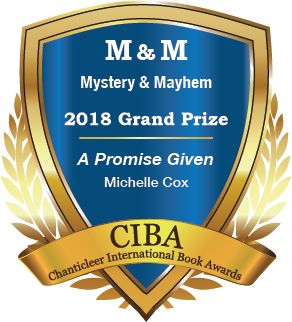
    Michelle Cox is a multi-award-winning author who recently spent some time with us at CAC19. This year was particularly special because Michelle won the CIBA 2018 Grand Prize for Mystery & Mayhem Awards!


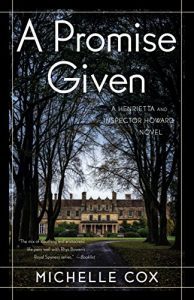
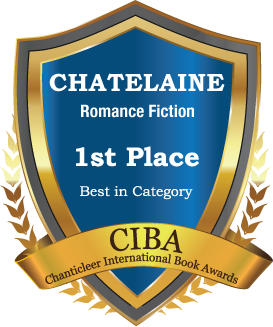
    and took 1st Place in the Chatelaine Awards for Romantic Fiction – both awards are in honor of her book, A Promise Given. We will probably never stop celebrating this – it’s just too much fun!

    To find out what Michelle’s up to next, Find and Follow her here:

     Facebook 

    Twitter

    Instagram 

    Michelle’s Website: http://michellecoxauthor.com/

  • CRYPTOCURRENCY – Protecting Your Coin from Pirates by Award-Winning Author Susan Faw – Cryptocurrency, Book Sales, Book Marketing

    CRYPTOCURRENCY – Protecting Your Coin from Pirates by Award-Winning Author Susan Faw – Cryptocurrency, Book Sales, Book Marketing

    Well, look at that.

    Sailing along – making great time! Fair waves and following seas! All is good!


    Your book baby is still alive and has weathered its first month on the rough seas of self-publishing. The holds of your ship are taking on coin. The sky is blue, the waves choppy, and for the most part you have beat back the sharks.

    You got this, right?

    Month two arrives, and the crest of the wave you have been sailing vanishes. Your sales drop. You attempt to prop up those sales by spending some of that hard-earned gold in the hold, on flags to fly atop your central mast. Surely everyone will see your flag and flock to it, to buy your book baby.

    Month two expires and with it, your sales. Your ship takes on water and sinks, as it sails over the sixty-day new release cliff, leaving you with one oar on a shrinking raft.

    Sharks are everywhere!

    This close-up view of the seas shows you the truth. The sharks were swimming below the surface and already made off with the coin that should have been tumbling into your sea chests. Your book has been pirated, and no one is paying attention to the wildly flapping flag, tied to the peak of your tattered sales. (See what I did there? 😊)

    Before you sink into obscurity you try one last time, to stopper the holes sliced into the deck by the shark’s fins. You throw money at every advertising platform you have ever heard, spending the last of your once-shiny piles of gold to prop up your sales. Not to be outdone, you send cease and desist emails to every site that has your book baby illegally uploaded for sale. Of course, they ignore you. The pirate’s code trumps all.

    Nothing you do can save you. You decide to ignore the pirates because there is nothing you can do about it.

    Depressing, eh?

    There must be a better way, right?

    What can a lonely self-published author do to prevent the theft of their hard work, and sink the pirate ships before they can even toss a grappling hook into your manuscript?

    Are you ready to hear about one possible future for publishing?

    Then read on.

    Cryptocurrency. Let’s break down that term.

    According to Dictionary.com, “Crypto” comes from the Greek word Kryptos, which means “secret, or hidden.” The English language derives the word ‘crypt’ from this root word.

    The word “currency” has a wider range of definitions, which all help to illustrate its meaning. “something that is used as a medium of exchange; money,” and “the fact or quality of being widely accepted and circulated from person to person,” and the British dictionary also defines it as “the act of being passed from person to person.”

    Cryptocurrency is a hidden form of exchange, defined as “a digital currency or decentralized system of exchange that uses advanced cryptography for security.” Simply put, cryptocurrency is a hidden form of currency that is able to be passed from person to person in complete security.

    Blockchain Cryptocurrency

    What is it that the book pirates do? Go back to part one of this series: Piracy – Not Just on the High Seas

    They steal our coin.

    “But wait,” you say, “cryptocurrency isn’t coin. It isn’t even touchable. It exists only in cyberspace. How does that work?”

    I am so glad you asked.

    The beauty of a cryptocurrency universe is that the pirates can’t get to it.

    It’s not floating around in some bank (ship’s hold), waiting to be stolen by a card skimmer or password bot, nor is it in grandma’s safe bolted to the basement floor, or held in an investment firm’s dubious clutches, where sticky fingers skim coin all too often.

    Cryptocurrency is held virtually and is not in any one place. The currency itself is decentralized and encrypted. There is no Fort Knox to break into. There is no place to send a trojan horse, to sneak behind the secure walls.

    Instead, the currency is distributed in code bits across servers located around the world. At last count, the number of cryptocurrency servers numbered over twenty thousand.

    Cryptocurrency is riding the wild seas of any startup, but there is no doubt that it is here to stay.

    As the currency gains in popularity and is adopted by more and more companies, it will become one more way to pay for goods and services in this digital age. I dare say that in time, it will become the currency to which all “paper” forms of currency are tied. It will become the central pillar to which all regional currencies are pegged like the USD is used for now. But no nation wants to be tied to another nation’s rise and fall, for their own currency values. Anyone outside of the United States understands this point of pain.

    And payments made with cryptocurrency are more secure than any form of payment we presently use. No one can steal the currency as it is not laying around to be stolen. Transactions are secure because they are undertaken by large mathematical calculations that only computers can solve.

    What does this mean for you, as an author, you ask?

    It means, that in the near future, cryptocurrency will be a way of digitally selling and receiving payment for our books, that cannot be corrupted or stolen by an outside party.

    But wait, what about the books themselves? They can still be stolen, right?

    …. And that is the perfect segue to the last article in this series by Susan Faw:

    “Chaining Piracy: How To Save Your Damsel / Damoiseau In Distress”

    Will Turner to the Rescue


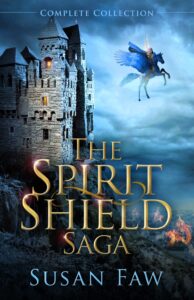
    Susan Faw is the award-winning author of the Spirit Shield Saga, young adult fantasy and dystopian series.

    You can read her 10 Questions Interview on Book Marketing, Increasing Book Sales with Sharon Anderson here. 

    Stay tuned for her next article on Book Piracy and what you can do about it!


    Handy Links with more Information

    22 Takeaways for Authors from the Silicon Valley Annual Internet Trends Report – Kiffer Brown

    A New Tool to Improve Performance on Amazon’s Sponsored Product Ads by Kiffer Brown

  • 22 Takeaways for Authors from the Silicon Valley Annual Internet Trends Report – Kiffer Brown

    22 Takeaways for Authors from the Silicon Valley Annual Internet Trends Report – Kiffer Brown

    “…the most highly anticipated slide deck in Silicon Valley”

    • SOURCE:  byline Rani Molla for RECODE on Vox Media  @ranimolla

    This information that I am sharing with Chanticleerians has been gleaned from the annual Internet Trends Report, a  333-page slideshow delivered by Mary Meeker who is dubbed “Queen of the Internet.” Ms. Meeker was a renowned Wall Street analyst and is now a general partner in Bond Capital, a top echelon venture capital company that has invested in companies such as Facebook, Pinterest, Airbnb, Twitter, Stripe, Slack, Twitter, etc. Her report touches on every important internet trend that has recently taken place and what we may expect in the near future.

    Ms. Meeker gave her talk on June 11, 2019, at the Code Conference 2019 held in Silicon Valley. It is considered to be the world’s premier technology conference. RECODE has made this information available online with Rani Molla’s analysis via VOX Media if you want to dig down more into the report and to hear and see the presentation.

    WHY READ THIS BLOG POST?

    “Publishing is at the epicenter of digital disruption.”  Paul Michelman, MIT & MIT SLOAN

    “This explains why authors and publishers feel the shocks of technology almost immediately, making publishing content the bellwether for the Internet of Things and the Digital Age. 

    It behooves us in the publishing industry to pay heed and close attention to digital trends if we are concerned with increasing sales and understanding the content market. ” Kiffer Brown

    …Code is where the world’s most important leaders in tech are faced with hard-hitting questions and candid conversations about what’s next for their companies.

    The annual by invitation-only Code Conference brings together a global community of the biggest names in the business — executive leaders and startups with bright futures — for networking and in-depth conversations.

    Editor’s Note:  those presenting include: the VP of Original Content for Netflix, CEO of PBS, CEO of Amazon Web Services, Head of Instagram & Facebook, the New York Times publisher, Chairman of Goldman Sachs…

    Below are the Take-Aways that I thought would be of special interest to authors and publishers. Some are not surprising but it always good to have hunches confirmed- IMHO (in my humble opinion). And there is the need of being aware of what is the latest in the tech and publishing industries since they go hand in hand. Also, there is something about seeing things in black and white…

    Chanticleer’s Takeaways for Authors and Publishers from the 2019 Internet Trends Report

    For your consideration from Mary Meeker’s 333-page report: 

    1. 51 percent of the world’s population are internet users in 2018. (3.8 billion people).
    2. In 2009, 24 percent of the world’s population were internet users.
    3. China has the world’s largest market of internet users with 53 percent of its population (just shy of one billion).
    4. 89 percent of North America’s population are internet users.
    5. 78 percent of Europe’s population are internet users.
    6. 62 percent of Latin American & Caribbean’ population are internet users.
    7. Smartphones are the primary internet access point in 2018 rather than computers, laptops, or tablets.
    8. Americans spent 6.3 hours a day in 2018 with digital media. Up from 7 percent the year before.
      1. Leisure time spent on smartphones has increased while the leisure time spent on computers has decreased. 3.6 hours a day are spent on smartphones by Americans.
    9. In 2008, Americans spent 2.7 hours a day with digital media with most of this time on a desktop or laptop.
    10. The latest numbers for 2019 are finding Americans spending less time on TV and more time on smartphones. 20 minutes a day in 2009 were spent on smartphones while 2019 finds Americans at 226 minutes a day.
    11. Images have become a standard means to communicate. More than 50 percent of Twitter impressions have images, video. Remember, Twitter used to be text only when it started in 2006.
    12. Social Media Usage Global Trends:
      • Facebook usage has remained constant and in an overwhelming lead with 2.2 billion users
      • Youtube has had the most gain with 1.9 billion active users
      • Instagram follows Youtube’s growth closely with 1 billion active users
        • Instagram monthly active users have grown from zero in 2010 to more than 1 billion active users in 2018.
      • Pinterest has 250 million active users
      • Twitter has 326 million active users with 500 million tweets per day (6/18)
    13. Podcast listeners in the USA have increased from 22 million in 2008 to 70 million in 2018.
    14. Smart Speakers ( Amazon’s Echo, Okay Google, Siri) makers will sell about 94 million devices in 2019 increasing the installed base to 207.9 million by year-end 2019.
      The U.S. will continue to be the largest global market with sales growth at 46%.  (Voicebot.ai)
    15. Smart Speakers are driving audiobooks sales.
    16. Google’s smart speaker is “in effect evolving Google from an ad platform to a commerce platform.”
    17. Social Media is becoming the number one “discovery tool” for products. *Remember J.D. Barker’s reminders that books are products from CAC19.
    18. Social Media allows consumers to discover products 24/7 non-stop. Product discovery is increasingly social.
    19. YouTube has more than one billion views of daily how-to & learning videos.
    20. Lifelong learning content is one of the fastest growing areas.
    21. 2.4 billion people are interactive active computer gamers.
    22. Privacy, access, and distribution are major concerns. Encryption and blockchain are options for solutions online communications and content safe.
    This report along with 2018’s encompasses detailed information about China’s Economy & Growth Trends, global trends in Artificial Intelligence, along with global advances in data collection and sharing, household spending, costs of living, population densities,  job growth, consumer confidence, healthcare & insurance, new technologies, technology disruptions, transportation, cost of shelter, e-commerce, interactive gaming, data privacy, cyber attacks, online education, and much more.

    AGILE FOR AUTHORS

    STAY TUNED…

    PUBLISHING IS BUSINESS 

    The next articles will deal with interpreting this information and how authors and publishers can put it to use to increase book discovery, branding, increasing sales, and protecting your intellectual property.

    We will continue to drill down the proverbial rabbit holes to find out information to help authors and publishers determine the best ways to promote their books and brands. So, stay tuned!

    Below are related links from the Chanticleer website that may of interest:

    Piracy – Not Just on the High Seas by award-winning author Susan Faw

    A New Tool to Improve Performance on Amazon’s Product Ads – by Kiffer Brown

    Top 2019 London Book Fair and Take-Aways & Trends by Kiffer Brown

    Creating Audiobooks and Podcasts have never been simpler – Find out how here! 

    Five reasons to make your book available in the Audio Format – by Kiffer Brown

    Thank you for tuning in and reading or listening to our posts.

    Keep on creating! Kiffer Brown


    • MINOR CHARACTERS – the SPICE of FICTION – Part One – From Jessica Morrell’s Editor’s Desk – Writers’ Toolbox Series

      MINOR CHARACTERS – the SPICE of FICTION – Part One – From Jessica Morrell’s Editor’s Desk – Writers’ Toolbox Series

      In fiction there’s a hierarchy when it comes to characters: the protagonist, antagonist, secondary characters, minor, walk-on, and stock characters. Let’s focus more on minor characters, shall we? Writers who neglect minor characters are neglecting essential ingredients to their works. It would be like omitting garlic or oregano from pasta sauce or cumin from a pot of chili.

      Minor characters, like secondary characters, operate in a strictly supporting role.

      • They are rarely viewpoint characters.
      • Don’t take up a lot of ‘stage time’ and readers generally don’t care about them a lot.
      • Do not have a subplot.
      • This means they’re usually ‘flat’ that is, they won’t change over the course of the story and they’re not fully dimensional. (There are exceptions to this.)
      Just a pinch makes all the difference!

      HOWEVER: Minor characters add color, verve, spice, eccentricity.

      • Make things happen, help advance the plot.
      • Establish the setting.
      • Provide insights or information about major characters. Without secondary and minor characters the protagonist would be isolated.
      • Prove that the protagonist has grown or changed.
      • Support the mood or atmosphere in a scene.
      • Breathe life into the story.
      • Disprove stereotypes.
      • Support themes.

      Examples:

      To Kill a Mockingbird: Heck Tate, Calpurnia, Judge John Taylor, Miss Maudie Atkinson, Dolphus Raymond

      A Christmas Carol: Tiny Tim, Belle, Scrooge’s former fiance, Fred, Scrooge’s nephew, Fezziwig

      Harry Potter series: Colin Creevey, Katie Bell, Pansy Parkinson,  Padmil & Parvati Patil, Neville Longbottom, Cho Chang (to name but a few)

      Hunger Games series: Madge Undersee, Katniss’ friend who gave her the mockingjay pin, Caesar Flickerman the television host, Effie Trinket, the District 12 escort, other tributes–Cato, Thresh, Clove, Foxface, Glimmer, Marvel,  (Rue is a secondary character)

      A few more tips:

      • While a minor character can be quirky or sexy, he or she shouldn’t distract readers from the main events and characters. Generally, the more you tell your reader about a minor character, the more you elevate his or her importance.
      • Use minor characters for humor or breathers in the story.
      • Minor characters should complete the story, create verisimilitude.
      • Give them a ‘job’ to do, such as a witness in a crime novel. In The Hunger Games,  Marvel, the tribute from District 1 kills Rue with a spear through her stomach. Later Katniss kills him. Although she’s already taken out several competitors, she is now a hunter, not the hunted, a significant shift in the story.
      • Emulate J.K. Rowling and Charles Dickens and grant your minor characters silly, memorable, or suggestive names. As in Martin Chuzzlewit and  Sophronia Akershem, and Uncle Pumblechook.
      • Use minor characters to reveal class, ethnicity, culture, and the milieu of the story world.

      A poignant example from Shawshank Redemption

      Don’t be afraid to give them a poignant role or to motivate another character as Brooks does in Shawshank Redemption. Poor Brook is elderly when he’s paroled from Shawshank. Problem was, he didn’t have the youth or skills to cope on the outside and ends up hanging himself. He serves as Red’s ‘anti-mentor’ in the story. Later, when Red the narrator is also paroled after spending years in prison, readers and movie viewers are reminded of Brooks’ fate. Will Red follow him? 

      Tolkien reveals volumes about his Middle Earth with the different minor characters and their kind in Lord of the Rings. 

      Examples of Lord of the Rings’ Minor Characters that come to mind are:

      • Barliman Butterbur, a man of Bree and a forgetful innkeeper where Gandalf frequented
      • Shagrat, an Uruk orc (role of villain)
      • Haldir, Elf of Lothlorien – He spoke the Common Tongue fluently so he was able to communicate with the Fellowship and to learn of their loss of Gandalf.
      • Rosie Cotton, a hobbit who patiently awaited Samwise Gamgee’s return to the Shire
      • Ugluk, a villain who was a leader of the Uruk-hai scouts and trusted servant of the evil wizard Saruman
      • Theodred, Prince of Rohan – a nobleman of birth and bravery
      • Goldberry, a female who embodied the spirit of Nature

      Notice that I didn’t need to use images for LOTR minor characters; their names practically describes them and their roles.

      If you are a fan of George R.R. Martin’s The Song of Fire and Ice series, you are well aware of his use of minor characters to move his series forward.


      Stop back by for Part Two — Minor Characters – The Spice of Fiction from the Writers’ Toolbox Series

      Writer’s Toolbox Series


      Keep writing, keep dreaming, have heart. Jessica

      Jessica Morrell is a top-tier developmental editor and a contributor to Chanticleer Reviews Media and to the Writer’s Digest magazine. She teaches Master Writing Craft Classes at the Chanticleer Authors Conference that is held annually along with teaching at Chanticleer writing workshops that are held throughout the year. 


      Did you know that Chanticleer offers editorial services? We do and have been doing so since 2011.

      And our professional editors are top-notch and are experts in the Chicago Manual of Style. They have and are working for the top publishing houses (TOR, McMillian, Thomas Mercer, Penguin Random House, etc.) and elite indie presses.

      We work with a small number of exclusive clients who want to collaborate with top-editors on an on-going basis.

      Contact us today! If you would like more information, we invite you to email Kiffer or Sharon at KBrown@ChantiReviews.com or SAnderson@ChantiReviews.com


    • PIRACY — Not Just on the High Seas – by award-winning author Susan Faw

      PIRACY — Not Just on the High Seas – by award-winning author Susan Faw

      Book Piracy: Why You Should Care by Susan Faw

      (This is a three article series exploring the ever-expanding issue of book piracy.)

      It is every fledgling author’s dream to see their book published. The time spent writing and rewriting, editing and polishing your book, are unpaid months and in some cases, years of toil, never to be recovered.

      Release day cannot come quick enough, whether you are independently publishing, or are on a more traditional path. The day your book goes live is akin to a wedding day, or the birth of a child, a momentous, long anticipated date that greeted with joy.

      Sending your book baby out into the world is a perilous event. This child of your brain is set adrift on retail rafts, in the hope that it won’t drown, and sink into obscurity. You think that drowning is the worst thing that can happen, that no one will notice your novel and that it will disappear from view.

      Actually, the worst thing that can happen is that your book is a runaway success—at least with how the publishing industry is currently structured.

      You see, that ocean is full of sharks. The sharks of the publishing ocean will plagiarize your work. They will copy it and stuff it into books that they create, and slap a cover on it and upload it to Amazon, stealing your words and your income. But plagiarism has always existed in the world. They do get caught and the books are taken down.

      Worse than the sharks are the pirates. Flying international flags of privilege and self-aggrandizement, these modern-day pilferers go far beyond nibbling at your work. Cruising the waters to see what rafts have popular cargo, they pounce on those books fortunate enough to be successful. They outright steal your book baby, stuffing the loot into storefronts of their own, without a penny of that work being returned to the author and/or publisher.

      According to a recent article of The Guardian: “All this is exhausting for authors, but it could be devastating for readers, too. Harris, a representative of the SoA who speaks passionately on behalf of authors, knows several who have lost contracts because piracy drove down their sales to an unsustainable level. The most vulnerable authors are those who write series: when book one does well, but book two is heavily pirated, book three could end up dead in the water. Midlist authors and those who barely scrape a living are also at risk. “These people mistakenly think they’re sticking it to the man,” Harris says. “They’re not; they’re sticking it to the little people, the people who are struggling … and they don’t care.”

      And the numbers of illegal downloads of pirated ebooks are staggering.

      The website GoodEreader states: “Pirate websites received 300 billion visitors last year and ebooks represent a small, but growing segment. Digimarc and Nielsen conducted a recent study that reveals 41% of all adult e-book pirates are aged between 18 and 29 but perhaps surprisingly, 47% fall into the 30 to 44-year-old bracket. The remaining 13% are aged 45 or up. There are also some surprises when it comes to pirates’ income. Cost is often cited as a factor when justifying downloading for free, and this study counters that the average household income that downloads books the most range from $60,000 and $99,000.”

      “Ebook piracy is not just popular in the United States, but is a global problem,” according to the Intellectual Property Office. Their latest study of online copyright infringement finds that “seventeen percent of ebooks read online in the UK are pirated – around 4m books. According to research by Dutch firm GfK, only 10% of all German ebooks on devices were actually paid for, with most of the digital books being pirated. On average, an e-reader in the Netherlands holds on average 117 ebooks. Out of that total, 11 were bought at legitimate websites. The remaining books were pirated at file-sharing sites or through Torrent sites. Ninety-two percent of ebook readers in Russia obtained their books illegally downloading the materials.”

      I bet you are not feeling so cozy over your amazingly successful book launch now, are you? But this series of articles is not meant to be discouraging.—

      In fact, there are promising signs for the future of e-book publishing. In this swiftly changing digital age, you can stay one step ahead of the pirates, with some careful planning. In the next article, we will explore ways to protect your digital copyright, and budding technologies you need in your arsenal, to help protect you, and your book baby from pirates.

      Susan Faw is the award-winning author of the Spirit Shield Saga, young adult fantasy and dystopian series.

      You can read her 10 Questions Interview on Book Marketing, Increasing Book Sales with Sharon Anderson here. 

      Stay tuned for her next article on Book Piracy and what you can do about it!

    • The Chanticleer International Book Awards Grand Prize and First Place Category Winners 2018 (CIBAs)

      The Chanticleer International Book Awards Grand Prize and First Place Category Winners 2018 (CIBAs)

      We are deeply honored to announce the 2018 Winners of the Chanticleer International Book Awards (The CIBAs). The winners were recognized at the annual Chanticleer Authors Conference and Awards Banquet Ceremony on Saturday, April 27, 2019, at the luxurious Hotel Bellwether, Bellingham, Wash.


      We want to thank all of the authors and publishers who participated in the 2018 Chanticleer International Book Awards (the CIBAs). Each year, we find the quality of the entries and the competitiveness of the division competitions increasing exponentially. We added a new level to the judging rounds in 2018—the SemiFinalists. The CIBA judges wanted to add Semi-Finalists as a way to recognize and validate the entries that were not selected for the very few First Place Award positions within each genre division.

      PublishDrive, a global distribution platform, and Hindenburg Systems, audiobooks and podcasts software, awarded more than $30,000 (cash value) in additional prizes to the 2018 Chanticleer International Book Award winners. Thank you!

      A Recap of the CIBA Selection Process

      • There are 16 divisions of the CIBAs: 14 fiction genre divisions and 2 non-fiction divisions.
      • First Place Category award winners were selected for each one of the 16 divisions from an overall field of  titles that progressed to the Semi-Finalists positions from the Shortlists, the Long List, and the infamous beginning slush pile rounds.
      • One Grand Prize award winner was selected from the First Place Category Award Winners for each of the 16 CIBA divisions.
      • One Overall Grand Prize award winner was selected from the 16 divisions of Grand Prize Award Winners

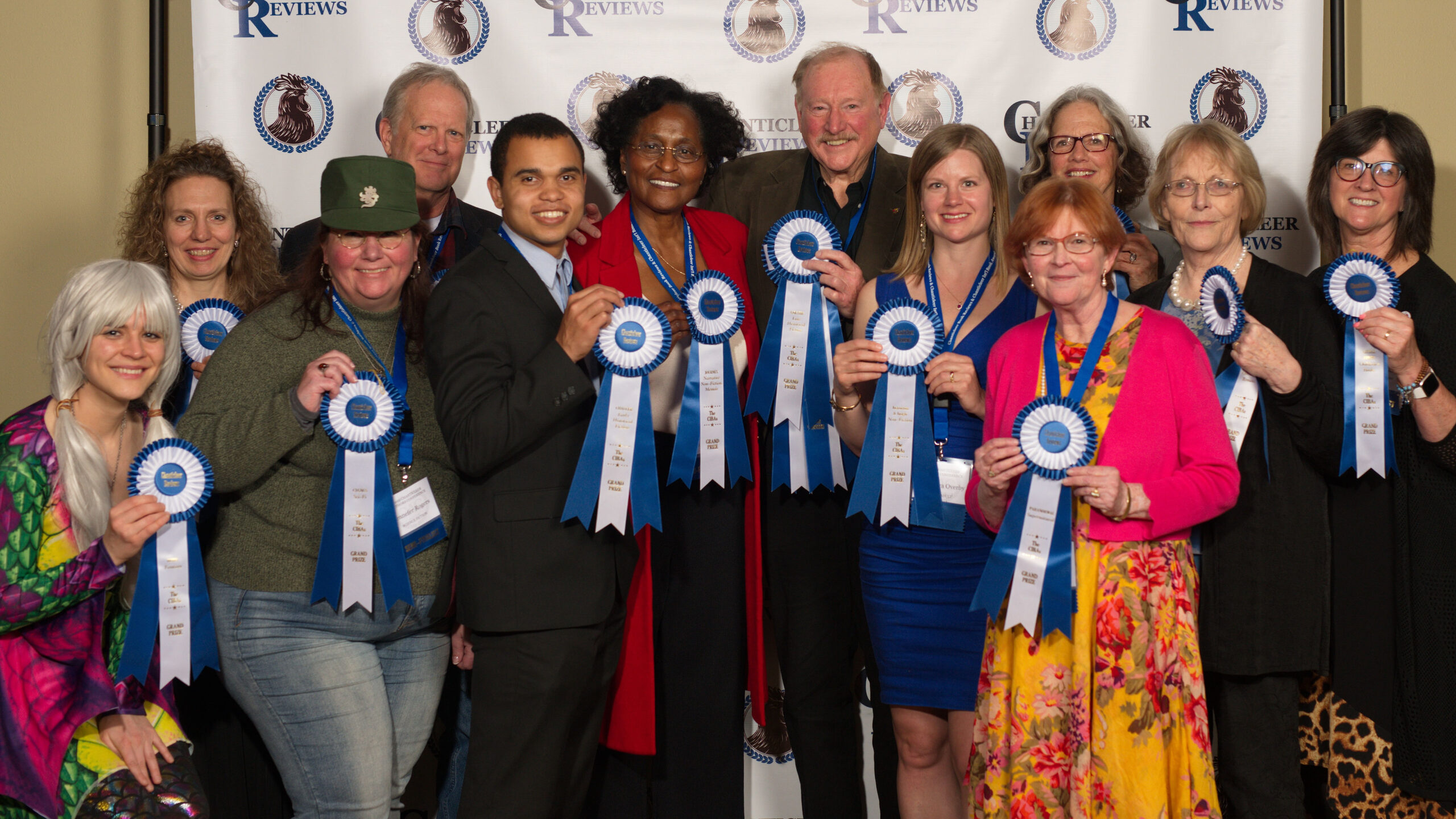
      All CIBA Semi-Finalists in attendance at the CIBA awards ceremony were recognized with their respective division at the CIBA awards ceremony along with receiving a Semi-Finalist ribbon and digital badge and a significant discount to attend the Chanticleer Authors Conference.

      Additional Prize from the DONALD MAASS LITERARY AGENCY

      An additional prize was awarded to the 2018 CIBA Grand Prize Award Winners by the Donald Maass Literary Agency (that represents more than 150 novelists and sell more 100 novels each year to leading publishers in the U.S. and overseas). Donald Maass has offered “a high priority submission” process opportunity to the 2018 Grand Prize CIBA winners and a “priority submission” process opportunity to the 2018 CIBA 1st Place Category winning titles for consideration by his agency.

      An email will go out to all 2018 CIBA grand prize award winners prior to June 10, 2019 with instructions, links, and more information about the awards packages. We appreciate your patience. As stated in the Semi-Finalist notification email, “One does not need to be present at the CIBA ceremony and banquet to win. But it sure is a lot more fun!”

      And now to present the 2018 Chanticleer International Book Awards Grand winning titles and their authors who were announced on April 27, 2019, at the CIBA ceremony and banquet.

      You read testimonials from the 2019 Chanticleer Authors Conference and the CIBAs Banquet and Ceremony at  https://www.chantireviews.com/chanticleer-conference/conference-testimonials/


      Cygnus Award for Science Fiction

      The CYGNUS Book Awards for Science Fiction Grand Prize Winner

      The Korpes File by J.I Rogers took home the 2018 CYGNUS Book Awards for Science Fiction Grand Prize Ribbon.

      View the 2018 CYGNUS 1st Place Category Winners at https://www.chantireviews.com/2019/04/29/cygnus-book-awards-for-science-fiction-novels-the-grand-prize-winner-and-first-place-category-winners-2018-cibas/


      The JOURNEY Book Awards for Narrative Non-Fiction

      From Liberty to Magnolia: In Search of the American Dream by Janice S. Ellis took home the 2018 JOURNEY Book Awards for Narrative Non-Fiction Grand Prize Ribbon! 

      View the 2018 JOURNEY First Place Award Winners at https://www.chantireviews.com/2019/04/30/journey-book-awards-for-narrative-non-fiction-the-grand-prize-winner-and-first-place-category-winners-2018-cibas/ 


      Cozy Mystery Fiction Award

      The M & M Book Awards for Mystery and Mayhem

      A PROMISE GIVEN by Michelle Cox took home the M&M Book Awards for Mystery & Mayhem Grand Prize Ribbon

      View the 2018 M&M First Place Award Winners at https://www.chantireviews.com/2019/05/01/the-mm-book-awards-for-mystery-and-mayhem-grand-prize-division-winner-and-first-place-category-winners-2018-cibas/


      Gertrude Warner Children's Chapter Books

      The GERTRUDE WARNER Book Awards for Middle-Grade Readers

      A manuscript titled The PORTALS of PERIL by Jules Luther took home the Gertrude Warner Book Awards for Middle-Grade Readers
      View the 2018 Gertrude Warner First Place Award Winners at https://www.chantireviews.com/2019/05/04/the-gertrude-warner-book-awards-for-middle-grade-readers-grand-prize-and-first-place-catergory-winners-2018-cibas/


      Dante Rossetti Awards for YA Fiction

      The DANTE ROSSETTI Book Awards for Young Adult Fiction

      WHISPERS by Lynn Yvonne Moon took home the Dante Rossetti Book Awards for Young Adult  Fiction

      View the 2018 Dante Rossetti First Place Award Winners at https://www.chantireviews.com/2019/05/05/the-dante-rossetti-book-awards-for-young-adult-fiction-grand-prize-and-first-place-category-winners-2018-cibas/


      Pre 1750 Historical Fiction Award

      The CHAUCER Book Awards for pre-1750s Historic Fiction

      The SERPENT and The EAGLE  by Edward Rickford took home the CHAUCER Book Awards Grand Prize Blue Ribbon

      View the 2018 Chaucer First Place Award Winners at https://www.chantireviews.com/2019/05/05/the-chaucer-book-awards-for-pre-1750s-historical-fiction-grand-prize-and-first-place-category-winners-2018-cibas/


      Post 1750s Historical Fiction AwardThe GOETHE Book Awards GRAND PRIZE WINNER for Post-1750s Historical Fiction

      The Lost Years of Billy Battles by Ronald E. Yates took home the Goethe Grand Prize Ribbon

      View the 2018 Goethe First Place Category Award Winners at https://www.chantireviews.com/2019/05/07/the-goethe-book-awards-for-post-1750s-for-historical-fiction-grand-prize-and-first-place-category-winners-2018-cibas/


      Western Pioneeer Civil War Fiction AwardThe LARAMIE Book Awards GRAND PRIZE WINNER for Western Fiction
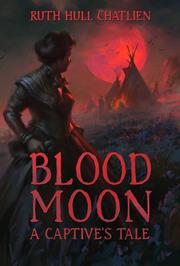
      Blood Moon: A Captive’s Tale by Ruth Hull Chatlien took home the Laramie Grand Prize Ribbon. 

      View the 2018 Laramie First Place Category Award Winners at https://www.chantireviews.com/2019/05/06/the-laramie-book-awards-for-western-fiction-grand-prize-and-first-place-category-winners-2018-cibas/


      Romance Fiction AwardThe CHATELAINE Book Awards  GRAND PRIZE WINNER for Romantic Fiction
      The House at Ladywell by Nicola Slade took home the 2018 Chatelaine Grand Prize Ribbon

      View the 2018 CHATELAINE First Place Category Award Winners at https://www.chantireviews.com/2019/05/07/the-chatelaine-book-awards-for-romantic-fiction-grand-prize-and-first-place-category-winners-2018-cibas/


      Early Readers and Picture booksThe LITTLE PEEPS Book Awards GRAND PRIZE WINNER for Early Readers
      The Tooth Collector Fairies: Home from Decay Valley by Denise Ditto took home the Little Peeps Grand Prize Ribbon

      View the 2018 LITTLE PEEPS First Place Category Award Winners at https://www.chantireviews.com/2019/05/08/the-little-peeps-book-awards-for-early-readers-grand-prize-and-first-place-category-winners-cibas-2018/


      Thriller Suspense Fiction Award The Clue Book Awards GRAND PRIZE WINNER for Mystery Suspense & Thriller Novels

      California Son by Timothy Burgess  took home the Clue Grand Prize Ribbon

      View the 2018 CLUE First Place Category Award Winners at https://www.chantireviews.com/2019/05/08/the-clue-book-awards-for-mystery-suspense-thriller-novels-grand-prize-and-first-place-category-winners-cibas-2018/


      The OZMA Book Awards GRAND PRIZE WINNER for Fantasy Fiction Novels
      Dragon Speaker by Elana A. Mugdan took home the OZMA Grand Prize Ribbon

      View the 2018 OZMA First Place Category Award Winners at https://www.chantireviews.com/2019/05/09/the-ozma-book-awards-for-fantasy-fiction-novels-grand-prize-and-first-place-category-winners-cibas-2018/


      Paranormal Fiction AwardsThe PARANORMAL  Book Awards GRAND PRIZE WINNER for Supernatural & Paranormal Novels

      The Madwoman of Preacher’s Cove, a manuscript by Joy Ross Davis took home the Paranormal Grand Prize Ribbon
      View the 2018 PARANORMAL First Place Category Award Winners at https://www.chantireviews.com/2019/05/09/the-paranormal-book-awards-for-supernatural-paranormal-novels-grand-prize-and-first-place-category-winners-cibas-2018/


      The Global Thriller Book Awards GRAND PRIZE WINNER for Lab Lit & High Stakes Thriller Novels
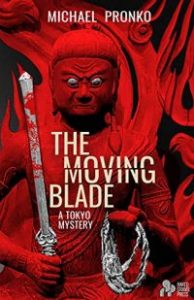
      The Moving Blade by Michael Pronko
      took home the Global Thrillers Grand Prize Ribbon

      View the 2018 Global Thriller First Place Category Award Winners at https://www.chantireviews.com/2019/05/09/the-global-thriller-book-awards-for-lab-lit-high-stakes-thriller-novels-grand-prize-and-first-place-category-winners-cibas-2018/


      The SOMERSET Book Awards for Contemporary, Literary, Satire Novels

      Hard Cider – a novel by Barbara A. Stark-Nemon
      took home the Somerset Grand Prize Ribbon

      View the 2018 SOMERSET First Place Category Award Winners at https://www.chantireviews.com/2019/05/10/the-somerset-book-awards-for-contemporary-literary-satire-novels-grand-prize-and-first-place-category-winners-cibas-2018/


       The Instruction & Insight Book Awards GRAND PRIZE WINNER for Non-Fiction, Non-Narrative

      Explore Europe on Foot by Cassandra Overby took home the Instruction & Insight Grand Prize Ribbon

      View the 2018 I & I First Place Category Award Winners at https://www.chantireviews.com/2019/05/10/the-instruction-insight-book-awards-for-non-fiction-non-narrative-grand-prize-and-first-place-category-winners-cibas-2018/


      CONGRATULATIONS to Ronald E. YATES for The LOST YEARS of BILLY BATTLES (Book 3 of the Finding Billy Battles Trilogy) taking home the CHANTICLEER OVERALL Grand Prize for BEST BOOK in the 2018 CIBAS

      “…the reader experiences that all too rare sense of complete transport to another world, one fully realized in these pages because the storytelling is so skillful and thoroughly captivating.” 


      The photo below is of Ronald E. Yates with his GOETHE Grand Prize Ribbon and his Chanticleer Overall Best Book Ribbon

      “Reading a Book is Like Life: You Live it One Page at a Time.” (Ron Yates) Ron is a former foreign correspondent and Professor Emeritus of Journalism, Dean of the College of Media and is an award-winning historical novelist. Read more about this Pulitzer nominated journalist and Chanticleerian by clicking on this link.


      Twelve of the Sixteen Grand Prize Division Winners were present to receive their ribbons on stage at the 2018 Chanticleer International Book Awards Ceremony.

      We will post more photographs and information. Do check back and subscribe to the Chanticleer Reviews e-news letter.

      We have exciting news for the Chanticleer Community on the horizon so do stay tuned!  

      You know you want a coveted Chanticleer Reviews Blue Ribbon! 

      Submit your works (manuscripts or novels published after or on January 1, 2017, are accepted) to the prestigious Chanticleer International Book Awards today! Entries are being accepted into the 2019 CIBAs in all 16 divisions.

      Be sure to register early for the 2020 Chanticleer Authors Conference that will take place on April 16, 17, 18, & 19, 2020 with the 2019 CIBA banquet and ceremony scheduled to take place on Saturday, April 18th, 2020 at the luxurious Hotel Bellwether in Bellingham, Wash.

      An email will go out to all 2018 CIBA award winners prior to June 10, 2019, with instructions, links, and more information about the awards packages. We appreciate your patience. As stated in the Semi-Finalist notification email, “One does not need to be present at the CIBA ceremony and banquet to win. But it sure is a lot more fun!”

      As always, please contact us at Chanticleer@ChantiReviews.com with any questions, concerns, or suggestions!

      We have begun planning for the 2020 Chanticleer Authors Conference (April 16, 17, & 18, 2020) and the 2019  CIBA Banquet and Ceremony that will take place on April 17, 2020, at the Hotel Bellwether, Bellingham, Wash.