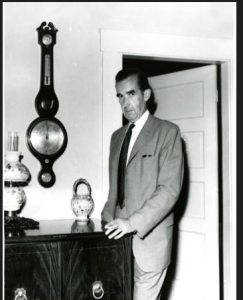
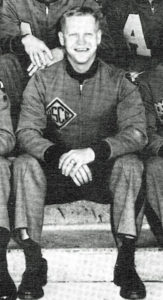
We are getting ready to do some long-awaited (no thanks to Covid) and much needed remodeling on our 100-year-old-plus bungalow. A little known fact of our old home is that Edward R. Murrow’s parents lived here and Mr. Murrow visited them often. Below is a photo of Mr. Murrow visiting his parents in the house that I now live in.
A photo of Edward R. Murrow visiting his parents’ house in Bellingham, Wash.
In moving my office (read: organize boxes of notebooks, composition books, and small pieces of paper), I am compelled to go through them and decide which ones I will toss, which ones I will need to consolidate, and which of the aforementioned I will deem worthy of keeping. While I was flipping through these individual journals, I saw the following snippets of note-taking from leaders and top authors in the publishing industry.
How many of you have these in your writing lair?
Writing Notebooks
Without further ado here are a few of the found gems that I found while going through a few of my notebooks:
Write the slow stuff fast and the fast stuff (aka action scenes) slow to increase tension. In other words, “Tell” the slow stuff and “Show” the Fast Stuff.
When writing you either need to advance the plot or reveal more about a character.
Chapters should have arcs to them and cliffhangers to keep the reader turning pages.
The first and last sentences of each chapter are the most important.
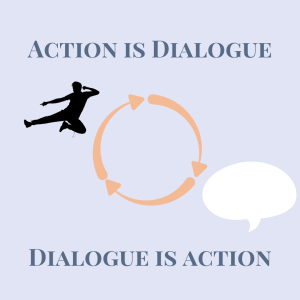
Dialogue is action. Action is dialogue (Robert Dugoni).
Only add backstory in on an as-needed basis. Does it advance the story? If not, don’t add it.
Start scenes with action. End scenes with action.
And, finally, Subplots must be woven in. They are tools for the author to:
Delay the main plot
Distract the protagonist
Heighten mood
Affect pacing
Add foreshadowing
Shows transformations
Ramp up the main plot
After years of attending conferences and living and breathing the writing world, it’s a joy and a gift to come across these treasures from the best in my home office. I hope you find these jottings as helpful as I have.
Now back to trying to beat back chaos in my office. I will do another post about the jottings and notes that I find during my re-organization.
We’d love to hear from you and your notes and jottings!
Keep on Writing! The world needs good books now more than ever! – Kiffer
As a developmental editor, I help writers in many ways, including layering in sensory data to make their stories more immersive.
I’m always gleaning information and trying to understand how the brain and nervous system work. I’m learning that it’s easy to use the latest neuroscience research and you can too.
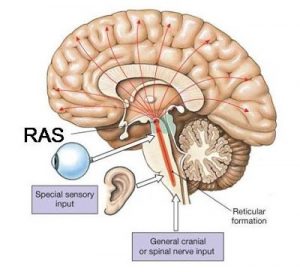
The brain works hard to protect humans from risk. Risk assessment happens via thereticular activating system, a gatekeeper between your conscious and unconscious mind. It filters through all the information coming in from your sensory organs including possible dangers, then reacts.
RAS is the GATEKEEPER between our conscious and unconscious.
Our brain is inundated with millions of messages whenever we’re awake. Without the RAS we’d be overloaded with stimulus, our heads noisy and cluttered, always on the alert, never able to focus. When messages slip past the reticular activating system, they become conscious thoughts, emotions, or both. So again, the RAS works to keep us safe and sane in a sometimes dangerous world.
What I love about studying the brain is how possible it is to change our thoughts, the way we see the world, and ultimately our brains.Because we can train and reset our brains. Another reason to learn about the reticular activating system is that it can help us focus when we most need to focus.
The RAS can filter out the white noise of your life while you write away.
Editor’s Note: An example of RAS is how parents can filter out the extremely loud noise of a plane taking off, but can hear if their baby is stirring. Or how a student can study in a loud cafeteria, but is disturbed by pages being rustled or someone tapping their fingers or clicking a pen in the next carrell while in the library.
But the RAS has many tasks. It manages what information {stimulus} you receive, arousal, and motivation. As you can imagine, is a huge job, but the brain has so many responsibilities such as regulating the body and creating memories. The RAS is located in the brain stem, the most primitive part of our brain. It is responsible for fight-or-flight responses, our wakefulness, and our ability to focus. It shapes how we perceive our world, dangers and all.
Learning about the RAS means writers can tap into its powers.
RAS can help us focus, remember, and achieve goals. One simple trick is to focus on what you want to achieve, not what youcannotdo, or what is clouding your attention. Stop worrying about the extra five pounds you’ve gained, or gray hairs and wrinkles, and how your neighbor doesn’t mow his lawn. Stop telling yourself your latest chapter or draft sucks.
The RAS listens to our signals and prioritizes the ones that are most important. If you focus on negative thoughts, the RAS will deliver more reasons to worry and fret. So, feed your RAS signals that are most helpful to your writing goals. Spend time mulling over your stories instead of fretting about them. Imagine that your characters are hanging out with you. Search for the good in your work and life and the RAS will notice. And you’ll be creating new neural pathways.
So, let me repeat this easy hack if you don’t already employ it:
Take mental snapshots throughout your days. But don’t focus on sights only–weave in all your senses. Last night I could hear the wind in the trees and smell wood smoke which has natural cozy associations which further imprinted the moment in my memory.
Let me give you a quick example.
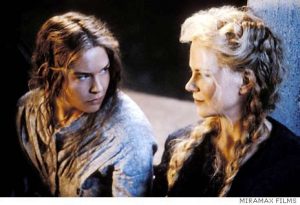
Charles Frazier’sCold Mountain–one of the most immersive novels I’ve ever read–has two main characters separated by war. New to the Cold Mountain region, Ada, a minister’s daughter and genteel lady, is struggling to survive the Civil War after her father dies. Trouble is, she has no practical survival skills and is slowly starving, but too proud to ask for help. This is when another young woman, Ruby, comes into her life and teaches her the exhausting array of skills and tasks needed to keep them fed and warm. After Ruby’s arrival, gone are Ada’s mornings of sleeping in. Here’s a small segment of Ada adjusting to Ruby’s new regime:
So Ada would walk down to the kitchen in her robe and sit in the chair in the warm stove corner and wrap her hands around a cup of coffee. Through the window the day would be starting to take shape, grey and loose in its features. Even on days that would eventually proved to be clear, Ada could seldom make out even the palings of the fence around the kitchen garden through the fog. At some point Ruby would blow out the yellow light of the lamp and the kitchen would go dim and then the light from outside would rise and fill the room. It seemed a thing of such wonder to Ada, who had not witnessed many dawns.Cold Mountain, Charles Frazier
The Swangers notice Ada is struggling to maintain the farm so they send Ruby Thewes to help out. Cold Mountain by Charles Frazier
There are only a few simple details here, yet the sense of dawn arriving is powerful, isn’t it? And it’s Frazier demonstrating the beginning of Ada’s character arc.
Think in pictures, vignettes, and scenesso you can re-create them on the page.
Strive to always capture meaningful moments. This is why it helps to stop time whenever possible by focusing your attention and deliberately storing images. Train yourself to become a visual thinker. If you’re ‘not a visual type’, then study how other people do it from advertisers to public speakers.
Pay attention to your dreams and write them down if possible. Take notes on books you read, films you watch and hikes you take.
Here is a scene from my RAS moment last winter:
Foggy, drizzly weather here in the Pacific Northwest. Last night I stepped out onto my porch to see if the moon was visible. The current moon phase is a waxing crescent. Low clouds had moved in obscuring the moon and stars, the air was cold enough to be bracing, and snow was falling in the higher evaluations. Walking into a coldish reality is such an easy jolt to the senses.
I came back indoors and sat for a minute replaying the night scene I’d just witnessed. Deliberately storing it away.
Do you do this too? Small habits and tweaks can be so useful to writers.
If you stop to focus on things that are important to you, it sharpens your perceptions and teaches your brain what you value.
And work at giving your RAS a jolt, like stepping out into a cold night or dancing in warm summer rain showers. Play music to either soothe or energize while you write. Recently I suggested here that like me, you visit a library or bookstore, go to the shelf where your future books will be housed, and imagine your titles there. It’s a simple trick to cue your reticular activating system.
Vivid, clear intentions communicate to your conscious mind which in turn speaks to your RAS and subconscious. In turn, they help you achieve goals because they expect the goals to happen.
Keep writing, keep dreaming, have heart. – Jessica
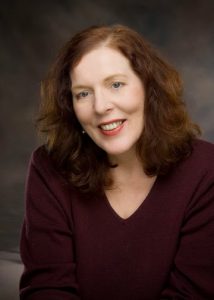
Jessica Page Morrell
Jessica Morrell is a top-tier developmental editor and a contributor to Chanticleer Reviews Media and to the Writer’s Digest magazine. She teaches Master Writing Craft Classes along with sessions at the Chanticleer Authors Conference that is held annually along with teaching at Chanticleer writing workshops that are held throughout the year.
Be sure to click on her name above to visit her website that has a wealth of writing craft advice.
We are thrilled to announce the 2021 Chanticleer International Book Award Winners
There are many moving parts to a prestigious book awards program such as Chanticleer’s. We thank you in advance for your patience and understanding.
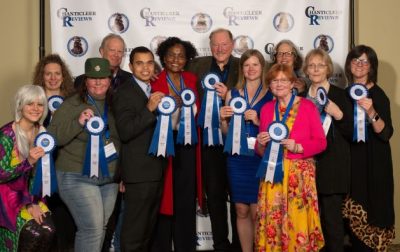
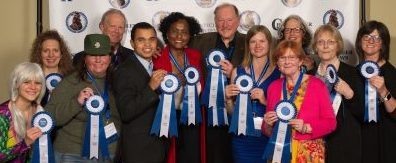
Grand Prize Winners from earlier CIBAs. We haven’t received the photos yet from this year’s event from the photographer.
We will post the Official 2021 CIBA Winners at a rate of at least two per day (except for on July 4th, a national holiday in the U.S.) in the following order as they were announced at the CIBA Banquet and Awards Ceremony held In Real Life at the Hotel Bellwether, Bellingham, Wash. on Saturday, June 25th, 2022.
Reposted July 21, 2022 Three Links to the Official 2021 CIBA Announcements
I am posting the links to the 2021 CIBA presentations for Saturday, June 25th CIBA Banquet and Ceremony below.
Saturday, June25, 2022
Chanticleer International
Book Awards Banquet & Ceremony
~The 2021 CIBAs~
The Hotel Bellwether ~ Bellingham, Wash.
FIRST PLACE WINNERS – 2021 Preliminary Announcement
Here is the link to the slide show presentation of the 2021 CIBA First Place Award Winners. You will need to scroll through the 26 divisions (91 slides).
GRAND PRIZE WINNERS – 2021 Preliminary Announcement
Here is the link to the slide show presentation of the 2021 CIBA Grand Prize Award Winners. You will need to scroll through the 26 divisions (89 slides).
The CIBA Ceremony was available In Real Life at the Hotel Bellwether and via ZOOM for those who registered. All IRL attendees have access to the Zoomed CAC22 sessions on ZOOM.
Again, we will be posting the Official List of 2021 CIBA Winners by division at a rate of at least two divisions per day.
Congratulations to ALL of the FINALISTS, First Place Winners, and Grand Prize Division Winners!
Stay tuned for the Official 2021 CIBA Division Announcements!
Looking forward to reading your newest works for the 2022 CIBAs.
We are honored and thrilled! More info to come!
Thank you, again, for your patience and understanding. They Chanticleer Int’l Book Awards Program is a labor of love for books and the authors who write them. Kiffer
2021 Chanticleer Int’l Book Awards Banquet & Ceremony
After much pivoting and then some more pivoting due to Covid’s impact, we are having (knock-on-wood, fingers-crossed, throwing salt over our left shoulders) our first In-Real-Life conference since 2019! And we are so excited!
Exciting plans for this weekend:
Master Writing Class – Film Techniques for Writing Fiction
Thursday, June 23, 1 – 4:30 p.m. Jessica Morrell presents.
How film techniques can be translated onto the page from viewpoint to mastering props and subtext. It begins with making powerful choices and identifying key moments that need emphasis, when to whisper and suggest, and when to stage and let the camera roll.
This class is being offered In Real Life and ALSO will be ZOOMED LIVE from the Hotel Bellwether’s Compass Room on June 23rd from 1 – 4:30 p.m. The recording will be available for seven days for later viewing for those who have registered for the Master Writing Class In Real Life OR Virtual.
IRL will feature two luncheons, two cocktail parties, two seated dinners, and two After Dinner Gatherings — All in the Bellwether Ballroom along with photo sessions, book fair, kaffeeklatsches, and great sessions on unlocking the secrets to successful publishing.
IRL registrations include access to the Zoom recordings for seven days.
But that’s not all!
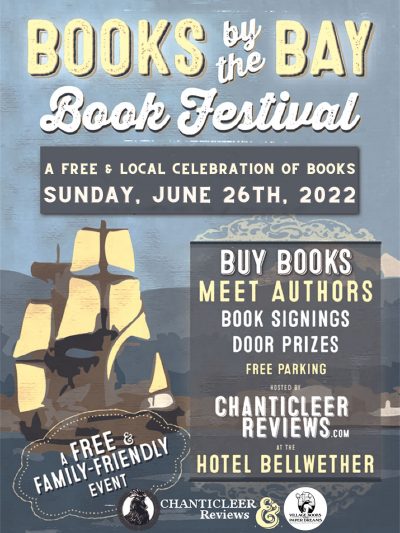
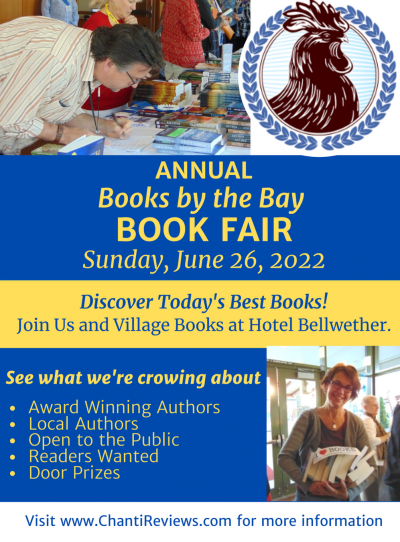
BOOKs By the BAY Book Fair – Saturday and Sunday (Sunday is open to the general public).
2021 CIBA Banquet and Ceremony on June 25, 2022
The excite builds! Who will take home the Overall Grand Prize for the Chanticleer Int’l Book Awards?
VIRTUAL CAC22
And, last but not least, VIRTUAL Registration is available for the Master Class and the CAC 22 Sessions and includes the 2021 CIBA awards ceremony. These Zoomed sessions will be available for seven days for you to view at your leisure.
Our 2020 CAC was virtual (VCAC20 held in September 2020). We were hoping that 2021 would be IRL, but alas, it was virtually held also – in two parts: a virtual conference (VCAC21) in April and the 2020 CIBA Ceremonies in June. We were at least able to have a few of our local Chanticleerians to join us at the Hotel Bellwether here in Bellingham where we broadcasted (Zoomed) the events.
Now, we are finally able to gather IRL (In Real Life). CAC22 was originally scheduled for early April, but Covid numbers ramped up (extremely so) in January and February. We decided to err on the side of prudence with moving the conference to June — the only weekend that the Hotel Bellwether had available. Pivot. Pivot. Pivot.
And, now, the weekend is upon us! Due to many requests, we are offering the conference virtually along with the IRL conference. If any of you have had to offer HYBRID events, you will know how challenging it is logistically and technology-wise. Thank goodness for Argus Brown, Kiffer’s husband and IT guy to make the virtual-hybrid-live conference take place.
The 2021 CIBA Banquet and Ceremony is sponsored and hosted by CAC22. It can be confusing, since the awards program runs a year behind the actual conference year. We are now accepting 2022 CIBA entries. The CIBA 2022 awards will be presented at CAC23. July 15th, 2022 we begin accepting 2023 entries in several divisions as submission deadlines are met. 2023 CIBAs winners will be announced at CAC24. And, so on.
We hope that you will join us!
SAVE THE DATES: CAC 23 is scheduled for April 26 – 30, 2020!
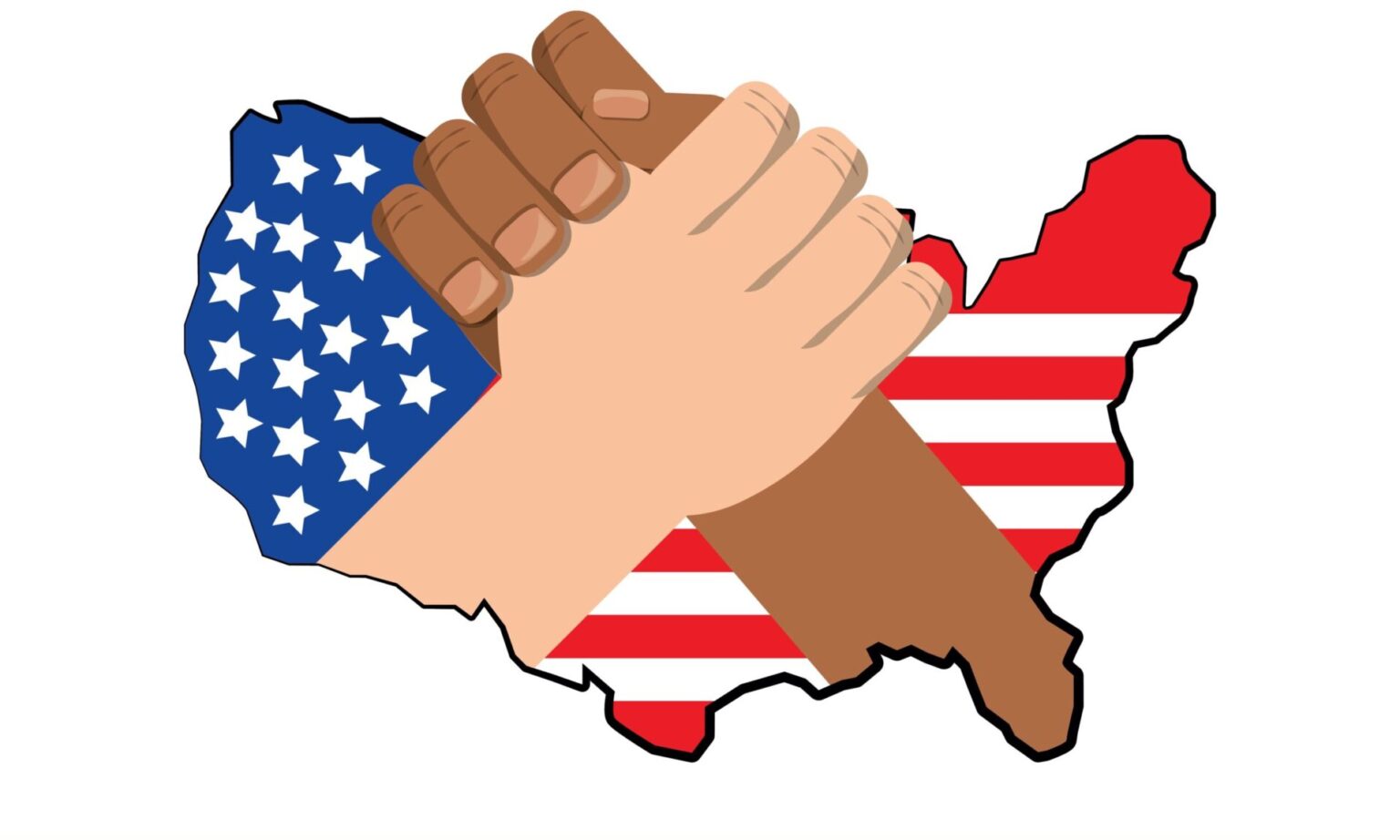
In June 2021, Congress, with a unanimous vote in the Senate and support of all but 14 Republicans in the House of Representatives, passed legislation designating June 19th as Juneteenth National Independence Day, commemorating the end of slavery for Black Americans.
But what does it really mean?
In the years to come, will it be embraced and celebrated all across America to help encourage shared experiences and achieve better understanding among Blacks and whites?
A historical context sheds some light.
Juneteenth, also known as Jubilee Day, Emancipation Day, Freedom Day, and Black Independence Day was first celebrated by freed slaves on June 19, 1866, in Texas a year after slavery had ended there. President Abraham Lincoln had signed the Emancipation Proclamation, ending slavery in January of 1863—two and half years earlier.
It wasn’t until 1980 that the holiday was officially recognized anywhere. Texas became the first state to designate Juneteenth as a state holiday. In 2002, eight other states joined Texas and Missouri followed suit in 2003. In 2008, fifteen more states.
By 2019, 47 states and the District of Columbia had finally recognized or commemorated the day in some way. Between 2020 and 2022, five states (Texas, New York, Virginia, Washington, and Illinois) made it a paid holiday for state employees.
Celebrations—in addition to parades, ethnic cuisine, street fairs, cookouts, family reunions—include programs with historical dress, reenactments, traditional songs, and readings of works by iconic Black authors.
Now that it has been designated as a national holiday, will that trend change?
Does the naming, Juneteenth National Independence Day, provide some clues?
As a nation, we celebrate July 4th as Independence Day, commemorating the day the original thirteen colonies were no longer subjects and subordinates to the monarchy of Britain, that they were indeed independent, united, and free.
Despite our differences—country of origin, ethnic or racial identity, religious affiliation, economic status—we all identify with July 4th as the day that made us one. One nation, indivisible and committed to justice and equality for all.
But, after decades and centuries of Blacks gaining their independence, their freedom, supposedly no longer subjects or subordinates of whites, the commemoration or celebration has not been commonly recognized, let alone unifying.
So, it begs the question, “What’s in a name?”
Will the newly minted Juneteenth National Independence Day be the beginning of universally recognizing that Blacks are finally and truly free to partake in all of what it means to be citizens of the United States of America?
Like July 4th represents freedom from the control and governance of a foreign country, does designating June 19th as “National Independence Day” mean that the nation is freeing itself of a horrid and oppressive aspect of its past?
Wouldn’t it be great if designating Juneteenth as a national holiday means that the nation is moving toward fully embracing a large segment of the American family that continue to suffer from the scourge of slavery and the chronic residuals of oppressive racism and discrimination.
Just as each of us holds in regard—in our own special way, for our own special reasons, patriotic and personal—the circumstances, occasions, and people our national holidays commemorate, Juneteenth National Independence Day will be no different.
We will either include it among those holidays that we embrace, recognize, remember, and value, or we will continue to go about our way doing business as usual, ignoring its significance.
There are many ways that the Juneteenth national holiday can take on meaning for those of us who are just becoming familiar or for one reason or the other have not given the meaning of the day much attention in the past.
Among them, and moving forward, we can:
commit to moving forward with open-mindedness and a willingness to learn anew about the things that we as human beings share;
make a conscious effort to get to know better Blacks that we regularly encounter in the workplace, social venues, and communities in which we live;
question why Blacks are not a part of some aspect of our lives;
read a book about Black history and culture to better understand how it fits into the American experience
attend a Black parade, street fair, a theatrical production
patronize Black businesses
have a meal in a Black restaurant
get to better know a Black neighbor, a colleague, classmate
incorporate music of Black artists in our favorite genres
visit museums of African American history and culture
examine the reasons why we may hold racial stereotypes
Doing some of these things can catch on, spread, and have lasting meaning.
On this inaugural national holiday, designating June 19th as Juneteenth National Independence Day, what does it really mean?
Each of us can take a few minutes to decide what it means and will mean to us and those within our orbit of influence.
The real questions: Will most of America pause to celebrate Juneteenth as a national holiday in the years to come—embrace it as an opportunity to better understand its importance and significance not only in terms of the history of this country, but in promoting healing and building a better future in all facets of our everyday lives?
Maybe, just maybe, we and generations after us will see Juneteenth National Independence Day, 2022 as a seminal year when America acknowledged and embraced real freedom. But this time real freedom for all.
Maybe the nation will have made another giant step in its march toward greatness.
This article was published in the Missouri Independent on June 20, 2022 under Creative Commons license. (Continue scrolling down)
Dr. Ellis gave us her permission to repost the article here and in the Chanticleer e-newsletter.
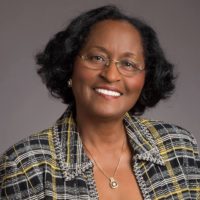
Dr. Janice Ellis
Janice Ellis has lived and worked in Missouri for more than three decades, analyzing educational, political, social and economic issues across race, ethnicity, age and socio-economic status. Her commentary has appeared in The Kansas City Star, community newspapers, on radio and now online. She is the author of two award-winning books: From Liberty to Magnolia: In Search of the American Dream (2018) and Shaping Public Opinion: How Real Advocacy Journalism™ Should be Practiced (2021). Ellis holds a Ph.D. in communication arts, and two Master of Arts degrees, one in communications arts and a second in political science, all from the University of Wisconsin.
Fiction and memoir need to be cinematic—there’s no getting around that fact.
Especially in this saturated, reality-dominated, and competitive media landscape. Creating cinematic fiction makes great demands on writers—there’s no gigantic screen, no darkened theater to enchant a reader, no actors prancing around a stage, their body language and costumes signaling meaning and subtext. But many film techniques can be translated onto the page from viewpoint to mastering props and subtext. It begins with making powerful choices and identifying key moments that need emphasis, when to whisper and suggest, and when to stage and let the camera roll.
Topics we’ll cover:
Using viewpoint to establish camera angles and narrative distance, especially bringing your ‘camera’ in close for potency and impact.
Borrow method acting techniques to create immersive viewpoints.
Using wide angle or establishing shots to nail down scenes and place.
Zooming for impact.
Factoring in the subliminal with sounds, subtext, color, and texture.
Lighting to create mood, atmosphere, resonance, and obstacles.
Using props to ground the story and create subtext.
Scene cuts and cliffhangers to keep suspense percolating.
This workshop will available LIVE and VIRTUALLY for those who register
The inimitable, always-in-demand, Jessica Morrell
One of the primary contributors to the Chanticleer writing blog, Jessica’s tips and advice are invaluable lessons that benefit all authors. Each year we offer writing craft sessions from the best editors and authors in the publishing industry.
Don’t Miss Out!
Jessica will be teaching two classes over the course of three sessions LIVE at CAC22
Your Brain on Writing: How Neuroscience Research Can Make You a Better Writer (2 Sessions)
Writing is a complex process and these days information gleaned from cognitive neuroscience can make a powerful difference in how much you accomplish and how your words affect readers. While writing, all regions of your brain are engaged and on the job. That’s why the more you write, the more neural connections you’re growing. The latest science-based information gives insights on how to form connections and develop powerful habits as you train and strengthen your brain. Reading is also a complex act so we’ll delve into what goes on in readers’ minds and how to capture their interest and keep them captivated. Or should we say captive?
Topics we’ll cover:
An easy-to-understand overview of brain structures and functions. This includes learning the roles of key neurotransmitters, our billions of neurons, and how to better implement them in writing and life.
Neuroplasticity and how you can change your brain’s structure and function by rewiring neural pathways.
Understanding the function of the RAS (reticular activating system) and how it helps us achieve goals and leads our future self forward.
Put your subconscious and unconscious to work by reprograming generating ideas and breakthroughs.
The function of the vagas nerve, the longest cranial nerve running from your brain to your stomach, and how it affects major body functions from breathing to blood pressure to heart rate. Then we’ll discuss simple practices to stimulate it to support overall and emotional health.
Practical habits and exercise to put this knowledge into practice.
AND
Dangerous Women with Jessica Morrell
Vampire Juliette and Vampire Hunter Cal — Two Dangerous Women from Netflix’s First Kill
Dangerous women can occupy so many roles in fiction, film, and television. With their complex moralities and motivations, they defy expectations, and can be strong, fearless, and inspiring. Then there are the ones who scare us. Because one bad woman is worth five bad men, so when women plot and scheme and break bad, the results are often disastrous for whoever she’s got in her crosshairs. Because social norms have taught us that women are the gentler and nurturing sex, when they defy norms, the results are combustible.
With that in mind, we’ll talk about female anti-heroes in all their fierceness and intriguing capabilities and how to make their stakes personal. We’ll cover unlikable protagonists, villains, and rule breakers who sizzle on the page, reflect the realities of their society or culture, or are deliciously out of sync. We’ll also discuss roles in fiction such as femme fatale, divas, mommy dearest, and power behind the throne. Characters we’ll analyze characters from well-known tales such as Annie Wilkes of Misery, Sula, Nurse Ratchet, Mrs. Danvers, Rebecca DeWinters, and Mrs. Bennet of Pride and Prejudice.
The workshop will review contemporary women found in TV series and films because in recent years an explosion of strong and norm-defying females are everywhere—including Claire Underwood from House of Cards, Eve Polastari and Villanette from Killing Eve, Cersei Lannister and Daenerys Targaryen from Game of Thrones, Queen Elizabeth in The Crown—disrupters all.
Other Sessions at In Real Life CAC 22
Why Acting Classes Make You a Better Writer – Nicole Evelina – USA Bestselling Author
Seven Advanced Techniques for Deeping Characterization – Diane Garland (Continuity Editor) and Jacquie Rogers – multi-award winning author
Five Things You Need to Know About POV – Amy Peele, Medical Mystery Author
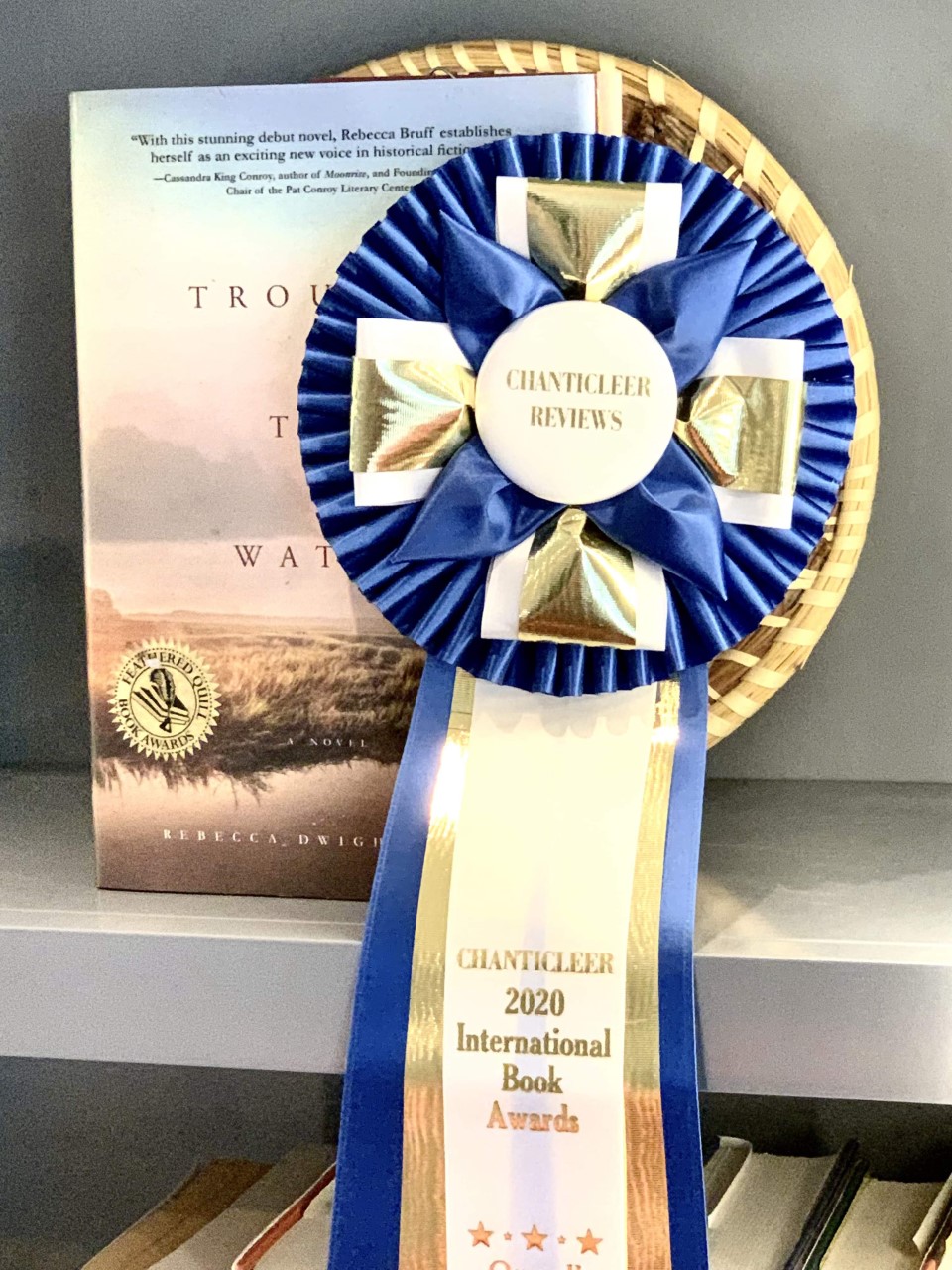
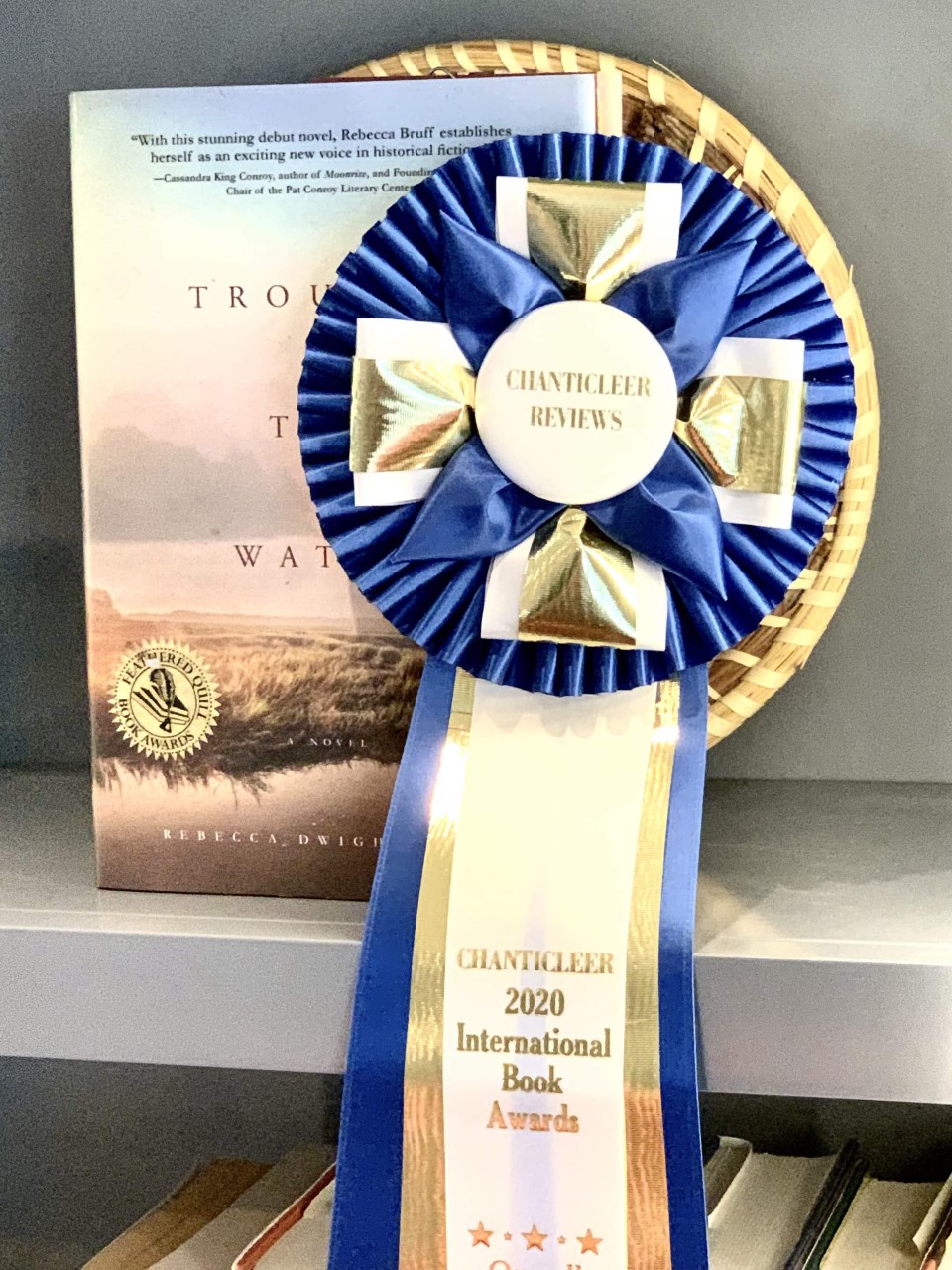
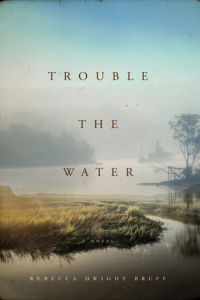
Trouble the Water follows the incredible Robert Smalls who was born enslaved. He liberated himself and others, served five terms in the US Congress, and introduced compulsory public education. He changed countless lives.
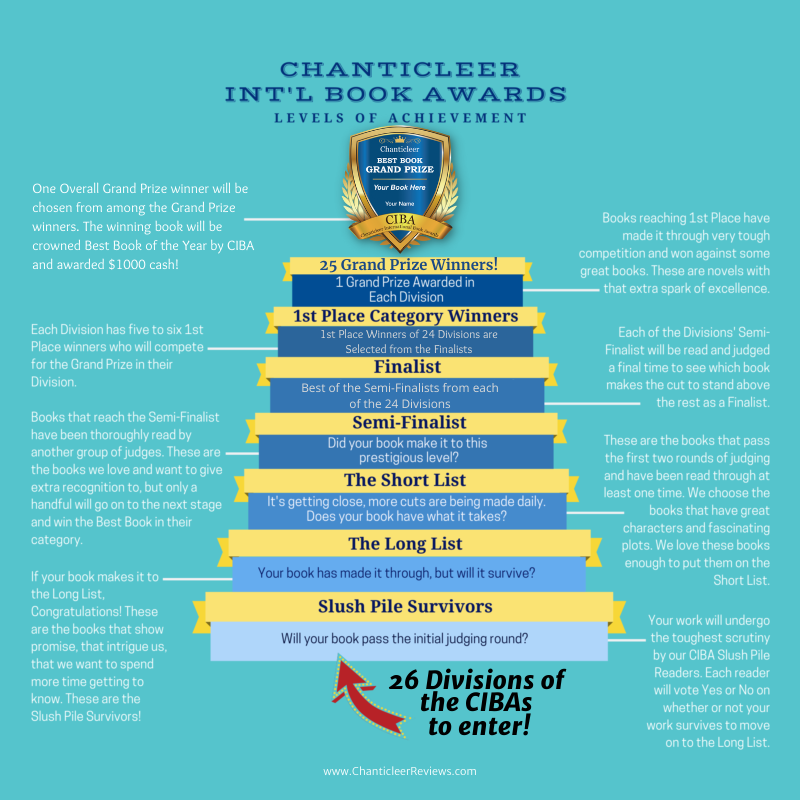
Want to compete for the prestigious CIBA grand prize? Enter today!
His story – his life and legacy – is inspirational and aspirational. And mostly unknown.
Bruff reveals the true story of the life of Robert Smalls. Set in the Civil War era, we follow Smalls as he navigates through a life of enslavement, the dangers of war, and a desperate attempt at escape. Trouble the Water is a moving tale of slavery, perseverance, war, freedom, and love.
Rebecca Bruff earned her Bachelor’s degree in education (Texas A&M) and Master and Doctorate degrees in theology (Southern Methodist University). In 2017, she was a scholarship recipient for the prestigious Key West Literary Seminar. She volunteers at the Pat Conroy Literary Center in Beaufort, South Carolina. She’s published non-fiction, plays a little tennis, travels when she can, and loves life in the lowcountry with her husband and an exuberant golden retriever.
Her play opens at Will Geer’s Theatricum Botanicum where it will run from July 9th – October 2nd. Freely Adapted by Ellen Geer and Directed by Gerald Rivers. If you’re in the area of Topanga, California during its run, we recommend checking it out!
We hope that, like us at Chanticleer, you will be moved by Robert Smalls’s courageous life of thoughtful, compassionate leadership
Why did Bruff write this story?
I’m a writer. I believe that the stories we read and write and tell have the power to shape and change our lives. I believe that – because a story changed my life.
Nine years ago, when I lived in Texas, I visited the lowcountry. It was my first experience here, and it was brief, but we made time for a carriage tour through the historic district of Beaufort. And that’s when I heard a little bit of the story of a man named Robert Smalls. I’d never heard his name, and I’d never heard the story. But he intrigued me. His courage, and his heroism, and his contributions, and legacy intrigued me.
His story ignited my curiosity. Curiosity led to exploration, and exploration led to discovery, and I discovered how little I knew about our history. I discovered how little I understood about the experiences of enslaved people in our country. I discovered that some stories get amplified, while other stories get silenced.
Congratulations once more to Rebecca Dwight Bruff on her Overall Grand Prize Win, and we’re delighted to crow with you about this most recent accomplishment! We look forward to what’s next!
***
“The must-read story of Robert Smalls. An Inspiring story of courage that we need today. It rings with heroic action along with thoughtfulness and sincerity that will keep you going until the end. A must read! Five Stars!” – Chanticleer Book Reviews
Inclusive 3-Day Registration with 2 Luncheons with Keynote Speakers, 2 Cocktail Parties, 2 Seated Dinners (including Saturday Evening’s CIBA Banquet and Ceremony, and Two After-Parties in the Ballroom along with Books By the Bay Book Fair. The 3-Day Registration Package comes with a Companion Option and Guest of Attendee CIBA Banquet Ticket Option.
2- Day Saturday and Sunday Weekend Inclusive Registration includes all sessions and kaffeeklatsches on Saturday and Sunday along with 1 Luncheon, 1 Cocktail Party, the CIBA Banquet and Ceremony on Saturday Evening, the After Party on Saturday Evening, and participation in the Books By the Bay Book Fair. The Weekend Pass comes with a Guest of Attendee CIBA Banquet Ticket Option.
1-Day Saturday Only Registration– Saturday Sessions & Kaffeeklatsches along with Saturday Luncheon with Keynote Speaker , Cocktail Party, CIBA Banquet and Ceremony, and the After Party in the Ballroom. The Saturday Only Registration has a Guest of Attendee Banquet Ticket option for the CIBA Banquet and Ceremony.
Upgrade VIRTUAL ONLY to In REAL LIFE – 3 Day Registration with 2 Luncheons with Keynote Speakers, 2 Cocktail Parties, 2 Seated Dinners (including Saturday Evening’s CIBA Banquet and Ceremony, and Two After-Parties in the Ballroom along with Books By the Bay Book Fair. The 3-Day Registration Package comes with a Companion Option and Guest of Attendee CIBA Banquet Ticket Option.
Virtual Sessions will include Key Note Presentations
Virtual Presentations by Remote Presenters
IRL Presentations by CAC Faculty
The 2021 CIBA Awards Presentation & Ceremony on Saturday Evening (PST) as it happens LIVE and Zoomed from the Hotel Bellwether Ballroom on Saturday, June 25, 2022.
THE EXCITEMENT BUILDS
for the
2021 Chanticleer International Book Awards
Announcements!
Who will take home the coveted Chanticleer Blue Ribbons for First Place Category Division Winners?
Who will take home the DIVISION GRAND PRIZE CIBA Blue Ribbons?
Who will take home the OVERALL BEST BOOK Blue Ribbon?
Join in on the fun! On the Excitement! And On Learning From the Best!
Discover why the annual Chanticleer Authors Conference is considered to be one of the best conferences to attend by the esteemed and venerable The Writer Magazine (founded in 1887).
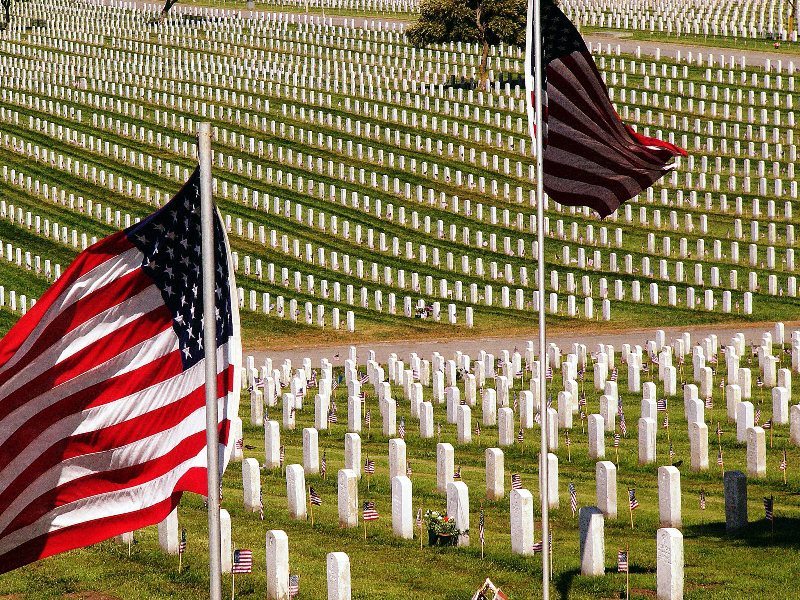
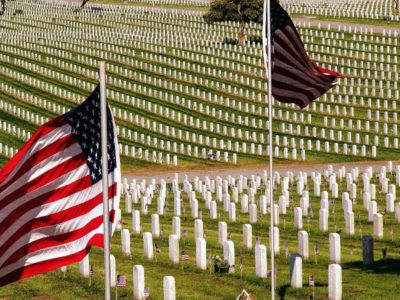
Memorial Day: Honoring Those Who Have Lost Their Lives in Service to Our Nation
In the U.S.A., Memorial Day, originally called Decoration Day, is a day of remembrance of those who died in service to their country. The holiday was officially proclaimed in 1868 to honor Union and Confederate soldiers who loss their lives in the Civil War.
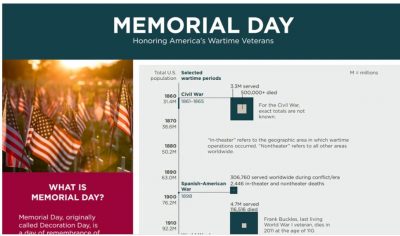
The latest historical research has the Civil War death toll at 850,000. This number has surpassed all the other wars the U.S.A. has fought in combined. The population was estimated to be approximately 31 million (not counting Native Americans or Blacks).
This translates roughly to one out of ten white males of service age (ten-years-old to mid-forties) died as a result of the Civil War with the younger males incurring the biggest loss of life. [History.com]
Click here to access the U.S. Census Memorial Day Infographic for more information and the complete infographic.
The important takeaway from this graphic is that all other wars, skirmishes, conflicts, and battles that the US has been involved with combined, none have taken the toll that the the war that took place on the U.S. soil—the Civil War—has. Period.
Civil War Death Toll: 850,000 deaths (latest research)
All Other US Military Involvements since 1870s until 2020: 707,081 deaths
Memorial Day is one of three official US Holidays to honor those who serve or who have served in the Armed Forces. To help keep them in order, those three holidays are:
Memorial Day, a federal holiday, is observed the last Monday in May, honors those who have lost their lives in action in service to our nation.
Veterans Day, a federal holiday, that is observed every year on November 11th to honor all those who have served in the Armed Forces.
Armed Forces Day is a celebration day that honors all active and former personnel across the six branches of the United States military. It is celebrated on the third Saturday of every May. This year’s was on May 21, 2022.
As any of you know, the head and founder of Chanticleer Book Reviews, Kiffer Brown is a self-described military brat. Her father, brother, nephews, and cousins have served in the military. Recognizing and honoring the service of those in the Armed Forces is a longstanding tradition for her and her family.
National Moment of Remembrance
On Memorial Day, remember that there is a National Moment of Remembrance. To honor the moment, pause for one minute at 3 p.m. at your local time, and remember those who have died in service to this nation.
2nd Lt Billy Wayne Flynn, U.S. Army. West Point Graduate
Second Lieutenant Billy Wayne Flynn was killed in action, Vietnam, January 23, 1967. He was 24 years old. Billy Wayne gave to me a book of poetry from his studies at West Point before he left for Viet Nam. He was my cousin. It was my first book of poetry and has his notes. I was in fourth grade. I still have it and treasure it. – Kiffer
We’ve been waiting for a long time to do something more to recognize those who served.
The Military and Front Line Book Awards
Every year we receive several non-fiction books that deal with serving in the military or some other frontline capacity in service to our nation. This year the number and quality of submissions was great enough that we are excited to announce the new division that recognizes work focusing on those in Military or Front Line Service.
The new Division honors the following Non-Fiction Narratives:
Military and Armed Forces Service Narratives
Medical Stories focused on Nurses, Doctors, Health Care Workers, and other Essential Workers
Stories of Community Service Workers such as Firefighters and Police
CARE, Peace Corps, Red Cross, Doctors Without Borders, and other service organizations
Work in Agencies that serve their Community and Government
Families of those who serve in these Community Roles
Interesting to Note and Why We Honor Our Military and Front Line Heroes:
To put the Covid Pandemic (2020 to Current Day – 26 months) into perspective: the USA Covid Fatalities are more than 1 million (1,004,726 as per John Hopkins University & Medicine (May 28, 2022). Additionally, the USA has the highest fatality rate per capita (accounting for population) from Covid than any other first world country on the planet.
The USA loss more people in 26 months to Covid than in all military involvements since the 1870s. And with those losses, the death toll includes first-line responders: nurses, doctors, health workers, caretakers, emergency responders, and health care workers.
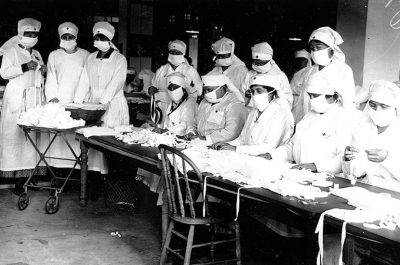
The 1918 Flu Pandemic that spread worldwide in 1918 – 1919 took more than 675,000 lives in the U.S.A. So many physicians and nurses were called into military service for World War I that able-bodied persons were asked to take medical training to offer aid in fighting the epidemic.
Red Cross Volunteers – The 1918 Flu Pandemic
The Military and Front Line Awards will be a Division for the 2023 CIBAs. Get your work ready now, and the deadline to submit will likely be in the late fall. You can see the 2021 Finalists for the Military and Front Line Book Awards here.
Keep Telling Stories – They Are Needed!
We are always honored to be trusted with any book at Chanticleer. It is a pleasure to be able to highlight these stories in particular with their own division.
“Patriotism is supporting your country all the time, and your government when it deserves it.“–Mark Twain
“How important it is for us to recognize and celebrate our heroes and she-roes!” –Maya Angelou
“A hero is someone who has given his or her life to something bigger than oneself.” —Joseph Campbell
The esteemed WRITER Magazine (founded in 1887) has repeatedly recognized the Chanticleer Authors Conference as one of the best conferences to attend and participate in for North America.
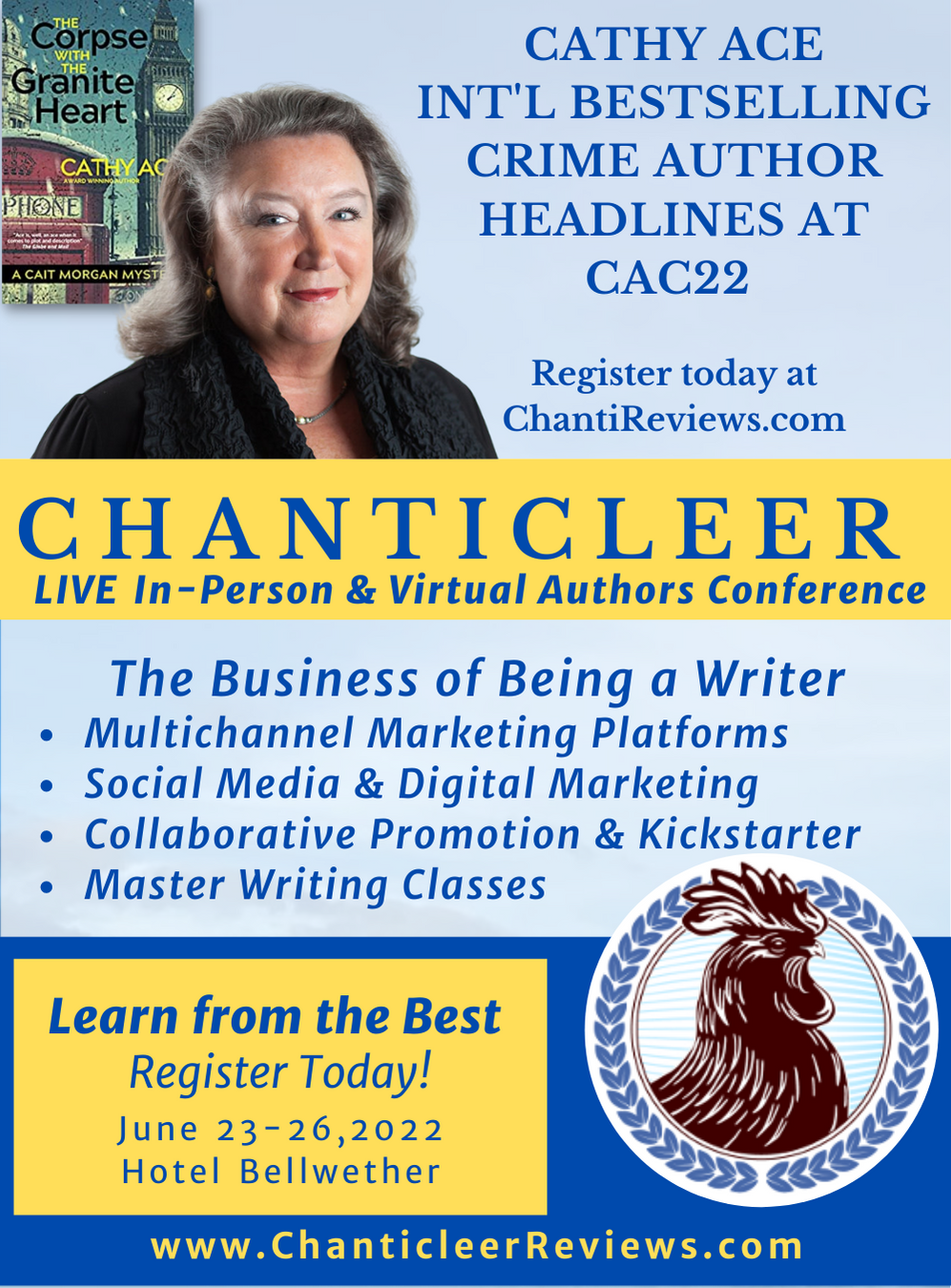
Featuring: International Best Selling Author Cathy Ace along with experts in the business and marketing and promotion for authors from Kickstarter to Hindenburg.
“Children understand that ‘once upon a time’ refers not only – not even primarily – to the past, but to the impalpable regions of the present, the deeper places inside us where princes and dragons, wizards and talking birds, impassable roads, impossible tasks, and happy endings have always existed, alive and bursting with psychic power.” ~ Stephen Mitchell
From the first must-be-transporting words to the shattering conclusion, readers demand layers of fantastical invention. It all begins with a captivating opening salvo.
“Once upon a time” or “A long, long time ago” makes a promise to your readers. Open these pages and you’ve been wrested from your 21st century sphere. You are about to enter a kind of dream world, encounter wonderment, and find age-old conflicts wearing fantastical guises.
While fantasy is untethered from our current world, as in real life, don’t make promises you cannot keep. You’ve got to deliver an adventure so potent it invades the reader’s senses and alters his or her heartrate. Your adventure needs a diverse cast, a clash of titans, and the wondrous–dragons soaring overhead, ancient spells and curses, night walkers, or battles fought over lands or pride or brute necessity.
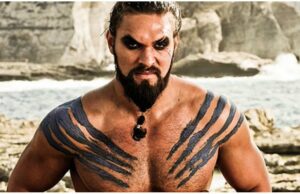
Khal Drugo – Game of Thrones
Opening sentences are everything
They start the whole transporting apparatus to assure readers they’ve landed in a faraway time and place. Amid a world of richly embroidered textures, sights, tastes, smells, and sounds all while entanglements with a fascinating cast of characters are underway. A world that has a carefully built history, scenes unfolding in distinct reality replete with atmosphere, tension and mood.
Is Your Opening Delivering:
Characters tossed off balance somehow by a force outside themselves.
A nettling question emerges that demands answers.
Something is amiss. The opening acts typically create threats. Humans are biologically programed to respond to threat, but will go along for the ride anyway. Because, after all, the threat is long ago and far away.
Introduce story people we’ll never meet in the real world. Story people we just can’t quit. People we can follow up close. So close we can hear their laughter or scorn, smell the stink from their terror, or experience what has lit their fierce desires.
Readers need to care about who is threatened. Some aspect of the main characters need to be identifiable, possibly pitiful, worrying, or vexing. Has life already handed your protagonist near-starving rations or brutality? Or has a royal family member longed to escape to an ordinary life?
No matter if dreaded, or later regretted, a choice must be made. {Excuse the almost-rhyme.”}
Note from Kiffer: This is where I paused to reread the opening lines of A Song of Fire and Ice by George R. R. Martin, Pride and Prejudice by Jane Austen, and The Flight Attendant by Chris Bohjalian. Yes, each one delivered!
“Perfect words in perfect places”
Which brings us to oh-so important first lines with those perfect words. Let’s forget about first person or third person for now.
Start with a powerful moment.
Don’t be afraid to startle the reader.
Always create a mood and perhaps a stirring dread.
As in these examples:
“The island of Gont, a single mountain that lifts its peak above the storm-racked Northeast Sea, is famous for wizards.” Ursula K. Leguinn,A Wizard of Earthsea
“Logen plunged through the forest, bare feet slipping and sliding on the wet earth, the slush, the wet pine needles, breath rasping in his chest, blood thumping in his chest. He stumbled and sprawled onto his side, nearly cut his chest open with his own axe, lay there panting, peering through the shadowy forest.” Joe Ambercrombie, The Blade Itself
“The children were playing while Holston climbed to his death; he could hear them squealing as only happy children do.” Hugh Howey, Wool
“Sometimes, I fear I’m not the hero everyone thinks I am.” Brandon Sandborne,Mistborn:The FinalEmpire
“When Lilia was four years old, her mother filled a shallow dish with her blood and fed it to the boars that patrolled the thorned fence.” Kameron Hurley,The Mirror Empire
Something is surely amiss, right? I’m especially struck by the opening ofThe Blade Itselfbecause I’ve hiked many a wet forest living here in the Pacific Northwest. But not barefoot. Never barefoot.
And what is a felling night?Feeding a child’s blood to boars? Shiver. Make that an icy shiver.
I need to know more, don’t you?
Take care. Have heart. Jessica
Jessica Page Morrell
Jessica Morrell is a top-tier developmental editor and a contributor to Chanticleer Reviews Media and to the Writer’s Digest magazine. She teaches Master Writing Craft Classes along with sessions at the Chanticleer Authors Conference that is held annually along with teaching at Chanticleer writing workshops that are held throughout the year.
Jessica Morrell’s Classes and Workshops at CAC22
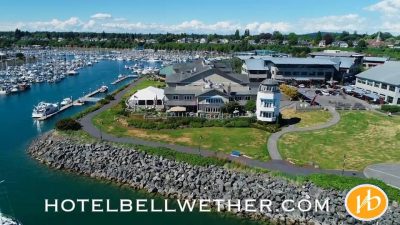
June 23 – 26, 2022 at the Hotel Bellwether, Bellingham, Wash.
You can register for her Master Writing Class here – Using Film Techniques for Writers
Using Film Techniques for Fiction Writers– Camera angles, method acting for getting into a character’s pov, and creating subtext and tight dialogue
Your Brain on Writing
Captivating Co-Starsthat add depth to your work-in-progress