Your story’s point of view affects one thing above all else — description.
Simply put, Point of View (POV) determines through what eyes we see, what ears we hear, what skin we feel, what nose we… well, you get it.
Can you discover the Point of View?
Readers tend to get invested in description that makes them think— about the characters, the setting, what will happen next. Different POVs have different limitations in what you can show, and how you can show it. But so too do they have particular strengths. So, how can we work with our chosen POV to make mentally-engaging prose?
Let’s take a look at a few descriptive techniques that flourish within and illuminate the strengths of different POVs: First person, Third Person Limited, Third Person Omniscient, and Second Person.
First Person — the Motivated Storyteller
In this novel, Holden Caulfield takes him time revealing what’s bothering him. Slowly, his painful teenage life unfolds itself before the reader. He’s an untrustworthy narrator, so be careful with what you believe.
There’s a special kind of intimacy in First Person. A vulnerability on both our parts. You’re the audience of a storyteller— me! And because it’s my story, surely I’m most qualified to decide on which details are important, right?
Every smell on the wind, little shifting of another person’s posture, texture beneath my fingertips, it’s here because I want it to shape my tale. This is not the objective world, but a carefully-cut slice of it steeped in my thoughts. So, you should be able to put together my motivations and even beliefs based on how I describe my rival’s wine-stained manor, with its air of mismatched perfumes no doubt imported from some overworked farmland on the Rouge Isles, and fine fat jewels resting so brazenly in his family’s recently-designed crest.
First Person and Third Person Limited — the Revealing Vision
Many videogames, like The Legend of Zelda – pictured above – use a literal Third Person Point of View that lets you follow directly behind your character as you play, but the camera always only sees your avatar.
These two POVs share much in common, sometimes being nearly identical except for the pronouns. And while these narrators can be intentional with their descriptions (even unreliable), sometimes the details in the prose can reveal more about them than they would ever choose to tell.
What sensory information the POV character notices will say something about who they are, how they feel, and even their connections to other characters. Fear might draw their eyes to the heavy doors, the arched roof with its fingers of shadow scratching at the beams, the way the thick walls seem to snuff all sound to a breathless mumble. A former musician, finished with their old craft, might walk down a long tunnel with their footsteps bouncing through the air in soft, irrepressible vibrato rhythm. Someone who spends all day cooped up in an office might bask in the cardinal feathers of a sunset — or fail to notice them at all, as the asphalt presses a growing soreness up through their back.
Third Person Limited — the Reframed Importance
Harry Potter is a classic example of third person limited. Everything happens from Harry’s perspective and is colored by his opinion, but sometimes the reader has a chance to catch view of something beyond what Harry sees.
One way that Limited often varies from First is in its use of multiple perspectives. Not all Limited books have these, of course, but those that do can employ a powerful means of recontextualization.
How does one character experience a setting, event, or interaction as opposed to how the next character does? Do they see each other differently than they each see themselves? Can they plant a question in the reader’s mind?
A ‘sweet smile and warm handshake’ from the mountain guide might show Francis to be merely trusting in her own perspective, but that same guide’s ‘wolfish grin and cloying grip’ from Gabriel’s perspective would reframe Francis’s trust to actually be naiveté. Or, perhaps Gabriel has some paranoia eating away at him. Guess you’ll have to keep reading to find out.
Third Person Omniscient — the Two-Faced Medium
In Pride and Prejudice the narrator moves easily from person to person, showing you what everyone feels and thinks. You know what Mr. Darcy’s opinion is when it’s important, and you know what Elizabeth Bennett’s opinion is almost all the time.
Finally, the objective truth of things. Where First Person is a personal storyteller, this narrator is like that of a Greek play, come to reveal all the narrative’s most interesting corners — no matter how well hidden.
Omniscient prose has a powerful ability to indulge in two opposed modes.
On the one hand, the narrator can use their voice to match information and detail to the sincere experience of the characters, keeping readers close. A spacefaring diplomat might walk down a quiet observation deck, cool glass soothing the tension out of his fingers, an endless crowd of stars looking on in support of his mission of peace with a strange alien species. But elsewhere, deep in the space station, a bomb ticks down.
This contrast of perspective can radically alter the tone of descriptions, even so much as to invert them completely — a slow, contemplative walk becomes dreadful, every detail the narrator lingers on meaning a few more ticking seconds.
Second Person — What do You Have to Do with It?
The Hugo Award winning start to the Broken Earth Trilogy has one third of the story told in the second person. The story follows a “you” named Essun who goes on a journey to save her daughter.
Second Person is more commonly used in instructional or how-to guides. “You should then add peanut butter” would be an example. This is an uncommon point of view in prose writing as it can invite the reader to identify with someone who shares very little in common with them. That sharing of identities can disconcert the reader, but it can also make them more receptive to even more creative styles of storytelling.
Locating the reader in Second Person gives them a chance to experience and imagine a world totally outside of their own realm of understanding.
These techniques are useful beyond POV
Unreliable narrators don’t have to speak in first person, and dramatic irony can easily be used with multiple limited POVs. These are guidelines, not rules. But, when you’re working through your writing — editing a passage or trying to tease out exactly how to paint a mental picture — consider how you can use the inherent abilities of your chosen perspective to get the sparks flying in your readers’ minds.
Thank you for joining us for this Writer Toolbox Article
There is so much to learn and do with Chanticleer!
From our Book Award Program that has Discovered the Best Books since the early 2010s to our Editorial Book Reviews recognizing and promoting indie and traditional authors, Chanticleer knows your books are worth the effort to market professionally!
When you’re ready,did you know that Chanticleer offers editorial services?We do and have been doing so since 2011.
Our professional editors are top-notch and are experts in the Chicago Manual of Style. They have and are working for the top publishing houses (TOR, McMillian, Thomas Mercer, Penguin Random House, Simon Schuster, etc.).
If you would like more information, we invite you to email us at info@ChantiReviews.com for more information, testimonials, and fees.
We work with a small number of exclusive clients who want to collaborate with our team of top-editors on an on-going basis.Contact us today!
Chanticleer Editorial Services also offers writing craft sessions and masterclasses. Sign up to find out where, when, and how sessions being held.
A great way to get started is with our manuscript evaluation service, with more information availablehere.
And we do editorial consultations for $75. Learn morehere.
Fireworks, family gatherings, parades, and summer fun!
It’s time to celebrate the Fourth of July!
Independence Day is arguably our most flashy, exciting holiday, but was it always like that?
As history records it, YES! Our Fourth of July traditions date back to the very day the Declaration of Independence was signed in 1776! We’ve traveled back in time through the words of historians to see how our forefathers laid the groundwork for our most cherished Independence Day traditions!
Reading the Words of Our Forefathers
Independence Day offers a moment of reflection on the inspired words of our forefathers. A reading of the Declaration of Independence is part of many Fourth of July celebrations, as well as speeches that continue the tradition of public discourse within a democracy–a right Americans have protected ever since the day the Declaration of Independence was signed.
Barbecues and Picnics
Celebrating Independence Day by enjoying treasured family dishes with friends began on the same day the Declaration of Independence was signed!
According to historians, after a grueling day of debate on July 4, 1776 John Adams and his wife celebrated the country’s new independence with a meal of turtle soup, poached salmon with egg sauce, green peas, boiled potatoes, and a dessert of Indian pudding or apple Pandowdy. Today, the dishes are different–with hamburgers, watermelon, and ice cream being favorites–but the sentiment of the celebration remains the same.
Fun and Games in the Great Outdoors
Our forefathers spent most of their day outside, so it’s no surprise they were often found relaxing under a tree as their children played games, such as tag, sack races, hide-and-seek, and hopscotch. These games are still played on July 4th today, along with organized activities like parades, marathons, drag races, car shows, and extreme eating competitions. Many Americans will also be spending their day at lakes, beaches, and parks as they wait for a fireworks show to begin.
“The Rocket’s Red Glare”
In 1776, future-President John Adams wrote a letter to his wife, Abigail, detailing how he thought Americans should celebrate the country’s declared independence from England. He wrote the day should be filled with “pomp& parade, with shews (shows), games, sports, bonfires, bells and illuminations from one end of this continent to the other from this time forward forever more(sic).” His words were heard by many, resulting in the first July 4th fireworks display in Philadelphia the very next year. Today, Americans spent $2.7 billion dollars on fireworks!
Chanticleer’s Fourth of July is celebrated in Bellingham, Wash. The day’s events include a celebration at Zuanich Point Park and the Squalicum Boathouse, with a fireworks show over Bellingham Bay. Events begin at 2pm, and, with sunset around 9:15pm, the fireworks show will begin at 10:30pm!
You can learn more about this and other Whatcom County Eventshere.
Celebrate America and the people who created this great country with these amazing authors!
TOM SAWYER RETURNS By E.E. Burke CIBA Grand Prize Winner in the Laramie Division
Tom Sawyer Returnsis the second book in The New Adventures series by author E.E. Burke.
Readers join a now grown up and far more independent Becky Thatcher as she maneuvers her complicated life in Civil War era Mississippi. Tom has long since left, and Becky is engaged to Union Captain Alfred Temple, who offers her all the safety and security she needs in such uncertain times. But does she love him?Actuallylove him?
COLIN AND THE LEGEND OF THE WEEPING WILLOW By Anna Casamento-Arrigo
In Colin and the Legend of the Weeping Willow by Anna Casamento-Arrigo, curious Colin learns a Native American legend about the Weeping Willow from one of his favorite people, his grandmother.
Across the years, people have shared their cultural legends and tales. Often these stories are told to explain phenomena in the natural world, and are passed down by elders through oral traditions.
In this story, Colin visits his grandparents to join in fun activities like baking cupcakes and playing catch. During the cupcake making, he shares with his grandma that he has been learning about Native American legends, and she takes the opportunity to tell him another Native story.
ITALIANS IN THE PACIFIC NORTHWEST By Tessa Floreano
CIBA First Place Winner in the Nellie Bly Division
Tessa Floreano’s Italians in the Pacific Northwest is an inviting pictorial narrative featuring both ordinary and extraordinary individuals of Italian heritage who helped to create and develop Washington, Oregon, and Idaho.
Concentrating on the decades from 1880 to 1950, Floreano begins by referencing the earliest Italian explorers of the Pacific Northwest Territory, then quickly moves to the efforts of those who sought a better life through hard work and new opportunities on American shores.
Wishes, Sins, and the Wissahickon Creek by PJ Devlin emulates the lives of fictional characters brimming with hope and promise yet living a truthful life of existence in the gorgeous setting of Pennsylvania’s Wissahickon Creek.
The book encompasses ten short stories making it a complete work of fiction. Devlin creates characters which are rich in both experience and struggle. Not only do they live in a real world created by Devlin, but her characters, a mix of children and adults, both struggle with daily, real-world issues most Americans deal with. The stories are all relatable in this sense, which makes the text come alive, page after page.
AMERICA’S FORGOTTEN SUFFRAGISTS By Nicole Evelina CIBA Grand Prize Winner in the Somerset Division
Comprehensive in its own right,America’s Forgotten Suffragistsby Nicole Evelina is an essential addition to the canon of women’s suffrage and first-wave feminism.
Equal parts local history of women’s right to vote in the nineteenth century and biography of Virginia and Francis Minor,America’s Forgotten Suffragistsilluminates the story of a wife-and-husband feminist duo who were the first to fight for women’s suffrage at the Supreme Court level.
May your family and loved ones be close and happy. May we share in the benefits of a community that cares for and loves each other.
Happy Fourth of July from Sharon, Kiffer, David, Dena, Scott, Anya, Andy, and the whole Chanticleer Team!
Thank you for being part of the Chanticleer Family!
You can always submit your book for an Editorial Review with Chanticleer!
Chanticleer Editorial Review Packages are optimized to maximize your digital footprint. Reviews are one of the most powerful tools available to authors to help sell and market their books. Find out what all the buzz is about here.
Have an Award Winner?
Submitting toBook Awards is a great way to get your book discovered! Anytime you advance in the Chanticleer Int’l Book Awards, your name and book are promoted right here on our website, through our newsletter, and across social media. One of the best ways to engage in long tail marketing!
To stay up to date with exciting news about our conference, your next great read, or contest deadlines, sign up for our Newsletterhere!
Pride Month is back, and it’s time to celebrate the beautiful diversity of the people of the LGBTQ+ community!
Over the last few decades, the LGBTQ+ community has made significant progress in legitimizing their cultural significance in the literary world. A 2022 report from NPD BookScan shows that print book sales of U.S. LGBTQ+ fiction are continuing to surge in the adult, children’s, and YA categories, and in 2021, sales reached 5 million units, more than double than in 2020!
There is no question that representation of the LGBTQ+ community is a vital asset to the writing community, and we want to celebrate their contributions by examining one of their most notable symbols; the rainbow flag!
The original 1978 Pride Flag as designed by Gilbert Baker.
The LGBTQ+ Rainbow Flag
In 1978, gay rights activist Harvey Milk asked Gilbert Baker, an openly gay artist and a drag queen, to design a symbol of pride for the gay community to promote their cause and have a unifying symbol for the many diverse cultures that are part of the LGBTQ+ community.
When asked later in an interview, Baker said, “Our job as gay people was to come out, to be visible, to live in the truth, as I say, to get out of the lie. A flag really fit that mission, because that’s a way of proclaiming your visibility or saying, ‘This is who I am!’” Viewing rainbows as natural flags found in the sky, he adopted eight colors for the stripes, with each color representing a specific aspect of gay life; pink for sex, red for life, orange for healing, yellow for sunlight, green for nature, turquoise for art, indigo for harmony, and violet for spirit.
The most recent version of the Intersex Equality Rights pride flag, as designed by Valentine Vecchietti.
Intersex-Inclusive Progress Pride Flag
After a number of redesigns, a new flag was commissioned in 2021 to fully represent the growing diversity of the LGBTQ+ community. Called the Intersex-Inclusive Progress Pride Flag, it was created byValentino Vecchietti of the UK’s Intersex Equality Rights organization and is now universally recognized as the flag that represents the larger LGBTQ+ community.
The new flag was designed to represent the many groups of people fighting for inclusivity within their community, incorporating the original colors of the pride flag and adding six more colors. Along with the original six colors, it now sports a chevron with colors to represent the marginalized LGBTQ+ communities of color, HIV/AIDS patients, and trans and non-binary persons. A purple circle on a yellow background is representative of the belief that all people, regardless of sexual orientation, are unbroken, whole, and have the right to make decisions about their own bodies.
The evolution of the LGBTQ+ rainbow flag is a visual record of the gay pride movement as well as the community’s growing diversity and its goal of inclusivity. We salute all those who fight for the rights of the LGBTQ+ community and wish them a great Pride Week as they celebrate the advances they’ve made in being seen!
The LGBTQ+ writing community is thriving in 2024, and Chanticleer is proud of the many great authors we get to work with throughout the year!
We invite you to take a look at the work of just a few of the amazing authors we’ve worked with and their writing that touches on the LGBTQ+ community!
ABOMINATION CHILD
By Erika Shepard
Abomination Child is a coming-of-age novel, a piece of historical fiction, and a lesson to us all. Erika Shepard tells the story of Brianna, a young girl growing up in Missouri during the 1960s, struggling to be accepted.
Within her community, Brianna is seen on the outside as a boy, and everyone knows her as Brian. She confides in her older sister Liz, who supports her and helps her face a world that doesn’t understand. Spanning many years, Abomination Child follows Brianna’s journey of survival, hoping that one day she’ll be able to live freely as herself.
Brianna’s – known then as Brian – troubles start after his father learns that he dressed in girl’s clothes at a school Halloween dance. Deeply conservative and religious, Brian’s father hits him for what he believes is an abominable perversion caused by the Devil. For Brian, it’s as simple as knowing he is really a girl, a girl named Brianna.
She Had Been a Tomboy: Raising a Transgender Child, a Mother’s Journey by Sandra Bowman is a deeply revealing memoir about a protective mother who watches her sensitive child grow into someone who is familiar, yet new.
This moving narrative tells the story of her two children: how they were born and how they grew. She Had Been a Tomboy hops from one period of the children’s lives to another, showing how the elder child matures and how the female within slowly blooms into being, little by little revealing herself.
But the long journey to realization and understanding of self was not easy, nor was it gentle.
In The Moonstone Girls, award-winning author Brooke Skipstone unravels a story about seventeen-year-old Tracy Franks. Tracy has a secret that in 1968 could have deadly consequences. You see, Tracy is gay.
In her hometown of San Antonio, Tracy is forced to hide behind the “girl next door” facade, never allowing her true identity to emerge. Her only confidante is her brother, Spencer. He understands her turmoil exactly because Spencer is also gay.
Neither teenager feels free to talk about their true feelings with their family, especially their father, Art. Art constantly scolds his son for his feminine behavior, his desire to become a pianist instead of joining the military. Though he also shows his displeasure with Tracy, she, unlike her brother, fights back, but only in the privacy of their home.
Dan Juday’s memoir Waltzing A Two-Step is a humble and compassionate look at his formative years.
Born a few years after the second world war, Dan experiences a peaceful and happy childhood in rural Indiana, moving frequently before the family settles on a rural area of land named Springwood in Clinton County, Indiana. The Juday family were devout Catholics and enrolled Dan and his siblings in Catholic schools until the family moved to Springwood. Public school became the only option for the siblings. There Dan does his best to fit in but his status as a minority Catholic in a mostly Protestant community in the 1950s brings its own challenges.
UNANIMITY: Spiral Worlds Book 1 By Alexandra Almeida
Alexandra Almeida probes the philosophical and ethical depths of wealth, technology, pop culture, and religion in a world ravaged by global warming through her sci-fi adventure,Unanimity: Spiral Worlds #1.
Readers will delight in the gradual reveal of both the technology within the story and the dramatic history between many of those involved with the creation and evolution of that technology.
Tom, a screenwriter, works with Harry, the genius inventor of the world’s most popular AI (artificial intelligence) app, to create a simulation that will nudge people toward acting morally.
UNSIGHTLY BULGES (A Trailer Park Princess Cozy Mystery, Book 2) By Kim Hunt Harris
Salem Grimes has a lot of goals – lose more weight than her friend Trisha, find a dress for the upcoming date she doesn’t really want to go on, and keep her dog, Stump, from throwing up on the kitchen floor. Unfortunately, solving a murder (again) isn’t on her to-do list, but Salem is thrown into another mystery completely against her will when she sees a body in a Sonic dumpster.
When her BFF Viv, an 80-ish firecracker of a woman with a penchant for expensive shoes, hears about it, she can’t wait to get started cracking the case. After all, she and Viv have already solved one mystery, and Viv is convinced their unofficial PI firm, Discreet Investigations, can find the murderer. But the ladies quickly realize they have their work cut out for them when the victim is identified as CJ Hardin, golden boy physician and local Hope for Homes organizer who recently “came out” in a very public way and stirred up a huge controversy in Lubbock, Texas.
Controversy and theories swirl since CJ was thought to have run off days earlier with the $200K in funds from a recent Hope for Homes fundraising effort. When the murder is labeled a hate crime, Salem, Viv, and their newest partner Dale find themselves in some scary situations, including an altercation with Rambo the fighting rooster. Between being laughed at by one hot police detective she’s had crushed on since fourth grade, fighting her urge to drink herself “cool” in order to keep from throat-punching Dale, Salem has to find a killer before the community implodes.
We would like to wish all the people of the LGBTQ+ community, and those who love and care for them, a very Happy Pride Week!
Thank you for joining us in celebrating the people of the LGBTQ+ community!
Do you have a LGBTQ+ themed book that deserves to be discovered? You can always submit your book for an Editorial Review with Chanticleer!
Chanticleer Editorial Review Packages are optimized to maximize your digital footprint. Reviews are one of the most powerful tools available to authors to help sell and market their books. Find out what all the buzz is about here.
Have an Award Winner?
Submitting toBook Awards is a great way to get your book discovered! Anytime you advance in the Chanticleer Int’l Book Awards, your name and book are promoted right here on our website, through our newsletter, and across social media. One of the best ways to engage in long tail marketing!
Thank you again to the authors who wrote these wonderful books, and to the LGTBQ+ people around the world! You are so loved and appreciated!
Announcing the Recipients of the 2024 Village Books Literary Citizenship Award!
The annual Literary Citizenship Award with the first recipients being recognized on Thursday, July 11, 2024 at Village Books, Fairhaven Village, Bellingham, Wash.
Recipients of this award are of diverse backgrounds and professions, but each have demonstrated a commitment to engage with the literary community with the intent of giving as much, if not more so, than they receive. This can take many different forms such as giving back to the literary community in a meaningful way, making yourself available to other writers as time allows to provide your knowledge and expertise, championing other people’s successes, and involving yourself in the local literary landscape of independent bookstores, libraries, and writing organizations.
Village Books, our local independent bookstore (and Chanticleer Authors Conference Book Room Manager) was founded in June 1980 and is a pillar of the pacific northwest writing community.
“Our literary world is a social ecosystem that relies on others: readers, writers, editors, reviewers, publishers, booksellers, and so on. The writing and publishing world is one made of relationships. Writing itself may be a somewhat solitary activity, but once the story or poem is ‘done’ we rely on others to read, share, and publish our work. Yet there are so many levels of participation from others in this community.” ~ Lori May, author of The Write Crowd: Literary Citizenship & The Writing Life
We invite you to join us to honor this year’s Literary Citizenship Award Ceremony recognizing the following three recipients.
Throughout both her personal and professional life, Linda has combined her passions for research and creative writing.
Linda is known for her roles as Library Director for both Whatcom Community College and La Conner Swinomish Library, though it’s her master’s degree in journalism that explains her curious nature to all who know her. An ardent friend to readers and writers, you’ll find Linda present at many book events, and she can always be relied upon to offer insightful questions. She is an active member of Red Wheelbarrow Writers, two book clubs, two critique groups, and you’ll find her work in anthologies including Whatcom Writes annual publications, the Salish Current, I Sing the Salmon Home, and co-editor of 52 Women of Whatcom. Linda helped found both Whatcom Reads and the Chuckanut Writers Conference, community institutions that bring readers and writers together.
Seán Dwyer writes nonfiction and fiction, both novels and stories.
He’s a Spanish professor in the Modern and Classical Languages & Literatures department at Western Washington University, speaks four other languages fluently, and is a songwriter. In 2015, a publisher was waiting for his debut novel manuscript when, in a matter of seconds, Seán’s teaching and writing careers were put on hold. Rear-ended at 50 mph while stopped at a crosswalk, Seán suffered two concussions in two seconds. His memoir, A Quest for Tears, chronicles his recovery from the brain injury that left him unable to read or write for more than a few minutes at a time. Before and since, he’s generously given so much to his community of writers through The Red Wheelbarrow Writers Group, as the president of Whatcom Writers and Publishers, regular contribution to anthologies, and as the ever-supportive host of Village Books’ Open Mics. He has branched out into boutique publishing, and the authors in his list have won multiple awards. Wherever you find him, you’ll experience firsthand his generous spirit.
David always holds true to his first love of Argentine tango, but when he’s not dancing, he writes.
The dance metaphor also holds true in his literary life as it’s a dance of relationships and cooperation. His work has appeared in EWU’s Inroads, WWU’s Suffix, Whatcom Writes, and HamLit but it’s his work with his fellow writers that seems to truly fuel him. He’s worked as the assistant publishing director at Village Books and is the current project manager for The Writers Corner Anthologies, which grew out of his many years as the skillful facilitator of the VB Writes Fiction Writing Group. David helps writers find their voices as an editor and coach and serving as the Communications and Marketing Manager for Chanticleer Book Reviews. He’s a tireless supporter of writers, wherever they are on their journey, and the most frequent question he asks is, “How can I help?”
We’re extra excited to celebrate Chanticleer’s own David Beaumier! David has been with Chanticleer for almost four years, not counting his time interning with us a decade ago. Seán Dwyer is also a usual suspect you can find at Chanticleer events, including our annual authors conference. We’re proud to support such amazing community members! Congratulations again to all recipients!
Village Books’ Literary Citizenship Award celebrates and thanks these three talented and dedicated community builders, community mentors, and community defenders.
They have each demonstrated, in their own unique way, the virtues that embody a Good Literary Citizen. For this, Village Books is awarding $1000 to each of them and hereby induct them into the Village Books Literary Citizen Hall of Fame which will be on permanent display in Village Books, Fairhaven.
You’ve arrived at the last page of your story and written those crucial, beautiful words: “The End.”
Finished at last!
Well done! You deserve some time to rest before you dive into the next step of editing your story.
Now, one key piece of advice here is there isn’t a wrong time to put your work in front of a professional for feedback. While this article will take you through steps that will bring your book to be as strong as you can possibly make it on your own, we all are of different skillsets, so if something isn’t for you, that’s when you bring in a professional editor.
It is an objective evaluation of a story idea that is fully formed with a beginning, middle, and end, but still in an early draft stage. The MOV comes before Line Editing and Copy Editing.
No matter who you pick to perform a Manuscript Overview for your book, you should get one. The amount of time and money it saves on editing by being more general and help you go further with your own writing is on thing, but the most important part is it helps keep your book focused and your narrative strong. Traditional Publishing Houses use them, and it makes sense to follow suit.
Typically, an MOV will cover
compelling nature of story
dialogue
character development
does the scenery and setting work with the story
backstory issues
professionalism of editing & formatting
continuity of storyline
plotting and plot-hole issues
writing craft
So, the question remains, how do you get your book to that point: fully formed with a beginning, middle, and end. How do you get it to the best point you can do on your own?
The Reverse Outline
Once you’ve finished your manuscript, even if you already have an outline, you can create one that reflects the actual book you’ve written. From this point, you can edit that outline of your book as is. Working within the outline to create a roadmap to revision often feels much more approachable.
Next off, we have a recommendation from Matt Bell, author of Refuse to Be Done.
Rewrite your book.
You can have the draft you wrote printed out, off to the side, on a separate monitor, whatever feels comfortable, but rewrite it using your new outline as a guide.
Bell’s theory behind this is that you will copy and paste a bad line (or duplicate scene). But you won’t rewrite a bad line.
Not sure where to start in creating your outline? Jessica Brody’s beat sheet from Save the Cat! Writes a Novel can help. Brody breaks down the story into actionable beats you can aim for to keep your book flowing along. Check out her breakdown of story beats here!
Once you’re done rewriting the book, it helps to go through and check to see if you’ve met the goals of a new outline. Ask yourself if your story has a beat and if you can dance to it.
A standard Chanticleer MOV takes 6-9 weeks to finish. While that’s going on, we recommend following D.D. Black’s critical advice whenever you’re in writing limbo: Write the next thing.
Not only will that get you out of your head and allow you to be more objective with your manuscript when it comes back, but it will put you ahead of the game for the next book.
What do our authors say about our MOVs? Read recent testimonials here!
Wow, huge thank you for this second review! It’s so detailed and very much what I was hoping for. The specifics about moving content and clarity are spot on. I knew it needed structural improvements but I was too close to do it. Please pass on my sincere thanks for this work! I’ve only started some of it & already feel a better flow. I’m hoping to possibly even cut about 10k words to make it tighter. – Sheridan Genrich author of REWIRED: Optimise Your Genetic Potential
I’m writing to gratefully acknowledge receipt of the Manuscript Overview of my book. I am so pleased to have this close reading and incredibly helpful insights. These comments are far more beneficial than anything I had expected. It will be a pleasure addressing the editor’s critiques and trying out his concrete suggestions. Please extend to him my genuine gratitude. Chanticleer crows again! – John Feist, author of Edged in Purple and many more
I finally got this copied and read. It’s just what I wanted it to be—a skillful job. I knew there were the kind of holes the editor mentioned, but he’s given me a plan for the revisions. Please pass on my thanks. – Linda Brugger, columnist and accidental author
Please thank the reviewer for a very relevant and detailed review of my manuscript, ANKANAM. I plan to incorporate all his notes! – Vee Kumari, author of Ankanam.
This was just what I needed. I am looking at the book with a new focus and have already started working up the suggested changes. The first thing I did was remove those items the editor mentioned should be deleted. It was a bit painful but necessary. There was plenty of meat in his review, which took me a while to digest, but changes are on the way. These will take some time, but I will likely be interested in the Manuscript Reconciliation process. I can tell the editor spent quite some time researching some of the issues raised in the book, which I greatly appreciated. It helped me see the book more from the reader’s perspective than mine. Please pass along my sincere thanks. – Jim Leonard
Thank you for joining us for this Writer Toolbox Article
There is so much to learn and do with Chanticleer!
From our Book Award Program that has Discovered the Best Books since the early 2010s to our Editorial Book Reviews recognizing and promoting indie and traditional authors, Chanticleer knows your books are worth the effort to market professionally!
When you’re ready,did you know that Chanticleer offers editorial services?We do and have been doing so since 2011.
Our professional editors are top-notch and are experts in the Chicago Manual of Style. They have and are working for the top publishing houses (TOR, McMillian, Thomas Mercer, Penguin Random House, Simon Schuster, etc.).
If you would like more information, we invite you to email us at info@ChantiReviews.com for more information, testimonials, and fees.
We work with a small number of exclusive clients who want to collaborate with our team of top-editors on an on-going basis.Contact us today!
Chanticleer Editorial Services also offers writing craft sessions and masterclasses. Sign up to find out where, when, and how sessions being held.
A great way to get started is with our manuscript evaluation service, with more information availablehere.
And we do editorial consultations for $75. Learn morehere.
Soar a Burning Sky won the 2022 OZMA Grand Prize Award for Fantasy Fiction!
with Award-Winning Author, Steven Michael Beck
Steven Michael Beck was the OZMA Grand Prize Winner for Fantasy Fiction at the 2022 CIBAs, hosted by the 2023 Chanticleer Authors Conference. His book, Soar A Burning Sky looks at a world linked to Earth’s, and both planets are in danger due to the harsh realities of Earth’s drastic climate change.
He is also an award winning commercial director and Visual Effects art director on films like Indiana Jones and the Last Crusade, The Abyss, and The Hunt for Red October.
We were so glad to meet Steven and Vicki back in 2023 and are delighted to present this interview.
Chanticleer: To begin with, tell us a little about yourself! How did you start writing?
Beck: Writing has always been part of the creative process for me. As a filmmaker, treatments and screenplays were, and are the preemptive language of my craft. Being able to convey characters, camera movement, narrative arcs complete evocative moments, could only be done by putting words to the page. Given I’d always had the practice, longform wasn’t much of stretch—or so I thought.
Chanticleer: Film and writing always seem to have huge overlap. We run into that a lot with Book to Screen interest at the Conference. When did you realize that, in addition to being a director, you were also an author?
Beck: Here’s the odd answer… I don’t want to be a writer. I have a story to tell, and I want to get it out before I’m no longer able to write anymore. Which isn’t the same thing as wanting to be a writer. What I’d love to be is a relieved human being, thankful we finally got a handle on climate change. I see my contribution to that resolution as being the writer on this one story.
Steven Michael Beck directing Isaiah Washington on the set of the Ghost Ship.
Chanticleer: The issues of climate change are serious, and we’re glad to see the shift in fiction to address this too. Would you say that’s the genre you focus on here?
Beck: My genre is eco-dystopian fantasy. Solving climate change, or at least putting a dent in it is an eco-dystopian fantasy. The only ones capable to do this are those destined to inherit it. Thus, I’m trying to speak to them directly.
Chanticleer: Tell us a little about your writing process. Where do you land on things like idea generation, writing, and writing rules?
Beck: Lol. Rules? There are rules? In coming up with ideas for a story, I imagine a scene, and then let it go. Before it hits the presses, I indent, and re-edit it several times in over in order to get it right. I imagine. It informs. We then edit together.
For the writing day, I write in the mornings until I’m starved. Then I break for lunch, and then edit in the afternoon. Can’t write at night, lest I take it to bed.
Where the writing magic happens!
Chanticleer: It sounds like you’re a fairly intuitive writer. When you’re not writing what are you up to?
Beck: I’m the type of person who’s constantly curious about the creative process. That said, I have a rather inflatable muse. She takes me everywhere; film, design, sculpture, writing, construction, architectural design… Wherever she goes, I follow.
Chanticleer: An inflatable muse? Oh, I hope there’s a picture that explains that! Thinking about the support of muses, what are areas in your writing that you are most confident in? What advice would you offer to writers struggling in that area?
Steven Michael Beck wrestles with his next scene as the Muse looms over him.
Beck: I’m most confident in writing dialogue. Again, I believe that’s due to all the years writing screenplays. Regarding advice… Listen to the conversations around you as you develop original voice. One informs the other.
Chanticleer: How would you say being an author affects your involvement in community?
Beck: It sorely keeps me from it. Writing is a monk’s existence—if you’re going to be good. Which means, you sequester yourself away for hours at a time, day after day, months on end. Sure, you could spend the remaining hours at some bar, Bokowski-ing it, but that’s not community.
Chanticleer: That’s unfortunate that it feels like being an author and participating in community are at odds with each other. Do you feel like there’s a way you can promote and improve literacy in your community still?
Beck: I’m a columnist in our local paper as well as being a local author. One feeds the other when it comes to community dialogue.
Chanticleer: That is so true. Thinking of people reading your column, who would you say is the perfect reader for your book?
Beck: Anyone ages 12-54 who’s concerned their world won’t be here someday. Hopefully I can convince them my work is fantasy.
Chanticleer: So often fantasy and reality intersect, which is one of the great joys of writing. As a final question, what excites you most about writing?
Beck: The sense of discovery. You never expect to find what you do when you write. It’s magical, frustrating, shocking, and complex, all at once. Which is odd when you’re writing a cookbook.
Steven and Vicky Beck at Chanticleer Authors Conference
Chanticleer: Indeed! Thank you so much for making the time for this interview!
You can sign up for the Napa Valley Register and read Beck’s column here.
Steven Michael Beck spent the last 30 years pursuing the art of storytelling through advertising, film, and television. Specializing in visual effects-oriented concepts (and their often-unique storylines), his direction has constantly reflected infatuation with animation—the notion that any object or idea either contained ‘life’, or could be conjured into such (needless to say, he had an imaginative childhood). These projects and life lessons have been nothing if not steppingstones, leading him to see the potential of a new type of storytelling through combinations of sculpture, photography, text, and found object.
Fatherhood has changed dramatically over the last century. Once limited to being a hands-off leader of the family, fathers have become a loving, supportive, involved parent that we turn to for help, advice, and sometimes the keys to the car. This Father’s Day, June 16th, we celebrate all the amazing fathers and father figures in our lives!
The Evolving Role of Fatherhood
Let’s look back at the fathers of yesterday to celebrate the great dads we have today!
Fathers from Colonial Times to the Civil War
Traditionally, fathers in the US were stoic figures who taught their boys to work and found suitable husbands for their daughters. While showing the love they had for their children at home was discouraged, soldiers from the Civil War expressed their true feelings toward their children through letters from the battlefield.
Fathers of the Progressive Age
The industrialization of the nation freed up a father’s time to spend with their children, but World War I and II forced many fathers to leave their families to fight overseas. During the turbulent times of the Great Depression that followed gender roles became more flexible, allowing fathers more time with their children while their wives worked outside the home to support their families.
Fathers After WWII
Parenting went under the microscope after WWII, with many studies focused on parental roles and their affects on children. Results found that fathers of this time participated more in the lives and development of their children than ever before, but traditional parenting stereotypes were still in place.
60’s Fathers
Cultural and political shifts impacted fatherhood tremendously in the post-WWII baby boom, but the Vietnam War stymied the movement to further expand a father’s role in the family. Time away from their families and undiagnosed PTSD issues kept many fathers from fully participating in family life.
Fatherhood by 1999
Fathers evolved rapidly in the 1980s and 1990s. Economic stability gave fathers more time to spend at home and participate in their children’s lives in new ways, setting up new expectations for their children and encouraging them to chase their dreams. Harsh discipline was traded in for guidance and encouragement to do better.
Fatherhood in the 21st Century
The gender equality movement of the 21st century has allowed fathers to push aside the old concepts of being a sole provider and disciplinarian in favor of becoming an equal co-parent alongside their significant other. Today’s dads are now involved in all activities of the home, from child rearing to grocery shopping, allowing them to be more confident, emotionally available, and playful with their children.
And then there is Vatertag in Germany
In Germany, Father’s Day always takes place 39 days after Easter Sunday which makes it happen on a Thursday. Father’s Day is also the same date as Ascension Day. Vatertag is also known as Mannertag in the east part of Germany.
Participants go for walks and treks with handcarts, wagons, wheelbarrows, bicycle trailers, and other modes of transporting beer, grills, pretzels, snacks, portable speakers, etc. Also, it is tradition to decorate the carts with birch branches. The story is that in the old days, men would take to the fields for a fruitful harvest. In true German tradition, after the prayers, celebrating with beer, mead, and ale would commence.
Hats off to all the great fathers out there on Father’s Day!
Chanticleer Celebrates Father’s Day with Inspiring, Fun, and Compelling Stories about Fatherhood!
God, the Mafia, My Dad, and Me by Lori Lee Peters begins in the voice of a child, compelling not just for its narrative honestly, but for the fact that it might not be reliable. As the book opens, we learn that this narrator firmly believes she will be killed.
Readers can easily see through the childlike hyperbole, but that doesn’t detract from the intrigue. How did a kid come to such an extreme conclusion? Is there any seed of truth to it? These questions will hook readers from the start.
Author Peters set out to write a book about her dad. God, the Mafia, My Dad, and Me tells the true story of her father, and his fascinating work helping the FBI tackle Mafia activity in Lodi, California. Yet in the end, this is a memoir in which the compelling lead character – young Lori – overshadows her father in many ways.
Based on real people and events in 1918 France, One of Four by Travis Davis begins with a young French girl, Camille, who stumbles upon a diary lying next to an unknown American soldier. He was killed among his comrades in a German ambush near the banks of the Aire River, as he tried to protect his fellow soldiers. When Camille comes of age, she leaves her hometown to seek a better life in Paris. There, she is killed after joining a German resistance group. But before her death, she tucked the soldier’s diary in her Bible and hid it in a local bookstore.
Decades later, a man by the name of Walter travels to France with his son, Alex, to whom he’d become estranged after the painful divorce from Alex’s mother. He hopes this will be a journey of healing and exploration and that their time together will revive their shaky relationship. While there, Alex purchases the Bible left by Camille many years ago. By reading the hidden diary entries of the soldier together, Alex and Walter’s relationships takes an unexpected turn.
Robert Smalls’ life should have been one for the history books.
Smalls was born a slave in Beaufort, South Carolina, in 1839. When the first shots of the Civil War were fired upon Fort Sumter, Smalls was an experienced helmsman aboard a small cargo ship plying the coastal waters of South Carolina and the neighboring states. Once the war broke out, he found himself working to support a cause that kept him, his wife, and their children locked in chattel slavery.
But in a daring escapade that fell somewhere between a raid and a rescue, Smalls planned, with the help of his fellow crew members (also slaves) aboard the CSS Planter, to abscond with the ship, its cargo of munitions taken from Fort Sumter, and bring their families. The plan was to sail the ship as though its white officers were still on board, pretending to be carrying out their orders—at least until the ship was out of the reach of Fort Sumter’s guns.
Robert Dugoni’s novel,The World Played Chessexamines the demands of society and family, through the dawning adulthood of three different men in three different eras.
Vincent Bianco, a Southern California lawyer raises his teenage daughter and high-school-senior son. He unexpectedly receives the Vietnam journal of William Goodman, with whom he had worked construction in 1979. Goodman scribbled the journal in pencil during desperate breaks in his service in Vietnam. This record describes Goodman’s harsh initiation and horrifying acclimatization to the war.
Mirroring the Marine’s rapid maturation in the jungles of southeast Asia, Bianco recalls his own privileged coming of age. He compares it with his son Beau’s coming of age in present-day 2016 and 2017.
In A Story of Whoa, Chris Corbett shows one way that parents can explain the often loud and frightening problems of the world to children, and how anyone can make a difference.
Whoa watches the news every night with his father, where tragedy, injustice, and cruelty so often take center stage. Seeing these terrible things happening on TV, Whoa decides the time has come to step up. With his father’s support, he learns every martial art he can, ready to do battle with the toughest challenges in the world!
With patience and encouragement for Whoa’s many KERPOWS!!!, his father helps him discover that fighting injustice often goes beyond physical strength.
We would like to wish all fathers, fathers-to-be, stand-in fathers, and those who possess the fathering instinct, a very Happy Father’s Day!
Thank you for joining us in celebrating the Fathers in our life!
Do you have a book with fathers that deserves to be discovered? You can always submit your book for an Editorial Review with Chanticleer!
Chanticleer Editorial Review Packages are optimized to maximize your digital footprint. Reviews are one of the most powerful tools available to authors to help sell and market their books. Find out what all the buzz is about here.
Have an Award Winner?
Submitting toBook Awards is a great way to get your book discovered! Anytime you advance in the Chanticleer Int’l Book Awards, your name and book are promoted right here on our website, through our newsletter, and across social media. One of the best ways to engage in long tail marketing!
Thank you again to the authors who wrote these wonderful books, and to fathers and father figures around the world! You are so loved and appreciated!
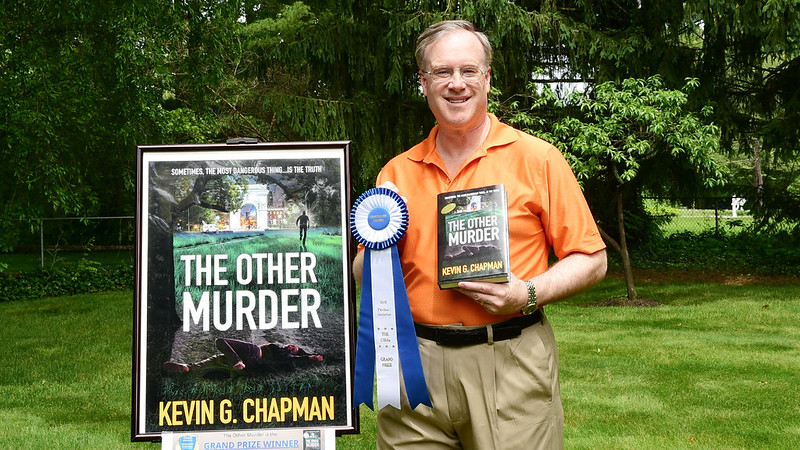
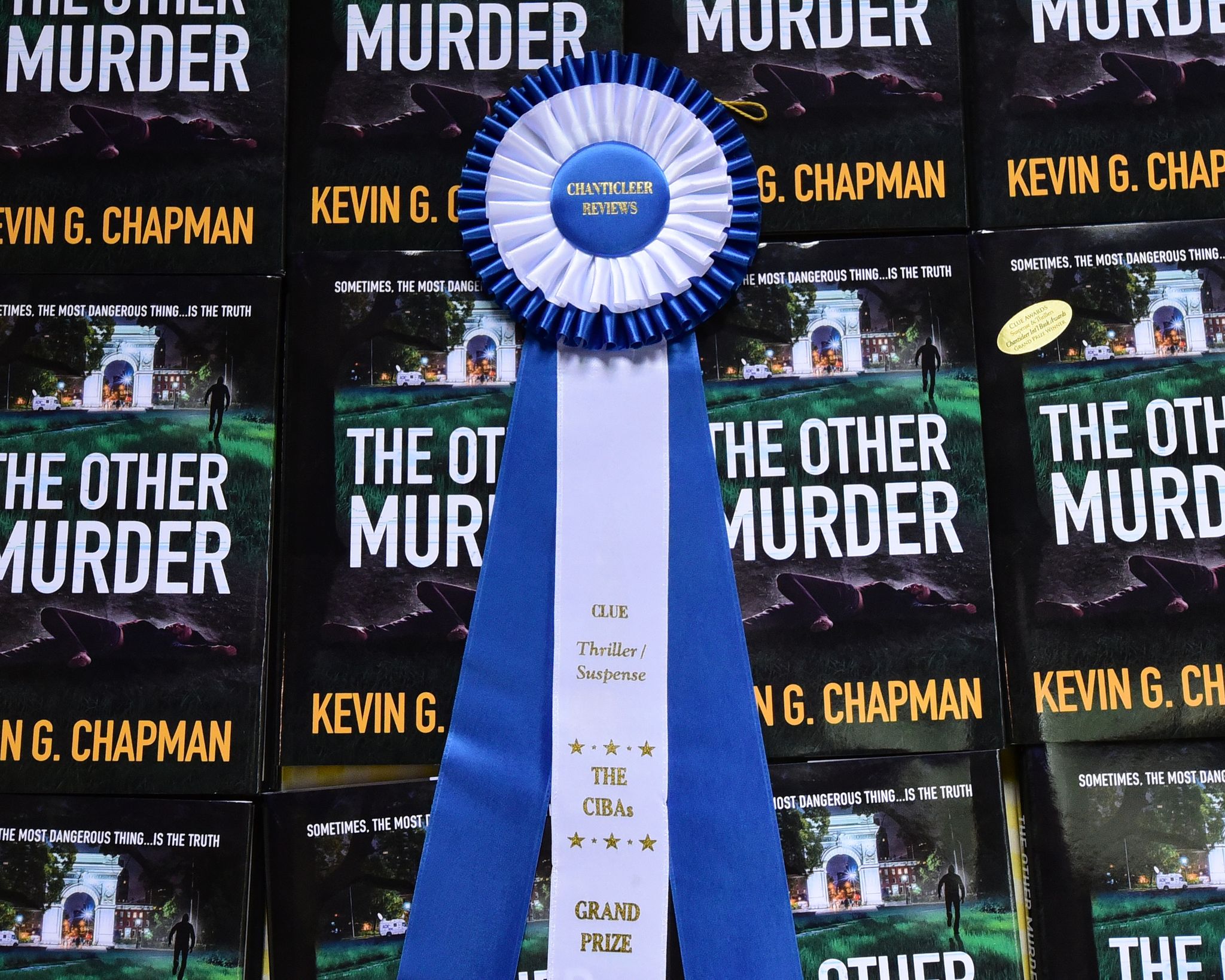
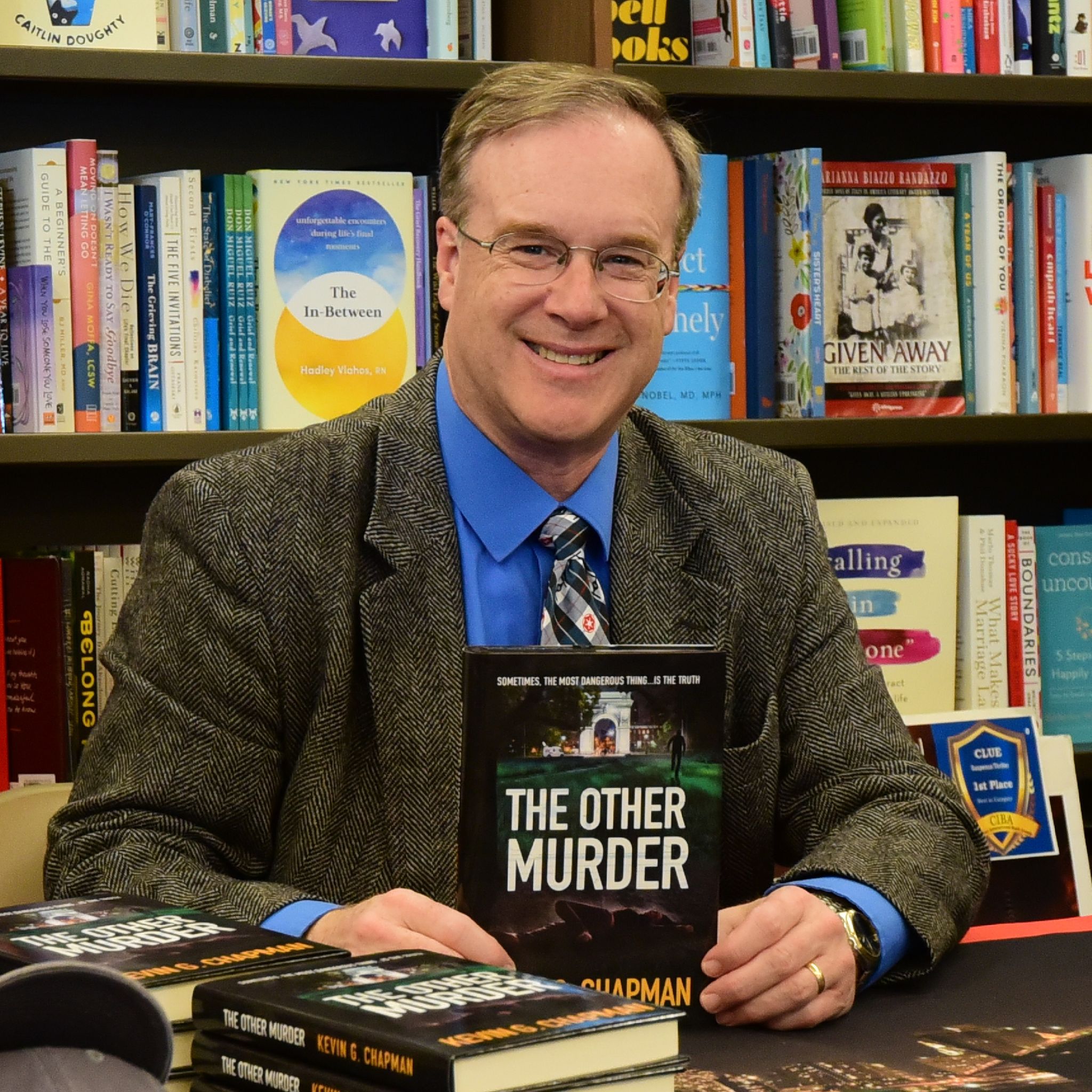
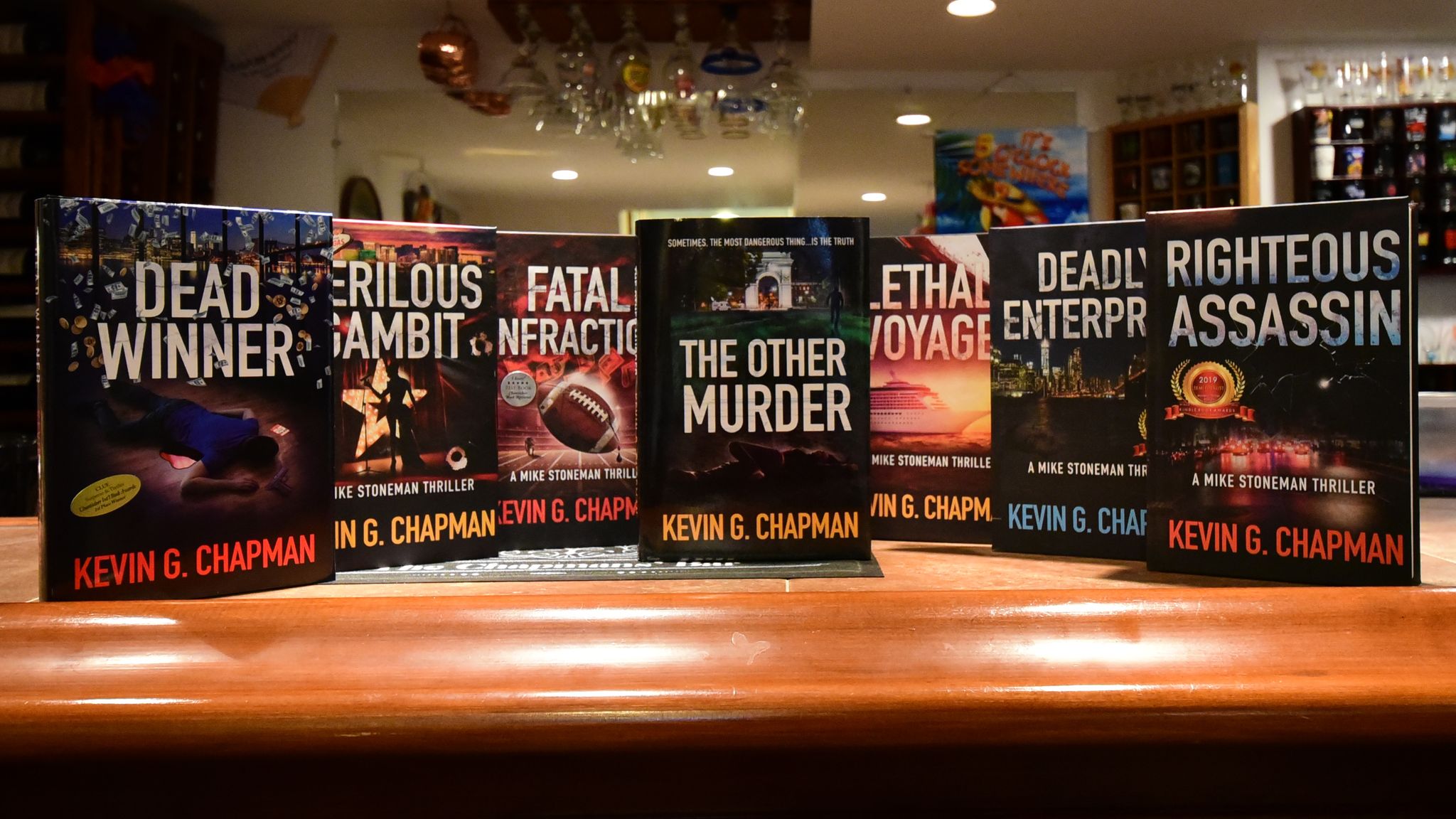
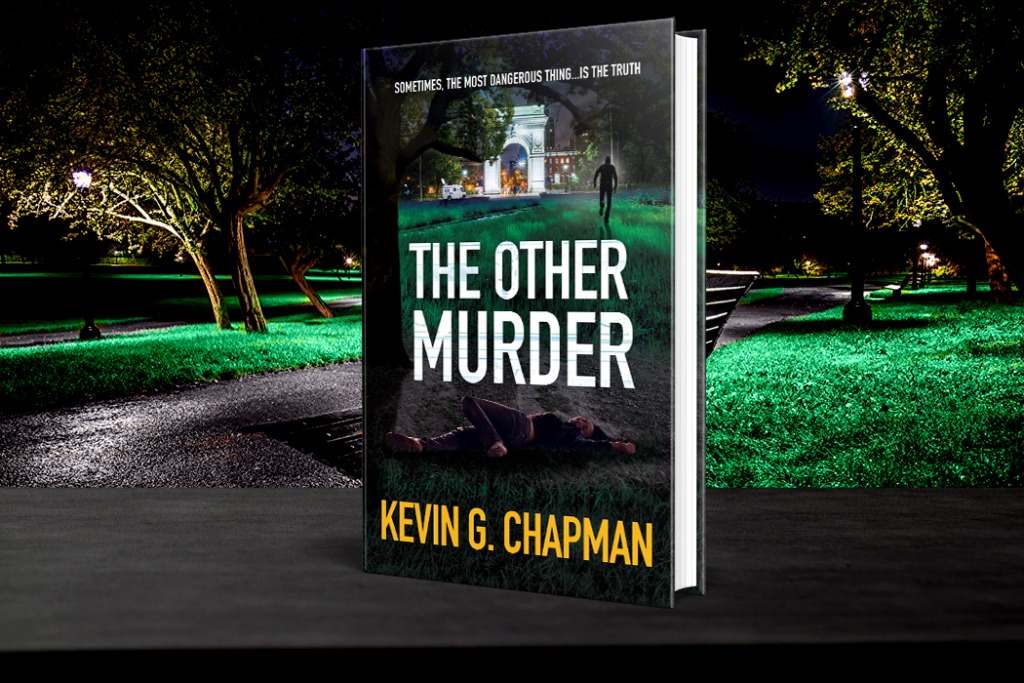
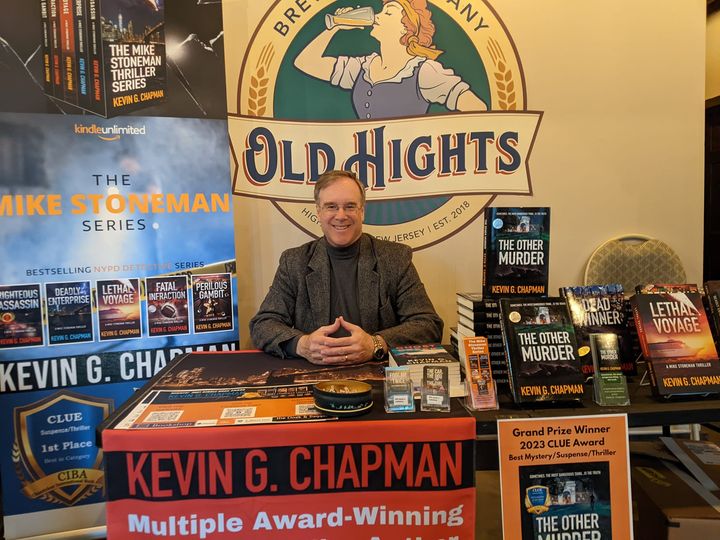
That’s a lot of ground and a lot of books! The Other Murder was the first place category winner in the suspense/thriller category, and was awarded the Grand Prize as the Best Book among all the CLUE entries.
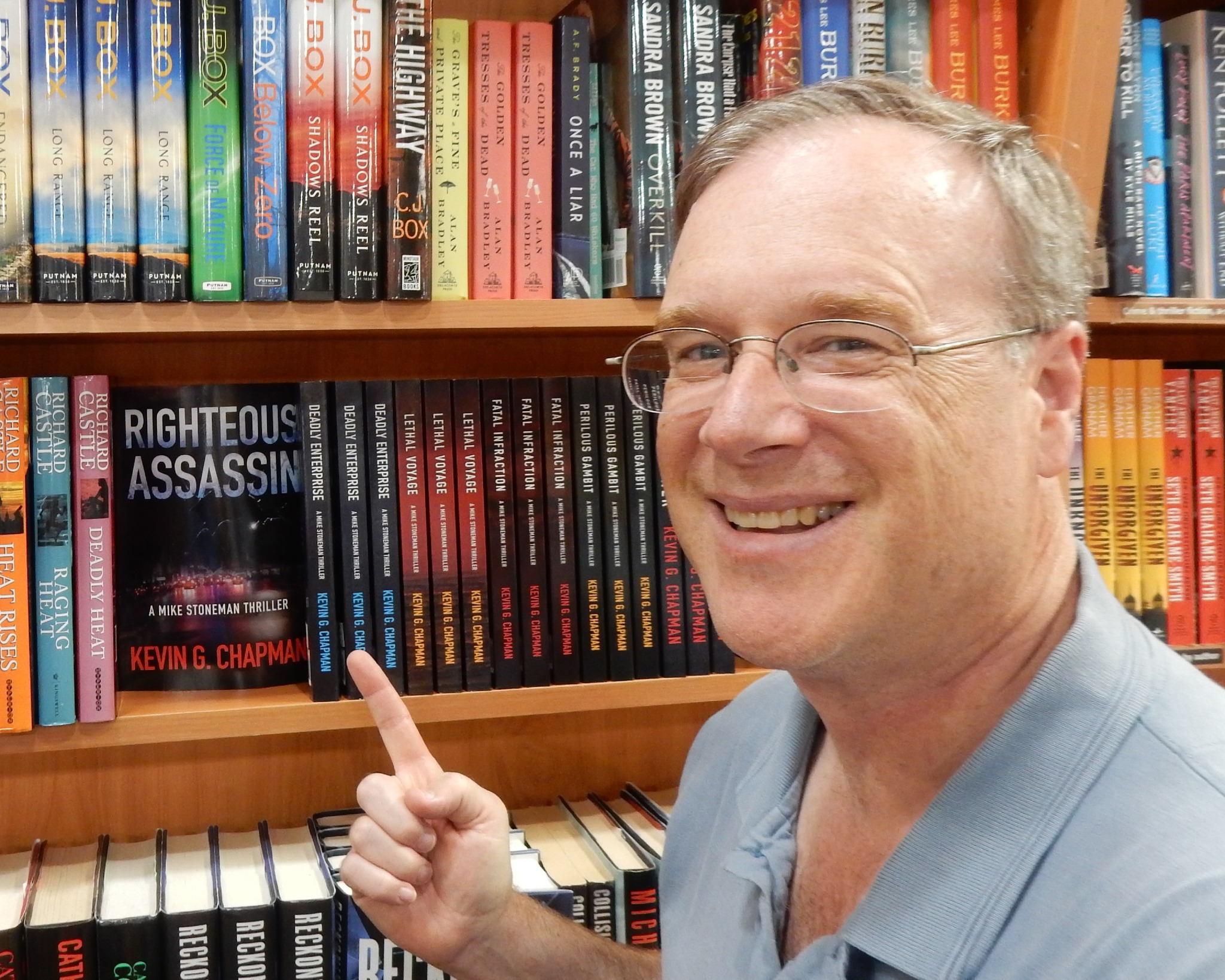
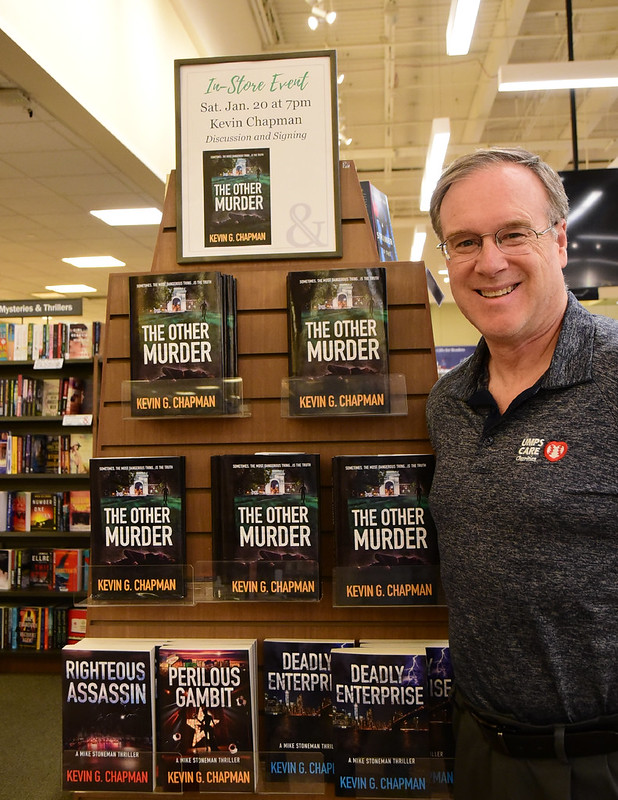
Kevin sat down with the Chanticleer Book Review to talk about his writing and his new novel, Double Takedown, coming out this fall!
Chanti: Thank you so much for joining us Kevin! Tell us a little about yourself and how you started writing?
Chapman: Normally I’m explaining to my lawyer colleagues that the unusual thing about me is that I’m a mystery writer on the side. For mystery readers, you might be interested to know that I’ve been an in-house attorney for a major media company for the past 29 years. I’m a labor lawyer and former chairperson of the Labor & Employment Law section of the Association of Corporate Counsel. The L&E section consists of over 7000 in-house lawyers. I led the ACC section and oversaw our educational programs and publications. I even wrote an article for the ACC magazine on a radical plan for improving how companies run their employee evaluation programs! Yeah, I’m a law nerd (and proud of it).
Chanti: We all are nerds about something! How did you develop the idea for your current novel, The Other Murder, (Winner of the CLUE Award Grand Prize this year) and what inspired you to explore the intersection of media and law enforcement?
Chapman: Because I’m a lawyer who works for a media company and writes crime thrillers, the most significant elements of my professional life all come together in The Other Murder. The story sprang from my non-original observation that pretty, affluent white girls who are missing or killed tend to dominate the news cycles. We often hear statistics about the number of murders and violent crimes in a particular city. We seldom (if ever) see significant media coverage given to a minority victim who isn’t rich and famous.
This phenomenon could be called “unconscious bias,” but is likely more a conscious choice by producers and media executives focused on getting the biggest ratings. Particularly in broadcast news, including 24-hour cable news networks, getting eyes on your story is the most important thing. The story that can be made sensationalistic and involves a victim that will garner sympathy and is relatable is the story you feature. That’s good economics, but leads to a slanted presentation of the world. I wanted to make this murder mystery a story that gets inside that culture and lets readers see all sides of the story as it unfolds.
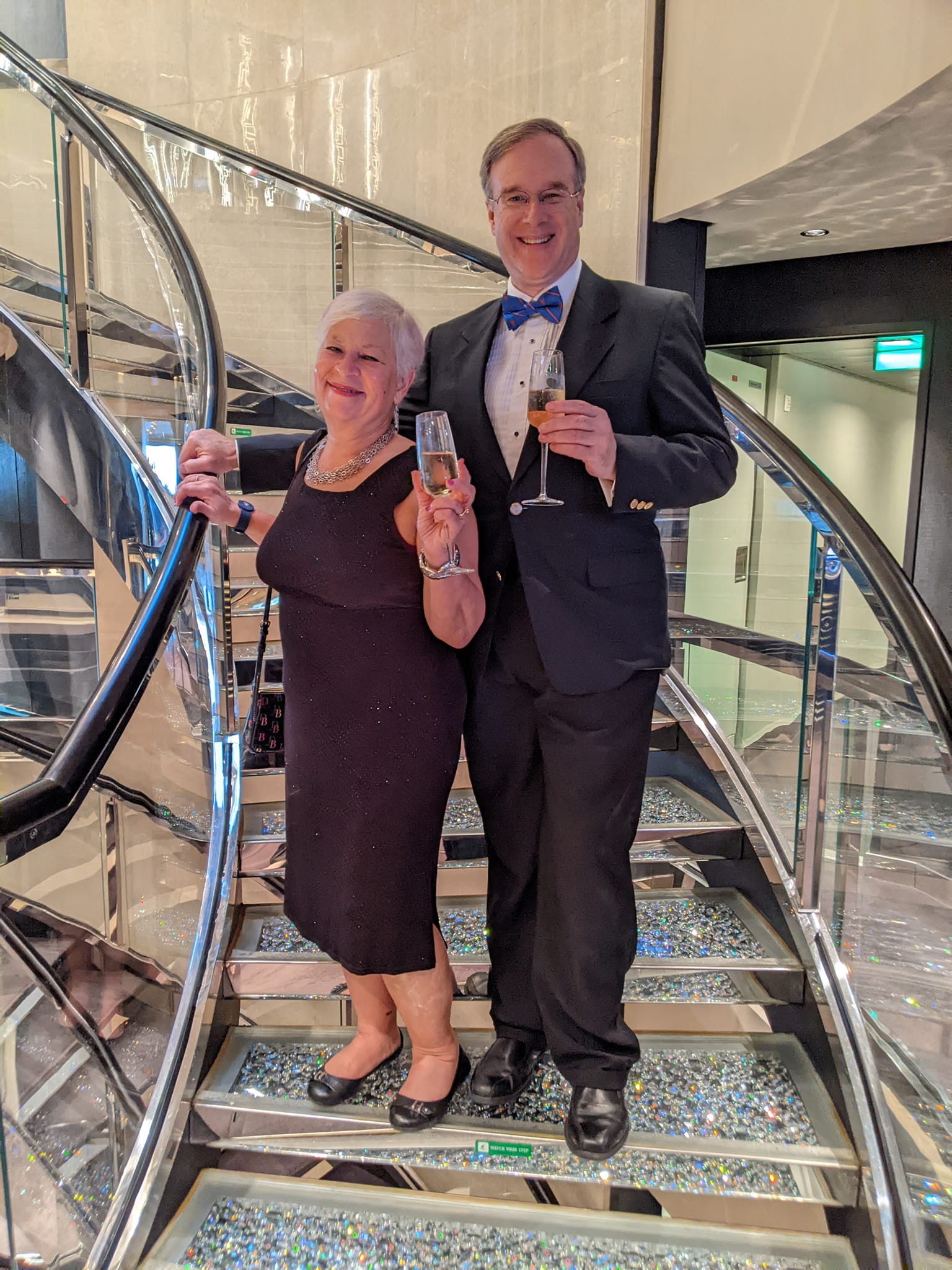
Kevin and Sharon Chapman
Chanti: The story of The Other Murder involves two journalists and two homicide detectives. How did you approach developing these characters, and what challenges did you face in creating complex relationships between them while navigating the intricacies of the murder mystery?
Chapman: The real “leads” of this story are the two journalists. Each of them has positive and negative attributes and each makes choices that are both selfish and noble – the two being not mutually exclusive. I wanted my cable news producer to be understood in the context of her job, her bosses, and her ambitions. I wanted the print journalist to be understood as someone who could have a “better” job, but who has a calling both to journalism and to his community. Their interactions disclose their similarities and differences as well as the nature of the business in which they work. And, of course, it’s a murder story so there must be cops. Here, the cops don’t have all the information and need the help of the journalists.
The two partners have their own problems, including a recent incident that set them at odds. Through their eyes, the reader learns things the journalists don’t know and sees the way the media coverage affects the police investigation. Making the characters the focus of the story lets me tell the mystery story through interesting eyes.
I have always loved the mysteries of Sara Paretsky, whose characters are the heart and soul of her books. In the Mike Stoneman Thriller series, I had a fixed set of main characters be my narrators. They, and their minor-character companions, gave me a universe of backstories to weave into the mysteries. This stand-alone story has brand new characters for my readers to relate to and care about.
My goal, like Ms. Paretsky, is to make my readers as interested in the stories of the players as they are about the underlying “main” plot. The plot needs to hold them together, but the characters need to behave in a way that is both realistic and interesting.
Chanti: Many of your stories feature important social issues, woven into your murder mystery plots. Why do you do that, and what message do you hope readers will take away from this aspect of the story in The Other Murder?
Chapman: I always want my books to be entertaining, but I also want to make my readers think about issues that exist in the world and which often influence the stories I’m telling. Jason Dickson, Mike Stoneman’s partner, is a Black detective. He (and Mike) encounter racism inside and outside the NYPD and those issues play naturally into my plots. I try to let my readers make up their own minds about things, but also confront them with situations they need to think about.
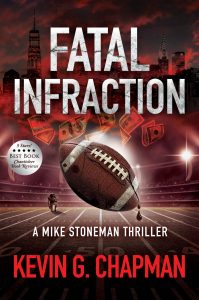
In Fatal Infraction, for example (Mike Stoneman #4), the Black quarterback of a New York pro football team is murdered. The racially charged environment of pro football and the reaction of the community to a murder that may have been racially motivated is a big part of the plot.
In The Other Murder, the main plot involves subtle racism that permeates the media and, to some extent, the police and the city officials, who are driven by publicity (positive or negative) and public perception. When the media tells the public that a situation is a horrible tragedy and an example of a huge problem that needs to be fixed, crowds gather, memorials are created, politicians and activists make speeches. This causes the media feed on itself as it amplifies the story.
Government officials like the mayor and the police commissioner react by prioritizing that crime and devoting resources to solving it. Catching that killer matters because everyone is watching. In this story, the second murder involves a Latino boy with a history of gang membership. It garners no media attention and generates minimal police interest until cops discover that Javier Estrada’s murder may be connected to the white girl, Angelica Monroe. The immediately reported story is that Angelica was an innocent victim of urban gun violence. She becomes a saint. Javier Estrada is ignored.
Meanwhile, the two detectives on the cases are a white man and a Hispanic woman. Mariana is the only character involved in the police investigation who cares about Javier’s story. Similarly, only Paulo Richardson, the local newspaper reporter, cares about Javier’s portrayal in the press. Paulo wants to make people see the truth about Javier. Mariana wants her colleagues to see that the white girl isn’t always the victim and the Latino boy is not always the criminal. The investigation also lays bare the recent rift between Mariana and her partner, Dru Cook, arising from an incident of police brutality. Was that incident racially motivated? Dru didn’t think so. Mariana saw it differently.
In the end, once the reader has all the facts (or, at least all the different versions of the facts), the question of who is a little bit racist and where motives and biases get mixed together makes things a lot less clear cut. My hope is that the reader not only enjoys the story and cares about the characters, but that the tale makes them think a little bit about their own perceptions.
Chanti: The Other Murder challenges readers to guess what happened. How do you craft the tension in a narrative, and what techniques did you employ to keep readers engaged in solving your mystery?
Chapman: Each book has its own requirements. In Dead Winner, my stand-alone romantic mystery from 2022, the protagonist was entranced by a woman who induced him to both protect her and help her recover her lost lottery ticket. The suspense was what would happen and who was really pulling the strings. In the Mike Stoneman books, typically the mystery is who the killer is and whether/how Mike and Jason will catch them.
In The Other Murder, the mystery is what really happened. In the first draft of the story, chapter one gave the reader a view into all the events that happened leading up to and including the murders of Angelica and Javier. I realized after the first draft was done that letting the reader know what happened and then following the investigations by the police and the journalists with that knowledge was not fully satisfying as a mystery. The story was: “how are they going to figure it out?” rather than “what happened?”
So, I went back and deleted most of that first chapter and re-wrote the story so that the journalists and the police (along with the reader) are piecing together the facts, without knowing for sure who is giving them good information, which of their assumptions are correct, and what information they are missing. This allows the reader to guess where the characters have it right, and what might be wrong. Even at the end, nobody (including the reader) can be 100% sure they know the whole truth.
Chanti: The novel highlights the danger of the truth. Can you elaborate on the significance of this theme and how it plays into the challenges faced by the characters, particularly Hannah and Paulo, as they uncover disturbing facts?
Chapman: The tag line of the book was one of the first things I wrote after outlining the basic story. “Sometimes, the most dangerous thing…is the truth.” It is a common observation that humans are significantly influenced by what is called in psychology “recency bias.” Your strongest memories and emotions are attached to the things that happened most recently. It is also true in media that the first story is the one that gets imprinted in people’s memories, particularly if it sparks strong emotions. When asked whether one of two things is true, the one you heard first is the one you are more likely to believe.
One of the core messages of The Other Murder is that people need to be careful about believing the first narrative they hear. But the reality is that, once a set of facts is in your head, it is hard to push it out. This is especially true when the original narrative reinforces your personal views and political objectives. Telling people who are emotionally, financially, and politically invested in one version of a story that the story they heard and want to believe is really a false narrative – is a dangerous thing to do.
In the media world, once you have established your narrative and “hooked” your audience, it’s hard to switch gears and retain your viewers if you suddenly try to tell them that what you had been telling them is false and that there’s a new truth they should switch to. They are likely to switch – to a different news source that will reinforce their belief in the original story. That is part of the challenge facing Paulo and Hannah.
Chanti: That is so interesting! Do you find you often learn things from writing your books?
Chapman: I’m always doing research to make sure that I’m getting the facts right in my stories, which can lead me to strange places. Like into the on-board morgue on a cruise ship (of course they have one!) or into the intricacies of how the NFL players’ association collective bargaining agreement treats the bonus money paid to a player who later dies. It’s fun to figure it out, but I almost always need volunteer consultants to help me and keep me honest.
For The Other Murder, I researched the operation of a cable news network and consulted with a few experts in order to get the details and the terminology correct. I knew the print journalist world already, but merging them together with the police procedural story was a challenge and was fun for me.
In my next book, I’ve been consulting with a pharmacist friend about drug interactions and how a murderer might use easily available drugs to induce a fatal reaction if you know what other drugs your victim is already taking. Cool stuff!
Chanti: Are there any secrets in your books that only a few people will find?
Chapman: Oh, yes! Leaving Easter Eggs that will amuse a few readers who get the joke or the reference is great fun. Even if it’s only my wife and I who laugh. Sometimes it’s a name, a location, or a line of dialogue.
In The Other Murder, there are several references to things from my last book (Dead Winner). There is a location where key events happened in the last book, and an object that found its way from that book into this one. There are also references to characters from the Mike Stoneman books.
In the next book, there will be references to the two detectives from The Other Murder, who work in the same homicide division as Mike and Jason. I was even able to put a reference in Mike Stoneman #3 to a character who would be the murder victim in book #4. That’s so much fun.
Chanti: With that in mind, who is the perfect reader for your book?
Chapman: Lovers of murder mysteries, police procedurals, and romantic suspense will like my books. But what’s more important to me is that my readers be thinkers. If you don’t want anything in your books that raises difficult social/political issues and doesn’t make you examine your own biases and attitudes, then my books may not be for you. I don’t mind if you don’t agree with my characters, and I won’t be offended if you decide you didn’t like my subplots, but I want readers who accept a challenge. I also love readers who like to be surprised and who think they can figure out any mystery. Think you can figure out what happened? I dare you!
Kevin G. Chapman recording his audiobook
Chanti: It’s always a joy to try and figure out the next step as a reader. And speaking of which, what are you working on now? What can we look forward to seeing next from you?
Chapman: I’m currently in the final editing stage of the next book in my Mike Stoneman thriller series, titled Double Takedown. I left off with Mike, Jason, and the other characters from the series in Las Vegas in January of 2020. I decided that I did not want to write those characters living through the COVID-19 pandemic (interviewing witnesses while wearing masks, etc.). So I wrote two stand-alone books that are not set in any particular year, including The Other Murder. Now, I’m picking up Mike and Jason in the fall of 2023 as they are preparing for a trial stemming from a murder from May of 2022 and investigating a new murder from September of 2023. This story includes a character who is a social media “influencer” and explores what happens when the police develop “tunnel vision” during an investigation. Look for Double Takedown this fall.
Kevin Chapman writes award-winning suspense/thriller/crime fiction. His books, including The Other Murder,are now available on Amazon in both hardcover and print, and as an ebook on Kindle via Amazon.com at https://www.amazon.com/dp/B0CJN6W5NJ.
Paperbacks and hardcovers of all his books are also available through select independent bookstores and via Bookshop.org, which supports local bookstores. The audiobook version is available via CHIRP, iTunes, Googleplay, Roku, Nook (Barnes & Noble), LIBRO.FM (which also supports independent bookstores) and on Audible.
Readers can contact Kevin Chapman, see all his content, and download two free short stories and a free novella at www.KevinGChapman.com.
The fight against tyranny grips readers and obsesses authors to this day.
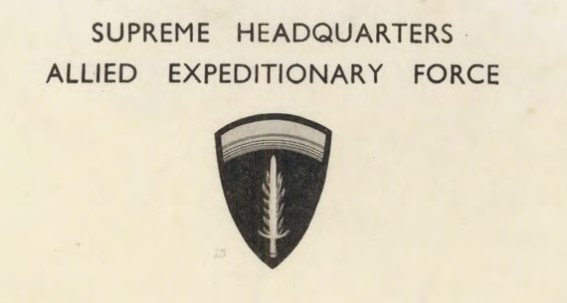
“Soldiers, Sailors and Airmen of the Allied Expeditionary Force!
You are about to embark upon the Great Crusade, toward which we have striven these many months. The eyes of the world are upon you. The hopes and prayers of liberty-loving people everywhere march with you. In company with our brave Allies and brothers-in-arms on other Fronts, you will bring about the destrruction of the German war machine, the elimination of Nazi tyranny over the oppressed peoples of Europe, and security for ourselves in a free world.” — Order of the Day from Supreme Headquarters Allied Expeditionary Force given before the Invasion of Normandy
Chanticleer’s Personal Connection to WWII
At Chanticleer we often take particular care to honor veterans and those who serve.
Kiffer’s father retired after 36 years of service in the Unites States Merchant Marines & Marine Corps where he served in the WWII, Korean War, and the Vietnam War. He died in 1981 from one hundred percent service related injuries.
From left to right we have Kiffer’s brother Tony, her father, and Kiffer herself in Hawaii during the territory days. Her mother, Antha May, is taking the photo
David’s grandfather also served during WWII, stationed in France as a first generation Quebecois transplant in the United States
Robert Gerard Beaumier Sr. who served in WWII
My father would often tell the story of how his grandfather, Robert, was in France during World War II. At one point a dog came and wouldn’t stop barking at his unit, no matter how much they told it to go away. Finally, Robert said “Va t’en!” and immediately the dog ran off. Everyone was suitably impressed that the dog spoke French! — David
The National World War II Museum in New Orleans has an excellent summary of the lead up and importance of D-Day which we recommend you read here.
Most chilling perhaps is the closing of their thoughts that emphasize how important the landing on Normandy was:
The Normandy invasion was one of great turning points of twentieth-century history. An immense army was placed in Nazi-occupied Europe, never to be dislodged. Germany was threatened that same month by a tremendous Soviet invasion from the east that would reach the gates of Berlin by the following April. The way to appreciate D-Day’s importance is to contemplate what would have happened if it had failed. Another landing would not have been possible for at least a year. This would have given Hitler time to strengthen the Atlantic Wall, harass England with the newly developed V-1 flying bombs and V-2 rockets, continue to develop jet aircraft and other so-called “miracle weapons,” and finish off his killing campaign against ethnic and sexual undesirables.
It is our pleasure to share these wonderful WWII books with you from authors who have written about this time.
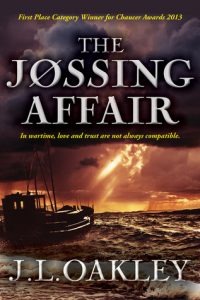
The JøSSING AFFAIR
By J. L. Oakley
At a time when true identities are carefully protected and information can get you killed, heroes emerge to fight the evils of Nazi-occupied Norway in J.L. Oakley’s highly suspenseful and beautifully penned historical fiction novel, The Jøssing Affair.
In a quiet Norwegian fishing village during the Nazi occupation, risk lurks everywhere. Most residents are patriotic members of the resistance, “jøssings,” but there are “quislings,” too. Those who collaborate with the Germans and tout the Nazi propaganda of Nordic brotherhood between the nations. Mistaking the two is a matter of life and death.
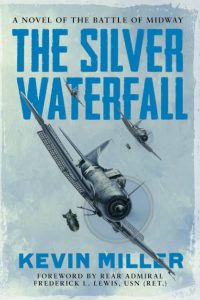
THE SILVER WATERFALL: A Novel of the Battle of Midway
By Kevin Miller
In The Silver Waterfall, author retired U.S. Navy Captain Kevin Miller reveals the intricate and deadly turns of the Battle of Midway, a combat shaped by transforming warfare, and one that would in turn shape the rest of WWII’s Pacific Theater.
After their surprise attack on Pearl Harbor, the Japanese Navy seeks to draw American aircraft carriers into an ambush, to secure Japanese power over the Pacific. In a time of great upheaval for warfare technology, aircraft carriers dominated both sea and sky. So, to destroy the USS Enterprise, Yorktown, and Hornet, Chūichi Nagumo— commander of the Japanese First Air Fleet— brings to bear his own four carriers, HIJMS Akagi, Hiryū, Kaga, and Soryu.
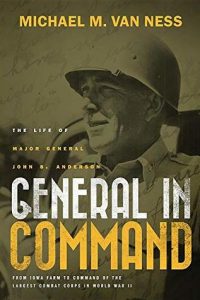
GENERAL in COMMAND – The Life of Major General John B. Anderson
By Michael M. Van Ness
Michael M. Van Ness, the grandson of “the general in command,” has created a remarkable biography chronicling the adventures of a farm boy who rose high rank in the US military and served with distinction in two world wars as a combatant, officer, and sage observer.
Born in 1891, John Benjamin Anderson must have had considerable intelligence as well as patriotism and grit, since he was accepted at West Point Military Academy at age 19, an honor conferred on only 130 applicants per year—and finished in the top third of his class. He would soon serve under General Pershing in the Mexican War, giving him the experience of combat and coincidentally, his first ride in an automobile. That deployment earned him inclusion in Pershing’s ranks in World War I. It was then his diaries began, and though he protested humorously that “I hate to write,” these personal recollections give readers an up-close picture of the devastation of warfare.
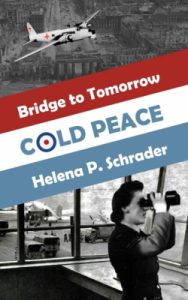
COLD PEACE: A Novel of the Berlin Airlift, Part 1
By Helena P. Schrader
Amidst the ruins of Post-WWII, Berlin struggles to rebuild from the ashes, torn apart and facing down the promise of another bloody dictator. A myriad cast, all shaped by that same war, become entwined with the broken city as its hour of need approaches.
Just as Germany is divided between the Americans, British, French, and Soviets, Berlin has been cut into pieces. But the balance of the occupation powers tips eastward as the Soviet Zone surrounds the city, giving them control of all ways into and out of Berlin – save for the air. The occupation currency is worthless thanks to Soviet over-printing, leaving Berlin on a barter system of cigarettes and black-market trading. In order for Germany to recover, the Western Allies plan to introduce a new currency, even if it angers the Soviet bear.
A young boy in Norway makes a discovery while playing with his dog, opening the mystery of EO-N by Dave Mason, a detective story spanning multiple decades and both sides of the Atlantic, a deep dive into the horrors of Nazi Germany, and a heartfelt love story.
A small metal fragment leads to the discovery of a downed WWII twin-engine Mosquito fighter-bomber hidden in snow and glacial ice for nearly 75 years. The crash site yields an initial set of clues, one of which finds its way across the world to Alison Wiley, a biotech CEO in Seattle. Having recently lost her mother, and, a few years earlier, her brother in Afghanistan, she finds her days full of despair, but the discovery makes a distant connection to her long-lost grandfather, and she flies to Norway. There, she meets Scott Wilcox, a Canadian researcher assigned to investigate the discovery after his government learned that the crashed aircraft belonged to the Royal Canadian Air Force. Their attraction is both intellectual and emotional, but the quest to uncover the plane’s mysteries and the fate of Alison’s grandfather place any romance to the side.
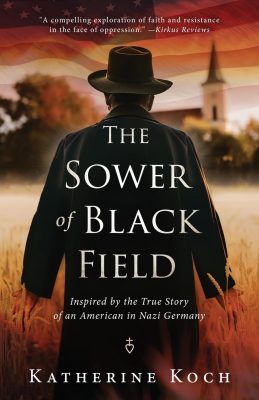
In The Sower of Black Field, Katherine Koch’s historical fiction novel, Father Viktor Koch— a 67-year-old Catholic priest— presides over a monastery in a small German village, as the Nazi regime sweeps through the country.
The time is April, 1941. Fr. Viktor’s order, the U.S.-based Passionists, built the monastery eight years prior, providing employment for most of the villagers and remaining a symbol of their faith.
DEAR BOB: Bob Hope’s Wartime Correspondence with the G.I.s of World War II
By Martha Bolton with Linda Hope
During World War II, Bob Hope traveled almost ceaselessly to outposts large and small, entertaining US troops – and inspiring them; Martha Bolton brings the extent of this work to light in Dear Bob.
Writer Martha Bolton worked with and for comedian Bob Hope. Now, with Hope’s daughter Linda, she has gathered and organized the letters written to Bob by the soldiers he helped.
Hope, English born, and born to entertain, once said he could not retire and go fishing because “Fish don’t applaud.” Among his sizzling lines – and there are hundreds recorded here – he told one audience that he’d gotten a wonderful welcome when he arrived at their camp: “I received a 10-gun salute… They told me on the operating table.”
Eighty Years later, and the sacrifices made in WWII still matter and the fight for a more just world continues. Thank you to everyone who has submitted books to us and been a part of our own journey and learning.
One of our favorite Writing Communities meets annually at the Chanticleer Authors Conference!
How to Form a Writing Community
No matter where you are in the writing journey, it’s never too late to join a Writing Community or form a Critique Group. We’ve talked to people who have ran book groups at our own local Village Books, those who ran the Skagit Valley Writers League, and those who have gone through graduate-level writing classes to bring you the best tips and tricks for your community needs.
Writing Communities and Critique Groups are often a wonderful and necessary step on the journey to becoming a professional author, not just someone scribbling into the void.
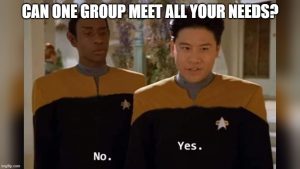
So my Writing Community will fulfill all of my authorly needs?
Commander Tuvok and Ensign Kim of the USS Voyager. Kim is usually wrong.
Probably not. Just like one person can’t fulfill all our needs for friendship, writing communities are diverse and can include your local bookstore to the writing group you found online during quarantine. It isn’t just one thing, but here we’ll talk about how to build one if you notice your needs aren’t getting met as well as they could be.
First, we’ll focus on where to begin, then we’ll dive into actually running a critique group.
Starting your Group
Pick who you want to be in your Writing Community
When putting together a group it can be important to consider both experience and demographic. If you’re hoping to publish by the end of the year, it’s important to work with like-minded people as opposed to writers who are just discovering their voice. Of course, even a writer who is still working through their craft may be an excellent reader, so don’t be afraid to take a chance on someone!
Likewise, while it’s helpful to have a variety of readers, ask yourself who the audience for your book is. Lee Child’s The Killing Floor has a pretty different audience from The City of Glass by Cassandra Clare. The best feedback will come from the people who would be interested in grabbing your work at the bookstore.
If you’re looking for more on connecting with readers, and less on connecting with other writers, check out this article on reader engagement from Kiffer Brown here.
Decisions in a Critique Group
There are plenty of ways to run a writing group, but knowing if it’s open or closed and whether people come prepared to give feedback or if they’re expected to give feedback in the moment is key
For a critique group though, startby asking if it’s going to be a closed or an open group. Even with an open group, it helps to recruit people to join it initially, so you set the tone and hopefully create something that will really serve your needs.
For an open group, you’ll have the great pleasure of extraordinary writers coming into your sphere, though on the other hand, you will also find writers whose work needs desperate help beyond what you can give to the work just being plain offensive. Despite that, the rewards of working in an open group are innumerable, as are the connections that will help expand your circle of influence.
In a closed group you don’t have the same level of variety in the people you work with, but the consistency can make up for that. Of course, if the people you invite in end up feeling hurt, this can negatively affect friendships that have been brought into the group.
Regardless of who you have in a group, it’s worth remembering that writing is a sensitive art, and it does well to treat people kindly, even when giving direct feedback.
When is Feedback done?
Whether or not you choose to do an open or closed group, you also need to pick whether or not work will be read in advanced so feedback can be ready to present at group. The other natural option is that the author will present their work at the group and receive feedback immediately after.
I ran a group for 7 years that sent work in advance, and I found the extra time to comment and think about a book really helped! That said, the maximum word count suggestions and number of members we had meant we critiqued approximately 40,000 words a month! That’s a lot of novels!
In contrast, Janet Oakley, a Chanticleer Overall Grand Prize Winner, is still in a group where the author reads the work aloud and then receives feedback in the moment. That group saves a lot of time and effort by keeping the focus on just what can be shared in the time that they meet. Both have great merits! – David
Regardless of the choice you make, writers will be able to get a huge benefit from however feedback is delivered!
Community is something we make at Chanticleer
Here at Chanticleer we have our usual (or unusual) suspects in terms of people who live near us and are guaranteed to show up at our local events ready to cheer us on.
To facilitate this, we’ve created The Roost, a private online community for serious authors looking for support. Not only does The Roost offer steep discounts on many Chanticleer services, there are weekly write ins, monthly workshops, author promotion projects, NaNoWriMo support, and of course pictures of our beloved pets (always a must).
If you’re interested in joining the Roost, please reach out to AuthorOutreach@ChantiReviews.com
One of Kiffer’s adorable kitty cats
The Roost is a social community where authors can share their expertise and knowledge with fellow writers who take the craft and business of being an author seriously. Make posts and share photos just like any other social media, but better since the community is intentionally curated for writers!
Thank you for joining us for this Writer Toolbox Article
There is so much to learn and do with Chanticleer!
From our Book Award Program that has Discovered the Best Books since the early 2010s to our Editorial Book Reviews recognizing and promoting indie and traditional authors, Chanticleer knows your books are worth the effort to market professionally!
When you’re ready,did you know that Chanticleer offers editorial services?We do and have been doing so since 2011.
Our professional editors are top-notch and are experts in the Chicago Manual of Style. They have and are working for the top publishing houses (TOR, McMillian, Thomas Mercer, Penguin Random House, Simon Schuster, etc.).
If you would like more information, we invite you to email us at info@ChantiReviews.com for more information, testimonials, and fees.
We work with a small number of exclusive clients who want to collaborate with our team of top-editors on an on-going basis.Contact us today!
Chanticleer Editorial Services also offers writing craft sessions and masterclasses. Sign up to find out where, when, and how sessions being held.
A great way to get started is with our manuscript evaluation service, with more information availablehere.
And we do editorial consultations for $75. Learn morehere.

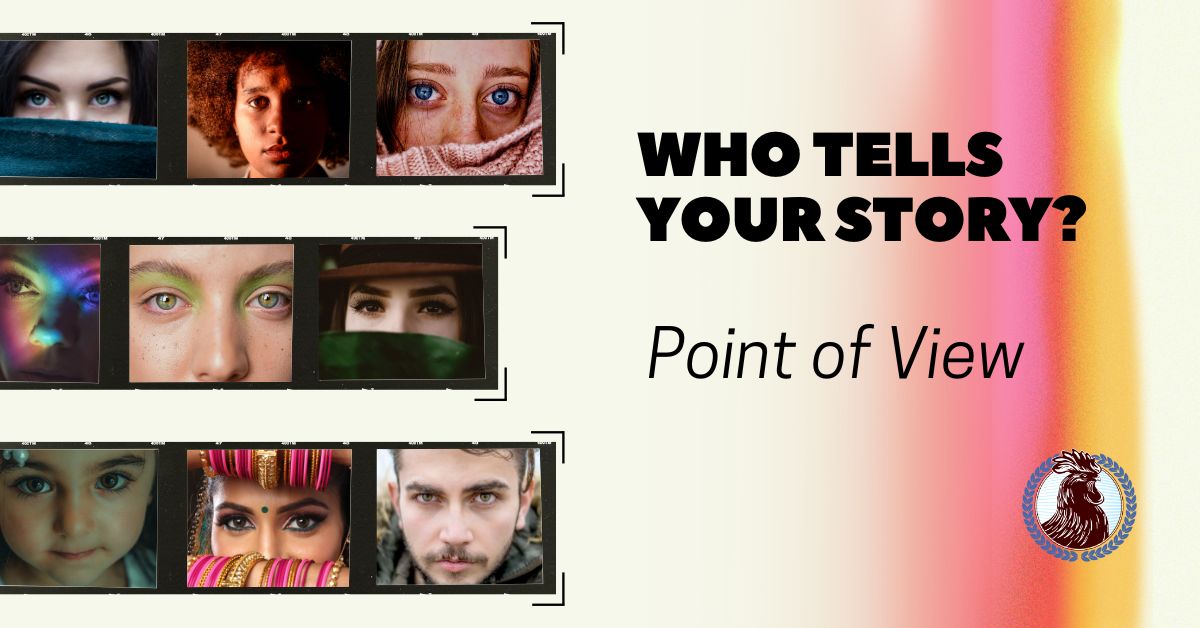

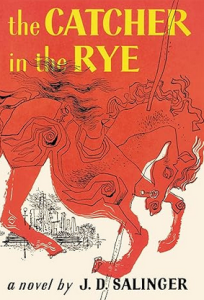
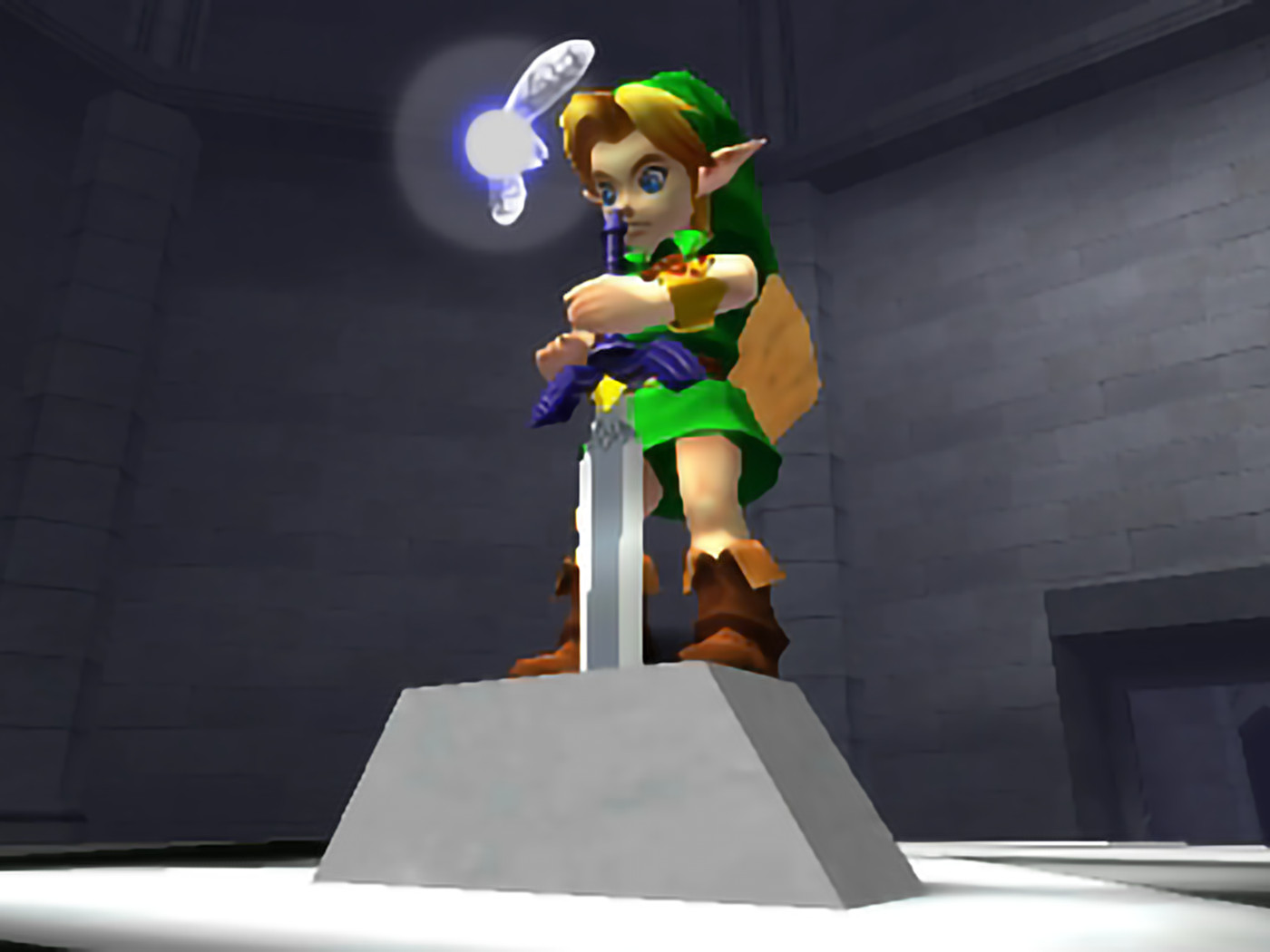

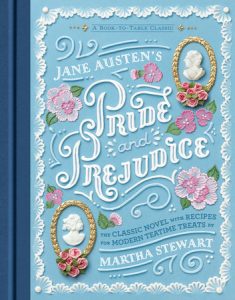
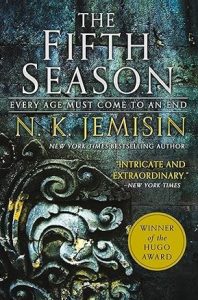



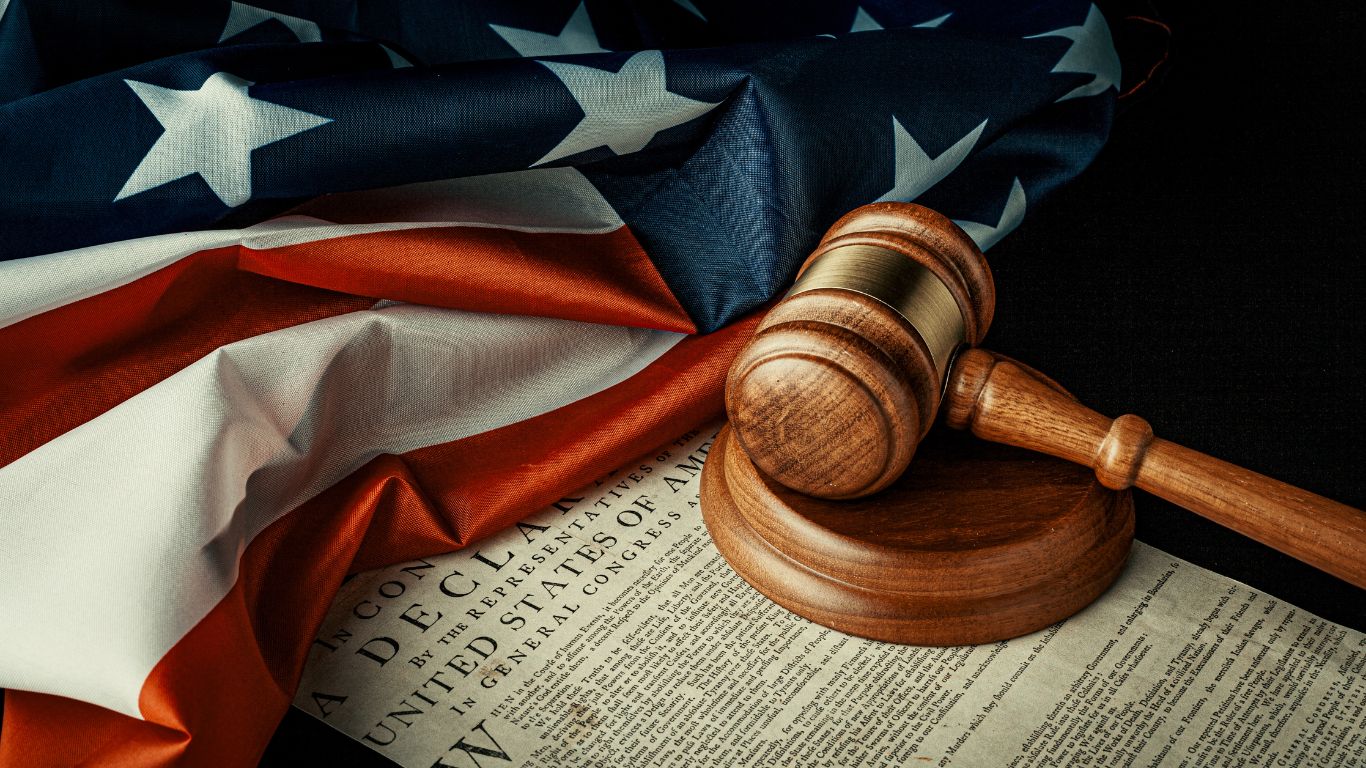



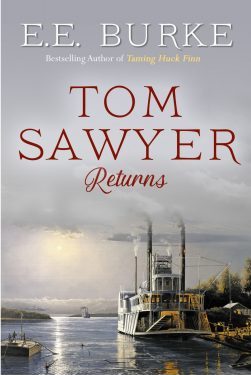
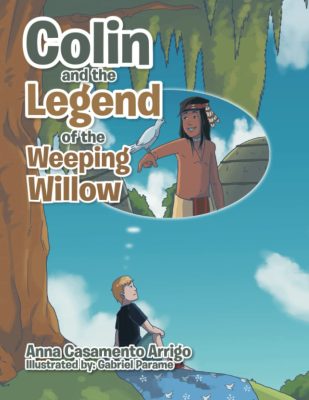
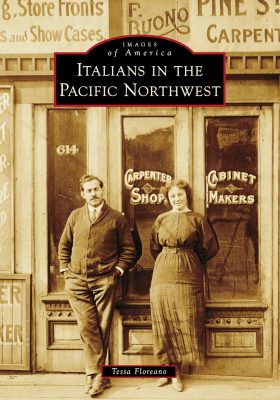
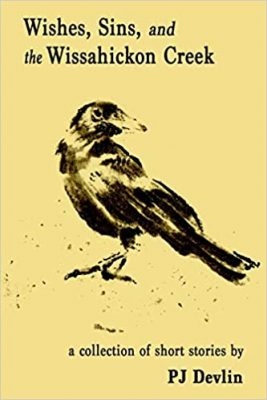
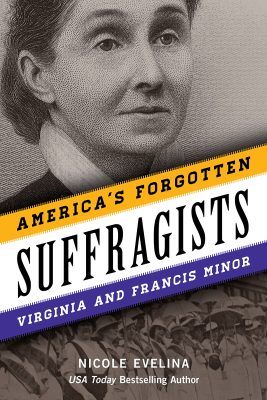






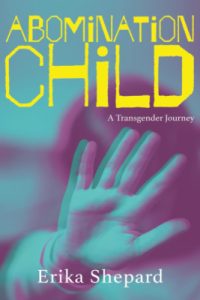
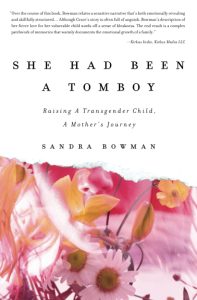
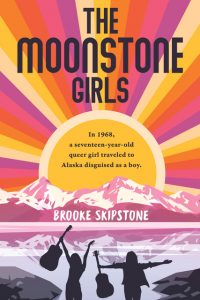
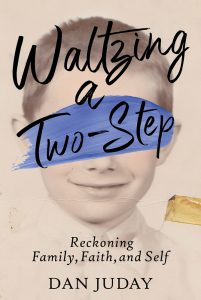
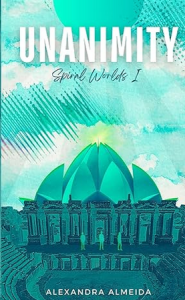


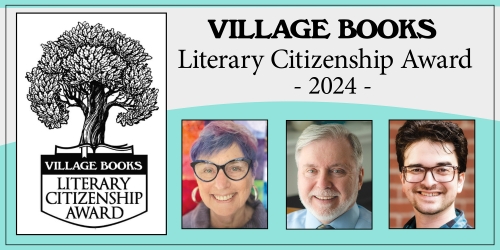
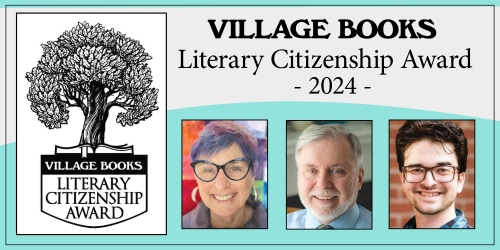
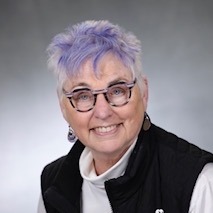



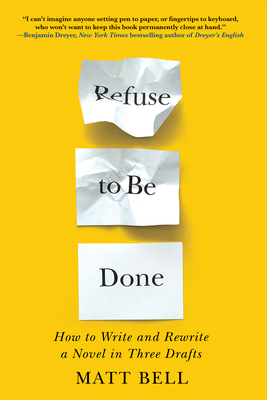

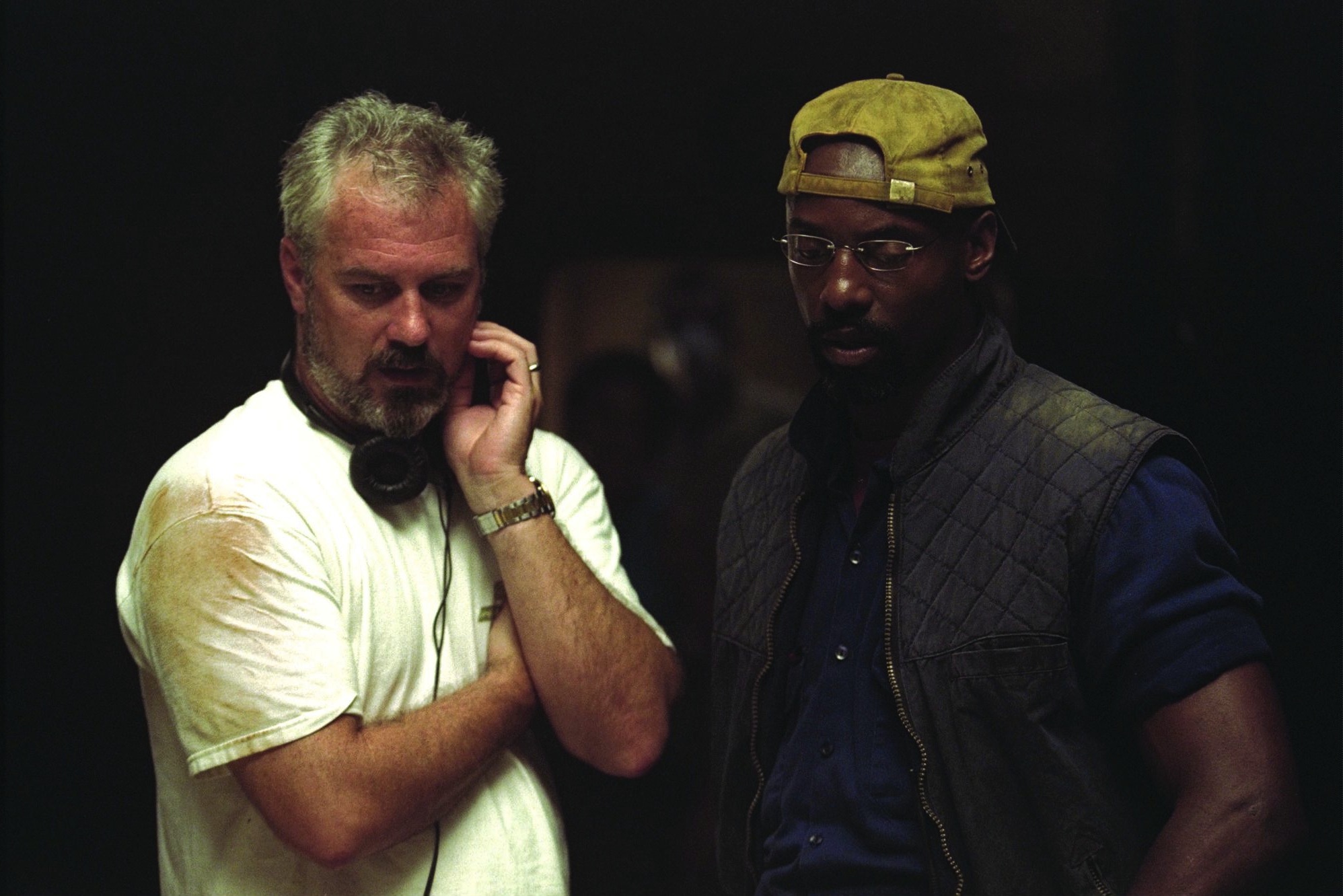
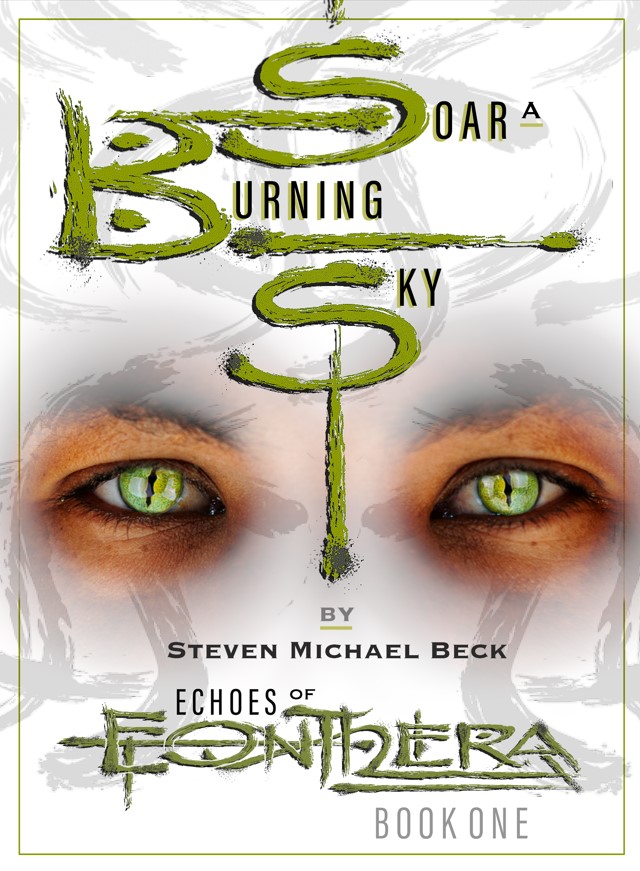
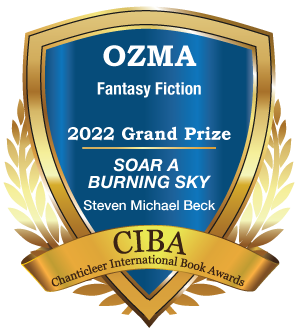 Steven Michael Beck was the OZMA Grand Prize Winner for Fantasy Fiction at the 2022 CIBAs, hosted by the 2023 Chanticleer Authors Conference. His book, Soar A Burning Sky looks at a world linked to Earth’s, and both planets are in danger due to the harsh realities of Earth’s drastic climate change.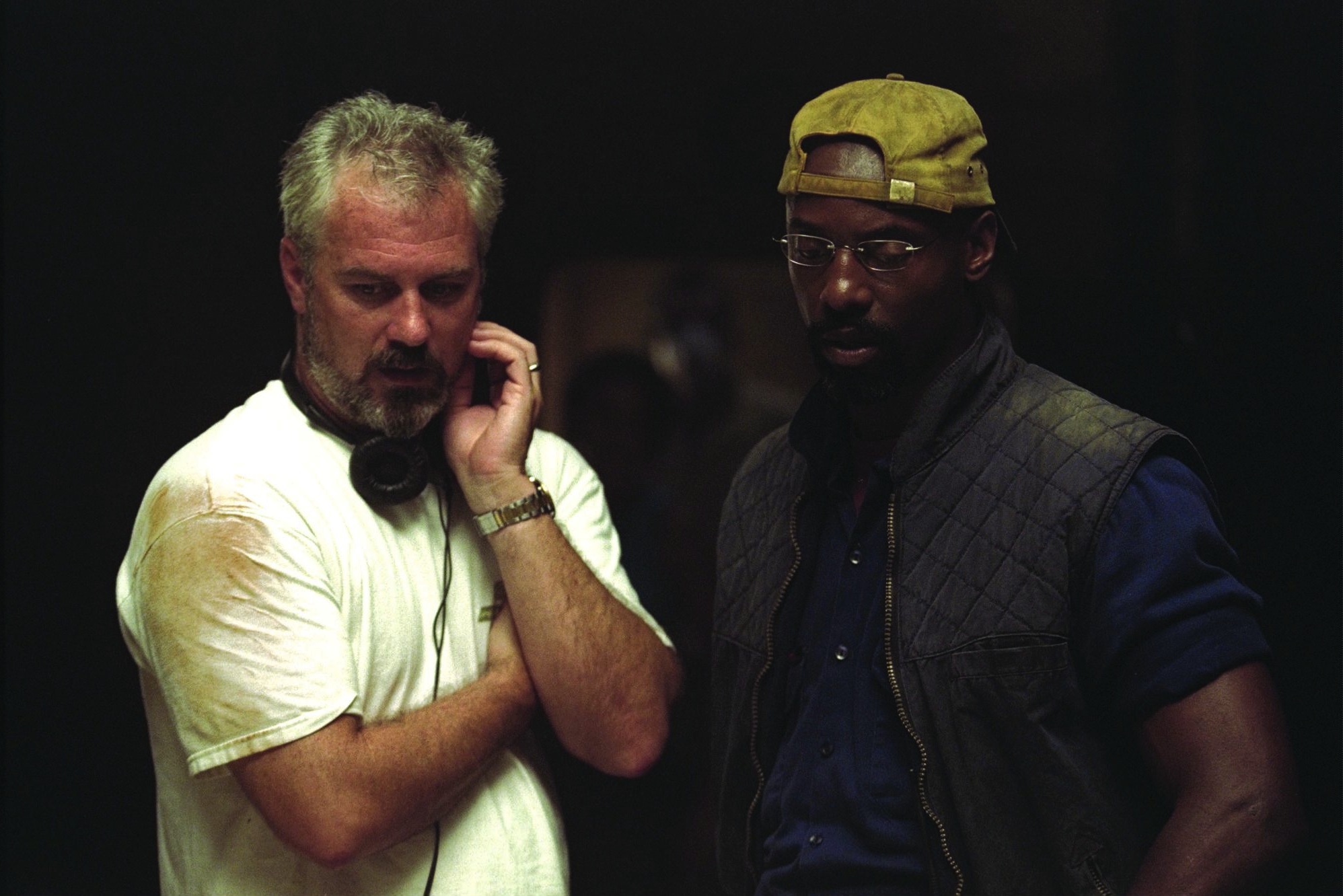


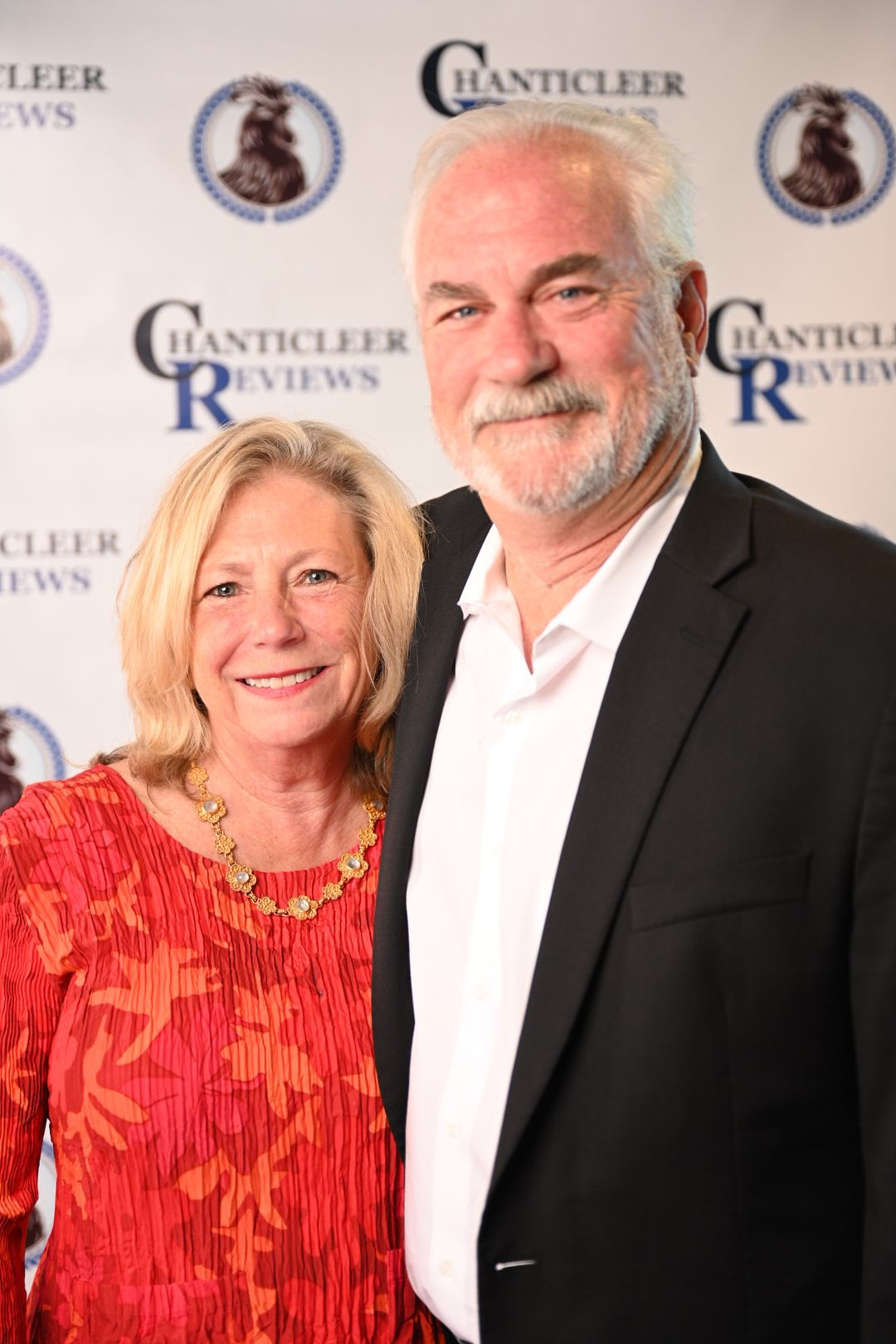
 Steven Michael Beck spent the last 30 years pursuing the art of storytelling through advertising, film, and television. Specializing in visual effects-oriented concepts (and their often-unique storylines), his direction has constantly reflected infatuation with animation—the notion that any object or idea either contained ‘life’, or could be conjured into such (needless to say, he had an imaginative childhood). These projects and life lessons have been nothing if not steppingstones, leading him to see the potential of a new type of storytelling through combinations of sculpture, photography, text, and found object.

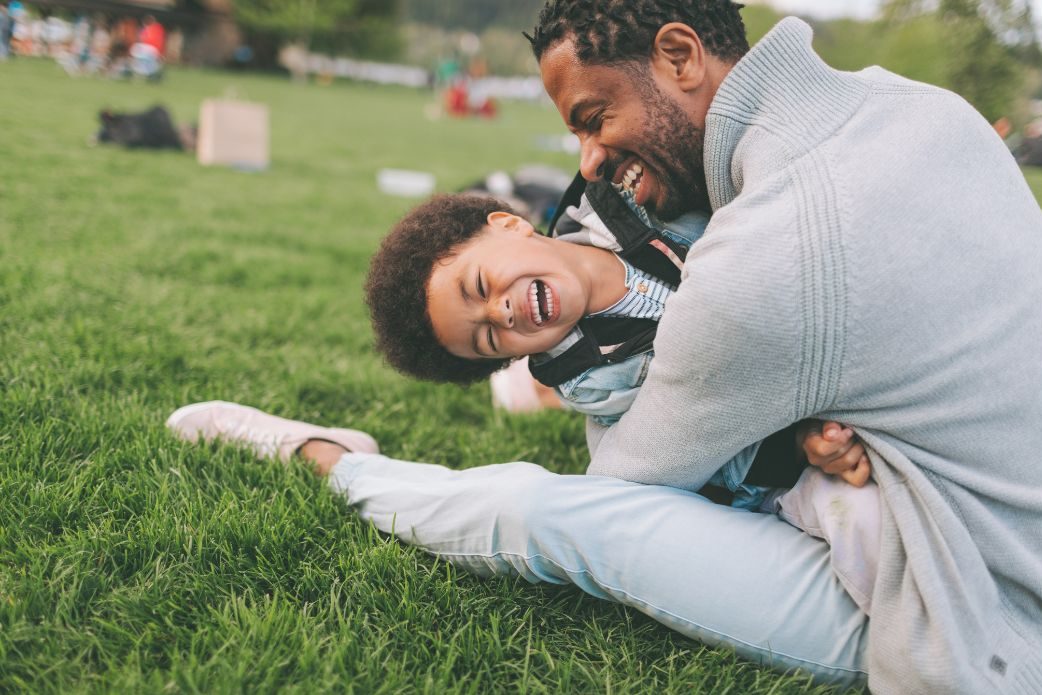
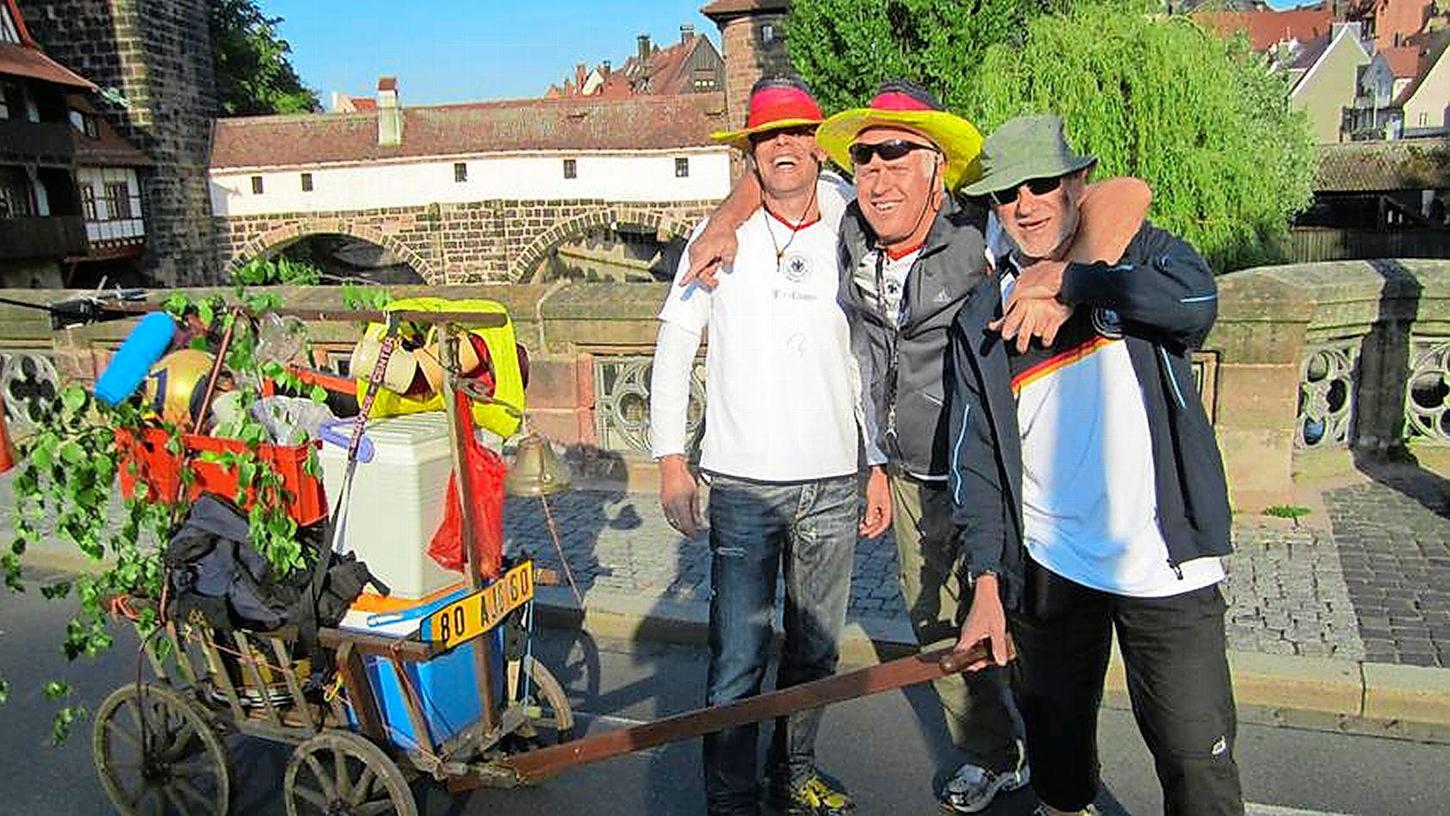

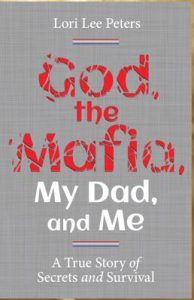
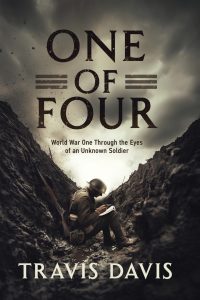
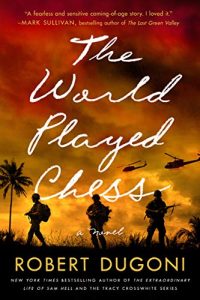
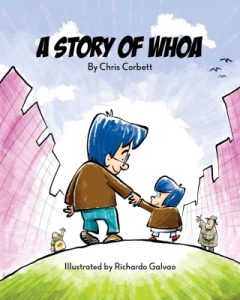



 From the 2023 Clue Division Grand Prize Winner for Suspense/Thriller for his book The Other Murder, we have a brand new Chanticleer Author Interview!