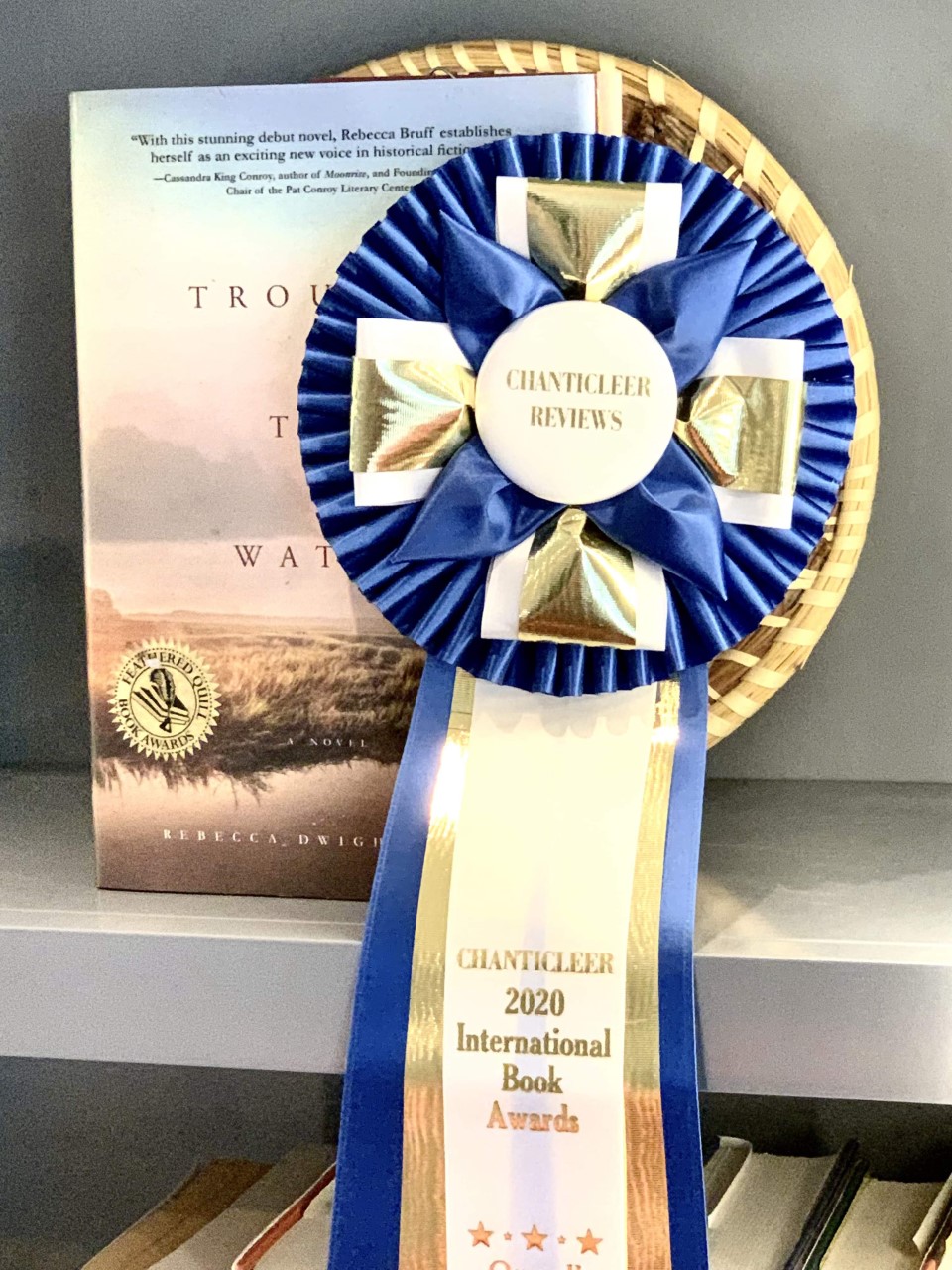
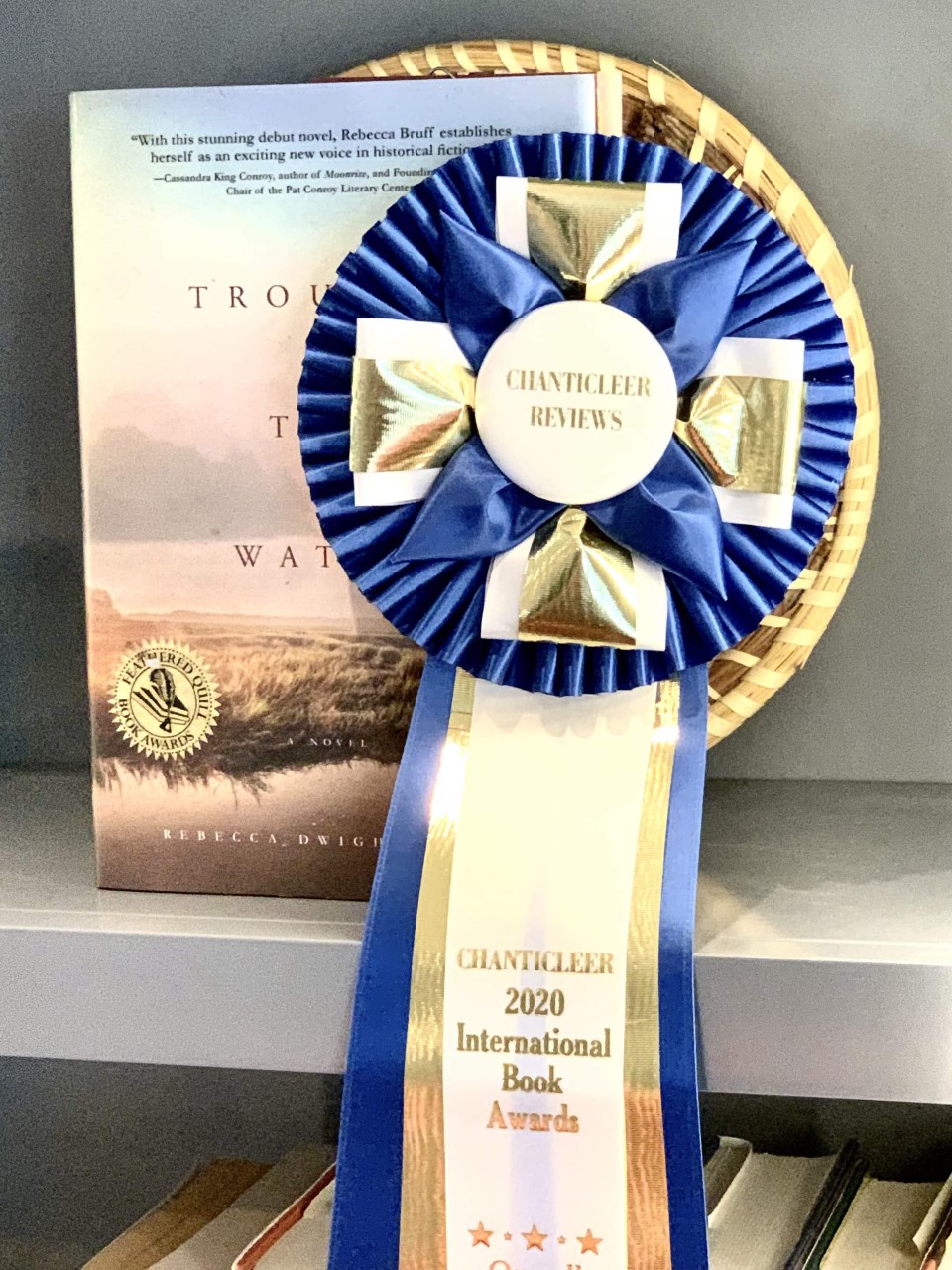
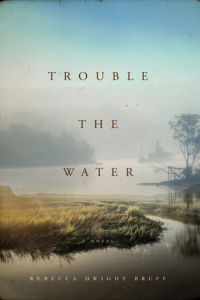
Trouble the Water follows the incredible Robert Smalls who was born enslaved. He liberated himself and others, served five terms in the US Congress, and introduced compulsory public education. He changed countless lives.
Want to compete for the prestigious CIBA grand prize? Enter today!
His story – his life and legacy – is inspirational and aspirational. And mostly unknown.
Bruff reveals the true story of the life of Robert Smalls. Set in the Civil War era, we follow Smalls as he navigates through a life of enslavement, the dangers of war, and a desperate attempt at escape. Trouble the Water is a moving tale of slavery, perseverance, war, freedom, and love.
Rebecca Bruff earned her Bachelor’s degree in education (Texas A&M) and Master and Doctorate degrees in theology (Southern Methodist University). In 2017, she was a scholarship recipient for the prestigious Key West Literary Seminar. She volunteers at the Pat Conroy Literary Center in Beaufort, South Carolina. She’s published non-fiction, plays a little tennis, travels when she can, and loves life in the lowcountry with her husband and an exuberant golden retriever.
Her play opens at Will Geer’s Theatricum Botanicum where it will run from July 9th – October 2nd. Freely Adapted by Ellen Geer and Directed by Gerald Rivers. If you’re in the area of Topanga, California during its run, we recommend checking it out!
We hope that, like us at Chanticleer, you will be moved by Robert Smalls’s courageous life of thoughtful, compassionate leadership
Why did Bruff write this story?
I’m a writer. I believe that the stories we read and write and tell have the power to shape and change our lives. I believe that – because a story changed my life.
Nine years ago, when I lived in Texas, I visited the lowcountry. It was my first experience here, and it was brief, but we made time for a carriage tour through the historic district of Beaufort. And that’s when I heard a little bit of the story of a man named Robert Smalls. I’d never heard his name, and I’d never heard the story. But he intrigued me. His courage, and his heroism, and his contributions, and legacy intrigued me.
His story ignited my curiosity. Curiosity led to exploration, and exploration led to discovery, and I discovered how little I knew about our history. I discovered how little I understood about the experiences of enslaved people in our country. I discovered that some stories get amplified, while other stories get silenced.
Congratulations once more to Rebecca Dwight Bruff on her Overall Grand Prize Win, and we’re delighted to crow with you about this most recent accomplishment! We look forward to what’s next!
***
“The must-read story of Robert Smalls. An Inspiring story of courage that we need today. It rings with heroic action along with thoughtfulness and sincerity that will keep you going until the end. A must read! Five Stars!” – Chanticleer Book Reviews
Award-winning Author, Professor, and President of Whatcom Writers and Publishers
Seán has been a writer since he discovered that people strung words together to tell stories. He is also a polyglot and has written creatively in Spanish, German, French, Portuguese, Latin, and Irish. Sean has finished three novel projects and published stories in several journals, anthologies, and Chanticleer Magazine. A native of Gary, Indiana, and Dwyer teaches Spanish, German, and Portuguese at Western Washington University in Bellingham, WA. The author of over 100 songs, Dwyer is also an active member of Red Wheelbarrow Writers, Whatcom Writers and Publishers, and Upstart Crows.
Seán Dwyer’s collection Voices I Hear was a Finalist for the innaguaral Shorts Awards, and his book A Quest for Tears won First Place in the Journey Awards. Read the 5 Star Book Review of A Quest for Tearshere.
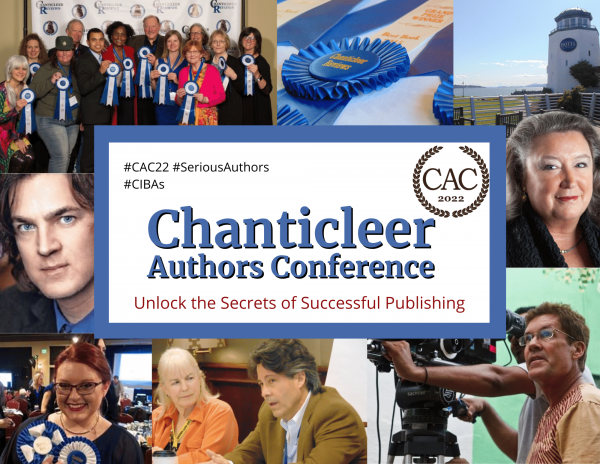
Still thinking about registering for the 10th Anniversary Chanticleer Authors Conference?
We have a stellar line up of speakers for CAC22, with options to attend in person and virtually. Find out why The Writer Magazine (founded in 1887) has repeatedly recognized the Chanticleer Authors Conference as one of the best conferences to attend and participate in for North America. Join us June 23-26, 2022 at the beautiful Hotel Bellwether in Bellingham, WA.
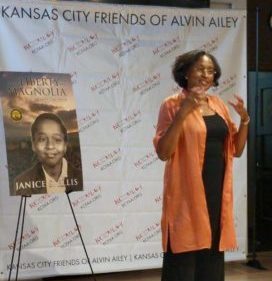
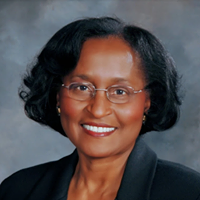
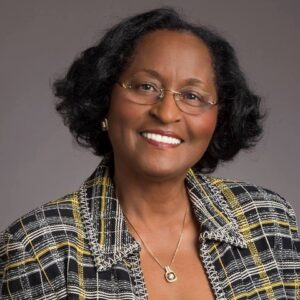
Dr. Ellis presenting on her book Liberty to Magnolia
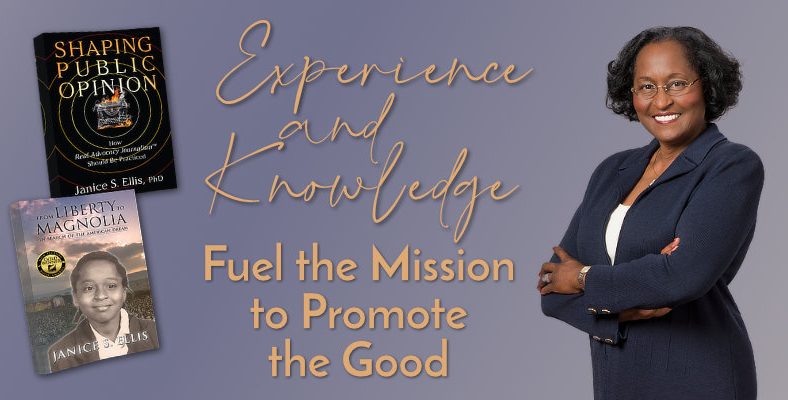
The groundbreaking author of Shaping Public Opinion, which won the Nellie Bly Grand Prize Award, and From Liberty to Magnolia, which won the Journey Grand Prize Award, has written an article that’s being featured nationwide on President Biden’s choice to appoint the first Black woman to the supreme court.
Dr. Ellis begins by setting the record straight and defining Affirmative Action:
Affirmative action has a long history in this country as an attempt to stop and correct the systemic discrimination and oppression of Blacks. The initial attempts began during the Reconstruction Era (1863-1877) shortly after the Civil War.
Furthermore, Dr. Ellis points out the double standard that Affirmative Action is being invoked as the reasona behind putting a Black woman on the Supreme Court, saying:
Was it considered affirmative action or out of line when President Ronald Reagan declared while campaigning that he would appoint the first woman to the Supreme Court? Was it affirmative action when he followed through and appointed Sandra Day O’Connor?
You can read the full article here, which has been reprinted in more than twenty publications across the US. Well done Dr. Ellis. We’re proud to count you as a Chanticleerian. Dr. Ellis is known for her analysis of social, educational, and political issues across race, age, gender, and socioeconomic status.
Here are the links to the publications that picked up her article:
FLEXIBLE REGISTRATIONS ARE AVAILABLE for these challenging times.
Seating is Limited. The esteemed WRITER Magazine (founded in 1887) has repeatedly recognized the Chanticleer Authors Conference as one of the best conferences to attend and participate in for North America.
CHANTICLEER 10 Question Author Interview Series with
Dr. Janice Ellis
Dr. Ellis has written columns for newspapers, magazines, radio commentary, presented internationally across the U.S., and now online. For the past 30 years she analyzes educational, political, social and economic issues across race, ethnicity, age and socio-economic status. She continues her important work in these challenging times.
Dr. Janice Ellis, columnist, author, journalist, radio commentator, and advocate of social justice and Women’s Rights.
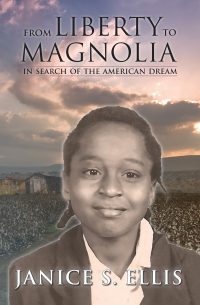
Dr. Janice Ellis entered her book From Liberty to Magnolia In Search of the American Dreaminto the 2018 Journey Book Awards for Narrative Non-fiction, a division of the Chanticleer International Book Awards (CIBAs). Her stellar memoir was awarded the 2018 Journey Book Awards Grand Prize. The award winning memoir is a truly remarkable book telling what it is like to be Black in America.
We are honored that Dr. Ellis presented The Critical Role Authors Play in Fostering a Better Society at Chanticleer’s first virtual conference, VCAC20. Her presentation was inspirational and thought provoking. Janice S. Ellis has been an author for over 30 years and has written a column for newspapers and radio throughout her career about education, politics, race and socioeconomics. Janice Ellis holds a Ph.D. in Communication Arts, and two Master of Arts degrees, one in Communications Arts and a second in Political Science, all from the University of Wisconsin, Madison, Wisconsin.
Dr. Ellis is one of our favorite authors—and truly a joy to get to know. She reminds us that the pen is mightier than the sword!
Now, let’s get better acquainted with Dr. Janice Ellis.
Chanticleer: Tell us a little about yourself: How did you start writing?
Dr. Ellis: A native daughter of Mississippi, I grew up and came of age during the height of the Civil Rights Movement and the Women’s Liberation Movement. Born and reared on a small cotton farm, I was influenced by two converging forces that would set the course of my life. The first was the fear and terror felt by blacks because of their seeking to exercise the right to vote along with other rights and privileges afforded whites. The second was my love of books, the power of words.
I began writing as a radio commentator for a large radio station right out of graduate school and continued to write commentary for newspapers and radio throughout my career. I also published articles professionally in trade journals. I began writing because I thought the need was great for a good political columnist to help the public better understand those issues that affected their daily lives. A good columnist can impact policy and help shape public opinion to support what Aristotle calls the “greater good.”
Chanticleer: When did you realize that you were an author?
Dr. Ellis: I gave it a fleeting thought when I was exempted from an English composition course as a freshman in College after writing some essays during a summer program. But the desire to become an author became more compelling in graduate school in my preparations to become a columnist/commentator. Personal and professional experiences inspired me to become an author of books. From Liberty to Magnolia: In Search of the American Dream is my first book.
Chanticleer: That book has won quite a few awards! In fact, it took home the CIBA 2018 Grand Prize in the Journey Awards for Memoir and Narrative Non-Fiction, From Liberty to Magnolia: In Search of the American Dream. I hear it is collecting other awards, as well. Congratulations!
Dr. Ellis: I wrote my book because there are lessons from my life journey through poverty, racism, sexism, and sexual harassment that I believe can directly benefit girls and women, blacks, and other minorities. It addresses many of the issues around racial and gender inequality that America continues to grapple with.
Chanticleer: Thank you for being a graceful and astute voice of authenticity in our world today. We need you! Do you find yourself following the rules or do you like to make up your own rules?
Dr. Ellis: I basically follow the rules. I have a strong sense of wanting to do the right thing. When that becomes difficult, I still figure out, follow my own path to achieve goals and desired results.
Chanticleer: What do you do when you’re not writing? Tells us a little about your hobbies.
Dr. Ellis: I love reading the Bible and religious commentary, and political and historical nonfiction. When not reading I like to play scrabble and other word games. I also enjoy watching cable news, dramas, thrillers, espionage and action films, some romance and comedy shows. Walking, gardening and fishing are rejuvenating hobbies that I find very fulfilling and satisfying.
Helpful Sources from Dr. Ellis:
* Dr. Ellis writes about her life experiences and enjoys sharing about how she navigated common challenges.
* The writing craft books that have helped her the most are William Zinsser, On Writing Well and Writing About Yourself * The books about the business of writing that have been most beneficial are Writer’s Digest, Literary Agents, How to Write a Book Proposal, and How to Market Your Book
Chanticleer: What are you working on now? What can we look forward to seeing next from you?
Dr. Ellis: I am working on two shorter books, Realizing Your Dream: A Handbook Based on Experience, and Overcoming Racism and Sexism During Your Lifetime. Hopefully, one of the above books to be released later this year.
Chanticleer Aside: Dr. Ellis won the Nellie Bly Grand Prize for her upcoming journalistic book, Shaping How Public Opinion: How Real Advocacy Journalism Should be Practiced.
Chanticleer: How structured are you in your writing work?
Dr. Ellis: I have always wanted to be able to write something every day but have yet to achieve that goal. The need to write fresh content on my website has helped the frequency of writing short pieces. In working on books, I usually write until I cannot write anymore, sometimes for 10-14 hours segments. What I have learned that if I stop in mid-sentence, it is easy for me to resume when I begin again.
Chanticleer: J.D. Barker does that, too. It’s good advice. How do you approach your writing day?
Dr. Ellis: For a long time, I would begin writing as soon as I awaken and get a cup of coffee. Happily, now, I write anytime during the day. I sit at my computer and open to a blank page, if I am beginning a new article or chapter, it motivates me to begin putting my thoughts down. If I am in the middle of a piece, I pick up where the incomplete sentence stops.
Chanticleer: Name five of your favorite authors and describe how they influence your work.
Dr. Ellis: Former President, Jimmy Carter. The simplicity, yet elegant way he writes about his life, his work, and his values in making things better for humanity. Former President, Barack Obama. His vivid way of writing about his life and the American experience and his vision, hope, and optimism for a better America. Maya Angelou. Her cinematic description and compelling call of attention to the not-so-flattering aspects of humanity and highlighting the need for us to change and move toward our higher selves. Robert Ludlum. His command of the intrigue and complexity of characters and storyline. Kings Solomon and David. For the power, poetry, and wisdom in their books of Proverbs, Ecclesiastes, and Psalms.
Chanticleer: Great choices! What areas in your writing are you most confident in? What advice would you give someone who is struggling in that area?
Dr. Ellis: I think I am most confident in my ability to analyze and assess a situation and put forth a thoughtful perspective; and the ability to help the reader see, feel, and experience what I am writing about as if they are there with me.
“You must love the craft of writing. It is a craft. You must be dedicated and believe that what you have to say will make a difference. Be willing to write, re-write, and re-write again and again until your words convey the meaning that is intended.” – Dr. Ellis
Chanticleer: Do you ever experience writer’s block? What do you do to overcome it?
Dr. Ellis: Yes, usually a few days after I have completed a writing project. If I must begin a new article or chapter, I pull up a blank page. Sooner or later, I feel compelled to fill the page with words that make sense, that are impactful. Sometimes, I do some activity totally unrelated to writing and find that something occurs to make me begin writing.
Chanticleer: What excites you most about writing?
Dr. Ellis: Sharing thoughts, ideas, experiences, and hopefully solutions that will enlighten, inspire, enable, and encourage someone.
Chanticleer: I admire how your motives are outward – helping others understand their world and how to navigate it. Well done! What do you do in your community to improve/promote literacy?
Dr. Ellis: I donate copies of my book to libraries, and give signed copies to individuals. I speak about the power of reading and try to encourage children and young people within my sphere of influence to read, encouraging them to read to others at every opportunity.
Chanticleer: I love that answer. Give us your best marketing tips, what’s worked to sell more books, gain notoriety, and expand your literary footprint.
Dr. Ellis: I think each author should do a book tour, with TV and radio appearances, if possible. Even if you cannot physically travel from city to city, technology today can allow you to do a lot from our home our local studios.
Also, make use of social media. Posting frequently on Facebook, Twitter, Instagram, and blog posts are a must. Speaking engagements are great to keep your book relevant.
Chanticleer: Especially true today in the face of a global pandemic. What are you working on now? What can we look forward to seeing next from you?
Dr. Ellis: I am working on two shorter books, Realizing Your Dream: A Handbook Based on Experience, and Overcoming Racism and Sexism During Your Lifetime. Hopefully, one of the above books to be released later this year.
Chanticleer: We will be looking for those! Who’s the perfect reader for your book?
Dr. Ellis: Teenage girls, women, minorities who are trying to navigate racism and sexism in reaching and fulfilling their purpose, goals, and dreams in life. And, for all who are concerned about America’s future and who want America’s children of all colors to realize their full potential. It will inform the racists and non-racists, the sexists and non-sexists. It will inspire and empower men and women who are in positions that can make a difference and have the will to do so—parents, teachers, policymakers, social and human rights activists, journalists, business leaders, faith leaders, and many others. Caring Americans, working together, can break the chains of racism and sexism that keep America bound.
Chanticleer: I believe it! What is the most important thing a reader can do for an author?
Dr. Ellis: Write a review and express what the book means to them. Recommend the book to family, friends, and colleagues.
Chanticleer: As always, it is a pleasure spending some time with you today. Be well and keep the good work coming!
If you would like to know more about Dr. Janice Ellis – make sure you pick up her memoir, From Liberty to Magnolia: In Search of the American Dream and her soon to be published ground- breaking work Shaping Public Opinion: How Real Advocacy Journalism Should Be Practiced at your local book store – or other retailers
Also, be sure to like and follow Dr. Ellis on her social media sites:
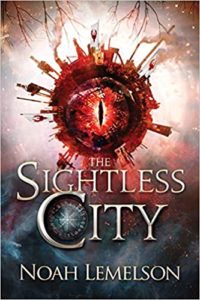
Noah Lemelson, the author of The Sightless City, a 2019 OZMA Book Awards First Place Winner, contacted us to say that the work was picked up by Tiny Fox Press. It is scheduled to be released in July 2021 in print and e-pub.
The Sightless City
November 28, 2020 – Posted in: New Author, New Releases, News
Love steam punk? Want it with an extra side of gritty? Maybe garnished with some first place awards? Look no further and check out our upcoming title The Sightless City by Noah Lemelson! We’ll let the blurb tease you with more, and we’re absolutely certain you’ll love this book as much as we do.
A short-story writer and novelist based in LA. I write Science Fiction, Fantasy, Surreal-Horror, “Insert-Adjective-Here”-Punk and all sort of weird nonsense.
I received my B.A. in Biology from the University of Chicago in 2014, then made a hard pivot into the world of fiction. I have previously publish short fiction pieces in the online magazines: “Space Squid,” “Literally Stories,” “Silver Blade,” and “Allegory.” I am currently completing my MFA in Creative Writing at Calarts, and have a novel in the works…
Congratulations, Noah, on your publishing contract!
“It was awesome being part of the [OZMA] competition, and I think being [earning a First Place position] helped my book stand out when I was sending to Tiny Fox. Have a great day!” Noah
Comments from the CIBA OZMA Judges:
Excellent crafting of a captivating story, setting an old-school, 1940s-style detective in a dark and dystopic world full of paranoia and ever-present dangers.
Details of day-to-day survival are smartly imagined, making it easy to sink one’s teeth into the plot.
Kudos to the author for making the various humanoid and non-human species believable and the physics and resources of this strange place seem perfectly acceptable.
At Chanticleer International Book Awards, we are passionate about Discovering Today’s Best Books!
Please send us your good news!
Email us at: Chanticleer@ChantiReviews.com — type GOOD NEWS and your last name in the Subject Line.
Let me introduce you to J.I. Rogers, one of our favorite authors here at Chanticleer Reviews!
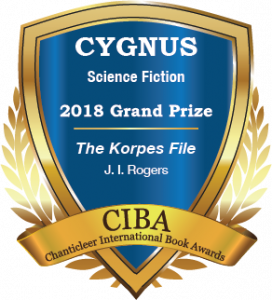
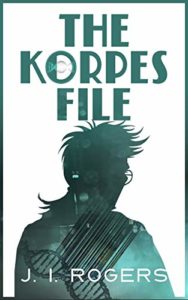
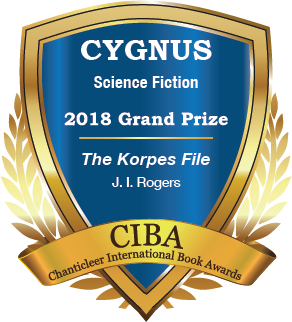
In 2019, J.I. Rogers was awarded the 2018 GRAND PRIZE in the Chanticleer International Book Awards for CYNUS – our Science-Fiction Division for her Space Opera, The Korpes Files, a cyber-punk sci-fi, dystopian space opera, and nothing has been the same since.
We asked J.I. Rogers to take part in our 10-Question Author Interview series to share with us her journey of becoming a CYGNUS Grand Prize winner.
Chanticleer: Tell us a little about yourself, how did you start writing?
Rogers: Well, the biography on my website starts off like this: I am a green-eyed, ginger-haired, caffeine addict who is currently working on The Korpes File Series.
When not acting as a conduit for the voices in my head or pursuing something artistic, I’m a poster child for Generation X and the Queen of most boondoggles that lead to eye-strain and tinnitus.
Ancient History: I’ve always had a love of science fiction, mythological, and fantasy themes. I attended Emily Carr Institute of Art and Design back in the 80s, studying film animation when it was still a college, and I have been working as a professional artist for over thirty years. My love of writing dates back just as far as my artistic ventures. I even had a small Fantasy APA/Fanzine called “Northwest Passages.”
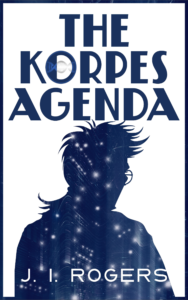
Recent History: The Korpes File Series is my first foray into writing science fiction. The core concept for the series came to me thirty years ago, and it was then that I began the process of world-building. In that time the idea behind my series has shifted from being hard science fiction to space opera, to finally come to rest in the middle as a hybrid between dystopian and science fiction.
How did I start writing? In 2012, I was working as a concept wrangler for a couple of game design studios and was put in charge of world development for one of the projects. I wrote two cut-scenes based on situations that the players would encounter as an experiment. When that project concluded, the short stories were released back to me, and the encouragement I received was what prompted me to continue writing. I decided to expand on what I’d created and that’s when the Muse struck. NaNoWriMo followed a week later, and at the end of that November I had enough core material to know where I was going with my story.
Chanticleer: Rock on #NaNoWriMo! When did you realize that you were an author?
Rogers: Honestly? The first time it sank in was when someone had purchased a paperback copy of The Korpes File then traveled to meet me and asked if I would sign it.
Chanti: That always feels good, right? And now, you have the second in series! Please tell us more about the genre shifts that your work has made and what led you to write in this genre?
Rogers: The closest definition I could come up with for The Korpes File Series would be that it’s a blend of dystopian and science fiction elements. As I said earlier, the series began as hardcore science fiction then transitioned to Space Opera and then into what is now dystopian with science fiction elements with a healthy dollop of space opera mixed in as well. I’m a fan of character-driven plot. What led me to write in this genre? My Muse kept sending me love notes in the form of characters quotes and world-building concepts.
Chanti: I love it when that happens. Do you find yourself following the rules or do you like to make up your own rules?
Rogers: Life rules? I’m unconventional, but I’ve managed to get away with things thus far by waving the ‘eccentric artist’ banner over my head. In writing? I follow the rules in non-dialogue portions of my writing, mostly (I do use Oxford commas, adjectives, and past tense when appropriate). The only place you’ll see me play fast and loose is in dialogue; this flexibility allows characters to sound unique.
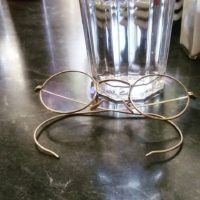
Nash’s glasses
Chanti: How do you come up with your ideas for a story?
Rogers: I find inspiration via many portals. I’ve discovered that downtempo psy-bient electronica, industrial, and angsty bands from the late 90s and early 2000s inspire my dystopian Muse. My Pinterest folder is bursting with images on everything from flora and fauna to human culture, science, geology, tech, space… You get the idea. I also save links to new and emerging technology there. Even the characters in my story have suggested elements to me… when they go off-road.
(Chanti: I think Pyewacket and Tannith have to take some credit here, too, don’t you?!)
Chanti: Name five of your favorite authors and describe how they influence your work.
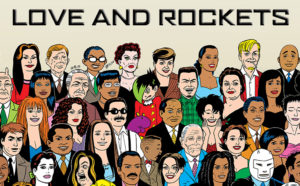
Rogers: My list is eclectic and includes artists: Jaime Hernandez – I’ve been a fan of Jaime for over thirty years. He and his brothers have demonstrated time and time again that you can tell a provocative, epic story with dimensional characters using both words and images. Love & Rockets is a masterpiece and I aspire to create something as beautiful.
Winner of the 2014 LA Times Book Prize! Image from the Publisher.
Barbara Hambly – While her storylines are great it was Barbara’s characters that spoke to me, and they grounded me into every event in the plot. I have re-read certain books just to re-experience these ‘old friends.’ When I finally decided to write, I made a point of finding the personality touchstones in all of my protagonists and antagonists.
Neil Gaiman – There’s a definite ‘other-worldly’ quality to his work; it’s like he exists somewhere between here and the twilight realm of Faerie and can translate that experience back. While I was designing aspects of Tamyrh and the aliens that hide in plain sight, I reflected on Mr. Gaiman’s “Sandman” series and allowed the ambiance to run its course.
James S.A. Corey – He recently displaced my favorite go-to for science fiction for the simple reason that he’s created a modern dystopian sci-fi epic that hasn’t fallen into the usual pitfalls of mocking itself or weighing itself down with unnecessary angst. If I want to escape my world but stay in the mood to write, I read Mr. Corey’s work or catch an episode of “The Expanse.” I don’t know if I’d call him an influence, rather a reminder that dystopian sci-fi can be done well.
Philip K. Dick – Our styles are different, but we definitely gravitate toward the same themes; his work lit a fire under my Muse back in high school. I’d like to add something about film here. I read Do Androids Dream of Electric Sheep before I saw the film Blade Runner, but the latter was what firmly cemented the love of noir, dystopian sci-fi in my soul. It was one of the first sci-fi films I’d seen that didn’t inject ‘comic relief buffoonery’ or ‘cute fuzzy creatures’ in order to expand its appeal. Alien, Logan’s Run, and 2001: A Space Odyssey are other fine examples that inspire.
Chanti: Give us your best marketing tips, what’s worked to sell more books, gain notoriety, and expand your literary footprint.
Rogers: Honestly, I haven’t reached the point where I’m selling millions of books; part of that may be due to my advertising budget, which is microscopic. This advice is aimed at those like me. I maintain an active presence on social media (the usual free ones – Facebook, Instagram, and Twitter) and I operate a Patreon page, where potential readers and fans can find out what I’m up to, ask me questions, get special offers and swag, etc. My Patreon page is now at the point where it covers my website fees as well as the production costs of book-related items like the limited-run character sketchbook.
I owe my modest notoriety as an author to the fantastic people who interact with me, both online and in real life. They have acted as my ‘street team’ and encouraged their friends to buy my books. I estimate that 70% of my sales are due to their efforts and I’m very grateful… now to find a way to get everyone to leave reviews too.
If you’re on a tight budget like me, my advice is:
Share posts with other authors and leave comments
Support your creative community
Create engaging content
Leave reviews
Shamelessly promote others
Chat with fans, and
Be positive without looking for direct evidence of karmic return. In other words, treat people the way you’d like to be treated. This seems to be working for me.
Also – treat your author time on social media like a job or it’ll become a time sink and you’ll not get any writing done.
Chanti: That’s great advice! What is the most important thing a reader can do for an author?
Rogers: I have two answers to this question.
A). If they enjoyed the book, then I’d encourage them to leave a review saying so. B) If they didn’t like the book, I’d ask that they offer some feedback via the author’s website. Simply saying it was bad isn’t helpful; no one improves without constructive criticism.
Chanti: Do you ever experience writers’ block? What do you do to overcome it?
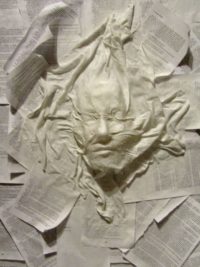
“Emerging Words” (which is a 18″ x 24″ artwork made from a mold of my face, silk, and pages from the proof copy of The Korpes File).
Rogers: My writing Muse sometimes takes an impromptu vacation and leaves me home, staring at the screen. When that happens, I’ll swap over to another project – usually art. Right now, I’ve got two illustration commissions on the go as well as Patreon projects. If that fails, there’s always gardening or my secret vice… MMORPGs like World of Warcraft.
Chanti: I think dialogue is where it’s at as far as character development – for sure. What do you do when you’re not writing? Tells us a little about your hobbies.
Rogers: I think my hubby would argue that I’m always writing as my ‘office’ pins down territory around the house depending on my mood. I draw, paint, sculpt, and garden (weather dependent on that last one – we get a lot of snow in the winter).
Chanti: Thank you, J.I. Rogers, for sharing your author journey with us. I am looking forward to seeing you at the next Chanticleer Authors Conference.
J. I. Rogers won the CYGNUS 2018 Grand Prize because The Korpes Files rock! And also, because she dared to enter the work into the CYGNUS division of the Chanticleer International Book Awards…
In other words, if you don’t enter, you will never know how your work stacks up against the other entries.
If you want a shot at the HONOR of CYGNUS SciFi Book Awards for 2020, don’t delay, enter the CYGNUS B00k Awards today!
The Cygnus Book Awards recognize emerging new talent and outstanding works in the genre of Science Fiction, Steampunk, Alternative History, and Speculative Fiction. The Cygnus Awards is a genre division of Chanticleer International Book Awards (The CIBAs).
Chanticleer International Book Awards is looking for the best books featuring space, time travel, life on other planets, parallel universes, alternate reality, and all the science, technology, major social or environmental changes of the future that author imaginations can dream up for the CYGNUS Book Awards division. Hard Science Fiction, Soft Science Fiction, Apocalyptic Fiction, Cyberpunk, Time Travel, Genetic Modification, Aliens, Super Humans, Interplanetary Travel, and Settlers on the Galactic Frontier, Dystopian, our judges from across North America and the U.K. will put them to the test and choose the best among them.
Chanticleer Book Reviews & Media, L.L.C. retains the right to not declare “default winners.” Winning works are decided upon merit only. Please visit our Contest Details page for more information about our writing contest guidelines.
CBR’s rigorous writing competition standards are why literary agencies seek out our winning manuscripts and self-published novels. Our high standards are also why our reviews are trusted among booksellers and book distributors.
Please do not hesitate to contact Info@ChantiReviews.com about any questions, concerns, or suggestions about the Chanticleer International Book Awards. Your input and suggestions are important to us.
Click here for more information about the Chanticleer Book Reviews International Book Awards.
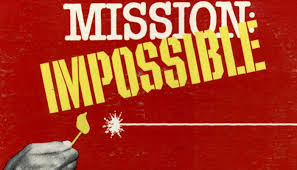
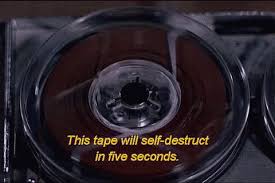
The clock is ticking… you’re working on a deadline while your husband is across town, picking up the kids. You’ve taken the day off and gone to the cabin. You have to write that last chapter … the one that will get your work noticed, like J.D. Barker or Stephen King kind of noticed.
Then the inexplicable happens, as you type in the very last line and hit return, your screen goes black. You reach to plug in your computer, but it’s already plugged in… You jiggle the cords. You hit ESC. You hit RETURN. You unplug the thing and plug it back in again. Nothing. You do a hard reset…
This time the screen powers on and a thin line travels across the middle of it. Then words appear…
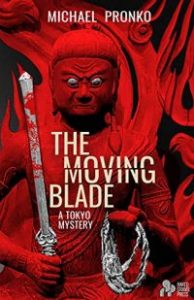
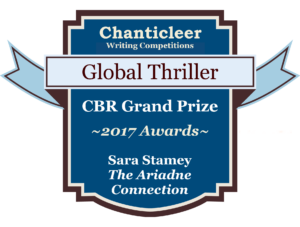
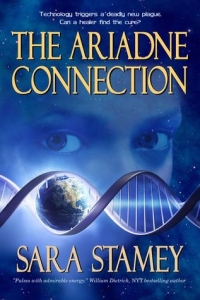
Don’t let this happen to you! Turn in your High-Stakes Thriller, your Chillers, your multiple Killers for a chance at the prize! But one thing is certain, if you don’t enter, you won’t have a chance of winning!
We also had Cybertech Thrillers and Political Thrillers such as John Trudel’sRaven’s Resurrectionand the Raven’s Series.
Here’s your assignment, if you choose to accept it…
Submit your Thrillers in the following categories by November 30, 2019, for a chance to bring home a First in Category WIN the 2019 CIBAs in Global Thrillers – or a Grand Prize – or maybe even the Overall Grand Prize!
Meet Peter Greene, CIBA Award-Winning author of High-Seas Action Adventure novels that appeals to all ages!
If you’ve ever been to a CAC (Chanticleer Authors Conference), you might recognize author Peter Greene. He’s the one that sits on the outside aisle, quiet and unassuming. Well kids, don’t be fooled! Peter has one of the best imaginations I know of—and there is a reason for his works are award-winning! You’ll just have to read on to discover it yourself!
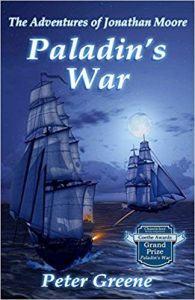
Peter Greene took home the Goethe Book Awards Grand Prize in the 2017 CIBAs for Historical Fiction for Paladin’s War.
CIBA 2017 Goethe Book Awards Winners Joe Vitovic & Peter Greene
Chanticleer: Tell us a little about yourself: How did you start writing?
Greene: My parents were both prolific storytellers, and they were amazingly descriptive, especially my Father. He would act out the voices and mannerisms of all the people. I learned a lot from trying to outdo them. Then in high school, when I took a creative writing class, my teacher, Mrs. Beem, would just yell out something like “a story with lots of movement” or “use the words ‘freedom’ and ‘cheesecake’ in a short story” and I would just go. The other kids sat and struggled, but I already had a plot, characters, and all that in seconds. She gave me A’s all the way through.
Structure: Pantzer or Plotter?
Chanti: That sounds like a great way to be introduced to storytelling!
So just how structured are you in your writing work?
Greene: Very structured, but only in the process, not in the structure of the piece.
I first list “essentials” – just the essential things I want in the story, in no order, and some may make it in there, some may not. This way I get ideas out of my head before they are lost in the ether!
Then comes some basic research, which is ongoing through the process of course, but I just want to make sure I’m building my fiction on a solid, believable foundation.
I then outline like a madman, very detailed at times, sometimes with partial chapters written out, sometimes with crude drawings! These outlines are dozens of pages long, and I print them and literally wallpaper my office with them! The outline for Paladin’s War covered three walls in my office!
Finally, I start the actual writing, usually in chronological order, but that is a rule I break depending on my mood.
When I’m done, I have my wife read the book out loud to me so I can hear the rough spots-that is critical— I find so much that makes me cringe: from unnatural dialogue to foggy descriptions to just clunky passages. I judge a competition and this is the advice that I tell almost every beginning author who enters the contest.
Then, I send to the editor for evaluation. But all of these steps are ‘writing’ to me. And I love all of it.
Authors Who Have Influenced Your Work
Chanti: That’s a good way to approach your writing! I like the Madman Outliner… sounds like the title of your next book! Name five of your favorite authors and describe how they influence your work.
1) Kurt Vonnegut, mostly his later stuff, like Breakfast of Champions because he became so irreverent after his ‘mainstream’ success. He taught me that style can change, and be ANYTHING as long as it has something valuable to say.
2) Erma Bombeck, again showing that style, if it is true, can let you do anything. I would read her columns, and even though I was about twenty-two years old and a single man in Los Angeles when I discovered her, I identified with her message and I laughed. Her writing seems so effortless! I miss her.
4) David McCullough. This is cliché, but he makes history come alive, and his writing voice (as well as his speaking voice), is so crystal clear. No extra stuff, just the best, most important things are covered in a wonderful manner that intrigues us. He never put his opinion in his works, because he doesn’t have to. History is history, and it is interesting enough.
5) J.R.R. Tolkien because he is the best at everything: plot, character, situation, excitement, humanity, emotion, poetry, prose and adventure. I have read the Silmarillion at least ten times and Lord of Rings each year since I was fourteen. I am always amazed at the scope of his stories, and the languages – truly amazing. I have learned from him that no matter how good I think I can be at times, I am no master. He is the true master. I would never try epic fantasy because the bar has been raised so high.
About Dialogue
Chanti: Great insights – and choices! You’ve given us something to chew on. What areas in your writing are you most confident in? What advice would you give someone who is struggling in that area?
Greene: Dialogue is pretty easy and natural for me, maybe because of my theatre training. As far as advice for others who struggle with dialogue, I’d say this: if you are always looking for a witty, snappy, clever, smart ways for your characters to speak, STOP! It will all come out cliché, and no one talks in clichés. It will read like an episode of some seventies, low-budget television series. J.D. Barker said at the last CAC19 that he sits in a Starbucks, has a cup of coffee and listens to what the people around him say, and he types it into his laptop! That is brilliant. It’s natural. I tried it. It was a blast!
JD Barker presented at CAC19!
Expanding Readership and Promoting Literacy
Chanti: Ah, that’s my favorite thing to do! What do you do in your community to improve/promote literacy?
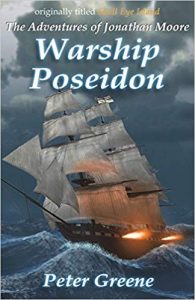
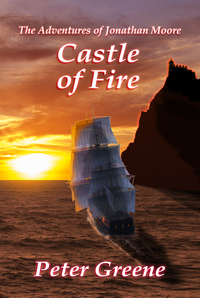
Greene: For the Adventures of Jonathan Moore series, I specifically targeted YA readers. I consciously write each book to graduate the reader from the fourth-fifth grade reading level with Warship Poseidon, to the sixth-seventh grade level with Castle of Fire, then Paladin’s War finishes on the ninth-tenth grade level. If a youngster reads all three, he jumps several reading levels! I also donate books to schools and libraries in the area and have done a few talks to writing classes.
Honestly, my book reviews from Chanticleer after my winning the Goethe award in 2018 and the (Chanticleer) review of Paladin’s War exploded my sales. I increased my sales by over 400%, so that worked for me! – Peter Greene
Marketing and Sales Tips
Chanti: That’s awesome! So, you give away books and present writing classes, what else do you do to market your books? What’s worked to sell more books, gain notoriety, and expand your literary footprint?
Greene: I don’t do enough, but when I learn something, I do it. I enter contests that are legit. Advertising can work, it just depends on finding what works for you. Honestly, my book reviews from Chanticleer after my winning the Goethe award in 2018 and the (Chanticleer) review of Paladin’s War exploded my sales. I increased my sales by over 400%, so that worked for me! You just have to try everything, meet people, and spread the word – without saying “Hey, I wrote this great book, you should read it.” Let others speak for you, and most of all, let your writing speak for you.
Let others speak for you, and most of all, let your writing speak for you. – Peter Greene
How do you separate your books in a crowded marketplace?
Chanti: That is incredible! I love that – especially how Chanticleer Reviews helped to boost your book sales by 400%! I think we need that on a t-shirt…
What is different about your series from other YA books out there?
Greene: Two things: I avoided all magic, superpowers and paranormal material. That’s all fun – but there is too much of it out there already. None of us will ever discover we have wizards or Olympians for parents or have a mystical ability. For this series, I wanted to point out that real heroes do exist, and they have throughout history.
I also decided to take it easy on the terminology and more unsavory aspects of life at sea. I’ve always loved the classic sea stories in Stevenson’s Treasure Island, Forester’s Horatio Hornblower, and O’Brian’sJack Aubrey series, but I couldn’t help thinking that for most of us, unless one had supporting texts and companion guides to get through all the jargon and technicalities, one could easily become lost-and maybe surrender to something easier to read. That would be too bad. And the things you do really need to know, well, wouldn’t it be best to learn that along with the characters? The ones that started out as land-lubbers just like you and your kids?
The Adventures of Jonathan Moore books are about one would-be hero and his friends who try to succeed using only their courage, their wits and industry alone – no magic necessary. And though I will never fill the shoes of Stevenson, Forester or O’Brian, I can attempt to follow in their footsteps.
Chanticleer: That’s great! But you never know…you may be the one to fill their shoes if “Adventures of Jonathan Moore” are any indication!
Now we would really do need to know a little bit more about when did you realize you that you were an author?
Greene: I got my degree in Theatre from Illinois State, and a playwriting professor said I had a “knack for dialogue and physical humor.” That made me continue writing. I wrote screenplays after college, and a studio exec at 20th Century Fox pulled me aside and said “you really can write, keep it up” – then years later, my first novel, Warship Poseidon won the Adventure Writers Competition’s Grandmaster award, and Clive and Dirk Cussler chose the winner. When Clive announced my name, he said “I read your book, you know. Beautifully written.” THAT made me think that maybe I have a little writing ability. So when I write, I always think “maybe Clive and Dirk will read this so it better be my best effort.”
Editor’s Note: Clive Cussler’s books have been published in more than 40 languages in more than 100 countries. They are New York Timesand international bestsellers. He has written 17 books in a row that reached the New York Times’ fiction best selling list. He is of a select group of authors to achieve this status. Cussler has also published more than 50 novels—quite the back list that keeps him on the list of richest authors in the world.
Chanticleer: Holy Moley, man! That’s Clive & Dirk Cussler! I can’t… I just need a moment… Okay then, what led you to write what you write?
Greene: I write a lot of different stuff in different genres, because, why not? The Adventures of Jonathan Moore series is YA historical fiction, and it all happened by accident. One night, as I was putting my children to bed, I realized that I was tired of reading the books available on our bookshelf. Knowing they were crazy about the Pirates of the Caribbean movie, I just said, “Tonight I’m going to tell you a story about twelve-year-old Jonathan Moore who lived in a dark and filthy alley, and how he ended up a hero on a tall sailing ship.” I kept telling a little bit each night, making it up as I went. My wife, who was listening to the stories each night, suggested that I write it as a novel. Ten years later I have three books in the series!
Chanti: And so the magic began… How do you come up with your ideas for a story?
Greene: Good question! Usually, something just clicks that I observe or realize, and off I go. For example, I was thinking about hidden social casts in America and I thought “Wow. People don’t see it, do they?” So BAM! This Sci-Fi idea hits me for a novel, the characters came quickly and then a plot and now the outline is almost finished. I’m starting it now. It’s a strong female character who uses history and propaganda to, well, you will have to read it!
Chanti: A SciFi novel! We can’t wait to read it! Are you going to enter it into the Cynus Book Awards?
Greene: Definitely!
Chanti: Thank you, Peter Greene with an “e,” and we look forward to seeing you at CAC20!
Mystery & Mayhem Book Awards Grand Prize winner Michelle Cox graciously shares her writing life and knowledge with us along with some hot marketing tips and tools! Read on!
“When I finally decided to try writing, the creativity within me, that divine essence, finally found its true home. I’m happiest when I’m creating, and I hope I can keep writing for a long time.” – Michelle Cox
Michelle Cox, award-winning author, at work in her writing lair
Chanticleer: Thanks for coming by, Michelle. Tell us what genre best describes your work? And, what led you to write in this genre?
Cox: Well, that’s a great question! I usually at least place as a semi-finalist in three different categories at the Chanticleer awards, for example, so that should be a pretty good indication.
My series is set during the 1930s in Chicago, so that qualifies it to be historical fiction, but it’s also mystery and romance. I guess “romantic-suspense” would be the best way to describe the series, but without the bare-chested guys on the cover.
They always say to write what you would want to read, and this is it! I set the series set in my favorite era; added a little bit of mystery, a little bit of romance; flavored it with the haves- and the have-nots of the era, as well as a touch of the English aristocracy; and then stocked it with lots of characters and subplots weaving in and out . . . sheer heaven!
Chanticleer: And that’s why we love you and your books! What do you do when you’re not writing? Tells us a little about your hobbies.
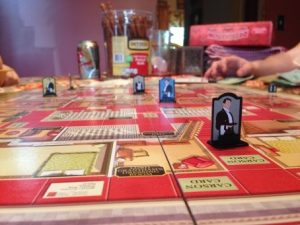
Cox: I no longer have any! I used to have hobbies before writing took over my life. If I do have a few minutes here and there, I still love to garden and bake, but my real love, however, is board games. I’m a fanatic and have become a sort of a collector now.
Playing games with Michelle Cox! Did the butler do it?
Chanti: That sounds like a lot of fun! So, how do you approach your writing day?
Cox: As soon as my kids get on the bus at 6:50 am, I make my second cup of coffee and sit down at my desk. I’m not allowed to do any social media, though I do always do a quick email check to see, you know, if I won the Pulitzer or something (it’s always no), and then I start working on whatever manuscript I’m currently on. My brain is its crispest early in the morning, so I have to use that time for the work that takes the most concentration. There’s something to be said about productivity when you know you only have a limited time to write. There’s no room for writer’s block or procrastination. When you know you only have so much time, you have a way of just sitting down and doing it.
When I reach whatever my writing goal is for that day, I spend the next five to seven hours (until the kids come home) doing marketing and PR—anything from writing the blog or the newsletter or articles or interviews, taping podcasts, setting up events, answering email, attending to social media, etc. It’s really a full-time job, though, sadly, the actual writing, the part I love, is the part I get to spend the least on.
Chanti: Marketing pays off, right? Name five of your favorite authors and describe how they influence your work.
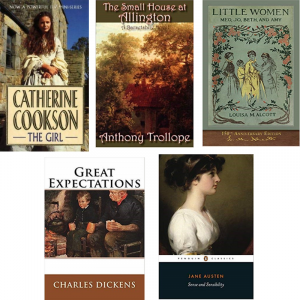
Cox: My series is known for the plethora of rich characters scattered throughout and the big saga-like plots. I was definitely influenced in this by my early favorites: Louisa May Alcott, Catherine Cookson, and Charles Dickens. My other two favorites would be Anthony Trollope and Jane Austin for their subtlety in character and their overall ability to use language so beautifully.
Chanti: I cannot argue with your choices. These are delicious authors – and novels!
I know you gave us a snapshot of your work-day earlier, but could you give us your best marketing tips, what’s worked to sell more books, gain notoriety, and expand your literary footprint.
Cox: Wow! That’s a great question, but so hard to answer. All marketing is pretty elusive, isn’t it? It’s a constant process of throwing things at the wall and seeing what sticks. It’s also important to remember that what works for one person, might not work for everyone. It’s not an exact science. If it were, we’d all be rich!
But, in general, here are some good marketing tips that I have found to work:
Try to figure out where your readers are. Most of my readers, for example, are on Facebook, so that’s where I spend most of my social media time.
Think of yourself as a brand and try to match your posts accordingly. I post things about myself or the book or writing, but mostly old recipes, period drama news, or old stories from the past (which constitute my blog). Also, I’m very careful never to post anything religious or political. This is a business, and the more you see yourself that way and follow basic business protocols, the more successful you’ll be.
Try to build your newsletter list by offering a freebie (such as free story, writing tips, a webinar, a prequel). Personally, I do it by running contests with really big prize packages. I make sure to state that the contest winner will be picked only from my newsletter subscribers. I pay a designer to create a beautiful graphic of the prizes, post it on FB, and then boost the post. Not only does this get me a lot of new subscribers (sometimes up to 1,000!), but it exposes the series to new readers as well!
Build your network. Join online author groups (I am part of a fabulous private FB group organized by my publisher, She Writes Press. We all share ideas, marketing tips, and offer support and advice, especially to the newer authors just coming on board. It’s a collective wealth of information.) or real-world groups in your area. Don’t be jealous of the success of others, but help each other as much as possible. As my publisher, Brooke Warner has said, “There’s room for everyone at the table.”
Show up at other authors events, write reviews, help promote whenever possible. Go to conferences to meet not just readers, but other authors who can potentially help you. Remember that you are a business, and you need to do work within your community to begin standing out.
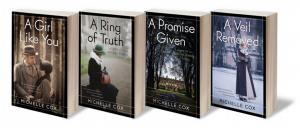
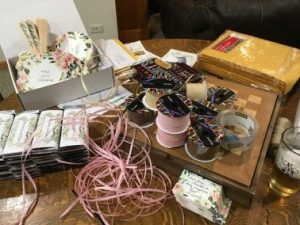
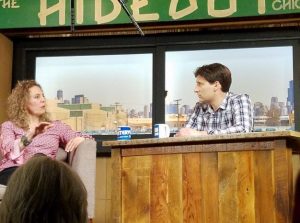
For example, my publisher and I overprinted Book 2 of my series, so, as per my contract, when the first year of publication had passed, I was faced with having to pay a storage fee for these extra books (a couple of thousand), have them shipped to my garage, or have them destroyed. I decided, instead, to send them to libraries and conference organizers. It was a lot of work and expense, but it got my book into the hands of hundreds, if not thousands, of potential readers, and hopefully, they’ll come back for more and buy the rest of the series. You have to be willing to take risks.
Also in this category would be to try to get a Bookbub deal, which, as we all know is really tough. Again, for Book 2 of the series, we submitted four times, trying to get a deal with the book being priced at .99 cents. I finally decided to offer it for free, and we cleverly put a buy link to book 3 at the end of Book 2. Bookbub then offered me a deal, and I had over 55,000 downloads in one day! Hopefully, a lot of those people will go on to buy Book 3 at full price.
Lastly, if the first book of your series is free, either permanently or occasionally, you can join Book Funnel, in which you “bundle” your book with others of a similar genre with each author promoting the bundle to their social network, which exposes your series to a whole new crop of readers. Readers are able to download your free book in exchange for their email address. So not only are you getting readers hooked on your series (hopefully!), but you’re building your subscriber/newsletter list.
Chanti: You could teach a Master Class on this at CAC20! Let’s chat about this later.
Chanti: What are you working on now? What can we look forward to seeing next from you?
Cox: Book 5 of the series is currently in production and scheduled to be released in Spring 2020. I said I was going to take a break from the series after that, but I admit, I’ve already started sketching out Book 6 – I can’t help it!
But what’s really exciting is a new stand-alone novel, The Love You Take, that I wrote, also based partially on a true story and set in Chicago in the 1930s. It’s a really fabulous book if I do say so, about a “backward” girl who has to go and live at a home for “bad girls” after she unwittingly becomes pregnant. I’m currently querying agents for it.
Chanti: Sounds intriguing. Please keep us updated. Who’s the perfect reader for your book?
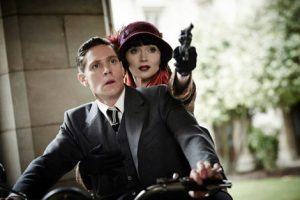
Cox: Though some men enjoy my books, the primary audience is women. Anyone who loves Downton Abbey;Upstairs, Downstairs;Miss Fisher’s Murder Mysteries, the old black and white films, like The Thin Man . . . basically any period drama or old movie . . . will love my series. I can’t tell you how many people have written to me to tell me that the series is so visual, that reading it was like watching a movie. It’s delightful escapism; people tell me all the time they feel like they’ve been transported back in time after reading them.
Chanti: I know that’s why we read your books #delightful! What is the most important thing a reader can do for an author?
Cox: Tell a friend! Research shows that the number one thing that influences people to buy books is word-of-mouth. If you like a book, recommend it to friends or your book club. The second best thing is to write a review! People seem wary of doing this, telling me that they’re nervous about what to write.
“Nonsense!” I say.
A review can be one sentence: “This was a great book; I enjoyed it!”
There. Done.
You don’t have to go into a lengthy reworking of the synopsis (why do people do this?) or delve into symbolism or themes or whatever. Just give your one-sentence opinion!
Chanti: I’ve been telling my non-writing friends this for years… Do you ever experience writer’s block? What do you do to overcome it?
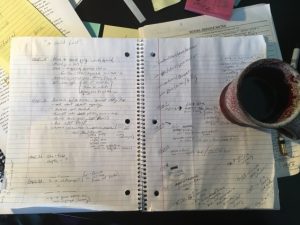
Cox: Not really! I have a lot of story ideas in my head, and thus I usually have the opposite problem. This is where outlining can really help. If you have a pretty weighty outline sketched out, then when you sit down to write each day, you pretty much already know what you’re supposed to write that day. Likewise, I enjoy taking an evening walk (or I try to, anyway!), during which I think about tomorrow’s chapter and what needs to go into it. Sometimes I even voice record if I have a really good idea or some strands of dialog. There’s something about walking—moving the legs back and forth, back and forth—that seems to stimulate something in the brain. They say that Dickens used to walk the streets of London for hours in the wee hours of the night. Now I know why!
Chanti: Time to reflect and let your mind wander. Movement really does help with this. What excites you most about writing?
Cox: Creating something out of nothing. I’ve always been a really creative person. Looking back, I see now that I’ve always been striving to create, and for a long time it took on many different forms. As a kid, I was always trying to illustrate Louisa May Alcott’s books or write little fan fiction stories based on Jo March. As I got older, it took the form of gardening and decorating the house, and then baking and then creating elaborate kids’ birthday party invitations! When I finally decided to try writing (long story), the creativity within me, that divine essence, finally found its true home. I’m happiest when I’m creating, and I hope I can keep writing for a long time.
Chanti: We hope you do, too, Michelle. What a fabulous interview! Thank you for sharing your story with us.
Speaking of sharing, if you like what you’ve read, please “like, comment, and share!” Sharing is caring, baby!
The CIBA Grand Prize Winners
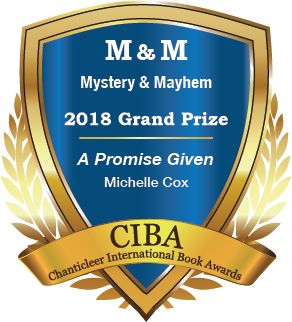
Michelle Cox is a multi-award-winning author who recently spent some time with us at CAC19. This year was particularly special because Michelle won the CIBA 2018 Grand Prize for Mystery & Mayhem Awards!
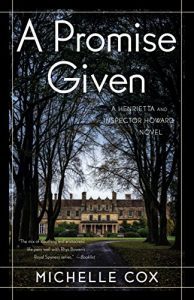
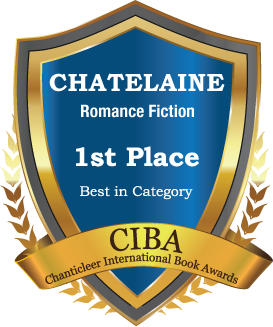
and took 1st Place in the Chatelaine Awards for Romantic Fiction – both awards are in honor of her book, A Promise Given. We will probably never stop celebrating this – it’s just too much fun!
To find out what Michelle’s up to next, Find and Follow her here:
October Spotlight on the OZMA Awards – All things Fantasy, Magical Realms, Fantastical Creatures, Mythical Beings… you get the picture…
In October there’s a bit of a nip in the morning air, the days begin with mist clinging to the grass, and the sun peeks out in the afternoons. We add an extra layer – sweaters, warm socks, down vests. Late crops are set in and some are ready for harvest, pumpkins in all shapes and colors, broccoli, cabbage. Gone are our vine-ripened tomatoes and sweet peppers. Coffee shops around town offer up all-things pumpkin. October is the month our family pulls out J.R.R. Tolkien’s The Hobbit, and the Lord of the Rings trilogy and immerse ourselves in another world because, in October, anything can happen.
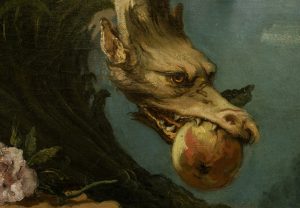
A portion of Tiepolo Giambattista, Die Unbefleckte Empfängnis, 1767-1768-Drachen
You may ask yourself, what is OZMA? Simply put, OZMA refers to L. Frank Baum’s book Ozma of Oz, the third book in The Wonderful Wizard of Oz series, in which Dorothy and her uncle travel to Australia. On the way, poor Dorothy is swept overboard with her chicken and are rescued by Princess Ozma of the land of Ev. The story goes on and adventure abounds and at long last Dorothy is returned safely with her chicken to Oz. Fascinating story.
But, this is only the origin of the OZMA Awards.
Chanticleer Book Reviews is looking for the best books featuring magic, the supernatural, imaginary worlds, fantastical creatures, legendary beasts, mythical beings, or inventions of fancy that author imaginations dream up without a basis in science as we know it. Epic Fantasy, High Fantasy, Sword and Sorcery, Dragons, Unicorns, Steampunk, Dieselpunk, Gaslight Fantasy, Urban Fantasy, or other out of this world fiction, we will put them to the test and choose the best among them.
The last day to submit your work is October 31, 2018. We invite you to join us, to tell us your stories, and to find out who will take home the prize at CAC19 on April 27th.
As our deadline draws near, don’t pull a disappearing act and forget to enter your fantasy novel! We accept completed manuscripts and published works. Enter today!
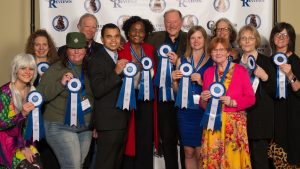
We encourage everyone to attend our Awards Ceremony on April 27, 2019, that will take place during the 2019 Chanticleer Authors Conference. First Place category winners will be whisked up on stage to receive their custom ribbon and wait to see who among them will take home the Grand Prize. It’s an exciting evening of dinner, networking, and celebrations!
First Place category winners and Grand Prize winners will each receive a stunning awards package well worth the price of entry into the OZMA Awards competition(VJ) Lakshman grew up in Bangkok, Thailand, where he first discovered his love of the martial arts, mythological heroes, and exotic lands, all of which influenced the development of characters and the world in his debut fantasy series, Mythborn – Fate of the Sovereign.s.
The OZMA Hall of Fame
2017 Grand Prize Winner:
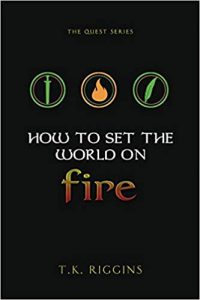
How to Set the World on Fire by T.K. Riggins is a coming-of-age school of magic novel that readers will find hard to put down.
“T.K. Riggins started writing because of a dare. His friend was searching for something new to read, and after coming up empty-handed, challenged Riggins to take action. Instead of recommending a book, he decided to pen a story of his own.”
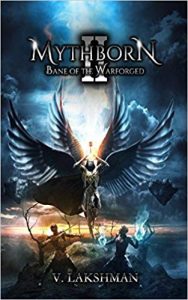
“Set against the epic backdrop of myths and legends brought to life, Mythborn II continues the sweeping saga of Arek Winterthorn, wayward apprentice of the eldritch Way, as he struggles to survive in the demon realm of Arcadia.” Mythborn Media/Mythborn Books
Vijay Lakshman
“(VJ) Lakshman grew up in Bangkok, Thailand, where he first discovered his love of the martial arts, mythological heroes, and exotic lands, all of which influenced the development of characters and the world in his debut fantasy series, Mythborn – Fate of the Sovereign.”







 Dr. Ellis: I donate copies of my book to libraries, and give signed copies to individuals. I speak about the power of reading and try to encourage children and young people within my sphere of influence to read, encouraging them to read to others at every opportunity.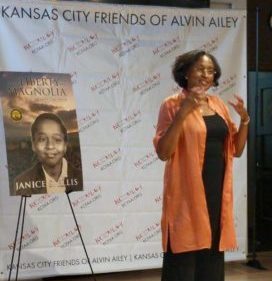

 The clock is ticking… you’re working on a deadline while your husband is across town, picking up the kids. You’ve taken the day off and gone to the cabin. You have to write that last chapter … the one that will get your work noticed, like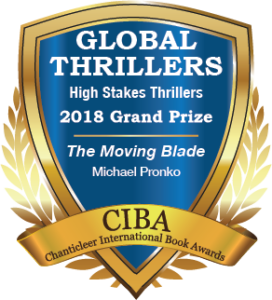



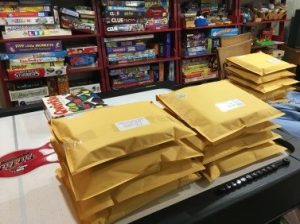

 For example, my publisher and I overprinted Book 2 of my series, so, as per my contract, when the first year of publication had passed, I was faced with having to pay a storage fee for these extra books (a couple of thousand), have them shipped to my garage, or have them destroyed. I decided, instead, to send them to libraries and conference organizers. It was a lot of work and expense, but it got my book into the hands of hundreds, if not thousands, of potential readers, and hopefully, they’ll come back for more and buy the rest of the series. You have to be willing to take risks.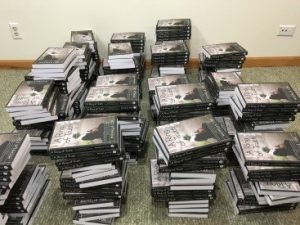



 OZMA Awards – All things Fantasy, Magical Realms, Fantastical Creatures, Mythical Beings… you get the picture…