Category: Chanticleer Author Conference

  • Lake Perriquey – Attorney at Law to present Sessions at CAC18

    #CAC18  Story. Production. Beyond. 

    We are excited to announce that Attorney Lake Perriquey will present sessions at CAC18 on the topics of Copyright, Intellectual Property, and Trademark.

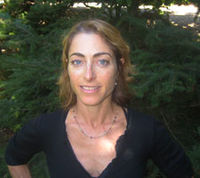
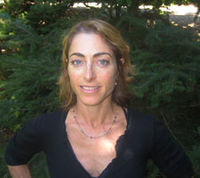
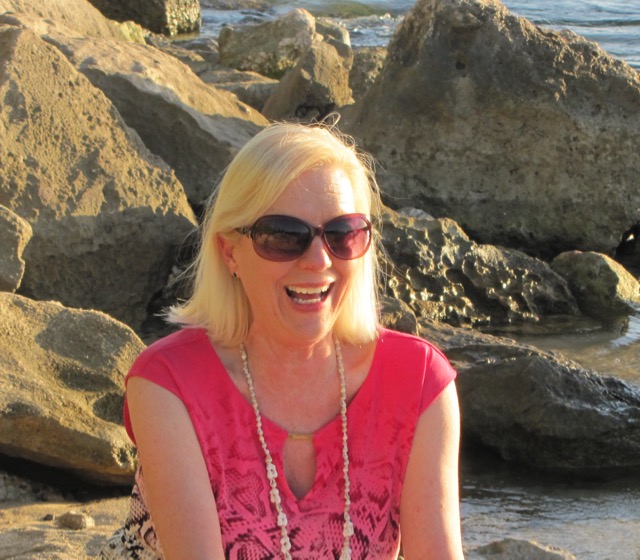
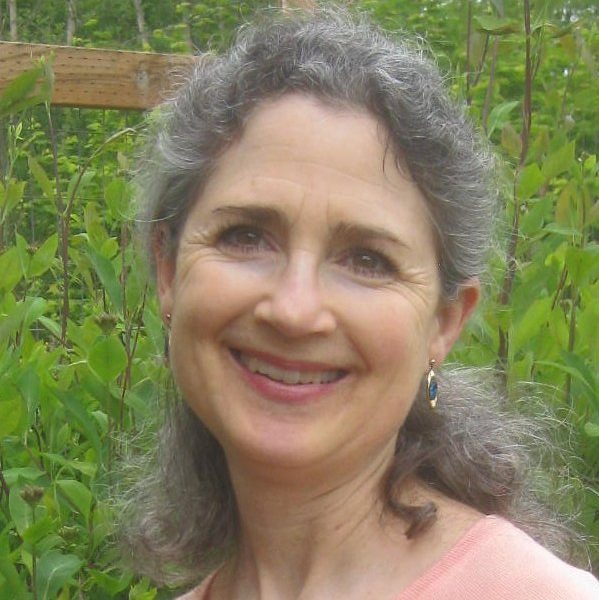
    Lake Perriquey, attorney
    Aliciajrosephotography.com

    We want to extend a special welcome to Lake Perriguey, attorney, to the 2018 Chanticleer Authors Conference.  Lake’s company, Law Works, LLC, handles all aspects of copyright and trademark law, with experience before the Trademark Trial and Appeals Board and the US Copyright Office and multiple cases in the United States District Court. These matters include the initial registration of copyrights and trademarks and claims and defenses of copyright infringement and trademark infringement.

    Lake Perriguey owns Law Works LLC, a full-service law firm in downtown Portland which focuses on civil rights, employment, injury, and copyright litigation. Lake brought the lawsuit to the courts that established marriage equality for gay and lesbian Oregonians as well as the first successful action for non-binary legal recognition in the United States. Lake has represented authors and publishers in contract negotiations and in federal court litigation regarding copyrights. Law Works, LLC is based out of Portland, Oregon.

    CAC18 Workshops and Presentations: 

    • Copyright 101 and the Publishing Contract in our Digital Age
    • Copyright and what that really means- when it starts and its protections
    • An intellectual property primer, coupled with some tips on common terms in publishing contracts that should be considered given the worldwide market, and the ease of digital distribution.
    • Reversion rights consideration
    • KaffeeKlatche informal chat

    Click here for more information about the Chanticleer Authors Conference.

  • Sally DeSipio –  Creative Director

    Sally DeSipio – Creative Director

    #CAC18 Story. Production. Beyond.

    We apologize. Sally DiSipio had to cancel due to a scheduling conflict. Scott Steindorff, American Film Director/Producer with Stone Village Productions is graciously presenting in her stead.

    Thank you for your patience and understanding. Kiffer Brown

    Sally DeSipio

    We are excited, nay thrilled, to announce Sally DeSipio as a keynote presenter at the 2018 Chanticleer Authors Conference.

    Sally DiSipio is an award-winning executive producer and  director, content creator, filmmaker and has developed long-form content for both television and the web, branded and original. She has produced both scripted and non-scripted dramas and comedies.

    As a marketing strategist and head of entertainment,  she developed branded content and strategies for global brands. Her experience allows her to approach a project as Creative Director, Strategist and Executive Producer with a critical eye for what is viable in the market.

    Sally DiSipio was head of entertainment for a global marketing strategy company, Wieden + Kennedy, whose client list includes airbnb, Coca Cola, Nike, Procter & Gamble, Samsung, and others. She began her career at MTV and moved on to develop series with such luminaries as J.J. Abrams, Aaron Sorkin, Brian Grazer, Ron Howard, and others. She was an executive director for Imagine Entertainment (Ron Howard’s company that is a global leader in TV programming and film production).

    She now runs her own consulting company out of Portland, Oregon.

    Sally will present workshops on the Art of the Pitch and Branding for the Entertainment Industry at the 2018 Chanticleer Authors Conference that will be held in Bellingham, Wash. April 20th – 22nd. This year’s conference theme is Story. Production. Beyond. 

  • Business Growth Applied to Authorship by Sara Dahmen

    Business Growth Applied to Authorship by Sara Dahmen

    We have a LOT of terrific sessions planned for CAC17, and we are still adding more. One of those amazing sessions will be:

    Bigger Than Books: Business Growth Applied to Authorship & Beyond – What more does it take to be a successful author?  Whether you’re represented or self-published or somewhere in between, using overarching business tools are a huge assistance in building success. How can the tools commonly manipulated by marketers, large and small companies, and retailers help you create a successful ‘business plan’ as an author?  From multi-pronged approaches, to developing a tiered ‘clientele’, to organization and presence, business is business, whether you’re an author or the manager of Apple.  Use those same tools to create yours.

    The presenter for this class, Sara Dahmen, a Chanticleer Grand Prize winner and business owner, took time out of her week to provide us with this article based on her session.


    If you’re an author, you’re also, by default, a self-employed business owner. I know many of us don’t take out LLC’s or even own our own URL, but the fact remains, if only on paper, that we are all business owners.  There’s a resounding ring to that.

    Business owner.
    Self-employed.
    My own boss.
    The plotter of my own destiny.

    Excellent.  So, once we’ve all recognized that fact…now what?

    Being a successful author is more than simply selling some (or a lot!) of books. Even getting 20,000 books out there is not going to be a sustainable career. Once those 20,000 books have been read (and unless you continually churn out best-sellers), you’re left with a bit of a hangover and half-formed additional ideas. None of these bode well to continue the business of “you.”

    Success is measured both by income and by long-term growth. It’s a bit hard, and not nearly as wonderfully artsy to say, but it’s the truth. If you’re going to be a successful small business owner, you need to pull up a chair with the left side of your brain and get to work.

    A multiple pronged approach is best, and each person’s strategy will vary widely depending on your audience, which should always be broader than a singular author’s platform. There are a myriad of business tools out there – some expensive, and some free – that can be harnessed to create a wide-scale business bigger than a book.

    A business owner will always have a product or a service. You have that already: your book. And a business owner will also have a marketing strategy (and we all know many of those…but many are also often forgotten or overlooked or we get in a rut and forget to think outside the box) that encompasses far more than a blog, a website and some social media. And a business owner will think long-term. A one-hit wonder will be lovely, but after that advance is gone and the shine has worn from those book covers, you’ll need to ask yourself: what now?

    Business is business, and books are business in many more ways than getting some readers and a publisher. Whether you write it down (pun intended!) or not, writers need some sort of a business plan that goes beyond writing the words “the end” and I’m not just talking about plastering a Twitter page with a bunch of book launch announcements.

    Authors should walk into the arena equipped with answers to the questions:

    What do you believe: about yourself, your book, your future plans?
    What are you going to do to make those future plans happen – and how?
    Who do you need to know to help you?
    And what kind of wacky ideas can you dream up for yourself…and then do?

    I plan to tackle much of this in a presentation (Bigger Than Books: Business Growth Applied to Authorship & Beyond) at the Chanticleer Author Conference in Bellingham WA the weekend of March 31 – April 2 where I promise I will be far less vague and incredibly specific. If I had my way, we’ll all be drinking a little booze while I talk, and then we talk.  Looking forward to it!


    Sara Dahmen: Author & Entrepreneur

    Sara Dahmen is a metalsmith of vintage and modern kitchenware in tin, copper and iron. Her debut novel, Doctor Kinney’s Housekeeper, won the Laramie Award Grand Prize for Western Historical Fiction, and inspired House Copper & Housekeeper Crockery – American-made cookware. She has published over 100 articles as a contributing editor for multiple magazines, book blogs and review blogs and spoke at TEDx Rapid City, at the Historical Writers of America inaugural conference in Williamsburg VA, and has co-chaired the Port Washington Literary Festival since its inception. Prior to her writing gigs, Sara was a print, radio and TV producer in Milwaukee and owns and has operated a nationally award-winning event planning company since 2006. When not writing or sewing authentic clothing for reenactments, she can be found hitting tin and copper at her apprenticeship with a master smith, reading the Economist and reference books, or playing with her three young children.

  • Spotlight on: Chris Humphreys, Best Selling Author and CAC17 speaker

    If you want to know what professional success looks like for an author, look no further that Chris (C.C.) Humphreys – Author, Actor, Swordsman. And try not to look with too much green in your eyes! Chris exudes confidence after having published over ten books, enjoyed best seller status, and won multiple awards. He continues to enjoy high demand for his stories. Yet, amidst all this success he remains very genuine and down to earth. His writing craft presentations are the eye-opening kind that will inspire you to great feats of writing, and we were very excited that he agreed to be a presenter at the conference this year.

    Don’t miss out, register now for the Chanticleer Author ConferenceCAC17March 31st to April 2nd where he will be teaching: Write the Good Fight, and The Sex Scene: how much is too much? A Male novelist’s perspective.

    As part of our spotlight series, we asked Chris our five questions to get her perspective on professional success.

    1. When did you know what you really wanted to be?

    Still trying to decide. Is it too late to become a spy? (It’s the second family trade, aside from acting). I have two more answers with my two careers. I decided I wanted to be an actor when I was about 17. I’d been steered away from that path by my concerned mother who’d been the daughter of one and the wife of another. Was all set to read law at uni but then got cast as the lead in the school play. When I won the Best Actor award at a schools drama festival I was hooked.

    As a writer – well, I’d always known I wanted to write. Like everyone, I lacked the confidence and courage to pursue it. But I wrote lots and buried the results. Then I entered and won a 24 hour playwriting competition. They paid me $500 and I thought: I am a professional writer! My true love, historical fiction, took me another 6 years to get to. Never looked back.

    2. What was the biggest challenge you faced?

    Overcoming the self doubt. I’ve figured out that’s really to do with not understanding the process. It’s what I teach now: each stage is about something different and if you break it down into steps, you just have to take one after the other. It takes away a lot of the fear.

    3. How do you define success?

    That I’ve earned a living largely from my quill for 16 years.

    4. How long did it take to achieve your success?

    A lifetime apprenticeship in storytelling (Actor). Then, once I’d summoned the courage to begin my first novel… a little over a year from first sentence to contract.

    5. What is the best advice you have ever received?

    ‘You can always have more. You can never have less.’ (Amazing how many things this applies to!)

    If you have not registered for CAC17 yet, what are you waiting for? Chris Humphreys and more fantastic speakers (including yourself, possibly, if you register before the schedule is full) will be sharing their experience and knowledge about writing books, selling books, and everything to do with being a successful author.


    About Chris

    As an actor Chris (C.C.) Humphreys has performed on stages from London’s West End to Hollywood. A playwright, fight choreographer and novelist, he has written ten adult novels including ‘The French Executioner’, runner up for the CWA Steel Dagger for Thrillers; The Jack Absolute Trilogy; ‘Vlad – The Last Confession’; ‘A Place Called Armageddon’ and ‘Shakespeare’s Rebel’ – which he adapted for the stage and which premiered at Bard on the Beach, Vancouver, in 2015. He also writes for young adults, with a trilogy called The Runestone Saga and ‘The Hunt of the Unicorn’. The sequel, ‘The Hunt of the Dragon’, is published in Fall 2016. His recent novel ‘Plague’ won Canada’s Arthur Ellis Award for Best Crime Novel in 2015. The sequel, ‘Fire’ is a thriller set during the Great Fire, published Summer 2016. He is translated into thirteen languages. Last year he earned his Masters in Fine Arts (Creative Writing) from the University of British Columbia.

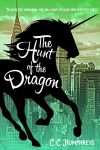
    The Hunt of the Dragon, is his most recently published book. The second in a YA fantasy series about a girl who travels to a magical world behind unicorn tapestries.

    “What is it you think I can do?” she whispered. “I’m no one.”

    The dragon’s thought came carefully, painfully. “No one? The maid who was given the gift of tongues? The girl who tamed a unicorn? Who saved then destroyed a world? Oh, Alice-Elayne, you are someone. And you are about to learn that your story is only half told.”

    His historical fiction of the real Dracula, Vlad, the Jack Absolute series and Shakespeare’s Rebel, among others, are also not to be missed!

    Chris’ classes:

    Write the Good Fight – In this hands-on, blades-drawn workshop, fight choreographer, actor and novelist C.C. (Chris) Humphreys will take you through the dangerous art of fight writing. Unashamedly admitting that he got into acting so he could ‘leap around with bladed weaponry’. He will demonstrate how to turn research, from walking the battlefields to wielding the weapons, into pages of exciting storytelling. Join Chris as he shares ways to get your characters into the hottest action – and out the other side.

    The Sex Scene: how much is too much? A Male novelist’s perspective – What is the objective of any scene? To arouse? To inform? To offend? For novelist C.C. (Chris) Humphreys a scene only works if it makes the reader want to read more! So in this workshop, he will explore the hot topic of sex while seeking an answer to the burning question: how much is too much? Chris will look at limits – the author’s and the reader’s. How sex can be funny as well as serious. How sensuality- engaging the six senses – is so important. A fun, engaging, hands-on workshop with an opportunity for play – with or without devices!

    Check out all the classes and sessions we have scheduled!

    Register for CAC17 NOW!

  • Deep Editing Power with Margie Lawson, CAC17 Master Class Presenter, Editor, and International Speaker

    Have you registered for our #CAC17 Master Class yet?
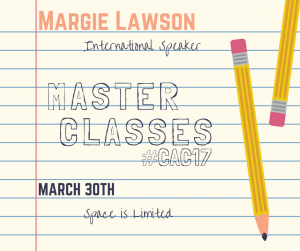
    Margie Lawson will present a full day Master Class on March 30th, the day before the conference. Make sure to plan to come early for this special session and REGISTER NOW.
    Enrollment is limited, and seats are starting to fill up.
    Margie has presented over a 150 full day master classes in the U.S., Canada, Australia, and New Zealand. Writers credit her innovative deep editing approaches with taking their writing to publication, awards, and bestseller lists.

    Margie took time out of her busy schedule (teaching around the world) to write a guest post on some of the topics she will cover in the #CAC17 full day Master Class.

    Do you have a question, a comment, or an editing experience to share? Post a comment and you have TWO CHANCES to WIN a lecture packet! 

    Scroll down below the related posts, and you’ll see the comments section.


    Rhythm and Cadence and Beats, Oh Yes!

    By Margie Lawson Editor, International Presenter

    Reading a book with flat-lined cadence is like watching a movie on mute.

    Most writers know about the power of rhythm and cadence and beats. But most don’t use that power in every sentence.

    A compelling cadence is more than varying sentence lengths. More than using ­­­­­standalone words.

    A compelling cadence carries power on the page. It propels readers through paragraphs and passages and pages.

    Read your work out loud, with feeling, and you’ll hear what beats work well, and what beats are missing.

    Many rhetorical devices are cadence-driven. Knowing which rhetorical devices boost cadence, pick up pace, make the read imperative, and 947 more cool things, loads your writing toolbox with super-powered tools.

    Check out these cadence-driven examples.

    The Ones We Trust, Kimberly Belle, Award-Winning MIRA Author, Multi-Margie-Grad
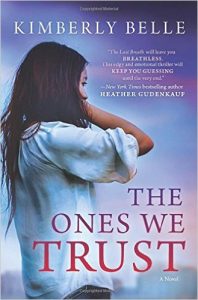
    1. Gabe’s good looks are real and rugged and raw, and now that I’ve seen both brothers up close, I’d choose Gabe over Zach any day.

    RD Combo: Polysyndeton (multiple conjunctions, no punctuation) and Alliteration

    2. The silence that spins out lasts forever. It’s the kind of silence that wraps around you like a shroud, the kind that turns the air thick and solid, the kind that makes you want to hear the answer as much as you dread it.

    Kimberly Belle could have written: The room went silent.

    I’m glad she decided to empower that emotionally-loaded scene dynamic.

    Rhetorical Devices: Amplification (silence) and anaphora (the kind, the kind, the kind)

    3. My heart races and my skin tingles and my blood pressure explodes like a grenade.

    Rhetorical Devices: Three visceral responses are powered with polysyndeton (multiple conjunctions, no punctuation) and a simile.

    The Blessing of No, Megan Menard, Multi-Margie-Grad

    1. Luke had a machine-gun laugh that fired about every third word.
    1. I picked up a French fry. It was a slender blonde, tall and weepy. I named the fry Tanya and chomped off its head.

    Those examples carry interest and power and are perfectly cadenced. The second example uses a metaphor and structural parallelism. It reveals a truth in a humor hit that could make us laugh or cry.

    Test of Faith, Christa Allan, Award-Winning Author, Multi-Margie-Grad 
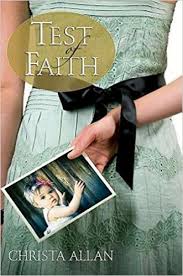
    1. “If. Faith. Can. Come. Live. With Me?” I heaved every word out of my brain and into my mouth. I felt like someone regaining consciousness in an unfamiliar room or house or life.

    Christa Allan stylized that dialogue by using a Period. Infused. Sentence. That’s what I named it. Her dialogue cue is amplified, amplified, amplified stellar.
    She used an RD combo in the last sentence: polysyndeton and zeugma.

    What’s zeugma?

    I’ll SHOW not TELL. I know you’ll get it.

    My teaching-zeugma sentence:

    Margie grabbed her purse, her keys, and her steely resolve.

    You got it!

    This 2-point version is an example of zeugma too:

    Margie grabbed her purse and her steely resolve.

    Now you know the rhetorical device zeugma.

    1. This dinner was the Indy 500 version of returning to the track after a pit stop, except that the finish line was Logan, and there was only one first place.

    Ah… Metaphors and power words and hope all themed, propelled by a compelling cadence.

    Red-Headed Stepchild, Jaye Wells, USA Today Bestseller
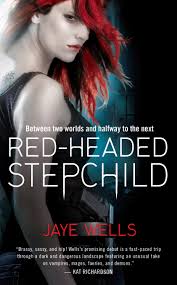
    Jaye Wells wrote this paragraph when she was in a full day workshop I taught for Dallas Area Romance Authors in 2007. I asked all the participants to write an example of anaphora.

    Anaphora — Repeating a word or phrase at the beginning of three or more successive phrases or clauses or sentences. The first three must be in a row.

    The paragraph she wrote in class became the first paragraph in the first chapter of Red-Headed Stepchild, her debut Urban Fantasy.

    Digging graves is hell on a manicure, but I was taught good vampires clean up after every meal. So I ignored the chipped onyx polish. I ignored the dirt caked under my nails. I ignored my palms, rubbed raw and blistering. And when a snapping twig announced David’s arrival, I ignored him too.

    Deep Edit Analysis:

    Anaphora: I ignored, I ignored, I ignored, I ignored

    Three Humor Hits:

      • Digging graves is hell on a manicure
      • good vampires clean up after every meal
      • I ignored him too

    Power Words — Words that carry psychological power: graves, hell, vampires, clean up, ignored, ignored, dirt, ignored, raw, blistering, arrival, ignored him

    What does the reader learn in those 53 words?

    1. She’s digging a grave. We can infer she killed someone.
    2. She’s a vampire.
    3. She gets manicures.
    4. She’s Goth.
    5. She’s been digging that grave for a while.

    She’s not concerned about David catching her digging a grave.

    In that one short, opening paragraph, Jaye Wells deepened characterization, shared a strong and fun voice, and made the reader want to read more. That’s smart writing. The kind that impresses agents and editors and readers and reviewers.

    Every example in this blog carries a compelling cadence. That pleasing cadence speaks to the reader’s subconscious. Cadence has the same impact on the reader that a movie sound track has on a viewer.

    Read the first sentence of this blog OUT LOUD:

                Reading a book with flat-lined cadence is like watching a movie on mute.

    Do you hear those perfect beats?

    I could have written:

                It is critical to pay attention to cadence.

    No cadence-driven power.

    Deep Editing Caveat:  Most of the examples I shared in this blog were amplified. I’m not suggesting that every sentence should be powered up, or made special in some way. That would be gagifying. 

    Not a word. But it carries the punch I wanted to share.

    We need plain writing. Writing that does its job without any amplification.

    We need fun, quirky, deep, stylistic, and tug-your-heart writing too.

    I teach writers how to add psychological power to their writing in hundreds of ways. No hype. No hyperbole. I’m just sharing what I do.

    I’m a psychologist-turned-editor. I used my psychological expertise to analyze more passages and chapters than most people read in ten lifetimes. I developed deep editing techniques that help writers add power to each paragraph.

    I teach writers how to empower emotions.

    How to avoid clichés and clichéd phrasing.

    How to write fresh faces and voices and visceral responses.

    How to use advanced stimulus-response patterns.

    How to use my Four Levels of Powering Up Emotion. How to have the right emotional intensity in the right place.

    How to create emotional authenticity on the page. How a character can act in an out-of-character way, and get the reader to buy it.

    How to use six rhetorical devices to finesse backstory. Succinct, unskimmable, beautifully cadenced backstory.

    How to use my 20 Point Checklist for Openings, my 15 Point Checklist for Endings, my 12 Visceral Rules for Fiction Writers, my 10 Gems for Not Writing Your Mama’s Character Descriptions, and more.

    How to deep edit analyze your scenes. I developed The EDITS System so writers can see what’s working, what’s not working, and what’s missing.

    I created seven online courses for writers:

    1. Empowering Characters’ Emotions
    2. Deep Editing, Rhetorical Devices, and More
    3. Writing Body Language and Dialogue Cues Like a Psychologist
    4. Defeat Self-Defeating Behaviors
    5. A Deep Editing Guide to Make Your Openings Pop
    6. Visceral Rules: Beyond Hammering Hearts
    7. Fab 30: Advanced Deep Editing, A Master Class

    The first four classes each have 250+ pages of lectures. The next three classes have 180 – 230 pages of lectures.

    I used to teach college. Graduate level psychology courses. I back up every teaching point with plenty of examples from a variety of genres.

    I shared a few of the twenty rhetorical devices I teach fiction writers here. I’ll cover all twenty in about 75 minutes in my full day master class. Some, like polysyndeton (…photographed and bagged and carried away…, The Last Breath, Kimberly Belle) may be new to you, but they’re easy to learn, and use. Handouts help.

    I’m looking forward to having fun in my Master Class on March 30. Join me, and you’ll leave with deep editing tips and techniques that will add power to your WIP.
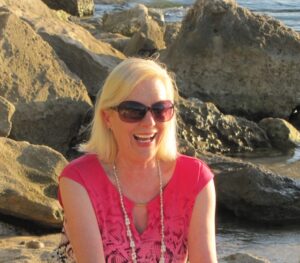

    About Margie

    Margie Lawson —editor, and international presenter – teaches writers how to use her psychologically-based editing systems and deep editing techniques to create page-turners.

    Margie has presented over a hundred fifty full day master classes in the U.S., Canada, Australia, and New Zealand. Writers credit her innovative deep editing approaches with taking their writing to publication, awards, and bestseller lists.

    Margie developed seven online courses she teaches through Lawson Writer’s Academy on her website. LWA has over 30 instructors and offers five courses most months.

    Margie also teaches fifteen 5-day Immersion Master Classes a year. Enrollment is limited to seven. In 2017 she’s teaching Immersions in Atlanta, Denver, Dallas, Amarillo, Calgary, Washington D.C., and in Melbourne, Sydney, Brisbane, Coffs Harbour, Canberra, and Hobart, Australia.

    What’s the Buzz? 

    Randy Ingermanson, Ph. D., award-winning author of Writing Fiction for Dummies:

    In the twenty years I’ve been writing fiction, two teachers have astounded me with their insights and taught me something radically new: Dwight Swain and Margie Lawson. Margie taught me new ways to empower my writing.

    Melanie Milburne, USA Today Bestseller

    I had 40 books published before I met Margie Lawson. It wasn’t until I started using her deep editing techniques that I won several writing awards. I have a library of how-to books, but none top Margie’s expertise.

    Laura Drake, RITA Winner, The Sweet Spot

    When I took my first Margie Lawson class, the paradigm shift I experienced was more like an earthquake — I saw everything differently. I took more of her classes and I got a three book deal with Grand Central. A few months later I got a contract for a fourth book. Several months after that, I got contracted for three more books! I sold seven books in fifteen months—before my first book was released. I have Margie to thank for teaching me how to deep edit to get power on every page.

    Allison Brennan, NYT Bestseller:

    Margie Lawson, a brilliant psychologist, teaches a class on editing that, ahem, truly tested me. She uses color-coding to dissect writing in order to empower your stories. I learned from Margie how to fix my prose. I think about her editing system and techniques, ways to add power, finding the emotional key of the scene. I use her lessons to add power to my writing.

    Romily Bernard, RITA Winner, Find Me

    Your classes (both online and at the Georgia writing conference) changed my life!! My YA debut sold in a three-book, pre-empt to Harper Collins. Phoebe was so very complimentary about the way I render emotion and tension on the page and I know I have you to thank!

    Alex Ratcliff, Daphne Finalist

    Margie’s online courses and Immersion Master Class have strapped me into a skill-building machine for writers. With her help, in one year I moved from a can’t-write-a-fresh-line beginner to a Daphne finalist. Wow!

    Karin Tabke, Bestselling author

    I had so many epiphany moments Saturday my head was twitching. It’s still twitching! I wish I had attended Margie’s Empowering Characters’ Emotions master class earlier. My writing is stronger, more vivid, more emotional. The effects of the workshop were immediate. I highly recommend if you have the opportunity to take Margie’s workshop in person, do it.

    Colleen Coble, CEO of ACFW and Bestselling author

    “The workshop I went to last month was the best I’ve ever been to, bar none. And I’ve been to plenty. Margie’s workshop was so awesome, I’m going over my notes from what she taught before I start my next book. She’s a genius, pure and simple.”

    Elizabeth Essex, RITA Finalist, The Danger of Desire

    I’ve attended one of Margie’s all-day seminars, taken all her online classes; attended her workshops at RWA conferences, flown to Colorado to attend her four-day Immersion class, and hosted an Immersion class in Dallas. Margie taught me to challenge and push myself to make the hard changes from the first page of a manuscript until the very last. Working with Margie, you’ll have the tools to make every single word count.

    Comment Contest Details

    Post a comment and you have TWO CHANCES to WIN a lecture packet!

    You’ll win the lectures (250+ pages) from one of Margie Lawson’s online courses listed here:

    1. Empowering Characters’ Emotions
    1. Deep Editing, Rhetorical Devices, and More
    1. Writing Body Language and Dialogue Cues Like a Psychologist

    The drawings will be Sunday, Feb. 5th, 8:00 PM Mountain Time.  

    Drawing reschedule due to SUPERBOWL! Time extended until Thursday, Feb. 9, 2017 at 6 p.m. PST.

    The winners names will be posted here.

    See you on the blog!

    KEEP SCROLLING DOWN UNTIL YOU GET TO THE COMMENTS SECTION ON THIS PAGE (the place to leave your comments for Margie’s  contest).  

    All smiles…………….Margie

  • High Touch Marketing: The Secret Sauce of Book Promotion by Susan Colleen Browne, CAC17 Presenter

    High Touch Marketing: The Secret Sauce of Book Promotion by Susan Colleen Browne, CAC17 Presenter

    Susan Colleen Brown, Writing instructor and author will be teaching at CAC17 and took a little time out of her busy schedule to tell us more about the session she will be teaching:

    High Touch Marketing in a Digital World – As technology migrates into more aspects of our lives, forging personal connections with readers is crucial to an author’s success. In this session, we’ll discuss high-touch approaches and incorporating them into your marketing efforts. We’ll explore authors’ communities and how you can enhance your book events. We’ll also brainstorm ways to bring more of a personal touch to online interactions and look at authors who have mastered high-touch outreach. 

    Register for CAC17 NOW!


    Have you been riding the social media book promotion train without getting much traction? Maybe it’s time to try “high-touch” marketing strategies—making real-world connections to share your book.

    I first heard about high-touch marketing from Chanticleer’s fearless leader, Kiffer Brown, at one of her talks to a local writers’ group. Coined by Tesla CEO and game-changing thinker Elon Musk, the phrase “high touch” has taken on a new resonance as the publishing industry continues to shift and evolve more rapidly than ever. So how can we leverage high-touch to our advantage?

    When I published my first book, a backyard farming/follow your dreams memoir, face-to-face, hands-on reaching out was standard: visiting and/or phoning bookstores and libraries, lining up lots of author talks and events, getting into print media and distributing hard copy marketing materials. These venues took lots of time, energy, and money, but they were effective!

    Two years later, publishing my second book, I was dealing with a different genre (women’s commercial fiction) and an entirely new publishing landscape. With the exploding popularity of ebooks, who needed all that promotional heavy lifting? Even unknown authors could release a good story with a halfway decent cover online, and voila! Ebook sales happened organically! Several glorious years passed in which ebook sales overall rose steadily. All you had to do was sit back and let the good times roll while you worked on your next book.
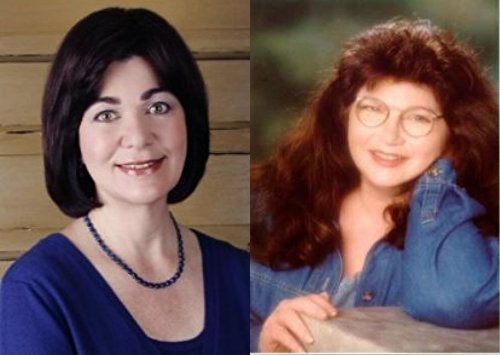
    As they say, all good things must come to an end. The last two years or so, the publishing world has taken another ground-shifting turn. Authors are now releasing their books into a market flooded with titles, and reaching out to consumers inundated with entertainment choices. Social media content continues to explode. Tried and true marketing strategies are losing effectiveness as authors scramble to find the next magic book-promotion pill.

    So, how do we authors distinguish ourselves, our brands and our books in this crowded marketplace? Refocusing on high-touch tools, whether online or off—might be the “special sauce” you’re looking for! In the CAC17 session I’m leading, “High Touch Marketing in a Digital World,” we’ll share and discuss both face-to-face and digital marketing venues, how to cross-pollinate the two, and how high touch can help you negotiate the publishing industry’s ever-changing new normal.

    I look forward to meeting you at the Chanticleer Author’s Conference 2017!


    About Susan

    Susan Colleen Browne weaves her love of Ireland and her passion for country living into her Village of Ballydara series, novels and stories of love, friendship and family set in the Irish countryside. She’s also the author of an award-winning memoir, Little Farm in the Foothills, as well as the Morgan Carey fantasy-adventure series for tweens. A community college creative writing instructor, Susan runs a mini-farm in the foothills of the Pacific Northwest. Coming up: Book 4 of the Ballydara series, and a sequel to Little Farm in the Foothills!

    Register for CAC17 NOW!

  • Jumpstart your author career at CAC17 with Wendy Delaney & Jacquie Rogers

    Jumpstart your author career at CAC17 with Wendy Delaney & Jacquie Rogers

    We have a LOT of terrific sessions planned for CAC17, and we are still adding more. One of those amazing sessions will be:

    Author Career Plan Boot CampThere is so much more to being an author than just writing a book. In Career Plan Boot Camp, Jacquie & Wendy share their experience as authors who have “been there,” and provide ten “must have” tips to help emerging writers learn how to create a professional writer’s platform and grow their writing careers. Wendy Delaney & Jacquie Rogers.

    Jacquie and Wendy are both authors of multiple book series’ (between the two of them, they have over 2 dozen books!), with twenty years of experience in the business of being authors. They’re also veteran Chanticleer Award winners and know how to use awards, ribbons, book stickers, reviews, and all kinds of things you never even considered before, as TOOLS to enhance their success as authors.

    We asked them to tell us a little bit more about their upcoming session at CAC17 and they took some time to give fill us in.


    Chanticleer: Hi guys, what inspired you to create the session Author Career Plan Boot Camp?

    Wendy & Jacquie: A good share of us started this writing gig with a great story in mind, but had no idea what being an author actually meant.

    Chanticleer: What is the reality? Lay it on us.

    Wendy & Jacquie: The average book sells fewer than 200 copies. [This] intrepid writer has spent $1,000 on editing, cover fees, and pre-publication promotion to sell 200 copies (remember, that’s average—many books don’t sell that many), and of those probably 25 went to family and friends. How does this pencil out? At the entry level pricing of $2.99, gross receipts would be $598. Of that, Amazon pays out 70% so the book would net $419.60, leaving a net loss of $581.40. None of us want to be that writer—but without a solid platform, we are.

    Chanticleer: A lot of people assume that a book with average sales is just an average story, they believe that a really good story will sell itself. What do you think about that?

    Wendy & Jacquie: Writing a good story isn’t enough. Essential, but not enough. Polishing the manuscript isn’t enough. Hiring the best editor and cover artist are not enough. All those things are vitally important, of course, but unless a writer has built a solid platform, potential readers will likely never see this fantastic book.

    Chanticleer: What is your advice for authors who want to have better than average book sales?

    Wendy & Jacquie: Focus on success. You can achieve your dream!  With some hard thinking to build an organized and targeted author platform, your book won’t be flailing in those sub-200 numbers. Come to [our session at] the Chanticleer Authors Conference and learn how from two authors who’ve spent nearly twenty years perfecting their writing and building their platforms, Wendy Delaney and Jacquie Rogers.


    Award-winning writer Jacquie Rogers is author of eleven novels, including five books in the Hearts of Owyhee series, two books in the Honey Beaulieu – Man Hunter series, and others. She’s published over a dozen short stories and novellas in three genres.  Under the house name Ford Fargo, she writes for the Western Fictioneers Wolf Creek series.  She co-wrote Nail It! The Secret to Building a Fiction Writer’s Platform, and Growing Your Audience: Workbook for Published, Unpublished, and Under-published Writers.

    Wendy Delaney writes fun-filled cozy mysteries and is the award-winning author of the Working Stiffs Mystery series. Like her human lie detector sleuth, Wendy loves to bake, so when she’s not killing off story people she can be found on her treadmill, working off the calories from her latest culinary adventure. Wendy makes her home in the Seattle area with the love of her life and is a proud grandma.

  • Spotlight on: Susan Colleen Browne, CAC17 Speaker, Author & Creative Writing Instructor

    Meet Susan Colleen Browne, author and creative writing instructor. She has been writing, self-publishing and selling books for many years. She is full of information about every step of the process of being an author.

    And you can find her at the upcoming Chanticleer Author ConferenceCAC17March 31st to April 2nd where she will be teaching Writing in Multiple Genres, High Touch Marketing in a Digital World, and Mindfulness for Writers.

    As part of our spotlight series, we asked Susan our five questions to get her perspective on professional success.

    1. When did you know what you really wanted to be?

    When it comes to writing, I was a late bloomer. Before my early thirties, the only writing I’d ever done was college term papers—the mere idea of creative writing completely intimidated me. That is, until one spring day, when my then-husband brought home a new Apple II GS computer. Compelled by the thought of that hideously expensive Apple becoming nothing more than a really big desk decoration, I sat on my front step with a pen and yellow pad of notepaper, and began scribbling what was to become my first novel. A couple of pages later, I got a faint inkling of the power writing would have over me. But it wasn’t until I started pounding away on the Apple keyboard—using a program called GraphicWriter that regularly made the chapters I’d written completely disappear—did I discover I’d found my bliss: I wanted to be a novelist.

    2. What was the biggest challenge you faced?

    The first few years I was writing fiction, my biggest challenge, like most fledgling writers, was balancing writing time and energy with family commitments and the necessity of earning an income. These days, those challenges are ongoing—only I’ve added my commitment to running our little farm, and making time to create and promote my books too!

    3. How do you define success?

    Success for me changes all the time. Sometimes, I feel successful when I’ve finished a scene that really sings. Other times, it’s getting a favorable review or a compliment from a reader that shows she really “got” the story. And there are those rare days: success is my feeling of euphoria when I’ve completed a manuscript or a finalized a novel.

    4. How long did it take to achieve your success?

    “Achieving success” feels kind of nebulous—to me, it’s more of a process than a goal. Still, one of my most memorable experiences as an author was the April afternoon I walked into the Bellingham Public Library with the two, hot off the press copies of Little Farm in the Foothills they requested for purchase, and soon after, leaving with a check in my hand! Selling my first two books ever took place almost exactly 21 years after I began scribbling on that yellow tablet.

    5. What is the best advice you have ever received?

    My dad was a political scholar and author of a dozen academic books. He always told me that if I wanted to be a published author, I should write 4 hours a day. He managed to fit in his four hours almost every day for nearly forty years, pounding on his little Smith-Corona manual typewriter, while pursuing an academic career, being a devoted father of six children, and being an excellent golfer! I don’t always make four hours at the keyboard, but I do keep in mind that time-honored acronym: BICHOK (Butt-in-chair-hands-on-keyboard) is really all you need to find your success!

    If you have not registered for CAC17 yet, what are you waiting for? Susan Colleen Browne and more fantastic speakers (including yourself possibly, if you register before the schedule is full) will be sharing their experience and knowledge about writing books, selling books, and everything to do with being a successful author.


    About Susan

    Susan Colleen Browne weaves her love of Ireland and her passion for country living into her Village of Ballydara series, novels and stories of love, friendship and family set in the Irish countryside. She’s also the author of an award-winning memoir, Little Farm in the Foothills, as well as the Morgan Carey fantasy-adventure series for tweens. A community college creative writing instructor, Susan runs a mini-farm in the foothills of the Pacific Northwest. Coming up: Book 4 of the Ballydara series, and a sequel to Little Farm in the Foothills!
    In this holiday story, Kerry McCormack has a loving family and a beautiful home in the suburbs, yet this thirty-something Dublin girl is wondering, “is this all there is?” After years of a passionate marriage, she’s grown apart from her husband Stephen. Unresolved grief is only creating more distance between them, just as a secret from Kerry’s past suddenly comes to light…
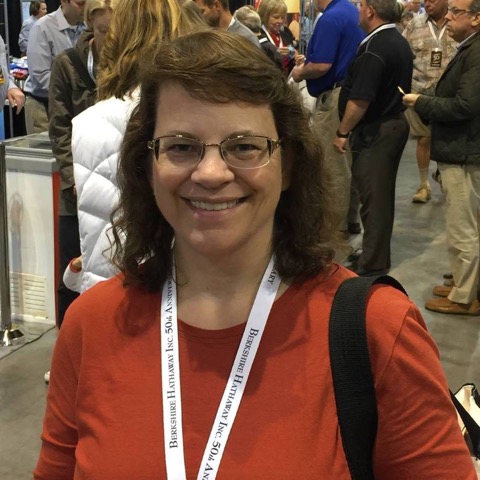

    Susan’s classes:

    Writing in Multiple Genres – Join authors Pamela Beason (YA, mystery, romantic suspense and non-fiction), and Susan Colleen Browne (women’s fiction, short stories, MG and memoir) to look at the ins and outs of writing in different genres. Pamela and Susan will discuss story development, juggling different writing projects, and how genre influences their marketing approaches. They’ll also share what they’ve learned in their multi-tasking writing lives!

    High Touch Marketing in a Digital World – As technology migrates into more aspects of our lives, forging personal connections with readers is crucial to an author’s success. In this session, we’ll discuss high-touch approaches and incorporating them into your marketing efforts. We’ll explore authors’ communities and how you can enhance your book events. We’ll also brainstorm ways to bring more of a personal touch to online interactions and look at authors who have mastered high-touch outreach. You’ll leave with new ideas to boost your marketing and promotion!

    Mindfulness for Writers – Is your writing time squeezed, your story stalled, or technology taking over your life? In this informal gathering, we’ll practice a few mindfulness exercises to help you tune into your self- awareness for your all around well-being. We’ll also look at tapping into your intuition to address your writing challenges, and share tips for creating more balance and focus in your writing life!

    Check out all the classes and sessions we have scheduled!

    Register for CAC17 NOW!

  • Spotlight on: Diane Garland, Continuity Editor and CAC17 Speaker

    Have you even written a story and halfway through your protagonists eye change from green to brown? Unless you are writing a fantasy with metamorphic characters, that is generally not supposed to happen. But how do you keep track of all those niggly details, especially in a multiple book series?

    Meet Diane Garland, continuity editor. She has mastered the art of keeping track of every single changeable detail in a book series through her keen eye and her crackerjack proficiency with spreadsheets.

    And you can find her at the upcoming Chanticleer Author ConferenceCAC17March 31st to April 2nd where she will be teaching A Mad, Mad, Mad, Mad World: Building a Foundation for your Characters & Plot.

    As part of our spotlight series, we asked Diane our five questions to get her perspective on professional success.

    1. When did you know what you really wanted to be?

    I think I discovered myself and what I wanted to be back in 2012 when an off comment by Ann Charles had me delving into the uncharted waters of continuity in books and series.  With much refinement and encouragement I turned my ideas into a business, Your WorldKeeper.  Right now I am very happy with how my business has progressed, but it is constantly evolving which keeps things interesting.

    2. What was the biggest challenge you faced?

    Probably my biggest challenge I faced was building my author base.  Determining who would most benefit from my work and how to advertise and reach those authors was daunting at first.  I’m still adding authors to my client list and each one adds another dimension to my work.  Having authors of different genres with different wants and needs in their worlds is fun and challenging.

    3. How do you define success?

    Success for me is doing something I enjoy. I love my work and knowing I make things easier for my clients to write their next book is a part of what makes me successful. When detailing their worlds and helping them maintain continuity and fluidity in them I am helping to create a product for all to enjoy. That is my success.

    4. How long did it take to achieve your success?

    It only took a couple of months to determine Your WorldKeeper a success. Finishing the detailing of the first couple of books in the Deadwood series and having it be an useful tool for Ann Charles as she wrote her next one, showed me that what I offer is needed. Working with various authors and helping them to create their next book is very rewarding.

    5. What is the best advice you have ever received?

    The best advice I ever received was two fold. Don’t give up and embrace the small successes. It takes hard work to create a business, to be successful, to be fulfilled. If you believe in what you are doing, don’t give up. Take those small things that work, things that go right, and hug them to you. A successful business is built of many small details that perform as needed. If you keep adding in the little details, you’ll soon have a business that works.

    If you have not registered for CAC17 yet, what are you waiting for? Diane Garland and more fantastic speakers (including yourself possibly, if you register before the schedule is full) will be sharing their experience and knowledge about writing books, selling books, and everything to do with being a successful author.


    About Diane

     Diane specializes in the world of continuity editing, a systematic way of cataloging all the little known facts in a book series. USA Today bestselling author, Ann Charles, amongst others, count on her attention to detail and her organizational skills to keep their series on track and their fans coming back.


    Diane works with many authors to keep their story continuity on track. Story continuity is a small but very important part of a book series. It allows the author to provide consistency to their story world and makes for a smooth transition for the reader from book to book.

    Visit her website at www.YourWorldKeeper.com where she can help you to organize and track changes and details within their series.

    Diane’s class:

    A Mad, Mad, Mad, Mad World: Building a Foundation for your Characters & Plot- Worldbuilding and WorldKeeping. What’s the difference? Do you need them? Learn how to organize your world to weave an intriguing and compelling tapestry that will hold up throughout a long series. Tools will be provided to help you maintain continuity and interest throughout your series.

    Check out all the classes and sessions we have scheduled!

    Register for CAC17 NOW!

  • Spotlight on: Nicole Evelina, CAC17 Speaker, Author & 2015 Overall Grand Prize Winner

    Meet Nicole Evelina, author and historian. At last year’s conference she was awarded the 2015 Overall Grand Prize at last years authors conference.

    And you can find her at the upcoming Chanticleer Author ConferenceCAC17March 31st to April 2nd where she will be teaching How to Use Pinterest to Develop Your Story and Career.

    As part of our spotlight series, we asked Nicole our five questions to get her perspective on professional success.

    1. When did you know what you really wanted to be?

    I finally started taking my writing seriously in 2008, so when I was 29. Before then, it was just a hobby, something I did to entertain myself when I was bored. I always had a drive to tell stories, but I didn’t think that being a writer was something real people actually did. That is until I read Twilight. (Go ahead and laugh if you want.) Stephanie Meyer was the first average person I’d ever seen “make it” as a writer. I thought to myself “well, if she can do it, there is a chance for me.” At the time, I was about ¾ of the way into the first draft of what would become Daughter of Destiny, my debut novel, so I decided it was time to act like a professional writer. It took another eight years for the book to be published, but I did it! 

    2. What was the biggest challenge you faced?

    My biggest challenge was getting my book into the hands of readers. It took me two years to get an agent, and then we were on submission for two years. We got sooooo close to an offer three times, but every time the publishing houses said the same thing: she’s new and we don’t know how to market Arthurian legend. My agent and I ended up parting ways and I didn’t have any luck getting another one, so I decided to go independent. After so many years of hoping and waiting, Daughter of Destiny was published just four months after I opened my own publishing company.

    3. How do you define success?

    I don’t think there is one single definition of success. On one hand, I’m successful just because my books are out there and readers like them, which is so important. I’m also successful in that I’m creatively fulfilled – I know I’m doing what I’m meant to be doing. That may even be more important. I’ve won a lot of awards, so I know I’m doing something right!
    I’m making money on my books, which is also a definition of success. However, I’m not a full-time writer or the critically-acclaimed, bestselling author I want to be, so in that regard, I still have a ways to go. But that’s okay; it gives me something to strive for.

    4. How long did it take to achieve your success?

    All told, around six years. Only the gods know how long it will take to fulfill my loftier dreams!

    5. What is the best advice you have ever received?

    One of my mantras is “dreams don’t work unless you do.” I think I probably got that off the Internet, but it is so true. If you want to be successful, you have to put in the effort. It may be hard at the time, you may even think it’s going to kill you – I did – but it is so worth it when you begin to see it pay off. Writing is a business no matter if you are traditionally or indie published, so you have to treat it like one, put in the hours and do the work, even when it’s not fun and you are exhausted. No one is going to hand you anything just because you are you. There really is no such thing as overnight success. (There are rare exceptions but, more than likely, you are not one of those.) As the author, you are the best advocate for your work, so get out there and tell everyone how wonderful it is, and eventually, they will catch on. That’s how you build a fan base – one reader at a time. 

    If you have not registered for CAC17 yet, what are you waiting for? Nicole Evelina and more fantastic speakers (including yourself possibly, if you register before the schedule is full) will be sharing their experience and knowledge about writing books, selling books, and everything to do with being a successful author.


    About Nicole


    Nicole Evelina’s writing has appeared in The Huffington Post, The Philadelphia Inquirer, The Independent Journal, Curve Magazine and numerous historical publications. She is one of only six authors who completed a week-long writing intensive taught by #1 New York Times bestselling author Deborah Harkness. As an armchair historian, Nicole researches her books extensively, consulting with biographers, historical societies and traveling to locations when possible. She has consulted with internationally acclaimed author and historian Geoffrey Ashe, as well as Arthurian/Glastonbury expert Jaime George, the man who helped Marion Zimmer Bradley research The Mists of Avalon.

    Daughter of Destiny by Nicole EvelinaChanticleer Reviews 2015 Book of the Year – 

    You may think you know the story of Guinevere, but you’ve never heard it like this: in her own words. Listen and you will hear the true story of Camelot and its queen.

    Fans of Arthurian legend and the Mists of Avalon will love Daughter of Destiny, the first book in a historical fantasy trilogy that gives Guinevere back her voice and traces her life from an uncertain eleven year old girl to a wise queen in her fifth decade of life.


    Nicole’s classes:

    How to Use Pinterest to Develop Your Story and Career – As an author, you can use Pinterest for far more than collecting recipes and craft ideas you probably won’t ever get around to trying. Nicole Evelina will provide tips for and share personal examples of how to: Create boards for your stories, settings and characters, How to use those boards in marketing and fan activities, Use the images you find to brainstorm character attributes, Collect imagines for future inspiration, Provide a “human face” behind your author brand, Advertise and hold contests on Pinterest to attract and retain readers.

    Check out all the classes and sessions we have scheduled!

    Register for CAC17 NOW!