Category: 10 Questions Interviews

  • 10 Question Author Interview with PAULA BUTTERFIELD – Women Artists, Author Interview, Book Discovery, Film, Books

    10 Question Author Interview with PAULA BUTTERFIELD – Women Artists, Author Interview, Book Discovery, Film, Books


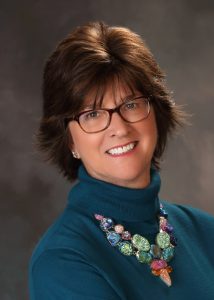
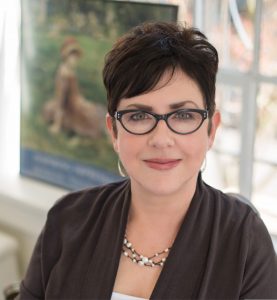
    Meet the award-winning author, Paula Butterfield!

    Paula taught courses about women artists for twenty years before turning to write about them. La Luministe, her debut novel, earned the Best Historical Fiction Chanticleer Award. Paula lives with her husband and daughter in Portland and on the Oregon coast.

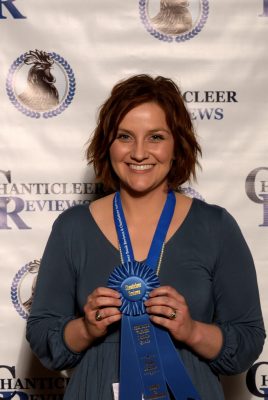
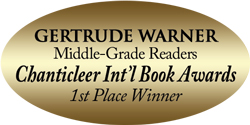
    Paula’s book, La Luministe, won First Place in the Chaucer categories in the 2015 CIBAs for Historical Fiction!


    Chanticleer: What genre best describes your work? And, what led you to write in this genre?
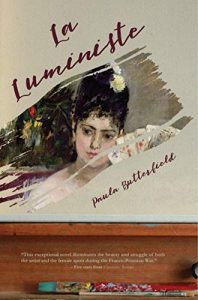
    La Luministe, 2015 Chaucer First Place Winner for Historical Fiction!

    Butterfield: I write historical fiction, specifically about women artists. For many years, I taught classes that I developed about women artists. As we raced through history, from the Middle Ages to the 21st century, I often thought, someone could write an entire mini-series about this woman! I wished we could slow down and really delve into the lives of artists. More hist-fic books about these women are coming out now—including Lady in Ermine, A Light of Her Own, The Age of Lightand I’m wallowing in them! But all I have to do is leaf through one of my books about women artists to realize how many more stories remain to be written… 

    Chanti: That’s exciting! Perhaps you will write a mini-series about women in art… Do you find yourself following the rules or do you like to make up your own rules?

    Butterfield: I find that you have to pick and choose which rules to follow. Outlining, I have come to believe after years of resistance, is a must. But that outline can take many forms, and you can expect to change it as you go. While a writer shouldn’t lean on adverbs, isn’t it a little crazy to spend time searching your manuscript for one or two errant adverbs?

    Chanti: Good point – outlines do need to be flexible in order to be relevant. And, yes, I certainly agree with your assessment of adverbs! What do you do when you’re not writing? Tells us a little about your hobbies.

    Butterfield: I’m a film aficionado (see question 10). This last year, I loved Leave No Trace, Roma, If Beale Street Could Talk, First Reformed, and black klansman. Of course, I LOVE costume dramas like Black Panther or The Favourite, where I can see what life was like in a different place and time. Costume and production designers deserve more credit!

    Chanti: Yes, costume and production designers make the movie, in my humble opinion! Back to writing…How structured are you in your writing work?

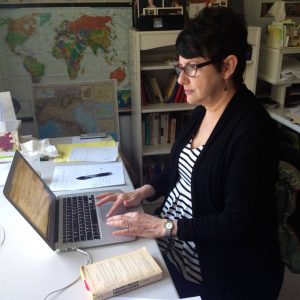
    Butterfield: Not structured enough! On a perfect writing day, I’ll wake up with ideas and immediately get to work before my inner-critic wakes up. This is more likely to happen when I have thought about something specific I need to work on, right before I go to sleep. After a couple of hours, I’ll stop to have breakfast, exercise, and shower. Later, I’ll go back and look at what I’ve written that morning, which usually gets me going, either editing or continuing on for a couple of more hours in the afternoon. Social media, emails, reviews, and other commitments get squeezed in throughout the day.
    Chanti: That sounds fairly structured to me! I’ve heard many authors and educators say they begin work before their inner critic wakes up. Tricky! So, tell us, what areas in your writing are you most confident in? What advice would you give someone who is struggling in that area?

    Butterfield: I’m told that descriptions are my strength. I have a degree from the University of Southern California School of Cinema, and I started out writing screenplays. As a visual person, I just write the movie I see in my mind’s eye. I recommend looking, then looking some more. Keep looking, and you’ll notice details that eluded you at first glance. Then describe that picture in words.

    Chanti: That’s great advice. Tell us, which craft books have helped you the most?

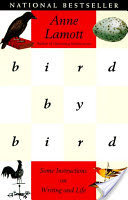
    Butterfield: Anne Lamott’s Bird by Bird is wonderful, and I also like Stephen King’s On Writing. What kick-started my writing after a years-long hiatus was participating in a small group that read Julia Cameron’s The Artist’s Way. It’s a 12-week program that helps you put art into the center of your life. From scribbling artist’s pages (three pages of free writing each morning) to going on artist dates (doing something that inspires you creatively each week), each member of my group—fiction writer, poet, and painter—benefited from the process.
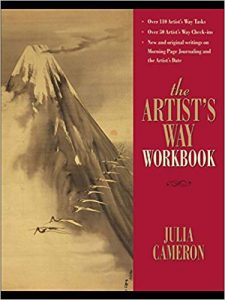
    Chanti: I’m working through The Artist’s Way. This book has a companion workbook that is most beneficial.  What are you working on now? What can we look forward to seeing next from you?

    Butterfield: With me, it’s always going to be historical fiction about women artists. Artists are considered to be outliers, which makes them interesting to start with. But to be a woman artist, throughout most of history, has been considered doubly radical, so their stories are fascinating. My WIP is about two American artists who are positioned as rivals. I don’t like to talk about my current projects, because it saps some of the energy that’s buzzing around in my brain. So that’s all I can say right now.

    Chanti: What is the most important thing a reader can do for an author?

    Butterfield: Reviews are needed and appreciated, but another very easy, helpful thing a reader can do is request that his or her library purchase a book (if it’s not already in stock). On my library’s website, this entails clicking “Using the Library” on the menu bar, then clicking “Suggest a Purchase” from the drop-down menu. There, you just fill in the title and author of the book. You’d be surprised how receptive libraries are to this input.

    Chanti: That’s really smart. Most of us only focus on reviews. But there is power in the library system. Do you ever experience writer’s block? What do you do to overcome it?
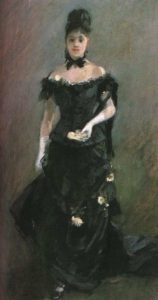
    Berthe Morisot, Figure of a Woman (Before the Theater), PD-US

    Butterfield: I suspect that writers of historical fiction may encounter writer’s block less frequently than do writers of other genres because we can always do more research. This can range from gaining a broad overview of the Franco-Prussian war to seeking more details about the sleeve length or embellishments that would have been popular on a gown Berthe wore to the opera in 1868. New information, especially unexpected tidbits, get me back to the keyboard right away. Sometimes, one detail can change the arc of a subplot or of a minor character.

    Chanti: What excites you most about writing?

    Butterfield: I find out about women in art! Berthe Morisot was a fist in a velvet glove. In the 19th century Paris, an haute-bourgeois woman was expected to be discreet to the point of near-invisibility. But Berthe, forbidden to enter L’École des Beaux-Arts, started the Impressionist movement that broke open the walls of the art establishment. And, unable to marry the love of her life, Édouard Manet, she married his brother. While she epitomized femininity and decorum, Morisot was a quiet revolutionary.

    Chanti: Paula, thank you for spending time with us today. It has truly been a pleasure and an honor. We cannot wait to see what’s next!


    You know what to do! Please check out Paula Butterfield’s work – and remember to recommend her books to your local library.
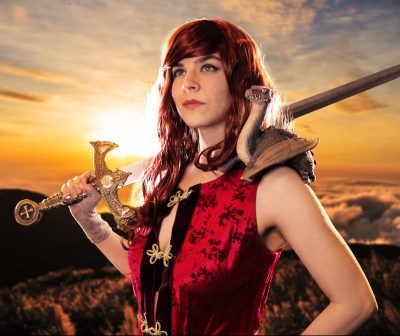
    Find fun boards and posts of Paula’s inpsiration here:
    https://www.pinterest.com/luministe/ (where I post “illustrations” for La Luministe.)
  • 10 Questions with ELANA MUGDAN – Marketing, Writing, Fantasy Books, Dragons, Author Interview

    10 Questions with ELANA MUGDAN – Marketing, Writing, Fantasy Books, Dragons, Author Interview

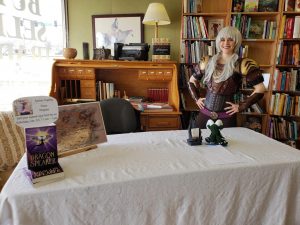
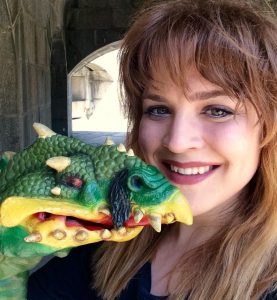
    Elana and her Dragon

    UPDATE: Dragon Speaker WON GRAND PRIZE in the CIBA 2018 OZMA Awards for Fantasy Fiction! 


    You may have heard of her. Elana Mugdan, author, director, channeler of all things fabulous – and most recently, the winner in Vitamin Water’s Challenge! What you may not know, Elana is also a Chanticleer-ian! We love her work as much as we love her. And we thought you might like a chance to get to know her a little more, as well.  Click here to follow the link from the Today Show – Alana explaining how the Vitamin Water Challenge works.

    Please enjoy and share our 10 Question Author Interview!

    Chanticleer: Tell us a little about yourself: How did you start writing?
    Mugdan: I started writing at a very young age. I always had a wild imagination, and there was always a story to tell. Some of my earliest – and fondest – memories are of me dictating epic fantasy adventures to my father, and him typing them out on the old family computer in the basement (while he was supposed to be doing his own work, no less). I actually wrote my first “novel” when I was just five years old. It was a story about a girl and a dragon going on a quest . . . two decades later, the story hasn’t changed. At least I’m consistent!

    Chanti: That’s pretty sweet! I bet your family is very proud of you. When did you realize you that you were an author?

    Mugdan: Surprisingly, it took me a long time to realize writing was my preferred method of storytelling. I floated through a number of artistic fields when I was younger, including the film industry. I focused my energy on production and worked myself to the bone for years before I realized that every time I stepped foot on someone else’s set, I was really living someone else’s dream. This wasn’t what made my heart beat – I had my own stories to tell. So I redirected my attention to my novels, and that’s when the series really took off. I’m so glad I had that moment of clarity and realized that I wanted to focus on what I truly love, which is writing.

    Chanti: What led you to write in this genre?

    “Learn the rules like a pro, so you can break them like an artist.” Pablo Picasso

    Mugdan: Fantasy. All day, every day. I’ve loved fantasy, magic, and dragons for as long as I can remember. During my formative reading years, all my favorite series were meaty epic fantasy tales. I actually got into the Wheel of Time series even before I discovered Lord of the Rings, and that shaped my style both as a reader and a writer. There’s something beautiful about diving headlong into another world, getting lost there, going on adventures there. Those are the stories I love, and those are the stories I want to tell.

    Chanti: Do you find yourself following the rules or do you like to make up your own rules?

    Mugdan: I’ve never been one for rules. Picasso said it best: “Learn the rules like a pro, so you can break them like an artist.” Rules exist for good reason, but it’s an artist’s job to think outside the box. If you try too hard to conform to others’ ideas of what your work should be, then you stifle your creativity and your truth. There will always be people who tell you your book is too long, or your vocabulary is too advanced for your readers, or your characters should change for the sake of marketability, or something similarly silly. Some of the best and most magical stories were ones that broke traditional boundaries, and I believe you shouldn’t be afraid to tell your tale the way it deserves to be told.

    Chanti: That’s really good advice. How does being an author affect your involvement in your community?

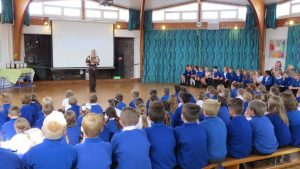
    Mugdan: It has given me a great opportunity to get out and meet new people, not only in my immediate community but across the country. I’ve made so many connections by reading excerpts from my books at local open mic nights, giving presentations at schools, and hosting events at indie bookstores and libraries. Just this past December I was lucky enough to have a stand at my town’s Winter Festival, which was an incredible experience. They invited me to read an excerpt on stage, and I met so many bright, inquisitive young readers who spoke to me about my work. I think I made a good impression on them because I actually sold out of books while there!

    Chanti: Congratulations! Give us your best marketing tips, what’s worked to sell more books, gain notoriety, and expand your literary footprint.

    Mugdan: I wouldn’t call myself a marketing guru by any stretch of the imagination, but I’ve learned a lot on my journey. I think the most important thing an author can do to gain notoriety is to network. Don’t be afraid to contact your local bookstore or library to see if they want to co-host an event with you – chances are they’ll be thrilled! By putting yourself out there, you get to meet new readers and allies. Try things that are beyond your comfort zone, like offering to speak about writing or publishing at a nearby school.

    You can connect to young audience members this way, and inspire them to keep reading, writing, and dreaming. If you build your foundation brick by brick, one person at a time, soon you’ll start to see the fruits of your labor.

    Of course, once you make these connections, you’ll need to stay in touch! Don’t discount the power of a strong, active social media presence – if people like your work, they want to know what you’re up to. Make sure you have a clean, presentable, informative website and a monthly newsletter to keep your audience up-to-date.

    Chanti: I like what you’re saying. Many of us are self-described introverts. It is a challenge to get ourselves out there. But once we do, it’s so easy to let that slide. Thank you for reminding us that followup is key – and newsletters do make a difference!  What are you working on now? What can we look forward to seeing next from you?

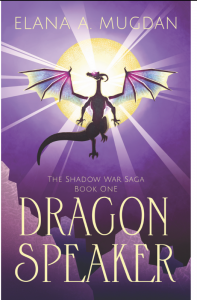
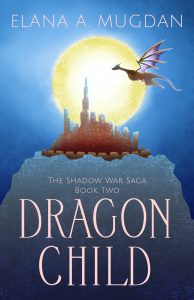
    Mugdan: I’m currently putting the finishing touches on Dragon Child, Book II of The Shadow War Saga, so it’s ready for its release on May 21st of this year. Now that it’s so close to being done, I’ve also set my sights on completing the final round of edits for Book III, Dragon Blood, which will be out in February 2020. And of course, once that’s done I’ll be starting a major round of revisions on Book IV, Dragon War (slated for a tentative release date of April 2021).

    While I’m not writing and editing, I’m organizing my ongoing book tour for my debut novel, Dragon Speaker. So far I’ve held events in Pennsylvania, Vermont, Kansas, Maryland, and my home state of New York. I have a number of events coming up, and I’m hoping that I can continue to gain momentum over the coming months and turn it into a trans-continental adventure!

    This is what we had to say about Dragon Speaker “High fantasy that hits all the marks.” Read the review in its entirety here.

    Dragon Child, Elana’s newest book due out in May has already been reviewed and ready for pre-orders. Here’s a wee glimpse “Mugdan hooks readers and does not let them go! Fantasy brilliantly told, will delight readers in the second book of The Shadow War Saga.”  Read the review right here

    Chanti: Who’s the perfect reader for your book?

    Mugdan: I’d recommend my series for anyone who likes epic fantasy and dragons, obviously; but beyond that, anyone who enjoys strong, spirited, and oftentimes deeply flawed characters. One of the things that irks me about traditional fantasy stories is that we see all these beautiful, perfect heroes who effortlessly triumph over their evil foes because they are so Brave and Good. To me, that doesn’t make a relatable – or interesting – character. Our flaws make us interesting, and the way we overcome our flaws is what makes a great story. Many of my characters struggle with self-image, fear, even their own morality. During the course of the series, we see them grow and we see their worldview change as they learn about acceptance, self-love, and forgiveness. These are books for people who love fantasy, but who are tired of the usual fantasy tropes we so often encounter.

    Chanti: And that’s exactly why your books are so highly rated! What is the most important thing a reader can do for an author?

    Mugdan: The most important thing? Buy our books! Show your support for artists and their art. The second most important thing? Rate and review! Seriously, you don’t know how much of a difference it makes. Even if it’s a short review, just a couple sentences about what you liked (or didn’t like), it helps us in terms of visibility and credibility. Reviews can be the deciding factor when a reader is deciding to take a chance on a new book. Let the world know what you thought, so you can help others discover something wonderful which they otherwise might never have found!

    Chanti: Well said! What excites you most about writing?

    Mudgan: I love losing myself in my own little world. In writing, you are limited only by your imagination. You can create the most beautiful places and go on the adventures you’ve always wanted to take. If reading is a personal experience, writing is even more so – you pour your heart into your work, and you discover answers to questions you weren’t even aware you’d asked. When things come together and everything in your story finally falls into place, when you finish an action-packed or emotional chapter, or when you unearth a great truth in your writing, then there’s this brilliant moment of clarity. You’re filled with a sense of achievement that you have created something unique and magnificent. And that’s a feeling worth living for.

    Chanti: Elana, it’s been a pleasure. Thank you for sharing your journey and wisdom with us! 

    Now it’s our turn. Do you like what you’ve read? Would you like to follow Elana Mugdan and see how she completes her Vitamin Water Challenge? Or where she’ll be next in her book tour? Please follow these link and sign up for her newsletter.

    Elana Mugdan:

    Twitter: https://twitter.com/dragonspleen

    Facebook: https://www.facebook.com/SilverScreenDragon

  • 10 QUESTION INTERVIEW WITH MULTI-AWARD WINNING AUTHOR JANET OAKLEY – Author Interview, Historical Fiction, Award-Winner

    10 QUESTION INTERVIEW WITH MULTI-AWARD WINNING AUTHOR JANET OAKLEY – Author Interview, Historical Fiction, Award-Winner

    Janet Oakley is one of those authors who seems to show up everywhere – all at once! She’s won multiple awards and rightly so. Her novels and short stories are compelling, rich, and historically precise. She is a generous author and committed to her work. She knows what it takes to succeed in this business.

    Ladies and gentlemen, I give you multi-award winning author, Janet Oakley.

    Chanticleer: Tell us a little about yourself: How did you start writing?
    Oakley: I was born in D.C. and grew up Pittsburgh. It was a creative house with my mother a pianist, my dad a physicist. There was no TV in the house, so we pretty much used our imaginations. My parents both loved books and read to my brothers and I every night. The original Carnegie Library in downtown Pittsburgh was my haunt.

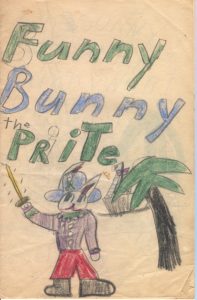
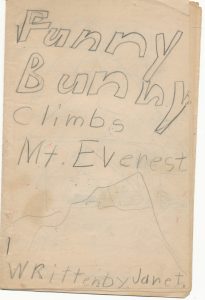
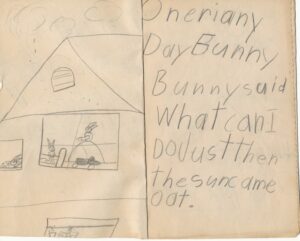
    Like many published authors, I started writing early—in second grade. My oeuvre was a series, illustrated by myself, called Funny Bunny.


    In fifth grade, I wrote my first historical fiction, with questionable historical facts. In college when I majored in history, my writing became more serious as I learned to do research and write essays and articles. In my sophomore year, I got an internship at the Smithsonian Institute. I was given an office in the annex of the Library of Congress and spent a whole quarter going through early 19th century magazines and newspapers looking for images of Native Americans. I returned to D.C. my senior year to research my thesis on the Comanche Indians as Prisoners of War and after graduation, I was awarded a stipend to work in the Smithsonian’s Anthropology Archives. I worked there until I left for Hawaii the following year. This experience of doing research and writing in my early years led to writing my first novel, The Jossing Affair. I haven’t looked back.

    Chanticleer: That’s quite a rich growing up there, Janet.  When did you realize you that you were an author and not only a historian?

    Oakley: I spent nearly ten years pitching and query Jøssing and the other novels I was developing with little success but it wasn’t until I took a writing intensive class in 1999 at UW that I found a different way to publish and expressed myself– the personal essay. Though not one of my assignments at UW, the first thing I ever had published, other than some letters to the editor at my local newspaper, was an essay in Rugby Magazine, entitled, “On Being Rugby Mom.” I had started the essay on lunch break at UW. That success led to sending in essays to the Cup of Comfort series (part of the Writer’s Digest publishing house) I had five essays published in anthologies with titles like A Cup of Comfort for Women, A Cup of Comfort for Mothers and Sons and others. In 2006, I won first place at Surrey International Writers for my essay, “Drywall in the Time of Grief.”  I realized then that I could write material acceptable for publication and get edited by a great editor. (We’re still friends) Then I could say I was an author. When indie publishing came into being, I was ready to publish my novels.


    Chanticleer What genre best describes your work?

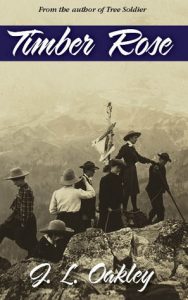
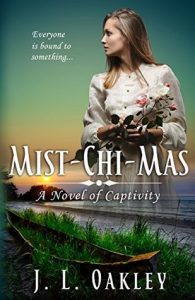
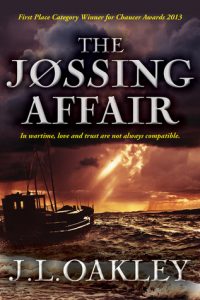
    Oakley: Historical fiction, for sure. I love history and those little known, often forgotten events in both local and international history. Like Hawaiians in the Pacific Northwest in the 19th century (Oakley’s novel Mist-Chi-Mas: A Novel of Captivity is a timeless and important story that addresses what life was like for Pacific Islanders in the PNW). Women climbing mountains in skirts in 1907 (Timber Rose is Oakley’s novel about the first women’s hiking club). These historical tidbits have become the background for several of my historical novels. Historical fiction, however, has many aspects to it and can fit into thrillers and mysteries.  My WWII novel, The Jøssing Affair, has been called a historical thriller and for the past three years, I have been writing mysteries set in Hawaii—a place I love—with some history in them. The Jøssing Affair was awarded the Goethe Book Awards Grand Prize  for Historical Fiction, a division of the Chanticleer Int’l Book Awards.

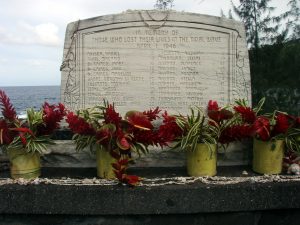
    Coconut Island for one. Its historical background rests on the 1946 April Fools Day tsunami that wiped out Hilo. I got an inkling of its destruction and loss of life while teaching at Hilo Adult School—one of my students, a 4th-grade teacher, was a survivor. It wasn’t until I researched the tsunami for Coconut Island, did I learn its full impact: 96 people lost, homes and businesses destroyed. The tsunami arrived from the Aleutian Islands in under 5 hours. History has its own compelling storyline which I love to set my characters in and see how they do. Even in a mystery. I can’t seem to get history out of anything I write!

    Chanticleer:  So even your mysteries have a strong vein of historical running through them. Can you tell us a little more about that? 

    Oakley: Curiosity and family stories of homesteading in Kansas, Indian Territory and the NW in the late 1800s got me hooked on history. I grew up on stories of one great-grandfather who was a Union surgeon at the Battle of Gettysburg, another great-grandfather in the 1870s Hayden expedition to Yellowstone. My great-grandmother saw Lincoln on his way to his inauguration, then later went out to Kansas where her parents taught at Shawnee Mission. I’ve always wondered about people who lived in different times. What type of technology did they have available? How did they manage with their technology? What their lives were like without our modern conveniences. What made them succeed, be happy in life? My mom also influenced me as she loved history and love historical fiction herself.

    Chanticleer: How does being an author affect your involvement in your community?

    Oakley: Writing historical fiction has opened opportunities to talk about the history behind my novels. The Jøssing Affair, set in Norway during WWII, has been a popular book club choice as we have a large community of Scandinavians in the state, but I think my first published novel, Tree Soldier, has a more important impact.

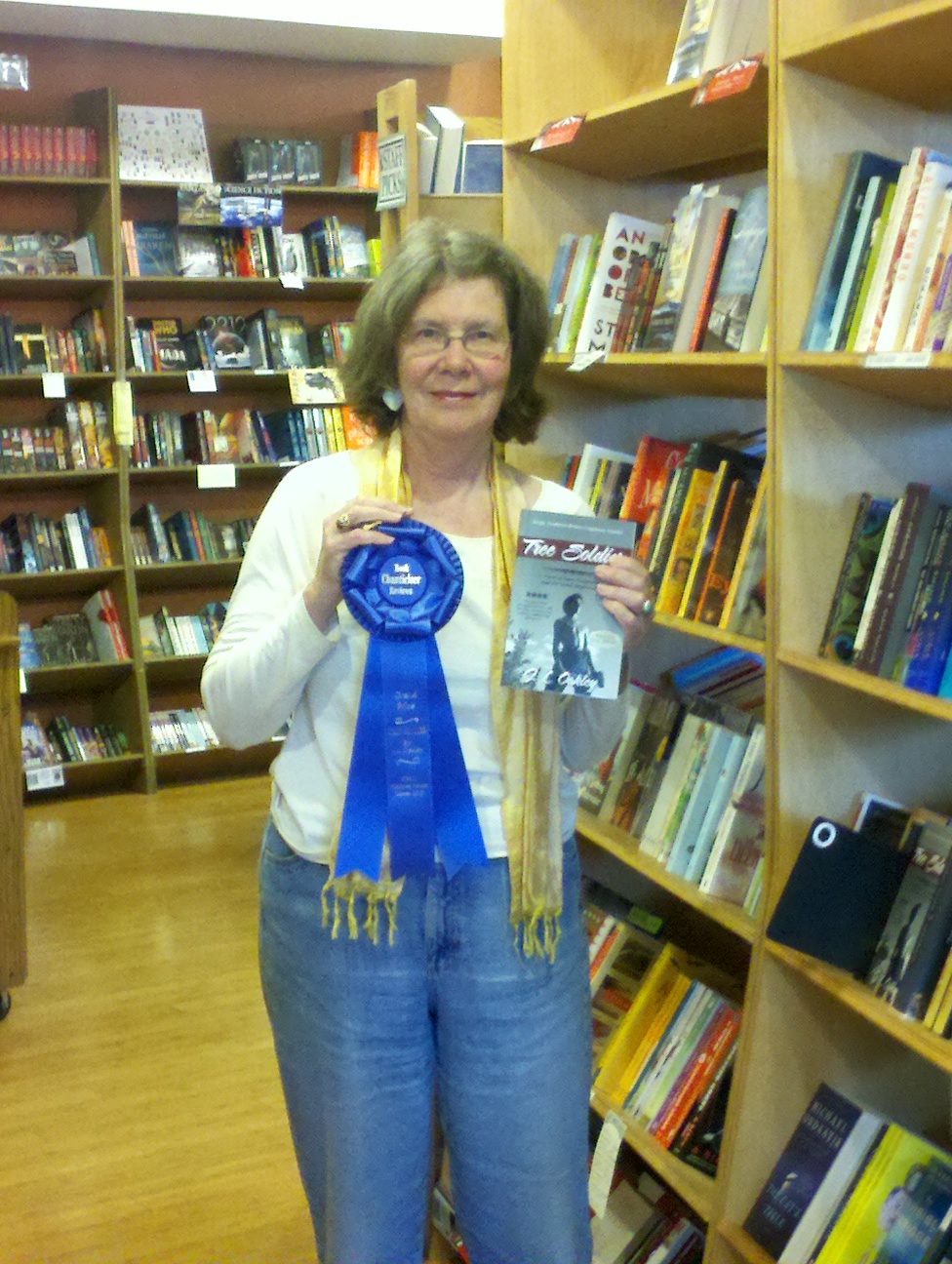
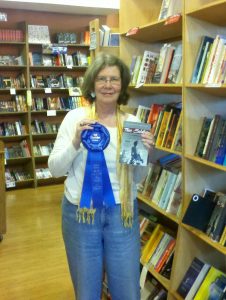
    Janet Oakley at Village Books with her Chanticleer Grand Prize Ribbon

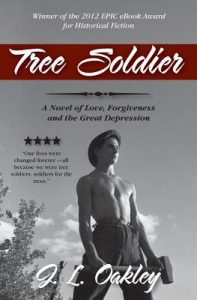
    I grew up listening to my mother’s stories of the Civilian Conservation Corps boys from New Jersey who showed up at Lowman, ID in 1933. Part of the New Deal was to put young men back to work in environmental projects, these young men had been lifted out of their block in Jersey City and sent West. Tree Soldier came as a result of my need for a history paper for my Master’s in Elementary Education. I interviewed five gentlemen who had been in the CCC. I began to present talks on the CCC and in 2013 was accepted into the Washington Humanities program. For two years, I went around Washington State talking about the CCC in Washington State (1933-1941) each time before I went to a new community, I researched the camps in their area and added the findings to my talk. Then Tree Soldier was awarded the Chanticleer Grand Prize for Best Book. A presentation in Clarkston, WA led to an invitation to have Tree Soldier be selected as an Everybody Read for the Palouse area in both Washington and Idaho. What an honor! And a learning experience on how to present and engage with readers in the libraries. Not much later, Tree Soldier was again a book read for four libraries on the Olympic Peninsula.

    I think the thing I am most proud of is being behind the installation of a CCC worker statue at Glacier Washington ranger station. As an educator, for me, this statue from a national CCC program, helps visitors to the Mount Baker National Forest learn and appreciate the work of out-of-work boys from long ago. When we dedicated the statue on June 16th, a 98-year-old CCC boy from Camp Glacier came. It was so wonderful to see the attention he received. Since then a 96-year-old CCC boy has contacted me through his granddaughter. I hope to meet him soon.

    Chanticleer: Good work, Janet! What are you working on now? What can we look forward to seeing next from you?

    Oakley: I’m working on the sequel to The Jøssing Affair, set in Norway a year after WWII. Rewriting my Kindle World mystery novellas and publishing them as Hilo Bay Mysteries. Once the third book is complete, I plan to do a boxset both in ebook and paperback.

    Chanticleer: Can’t wait to see where this book takes you. It’s important to work on your craft. What do you do to grow your author chops?

    Oakley: I write every day, usually in the morning starting at 8:00 AM. I belong to several writers groups, including a critique (going for 16 years now) and I am a member of the Independent Writers Studio where I work on WIPs with a wonderful editor and other members.

    Chanticleer: That seems to be more than a simple commitment – it’s a way of life! Good for you. What craft books have helped you the most?

    Oakley: Better than craft books, I have been taking classes from the authors and well-writing teachers such as Donald Maas on and off for over 25 years, Diana Gabaldon, Robert Dugoni and many other fine writers and teachers. Usually at conferences.

    Chanticleer: What is the most important thing a reader can do for an author?

    Oakley: Write a review on Amazon. It carries more weight than any other review site. Books need reviews in this crowded publishing world.

    Chanticleer: Good point. What do you do when you’re not writing? Tells us a little about your hobbies.

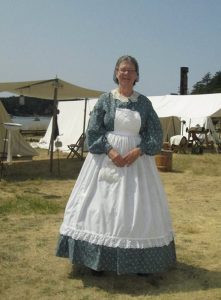
    Oakley: For the past 35 years, I have researched and then taught hands-on history workshops to at schools children through Allied Arts and on my own and at a county museum. I wrote several social studies curriculum for Whatcom County schools and a national park. Following the publication of the curriculum for the San Juan Island National Historical Park in 1995, I began to give demonstrations on 19th-century foodways there. Soon I joined English Encampment, an annual gathering of reenactors at the national park as Miss Libby, an 1860 schoolmarm. Great fun! I also garden. Like words, the flowers and veggies need nurturing.

    Chanticleer: Thank you for being with us, Janet Oakley. You are an inspiration and your passion is contagious!


    Now, it’s your turn to show your support! Please find and follow Janet as she shares her writing, life, and insight into living a successful author-life.

    You can find her here:

    Facebook:  https://www.facebook.com/janet.oakley.12

    Website: https://www.jloakleyauthor.com/ 

    If you would like to read Oakley’s books, here is a list of her titles can be found at Village Books, Barnes Nobles, or by clicking on the Amazon links below:

    Timber Rose

    Tree Soldier

    Mist-chi-mas: A Novel of Captivity

    The Jossing Affair

    The Hilo Bay Mysteries:

    Coconut Island

    Hilina Pali

    Volcano House


  • How Do Football and Fiction Writing Connect? Read on to Find Out How with T.K. Riggins, Fantasy Author

    How Do Football and Fiction Writing Connect? Read on to Find Out How with T.K. Riggins, Fantasy Author

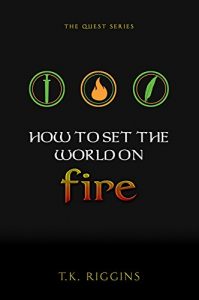
    T.K. Riggins, OZMA Grand Prize Winner for “How to Set the World on Fire”

    Ten Questions Interview with the OZMA Grand Prize Award Winner, T.K. Riggins, that shares his writing tips and tools with us.


    Money Jane won First Place in the 2018 CIBAs OZMA Awards for Fantasy Novels. Congratulations!


    I first met T.K. Riggins at CAC18 where his novel, How to Set the World on Fire won Grand Prize in the OZMA Awards. T.K.’s a cool guy. He strikes up conversations with ease and doesn’t really seem to take himself too seriously. Maybe that’s because he started writing on a dare… but I’m getting ahead of myself.

    Meet the author, T.K. Riggins!

    Chanticleer: Tell us a little about yourself: How did you start writing?
    Riggins: I started writing because of a dare. My friend was searching for something new to read, but instead of recommending a book, I decided to write something for her. It was a ten-page short story that was based on a farming event from my past, and I turned it into a tale of fantasy. It was a fun experience, and my friend was so impressed that she wanted to read more, so I just kept going.

    Chanticleer: That’s kind of funny! When did you realize you that you were an author?

    Riggins: The first time I felt like an author was when a stranger read my work, critiqued it, and told me they wanted to read more. The recognition was nice and gave me the confidence to continue, but the major takeaway was being able to overcome the vulnerability that comes with giving my writing to someone that I didn’t know. It’s one thing to have friends and family read my story because I knew that they’d support me no matter what. It was entirely different to bare my soul to someone who wasn’t as obligated to spare my feelings.

    Chanticleer: Yes, check that thin-author-skin in for something a little thicker. I think we can all relate to that. Tell me, do you find yourself following the rules or do you like to make up your own rules?

    Riggins: I attended a seminar taught by Larry Brooks, the author of Story Engineering. In part of his lecture, he compared writing a novel to playing the game of football. He stressed how in football, there are certain rules that can’t be changed like the size of the field, how many downs there are, and how many players are on the turf at a time. However, the thing that can be changed is how the players play the game.

    Like the game of football, professional novels have elements that can’t be changed like how it’s formatted, where the inciting incident should be, how the story arc relates to the climax, etc. The thing that can be changed is how the writer tells the story.

    Football and Writing

    So in the end, it ends up being a little bit of both. I follow certain structural elements to make sure that readers easily enjoy the flow of the novel, but what I write about and how the characters evolve ends up following the rules that I make up.

    Chanticleer: It seems to be working for you. Hello OZMA Grand Prize! What do you do when you’re not writing? Tells us a little about your hobbies.

    Ozma Awards for Fantasy Fiction

    Riggins: I’m a big sports fan. I grew up playing basketball, baseball, soccer and hockey. Lately, my focus has been on Crossfit and beach volleyball. Crossfit has a reputation of being a fad workout program, but I love it because it preaches intensity, structure, and competition. Not only does it provide an escape from sitting in front of a computer screen, but it helps me improve both my physical and mental strength in a community filled with others that constantly work on maximizing their skillset.

    Chanticleer: I always envy those who can endure a single session of Crossfit. Me? I trip as soon as I walk in the door… Let’s change the subject… How structured are you in your writing work?

    Riggins: Because I still work a full-time job as an engineer, most of my writing occurs at night and on weekends, but I don’t worry about setting a certain time limit on the craft. Sometimes I write for fifteen minutes, other times I might go for hours. That’s not to say that I don’t think about my writing constantly. I make notes while at work, at the gym, or even if I wake up from a dream. I feel like it’s easier to sit down and write based on my notes rather than try to sit at a computer and force the words to come out.

    On the other hand, it’s useful to have deadlines in mind. I find that sometimes I get stuck trying to find the right words, perfect character names, or minor plot point.

    Instead of waiting for that lightning bolt of inspiration, I think it’s useful to push through a few paragraphs that I know are going to require editing later, just to keep the flow of the story going. First drafts are never perfect anyway, so sometimes I sacrifice a few little details in order to reach the broader goal of building the story.

    Chanticleer: I hope everyone is paying attention to what you just said. It’s so valuable to just keep writing, to let the creativity flow. Good job. It is important to work on your craft, though, so what do you do to grow your author chops?

    Riggins: I read everything. I read non-fiction articles ranging from creating tension in writing to marketing tips for self-published authors. I read fiction stories that are both inside and outside my genre. I read books that my peers recommend, and some that my young nieces and nephews are into.

    A lot of the time, my reading doesn’t translate into great ideas for my own writing, but I feel like hearing the voices of other authors helps strengthen my own. Even studying other artists in music and visual art helps inspire my own craft.

    Chanticleer: That’s really good. Thank you. Give us your best marketing tips, what’s worked to sell more books, gain notoriety, and expand your literary footprint.

    Riggins: The best marketing advice I ever received was to keep things simple. In every area of business, there are mountains of opportunities and strategies that are complex and overwhelming. There are even elements that may work for one business that end up being a complete failure for another. The key is to keep the focus on one thing at a time and try to take advantage of the opportunities that come your way, rather than tackling everything at once. Longevity is the ultimate goal, even when tasks seem quick, small, meaningful or useless.

    Chanticleer: I like that, keep it simple. What are you working on now? What can we look forward to seeing next from you?

    Riggins: I just released my second novel Money Jane. It’s the sequel to How to Set the World on Fire and is book two in a series of six. I’m currently writing the third book in the series, but I’m also involved with developing an indie video game app to be paired with my book series. It’s going to be really fun, and add another dimension to the How to Set the World on Fire franchise.

    Chanticleer: That is such amazing news! Six-book series AND a video game app! (Read our reviews of How to Set the World on Fire and Money Jane.) Who’s the perfect reader for your book?

    Riggins: My books are aimed towards middle-grade students, ages 8 – 12. However, I’ve had a lot of great feedback from my millennial friends and their baby boomer parents who enjoy reading my novels. My entire series is really for anyone who wants to feel good and escape into an adventure filled fantasy, where the main characters build relationships, overcome challenges, and live happily ever after.

    Chanticleer: What is the most important thing a reader can do for an author?

    Riggins: Tell someone about the books you’re reading, especially if it’s something you enjoy. Give it to a friend, family member, or someone you’ve just met. Recommend it at your library, write a review online, or share your thoughts on social media. Be a part of the community rather than just an outside spectator, because we’re all in this together!

    Chanticleer: Thank you, T.K., you are the best! 

    Okay, you know what to do next, right? Go check out T.K. Riggin’s website – take a look at his books, buy them! He’s a vetted award-winning author – and he’s one of our favorite people.

    T.K. Riggins can be found in these places:

    Website

    Instagram

    Twitter

    And his book can be found here: 

    How to Set the World on Fire   and here is the link to Money Jane


  • 10 Questions Author Interview with KEITH TITTLE – 2016 CLUE Awards GRAND PRIZE WINNER

    10 Questions Author Interview with KEITH TITTLE – 2016 CLUE Awards GRAND PRIZE WINNER

    Meet Keith Tittle! 

    Keith took home the 2016 Grand Prize in the CIBA CLUE category for A Matter of Justice.  He’s a quiet man whose chosen genre, Mystery/Thriller, fits well. He’s a baseball fan who writes with clarity and fleshes out his lead characters with believable determination and grit.


    Chanticleer: Tell us a little about yourself, Keith, how did you start writing?

    Tittle: I have been writing creatively for most of my life. In fact, there is a picture of four-year-old me sitting in front of my dad’s old portable typewriter, probably caught in the throes of my first case of writer’s block. But I never seriously considered the possibility of doing something with my writing until I took an Introduction to Writing Fiction course — taught by Sheila Simonson, the author of the Lark Dodge and Latouche County Mystery series — and came away with a much better sense of my abilities.

    Chanticleer: That’s a good way to start! When did you realize you that you were indeed an author?

    Tittle: I don’t think the transition from writer to author happened for me until I held the proof copy of my first mystery, Drawn Back. It’s an amazing feeling to see your name on the cover of a book but, until that moment, I still harbored nagging self-doubts about my ability to see a novel through from beginning to end.

    Chanticleer: That’s a big fear for many authors. How to get from Beginning to End. But once you start writing, the answer comes. What genre best describes your work?

    Tittle: This should be a far easier question for me to answer than it is. I would classify both Drawn Back and A Matter of Justice as Mystery/Suspense at their core, and yet they are as different from each other as they are alike. A Matter of Justice dances on the edge of being a thriller. Drawn Back is a little more character-driven, and has elements of romance and time travel. But if you’re going to hold my feet to the fire, I’ll say I write Mystery/Suspense.

    Chanti: What led you to write in this genre?

    Tittle: I like to tell people that I wrote my first novel for a demographic of one; the only person I could be sure would buy my book was my mother, and she loved both mysteries and stories of time travel. But it’s also true that the plot for Drawn Back chose me, rather than the other way around. As the story unfolded for me I found that I loved the challenge of writing a complex mystery with so many moving parts. I also enjoyed the opportunities the genre offered to explore my characters’ motivations and morality in the darkest of circumstances.

    Chanti: Do you find yourself following the rules or do you like to make up your own rules?

    Tittle: Rules regarding genre make excellent guidelines, especially for new writers, but I think if you adhere to them too closely you risk being formulaic. My writing always begins with a basic premise, a general idea of where the story begins and where I think it will end. In the back of my mind, I have the details of the crimes being solved, the why and the how and the who. How the story then unfolds after that is dictated almost entirely by the characters I’ve put in place. There is no outline, no formula … and no rules.

    Chanti: That is fascinating. It takes a lot of trust in your author abilities to be able to do that. Give us some of your favorite authors and describe how they influence your work.

    Tittle: My approach to storytelling and dialogue has probably been more strongly influenced by my love of movies — particularly those of the 1930s and 40s — than by any specific author, but there are a few I would love to be favorable compared to.

    I’ve always been drawn to the humor and versatility of Terry Pratchett and Christopher Moore. Both excel at creating characters who are intensely human, entirely relatable, and completely individual. I certainly strive for that in my own books. Within my genre, I think Dashiell Hammett should be a required read for any writer who wants to join the ‘murder and mayhem’ club. From Red Harvest and The Maltese Falcon to the Continental Op short stories, Hammett was an absolute master. Another mystery writer I’m addicted to is Timothy Hallinan. I love the wit and humanity he instills into his revolving cast of characters, and his Junior Bender series is about as much fun as you can have in the world of crime fiction.

    Chanti: Love those authors. Good choices! You mentioned that you were influenced by the movies of the 30’s and 40’s; why that period, specifically?

    Tittle: I think it has to do with the Production Code that was in place at the time. The strict rules regarding sexuality, language and violence forced writers and directors to be more creative and subtle in their storytelling. The best of them, people like Preston Sturges and Howard Hawks, were geniuses at providing just enough detail for the audience to fill in the more salacious — or graphic — blanks for themselves. Moviegoers, as well as readers, are far more intuitive than they are sometimes given credit for.

    Chanti: Right. Good point. What areas in your writing are you most confident in? What advice would you give someone who is struggling in that area?

    Tittle: My approach to storytelling tends to be more cinematic, with multiple viewpoints and quick cuts. Because of that, I think I’ve had to become fairly adept at creating, and then inhabiting, a diverse cast of characters in each of my books. Male and female, Irish, Russian … I work hard to make each voice distinct and consistent, without seeming like a cliché or caricature.

    As for advice, I encourage new writers to become more active observers of the people around them. Tune into the way people speak, which words they emphasize, their cadence and inflection, their body language. Then, as an exercise, challenge yourself to write something — anything — from that person’s viewpoint. Try to capture their internal thoughts and spoken dialogue, as well as the physical ‘beats.’ To improve your dialogue, flip that exercise completely and write an entire scene with absolutely no physical beats or attributions. If you can still easily differentiate between your characters, you’re that much closer to writing tight scenes without all the unnecessary ‘he said/she said.’

    Chanti: That’s brilliant! And a great way to further character development. Thanks for that. What are you working on now? What can we look forward to seeing next from you?

    Tittle: I love exploring old crimes, and how they continue to affect people years later. The second book in the Jefferson Dawes series, The War on Cain, revolves around a decades-old, race-related murder in Portland that resurfaces. With current racial tensions running high, the DA’s office is reluctant to reopen the investigation, so it falls to Jeff to find the people responsible.

    Chanti: Sounds good! Who’s the perfect reader for your book?

    Tittle: Readers of mystery and suspense, certainly, but I think anyone who enjoys losing themselves in the characters they’re reading about — regardless of the genre — will probably enjoy the ride.


    You know what to do now, right? If you’ve enjoyed this 10 Question Interview with Keith Tittle, please “like” & “share” it!

    Check out Keith’s website at https://www.keithtittle.com/

    And check out his books

  • 10 Questions Interview with R.L. STELZER – 2017 GERTRUDE WARNER AWARD WINNER – Middle Grade Books, Sword and Stone Fantasy, Literacy

    10 Questions Interview with R.L. STELZER – 2017 GERTRUDE WARNER AWARD WINNER – Middle Grade Books, Sword and Stone Fantasy, Literacy

    Meet Rebekah Stelzer!

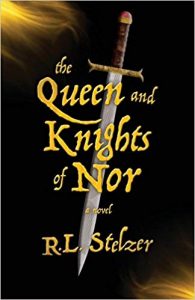
    Rebekah is a Gertrude Warner Awards winner for her middle-grade sword and stone fantasy, The Queen and the Knights of Nor.  She loves her family, her writing, and her community. Read on to hear how one author started her fantastic journey!

    Chanticleer: Tell us a little about yourself: How did you start writing?
    Stelzer: I have been writing stories since around fourth grade. I struggled in my early elementary years with reading, but once I got it, I loved it and began making up my own stories. This became an invaluable skill as an Army brat. Being able to make up my own stories as I looked out the window during our cross-country moves helped pass the time before tablets and in-car DVD players.

    Chanticleer: When did you realize you that you were an author?

    Stelzer: I realized that I could be an author when I started writing down the bed-time stories I was telling my daughters. Writing after they went to bed gave me a creative outlet. During this time, my kids were really little and as a harpist, practicing was difficult because my kids wanted to play to harp with me or climb on the soundboard. Practicing after bed-time was not an option because I did not want to wake them up. Writing became a way for me to connect with the arts. I realized I loved writing, I loved editing, and I did not mind constructive criticism. But I really felt like an author when I held a book in my hands with my name on the cover. It was a wonderful feeling.

    Chanticleer: I know the feeling! Nothing like holding the actual book in your hands and gazing at your name on the cover. Talk about genre. What genre best describes your work?

    Stelzer: I love to talk about genre. Being a newbie in the writing field, I assumed that my writing was geared towards young adults, but my wise mother told me it was better suited to younger readers. With a little research, I discovered MIDDLE-GRADE fiction. I realized that many of my favorite books fall into this category and several of my favorite authors wrote to this audience. The Chanticleer Gertrude Warner Award helped me to narrow down my focus as well by helping me to define the genre that suited my work best. This allowed me to establish a framework and focus for my writing overall.

    Chanticleer: What led you to write in this genre?

    Stelzer: I feel that middle-grade fiction tends to be less angsty than young adult fiction and tackles more complex issues than children’s fiction. I am drawn to the sense of hope that I have found in many middle-grade stories. It’s a genre where authors can tackle some tough concepts, like homelessness as seen in Crenshaw by Kathrine Applegate, or loss and redemption like in The Chronicles of Narnia by C.S. Lewis while balancing the seriousness of such topics with resilience.

    The kids I know in this age group want to know things. They want to know what is going on in the world around them. They are trying to piece together reasons for why the world is the way it is. They then try to create solutions to the problems they see with an innocence and hope that is refreshing to me as a grown-up. I enjoy writing and telling stories with that sense of hope, that has a satisfying, but not always perfect “happily-ever-after” ending.

    Chanticleer: That is really insightful. Do you find yourself following the rules or do you like to make up your own rules?

    Stelzer: I definitely make up my own rules. My mom, who is always my first reader, makes sure I follow basic English and grammar rules, but as far as storytelling goes, I’m not very formulated in how I go about things.

    Chanticleer: What do you do when you’re not writing? Tells us a little about your hobbies.

    Stelzer: As I said earlier, I am a harpist. At this point in my life, however, most of my time is spent homeschooling my daughters and taxiing them around to soccer, dance, harp lessons, and playdates. I also volunteer as a youth leader at my church.

    Chanticleer: You are busy! How structured are you in your writing work?

    Stelzer: I am not structured in many aspects of my life and that includes my writing. I will go months without doing much of anything with writing besides thinking about characters and plotlines, then spend every night for six weeks writing and editing. But I enjoy every minute of it.

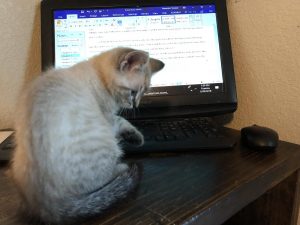
    Chanticleer: Cute kitty! Name five of your favorite authors and describe how they influence your work.

    Stelzer: C.S. Lewis is hands down my favorite author. The Lion the Witch and the Wardrobe was one of the first books to capture my imagination and get me hooked on reading. I really love Lewis’ way of communicating very profound things in simple everyday ways. He also has a sarcastic bite to his writing that I greatly admire.

    George MacDonald won my heart with The Princess and the Goblin, and The Lost Princess. Particularly with The Lost Princess, I saw how an author could weave important life lessons into an engaging and entertaining tale. Nesbitt’s Enchanted Castle is so quirky, slightly strange, and completely imaginative. This work broadened my ideas of fantasy. Unlike Lewis who took the Pevensie children out of our world into another world, Nesbitt brought the magic to earth, and I loved that.

    Rebecca Davis is the author of a biography entitled With Daring Faith, the story of the life and service of Amy Carmichael. Carmichael was a woman who did not back down even in the face of death. She learned that her perceived flaws were actually God-given gifts that helped her to save countless children from slavery and prostitution and provide them with shelter, food clothing, education and medical care. I learned through Davis’ account, that each of us has something to contribute to our communities. Her retelling of Amy’s courage has helped me to have courage, on a lesser scale, and to not give up when the way ahead seems blocked. I think that is a lesson every writer needs.

    Jessie Sanders, author of the Grover Cleveland Academy series must be on this list. She was my childhood friend who, from the moment the question was asked of her, “What are you going to be when you grow up?”  she responded, “An author, of course!” and never deviated from it.

    When I began to look for publishers I reached out to her and she gave me great advice, and encouragement. It helped to know someone who had pursued writing and was succeeding in the field. She made the dream seem obtainable, and I am so grateful for that.

    Chanticleer: That’s an impressive list! What do you do in your community to improve/promote literacy?

    The biggest contribution at the moment is teaching my kids to love reading! My oldest is writing her own stories now, my middle-daughter read her first chapter book this summer and my youngest is really getting excited about learning to read in kindergarten.

    I have also had the privilege of encouraging a couple of young writers who are just beginning to pursue their dreams.

    For the last two summers, I had the privilege of chaperoning a youth trip to NYC. On these trips, we assist a permanent organization that teaches English to immigrants for free. I love watching the adults we work with learn to read. They come from all backgrounds. This summer I was able to work with a man who was a doctor in his home country, and an older woman who had never gone to school.  Teaching our adult students in New York is an amazing experience, but I get the double blessing of watching the teenagers I work with a weekly basis, teach others.

    Chanticleer: What are you working on now? What can we look forward to seeing next from you?

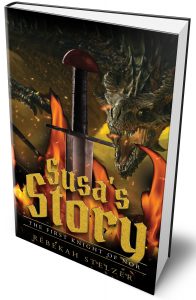
    I am currently in final edits on my second book Susa’s Story, the prequel to my first work The Queen and Knights of Nor.

    It follows Susa a young woman training to be a lady-in-waiting to the King’s betrothed, but her loyalties are torn as she has promised to help her childhood friend Draka win the King’s heart.  In her quest to become queen, Draka along with Susa and their friend Loeta, partner with Graken, a dragon with immense powers. Graken guides the young women in the magic arts, but these lessons do not come without a price. Susa has some hesitations along the way but feels justified because she is helping her friend. Little does she know that the consequences of their actions will plague the kingdom for generations to come. As two of the women pursue their newfound powers with reckless abandon, one will lose all that she loves most.

    In addition to editing, I’m learning about cover art, layout design, and formatting as I am going to indie publish this time around. I hope to release Susa’s Story this fall.

    Chanticleer: You parted ways with your publisher? How did that happen?

    Stelzer:  I parted amicably with my publisher in January. They were awesome in helping me to move over into an indie-type venture. They weren’t sure what to do with me, never having published middle-grade and I didn’t know about anything. So it was a clean split and I have nothing but good feelings towards them.

    Chanticleer: That is truly the best of all worlds! Thank you for spending some time with us today, Rebekah. Best of luck with Susa’s Story. We are looking forward to reading and talking about that!

    If you love Middle-Grade Fantasy, you will absolutely be enthralled with R.L. Stelzer’s work!

    Pick up a copy of her award-winning book, The Queen and the Knights of Nor and write a review. Author’s love reviews.

    Check out Rebekah’s website here: Legendsofnor.com

    If you’ve enjoyed this 10-Question Interview, please comment, “like”, and share!
  • 10 Questions Interview with author J.R. COLLINS – Author Interview, Creativity, Writing

    10 Questions Interview with author J.R. COLLINS – Author Interview, Creativity, Writing

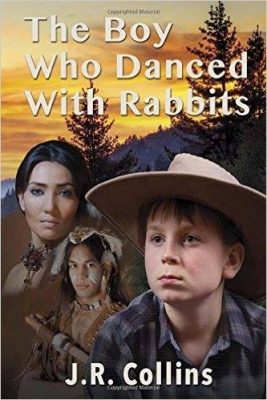
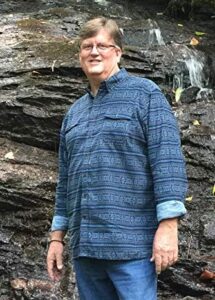
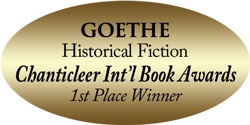
    I first met Joe Collins at CAC18 this last April. He’s a tall, quiet man who carries himself with a certain nuance, a particular look in his eyes that lets a person know he’s looking for fun. He writes from the heart and although he won 1st Place in the Goethe Awards for 2017, his book could have done just as well in the Laramie Awards.

    I am honored that Joe took the time to participate in our 10 Questions Interview Series. He has a lot to say and I hope you enjoy this piece as much as I do.

    Let me introduce you to J.R. (Joe) Collins:


    Chanticleer: Tell us a little about yourself: How did you start writing?
    Collins: I was raised in the Southern Appalachian town of Blairsville, GA. Our whole county had a population of around eight thousand at the time of my birth, 1962. I spent my growing up years helping my father farm beef cattle and attending the local school for my education. I went to church as a kid. Learned a deep respect for a love that would sacrifice itself for me. I believe I was considered normal by the local folks. You knew everybody in my confined, little world, and their business, too, whether you wanted to know it or not. News traveled fast because of how the telephone worked. Most all the homes were on a “party line,” if you had a telephone at all. You knew folks’ business because you could listen in on your neighbor’s phone conversations over that “party line.” The older generation was judgmental to a point. That mattered to families. You didn’t want folks thinking bad of you or yours.

    My trail after high school began by following the same path many of the kids from my area walked. College, job, then family. I couldn’t stay on that trail long, though. I discovered competitive golf after a couple years in college and turned pro after obtaining an Associate degree. Spent many years beatin’ that little ball trying to catch a break while working at different golf courses here, there, and yonder. I loved it. Did okay for a small-town, mountain-born boy. I got no regrets. Won a few good tournaments. Maybe I should’ve been a caddie?

    Met my wife at the ripe old age of thirty-five. We have two kids, Alex and Emma, they’re twins. Fortunately, we all get along for the most part with little tension outside of normal weekly stress. We like the outdoors but have regrettably had little time over the years to enjoy vacationing there because of work and the crash of the economy. I do regret that.

    I started writing because I wanted to tell a story. A story of my heritage to some degree. A story to enlighten those who read it about a frontier that came and went with little recognition outside a state of confusion about the grave mis-justice done to the native Cherokee. I won’t claim all that is in (or will be in) my books as actual, but I can guarantee you they are based on fact in my imagination. I love that about writing. I’ve always enjoyed a good “yarn” be it a ghost story that will haunt my nights, a mystery that challenges my intuition or an adventure that will take me to someplace I may never see. Introduce me to people I would never meet otherwise. It is a true blessing when I learn someone has enjoyed my work. Somebody give me a hug!


    Chanticleer: We do love you, Joe! When did you realize you that you were an author?

    Collins: That’s an easy one. It’s when I heard my name called out for First in Category at the Chanticleer Awards Gala. I for sure knew I belonged behind the scenes writing when I broke protocol and absent-mindedly went for the ribbon Kiffer was holding without shaking Gregory’s hand first. “What a stupid I am” — I feel terrible about that. I hope he understood. Accepting that ribbon was extra special to me. That’s the moment I knew I could actually think of myself as a writer. Thank you guys soooo much!

    Chanticleer: Those of us who have won awards know what it’s like to be in that is-this-really-happening? moment. I’m sure Gregory Erich Phillips knows exactly what that’s like! What genre best describes your work?

    Collins: Historical Fiction for sure. I love learning about history that is based in the lives of those who actually lived it. I respect heritage, so I enjoy creating stories combining the two. Those aspects wound together give me great pleasure when I write. My publisher told me early on in the publishing of my first book, “Write from your heart when you write, Joe. Don’t force it if it doesn’t fit.” I follow that. I want my reader to enjoy their trip back in time to a place they will never see outside of my book, and to be comfortable with the journey. I want them to experience the surroundings of each scene like they are actually standing there watching in person. To taste the smells, feel the air, hear the sounds and to comprehend the emotion I want them to feel. I love taking them back as they read. I’ve heard it said that history repeats itself. I believe history stays with us if we as authors write it, understand it, feel it; then our readers can believe and be transported. I want folks to escape to a world I completely understand. All they need do is be willing to go inside my mind for a while. It’s not such a bad place, really.

    Chanticleer: That’s wonderful, Joe. Can you tell us a little more about it?

    Collins: I grew up in a part of the Southern Appalachian that holds a rich history of ancestral heritage for those who were founded there. I basically grew up an only child as my siblings are much older than me. Being the only child on a big cattle farm surrounded by mountains and forest is heaven for a boy of my put together. My imagination had unlimited boundaries. I hunted constant when game was in season. I fished when hunting wasn’t allowed or whenever I got a hankerin’ for some fresh, juicy cold-water trout. One stream I would fish regular produced a lot of Brown Trout, another produced more Rainbow Trout. Just depended on which flavor I had a taste for as to where I’d go try and catch fish. Those days are gone. The fish have lost their flavor. The creeks and rivers now polluted with housing and folks. What a shame.

    We got little in the way of television reception where I lived growing up, so entertainment had to be something other than watching TV. On some evenings after we’d worked hard on the farm all day, Dad would take Momma and me and we’d go visit the old-timers at their original family homes where they were born, then raised their own kids, and still lived in then. Some were family, others not so much. I loved goin’ with my dad and doing that. Sittin’ out on the porch rocking in a chair made right there in the work shed of whatever elder we were visiting. I’d rock and listen to their tales while they smoked or chewed tobacco. Spitting dark, brown burley tobacco juice out between their fingers while thinking on thoughts about the tale they were spinning. You had to watch where they spit that stuff because it would splatter in all directions when it landed. Get all over your feet and ankles if you were in too close. I heard stories from the days of old that sank into my soul. Are they in my book? Some, maybe. Remnants, mostly. The ideas? – for sure.

    Of course, where I grew up was rich in Indian ancestral heritage as well. As a kid, I hunted the plowed bottoms up and down the river Notla whenever I got the chance hoping to find Indian made artifacts. After a good rain was the best time. We found some unbelievable things, too. Seriously, you wouldn’t believe a body could make such as we found on occasion from just the natural resources right where whatever it was you found was laying. I could live like settlers did back in those days. I can relate. I guess that’s why I like historical fiction so much. It takes me back to a time in my life where I had no worries. We all need a little of that from time-to-time. I miss it. #GroupHug.

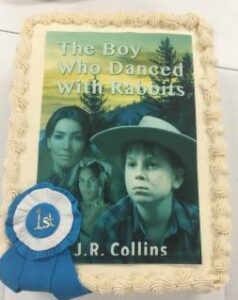
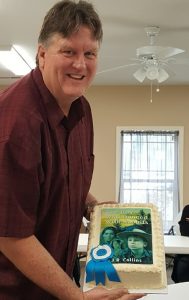
    Joe received this beautiful cake from his work family. #GroupHug
    Joe showing off his beautiful cake! Sure looks good!

    Chanticleer: Do you find yourself following the rules or do you like to make up your own rules?

    Collins: I don’t like rules. I trust myself and my judgment more than I do most folks who make the rules. Politicians and government folk are prime examples of rule makers who care little for the common folk — ask the Native American. Being a person of faith, and knowing what lies ahead, I get confused as to why we have locks? Or why we hire our own to protect us from ourselves? I prefer a time when folks looked after them and theirs. In writing, I follow that same train of thought. Conversation can be lawless!


    Chanticleer: You’re giving us a lot to think on, Joe. Thank you! How do you take all of these memories, all of these stories, and come up with a full-length novel?

    Collins: If I can live it in my mind, I can make it into a story. I try to pull everyday occurrences and mix those with any corresponding relative history that I know about. That concoction has to settle in my center for me to know it’s something I can focus on. But, the difficulty comes when I try to pinpoint the objective of why I want to write about that particular subject. It has to satisfy my soul. If it ain’t there, it ain’t to write. But, God.

    Chanticleer: How structured are you in your writing work?

     Collins: Aghhhhhhhhhh! Hahahahahahaha! STRUCTURED? Don’t even know what that means. I write when I can feel the words going on to the paper (screen). I need to work on this area of my “authorshipness” profile. Hahahaha! I love you guys! I know y’all are structured. I saw it first hand in Bellingham back in April.

    Chanticleer: [Don’t you just love this guy? #GroupHug] How do you approach your writing day?

    Collins: That all depends on where I am in the writing process of the particular thing that I am writing. For a novel, I can spend a lot of time with story content and character development or I can work on the comfort of the read if I’m well enough along. The priority status of either of those two aspects will designate the attempts I will make for any particular day. Stories have to flow to achieve [the desired] effect. A story written poorly does not catch the imagination of the reader even though the topic is of interest. I prioritize where I believe a reader would want to be in the progression of what is taking place at a certain point in the story. Then, of course, you sit down to write and it all comes crashing down. No reason just crashes. Your mind shuts off. That’s when you reach for something other than your pencil (laptop) . . .  like bourbon. No more writing that day. Sometimes intention to write and creative juices are way too far apart for my simple mind. I try to plan and prioritize, but it doesn’t always go the way I want. On those kinds of days, we all need a hug.

    Chanticleer: [#Group Hug] What are you working on now? What can we look forward to seeing next from you?

    Collins: Right now, I’m finishing the final book in the trilogy I call, “Home from Choestoe”, that I’ve been working on for the last few years. Originally, I’d planned on four books but I’m ready to move on. I want to start something else. Being raised in the Southern Appalachian Mountains offers many different opportunities to write about interesting topics. I haven’t fully decided on what my fourth book will be about as of yet, but it will come to me before long. I have some ideas, but nothing has settled with me that would spur me on to write a novel.

    Chanticleer: What is the most important thing a reader can do for an author?

    Collins: Enjoy what we write, then tell others so they can hopefully enjoy it as well. Give us reviews that we can share. Selling books is important, sure, but most all good stories have an underlying point of concern. If a reader finds that and is moved by it, then that is all we can hope for as authors. That, to me, is the most important consideration for what we do. Is the reader touched by what we write? Do they feel, then understand what we are saying? Let’s hope they get it because that’s why we do what we do. It sure ain’t for the money.

    Love you guys! Take care, and God Bless . . . Joe


    We certainly love you back, Joe! Thank you for spending some time with us today.

    If you liked this interview with author J.R. Collins, please leave a comment below. We love being connected to our amazing author community, don’t you?

    Connect with Joe on his website at: http://jrcollinsauthor.com/

    Or, on Facebook, at: https://www.facebook.com/Jrcollinsauthor/


  • 10 QUESTIONS with AWARD-WINNING AUTHOR SUSAN FAW – Book Marketing, Increasing Book Sales, Author Interviews

    10 QUESTIONS with AWARD-WINNING AUTHOR SUSAN FAW – Book Marketing, Increasing Book Sales, Author Interviews

    Author Susan Faw is the perfect example of what I mean by #SeriousAuthor. She not only writes amazing YA Fantasy, she also approaches her writing as an occupation.

    She’s serious. She plans. She kills it. Every time.

    Please read, respond, and share this 10 Questions Interview with author, Susan Faw.

    Chanticleer: Tell us a little about yourself: How did you start writing?
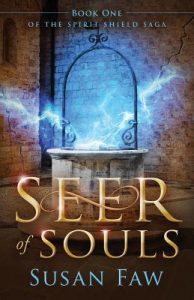
    Faw: Back in 2014, the company that I had been working for since 1994 announced that it was merging with another company from the U.S.  I knew that it was the death knell for my position within the company and that it wouldn’t be a matter of ‘if’ but ‘when.’  I grabbed a bottle of wine, went out to my deck, cried for a couple of hours while I polished it off, then went inside and sat down at my computer and started to write Seer of Souls. My prediction came true on May 1st of 2017 when I was let go due to a “work slowdown.”  It was a nice way of saying I was over 50 and no longer wanted within the organization.

    Chanticleer: That’s fascinating. I often wonder about how stress has the power to alter our perception of the world around us – even how we define ourselves. And sometimes what it draws out of us in that altered state. When did you realize that you were an author?

    Faw: I think it started to feel real when Seer of Souls was picked up by Booktrope (now defunct). They gave me my start and dragged this new author through the process of taking a raw manuscript to finished, published product. Unfortunately, they closed their doors three months after my first book went live, and so I had to start all over again, learning the Indie way of doing things.

    Chanitcleer: Seer of Souls did well in our 2016 Dante Rossetti Awards. Talk about genre. What genre best describes your work?

    Faw: I am a fantasy author, first and foremost. I cut my teeth on the great fantasy authors of the century and have always loved to be transported to unique worlds.  I think the subgenre of dystopian fiction, which I see to be a hybrid of science fiction and fantasy, was birthed due to this need to know the answers to what if the worst case scenario happens.

    Chanticleer: What led you to write in this genre?

    Faw: I adore it. Despite what most people think, fantasy is about people, more so than even the romance genre. Fantasy explores the human condition through a portal of strange new worlds and if well written, challenges our beliefs about structures or ‘norms’ that we must accept in modern society. It allows us to talk about taboo subjects in a safe environment, because of it is “just fantasy.” I read a lot of fantasy and science fiction. When you immerse yourself in a genre, you learn the tropes, the norms, what works within the genre and what has been already done. By reading you absorb a culture that you can then build on. I couldn’t write romance. I don’t understand the genre.

    Chanticleer: Good insights. Are you a rule-follower or do you like to make up your own rules?

    Faw: I follow the rules for the most part, but I find that when I try to be formulaic about the rules, it shuts down my creativity. I become bored with the project, so a certain level of spontaneity is important for me.

    Chanticleer: Yeah, sometimes the best way to silence the muse is to unleash the editor in the middle of the creative process. Something, I’m sure, we all do from time to time. How do you come up with your ideas for a story?

    Faw: I like to do a day or two of random reading online. I check out the weird and the wonderful posts that litter the Internet and start taking notes of strange occurrences or weird events. Ghost stories or reports are a great source of inspiration. Paranormal activity can lead to all kinds of magical concepts.
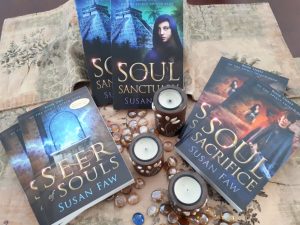
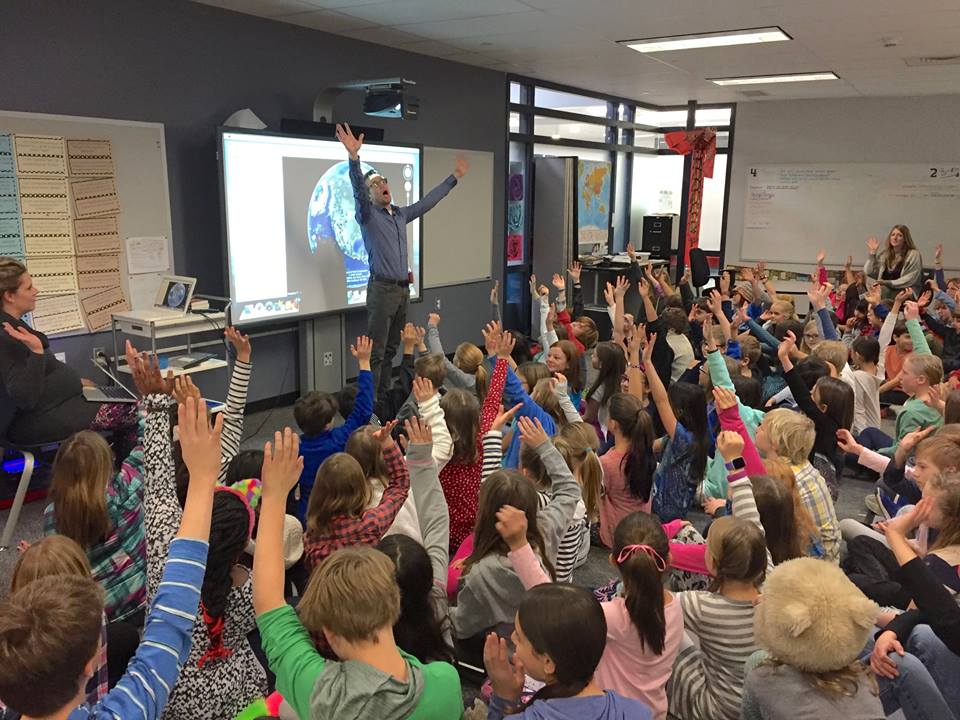

    Chanticleer: Those nachos look good… How structured are you in your writing work? How do you approach your writing day?

    Faw: Now that is a work in progress. I recently moved and am still settling into my writing routine here. In the past I would write whenever I could squeeze the time in, but now that I am writing full time I have found my discipline to have weakened. Ideally, I like to treat my writing day like a work day, work 8-5 at my computer. I find that keeping a routine is the most productive. Beyond that, I like to write in the mornings and do the business side of things in the afternoon, such as marketing or production activities.

    Chanticleer: I believe you will settle into your routine in no time. Can you give us a few of your favorite authors and describe how they influence your work?

    Faw: JK Rowling, Robert Jordan, Erika Johnannsen, Terry Goodkind, Brent Weeks – all are fantasy authors and I love rereading their works because of the depth of their writing. The world building is amazing and the character development is so real, you would swear their characters breathed.

    Chanticleer: I love authors who can create worlds and characters like that. Do you use craft and/or business books? Which ones have helped you the most? 

    Faw: When it comes to editing, I put every book I write through this preliminary edit, to sift it for the chaff – The Word-Loss Diet by Rayne Hall. It is a small book stuffed with the most common, juvenile writing mistakes. I also reference The First Five Pages by Noah Lukeman and Writing The Breakout Novel by Donald Maass. I need to give a shout out to indie author Chris Fox and his advice in Six-Figure Author – Using Data to Sell Books and Write To Market – Deliver A Book That Sells. That last book is not what you think but involves understanding your audience and discovering subjects within your niche that will resonate with your audience, within your genre.

    Chanticleer: That’s an awesome list. Thanks! Give us your best marketing tips, what’s worked to sell more books, gain notoriety, and expand your literary footprint.

    Faw: Marketing is every author’s Achilles heel. Whether you publish the traditional route or are self -published author, like me, we all need to market. The reasons for this are varied, but in the end, it all boils down to the same two facts:

    No one will take as much interest in your career as you will.
    You are your own best advocate.

    Over the last three to four years, I have worked hard to learn the best practices when it comes to advancing and expanding your author footprint. No one answer works for everyone but there are some essentials that you must have in place.

    • Firstly, you MUST have a kick-ass(ets) cover. Everyone judges by appearance, if they have eyes to see. A poor cover is a stumbling block. When someone is browsing for a book to buy, your cover needs to stop them dead. It should compel them to read your blurb, to check out the ‘look inside’.  If you cover cannot grab their eyes, then you book will not grab their wallet. Spend the money on this, if you are an indie. If you are a traditional author, make this a serious discussion with your publisher.

    • Secondly, take the time to LEARN about Facebook ads, and Amazon (AMS) ads and how they work. As a traditional author, you might not be able to run Amazon ads, but you certainly can with Facebook ads. A small, effective and can make a huge difference in daily sales.

    • Thirdly, work hard to build a mailing list dedicated to your author brand. There is no better way to market than to a dedicated list of fans waiting to snap up every book you write. There are ways to introduce your work to new people, usually in the form of some sort of giveaway. It can be a short story related to your series or some deleted chapters, or original sketches/artwork that you have drawn. Work on building that audience who is hungry for your next book. The other reason why this is important is that it is a marketing activity that is totally within your control. Regardless of what happens with other advertising platforms, your list is yours. That direct contact with your customer is essential. An excellent coach for in this area is Bryan Cohen of the “Sell More Books Show” podcast.

    • Lastly, take the time to get to know other authors in the book industry. The collective wisdom of these smart people can help you avoid some costly mistakes and alert you to new possibilities as they crop up.  Whether traditional or indie, be humble enough to learn from others who may be farther along the path than you, or doing something smart.

    Chanticleer: Susan, thank you for spending time with us today. You are a powerful and positive force in the universe and we absolutely adore you! 

    Susan’s second novel, Soul Sanctuary, took home the 1st Place in the 2017 Dante Rossetti Awards! Check out her website and her other books, social media accounts. As you can see, she’s got it going on!


     Facebook  Twitter  Amazon   Website

    If you enjoyed 10 Questions with Susan Faw, please comment and share. Sharing is caring, baby!

  • 10 Questions – Author Interview: Paul Aertker Shares His Marketing Tips, Struggles, and  Inspirations

    10 Questions – Author Interview: Paul Aertker Shares His Marketing Tips, Struggles, and Inspirations

    Meet Paul Aertker, 2017 Grand Prize Winner in the
    Chanticleer Gertrude Warner Awards

    I first met Paul Aertker when we were in Portland Oregon last year. My first impression: Dynamic, Intelligent, Generous. In short, I am so glad we met! When I found out he was coming to our Chanticleer Authors Conference, CAC18, and that he was indeed in the running for an award – I was thrilled.

    Paul is an amazing human being – but don’t take my word for it! Find out for yourself! Read on and be sure to comment at the end – and share if you like.

    Chanticleer: Paul, tell us, how did you start writing?

    Aertker: I started writing on September 12th—the day after 9/11. I guess I saw what the world had become or rather, what adults were capable of doing, and I thought maybe I should focus on kids and maybe kids could make things better. So that’s how I got started writing.

    Chanticleer: That’s amazing, Paul. Thank you for taking action in this way. What led you to the middle-grade crowd? 

    Aertker: I write middle-grade books mostly because I act like an 11-year-old. No, but seriously, I do. I enjoy working with and writing for the middle grades for several reasons. Nine to twelve-year-olds are at a perfect stage in life—before the challenging ages of young adult, yet they are still old enough to understand what’s going on in the world, and most importantly, they get my jokes!

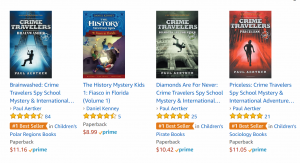
    Chanticleer: You’re right! What inspired you to write this particular series, The Crime Travelers? I hear, by the way, that this series is doing quite well…

    Aertker: I think most everything I write is about travel. The Crime Travelers series is about international action adventure—”like the Bourne Identity but for kids.” What’s more, this new book Posthumous is about an American family in Paris, and the mother dies, and the dad and daughter move back to the US. I think of travel as a catalyst for writing, a means of generating ideas mostly because I see reading and writing as a form of travel.

    Chanticleer: Oh, good answer! Reading is the best form of escapism. Give us five authors whom you would love to meet on your travels – and tell us how they have influenced your work.

    Aertker: What I’ve done is a little different from most children’s book writers. I love Roald Dahl and Margaret Peterson Haddix and Rick Riordan and Gordon Korman and the rest. However, most of my influence comes from the adult authors who write international and action adventure novels—specifically, James Patterson, Robert Ludlum, Lee Child, John Grisham, etc. I like these guys, and I like their work. In the Crime Travelers series, I bring the action and adventure of adult novels into the kid world.

    Chanticleer: I think Middle-Grader readers are ready for these books. Look at their video games! Tell us a little about areas of writing you feel most confident in – and what advice you can give someone who is struggling in this area. 

    Aertker: I’ve gotten much better at getting the words on the page. I used to struggle to create a lot of volume of pages.  But, I have a trick that has helped me. I think we all struggle with the internal critic telling us that we are not good enough or whatever we’ve done is terrible. We all have this. Sometimes I find that I cannot sleep so instead of tossing and turning, I will get up, put on my glasses, and sit at my desk. I’ll write in the middle of the night for hours. And what I’ve learned is that my internal critic doesn’t get up with me! He’s too tired to criticize. So I write for a while and then go back to sleep. In the morning I wake up and notice that someone has written in my document! Yes, sure it needs work, but editing seems to be easier than cranking out the first draft.

    Chanticleer: Good advice – If your inner critic is too loud, wait until it passes out, and then write. So, I hear you sell a lot of books… Which business books have helped you the most?

    Aertker: I think one of the best business books for writers is Tim Ferriss’s 4-Hour Work Week. We all know that we will not work just four hours a week. Writing has no end. We know this. What I took from this book was that it’s important to delegate tasks. You need to hire an excellent cover designer, and you need a good interior designer for your book… You also need a developmental editor, a copy editor, and a proofing editor. Then you need to assemble a team of beta readers. And, and, and. The point being: ask (or hire) others to help.

    Chanticeer: What do you do in your community to improve/promote literacy?

    Aertker: I frequently speak at local schools whether I’m in my hometown or traveling to a new place. I love speaking to classrooms and bringing excitement to books and reading. I promote reading for the sake of reading. Period. I think it’s important for kids to enjoy the activity. If we want kids to read great literature and to be healthy adult readers, we have to get them to like reading, first.

    Chanticleer: Love your passion for reading and helping kids discover the joy of reading. Give us your best marketing tips, what’s worked to sell more books, gain notoriety, and expand your literary footprint.

    Aertker: The single best marketing tip for me has been to give my books away. I give mostly to teachers, fourth, fifth and sixth-grade teachers, and to librarians. If you’re a teacher, please write me, and I will send you a set of books for free. Yes for free! The reason being that a set of books in a teacher’s classroom is without question the best calling card I could ever have. I often have teachers write me back and say, “Oh thank you so much for sending the books. The kids are fighting over them!” That is awesome marketing. (Reach Paul at https://www.paulaertker.com/)

    Chanticleer: Wow! Well done. So, what are you working on now? What can we look forward to seeing next from you?

    Aertker: I am super excited about this next book coming out called, Posthumous. It’s a book about a 12-year-old girl who wants to publish her late mother’s stories. It’s one of those books that I wrote in the middle of the night, and I think it’s the best thing I’ve ever written. It’s sad and sweet, and it’s all about the kids making things right.

    Chanticleer: I think we will all want to read this one. Please keep us updated. What is the most important thing a reader can do for an author?

    Aertker: The most important thing a reader can do for an author? That’s easy. Write a review! I am amazed at how critical getting reviews are, and how difficult it can sometimes be to get people actually to go on Amazon and write the review.

    Chanticleer: Paul, it’s been a pleasure. Thank you for spending some time with us. You are a bright star in the universe! 

    Okay, now it’s your turn… If you have a question for Paul Aertker, please feel free to comment on this post or reach him directly through his website https://www.paulaertker.com/.  If you enjoyed this interview, please SHARE it! Sharing is Caring, baby.

    Paul won the 2017 Grand Prize Gertrude Warner Award for Middle-Grade Books because he entered the contest! If you have a middle-grade book the world needs to see, enter the competition here.  The deadline is fast approaching – May 31, 2018.

  • 10 Questions – Author Interview: DENISE DITTO SATTERFIELD 2016 GRAND PRIZE Winner of the LITTLE PEEPS AWARDS – Author Interviews, Marketing, Writing

    Meet Denise Ditto Satterfield, 2016 Grand Prize Winner of the
    Chanticleer Little Peeps Awards

    I first met Denise at CAC17 and was impressed by her passion for writing and her ability to encourage those around her in their craft. Much like her Children’s books, she seemed to be spreading her charm and charisma (#fairy_dust) everywhere she went!

    Recently, we had a chance to chat and here’s what she said about her writing life and life in general. I hope you enjoy getting to know Denise Ditto Satterfield a little more through this interview.

    Chanticleer: Tell us your story, Denise, how did you start writing?

    Denise Ditto Satterfield: At the ripe old age of 44, I decided to go to college. My friends teased me, jokingly asking, “Why didn’t you go to college when you were supposed to?” You see, I started life the old-fashioned way … the way my dad said it had to be done. Graduate high school, get married and have kids. No college in the picture … especially not for girls. So, that is what I did. You ask, “How did that work out for you?” Not very well. Fast forward – I got divorced, my kids grew up, I got remarried and then I went to college. In my first English class, my love for writing was reignited. At the encouragement of one of my teachers, I submitted a story to the school’s literary magazine. I won first place in the competition and the rest is history. From that day forward I knew that one day I would quit my job and write full-time.

    Chanticleer: What a journey! It takes a lot of strength to break out of the mold and do something else. Follow your heart. Good for you! Let’s talk a little about your chosen genre. 

    Ditto Satterfield:  My genre, for the moment, is children’s chapter books. I am also working on a Tooth Collector Fairy handbook which will be a companion book to the chapter books. When I take a break from fairies, I’m working on a middle-grade book. I love writing for children because I think like a child. I know that sounds crazy, but it’s the truth.

    Chanticleer: That’s perfect. I find your work marvelously relateable. Maybe I think like a child as well… Do you find yourself following the rules or do you like to make up your own rules?

    Ditto Satterfield: Well, it’s funny you ask this question. The handbook I’m working on consists of the rules and guidelines that the tooth fairies must follow. The main character, Batina, is a hardcore rule follower. As for me … I would say that I am a rule follower when it comes to most things. My husband says more specifically that I don’t follow the rules because they are rules. I follow the rules because they make sense. If I find that the rules don’t make sense, I will tweak … or bend … or ignore rules – whichever makes the most sense.

    Chanticleer: I agree – things have to make sense. Easier to remember that way! What do you do when you’re not writing? Tells us a little about your hobbies.

    Ditto Satterfield: Up until May 2017, my hobby was motorcycling. I rode a Harley for 27 years. My road name was Wonder Woman which was later shortened to WW. I got this name when my husband and I rode to Raleigh, NC for a Marine Corp reunion about 18 years ago. I was meeting a group of old Marines whom I had never met before. When the word got around that Skipper (my husband, Frank) had arrived at the hotel where the event was being held, all the guys filed outside to greet him. When they saw me they couldn’t believe I, a girl, rode all the way from Texas with him on my own bike. What made it even better is that, at the time, I rode a Softail painted like the American flag. That was the day I got my name.

    When I quit my job to write full time, I became a joiner. I joined writing clubs, attended conferences, workshops, etc. I thought maybe I should learn how to blog so I went to a Leisure Learning class called, “Blogging for Dollars.” At that workshop, I heard something very interesting. The teacher said it was important for writers to build a platform. She suggested that for those in the class that didn’t have a website or blog should start one. She went on to say, “All you have to do is write about something you know.” I decided to take her advice – I started writing a motorcycle blog focusing on women riders. I gave tips in the form of videos. Honestly, they are a hoot. If you want a good laugh, visit www.motorcyclemommablog.com. Here are a few of my favorite videos – Blue Jean Shirts – Oct 2013; Bad Coffee – Apr 2013; Listening to music on the Motorcycle – March 2014.

    Chanticleer: You are hysterical! Great blogs – I hope this is something you can continue. Maybe add a Children’s Book Blog to your impressive platform? So now, how do you come up with your ideas for a story?

    Ditto Satterfield: When I was working everyone knew that I was going to quit my job one day and write full-time. When people know that they all have an idea of what you need to write about. I had one girl come to work one day and tell me that her daughter lost her tooth. The daughter wanted to know if all tooth fairies were girls. She told her no. Her request was that I write a story about tooth fairies that included boy tooth fairies. I thought that sounded like a pretty good idea. I wrote Batina’s Best First Day but didn’t have any tooth collector fairies that were boys, so in book two, Home from Decay Valley, I incorporated a boy tooth collector fairy. (He’s real cute … and very inquisitive … and I love him. He makes me laugh.)

    Chanticleer: I love it when your characters are so deeply developed you can’t help but fall in love with them! How structured are you in your writing work?

    Ditto Satterfield: I am not structured at all with my writing. I go in spurts and sometimes I work best under pressure.  For example, when I was working on, Home from Decay Valley, I set a date for completion. The rough draft spilled out pretty fast. It was the revision stage that bogged me down. I would talk about how I had to finish the manuscript and then find something else to work on. I think this is what some might call procrastination. But I’m the farthest thing from being a procrastinator. I’m the one that has to have all my ducks in a row and the sooner the better. When it comes to creativity, it’s just hard to turn it off and on.

    Chanticleer: It is hard! And it’s also important to let others know that the process isn’t easy. Thank you for sharing that. It’s important to work on your craft. What do you do to grow your author chops?

    Ditto Satterfield: I find that the best way to grow my author chops is to attend workshops and social events with other writers and conferences.  I always get fired up after a great conference. I also conduct a critique group at my house twice a month.

    Chanticleer: Good answers. What do you do in your community to improve/promote literacy?

    Ditto Satterfield: I have presented my book at schools and libraries. In addition, I visit the Ronald MacDonald House in House annually and read to the kids and sign and give away books.

    Chanticleer: You are truly amazing! Okay, before I start to cry because you’re too awesome, please give us your best marketing tips, what’s worked to sell more books, gain notoriety, and expand your literary footprint.

    Ditto Satterfield: I love the marketing part of being an author. I believe an author must find his/her target audience first. Once the audience is identified, hit the road running. In my case, my target audience is 1. Children in the tooth losing age and their parents/grandparents, and, 2. People in the dental field i.e. dentist and dental hygienists.  What I’ve done to sell my books is a little bit different than most. Besides the usual avenues (libraries, schools, bookstores) I sell my books at different types of festivals. People love to shop at all the different vendor tables because they can get unique gifts not usually found in stores.

    Denise onstage!

    I gained a tiny, wee bit of notoriety when a children’s theatre group picked up my story and made it into a musical. This is how I did that. I pitched the idea to a children’s theatre group. They liked the idea and made it into a musical. This performance gave me a lot of mileage on sales prior to the Premier Performance date. I was able to hit events all over town promoting the musical and selling my book. Since the first performance, I have packaged the musical and am now taking it on the road. It was performed again this month, May 2018, in Conroe, TX by the C.KIDZ Theatre School. Lucky for me I was able to get the C.KIDZ Theatre School into the Children’s Museum of Houston to perform the musical again on May 27th. I will also be launching my second book at the museum on May 27th directly after the musical so that should increase sells.

    Chanticleer: You are blowing me off the page right now! What are you working on now? What can we look forward to seeing next from you?

    Ditto Satterfield: Right now I’m working on the Tooth Collector Handbook. It will outline the rules and guidelines for the Tooth Collector fairies.

    Chanticleer: That makes perfect sense – and smart, too. I can imagine kids will love this. Who’s the perfect reader for your book?

    Ditto Satterfield: Children between the ages of 5-10 and their parents and grandparents.

    Chanticleer: What is the most important thing a reader can do for an author?

    Ditto Satterfield: I know that reviews are very important to most authors. I think that should be number as the most important thing a reader can do but … for me, the most important, rewarding thing a reader can do for me is tell me what they think about the story. I had a school visit a couple of months ago and there was a little girl in the class that had my book. She jumped up and told the class all about it. It was crazy fun. She was so excited to meet me and she told me she love, love, loved the book. That made my day.

    Chanticleer: I’ll bet it did! Denise, thank you for taking the time to share a little bit about yourself and your writing life with our community. You are a treasure! 

    For those of you in the Houston, TX area, Denise will be launching Home from Decay Valley that will include an onstage performance of Batina’s First Day on May 27, 2018, at the Children’s Museum of Houston.  A not-to-miss event! Denise will donate $1 for every book sold on May 27 to the Barbara Bush Literacy Foundation.

    I would love to invite our readers to visit Denise’s website for her children’s books. It’s an education in marketing.  https://toothcollectorfairies.com/ 

    For her books, you can purchase them from her website, or your favorite retailer.

    Village Books :

    The Tooth Collector Fairies: Batina’s Best First Day

    The Tooth Collector Fairies: Home from Decay Valley

    We’ve asked 10 questions, now it’s your turn! What question would you like to ask Denise Ditto Satterfield?

    Denise won Grand Prize in the Little Peeps Awards for Children’s Books by entering the contest. Do you have a Children’s Book? The deadline for entering Little Peeps is September 30, 2018. Enter here today!

    You can read The Tooth Collector Fairies: Batina’s Best First Day Chanticleer Review here.