Category: 10 Questions Interviews

  • Laurel Anne Hill 10 QUESTION AUTHOR INTERVIEW SERIES – Author Life, Book Discovery, Young Adult Novels

    Ozma Grand Prize Badge for Plague of Flies by Laurel Anne Hill10 Question Author Interview Series with Laurel Anne Hill, Award-Winning Author

    Laurel Anne Hill is one of our favorite authors. Whip smart and full of life, Laurel Anne took home the Grand Prize in OZMA for her work, Plague of Flies: Revolt of the Spirits, 1846.

    Let’s get to know Laurel Anne Hill a little better. Read on!

    Chanti: Tell us a little about yourself, how did you start writing?

    Hill: Born in 1943, I started writing stories before I could read. My older sister would write down the words I told her to, inside a paper tablet. I’d fill in the blank places with pictures I’d cut out of comics or magazines. My first published short story—Nancy Saves the Day—appeared in the children’s section of a major San Francisco newspaper when I was eleven years old. For this I received the payment of two dollars, enough money to see eight double features at my local movie theater if I hadn’t decided to spend the money on something else.

    My craft may have been questionable, but I’d become a published author.

    My publications as an adult include three award-winning novels, over thirty short stories, many short nonfiction pieces, and one scientific paper.

    Chanti: Some of those awards are from Chanticleer! Let’s talk about genre. What genre best describes your work? And, what led you to write in this genre?

    Hill: I mostly write speculative fiction: science fiction, fantasy, steampunk and horror. My warped brain has loved to create that sort of stuff since the third grade, when my parents took me to the theater to see Bela Lugosi’s “Dracula.” During the many years I worked professionally in the field of environmental health and safety, I even described my on-the-job writing assignments as “science facts, written in response to governmental fantasy, in order to avoid regulatory horror.” My novels and many of my short stories feature young adult protagonists.

    Chanti: Do you find yourself following the rules or do you like to make up your own rules?

    Hill: I like to follow what I call “standard good writing practices,” the information I’ve learned (and continue to glean) from writing mentors and experts in the field. I stray from these rules when the story I’m writing demands me to deviate. For example, in Plague of Flies: Revolt of the Spirits, 1846, my protagonist, Catalina Delgado, narrated in first person present tense. One-third through the first draft, I realized I needed a second point-of-view character to provide information only an antagonist could. Two first person point-of-view characters would have confused readers. I opted for a hybrid point-of-view, like I’d experimented with in my second novel, The Engine Woman’s Light. This approach of one first person and one third person narrator solved my problem.

    Chanti: What do you do when you’re not writing? Tell us a little about yourself and your hobbies.

    Hill: When I was growing up, my family was poor, and my dad was an alcoholic. Three generations resided in a two-bedroom, one-toilet rented flat in San Francisco. I wanted to attend college, but realized I’d have to earn the money to do so. I entered every essay contest open to public high school students in the city and won enough money to pay for four years of college tuition and books at San Francisco State College. In 1967, I graduated with a degree in the biological sciences. In 1978, four years after I’d left my psychologically abusive first husband for a far better man, I earned my Master of Science degree at California Polytechnic State University.

    In my twenties, I loved to skin and SCUBA dive, and ride a surf mat down miles of California’s white-water river rapids. I also experimented with oil paints and underwater photography. By my early thirties, I still did skin and SCUBA periodically, painting and underwater photography, but I’d married a widower with two teenage sons and one preteen, and joyfully accepted my family responsibilities. Immediately, I expanded my cooking repertoire. All those wonderful guys loved to eat.
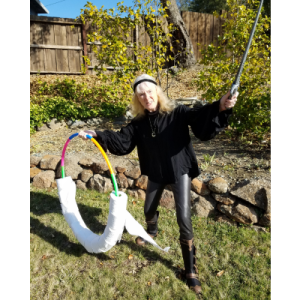
    One ring to rule them

    Back then, I worked at San Francisco General Hospital as a nuclear medicine technologist. My husband owned a cabin in the Sierra foothills, and we would spend at least one weekend a month there. Our daughter was born when I was thirty-five years old. I didn’t start writing as an adult until my early fifties. By then, our daughter was a teen, the three “boys,” long-since grown, and our cabin sold.

    Aside from our annual family fishing trip, my “hiking” became mostly limited to traversing the 53-acre site where I worked in environmental health and safety. When I retired in 2008, I joined my husband on his daily walks up-and-down-the hills where we resided—up to three miles daily. Now, as a widow, my physical therapist has assigned me exercises in response to the three major falls I had a couple years ago. My “hobby” has become enjoying my amazing family and learning a path to improved health. I also serve as secretary of my high school alumni association and a member of my local Methodist church.

    Chanti: That’s incredible! Paying for university by writing essays? Amazing! Thank you for sharing some of your history. How do you come up with your ideas for a story?

    Hill: Since my childhood, characters (often armed with their own adventurous tales) have popped into my dreams and conscious thoughts. Up until the second or third grade, they were like imaginary friends, except I understood they weren’t real people. After that, some of them gradually morphed into a cast of characters for possible future stories. Throughout the past thirty years, characters have moved into my mind with their own stories to tell as the need arose. I’ve often said that a main character has to feel real in my head before I can make him/her/they “real” on the page. Once characters and I start communicating inside my brain, my ideas flow.

    Chanti: How do you approach your writing day?

    Hill: Before I retired from my job as an environmental health and safety specialist at a pharmaceutical research and development site, my writing time was early in the morning, after dinner, and/or as weekends allowed. Once retired, I wrote at the table while my beloved husband sipped coffee and read the morning paper or while he watched the evening news. I would write in-between my household, family and other obligations. After my husband passed away six years ago, my “approach to my writing day” has consisted of consulting my kitchen calendar in the morning, then deciding the best time to grab my laptop, open it and start working.

    Chanti: What areas in your writing are you most confident in? What advice would you give someone who is struggling in that area?

    Hill: I’ve had over thirty of my short stories published since 1995, served as the editor-in-chief for three anthology collections, and assisted in the editing of several others. I’ve also judged a number of short story contests. I love the short story as a writing medium, but caution new writers to consider the following advice before creating one: The short story is not a very, very short novel. Remember to avoid the temptation to use subplots and multiple point-of-view characters. Read a lot of short stories in your preferred genre. Reading the classics is great, but read plenty of contemporary pieces to see what’s getting published today.

    Chanti: That’s great advice! What craft books have helped you the most?

    Hill: You might laugh, but I vote for Writing in General, and the Short Story in Particular by L. Rust Hills, first published, I believe, in the late 1970s. I read a lot of classical literature years prior to my first attempt to write a short story as an adult. Despite my Craft of Fiction class in college, I never understood that the difference between a short story and a novel involved a lot more than length. Nor did I comprehend the ways in which the modern novel had evolved in the twentieth century. The diagrams in Orson Scott Card’s Characters and Viewpoint (1988) helped me visualize the differences between the various point-of-view options writers have. Recently, I discovered a website blog by David G. Brown that explains what I’ve been learning at conferences about point-of-view for the past ten years. [Go to: https://darlingaxe.com/blogs/news/history-of-pov.]

    Chanti: Thank you for that information. Give us your best marketing tips, what’s worked to sell more books, gain notoriety, and expand your literary footprint.

    Hill: I’m active in the California Writers Club and participate in their “Writers Helping Writers” outreach programs. I’ve been a program participant at many science fiction/fantasy “cons” internationally for fifteen years. I’ve run Amazon book promos, with up to 3,000 book sales (and Amazon best seller status in particular categories) over the promotional period. My most recent novel, Plague of Flies: Revolt of the Spirits, 1846, has won seventeen awards and a number of excellent professional reviews. My previous novel, The Engine Woman’s Light, won thirteen awards and received a Kirkus Star. Yet my overall book sales are not particularly impressive. At age eighty, I’m still not sure what the heck works at all, let alone the best. With luck, maybe I’ll figure it out by the time I hit ninety.
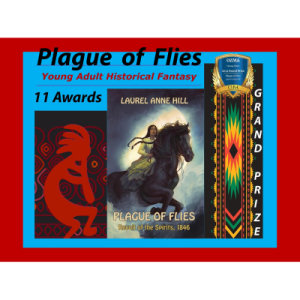
    Plague of Flies book promoChanti: You figure it out and let us know, okay? What are you working on now? What can we look forward to seeing next from you?

    Hill: I’m writing a steampunk fantasy set in Mexico and California in the nineteenth century. Working title: Saints of Fire. In this novel, the mass murder of family members forces a Mexican woman and her two daughters to flee into hiding from the unidentified perpetrators. The spirit of her now-deceased husband seeks to identify the persons responsible for the disaster, but death has stolen most of his memory. He finds he can only communicate with his fifteen-year-old daughter. Gradually, he and his daughter start to realize he might have played a role in the horrific event.

    Chanti: That actually sent chills up and down my arms! Do you ever experience writers block? What do you do to overcome it?

    Hill: I have never been blocked from writing words. Writing the best words, however, can pose a challenge. Sometimes, I’ll stare at the screen, pour another cup of coffee and keep mulling over possibilities until the answer materializes in my gray matter. Other times, I’ll move to a different part of my manuscript and work there. Eventually, I’ll find my words in all the places I need them to be.

    Chanti: What excites you most about writing?

    Hill: The ability to combine words, ideas and art to create a piece unique to me—a dynamic adventure with authentic, engaging characters. I’m excited by the possibility of touching another human heart and changing that organ’s owner in some small yet positive way.

    Chanti: What is the most important thing a reader can do for an author?

    Hill: Some might say to read the author’s latest book and give it a good review on Amazon. Then recommend that book to other readers. Some might say to read multiple books by the same author. Those are both important. Yet I really hope at least a few of my readers will allow my words to touch their hearts—to encourage them to modify their thoughts and lives in a positive manner, if only in some small way.
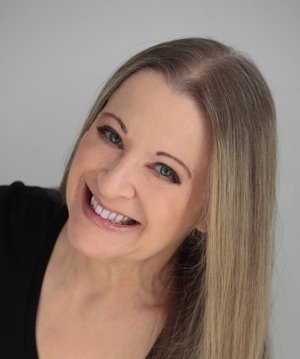
    Chanti:  Here is the link to Laurel Anne’s website where you can discover her works 

  • 10 Question Author Interview with Elizabeth Crowens – Anthologies, Murder Mysteries, Time Travel

    10 Question Author Interview with Elizabeth Crowens – Anthologies, Murder Mysteries, Time Travel

    CHANTICLEER AUTHOR TEN QUESTION INTERVIEW SERIES
    with Elizabeth Crowens

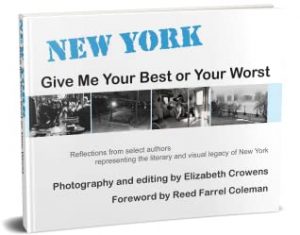
    The 2021 Shorts Grand Prize Badge for New York: Give Me Your Best or Your Worst by Elizabeth Crowens

    Author Elizabeth Crowens has been coming to our conferences (CAC) for a while now – and it is always a good time when she does. In fact, Elizabeth took home the GRAND PRIZE in TWO Divisions in 2021~ The SHORTS Awards for New York: Give Me Your Best or Your Worst and scored majorly in the CYGNUS Awards for A War in Too Many Worlds. And her literary agent just negotiated a 3-Book publishing deal. She is funny, smart, and cares deeply for her fellow authors. In short, she’s a perfect Chanticleerian! I want you to meet her – Elizabeth Crowens.

    Chanti: So, Elizabeth, when did you realize that you were an author?

    The 2021 Cygnus Grand Prize Badge for A War in Too Many Worlds by Elizabeth Crowens

    Crowens: When I realized it was too complicated and too expensive to make elaborate feature films all by myself. This, of course, was in the pre-video and pre-smartphone days of motion picture cameras and processing outrageously expensive film stock, of which I had firsthand experience in a film school which touted experimental and avantgarde auteurism rather than commercial productions.

    Although I had the cinematographer’s eye, women in that realm faced a lot of restrictions, so I veered toward screenwriting. Never made my mark in that commercial arena either, but I did start a first draft of a novel, which stayed in my closet for many years until I took it seriously, polished it, and had it published. Now, there are three novels in that series, the latest of which is A War in Too Many Worlds, which won last year’s Grand Prize in the Cygnus Awards. The first book of that series, Silent Meridian, won First Prize in the Goethe Awards, and the second book, A Pocketful of Lodestones, won First Prize in the Paranormal Awards. There will be one more novel, The Story Beyond Time, before I complete my Time Traveler Professor series.


    Chanti: It always amazes me how much you juggle in your work. Good on you! But, how do you come up with your ideas for a story?

    Crowens: There’s always something personal when it comes to my story ideas. For my anthology, New York: Give Me Your Best or Your Worst, for years I had always wanted to publish a coffee table book using my photography. When I inadvertently stumbled upon an artist’s grant which could give me that New York Give me your best or your worst coveropportunity, I gave it a whirl, not expecting anything to come of it. However, there was one caveat—I had to involve others. That’s when I pitched the project like my popular Caption Contest on Facebook and was really surprised when I won one of those grants. Regarding other stories—they come from all over the place but, once again, there’s always a personal connection some way or other.

    Chanti: How do you approach your writing day?

    Crowens: If I can wake around 4:30 am and write until 9:00 am when the “business day” begins, that’s considered a productive day. It’s quiet then, and I don’t have to worry about being interrupted by robocalls or having to deal with the frustrating mundane stuff like booking doctor’s appointments or arguing with inept billing departments over why I don’t owe their bills. Hate that stuff with a passion, and it totally gets me out of the creative zone.

    Chanti: Ugh. I hate the robo calls! How structured are you in your writing work?

    Crowens: To expand upon the previous question, once I’m out of the zone, there’s no way I can force myself to get back on track. Once I have the spare time, I’ll concentrate on reading or watching a film—in the name of research, of course. Got to stay productive—no matter what.

    Chanti: Smart. What areas in your writing are you most confident in? What advice would you give someone who is struggling in that area?

    Crowens: Dialogue. I think that comes from my screenwriting background. Script length is roughly 110-120 pages. My weakest area would be in setting descriptions and sensory reactions. In screenplays, nearly all of that is eliminated unless it’s vital to the script.

    What it's like to be bi-coastal!
    What it’s like to be bi-coastal!

    Chanti: That’s good advice. You work in novels and film – two very different practices, two very different places – so I want to ask you about your craft. What do you do to grow your author chops?

    Crowens: I attend writer’s boot camps and conferences—a lot of them.

    Chanti: We’re always happy to see you at CAC! What craft books have helped you the most?

    Crowens: Story Trumps Structure by Steven James. Anything by Donald Maas or James Bell. Stephen King’s On Writing is a classic. Writer’s Digest publishes a lot of good ones.

    Chanti: What are you working on now? What can we look forward to seeing next from you?

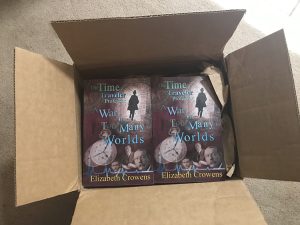
    Crowens: It might be a while since you see my final alternate history/science fiction novel in the Time Traveler Professor series, because I’ve been concentrating on Hollywood mysteries. One of the reasons why I like entering in the Chanticleer Author Awards is that they allow unpublished manuscripts to A War in Too Many Worlds compete against the published ones. I have three unpublished mysteries which have won first prizes in various categories, and I’m keeping my fingers crossed that the one my agent is currently shopping, will leap beyond a finalist this year in the M&Ms or the Clue Awards.
    Chanti: Best of luck to you in the CIBAs! They don’t let me near them, so luck is the only thing I can offer. Do you ever experience writers block? What do you do to overcome it?

    Crowens: There are two instances where I hit a wall. One I mentioned previously, and that’s when I’m knocked out of the zone. The other is that cooling off period when I’m completely done with a project. During that time, I catch up on a lot of books and movies, many of which have no relation whatsoever to anything I might need for research on a future book. That’s the time to hit my TBR pile. Often, they might be novels from an author I know.

    Chanti: I like how you handle that. It’s productive – and sounds like it’s predictable as well. Good for you! What is the most important thing a reader can do for an author?

    Crowens: Give us reviews! Post them on Amazon, even if it isn’t a “verified sale” on Amazon and you purchased your copy at a retail store or book fair, and on Goodreads. NetGalley. Blog about them.

    Chanti: You heard it from the author, herself! The most helpful thing is to write the review – and talk up the books!

    EXCITING NEWS for Elizabeth Crowens – This just in! 

    We are beyond thrilled to announce that Elizabeth received a 3 Book Deal with her agent, Elizabeth K. Kracht for her Babs Norman 1940s Hollywood Mystery series.  The Deal was announced in Publishers Marketplace. Here’s a link to her website where the good news is also mentioned, and another link to her Facebook announcement: https://www.facebook.com/thereel.elizabeth.crowens

    Now that’s something to crow about!

    Elizabeth entered her unpublished manuscript, Babs and Basil, and the Hounds of the Hollywood Baskervilles, into the Mark Twain Book Awards division of the Chanticleer International Book Awards where it was awarded a First Place Blue Ribbon.

    May be a graphic of text that says 'Publishers Marketplace Deal Report HOUNDS OF THE HOLLYWOOD BASKERVILLES By Elizabeth Crowens Imprint: Level Best Author NEW YORK: GIVE ME YOUR BEST OR YOUR WORST Elizabeth Crowens's HOUNDS HOLLYWOOD BASKERVILLES which charming, failed young actor Hollywood golden age turns private investigator help Hollywood elite Basil Rathbone findA, famous missing canine thespian Hollywood, and growing list other vanished screenland hounds, Verena Rose Level Best, nice deal, three- book deal, for publication spring 2024, Elizabeth Kracht at Kimberley Cameron Associates (NA). liz@kimberleycameron.com Digital: Fiction: Mystery/Crime August 1, 2023'


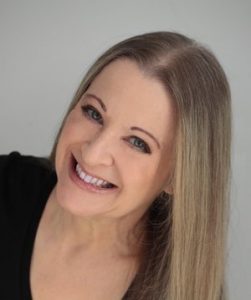
    A white woman with blue eyes and blonde hair smiling against a gray backdropElizabeth Crowens has worn many hats in the entertainment industry in NY and LA for over 25 years. Writing credits include short stories and articles in  Black Belt, Black Gate, and Sherlock Holmes Mystery magazines, stories in Hell’s Heart and the Bram Stoker Award-nominated A New York State of Fright, and three alternate history/SFF novels, which she self-publishes under the name of Atomic Alchemist Productions. Recipient of the MWA-NY Leo B. Burstein Scholarship, NY Foundation of the Arts grant to produce a self-published, photo-illustrated anthology, a Glimmer Train Honorable Mention, an Eric Hoffer Award First Prize, two Grand Prize and four First Prize Chanticleer Review awards. She is represented by Elizabeth K. Kracht at Kimberley Cameron & Associates, is currently writing in the Hollywood mystery genre, and is seeking a traditional publisher.
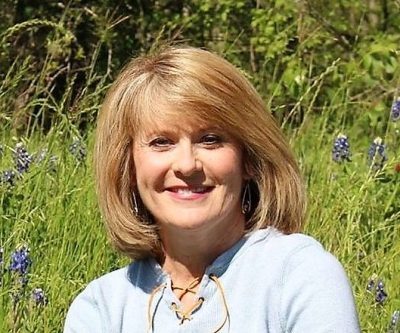
    If you would like to learn more about Elizabeth Crowens author extraordinaire, please like and follow her on her webpage: https://www.elizabethcrowens.com/


  • CHANTICLEER 10 QUESTION AUTHOR INTERVIEW SERIES WITH MEREDITH WARGO – Award-winning author, Animal Rescue, 10 Question Author Series, Best Book

    CHANTICLEER 10 QUESTION AUTHOR INTERVIEW SERIES
    with Meredith Wargo


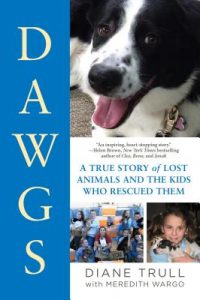
    Hearten Grand Prize to Meredith WargoMeredith Wargo, multi-award-winning author is smart – and exceptionally passionate about animals, especially those in need of rescue. In fact, Meredith sent the book into our Hearten Awards, and DAWGS: A True Story of Lost Animals and the Kids Who Rescued Them  took home GRAND PRIZE in 2021!
    Chanti: Tell us a little about yourself: How did you start writing?

    Wargo: When I was first learning how to write, I used to copy Dr. Seuss’ books verbatim. From there, I started penning my own stories, always using colored construction paper and crayons as my medium. I would add little drawings to illustrate the story and staple my “book” down the long edge of the paper. My drawings were never that good, so I think that influenced my decision to focus on writing at an early age! But when I started college I chose music as my degree because I had taken piano lessons for ten years. After one semester of practicing in a tiny cubbyhole in the basement of the school’s music hall for hours every day while my roommates were out living life as normal college freshmen, I changed my major to journalism, realizing I’m happiest when I’m writing.

    Chanti: That’s wonderful! I’m glad you discovered your happy place early on. What a life changing decision. Besides, you can always play the piano, right? Let’s chat about your writing. Describe your work.  And, what led you to write in this category?

    Wargo: Most of my professional career involved writing, editing, and marketing for a variety of industries, including the legal, architectural, and engineering markets. Working in a corporate structure helped me understand and appreciate how to work under deadlines. I also learned how to interview people and to distill their information to find the hidden gems. But I always had a desire to use my writing for things I felt passionate about. The famous cliché is to write about what you know and love, so I started freelancing on the side and writing about animals. I’ve had more than 60 articles published in a variety of animal-related magazines. Several of my articles have won Maxwell Awards from the Dog Writers Association of America, which is the most recognized professional writing association devoted to dogs.

    Chanti: Congratulations on your wins! What an honor it must be to be so awarded for doing what you love to do. What do you do when you’re not writing? Tell us a little about your hobbies.

    Wargo: Growing up I was a tomboy, which has spilled over into my adult life. I love being outdoors and experiencing all that Mother Nature has to offer. Hiking, cross-country skiing and playing tennis are some of my favorite activities. I am a native Texan but currently live in southern Utah, which is the perfect place for my love of nature. Since moving here, my husband and I have challenged ourselves to try new things. We’ve taken rappelling lessons, which is both exhilarating and terrifying at the same time! Learning to trust a piece of rope to get you safely down a steep cliff changes your perspective on things rather quickly.

    Chanti: I bet! Trust issues are probably worked out rather quickly. Where do you find your inspiration?

    Wargo: I have always been an animal advocate and I love helping the underdog (or cat) through animal rescue. From growing up with the family dogs to taking horseback riding lessons as a teenager, many of my happiest memories are those that include a four-legged creature. We can learn so much from the animals in our lives and I enjoy promoting the heroic efforts of animal rescue groups and shelters or sharing news about the latest advances in animal health and wellness.

    Cover of DAWGS

    From the moment I first learned about Diane Trull and her fourth-grade students starting an animal sanctuary in the Texas Panhandle, I knew I wanted to write a book about their amazing journey. Too often, kids are criticized as being lazy or indifferent. I was so impressed with these students’ resilience and dedication that I wanted to shine a light on their efforts. I hope DAWGS inspires readers to realize that they can make a difference in whatever they feel passionate about. The human spirit can achieve great things and every small and not-so-random act can make a huge difference. It doesn’t matter your age or your size when you’re doing something you believe in. There are heroes among us everywhere and every day.

    Chanti: So true. Thank you for that inspiration! I love how a bunch of fourth graders and their teacher have made such a huge difference in their community.  As we move on, it’s important to work on your craft. What do you do to grow your chops?

    Wargo: I believe that writing is a muscle that needs to be constantly developed so I enter my work in various writing contests and competitions on a regular basis. I usually gain great feedback as a result, and I think it’s just a good way to continue honing my skills. And because the publishing world is constantly changing, I try and take advantage of online courses that help me stay abreast of the latest. Technology has made tapping into these resources so easy there’s really no excuse for [not] taking advantage of them. I have also attended numerous writer’s conferences around the country, which have always been beneficial from hearing professionals speak on the craft to meeting other authors.

    Chanti: I’m so glad you entered your work into Chanticleer’s CIBAs! Just look what happened – a Grand Prize! What craft books have helped you the most?

    Wargo: Over the years, I have read a lot of books that have helped me in my writing, including The Artist’s Way by Julia Cameron, Bird by Bird by Anne Lamont and Stephen King’s On Writing. I’ve also read several books on how to become a successful freelance writer. Additionally, I’ve subscribed to many magazines such as Writer’s Digest, Poets & Writers, and The Writer.

    Chanti: What advice would you give budding writers?

    Wargo: I think being a writer means different things to different people. Regardless if you have aspirations to become a New York Times’ Bestselling Author or you’re simply writing to document your family history or penning your memoir, perseverance is key. Many people think that sitting down to write a book is easy but, like any other profession or career, you get out of it what you put into it. I once read that there are no new stories to write but because everybody’s perspective is slightly different then the possibilities are limitless. At the end of the day, you have to feel good about what you’ve written, no matter what others may think or say. I also think it’s imperative to read a lot, especially books that are in the genre in which you are interested in writing. Go where your passion lies.

    Chanti: That’s great advice. Who’s the perfect reader for your book?

    Wargo: I think one of the great things about DAWGS is that it appeals to a variety of readers. Those involved in education can use the book as a teaching moment to help students realize they have the potential to make a difference, no matter their age. Animal lovers will also relate to the book because it reinforces that animal shelters and rescue groups rely on the generosity of caring individuals and that every small and not-so-random act can make a huge difference to homeless animals as they wait for their forever homes. Because DAWGS is a book about hope and compassion, I think its message is timeless.

    Chanti: Do you ever experience writers block? What do you do to overcome it?

    Wargo: There seems to be an ongoing debate regarding writer’s block and if it’s real. I am here to tell you that it does exist! On days when my creative juices just aren’t flowing, I don’t force it. I walk away from the computer and focus on other things for a while, trying to engage a different area of my brain. But I have noticed that when I get in the habit of sitting down to write every day, writer’s block doesn’t happen as often. That’s not to say that what I write is always good or that I’m happy with the output but for me, just showing up on a regular basis seems to help.

    Chanti: What is the most important thing a reader can do for an author?

    Wargo: Readers are the lifeblood for any author and there are several things readers can do to help promote their favorite authors from adding the book to their Goodreads’ shelf to blogging about their favorite new read. But probably the most important thing is to simply write a review—even if it’s just a few sentences—and posting it to online bookstores and on social media sites. Book reviews influence buying decisions, plain and simple. And when readers are genuinely excited about something they’ve read, a book review is worth its weight in gold.

    Chanti: Well said. And now, a new question…. What’s your favorite dessert?

    Wargo: I am a chocoholic and proud of it! It doesn’t matter what shape or form it comes in; chocolate makes the world a better place.

    Chanti: I agree!

    Now, dear readers, if you would like to know more about Meredith Wargo and the books she’s written, follow this link: https://meredithwargo.com/ and remember to write those reviews!


  • 10 QUESTION AUTHOR INTERVIEW with Jennifer Kincheloe – Award-Winning Author,

    CHANTICLEER 10 AUTHOR INTERVIEW SERIES
    with award-winning author, Jennifer Kincheloe

    M&M Blue and Gold 1st Place Badge Image


    Jennifer Kincheloe won First Place in our Mystery & Mayhem Awards a few years back, but we still remember her contagious smile and her fabulous book, The Secret Life of Anna Blanc. Let’s get into it!

    Chanti: Tell us a little about yourself: How did you start writing?

    Kincheloe: I used to be a research scientist/mother of two. (Actually, I still am) About ten years ago, bemused by the boastful Christmas letters I would get every year in the mail (this was before Facebook), I decided to write a humorous, sort of spoofy Christmas letter. I spent hours on it. And when people read it, they laughed. That’s when I discovered I loved writing.

    Chanti: When did you realize you that you were an author?

    Kincheloe: After I wrote my Christmas letter, I decided to write a screenplay because, in my naïve mind, they were shorter than novels and therefore easier. I had just recovered from an illness and wasn’t working, so I had time to spend on it. When I started writing, I couldn’t stop. It made me high. I wrote all the time. I barely stopped to eat. I would wake up in the middle of the night and write. I took my laptop everywhere. (I still do). When I stopped to consider this, I decided I must be a writer.

    And, by the way, my screenplay was terrible.

    Chanti: I love that feeling when you’re in it deep and words just flow. What a high! What do you do when you’re not writing? Tells us a little about your hobbies.

    Kincheloe: I like kickboxing and hiking. I love theater. I go to the Metropolitan Opera’s film series. I spend time with my family and pets.

    Chanti: It sounds like you have a well-balanced life. Good for you! How do you come up with your ideas for a story?

    Kincheloe: Newspaper articles. I usually base my mysteries on real crimes. The little details in the book, the world-building, typically come from historical sources. For example, I read in a wealthy woman’s diary about how her family had employed a man from China at the turn of the 20th century. He would fill his mouth with water and spit it out in a fine spray onto the clothes he was ironing. That went right into The Woman in the Camphor Trunk.

    Chanti: How do you approach your writing day?

    Kincheloe: I write on my lunch break, nights and weekend. I usually write every day, even if it’s just a paragraph.

    Chanti: Smart. Put something on paper – it doesn’t matter how much. It’s about the habit. I like that. What craft books have helped you the most?

    Kincheloe: I loved Stephen King’s book On Writing. Story by Robert McKee. Bird by Bird by Anne Lamott.

    Chanti: What business books about writing have helped you the most?

    Kincheloe: If I were to look at writing as a business, I would despair. Even the traditional publishing market is flooded and very few authors make a living. What helps me is having an engaging and profitable life apart from writing. This allows me to write for the joy of it. Most authors I know who make a living are a dozen or more books into their career. Some of our finest, most decorated authors do not make a living.

    Chanti: What are you working on now? What can we look forward to seeing next from you?

    Kincheloe: I’m working on the fourth book in the Anna Blanc Mystery series. It deals with mysterious fraternal orders and horrible death.

    Chanti: How exciting! What is the most important thing a reader can do for an author?

    Kincheloe: Email the author and tell them you loved the book and why. Recommend a book to a friend. Give books as presents. Leave reviews on Goodreads, Amazon, library webpages, wherever. Go to their book signing and say hi.

    Chanti: Do you ever experience writers block? What do you do to overcome it?

    Kincheloe: Yes. I overcome it by putting on my big girl panties. In the words of Gail Carriger, “Sandwich makers don’t get to have sandwich block.” I’m a writer. Thus, I write when I don’t feel like it. If I’m burned out, I spend time in nature. A fine book on creative blocks is The Artist’s Way by Julia Cameron.

    M&M 1st Place Gold Foil book sticker image

  • 10 Question Author Interview Series with Alex Sirotkin – Award-Winning Author, Interview Series, Award-Winning Books, Literary, Romantic Fiction, The Long Desert Road

    CHANTICLEER AUTHOR 10 QUESTION INTERVIEW SERIES

    With Alex Sirotkin

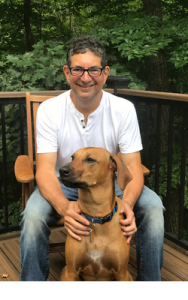
    Alex and his dog.
    Alex and his dog.

    Alex Sirotkin is a kind man with intelligent humor tucked in around the edges. He saves his angst for his writing and his law practice. And, boy, does he ever deliver! The Long Desert Road earned a 5-Star rating from our reviewers and went on to take home the 2021 CHATELAINE GRAND PRIZE! (As far as his law practice, one would do well having him on your side.) We are so proud of him for his outstanding work and being a Chanticleerian. I know you will love him as much as we do. So, without further ado, let me introduce you to award-winning author, Mr. Alex Sirotkin.

    Chanti: Tell us a little about yourself: How did you start writing?

    Sirotkin: Sure. I’m pretty old. I didn’t start writing until 2016, so that would have made me about 60. At first, I wanted to write a screenplay. I love movies, to be honest, more than books, which maybe makes me a lousy novelist. But, but…at the same time, I find that most movies are terrible! Over the years, I’d walk out of the movie theater and say to myself “Damn, I could have written a much better story than that!” So, I promised myself to try one day. And that I did.

    It didn’t take me long to realize that I didn’t know the first thing about writing a screenplay, and the apps that would assist me just seemed too complicated. I had a good idea for a story, so I wrote a book instead. My background is in law – so I can write. But it doesn’t come easily or quickly to me. Sometimes it’s painstaking. Being older, okay old, also provided the time to have many life experiences. You write what you know, and I’ve experienced a whole lot in my life, so I know a lot about which I can write. Conversely, it must be so hard for a young person in his/her twenties to be a fiction writer. For them, everything must be made up!

    Finally, I had a particular experience with my daughter that served as the underpinnings for much of the story. You see, she was bipolar and addicted to heroin. I was her primary supporter, mentor, cheerleader, and disciplinarian for the ten years prior to her death from an overdose in October 2020, during the pandemic. It was the most rewarding, uplifting, stupefying, frustrating, busy, and devastating period of my life. Obviously, it ended in disaster, but I wrote the book when she was doing well, when I had a lot of hope. The novel, therefore, is uplifting. I finished the book in January 2020 or so, and she died ten months later. My book was released three months after that. It was quite surreal.

    Chanti: That juxtaposition must have felt so strange. I cannot imagine. Thinking of the places you drew inspiration from, let’s talk a bit about genre. What genre best describes your work? And, what led you to write in this genre?

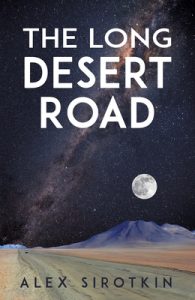
    The Long Desert Road Cover

    Sirotkin: I won my Grand Prize in Romantic literature. I won (the lesser) First Prize in Literary and Contemporary Fiction. To be honest, my book fits best into the latter genre. Sure, my book is a love story. But it’s not your typical sexy beach read, with scantily clad models on the front cover. In fact, some of my witty friends complained that there wasn’t enough (or any) sex in the book at all. (There was some, but I just didn’t go into the hot details.) I had certain things to say – call it a message – in my book, and those would be best said via literary fiction, which to me is a catch-all genre that is not the other more specific areas of writing. And it connotes, I suppose, a focus on the words, more so than one would expect from a who-done-it, or science fiction, although don’t tell that to Isaac Asimov, one of my favs. My book is therefore a slower more-deliberate read.

    Chanti: First in Category for Literary Fiction is nothing to sniff at, my friend, given the sheer numbers of entries in that division! In terms of writing, do you find yourself following the rules or do you like to make up your own rules?

    Blue and Gold Somerset First Place Winner Badge for Best in Category

    Sirotkin: Other than the law, and the Golden Rule, in writing, as in life, I’m not a big believer in hard and fast rules. In terms of writing, like any creative medium, rules might be a guide to the inexperienced novelist (like me) but ultimately one must go with his gut. I was told not to write in present tense. But I did. I was told to limit points of view, but I wrote partly in first person, and partly in third person from two POVs. I was told not to write at such a high level. In fact, someone told me that Stephen King writes at a 5th grade level. Even if I had believed this, I didn’t care. I wrote as I was trained to write, and my possible audience would hopefully appreciate the art of wordcraft, even if they had to refer to Merriam Webster from time to time. And in fact, some told me they kept a dictionary at their side while reading my book.

    My best line (top of page 161) in my eyes, took me hours to perfect, yet I think it was missed by most. Talking about Hubble the scientist (who lived in the early twentieth century) my main character, Henry said “If Hubble himself had but one character flaw, it was his inability to be humble, and such was his reputation.” Get it?  Lastly, I never had an outline for this novel. I pretended for a while to develop one, but I gave up and just started to write. What I had was a beginning and an end. Somehow I managed to meander my way through the desert to finally reach my intended resolution. I think I was a bit lucky to get there.

    Chanti: What do you do when you’re not writing? Tells us a little about your hobbies.

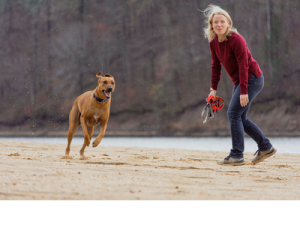
    Sirotkin: I certainly don’t earn a living as a novelist. I’m too poor a marketer, and I don’t write enough. So, I work in my own business. But for fun, I’ve got a lot going on. Like my main character, Henry, I always have a tune in my head. So, I whistle a lot, which annoys the heck out of my wife. And I play piano – I was trained for 9 years in classical piano, but now I just like to sound things out and improvise. I play tennis. I was really a good club player once, until age finally caught up with me. I still play, but not the man I used to be. So it goes. My wife and I hike locally with our two 90 lb. Rhodesian Ridgebacks. Finally, we love to travel, and one of our trips lay the foundation for much of my novel.

    Scout Running with J
    Scout Running with J

    Chanti: Alex, you keep talking about age, and here we are contemporaries… I’m starting to get a bit nervous! Let’s move on – quickly. How do you come up with your ideas for a story?

    Sirotkin: The ideas come from the heart. A work of literary fiction (as opposed to a detective novel, for example) has to come from within. The ideas are already there. You only must recognize them. Personally, I had difficult experiences with my daughter, a bipolar drug addict, over a ten-year period. But my story is not what you think it is. These experiences framed only a part of the story. The bigger picture for me (in terms of a novelist, and not necessarily as a dad) relates to the concept of perspective. It’s been my mind’s mantra for as long as I can recall. Whether one is talking about mental health, politics, or just getting along with one another, the key in my mind has always been a healthy perspective. The size or importance of something in relation to something else. Thinking about your problems in relation to how much worse things can be. Thinking about the positives in your life in relation to the negatives. Then grasp at the size of the Cosmos. Try to wrap your head around the enormity of the Universe. You begin to realize how each of us, and our issues, are so small. And then there’s G-d, as you know him/her/it, or some higher power, or something else, that might bind us together in a natural world. These thoughts and feelings were all there, all along while trying to deal with my daughter’s inescapable issues. The story sprang from these concepts – the hard part was putting them all together in a cohesive tail. I can’t tell you how that happened. It just did, writing with passion.

    Chanti: And you did it all so beautifully. Well said, sir. Thank you for that. What areas in your writing are you most confident in? What advice would you give someone who is struggling in that area?

    Sirotkin: A difficult, yet interesting question. I can’t say that there is one area in particular. But what comes to mind is doing the research. I intended the book to be a piece of fiction based as much in reality as I possibly could. The book in large part was about the Truth. I couldn’t base a book about the Truth, on something that wasn’t real. So, to understand certain areas of “reality” I needed to do a lot of research. Some of it surrounded the nature and mysteries of the Cosmos, what we understand of it, what we don’t, and what we are learning today. I’m no scientist, but I’m just smart enough perhaps to wrap my head around these issues sufficiently to convey them within a story. And the trick was to do the telling as efficiently as possible so as not to lose the reader in confusing detail. Me thinks I could have done that better, having heard from a few readers that they flipped through the science stuff. (And this is why you need a good editor, who tells you when enough is enough.) In any case, the internet is a limitless source of information. To understand how Hubble the scientist was able to determine that the Universe was expanding back in 1928 or so, I had to sift through dozens of articles, many of which were inconsistent with what I read in the others. I also found myself pouring over YouTube videos, or Google Maps of places I needed to describe in utter detail. My advice? Patience, Yoda. And don’t take anything for granted. Facts are facts, there are no alternative facts, and it may take a while to piece it all together. But you’ll get there.

    Chanti: Who’s the perfect reader for your book?

    Sirotkin: Let me answer this question by telling you who will likely not appreciate my novel: someone with certain expectations, someone without an open mind, someone that only likes a certain genre, and/or finally someone that wants to read a story without thinking. My book is a thinking person’s book. If you have an open mind, if you want to experience something out of the ordinary, if you want to learn about something you’ve never even heard of, then you should read my book. If you like delving into the developing personality and motivation of a character, then you will like my book. If you have a sense of humor, and are compassionate about those in dire straits, you will like my book. Most people who read it do. No writer can please everyone.

    Chanti: I like how you answered that question. What excites you most about writing?

    Sirotkin: I would write each chapter a hundred times. This is without exaggeration. I love to see the improvement with each pass. My first draft of a chapter would literally suck. Pardon that word. So, what excites me the most is seeing this evolution take place.

    Write, write, and rewrite!

    Chanti: Fascinating! Do you ever experience writers block? What do you do to overcome it?

    Sirotkin: No, I would not describe it as writer’s block. On many days, I didn’t have the time to write, attending to more mundane issues, or my work. But when I sat at my keyboard, I could always write something. The question for me was the quality of that something and was it worth keeping. How much work would be required to rehabilitate it. If you’ve ever been down, or depressed (and who hasn’t) the key for me to move on from such a state is to take action. A conversation, a confrontation if needed, a long walk, whatever. Don’t sit and brood. The same with “writer’s block.”

    Take action and write. Write anything. Write about something different. Write a letter. Write a silly poem. Or write another chapter but don’t worry about the quality. Just keep writing. And don’t think about it too much. Get back up on that horse. It will find its way home without you.

    I watch a lot of tennis. It’s amazing how badly a pro could be playing in the first set, only to make a tremendous comeback in the second. He keeps at it, playing the game. As in writer’s block, the setback was all mental! Suddenly, he’s back at the top of his game, often without a clue as to what caused his initial lapse.

    Chanti: What is the most important thing a reader can do for an author?

    Sirotkin: This is an easy one. Love his book and rave about it to him and everyone else in the world. Since I won’t make any money from this experience, at least my ego should be boosted. Big time. Sorry, I’m just mostly kidding here. Seriously? The most important thing a reader can do is to give the work the attention it deserves. If it’s a slow read, like mine might be, read it slowly. Afterward, thoughtful criticism and evaluation is most appreciated, especially if I’m to write another one. And yes, if you like the book, pass it on. The most important thing for me is that people read my book and hear what I had to say.

    Chanti: Okay friends, you heard it! If you love nothing more than a well-built, eloquent novel that addresses the hard issues of life with a strong sense of the human soul, look no further! Read Alex Sirotkin’s Award-Winning novel, The Long Desert Road. Be sure to contact the author and share your thoughts – send the book along to others with similar loves. Tell the World! You will be doing all of us a tremendous favor because good books simply must be read.

    Find our review of The Long Desert Road by Alex Sirotkin here, and buy it from Bookshop, Amazon, or Barnes and Noble! Remember, Reader Reviews really help your favorite authors!

  • M.J. EVANS 10 Question Author Interview Series – Middle Grade Fiction, Book Discovery, Horseback Riding

    CHANTICLEER 10 Question Author Interview Series with
    M.J. Evans

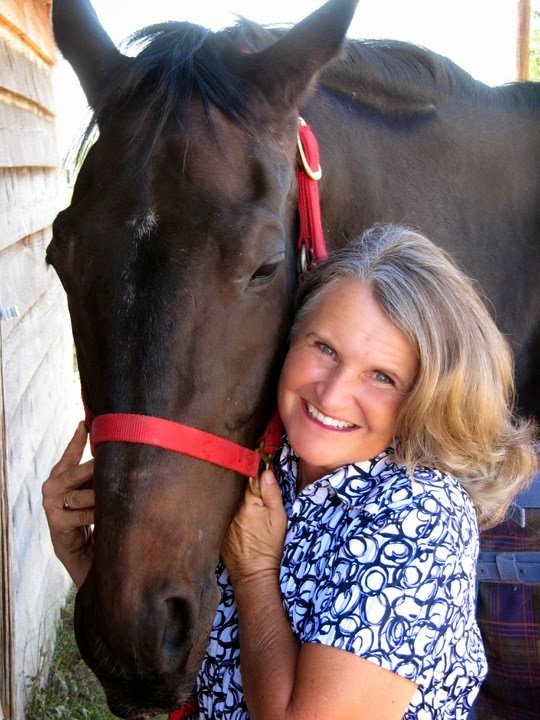
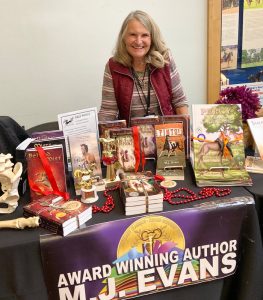
    Image of Award Winning Author MJ Evans standing behind a table full of her books
    M.J. Evans Author!

    We met M.J. Evans a little while ago, not far off the beaten path. I would love to tell you that we met on the trail, and honestly, now that I think about it, I suppose we can say that. The author trail, that is.

    We were delighted to connect through our global CIBAs where M.J. won First in Category in our 2019 Gertrude Warner Book Awards for Middle Grade!

    What’s that? You don’t know what our CIBAs are nor how they can help enlarge the digital footprint of your novel? Where have you been? I mean, it’s not  a secret! Check out more about the CIBAs here.

    I found M.J. to be engaging, vivacious, and an all-around talent in so many ways. I’m so very excited to introduce you to our friend and Chanticleerian, M.J. Evans.

    Chanti: Tell us a little about yourself: How did you start writing?

    Evans: Most important to know about me is that I am a mother of five and a grandmother of twelve. My family is my world. I am also a former teacher of middle school and high school so you can know that I love being with teenagers. I have been a horse-lover since birth…I call it “being born with manure in my blood!” I started taking riding lessons when I was eight. When I wasn’t on a horse, I was reading both fiction and non-fiction books about them. Thus, I developed a love of reading as well.

    Chanti: That’s funny. Manure in the blood. Actually, as a kiddo who grew up on a farm, I totally get that. Talk about genre. What genre best describes your work?

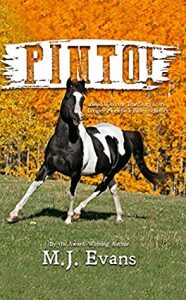
    Pinto!
    PINTO! by M.J. Evans

    Evans: Fantasy has always been a favorite genre of mine so combining fantasy and horses seemed like the perfect fit. I have expanded my horse stories into “coming-of-age” and “historical fiction” to challenge myself. PINTO! Based Upon the True Story of the Longest Horseback Ride in History won me the Chanticleer Gertrude Warner Book Award! I have written four non-fiction books, one coming-of-age novel, one picture book, and nine fantasies for middle-grade readers and young adults.  You can probably guess that my favorite genre is fantasy. I love reading fantasy and I love writing fantasy. It is so much fun creating worlds and characters. I love to let my imagination run away with me. Regardless of the genre, because of my love for horses, most of my books are about horses or horse-based fantasy creatures.


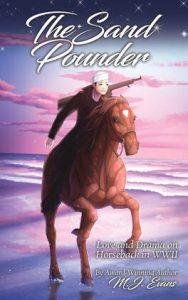
    The-Sand-Pounder-by-M.J.-Evans
    The Sand Pounder by M.J. Evans

    I had so much fun doing research for PINTO! Based Upon the True Story of the Longest Horseback Ride in History, that I decided to do another historical fiction. It is called Sand Pounder and is about the Coast Guard’s mounted beach patrol during WW2. I love this story.

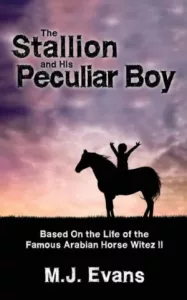
    The Stallion and His Peculiar Boy by M.J. Evans
    The Stallion and His Peculiar Boy by M.J. Evans

    I am now just publishing my THIRD Historical fiction about a little-known horse story. The Stallion and His Peculiar Boy is based on the life of the famous Arabian Stallion Witez II. It will be released on Feb. 28th.

    Chanti: This release is just around the corner! Best of luck, Margi! What do you do when you’re not writing? Tells us a little about your hobbies. (I think I know the answer…)

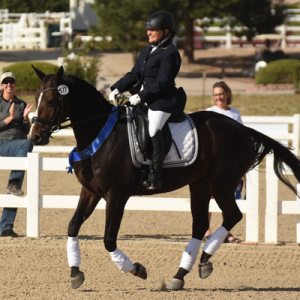
    Evans: I am a serious equestrian. I love to compete in Dressage. I currently have two horses right in my backyard. If I am not in the arena working on dressage, I am on the trails in the beautiful Rocky Mountains of Colorado. I do a lot of story creating in my head while riding on those trails.

    Serious Equestrian! M.J. and Jazz taking it home!

    Chanti: That’s cool. And is there a blue ribbon around Amara’s shoulders? Lovely! Okay, back to the interview… What areas in your writing are you most confident in? What advice would you give someone who is struggling in that area?

    Evans: One of my strengths is dialogue. I think I am good at it as a result of all the theater I have done. I always recommend to other authors who are struggling with this to read it out loud as though you are on a stage. Does it make sense? Does it flow logically? Does it fit the characters’ personalities and situations?

    Chanti: Great advice.

    Evans: My other strength is world building. This is important for fantasy books. I have a sticky note on my computer with the words: Smell, Sight, Sound, Touch, Taste. This reminds me to include as many of the senses in my descriptive narrative as I can so the reader can feel like they are there with the characters. This creates a world the reader can both picture and experience.

    Chanti: Oh, I love how you include the senses! This is a great way to elevate your writing to the next level – keep it relatable, engaging, and hard to put down. It’s important to work on your craft. What do you do to grow your author chops?

    Evans: I am always taking classes to improve my writing. Lately they have all been webinars! I am not a “formula” writer so the creative writing classes that I have taken that just focus on a certain formula are not helpful to me. I also don’t outline or do storyboards. I create the entire story in my head before I start writing. Once I start writing, I don’t look back until I get the story out of my head and onto the computer. That first draft is my foundation.

    “Until you have the foundation, you only have an idea! Once I get the foundation, I can go back and embellish and edit…two, three, four, five times, however many revisions it takes.” – M.J. Evans

    Just to give you an example: since I write for Middle-Grade and Young Adult, I need to hit the industry standard for length (word count). Take YA for example. Those books need to be 60,000 to 80,000 words. My Centaur Chronicles series is four books that are all about 65,000 words in length when they are finished. But the first draft is only about 45,000 words. So, you see, I do a lot of enhancing and building upon that foundation.

    Chanti: You are such a professional! No wonder your works are doing so well. What craft books have helped you the most?

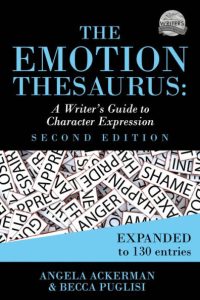
    Emotional-Thesaurus-by-Angela-Ackerman-and-Becca-Puglisi“My favorite craft book is The Emotion Thesaurus: A Writer’s Guide to Character Expression by Angela Ackerman and Becca Puglisi. I use it all the time!” M.J. Evans

    Chanti: That’s a good book. What do you do in your community to improve/promote literacy?

    Evans: For seventeen years now I have been donating my time to dozens of Odyssey of the Mind and Destination Imagination teams at the elementary, middle school, and high school levels. As such, I guided the students as they wrote their one-act plays for competitions. Over those years, I took all of my teams to the state finals and seven teams to the world finals. I also donated my time to speak to dozens of upper elementary and middle school students in both public and private schools. I teach them my favorite writing tips to get them excited about both writing and reading. I have been a volunteer writing mentor for Denver Public Schools, and volunteered to speak at the Jefferson County Public Schools writing workshops. I also donate my time to promote literacy at public libraries and independent bookstores as a guest speaker.

    Chanti: I love that about you. Good job! Give us your best marketing tips, what’s worked to sell more books, gain notoriety, and expand your literary footprint.

    Evans: You must know who your audience is. Most of my books are about horses. I know where to reach horse people. My Colorado trail guidebooks are in tack and feed stores in the Denver area. That is where horse people go on a regular basis! I also sign books at horse events such as the National Western Stock Show and The Rocky Mountain Horse Expo. I find that “hand-selling” is both fun and profitable because I love being with and talking to people and I love making connections with my readers.

    I have also found that submitting my books to literary award competitions and then having the bonus of winning adds credibility to my books. I have those beautiful stickers that I can put on the cover that catches the eye of prospective buyers. I also love attending award ceremonies and meeting other authors. I have made some great friends that way and we help each other with our books.

    I enjoy doing author visits at schools. Of course, as a former teacher, I feel very comfortable in the classroom. But this is part of knowing who my audience is and going to them.

    Chanti: Those are all good things to do that are proven to pay off. What are you working on now? What can we look forward to seeing next from you?

    Evans: I am now just publishing my THIRD Historical fiction about a little-known horse story. The Stallion and His Peculiar Boy is based on the life of the famous Arabian Stallion Witez II. It will be released on Feb. 28th.

    Chanti: Now, M.J., do you ever experience writer’s block? What do you do to overcome it?

    Evans: No. Because I have the story worked out in my head before I start to write I always know where I am going. The key is to set the time each day to write and stick to it! However, I do have one trick that works. Never stop writing at the end of a paragraph. Always quit right in the middle of a paragraph or even in the middle of a sentence. Then, when you return, you already have a start.

    Chanti: What is the most important thing a reader can do for an author?

    Evans: First: If you like a book PLEASE POST A REVIEW ON AMAZON, GOODREADS, and BARNES & NOBLE. Of those, the most important is Amazon as all their algorithms for promoting a book are based on reviews. Second: TELL YOUR FRIENDS! Third: GIVE BOOKS FOR GIFTS!

    Chanti: Don’t you wish that was just an automatic thing people did? Reading is great – don’t get me wrong, but if you truly love something, take that extra step and share your thought, thumbs up, 5-star ratings… Doing so does more for an author than you can possibly imagine.


    If you liked this interview, please give it a thumbs up and share it with your friends. And don’t forget to check out M.J. Evan’s books! You will be happy you did.

    Instagram https://www.instagram.com/mjevansbooks/?hl=en

    Website http://www.dancinghorsepress.com/


  • MARK H. NEWHOUSE – 10 Question Interview – Author’s Journey, Author Interviews, Writing Life

    CHANTICLEER 10 Question Author Interview Series with

    Mark H. Newhouse


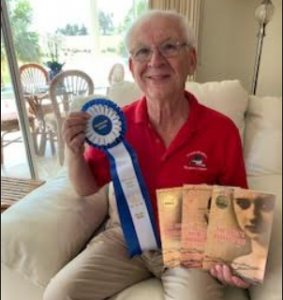
    A white man in a red polo holdingup a Grand Prize Ribbon and The Devil's Bookkeeper TrilogyWe met Mark H. Newhouse in Florida where he wondered whether or not he should enter his epic historical novel into our CIBAs.
    Turns out he did and he took home the GRAND PRIZE in our new Division, The SERIES Awards for The Devil’s Bookkeepers: The Noose, The Noose Tightens, and The Noose Closes. The series tells the story of what happened to the residence of Lodz, Poland, a Jewish ghetto during WWII.
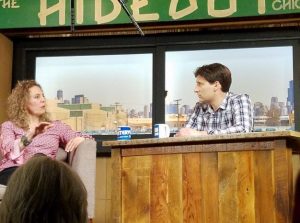
    Mark’s story is unique and powerful – and his unwavering sense of humor will catch you off guard!

    Let’s get to it. Dear Chanticleerians, meet my friend, Award-Winning Author, Mark H. Newhouse.


    Chanticleer: Tell us a little about yourself, how did you start writing?

    Newhouse: I was born in Germany two years and one day after Mom was freed from Auschwitz and my father from Buchenwald. I lost my grandparents and most of my family in the Holocaust. With my parents struggling as new immigrants and in a terrible marriage, I turned to writing. My pen was a magic wand where I could make the world better. I still think of that as my goal.

    Chanticleer: Wow, there’s a lot there to unpack. I cannot imagine the trauma your parents must have gone through during that horrendous time. Ultimately, I believe to have a goal of making the world a better place is the best goal one could possibly have. When did you realize you that you were an author?

    Newhouse: I think of myself as a ‘struggling author’ because I learn something new every day. It is the challenge of capturing my thoughts and ideas, and learning something new, that makes this so exciting. I feel like an author when I read reviews that tell me I touched a reader’s heart and soul and made a difference in their lives.

    Chanticleer: Well, you certainly touched our souls and made a difference in our lives with your series, The Devil’s Bookkeepers. Your books have won a number of awards and the series as a whole is getting many great reviews. Why did you write this series that is so different than your other work?

    Newhouse: My parents never told us about what they suffered during the Holocaust. They were focused on survival as immigrants. Mom gave me a copy of The Chronicle of the Lodz Ghetto published in 1984 by Yale University Press. Reading the anonymous entries, I was shocked by the true events. I realized few people knew about this incredible story and the efforts by its controversial chairman to save the ghetto by brutally forging it into a factory for the Nazis. I had to try and write this story so my children would know what I didn’t.

    “My pen was a magic wand where I could make the world better. I still think of that as my goal.” – Mark H. Newhouse

    When I read chapters of The Devil’s Bookkeepers to critique clubs, they encouraged me to publish it and enter contests. I was surprised and thrilled when we won. I think the suspense and unique love story keeps people reading. Unlike many Holocaust books, it is not about death and the gas chambers, but about people searching for friendship, love, and survival, in a time of terror. When its protagonist tries to save his loved ones from the tightening Nazi noose, readers ask themselves what they would do. I asked myself that question with every page. It will haunt you.

    Blue and Gold Badge for the 2020 Series Grand Prize for Genre Fiction The Devil's Bookkeepers by Mark Newhouse

    The Devils Bookkeepers The Noose cover ImageThe Devil's Bookkeepers Book 2: The Noose Tightens with Chanticleer BadgeThe Devil's Bookkeepers 3: The Noose Closes, Cover

    Chanticleer: I’m glad you told that story. It needs to be told! And you did it beautifully. What do you do when you’re not writing? Tells us a little about your hobbies.

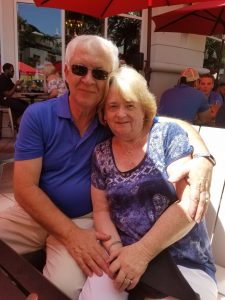
    Newhouse: I get in trouble. Actually, I was an elementary school teacher who loved working with my sixth graders. I have more than one thousand of my former students on Facebook with me sharing our lives, some more than 50 years after they left my classroom. I think it says a lot about their ‘crazy’ teacher, but also about them that they still care about me. I love feeling I am helping them and others, so I lead a writing group, write the Writing Bug monthly column mailed to thirty-thousand homes, and am Florida Writers Association’s Youth Chairperson and a Board of Directors member. I keep pretty busy. I also play lousy golf, read, swim, and drive my wife crazy.

    Mark and Linda relaxing.
    Mark and Linda relaxing.


    Chanticleer: Mark – that’s just – well, remarkable! The connections you forged with your students, the care and concern you gave them, means a lot. So much that they maintain contact with you! I don’t know of many teachers that have that same influence in their students lives. Good for you! And, dude, it doesn’t look like Linda minds you driving her crazy… How do you come up with your ideas for a story?

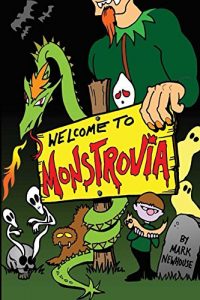
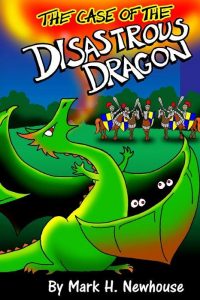
    Newhouse: I wish I knew. Ideas drop from the sky—too many–I learned to focus on one at a time. I keep ideas in a file cabinet and carry a pocket notebook to grab ideas as they hit. I get a lot of ideas from news. For example, I read about an elderly woman evicted from her home to build a parking lot and turned it into The Case of the Disastrous Dragon, where a dragon is imprisoned for burning the butts of knights evicting him from his ancestral home. Welcome to Monstrovia, an award-winning comical mystery, started out as a play I wrote for my students. Most of my books started as my way to help my students have fun while learning.

    Welcome to Monstrovia CoverDisastrous Dragon

    Chanticleer: I love the covers! And who wouldn’t want to read a story about a butt-burning dragon? I know I would! How structured are you in your writing work?

    Newhouse: I’m usually at the computer before 6:30 in the morning and work until breakfast. I also like to write after dinner. I’m not a t.v. watcher or video game player. Instead, I sneak into my office whenever my patient wife is busy. My biggest problem is forcing myself to stick to one project at a time. I never thought I had the discipline to finish The Devil’s Bookkeepers trilogy. It was a tough challenge, three years of hard work, but worth it.

    “My advice: join a critique group and be willing to learn from and help others.” – Mark H. Newhouse

    Chanticleer: I’ll say! It’s important to work on your craft. What do you do to grow your author chops?

    Newhouse: When I was young, I thought I had to write by myself, as if in a jail cell. As a teacher, I realized when students worked together, they learned from each other and it was more fun. I join writing groups to improve my work and help others. I attend conferences, read articles. I challenge myself by entering contests such as those offered by Chanticleer. Contest deadlines help break through Writer Block. My advice: join a critique group and be willing to learn from and help others.

    Chanticleer: Ah yes, the magical thinking strikes again. Writing is writing. Many authors get wound up in the notion that everything has  What do you do in your community to improve/promote literacy?

    Newhouse: As an author, especially for children, I work to create positive role models. My heroes are underdogs who solve problems with courage and intelligence, not violence and magic. I try to infuse plots with humor and suspense that make children want to read.

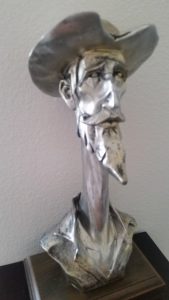
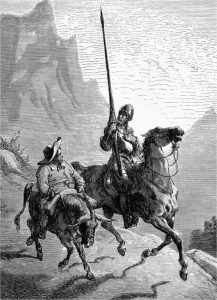
    Don Quixote

    Don Quijote and Sancho Panza
    Don Quixote by Miguel de Cervantes

    I love visiting schools, libraries, and other institutions to share my message: “Never Give Up.” I do presentations to help people learn about the Holocaust. I want to inspire others to end hate and prejudice as well as to preserve their family histories.

    I originated and am ‘Top Cat’ of a club where we collaborate on books we donate to worthy causes. Our latest, SuperBudz, promotes literacy and fights pollution. I am the Florida Writers Association Youth Chairperson and a member of the Board of Directors. We offer clubs, webinars, contests, and a professional conference to help youth writers. I write the monthly Writing Bug column promoting local authors and inspiring writing, mailed to more than 30,000 homes. I’m pretty busy but love it.  It keeps me out of mischief.

    Chanticleer: You are an amazing man, Mr. Newhouse. You truly are. Tell me, what drives you to write for children?

    Newhouse: Being abused and bullied as a child, I want my writing to help others solve problems without violence. I try to empower children, and adults, to face life’s obstacles with hope and faith that they can overcome whatever is thrown at them with courage and intelligence. They don’t need violence and magic to do magical things with their lives.


    “I love visiting schools, libraries, and other institutions to share my message: Never Give Up.” – Mark H. Newhouse

    Chanticleer: I appreciate that message. Give us your best marketing tips, what’s worked to sell more books, gain notoriety, and expand your literary footprint.

    Newhouse: The best advice I give authors is: Don’t sell books, sell yourself. Think of your books as helping others, educating, entertaining, them. Seeing myself as performing a public service, and not just as a book salesman, helped me overcome my marketing phobia. It also steers me to groups and media that may be interested in my contributions.

    Most important: make sure your book is the best it can be. Don’t rush to publish until you have tested your work with your critique group, beta (pre-publication) readers, and have it edited. A final test: enter a contest, especially where you get impartial feedback. Nothing hurts book sales worse than a poorly edited book.

    Chanticleer: That’s good advice! What are you working on now? What can we look forward to seeing next from you?

    Newhouse: I just finished, My Family Secret: The Holocaust, and it won a Silver Medal from the Florida Writers Association, so now I am back writing my multi-award-winning Defenders of Monstrovia comical mysteries. In Book 5, The Case of the Cruel Cyberbullies, a teenage boy and half-human girl face danger when they must solve a tricky case in Monstrovia, a secret sector of the USA where humans are rare. Will the cyberbully get away with murder? That’s the fun of this series. It teaches law in a land of monsters and fictional characters with edge-of-the-seat suspense. I love writing these fun mysteries.

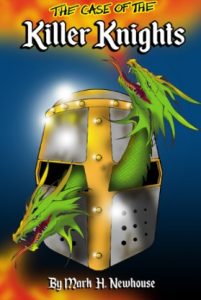
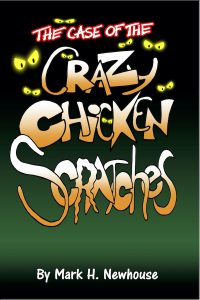
    Killer Knights Book Image Crazy Chicken Scratches Book Cover Image

    Chanticleer: They sound hysterical! Congratulations on your Silver Medal from FWA. What a treat! I do hope we get to see it in our CIBAs… Who’s the perfect reader for your book?

    Newhouse: That’s easy. The perfect readers for my books are children and adults who care. My books deal with things I care about, and I try to create page-turners for people who love humor and mysteries but most importantly, care.

    Chanticleer: I’m raising my hand, can you see me? What is the most important thing a reader can do for an author?

    Newhouse: Buy our books. Seriously, share your thoughts or endorse our books with your reviews on Amazon, Goodreads, or with your friends. Several years ago, a boy wrote me and said, “Rockhound is my favorite human being.” Rockhound, the hero of the Rockhound Science Mysteries, is a teenage dog detective, so that got a laugh, but the best was yet to come: “I know all authors are rich so can I come and swim in your pool?” I replied, “If I had a pool, I would invite you.” I really would.

    Chanticleer: Oh, that’s so sweet. I agree with you – Everyone who picks up a book and reads it needs to review it! Simple as that. Do you ever experience writers block? What do you do to overcome it?

    Newhouse: I have tons of ideas waiting for me, but everyone gets WB at some point. When I get it, I enter contests with a theme. I also have a few quick-tricks. I love titles, so I shake up a Boggle or Scrabble set and see if any of the words suggest a great title. I do a ‘blind’ search in a book: flip to any page, close my eyes and see what words my finger lands on. I then form a title and brainstorm a story idea. Goodbye WB. Hey! Not a bad title.

    Chanticleer: I have never thought of that. How fun! What excites you most about writing?

    Newhouse: Everything. But it is the passion for my story. I care about my subject and my readers. I am excited and proud when readers write about The Devil’s Bookkeepers.

    What readers are saying about The Devil’s Bookkeepers: “I could not put it down.” “It kept me reading all night.” “I felt myself choking.” “One of the most powerful books I have ever read.”

    When you feel you touched someone’s heart and soul, all the sweat is worth it.  I get an amazing high when I hear a child laugh at my creations. I am honored and grateful for the awards and when someone shares how my work made a difference in their life.

    Chanticleer: No doubt, that is a tremendous high. I love it! What other goals do you have?

    Newhouse: I would love to work with a television/film producer to create a miniseries of The Devil’s Bookkeepers. It is an important and powerful story that needs to be shared so it never happens again to anyone. Readers root for the characters and are haunted by the true events. I can visualize the scenes with powerful performances that could win awards. I know it is a long shot but am going to try and send it to agents. The awards from Chanticleer will help open the door.

    Chanticleer: It absolutely will. Thank you, Mark. You are a delight and we are honored to call you friend. You truly do make the world a better place.

    Newhouse: Thank you for allowing me to share my journey and books with your readers. My books are available on Amazon/Kindle. The Devil’s Bookkeepers novels are also available as wonderful audiobooks. For more information, please contact me at www.newhousecreativegroup.com.

    Mark's view
    Mark’s view – nothing short of inspirational!

    Chanticleer: Well, you heard the man! Go seek out Mark H. Newhouse’s works, read them and review them. Trust me, you’ll not be sorry!

    Follow Mark on Twitter

    Or on Facebook!

    You can order his books on Amazon or wherever good books are sold!

  • 10 QUESTION INTERVIEW and the Authors Who Influenced the CIBA CYGNUS AWARDS GRAND PRIZE WINNER J.I. ROGERS!

    10 QUESTION INTERVIEW and the Authors Who Influenced the CIBA CYGNUS AWARDS GRAND PRIZE WINNER J.I. ROGERS!

    Let me introduce you to J.I. Rogers, one of our favorite authors here at Chanticleer Reviews!

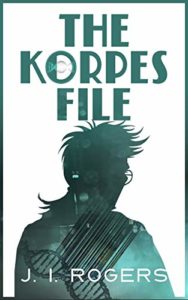
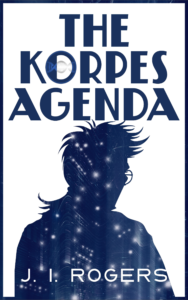
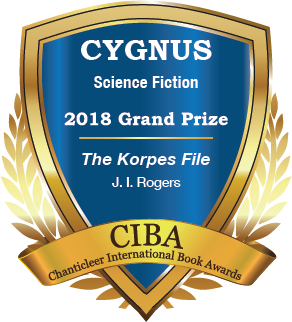
    In 2019, J.I. Rogers was awarded the 2018 GRAND PRIZE in the Chanticleer International Book Awards for CYNUS – our Science-Fiction Division for her Space Opera, The Korpes Files, a cyber-punk sci-fi, dystopian space opera, and nothing has been the same since.

    We asked J.I. Rogers to take part in our 10-Question Author Interview series to share with us her journey of becoming a CYGNUS Grand Prize winner.  

    Chanticleer:  Tell us a little about yourself, how did you start writing?

    Rogers: Well, the biography on my website starts off like this: I am a green-eyed, ginger-haired, caffeine addict who is currently working on The Korpes File Series.

    When not acting as a conduit for the voices in my head or pursuing something artistic, I’m a poster child for Generation X and the Queen of most boondoggles that lead to eye-strain and tinnitus.

    Ancient History: I’ve always had a love of science fiction, mythological, and fantasy themes. I attended Emily Carr Institute of Art and Design back in the 80s, studying film animation when it was still a college, and I have been working as a professional artist for over thirty years. My love of writing dates back just as far as my artistic ventures. I even had a small Fantasy APA/Fanzine called “Northwest Passages.”

    Recent History:  The Korpes File Series is my first foray into writing science fiction. The core concept for the series came to me thirty years ago, and it was then that I began the process of world-building. In that time the idea behind my series has shifted from being hard science fiction to space opera, to finally come to rest in the middle as a hybrid between dystopian and science fiction.

    How did I start writing? In 2012, I was working as a concept wrangler for a couple of game design studios and was put in charge of world development for one of the projects. I wrote two cut-scenes based on situations that the players would encounter as an experiment. When that project concluded, the short stories were released back to me, and the encouragement I received was what prompted me to continue writing. I decided to expand on what I’d created and that’s when the Muse struck. NaNoWriMo followed a week later, and at the end of that November I had enough core material to know where I was going with my story.

    Chanticleer: Rock on #NaNoWriMo! When did you realize that you were an author?

    Rogers: Honestly? The first time it sank in was when someone had purchased a paperback copy of The Korpes File then traveled to meet me and asked if I would sign it.


    Chanti: That always feels good, right? And now, you have the second in series! Please tell us more about the genre shifts that your work has made and what led you to write in this genre?

    Rogers: The closest definition I could come up with for The Korpes File Series would be that it’s a blend of dystopian and science fiction elements. As I said earlier, the series began as hardcore science fiction then transitioned to Space Opera and then into what is now dystopian with science fiction elements with a healthy dollop of space opera mixed in as well. I’m a fan of character-driven plot. What led me to write in this genre? My Muse kept sending me love notes in the form of characters quotes and world-building concepts.

    Chanti:  I love it when that happens. Do you find yourself following the rules or do you like to make up your own rules?

    Rogers: Life rules? I’m unconventional, but I’ve managed to get away with things thus far by waving the ‘eccentric artist’ banner over my head. In writing? I follow the rules in non-dialogue portions of my writing, mostly (I do use Oxford commas, adjectives, and past tense when appropriate). The only place you’ll see me play fast and loose is in dialogue; this flexibility allows characters to sound unique.

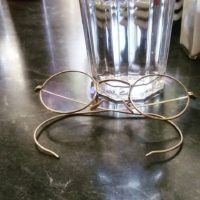
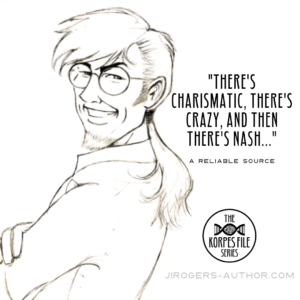
    Nash’s glasses

    Chanti: How do you come up with your ideas for a story?

    Rogers: I find inspiration via many portals. I’ve discovered that downtempo psy-bient electronica, industrial, and angsty bands from the late 90s and early 2000s inspire my dystopian Muse. My Pinterest folder is bursting with images on everything from flora and fauna to human culture, science, geology, tech, space… You get the idea. I also save links to new and emerging technology there. Even the characters in my story have suggested elements to me… when they go off-road.

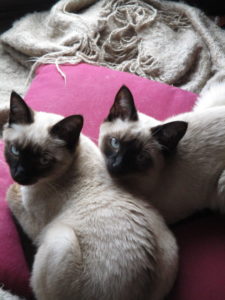
    (Chanti: I think Pyewacket and Tannith have to take some credit here, too, don’t you?!)

    Chanti: Name five of your favorite authors and describe how they influence your work.

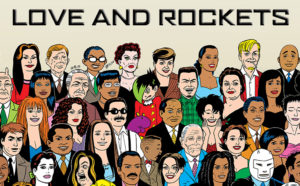
    Rogers: My list is eclectic and includes artists: Jaime Hernandez – I’ve been a fan of Jaime for over thirty years. He and his brothers have demonstrated time and time again that you can tell a provocative, epic story with dimensional characters using both words and images. Love & Rockets is a masterpiece and I aspire to create something as beautiful.

    Winner of the 2014 LA Times Book Prize! Image from the Publisher.

    Barbara Hambly – While her storylines are great it was Barbara’s characters that spoke to me, and they grounded me into every event in the plot. I have re-read certain books just to re-experience these ‘old friends.’ When I finally decided to write, I made a point of finding the personality touchstones in all of my protagonists and antagonists.

    Neil Gaiman – There’s a definite ‘other-worldly’ quality to his work; it’s like he exists somewhere between here and the twilight realm of Faerie and can translate that experience back. While I was designing aspects of Tamyrh and the aliens that hide in plain sight, I reflected on Mr. Gaiman’s “Sandman” series and allowed the ambiance to run its course.

    James S.A. Corey – He recently displaced my favorite go-to for science fiction for the simple reason that he’s created a modern dystopian sci-fi epic that hasn’t fallen into the usual pitfalls of mocking itself or weighing itself down with unnecessary angst. If I want to escape my world but stay in the mood to write, I read Mr. Corey’s work or catch an episode of “The Expanse.” I don’t know if I’d call him an influence, rather a reminder that dystopian sci-fi can be done well.

    Philip K. Dick – Our styles are different, but we definitely gravitate toward the same themes; his work lit a fire under my Muse back in high school. I’d like to add something about film here. I read Do Androids Dream of Electric Sheep before I saw the film Blade Runner, but the latter was what firmly cemented the love of noir, dystopian sci-fi in my soul. It was one of the first sci-fi films I’d seen that didn’t inject ‘comic relief buffoonery’ or ‘cute fuzzy creatures’ in order to expand its appeal. Alien, Logan’s Run, and 2001: A Space Odyssey are other fine examples that inspire.

    Chanti: Give us your best marketing tips, what’s worked to sell more books, gain notoriety, and expand your literary footprint.

    Rogers: Honestly, I haven’t reached the point where I’m selling millions of books; part of that may be due to my advertising budget, which is microscopic. This advice is aimed at those like me. I maintain an active presence on social media (the usual free ones – Facebook, Instagram, and Twitter) and I operate a Patreon page, where potential readers and fans can find out what I’m up to, ask me questions, get special offers and swag, etc. My Patreon page is now at the point where it covers my website fees as well as the production costs of book-related items like the limited-run character sketchbook.

    I owe my modest notoriety as an author to the fantastic people who interact with me, both online and in real life. They have acted as my ‘street team’ and encouraged their friends to buy my books. I estimate that 70% of my sales are due to their efforts and I’m very grateful… now to find a way to get everyone to leave reviews too.

    If you’re on a tight budget like me, my advice is:

    • Share posts with other authors and leave comments
    • Support your creative community
    • Create engaging content
    • Leave reviews
    • Shamelessly promote others
    • Chat with fans, and
    • Be positive without looking for direct evidence of karmic return. In other words, treat people the way you’d like to be treated. This seems to be working for me.
    • Also – treat your author time on social media like a job or it’ll become a time sink and you’ll not get any writing done.

    Chanti: That’s great advice! What is the most important thing a reader can do for an author?

    Rogers: I have two answers to this question.
    A). If they enjoyed the book, then I’d encourage them to leave a review saying so. B) If they didn’t like the book, I’d ask that they offer some feedback via the author’s website. Simply saying it was bad isn’t helpful; no one improves without constructive criticism.

    Chanti: Do you ever experience writers’ block? What do you do to overcome it?

    “Emerging Words” (which is a 18″ x 24″ artwork made from a mold of my face, silk, and pages from the proof copy of The Korpes File).

    Rogers: My writing Muse sometimes takes an impromptu vacation and leaves me home, staring at the screen. When that happens, I’ll swap over to another project – usually art. Right now, I’ve got two illustration commissions on the go as well as Patreon projects. If that fails, there’s always gardening or my secret vice… MMORPGs like World of Warcraft.

    Chanti: I think dialogue is where it’s at as far as character development – for sure. What do you do when you’re not writing? Tells us a little about your hobbies.

    Rogers: I think my hubby would argue that I’m always writing as my ‘office’ pins down territory around the house depending on my mood. I draw, paint, sculpt, and garden (weather dependent on that last one – we get a lot of snow in the winter).

    Chanti: Thank you, J.I. Rogers, for sharing your author journey with us. I am looking forward to seeing you at the next Chanticleer Authors Conference.

    J.I. Rogers invites you to visit her website at https://jirogers-author.com/

    J. I. Rogers won the CYGNUS 2018 Grand Prize because The Korpes Files rock! And also, because she dared to enter the work into the CYGNUS division of the Chanticleer International Book Awards…

    In other words, if you don’t enter, you will never know how your work stacks up against the other entries.

    Who is going to win the 2019 CYGNUS Awards? You will have to check out the progress of the entrants as the judging rounds continue!

    If you want a shot at the HONOR of CYGNUS SciFi Book Awards  for 2020, don’t delay, enter the CYGNUS B00k Awards today!

    The Cygnus Book Awards recognize emerging new talent and outstanding works in the genre of Science Fiction, Steampunk, Alternative History, and Speculative Fiction. The Cygnus Awards is a genre division of Chanticleer International Book Awards (The CIBAs).

    Chanticleer International Book Awards is looking for the best books featuring space, time travel, life on other planets, parallel universes, alternate reality, and all the science, technology, major social or environmental changes of the future that author imaginations can dream up for the CYGNUS Book Awards division. Hard Science Fiction, Soft Science Fiction, Apocalyptic Fiction, Cyberpunk, Time Travel, Genetic Modification, Aliens, Super Humans, Interplanetary Travel, and Settlers on the Galactic Frontier, Dystopian, our judges from across North America and the U.K. will put them to the test and choose the best among them.

    Get your Sci-fi on

     enter the CYGNUS AWARDS today!

    Don’t delay. Enter today! 

    Chanticleer Book Reviews & Media, L.L.C.  retains the right to not declare “default winners.” Winning works are decided upon merit only. Please visit our Contest Details page for more information about our writing contest guidelines.

    CBR’s rigorous writing competition standards are why literary agencies seek out our winning manuscripts and self-published novels. Our high standards are also why our reviews are trusted among booksellers and book distributors.

    Please do not hesitate to contact Info@ChantiReviews.com about any questions, concerns, or suggestions about the Chanticleer International Book Awards. Your input and suggestions are important to us.

    Click here for more information about the Chanticleer Book Reviews International Book Awards.

  • Hot Marketing Tips are Shared in the 10 Question Author Interview with MICHELLE COX – Author Interviews, Marketing, Craft of Writing

    Hot Marketing Tips are Shared in the 10 Question Author Interview with MICHELLE COX – Author Interviews, Marketing, Craft of Writing

    Mystery & Mayhem Book Awards Grand Prize winner Michelle Cox graciously shares her writing life and knowledge with us along with some hot marketing tips and tools! Read on!

     “When I finally decided to try writing, the creativity within me, that divine essence, finally found its true home.  I’m happiest when I’m creating, and I hope I can keep writing for a long time.” – Michelle Cox

    Michelle Cox, award-winning author, at work in her writing lair

    Chanticleer: Thanks for coming by, Michelle. Tell us what genre best describes your work? And, what led you to write in this genre?

    Cox: Well, that’s a great question!  I usually at least place as a semi-finalist in three different categories at the Chanticleer awards, for example, so that should be a pretty good indication.

    Romance Fiction Award Post 1750s Historical Fiction Award Cozy Mystery Fiction Award

    My series is set during the 1930s in Chicago, so that qualifies it to be historical fiction, but it’s also mystery and romance.  I guess “romantic-suspense” would be the best way to describe the series, but without the bare-chested guys on the cover.

    They always say to write what you would want to read, and this is it!  I set the series set in my favorite era; added a little bit of mystery, a little bit of romance; flavored it with the haves- and the have-nots of the era, as well as a touch of the English aristocracy; and then stocked it with lots of characters and subplots weaving in and out . . . sheer heaven!

    Chanticleer: And that’s why we love you and your books! What do you do when you’re not writing? Tells us a little about your hobbies.

    Cox: I no longer have any! I used to have hobbies before writing took over my life. If I do have a few minutes here and there, I still love to garden and bake, but my real love, however, is board games.  I’m a fanatic and have become a sort of a collector now.

    Playing games with Michelle Cox! Did the butler do it?

    Chanti: That sounds like a lot of fun! So, how do you approach your writing day?

    Cox: As soon as my kids get on the bus at 6:50 am, I make my second cup of coffee and sit down at my desk.  I’m not allowed to do any social media, though I do always do a quick email check to see, you know, if I won the Pulitzer or something (it’s always no), and then I start working on whatever manuscript I’m currently on.  My brain is its crispest early in the morning, so I have to use that time for the work that takes the most concentration.  There’s something to be said about productivity when you know you only have a limited time to write.  There’s no room for writer’s block or procrastination.  When you know you only have so much time, you have a way of just sitting down and doing it.


    When I reach whatever my writing goal is for that day, I spend the next five to seven hours (until the kids come home) doing marketing and PR—anything from writing the blog or the newsletter or articles or interviews, taping podcasts, setting up events, answering email, attending to social media, etc.  It’s really a full-time job, though, sadly, the actual writing, the part I love, is the part I get to spend the least on.


    Chanti: Marketing pays off, right? Name five of your favorite authors and describe how they influence your work.

    Cox: My series is known for the plethora of rich characters scattered throughout and the big saga-like plots.  I was definitely influenced in this by my early favorites: Louisa May Alcott, Catherine Cookson, and Charles Dickens.  My other two favorites would be Anthony Trollope and Jane Austin for their subtlety in character and their overall ability to use language so beautifully.

    Chanti: I cannot argue with your choices. These are delicious authors – and novels!

    I know you gave us a snapshot of your work-day earlier, but could you give us your best marketing tips, what’s worked to sell more books, gain notoriety, and expand your literary footprint.

    Cox: Wow!  That’s a great question, but so hard to answer.  All marketing is pretty elusive, isn’t it?  It’s a constant process of throwing things at the wall and seeing what sticks.  It’s also important to remember that what works for one person, might not work for everyone.  It’s not an exact science.  If it were, we’d all be rich!

    But, in general, here are some good marketing tips that I have found to work:

    • Try to figure out where your readers are. Most of my readers, for example, are on Facebook, so that’s where I spend most of my social media time.
    • Think of yourself as a brand and try to match your posts accordingly. I post things about myself or the book or writing, but mostly old recipes, period drama news, or old stories from the past (which constitute my blog). Also, I’m very careful never to post anything religious or political.  This is a business, and the more you see yourself that way and follow basic business protocols, the more successful you’ll be.

    • Try to build your newsletter list by offering a freebie (such as free story, writing tips, a webinar, a prequel). Personally, I do it by running contests with really big prize packages. I make sure to state that the contest winner will be picked only from my newsletter subscribers.  I pay a designer to create a beautiful graphic of the prizes, post it on FB, and then boost the post.  Not only does this get me a lot of new subscribers (sometimes up to 1,000!), but it exposes the series to new readers as well!
    • Build your network. Join online author groups (I am part of a fabulous private FB group organized by my publisher, She Writes Press. We all share ideas, marketing tips, and offer support and advice, especially to the newer authors just coming on board.  It’s a collective wealth of information.) or real-world groups in your area.  Don’t be jealous of the success of others, but help each other as much as possible. As my publisher, Brooke Warner has said, “There’s room for everyone at the table.”
    • Show up at other authors events, write reviews, help promote whenever possible.  Go to conferences to meet not just readers, but other authors who can potentially help you.  Remember that you are a business, and you need to do work within your community to begin standing out.

    • For example, my publisher and I overprinted Book 2 of my series, so, as per my contract, when the first year of publication had passed, I was faced with having to pay a storage fee for these extra books (a couple of thousand), have them shipped to my garage, or have them destroyed.  I decided, instead, to send them to libraries and conference organizers.  It was a lot of work and expense, but it got my book into the hands of hundreds, if not thousands, of potential readers, and hopefully, they’ll come back for more and buy the rest of the series.  You have to be willing to take risks.

     

    • Also in this category would be to try to get a Bookbub deal, which, as we all know is really tough.  Again, for Book 2 of the series, we submitted four times, trying to get a deal with the book being priced at .99 cents.  I finally decided to offer it for free, and we cleverly put a buy link to book 3 at the end of Book 2.  Bookbub then offered me a deal, and I had over 55,000 downloads in one day!  Hopefully, a lot of those people will go on to buy Book 3 at full price.

    • Lastly, if the first book of your series is free, either permanently or occasionally, you can join Book Funnel, in which you “bundle” your book with others of a similar genre with each author promoting the bundle to their social network, which exposes your series to a whole new crop of readers.  Readers are able to download your free book in exchange for their email address.  So not only are you getting readers hooked on your series (hopefully!), but you’re building your subscriber/newsletter list.


    Chanti: You could teach a Master Class on this at CAC20! Let’s chat about this later.

    Chanti: What are you working on now? What can we look forward to seeing next from you?

    Cox: Book 5 of the series is currently in production and scheduled to be released in Spring 2020.  I said I was going to take a break from the series after that, but I admit, I’ve already started sketching out Book 6 –  I can’t help it!

    But what’s really exciting is a new stand-alone novel, The Love You Take, that I wrote, also based partially on a true story and set in Chicago in the 1930s.  It’s a really fabulous book if I do say so, about a “backward” girl who has to go and live at a home for “bad girls” after she unwittingly becomes pregnant. I’m currently querying agents for it.

    Chanti: Sounds intriguing. Please keep us updated. Who’s the perfect reader for your book?

    Cox: Though some men enjoy my books, the primary audience is women. Anyone who loves Downton Abbey; Upstairs, Downstairs; Miss Fisher’s Murder Mysteries, the old black and white films, like The Thin Man . . . basically any period drama or old movie . . . will love my series.  I can’t tell you how many people have written to me to tell me that the series is so visual, that reading it was like watching a movie.  It’s delightful escapism; people tell me all the time they feel like they’ve been transported back in time after reading them.

    Chanti: I know that’s why we read your books #delightful! What is the most important thing a reader can do for an author?

    Cox: Tell a friend!  Research shows that the number one thing that influences people to buy books is word-of-mouth.  If you like a book, recommend it to friends or your book club.  The second best thing is to write a review!  People seem wary of doing this, telling me that they’re nervous about what to write.

    “Nonsense!” I say.

    A review can be one sentence: “This was a great book; I enjoyed it!”

    There.  Done.

    You don’t have to go into a lengthy reworking of the synopsis (why do people do this?) or delve into symbolism or themes or whatever.  Just give your one-sentence opinion!

    Chanti: I’ve been telling my non-writing friends this for years… Do you ever experience writer’s block? What do you do to overcome it?

    Cox: Not really!  I have a lot of story ideas in my head, and thus I usually have the opposite problem.  This is where outlining can really help.  If you have a pretty weighty outline sketched out, then when you sit down to write each day, you pretty much already know what you’re supposed to write that day.  Likewise, I enjoy taking an evening walk (or I try to, anyway!), during which I think about tomorrow’s chapter and what needs to go into it.  Sometimes I even voice record if I have a really good idea or some strands of dialog.  There’s something about walking—moving the legs back and forth, back and forth—that seems to stimulate something in the brain. They say that Dickens used to walk the streets of London for hours in the wee hours of the night.  Now I know why!

    Chanti: Time to reflect and let your mind wander. Movement really does help with this. What excites you most about writing?

    Cox: Creating something out of nothing.  I’ve always been a really creative person.  Looking back, I see now that I’ve always been striving to create, and for a long time it took on many different forms.  As a kid, I was always trying to illustrate Louisa May Alcott’s books or write little fan fiction stories based on Jo March.  As I got older, it took the form of gardening and decorating the house, and then baking and then creating elaborate kids’ birthday party invitations!  When I finally decided to try writing (long story), the creativity within me, that divine essence, finally found its true home.  I’m happiest when I’m creating, and I hope I can keep writing for a long time.

    Chanti: We hope you do, too, Michelle. What a fabulous interview! Thank you for sharing your story with us. 

    Speaking of sharing, if you like what you’ve read, please “like, comment, and share!” Sharing is caring, baby!

    The CIBA Grand Prize Winners


    Michelle Cox is a multi-award-winning author who recently spent some time with us at CAC19. This year was particularly special because Michelle won the CIBA 2018 Grand Prize for Mystery & Mayhem Awards!


    and took 1st Place in the Chatelaine Awards for Romantic Fiction – both awards are in honor of her book, A Promise Given. We will probably never stop celebrating this – it’s just too much fun!

    To find out what Michelle’s up to next, Find and Follow her here:

     Facebook 

    Twitter

    Instagram 

    Michelle’s Website: http://michellecoxauthor.com/

  • 10 Question Interview with Multi-Award-Winning Author, MICHELLE RENE – Book Discovery, AuthorLife, Book Marketing

    10 Question Interview with Multi-Award-Winning Author, MICHELLE RENE – Book Discovery, AuthorLife, Book Marketing

    * On the weekend of her new release, The Dodo Knight, we invite you to get to know one of our favorite authors, the incomparable, Michelle Rene!

    Recently I had the opportunity to interview the creative advocate and the 2017 CIBA Overall Grand-Prize Winning Author, Michelle Rene, in our 10 Question Interview Series. It is no wonder her novels, short stories, and articles are consistently gaining recognition and winning awards. She is not only over-the-top talented, she is also generous with her time.

    Michelle Rene won the CIBA Overall Grand Prize in 2017 for her novel, Hour Glass, a unique and entertaining twist on the Calamity Jane legend, complete with engaging characters and extraordinary storytelling! A novel we highly recommend.

    Chanticleer: Tell us a little about yourself: How did you start writing?

    Michelle Rene: I’ve been writing since I was a kid. I actually spent a whole summer vacation hand-writing a two-hundred-page novel when I was thirteen. However, I was also very invested in art. I had my first artist job in video games at age sixteen, so when it was time to choose my career/college path, I chose to go to art school.

    While art was paying the bills, I continued to write, honing my craft and learning all I could about

    this ever-changing literary world. It was in 2014 that my first novel was published. I Once Knew Vincent went on to receive several indie awards, including Chanticleer’s First in Category for the Chaucer Award.

    Since then, I’ve had numerous novels, novellas, short stories, and essays published. Several went on to win significant indie awards. I’m extremely proud to say my novel, Hour Glass, won Chanticleer Review’s Best Overall Book Award for 2017.

    Chanticleer: We are very proud of your Overall WIN, as well! Congratulations! Let’s talk about genre. What genre best describes your work? And, what led you to write in this genre?

    Michelle Rene: I have a love/hate relationship with genre. The necessities of it are obvious. In the world of marketing, we have to know how to market a story and who to market it to. As far as my reading habits, I just look for a good story. I don’t really care what kind of story. In writing, I like that same freedom.

    That being said, I would say I write historical fiction and speculative fiction. Every once in a while, they overlap. I call myself a creative advocate, and most of my life has been in the pursuit of creativity. Writing speculative fiction quenches that thirst.

    As for historical fiction, I’m a huge museum buff, and history fascinates me. I count it a duty to try to make time periods and historical figures come to life as something more than names and dates on a page.

    Chanticleer: That’s what we love about you – and that’s why Hour Glass won! Do you find yourself following the rules or do you like to make up your own rules?

    Michelle Rene:  I’m not a fan of writing rules. The idea is rather rigid for something as creative as writing. I think there are good practices and guidelines to be aware of, but I always cringe when I hear someone say, “you can’t…” when criticizing someone’s stylistic choice. For every hard-and-fast writing rule, there is someone who broke it beautifully.

    My advice for emerging authors who ask for my “rules” is rather unimpressive. Don’t give up. That’s my only rule for writing. Keep going. Write more. Figure out your voice through trial and error.

    Chanticleer: Really, that’s the best advice anyone could give. Don’t Give Up. We should make t-shirts… What do you do when you’re not writing? Tells us a little about your hobbies.

    Michelle Rene: I’m a trained artist, so I like to paint, sculpt, draw, etc. I’m a firm believer in the idea that all creative ventures work toward telling a story in some way. I adore museums, reading, audiobooks, and learning new things. I’m also a belly dancer and occasionally perform at festivals and Renaissance fairs.

    Chanticleer: I’ve seen your costumes! You’re serious about everything you do. That’s very impressive. Where do your story ideas come from?

    Michelle Rene: I have no idea. Get it?

    Seriously, I tell everyone that my muse is extremely abusive. I once read that an author pictured her muse as this quiet girl who whispered beautiful, creative things to her through the bars of a vent.

    Mine is a sledgehammer-wielding jerk who shows up when I’m trying to sleep and regularly bashes in my head until I write the story. Sometimes, I see something interesting at a museum or a get inspired by a painting, but the story I want to tell hits hard and is a nuisance until I write it.

    Chanticleer: Good for you to pay attention to that muse. I mean, how could you help but pay attention! Name five of your favorite authors and describe how they influence your work.

    Michelle Rene: I have an extremely eclectic taste in reading, so this will look like a random list. Harper Lee because To Kill a Mockingbird was one of the first books I read over and over again. She showed me how to inject poetry in your prose in a simple way. David Sedaris because I’ve never laughed so hard in my life, and he taught me about humor in the absurd. Mary Roach because I never knew I liked reading or writing nonfiction until I read Stiff. Neil Gaiman because he has the same skeptical beliefs I do about genres and writes that way. Finally, Charlaine Harris because she’s one of the only authors who can write about vampires, shifters, and fairies, and I’ll eagerly read every book in her series.

    Chanticleer: Great list of authors. I, too, love Mary Roach for Stiff, but I suppose that’s no surprise to those who know me… Give us your best marketing tips, what’s worked to sell more books, gain notoriety, and expand your literary footprint.

    Michelle Rene: There are two things I’d list here. One is a slow burn marketing technique, and the other is a quick one. The quick boost is to run a sale (either discounted or free) and blast it through every social media and subscription channel you can for the day the sale begins. I’m not a believer in keeping your book discounted for more than a few days though.

    The slow burn technique takes a lot more effort but has the longest tail of benefit. Go to conferences, enter contests, and teach classes where you can. If you do those things, you will connect with amazing people who can help you along the way in ways you can’t imagine yet.


    Some of Michelle Rene’s other books for you to explore!


    Alice Liddell was the muse for Lewis Carroll’s Alice in Wonderland. But before the book was published, a rift opened between Carroll and the Liddell family. Also dubbed the “Liddell Riddle,” historians still speculate as to what happened to separate the famous author and his muse. Michelle Rene has imagined a beautiful and heart-breaking story of a special friendship and its unfortunate end. Told from the viewpoint of Alice herself, The Dodo Knight will transport you to Victorian England… and into the heart of a very special little girl. Pick up your copy of The Dodo Knight today!


    Chanticleer: Good tips. Thank you for those. What are you working on now? What can we look forward to seeing next from you?

    Michelle Rene: I’m working on two projects. One is a sci-fi mystery series about a psychoanalyst who can go into peoples’ minds. Currently, I have the first book done and am working on number two in the series.

    The other project is a historical fiction novel based Dr. Mary Edwards Walker. She was a Civil War surgeon when women weren’t allowed to do that, and she was the only woman to be awarded the Medal of Honor.

    Chanticleer: Oh, both sound delicious! I cannot wait to read them. Speaking of readers, what is the most important thing a reader can do for an author?

    Michelle Rene: Rate our books, review our books, tell your friends, and share our posts. In today’s literary world, there is a sea of books coming out every day. Word of mouth is our best long-term sales generator. If you tell people you liked my book, they are more likely to believe you than any advertisement I put out there.

    Chanticleer: This is so true. Thank you for saying that. What excites you most about writing?

    Michelle Rene: It is a powerful and equalizing force in the world. As long as you can string sentences together, you have a voice. Your story can be told. It doesn’t matter how old or young you are. Your wallet and waistline have no bearing. You don’t even have to be formally educated. Everyone’s story is possible, and stories change the world.

    Chanticleer: Thank you, Michelle, for participating in our 10-Question Author series. You are delightful! 


    Don’t you want to follow and like everything Michelle does? I do! Please check out her links – and share this interview with your friends!

    https://twitter.com/MRene_Author

    https://www.michellereneauthor.com/

    https://www.facebook.com/mrene.author/

    https://www.instagram.com/mrene_author/

    mewing_arts@yahoo.com

    Michelle’s Bio:

    Michelle Rene is a creative advocate and the author of a number of published works of science fiction, historical fiction, humor and everything in between. She is the author of novels, short stories, essays, and video games.

    She has won indie awards for her historical fiction work. Her novel, Hour Glass released to rave reviews from Kirkus and Publisher’s Weekly. It won Chanticleer Review’s “Best Book of the Year” award in 2018. Her experimental novella, Tattoo, released with a starred review in Publisher’s Weekly and was listed in Foreword Reviews top eight sci-fi/fantasy books this spring.

    When not writing, she is a professional artist and all-around odd person. She lives as the only female, writing in her little closet, with her husband, son, and ungrateful cat in Dallas, Texas.