Category: 10 Questions Interviews

  • Kevin Miller 10 Question Interview with Chanticleer – Military History, Historical Fiction, and WWII Air Combat

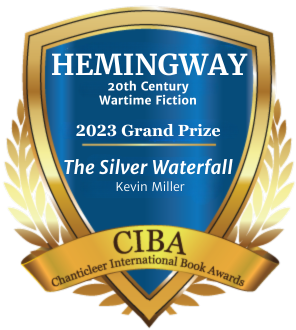
    blue and gold badge recognizing The Silver Waterfall by Kevin Miller for winning the 2023 Hemingway Grand Prize

    CIBA 2023 Grand Prize award-winning Author Kevin Miller sat down for a 10-Question Interview with Chanticleer!

    Recently, Chanticleer had the pleasure of speaking with Kevin Miller, former US Navy fighter pilot and author of  The Silver Waterfall. Miller takes readers into the cockpit of the world’s most powerful military aircraft in his four book series, Raven One. Miller’s award-winning fictional account of the Battle of Midway, The Silver Waterfall, took home the 2023 Hemingway Grand Prize for Military Fiction. Miller is an expert in combat air battles and literacy advocate and I know you’ll enjoy learning more about him and his thrilling novels!

    Here’s what we talked about:

    Fighter pilot, flight jacket, dockers, jet, 362

    Chanticleer: Your specialized military knowledge is the subject of your writing. Tell us a little about yourself. What led you to write about the Battle of Midway?

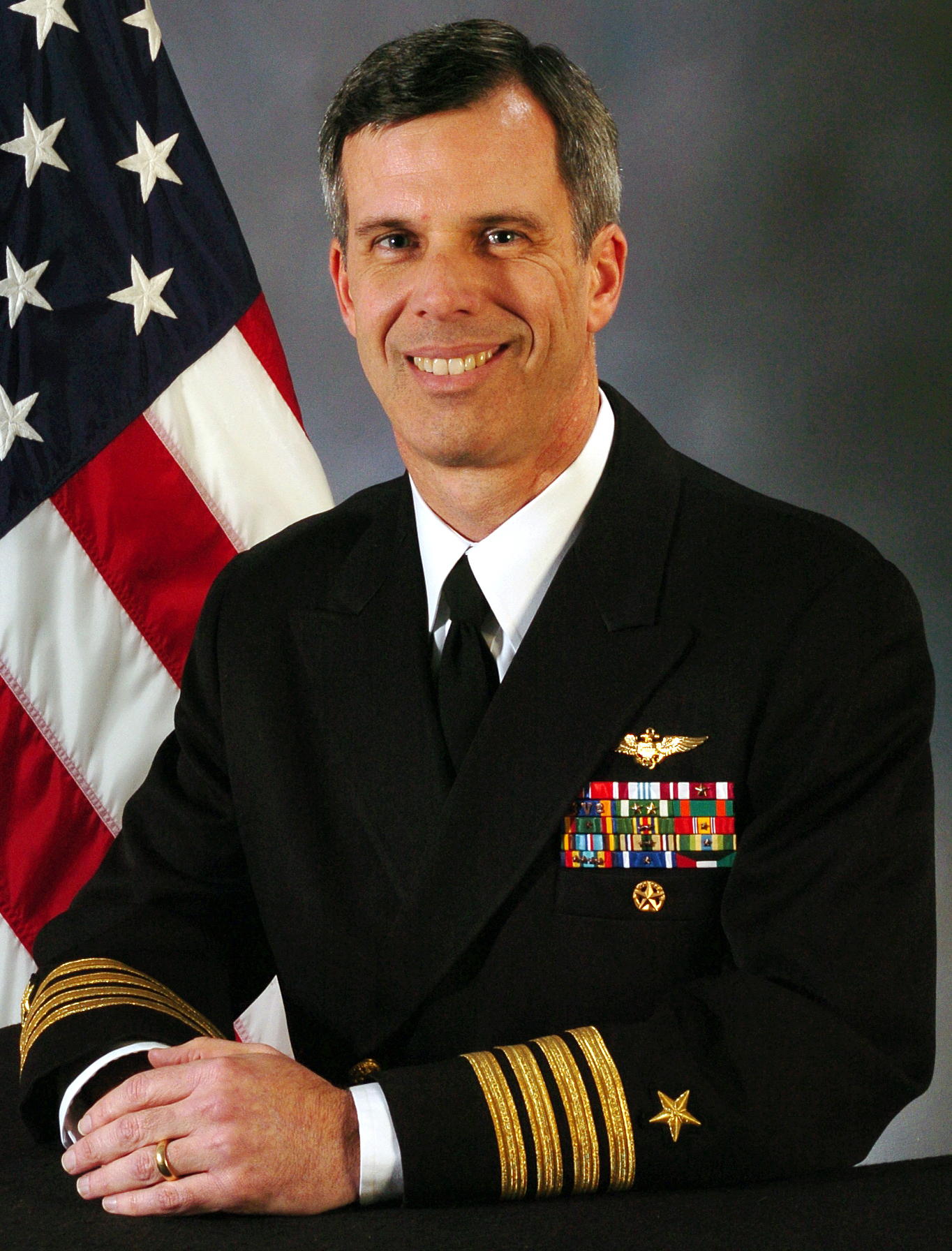
    Miller: In a previous life I was a career Navy fighter pilot, with most of my time in the F/A-18 Hornet. To viewers of TOP GUN and TOP GUN II… yep, I did that. My career took me to command a carrier-based fighter squadron that I led in combat. Wrapping it up at the Pentagon, I retired with the rank of captain after serving 24 years, logging over 3,600 hours and 1,000 carrier landings on numerous extended deployments.

    At my retirement ceremony a fellow aviator suggested that I write a book, a suggestion I immediately waved off. Undeterred, he pressed me – hard – and told me that I have stories. Later I gave it some thought. Yes, I do have sea stories, and a passion to answer the question I was asked so often when people found out what I did for a living; Wow! What is that like? Having no idea where to start or what writing entailed, I figured why not? At least my manuscript could be something for the kids. So, months later in the summer of 2005 I began writing what would become Raven One.
    Kevin Miller, navy, pilot, medals, american flag

    Before I wrote the first sentence, I had never considered writing a novel, considering it something that mere mortals could never attain. The discipline! As I wrote – seat of the pants – a story formed, and after fits and starts (setting it aside in frustration for months then picking it back up and writing in a flurry of activity) I finished Raven One in late 2009… and knew that I had something.

    Querying literary agents to represent me, despite the encouragement of many to keep writing, proved a failure. However, Kindle Direct Publishing was coming into its own, and publishing as an independent author became more attractive with each rejection from “New York.” Networking led me to fellow aviation thriller author George Galdorisi, who led me to his micro-publisher and military thriller author Jeff Edwards of Stealth Books which is now Braveship Books. Under their guidance, Raven One was published in the summer of 2014. The novel peaked at #29 in all of Amazon by the spring of 2015.
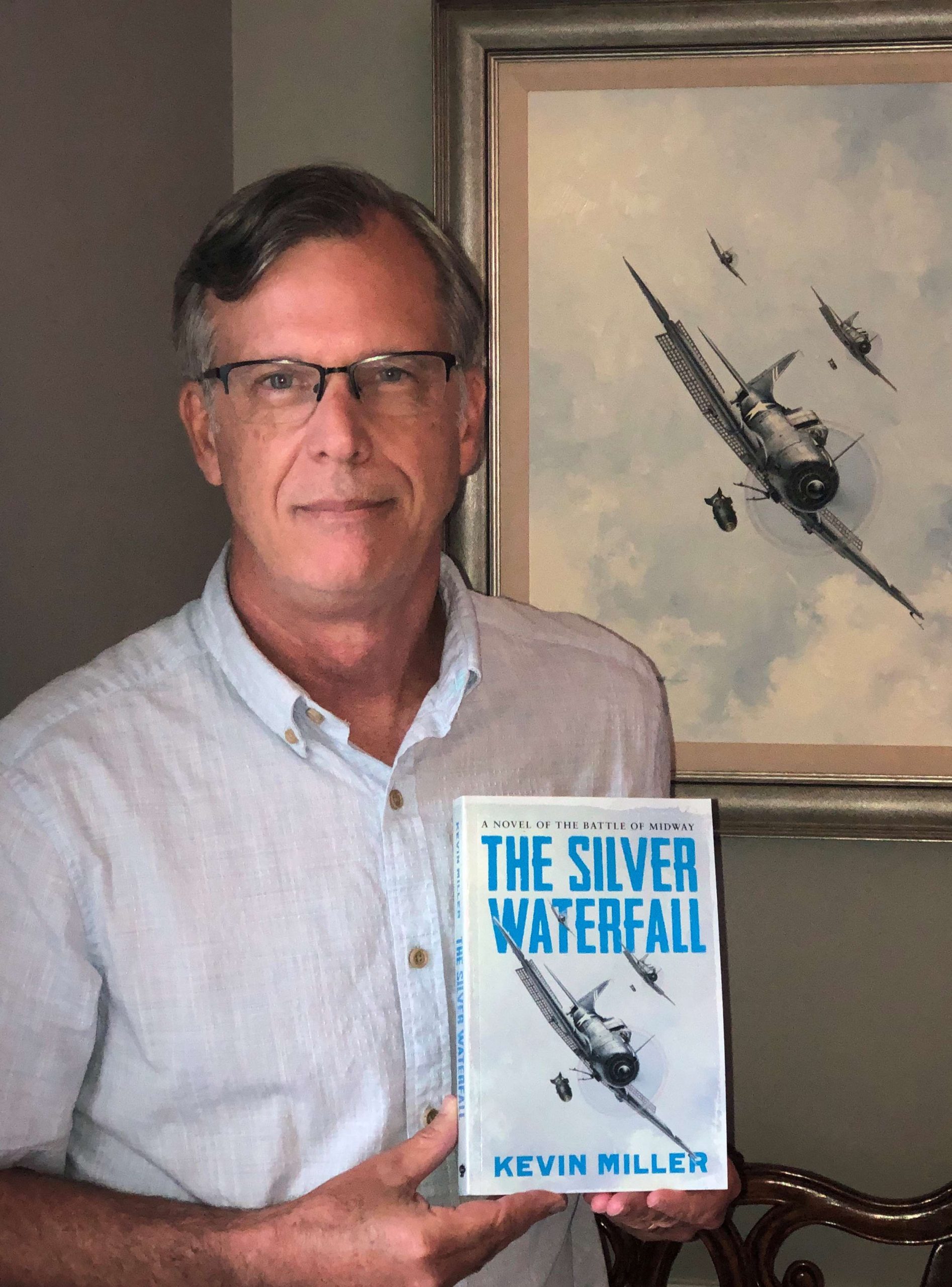
    Kevin Miller, The Silver Waterfall, painting

    Chanticleer: That’s a huge journey and a familiar one for many. Was there a point where you realized you had become an author?

    Miller: Yes, holding that first copy of Raven One in my hands was a special moment. I wrote – and published! – a novel! But it was weeks later as the novel gained a following that I noticed the comments in the review section. The glowing reviews were from strangers who loved the book – comparing the writing to Clancy and Coonts – and encouraged me to write more. Soon I heard from my friends, many of them former squadron mates who know how to give and receive honest feedback. They were blown away by the story and how I told it, and they met me at gatherings with copies for me to sign. Gratifying! And that’s when I knew Raven One was not a one-off, and that I had to keep writing

    Chanticleer: That’s wonderful! Likewise, your Chanticleer award winner, The Silver Waterfall, is a great story full of action, suspense, history, and so much more. Can you talk more about your relationship with your genre?

    Miller: Writers typically write what they know about, so for me the military action-adventure genre is a natural. My Raven One series novels are military technothrillers, a genre first made popular by Tom Clancy. They are found in War Fiction, War and Military Action, Sea Stories, Sea Adventures, and the like. Amazon allows authors great specificity in genre selection, and I could probably keep my latest novel High End as a perennial #1 in an Authentic and Contemporary Carrier Aviation Fiction Above the Arctic Circle genre but playing games like that is not for me as I want my books to compete and earn their accolades honestly. That said, I often see romance books in War Fiction when the only “war” part is that the love story is set in a wartime setting. We know why authors do this; all’s fair in love and war.

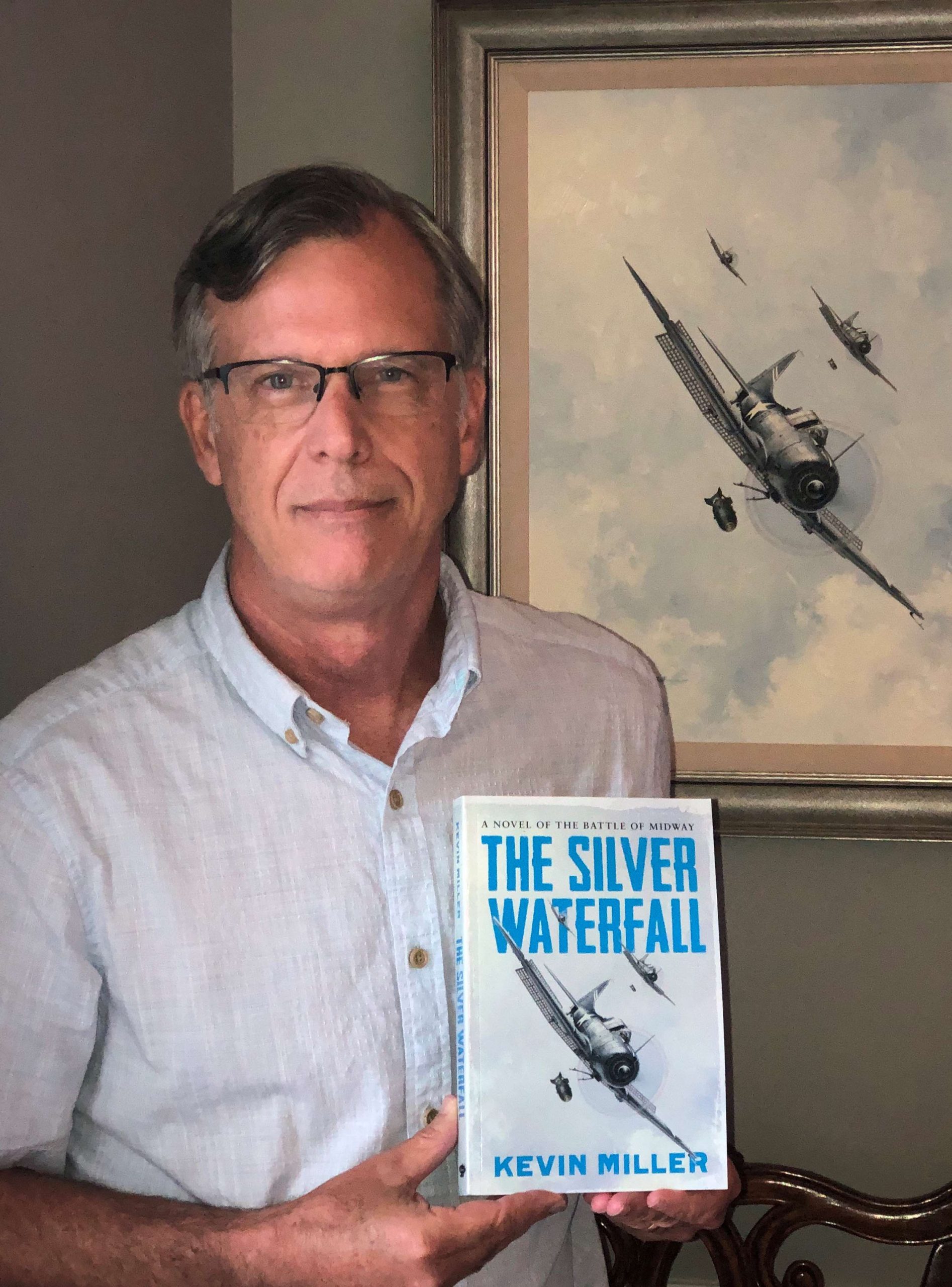
    The Silver Waterfall: A Novel of the Battle of Midway, for which I was honored to receive the 2023 Chanticleer Hemingway Award, is pure historical fiction. To me, historical fiction provides the human emotion to a true event without changing any of the facts of that event, such as Shaara’s Pulitzer-winning masterpiece The Killer Angels. Our novels put the reader there, amid the real men who fought these battles, giving these historical figures voice as to what they experienced. Some historical fiction authors are too loose with facts and invent facts, even going so far as to impugn the reputations of the real men who were there. I could not live with myself if I did that, especially for an event like Midway, already full of drama and amazing chance.
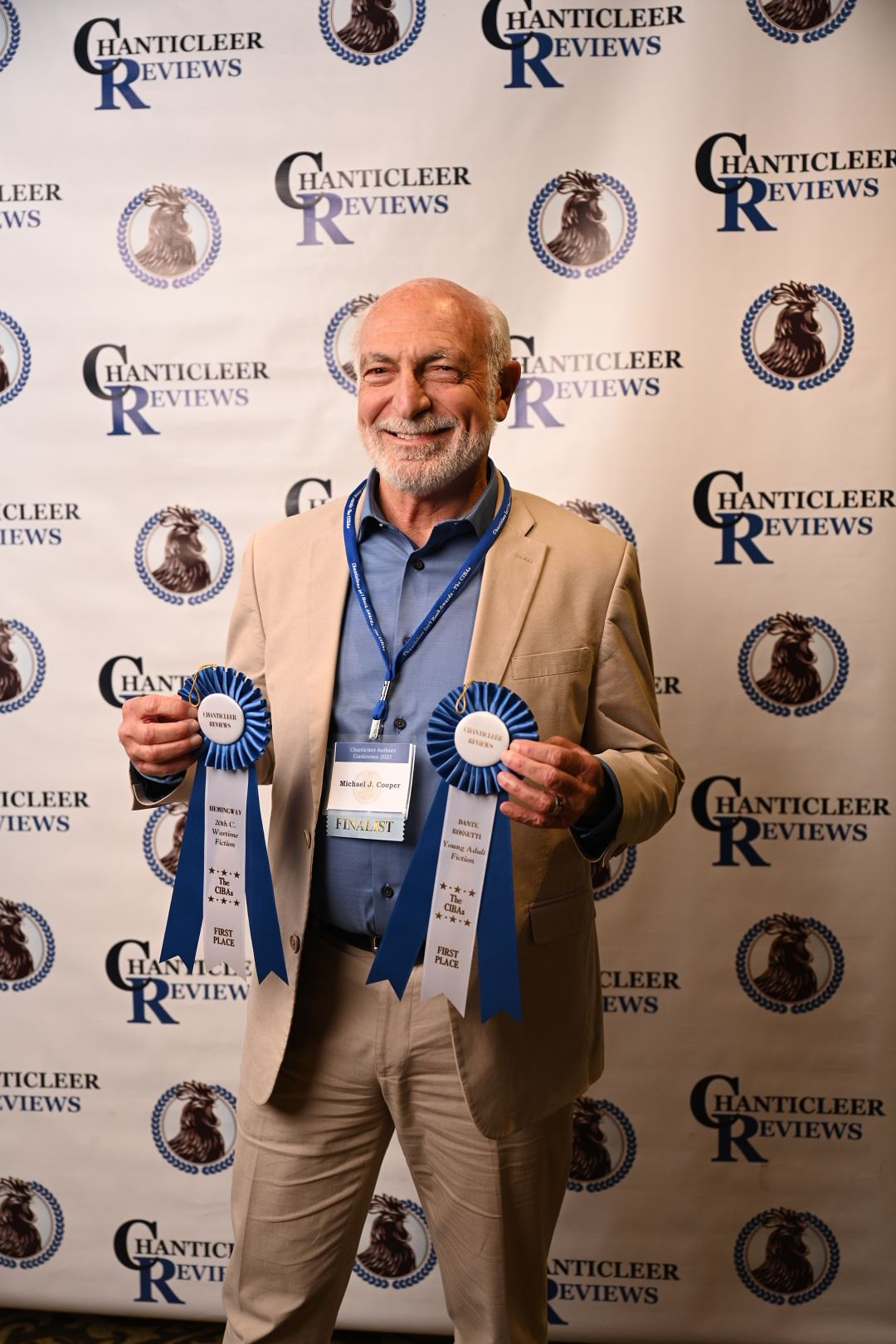
    Kevin Miller, author, CIBA Grand Prize, Ribbon, man, tie, suit
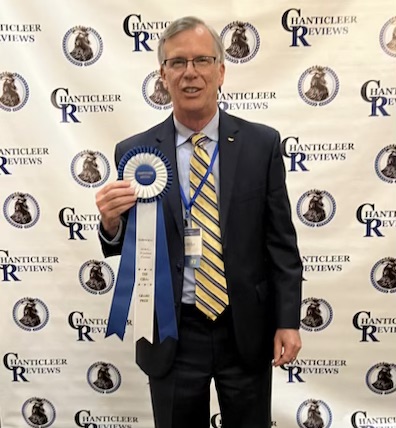
    Just won the CIBA Grand Prize in the Hemingway/Military Fiction division!

    Chanticleer: We’re always astounded at the commitment to veracity of our historical fiction authors. The amount of research that goes into that is incredible. For your own writing day, how do you stay on track to finish your books?

    Miller: Stephen King says that 1,000 words of writing is a good day of writing. If I get to a break in the story and stop for the day at 950 or 875 words I don’t beat myself up, but 1K per day works, especially if you have other activities (I do business consulting and teach middle school history) to fill your day. Promotion is part of my writing workday, as of course is research for my type of technical and historical writing.

    Outlining? Yes and no. I have one in my head and follow it, but because it’s not written down, I can ride along on those magical moments when my writing takes me someplace I had never expected. The Silver Waterfall involved a historic event that has been written about extensively and that I knew well, but even in that novel I could “ride” when the muse took me to a new place when describing the human experience of a known historic event.

    As Stephen King suggests, I’m one of those who writes and sets it aside for a few weeks to germinate, then prints it out to go over it with a pen to fix/improve. Several cycles: read it “fresh” after several months and you’ll unearth little gems to spice it up and rough patches you missed to sand and polish.
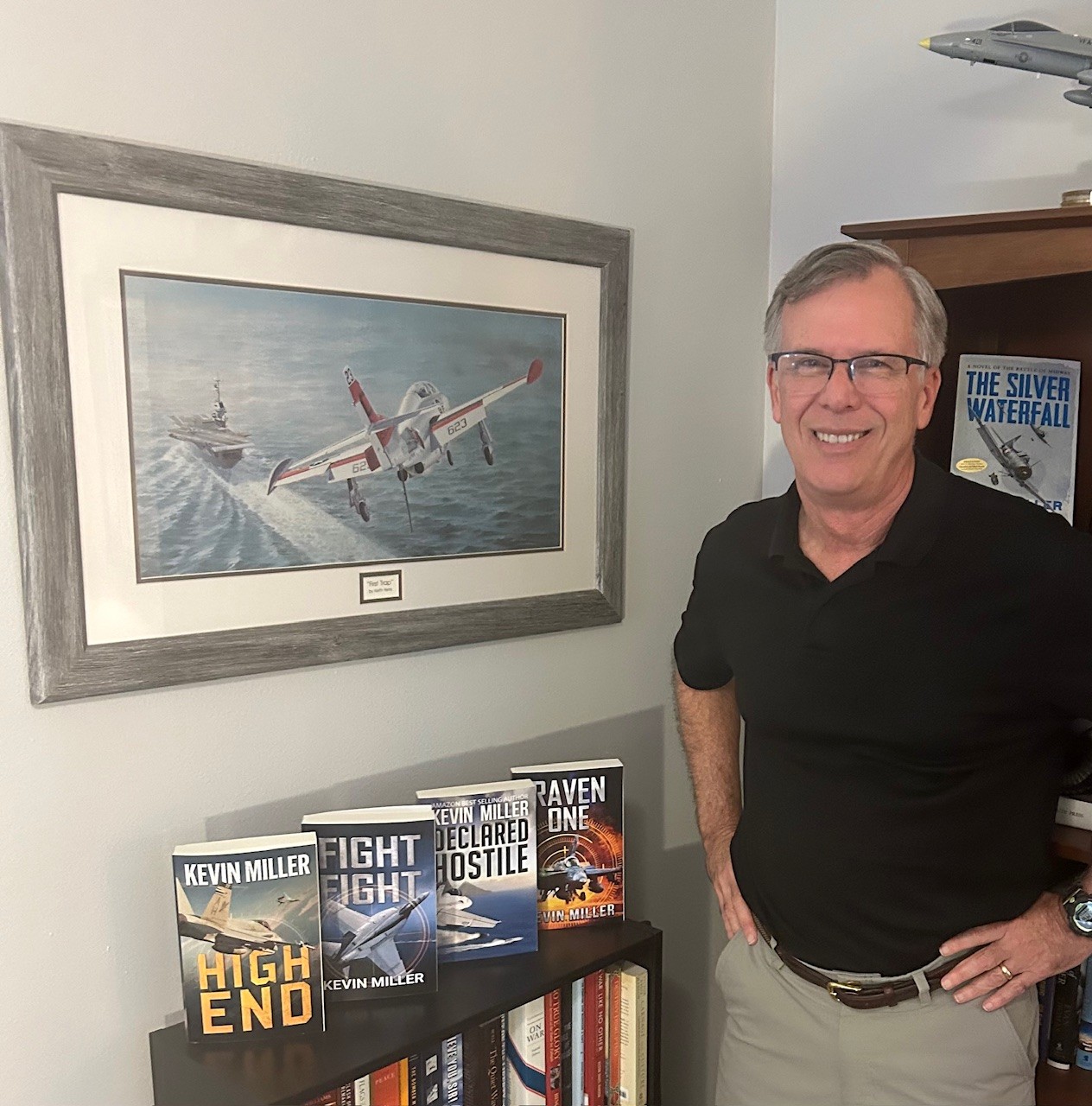
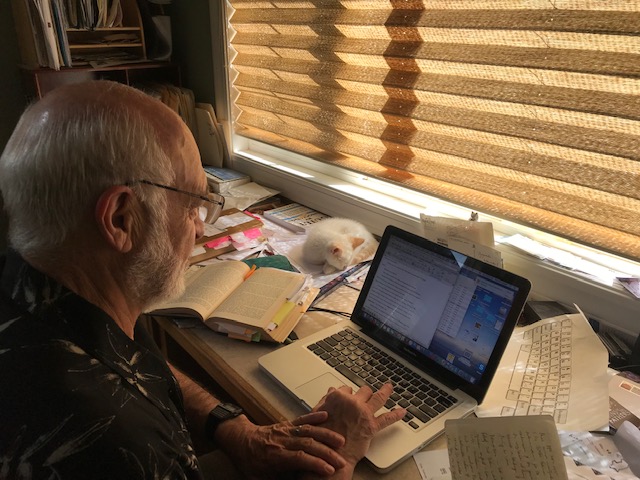
    Kevin Miller, books, painting, dockers, black shirt, man

    Chanticleer: You’ve talked a bit about Tom Clancy and Stephen Coonts as comp titles for your work earlier on, but which authors do you for inspiration, advice, or just because you like their work?

    Miller:

    Herman Wouk

    Wouk is an absolute badass of a writer, from his unflinching views of human nature to his superb research of his subject. As a Midway historian with a carrier aviation background, Wouk – who was an officer but not an aviator in WWII – wrote passages in War and Remembrance about the carrier pilots at Midway that impress me not only by their accuracy in flying the airplane but their human emotions in the middle of deadly aerial combat. His fictional German historical commentator von Roon – a brilliant character – gives context to the history the characters are living inside. The Caine Mutiny is a masterpiece in human conflict and the unfairness of life. Wouk puts you inside the mind of a three-dimensional character like no one else.

    Michael Shaara

    Many are not familiar with this name from 50 years ago, who at the time received a Pulitzer for The Killer Angels, the classic historical fiction novel of the Battle of Gettysburg. Shaara – who was an Army veteran but not a noted Gettysburg historian – brought Lee, Longstreet, Chamberlain and Pickett to life without changing any facts of the battle, giving the reader the honest insights and impassioned pleas of the real men who fought at Gettysburg as to how they should deal with the enemy across the field. Shaara was 100% my inspiration for The Silver Waterfall. As the country was recovering from its Vietnam War trauma, The Killer Angels was not successful when published in the mid 1970’s. Shaara did not live to see it adapted into the movie Gettysburg and the commercial success Angels has subsequently received. Another of his works was published posthumously and adapted into a movie: For the Love of The Game.
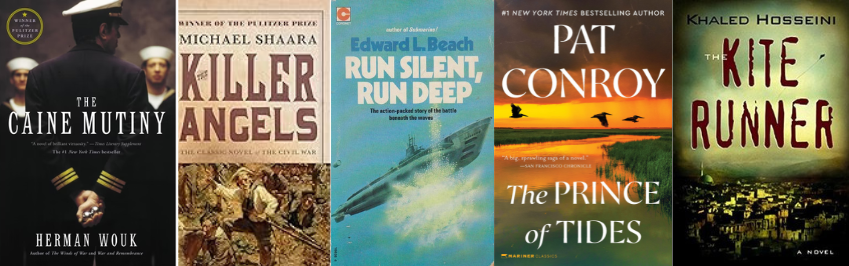
    The Cain Mutiny, The Killer Angels, Run Silent Run Deep, The Prince of Tides, The Kite Runner

    Captain Edward L. Beach

    Ned Beach was a WWII submariner who after the war and while still on active duty wrote the novel Run Silent, Run Deep, an immediate hit with post-war audiences that was adapted into a movie starring Clark Gable. The story is of conflict inside the control room of the submarine between two officers who each want the same woman back home but must cooperate to lead the crew against the enemy above them. This human tension centered in pride is a feature of all my novels. Beach wrote more novels including Dust on the Sea and Cold is the Sea, both to critical acclaim. During this time, he was given command of the nuclear submarine Triton that circumnavigated the world while submerged, an incredible feat in the day. Sadly – and not surprisingly to this naval officer – Beach was not selected for promotion to admiral as the higher ups were jealous of his fame and considered his creative pursuits unseemly.

    I write in his third-person style, calling my protagonist by his last name while placing the reader on the bridge of a ship or in the cockpit of an airplane as it really is, and expecting the reader to keep up.

    Pat Conroy

    Pat Conroy grabs you and does not let you go with the raw human power of his writing. Just wow. Like all the greats, he is honest – and fearless. Known best for The Prince of Tides and Beach Music, for me as an aviator, The Great Santini will always be my favorite. However, it is far from a military technothriller. It is a human story as all of his are about the reality of the most sinful of the deadly sins, pride. The Lords of Discipline is another unforgettable work which, like Santini, is more memoir than fiction. Pat Conroy had a rough upbringing, and as they say in sports, left it all on the field in his writing, holding nothing back. Just wow.

    Khalid Hosseini

    I’ve never visited or even flown over Afghanistan – my time in the fleet was before that – but I have been there thanks to the writing of Khalid Hosseini. Like millions of readers, I too was enthralled by The Kite Runner and his sequel A Thousand Splendid Suns. Hosseini’s vivid descriptions of place, the detail, and of course his insights of human nature and the fascinating culture of Afghanistan – both lovely and horrifying – are unforgettable. He explained Afghanistan to foreign readers in a no-nonsense style, unapologetic and fresh. We recoil at the cruelty and betrayal – I cannot believe they treat their fellow human beings like this! – but turn the page anyway as Hosseini assures us, yes, they do. I seek to describe and explain my former world with verbal images like Hosseini did his.
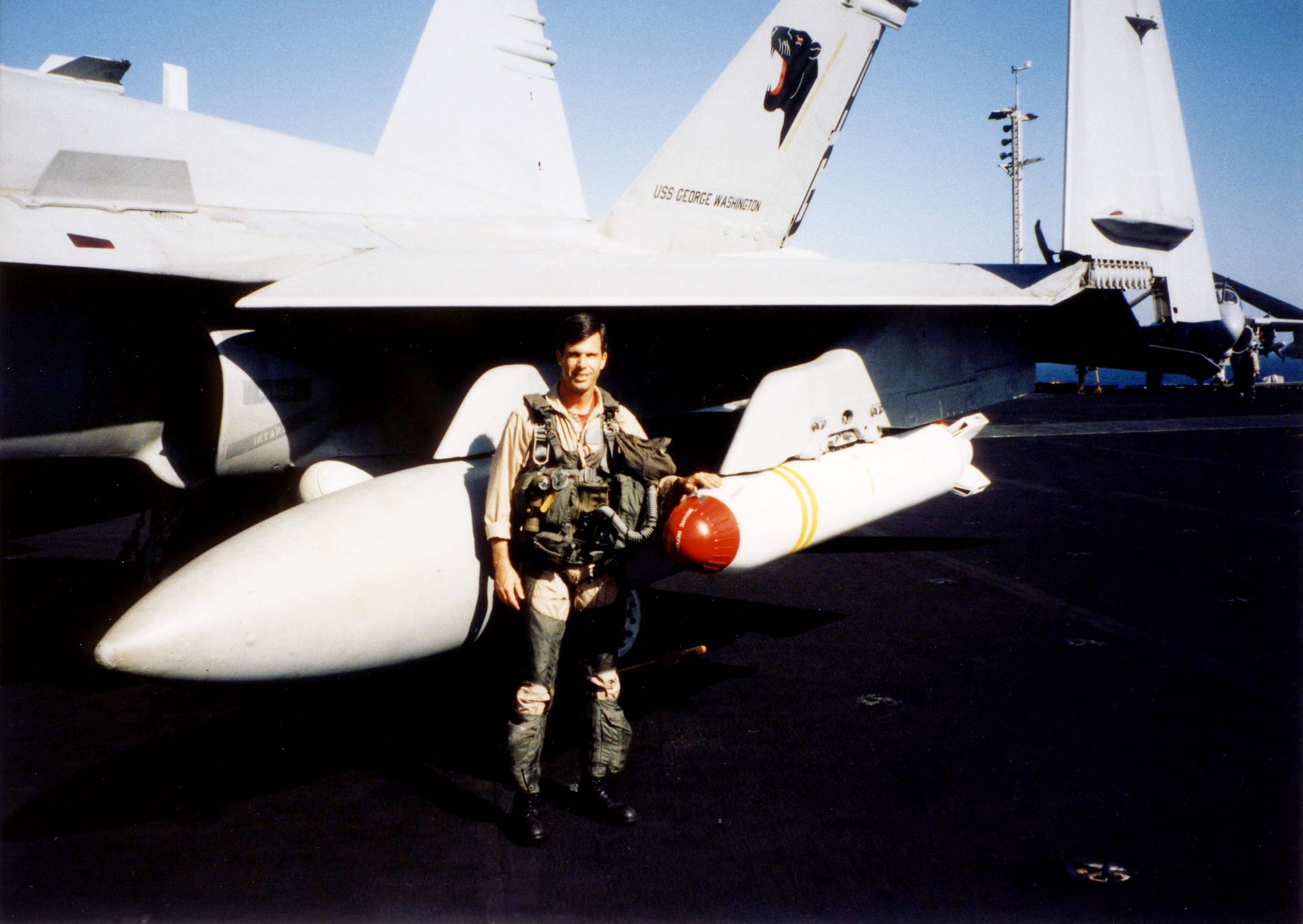
    Flight gear, jet, pilot, helmet

    Chanticleer: That is an amazing personal canon to draw from. Do you also enjoy craft books, and do you have any you would recommend?

    Miller: The classic Bird by Bird by Ann Lamott was enjoyable, but Stephen King’s On Writing, Pat Conroy’s My Writing Life, and especially Steven Pressfield’s Do the Work and Nobody Wants to Read Your Sh*t were each helpful to me and I would recommend them to anyone who writes creatively. People often ask me for my insights as they prepare to write a book. I explain that writing, at the bestselling and award-winning level, is hard, hard work and there’s no escaping it. While I cannot explain how I write – I just let it rip! – these giants have written helpful guides. Enjoy.
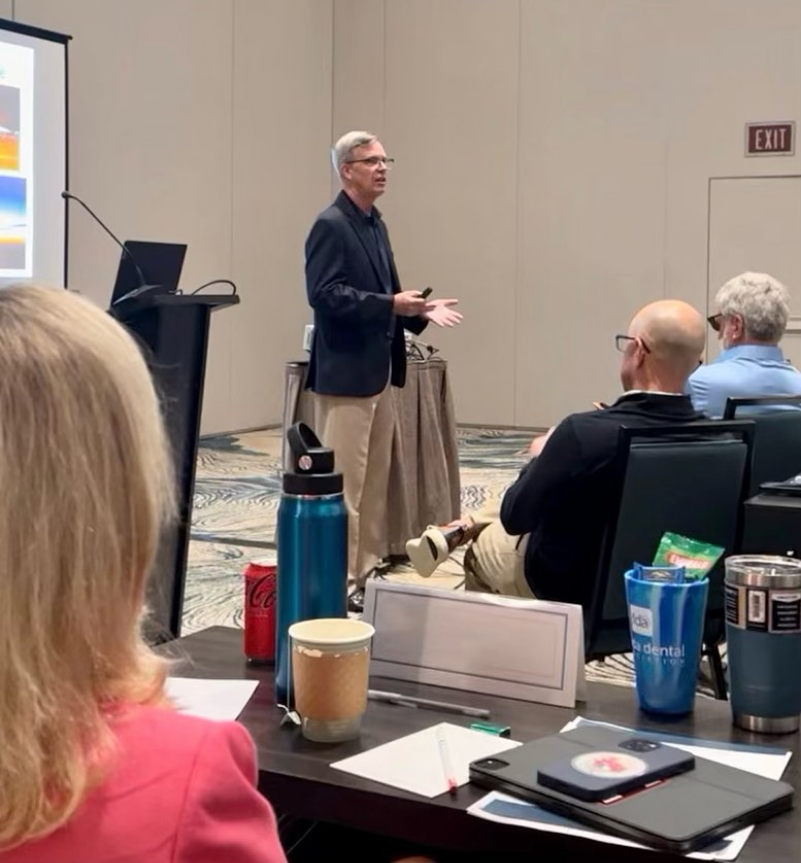
    Speaker, Kevin Miller, bald head, conference room

    Chanticleer: While most people think of writing as a solitary activity, we often find it has far reaching impacts. How has being an author affected your involvement in the community?

    Miller: Author implies authority, and I am an authority on the Battle of Midway, now recognized by all in my circle because of the success of my historical fiction novel. Two years ago, I spoke at a gathering of all the U.S. Navy admirals in naval aviation about the lessons of the battle, lessons they can use today, and next year I’ll speak at a large event to commemorate the battle. Because I am also connected to today’s fleet, my Raven One series novels are prescient for today, especially my last two that involve China and Russia, and I’m often invited to give talks at Rotary Clubs and veterans groups to educate the public about the need for strong sea services. Publicity earned from the CIBA recognition of The Silver Waterfall cemented my position as an authority on Midway.

    Chanticleer: That’s incredible! Becoming an expert of such an important historical event is really quite an accomplishment! And we at Chanticleer are very happy to know your CIBA award has helped to bring more attention to the Battle of Midway and your wonderful novel. Are there any activities you are involved in that improve or promote literacy?

    Miller: I teach middle school history at the honors level, one day per week. My honors students are above average readers, and during the semester I assign reading. The novels Around the World in 80 Days for 6th grade geography, and The Red Badge of Courage in 8th grade U.S. history are examples, and after they complete the reading, I have them write essays about them in class. They grumble of course, but where else will they read these classics of literature?
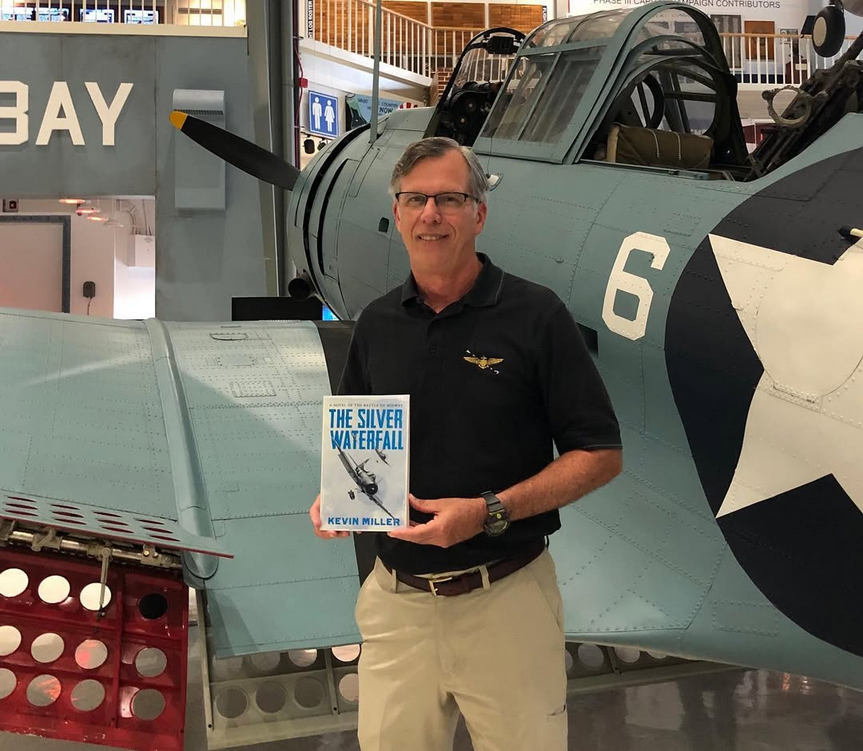
    Jet, The Silver Waterfall, author, Kevin Miller, dockers
    Chanticleer: Being a teacher is such a gift to the future. Thank you for doing that work. Your students sound lucky to have you. If we can bend your ear for us for a teachable moment, what are some marketing tips that you would recommend to our authors?

    Miller: My publisher says there is nothing like writing a new book to sell your current one, however paid FB and Amazon ads work, as do email lists. Promo stacking with services such as Amazon, BookBub, Robin Reads, ENT and others is an effective strategy. While I’ve snagged three BookBub featured deals (all for Raven One) I’m still struggling with breaking the code on what works (regarding Canva creatives) for BookBub advertising. Posting on social media almost daily about my flying days and sometimes me with my book is effective; Chanticleer author D.D. Black does this very well on Instagram. So does Tony Selimi, who says authors must get famous to get a larger audience. Get a Facebook business page with others on social media to gain follows. LinkedIn is good, Pinterest during the Christmas gift giving season, and, of course, email. Recommend investing in KDP Rocket, and David Gaughran is a superb follow for indie writers on all aspects of publishing and promoting.

    Chanticleer: That is a wealth of excellent information for authors. What about for readers, what help can readers be to authors?

    Miller: Receiving a kind email from a reader is gratifying, and I always write back thanking them, and then ask them to leave a review. WE all know and crave the social proof of reviews, but my sense is that only 1-2% of readers leave one. Wish that Amazon allowed us to thank them when they do. Passing the word of course is nice of readers. Word-of-mouth advertising can’t be beat. Then there’s good old-fashioned encouragement. Writing as we know is hard drudgery, and for me the end-product is what drives me, not any joy or “rush” in the act of writing. Doing the work as Pressfield says and producing something that people can appreciate today and decades from now is my “why.” Thank you to the readers, known and unknown to me personally, who have encouraged that.
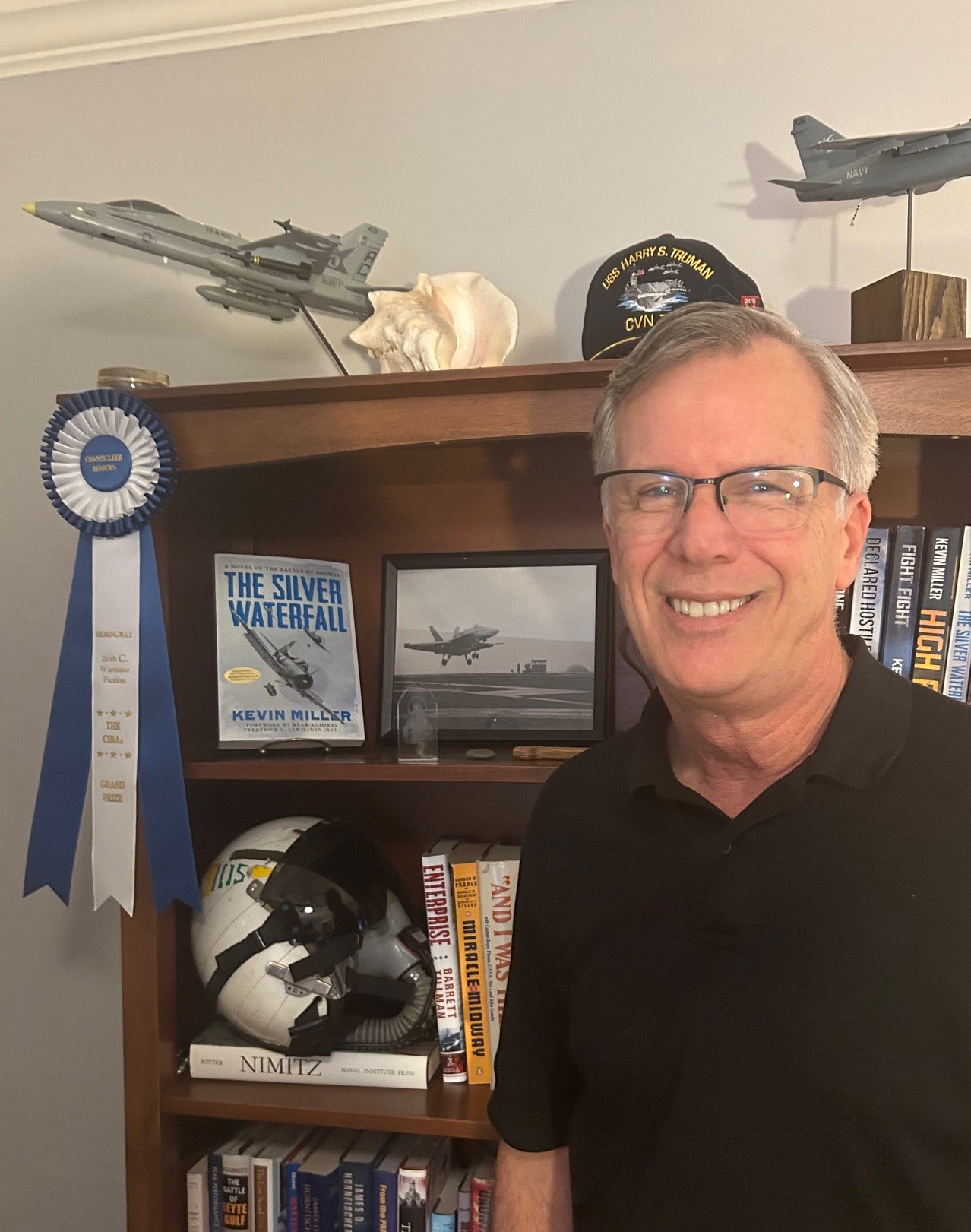

    Kevin Miller, bookshelves, helmet, pictures, CIBA Grand Prize ribbon, Model jet

    Retired U.S. Navy Captain Kevin Miller graduated from the University of Mississippi and was designated a Naval Aviator in August 1983. He flew the A-7E Corsair II and FA-18C Hornet operationally and commanded a deployed strike-fighter squadron. He finished his career in the Pentagon serving on the staff of the Secretary of the Navy, retiring in 2005.

    After leaving the service Kevin was employed as an associate at two Washington DC defense consulting firms, then as a not-for-profit executive, and today is the Owner/Principal of MPK Defense Consulting. He is also the Best-Selling and Award-Winning author of the Raven One military action-adventure series and the historical fiction novel The Silver Waterfall: A Novel of the Battle of Midway that was awarded the 2023 CIBA Hemingway Award for excellence in 20th Century Wartime Fiction.

    Kevin lives in Pensacola, Florida and is working on his next novel. Find out more about Kevin and his novels on his website.
  • Timothy S. Johnston 10 Question Interview with Chanticleer – Science-Fiction, TechnoFi, Mystery, and Thriller

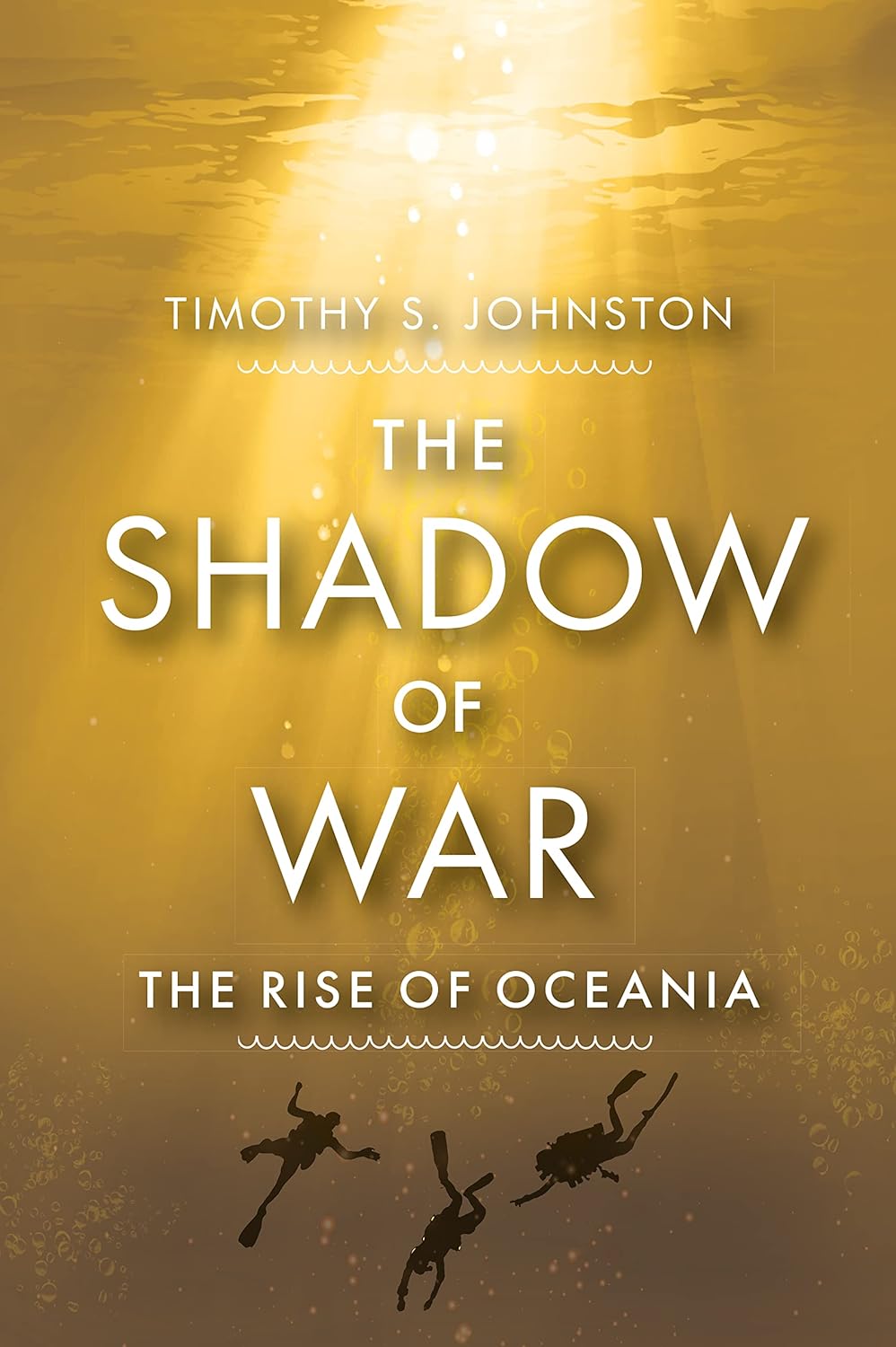
    Blue And Gold badge recognizing The Shadow of War by Timothy S. Johnston for winning the 2023 Cygnus Grand PrizeScience Fiction award-winning Author Timothy S. Johnston sat down for a 10-Question Interview with Chanticleer!

    Recently, Chanticleer had the pleasure of speaking with Timothy S. Johnston, author of both The Rise of Oceania and The Tanner Sequence series. His latest book, The Shadow of War-the latest in The Rise of Oceania series, took home the 2023 Cygnus Grand Prize for Science Fiction. Johnston is an award-winning author and literacy advocate and I know you’ll enjoy learning more about him and his thrilling novels!

    Here’s what we talked about:

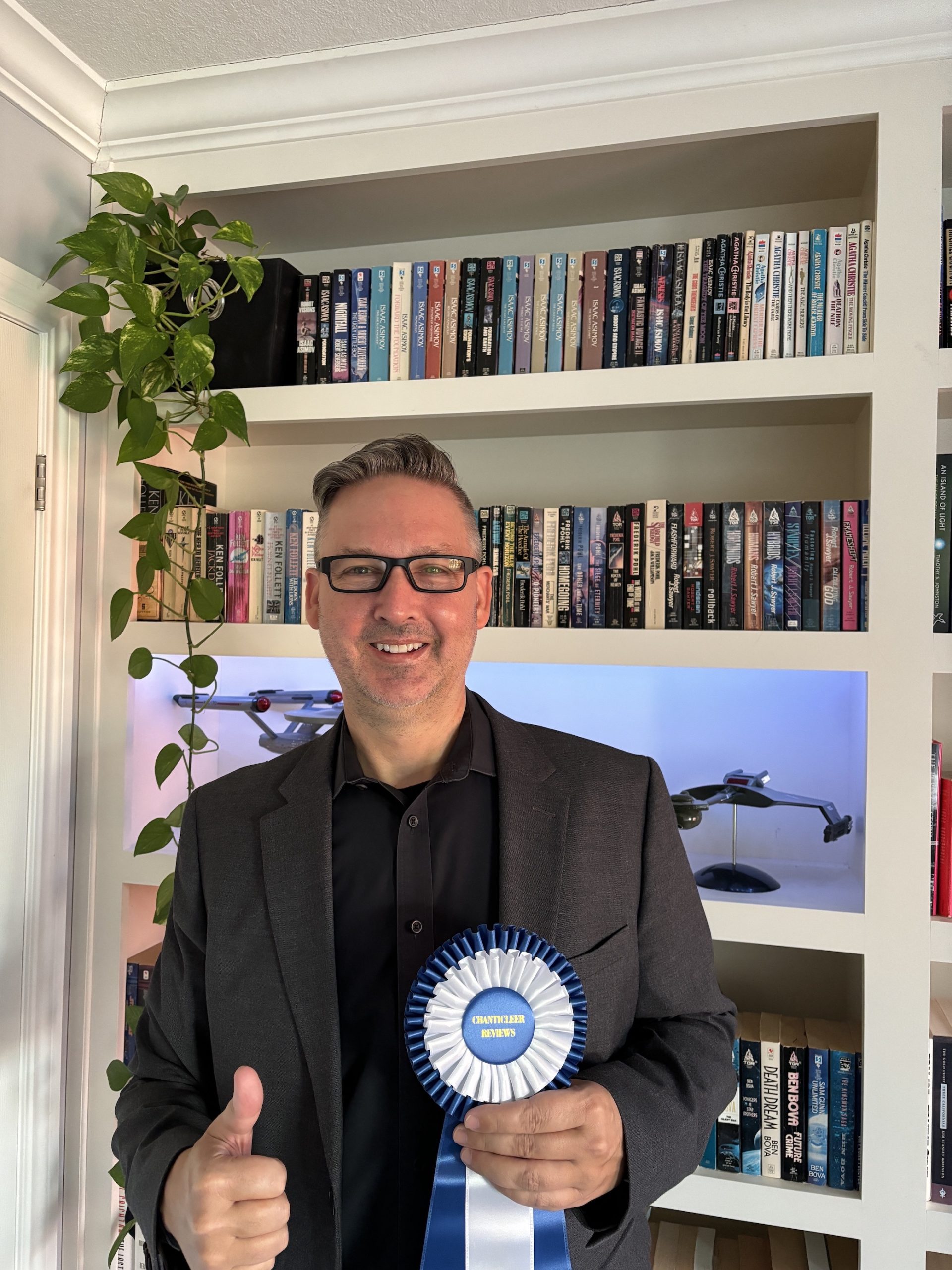
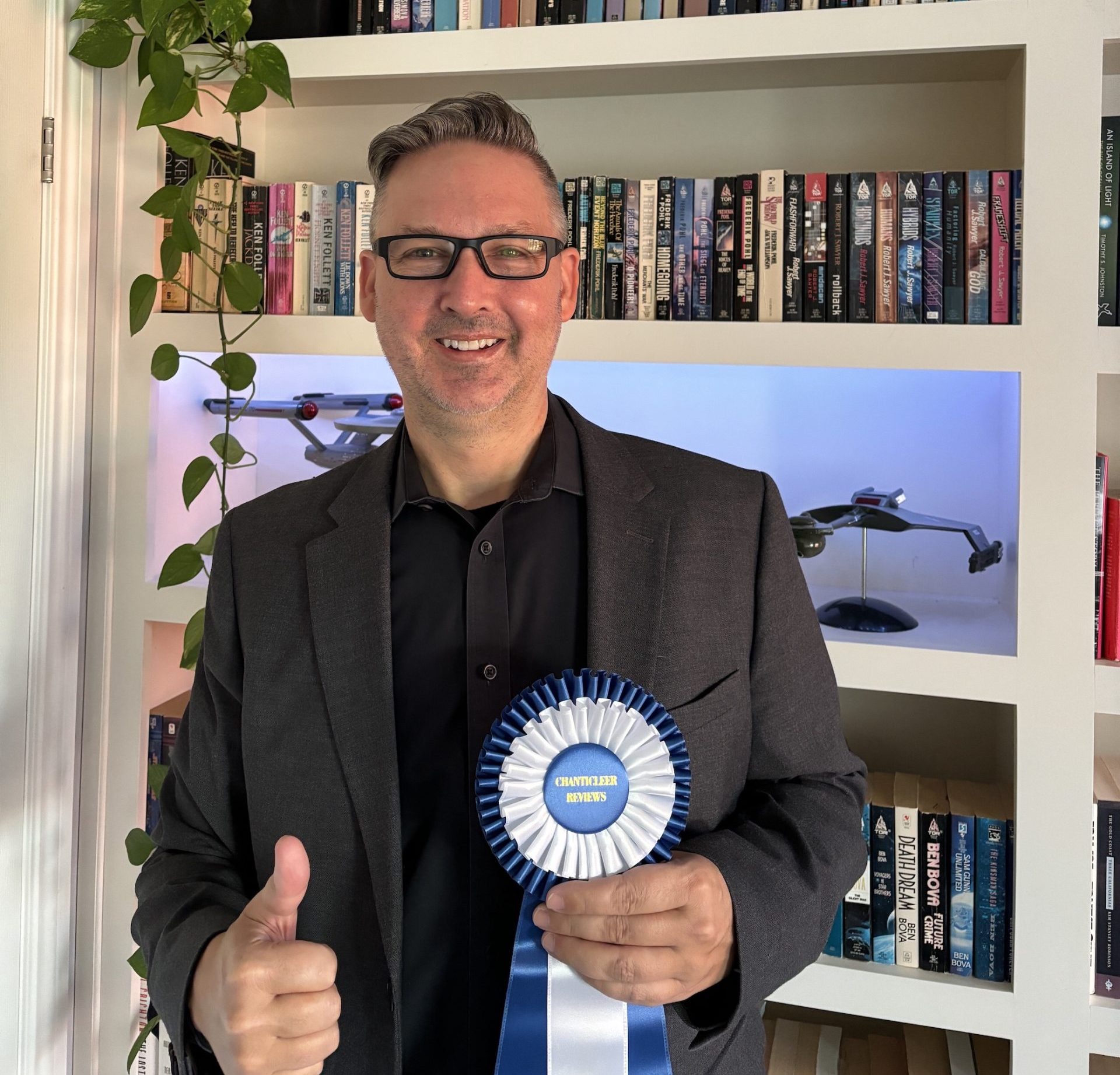
    Books, plant, bookshelf, ciba, ribbon, timothy s johnston

    Chanticleer: Your passion for storytelling shows through in your writing. When did your love of storytelling begin?

    Johnston: It came from a love of stories when I was a child. It didn’t matter what format or media; I just loved a good story. I still feel today that a good story has a great power to heal. Escapist entertainment is crucial, and everyone can use more in their lives. It serves a valuable purpose for us as human beings—as a way to escape our lives, the daily grind, our worries and anxiety. Escapism has the power to take away our pain. When I was seventeen years old, after years of reading great books—everything from Edgar Allan Poe to Asimov, Crichton and Agatha Christie—and watching gripping genre films from directors like James Cameron and Steven Spielberg, I knew that writing was what I wanted to do. I wanted to contribute to the genre and provide escapist entertainment for people. I set my sights on this goal and…

    It took me twenty-five years to actually achieve it. My first book deal was for The Furnace, which I landed when I was forty-two. It was a quarter century of rejection, but it was important because during that period I was learning the craft. I was improving and studying the entire time. I accumulated hundreds of rejections during that period, and I had five books completed on my hard drive when I finally landed the deal with Carina Press. But since then, I haven’t looked back. Fitzhenry & Whiteside just published my ninth book, A Blanket of Steel.

    Chanticleer: That persistence really paid off! I love that you framed the journey as essential to mastering your craft. Speaking of craft—how did you decide on your genre?

    Johnston: The genre I write is TechnoThriller or Science Fiction Thriller. I write thrillers that take place in unique and dangerous locations. There is always a technological component to them, and the settings are unique and dangerous. However, they are all grounded in reality. I don’t write aliens (yet) or concepts that are too outlandish. I want to capture that mainstream audience and keep them entertained and interested in a story that could really happen. One full of tension, twists, and turns. A rollercoaster ride, if you will. I love stories that involve horror, thrills, suspense, and characters on the verge of death or disaster. I want massive stakes and tremendous villains in my stories. I also want mystery, and some gruesome violence is always good. This is what I write, and I love it!

    I also want to increase diversity in my writing. I am most proud of The Shadow of War because it includes a Muslim woman as a star in the ensemble. I feel that Muslim women are often relegated to the background, as the wife or daughter perhaps, and in this book, I wanted to bring my character, Sahar Noor, right to the forefront and make her an integral part of the story. I wanted her to be a powerful and important element of the narrative—necessary to the plot—and a person who helped control and dictate events. In the book, she is a popular politician, and in fact, a celebrity. The novel is a grand heist spanning the world and is so much fun. I loved writing it. Sahar is one of the greatest characters I have created, and I am so proud of her, and I’m thrilled that the book won the 2023 CYGNUS Award Grand Prize! It fits into the TechnoThriller genre, but it’s a climate-themed (Cli-Fi) adventure as well.

    Chanticleer: Sahar Noor sounds like such a compelling character! We love seeing authors push for representation in genres where it hasn’t always been prioritized. The underwater elements in your books are riveting and make me think of The Expanse. How do you come up with ideas for these unique plots?

    Johnston: I love stories in many forms. I love movies, TV, books, and narrative-driven Sci-Fi/Horror video games. I soak up everything I can get my hands on. In my creative formative years, I developed a love for a certain genre and style. I would seek it out anywhere I could find it. All those stories played a role in my creative process. I want to honor everything that’s come before, while also breaking new ground. I want to make the reader feel comfortable with the genre and plot at first, but also hit them with things they’ve never experienced or even thought about before. The Shadow of War is a great case in point. In many ways it feels comfortable because it’s a heist. It’s covert espionage, which people enjoy. But it’s also about a group of people trying to get their hands on an energy (particle) weapon for use underwater. This is extremely rare in fiction, in fact, I can’t think of any other examples. Underwater adventures are rare to begin with. But underwater heists even more so. But an underwater heist that also features an energy weapon is totally unique. Then throw in a sinister betrayal that catches the main character, and the reader, completely off guard. But it all takes place in a familiar genre, which is what I enjoy.

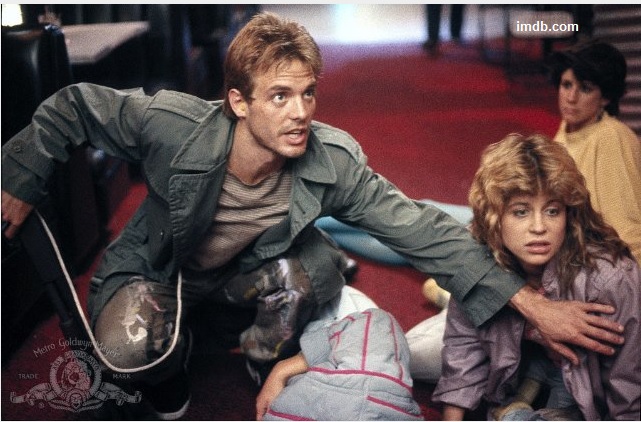
    The Terminator, Sarah, kyle, REese

    The Terminator is a great example of what I’m referring to. Think about that story for a minute: It’s a Sci-Fi time travel adventure, which audiences love. It’s gripping, suspenseful, and has a wonderful villain. The narrative features characters trying to prevent an apocalyptic disaster, to save humans in the future, and nestled within that is the greatest love story in the genre. At least, that’s what I tell my daughters! The Sarah/Reese story is so damned compelling that it overshadows the actual violence and adventure, but in a good way. For Kyle Reese to make that journey, stripped of anything that might help him, knowing he’ll likely die, and just to meet the woman he was in love with but had never met. It’s a shockingly great concept, but it’s hidden within this Science Fiction adventure. He doesn’t have a chance in hell at defeating the T-800, but Reese travels to find Sarah anyway because of the high stakes, and because of love. That’s what turns my crank, creatively speaking, and that’s what I try to do. I want my readers to feel comfortable at first, and then surprised by what quickly develops. And of course, I want them on a rollercoaster adventure with lots of twists and turns.

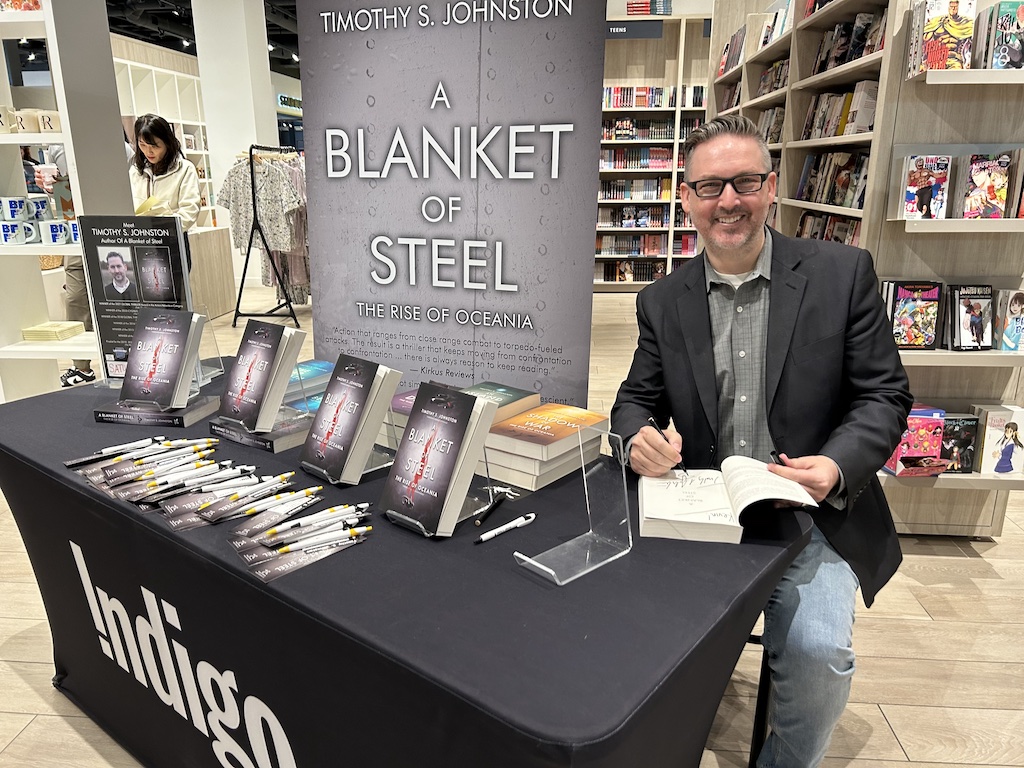
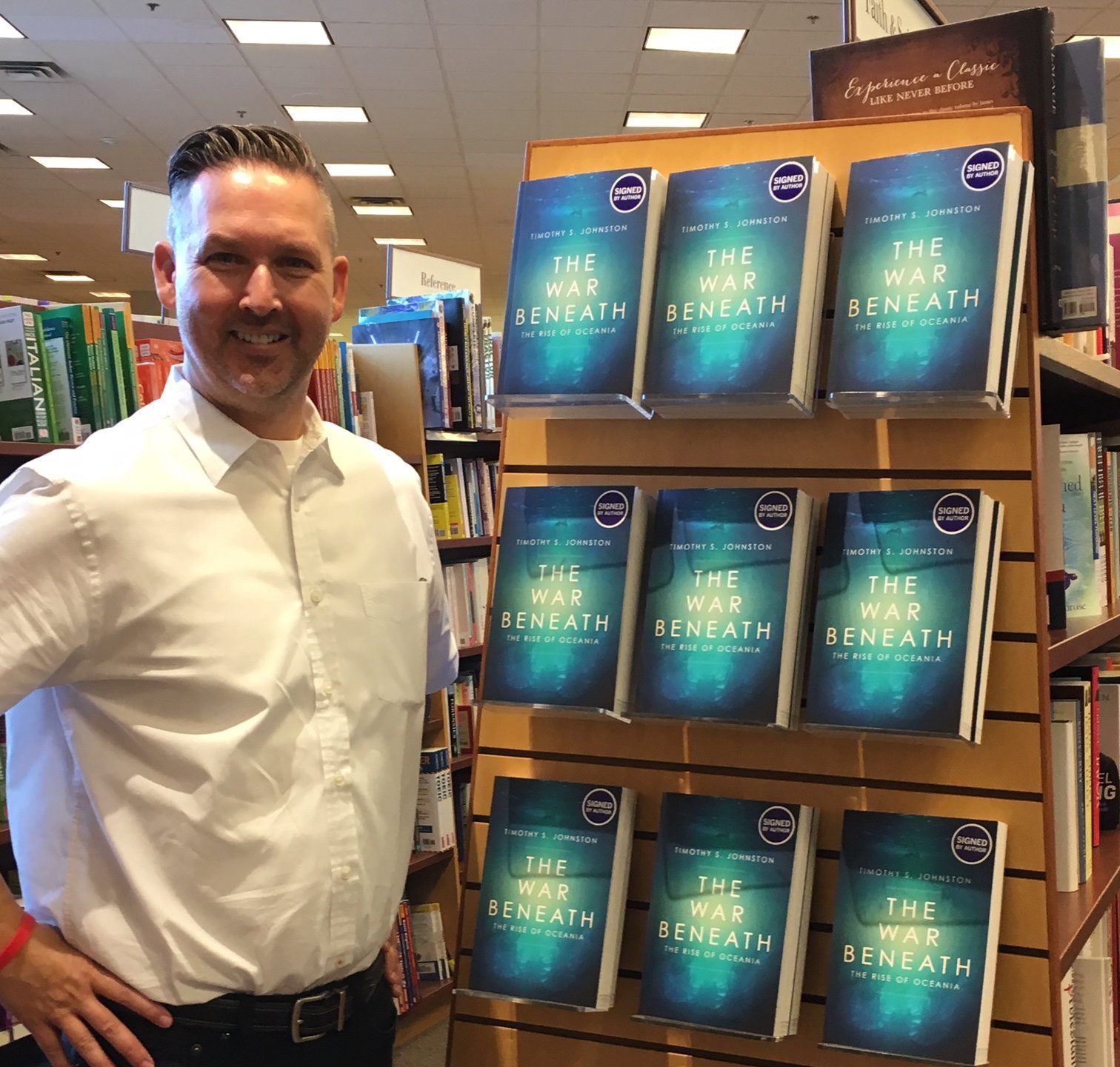
    Timothy S. Johnston, books, library, signing, man, blanket of steel

    Chanticleer: You’re definitely taking familiar genres and elevating them with fresh twists. Terminator is such a classic! Moving more to the craft of it, how structured are you as you put these stories together?

    Johnston: I create the characters and the setting. I create the story and the plot. I design an ending that I shoot for—and then I start writing. I am aiming to hit that ending, but the characters soon take on lives of their own and do surprising things, even to me. But I still shoot to get to that ending, and it helps me write. I also have a set time for writing each day. But before all this happens, I’ll research for months. Then I write to hit a goal each day. I want to hit the reader with surprise after surprise, with betrayals and real emotions, like we all experience in real life. I will maintain a rigid routine each day until the writing is done. When the first draft is finished, I’ll spend months editing it, tearing it apart and rebuilding it. And during it all, I’ll work with a graphic designer on the maps, diagrams, schematics, and more. I’m very structured, but the story does take on a life of its own, and very quickly too. I just love that. I love characters surprising me and doing something that I had never planned or expected!  And I’m the writer!  That’s the funny thing. Sometimes that ending will change, but it’s always in my mind. Sometimes slightly amorphous or ephemeral, but I am always thinking about it as I’m writing. Even as I write the first line, I know what the ending should be, or might be.

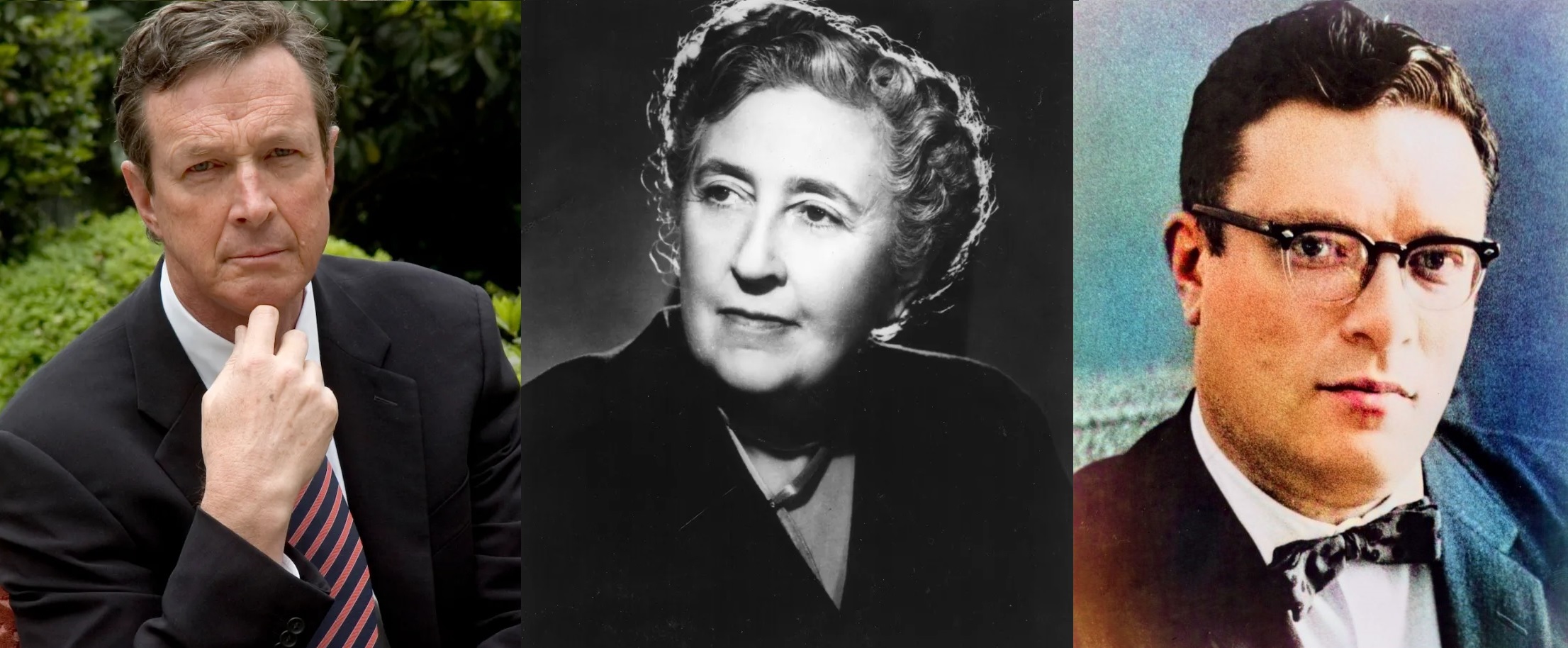
    Agatha Christie, Michael Crichton, Isaac Asimov
    From left to right we have Michael Crichton, Agatha Christie, Isaac Asimov

    Chanticleer: Wow! That is extraordinarily disciplined! I often feel like I dream of being that sort of writer, and I imagine many people feel the same. thinking of dream writers, who are your own inspirations? How do they inspire your work? Chanticleer: Name five of your favorite authors and describe how they influence your work.

    Johnston:
    Michael Crichton.
    He had a way of writing Science Fiction for mainstream audiences, and that’s also what I’m writing: TechnoThrillers. He kept all his writing grounded in reality and relatable to the audience. His storylines and exposition are easy to understand, and he wrote about cloning (Jurassic Park), time travel (Timeline), underwater adventure (Sphere), nano swarms (Prey), and so much more. He tapped into the mainstream audience very, very effectively. He was the best in the genre.

    Agatha Christie. She created the “classic” murder mystery. There are essential elements that her writing defined: a claustrophobic location, a dangerous environment that confines the characters, a small cast of characters, a killer, an investigator, a rising body count, power outages, and twists. I wrote three murder mysteries that take place in outer space (my first book deal, for The Furnace, The Freezer, The Void) and they are all based on her formula. I used science as my methods of murder, but the formula Christie created is now so classic that it belongs to her. She was the best in the genre.

    Isaac Asimov. The greatest Science Fiction writer ever. Period. I know people debate this, but for me there’s no doubt. He defined robots for modern civilization. His writing style and unique storylines are what captivate me about him. The style of his writing is also extremely compelling. It’s tight. It’s not drawn out and meandering. I love how he used dialogue to drive the narrative. Sometimes he’d have two or more characters speaking, and he wouldn’t even describe the setting, the location, and so on. It didn’t matter. The only thing that mattered was what the characters were saying, because it was always driving the story forward. And there were no superfluous scenes in his writing. They always had a point. I loved that about Asimov. There will never be someone better. He was the best in the genre.

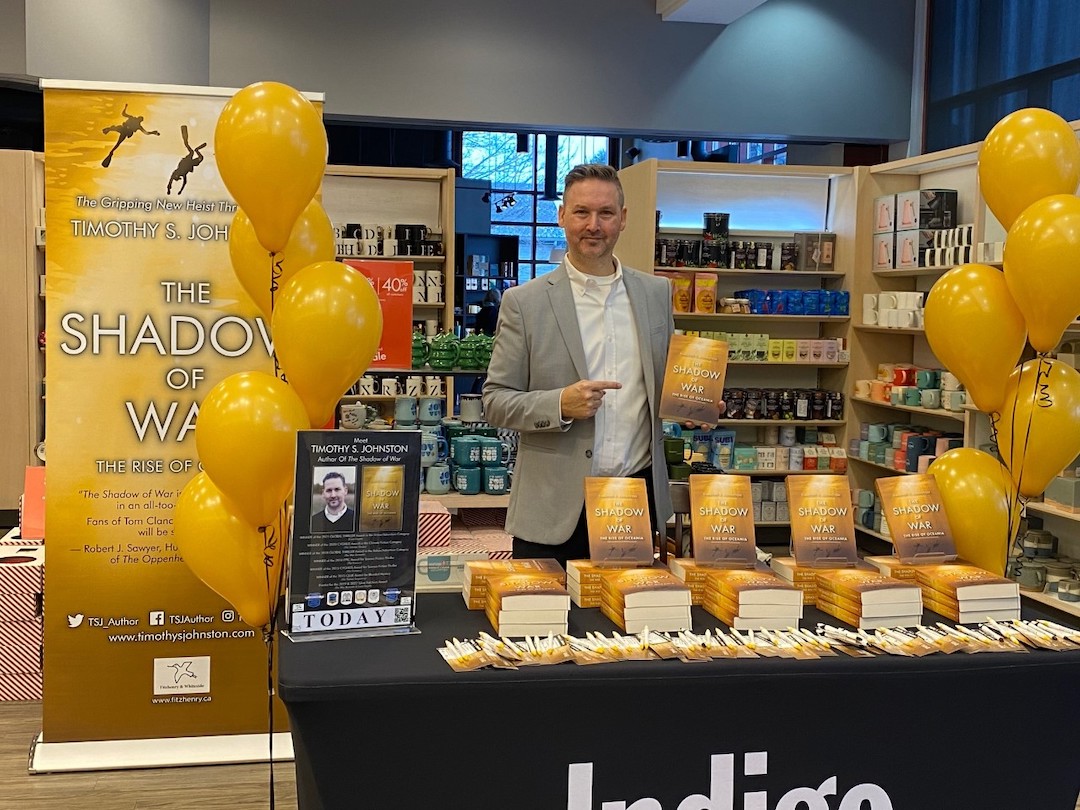
    The Shadow of War, Library, yellow, balloons, man, timothy s. Johnston, books

    Chanticleer: Continuing to dive in to craft, the writing experience is different for everyone. Starting from your inspirations above, how did you develop that storytelling skill? And what advice would you give to writers who want to do the same?

    Johnston: My stories have a lot of unexpected twists and turns. They contain betrayals and events that are unpredictable. I like this in the books I read and the movies I watch. Sometimes I will experience a story, either in print or film, and discover that the narrative lacks depth. It travels along a straight line from A to B. There is nothing in between. But to be a good writer is to be a good storyteller. That is the most important thing. Tell a kickass story that carries people away to some other place and time, one that provides escapism. That’s why I’m in this business because so many readers want that. They want stories that capture their imagination and take them away from the daily grind for a few compelling hours. But also, stories that have settings, endings, twists, situations, and characters that are unique and difficult to predict. To beginning writers, I would say:  Don’t be afraid to take chances and put your characters in tough spots. Don’t be scared to kill someone or make someone do something you wouldn’t normally do. If your characters solve a problem, create two more for them to deal with. Put them through hell. Make them earn that ending!  The journey for the reader should mirror that of the characters. The ending should be satisfying and cathartic. That’s why we are writers—to put people in tough, uncomfortable situations and see how they can get out.

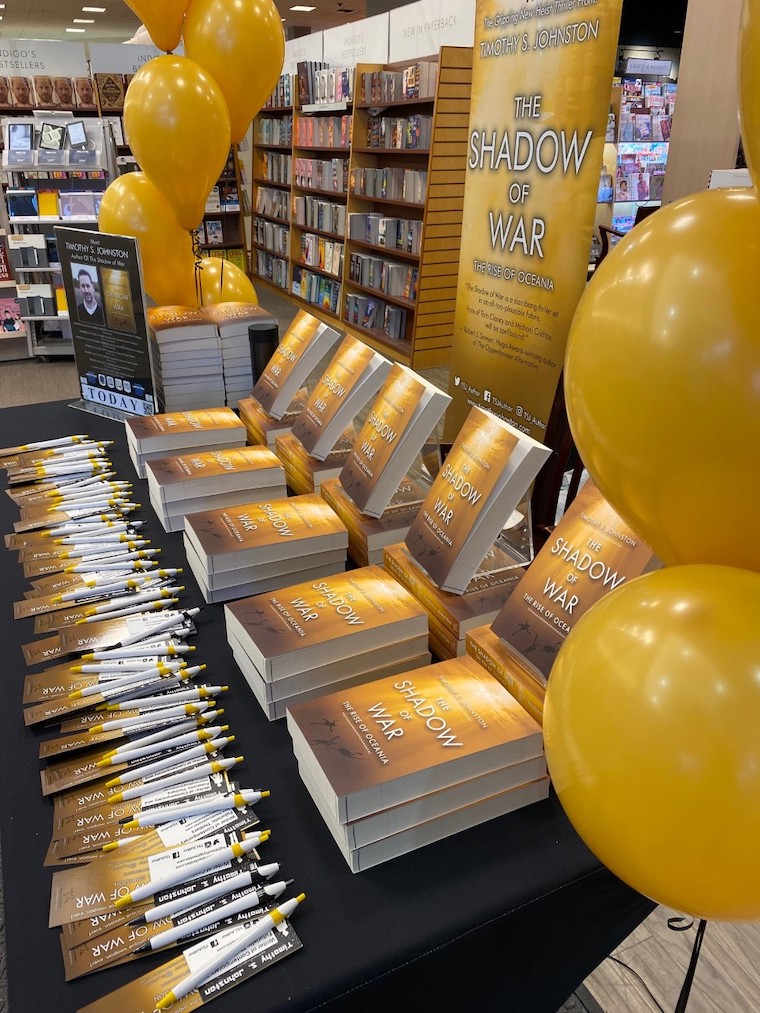
    Yellow, books, bookstore

    Chanticleer: That’s a tall order—but you’re clearly up to the challenge! You mentioned how much you learn from stories across different media. How do you go about improving your craft as an author?

    Johnston: I experience as many stories as I can in the same or similar genres. This includes books, TV, movies, and narrative-driven video games. It’s important for us storytellers to understand why some stories work and some do not. Why some beginnings rock but the endings fail. Why some twists work but others feel forced. Why some tropes are actually good and feel comfortable for readers, but others are unnecessary and may in fact break the fourth wall. This is why immersing yourself in stories, regardless of the medium, is so important. How we learn to tell a good story is driven by the stories that have had a huge impact on us previously and understanding why they had that impact. Usually, it’s due to an emotional connection, and we need to learn what worked and also what didn’t. To do this, we need to watch and read as much as we can.

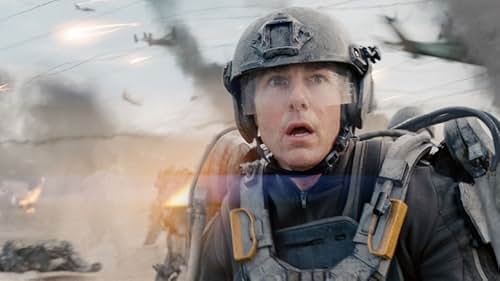
    movie, explosion, helmet, science fiction, bad actor, stutman

    The film Edge of Tomorrow, or Live Die Repeat, with Tom Cruise, is a good case in point. Why did that story work so well?  It was highly entertaining, one of his biggest science fiction hits, and audiences universally loved it. Well, consider these character and story elements: The world is at war with an unbeatable alien force. Tom Cruise portrays a coward at the beginning. He knows that if he were to go into battle, he’d die. He does everything, therefore, to avoid the fight. This is contrary to every character he has ever played. In the first fifteen minutes of the movie, the viewer is thrown into this situation with Cruise, where we know he is not going to survive that first battle. It’s completely compelling and engaging, not just watching Cruise be Cruise, but to watch him play this character on the ragged edge of life. And then, after he dies the first time, and as he begins to relive each day and learn what he must to do to survive this insane journey, it becomes a gripping study in character and action. The viewer has to keep watching to find out what happens. There is no other option. Books have to be like this too, and this is why it’s so necessary for authors to read and view anything they can in their genre, to learn what works and what doesn’t. To grip a reader from page one and never let go. That’s the trick!  Experiencing stories from multiple types of media is so important for all storytellers.

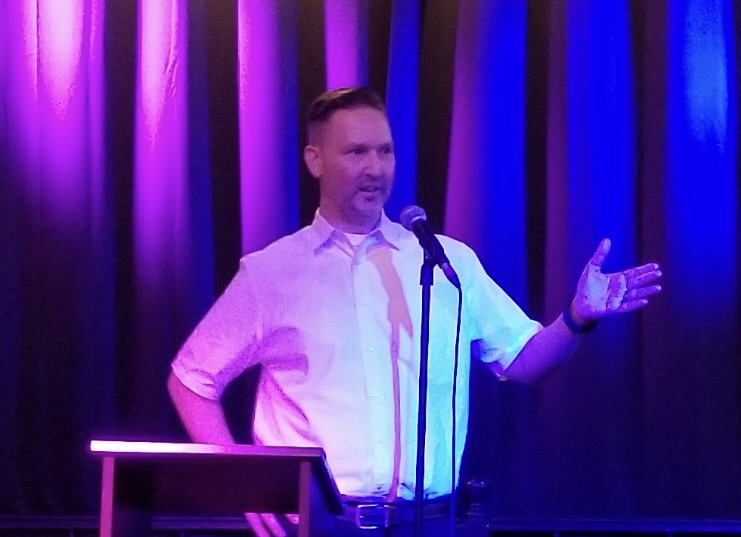
    Timothy S. Johnston, Purple, Blue, microphone, man, podium, curtain
    Screenshot

    Chanticleer: Pivoting again. No writer is alone in their journey, and one of our favorite questions is how does being an author affect your involvement in your community?

    Johnston: I definitely recognize that I am in a position to help inspire people about my genres. I can influence people’s decisions on what books to read or movies to watch or games to play. It’s why I review movies and games on my blog, Life After Gateway. I want to tell people, “Hey, if you love Sci-Fi/Horror, then this is a game you will really enjoy.” I also recognize that I have something to say about literacy in schools and what we need to do to attract people to read and write more. This is important, especially in our current society in which so much of life revolves around the smartphone or iPad. Trying to get students to experience pleasure in reading is more important than ever.

    man, shadow, white shirt, books, end cap

    Chanticleer: That’s such an important mission! And it sounds like you take that advocacy seriously. Can you share more about the work you do to promote literacy?

    Johnston: I make a point of visiting high schools in my community and I speak to the creative writing classes about writing, story, characters, and more. It’s important to me that I talk about my love of great stories in my genres—Thriller, Science Fiction, Suspense, Horror, Mystery—what makes them special, what works and what doesn’t, and so on. I love talking about these genres in film and books. The students love talking about stories and I work with them to develop ideas that might appeal to people. I also sponsor a writing award in my city’s Board of Education called the Timothy S. Johnston Future Writer Award. Each year, a graduating student receives the prize, which is a small cash award, a signed/framed certificate, and a letter from me. It’s important to encourage creative writers to never give up. It took me twenty-five years to land my first book deal. This business doesn’t come easy. It takes grit and determination. Success, even when it does come, isn’t actually success. It’s just another step on the ladder, and there are always future goals to work toward.

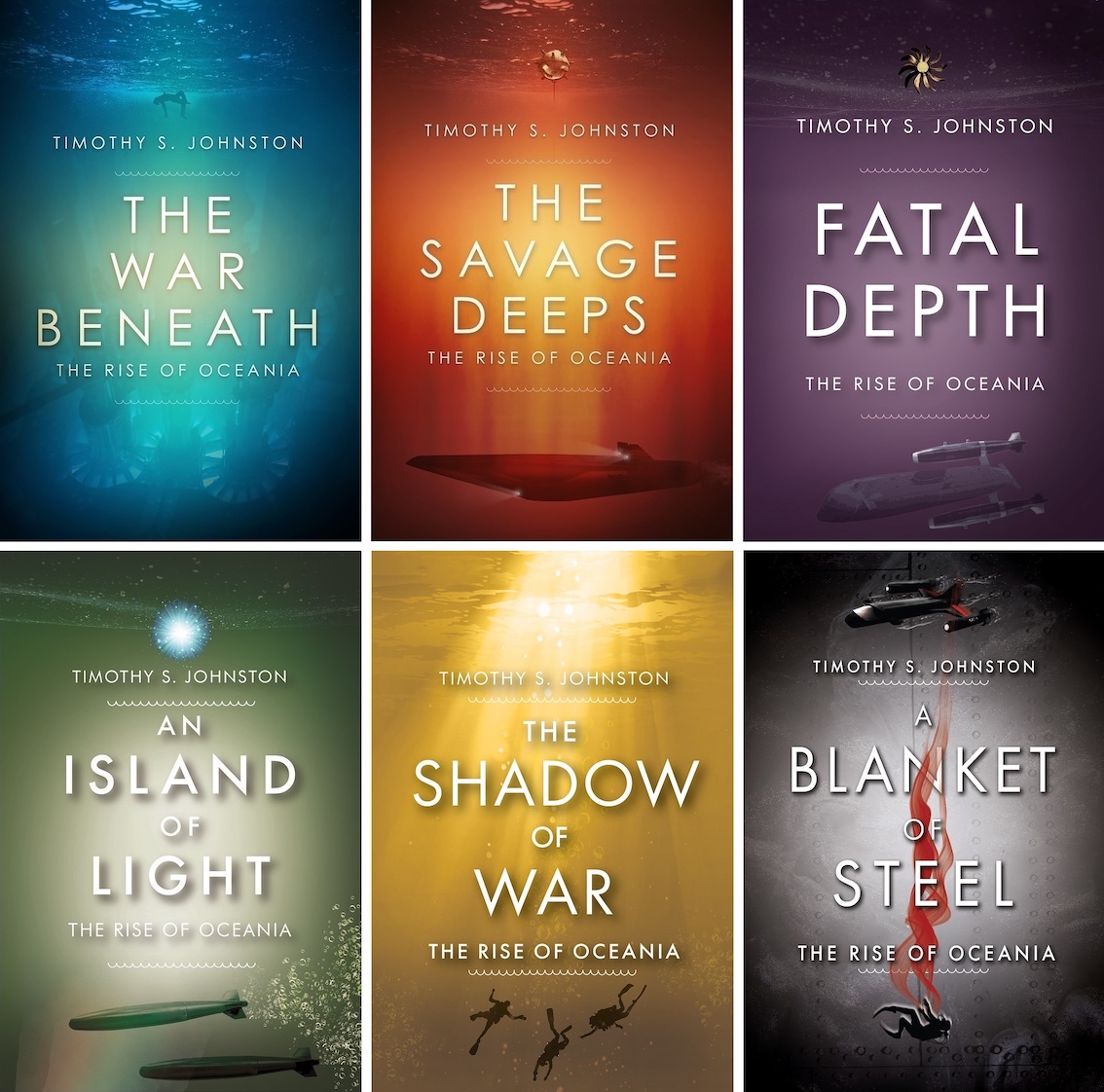
    The Rise of Oceania, books, covers, Island of light, shadow of war, the war beneath, fatal depth, blanket of steel, the savage deeps

    Chanticleer: Finally, you’ve achieved so much in your author’s journey. With everything you’ve done, what is it now that still excites you most about writing?

    Johnston: When it comes to writing, telling a compelling story, keeping the reader glued to the page, and carrying them through a tense and gripping adventure excites me. Providing escapism to someone, to take them away from their daily tensions and workload, is the greatest reward for me. I want people to not be able to put my books down. I want them to keep reading long into the night. That’s what excites me. I want to inspire others through my writing and tell kickass stories. My writing is all grounded in reality and each book is a story that might happen someday, or likely will happen someday. That really inspires me, because I’m writing about that future experience, now, for people living today to relate to. I also think that I have something important to say. Sometimes it’s about increasing diversity in the genre. Sometimes it’s about climate change or science and technology and how we need to prepare for things to come. I love writing because I’m saying what I think should be said. Economies need to adapt to meet climate change head-on, humans need to prepare, and escapist entertainment is now more important than ever.


    Timothy S. Johnston, desk, lamp, sweater, man, smiling

    Timothy S. Johnston is a lifelong fan of thrillers and science fiction thrillers in both print and film. His greatest desire is to contribute to the genre which has given him so much over the past five decades. He has been an educator for twenty-five years and a writer for thirty. He lives on planet Earth, but he dreams of the stars.

    Visit www.timothysjohnston.com to register for news alerts, read his blog and reviews, and learn more about his current and upcoming thrillers. 

  • Chanticleer 10-Question Author Interview Series with David Calloway – Historical Fiction, African American History, Slavery & the Civil War

    CHANTICLEER 10-QUESTION AUTHOR INTERVIEW SERIES

    with Award-Winning Author, David Calloway

    Hello friends, we have another fabulous interview for you today.

    In 2024, David Calloway took home the 2023 Chanticleer Grand Prize in the Goethe Awards division for his fascinating novel, If Someday Comes. Here, he tells us how he was inspired by his own family’s history to write If Someday Comes and the subsequent heights it is now reaching! Take a minute or two and get familiar with David to learn more about his ancestors’ amazing story. You won’t be sorry!

    Chanti: Your writing is very personal. What drove you to tell your family’s history?

    Calloway: The heart of my wish to write and to tell my family’s story was to record for the coming generations the stories I heard from the old folks as I was growing up. I wanted to preserve the struggles, hardships, and triumphs of my ancestors’ American lives.

    I think I always wanted to write, but put no real effort into it early in my life, as I was filled with self-doubts about my ability. Eventually I would overcome my inertia through the feedback and encouragement of close friends and family. In my professional life, I was in the motion picture and TV business, first as a cinematographer, then as a director, and then a producer. From day one, I read every screenplay – all revisions – and watched the words come to life on the screen.

    Slowly, I learned what worked to tell stories economically, so some story sense came by osmosis, some by study, some by practice. I took story structure classes, studied Robert McGee. I read Bird by Bird by Ann Lamott and On Writing by Stephen King. I talked with working writers about series and story arcs, plotting, character, and foreshadowing. I also attended writer workshops, retreats, and read other successful novelists.

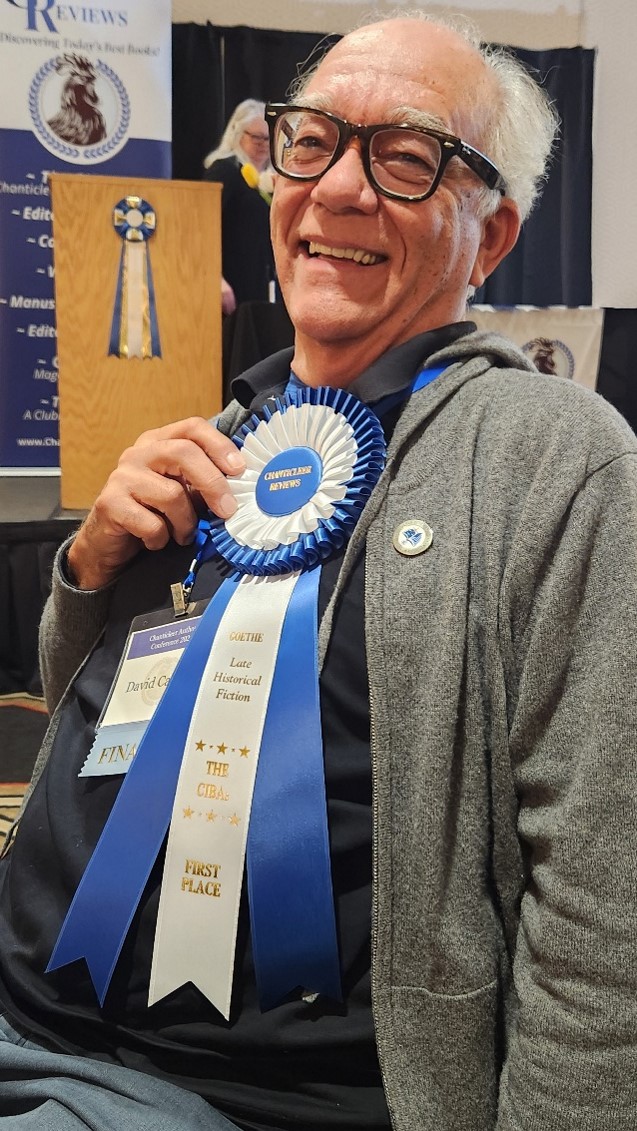
    CIBA award, Grey sweater, David Calloway, black shirt, conference, awards banquet

    Chanti: When did you finally feel you were an author and add that to your extensive resume?

    Calloway: The day I opened the box that brought the proof copy of If Someday Comes! Up to that point, there were many moving parts, the manuscript, the proof reading, the cover art, the endless formatting. Here in my hand was a real book, something anyone might buy. Unbelievably, it had my name as writer on it. It’s been published for many months, and I still find it hard to introduce myself as an author.

    Chanti: Your ancestor’s story is so compelling. What genre best describes your book?

    Calloway: If Someday Comes is historical fiction, closely based on the true story of my great-grandfather’s life during the American Civil War. I grew up knowing where people were during that period, but their exact relationships were lost in time, so I filled out the characters and created the tone of the plot as I went. Comments from the old folks like “he was a nice man” are not enough. It’s hard to avoid retroactively applied values to those times, and I’m sure some of my twenty-first century “I have judgement” slipped in there somewhere, but the goal of getting his story into a book was my true goal.

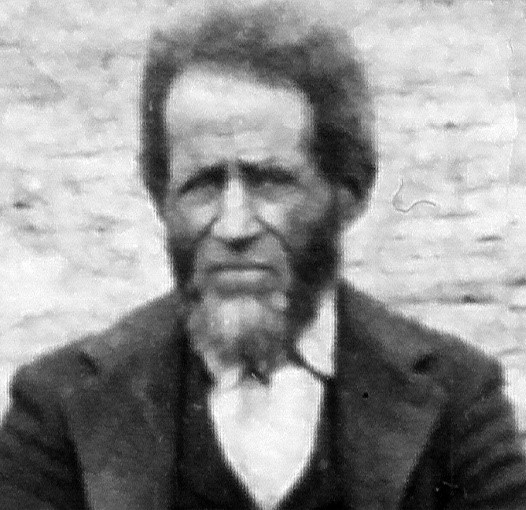
    Old photograph, African America, slavery, beard
    George Calloway

    Chanti: How did find the information you used to fill in the background of the story?

    Calloway: I read historical accounts of the period and subject, then added in my family’s tales of the past. I also created an outline of events for the story, and I used incidents I read about in books, letters, and newspapers for inspiration. The motivations of people never change for as far back as written history will allow us to see. Well-worn are the old trials of the human condition, and how often do we quote the Romans and Greeks on sex, greed, love, and jealousy. And of course, my own feelings on the same subjects.

    Chanti: That’s a rich way to develop both character and story! How do you approach your writing day? What is your routine?

    Calloway: “Sporadic” is my routine. I’ll write for several days, then none, then return to the page, then realize I need input, then read more history and other people’s work, stare at the blank screen, castigate my own procrastination, remind myself that no one is going to read this if I decide to cut it-so don’t worry. Then I despair that none will read the book anyway, convince myself that I’m hungry and a snack will get me going. I’ll check my email, take my dog for a walk, and then have lunch with old friends whom I’ve convinced my book is going great.

    Ad infinitum.

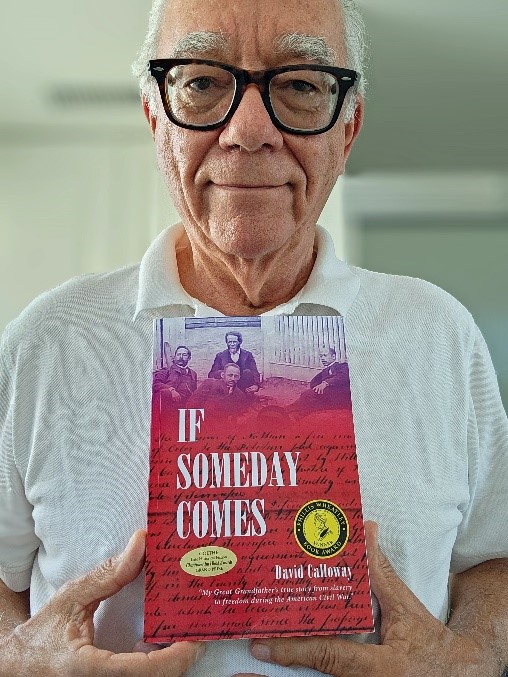
    David Calloway, If Someday Comes, White shirt, black glasses

    Chanti: What about writer’s block? How do you handle it when the words just won’t come to you?

    Calloway: Staring at an empty page with no ideas popping is tough. I write whatever comes to mind. It may have nothing to do with the book, or it may have a connection later on in the story. Some days are two sentence days, some are two-page days. I concentrate on my rights as an editor and will change or eliminate any thoughts, so I just jump right in.

    If I’m really stuck, taking a walk helps. I leave the phone at home, as I find stepping away from it resets the brain. Sometimes I imagine your main character with walking with me. And the phrase “I’ve got to sleep on it” is a maxim I refer to often, because problems are solved and ideas are generated by whatever part of the brain is working at night. It’s an approach that work for me… sometimes.

    Chanti: Those are great pieces of advice for breaking out of a block. Beyond writing, what sort of marketing tips do you have for authors?

    Calloway: Online ads are the only strategy that has worked for me. Spending lots of money in trade magazines has been a complete bust. I advertise on Amazon and Facebook. Set a budget and see how it works for you. Even so, It’s a struggle. Contacting public libraries, local papers, community clubs (Rotary, Elks, Chamber of Commerce) help – they always need luncheon speakers. I also make a point of being available for online book clubs and chats, and I have a website that has book reviews, awards, and links to other websites. www.IfSomedayComes.com. And I always encourage readers to write reviews online. It really helps others to decide to read the book.

    David Calloway, water, cap, grey, sky, land

    Chanti: What is your next project? Another story about a member of your family?

    Calloway: Yes! I am working on my Grandfather James’ story as historical fiction. He was born a slave in 1860, and grew up to become a surveyor and farmer. James and his brothers – all graduates of Fisk University – worked for and with Booker T. Washington in the building of Tuskegee Institute. James ran the farms and also taught farming. He was Tuskegee’s representative sent to Washington, DC to lobby for land grants to help finance the school. Later, James was hired by the German government and traveled to Togo to teach cotton farming.

    Chanti: Who are the perfect readers for If Someday Comes?

    Calloway: The book is a story of family, both before and during the Civil War. It highlights the close relationships between owner and slave, and as was so often the case, is about one large family separated by race and class.

    The story includes the good stuff, like love, courage, ingenuity, as well as the bad stuff of violence, cruelty, famine. Everyone suffered during the war; but remarkably, George (my Great Grandfather) kept everyone alive on both sides of the color line.

    It will be a book for anyone interested in the Civil War, the experience of slavery in East Tennessee, and the relationship of whites and blacks in the South.


    man, hat, yellow shirt, water, land, sky, David Calloway David Calloway was born in Chicago and grew up in Palo Alto and Berkeley. Calloway holds an MFA from UCLA in Film Production. His first job was as an Editor, progressing to Cinematographer, then a Producer of features and television. He is a member of the Producer’s Guild, the Director’s Guild, and the Academy of Television Arts and Sciences.
    Calloway is a Director on the board of the Angel’s Gate Cultural Center and on the board of the Offshore Racing Outreach Foundation.

    Calloway lives and works in Los Angeles, California. You can find out more about David Calloway’s writing on his website.

    If Someday Comes available on Amazon in print and Kindle, and as an Audible book.

  • Alexandrea Weis 10 Question Interview with Chanticleer – Mystery, Thriller, Animal Conservation, and New Orleans

    Thriller and Horror Author Alexandrea Weis sat down for a 10-Question Interview with Chanticleer!

    We had the pleasure of speaking with Alexandrea Weis recently. The author of more than a dozen books, her YA Thriller Have You Seen Me? took home the 2022 Clue Grand Prize for Thriller/Suspense. Weis is an award-winning author, screenwriter, advanced practice register nurse, and historian born and raised in the French Quarter of New Orleans. Here’s what we talked about:

    Chanticleer: Thank you so much for making the time for this interview. To start, when did you realize you that you were an author?

    Weis: Probably after I published my third book. It wasn’t a fluke anymore, and I had readers interested in my stories. I began to believe I could do this professionally. Being an author is really a mindset, but it doesn’t happen overnight. You put your first book on the market and doubt you can do it again. By the third book, you’re looking forward to writing your next story.

    Chanticleer: I love the idea of embracing the author mindset and the way in which you slowly build up confidence. What sort of stories do you write? What genre do you write and what led you there?

    Weis: Thriller/Horror. It was a progression for me to this genre, but I love the challenge of tying all the elements together and keeping the reader guessing about the outcome. It also allows me to utilize my nursing experience by incorporating forensic aspects that are so important when writing thrillers. In addition, I write about the area where I live, Southeast Louisiana, as often as I can. We have such a rich history that lends itself beautifully to this genre.

    You can get a visceral sense of Weis’ genre from the books on her site.

    Chanticleer: Thriller and Horror could definitely interact with nursing experience in some fascinating ways. When you’re writing how do you interact with the conventional rules of writing?

    Weis: I believe that when you break the rules, you create an exciting and unpredictable story. That doesn’t mean breaking away from the expectations of specific genres—readers expect certain things—but I try to push those boundaries.

    Chanticleer: We owe so much innovation to people who push boundaries. What about outside of writing? Tell us a little about your life outside of being an author.

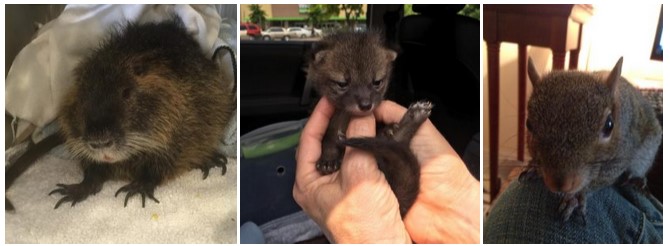
    Weis: I’m a permitted and certified wildlife rehabber with the Louisiana Department of Wildlife and Fisheries, so when I’m not writing, I’m working with orphaned and injured wildlife. With Hurricane Francine passing through our area recently, I’ve been busy with displaced babies after the storm. You haven’t lived until you’re surrounded by hungry baby squirrels. I love working with wildlife and rescuing domestics as well.

    Chanticleer: That sounds both adorable and also quite difficult. The number of hurricanes and “once in a lifetime storms” we experience these days is terrible. Sorry for the tangent. How do you come up with your ideas for a story?

    Weis: I am constantly coming up with ideas. I can drive to the grocery store and have a new idea for a book series. I love working history into my stories and often find ideas when reviewing Louisiana folklore. I was raised in the French Quarter, so the history of the area has always become ingrained. We lived in an old Creole Cottage with a rich past representing the French and Spanish influences on the city. I was also raised around Cajuns and learned a great deal about tales associated with the swamps, including fanciful legends blended with historical facts. It’s a colorful place to live, and everywhere you turn, there is a terrifying account about a haunted stretch of marshland or the ghostly encounters inside a Creole cottage in the French Quarter. It is fodder for the imagination and has always inspired me to weave the magic of where I live into my books.

    Chanticleer: That’s so cool! We just had a post celebrating Anne Rice’s birthday, and I know she grew up in the same area. So, moving from how you come up with your ideas, how structured would you say you are in your writing?

    Weis: I usually have a pretty detailed outline, especially when working on a thriller. So many elements need to be addressed and fed into the ending; you need a well-thought-out progression of the storyline. When writing outside of that genre, such as when I’m tackling a romance or paranormal story, I’m not as strict in sticking with my outline.

    Chanticleer: I love outlines as suggestions for the path rather than hard and fast. What about craft – how do you grow as an author?

    Weis: Take risks. For me that was writing in genres I wasn’t comfortable with. I started romance and had reservations about moving into thrillers, but once I wrote my first one, I found the challenge addictive. I’m always looking to move into an area I’m not familiar with to learn and grow. I’ve also stretched my creative chops into writing screenplays and television shows. It’s a different form of writing, but it also teaches you to put as much into a scene while using the least words possible. It also helps hone dialogue skills.

    Chanticleer: That courage to try new things is an inspiration. What new things are coming up as you continue to grow and challenge yourself?

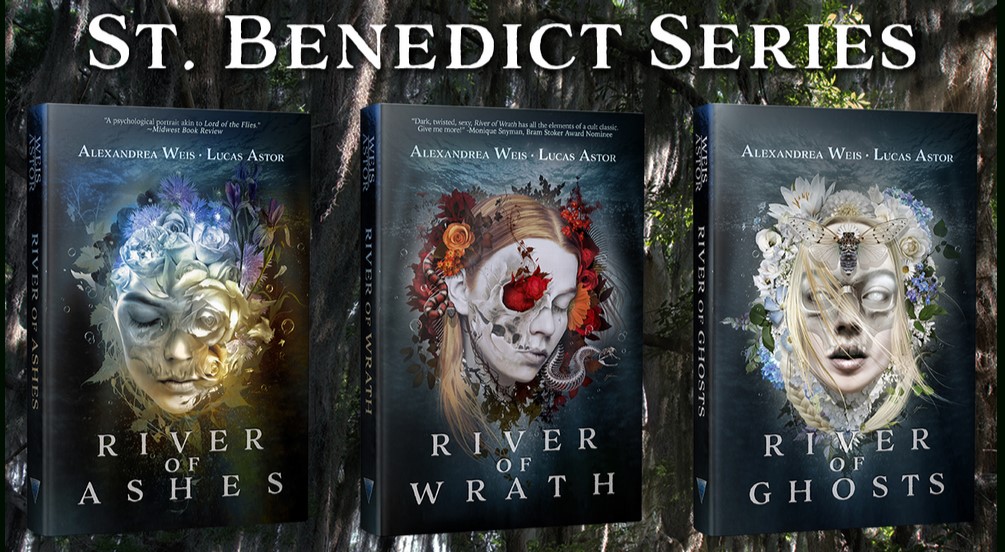
    Weis: I have two series I’m working on. The St. Benedict Series, with Lucas Astor is set around my hometown of Covington, Louisiana, along the Bogue Falaya River. It’s a thriller/horror series about a powerful family and their fall from grace. I love this series and its characters. I’m also working on The Basin Series. The first book, Cypress Hill, will be out next year. This is a spooky thriller set in the creepy Atchafalaya Basin and filled with local legends. The cast of characters are close to my heart and unforgettable.

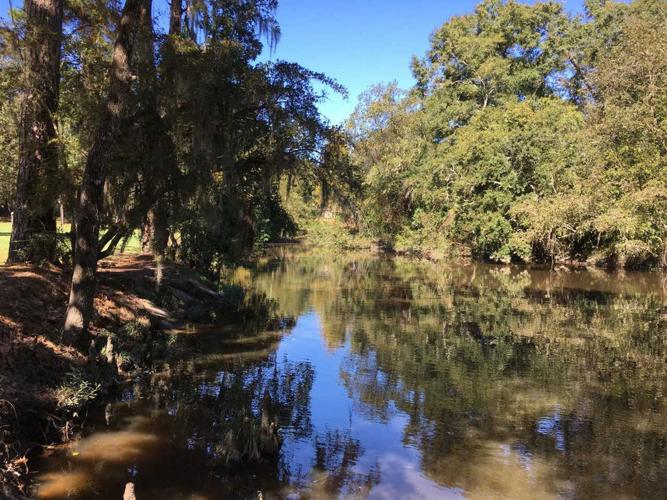
    The Bogue Falaya River

    Chanticleer: Those both sound amazing! We’ll definitely keep an eye out for them. As we prepare to wrap up, I’m curious: What is the most important thing a reader can do for an author?

    Weis: Let us know what you think! Either by review, email, posting on social media, or whatever a reader feels comfortable with, but please reach out. Every writer loves to hear from readers, especially if you loved the book. You so often work in a bubble, and to get words of encouragement, or even criticism, from a reader is valuable feedback. Writers always listen to what readers have to say. So don’t be shy.

    Chanticleer: Writing truly happens with a community with reviews and outreach being one of the best ways for readers to participate with writers. Thank you for that advice. Finally, at the end of the day, what excites you most about writing?

    Weis: There’s nothing better than finishing a book, bringing all the elements together, and realizing you’ve created a, hopefully, compelling story. It’s an incredibly satisfying experience. That’s what keeps me going.


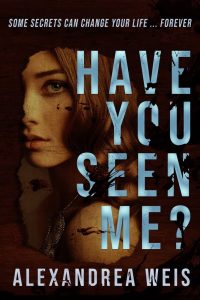
    Have You Seen Me Cover

    Alexandrea Weis won the Clue 2022 Grand Prize for her YA Thriller Have You Seen Me?
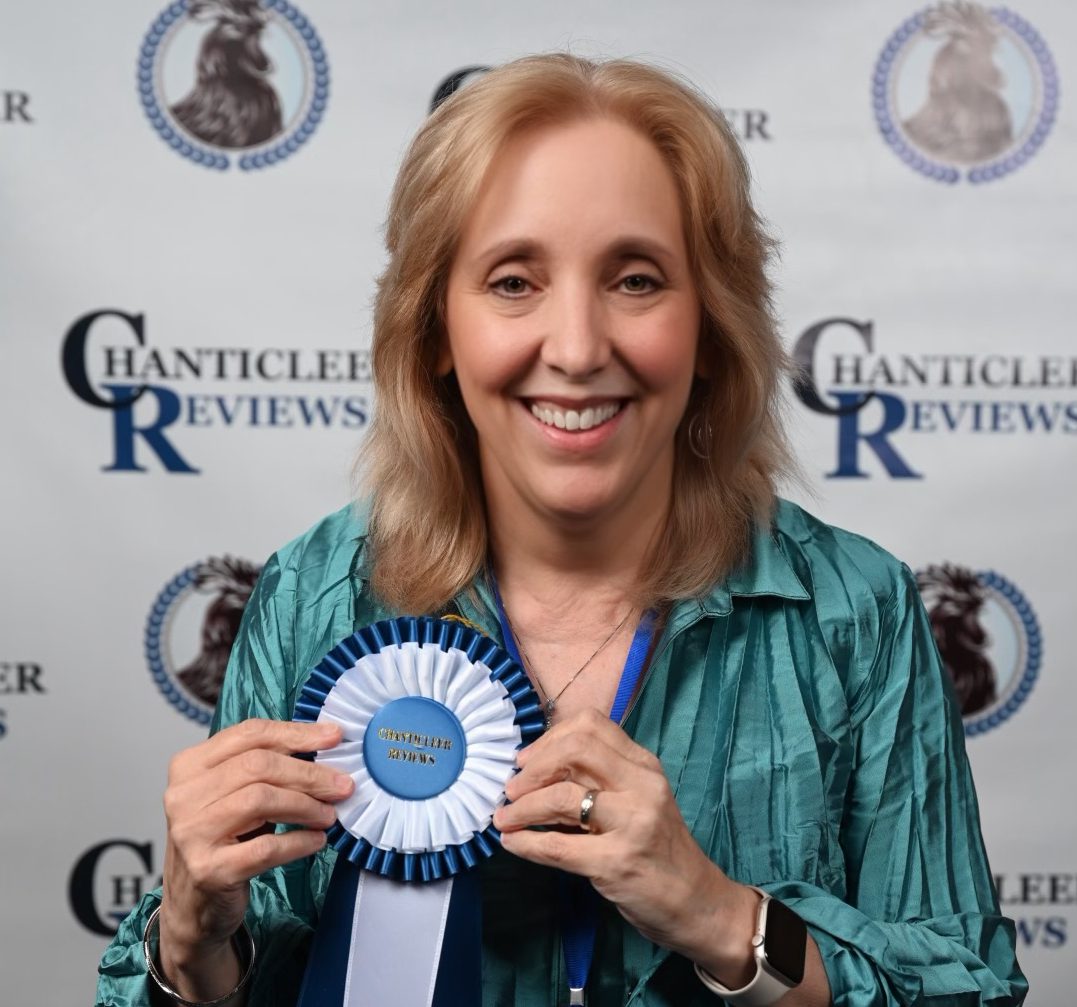
    Weis is a member of the International Thriller Writers (ITW) and Horror Writers Association (HWA). She lives with her husband outside of New Orleans where she is a permitted/certified wildlife rehabber with the Louisiana Wildlife & Fisheries and rescues orphaned and injured animals.

    You can connect via her website, Facebook, X, LinkedIn, and Instagram.

  • Chanticleer 10 Question Author Interview Series with Maryanne Melloan Woods – Award-winning book, Sour Flower, Dante Rossetti Grand Prize Award, Author Life

    Dante Rossetti Awards for YA Fiction

    From the 2023 Dante Rossetti Division Grand Prize Winner for Young Adult Fiction for her book Sour Flower, we have a brand new Chanticleer Author Interview!

    Maryanne Melloan Woods won the Grand Prize in the Dante Rossetti Division of the 2023 Chanticleer International Book Awards for his novel, Sour Flower. The Dante Rossetti Book Award recognizes emerging new talent and outstanding works in the Young Adult fiction genre. The Dante Rossetti Book Awards is a division of the Chanticleer International Book Awards (The CIBAs).

    The Young Adult division includes:

    • Contemporary Young Adult
    • SFF & Paranormal
    • Dystopian/Edgy/Urban
    • Mystery/Thriller/Suspense
    • Historical Young Adult
    • YA Adventure/Romance

    Join us in getting to know the incredible writing of the Dante Rossetti’s newest Grand Prize Winner: Maryanne Melloan Woods!


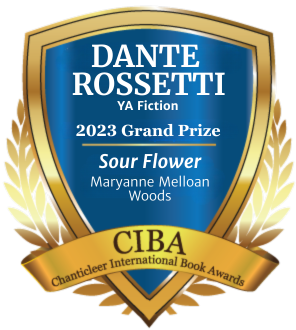
    blue and gold badge recognizing Sour Flower by Maryanne Melloan Woods for winning the 2023 Dante Rossetti Grand Prize

    Chanti: Thank you so much for taking the time to do this interview with us. To start, tell us a little bit about yourself and how you started writing.

    Woods: I come from a family of writers: my parents and brother were all journalists, and my sister writes songs and poetry. So, when I was little I just thought that was what people did! But I can remember at age eight making a firm decision that I wanted to be either a writer or an actor. When I became a playwright (and later a TV writer), I developed a way to do both; I act out the parts in my head when I write scripts, and now novels.

    A bit more on my writer’s journey: I remember when I was a teenager seeing a TV show where they interviewed TV comedy writers who worked in a “writers room” and I thought: that’s what I want to do.

    But how does a Jersey girl make that jump? I was lucky enough to go to a high school that had a playwriting class, and then got to be part of a wonderful playwriting program at Drew University. After that I got involved in New York theater, and then took a deep breath and made the jump to L.A, where I was lucky enough to land a great agent. I wrote my “spec scripts” (which are scripts you write for existing TV shows that you use as writing samples) and my agent sent me around on meetings.

    Partners is an American sitcom starring Kelsey Grammer and Martin Lawrence.


    Just driving on to movie lots for the meetings blew my mind! And then when I finally landed my first sitcom-writing job – which was “Partners” with Jon Cryer – and met the other writers, I had the feeling that I had stumbled into some magical land where everyone spoke the same secret language I knew, and cared about the same things I did, like creating vivid characters, how to craft a joke etc.

    I learned so much about the craft of comedy and writing in general from that job and the ones that followed. But after several years in Hollywood, I felt a strong pull back to the New York area (where I promptly met my husband and just stayed.) I knew I wanted to work in theater again, but I was also interested in the possibilities of YA fiction, which was really heating up at the time.

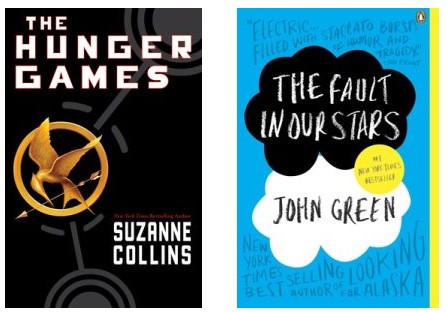
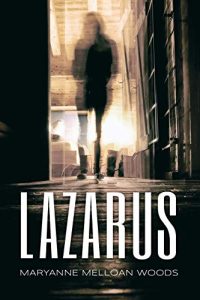
    My first novel, Lazarus, originally started its life as a TV pilot that didn’t get picked up. But I just couldn’t let go of the story. So, I dug deep, read all the recommended YA fiction I could, and settled on two that I really studied, because I thought they were so good. The Hunger Games, by Suzanne Collins (maybe you’ve heard of it) and The Fault in Our Stars by John Green. Those books were my training for learning a new form and ultimately writing Lazarus.

    As I became a novelist I found I could use the storytelling skills I’d learned as a scriptwriter. Writing a first person narrative is a bit like writing a very long (and well-structured) monologue. I’m working from inside the characters’ minds again.

    In my new novel Sour Flower, I found I could use the comedy writing chops I learned as a sitcom writer. There’s a lot of humor in the book, as well conflict and trauma.

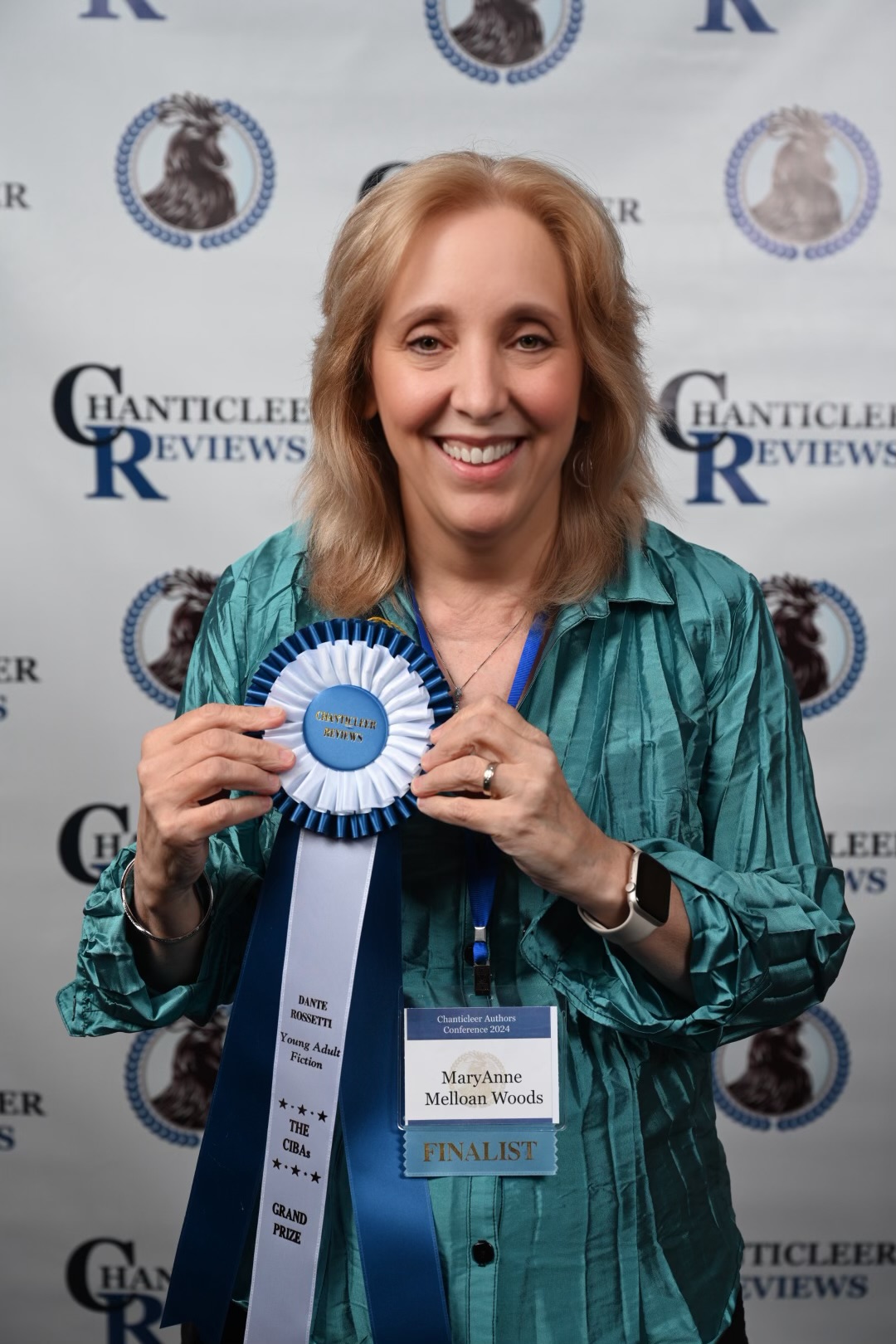
    award, Maryanne Melloan Woods, CIBA, Chanticleer Book Reviews, green shirt, woman

    Chanti: What an incredible start! That’s so wonderful that you were able to connect with a group that spoke the same language as you. Finding your “people” is so critical in the writing world. Would you talk more about genre, comedy, and your own writing?

    Woods: My “lane” for much of my career has been comedy. Comedy-writing comes easily to me; I understand how it works. Sour Flower is a coming-of-age story that is initially quite comedic but ends up exploring deeper themes such as family dysfunction and substance abuse.

    However, when the idea for my first novel, Lazarus, came to me, I knew it wasn’t a comedy, it was a mystery. And mysteries of course require very intricate and precise plotting plus clues and misleads, which DIDN’T come as easily to me. So, I studied the form and found the authors I liked best in this new genre (Ruth Ware tops my list.)

    Ruth Ware is the author of psychological crime thrillers!

    I had already learned so much about giving book characters a deep emotional life from Suzanne Collins, and while she doesn’t write mysteries, per se, she is the queen of the cliffhanger chapter ending. I found that to be an essential device in crafting Lazarus, which evolved into a paranormal thriller. I had to dig extra deep to write a YA thriller, using every element of craft I’d ever learned plus learning new ones that suited the genre. I think I have a handle on it now and indeed my forthcoming novel, The Last Howl of the Westerlakes, is also a mystery/thriller. So, I guess I would say that if you’ve honed your storytelling craft well, you can learn to write in a new genre. All of my work has comic elements, but if I had to label my novel-writing genre now, I’d call it “voice-driven YA fiction.”

    Chanti: It sounds like you’ve done an amazing job creating a personal canon of books to help inform your writing and work. To ask something adjacent, what do you think about writing rules? Do you follow them, make up your own, or some combination?

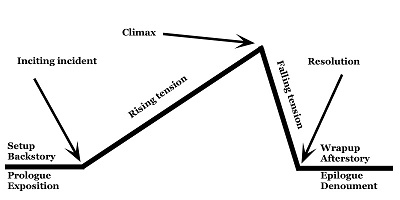
    Woods: I follow the rules that I learned starting as a theater major with a concentration in playwriting. I always think in terms of three acts, a structural form which goes back to Aristotle, and I’ve found that structure works well for writing novels too. In “Act One,” which is usually about the first quarter of a story, you’re setting up your characters and story and getting the reader/audience engaged. You’re also establishing tone, setting and genre. The protagonist’s journey begins, and you set up the desire line they’ll pursue until the story’s conclusion. In the middle section of Act Two, their journey becomes more and more challenging, with many setbacks and adversaries. In the last act of your story, you’re building to the climax of the piece, in which your protagonist finally battles their toughest opponent. I’ve found that this structure works in any genre or form: mystery novel, sitcom script, sci-fi western feature, or what-have-you. It’s what readers/audiences want and expect from a story.

    Book, lazarus, shadow, walking, Maryanne Melloan Woods

    Chanti: And speaking of story expectations, how do you come up with your story ideas?

    Woods: I get little kernels of ideas, or mental images that play out like a short video. I’ve learned that if I keep coming back to it, there’s something there that I have to pay attention to. Something that I want to explore more deeply.

    The idea for Lazarus came to me in the form of an image: a teen girl surrounded by the bleak, harvested cornfields of her prairie hometown, grimly intent on solving a murder. I knew that the girl was a great, natural detective, in fact she had better detective instincts than all the adults around her, including her police chief father. I knew that she had a love of funky thrift store fashion and that, at only 16, she had a profoundly deep relationship with her charmingly wise-ass boyfriend. And I knew that he had died, but that the death was a minor impediment to a love as great as theirs.

    I was working in TV at the time so initially Lazarus was a pilot. It got me a lot of meetings around Hollywood, but ultimately didn’t get picked up. But I couldn’t let go of the story; it really resonated with me. So, I turned my attention to YA fiction.

    Sour Flower is based on the upbringing of a friend of mine who was the responsible kid growing up with free spirit hippie parents in San Francisco. She wanted more from life than the day-glo, stoner chaos she saw around her, and managed to make her own way. I carried that story around in my back pocket for years; originally I thought it would make a great feature script. But when I started writing YA, I knew it would be perfect for a coming-of-age novel.

    My next book, Last Howl, was based on an image again, this time of an idyllic suburban backyard garden party that’s suddenly disrupted by an unseen shooter. Stay tuned for that one!

    Chanti: You have so many irons in the fire! With so many projects, how structured are you in your writing work?

    Woods: In a word: very! With every project I write I outline and outline and then outline some more. I need to know where I’m going and have to know the progression of every chapter before I can start fleshing it out. Some writers can start without a road map, but I can’t. That said, many elements of the story change when I transition from outlining to actually writing. In both novels I’ve completed, I realized halfway through that the way I was taking the story wasn’t going to work. So, I had to put the central story line up on blocks and re-examine it. Once I figured out how to take the story in a better direction, more outlining! Luckily in both cases, the story flowed more smoothly, and everything finally clicked into place. It’s funny – I start out knowing the story will change, but I need to have a complete outline at the outset regardless. Go figure.

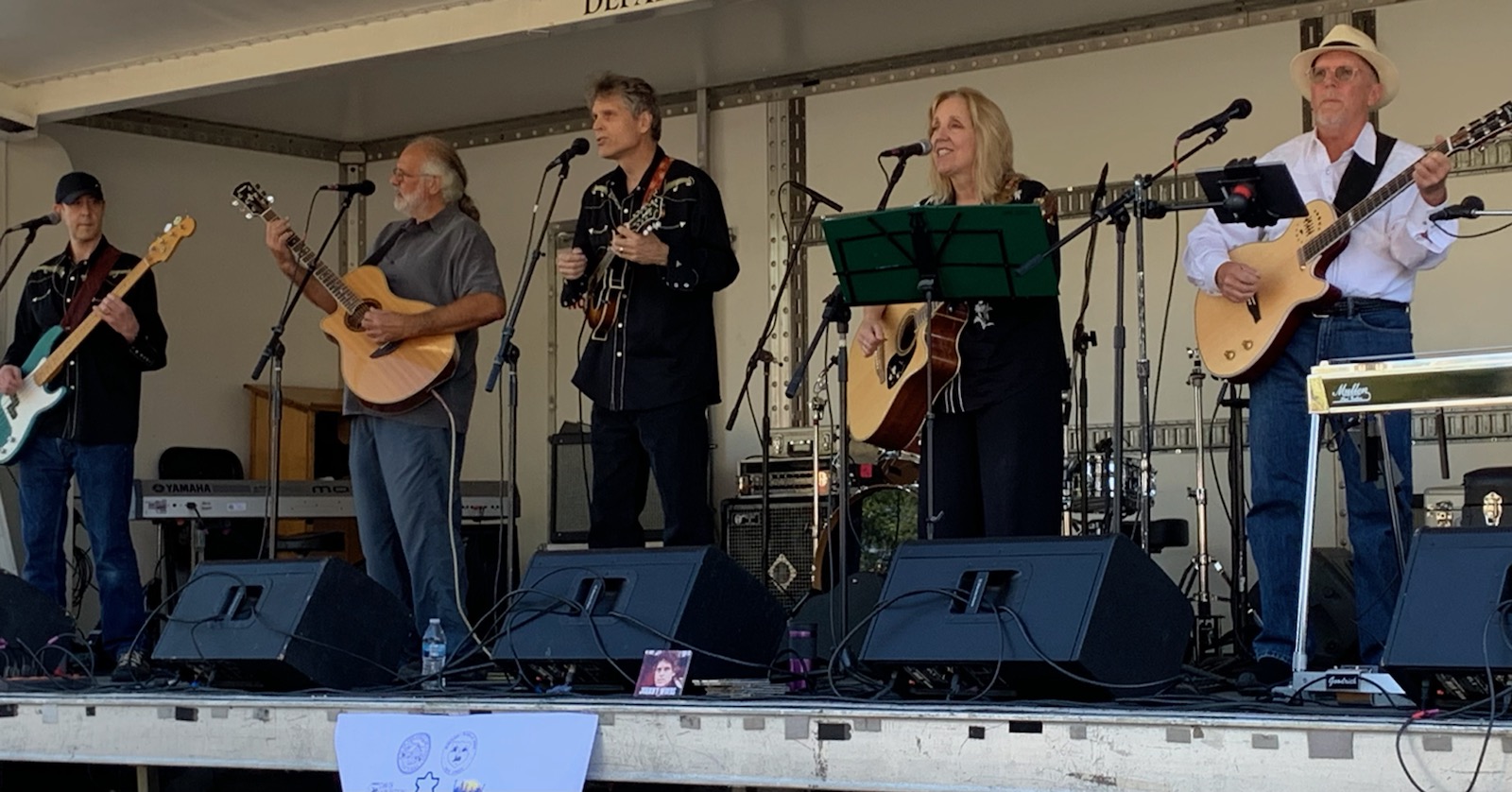
    Band, Maryanne Melloan Woods, guitars, microphone, stage
    When not writing, Maryanne’s favorite hobby is playing and singing with The Johnny Woods Band.

    Chanti: With that structure in mind, how do you approach your writing day?

    Woods: I try to write for three to four hours every weekday morning. Particularly once I have an outline, I know what chapter or scene I’m going to write that day, so I just have at it. I usually only write one chapter a day. As far as writer’s block goes, I don’t generally have it, but I used to sometimes back in L.A. when I knew I had to have a spec script ready for hiring season in the spring. There was so much pressure. I got some great advice from a friend once: “Just sit down and write badly for a at least an hour.” You give yourself permission to start working whether it’s perfect or not. And before you know it, you’re in the flow, and you’re probably not writing too badly after all.

    Chanti: You’ve named so many great authors and books. Can you offer up five of your favorite authors and describe how they influence your work?

    Only five..? That’s gonna be hard! Since I’ve already mentioned John Green and Suzanne Collins I’ll skip over them here. I swoon over the writing style of both Markus Zusak and Fredrik Backman. Their storytelling chops, writing style and wisdom about the human condition never fail to amaze me. They make me try to raise my game. I love E. Lockhart’s great, out-of-the-box writing. She’s taught me to break rules and reach further in my descriptions. I think Ruth Ware is the best thriller author working today. I’ve learned so much about crafting mysteries, especially pace, suspense and misleads – from her. And for humor I’d have to say David Sedaris. I snort-laughed all the way through his book Me Talk Prety [sic] One Day. And his books aren’t just funny, they’re wise, relatable and heart-breaking too.

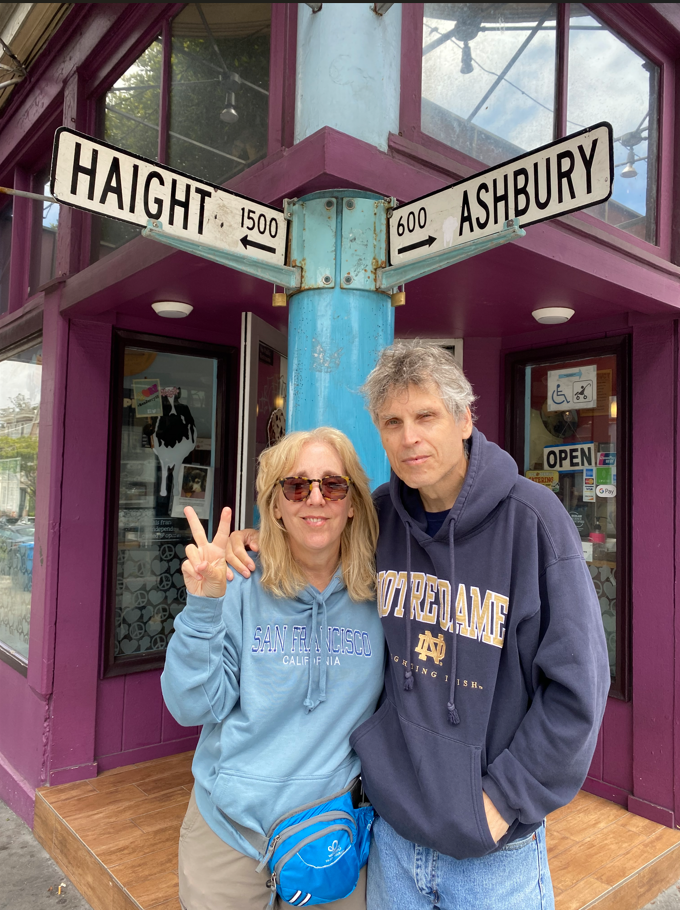
    Maryanne Melloan Woods, Haight and Ashbury, peace sign, sweatshirt, man, woman, purple, blue, store
    Maryanne and her husband, Johnny Woods at Haight Ashbury, a key location in Sour Flower.

    Chanti: Those authors are amazing! It sounds like you have such a good base for your writing life. What areas would you say you are most confident in for your writing and what advice would you give someone who is struggling in that area?

    Woods: I’m most confident in developing multi-layered characters, and writing dialogue. I have an exercise I use every time I start a project that helps me to flesh out the characters so I know how to write in their voice. First I explore each character’s wants, needs and fears. Then I figure out how each main character could be in conflict with every other main character. The latter part of the exercise often gives me good story ideas, as well as a deeper understanding of each character.

    Chanti: That sounds like such an excellent plan! I’ll have to try that in my next project. As we wrap up, we’d love to know what you’re working on now.

    Woods: I am really juggling right now. I have a TV pilot – a family dramedy – that I need to finish. Then I’ll get back to writing my new YA thriller, The Last Howl of the Westerlakes. At the same time, I’m working with a composer on my new musical, The Storm. And if you happen to be in Alabama in February you can see the premiere of my family musical, Who’s Afraid of the Big Bad Book? at Birmingham Children’s Theater. So definitely many irons in the fire!

    Chanti: We know Sour Flower is currently a manuscript. For aspiring authors with incredible writing like yours that’s looking for the right home, what sort of a place are you looking for in terms of placing it?

    Woods: I’m looking for an editor who likes YA lit with equal parts humor, heart and angst. One who loves good character/voice-driven stories, who has the skills and background to point out the things I’ve missed and help to make this novel as good as it can be. I’m also looking for a well-established publishing house that has the resources to support and promote a solid YA offering.


    Maryanne Melloan Woods, necklaces, blond, hair, smile, teeth

    Thank you Maryanne for taking the time for us to interview you!

    Maryanne Melloan Woods is best known as a writer/producer for TV shows such as NBC’s Suddenly Susan, Fox’s Partners and Showtime’s The Chris Isaak Show, among others.  Her screenplay, Steve, won “Best Comedy Feature Script” at the 2016 Nashville Film Festival. Her screenplay Match Made in Heaven won the Scriptation Showcase Screenwriting Competition in 2021. Her complete TV and film writing credits can be found here:  Maryanne Melloan Woods – IMDb

    Her YA novel Lazarus,  a paranormal thriller, was published by Owl Hollow Press in 2020.  Her second book, a coming-of-age YA novel entitled Sour Flower, won the 2023 Chanticleer International Book Awards’ Dante Rossetti Grand Prize for YA Fiction (it is not yet published.) She is currently at work on her third novel, a thriller titled The Last Howl of the Westerlakes.​

    Maryanne holds a B.A. in Theatre Arts from Drew University and an M.F.A. in Screenwriting from The American Film Institute.​

    She is a member of the Writers Guild of America, The Academy of Television Arts and Sciences, The Dramatists Guild and the Society of Children’s Book Writers and Illustrators.​​​ ​​

    Maryanne Melloan Woods won the Dante Rossetti 2023 Grand Prize for her amazing Young Adult fiction novel, Sour Flower! You can have a chance for your work to be recognized by entering the Dante Rossetti division of the Chanticleer International Book Awards!

    You can learn more about Maryanne Melloan Woods and her writing on her website.

  • Chanticleer 10 Question Author Interview Series with Thomas Goodman – Award-winning book, The Last Man, Laramie Grand Prize Award, Author Life

    Western Pioneeer Civil War Fiction Award

    From the 2023 Laramie Division Grand Prize Winner for Americana and Western for his book The Last Man, we have a brand new Chanticleer Author Interview!

    Thomas Goodman won the Grand Prize in the Laramie Division of the 2023 Chanticleer International Book Awards for his novel, The Last Man. The Laramie Book Awards recognize emerging new talent and outstanding works in the Americana and Westerns fiction genre. The Laramie Book Awards is a division of the Chanticleer International Book Awards (The CIBAs).

    The Laramie division includes:


    Western Romance, Adventure, Caper, Classic  Western Romance, Adventure Caper Classic Western,

    Civil War/Prairie/Pioneer, Contemporary Western, Americana, and First Nation

     Join us in getting to know the thrilling writing of the Western genre’s newest talent, Thomas Goodman!


    Blue and Gold badge recognizing The Last Man by Thomas Goodman for winning the 2023 Laramie Grand Prize

    Chanti: Tell us a little about yourself: How did you start writing? 

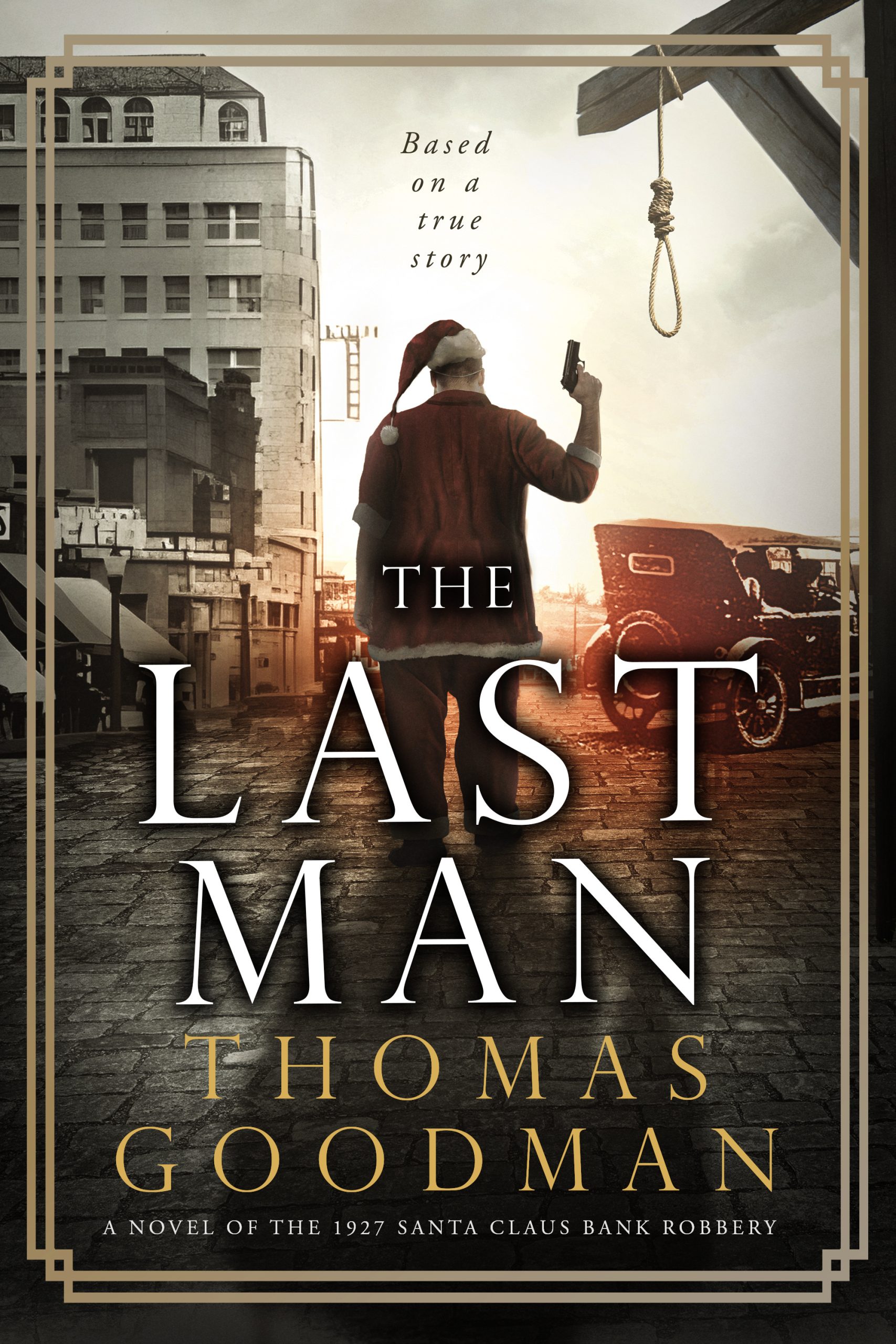
    Goodman: I first heard the story of the 1927 Santa Claus Bank Robbery in the 1990s when I lived in the small Texas county where it took place. All the accounts ended with the deaths of three of the four robbers, with little information about the life of the last surviving member of the gang. As it turns out, the details of his spectacular prison escapes and eventual rehabilitation are as fascinating as the violent endings of the other three robbers. By the time he died in his 90s around the same time I learned of the robbery, he had received a full pardon and had been a married model citizen for 50 years. In his honor, I named my book, The Last Man: A Novel of the 1927 Santa Claus Bank Robbery.

    The Last Man, Tom Goodman, green shirt, brown carpet, tripod stand, poster, award
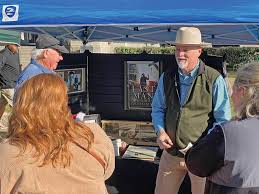
    Thomas Goodman donating his book, The Last Man, to “Books for the Brave,” which stocks military bases with books the troops can read for free.

    Chanti: Let’s talk about genre. What genre best describes your work, and what led you to pick that genre for your writing?

    Goodman: Identifying the genre was a challenge. It’s closely based on a true crime, so it’s non-fiction; but telling the story required some measure of speculation, so it’s fiction. Like any good novel in the crime genre, it’s a grim and violent story; and yet like any compelling novel in the inspirational genre, it’s a redemption story, too. And the story begins in the 1920s with an old-fashioned bank robbery in a small Texas town, which makes it a Western; but the story ends in post-WW2 society, which makes it historical fiction.

    Thankfully, booksellers and libraries allow books to be cataloged in various genres, but my “go-to” answer when asked about the genre is “historical crime fiction.”

    Chanti: What about your own personal writing structure day to day? Do you have a routine?

    Goodman: Since I have a full time job, I write 3 days a week from 6:00-8:30am before the office day begins. Between the 2 approaches to writing–the “plotters,” who create a broad outline of the plot before they begin, and the “pantsers,” who start writing and just see what develops–I am definitely a “plotter.” That said, I’m often surprised at what a character decides to do or what turn my well-planned plot takes when I’m in the middle of writing.

    Book cover, The Last Man, Thomas Goodman, Santa Claus, hangman's noose, western, americana,


     Look for the Chanticleer Review of this Laramie Grand Prize Winner! Coming soon and will link to this article! 

    Chanti: It’s difficult finding time to consistently write. How do you approach your writing day to stay consistent?

    Goodman: When I was at a writers conference six years ago, I met an author who had traditionally-published a series of cozy mysteries. She told me she would get up at 5am and write until 7:30am when it was time to go to her “real job” as an assistant elementary school principal. That gave me the idea to write from 6am until 8:30am when my office opened. Once I began to write under that schedule, I completed my book in 2 years.


    Chanti: Who are a few of your favorite authors and how have they influenced your work. 

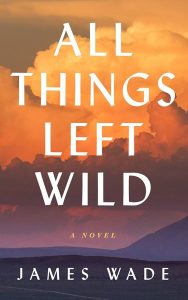
    Goodman: James Wade’s All Things Left Wild gave me the confidence to believe that the Western genre wasn’t a dead genre. 

    Clouds, sunrise, orange, salmon, purple, All Things Left Wild, James Wade

    I also really like Texas author Paulette Jiles (News of the World, Chenneville, and especially Stormy Weather.) She strikes the right balance between situating her story in a world over a 100 years ago without bogging the plot down with a lot of details and explanations of how life used to be—a constant temptation for a historical fiction writer.

    For prose that’s beautiful but not syrupy, I love Marilynne Robinson’s Gilead, Cormac McCarthy’s All the Pretty Horses, and Annie Proulx’s Close Range: Wyoming Stories

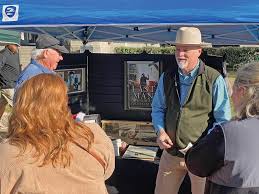
    Tom Goodman, peple, green vest, red hair

    Chanti: Reading books in our genre is so crucial to developing voice. What else has helped you grow your author chops?

    Goodman: John Trumby’s The Anatomy of Story is helpful. So is Steven James’s Story Trumps Structure. Anne Lamott’s Bird by Bird is next on my list.

    Chanti: Those are both great. Lamott is the starting inspiration for so many wonderful writers. Do you have any books about the business of writing that have helped you?

    Goodman: Ricardo Fayet’s How to Market a Book and Amazon Ads for Authors was helpful. And David Gaughran’s book, Following, Strangers to Superfans, and Let’s Get Digital. Every author should read Tammi Labrecque’s Newsletter Ninja. 

    Chanti: And from that wealth of knowledge, what are your best marketing tips? What’s helped sell more books? How have you gained notoriety? What strategies have you used to expand your literary footprint?

    Goodman: Get a desirable reader magnet and build your newsletter list; sign up for the festivals that fit your genre and engage with customers at your book table; convince customers to leave starred reviews at their favorite online bookstore and review sites, and give them the direct link(s) to those sites.

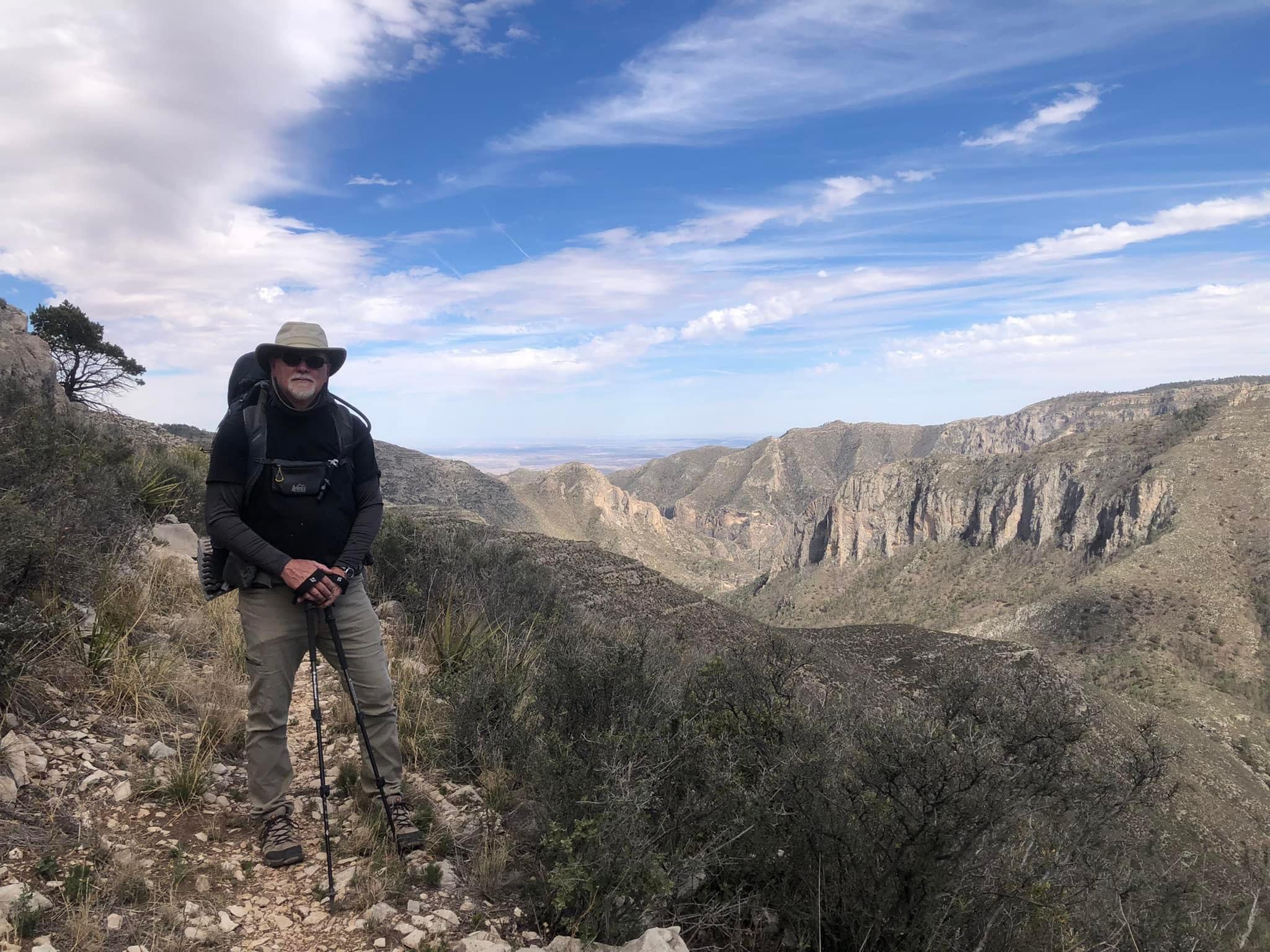
    sky, rock, cliffs, man, hiking, tom goodman, backpack, clouds
    Author Tom Goodman, hiking McKittrick Canyon in the Guadalupe Mountains National Park.

    Chanti: What are you working on now? What can we look forward to seeing next from you?

    Goodman: I’m writing a novel around a minor character who showed up late in my debut novel. She’s in her 70s when readers meet her as a boardinghouse owner in The Last Man. I go back to 1905 when she was 35. It’s turning out to be a gentler family drama as opposed to the grim and violent story of my first novel. But I’m liking it so far. After that, I’ll probably return to the crime genre. I’ve discovered a true story from the very early 1900s in East Texas about a “pistol-packing preacher” who faced down a violent gang of bootleggers who was shredding his town to bits. Irresistible story!

    Chanti: Before we let you go, who is the perfect reader for your book?

    Goodman: Someone who likes historical fiction that closely tracks with real characters and events.

    Chanti: Thank you, Thomas Goodman, for sharing your author journey with us. I am looking forward to seeing you at the next Chanticleer Authors Conference!

    You can follow Thomas Goodman through his Facebook page here.


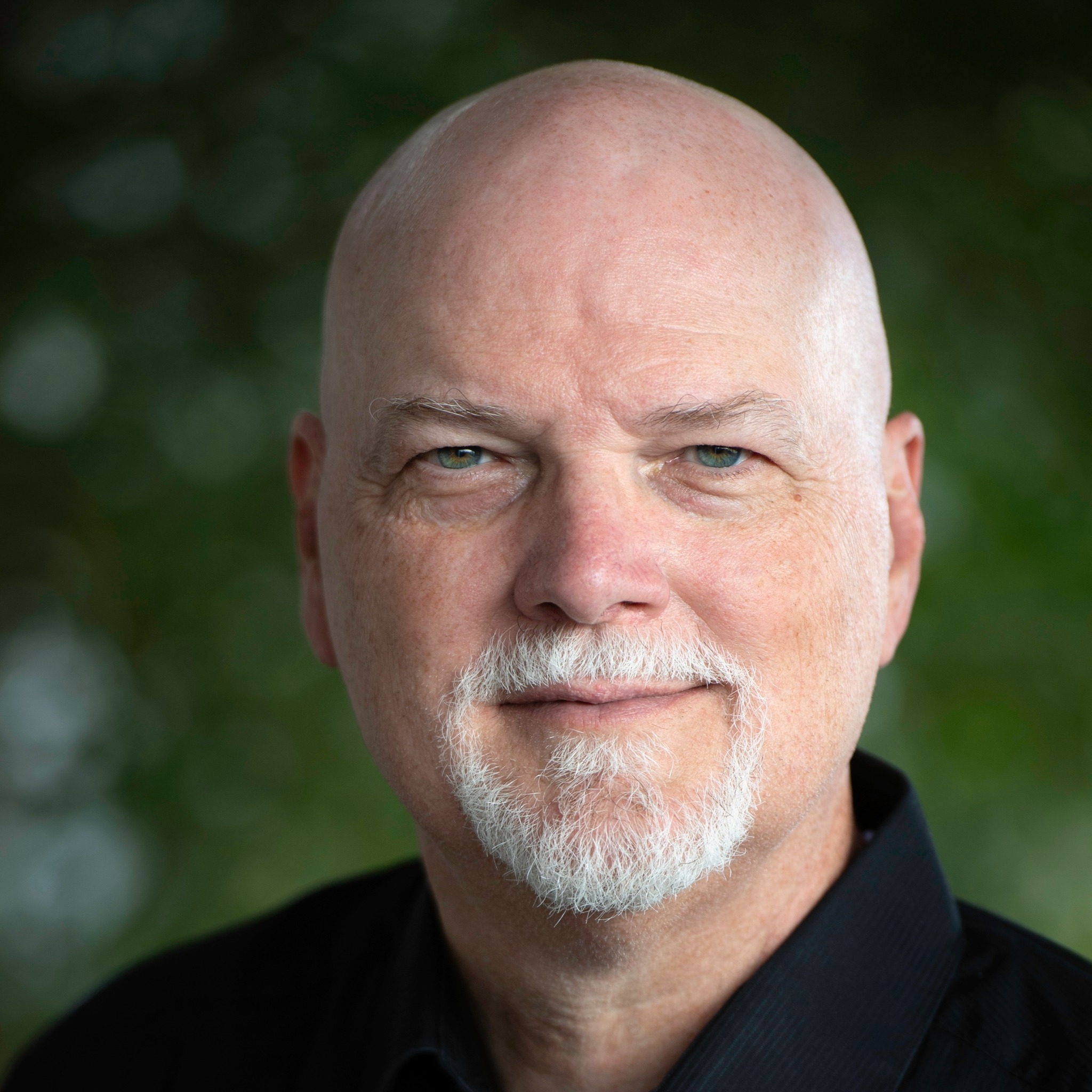
    Tom Goodman, writer, author, the last man, westerns, black shirt, gotee, grey hair, bald Thomas Goodman won the Laramie 2023 Grand Prize for his amazing true crime/historical fiction novel, The Last Man! And also, because he believed in his work enough to enter it into the Laramie division of the Chanticleer International Book Awards
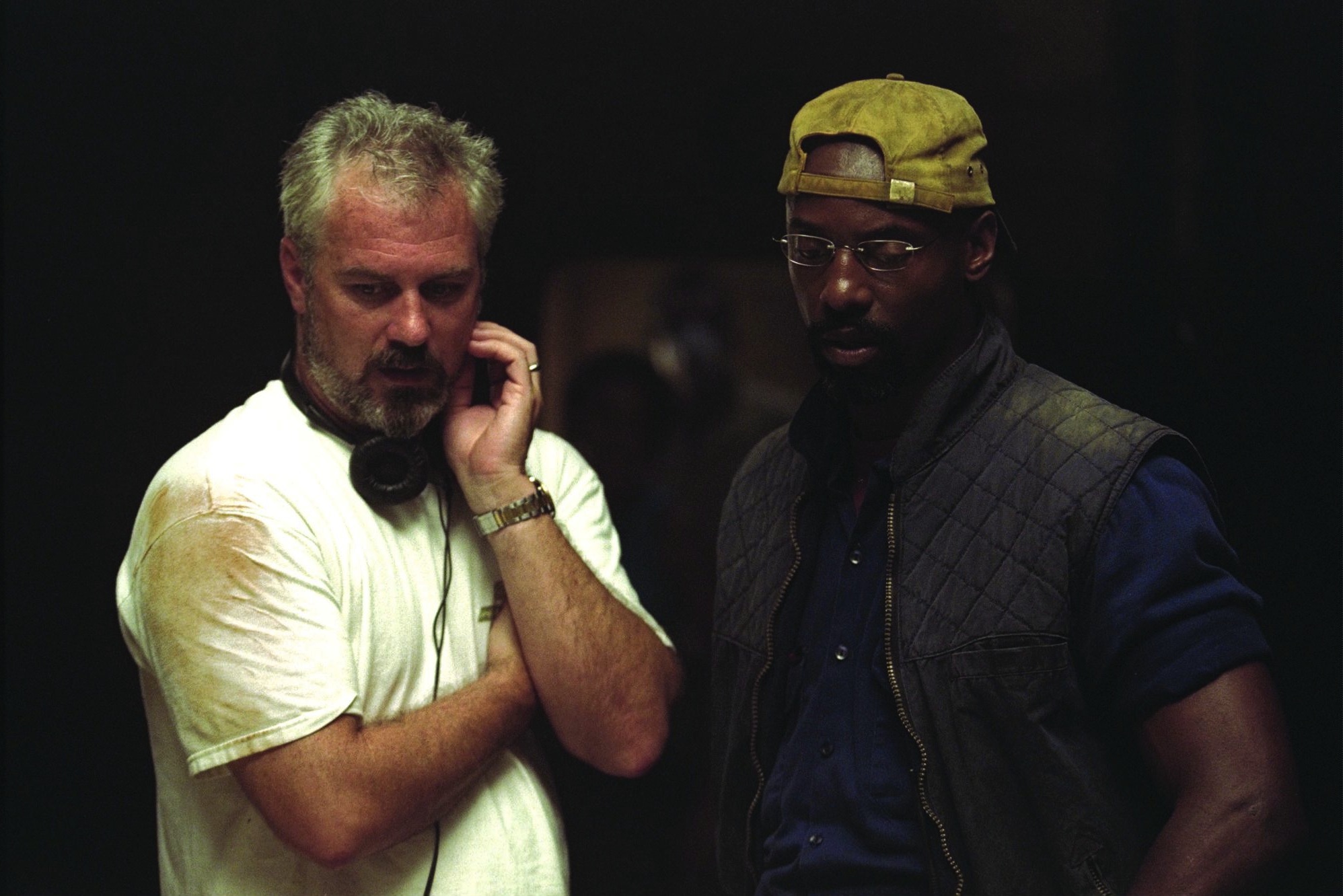
    In other words, if you don’t enter, you will never know how your work stacks up against the other entries.

    If you want a shot at the HONOR of Laramie Americana & Western Awards  for 2024, don’t delay, enter the Laramie B00k Awards today!

  • Steven Michael Beck 10 Question Interview with Chanticleer – Screenwriter, Director, Climate Fiction Author

    CHANTICLEER 10 QUESTION AUTHOR INTERVIEW SERIES

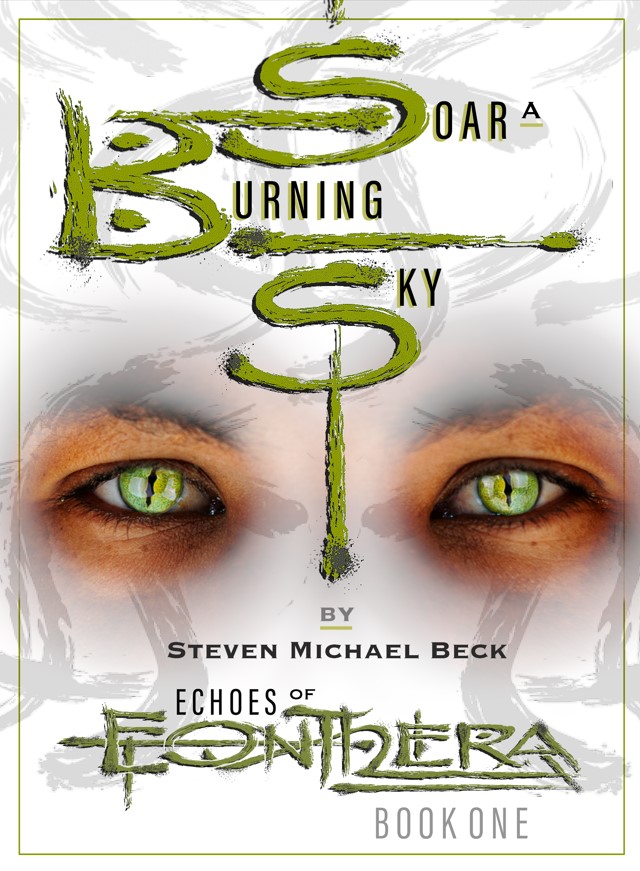
    Soar a Burning Sky won the 2022 OZMA Grand Prize Award for Fantasy Fiction!

    with Award-Winning Author, Steven Michael Beck

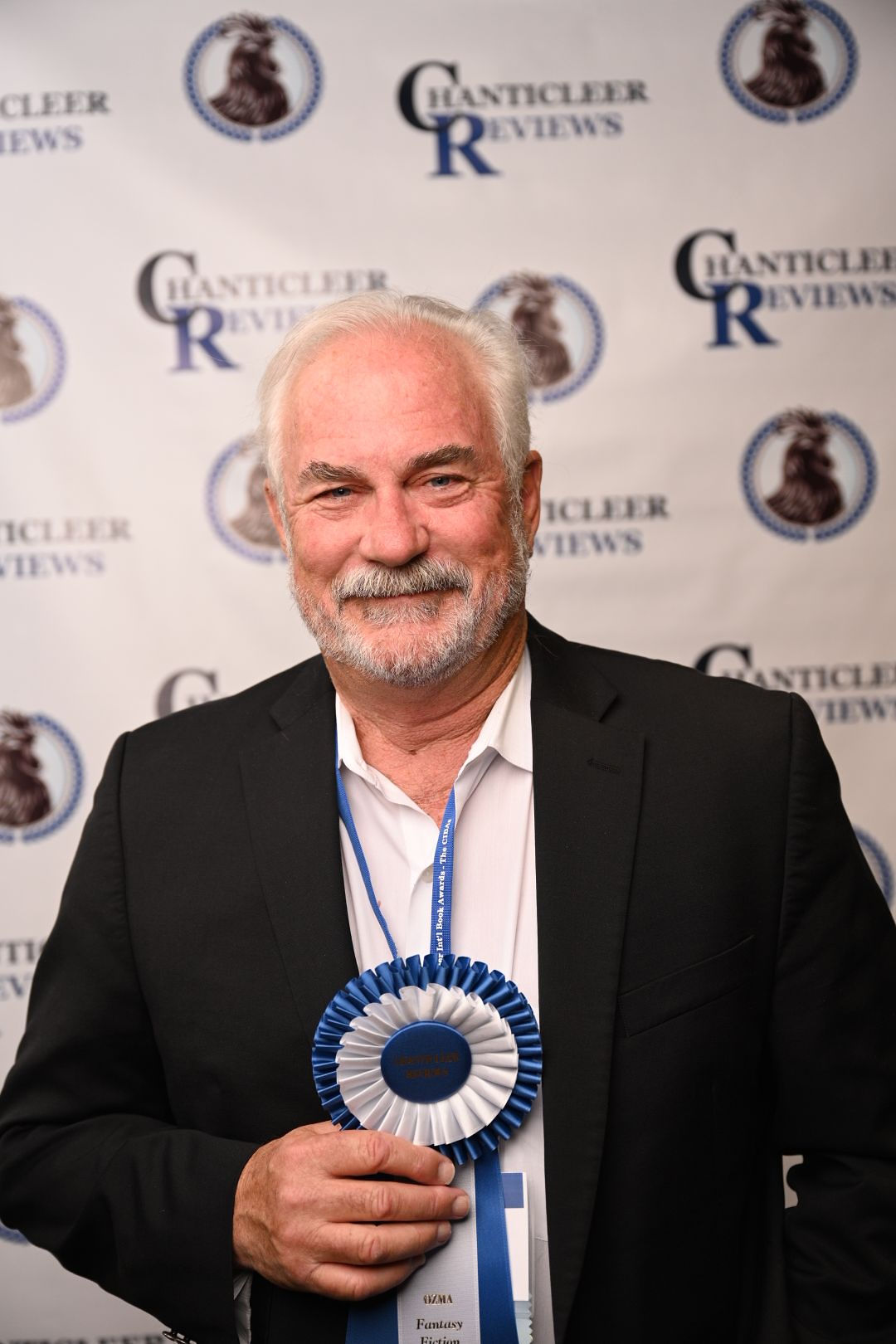
    The Ozma Grand Prize Badge for Soar a Burning Sky by Steven Michael BeckSteven Michael Beck was the OZMA Grand Prize Winner for Fantasy Fiction at the 2022 CIBAs, hosted by the 2023 Chanticleer Authors Conference. His book, Soar A Burning Sky looks at a world linked to Earth’s, and both planets are in danger due to the harsh realities of Earth’s drastic climate change.
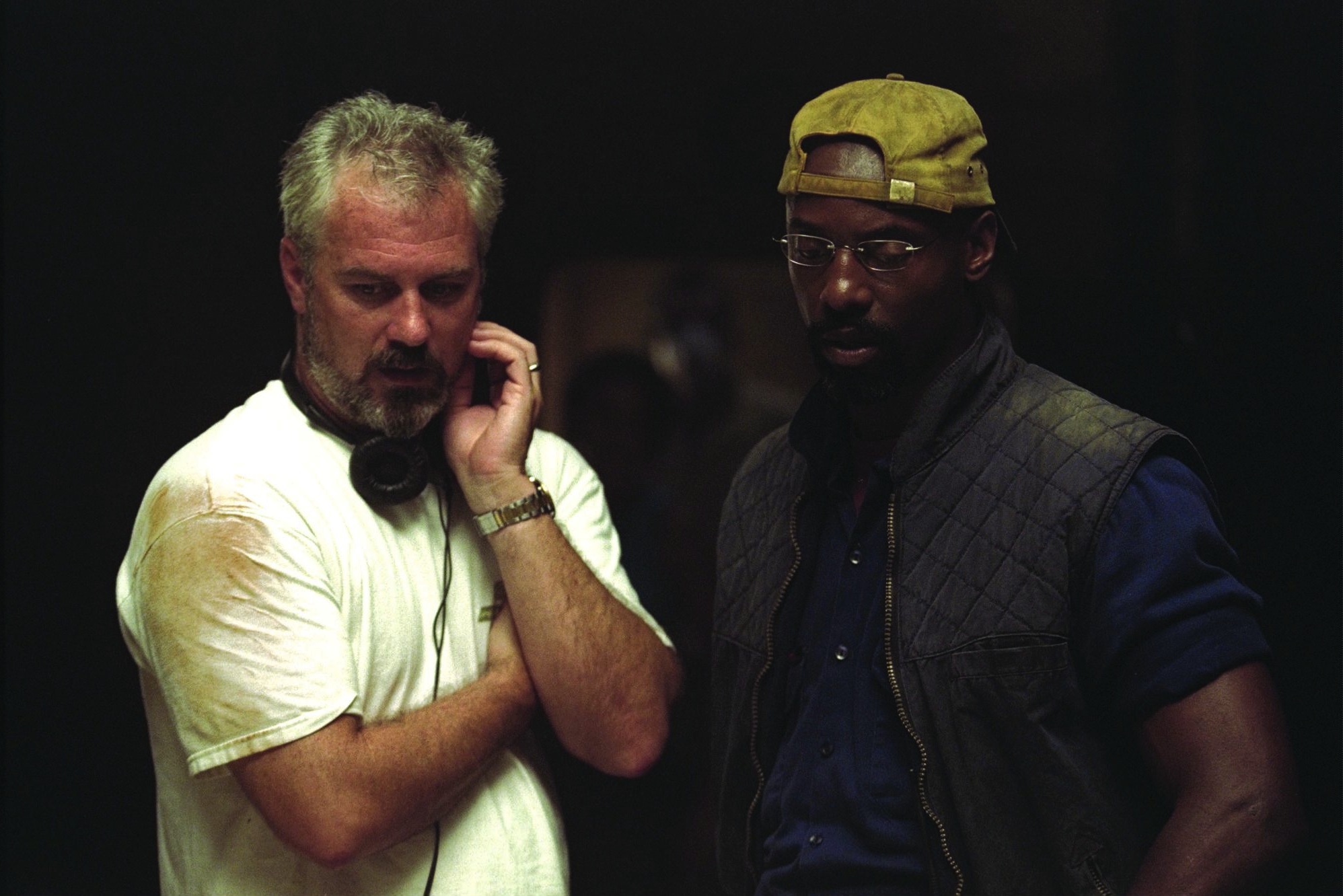
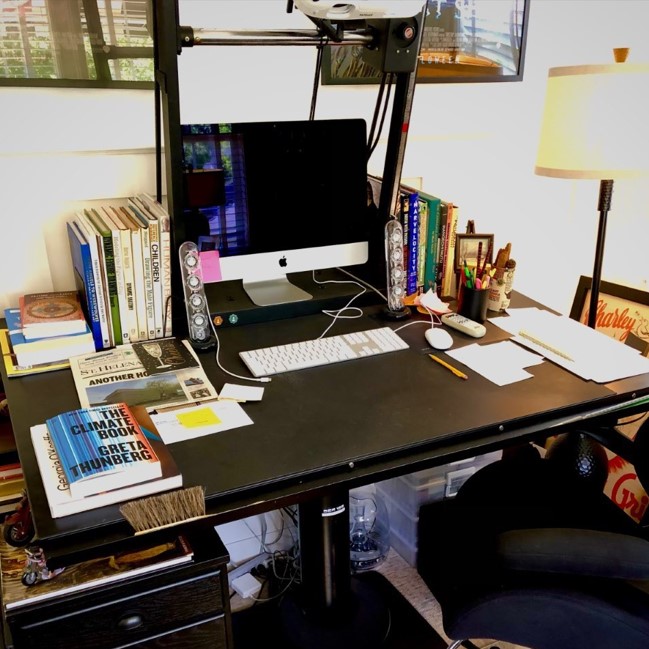
    He is also an award winning commercial director and Visual Effects art director on films like Indiana Jones and the Last Crusade, The Abyss, and The Hunt for Red October.

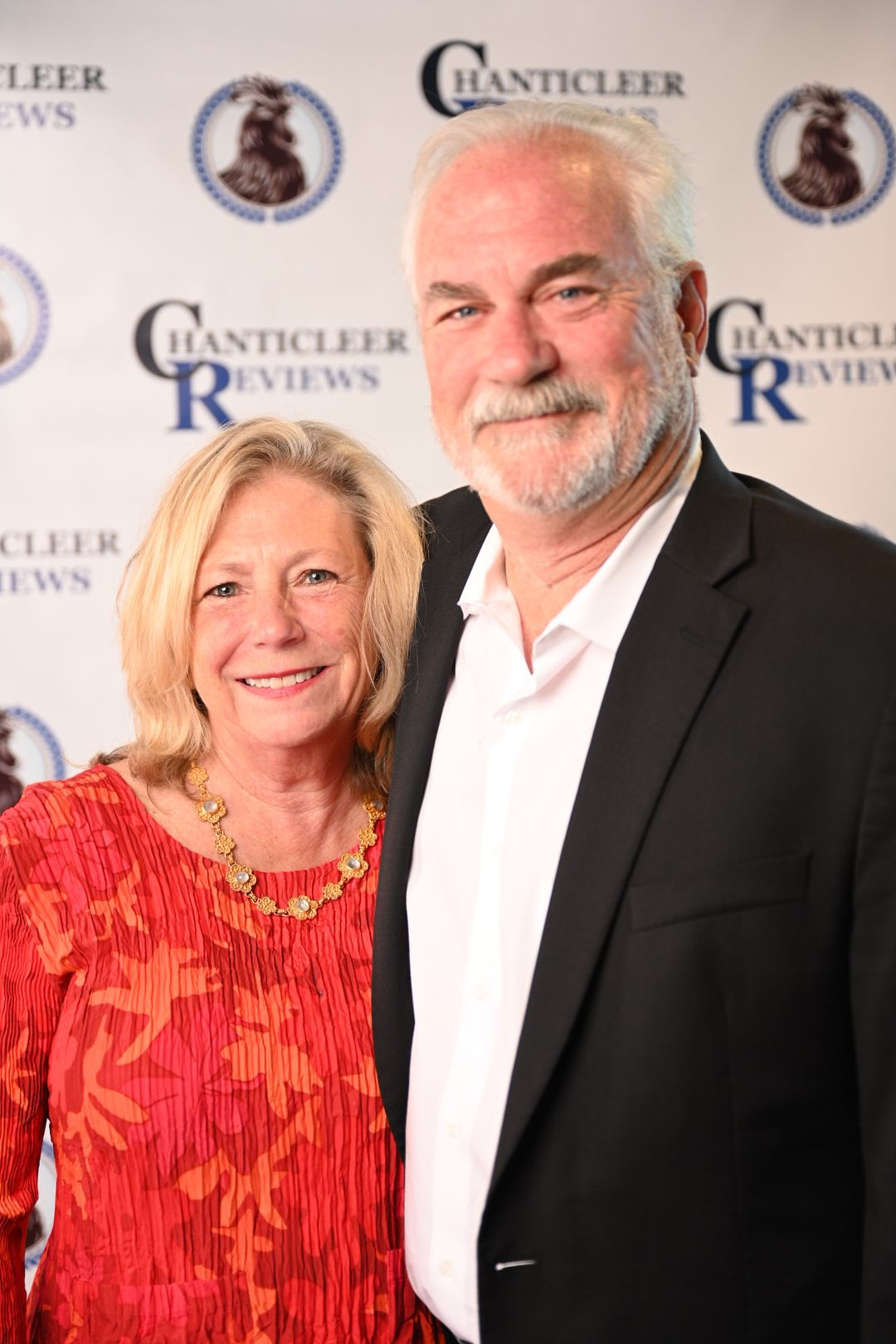
    We were so glad to meet Steven and Vicki back in 2023 and are delighted to present this interview.

    Chanticleer: To begin with, tell us a little about yourself! How did you start writing?

    Beck: Writing has always been part of the creative process for me. As a filmmaker, treatments and screenplays were, and are the preemptive language of my craft. Being able to convey characters, camera movement, narrative arcs complete evocative moments, could only be done by putting words to the page. Given I’d always had the practice, longform wasn’t much of stretch—or so I thought.

    Chanticleer: Film and writing always seem to have huge overlap. We run into that a lot with Book to Screen interest at the Conference. When did you realize that, in addition to being a director, you were also an author?

    Beck: Here’s the odd answer… I don’t want to be a writer. I have a story to tell, and I want to get it out before I’m no longer able to write anymore. Which isn’t the same thing as wanting to be a writer. What I’d love to be is a relieved human being, thankful we finally got a handle on climate change. I see my contribution to that resolution as being the writer on this one story.

    Steven Michael Beck directing Isaiah Washington on the set of the Ghost Ship.

    Chanticleer: The issues of climate change are serious, and we’re glad to see the shift in fiction to address this too. Would you say that’s the genre you focus on here?

    Beck: My genre is eco-dystopian fantasy. Solving climate change, or at least putting a dent in it is an eco-dystopian fantasy. The only ones capable to do this are those destined to inherit it. Thus, I’m trying to speak to them directly.

    Chanticleer: Tell us a little about your writing process. Where do you land on things like idea generation, writing, and writing rules?

    Beck: Lol. Rules? There are rules? In coming up with ideas for a story, I imagine a scene, and then let it go. Before it hits the presses, I indent, and re-edit it several times in over in order to get it right. I imagine. It informs. We then edit together.

    For the writing day, I write in the mornings until I’m starved. Then I break for lunch, and then edit in the afternoon. Can’t write at night, lest I take it to bed.

    Where the writing magic happens!

    Chanticleer: It sounds like you’re a fairly intuitive writer. When you’re not writing what are you up to?

    Beck: I’m the type of person who’s constantly curious about the creative process. That said, I have a rather inflatable muse. She takes me everywhere; film, design, sculpture, writing, construction, architectural design… Wherever she goes, I follow.

    Chanticleer: An inflatable muse? Oh, I hope there’s a picture that explains that! Thinking about the support of muses, what are areas in your writing that you are most confident in? What advice would you offer to writers struggling in that area?

    Steven Michael Beck wrestles with his next scene as the Muse looms over him.

    Beck: I’m most confident in writing dialogue. Again, I believe that’s due to all the years writing screenplays. Regarding advice… Listen to the conversations around you as you develop original voice. One informs the other.

    Chanticleer: How would you say being an author affects your involvement in community?

    Beck: It sorely keeps me from it. Writing is a monk’s existence—if you’re going to be good. Which means, you sequester yourself away for hours at a time, day after day, months on end. Sure, you could spend the remaining hours at some bar, Bokowski-ing it, but that’s not community.

    Chanticleer: That’s unfortunate that it feels like being an author and participating in community are at odds with each other. Do you feel like there’s a way you can promote and improve literacy in your community still?

    Beck: I’m a columnist in our local paper as well as being a local author. One feeds the other when it comes to community dialogue.

    Chanticleer: That is so true. Thinking of people reading your column, who would you say is the perfect reader for your book?

    Beck: Anyone ages 12-54 who’s concerned their world won’t be here someday. Hopefully I can convince them my work is fantasy.

    Chanticleer: So often fantasy and reality intersect, which is one of the great joys of writing. As a final question, what excites you most about writing?

    Beck: The sense of discovery. You never expect to find what you do when you write. It’s magical, frustrating, shocking, and complex, all at once. Which is odd when you’re writing a cookbook.

    Steven and Vicky Beck at Chanticleer Authors Conference

    Chanticleer: Indeed! Thank you so much for making the time for this interview!


    You can sign up for the Napa Valley Register and read Beck’s column here.

    Steven Michael Beck and his blue ribbon!Steven Michael Beck spent the last 30 years pursuing the art of storytelling through advertising, film, and television. Specializing in visual effects-oriented concepts (and their often-unique storylines), his direction has constantly reflected infatuation with animation—the notion that any object or idea either contained ‘life’, or could be conjured into such (needless to say, he had an imaginative childhood). These projects and life lessons have been nothing if not steppingstones, leading him to see the potential of a new type of storytelling through combinations of sculpture, photography, text, and found object.

     

  • Chanticleer 10 Question Author Interview Series with Kevin G. Chapman – Award-winning book, The Other Murder, Clue Grand Prize Award, Author Life

    The Clue Award Badge for Thriller Suspense Fiction and True CrimeFrom the 2023 Clue Division Grand Prize Winner for Suspense/Thriller for his book The Other Murder, we have a brand new Chanticleer Author Interview!
    Kevin G. Chapman won the Grand Prize in the Clue Division of the 2023 Chanticleer International Book Awards for his novel, The Other Murder. The Clue Division includes books in the categories of:

    • Detective / Crime
    • Suspense / Thriller
    • Private Eye / Noir
    • Legal /  Medical / Police Procedural
    • US Political Thriller
    • Spy / Espionage / Undercover
    • True Crime / Investigations

    That’s a lot of ground and a lot of books! The Other Murder was the first place category winner in the suspense/thriller category, and was awarded the Grand Prize as the Best Book among all the CLUE entries

    blue and gold badge recognizing The Other Murder by Kevin G Chapman for winning the 2023 Clue grand prize

    Kevin sat down with the Chanticleer Book Review to talk about his writing and his new novel, Double Takedown, coming out this fall!

    Chanti:  Thank you so much for joining us Kevin! Tell us a little about yourself and how you started writing?

    Chapman:  Normally I’m explaining to my lawyer colleagues that the unusual thing about me is that I’m a mystery writer on the side. For mystery readers, you might be interested to know that I’ve been an in-house attorney for a major media company for the past 29 years. I’m a labor lawyer and former chairperson of the Labor & Employment Law section of the Association of Corporate Counsel. The L&E section consists of over 7000 in-house lawyers. I led the ACC section and oversaw our educational programs and publications. I even wrote an article for the ACC magazine on a radical plan for improving how companies run their employee evaluation programs! Yeah, I’m a law nerd (and proud of it).

    Kevin Chapman, Orange shirt, the other murder, ciba award, clue division, garden, park

    Chanti: We all are nerds about something! How did you develop the idea for your current novel, The Other Murder, (Winner of the CLUE Award Grand Prize this year) and what inspired you to explore the intersection of media and law enforcement?

    Chapman: Because I’m a lawyer who works for a media company and writes crime thrillers, the most significant elements of my professional life all come together in The Other Murder. The story sprang from my non-original observation that pretty, affluent white girls who are missing or killed tend to dominate the news cycles. We often hear statistics about the number of murders and violent crimes in a particular city. We seldom (if ever) see significant media coverage given to a minority victim who isn’t rich and famous.

    This phenomenon could be called “unconscious bias,” but is likely more a conscious choice by producers and media executives focused on getting the biggest ratings. Particularly in broadcast news, including 24-hour cable news networks, getting eyes on your story is the most important thing. The story that can be made sensationalistic and involves a victim that will garner sympathy and is relatable is the story you feature. That’s good economics, but leads to a slanted presentation of the world. I wanted to make this murder mystery a story that gets inside that culture and lets readers see all sides of the story as it unfolds.

    Kevin G Chapman, Sharon Chapman, event, awards
    Kevin and Sharon Chapman

    Chanti: The story of The Other Murder involves two journalists and two homicide detectives. How did you approach developing these characters, and what challenges did you face in creating complex relationships between them while navigating the intricacies of the murder mystery?

    Chapman:  The real “leads” of this story are the two journalists. Each of them has positive and negative attributes and each makes choices that are both selfish and noble – the two being not mutually exclusive. I wanted my cable news producer to be understood in the context of her job, her bosses, and her ambitions. I wanted the print journalist to be understood as someone who could have a “better” job, but who has a calling both to journalism and to his community. Their interactions disclose their similarities and differences as well as the nature of the business in which they work. And, of course, it’s a murder story so there must be cops. Here, the cops don’t have all the information and need the help of the journalists.

    CIBA award, Clue division, grand prize, the other murder, bookshelves, blue and white ribbon, Chanticleer Book Review

    The two partners have their own problems, including a recent incident that set them at odds. Through their eyes, the reader learns things the journalists don’t know and sees the way the media coverage affects the police investigation. Making the characters the focus of the story lets me tell the mystery story through interesting eyes.

    I have always loved the mysteries of Sara Paretsky, whose characters are the heart and soul of her books. In the Mike Stoneman Thriller series, I had a fixed set of main characters be my narrators. They, and their minor-character companions, gave me a universe of backstories to weave into the mysteries. This stand-alone story has brand new characters for my readers to relate to and care about.

    My goal, like Ms. Paretsky, is to make my readers as interested in the stories of the players as they are about the underlying “main” plot. The plot needs to hold them together, but the characters need to behave in a way that is both realistic and interesting.

    Kevin G Chapman, The Other Murder, table read

    Chanti: Many of your stories feature important social issues, woven into your murder mystery plots. Why do you do that, and what message do you hope readers will take away from this aspect of the story in The Other Murder?

    Chapman: I always want my books to be entertaining, but I also want to make my readers think about issues that exist in the world and which often influence the stories I’m telling. Jason Dickson, Mike Stoneman’s partner, is a Black detective. He (and Mike) encounter racism inside and outside the NYPD and those issues play naturally into my plots. I try to let my readers make up their own minds about things, but also confront them with situations they need to think about.

    Kevin G. Chapman, Fatal Infraction, football, money, Chanticleer Book Reviews, stadium, Mike Stoneman

    In Fatal Infraction, for example (Mike Stoneman #4), the Black quarterback of a New York pro football team is murdered. The racially charged environment of pro football and the reaction of the community to a murder that may have been racially motivated is a big part of the plot.

    In The Other Murder, the main plot involves subtle racism that permeates the media and, to some extent, the police and the city officials, who are driven by publicity (positive or negative) and public perception. When the media tells the public that a situation is a horrible tragedy and an example of a huge problem that needs to be fixed, crowds gather, memorials are created, politicians and activists make speeches. This causes the media feed on itself as it amplifies the story.

    Government officials like the mayor and the police commissioner react by prioritizing that crime and devoting resources to solving it. Catching that killer matters because everyone is watching. In this story, the second murder involves a Latino boy with a history of gang membership. It garners no media attention and generates minimal police interest until cops discover that Javier Estrada’s murder may be connected to the white girl, Angelica Monroe. The immediately reported story is that Angelica was an innocent victim of urban gun violence. She becomes a saint. Javier Estrada is ignored.

    Kevin G. Chapman, The Other Murder, NY Jets, Football

    Meanwhile, the two detectives on the cases are a white man and a Hispanic woman. Mariana is the only character involved in the police investigation who cares about Javier’s story. Similarly, only Paulo Richardson, the local newspaper reporter, cares about Javier’s portrayal in the press. Paulo wants to make people see the truth about Javier. Mariana wants her colleagues to see that the white girl isn’t always the victim and the Latino boy is not always the criminal. The investigation also lays bare the recent rift between Mariana and her partner, Dru Cook, arising from an incident of police brutality. Was that incident racially motivated? Dru didn’t think so. Mariana saw it differently.

    In the end, once the reader has all the facts (or, at least all the different versions of the facts), the question of who is a little bit racist and where motives and biases get mixed together makes things a lot less clear cut. My hope is that the reader not only enjoys the story and cares about the characters, but that the tale makes them think a little bit about their own perceptions.

    Chanti: The Other Murder challenges readers to guess what happened. How do you craft the tension in a narrative, and what techniques did you employ to keep readers engaged in solving your mystery?

    Chapman: Each book has its own requirements. In Dead Winner, my stand-alone romantic mystery from 2022, the protagonist was entranced by a woman who induced him to both protect her and help her recover her lost lottery ticket. The suspense was what would happen and who was really pulling the strings. In the Mike Stoneman books, typically the mystery is who the killer is and whether/how Mike and Jason will catch them.

    Kevin Chapman, Work space, Shirt and tie, working, postcards, office

    In The Other Murder, the mystery is what really happened. In the first draft of the story, chapter one gave the reader a view into all the events that happened leading up to and including the murders of Angelica and Javier. I realized after the first draft was done that letting the reader know what happened and then following the investigations by the police and the journalists with that knowledge was not fully satisfying as a mystery. The story was: “how are they going to figure it out?” rather than “what happened?”

    So, I went back and deleted most of that first chapter and re-wrote the story so that the journalists and the police (along with the reader) are piecing together the facts, without knowing for sure who is giving them good information, which of their assumptions are correct, and what information they are missing. This allows the reader to guess where the characters have it right, and what might be wrong. Even at the end, nobody (including the reader) can be 100% sure they know the whole truth.

    Kevin G. Chapman, The Other Murder, Park, book cover, trees, grass, city nature

    Chanti: The novel highlights the danger of the truth. Can you elaborate on the significance of this theme and how it plays into the challenges faced by the characters, particularly Hannah and Paulo, as they uncover disturbing facts?

    Chapman: The tag line of the book was one of the first things I wrote after outlining the basic story. “Sometimes, the most dangerous thing…is the truth.” It is a common observation that humans are significantly influenced by what is called in psychology “recency bias.” Your strongest memories and emotions are attached to the things that happened most recently. It is also true in media that the first story is the one that gets imprinted in people’s memories, particularly if it sparks strong emotions. When asked whether one of two things is true, the one you heard first is the one you are more likely to believe.

    One of the core messages of The Other Murder is that people need to be careful about believing the first narrative they hear. But the reality is that, once a set of facts is in your head, it is hard to push it out. This is especially true when the original narrative reinforces your personal views and political objectives. Telling people who are emotionally, financially, and politically invested in one version of a story that the story they heard and want to believe is really a false narrative – is a dangerous thing to do.

    In the media world, once you have established your narrative and “hooked” your audience, it’s hard to switch gears and retain your viewers if you suddenly try to tell them that what you had been telling them is false and that there’s a new truth they should switch to. They are likely to switch – to a different news source that will reinforce their belief in the original story. That is part of the challenge facing Paulo and Hannah.

    Kevin Chapman, Mike Stoneman series, author, bookshelves, Pointing

    Chanti: That is so interesting! Do you find you often learn things from writing your books?

    Chapman: I’m always doing research to make sure that I’m getting the facts right in my stories, which can lead me to strange places. Like into the on-board morgue on a cruise ship (of course they have one!) or into the intricacies of how the NFL players’ association collective bargaining agreement treats the bonus money paid to a player who later dies. It’s fun to figure it out, but I almost always need volunteer consultants to help me and keep me honest.

    For The Other Murder, I researched the operation of a cable news network and consulted with a few experts in order to get the details and the terminology correct. I knew the print journalist world already, but merging them together with the police procedural story was a challenge and was fun for me.

    In my next book, I’ve been consulting with a pharmacist friend about drug interactions and how a murderer might use easily available drugs to induce a fatal reaction if you know what other drugs your victim is already taking. Cool stuff!

    Kevin G Chapman, Barnes and Noble, Book display, The Other Murder

    Chanti: Are there any secrets in your books that only a few people will find?

     Chapman: Oh, yes! Leaving Easter Eggs that will amuse a few readers who get the joke or the reference is great fun. Even if it’s only my wife and I who laugh. Sometimes it’s a name, a location, or a line of dialogue.

    In The Other Murder, there are several references to things from my last book (Dead Winner). There is a location where key events happened in the last book, and an object that found its way from that book into this one. There are also references to characters from the Mike Stoneman books.

    In the next book, there will be references to the two detectives from The Other Murder, who work in the same homicide division as Mike and Jason. I was even able to put a reference in Mike Stoneman #3 to a character who would be the murder victim in book #4. That’s so much fun.

    Kevin G. Chapman, Table read, Old Hights, bookstore

    Chanti: With that in mind, who is the perfect reader for your book?

    Chapman: Lovers of murder mysteries, police procedurals, and romantic suspense will like my books. But what’s more important to me is that my readers be thinkers. If you don’t want anything in your books that raises difficult social/political issues and doesn’t make you examine your own biases and attitudes, then my books may not be for you. I don’t mind if you don’t agree with my characters, and I won’t be offended if you decide you didn’t like my subplots, but I want readers who accept a challenge. I also love readers who like to be surprised and who think they can figure out any mystery. Think you can figure out what happened? I dare you!

    Kevin Chapman, Audiobooks, recording, studio, Teal polo shirt, headphones, microphone
    Kevin G. Chapman recording his audiobook

    Chanti: It’s always a joy to try and figure out the next step as a reader. And speaking of which, what are you working on now? What can we look forward to seeing next from you?

    Chapman: I’m currently in the final editing stage of the next book in my Mike Stoneman thriller series, titled Double Takedown. I left off with Mike, Jason, and the other characters from the series in Las Vegas in January of 2020. I decided that I did not want to write those characters living through the COVID-19 pandemic (interviewing witnesses while wearing masks, etc.). So I wrote two stand-alone books that are not set in any particular year, including The Other Murder. Now, I’m picking up Mike and Jason in the fall of 2023 as they are preparing for a trial stemming from a murder from May of 2022 and investigating a new murder from September of 2023. This story includes a character who is a social media “influencer” and explores what happens when the police develop “tunnel vision” during an investigation. Look for Double Takedown this fall.


    Kevin G Chapman, white man with blue shirt and glasses, CIBA 2023 Clue Award Grand Prize winner for The Other Murder Kevin Chapman writes award-winning suspense/thriller/crime fiction. His books, including The Other Murder, are now available on Amazon in both hardcover and print, and as an ebook on Kindle via Amazon.com at https://www.amazon.com/dp/B0CJN6W5NJ.

    Paperbacks and hardcovers of all his books are also available through select independent bookstores and via Bookshop.org, which supports local bookstores. The audiobook version is available via CHIRP, iTunes, Googleplay, Roku, Nook (Barnes & Noble), LIBRO.FM (which also supports independent bookstores) and on Audible.

    Readers can contact Kevin Chapman, see all his content, and download two free short stories and a free novella at www.KevinGChapman.com.

  • Chanticleer 10 Question Author Interview Series with Dave Mason – Historical Mysteries, Award-winning book, Hemingway Grand Prize Award, Author Life, EO-N

    CHANTICLEER 10 QUESTION AUTHOR INTERVIEW SERIES
    with Award-Winning Author, Dave Mason


    Grand Prize Hemingway BadgeHello friends, we have another fabulous interview for you today. In 2021, Dave Mason took home the Grand Prize in the Hemingway Awards for his fascinating novel, EO-N. Here, he tells us how EO-N came to be and the subsequent heights it is now reaching! Take a minute or two and get familiar with Dave. You won’t be sorry!
    Chanti: Tell us a little about yourself: How did you start writing?

    Mason: In my day job, I’m a partner in a strategic design firm, so I write for my clients pretty much every day. For eleven years, my business partners and I hosted Cusp Conference — an annual conference “about the design of everything” — and one of our 2018 presenters suggested writing for fun as a way to reduce stress. I hadn’t written for anything like fun since about third grade, but that somehow made sense at the time, and I just started, mostly on the train to and from downtown, and mostly random stuff at first, but pretty soon my pattern-seeking brain began to put things together (news articles and my own sense of “what if”) and before I knew it, I had what seemed like the beginning of a novel. After sharing with some people who gave the rough manuscript an enthusiastic thumbs up, the damned thing took on a life of its own, and here I am, doing an author interview. Who knew?

    Chanti: That’s funny. We knew! When did you realize that you were an author?

    Mason: Still not sure that has been internally acknowledged!

    Mason's report card showing his writing chops early on.
    Mason’s report card showing his writing chops early on.

    Chanti: You’re cracking me up! Let’s talk about genre. What genre best describes your work? And, what led you to write in this genre?

    Mason: Historical fiction / mystery? Is that a genre? Both EO-N and the works I have in progress are a little history, a little mystery, and a little contemporary social commentary. Maybe not a typical combination, but it gets me going.

    Chanti: YES! Historical Mysteries or Mystery / Historical Fiction is certainl a genre! Owen Parry’s Call Each River Jordan: A Novel of Historical Suspense, Love in the Time of Cholera by Gabriel García Márquez, to name a couple. There are more, trust me. HUGE genre here. Do you find yourself following the rules or do you like to make up your own rules?

    Mason: I didn’t realize there were rules. As I said, I never set out to write a novel in the first place. I just wanted some form of relaxation. That didn’t work out too well!

    Chanti: You’re killing me. Seriously. Okay, how do you come up with your ideas for a story?

    Mason: I’ve been fascinated with history my entire life. I spent my early childhood years in a small village in England, walking to a two-room school through the spooky graveyard of a church built somewhere around the 13th century. I’m the child of parents whose cities were bombed by the Germans, and my father was training to be an RAF pilot when the war ended (lucky for me!). When my family moved to Canada when I was eight, that opened up a whole new world of history to fire my imagination – stories of the Iroquois and Algonquin and Mohawk and coureur de bois were like gold to me. Plus, some archeologists uncovered an entire Roman fort in my little English village just after I moved away! So now I’m drawn to news articles and stories that pertain to newly discovered pieces of history, and I’m also highly aware of current world events and societal trends. So my guess is that my personal worldview + history resulted in EO-N, and is definitely embedded in new work I have on the go.

    EO-N Cover

    Chanti: What are you working on now? What can we look forward to seeing next from you?

    Mason: I’ve got a couple of things going (Vikings meet Nazis meet NASA, for example), but just like EO-N, I have no idea if they’re any good or not. So as I did with EO-N, I’ll ask my wife if they’re any good (and she’ll say yes) then I’ll ask my siblings for unvarnished feedback (they have no problem providing that!) and will go from there. Both works in progress are in the same vein as my first book — history + mystery + contemporary societal themes, so I’m thinking maybe that’s my thing. Guess I’ll find out.

    Chanti: How structured are you in your writing work?

    Mason: I write when I feel like writing. And I don’t follow a structure. I recently learned the terms “plotter” and “pantser,” so I’ve tried to figure out which of those I am, and have come to the conclusion that I’m both — a “plantser”? I find I begin with an end in mind, then start, and figure it out along the way, doing all the necessary research and making adjustments as I go. Sometimes I feel as if the characters pretty much tell me what they should do, and I’m just along for the ride. Sort of. I have to admit that as a control freak in real life, it’s pretty cool to be able to create people and have them do crazy things. And kill them.

    Chanti: That’s a lot of fun, I do have to admit! How do you approach your writing day?

    Mason: With coffee. I like to write early in the morning. Like really early.

    Chanti: I get it. When the house is still asleep. What areas in your writing are you most confident in? What advice would you give someone who is struggling in that area?

    Mason: I’m not sure I’d say I’m fully confident in any area, but people tell me that my characters are real to them, that my plotting is solid, and that my research is sound. And maybe it’s my visual design background, but the people who ended up acquiring EO-N for film and TV told me they thought the book was “cinematic” — that they could see every scene and element in enough detail to make it real-ish. I have a friend in the live theater business, and he told me once that theater doesn’t happen on the stage, that it happens in the audience’s minds. That’s what I was shooting for with my novel. I didn’t realize it was called worldbuilding until someone used that word, and I googled it! So, my advice? That’s a tough one. The entire storytelling process is complex, and it seems to me you can get 95% of it right and still fail if the 5% takes the reader out of the world you’re trying to put them into temporarily. So it may seem obvious, but get it all as right as you can. Then have a bunch of people whose opinions you trust read it. Then make it even more right. And repeat that until you know you’re done. The grind is part of the fun. And words are a visual medium.

    Chanti: I like that. Well said! It’s important to work on your craft. What do you do to grow your author chops?

    Mason: I write more, and I listen to the people whose opinions I trust. Lather. Rinse. Repeat.

    Chanti: Give us your best marketing tips, what’s worked to sell more books, gain notoriety, and expand your literary footprint.

    Mason: I received interest in EO-N from a couple of publishing houses, but when they asked how I was going to market the book I have to admit I was taken aback. I naively assumed that’s what they would do, since I wrote it, my design firm formatted and designed it, and I had connections to editors. In the end, after learning more about the process (I knew nothing) I elected to self-publish. In my day job, I help people market their services and products, so it wasn’t a stretch to take that on. The usual mechanisms — substantial email lists, substantial social media usage (including advertising), and of course, gaining positive recognition in the form of reader reviews and of course awards such as The Hemingway Award (thank you!) are all fuel for the fire. Through those and other more mysterious factors like luck, EO-N ended up being acquired for film and television, which has also spurred interest, and to my continued amazement it has been a bestseller in the US, Canada, the UK, and Australia. My tip is: be good, be noisy, and be visible, because no one cares about your book until they do.

    Chanti: Now, that’s what I call a success story! Congratulations to you! Who’s the perfect reader for your book?

    Mason: I’m finding that out. EO-N is partly set in WW2, and involves some pretty dark stuff that’s historically accurate. In places it’s pretty action-oriented, and in others it’s pretty emotional. So, it really runs the gamut, and I’m finding out that it appeals to a wide range of people for different reasons. I’ve spoken with readers who are pilots in real life who’ve told me the flying scenes are spot on in terms of the technical stuff and riveting in terms of action. And I’ve spoken with a few book club members who admitted that EO-N was not a book they might have normally picked up, but that the emotional punch of it made them so glad they did. That surprise factor is a wonderful thing to hear.

    Chanti: I think that’s what you call a book for just about everyone. Do you ever experience writers block? What do you do to overcome it?

    Mason: This isn’t my day job, so I just don’t put that kind of pressure on myself. If it’s there, it’s there. If it isn’t, I’m somewhere else. It’ll happen when it happens.

    Chanti: That’s very cool and probably helps a lot. What excites you most about writing?

    Dave Mason and his model plane

    Mason: I think it’s that I discovered (rediscovered?) something that I really enjoy. And that it actually does the thing that the Cusp Conference speaker said it would do. It relaxes me, while it energizes me. That’s a win-win. And if what I do gives someone a world they can immerse themselves in for a few hours, and they can come back to this one a little better for it, I’m happy.

    Chanti: What is the most important thing a reader can do for an author?

    Mason: If they enjoy the thing, talk it up! If they don’t, well, we can just keep that between us.


    About Dave Mason:

    Dave Mason Author ImageBorn in England and raised in Canada, Dave Mason is an internationally recognized graphic designer, a Fellow of The Society of Graphic Designers of Canada, and a co-founder of a number of software companies. He divides his time between Chicago, Illinois and Lunenburg, Nova Scotia. EO-N is his first novel.
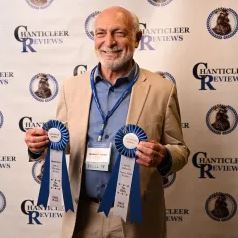
    ​Find out more about Dave by checking out his website at https://www.davemasonwrites.com/

  • Chanticleer 10 Question Author Interview Series with Michael Cooper – Teen & Young Adult, Award-winning book, Dante Rossetti Grand Prize Award, Author Life, Wages of Empire

    CHANTICLEER 10 QUESTION AUTHOR INTERVIEW SERIES

    with Award-Winning Author, Michael Cooper


    A Blue and Gold Badge celebrating the 2022 Dante Rossetti Grand Prize for Michael J. Cooper and his book Wages of EmpireHello friends, we have another fabulous interview for you today. In 2022, Michael Cooper took home the Chanticleer Grand Prize in the Dante Rossetti Awards for his fascinating novel for his book Wages of Empire. Here, he tells us how Wages of Empire came to be and the subsequent heights it is now reaching! Take a minute or two and get familiar with Michael. You won’t be sorry!


    Chanti: Tell us a little about yourself: How did you start writing?

    Michael Cooper: That’s kind of a long story, but I’ll try to keep it under 1,000 words…

    Having been active in Zionist youth groups throughout my formative years, I emigrated to Israel after graduating high school in 1966. Studying in Jerusalem for the first three years, I attended and graduated from Tel Aviv University Medical School. Then, after living, studying, and working in Israel for a total of eleven years, I returned to the US to specialize in pediatrics and pediatric cardiology.

    Newly arrived in Israel 1966 (Michael J. Cooper in middle)
    Michael’s first arrival in Israel (center)

    After working for about fifteen years as a pediatric cardiologist in a large multi-specialty medical care consortium, I found myself disenchanted with some worsening aspects of the approach to patient-centered care. While I wasn’t personally affected by these negative changes since, as a sub-specialist, I had demanded and received the opportunity to design my own practice, however, this wasn’t the case for my primary care colleagues. So, I decided to advocate for them. I began tilting against administrative windmills in the form of impassioned letters, but found that I wasn’t getting anywhere. Though I did enjoy the catharsis of writing those letters!

    Tel Aviv University Medical School is a soft yellow with many windows and angles
    Tel Aviv University Medical School

    So, I decided to just enjoy my pediatric cardiology practice, and to redirect my letter-writing to another area of my interest—the Middle East. At this point (the early 1990s) under the leadership of Israeli Prime Minister Yitzhak Rabin, there was finally a real peace process in the form of the Oslo Accords. But to my dismay, there was a good deal of angry push-back to Rabin’s efforts—both in Israel and here in the US. In this environment, I regularly published letters, opinion pieces and essays in support of Rabin’s peace efforts. Needless to say, I received more than a few angry responses.

     Yitzhak Rabin shakes hands with Yasser Arafatat the White House in 1993 as Bill Clinton looks on
    Israeli prime minister Yitzhak Rabin (left), American president Bill Clinton (middle), and Palestinian political leader Yasser Arafat (right) at the White House in 1993

    And as the peace process moved forward, the resistance to it increased. In the Middle East this resistance came from a seemingly bizarre and unholy alliance: on one extreme, ultra-nationalistic Jewish settlers, and on the other extreme, militant Palestinians such as Hamas—strange bedfellows in their vehement opposition to the peace-making efforts. And this angry resistance spilled over—into Israel, into the Jewish Diaspora, into the Arab street, and into the Arab Diaspora.

    In Israel, this resistance reached a fever pitch in 1995 prior to parliamentary elections. Rabin’s efforts were not only rejected by Netanyahu and his right-wing allies, but Rabin was personally vilified as a crypto-Nazi and a traitor to Israel. The risk of his assassination, as assessed by Israeli security services, was high. And, indeed, after a huge pro-Oslo/pro-Rabin demonstration in Tel Aviv on November 4, 1995, Rabin was killed by a right-wing Israeli zealot with two shots to the back.

    The shock to the Israel public and the world-wide Jewish community was profound. And after Rabin’s death, and with the ascension of a right-wing Israeli government under Netanyahu, the peace process grew dormant and eventually, died.

    For catharsis, I initially turned from writing letters and op-ed pieces to writing historical fiction set in the Holy Land at pivotal points of history. This was also my way of trying to insinuate a message of coexistence and peace into a vehicle that, unlike my previous writing, might succeed in changing a few hearts and minds. I began with historical fiction set in British Mandatory Palestine in 1948—Foxes in the Vineyard. This was followed by The Rabbi’s Knight, set in the Holy Land at the twilight of the First Crusade in 1290. Lastly and soon-to-be-released, is Wages of Empire, largely set in Ottoman Palestine at the beginning of WWI.

    Michael J. Cooper listening to a baby with a stethoscope while their mother holds them.
    Michael J. Cooper examining an infant

    Beginning in 2007, I also turned to volunteer work for a US-based NGO (non-governmental organization) offering pediatric specialty services to children within the Palestinian Authority. In doing about two missions per year since then, I’ve attempted to be part of the solution as a pediatric cardiologist for children with limited or no access to care.

    As of this writing, recent events in Israel/Palestine would suggest that things have only grown worse. But I won’t be deterred. I will continue to write, work, speak, and advocate for reconciliation and peace. And, in the words of Forest Gump, “That’s all I have to say about that.”

    And it only took 684 words.

    Wages of Empire by Michael J. Cooper, a grayscale photo in a circle over a blue tinted Jerusalem

    Chanti: When did you realize you that you were an author?

    Cooper: In December of 2011—the first time I held my first published book in my hands.   I had dedicated the book to my big sister, Adrienne. She had fallen ill a few months before, and I was gratified to have been able to share that moment with her before she died.


    Chanti: Talk about genre. What genre best describes your work? And, what led you to write in this genre?

    Cooper: I write in the genre of historical fiction with added elements of mystery, action-adventure, mysticism, and a dash of romance. Having lived in Israel during my formative years (between the ages of 17 to 28), I had fallen in love with the immediacy of history that waited for you around every corner. The historical events and, indeed the historical characters also provided the scaffolding of a story that was, at once, very old, and still being written. As I researched and wrote all three books, I was pleasantly shocked by fascinating elements of hidden history, unsolved mysteries, and unbelievably engaging and bizarre characters that practically wrote themselves into the books.


    Chanti: Do you find yourself following the rules or do you like to make up your own rules?

    Cooper: As mentioned above, the advantage of writing historical fiction is the scaffolding, or to switch metaphors, the loom of the historical timeline you’re working with. As the historical characters move within the fabric of that framework, it’s great fun to weave the fictional characters into the pattern, creating a wonderful tapestry.

    As to rules, I would paraphrase a line from the 1974 movie, Blazing Saddles (replacing the word ‘badges’ with rules), “Rules? We don’t need no stinking rules!” (a version of that line appeared in the 1948 film, The Treasure of the Sierra Madre, and before that in a 1927 novel of the same name).

    Another and more sophisticated way of expressing the same idea is to quote the great Somerset Maugham, who famously said, “There are three rules for writing a novel. Unfortunately, no one knows what they are.”

    Somerset Maugham

    Chanti: What do you do when you’re not writing? Tell us a little about your hobbies.

    Cooper: Having already gone on and on about my work as a pediatric cardiologist for forty years, I would note that I’ve enjoyed running for the past 45 years, though I now do it considerably less often and am considerably slower. I used to play and perform folk music on guitar, banjo, and mandolin, though when I began writing about thirty years ago, I gradually redirected my creative energies away from music. Now that I’m retired, and when I’m not writing, traveling for research, and puttering around the house, I’m hoping to increase my volunteer work in Palestine.

    Michael J. Cooper running in a marathon
    Michael J. Cooper running in a marathon

    Chanti: How do you come up with your ideas for a story?

    Cooper: As noted above, the storylines arise organically from the historical timeline and from the different historical characters—creating a portrait that is enhanced by the fictional characters who allow for additional surprises, plot twists, betrayals, loves and alliances. As the book progresses, it’s a pleasure for me to watch the weave tighten as the different storylines are drawn together. I hope it’s also a pleasure for the reader.

    Michael J. Cooper with his two First Place Ribbons before one is upgraded to a Grand Prize!

    Chanti: How structured are you in your writing work?

    Cooper: Not at all. When I was working full-time, I’d get up early to write or do some research for an hour or so. Then while commuting to work (sometimes up to an hour or more), I’d ruminate about what I’d written or read, and made mental notes about plot twists, opportunities for conflict to build tension, or the need for a particular fictional character to do something unexpected. Once at work, I’d scribble these ideas down during gaps in my workday. After work, (and after the kids’ homework, and once they were asleep), I’d write drafts from the ideas that had germinated during the day. Then I’d print out drafts, bring them with me to work or have them with me on family outings, and during quiet stretches of time, and using a #2 pencil with a functioning eraser, I’d read the draft aloud and edit. At work, that might happen during a lunch break while sitting outside (weather permitting). During family outings, the settings for writing and editing were more varied, ranging from video arcades, amusement parks, ski trips, RV trips, etc. Now that I’m retired and the kids are (generally) on their own, I have vast stretches of time to research and write, but again, without any rigid structure.

    Michael J. Cooper working with his kitten in the early morning
    An early writing session with the kitten looking on

    Chanti: How does being an author affect your involvement in your community?

    Cooper: During my years as a practicing pediatric cardiologist, I felt that I had a certain degree of “street cred” in my community. And by that, I refer to the quality of being “worthy of respect.” As an author, I feel a certain enhancement of my “cred,” insofar as those who used to vehemently disagree with me about the Israel/Palestine question, now seem more willing to acknowledge an alternative narrative of coexistence and peace instead of confrontation and endless strife.

    Looking at a screen during an appointment in Israel Palestine

    Chanti: What are you working on now? What can we look forward to seeing next from you?

    Cooper: That’s easy. I’m putting the finishing touches on the next book in the “Empire Series,” Crossroads of Empire, which immediately follows Wages of Empire. I’m determined to see it published in 2024. And after that will come the next in the series, End of Empire. At that point, I’ll probably leave it as a trilogy. Or not.

    Note from Chanti: Crossroads of Empire is in the 2023 CIBAs!

    Dante Rossetti Awards for YA Fiction
    Cooper won the Grand Prize in the Dante Rossetti Awards for YA Fiction

     Chanti: Who’s the perfect reader for your book?

    Cooper: Wages of Empire will appeal to a wide swathe of readers beginning with those WWI aficionados who enjoy a thrilling novel of historical mystery with elements of romance and international intrigue. Readers of all ages and particularly young readers will enjoy the classic hero story of a young man coming of age at a pivotal moment in history and risking everything to play a role in the unfolding of history. Likewise, readers coming from diverse backgrounds will appreciate the cross-cultural and universal appeal. And in this turbulent time in the Middle East, readers concerned about the prospects for peace in that troubled part of the world will appreciate an informative and historical narrative of coexistence.

    As it happens, Wages of Empire is a novel about war in a time of war—holding up a mirror that reflects on the current paroxysms of violence in the Middle East, and asking the question: What does that history have to do with the present?

    In a word?

    Everything.


    Michael Cooper

    Michael Cooper writes historical fiction set in the Middle East; Foxes in the Vineyard, set in 1948 Jerusalem won the 2011 Indie Publishing Contest grand prize and The Rabbi’s Knight, set in the Holy Land in 1290 was a finalist for the 2014 Chaucer Award for historical fiction. Coming in December of 2023, Wages of Empire set at the start of WW1 won the CIBA 2022 Hemingway first prize for wartime historical fiction and the grand prize for young adult fiction.
    A native of Berkeley, California, Cooper emigrated to Israel in 1966, studying and working there for the next decade; he lived in Jerusalem during the last year the city was divided between Israel and Jordan and graduated from Tel Aviv University Medical School. Now a pediatric cardiologist in Northern California, he travels to the region twice a year on volunteer missions for Palestinian children who lack access to care. http://michaeljcooper.net/Michael Cooper’s Wages of Empire launches DECEMBER 2023.
    You can pre-order his book from Amazon here and from Barnes & Noble here! Don’t miss out!