Author: thomas-wideman

  • Understanding Prescriptive Non-Fiction | November Non-Fiction Deadlines!

    Understanding Prescriptive Non-Fiction | November Non-Fiction Deadlines!

    Looking at the I&I, Harvey Chute, and Mind & Spirit Awards

    There are two types of Non-Fiction that we commonly see: Narrative Non-Fiction and Prescriptive Non-Fiction.

    Just what is the difference between types of Non-Fiction?

    Narrative often makes the most sense, but that doesn’t mean that Prescriptive Non-Fiction deserves a bad rap. Let’s look at some definitions:

    Narrative Non-Fiction:

    The primary focus is story. Often a beginning, middle, and end, it stands strong with most fiction stories, with the notable difference that it is, in fact, Non-Fiction. Memoir is similar, though obviously focused on one person’s first person experience of their own life.

    Prescriptive Non-Fiction:

    The primary focus here is conveying a message. Narrative and writing style help convey this message in the same way it conveys theme in a Narrative Non-Fiction. The person writing must be an expert in the subject. How else do you make a full book of it?

    While we’re going to focus on three different genres of Prescriptive Non-Fiction, you can always read more about it through resources like this one here.

    Three Genres of the CIBAs for Prescriptive Non-Fiction
    While you can see our full list of Non-Fiction Genres (including the newest for Military and Front Line Books) here, we consider our I&I, Harvey Chute, and Mind & Spirit Book Award Programs to be closest to Prescriptive Non-Fiction. The main focuses for these three Awards programs are How-To, Business & Finance, and Spirituality and Mindfulness.

    There’s a good deal of overlap with the other Awards as sometimes the instructional side of a workbook takes over more than the part that looks directly at financial or spiritual welfare. However, the key here is that you learn while enjoying a book. Maybe the book is framed through someone’s personal experience, their clinical experience, or told in the form of a travelogue, but no matter what it brings you through to a new understanding by the end.

    What Does Prescriptive Non-Fiction Look Like?

    Examples are always best in these cases. Here are some of our favorite Non-Fiction books that we’ve reviewed recently focusing on How-To, Business & Finance, and Spirituality.

    EMOTIONAL MAGNETISM: How to Communicate to Ignite Connection in Your Relationships

    By Sandy Gerber
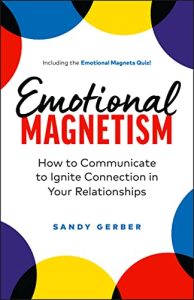
    Emotional Magnetism Cover

    Emotional Magnetism: How to Communicate to Ignite Connection in Your Relationships is a self-help and marketing book in one—in fact, it’s a self-marketing book.

    A seasoned marketing professional, author Sandy Gerber uses common elements in marketing theory to aid those who wish to enhance their communication skills and ability to get along with people around them. It’s easy to be misunderstood or unheard, and it’s even easier to be at cross-purposes, leading to frustration and animosity. But using Gerber’s SAVE technique, understanding what we mean and what we need becomes clear.

    In this work, we learn what emotional magnetism is, and how well we can communicate when we learn how to harness it. We also learn about how emotional magnetism can be repelled when it’s not done right. But in order to use emotional magnetism, we must first learn what the emotional magnets are, using the acronym SAVE—short for safety (S), achievement (A), value (V), and experience (E)—and how they are reflected in our personalities.

    Read more here!

    HEALING OUT LOUD: How to Embrace God’s Love When You Don’t Like Yourself

    By Sandi Brown & Michelle Caulk
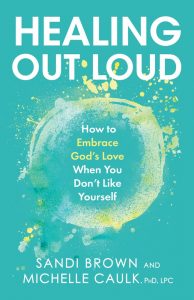
    Healing Out Loud Cover

    Two writers – friends, and former counselor and client – combine forces to create Healing Out Loud, a dynamic book aimed at understanding and overcoming the deficits that life hands us.

    Sandi Brown, a radio personality with more grit than she realizes, seeks professional help. Michelle Caulk’s therapeutic methodology perfectly suits this case. The two offer examples of wishing for and finding true mental health through the development of a remarkable communicative relationship.

    Each chapter of the pair’s psychological explorations begins with a memory from Sandi, accompanied by her expanded view of incidents from childhood and beyond. These ruminations are then matched by counselor Michelle’s personal grasp of Sandi’s specific dilemmas, and well-constructed guidelines for a healing process that readers can incorporate into their own lives. Sandi, grappling with low self-esteem, was traumatized as a child when her father left her mother and brother, loudly and finally, with no explanation.

    Read more here!

    WELFARE CHEESE to FINE CAVIAR: How to Achieve Your Dreams Despite Your Upbringing

    By Thomas Wideman, MBA, PMP

    First Place Winner in the Harvey Chute Awards
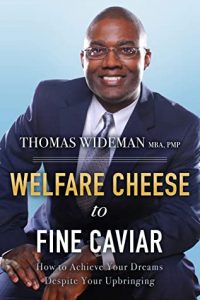
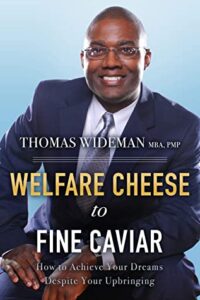
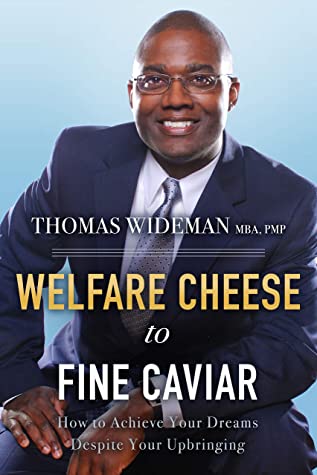
    Welfare Cheese to Fine Caviar Book Image

    Thomas Wideman, the author of this dynamic self-help manual, Welfare Cheese to Fine Caviar: How to Achieve Your Dreams Despite Your Upbringing, rose from poverty and dismay to a life of security and personal achievement through techniques he shares with readers who can incorporate them into their own life plans.

    Wideman came from an impoverished African American family wracked by confusion, chaos, and, at times, criminality. His mother had three sons by three fathers, and he would come to know his own father only peripherally, eventually learning that the man murdered people and subsequently died in prison. The boy grew up in tough neighborhoods and ate “welfare cheese” (a block of pre-sliced heavy American cheese that supposedly melted well). Every month, making ends meet became more and more difficult. In an early chapter of this finely woven chronology, we see him taking food from trains parked along the railroad tracks and running from the authorities. In this, as in each new chapter, he speaks of confronting severe issues and finding ways to resolve them. In the case of the theft and other childhood incidents of fighting, experiencing bullies, and battling racism, he speaks of making up his mind that “my circumstances need not be my limitation.”

    A math whiz, Wideman found his strengths through schoolwork, striving for A’s instead of merely accepting B’s.

    Read more here!

    GATHERING PEBBLES: Learning How to Make Your Own Chicken Soup

    By David Okerlund
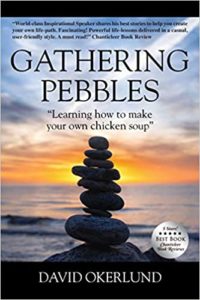
    Inuit of the Canadian Arctic are known for creating stone structures used as navigational points and message centers for fellow travelers. Some of these directional monuments provide a spiritual connotation meant to enrich the journey.

    Gathering Pebbles is David Okerlund’s own “inukshuk” of sorts, a book filled with stories, recollections, and memorable life events that have become part of his personal road map for living. Okerlund, a world-class inspirational speaker, shares his best stories to help you create your own life-path. He shares this collection of nuggets in the interest of helping others along their chosen path and hoping to encourage their own “gathering” and sharing of valuable knowledge.

    Okerlund directs his writing in a casual, user-friendly style. Each of the book’s chapters is highlighted as a pebble gathered on his winding life’s path. Titles are effectively posed as questions to help draw readers into the topic at hand. Each chapter is formatted with a variable mixture of contemplative quotes, poetry, recaptured historical moments, and personal experiences, to showcase qualities such as perseverance, retaining a sense of childhood wonderment, the importance of faith, and following your dreams.

    Read more here!

    Each of these books does an excellent job navigating their genres (and their cover designs!), making it clear who they appeal to and how they can help the reader.

    Have a How-To, Self-Help, or another great Non-Fiction Read that deserves recognition? Submit now to our Non-Fiction Book Awards by the end of November!

    Celebrating the 2021 Winners for I&I, Harvey Chute, and the Mind & Spirit Awards!

    The Three Winning Titles for I&I, Harvey Chute, and Mind & Spirit

    Your book could be next!

    Looking for more great reads?

    Looking to up your game? Check out the traditional publishing tool that indie authors can use to propel their writing careers to new levels.


  • Spotlight on the 2021 Harvey Chute Book Awards for Business & Enterprise Non-Fiction

    Spotlight on the 2021 Harvey Chute Book Awards for Business & Enterprise Non-Fiction

    What’s that note say on your piggy bank?

    A pink piggy bank with change lying outside of it.

    Deadlines aren’t just for taxes, sign up today for the Harvey Chute Awards today!

    Three Black stripes on a yellow badge

    Do you have money on your mind and your mind on money?


    The Origins of the Harvey Chute Awards

    Harvey Chute
    Harvey Chute (1962-2015)

    The Harvey Chute Awards hold a special place in our hearts as Harvey was a presenter at Chanticleer in the past. We named the Awards after him to honor his contributions and the business savvy that he brought to all interactions.

    An author in his own right, Chute wrote Stone and Slit, a cozy historical mystery set during the gold-rush in British Columbia, just across the border. What he was most well know for though were his guides in the For Dummies series.

    A generic, untitled FOr Dummies book
    This is generally what they look like

    For those who might not know: The For Dummies books are a series published by Wiley that break down difficult tasks into approachable, friendly how-to guides. Chute worked on a series detailing how to best use the Amazon Kindle.

    Kiffer and Harvey met just after he founded KBoards.com, a Kindle forum that’s well-known among readers and authors. Harvey Chute passed away in the fall of 2015, but the impression he made remains to this day.

    Let’s take a closer look at KBoards, one of the many legacies left behind by Chute.

    KBoards

    Golden K followed by blue "Boards"

    KBoards.com is a lot like what you’d expect from a Reddit forum, but everything is related to Kindle and Amazon publishing. It reads like a community run FAQ for best practices. And speaking of, they have an FAQ to help use the platform right here. It’s a remarkable tool for any author willing to invest the time into making it work.

    Speaking of authors trying to make it work…

    Business & Finance

    One of the toughest questions facing authors is how to maximize their book sales. Discounting a global pandemic, this was already hard enough to manage between digital sales and physical hand sales, not to mention author websites, social media, online presence, tours, events, and everything else! Writers are entrepreneurs, whether their books are independently or traditionally published.

    If you’re not sure where to get started marketing your book, consider this article here written by Kiffer Brown and Sharon Anderson as your starting point!

    Want to write better about business and finance? The best place to start is by reading what others have already written!

    You can see some of our reviews of entrepreneurial literature below

    RETIRE SECURELY: Insights on Money Management from an Award-Winning Financial Columnist
    By Julie Jason
    First Place Winner in I&I Awards

    If you’re wondering what the difference is between a Roth IRA and a traditional IRA, then you’ll want to pick up Julie Jason’s Retire Securely: Insights on Money Management from an Award-Winning Financial Columnist. You will be treated to a crash course on financial terms like these and get inside information on saving and investing thanks to scores of conversations she’s had with her readers over the years.

    Plenty of titles on financial planning and investing exist on bookstore shelves, but what makes Jason’s compilation different is that hers is culled from more than 1,000 columns she has written over the years for the Connecticut newspapers, Greenwich Time and the Stamford Advocate. In 2013, King Features syndicated her “Retirement Planning and Investment” column, where she explores topics like 401(k) investing, choosing a financial adviser and how to determine if sending your kid to college is a good value. Jason, who worked as a Wall Street lawyer, money manager, and investment counselor, really knows her stuff: whether it’s unraveling the complicated world of market trends or explaining estate planning, her columns are worth reading and applying to your financial life. Her column has recently moved from King Features to Andrews McMeel Syndicate [Chanticleer Reviews was notified about this change on April 3, 2020].

    Continue Reading Here

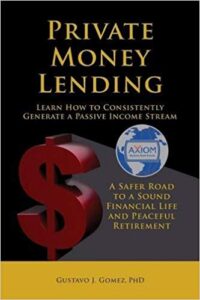
    PRIVATE MONEY LENDING: How to Consistently Generate a Passive Income Stream
    By Gustavo J. Gomez, Ph.D.

    Are you in retirement, or close to it, wondering how you’re going to make ends meet pulling from your portfolio? Well, you’re not alone if you’re staying up at night thinking about how low-interest rates are killing your investments.

    In a practical and easy to read format, Gomez explains to investors the particulars of a little known, yet potentially lucrative investment technique that can handle the ups and downs of the stock market. Unlike stocks, the underlying security of private money lending is a tangible asset – brick and mortar, so there is another layer of protection for you, the investor.

    But what is Private Money Lending? According to Gomez, it refers to a private individual or organization that lends money. Typically, when you’re looking for financing, you would go to a bank. With private funds, on the other hand, you’re going to an individual or organization that specializes in this type of lending. The upside of private money lending is that it’s less regulated, which means less red tape. The icing on the cake, he says, is that these investments have consistently generated 9 to 12 percent returns* – not bad considering stock market investments have averaged closer to 7 percent, and with much more fluctuations. We can’t forget the economic crash of 2008 when many stock market investments plummeted close to 40 percent.

    Continue Reading Here

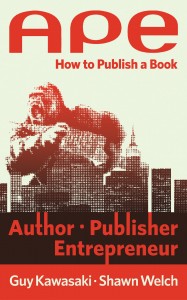
    APE: Author, Publisher, Entrepreneur
    By Guy Kawasaki and Shawn Welch

    APE is the how-to compendium for today’s self-publishers.

    Authors will findAPEan indispensable resource. Guy Kawasaki passes along his publishing experience in his “no-shitake,” but affable manner. Imagine having an extremely successful uncle in the publishing biz who also has a tech-wizard pal (co-author Shawn Welch) of digital publishing magic. Fortunately for us, this dynamic duo decided to share their publishing know-how.

    APE’s premise is that publishing is a parallel process “that requires simultaneous progress along multiple fronts.” Hence, self-publishers are challenged with how to: market, brand, design, promote, publish, distribute, and finance a book–all at the same time. Oh, and don’t forget the time required for actually writing the book. Indisputably, each self-publisher is an:Author, Publisher and Entrepreneur.

    Continue Reading Here

    WELFARE CHEESE to FINE CAVIAR
    By Thomas Wideman, MBA, PMP

    Welfare Cheese to Fine Caviar Book Image

    Thomas Wideman, the author of this dynamic self-help manual, Welfare Cheese to Fine Caviar: How to Achieve Your Dreams Despite Your Upbringing, rose from poverty and dismay to a life of security and personal achievement through techniques he shares with readers who can incorporate them into their own life plans.
    Wideman came from an impoverished African American family wracked by confusion, chaos, and, at times, criminality. His mother had three sons by three fathers, and he would come to know his own father only peripherally, eventually learning that the man murdered people and subsequently died in prison. The boy grew up in tough neighborhoods and ate “welfare cheese” (a block of pre-sliced heavy American cheese that supposedly melted well). Every month, making ends meet became more and more difficult. In an early chapter of this finely woven chronology, we see him taking food from trains parked along the railroad tracks and running from the authorities. In this, as in each new chapter, he speaks of confronting severe issues and finding ways to resolve them. In the case of the theft and other childhood incidents of fighting, experiencing bullies, and battling racism, he speaks of making up his mind that “my circumstances need not be my limitation.”

    Continue Reading Here


    Have a book on Business and Enterprise? Submit by the end of November for the 2021 CIBAs! 

    Three Black stripes on a yellow badge

    See the 2020 Harvey Chute Award Winners Here!

    Blue and Gold Badge for the 2020 Harvey Chute Grand Prize for Business & Enterprise Edge: Turning Adversity into Advantage by Laura Huang
    The 2020 Harvey Chute Grand Prize Badge

    Looking to submit to our other Non-Fiction Divisions? See them all here!

    When you’re ready, did you know that Chanticleer offers editorial services? We do and have been doing so since 2011.

    Our professional editors are top-notch and are experts in the Chicago Manual of Style. They have and are working for the top publishing houses (TOR, McMillian, Thomas Mercer, Penguin Random House, Simon Schuster, etc.).

    If you would like more information, we invite you to email Kiffer or Sharon at KBrown@ChantiReviews.com or SAnderson@ChantiReviews.com for more information, testimonials, and fees.

    We work with a small number of exclusive clients who want to collaborate with our team of top-editors on an on-going basis. Contact us today!

    Chanticleer Editorial Services also offers writing craft sessions and masterclasses. Sign up to find out where, when, and how sessions being held.

    • A great way to get started is with our manuscript evaluation service, with more information available here.
    • And we do editorial consultations for $75. Learn more here.
    • If you’re confident in your book, consider submitting it for a Editorial Book Review here or to one of our Chanticleer International Awards here.

    And remember! Our 10th Anniversary Chanticleer Authors Conference (CAC22) will be April 7-10, 2022, where our 2021 CIBA winners will be announced. Space is limited and seats are already filling up, so sign up today!  CAC22 and the CIBA Ceremonies will be hosted at the Hotel Bellwether in Beautiful Bellingham, Wash. Sign up and see the latest updates here!

    Writer’s Toolbox

    Thank you for reading this Chanticleer Spotlight Article.

    Important Links from this Article

    Obituary for Harvey Chute

    KBoards.com

    KBoards FAQ

    12 MUST-DO’s for AUTHORS for a Successful and Productive 2020 and Beyond

    The traditional publishing tool that indie authors can use to propel their writing careers to new levels?  The Seven Must-Haves for Authors – Unlocking the Secrets of Successful Publishing Series by Kiffer Brown

  • Labor Day 2021 | Celebrating Workers in the US and some of our Favorite Reads

    Labor Day 2021 | Celebrating Workers in the US and some of our Favorite Reads

    Hello Chanticleerians and we hope you are enjoying your Three Day Weekend for Labor Day!

    For many of us who write, it’s a full time job on top of the day job we already have. And, as writing is a full time business, we deserve a little recognition for all the work we put in on top of any other labor we already do. Let’s look at the history of Labor Day and some stories that remind us how far we’ve come, and others that show us possibly how far we may be able to go!

    First off, while Grover Cleveland officially signed Labor Day into law in 1894, people aren’t sure if it was Peter McGuire or Matthew Maguire, the cofounder of the American Federation of Labor and a secretary of the Central Labor Union respectively, who actually began the holiday.  While there are more Maguires there than in the new Spiderman movie, there is no confusion on why Labor Day started. You can learn more from the Department of Labor here.

    While Tobey Maguire was a great Spiderman, that’s not who were talking about here.

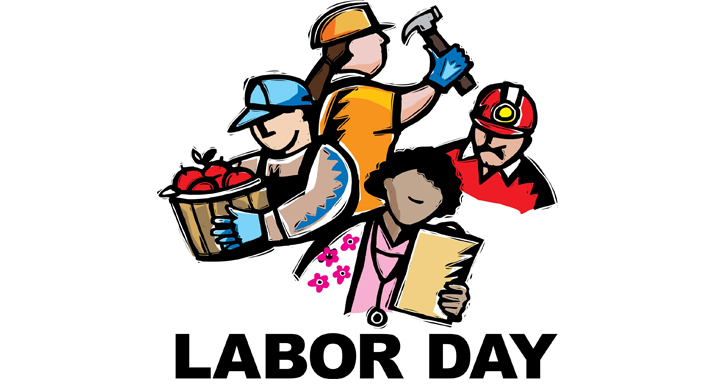
    Labor Day is a celebration of the achievements, both social and economic, of workers in the United States. The holiday recognizes the contributions these workers make to the nation’s prosperity and well-being. Now, more than ever, it’s clear that our essential workers deserve recognition, celebration, and a thriving wage.

    In describing the need for Labor Day, History.com says:

    People of all ages, particularly the very poor and recent immigrants, often faced extremely unsafe working conditions, with insufficient access to fresh air, sanitary facilities and breaks.

    Remembering Labor Day is a great way to remind ourselves that conditions can always be better for workers across the board.

    The Starting of Labor Day on DS9
    The Ferengi Rom facing down his brother Quark and forming a union in Star Trek: Deep Space Nine’s episode “Bar Association”

    When we think of the history of labor in this country, ways people can make a difference right now, and where we might be going, there’s a whole world of books that opens up to us! Here are just a few that we recommend!


    Working Fiction

    Infants of the Brush
    By A.M. Watson

    A little boy is sold into an apprenticeship as a chimney sweep in eighteenth-century London, and soon learns the horrors of that profession.

    Six-year-old Egan lost his father from an accident at sea, and now, may lose his little sister from illness. The only way his penniless mother can save her daughter is to sell Egan into an apprenticeship in order to purchase medicine. As a small boy, he will make an ideal “broomer;” a businessman named Armory gladly takes Egan into the fold. Under Armory’s absolute dictatorship he will sleep with other wretched boys on soot sacks, eat gruel, get bloody beatings for the slightest infraction, and risk his life almost daily.

    Continue Reading here…

    The Selah Branch
    By Ted Neill
    First Place Winner in Cygnus Awards

    The Selah Branch combines two surprising stories into one enthralling whole.

    It begins with a ripped from the headlines feel, diving deeply into issues of race, class, poverty, and hopelessness in Selah Branch, WV. A town whose brighter future of uplift, integration, opportunity, and prosperity was wiped out one summer night in 1953 when a chemical explosion destroyed the promising university town and replaced it with a hazardous waste site. Like Chernobyl, only with a smaller footprint and chemical residue substituting for nuclear waste. But just as deadly.

    The story views Selah Branch through the eyes of Kenia Dezy, an African-American public health student on a summer practicum. She’s to determine if a simple app can steer people towards healthier food choices and better health outcomes in a town empty of jobs, filled with poverty and hopelessness, marooned in the middle of a food desert.

    Continue Reading here…

    Where we are now

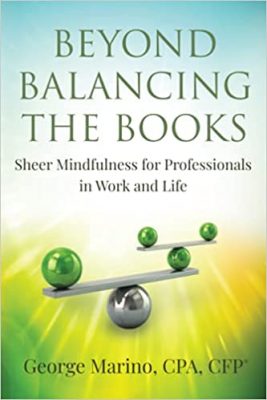
    Beyond Balancing the Books
    By George Marino, CPA, CFP

    Balancing the Books Cover Image

    George Marino, a practicing CPA and Mindfulness Coach, explores the possibilities for sustainable positivity in one’s work-life through mindfulness principles and practices in his new book, Beyond Balancing the Books: Sheer Mindfulness for Professionals in Work and Life.

    It would be difficult to find a profession more fraught with detail, deadlines, and distress than a typical CPA. Applying to that particular realm the idea of mindful meditation is a challenge that author Marino has taken on because it is a process he has lived. He opens his book by comparing two CPAs and their approaches to life and work-life.

    Continue Reading here…

    Welfare Cheese to Fine Caviar
    By Thomas Wideman

    Welfare Cheese to Fine Caviar Book Image

    Thomas Wideman, the author of this dynamic self-help manual, Welfare Cheese to Fine Caviar: How to Achieve Your Dreams Despite Your Upbringing, rose from poverty and dismay to a life of security and personal achievement through techniques he shares with readers who can incorporate them into their own life plans.

    Wideman came from an impoverished African American family wracked by confusion, chaos, and, at times, criminality. His mother had three sons by three fathers, and he would come to know his own father only peripherally, eventually learning that the man murdered people and subsequently died in prison. The boy grew up in tough neighborhoods and ate “welfare cheese” (a block of pre-sliced heavy American cheese that supposedly melted well). Every month, making ends meet became more and more difficult. In an early chapter of this finely woven chronology, we see him taking food from trains parked along the railroad tracks and running from the authorities. In this, as in each new chapter, he speaks of confronting severe issues and finding ways to resolve them. In the case of the theft and other childhood incidents of fighting, experiencing bullies, and battling racism, he speaks of making up his mind that “my circumstances need not be my limitation.”

    Continue Reading here…

    Where We Might Go

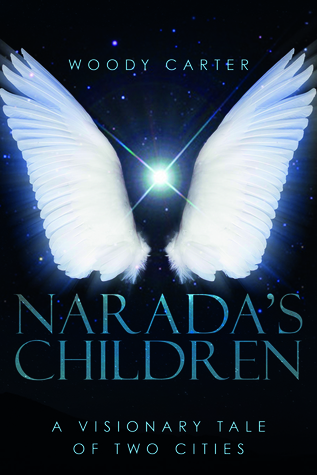
    Narada’s Children
    By Woody Carter, PhD

    A colorful fable resonates with contrasting modalities of mysticism and social action, exploring how culture and religion can separate us or bind us together.

    Narada is a traveler and a stranger when he first meets the lovely Hohete and her people in the ancient city of Ja’Usu. Given water, food, and shelter by Hohete’s family, Narada is sharply questioned by village elders who are stymied by his forthright statement that he is a representative of a deity named The Great Mystery. So they conspire to remake him as a storyteller, to reduce his power and profit from his talent for spinning yarns by selling refreshments to his audience.

    Narada’s Children


    Have a great story about workers and overcoming adversity?

    When you’re ready, did you know that Chanticleer offers editorial services? We do and have been doing so since 2011.

    Our professional editors are top-notch and are experts in the Chicago Manual of Style. They have and are working for the top publishing houses (TOR, McMillian, Thomas Mercer, Penguin Random House, Simon Schuster, etc.).

    If you would like more information, we invite you to email Kiffer or Sharon at KBrown@ChantiReviews.com or SAnderson@ChantiReviews.com for more information, testimonials, and fees.

    We work with a small number of exclusive clients who want to collaborate with our team of top-editors on an on-going basis. Contact us today!

    Chanticleer Editorial Services also offers writing craft sessions and masterclasses. Sign up to find out where, when, and how sessions being held.

    A great way to get started is with our manuscript evaluation service, with more information available here.

    And we do editorial consultations for $75. Learn more here.  

    If you’re confident in your book, consider submitting it for a Editorial Book Review here or to one of our Chanticleer International Awards here.

    Also remember! Our 10th Anniversary Chanticleer Authors Conference (CAC22) will be April 7-10, 2022, where our 2021 CIBA winners will be announced. CAC22 and the CIBA Ceremonies will be hosted at the Hotel Bellwether in Beautiful Bellingham, Wash. See the latest updates here!

    Thank you to workers everywhere!

  • WELFARE CHEESE to FINE CAVIAR: How to Achieve Your Dreams Despite Your Upbringing by Thomas Wideman, MBA, PMP – Self-Help Manual, Personal Transformation, Goal Setting

    WELFARE CHEESE to FINE CAVIAR: How to Achieve Your Dreams Despite Your Upbringing by Thomas Wideman, MBA, PMP – Self-Help Manual, Personal Transformation, Goal Setting

    Thomas Wideman, the author of this dynamic self-help manual, Welfare Cheese to Fine Caviar: How to Achieve Your Dreams Despite Your Upbringing, rose from poverty and dismay to a life of security and personal achievement through techniques he shares with readers who can incorporate them into their own life plans.

    Wideman came from an impoverished African American family wracked by confusion, chaos, and, at times, criminality. His mother had three sons by three fathers, and he would come to know his own father only peripherally, eventually learning that the man murdered people and subsequently died in prison. The boy grew up in tough neighborhoods and ate “welfare cheese” (a block of pre-sliced heavy American cheese that supposedly melted well). Every month, making ends meet became more and more difficult. In an early chapter of this finely woven chronology, we see him taking food from trains parked along the railroad tracks and running from the authorities. In this, as in each new chapter, he speaks of confronting severe issues and finding ways to resolve them. In the case of the theft and other childhood incidents of fighting, experiencing bullies, and battling racism, he speaks of making up his mind that “my circumstances need not be my limitation.”

    A math whiz, Wideman found his strengths through schoolwork, striving for A’s instead of merely accepting B’s.

    He excelled academically and attained many honors by the time he graduated from high school. After joining the military, Wideman realized that if the military machine could not break him, nothing could. He met and cautiously courted his sweetheart, and with her and their two sons, established a happy home life, a sensible financial plan, and new dreams for the future. He can afford to eat caviar now – though he doesn’t choose to.

    Each section of his book comprises a personal recollection, frank and realistically drawn, followed by a “Reflection” to help the reader examine feelings and reactions related to their own, comparable experiences. Wideman helps his readers by following up with an “Application” section. Wisdom gleaned by experience seems to stick the best. Wideman ends with a section cleverly termed “Caviar Time,” in which readers talk to themselves in a mirror, giving creative, inspiring advice and encouragement based on the guidance contained in the segment. Wideman’s well-organized, intelligent parables cover a wide range of issues: family stresses, drug and alcohol abuse, racial divisiveness, financial planning, and complex situations faced in the workplace.

    Wideman’s Welfare Cheese to Fine Caviar offers hope and realistic, replicable strategies to anyone who, like himself at earlier phases of his life, faces what seems like insurmountable barriers. His general message focuses on positives: do your best, and keep meaningful goals for success always in sight. Highly recommended.

    Welfare Cheese to Fine Caviar won First Place in the 2021 Harvey Chute Book Awards.

    5 Star Best Book Chanticleer Reviews round silver sticker