The Herald Building – First Floor, Downtown Bellingham, Wash.
FREE! Local Authors and Artists Event featuring Gifts for Palentine’s and Valentine’s Day:
Books
Children’s Books
Candles
Soaps
T-shirts
Toys & Games
Prints & Paintings
Cards
Vintage Goods
Bric a Brac
Open to the Public
POP on over to our POP-UP Event on Sat. & Sun. Feb 4th & 5th at the Herald Building, First Floor – Downtown Bellingham!
Featuring the Following Authors:
Susan Conrad, Peggy Sullivan, Gail Noble-Sanderson, Wendy Kendall, Jennifer Mueller, Robert Wright, Rob Slater, Donna LeClair, Strider Klusman, Marian Exall, Christine Smith, Sean Dwyer, MW Soapworks, Neal Cronic – Artist & Kiffer Brown.
POP on Over for this FUN and FREE event! We have a few spots left, if you are interested or in the neighborhood.
We’d love to help create these pop-ups for Chanticleerians all over.
Message or email Kiffer at KBrown@ChantiReviews.com
The Herald Building – First Floor, Downtown Bellingham, Wash.
FREE! Local Authors and Artists Event featuring Gifts for Palentine’s and Valentine’s Day:
Books
Children’s Books
Candles
Soaps
Tee-shirts
Toys & Games
Prints & Paintings
Cards
Vintage Stuff
Bric a Brac
Open to the Public and FREE!
POP on over to our POP-UP Event on Sat. & Sun. Feb 4th & 5th at the Herald Building, First Floor – Downtown Bellingham!
Featuring the Following Folk:
Susan Conrad, Peggy Sullivan, Gail Noble-Sanderson, Wendy Kendall, Jennifer Mueller, Robert Wright, Rob Slater, Donna LeClair, Strider Klusman, Marian Exall, Christine Smith, Sean Dwyer, MW Soapworks, Neil Cronic – Artist & Kiffer Brown.
POP on Over for this FUN and FREE event! We have a few spots left, if you are interested or in the neighborhood.
We’d love to help create these pop-ups for Chanticleerians all over.
Message or email Kiffer at KBrown@ChantiReviews.com
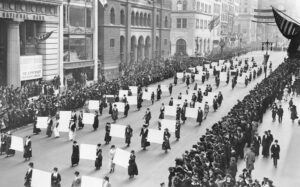
Suffragists parade down Fifth Avenue, 1917. Advocates march in October 1917, displaying placards containing the signatures of more than one million New York women demanding the vote. The New York Times Photo Archives.
On August 18, 1920, the Nineteenth Amendment to the United States of America Constitution was ratified and signed into law on the 26th that same month.
We are celebrating the 100th anniversary of the Nineteenth Amendment’s adoption into the U.S. Constitution: the amendment that guarantees citizens the right to vote regardless of their gender, and the victory of the American Suffrage Movement. It took more than seventy years of protesting, picketing, and struggles for women to gain the civil right to vote in US elections. And many more decades passed before other disenfranchised groups were systematically denied the right to vote.
The Nineteenth Amendment was the capstone of that fight, but it took over seventy years to achieve it.
And still, the vote was not granted to Black women and men. That right came about much later than most people realize, June 6, 1965, when President Lyndon Johnson signed the Voting Rights Act, which outlawed the discriminatory voting practices that some Southern states adopted after the Civil War.
During this election season, we call all Chanticleerians to Vote Your Conscious and to not let anything get in your way!
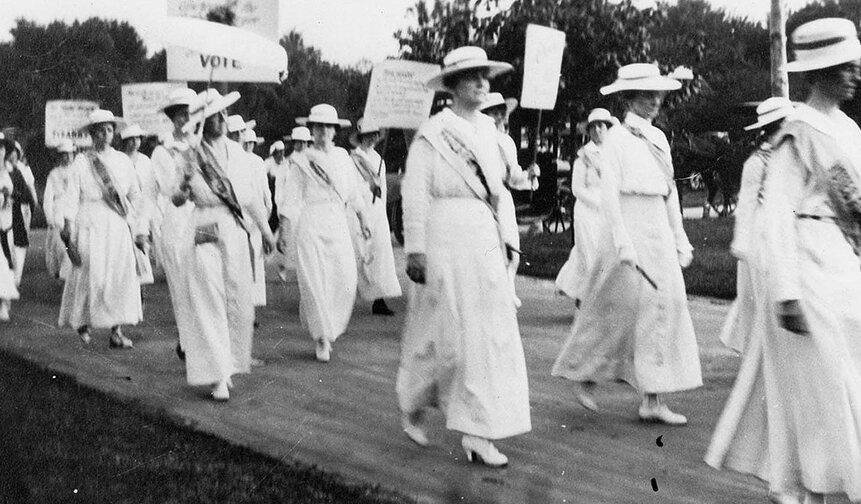
Women’s suffrage was not just a long fight, but one taken on by many pivotal figures. But the story of the suffrage movement is best told by remembering many of its impactful suffragists, such as Alice Stone Blackwell, Elizabeth Cady Stanton, Matilda Joslyn Gage, Ida B. Wells, Mary Church Terrel, and Josephine St. Pierre Ruffin.
Suffragists were physically attacked by mobs of angry men and boys while police looked the other way. They’d been roughly arrested; been held in fetid, cold, vermin-infested cells; been shackled to the wall; and endured abuse and even torture in jail. When they went on hunger strikes, they were force-fed, tubes rammed up their noses. The Christian Science Monitor.
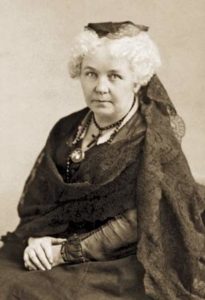
Elizabeth Cady Stanton, c. 1880
Elizabeth Cady Stanton was one of the women who first crystallized the Suffrage Movement, having helped organize the Seneca Falls Convention. Her unique background was pivotal in formulating the first demand for women’s suffrage in 1848.
As the movement grew and drew public attention, Stanton proved herself to be a skilled orator and writer, working closely with Susan B. Anthony throughout the years; Stanton actually wrote some of the speeches that Anthony delivered, and– along with Anthony– was one of the founders of the National Woman Suffrage Association. Stanton wrote for a more equitable future in more than voting; in addition to the question of suffrage, she championed a broader view of women’s freedoms, supporting labor rights, property rights, and the right to divorce. She saw that women should have the chance to lead their own lives, taking part in all aspects of society equally to men.
Movements don’t just happen, they come alive when a group of people decides to take action against injustice, and even small beginnings can lead to sweeping change.
Elizabeth Cady Stanton came from a privileged background and used her position and means to propel her views. Her father was a prominent attorney, Congressman, and a judge. He also was a slave owner. Elizabeth was exposed to the study of law and the government mechanisms that govern by her father. She was particularly against how religion was used to justify the oppression of women. She penned The Woman’s Bible to tackle misogynistic traditions rooted in religious dogma after being sent to a seminary at the age of sixteen.
She became an adamant abolitionist to end the practice of slavery in the United States in 1839 at the age of 24. Many historians believe that the Abolitionist Movement to End Slavery experiences and lessons were essential to pave the way for the Women’s Suffrage Movement.
Stanton wasn’t the only suffragist who saw the reality of sexist injustice throughout her society, and one of her contemporaries joined her in drawing attention to these wrongs. Matilda Joslyn Gage was considered a radical in her time, having fought against traditionalist views as Stanton had. Matilda was on the revising and editing committee for Elizabeth’s highly controversial The Woman’s Bible.
Matilda Electa Joslyn March 24, 1826
This right to vote was a battle, fought and won 100 years ago by women we will never know, but by what they have written, what others have written about them, and what they have done for all of us.
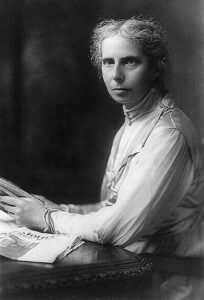
Alice Stone Blackwell
One of the women who played a significant role in uniting these two groups was Alice Stone Blackwell. She was in a position to do so because of her connection to the AWSA: her mother was Lucy Stone. Along with Alice’s father, Henry Browne Blackwell, they were some of the primary organizers of the group. As Alice Stone Blackwell grew up, she worked with her parents on their paper, the Woman’s Journal, and eventually ran the paper. Once the AWSA and NWSA had merged, Blackwell served as the NAWSA’s recording secretary.
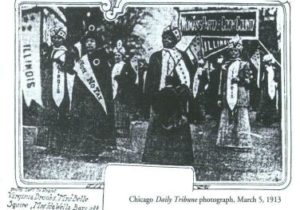
While the centennial celebrates the federal adoption of women’s suffrage, we shouldn’t forget the smaller victories and works that punctuated the movement’s length, those who spoke out against injustice in many forms, while seeking the vote. One such woman was Ida B. Wells, who played an active role in the suffrage movement of Chicago. The city had given partial suffrage to women. Wells, along with a fellow suffragist Belle Squire, started the Alpha Suffrage Club to advance women’s suffrage further and educate women on civic involvement.
Wells & Squire marching in 1913
The club especially supported African American candidates for the city’s elections, working to break down multiple unjust barriers in politics. Wells participated in one of the NAWSA’s best-remembered marches, set in Washington D.C. the day before the inauguration of President Woodrow Wilson. At the beginning of the rally, she was told to walk at the back, but she refused. Ida B. Wells marched with her sister suffragists from Illinois at the front. The power of social change comes from unified work between many people, and Wells refused the idea that she, as a suffragist, could be divided from anyone else.
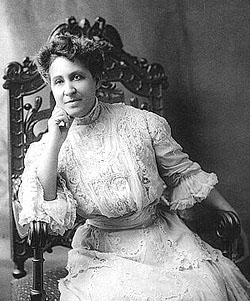
Along with women like Wells and Ruffin, Mary Church Terrel was an advocate for racial equality. She was entwined with gender equality, which shows throughout her work with the NAWSA, where she frequently met with Susan B. Anthony and Elizabeth Cady Stanton. She insisted that the movement fight for the rights of black women alongside those of white women, and spoke highly of the suffragists who fought for everyone oppressed by the political and social systems of the time. She spoke at NAWSA meetings, delivered speeches, and called for the suffragists to remember all of the women whose vote they worked so hard to gain.
Ida B. Wells
Let’s not allow their work to be forgotten – and let us never give up our full Rights as U.S. Citizens to carry out this all-too-important privilege.
Despite the NAWSA’s issues with racism, some black women did act within that organization, such as Mary Church Terrel, who was an advocate for racial equality entwined with gender equality, which shows throughout her work with the NAWSA, where she frequently met with Susan B. Anthony and Elizabeth Cady Stanton. Mary insisted that the movement fight for the rights of black women alongside those of white women, and spoke highly of the suffragists who fought for everyone oppressed by the political and social systems of the time. She spoke at NAWSA meetings, delivered speeches, and called for the suffragists to remember all of the women whose vote they worked so hard to gain.
Mary Church Terrel September 23, 1863
Women’s suffrage had a complex relationship with black civil rights in large part thanks to the period of history in which the suffrage movement began: the Seneca Falls Convention took place in 1848, seventeen years prior to the abolition of slavery. This meant that the women’s rights movement was progressing and focusing at the same time that black people across were achieving freedom and directing themselves in a country that, while changing dramatically, still marginalized them.
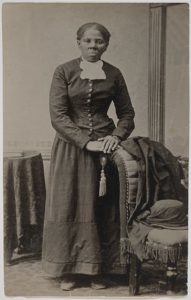
Harriet Tubman’s work is an example of how black women fought on both fronts; she’s a figure best remembered for her work as a liberator, freeing slaves prior to and during the civil war, but she took part in the suffrage movement as well. During the time of the NAWSA, she traveled to meetings and demonstrations to give speeches, telling of her experiences fighting for freedom and facing down oppressive and dangerous power structures during the time of slavery, and how important the struggle for freedom is. She bridged her advocacy for equality into the fight for the vote, and during this time, Ruffin’s The Woman’s Era wrote a profile on Tubman, as the country’s attention was once again drawn to her fight.
Harriet Tubman after the Civil War
All of these histories show that the suffrage movement’s victory– the adoption of the nineteenth amendment– was the result of disparate people, dedicated and idealistic people coming together and fighting hard for their rights. They gave time, energy, and passion to a movement that would, eventually, provide them with the right to participate in the democracy of their country. The fact that the suffrage movement stayed strong for 70 years united its two significant organizations, tackled legislation at both the national and local levels, is a testament to the people who refused to give up, and whose worked– together– to win the fight.
It’s been a century since women won the right to vote, and more than 170 years since the American suffrage movement started in earnest. This movement has a lot it can teach us: the value of working together, across the country, to bring about change; the importance of remembering that there is always more than one fight for progress and rights, that we should listen to the voices of everybody who’s been pushed down and denied their rights and opportunities; and, of course, that even in the face of a power structure that calls rebellion and the fight for equal freedoms’ radical’, that fight is a good one, and worth taking on.
At the Seneca Falls Convention, the call for women’s suffrage rang out in America, whereas before it had been considered a fringe idea, or even impossible. The fight was long, but after seventy-two years, the suffragists made what was ‘radical’ a reality.
So, in the spirit that the right to vote is something that all people deserve, and should never have been restricted to any one group over another, let’s celebrate the centennial of a victory that brought America one step closer to the ideals of equality, freedom, and the rights of all. The power of the vote has shaped America’s history. We must all understand the importance of voting, and today we recognize those who fought for our rights. We are thankful for those brave suffragettes, for it is their struggle that has given us the right to participate in our democracy regardless of gender.
It required three generations of fearless activists over a span of more than seven decades working in more than 900 state, local, and national campaigns to finally win the vote for American women. And that active verb – win – is important: Women were not given the vote; they were not granted the vote. As one commentator so aptly describes it: “They took it.” Christian Science Monitor
Links to articles and sources are listed at the end of this blog post.
We want to thank Scott Taylor, our newest member of the Chanticleer Team, for his research for the blog post in this collaborative effort of honoring and remembering the women who struggled and worked for ratifying the 19th Amendment on August 18, 1920.
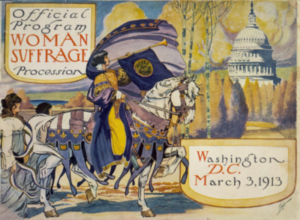
We thought you might enjoy viewing some of our very favorite books about Suffrage and Strong Women we admire:
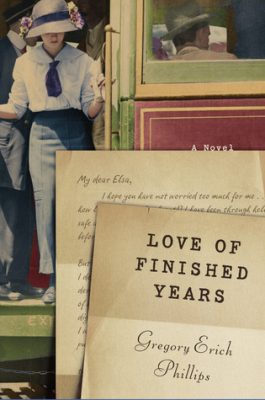
Love of Finished Years is one of Kiffer’s favorite novels as it tackles workers rights, women’s suffrage, the looming shadow of World War One, the plight of immigrants, and the horrors of wars from the trenches. Phillips reminds us that love, light, and perseverance can help us find a way to overcome almost any obstacle. Love of Finished Years won the Chanticleer Overall Grand Prize for Best Book while it was still in manuscript form.
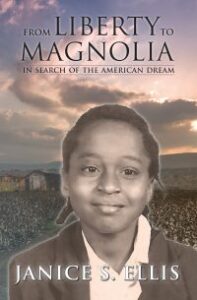
This pivotal work serves as an historical record which serves as a historical record amid one of the most tumultuous yet empowering eras in American history. Complete with a discussion guide in the Appendix, the book can serve as a text for a college course or a community book club exploring themes of race and gender.
Janice’s overarching message is to stay true to oneself and continue to follow your heart, no matter how unpopular or uncomfortable your choices. From Liberty to Magnolia was awarded the Journey Book Awards Grand Prize.
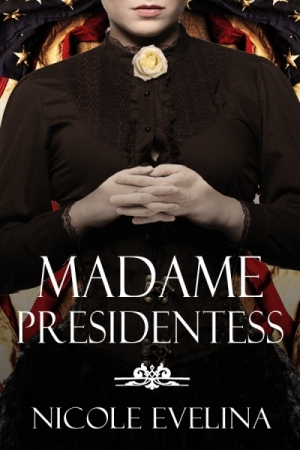
A story based on the mysterious, mystical Victoria Woodhull, a free-thinking woman well ahead of her time with a rags to riches story. Woodhull was the first woman to run for president of the United States, at a time when, with the full support of the law, most American men did not even regard their mothers, wives and daughters as citizens. She was also the first woman to own a brokerage firm on Wall Street. Nicole Evelina brings Victoria Woodhull vividly to life in this award winning novel.
Chanticleer Non-fiction Award-winning Books — just click on the link to read our reviews.
A Valentine to Mark Twain, a beloved American Author
“Both marriage and death ought to be welcome: the one promises happiness, doubtless the other assures it.”
– Samuel Clemens aka Mark Twain
Editor’s Note: Samuel Clemons writing as Mark Twain is a beloved author to Fairhaven, a village in Bellingham, Wash. where Chanticleer Reviews’ home office is located and where the company was founded. On August, 14, 1895, Mark Twain spoke to a full house at the Lighthouse Hall (700 seats) and received a standing ovation. Admission was seventy-five cents and one dollar for the best seats. This was the last stop in his United States tour. He arrived from presenting in Seattle on August 13, 1895. His next stop was Vancouver, British Columbia before heading out west across the Pacific Ocean for a world tour.
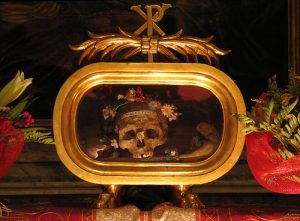
February 14th is really one of the strangest holidays we celebrate with its origins in the early Church, mired with martyrs. No one really knows for sure if there was one Valentini or two, or perhaps an entire herd of them, but, it is believed that Saint Valentine lost his head over converting people to the Christian faith. The head in question now resides in “…glass reliquary in a small basilica in Rome, surrounded by flowers.” [Atlas Obscura]
Editor's Note: Did we mention that Sharon Anderson, the author of this article, writes horror...
For us, February 14th is the day we all wear our hearts on our sleeves (literally), write little notes professing our love to one another, exchange candied hearts (Necco hearts may not be on the shelf this year because the company that purchased the popular brand said they, “Didn’t have time…” ), buy long-stemmed red roses for those we love (One site claims that in 2010, over 110 million long-stemmed roses were sold! That’s a lotta roses!), and chocolates… let’s not forget about the chocolates!
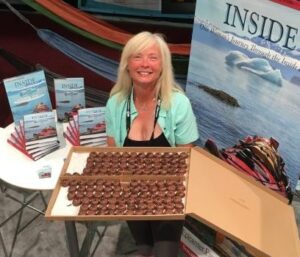
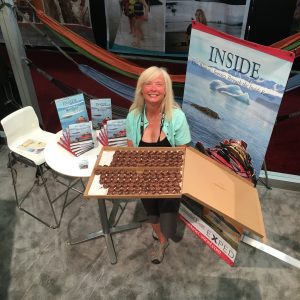
Susan Marie Conrad offering CHOCOLATES at her book signing, The INSIDE PASSAGE.
Whichever way you celebrate February 14th, we’ve got some fabulous reads lined up for you that are just
too sweet to pass up!
A Valentine of Great Reads for YOU from Chanticleer!
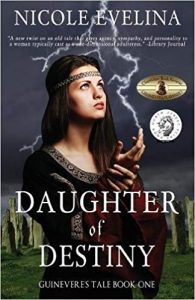
Daughter of Destiny: Guineviere’s Tale, Book 1 by Nicole Evelina is rich in historical detail and fantastical landscapes. This novel takes a brilliant twist on the historical perception of Queen Guinevere: she has magical powers, but will her gift be enough to save her people?
Nicole Evalina not only won the 2015 Chatelaine Grand Prize for this novel and took home the Overall Grand Prize!
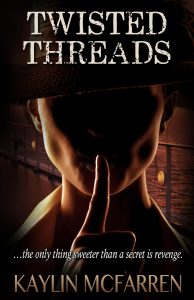
Twisted Threads by Kaylin McFarrenis a fast-paced romantic thriller complete with secret assassins, notorious secrets, steamy passion nights abound on this luxury Caribbean cruise – in other words, exhilarating! This is the fourth book in the Threads Romantic Thriller series and won Grand Prize in the 2017 CIBA CLUE Awards.
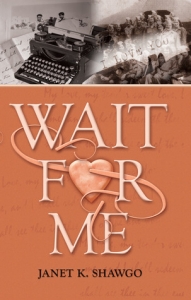
Find Me Again by Janet Shawgois a mystery, a conspiracy theory, and an amazing love story that crosses generations—all combined into one amazing read. Although there are two more novels in the series, each book stands alone. Wait For Me. WWII Women Look For Me. Civil War Historical Fiction
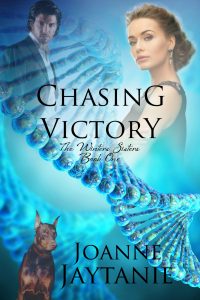
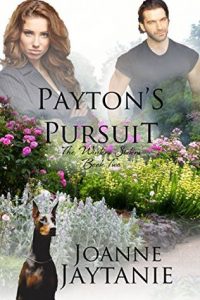
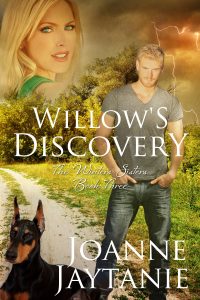
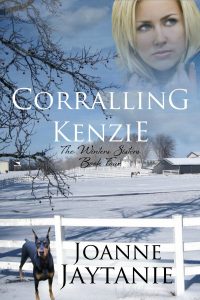
The Winters Sisters Series by Joanne Jaytanie contain elements of genetic engineering, strong women and the men who love them and nods to the author’s beloved dogs. These are hot romantic thrillers!
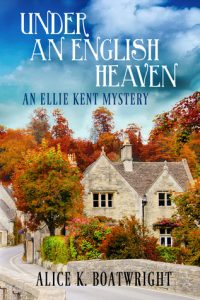
Under an English Heaven by Alice Boatwrighthas twists and turns aplenty that will make any cozy fan enjoy this easy read, and enough descriptions of the bucolic village landscape and teas to make anyone who loves all things British happy. A second Ellie Kent Mystery is promised sometime this year.
Building Mr. Darcy by Ashlinn Cravenis a fun, fast-paced cozy reveals what happens when the witty and charming Mr. Darcy springs to life as an A.I. But, is he more than his two developers can handle?
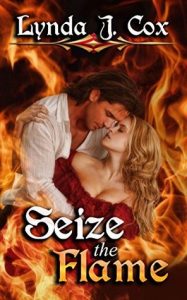
Seize the Flame by Lynda J Coxis a romantic Western celebrating second chances and proving that lightning not only strikes twice – but sometimes in the exact same spot.
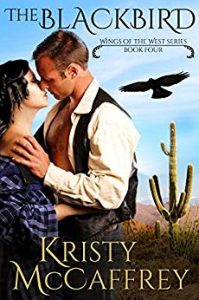
The Blackbird by Kristy McCaffrey is a steamy, intelligent historical fiction set in the Arizona desert where the harsh environment matches the characters who populate it. This is the fourth book in McCaffrey’s Winds of the West series.
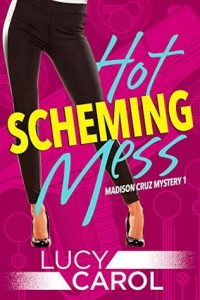
Hot Scheming Mess by Lucy Carolis a hilarious, fast-paced sexy cozy mystery with a believable lead and a gripping plot. Sassy, smart, and FUNNY!
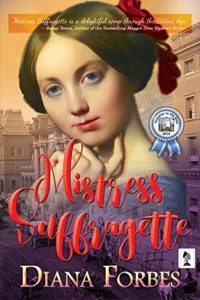
Mistress Suffragette by Diana Forbes is an engaging, stimulating, and action-packed novel that examines the facts of life, the challenges of social restrictions, and the woes of youthful love through the eyes of a sharp-minded, sharp-shooting young woman.
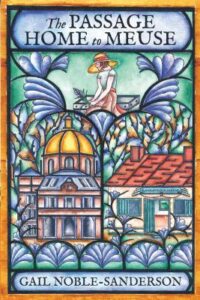
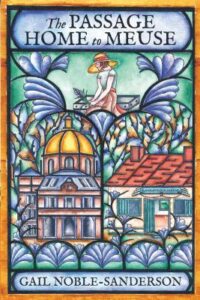
The Passage Home to Meuse by Gail Noble Sandersonis an epic journey back to the post-war world of the 1920s where Noble Sanderson’s characters explore whether love can indeed conquer all.
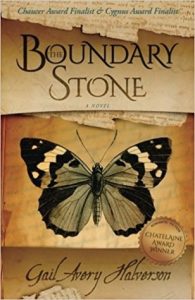
The Boundary Stone by Gail Avery Halverson – This story is set against the backdrop of the black plague, one woman of note risks everything to follow her calling and find her true love…
a:a place, employment, status, or activity for which a person or thing is best fitted
b:ahabitatsupplying the factors necessary for the existence of an organism or species
c:the ecological role of an organism in a community especially in regard to food consumption
d:a specialized market
This is an apt description as we explore and determine the perfect “habitat” for our books, our “organisms.” While we need and want our books available in bookstores, online, etc., creating niche markets—those unique and special places that perfectly align along the path that resonates with our readers—can be critical in creating our platforms, generating sales, getting our books read, and encouraging consumers to write reviews.
Whether you write romance or horror, science fiction or historical fiction, with a little research, you too, can create and expand your niche. Below we hear from three award-winning authors who have very successfully created and worked their niche markets. And we conclude with how I discovered and created my own niche market for books at the end of this article.
Susan Conrad spent the last two summers working with Princess Cruise Lines traveling on their voyages to Alaska, including the Inside Passage. She is part of their award-winning “North to Alaska” program on ships that exclusively sail up the Inside Passage from Puget Sound to SE Alaska. On board ship, Susan engages with hundreds of passengers on each cruise, speaking to large audiences and connecting with travelers one-on-one about her unique first-hand experience. This is Susan’s current niche, the place she and her book have captured to perfectly mesh the readers’ interest and Susan’s passion.
Susan, author of the award-winning book Inside: One Woman’s Journey Through the Inside Passage, says we must ask ourselves, “Why is my book important and who cares? It’s those ‘who cares’ answers that you’re now soliciting.”
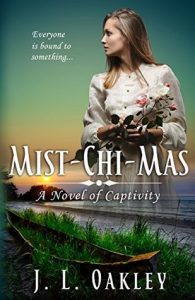
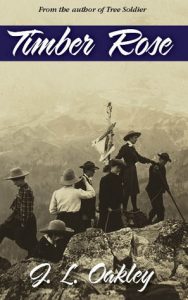
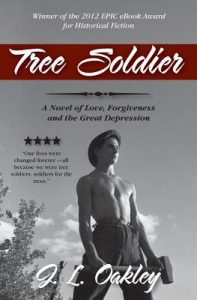
Janet Oakley, an award-winning author of historical fiction, has written many books to her credit. Along with her mystery series, her novel Tree Soldier, set in the Great Depression in a Civilian Conservation camp, won the 2012 EPIC e-book award for historical fiction as well as the 2012 grand prize with CIBA, the Chanticleer International Book Reviews.
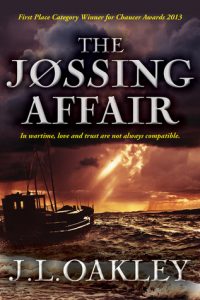
Janet says, “I have a Northwest niche with Tree Soldier, Timber Rose, and Mist-chi-mas: A Novel of Captivity (with its Pig War story and Hawaiians immigrants of the 19th century Pacific NW), and a Scandinavian niche in Jøssing Affair. Tree Soldier is my unexpected platform with connections to local history, parks, and the environment.”
Janet is active in talking about the legacy of the Civilian Conservation Corps in Washington State and utilizes her knowledge of history and skill in creating characters from various times to write powerful stories bringing history to life. She has created niche markets within niches!
Another excellent example of an author who is creating a niche for herself is Janet K. Shawgo, award-winning indie author for her Look for Me Series. Janet has been a nurse for over 32 years and the last 20 of those years as a travel nurse. She infuses her novels with the history of nursing and the experiences of nurses as they travel across the North and South to heal. Are nurses, as well as others, avid readers of her books? You bet they are!
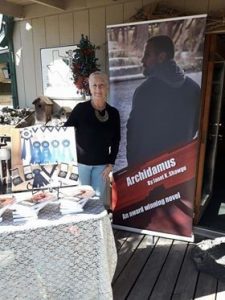
When Janet wrote her last book, Archidamus, she created another clever niche.
She says, “I have been selling my books at Brushy Creek Vineyards since 2011. I received their support from the very beginning of my author career. When Archidamus was written I worked with them to support their winery in two of my books. They, in turn, had a vat of wine with no name inspiring them. I approached with the book. The owner chose “Archidamus” as the name for of the wine.” She now sells Archidamus wherever wine lovers congregate: vineyards, tasting rooms, wine bars, and, of course, book clubs!
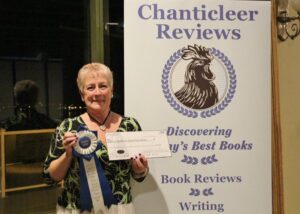
Janet overjoyed with her Chatelaine Grand Prize win! We love this photo!
These are great examples of thinking out-of-the traditional boxes to create a plan to promote and sell your books!
And a final example of creating a niche is my own.
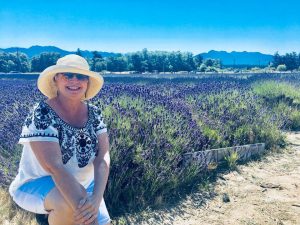
It took me a while, but I realized that my historical novels, The Lavender House in Meuse and The Passage Home to Meuse,though about a women’s experience in and after WWI in France, really appeal to people that love all-things-lavender and the places where lavender is grown. This last year I began contacting lavender farms around the country and have placed my books in tens of lavender farms and shops across the United States.
They sell very well throughout the year and in the summer during the lavender festivals, I do events at local farms in the Pacific Northwest. I found a unique niche. And for the first time since starting Noble Press in 2017, I am making a profit. What put me in the black was not my Amazon or bookstore sales, but the sales from the lavender farms and shops, a niche market especially suited to my books.
HOW DO AUTHORS PROMOTE THEIR NICHE?
with Meta-Data for Authors
As you begin to envision where your book will live in the world, determine what attracts readers to your writing and why. Use this information while you create your meta-data; keywords that are used to indicate what your book is about and in what sub-categories it belongs. Meta-data information should be listed on the copyright page of your book and is critical in effective search engine optimization for buyers and retailers.
Meta-data information should be listed on the copyright page of your book and is critical in effective search engine optimization for buyers and retailers.
[Did you know that each one of Chanticleer’s reviews comes with a custom SEO package that is automatically uploaded with the review? It is true! Just another way that Chanticleer Reviews increases the digital footprint of authors.]
Use this list of meta-words to spring-board into creating niche markets unique to your book. Niche markets can evolve, expand, change and grow. And as you revise your already published books and write subsequent new books, keep in mind what you already know about attracting readers to your specific genre, topic, time period and style. The creation of niche markets is only limited by our imagination and willingness to put ourselves and our work out there.
Be daring, be bold! Go forth with confidence and find those readers who are just waiting to find your work! Gail Noble-Sanderson, Author
Next month’s article from Gail will discuss aspects of successful marketing and promotion.
Remember, “Keep falling in love with the potential of what you are doing!” – Gail
Gail Noble-Sanderson is the author of two works of historical fiction, both of which are self-published under her own Noble Press. The Lavender House in Meuse is an emotional, intriguing, and sensitive account of the crises of World War I and one woman’s journey towards recovery and growth.
Her second novel,The Passage Home to Meuse won 1st Place in the 2017 Chatelaine Awards, the Chanticleer International Book Awards (The CIBAs) for romantic fiction.
Both books are available through Amazon and Village Books.
We are excited and honored to announce the 2017 Winners of the Chanticleer International Book Awards. The winners were recognized at the fifth annual Chanticleer Authors Conference and Awards Banquet Ceremony on Saturday, April 21, 2018, at the Hotel Bellwether, Bellingham, Wash.
We want to thank all of the authors who participated in the 2017 Chanticleer Book Awards. Each year, we find the quality of the entries and the competitiveness of the division competitions increasing exponentially, which is why the contest judges wanted to add Shortlisters as a way to recognize and validate the entries that were not selected for the very few First Place Award positions within each genre division.
Congratulations to the Chanticleer Overall Grand Prize Book Award Winner for 2017
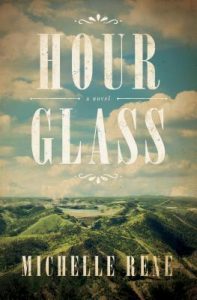
Hour Glass by Michelle Rene received top scores in three divisions: Laramie Book Awards, Somerset Book Awards, and Goethe Book Awards. It was also the Laramie Grand Prize Winner.
The Chanticleer International Book Awards Genre Divisions Grand Prize Winners for 2017 are:
The GLOBAL THRILLER Book Awards for International Thrillers & Suspense Novels is awarded to:
We have a LOT of terrific sessions planned for CAC17, and we are still adding more. One of those amazing sessions will be:
My Life as an Unconventional Book Tour – Gone are the days where an author simply reads, opens the floor to Q&A, and then signs books. (Can you say YAWN FEST?)
Your audience craves engagement, and you want them to leave with your book in their hands—and with vivid memories in their minds.
The presenter for this class, Susan Conrad, is an author, adventurer, and speaker who has been living her own whirlwind book tour since the release of her debut memoir in May 2016. Susan gives us a sneak preview into the session she will be teaching.
Is your book’s unveiling looming excitedly on the horizon? Or are you deep in the throes of promoting a recent release—but feel like you’re spinning your wheels?
Or maybe you’re just curious how to get the best bang for your take-over-the-world-book tour campaign.
A box of chocolates from one of Susan Conrad’s fans who read the book and knows that she adores chocolate!
Just as there’s so much more to being an author than “simply writing a book,” there’s so much more to a book tour than contacting a few bookstores. Whether you are self-published or traditionally published, you’ll be sure to pick up some priceless tips and tricks to launch your own kick-a&$# book tour.
You didn’t write your book, pour out your heart, and create interesting characters, plots and themes just to make money, right? I’m assuming you (also) wrote your book to share your passion, spread your message, and tell your story. Indubitably, the next step is about making connections and building relationships—essentially finding your TRIBE!
This session will help participants wrap their brain around who their audience truly is, where the best venues are to secure those audiences, and once that audience is all under one roof—how to invite them to come into your book. We’ll brainstorm ways to find your audience, organize and present a killer book tour (and not go broke doing it), set the mood, engage and dazzle your audience, and more. We’ll also discuss ways to generate clever promotions and land the venues you want.
I look forward to meeting all of you at CAC17 and sharing ideas on how to get a leg up on your book tour competition! – Susan Conrad
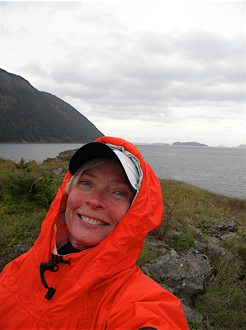
Susan Conrad is an adventurer, author, educator, and speaker. She’s also an accomplished paddler. Her tenacious exploration by sea kayak has fueled her stories and images of the natural world for decades. Her articles and photographs have appeared in Sea Kayaker, Canoe and Kayak, Adventures Northwest, and Figure magazines. Countless newspapers, guidebooks, and historical journals also feature Susan’s work.
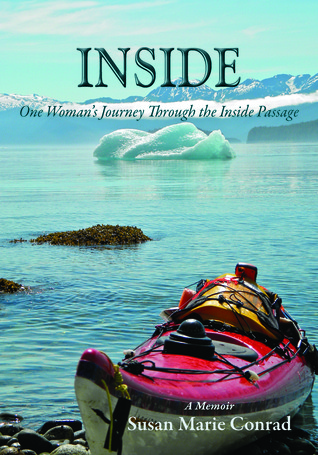
Nonfiction at its finest as one woman faces her inner fears and the outward challenges of paddling solo up the Inside Passage.
While many of us dream of setting off on an adventure, few of us ever do. But in mid-life, Susan Marie Conrad was determined to stop running from fear and sadness and start paddling toward something positive. Leaving behind a confusing and frequently cruel childhood, a failed relationship, and the cloak of anxiety that often held her in its grip, Conrad embarked on a quest to live her dream of kayaking the Inside Passage from Washington State to Alaska.
Unlike some celebrated explorers, Conrad was well prepared with expert paddling skills, modern safety equipment, and charts notated by her cherished friend and mentor. But no amount of careful planning could prepare her for weeks of traveling alone.
During her journey, she experienced the astounding power and beauty of Nature. She paddled in drenching rains, fierce winds, and violent seas. Extreme high tides forced her to rise in the darkness and stand in frigid saltwater holding her gear out of the water until the sea receded and she could sleep again. Grizzly bears prevented her from landing in choice camping spots. Black flies tormented her. Creepy men studied her from boats offshore. Every night she slept with her VHF radio, flare gun, knife, bear spray, cell phone, and SPOT satellite device in her tent, reasoning that if man or beast attacked, she would spray the intruder and fire her flare gun, cut an escape hole, call for help, and then press the 911 button on the SPOT so someone could locate her body.
Inside brings the reader along on the adventure as Conrad battles her way up the Inside Passage, learning to cope with ever-changing moods of weather and sea, wildlife both friendly and fierce, and the mixed messages of her own mind. Within these pages of eloquent writing and striking photos, readers will sleep to songs of humpback whales, thrill to spectacular scenery, delight in the generosity of strangers, and share in the author’s joy as she discovers the courage and the deep gratitude that comes from experiencing the best and the worst of Nature and humanity. This is a book we highly recommend.
Inside: One Woman’s Journey Through the Inside Passage won the 2017 GRAND PRIZE in the JOURNEY AWARDS.


 FREE! Local Authors and Artists Event featuring Gifts for Palentine’s and Valentine’s Day:










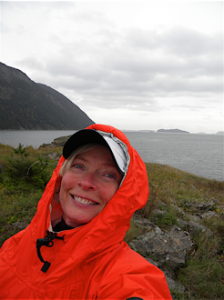 Susan Conrad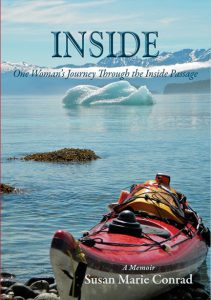
 r niche.
 The Passage Home to Meuse,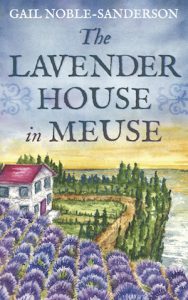

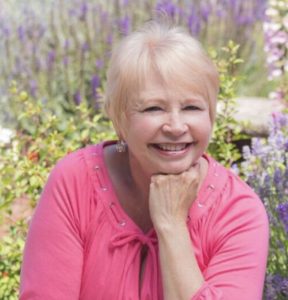 Gail Noble-Sanderson is the author of two works of historical fiction, both of which are self-published under her own Noble Press.
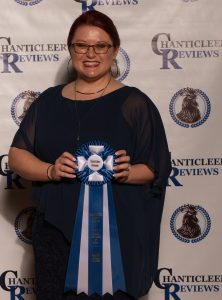
 The GLOBAL THRILLER Book Awards for International Thrillers & Suspense Novels is awarded to: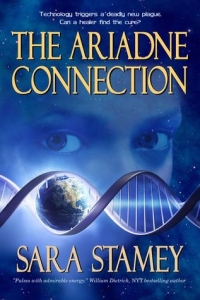







 The LARAMIE Book Awards for Western Fiction Grand Prize is awarded to:




 I look forward to meeting all of you at CAC17 and sharing ideas on how to get a leg up on your book tour competition! – Susan Conrad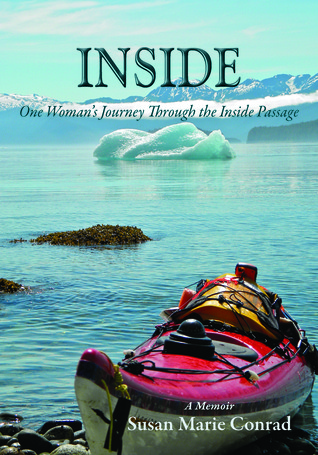
 Nonfiction at its finest as one woman faces her inner fears and the outward challenges of paddling solo up the Inside Passage.