Author: stephen-king

  • Celebrating the Birthdays of Ten Literary Giants — Tolstoy, Lawrence, Dahl, Christie, Sinclair, Martin, Wells, King, Fitzgerald, Faulkner

    Celebrating the Birthdays of Ten Literary Giants — Tolstoy, Lawrence, Dahl, Christie, Sinclair, Martin, Wells, King, Fitzgerald, Faulkner

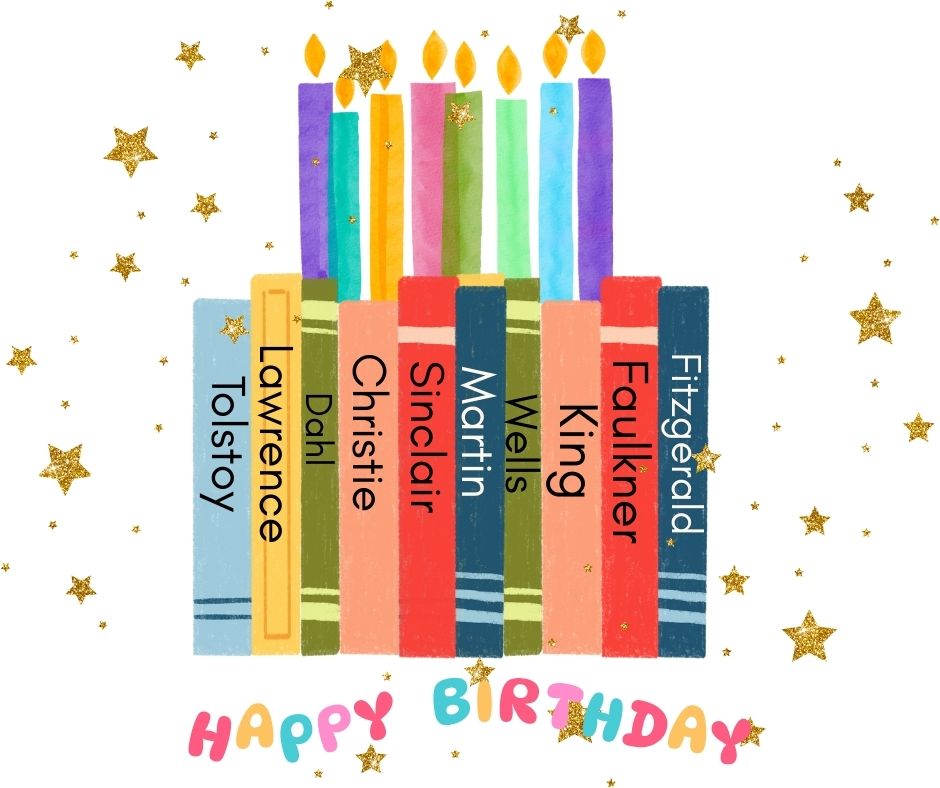
    September is a month full of birthday celebrations for ten of history greatest literary giants! 

    September is filled with the birthdays of literary greats in a broad range of genres, from fantasy and sci-fi, children’s, romance, historical fiction, and horror. We celebrate these writers for their beautiful imaginations and incredible storytelling skill. Wherever you are in the world, their names are on the best novels you’ll find in bookstores and libraries. To celebrate this monumental month of literary greats we have put together these mini-bios to reflect on their achievements.
    Birthday cake, pink, purple, yellow

    So, light the candles, pour yourself a glass of champagne and join us in a chorus of “Happy Birthday” for these amazing authors! 

    Image result for leo tolstoy

    Leo Tolstoy

    Born September 9, 1828, Leo Tolstoy is one of history’s most revered and influential writers. Born into the Russian aristocracy, he lived a life of privilege and power, first as a university student in Moscow, then as a lieutenant in the Crimean War. During this time, he wrote what is considered two of the greatest literary achievements in history, War and Peace (1869) and Anna Karenina (1878). After his military service ended, he retired to a country home where a spiritual awakening years later led him to write a literal interpretation of the ethical teachings of Jesus’s Sermon on the Mount in his nonfiction work entitled Confessions. Tolstoy became a fervent Christian anarchist and pacifist as a result of his spiritual journey, and his ideas on nonviolent resistance had a profound impact on such pivotal 20th-century figures as Mahatma Gandhi and Martin Luther King Jr.
    D.H.Lawrence in Croydon — Museum of Croydon

    D.H. Lawrence

    September 11, 1885 gave us D.H. Lawrence, a fiery, fearless English writer who stirred up controversy with books like Lady Chatterley’s Lover, Sons and Lovers, and Women in Love. Lawrence wrote boldly about love, class, desire, and the inner lives of men and women, often challenging the norms of his time. His work was sensual, psychological, and deeply human, so much so that it was banned more than once. But Lawrence believed in the power of raw emotion, personal freedom, and reconnecting with nature in an increasingly industrial world. A restless traveler, he wandered from England to Italy, Australia, and beyond, chasing inspiration and escaping censorship. Critics were divided, but his influence is undeniable. His work cracked open doors for modern literature and never quite closed them again.
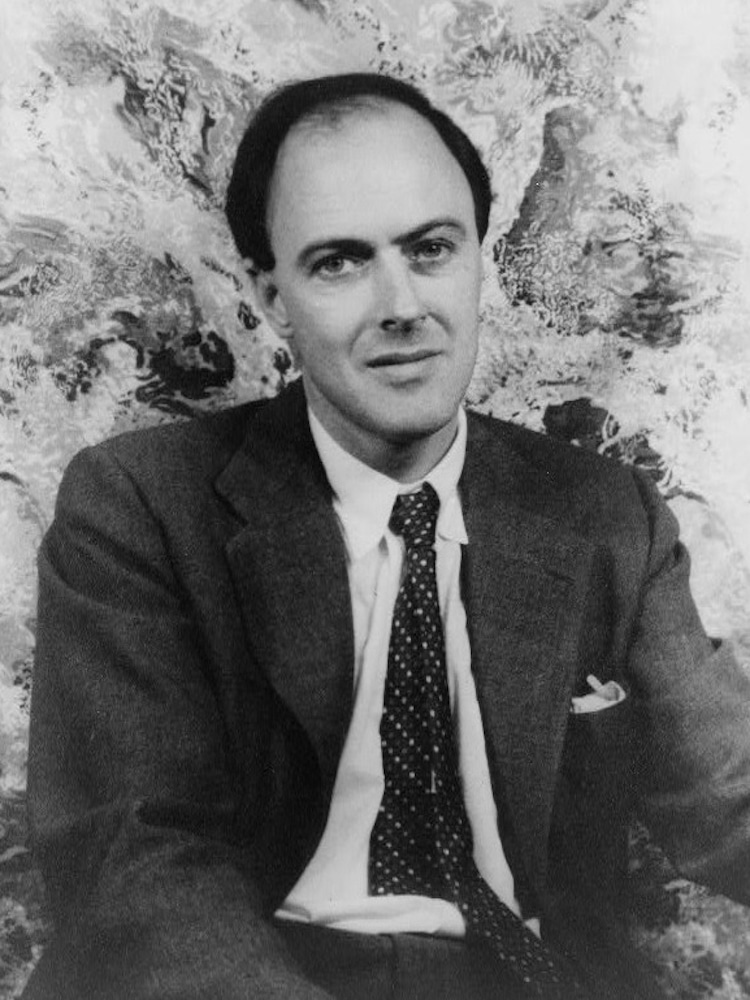
    5 "Splendiferous" Facts About Beloved British Author Roald DahlRoald Dahl

    Born in Wales on September 13, 1916 to Norwegian parents, Roald Dahl grew into one of the world’s most beloved storytellers. His real life was as colorful as his characters. He flew fighter planes in WWII, invented medical devices, and penned children’s stories with a wicked sense of humor and a sense of danger camouflaged inside a child’s paradise. Dahl’s books, like Charlie and the Chocolate Factory, Matilda, James and the Giant Peach, and The BFG, are packed with clever kids, awful adults, and magical twists. He had a talent for mixing dark comedy with heart, creating worlds where the underdog always wins, and often in the most unexpected ways. Beyond children’s books, he also wrote macabre short stories for adults and screenplays, including Chitty Chitty Bang Bang. With his sharp wit and imagination, Dahl redefined children’s literature, making it a little weirder, a lot more fun, and endlessly memorable.
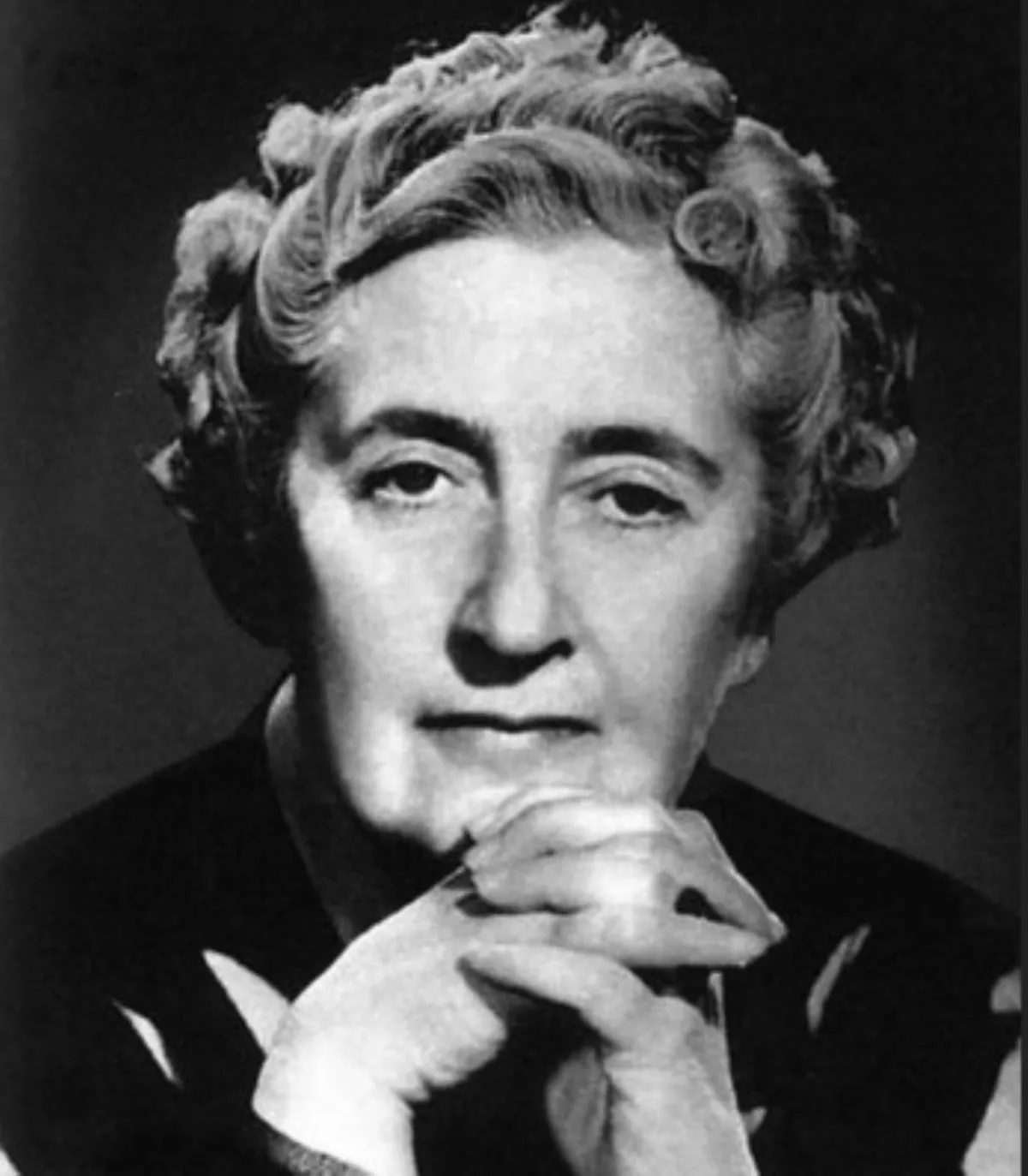
    77 Facts About Agatha Christie | FactSnippet

    Agatha Christie

    The indisputable “Queen of Crime” Agatha Christie was born on September 15, 1890 in Devon, England. As mysterious as the characters that populated her stories, Christie continues to be one of the best-selling authors of all time, even fifty years after her passing. She crafted clever mysteries with plot twists that keep readers guessing, and her iconic detectives, brainy Belgian Hercule Poirot and sharp-eyed Miss Marple, have solved everything from country house murders to exotic crimes on the Orient Express. Christie wrote sixty-six novels, fourteen short story collections, and the world’s longest-running play, The Mousetrap. Known for her razor-sharp plotting and surprise endings, she made murder feel like a game, one that readers love to play. Enigmatic even in her own life, she once caused havoc by disappearing for eleven days during a particularly difficult period of her life. Today, she’s left a literary empire with countless film adaptations and has changed a genre forever through her genius for suspense and misdirection, challenging readers to find out “who done it.”
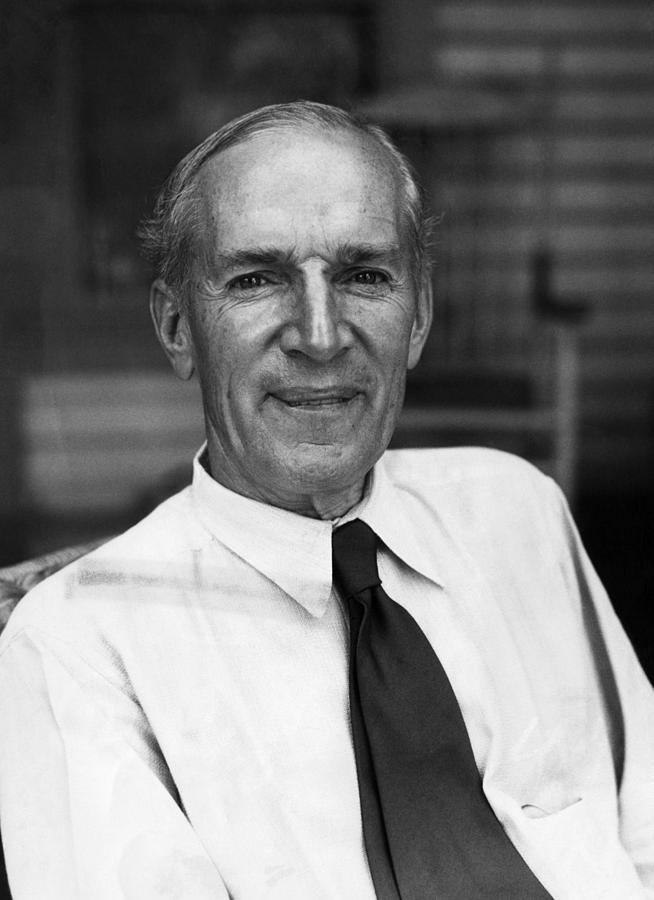
    American Author Upton Sinclair Photograph by Everett | Pixels

    Upton Sinclair

    Born on September 20, 1878, Upton Sinclair became an American writer, muckraker, and social crusader who proved words could change the world. He’s best known for The Jungle (1906), a gut-wrenching novel about the Chicago meatpacking industry that shocked readers and led to major food safety reforms. But that wasn’t all! Sinclair wrote over ninety books, tackling everything from corrupt politics to education, religion, and the press. A lifelong advocate for workers’ rights, socialism, and justice, he ran for office several times and never stopped pushing for reform. His writing wasn’t subtle, but that was the point: Sinclair wanted to wake people up. Whether exposing greed or championing the underdog, he used his pen like a sword, cutting through hypocrisy with fearless energy.
    George RR Martin's Reading Recommendations: 32 Books Like the 'Game Of Thrones' from the ...

    George R. R. Martin

    George R.R. Martin, the mastermind behind A Song of Ice and Fire, was born on September 20, 1948. His epic fantasy saga inspired the worldwide sensation HBO’s Game of Thrones and redefined the fantasy genre. Known for killing off fan favorites and weaving sprawling, morally complex plots, Martin blends medieval grit with political intrigue, dragons, heartbreak, and vendettas. Before his success with his five-book series, Martin wrote sci-fi, horror, and TV scripts, including episodes of The Twilight Zone, earning a loyal cult following. With rich world-building and a knack for the unexpected, Martin’s work stands out for its realism and well-fleshed out characters that take you from heartbreak to hope and back again.
    How HG Wells invented the modern world

    H.G. Wells

    The “Father of Science Fiction,” H.G. Wells was born on September 21, 1866 to a shop keeper and domestic servant in Kent, UK. He set out on the path to become an author at the age of eight when a broken leg left him bedridden and he began reading voraciously during his convalescence. His writing was influenced by Plato‘s RepublicThomas More‘s Utopia, and the works of Daniel Defoe. He often referenced Mary Shelley’s Frankenstein in relation to his own works and the genre he’s credited with inventing, science fiction. An apt comparison with works that include The Time Machine (1895), The Island of Doctor Moreau (1896), The Invisible Man (1897), and The War of the Worlds (1898). Wells is an expert in delivering horror through science fiction themes.
     
    Stephen King High School

    Stephen King

    Stephen King, the prolific American author best known for his work in horror, suspense, and supernatural fiction, was born on September 21, 1947, in Portland, Maine. He has published over sixty novels and two hundred short stories, many of which have become cultural touchstones. His most famous works include Carrie, The Shining, It, Misery, and The Dark Tower series. King’s writing is known for its vivid characters, psychological depth, and ability to tap into primal fears. Many of his books have been adapted into successful films and TV series, and he has won numerous awards, including the National Book Foundation Medal for Distinguished Contribution to American Letters. Despite his success, King remains grounded, often writing about ordinary people confronting extraordinary circumstances. His impact on modern fiction is immense, earning him the title “King of Horror.”

    43 Best The Great Gatsby Quotes by F. Scott Fitzgerald | Sevenov

    F. Scott Fitzgerald

    Born September 24, 1896, F. Scott Fitzgerald became a literary rockstar of the Jazz Age, an age his writing helped to define through his novels. Born in St. Paul, Minnesota, he shot to fame in his twenties with This Side of Paradise, a novel so fresh and bold it made him an overnight sensation. He lived fast, wrote beautifully, and enjoyed all the so-called “Golden Era” had to offer alongside his dazzling wife and muse, Zelda. Fitzgerald captured the glitz, glamour, and heartbreak of the 1920s in his classic The Great Gatsby, a timeless tale of love, ambition, and lost illusions. Though his later years were marked by struggle and fading fame, his work only grew in stature after his death. Today, he’s remembered as the voice of a Lost Generation, a designation he coined, that chased the sparkle of dreams only to see them quickly vanish into oblivion.

    Quote by William Faulkner: “You cannot swim for new horizons until you have...”William Faulkner

    Southern literary legend and Nobel Prize-winning author William Faulkner was born on September 25, 1897 in Mississippi. Known for his bold style, complex characters, and deep dives into the human psyche, he built an entire fictional universe, Yoknapatawpha County, where generations of flawed families, haunted by history, tangled with time, memory, and decay. His novels The Sound and the Fury, As I Lay Dying, Light in August are famously challenging, with stream-of-consciousness narration and timelines that are packed with emotional power. Faulkner explored the South’s troubled legacy with brutal honesty and lyrical depth, influencing generations of writers. While he also wrote screenplays in Hollywood, his heart was always in literature—messy, raw, and unforgettable. His work may not be a breezy read, but it rewards those who dare to enter his strange, brilliant world.
    books, birthday, candles, stars

    Award-winning recognition isn’t reserved for only the biggest names!

    Do you want to see how your novel stacks up next to other authors’ work? Enter the Chanticleer International Book Awards (CIBA) to compete with some of the best emerging authors we’ve seen this year! 

    Does your book have what it takes? Join the authors who have taken the leap to have their work professionally vetted by one of the industry’s most respected awards programs. Each stage of the CIBA journey, from entering the Award to finding your eventual tier of achievement, is worth crowing about and celebrating with your following. Whether you’re an established author with a dedicated readership or a writer with a manuscript hoping to improve your chances of catching the right publisher’s eye, the CIBAs are well-worth the effort! Our multi-tiered advancement process ensures that every qualified entry receives multiple opportunities for recognition and promotion throughout the year.

    The CIBA Difference: Real Impact on Author Success

    Chanticleer International Book Awards (CIBAs) recognition creates the “award-winning author” credentials that help books stand out in competitive markets. Our 28 divisions across fiction and non-fiction categories provide multiple opportunities for recognition that bookstores and customers value.
    Little Peeps, Gertrude Warner, Dante Rossetti, badges, ciba

    Deadline ends for the Little Peeps, Gertrude Warner, and Dante Rossetti divisions
    on September 30, 2025!
     

    Enter your Children’s, Middle Grade, or Young Adult book today!

    In an increasingly crowded book marketplace, professional vetting and third-party recognition have never been more important. The Chanticleer International Book Awards have established themselves as a trusted source for identifying excellence in independent and traditionally published books across genres. When readers, bookstore owners, and industry professionals see the CIBA seal on your book, they know it has been thoroughly evaluated and stands among the best in its category.

    Your book deserves to be discovered.
    Enter the Chanticleer Int’l Book Awards today!

    Blue button that says Enter a Writing Contest

    Don’t Delay! Enter Today!

    Have questions about which division is right for your book? Contact us at info@ChantiReviews.com, and our team will be happy to help guide you to the perfect match for your work.
  • Celebrating Mothers We Love (or Don’t) in Literature on Mother’s Day

    Celebrating Mothers We Love (or Don’t) in Literature on Mother’s Day

    Mother’s Day is here!

    It’s time to celebrate moms in literature and off the page!

    Mother’s Day celebrates that very important person in our lives who has been with us even before we were born. Each mother is unique and leaves a lasting effect on their children, even the absence of a mother leaves a lasting effect on a child. They can be loving and kind, hateful and mean, or anywhere in between.

    And in life as it is in literature—some mothers are absolutely unforgettable!

    Black, white, mother, child, text

    Oh, My Dear! — Archetypes of Mothers in Literature

    Literature is filled with unique mother characters, ranging from the stereotypical “perfect” mother to the complicated, dark evil mothers that make life messy. Motherhood is fertile ground in a plot. These archetypes of mothers in literature offer amazing opportunities for intriguing creative arcs and the emotional impact provide can be as heavy as you want it to be. We love them, we leave them, we hate them, we suffer from them, but they are sometimes the most compelling part of a story.

    This Mother’s Day let’s explore common archetypes of mothers in literature and consider all the ways they are depicted in some of our favorite novels!

    The Fault in Our Stars, Fried Green Tomatoes at the Whistle Stop Cafe, book covers

    The Iconic Mother

    When we think of the ideal mother, we imagine one with infinite patience, unending kindness, and a love that will last forever. She’s there when we need her and always looking out for us.

    In The Fault in Our Stars by John Green. Mrs. Lancaster adores her cancer-stricken daughter, taking care her and trying to protect her as much as she can from the realities of her diagnosis. She is always there, always reliable, and always comforting.

    Ruth Jamison from Fannie Flagg’s Fried Green Tomatoes at the Whistle Stop Cafe is determined to protect her child, too. Ruth leaves an abusive husband to set up home with her friend, Idgie. Together, they raise Buddy Junior, run a cafe, fight racial prejudice, and ultimately protect Buddy from his father.

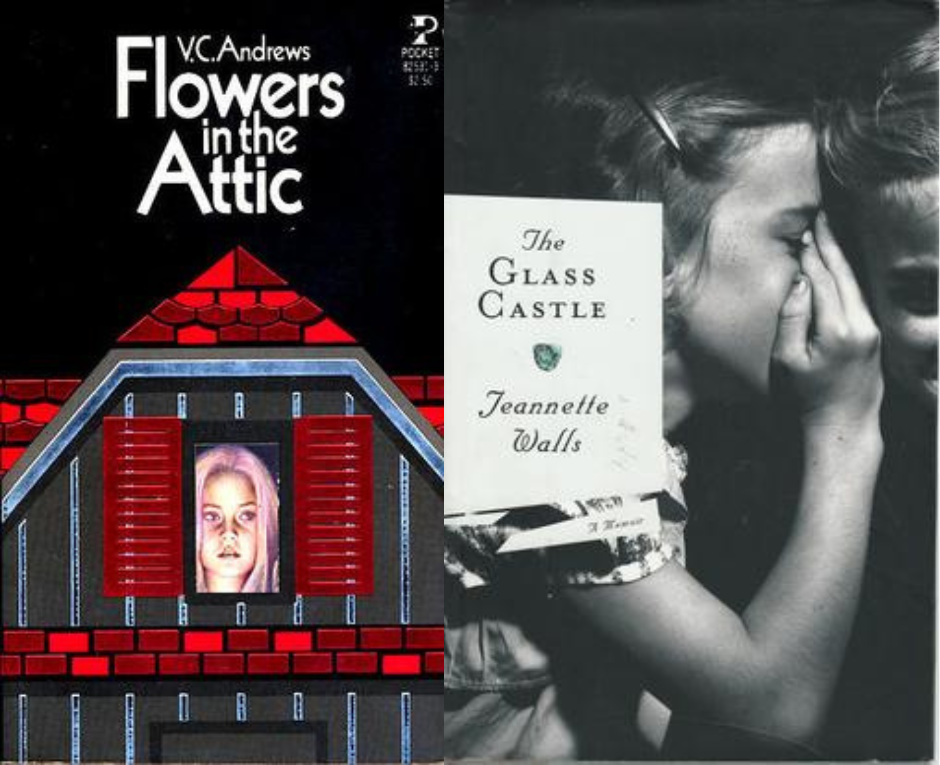
    Book Covers, Flowers in the Attic, Glass Castles

    The Conflicted Mother

    The tragic mother is a complex, interesting character, and represent the human frailties found in all of us, as represented through the lens of motherhood. Their list of flaws is long and varied. Distant, narcissistic, emotionally unstable; they are often presented in a negative light, but there is a spark of real humanity that keeps them from becoming truly malevolent.

    The Glass Castle, the Jeannette Walls memoir, retells her memories of living her young nomadic life in the American Southwest with mother, Rose Mary. Crippled by mental illness, Rose Mary couldn’t deal with the responsibility of providing for her family. She was addicted to excitement, and when the family’s money ran out, they settled in a dismal West Virginia mining town. Walls eventually finds her mother homeless on the streets of New York. While the intentions of the mother weren’t to be harmful to her children, her mental illness kept her from being a positive force in their lives.

    In Flowers in the Attic by V.C. Andrews, Corrine, a mother to four children, sacrifices their well-being in order to collect on an inheritance. Her greed and narcissistic behavior leads to neglect that forces the children to fend for themselves and eventually leads to a tragedy that no good mother would wish on anyone. Yes, the story is tragic, but the cause of the tragedy comes from common character flaws taken too far.

    An example of a truly tragic mother is seen in Sophie Zawistowska, William Styron’s main character in Sophie’s Choice. A Polish survivor of the Holocaust, she is forced to choose which one of her two children will die in a Nazi gas chamber. The memories she tells show a lifetime of trauma as she deals with the guilt of this act. The utter cruelty exhibited by her Nazi captors cuts her soul in two, using the love she has for her children as the knife.

    Carrie, Stephen King, East of Eden, John Steinbeck, book covers

    The Evil Mother

    A mother’s love runs deep. So, when that love is missing, there is a deep, dark hole in their heart that is blacker than night. They are abusive, hateful, deranged, and so many other horrible things that to be in their heads when reading is taking a trip down a very dark path.

    Stephen King’s Carrie provides us with the ultimate crazy mother. Whipped up into a religious fervor, she mentally, emotionally, and spiritually abuses her daughter until, in great Stephen Kin signature style, the devil opens the doors to Hades and all hell breaks loose. We see a true psychotic break (and probably other things) in Carrie’s mother, Margaret.

    In John Steinbeck’s classic East of Eden, Motherhood clearly means little to Cathy Ames, a mother of twin teenage boys. She shoots her husband in the arm and abandons her children at their birth. She is the owner of a sadistic, drug den of a brothel and revels in the shame her boys feel about her life. There are many other things to dislike about Cathy Ames, but her lack of mother instincts and purposely stomping on the love of two innocent boys puts her firmly in the evil mom category.

    Happy Mother's Day, tulip, purple, green

    Characters with Endless Inspiration

    In literature we get to explore the complexity of motherhood from every angle—the good, the bad, and the downright dangerous. Mother tropes are interesting, fun, crazy, and sometimes completely disturbed disrupters or enablers. And, thus, mothers of every type lead to endless inspiration for authors.

    Happy Mother's Day, pink, script


    Start exploring the different archetypes of mothers with Chanticleer authors and the mothers they  incorporate into their stories

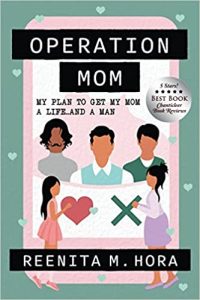
    Operation Mom, book cover, heart, x, girl, woman, family

    Master storyteller Reenita Malhotra Hora’s YA romance Operation Mom: My Plan to Get My Mom a Life and a Man takes us on a charming journey through the life of one teen, Ila Isham.

    Hora introduces Ila and her best friend Deepali, two boy-crazy teens on a summer quest. Readers will fall in love with the smart, sassy, angst-filled, rebellious Ila. A typical teenage girl, Ila lives in Mumbai with her mom and Sakkubai, their house manager. Ila’s mother calls her obsessed, but that seems unfair. Is she obsessed just because her every waking minute is spent thinking of Ali Zafar, famous pop icon, singer, and heartthrob? Or is she obsessed with fellow classmate Dev?

    No, Ila couldn’t be taken with Dev because he’s one of three young men that her best friend Deepali is juggling in her summer experiment of exploring her “feminine mystique.” This turn of phrase becomes just one of many opportunities for Hora’s humor to shine as Ila remarks, “That’s a book by Gloria Steinem… no Betty Friedan.” Deepali’s response? “Yaar. Don’t be so literal.” The delightful balance between Ila’s book smarts versus Deepali’s street smarts carries us through Hora’s expertly crafted story.

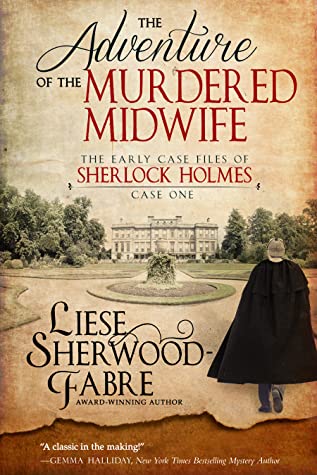
    The Adventure of the Murdered Midwife Sherlock Holmes Book One image

    The Adventure of the Murdered Midwife (The Early Case Files of Sherlock Holmes, Book 1)

    The game is afoot! It’s years before Sherlock Holmes’ ponderings from 221B Baker Street. Sherlock is a teenager when challenged to solve his first case, The Adventure of the Murdered Midwife by Liese Sherwood-Fabre.

    The stakes are among the highest. Sherlock’s beloved mother is the accused killer when he and his infamous brother Mycroft are summoned home from their boarding schools. The family reunites to a single purpose. They must prove Violette Holmes’s innocence. They soon discover that proving her innocence will not be enough to restore her standing in the court of public opinion. They can only clear her name by also finding the actual killer. That investigation involves a dangerous pursuit that requires detailed observation, logic, and action. Young Sherlock Holmes will also need to watch his back.

    The adventure begins with a brief glimpse into Sherlock’s school days.

    Remedy for a Broken Angel
    By

    Remedy for a Broken Angel by Toni Ann Johnson is an intense examination of the troubled personal histories of two beautiful and talented women of color.

    Their stories are told in alternating chapters which reveal the mother’s and her daughter’s attempts to reclaim and understand their broken pasts. Each chapter is a revelation into the pain and damage caused by unknown family secrets. Both women struggle with a legacy of shame and self-blame for the price they’re paying for never hearing the truth. Each must learn the lessons found in past years of failure to communicate.

    The beautiful mother, Serena, is a successful Bermudian jazz singer and songwriter who is consumed by anger over feeling unloved as a child. Years later, her hurt and confusion over being abandoned by her family cause her to repeat the past by leaving her own marriage and abandoning her twelve-year-old daughter.

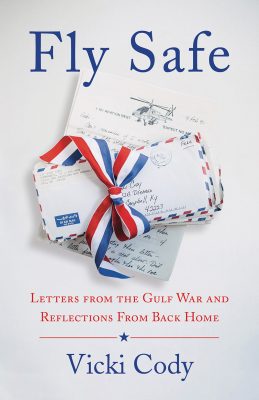
    Fly Safe: Letters from the Gulf War by Vicky Cody Cover Image

    Fly Safe: Letters from the Gulf War and Reflections from Back Home
    By

    Not many people can capture the emotions that coincide with war, but Vicki Cody joins the ranks of those who do in her wartime memoir, Fly Safe: Letters from the Gulf War and Reflections from Back Home.

    This powerful memoir shows us the behind-the-scenes lives of the women, children, and families left at home while their soldiers set off for war, bringing us close to their raw vulnerability. Fly Safe fascinates as it informs readers of what one wife experiences as her commander husband leads his battalion to the middle east.

    Cody takes us back in time to the early 1990s when the first President Bush called up troops in an operation called “Desert Shield,” which turned into Desert Storm. She captures the events that led up to our first conflict in the middle east, but far from being strictly pedantic and historical, centers on the warmth, love, and fears that most of the wives were experiencing. Her letters from her husband – and her journal entries read like daily affirmations and blend well in telling this story.

    The memoir shines as a first-person account of the ins-and-outs of a military family’s life during war.

    Continue reading here…

    Book cover, rv, orange, green, southwest

    Guided
    By

    In her stunning memoir, Guided: Lost Love, Hidden Realms, and the Open Road,Kirsten Throneberry weaves together the highs and lows of a road trip packed with life wisdom, where she explores grief, spirituality, and rekindled hope.

    Throneberry’s achingly vulnerable memoir splits its readers’ hearts and tenderly sews them back together.

    In the aftermath of the devastating loss of her husband, Kirsten sells her home and takes her two small sons, two elderly pups, and eccentric mother on a year-long road trip around the United States in their new-to-them Bigfoot RV.

    Encouraged by the same spirit guides whose earlier advice for her husband’s health left her broken and untrusting, Kirsten must learn to face the open road with an equally open heart and mind.

    Continue reading here…


    We would like to wish all mothers, mothers-to-be, stand-in mothers, and those who possess the mothering instinct, a very Happy Mother’s Day! 

    Thank you for joining us in celebrating the Mothers in our life!

    Has your book captured the complexity of motherhood? Showcase your storytelling through a Chanticleer Editorial Review!

    Our Editorial Review Packages do more than just evaluate—they amplify your book’s digital presence and discoverability. Professional reviews remain one of the most powerful marketing tools available to authors seeking to connect with their target readers. Discover how our reviews can elevate your author platform here.

    Ready for recognition beyond reviews?

    The tiers of achievement for the CIBAs

    The Chanticleer International Book Awards celebrate exceptional storytelling across all genres. When your book advances in our competitions, we proudly promote you and your work across our website, newsletter, and social media channels—creating lasting visibility that continues working for you long after the awards ceremony. Submit your book today and join our community of celebrated authors!

  • Closeups in Fiction – from Jessica Morrell’s Editor’s Desk – A Chanticleer Writers Toolbox post

    Closeups in Fiction – from Jessica Morrell’s Editor’s Desk – A Chanticleer Writers Toolbox post

    Studying and Borrowing Techniques from Filmmakers

    Let’s discuss using closeup “shots” of your characters in fiction. Filmmakers have a large repertoire of techniques that writers are wise to study and borrow. Closeup camera angles are powerful in film and an important technique fiction writers need to emulate throughout their stories.

    When to Use a Wide Angle in Your Scenes

    I write many, many notes and suggestions to my editing clients, some within the pages of the manuscript, some included in a long, detailed memo. At times I suggest a wide angle or establishing shot to introduce setting and atmosphere–especially helpful when a character arrives at a new place or when major action is about to go down.

    “We’ll always have Paris.” Casablanca Original Book: Everyone Comes to Rick’s by Murray Bennett and Joan Alison in 1940.

    When to Use Closeups

    However, I’m certain that every story I’ve worked on needed more ‘closeup’ shots of characters, so I suggest when to bring the viewpoint– fiction’s camera lens–closer. In film or television the director and cameraman have lots of choices about how to use distance to achieve drama. There are full shots, medium, long, POV, closeup and extreme closeups. A closeup shot tightly frames the actor’s face and signals significance. They’re typically used to portray deep emotions and create connection between audience and actor. There are also ‘extreme close-ups’ where the camera lingers on a subject, usually the actor. But close-ups can also focus on hands and body parts, props, jewelry, or other objects of interest.

    Be Cognizant of What You Are Revealing to Your Readers in Your Closeups

    Obviously closeups are intimate because they’re revealing. They showcase significant emotions, realizations, decisions,  and important moments or actions.  They also reveal when characters have something to hide.

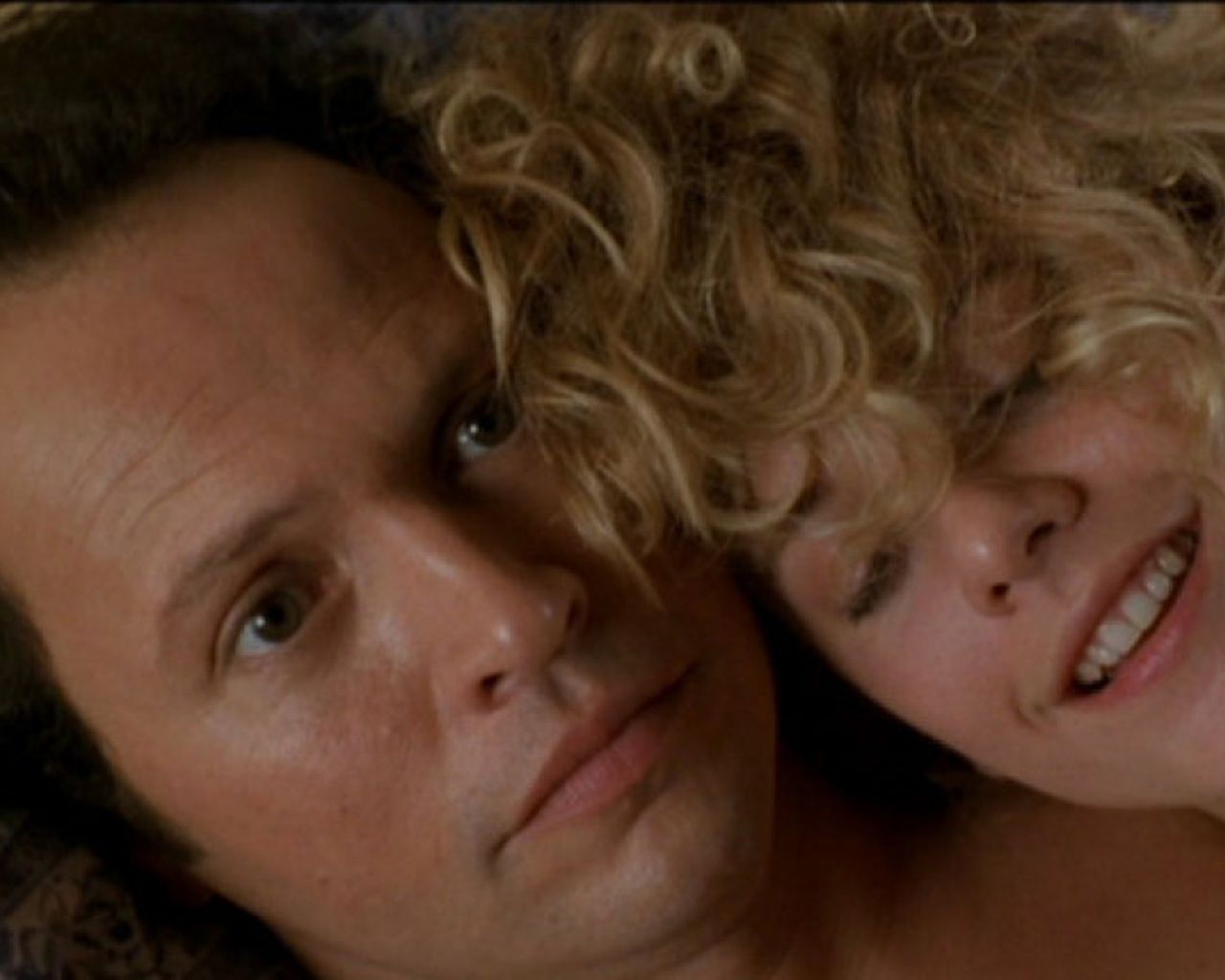
    Why When Harry met Sally is the greatest romcom of all time - BBC Culture
    When Harry Met Sally – The SCENE that set the story. By Nora Ephron

    Romance films and dramas employ these shots especially when characters are surprised, shocked,  filled with dread, or when feelings shift. Closeups, naturally,  are often used in horror and suspense films to increase the audience members’ heartbeat. Alfred Hitchcock was fond of using them, such as in the grisly shower scene in Psycho. You know the one.

    • Convey important moments, reversals, revelations.
    • Enhance threat and danger.
    • Enhance evil and malevolence.
    • Shock value as when a monster or villain is in the frame.
    • Focus on, reveal a character’s state  of mind.
    • Slow the pacing.
    • Portray damage, pain, the cost paid by characters.
    • Allow readers to see the world through the character’s eyes. * See The Eyes Have It post link below.
    • Reveal closeness, intimacy, estrangement, coldness between characters.
    • Suggest or define character arc.
    • Show other ‘sides’ of a character, including subtler traits.
    • Illustrate a character’s emotional bandwidth, as in how she or he handles the best of times and the worst of times.
    • In scenes that contain violence, brutality, or horror, a closeup amplifies the dangers as in the ‘here’s Johnny’ moment in The Shining when Jack Torrence, played by Jack Nicholson is terrorizing his family. Notice how it’s clear that he’s sunk into madness.
    The unforgettable “Here’s Johnny” scene in The Shining.

    As you’re revising, make sure that during the most poignant moments in the story, readers are pulled in. Allow your readers to witness emotions flickering across the character’s face. Let them sense what’s churning beneath a character’s exterior.

    Notice Beth’s hands, her eyes, her posture. The juxtaposition of the watch she wears versus the clock on the wall. Her black and white dress adjacent to the black and white chess board. See how she is capturing the white pawns.

    Beth Harmon knows she will win several moves out in this scene of Queen’s Gambit

    Here is the link to the Eyes Have It Post  

    Keep writing, keep dreaming, use your voice


    Jessica Page Morrell
    Jessica Page Morrell

    Jessica Morrell is a top-tier developmental editor and a contributor to Chanticleer Reviews Media and to the Writer’s Digest magazine. She teaches Master Writing Craft Classes along with sessions at the Chanticleer Authors Conference that is held annually along with teaching at Chanticleer writing workshops that are held throughout the year. 

    Jessica Classes and Workshops at CAC22

              • Using Film Techniques for Fiction Writers – Camera angles, method acting for getting into a character’s pov, and creating subtext and tight dialogue
        • Your Brain on Writing
        • Captivating Co-Stars that add depth to your work-in-progress

    Don’t Delay! Register Today!

  • Happy New Year! We selected Ten of Chanticleer’s Most Popular Writing Craft Articles Posted in 2021 – Writer’s Toolbox Series

    Happy New Year! We selected Ten of Chanticleer’s Most Popular Writing Craft Articles Posted in 2021 – Writer’s Toolbox Series

    Top Ten Countdown of Writer’s Toolbox Editing Posts for 2021

    These are not in order or ranking — just Chanticleer’s Top Ten Writing Craft Posts for 2021.

    Below are the first five with five more on New Year’s Day along with Kiffer’s Best Tip for Writers in 2022!

    It is our hope that these refreshers will help you with meeting your 2022 Writing Goals!

    10)  Secondary Characters. Supporting Cast – Taking Risks with Your Secondary Characters 

    Secondary Characters. They can drive their co-stars crazy and they can also drive the plot. They can star in their own subplots and often support the protagonist’s goals. Or thwart the protagonist’s goals.

    Benny, the unforgettable secondary character in “The Queen’s Gambit” by Walter Tevis

    9. The Eyes Have It 

    Using characters’ eyes to reveal emotion and meaning. If you’re serious about writing, you must notice subtext and how to convey it. And that often begins with the eyes.

    Beth Harmon knows she will win several moves out in this scene of Queen’s Gambit

    8. Understanding Story Structure

    A look at more advanced ways of considering writing from some of the best craft books to come out in the last decade. Consider the narrator in your story, structure, proportion, and, most importantly, the heart of your work.

    7. Amplify, Magnify, & Stir Up Trouble for Your Main Characters

    How-To tips and examples for adding fuel your characters’ fires. Your character should always have a lot to prove and master, so he or she can get off on the wrong foot and things can go downhill from there. Naturally.

    Hitchhiker’s Guide to the Galaxy protagonist, the last known Earthling – Arthur Dent

    6. Search and Destroy, Cull and Extract, and Other Editorial Tactics for Your Work in Progress

    Learn how to edit ruthlessly with these top tips with handy links! Make sure you get the most out of your next round of editing for your work-in-progress.

    The Editor – going over the ms with an MOV.

    We hope that you have found these encore posts to be useful reminders and prompts for your work-in-progress!


    We wish you joy and peace in the New Year from all of us at Chanticleer! 


    200 Best Happy New Year Wishes, Messages, & Quotes for 2022

    January 1st, 2022, we will post five more of the The Top Ten Writing Posts for 2021 along with Kiffer’s Number One Tip for Writers in 2022! 


    When you’re ready, did you know that Chanticleer offers editorial services? We do and have been doing so since 2011.

    Our professional editors are top-notch and are experts in the Chicago Manual of Style. They have and are working for the top publishing houses (TOR, McMillian, Thomas Mercer, Penguin Random House, Simon Schuster, etc.).

    If you would like more information, we invite you to email Kiffer or Sharon at KBrown@ChantiReviews.com or SAnderson@ChantiReviews.com for more information, testimonials, and fees.

    We work with a small number of exclusive clients who want to collaborate with our team of top editors on an on-going basis. Contact us today!

    Chanticleer Editorial Services also offers writing craft sessions and masterclasses. Sign up to find out where, when, and how sessions being held.

    A great way to get started is with our manuscript evaluation service, with more information available here.

    And we do editorial consultations for $75. Learn more here.

    If you’re confident in your book, consider submitting it for a Editorial Book Review here or to one of our Chanticleer International Awards here.

    Our 10th Anniversary Chanticleer Authors Conference (CAC22) will be June 23-26, 2022, where our 2021 CIBA winners will be announced. Space is limited and seats are already filling up, so sign up today!  CAC22 and the CIBA Ceremonies will be hosted at the Hotel Bellwether in Beautiful Bellingham, Wash. Sign up and see the latest updates here!

  • An October Spotlight on the 2021 Global Thriller Awards

    An October Spotlight on the 2021 Global Thriller Awards

    Time is running out! The 2021 Global Thriller Awards are due in October!


    You’re working the puzzle, the patterns you see that no one else pays attention to. You’ve been at it for days, your eyes are burning, your throat dry, when a message notification beeps on your smartphone.  You tap to open:

    “We know who you are and your time is running out.”

    The smartphone beeps again. This time, the message reads:

    “You have until October 31, 2021, 11.59 p.m. to turn in your Global Thriller, or you will have no chance of winning…” 

    Don’t let this happen to you!

    Turn in your High-Stakes Thriller, your Chillers, your multiple Killers for a chance at the prize! But one thing is certain, if you don’t enter, you won’t have a chance of winning!

    The Global Thriller Awards Spotlight

    The clock is ticking… you’re working on a deadline while your spouse is across town, picking up the kids. You’ve taken the day off and gone to the cabin. You have to write that last chapter… the one that will get your work noticed, like J.D. Barker or Stephen King kind of noticed.

    The Chanticleer Global Thriller Awards recognizes High Stake Thrillers on an International Scale, including Lab Lit. While Lee Child’s Jack Reacher series might be the first thing that comes to mind, there is a wide variety of espionage and mystery that can fit into the Global Thriller genre. One thing is for sure, it will keep you up late, and, if you can sleep, it’ll be with one eye open.

    The only certainty is that the competition for this CIBA Division Awards is steep. Let’s take a look at some of our favorites.

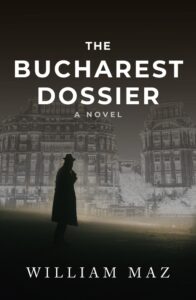
    The Bucharest Dossier, a Novel by William Maz

    Chanticleer Review is forth coming.

    Blue and Gold Badge for the Global Thriller Grand Prize for High Stakes Thrillers The Bucharest Dossier by William MazCover of William Maz's The Bucharest Dossier, Chanticleer Grand Prize Global Thrillers Winner 2020


    Doubt and Debt
    By John Feist

    Doubt and Debt Book Cover

    Pipelines—large industrial pipelines through which pour oil, gas, and other natural elements—are not the usual stuff that writers tackle for intelligent, sophisticated international high-stakes spy novels. But then again, most writers aren’t John Feist, whose lawyering background in, yes, global pipelines and related industries such as steel, coal, and shipping companies make him the perfect choice to turn these typically pedestrian subjects into absorbing books. His work introduces us to complex issues involving international trade at the highest level, greed, murder, and above all, the intricacies and rewards of multinational, prominent, and sometimes multiracial families.

    Read More here! 


    The Kurdish Connection (Book 1 in the Bedlam Series)
    By Randall Krzak
    Semi-Finalist in Global Thrillers

    A Girl looking down. Largely taupe colors with a badge for the Chanticleer Semi-finalist position

    International writer Randall Krzak addresses one of the world’s saddest ongoing tragedies in The Kurdish Connection, a thriller about the plight of the Kurdish people and a desperate plan to free them from their fate.

    In a world awash with refugees, perhaps no greater tragedy exists than the ongoing fate of the Kurds of the Middle East, roughly 30 million sect members spread between Iraq, Iran, Syria, and Turkey. Connected by language, religion, and history, this group has no country to call their own. The Kurds have been the subject of several attempts by international agreements to help them create a haven, the most recent in northern Iraq’s no-fly zone. Meanwhile, all four host countries have ruthlessly suppressed Kurdish hopes and dreams politically and especially militarily.

    Read More here!

    Execute Order
    By Jett Ward
    First Place Winner in Global Thrillers

    On a military base outside Las Vegas, Lieutenant Brent Parker sits in a bunker in a darkened room looking to an outsider to be playing a sophisticated aerial combat video game. But this is no game. People live and die with Parker in control of a lethal drone nicknamed the Reaper flying over forbidden Syrian air space in 2011, striking American enemies on the ground with killer missiles from several miles in the air.

    Enemies are one issue, but collateral damage—men, women, children, whole families who die in a missile attack as a side effect of bringing down a terrorist—weighs heavily on Parker’s conscience. It doesn’t help when his ultra-sensitive cameras see the face of a woman who his missile will obliterate as a side effect of bringing down a military-mandated target, a face that haunts him as he leaves the bunker for the clean, and safe, American desert air of Nevada.

    Read More here! 


    The Kafir Project
    By Lee Burvine
    First Place Winner in Global Thriller Awards

    From page one, things are not going as planned on The Kafir Project, and author Lee Burvine has many more surprises in store before this undertaking ends. The action leaps off the page from beginning to the grand finale in this thought-provoking thriller. The villains are well-organized and highly motivated to stop the Project dead, as well as anyone who gets in their way.

    Gevin Rees is a television science communicator, a celebrity who explains complex scientific discoveries and theories to television audiences. He interviews guests on specific topics and is surprised the world’s most celebrated and reclusive physicist, Edward Fischer, wants to meet with him. It’s even more curious because Fischer’s death in an explosion had been broadly reported. However, he stands before Gevin Rees and begins to tell a story of intrigue about a secret project on a pier along San Francisco Bay. The story is interrupted with gunfire. This time there is no doubt that Fischer is dead. Now on the run, Gevin Rees is a new target.

    Read More here!


    Hong Kong Central (Book 3)
    By Marilyn Larew

    Former CIA agent and all around badass, Lee Carruthers, returns for the thrilling third book in the series, Hong Kong Central by Marilynn Larew.

    Lee is looking forward to some well-earned downtime, so when her ex-boss and mentor, Sidney Worthington calls with another job, Lee is not amused. During her previous mission, people tried to kill her—multiple times. All she really wants right now is some serious R&R. However, she is the gal who will never say “no” to a job. And besides, Worthington swears it’s an easy gig.

    Read More here! 


    Bishop’s Law
    By Rafael Amadeus Hines
    First Place Winner in Global Thriller Awards

    Slow is smooth. Smooth is fast. This is the code that John Bishop, one of America’s most decorated military heroes, teaches his men to follow whether they’re on a mission in the heat of the Middle East or in the jungle that is New York’s Lower East Side in Rafael Amadeus Hines’ novel, Bishop’s Law.

    To say his life is complicated is putting it mildly. In this second volume of the John Bishop series, several high-level assassins are hell-bent on killing him for his actions as a soldier. At the same time, he’s deep in his crime family’s military-style battles against various opponents’ groups. All these forces are closing in on him simultaneously, even as the United States government had hired him and his family to protect the country from bad guys using whatever means necessary.

    Read More here! 


    Have a great Global Thriller? Submit before the end of October for the 2021 CIBAs! 

    When you’re ready, did you know that Chanticleer offers editorial services? We do and have been doing so since 2011.

    Our professional editors are top-notch and are experts in the Chicago Manual of Style. They have and are working for the top publishing houses (TOR, McMillian, Thomas Mercer, Penguin Random House, Simon Schuster, etc.).

    If you would like more information, we invite you to email Kiffer or Sharon at KBrown@ChantiReviews.com or SAnderson@ChantiReviews.com for more information, testimonials, and fees.

    We work with a small number of exclusive clients who want to collaborate with our team of top-editors on an on-going basis. Contact us today!

    Chanticleer Editorial Services also offers writing craft sessions and masterclasses. Sign up to find out where, when, and how sessions being held.

    A great way to get started is with our manuscript evaluation service, with more information available here.

    And we do editorial consultations for $75. Learn more here.  

    If you’re confident in your book, consider submitting it for a Editorial Book Review here or to one of our Chanticleer International Awards here.

    Also remember! Our 10th Anniversary Chanticleer Authors Conference (CAC22) will be April 7-10, 2022, where our 2021 CIBA winners will be announced. Space is limited and seats are already filling up, so sign up today!  CAC22 and the CIBA Ceremonies will be hosted at the Hotel Bellwether in Beautiful Bellingham, Wash. Sign up and see the latest updates here!

  • You’ve Finished Your Work In Progress or NaNoWriMo or Perhaps Not – That is Okay by David Beaumier

    You’ve Finished Your Work In Progress or NaNoWriMo or Perhaps Not – That is Okay by David Beaumier

    You’ve finished NaNoWriMo!

    Or perhaps not — that is okay! 

    You have more words than you did at the beginning of November. Congratulations!

    Or perhaps you are one of the ones who will do February or June Writing Month. If so, bookmark this post for future use.

    Or, you are creating your work-in-progress? This post may be of particular interest to you.

    The first thing to do is to take a deep breath, maybe take an Epsom salt bath, massage your wrists, roll out those shoulders, and maybe let out a primordial scream into the darkness. You know, whatever helps you relax.

    Finish, Celebrate, Plan

    Now, let’s say you haven’t quite finished— Give yourself some time to relax, and brainstorm the ways you’re going to now fit writing into your life. For me, having a daily word goal of 1667 is great for short periods, but really what I need is time boxes to get the work down. I usually tell myself that I can shut myself away for at least twenty minutes a day writing until I finish, with the only rule being I write. Even if I need to struggle through something and get really meta in the writing process, I know that will come out later. Don’t forget to reward yourself, maybe with a day off, that fancy mocha you never spring for, or chocolate.

    So, whether you NaNoWriMo or not, if you are writing, be sure to reward yourself!

    Treat Yourself!

    Edit, Space, Edit

    Once you’ve finished your novel on your new schedule (or maybe you skipped that last paragraph because you’re so gosh darn prolific), the next stage will be editing. You know yourself better than I do, so if you need space from your writing, take that space.

    Before you hide it away though, consider taking the time to write what you know to be true about it now. Note down what parts mean a lot to you that you don’t want to change later, explain to yourself where you know you’ve decided you want to expand things, and then make a quick list of items that you know will need to be fixed (for me, I always need to fix the fact that my characters have very little interiority, so the reader doesn’t know why they do what they do.

    My other big struggle is setting, (everyone just exists in an empty void where their heads can talk). Leave yourself these notes and then get some space by taking Stephen King’s advice and hiding your work in a drawer or somewhere out of sight for at least six weeks.

    Meanwhile, start conjuring your next writing creation.

    Allowing your work to “rise” in a drawer while you start your next project.

    David’s Self-Editing “Trick” — He shares it with you, dear Chanticleerians.

    When the six-plus-weeks of letting your work “rise or proof” in a drawer somewhere is up, David offers this advice:

    For the next editing step, I treat myself like I would any other editorial client. I take the first ten pages of my work, and then skip ahead to the middle and grab ten pages from there. For many of us, the start and end of the book already appear clearly in our mind, and for something like NaNoWriMo, we start out fresh and excited to get the job done. So you can notice what you do well in your first ten pages, and if anything pops up that you know you need to fix, write those down as well. Then, in the section from the middle of your book, look at what parts that worked well in the beginning are still there, and what maybe fell out as the story weighed itself down in the middle of the month, heavy from the expectations and reaching that week three or week four point of exhaustion.

    We imagine this is David

    Having taken notes one what worked and didn’t work at the beginning and middle, I write myself a letter explaining what I should watch out for as I move through my own work, and how I recommend shoring up the strengths and how I can correct any weak points. For me, again, this usually means taking time to give every setting and character a unique description, and then to make sure that I use my strengths, like dialogue, especially if I notice there’s a section where I skipped over dialogue in favor of narrative description.

    Then, I connect this letter with the note I left for myself when the story was still fresh in my mind, and I buckle down and do my first read through and selection of edits.

    Manuscript Overview or Peer Review, Rewrite, Repeat

    Now it’s time to get some other eyes on your work. This may be the time to have a manuscript overview if you are serious about publishing your work. Do this before you get into editing (line or copy editing). Click here if you would like to read more about this process:
    https://www.chantireviews.com/manuscript-reviews/

    If you are undecided about whether or not to publish your work-in-progress, this might be a good time to bring in a few Beta Readers for their general impressions—how do they see the structure of the story? What do they think of my character development? And what do they see as the heart of the story? That last question nets me some really interesting answers that help me better understand the themes of the story that maybe weren’t clear to me initially. Then I compile these notes into another letter of sorts to myself, and go through the entire book again. I would recommend doing this one more time, and this time asking for more specific feedback on theme, plot, characterization, dialogue, structure, world building (as applicable), and then just anything that just stands out as a hold up for the reader.

    Remember, when receiving peer review or manuscript overview, you are the author and no one else can force you to make changes. Even if a suggestion really bothers you and gets under your skin, reframing it as a question of why the reviewer gave you that feedback can always help. For example if someone hates your character, Beth, because “she just doesn’t seem real.” Ask yourself what you’ve done to develop Beth as a character. Read her dialogue aloud. Figure out why you love Beth (even if she’s actually awful—which is often a reason we back away from loving our bad characters), and put that love into her character. She can still be unsympathetic, but at least now she’ll draw your reader in.

    What should you do if you are not wanting to proceed with your w-i-p. Our suggestion here at Chanticleer is to print it and file it away. Also, save it digitally in at least two other places such as your computer or a USB stick plus some place off premise such as in the “cloud.” Never throw any writing away…just squirrel it away because you never know…

    Squirrel away your cuts and works that you are not moving forward on. Don’t toss them away.

    Let’s get Professional – You’ve Decided that You Want to Publish Your Work-In-Progress 

    At this point, if you still want to move forward with your story, which I’m imaging is quite good, it’s time to bring in a professional. Chanticleer can provide you with a Manuscript Overview, which is a great first step, and then you can work on finding an editor who understands your vision and whose style matches with the way you respond to feedback. Go through it with your editor, and then proceed with the editorial and cover design process. Remember, your cover has the greatest influence on whether or not a potential reader will choose your book to to consider.

    Line editing, copy editing (you can save $$ by creating and developing your own Style Guide and Story Bible).

    Here is a link about creating your Story Bible/ Story Guide by Continuity Editor Diane Garland.

    SERIES or Not to Series 

    In the process that you’ve been going through with your Work-In-Progress (w-i-p), are you considering turning it into a series? Indie Booksellers, Entertainment Producers, Literary Agents, etc. and especially READERS, enjoy book series.

    Do you need to reconsider your story structure in order to sustain a book series? 

    You may want to read this blogpost by mystery series award-winning author Wendy Delaney. https://www.chantireviews.com/2020/02/29/writing-a-series-primer-by-award-winning-author-wendy-delaney-a-chanticleer-writers-toolbox-article/

    To Series or Not to Series– What is Your Strategy?

    Publication? 

    This, for many people is seen as the big goal, and it deserves an article all on its own for the different facets of self-publishing versus traditional publishing, how to market, what to do about cover design, contests, book reviews, and so much more. At this point, the important thing to realize is that you are entering a period of extraordinary fine-tuning and a different kind of work with your book, from making it come to life to putting it in people’s hands. Good luck!

    On a final note, don’t forget about the COVER!

    THE COVER – The Number One Marketing Tool to Sell More Books – Don’t Sell Yourself Short. Start on your cover design as soon as you are serious that you want to publish your story then start working on the cover and the brand (Stories are products!)

    Here is link for you to take a look at on Five Essential Book Cover Elements by Kiffer Brown

  • GLOBAL Chillers, Killers, High-Stakes Thrillers  – We want them all! Welcome to the November SPOTLIGHT on Global Thrillers Awards

    GLOBAL Chillers, Killers, High-Stakes Thrillers – We want them all! Welcome to the November SPOTLIGHT on Global Thrillers Awards

    The clock is ticking… you’re working on a deadline while your husband is across town, picking up the kids. You’ve taken the day off and gone to the cabin. You have to write that last chapter … the one that will get your work noticed, like J.D. Barker or Stephen King kind of noticed.

    Then the inexplicable happens, as you type in the very last line and hit return, your screen goes black. You reach to plug in your computer, but it’s already plugged in… You jiggle the cords. You hit ESC. You hit RETURN. You unplug the thing and plug it back in again. Nothing. You do a hard reset…

    This time the screen powers on and a thin line travels across the middle of it. Then words appear…

    “You have until November 30, 2019, 11.59 p.m. to turn in your Global Thriller, or you will have no chance of winning…” 

    Don’t let this happen to you! Turn in your High-Stakes Thriller, your Chillers, your multiple Killers for a chance at the prize! But one thing is certain, if you don’t enter, you won’t have a chance of winning!


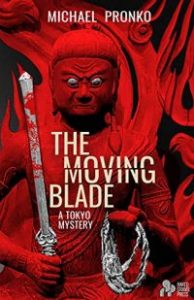
    Be like Michael Pronko who submitted his novel, The Moving Blade, all the way from Japan –

    and took home the 2018 CIBA Grand Prize in the Global Thriller Awards!


    Or, you can be like these 2018 Global Thriller Book Awards for Lab Lit & High Stakes Thriller Novels First in Category Winners!

    • Magenta is Missing by Richard Garis
    • Dangerous Alliance by Randall Krzak
    • The War Beneath by Timothy S. Johnston
    • The Sunken Forest by R. Barber Anderson
    • Never Again by Harvey A. Schwartz   
    • Beyond Control by  Lawrence Verigin

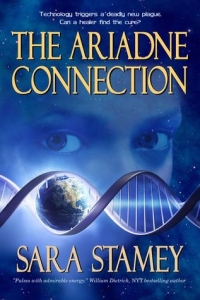
    Sara Stamey took home the Grand Prize in 2017 for The Ariadne Connection

    The First in Category Winners for 2017: 


    Here are some winners that came before: 

    From the 2016 CLUE Awards:


    From the 2015 CLUE Awards:

    • Blended Genre: Timothy S. Johnston – The Tanner Sequence: The FurnaceThe Freezer, The Void
    • Espionage/Spy: Michele Daniel  The Red Circle

    We also had Cybertech Thrillers and Political Thrillers such as John Trudel’s Raven’s Resurrection and the Raven’s Series.


    Here’s your assignment, if you choose to accept it…


    Submit your Thrillers in the following categories by November 30, 2019, for a chance to bring home a First in Category WIN the 2019 CIBAs in Global Thrillers – or a Grand Prize – or maybe even the Overall Grand Prize! 

    • Historic
    • LabLit
    • Science Fiction
    • Dramatic
    • Action/Adventure
    • CyberTech

    If you never enter, you’ll never know!  

    Follow this link and enter today! 

    Tick Tock…


    (For light-hearted, cozy, or classic Mystery and Suspense entries see our Mystery & Mayhem Awards and for Thriller/Suspense/Hardboiled-Detective series, please see the CLUE Awards)

    Don’t delay! Enter today!


  • 10 Question Author Interview with PAULA BUTTERFIELD – Women Artists, Author Interview, Book Discovery, Film, Books

    10 Question Author Interview with PAULA BUTTERFIELD – Women Artists, Author Interview, Book Discovery, Film, Books


    Meet the award-winning author, Paula Butterfield!

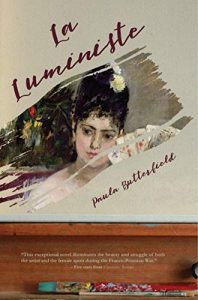
    Paula taught courses about women artists for twenty years before turning to write about them. La Luministe, her debut novel, earned the Best Historical Fiction Chanticleer Award. Paula lives with her husband and daughter in Portland and on the Oregon coast.

    Paula’s book, La Luministe, won First Place in the Chaucer categories in the 2015 CIBAs for Historical Fiction!


    Chanticleer: What genre best describes your work? And, what led you to write in this genre?

    La Luministe, 2015 Chaucer First Place Winner for Historical Fiction!

    Butterfield: I write historical fiction, specifically about women artists. For many years, I taught classes that I developed about women artists. As we raced through history, from the Middle Ages to the 21st century, I often thought, someone could write an entire mini-series about this woman! I wished we could slow down and really delve into the lives of artists. More hist-fic books about these women are coming out now—including Lady in Ermine, A Light of Her Own, The Age of Lightand I’m wallowing in them! But all I have to do is leaf through one of my books about women artists to realize how many more stories remain to be written… 

    Chanti: That’s exciting! Perhaps you will write a mini-series about women in art… Do you find yourself following the rules or do you like to make up your own rules?

    Butterfield: I find that you have to pick and choose which rules to follow. Outlining, I have come to believe after years of resistance, is a must. But that outline can take many forms, and you can expect to change it as you go. While a writer shouldn’t lean on adverbs, isn’t it a little crazy to spend time searching your manuscript for one or two errant adverbs?
    Chanti: Good point – outlines do need to be flexible in order to be relevant. And, yes, I certainly agree with your assessment of adverbs! What do you do when you’re not writing? Tells us a little about your hobbies.

    Butterfield: I’m a film aficionado (see question 10). This last year, I loved Leave No Trace, Roma, If Beale Street Could Talk, First Reformed, and black klansman. Of course, I LOVE costume dramas like Black Panther or The Favourite, where I can see what life was like in a different place and time. Costume and production designers deserve more credit!

    Chanti: Yes, costume and production designers make the movie, in my humble opinion! Back to writing…How structured are you in your writing work?

    Butterfield: Not structured enough! On a perfect writing day, I’ll wake up with ideas and immediately get to work before my inner-critic wakes up. This is more likely to happen when I have thought about something specific I need to work on, right before I go to sleep. After a couple of hours, I’ll stop to have breakfast, exercise, and shower. Later, I’ll go back and look at what I’ve written that morning, which usually gets me going, either editing or continuing on for a couple of more hours in the afternoon. Social media, emails, reviews, and other commitments get squeezed in throughout the day.
    Chanti: That sounds fairly structured to me! I’ve heard many authors and educators say they begin work before their inner critic wakes up. Tricky! So, tell us, what areas in your writing are you most confident in? What advice would you give someone who is struggling in that area?

    Butterfield: I’m told that descriptions are my strength. I have a degree from the University of Southern California School of Cinema, and I started out writing screenplays. As a visual person, I just write the movie I see in my mind’s eye. I recommend looking, then looking some more. Keep looking, and you’ll notice details that eluded you at first glance. Then describe that picture in words.

    Chanti: That’s great advice. Tell us, which craft books have helped you the most?

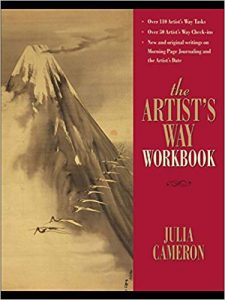
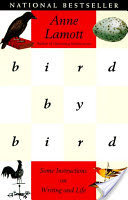
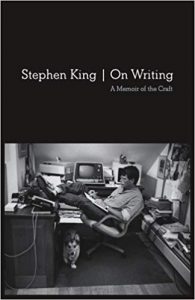
    Butterfield: Anne Lamott’s Bird by Bird is wonderful, and I also like Stephen King’s On Writing. What kick-started my writing after a years-long hiatus was participating in a small group that read Julia Cameron’s The Artist’s Way. It’s a 12-week program that helps you put art into the center of your life. From scribbling artist’s pages (three pages of free writing each morning) to going on artist dates (doing something that inspires you creatively each week), each member of my group—fiction writer, poet, and painter—benefited from the process.

    Chanti: I’m working through The Artist’s Way. This book has a companion workbook that is most beneficial.  What are you working on now? What can we look forward to seeing next from you?

    Butterfield: With me, it’s always going to be historical fiction about women artists. Artists are considered to be outliers, which makes them interesting to start with. But to be a woman artist, throughout most of history, has been considered doubly radical, so their stories are fascinating. My WIP is about two American artists who are positioned as rivals. I don’t like to talk about my current projects, because it saps some of the energy that’s buzzing around in my brain. So that’s all I can say right now.

    Chanti: What is the most important thing a reader can do for an author?

    Butterfield: Reviews are needed and appreciated, but another very easy, helpful thing a reader can do is request that his or her library purchase a book (if it’s not already in stock). On my library’s website, this entails clicking “Using the Library” on the menu bar, then clicking “Suggest a Purchase” from the drop-down menu. There, you just fill in the title and author of the book. You’d be surprised how receptive libraries are to this input.

    Chanti: That’s really smart. Most of us only focus on reviews. But there is power in the library system. Do you ever experience writer’s block? What do you do to overcome it?

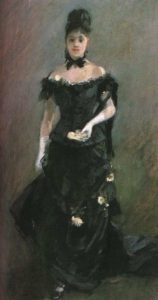
    Berthe Morisot, Figure of a Woman (Before the Theater), PD-US

    Butterfield: I suspect that writers of historical fiction may encounter writer’s block less frequently than do writers of other genres because we can always do more research. This can range from gaining a broad overview of the Franco-Prussian war to seeking more details about the sleeve length or embellishments that would have been popular on a gown Berthe wore to the opera in 1868. New information, especially unexpected tidbits, get me back to the keyboard right away. Sometimes, one detail can change the arc of a subplot or of a minor character.

    Chanti: What excites you most about writing?

    Butterfield: I find out about women in art! Berthe Morisot was a fist in a velvet glove. In the 19th century Paris, an haute-bourgeois woman was expected to be discreet to the point of near-invisibility. But Berthe, forbidden to enter L’École des Beaux-Arts, started the Impressionist movement that broke open the walls of the art establishment. And, unable to marry the love of her life, Édouard Manet, she married his brother. While she epitomized femininity and decorum, Morisot was a quiet revolutionary.

    Chanti: Paula, thank you for spending time with us today. It has truly been a pleasure and an honor. We cannot wait to see what’s next!


    You know what to do! Please check out Paula Butterfield’s work – and remember to recommend her books to your local library.

    Find fun boards and posts of Paula’s inpsiration here:
    https://www.pinterest.com/luministe/ (where I post “illustrations” for La Luministe.)