Author: richard-alan

  • A Good New Year and a Safe Fast | Celebrating Yom Kippur by David Beaumier

    A Good New Year and a Safe Fast | Celebrating Yom Kippur by David Beaumier

    Yom Kippur is coming up soon for our Jewish friends around the world.

    As a gentile, I  learned a lot in putting this article together, and I understand how much more there is to learn! Links will be included for further reading from all of our sources below!

    One particularly useful site was Chabad.org, which says:

    Yom Kippur is the holiest day of the year, when we are closest to G-d and to the essence of our souls. Yom Kippur means “Day of Atonement,” as the verse states, “For on this day He will forgive you, to purify you, that you be cleansed from all your sins before G-d.”

    Many readers may know the events of the first Yom Kippur, but not realize the connection. Tradition states that the first Yom Kippur happened after the Israelites’ exodus from Egypt when God gave Moses the Ten Commandments at Mt. Sinai. When Moses came down from the mountain, he found his people worshipping a golden calf, and he broke the tablets in a rage. When the people saw the error of their ways, Moses returned to the mountain and returned with two more tablets and God’s forgiveness.
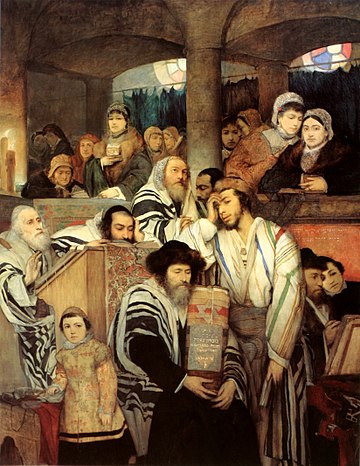
    Jews Praying in the Synagogue on Yom Kippur, by Maurycy Gottlieb (1878)

    Yom Kippur translates as “the Day of Atonement”

    [I]t marks the culmination of the 10 Days of Awe, a period of introspection and repentance that follows Rosh Hashanah, the Jewish New Year. Read more here.

    Many people will fast for 26 hours, and, being a holiday of asking for forgiveness, it’s not very common to hear “Happy Yom Kippur!” This article from USA Today explains that the traditional greeting is “G’mar chatima tova,” which means “may you be sealed in the Book of Life.”

    The “ch” sound in “chatima” is not pronounced like the English word “chat.” Instead, it should sound more like guttural utterance from the throat, like a backwards snore, because it comes from the Hebrew letter Chet. “G’mar hatima tov” is also acceptable to say.

    You can always also just say “Have an easy fast” or “have a good year” since the Jewish New Year has just started.

    Breaking the Fast after Yom Kipper

    Yom Kippur is the tenth day of the seventh month according to the Hebrew Calendar. It is also known as the “Sabbath of Sabbaths.” Yom Kippur has five prayer services that include the public and private confessions of sins and guilt with atonement and repentance. Along with the prayers is asking others for forgiveness, and give to charity and those in need.

    This year, Yom Kippur is sunset of September 15th, until nightfall on September 16th, 2021. Food and drink are refrained from during this time for fasting. Fasting for 26 hours begins at sunset for all males over the age of thirteen and females over the age of twelve. It may be waived for certain medical conditions. It is tradition to eat one large meal on the afternoon of Yom Kippur and then to break the fast with a large feast to celebrate in the evening of the day after. After the last Yom Kippur service, most will return home for a joyous meal, which focuses largely on comfort foods often associated with breakfast like blintzes, noodle pudding, and other baked goods.

    A man blowing on a shofar while wearing a white cloth
    White is the traditional color worn on Yom Kippur. The Shofar, held above, is sounded at the beginning of Rash Hashanah and the end of Yom Kippur


    Now we want to take the time to celebrate some of the books that highlight some aspect of the Jewish experience that we’ve reviewed.

    HENRY: A Polish Swimmer’s True Story of Friendship from Auschwitz to America
    By Katrina Shawver
    First Place Winner in Journey Awards
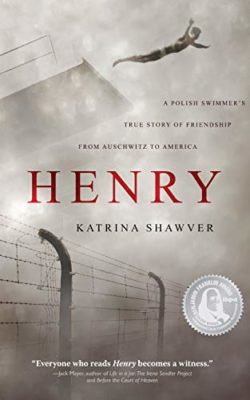
    Katrina Shawver, a journalist for a Phoenix newspaper, was seeking a story for her weekly column. She had heard from a friend that a Holocaust survivor named Henry Zguda and his American wife, Nancy, lived in Phoenix. She called Zguda and was invited to come to his home, only a few blocks from her own. Shawver quickly bonded with both Henry and Nancy. Then she and Henry decided to have a series of weekly interviews, which she would draw on for her column and, later, for a book—this biography.

    The horror story of Henry Zguda, a Catholic Pole born and raised in Krakow, Poland, begins with Henry walking down the street toward the YMCA for swim practice in 1942. A Gestapo car screeches to a stop beside him. Two men leap out, arrest Henry on the spot, throw him into the car, and take him to prison. After several days of torture, a practice used by the Gestapo to obtain information (of which Henry had little), he is taken to the train station and shoved into a cattle car so filled with people that it is impossible to do anything but stand, shoulder to shoulder. The door is slammed shut, and the train pulls out of the station. Henry has no idea what fate awaits him.

    Continue Reading Here…


    DAVID and AVSHALOM: Life and Death in the Forest of Angels
    By Bernard Mann
    First Place Winner in Chaucer Awards

    Debut novelist Bernard Mann has diligently researched a wide-ranging saga centered on the life, loves, songs, and struggles of King David, a central figure in the Old Testament and author of the Book of Psalms.

    The tale begins at a crucial stage of David’s life as he is escaping the wrath of King Saul. Once a father-figure to the former shepherd boy, Saul’s view of David sours when the majority of his subjects begin to revere David over him. David flees with a small band of loyal stalwarts. He is still a fast friend to Saul’s son and likely successor, Jonathan, and is married to Saul’s daughter Maacah. Moreover, he still holds fast to his faith in God and continues to compose poems and songs in praise of Him. When both Saul and Jonathan perish in battle, David takes up the struggle, amasses an army, receives the crown, and seizes the city of Jerusalem, making it the seat of Israelite power.

    Continue Reading Here…


    The TRAVELS of IBN THOMAS
    By James Hutson-Wiley
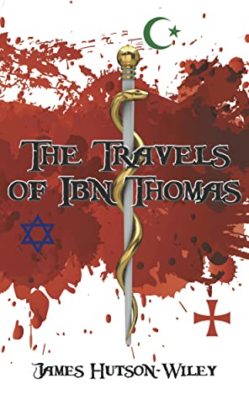
    In an ancient world split in three by religion, a conflicted young man seeks the truth about his past and builds his future in this colorful panorama created by author James Hutson-Wiley.

    Ibn Thomas, the book’s narrator, taken from his boyhood home In Aegyptus after his father and mother disappeared, lives in a monastery where he is mocked for his name and his knowledge of Arabic. At age 12, the monks send him from England to Salerno, Italy, where he will study medicine, supported, he learns, by considerable wealth to which he is heir from the commercial activities of his father, a trader in Al-Sukkar, or sugar, considered a precious commodity at the time.

    Continue Reading Here…


    A FEMALE DOCTOR in the CIVIL WAR
    By Richard Alan
    First Place Winner in Laramie Awards

    Imagine a fearless, hard-as-nails contract surgeon hired by the Union Army who often works 48-hour shifts in battlefield medical tents amputating limbs, healing previously inoperable gut wounds, sewing up children’s hare lips, and diagnosing what we now call PTSD as critical in military patient care as patching physically wounded bodies.

    A native of the Pacific Northwest, Dr. AbbyKaplan  stands six feet tall and exchanges her dresses for breeches, totes a gun on her hip, engages in military defensive maneuvers, and is wounded multiple times for her efforts. Dr. Kaplan takes no guff from anyone and uses the language of soldiers appropriate to the situation. In a time when men are in charge and women are not, she wins the respect of her male colleagues in the most gruesome medical cases, winning over even those who could not fathom a woman examining a man’s most private parts.

    Continue Reading Here…


    WRAPPED in the STARS
    By Elena Mikalsen
    First Place Winner in Chatelaine Awards

    Maya Radelis has spent the last seven months running from herself. After the death of a patient, she abandons her pediatric residency in New York City for the jungles of Guatemala and the Family Health Volunteers Mission. However, after exhausting her six-month leave, she still cannot bring herself to return to New York. Instead, Maya ends up in Edinburgh, Scotland, where fate intervenes.

    In a small antique shop, an inscribed ring somehow “calls” to her. Unwilling to part with it, Maya purchases the ring and traces its history. She has seven days before she must return to the university and face the consequences of her absence, as well as the investigation of her patient’s death. Fearing she will no longer be allowed to pursue a medical career and dreading the meeting where her fate will be revealed. Maya wants to make the most of her search for the ring’s previous owner, especially after she begins to have strange dreams and memory-like episodes of the woman she thinks owned the ring. Enlisting the help of Pauline, her French friend, she traces an odd, twisting path through Paris then Bern, Switzerland. The more she discovers, the more she begins to question her destiny.

    Continue Reading Here…


    YISHAR KOACH: FORWARD with STRENGTH
    By Susan Lynn Sloan

    Yishar Koach: Forward with Strength shares the account of a man who was entrusted with inspiring some of these precious few orphans to find strength and hope after experiencing tremendous loss. At Aglasterhausen, a United Nations school for WWII orphans, Fred Fragner took on the mantle of principal and teacher at the school—a daunting responsibility for most, but not for Fragner—a fighter of the Nazi regime who was shot, captured, and interrogated by the Gestapo and then imprisoned for five years in Buchenwald Concentration Camp.

    The life of this most remarkable man of integrity and altruism was inspiration for Susan Sloan to write Fragner’s biography—a five year project that she undertook with great passion after being introduced to him at a café in Bellingham, Washington. Sloan researched transcripts of lectures and speeches made by Fragner, she refers to newspaper clippings and documents about him, listened to audio and video tapes, and interviewed many who knew him as mentor, coach, friend, family member, and teacher. Most importantly, Sloan had access to Fragner’s own scrapbook about Aglasterhausen that vividly tells how “the children gave him his life back” as he tried to help restore theirs.

    Continue Reading Here…


    Have a great story about an experience?

    When you’re ready, did you know that Chanticleer offers editorial services? We do and have been doing so since 2011.

    Our professional editors are top-notch and are experts in the Chicago Manual of Style. They have and are working for the top publishing houses (TOR, McMillian, Thomas Mercer, Penguin Random House, Simon Schuster, etc.).

    If you would like more information, we invite you to email Kiffer or Sharon at KBrown@ChantiReviews.com or SAnderson@ChantiReviews.com for more information, testimonials, and fees.

    We work with a small number of exclusive clients who want to collaborate with our team of top-editors on an on-going basis. Contact us today!

    Chanticleer Editorial Services also offers writing craft sessions and masterclasses. Sign up to find out where, when, and how sessions being held.

    A great way to get started is with our manuscript evaluation service, with more information available here.

    And we do editorial consultations for $75. Learn more here.  

    If you’re confident in your book, consider submitting it for a Editorial Book Review here or to one of our Chanticleer International Awards here.

    Also remember! Our 10th Anniversary Chanticleer Authors Conference (CAC22) will be April 7-10, 2022, where our 2021 CIBA winners will be announced. CAC22 and the CIBA Ceremonies will be hosted at the Hotel Bellwether in Beautiful Bellingham, Wash. See the latest updates here!
    Wishing You Peace and Goodness for Yom Kippur!

  • LARAMIE Book Awards – SPOTLIGHT Focus on ALL Works of Western Fiction and Uniquely American Tales

    LARAMIE Book Awards – SPOTLIGHT Focus on ALL Works of Western Fiction and Uniquely American Tales

    Welcome to our SPOTLIGHT on LARAMIE Book Awards, the stories that stick!

    Western Pioneeer Civil War Fiction Award

    The Laramie Book Awards recognize emerging new talent and outstanding works in the Americana / Western, Pioneer, Civil War, Frontier, and First Nations Novels. The Laramie Book Awards is a division of the Chanticleer International Book Awards.

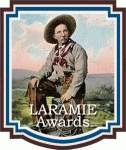
    Charles M. Russell painted the cowboy scene on Chanticleer’s very own Laramie Book Awards badge. It is one of many such paintings he did that encompassed the Old American Wild West. He was an advocate for the Northern Plains Indians. Charles M. Russell also helped establish a reservation in Montana for the Chippewa people.

    *More interesting facts about Laramie, Wyoming, and its historical icons are immediately after the Laramie Hall of Fame listing below. A fun read! 

    The Laramie Book Awards for American Western Fiction Hall of Fame First Place and Grand Prize winners!


    The 2018 Laramie Book Awards Grand Prize:

    Blood Moon: A Captive’s Tale by Ruth Hull Chatlien

    Laramie Book Awards

     2018 Laramie Book Awards for American Western Fiction First in Category Winners


    The 2017 Laramie Book Awards Grand Prize Winning Book also won the OVERALL Prize! Best book of 2017:

    HOUR GLASS by Michelle Rene

    2017 Laramie Book Awards for American Western Fiction First in Category Winners


    The 2016 Laramie Book Awards Grand Prize:

    Hot Work in Fry Pan Gulch: Honey Beaulieu – Man Hunter #1
    by Jacquie Rogers

    2016 Laramie Book Awards for American Western Fiction First in Category Winners


    The 2015 Laramie Book Awards Grand Prize:

    Widow (formerly known as Doctor Kinney’s Housekeeper) by Sara Dahmen

    2015 Laramie Book Awards for American Western Fiction First in Category Winners


    The 2014 Laramie Book Awards Grand Prize:

    Not on My Mountain Jared McVay

    Not On My Mountain by Jared McVay

    2014 Laramie Book Awards for American Western Fiction First in Category Winners


    The 2013 Laramie Book Awards Grand Prize:

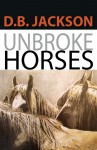
    Unbroken Horses by Dale B. Jackson

    Unbroke Horses clean

    Congratulations to the Laramie Awards 2013 1st Place Category Winners:

    • Mystery:  Double or Nothing by Meg Mims
    • Action/Adventure:  Haunted Falls by Ken Farmer & Buck Stienke
    • Historical Fiction: Because of the Camels by Brenda Blair
    • Civil War:  Ford at Valverde by Anita Melillo
    • Prairie Pioneer:  They Rode Good Horses by Dale B. Jackson
    • Literary Western:  Unbroke Horses by Dale B. Jackson
    • First Novel:  Confessions of  a Gunfighter by Tell Cotten
    • Best Manuscript: Lick Creek by Deborah Lincoln


    HOW DO YOU HAVE YOUR BOOKS COMPETE? Submit them to the Chanticleer International Book Awards –Click here for more information about The CIBAs! 

    Western Pioneeer Civil War Fiction Award

    Want to be a winner next year? The deadline to submit your book for the 2020 Laramie awards is July 31, 2020. Enter here!

    Grand Prize and First Place Winners for 2019 will be announced during our Virtual Conference in early September 2020.

    Any entries received on or after July 31, 2020, will be entered into the 2021 Laramie Book Awards. The Grand Prize and First Place for 2020 CIBA winners will be held on April 17, 2021.

     As our deadline draws near, don’t miss this opportunity to earn the distinction your American Western readers deserve!  Enter today!

    The LARAMIE Book Awards is a division of the Chanticleer International Book Awards – the CIBAs.

    The 2020 winners will be announced at the CIBA  Awards Ceremony, which will take place during the 2020 Live/Online Chanticleer Authors Conference. All Semi-Finalists and First Place category winners will be recognized, the first place winners will be virtually whisked up on “stage” to receive their custom ribbon and wait to see who among them will take home the Grand Prize. Covid19 has made our celebrations a bit different this year, but we still will celebrate!

    Don’t delay! Enter today!  

    As always, please do not hesitate to contact us with questions, concerns, or suggestions at Chanticleer@ChantiReviews.com

    [20] McDougall, Walt, “Pictures in the Papers,” American Mercury, 6:21 (September 1925), 72.


    What’s a Laramie?

    We thought you’d never ask!

    We titled the Chanticleer International Book Awards (CIBAs) division for Western American Fiction and all things that gather around the campfire singing a lonesome tune, the Laramie Awards, after the county and city in Wyoming. You know the one, tucked into the lower right-hand corner of the state between the Snowy Mountain Range and the Laramie Mountain Range.

    Yes, but why Laramie? 

    The small outpost was changed almost overnight when the Union Pacific Railroad moved their “Hell on Wheels” tent town from Cheyenne, Wyoming to Laramie after building the rails over the Sherman Summit at an elevation of 8,200 feet all the way to Laramie on May 4, 1868. Lawlessness and the Wild West ruled in Laramie. Luckily, “Hell on Wheels” moved on West as more track was laid down.

    But where did that name Laramie come from? 

    Laramie was named after Jacque LaRamie, a French or French-Canadian trapper who disappeared in the mountain range that was later named for him in the early 1810s. LaRamie was one of the first Europeans to visit the area. Laramie is a French name much like DuBois, Wyoming. And, yes, it is pronounced Doo – Boys (and NOT Du Bwai).

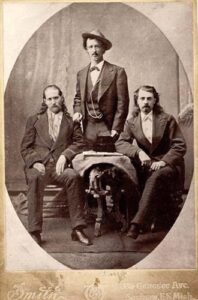
    There are several reasons we chose Laramie for our iconic Americana Book Awards. For us, and those in the know, Laramie, Wyoming immediately calls to mind the image of a Wild West town filled with rough-and-tumble cowboys. At one point, the only law in Laramie was “lawlessness. Wild Bill Hickok was even known to visit from time to time.

    Here’s a picture of the man, himself, on the left with his friends, Texas Jack Omohundro (center), and Buffalo Bill Cody on the right.

    Butch Cassidy and the Wild Bunch robbed trains and passengers with the first recorded train robbery taking place on June 2, 1899 in Wyoming. Butch was known to be very polite and dislike violence.

    But that’s not the only reason we chose Laramie.

    And, yes, there is yet one more reason we love Laramie! 

    The WOMEN!

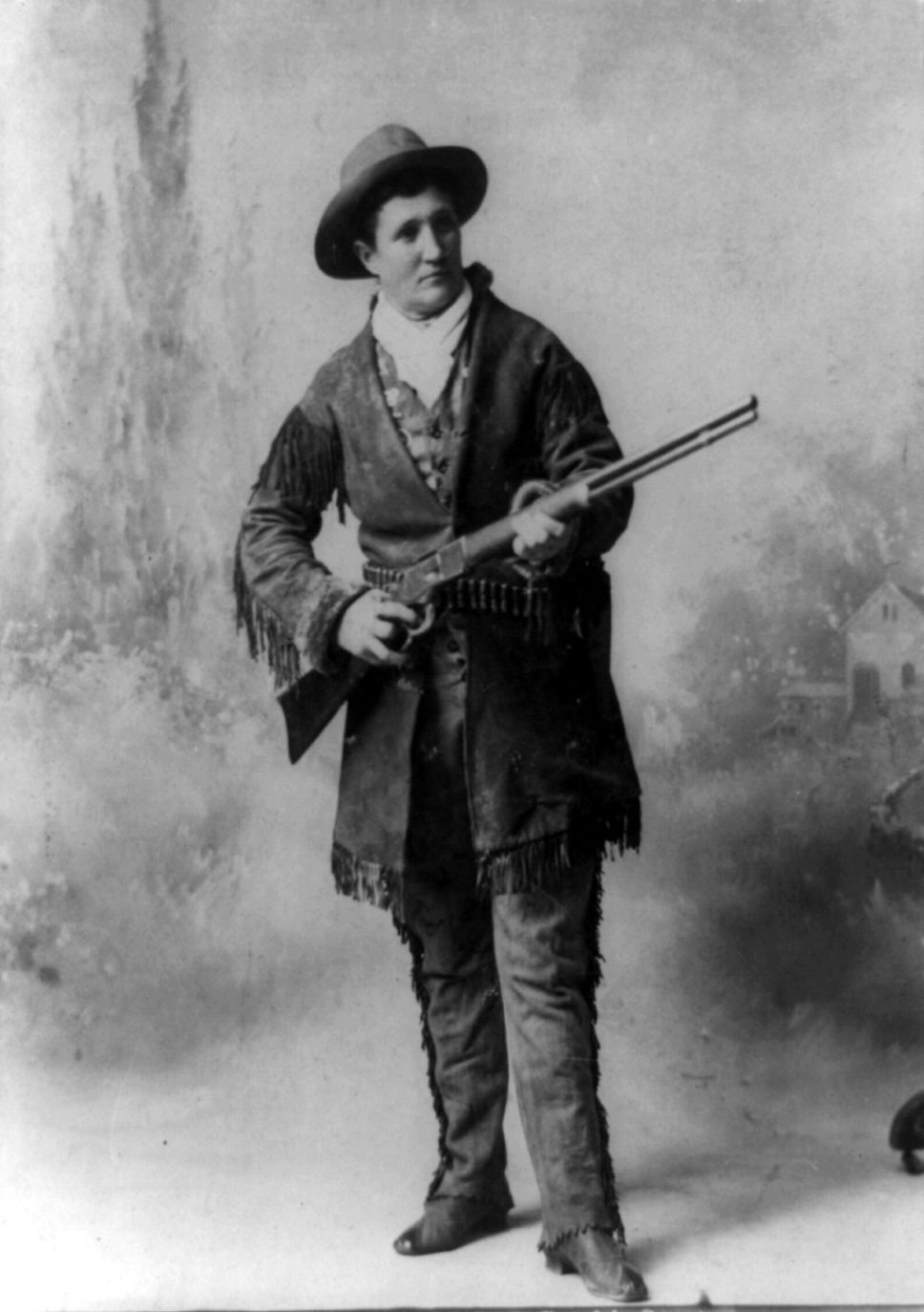
    Calamity Jane hails from Laramie, Wyoming – a skilled sharpshooter who was born to a gambler and a prostitute. She cared for her five younger siblings in Utah before traveling on to Wyoming in search of a better life. There she found work as a dance hall girl and then as a prostitute at Fort Laramie. It was there that she reinvented herself by wearing buckskins and dressing like a man. She was also known for her swearing and hard-drinking ways, but Calamity Jane was also known even more for her kind heart and helping folks out of calamities–thus her nickname.

    Calamity Jane — She was the inspiration for Michelle Rene’s HOURGLASS novel.

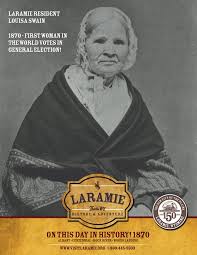
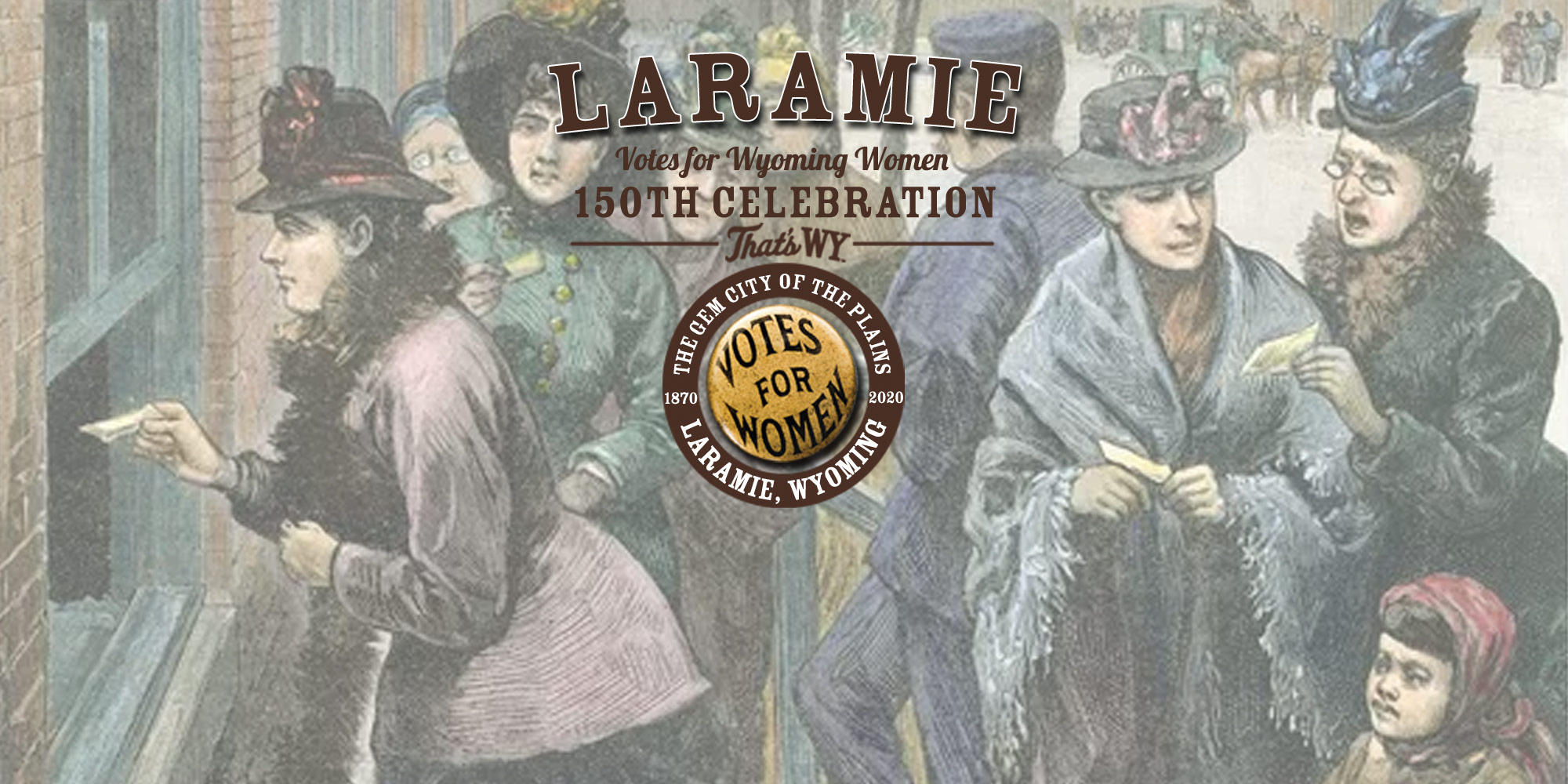
    While the men were wrestling in the streets and shooting up the place, it was really the women who brought civilization to Laramie and Wyoming Territory. They established the first school in 1869, served on a formal jury in the Spring of 1870,  and were the first to gain the vote; which is exactly what Louisa Swain and 92 of her friends did on September 6, 1870 –150 years ago!

    Louisa Swain, the first woman to cast a ballot and she did it in Laramie, Wyoming!

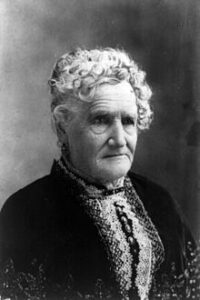
    Louisa Swain – she was made of stern stuff!

    Early in the morning on September 6, 1870 in Laramie, Wyoming Louisa Swain became the first woman in the world to cast a ballot under democratically enacted laws granting women equal political rights with men. In the fall of 2008, 138 years later, the U.S. Congress passes a resolution proclaiming September 6th as “Louisa Swain Day” in recognition of this historic event.The Louisa Swain Foundation

    In 1870, Esther Hobart Morris (59 years old) became the first female Justice of the Peace. She served in South Pass City, Wyoming, which is to the northwest of Laramie.

    Esther Morris "to pettifoggers she showed no mercy." Wyoming Tribune
    Esther Morris, first female Justice of the Peace — Wyoming

    Esther Morris “to pettifoggers she showed no mercy.” Wyoming Tribune

    The Union’s first all-female jury was assembled in Wyoming in 1870.

    Later, in 1894, Estelle Reel Meyer became Superintendent of Public Instruction, the country’s first female statewide elected official.

    And the grand coup d’etat was when in 1889 when Wyoming vied for statehood—and refused to join the Union if the laws giving equality to women were not upheld, telling Congress (which wanted the suffrage law rescinded) via telegram,

    “We will remain out of the Union 100 years rather than come in without the women.”

    Wyoming is also the first state in the USA to allow women to own property and sign legal documents.

    In 1910, Mary Godat Bellamy became the first woman to be elected to the Wyoming Legislature. Two other western states, Colorado and Idaho, elected women legislators in 1895 and 1899, respectively. Wyoming was third in the nation.

    Quotes are from the Smithsonian Magazine
    Read more: https://www.smithsonianmag.com/travel/women-voting-wyoming-150-years-here-how-state-celebrating-180971263/#6UKzMfMeCQsmbIIQ.99
    Give the gift of Smithsonian magazine for only $12! http://bit.ly/1cGUiGv
    Follow us: @SmithsonianMag on Twitter

    {https://www.wyohistory.org/encyclopedia/brief-history-laramie-wyoming}


  • A FEMALE DOCTOR in the CIVIL WAR by Richard Alan – US Historical Fiction, Civil War Fiction, Female Doctors Civil War

    A FEMALE DOCTOR in the CIVIL WAR by Richard Alan – US Historical Fiction, Civil War Fiction, Female Doctors Civil War


    Imagine a fearless, hard-as-nails contract surgeon hired by the Union Army who often works 48-hour shifts in battlefield medical tents amputating limbs, healing previously inoperable gut wounds, sewing up children’s hare lips, and diagnosing what we now call PTSD as critical in military patient care as patching physically wounded bodies.

    Meet Dr. Abby Kaplan. And yes, she’s a woman.

    A native of the Pacific Northwest, Dr. Abby stands six feet tall and exchanges her dresses for breeches, totes a gun on her hip, engages in military defensive maneuvers, and is wounded multiple times for her efforts. Dr. Kaplan takes no guff from anyone and uses the language of soldiers appropriate to the situation. In a time when men are in charge and women are not, she wins the respect of her male colleagues in the most gruesome medical cases, winning over even those who could not fathom a woman examining a man’s most private parts.

    Even more remarkable, despite the prejudices of her times, she finds ways to celebrate her Jewish heritage and even finds a man unafraid of her enough to become her occasional lover, but virtually only at her request.

    A woman as strong, complex, and dedicated to medicine probably existed somewhere during that time. A small number of women doctors did work on soldiers during the Civil War. Richard Alan develops his lead with guts and gumption, so much so, that readers will likely fall in love with Dr. Kaplan.

    A Female Doctor in the Civil War pays little attention to romance or sentimentality. Dr. Kaplan’s issues in pre-suffrage America are more about stopping male prejudice from interfering with her work than self-conscious screeds about being a female in a man’s world. We learn little about her past. Her more reflective moments are about the medical debacle she sees as she stitches and saws and mends the broken bodies that fill her medical tents, as well as her reflections on how much more the minds of these soldiers need to be treated during the war.

    When she does find a lover, he is a momentary respite from the battlefield, not a “rescuer.” Their discussions about the differences between men and women are by two adults who respect each other. Others in that period of our history may see Dr. Kaplan’s sex and religion as problems. She sees them at worst as inconveniences that sometimes prevent her from doing her job as well as she thinks she can. Her one weakness, the nightmares that keep plaguing her after her work is done, are those any adult would suffer after working in the carnage she witnesses that is her life.

    In other words, Dr. Abby Kaplan is a strong, capable, and uniquely modern physician working within the social and medical limitations of her time. She is there to do a job only a handful of doctors have the stomach to undertake.

    A Female Doctor in the Civil War won First Place in the CIBAs 2018 Laramie Awards for American Fiction.