The CIBA FICTION SERIES Book Awards recognize emerging new talent and outstanding works in any of our 18 Divisions where the author has written a series. The Fiction Series Book Awards is a division of Chanticleer International Book Awards and Novel Competitions (CIBAs).
Chanticleer International Book Awards (The CIBAs) is seeking for the best book series in all of its fifteen fiction divisions: Mysteries, Suspense Thrillers, Espionage/High Stakes, Young Adult, Middle-Grade Readers, Science Fiction, Fantasy, Supernatural and Paranormal, Romance, Historical Fiction
Congratulations to the First Place Category Winners
for the CIBAs New Division for Fiction Series Book Awards!
CHATELAINE Book Series Awards for Romantic Fiction
Multi-cultural/Inter-racial Romance Series:
The Prodigy Slaveby Londyn Skye
The Prodigy Slave: Journey to Winter Garden
The Prodigy Slave: The Old World
The Prodigy Slave: The Ultimate Grand Finale
Regency/Georgian Romance Series:
The Donet Trilogyby Regan Walker
To Tame the Wind
Echo in the Wind
A Fierce Wind
Historical Romance Series:
The Lavender Meuse Trilogy by Gail Noble-Sanderson
The Lavender House in Meuse
The Passage Home to Meuse
The Lavender Bees of Meuse
HEMINGWAY Book Series Awards for Wartime Historical Fiction
The Devil’s Bookkeepers – Three Books by Mark Newhouse
The Noose
The Noose Tightens
The Noose Closes
CLUE Awards Series for Mystery & Suspense
The Annie Oakley Mystery Series– Three Books by Kari Bovee
Girl with a Gun
Peccadillo at the Palace
Folly at the Fair
LARAMIE Series Awards Western, Americana, Civil War Fiction
Americana Fiction
An American JourneyNovel Series – Four Books by Richard Alan Schwartz
The Emigrant
The Pioneer
The Surgeon
The Soldier
GOETHE for Historical Fiction Series, post-1750s
The Poland Trilogy– Eastern European Literature -Three Books by James Conroyd Martin
Push Not the River
Against a Crimson Sky
The Warsaw Conspiracy
DANTE ROSSETTI Book Series Awards for Young Adult Fiction
The Adventures of Jonathan Moore Book Series– Three Books by Peter Greene
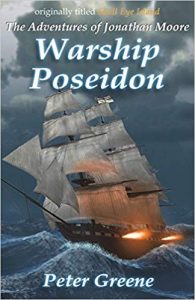
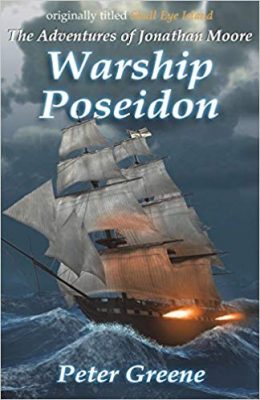
Warship Poseidon
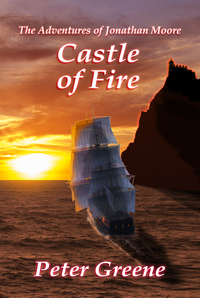
Castle of Fire
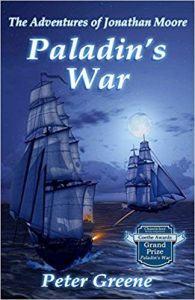
Paladin’s War
M & M Book Series Awards for Cozy and Not-So-Cozy Mysteries
The Henrietta and Inspector Howard Mystery Series – Five Books by Michelle Cox
A Girl Like You
A Ring of Truth
A Promise Given
A Veil Removed
A Child Lost
OZMA Book Series Awards for Fantasy Fiction
Terribly Serious DarknessGaslamp Fantasy Book Series – Three Books by Sam Hooker
Peril in the Old Country
Soul Remains
Now Before the Dark
PARANORMAL Book Series Awards for Supernatural Fiction
The Winters Sisters– a Paranormal Romantic Suspense Series – Four Books by Joanne Jaytanie
Chasing Victory
Payton’s Pursuit
Willow’s Discovery
Corralling Kenzie
SOMERSET Book Series Awards for Contemporary, Literary, & Mainstream Fiction
The Anne McFarland Book Series – American Literature – Three Books by Jill G. Hall
The Black Velvet Coat
The Silver Shoes
The Green Lace Corset
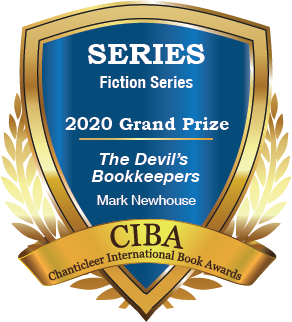
The GRAND PRIZE Winner of the 2020 CIBA New Division in BOOK SERIES:
is Proudly Awarded to
The Devil’s Bookkeepers – Three Books by Mark Newhouse
Happy Spring to our Northern Hemisphere Chanticleerians!
Happy Autumn to our Southern Hemisphere Chanticleerians!
What a crazy and challenging past year it has been! We are certainly looking forward to warmer and longer days here in the Pacific Northwest!
Spring here brings tidings of the Chanticleer Authors Conference (CAC)!
But, alas, this spring CAC will be VCAC once again due to Covid.
However, we have an exciting line-up of ACE Presenters for VCAC 21.
The VCAC 21 Sessions will be LIVE and INTERACTIVE!
Learn from the Best at VCAC 21!
The Virtual Chanticleer Authors Conference will take place April 21 – 24, 2021 via ZOOM webinar.
VCAC will feature bestselling international crime and mystery author Cathy Ace.
VCAC 21 and the 2020 CIBA Finalists Announcements will be broadcasted over ZOOM live from the Hotel Bellwether’s Admiral’s Room. Please scroll down for more information.
WEDNESDAY, April 21, 2021 (you may register for these separately from VCAC or combine) Registration is Required for the Master Class and the Workshop.
9:10 a.m. until noon — Book Distribution/Production WORKSHOP by Paul Hanson, Village Books
How to get Your Books on Independent Booksellers Shelves across North America – The WHY, WHAT, and HOWwith Paul Hanson, Village Books
1 – 4:30 p.m. — Master Writing Class with Jessica Morrell
Story People: The Good, the Bad, the Ugly as taught by Jessica P. Morrell
We’ll discuss the many roles for your story people from protagonist to minor characters, and delineate their impact on the plots and protagonist. However, we’ll also cover the outliers in fiction and the chaos, conflict, zest, and realism they add to your story world. To further expand our discussion we’ll also cover immersive, intimate viewpoint and narrative distance. Please bring your favorite imaginary folks to the workshop.
You may register for one or both of these without registering for VCAC21.
Click here to Register for VCAC 21 and check out Jessica’s always in demand Master Class and Paul’s workshop on how to get into national distribution to Indie Bookshops.
The next three days, Thursday, Friday, & Saturday, will offer the VCAC Sessions. These sessions will be held one at a time through out the day. These one hour-long sessions will be LIVE and Interactive with Q & A periods and discussion.
The day sessions will include Cathy Ace, crime and mystery author sharing her writing craft and marketing tips along with other stellar presenters.
The 2020 Chanticleer International Book Awards Announcements
The 2020 CIBAs FINALISTS
We will announce the titles and authors whose works advanced from the 2020 CIBA Semi-Finalists position to the Premier Finalists Level starting at 6 p.m. on April 22, 23, & 24 according to the following schedule:
Thursday, April 22, 2021 at 6 p.m. PST
CYGNUS – Science Fiction
Paranormal – Supernatural Fiction
OZMA – Fantasy Fiction
Mystery & Mayhem – Cozy and Not-So-Cozy Mysteries
CLUE – Suspense & Thriller
Global Thrillers – High Stakes and Lab Lit
Dante Rossetti – Young Adult Fiction
Click here to Register to Attend this 2020 CIBA Finalists Announcement Event. A confirmation will be sent you from ZOOM for this Chanticleer CIBA Event held on Thursday, April 22, 2021 at 6 p.m.
Friday, April 23, 2021 at 6 p.m. PST
Laramie – Americana & Western Fiction
Goethe – Post 1750s Historical Fiction
Chaucer – Pre 1750s Historical Fiction
Chatelaine – Romantic Fiction
Mark Twain – Satire, Allegory, and Humor Fiction
Somerset – Literary and Contemporary Fiction
Gertrude Warner – Middle-Grade Readers
Click here to Register to Attend this 2020 CIBA Finalists Announcement Event. A confirmation will be sent you from ZOOM for this Chanticleer CIBA Event held on Friday, April 23, 2021 at 6 p.m.
Saturday, April 24, 2021 at 6 p.m. PST – Non-Fiction Divisions
Hearten Book Awards – Uplifting, Humorous, Inspirational
Harvey Chute – Business, Enterprise, and Finance
Mind and Spirit Book Awards
Nellie Bly – Investigative and Long Form Journalism
Instruction & Insight Book Awards – How – To and Guides, Cookbooks
Journey Book Awards – Memoir, Survival and Trauma accounts
Little Peeps – Early Readers and Picture Books
Click here to Register to Attend this held on Saturday, April 24, 2021 at 6 p.m.2020. A confirmation will be sent you from ZOOM for this Chanticleer CIBA Event.
The 2020 CIBA Finalists announcements will be on FACEBOOK LIVE and on ZOOM webinars. Attendance is Free but Registration is Required for Each Day that you want to attend.
2020 CIBA 1st Place and Grand Prize Winners
and the
2020 Winners of the SHORTS and FICTION SERIES
The 2020 CIBA First Place and Grand Prize Winners along with the SHORTS and FICTION Series Winners will be announced on June 5, 2021 at the HYBRID CIBA Ceremony and Dinner.
The CIBA Ceremonies will be ZOOMED LIVE and on FaceBook LIVE Events.
Attendance is FREE, but Registration is Required. All VCAC registered attendees will automatically be registered and will be sent the ZOOM Link.
We will broadcast via ZOOM and FaceBook LIVE the 2020 CIBA WINNERS Announcements from the Hotel Bellwether on JUNE 5, 2021 starting at 3 p.m. PST
After VCAC 21 and the FINALISTS announcements, we post the link on how to register for this FREE Event. The link and registration from will be posted by May 1, 2021.
After the announcements, we will host a HYBRID VIRTUAL/LIVE Happy Hour for the virtual and in-person attendees at the Hotel Bellwether.
Because our Chanticleer Team and Local Chanticleer Authors will be vaccinated, we are having small dinner event to celebrate VCAC21 and the 2020 CIBA Winners.
It will be our first gathering since the initial Shelter-In-Place orders of early March 2020. And we are EXCITED. If you have been fully vaccinated and live within driving distance or want to fly in, we invite you to join us for an evening of camaraderie and celebration. If you would like more information about attending and participating, please email KBrown@ChantiReviews.com
When we sit down to write a story the project can seem overwhelming. The steady on and off of the cursor can be terrifying.
Maybe the blank space will go away if we don’t blink!
But it’s alright. Consider the following steps to help make your writing as easy as a stroll through the barnyard.
Priming the Pump for Your Next Work in Progress?
The pump may be a bit creaky when you start, but keep pumping. It will get easier.
1. Write down the broad strokes of your story.
Consider how you want your story to be structured.
Will it read with a traditional
Introduction
Inciting Incident
Rising Action, Climax
Falling Action
Resolution
Or will it follow something more unique from what’s typical (though the traditional structure obviously still works for many stories). Interested in more of what we’ve said about structure in the past? Check out our interview here with Peter Greene, a 2017 Goethe Award Winner.
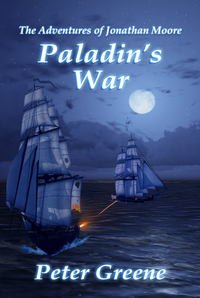
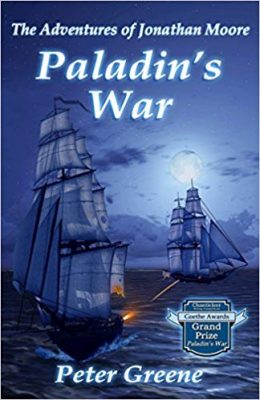
Peter Greene, author of the Goethe Grand Prize award-winning “Paladin’s War: The Adventures of Jonathan Moore
From there, write out how you generally see important parts of the story. This might mean you write the story out of order as you highlight any important scenes you want to work out in the beginning, middle, and end of your story. Think of these are your guideposts, leading you through your writing as you like them together, and giving you an excuse to always be excited when you sit down to write because you already have an idea of how the scene will work!
Many authors who do this find that they might end up going a different direction as they try to link up with these guideposts. While it might seem like that just means the writing was good practice, don’t delete the scenes you aren’t using! Save those scenes in a separate file. This can be great inspiration for one off short stories, or they might even fit in better in a future novel project. if by the time you reach that point in your story you realize it doesn’t fit. You can always edit it to fit, or at the very least feel good that you got some good practice in.
2. Brainstorm your characters a bit.
When starting out, many writers find character sheets helpful. The brilliant Jessica Morrell has written about character development and NaNoWriMo here, if you’re interested in reading beyond this. Some suggestions to consider regarding your character:
What are their basic physical characteristics?
How do they respond in stressful situations?
What’s one thing they can’t live without?
Who are the touchstone people in their life?
What do they keep in their refrigerator?
All these questions can lead to fun and surprising answers, but one of the most helpful activities can be writing a therapy session your main characters.
If you don’t know what therapy looks like and you’re a writer…well, you might want to consider therapy.
Joking aside, in a “therapy conversation” the characters must justify why they exist and what they plan to do in the book. How will they respond to the problems their facing? What is their response when the therapist asks them what brings them to therapy today? Now, if the character doesn’t actually get the advice they might receive in this scene (remember, it’s an exercise, not really something that needs to happen in your work), what choices will they make? Writing this out can help the author feel much closer to the characters as real people.
Remember, characters can feel much more real if you, the author, love them. Keep that in mind when you write your terrible villain—someone in your world probably loves them deeply. What makes other characters love your villain and what do you love about them?
3. Worldbuilding
Like character and structure, you’ll want a good handle on your worldbuilding. This can be an excellent time to view your own assumption about how the world works and play those through in a story. Or you can commit to a worldview that fascinates you. One great example of this is Robert Jordan’s Wheel of Time series.
Jordan, who also authored the Conan The Barbarian series, was educated as a nuclear physicist. When his characters step into an alternate dimension (think evil Narnia), time flows differently, which means objects in the characters’ peripheral vision appear closer as the characters move. This little detail blew me away in terms of giving the world a creepy feeling of the forces of evil closing in on the beloved hero, whereas it made my brother who was getting his PhD in particle physics jump up and down in excitement as he explained the why of the description.
The answer was that, following the theory of relativity, when you move extremely fast, the world compresses toward you–really!
Furthermore, Jordan uses a Platonic worldview to govern his magic system. Plato believed that every person and object has an essential and transcendental quality, a whatness that was key to their existence. Whether this is true or not, Jordan’s magic users followed this rule strictly as their magic came from any part of their identity that could be deemed essential—and it was true in Jordan’s world, regardless of the implications in our world.
Some of the most amazing worldbuilding happens in Lab Lit, where authors need to have excellent expertise of the subject they’re writing about, while at the same time understand where they’re going to move into their own interpretation of the world. We all have a way in which we imagine our reality, and it’s important to know that we’re putting that worldview into our own work.
If lab lit describes what you do, consider submitting to ourCygnus Awards or our Global Thriller Awards, both of which offer categories in hard science fiction and lab lit that will let your researched work shine.
All of these will lead, not only to a more cohesive early draft, but to a first draft that finishes sooner. Planning things out means that you always have something to look forward to because you already wrote down all the parts of your book that you felt excited to write.
Remember, your book will be alive and in motion right up until it goes to print (and if there’s a reprint it can always come to life again). Just because you start with a specific good idea doesn’t mean you’re married to it and need to follow it for forever.
For more great advice on World Building, check out Diane Garland’s (Top Story Bible/World Builder Editor) take on it here.
4. The Draft is Done, Now What?
Once you feel like you have a cohesive work, the next step is to find eyes to look over your work. Professional books always have multiple sets of eyes. Ask yourself where you need to go with the draft from here. If you know that there’s going to be a lot of changes, and you’ll be able to catch a good chunk of them, consider a Manuscript Overview here, which will give you a strong sense of what works and what needs to be improved in your story. If you’re at a wall in terms of what can be added, you should check out our Editorial Services here, which will give you a much closer analysis of your work and help you see, on a line level, how you can polish your work to a fine shine.
Working on your own is great, but there’s only so far anyone can go before they need that crucial second set of eyes on their work before it goes off to be edited.
Chanticleer Editorial Services – when you are ready
Did you know that Chanticleer offers editorial services?We do and have been doing so since 2011.
Tools of the Editing Trade
Our professional editors are top-notch and are experts in the Chicago Manual of Style. They have and are working for the top publishing houses (TOR, McMillian, Thomas Mercer, Penguin Random House, Simon Schuster, etc.).
If you would like more information, we invite you to email Kiffer or Sharon at KBrown@ChantiReviews.com or SAnderson@ChantiReviews.com for more information, testimonials, and fees.
We work with a small number of exclusive clients who want to collaborate with our team of top-editors on an on-going basis.Contact us today!
Chanticleer Editorial Services also offers writing craft sessions and masterclasses. Sign up to find out where, when, and how sessions being held.
Sessions will be recorded and available later viewing through VIMEO exclusively to all registered participants.
Only one session will be presented at a time so YOU select which ones you want to see LIVE and which ones you will want to view later via VIMEO or revisit the session. Master Classes and Workshops will be held the following week starting on Wednesday, Sept 16, 2020.
Virtual Author Events: How To Pivot from LIVE to VIRTUAL for Book Launches, Book Clubs, and Book Eventswith Janet Oakley, Sean Dwyer, & Gail Noble Sanderson
Book to Film Panel Discussionwith Scott Steindorff, Robert Dugoni, and J.D. Barker. Moderator is Chris Leibig
It Takes a Village to Make a Film – Authors, Actors, Screenwriters, Producers, & Directorsa Discussion with Tina Sloan, Scott Steindorff, & Kaylin McFarren, and Talk to Crows Production Company
The Critical Role Authors Play in Fostering a Better Society –Janice S. Ellis, Ph.D.
Exploration of New and Revolutionary Ways of Storytelling including Delving into Immersive, Mixed Reality, and Digital Art –Scott Steindorff
How to Have 1,048 Readers Requesting Your Book in the 1st Day of a 100 Book Giveaway –Kaylin McFarren shares her Goodreads and Amazon Secrets to increasing book sales.
Writing and Selling Children’s Books – Children’s Book Authors Share Their Tips & Tools – Denise Ditto Satterfield, Barbara Jean Hicks, M.J. Evans,
Voice Driven Technology and the Future of Publishing – Paul Cutsinger
Why Amazon Alexa Should Be Telling Your Story – 3 Sessions– Amy Stapleton and Wayne Richard
How to Create a Sustainable and Compelling Series – Panel : Diane Garland, Wendy Delaney, Pamela Beason, J.D. Barker
5 Reasons Why You Should Publish Your Epubs on Bookchain –Simon-Pierre Marion
Your Story World: Beyond Eye Color and the Weather – Diane Garland
Don’t be Left OUT and OFF the Airwaves – Intro to Podcasting with Hindenburg Systems’ expert Anita Michalski
Historical Fiction–Chris Humphreys will examine how to both fictionalize real characters and realize fictional ones.
Just Call Out My Name – Collaborating with Other Authors –Janet Shawgo & Sean Dwyer
Writers: Improve Your Productivity and Your Health by Correcting Posture with Tana Hope
5 Reasons Why You Should Publish Your Epubs on Bookchain –Simon-Pierre Marion
Sessions Start in just 7 Days! Tuesday, Sept. 8, 2020!
The 2019 CIBA Awards First Place Awards Winners will be announced every day (Tuesday – Saturday, Sept 8 -12, 2020) starting at 5 p.m. PST at the CIBA Virtual Ceremonies. All 2019 CIBA Finalists will be recognized during VCAC!
The 2019 CIBA Grand Prize Division Winners and the Overall Grand Prize for Best Book will be announced and recognized on Sunday, Sept 13, 2020 starting at 5: 30 p.m. PST ceremony.
All announcements are LIVE and we will have a Virtual Celebration Party after each day!
Have your favorite bubbly ready to cheer on your favorite authors! LIVE and INTERACTIVE!
Welcome to the SPOTLIGHT on post-1750 Historical Fiction novels… in other words,
Welcome to the GOETHE Book Awards!
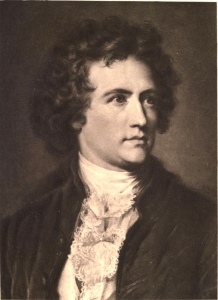
Why do we like Johann Wolfgang von Goethe so very much? It’s simple! He’s the guy who wrapped up everything we believe in with this simple sentence:
“Whatever you can do or dream, you can begin it. Boldness has genius, power, and magic in it.” – Goethe
Of course, this was also said about Goethe (Super Goethe by Ferdinand Mount) that “…[his] company could be exhausting. One minute he would be reciting Scottish ballads, quoting long snatches from Voltaire, or declaiming a love poem he had just made up; the next, he would be smashing the crockery or climbing the Brocken mountain through the fog.”
So…, moving on… Goethe was also a very cool guy. In his lifetime, he saw the beginning of the Industrial Revolution in 1750 through Mary Shelley’s publishing of Frankenstein in 1818 – and everything in between! Check out the list of what happened during those nearly seventy decades at the end of this post – you will be A-Mazed!
Now, Welcome to the GOETHE Hall of Fame!
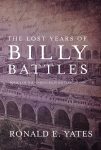
We wish to congratulate 2018’s Goethe Book Awards Grand Prize Winner –
Billy Battles is as dear and fascinating a literary friend as I have ever encountered. I learned much about American and international history, and you will too if you read any or all of the books. Each is an independent work, but if read in relation to the others, the reader experiences that all too rare sense of complete transport to another world, one fully realized in these pages because the storytelling is so skillful and thoroughly captivating. Trust me; you’ll want to read all three volumes. Chanticleer Reviewer’s Note
Mr. Ronald Yates not only won Grand Prize in the CIBAs 2018 GOETHE Awards – he won OVERALL GRAND PRIZE!
To learn more about Ronald E. Yates, please click here.
Congratulations to the 2018 Goethe Book Awards First Place Category Winners!
Submit your manuscript or recently released Historical Fiction (post-1750s) to the Chanticleer International Book Awards!
Want to be a winner next year? The deadline to submit your book for the Goethe Awards is June 30, 2020.Enter here!
Grand Prize and First Place Winners for 2019 will be announced during our 2020 conference, #CAC20.
The Grand Prize and First Place for 2020 CIBA winners will be held on April 17, 2021.
Any entries received on or after June 30, 2020, will be entered into the 2021 Goethe Book Awards that will be announced in April 2022.
As our deadline draws near, don’t miss this opportunity to earn the distinction your historical fiction deserves! Enter today!
The GOETHE Book Awards is a division of the Chanticleer International Book Awards – the CIBAs.
The 2020 winners will be announced at the CIBA Awards Ceremony during #CAC20. All Semi-Finalists and First Place category winners will be recognized, the first-place winners will be whisked up on stage to receive their custom ribbon and wait to see who among them will take home the Grand Prize. It’s an exciting evening of dinner, networking, and celebrations!
Goethe
Some events that occurred during Goethe’s lifetime:
1750 – The Industrial Revolution began in England
1756 – Wolfgang Amadeus Mozart was born in Salzburg Austria
1761 – The problem of calculating longitude while at sea was solved by John Harrison
1765 – James Watts perfects the steam engine
1770 – Ludwig van Beethoven was born in Bonn, Germany
1774 – Goethe’s romantic novel, The Sorrows of Young Werther, propels him into European fame
1774 – Goethe’s play Gotz von Berlichingen, a definitive work of Sturm und Drang premiers in Berlin
1776 – America’s 13 Colonies declare independence from England. Battles ensue.
1776 – Adam Smith publishes the Wealth of Nations (the foundation of the modern theory of economics)
1776 – The Boulton and Watt steam engines were put to use ushering in the Industrial Revolution
1783 – The Hot Air Balloon was invented by the Montgolfier brothers in France.
1786 – Le Nozze di Figaro by Mozart premiered in Vienna
1789 – George Washington is elected the first president of the United States of America
1780 – Antoine Lavoisier discovers the Law of Conservation of Mass
1789 – The French Revolution started in Bastille
1791 – Thomas Paine publishes The Rights of Man 1792 – Napoleon begins his march to conquer Europe
1799 – Rosetta Stone discovered in Egypt
1802 – Beethoven created and performed The Moonlight Sonata 1802 – A child’s workday is limited to twelve hours per day by the British parliament when they pass their first Factory Act
1804 – Napoleon has himself proclaimed Emperor of France
1808 – Atomic Theory paper published by John Dalton
1811 – Italian chemist Amedeo Avogadro publishes a hypothesis, about the number of molecules in gases, that becomes known as Avogadro’s Law
1811 – Jane Austen’s Sense and Sensibility was published anonymously. It was critically well-received
1814 – Steam-driven printing press was invented which allowed newspapers to become more common
1818 – Mary Shelley publishes Frankenstein 1832 – Goethe’s Faust, Parts 1 & 2 are published posthumously (March 22, 1832)
In 1830, Eugene Delacroix created Liberty Leading the People to epitomize the French Revolution. The movement officially began with the Storming of the Bastille on July 14, 1789, a day that is still celebrated in France. The French people were rebelling against the extreme wealth of the French royal family who overtaxed and underpaid the people of France to the point where they could not even feed themselves and had nothing to lose by going to battle. They were starving to death. The uprising of 1830 was featured in Victor Hugo’s Les Miserables (1862)
Claude-Michel Schönberg and Alain Boublil’s (1980s) musical can look at Delacroix’sLiberty Leading the Peopleand hear the lyrics of the song that serves as a call to revolution:
Do you hear the people sing? Singing a song of angry men? It is the music of a people. Who will not be slaves again.
Liberty Leading the People by Eugene Delacroix, 1830. On display at the Lourve, Paris.
Meet Peter Greene, CIBA Award-Winning author of High-Seas Action Adventure novels that appeals to all ages!
If you’ve ever been to a CAC (Chanticleer Authors Conference), you might recognize author Peter Greene. He’s the one that sits on the outside aisle, quiet and unassuming. Well kids, don’t be fooled! Peter has one of the best imaginations I know of—and there is a reason for his works are award-winning! You’ll just have to read on to discover it yourself!
Peter Greene took home the Goethe Book Awards Grand Prize in the 2017 CIBAs for Historical Fiction for Paladin’s War.
CIBA 2017 Goethe Book Awards Winners Joe Vitovic & Peter Greene
Chanticleer: Tell us a little about yourself: How did you start writing?
Greene: My parents were both prolific storytellers, and they were amazingly descriptive, especially my Father. He would act out the voices and mannerisms of all the people. I learned a lot from trying to outdo them. Then in high school, when I took a creative writing class, my teacher, Mrs. Beem, would just yell out something like “a story with lots of movement” or “use the words ‘freedom’ and ‘cheesecake’ in a short story” and I would just go. The other kids sat and struggled, but I already had a plot, characters, and all that in seconds. She gave me A’s all the way through.
Structure: Pantzer or Plotter?
Chanti: That sounds like a great way to be introduced to storytelling!
So just how structured are you in your writing work?
Greene: Very structured, but only in the process, not in the structure of the piece.
I first list “essentials” – just the essential things I want in the story, in no order, and some may make it in there, some may not. This way I get ideas out of my head before they are lost in the ether!
Then comes some basic research, which is ongoing through the process of course, but I just want to make sure I’m building my fiction on a solid, believable foundation.
I then outline like a madman, very detailed at times, sometimes with partial chapters written out, sometimes with crude drawings! These outlines are dozens of pages long, and I print them and literally wallpaper my office with them! The outline for Paladin’s War covered three walls in my office!
Finally, I start the actual writing, usually in chronological order, but that is a rule I break depending on my mood.
When I’m done, I have my wife read the book out loud to me so I can hear the rough spots-that is critical— I find so much that makes me cringe: from unnatural dialogue to foggy descriptions to just clunky passages. I judge a competition and this is the advice that I tell almost every beginning author who enters the contest.
Then, I send to the editor for evaluation. But all of these steps are ‘writing’ to me. And I love all of it.
Authors Who Have Influenced Your Work
Chanti: That’s a good way to approach your writing! I like the Madman Outliner… sounds like the title of your next book! Name five of your favorite authors and describe how they influence your work.
1) Kurt Vonnegut, mostly his later stuff, like Breakfast of Champions because he became so irreverent after his ‘mainstream’ success. He taught me that style can change, and be ANYTHING as long as it has something valuable to say.
2) Erma Bombeck, again showing that style, if it is true, can let you do anything. I would read her columns, and even though I was about twenty-two years old and a single man in Los Angeles when I discovered her, I identified with her message and I laughed. Her writing seems so effortless! I miss her.
4) David McCullough. This is cliché, but he makes history come alive, and his writing voice (as well as his speaking voice), is so crystal clear. No extra stuff, just the best, most important things are covered in a wonderful manner that intrigues us. He never put his opinion in his works, because he doesn’t have to. History is history, and it is interesting enough.
5) J.R.R. Tolkien because he is the best at everything: plot, character, situation, excitement, humanity, emotion, poetry, prose and adventure. I have read the Silmarillion at least ten times and Lord of Rings each year since I was fourteen. I am always amazed at the scope of his stories, and the languages – truly amazing. I have learned from him that no matter how good I think I can be at times, I am no master. He is the true master. I would never try epic fantasy because the bar has been raised so high.
About Dialogue
Chanti: Great insights – and choices! You’ve given us something to chew on. What areas in your writing are you most confident in? What advice would you give someone who is struggling in that area?
Greene: Dialogue is pretty easy and natural for me, maybe because of my theatre training. As far as advice for others who struggle with dialogue, I’d say this: if you are always looking for a witty, snappy, clever, smart ways for your characters to speak, STOP! It will all come out cliché, and no one talks in clichés. It will read like an episode of some seventies, low-budget television series. J.D. Barker said at the last CAC19 that he sits in a Starbucks, has a cup of coffee and listens to what the people around him say, and he types it into his laptop! That is brilliant. It’s natural. I tried it. It was a blast!
JD Barker presented at CAC19!
Expanding Readership and Promoting Literacy
Chanti: Ah, that’s my favorite thing to do! What do you do in your community to improve/promote literacy?
Greene: For the Adventures of Jonathan Moore series, I specifically targeted YA readers. I consciously write each book to graduate the reader from the fourth-fifth grade reading level with Warship Poseidon, to the sixth-seventh grade level with Castle of Fire, then Paladin’s War finishes on the ninth-tenth grade level. If a youngster reads all three, he jumps several reading levels! I also donate books to schools and libraries in the area and have done a few talks to writing classes.
Honestly, my book reviews from Chanticleer after my winning the Goethe award in 2018 and the (Chanticleer) review of Paladin’s War exploded my sales. I increased my sales by over 400%, so that worked for me! – Peter Greene
Marketing and Sales Tips
Chanti: That’s awesome! So, you give away books and present writing classes, what else do you do to market your books? What’s worked to sell more books, gain notoriety, and expand your literary footprint?
Greene: I don’t do enough, but when I learn something, I do it. I enter contests that are legit. Advertising can work, it just depends on finding what works for you. Honestly, my book reviews from Chanticleer after my winning the Goethe award in 2018 and the (Chanticleer) review of Paladin’s War exploded my sales. I increased my sales by over 400%, so that worked for me! You just have to try everything, meet people, and spread the word – without saying “Hey, I wrote this great book, you should read it.” Let others speak for you, and most of all, let your writing speak for you.
Let others speak for you, and most of all, let your writing speak for you. – Peter Greene
How do you separate your books in a crowded marketplace?
Chanti: That is incredible! I love that – especially how Chanticleer Reviews helped to boost your book sales by 400%! I think we need that on a t-shirt…
What is different about your series from other YA books out there?
Greene: Two things: I avoided all magic, superpowers and paranormal material. That’s all fun – but there is too much of it out there already. None of us will ever discover we have wizards or Olympians for parents or have a mystical ability. For this series, I wanted to point out that real heroes do exist, and they have throughout history.
I also decided to take it easy on the terminology and more unsavory aspects of life at sea. I’ve always loved the classic sea stories in Stevenson’s Treasure Island, Forester’s Horatio Hornblower, and O’Brian’sJack Aubrey series, but I couldn’t help thinking that for most of us, unless one had supporting texts and companion guides to get through all the jargon and technicalities, one could easily become lost-and maybe surrender to something easier to read. That would be too bad. And the things you do really need to know, well, wouldn’t it be best to learn that along with the characters? The ones that started out as land-lubbers just like you and your kids?
The Adventures of Jonathan Moore books are about one would-be hero and his friends who try to succeed using only their courage, their wits and industry alone – no magic necessary. And though I will never fill the shoes of Stevenson, Forester or O’Brian, I can attempt to follow in their footsteps.
Chanticleer: That’s great! But you never know…you may be the one to fill their shoes if “Adventures of Jonathan Moore” are any indication!
Now we would really do need to know a little bit more about when did you realize you that you were an author?
Greene: I got my degree in Theatre from Illinois State, and a playwriting professor said I had a “knack for dialogue and physical humor.” That made me continue writing. I wrote screenplays after college, and a studio exec at 20th Century Fox pulled me aside and said “you really can write, keep it up” – then years later, my first novel, Warship Poseidon won the Adventure Writers Competition’s Grandmaster award, and Clive and Dirk Cussler chose the winner. When Clive announced my name, he said “I read your book, you know. Beautifully written.” THAT made me think that maybe I have a little writing ability. So when I write, I always think “maybe Clive and Dirk will read this so it better be my best effort.”
Editor’s Note: Clive Cussler’s books have been published in more than 40 languages in more than 100 countries. They are New York Timesand international bestsellers. He has written 17 books in a row that reached the New York Times’ fiction best selling list. He is of a select group of authors to achieve this status. Cussler has also published more than 50 novels—quite the back list that keeps him on the list of richest authors in the world.
Chanticleer: Holy Moley, man! That’s Clive & Dirk Cussler! I can’t… I just need a moment… Okay then, what led you to write what you write?
Greene: I write a lot of different stuff in different genres, because, why not? The Adventures of Jonathan Moore series is YA historical fiction, and it all happened by accident. One night, as I was putting my children to bed, I realized that I was tired of reading the books available on our bookshelf. Knowing they were crazy about the Pirates of the Caribbean movie, I just said, “Tonight I’m going to tell you a story about twelve-year-old Jonathan Moore who lived in a dark and filthy alley, and how he ended up a hero on a tall sailing ship.” I kept telling a little bit each night, making it up as I went. My wife, who was listening to the stories each night, suggested that I write it as a novel. Ten years later I have three books in the series!
Chanti: And so the magic began… How do you come up with your ideas for a story?
Greene: Good question! Usually, something just clicks that I observe or realize, and off I go. For example, I was thinking about hidden social casts in America and I thought “Wow. People don’t see it, do they?” So BAM! This Sci-Fi idea hits me for a novel, the characters came quickly and then a plot and now the outline is almost finished. I’m starting it now. It’s a strong female character who uses history and propaganda to, well, you will have to read it!
Chanti: A SciFi novel! We can’t wait to read it! Are you going to enter it into the Cynus Book Awards?
Greene: Definitely!
Chanti: Thank you, Peter Greene with an “e,” and we look forward to seeing you at CAC20!
Midshipman Jonathan Moore scrambles aboard just in time for the departure of the HMSDoggard (a horrible name, soon replaced with her original name, the Danielle). The latecomer is welcomed by some of his friends from an earlier voyage on the HMS Paladin, including Seaman Sean Flagon, Lieutenant Thomas Harrison, Bosun Steward, and even Captain William Walker.
Jonathan had not expected to be on this voyage, as he was only recently reunited with his father, Captain (soon to be Admiral) Nathaniel Moore, who had been captured and imprisoned by the French earlier in the Napoleonic Wars. This left Jonathan orphaned on the streets of London until he and Sean were pressed into service on the Paladin. But Captain Moore escaped and returned to England. While loath to see Jonathan leave, he eventually realizes that he must allow his son to follow in his footsteps in the Royal Navy.
After meeting with Captain Walker, Jonathan finds his quarters in the cockpit, shared with the other midshipmen, a rude Wayne Spears, and his sidekick Timothy Lane. Jonathan thinks he will simply avoid the two and spend time with Sean and his other friends, but when Spears pushes Sean to the floor, enmity ensues.
The Danielle’s arrival in Nassau brings relief. Delain Dowdeswell, whom Jonathan had befriended on an earlier voyage to Nassau, is spotted rappelling down a cliff overlooking the harbor—the adventurer that Jonathan and friends already know. Delain’s sisters, Rebecca and Penelope, deliver an invitation to Captain Walker from their father, the governor, to dine at the mansion, bringing his officers and Sean. At dinner, Jonathan is paired with Delain, Harrison with Rebecca, and Sean with Penelope, whose company they enjoy even more than the scrumptious food. Lady Dowdeswell asks the captain if her daughters can be accommodated on the ship for its return trip to London, where they are to receive further education—a request happily agreed to by all except Delain, who fears an end to her adventuring.
On the balcony after dinner, Jonathan gives Delain a silver necklace with a dolphin pendant that he had bought in London for her. Her delight is interrupted by Spears’s intrusion. Harrison approaches, fearing trouble, but Jonathan remains cool. It is Delain who finds revenge by “accidentally” tromping on Spears’s toe with her sharp heel. Spears will not forget this, nor his desire to end Jonathan’s career in the Navy, or perhaps his life altogether.
Before the Danielle departs in search of pirates, the captain agrees to take Delain and her teacher, along with Jonathan and Sean, to a nearby island where they hope to see turtles hatch and make their run to the sea. They are rowed ashore by marines Hudson and Hicks, who will stay overnight with them until the Danielle returns. Delain and Jonathan arrive in time to help the tiny turtles reach the sea by chasing away the seagulls. Delain is a delightful, resourceful young woman who manages to be at the center of everything that happens. What the trio of Jonathan, Delain, and Sean discover in the ancient “Castle of Fire” and its secrets will have readers holding their breath!
Peter Greene has done it again—another well-penned, colorful, action-packed tale to be read for pure pleasure. Make sure you don’t miss Books 1, Warship Poseidon and 3, Paladin’s War. Highly recommended!
Author Peter Greene often read to his two children at bedtime. But one night, the bookshelf held nothing that enticed them. So, as he explains in the Acknowledgements to this book, he decided to tell them a story. The first words that came out of his mouth were: “Twelve-year-old Jonathan Moore lived in a three-sided wooden box at the end of a dark and filthy alley.” Thus was born the title character of The Adventures of Jonathan Moore, who Greene decided should be “as normal and as human as any real child,” whether in the nineteenth or the twenty-first century.
In England of the early 1800s, help for orphans was the duty of family or church. When twelve-year-old Jonathan Moore’s mother dies, and he hears nothing from his father, a Navy captain, he shuns appealing to either family or church. Thus, he finds himself homeless on the streets of London. Fortunately, he makes friends with a boy of similar age, Irish-born Sean Flagon. Together, the boys manage to sweep enough London chimneys to keep them from starving, until one rainy day when first Sean and then Jonathan are snatched by a group of men and soon find themselves in a cage strapped to a cart headed for the Chatham docks. They’ve been “pressed” into service on one of His Majesty’s warships, the Poseidon, which they soon discover isn’t such a bad lot at all.
The two boys look in awe at the rows of cannon (cannon being both singular and plural in England). And when shown to the closet of a room that is to be their new quarters, they realize that, though tiny, it’s dry, and there are rope hammocks to sleep in, wrapped in blankets. That certainly beats a leaky wooden box in an alley, with a piece of board for a cover. Better yet, they’re soon sitting at tables on the main deck, where hot fish stew is served for dinner (as it is most days, they soon learn), accompanied by hardtack or softtack (hard bread or rolls). The next morning Jonathan awakes to see huge white sails unfurled in the wind. The Poseidon is underway.
Much adventure and not a little danger await them, from one side of the North Atlantic to the other. After all, England is at war against France, and Napoleon Bonaparte has many fine French warships. One of them is the Danielle, which the Poseidon and her crew encounter more than as they make way from Lisbon to the Bahamas.
The aim of both these enemy warships is to search for an ancient Spanish treasure chest, which an equally ancient map indicates is buried on Skull Eye Island. On peaceful days at sea, there are lessons to be learned about being a seaman—taught aboard ship by experienced sailors, junior and senior officers, and even Captain Walker. The boys’ lessons also include fencing and swordsmanship, which stand in good stead when they must battle the French crew aboard the Danielle.
This thrilling tale of high adventure is not without an element of poignancy, however. Jonathan senses that several on board the Poseidon knew or know about his father, Captain Nathaniel Moore, who the boy had assumed was dead. They seemed to recognize him by name, and they treat him with more caring and respect than the other young boys, including his friend Sean. Yet, they consistently change the subject when he tries to question them.
Exciting and fast-moving as Warship Poseidon is, the tale is rendered even better by its author’s skill as a storyteller. Greene has thoroughly researched this era—including its shipbuilding, the administrative management of both English and French Navy vessels, the design of the warships themselves, and how their crews lived aboard them and battled from them. The story is presented in infinite detail, painted in vivid color, and written in a literary style. Much care has gone into the characters’ speech—emulating the language of the time while ensuring that it can be understood by its twenty-first-century readers, whether they be young or old—since this tale is one to be read with pleasure by all generations.
To Peter Greene we would say—in British parlance both then and now—”Huzzah! Huzzah! Huzzah!” So, have great fun reading Warship Poseidon and then proceed without delay to Books Two and Three: Castle of Fire and Paladin’s War. But don’t stop there! Mr. Greene declares there may be a prequel in the works as well as another type of series beginning!
We are excited and honored to officially announce the Grand Prize Winner and the First Place Category Winners for the 2018 GOETHE Book Awards at the annual Chanticleer Authors Conference and the 2018 Chanticleer International Book Awards ceremony. This year’s ceremony and banquet were held on Saturday, April 27th, 2019 at the Hotel Bellwether by beautiful Bellingham Bay, Wash.
We want to thank all of those who entered and participated in the 2018 Goethe Book Awards for post-1750s Historical Fiction, a division of the Chanticleer International Book Awards.
Peter Greene,the author ofPaladin’s War, theGrand Prize Winner of the 2017 Book Awards for Goethe Historical Fiction (CIBAs), announced the 2018 Goethe Award Winners at the Chanticleer International Book Awards Banquet and Ceremony.
An email will go out to all First Place Category Winners and Grand Prize Winners with more information, the timing of awarded reviews, links to digital badges, and more before May 31st, 2019 (approximately four weeks after the awards ceremony). Please look for it in your email inbox.
When we receive the digital photographs from the Official CAC19 professional photographer, Dwayne Rogge of Photo Treehouse, we will post the photographs of GOETHE award winners on this page.
Click here for the link to theGOETHE Semi-Finalists.
This post will be updated with photos and more information. Please do visit it again!
The deadline for submissions into the2019 GOETHE Book Awardsis June 30, 2019 Midnight (PST).
Our next Chanticleer International Book Awards Ceremony will be held on Saturday, April 18th, 2020, for the 2019 CIBA winners.
The magic of living in 19th century England comes to life in the early chapters of Peter Greene’s delightful, but also exciting, story—with British Navy Midshipman Jonathan Moore and daughter of the Governor of the Bahamas, Delain Dowdeswell, enjoying the fashionable new treat of ice cream, then joining their friends and family members at the boat race in Dover on a beautiful day. Granted, that wasn’t how everyone lived, and even these special few lived daily lives far less comfortable than do most ordinary people today. But they didn’t know that.
Jonathan is the son of Admiral Nathaniel Moore, who had been imprisoned in France during the Napoleonic wars. This happenstance orphaned the boy, who lived a sorry few years on the streets of London until he was found by his father’s friend, Captain Walker. The admiral was eventually rescued, and he and Jonathan were reunited. Delain and her sisters, Penelope and Rebecca, had been sent by their parents to live with the Walkers, who, with the help of Barbara Thompson, were tasked with teaching the sisters to become ladies. That seems unlikely for the irrepressible, fourteen-year-old adventuress, Delain, who once stowed away on the HMS Poseidon, from which she fired more than one cannon shot in battle!
Shortly after the race at Dover, however, the young midshipman, also fourteen, boards the HMS Paladin, along with his former street friend Sean Flagon, soon to become a Marine captain, board the HMS Paladin, leaving their friend Delain behind as they head straight into an adventure way beyond their expectations. Not surprisingly, Delain soon finds herself in a spy adventure right in London. And perhaps not so strangely for these three musketeers, their adventures overlap.
Greene paints not only the scenes in London but those on the Mediterranean, the Adriatic, and even the Black Sea with vivid color and action. He allows us to experience life on the sailing ships of His Majesty’s Royal Navy, telling us what the officers and crew wear, what they eat, where they sleep, how they talk, and especially what they do. As Peter Greene writes in his Acknowledgments, he “hoped to create a series that would capture the excitement and thrill of being on one of His Majesty’s wind-powered warships in the [Lord] Nelson era.”
The action on the HMS Paladin, as well as her sister ship, the HMS Echo, mostly unbeknownst to each other, rise to a fever pitch as they find themselves engaged in an explosive battle not with the French, but with the Russians and even the Turks! As you might guess from the overall tone of Greene’s story, the British, at least most of them, live to return to England.
This book was such fun to read. I’m hoping Peter Greene will give us a Book Four. Meanwhile, those who haven’t read Books 1 and 2 of The Adventures of Jonathan Moore, Warship Poseidon, and Castle of Fire, as well as a number of earlier books, will have some good reading to tide them over.





















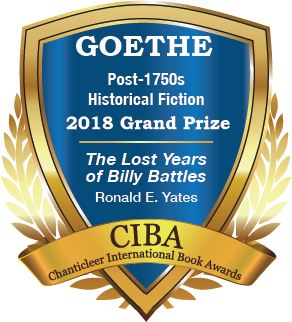
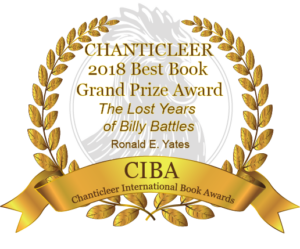
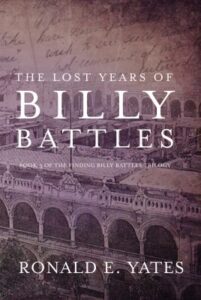
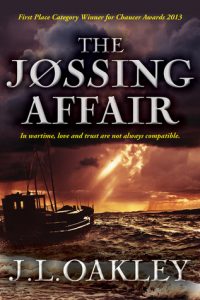





 We are excited and honored to officially announce the Grand Prize Winner and the First Place Category Winners for the 2018 GOETHE Book Awards at the annual Chanticleer Authors Conference and the 2018 Chanticleer International Book Awards ceremony. This year’s ceremony and banquet were held on Saturday, April 27th, 2019 at the Hotel Bellwether by beautiful Bellingham Bay, Wash.

 The magic of living in 19th century England comes to life in the early chapters of Peter Greene’s delightful, but also exciting, story—with British Navy Midshipman Jonathan Moore and daughter of the Governor of the Bahamas, Delain Dowdeswell, enjoying the fashionable new treat of ice cream, then joining their friends and family members at the boat race in Dover on a beautiful day. Granted, that wasn’t how everyone lived, and even these special few lived daily lives far less comfortable than do most ordinary people today. But they didn’t know that.