Author: paula-butterfield

  • June SPOTLIGHT on CHAUCER AWARDS – Early Historical Fiction, Historical Fiction, Historical Romantic Fiction, Crusades, Medieval

    June SPOTLIGHT on CHAUCER AWARDS – Early Historical Fiction, Historical Fiction, Historical Romantic Fiction, Crusades, Medieval

    Pre 1750 Historical Fiction Award

    Do you have an early historical fiction manuscript or recently released novel? Submit your work to the CIBA 2019 CHAUCER Awards by
    June 30, 2020, and see how your work stacks up against others. 


    We know you want to – because we never tire of promoting our authors’ achievements!

    As in Chaucer’s words in the Nun’s Priest Tale of the Canterbury Tales,

    “For crowing there was not his equal in all the land.”
     

    Click here to find out more. 

    We titled the Chanticleer International Book Awards (CIBAs) division for Pre-1750s Historical Fiction the Chaucer Awards, after the English poet and author of the Canterbury Tales, because #CHAUCER.

    But seriously, did you know that The Canterbury Tales is considered one of the greatest works in the English language? In fact, it was among the first non-secular books written in Middle English to be printed. So, yeah, #Chaucer
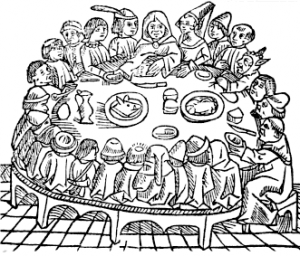
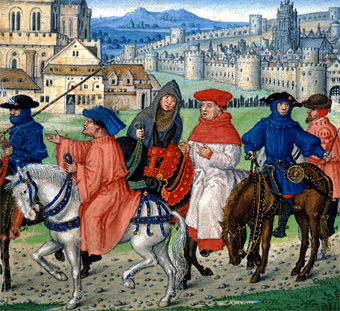
    A woodcut from William Caxton’s second edition 0f the Canterbury Tales printed in 1483

    Some interesting tidbits about Geoffrey Chaucer

            • born c. 1342/43 probably in London. He died on October 25, 1400
            • his father was an important London vintner
            • His family’s finances were derived from wine and leather
            • Chaucer spoke Middle English and was fluent in French, Latin, and Italian
            • He guided diplomatic missions across the continent of Europe for ten years where he discovered the works of Dante, Petrarch, and Boccaccio whose The Decameron had a profound influence on Chaucer’s later works
            • He married well as his wife received an annuity from the queen consort of Edward III
            • His remains are interred in the Westminster Abbey


     As our deadline draws near, don’t miss this opportunity to earn the distinction your historical fiction deserves!  Enter today!

    Welcome to the CHAUCER BOOK AWARDS HALL OF FAME

    Click on the links below to read the Chanticleer Review of the award-winning work!
    Pre 1750 Historical Fiction Award


    The 2018 Chaucer Book Awards Grand Prize Winner:
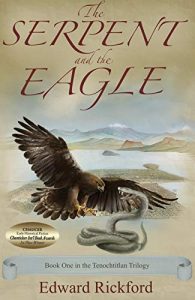
    The SERPENT and The EAGLE  by Edward Rickford 


    2018 Chaucer Book Awards for Pre-1750s Historical Fiction First in Category Winners:


    The 2017 Chaucer Book Awards Grand Prize:

    The Traitor’s Noose: Lions and Lilies Book 4 by Catherine A. Wilson and Catherine T. Wilson
    2017 Chaucer Book Awards for Pre-1750s Historical Fiction First in Category Winners:


    The 2016 Chaucer Book Awards Grand Prize Winner:

    (Chaucer Book Awards was the Historical Fiction division until we divided it for the 2016 CIBAs into two divisions because of the number of entries:

    Goethe Book Awards for post-1750s Historical Fiction and Chaucer Book Awards for pre-1750s Historical Fiction).

    The Towers of Tuscany by Carol M. Cram


    2016 Chaucer Book Awards for Pre-1750s Historical Fiction First in Category Winners:


            The 2015 Chaucer Book Awards Grand Prize Winner:

            (Chaucer Book Awards was the Historical Fiction division until we divided it into two divisions for the 2016 CIBAs because of the number of entries:

            Goethe Book Awards for post-1750s Historical Fiction and Chaucer Book Awards for pre-1750s Historical Fiction).

            Valhalla Revealed by Robert A. Wright

            Valhalla Revealed by Robert A Wright


            2015 Chaucer Book Awards for Pre-1750s Historical Fiction First in Category Winners:


            The 2014 Chaucer Book Awards Grand Prize:

            (Chaucer Book Awards was the Historical Fiction division until we divided it into two divisions because of the number of entries:

            Goethe Book Awards for post-1750s Historical Fiction and Chaucer Book Awards for pre-1750s Historical Fiction).
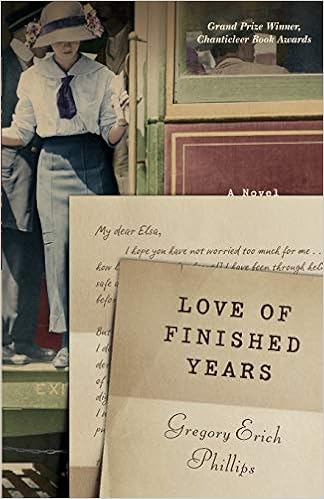
            The Love of Finished Years  by Gregory Erich Phillips

            2014 Chaucer Book Awards for Pre-1750s Historical Fiction First in Category Winners


            The 2013 Chaucer Book Awards Grand Prize Winner:
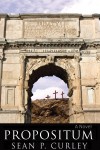
            Propositum - Front Cover 2

            Propositum by Sean Curley

            2013 Chaucer Book Awards for Pre-1750s Historical Fiction First in Category Winners:

            • Adventure/Young Adult:  I, Walter by Mike Hartner
            • N.A. Western:  Crossing Purgatory by Gary Schanbacher
            • World War II (European):  Deal with the Devil by J. Gunner Grey
            • Adventure/Romance/YA: “Lady Blade” by C.J. Thrush
            • Nordic History:  The Jøssing Affair by J.L.Oakley
            • Regency:  Traitor’s Gate by David Chacko & Alexander Kulcsar
            • Women’s Fiction/WWII: Wait for Me  by Janet K. Shawgo
            • Medieval/Dark Ages: Divine Vengeance by David Koons
            • Women’s Fiction/World History: Daughters of India by Kavita Jade

            What are you waiting for? Before long the CHAUCER Book Award deadline will be history.

            Submit your manuscript or recently released Historical Fiction (pre-1750s) to the Chanticleer International Book Awards!
            Want to be a winner next year? The deadline to submit your book for the Chaucer awards is June 30, 2020. Enter here!

            Grand Prize and First Place Winners for 2019 will be announced on September 5, 2020.

            Any entries received on or after June 30, 2020, will be entered into the 2021 Chaucer Book Awards. The Grand Prize and First Place for 2020 CIBA winners will be held on April 17, 2021.

             As our deadline draws near, don’t miss this opportunity to earn the distinction your historical fiction deserves!  Enter today!

            The CHAUCER Book Awards is a division of the Chanticleer International Book Awards – the CIBAs.

            The 2020 winners will be announced at the CIBA  Awards Ceremony on September 5, 2020, which will take place during the 2020 Chanticleer Authors Conference. All Semi-Finalists and First Place category winners will be recognized, the first-place winners will be whisked up on stage to receive their custom ribbon and wait to see who among them will take home the Grand Prize. It’s an exciting evening of dinner, networking, and celebrations! 
            Don’t delay! Enter today! 

          • 10 Question Author Interview with PAULA BUTTERFIELD – Women Artists, Author Interview, Book Discovery, Film, Books

            10 Question Author Interview with PAULA BUTTERFIELD – Women Artists, Author Interview, Book Discovery, Film, Books


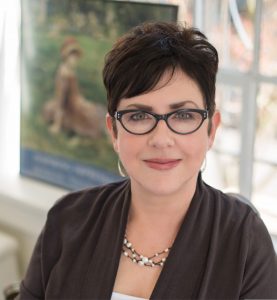
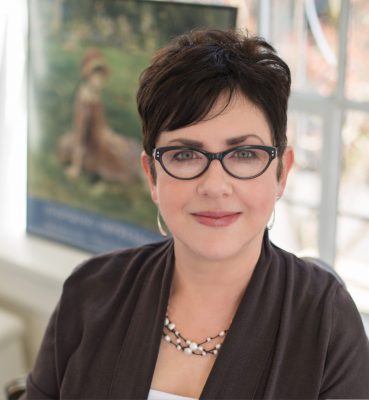
            Meet the award-winning author, Paula Butterfield!

            Paula taught courses about women artists for twenty years before turning to write about them. La Luministe, her debut novel, earned the Best Historical Fiction Chanticleer Award. Paula lives with her husband and daughter in Portland and on the Oregon coast.

            Paula’s book, La Luministe, won First Place in the Chaucer categories in the 2015 CIBAs for Historical Fiction!


            Chanticleer: What genre best describes your work? And, what led you to write in this genre?

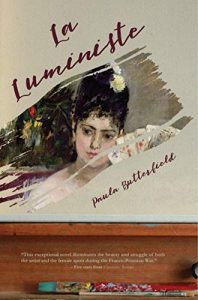
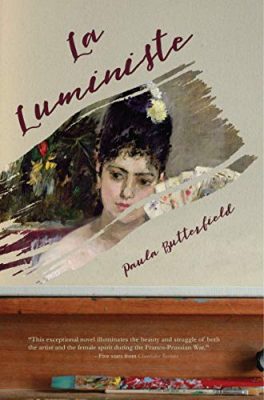
            La Luministe, 2015 Chaucer First Place Winner for Historical Fiction!

            Butterfield: I write historical fiction, specifically about women artists. For many years, I taught classes that I developed about women artists. As we raced through history, from the Middle Ages to the 21st century, I often thought, someone could write an entire mini-series about this woman! I wished we could slow down and really delve into the lives of artists. More hist-fic books about these women are coming out now—including Lady in Ermine, A Light of Her Own, The Age of Lightand I’m wallowing in them! But all I have to do is leaf through one of my books about women artists to realize how many more stories remain to be written… 

            Chanti: That’s exciting! Perhaps you will write a mini-series about women in art… Do you find yourself following the rules or do you like to make up your own rules?

            Butterfield: I find that you have to pick and choose which rules to follow. Outlining, I have come to believe after years of resistance, is a must. But that outline can take many forms, and you can expect to change it as you go. While a writer shouldn’t lean on adverbs, isn’t it a little crazy to spend time searching your manuscript for one or two errant adverbs?
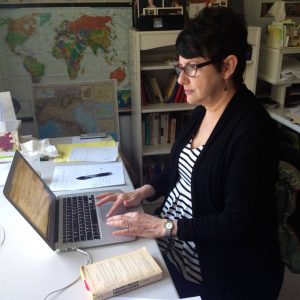
            Chanti: Good point – outlines do need to be flexible in order to be relevant. And, yes, I certainly agree with your assessment of adverbs! What do you do when you’re not writing? Tells us a little about your hobbies.

            Butterfield: I’m a film aficionado (see question 10). This last year, I loved Leave No Trace, Roma, If Beale Street Could Talk, First Reformed, and black klansman. Of course, I LOVE costume dramas like Black Panther or The Favourite, where I can see what life was like in a different place and time. Costume and production designers deserve more credit!

            Chanti: Yes, costume and production designers make the movie, in my humble opinion! Back to writing…How structured are you in your writing work?

            Butterfield: Not structured enough! On a perfect writing day, I’ll wake up with ideas and immediately get to work before my inner-critic wakes up. This is more likely to happen when I have thought about something specific I need to work on, right before I go to sleep. After a couple of hours, I’ll stop to have breakfast, exercise, and shower. Later, I’ll go back and look at what I’ve written that morning, which usually gets me going, either editing or continuing on for a couple of more hours in the afternoon. Social media, emails, reviews, and other commitments get squeezed in throughout the day.
            Chanti: That sounds fairly structured to me! I’ve heard many authors and educators say they begin work before their inner critic wakes up. Tricky! So, tell us, what areas in your writing are you most confident in? What advice would you give someone who is struggling in that area?

            Butterfield: I’m told that descriptions are my strength. I have a degree from the University of Southern California School of Cinema, and I started out writing screenplays. As a visual person, I just write the movie I see in my mind’s eye. I recommend looking, then looking some more. Keep looking, and you’ll notice details that eluded you at first glance. Then describe that picture in words.

            Chanti: That’s great advice. Tell us, which craft books have helped you the most?

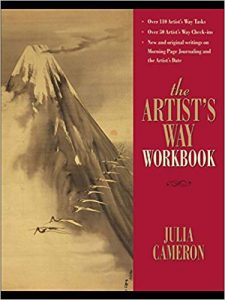
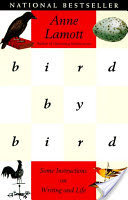
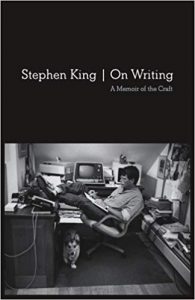
            Butterfield: Anne Lamott’s Bird by Bird is wonderful, and I also like Stephen King’s On Writing. What kick-started my writing after a years-long hiatus was participating in a small group that read Julia Cameron’s The Artist’s Way. It’s a 12-week program that helps you put art into the center of your life. From scribbling artist’s pages (three pages of free writing each morning) to going on artist dates (doing something that inspires you creatively each week), each member of my group—fiction writer, poet, and painter—benefited from the process.

            Chanti: I’m working through The Artist’s Way. This book has a companion workbook that is most beneficial.  What are you working on now? What can we look forward to seeing next from you?

            Butterfield: With me, it’s always going to be historical fiction about women artists. Artists are considered to be outliers, which makes them interesting to start with. But to be a woman artist, throughout most of history, has been considered doubly radical, so their stories are fascinating. My WIP is about two American artists who are positioned as rivals. I don’t like to talk about my current projects, because it saps some of the energy that’s buzzing around in my brain. So that’s all I can say right now.

            Chanti: What is the most important thing a reader can do for an author?

            Butterfield: Reviews are needed and appreciated, but another very easy, helpful thing a reader can do is request that his or her library purchase a book (if it’s not already in stock). On my library’s website, this entails clicking “Using the Library” on the menu bar, then clicking “Suggest a Purchase” from the drop-down menu. There, you just fill in the title and author of the book. You’d be surprised how receptive libraries are to this input.

            Chanti: That’s really smart. Most of us only focus on reviews. But there is power in the library system. Do you ever experience writer’s block? What do you do to overcome it?

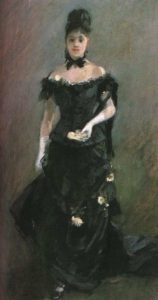
            Berthe Morisot, Figure of a Woman (Before the Theater), PD-US

            Butterfield: I suspect that writers of historical fiction may encounter writer’s block less frequently than do writers of other genres because we can always do more research. This can range from gaining a broad overview of the Franco-Prussian war to seeking more details about the sleeve length or embellishments that would have been popular on a gown Berthe wore to the opera in 1868. New information, especially unexpected tidbits, get me back to the keyboard right away. Sometimes, one detail can change the arc of a subplot or of a minor character.

            Chanti: What excites you most about writing?

            Butterfield: I find out about women in art! Berthe Morisot was a fist in a velvet glove. In the 19th century Paris, an haute-bourgeois woman was expected to be discreet to the point of near-invisibility. But Berthe, forbidden to enter L’École des Beaux-Arts, started the Impressionist movement that broke open the walls of the art establishment. And, unable to marry the love of her life, Édouard Manet, she married his brother. While she epitomized femininity and decorum, Morisot was a quiet revolutionary.

            Chanti: Paula, thank you for spending time with us today. It has truly been a pleasure and an honor. We cannot wait to see what’s next!


            You know what to do! Please check out Paula Butterfield’s work – and remember to recommend her books to your local library.

            Find fun boards and posts of Paula’s inpsiration here:
            https://www.pinterest.com/luministe/ (where I post “illustrations” for La Luministe.)
          • La LUMINISTE by Paula Butterfield – Women Impressionists, European Historical Fiction, Franco-Prussian War

            La LUMINISTE by Paula Butterfield – Women Impressionists, European Historical Fiction, Franco-Prussian War

            Berthe Morisot knows from a young age that she is destined to be an artist but living in nineteenth-century France severely limits her path. As a girl, she longs for the education any male artist would receive, and though her parents support her dream at first, Berthe isn’t even allowed to view some of the great works deemed unsuitable for females.

            Before long, she realizes she is uninterested in being any man’s student, wanting instead to explore her own style, painting the world of a modern woman–a real, intimate representation, not the perfection shown by most male artists. When her sister Edma, who originally paints with Berthe, marries and becomes the picture of femininity, Berthe feels the societal pressure to give up her painting and choose a husband. The one man she feels any connection to, fellow artist Edouard Manet, is a controversial rogue, and although she knows he feels for her, too, he marries another.

            However, the two cannot break free of their would-be love, and when Berthe decides to model for Edouard, she is more tantalized than ever. As her fascination turns to obsession, Berthe will be forced to choose between her desire to be a respected artist or the fallen lover of a scoundrel. It will take a revolution for Berthe to have either.

            This first-person fictionalized autobiography littered with famous Impressionists is the story of a woman’s love affair of both art and a man. In discovering her style, she finds a love she didn’t want and often questions the sanity (and more importantly) the healthiness of that love. As though her struggle to be an independent artist in a world of oppression isn’t already enough, Berthe knows she should dislike, maybe even despise, Edouard but is drawn to the proverbial flame. Unable to have him but unwilling to give him up creates clashing needs: becoming an independent woman but still tangled in what is proper and expected.

            On top of her obsession for him, she is torn between admiration and envy of this man who often feels as much repression as Berthe and wonders which she’ll lose first, her determination to paint or her societal constraints.

            A modern woman trapped in the nineteenth century, Berthe embodies the female struggle. Limited in infinite ways by societal views on women, she navigates a world of male domination in life as well as art, evolving much more quickly than her beloved Paris. If she marries, she wrestles with whether she is giving in or growing up, but as she matures in both art and life, she becomes angry with herself for her single-minded obsession of Manet and decides he is “not worthy of the woman [she would] become,” a woman (like so many modern women) who will find a way to have both a ground-breaking career and a family. As the list of prohibitions rises, so does her determination, and though her fight is for the individual woman (herself), it transcends that.

            Just like Berthe Morisot’s paintings, La Luministe shows a real woman, a woman with hopes and dreams that outreach her environment. Just as Paris was thrust into the turmoil and deprivations of war with Germany, Berthe set herself free in a bloody battle of change. This novel will show readers the beauty and struggle of both the artist and the female spirit.

            Paula Butterfield won 1st Place in the 2015 Chaucer Awards for La Luministe. (Because we have split the Historical Fiction Awards into two categories, La Luministe is considered a Goethe Award Winner!)