Author: karl-larew

  • CATARI: A Novella by Karl G. Larew – Mystery, Psychological, Literary

    CATARI: A Novella by Karl G. Larew – Mystery, Psychological, Literary

    Maxwell Roux introduces us to his story with a Prologue, beginning with a minds-eye picture of a grand house in New Orleans. It is a soft, blossom-scented spring evening. From his hiding place behind a tree, he sees Catari step out on the wrought-iron balcony, fan in hand. Her gown is unbuttoned at the top, revealing her pale complexion glowing in the moonlight, contrasted by her dark-brown eyes and hair. Max had flown down from New York late that afternoon to surprise her, but he chooses to enjoy her beauty from the solitude of the dark garden for a moment before their blissful reunion ensues—marred only by the unpleasant gaze of her step-father.

    This sketch is now a memory of what had been a happy engagement—until Max unforgivably accused Catari of having an ungrateful heart, as Enrico Caruso sang of in “Core n’grato,” a song both of them knew and loved.

    The story begins when Max is called to another grand house, in Fontano, Italy, the home of Catari’s beloved Gran’papa, Il Barone di Fontano. He hears the Requiem Mass sung by a local choir at the funeral of his beloved Catari—only 27 years old—and sees her casket placed in the Fontano Crypt on the grounds of the family villa. It is there that he hears the gossip that Catari was drunk when she fell into the pool at 2:00 AM, as well as the comment by her step-father, Hugh Fontane, that Max, as nothing but an “ex-boyfriend,” has no right to be present. But the Baron had invited him to come, and then to stay at the villa. Later that evening, he and Max talk as friends about their beloved Catari. Max had visited the villa with her several times, and the two men like and trust each other. Finally, fatigue sends them to bed—Max in the room where he had slept before.

    Max awakes at 2:00 AM, somehow urged to go to the pool. He senses Catari’s presence and hears her voice, “I did not want to die. I did not want to die like this.” He hears his own voice, “I’ll find out…how and why, Catari.”

    Thus is this sad love story transformed into a murder mystery, its solution sought by Max, Darlene (Catari’s close friend), and the Baron. Larew’s tale is filled with family history, dating back to the Fontane brothers who fought in Napoleon’s Army in the conquest of Lombardy and were rewarded with the land on which the villa stands; the Fontano brothers who served in the Italian Resistance during WWII; and the Fontano family’s current history in the making. The Three Musketeers, as they decide to call themselves, question the servants and several villagers and search the property inside and out. They engage the help of the family doctor, who had examined the body and found a lesion on the back of Catari’s head. The doctor does not believe that she was drunk. They work with the Chief of Police, who is intrigued when he learns about the pilfering activities of the servants.

    As he has done in previous books of greatly different natures—their characters ranging from WWII military families to Good and Bad vampires—Karl Larew skillfully brings his characters to life. In Catari, he artfully draws not just their natures, but oddities of their physical features, speech, and movement, such as town gossip Madame Cavalli, who finally runs out of words, and the rude and overbearing Hugh Fontane, bursting into the villa declaring that he will have the Baron declared incompetent, thereby revealing his own incompetence. Larew’s knowledge of military history stands him in good stead, as well.

    Max fulfills the poolside promise he made to the ghost of Catari, to “find out…how and why,” but I won’t spoil the how and why for the reader. Nor will I tell you what happens to the Three Musketeers. I’ll say only that, for many reasons, this book offers a good read.

     

  • Chilling Books for Autumn Nights – Gothic Horror, Middle-Grade Readers & Children’s Books, Paranormal & Ghost Stories

    Whether you are experiencing the last chilly days of spring in the southern hemisphere or raking leaves in the northern one or weathering hurricane season in the middle latitudes, we have some  Halloween inspired reads for you!

    Just scroll down this webpage for the Chanticleer selections — from “turn on the lights” gothic horror to “tootacular” early readers for the young and young-at-heart.

    Gothic Horror

    DRACUL by J.D. Barker  

    Dracul resonates with power-rich prose that adds to the atmosphere and the construct of the story. A modern masterpiece, Dracul is everything horror can and should be. It doesn’t rely on gore, but rather captivating storytelling. And yet, the terror and intrigue are unrelenting.

    This novel belongs in the lexicon of all things vampire.

    Dracul is the inception of the iconic dark love story that compels and terrifies us. Our advice? Close your windows. Lock your doors. Turn the lights on. Place a silver crucifix around your neck, and make sure to have a few sharp wooden stakes nearby.

    In other words, prepare yourself for a transfixing journey into the diabolically delicious world of Dracul ⸺ if you dare.

    MATEGUAS ISLAND: A Novel of Terror and Suspense (Book 1)- by Linda Watkins

    In essence, Mateguas Island is a classic suspense-thriller-horror tale. The story ebbs and flows, dropping hints of something not quite right on the island, and in the home. The twin daughters find a locked box in their room with odd carvings etched in the surface. Bill finds aged drawings on the foundation walls in the home’s basement. The school kids tell the girls their inherited home is haunted, the neighbors tell them a horrific tale. The suspense builds slowly but, tantalizing purposefully as the supporting characters reveal the island’s secrets….Linda Watkins is a gifted author who creates believable characters and paints a story with every scene. This book is a must-read for fans of American Gothic and suspense novels! Series.

    Psychological Thrillers with Horror Elements

    “Poe: Nevermore” by Rachel M. Martens 

    [Editor’s Note: I placed this book with three reviewers before I could find one who could handle it… it is that haunting of a tale.”]

    The story begins innocently enough; it seems that the characters and the plot are driven by mental illness (even Poe) until the impetus is revealed. That is the hook of Martens’ writing—just when you think you’ve got it figured out, the game changes. The plot twists and turns as it sinks its hook deeper into you. At first, as I read, I thought that this novel might be another variation of Fight Club or the Dragon Tattoo series. It is not.

    For some, it may be too haunting a tale. The author skillfully builds tension and anticipation with complex characters that are not easily dismissed. The antagonists are evil incarnate. The scary part is that they could be someone you speak with every day, the next date that you are on, the person you work with….

    Be warned; Poe: Nevermore is not a cozy mystery. Ms. Martens succeeds at painting dark, suspenseful, sometimes horrific pictures. It is the type of psychological horror that locking the doors and windows and reading with the lights on will not keep out. Series.

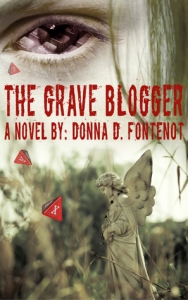
    The Grave Blogger by Donna Fontenot

    The Grave Blogger is a murder mystery that is not for the faint-hearted. The horrors of the torturings and killings detailed within its pages are definitely not for those who prefer their mysteries to be the cozy kind. This story, complete with a psychotic psychiatrist, takes place in the Deep South where a special kind of macabre is required to send chills up your spine.


    Mystery & Mayhem and Paranormal Suspense with a Splash of Humor & Curses

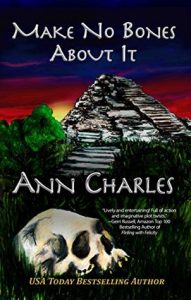
    Make No Bones About It by Ann Charles 

    As the team delves deeper into labyrinth warning signs abound and it becomes clear that they are in mortal danger. The book’s first sentence states, “The Mexican jungle had devoured the remains of the dead, bones and all,” and so for those who ignore history could become history. Series.

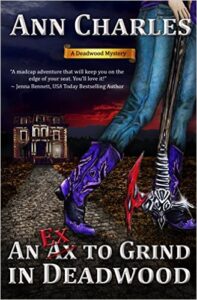
    An Ex to Grind In Deadwood Ann Charles


    An Ex to Grind in Deadwood by Ann Charles

    Meet Violet “Spooky” Parker, a sassy single-mom real estate agent who is earning a reputation for selling haunted houses and finding dead bodies. And, now her agency’s boss is advertising that “she’ll show you a magic place that you’ll love…” on an interstate billboard. He also has her lined up to appear in a reality TV show featuring ghosts.

    But, Vi has more than her reputation to worry about when she gets a unsettling call from a mysterious women insisting that they meet immediately. When she and her sidekick Harvey arrive at the appointed place, all they find are ticking clocks, a shrunken head, and yet another dead body. Series

    Bad Vampires by Karl Larew

    BAD VAMPIRES by Karl Larew, a humorous new take on vampires for adults

    Rather, this versatile author has chosen to entertain us by delving into the practices of the netherworld of 19th-century vampirism, BUT, as it exists in the modern world—the difference being that, today, there are both Bad Vampires and Good Vampires. This is a modern fictional account, and one designed to make you chortle instead of scream. It is a hilarious and refreshingly fun read! (Series — Don’t let Larew’s book covers put you off – the “Professor” can write hilariously). Really, read the reviews of  Nazi Werewoofs, Ghost Toasties, & Zoombies from Planet X. 

    How can a retired college history professor write these amusingly unconventional vampire spoofs? Enjoy with your favorite cocktail.

    YA Paranormal (Think Twilight)

    THE WATCHER by Lisa Voisin

    The mundanity of high school life and petty spats gives way to an other-worldly realm with life and death significance. Mia and Michael have a tragic past that occurred before recorded history, resulting in Mia’s early death and Michael’s fall from his fold into hell and guilt-ridden remorse. Only Mia’s strength can save them in this lifetime; is she up to the task?

    DARK SIGHT by Christopher Allan Poe – YA Thriller, Horror, Occult

    Dead is just the beginning for one teenager.

    Besides creating a host of colorful characters—many of which are teens, Poe is a superb raconteur. He not only has a firm handle on defining his characters but also relaying a chilling tale. Poe’s writing style, which is both crisp and punchy, provides him the opportunity to state what he has to say, and at the same time suggestively highlight the plight of women, children, and racism.

    Rising paranormal author Christopher Allan Poe spins a wickedly twisted tale in his YA horror novel. Front and center of his tightly knit and well-rounded cast is a middle-class gal with plenty of moxie.

    Middle-Grade  Spooky Reads

    The Mystery of Hollow Inn by Tara Ellis

    Make room on your bookshelf next to Nancy Drew! Here comes a new series perfect for today’s young mystery fan. Samantha Wolf tackles ghosts, vandals, and a creepy sense that someone or something is watching her every move! Series 

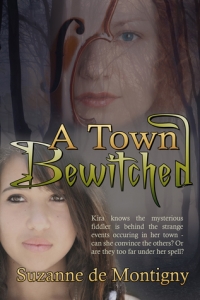
    A TOWN BEWITCHED by Suzanne de Montigny — Middle-Grade Urban Mystery

    Author de Montigny sets her plot in motion with action from the first page. Kira is regular enough for teen readers to identify with, yet possessed of some extra perception and grit that makes her a fitting heroine. Suzanne de Montigny adds extra layering to this supernatural  yarn with special musical details, from Beethoven to the Celtic strains produced by the mysterious Kate.  A Town Bewitched offers a magic formula for the middle-grade audience.  Series.

    EARLY READERS 

    Air of Vengeance: Windhollows by Trayner Bane

    Editor’s Note:  We highly recommend this light-hearted and amusing series for youngsters and the young at heart. 

    Laugh-fest of entertaining unusual creatures, & magical powers -a barrage of jokes about yucky smells & “tootacularity” that raises real issues for young people.

    When it comes to flatulence, author Trayner Bane, knows his gas with an amusing and thought-provoking fantasy world that runs on stuff (the internal kind), sure to enthrall children and adults alike. But the story isn’t just about gas… it carries with it a message about acceptance, bravery, and how you treat people around you. It’s a message that has the power to reach its audience carried on the sweet fragrance of the author’s sense of humor. Series.


    Just click on the links above to read the full Chanticleer Review along with where to purchase.


    Happy Halloween from all of us at Chanticleer Reviews! 


  • Ghost Toasties (Good Vampires Book 4) by Karl Larew – Humour/Satire, Vampires, Literary

    Ghost Toasties (Good Vampires Book 4) by Karl Larew – Humour/Satire, Vampires, Literary

    Volume 4 of a trilogy? That’s no typo! It’s just that those Bad Vampires had more mischief up their sleeves—and of course our Good Vampires couldn’t let them get away with it, especially when it seemed the Baddies had a Plot to Destroy Civilization as We Know It! Readers of Volumes 1-3 know that author,  Karl Larew couldn’t leave his readers in the dark…he had no choice but to write a Volume 4. Say hello to Ghost Toasties!

    You Newbies, who haven’t YET read the first three volumes, need to know that there are, indeed, vampires on our planet. The Bad Vampires engineer criminal plots to get human blood (which they cruelly gorge on, leaving their victims dead), creating really weird sorts of mayhem throughout the globe. Even Good Vampires have a metabolic need for small amounts of blood, but they have good human friends or, in some cases, human spouses who willingly, even lovingly, meet their needs in a sexy way – and sometimes by serving real Bloody Marys!

    The Good Vampires do their damnedest to halt the Baddies’ criminal schemes and to extinguish the Bad Vampire population. That’s why the Association of Good Vampires was created. It’s headquartered in New York City, in the Manhattan mansion of their chief, millionaire Mr. Arleigh Granville. The New York Association’s highest-ranking special agents are Mr. Granville’s vampire wife Inge (converted from Bad to Good Vampirism), Lance and his human wife Carol, and Nigerians Nigel and wife Becky, who are aided by bodyguards Gladdy and Dizzy, along with their wives, twins Helovah and Delivah.

    This cast of characters was considerably expanded at the end of Volume 3 by the arrival of five(!) babies—Arleigh Jr., Mary Jane, Reginald, and Pixie and Trixie—born within minutes of each other to the three special agent couples and the two bodyguards and their wives!

    Our story begins with Lance wakening Carol from a nightmare. As Lance tries to calm her, they hear a knock at the door. It is their friends and fellow agents, Nigel and Becky, inviting them to go out for a drink. But, as often happens, the phone rings. Inge, Arleigh’s assistant as well as wife, asks the agents to attend an emergency meeting the next morning. “Bring the babies,” she tells them. “Miss Overy (Arleigh’s secretary) can take care of them.” (Isn’t that what secretaries are for?)

    Somehow the Baddies have learned about the meeting and two men with pistols kidnap the two couples as they walk to HQ with their babies in strollers. Gladdy and Dizzy, of course, come to the rescue, followed by their wives and babies. Once at the meeting, they learn that at least part of the Baddie plot is in its early stages in Hawaii. But how can the special agents go to Oahu when they have babies needing to be fed and diapered?! It is decided that only the two primary agent couples, and Becky’s pet wolf, Wolfie, will fly to Hawaii in Mr. G’s private plane, leaving Mary Jane and Reginald at the mansion with the Granvilles and Miss Overy. Once in Honolulu, they will enlist the aid of Molly Houlihan and her mother, Holy Moly (friends of the Good Vampires from earlier adventures who now run a whore house called the Ukelele Girl) and Beatrice, a prostitute with a heart of gold (well, maybe silver).

    But first they visit the laboratory of Dr. Lester Griswold, Ace Scientist of the Good Vampire Association, who presents them with his newest gadgets, including an Ectoplasmic Dissolver Ray Gun that toasts ghost ectoplasm to a crisp, turning it into “ectoplasmic ghost-toasties” (Aha!). It can also destroy the electronic triggers of nuclear bombs, which the Baddies are apparently collecting for their plot to blow up special targets around the world.

    After the agents pick up their reinforcements at the airport, they head for Bernie Ernie’s house near Opana, where they find a machine labeled Ectoplasmic Synthesizer. When Bernie unsuspectingly arrives, they capture him. He agrees to help, spilling the beans, including news that the Big Boss is called Mr. Very Big (big help!). But who is Mr. Very Big, where is he, and will he continue with his plan to destroy the world? There’s only one way for you, dear reader, to find out, and will you ever be surprised!

    No need to bite your fingernails, however. You know you can trust Karl Larew’s Good Vampire special agents to complete their assignment and get home to their BABIES, especially after an urgent call from Chief Granville:  “All the diapers are dirty, and the washing machine’s broken down… COME HOME AT ONCE!”

    “The Bad Vampires strike again, but this time our Good Vampires have a secret weapon to make Ghost Toasties in the much anticipated and hilarious fourth “spooks and spoofs” book in Karl Larew’s Good Vampire trilogy.” –Chanticleer Reviews

  • ZOOMBIES from PLANET X by Karl Larew – Vampire Special Agents to the Rescue!

    ZOOMBIES from PLANET X by Karl Larew – Vampire Special Agents to the Rescue!

    Another madcap adventure of the Good Vampires—especially the hilarious special agents of the New York Good Vampire Association—battling the mean old Bad Vampires to save the world from mayhem comes to us from university history professor and author of wacky spoofs, Karl Larew. Good Vampire-loving readers you know who you are! Prepare for a spookin’ and spoofing good time with this one. To newbies, join the party. You’ll have a rollicking good time. Larew has come through again with a fun read for adults who’ll surely appreciate this mash-up between James Bond, Inspector Clouseau, and Buffy the Vampire Slayer.

    This third volume in the Good Vampire Trilogy commences, not surprisingly, with Lance and Carol snug in bed. Lance pats Carol’s bare bottom before using his spring-powered lancet to make two neat little holes in one nicely rounded cheek and begins to suck her blood. The humanly handsome Good Vampire Lance Blodgett, now married to totally human Carol, leaves no bruises, causes his beloved partner little if any pain, and takes care not to be greedy. After all, Carol must produce more blood for her own needs now that she is pregnant. However, Lance (a professor of vampire lore at a university in New York City) has been away at an academic convention and requires at least a few sucks to appease the vampire’s metabolic need for a ‘nip’ of human blood now and then.

    Once satisfied, he applies a Band-Aid to Carol’s rear-end, and the loving couple turns toward each other with a passionate kiss. But no sooner has their love-making begun when the door buzzer sounds. Punching the intercom button, Lance learns that Nigel and Becky, their friends and New York Good Vampire Association special agent partners, have urgent news. As Lance lets them in the apartment, he can see the excitement in their lustrous, dark Nigerian faces—especially the pregnant Becky’s. (Yes, these newlyweds are expecting also!) Nonetheless, Lance and Carol can’t help but grumble about the exquisite timing of their friends’ unexpected arrival.

    “Sorry, Old Boy,” Nigel apologizes and snickers a bit. But, he explains, they’ve got to burn rubber and get to Headquarters. Their leader, Mr. Granville, needs them NOW. As they leave the building, they discover the legendary Arnold Robertson, Ace Special Agent of all Good Vampire branches in Europe, crumpled up on the floor by the mailboxes in the foyer. Robertson is barely able to mumble a message for Mr. Granville—“pyramid in Egypt-Nubia area…secret of mummies…chemicals for zombies…find pluh, an, et, X”—before dying. The NYC agents call a Good Vampire ambulance to come for Robertson’s body before heading out.

    Arleigh Granville’s Good Vampire hit men, Gladdy and Dizzy, admit the four special agents to the mansion, and they are soon closeted with their leader. Mr. Granville is saddened by Robertson’s death but realizes that it must be related to a new Bad Vampire plot in Europe and, apparently, Egypt, to overcome the Good Vampires and conquer the world. Noticing Carol’s and Becky’s ‘baby bumps’, he wonders if they’re up to accompanying their husbands to Europe to quell the plot (of course they are!), and proceeds to tell them that his wife Inge (a reformed Bad Vampire) is expecting also. Then Gladdy and Dizzy exclaim that their new wives (also reformed Bad Vampires), twins Delivah and Helovah, are suffering morning sickness. The group soon discovers that all five babies are due in October (just possibly on the 9-month anniversary of a super party celebrating the last victory of the Good Vampires over the Bad ones?). Then Lance, rubbing his chin, breaks the happy spell with the thought that perhaps Robertson was trying to say “Planet X” (wherever that is!).

    After a visit to the Good Vampire Laboratory of Doctor Lester Griswold—who presents them with his latest James Bond-like secret weapons: a pen enclosing a long poison-tipped ‘toothpick’ that can pierce mummy bindings; a pistol that shoots a hardening goo that can stop and stick a mummy or a zombie in its tracks; and another pen that is actually a laser gun, whose light makes these critters turn away in pain and might also set them on fire—the four special agents are soon flying across the Atlantic on their way to Paris. Annette in Paris (a Good Vampire) has reported that the Son of Elmer (a very bad vampire) is vowing revenge on all Good Vampires.

    With this news, the special agents’ task is spelled out. Although they team up with Annette and the Paris branch, the agents share a sneaking suspicion that the European group has perhaps been infiltrated by Bad Vampires. (It has happened before!) So, they decide to head to Egypt alone, where they team up with Mr. Granville’s contact, Professor Anwar Jones of the Egyptological Institute. They learn that the fiendish Son of Elmer has discovered a chemical formula that can turn mummies into zombies, who will be sent out to eliminate not only Good Vampires but also many good humans. Their bodies (even un-mummified) will be transformed by the chemical formula into more zombies, who will join the other zombies and the Bad Vampires in their maniacal plan to conquer the innocent human world—unless, that is, our special agents cunningly devise a way to stop them!

    As seasoned readers of Volumes I and II can guess, and newbies will soon discover, the two special agent couples and the professor make their way from one sticky adventure to another by every means of transport imaginable (even roller skates?)—cleverly skirting danger and generally dispatching their enemies with the aid of Dr. Griswold’s ingenious arsenal of James Bondish devices. Exploring a pyramid, they run into both mummies and zombies. The dummy mummies and lumbering zombies aren’t too hard to escape from until they meet up with a zombie on roller skates—he’s soon zooming right on their tails. By golly, he’s a ‘zoombie’!

    Cunningly escaping from the Egyptian zoombies, they head back to France—Alsace and Reims, then to the Rhineland in search of the Son of Elmer (aka “Ralphie”), back to the Paris branch (YES, there HAS been a Bad Vampire infiltration), and once more to Egypt—always remaining a RAT-A-TAT-TAT ahead of the zoombies, not to mention Ralphie and his henchmen.

    Don’t bite your fingernails too short reading all about that, because you’ll soon follow our agents to Nashville, TN. Why? A new venue for zombie business, that’s why, this time involving Vampire Cows, and Ralphie, of course. “Who writes this stuff?” (a voice out of nowhere asks). Enough!

    Remember all those babies due in October? Well, all five mothers-to-be go on maternity leave at a bucolic boondocks mansion in upstate NY, under the care of Dr. Griswold. Needless to say, the boondocks don’t remain bucolic, but you can read all about that, then join our agents in the maternity ward, and, finally, learn why this wild tale ends with a single, innocent-sounding word…breadsticks?

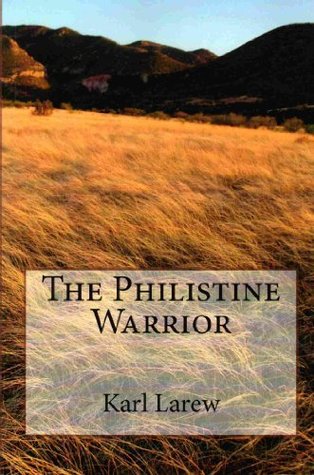
  • THE PHILISTINE WARRIOR by Karl Larew, Ph.D. – War, love, politics, and the emergence of chariots

    THE PHILISTINE WARRIOR by Karl Larew, Ph.D. – War, love, politics, and the emergence of chariots

    There is definitely something for everyone in Larew’s The Philistine Warrior—war, love, politics, and history in the Middle East just before the rule of King David (c. 1,000 – 960 BCE).

    Many readers have enjoyed Karl Larew’s Paul’s Three Wars, the trilogy of U.S. Army Signal Corps officer Paul Van Vliet, and his family, from WWII through the Vietnam War. Larew is quite adept at giving his readers a portal into the very different lives of active military officers and their families (as in contrast with civilian life).

    In The Philistine Warrior, Larew  carries his exemplary skill in this subgenre of historical fiction to the portrayal of the military exploits and family life of an army officer further back in history—way back—to 1115-1110 B.C. While the chariots, arrows, and javelins of that era have been supplanted by tanks, rifles, and bombs, the camaraderie and rivalry among officers and the disruption of their families have remained much the same, changing only in form over the millennia.

    Captain Phicol, trying to escape the humid heat of Askelon, along the Mediterranean coast of Philistia (part of the territory of Canaan, later called Palestine), goes for an early morning swim in the sea. He spies a beautiful young maiden engaged in the same pursuit and watches from a distance as she emerges from the sea totally naked.  As she proceeds to enter the palace of his Uncle Zaggi, Phicol realizes that she is his young cousin Delai.

    Later called to Zaggi’s palace himself, Phicol encounters another officer just leaving. Meeting with his uncle, he learns first that the officer is Major Warati, a new protégé (hmm), and then that Zaggi has received a letter from Melek (King) Nasuy saying that Delai is desired as a bride for his younger brother, Ekosh, who is now a general in the service and the court of Egyptian Pharaoh Ramses IX. Phicol is to escort her to Thebes.  Over the lengthy trip, his feelings for Delai come to surpass those of a cousin, but of course he keeps them to himself, just as 16-year-old Delai does hers regarding marriage to the 45-year-old general.

    Phicol’s rivalry with (newly promoted) Colonel Warati escalates. Larew skillfully draws on his military knowledge to describe the military tactics (as he sees them) of the Philistine ground forces and charioteers, especially those led by Phicol. Returned to Askelon, Phicol is rebuked for engaging in a row with Warati by his uncles Maoch and Zaggi—the Sheren (Lord) and Chancellor, respectively, of Askelon, one of the sovereign cities that comprise Philistia.

    Meanwhile, back in Egypt, Delai has given birth to a healthy son, Akashou. She is convinced that the infant was protected in utero and at birth by the Goddess Inanna of a secret cult, in whom she was led to believe by the temple priest, Ibbi. The role of religion in this time and place, pervaded by politics, makes for a fascinating story in itself.

    When Ekosh’s elder brother, Melek Nasuy, dies, Ekosh is elected (in absentia) Melek of Philistia. Phicol travels to Egypt a second time, carrying this news to the royal couple. Ekosh worries about leaving the Pharaoh—weak as all the Ramses descendants have been since the great Ramses II and Ramses III.  A group of conniving priests will likely seize power, leaving the Pharaoh as a figurehead on the throne.

    When the Danites put the plains city of Ekron under siege, Ekosh, with his aide-de-camp, Phicol, lead the Philistine armies to the rescue. In the aftermath of a minor skirmish, the giant Danite leader Samson escapes in the confusion. An intriguing version of the biblical story of Samson and Delilah ensues that lays the foundation for more political intrigue, betrayal and subterfuge, and plot twists, which leads to more battle strategies and political and personal intrigue. Larew is excellent at giving his readers more insight into how religious dogma affects culture and government along with an interesting history lesson about the rise of nations in the Middle East and Northern Africa– long before the Roman or Greek Empires existed.

    After considerably more horror and sorrow, not to mention political twists and turns, including exile in Assyria, the matured Philistine warrior, his beautiful, loving, and supportive wife, their baby son Achish, and Ibbi—still with them as friend, priest, medical adviser, and not so accurate seer—find themselves welcomed back to a relatively peaceful Philistia.

    The author has come through again with the attention to detail he is known for, though perhaps more of it than some readers like, but fans of historical fiction will relish. His characters are drawn with precision, whether they are good, bad, or downright evil. My personal favorite is Ibbi. Two not mentioned in this review are Rachel, Delai’s slave, then servant, as well as friend and companion. Another is Amphimachus, the venerable yet unassuming High Priest of Dagon, always there when Phicol needs him most.

    Karl Larew, Ph.D. is a retired history professor, so readers should approach this novel (412 pages) as a comprehensive account of the times with introduction of new war technologies such a chariots and organized battle tactics, the long history of the numerous nations/tribes that been warring for centuries, and the events of the time. Larew’s telling from the eyes of a heroic young Philistine nobleman living in ancient Palestine gives readers a new perspective of this time and place in history. However, true to Larew’s style (He can write as deftly about passion and love as he does about battle tactics and military politics.), passion and romance is juxtaposed against the battle tactics and court intrigue, proving that the more things change, the more they stay the same.

  • BAD VAMPIRES by Karl Larew, a humorous new take on vampires

    BAD VAMPIRES by Karl Larew, a humorous new take on vampires

    Karl Larew is well known for the depth and breadth of his knowledge in the field of military history, both in academic works and in historical fiction.

    Well, as you might imagine, Bad Vampires has nothing to do with world politics and war, or even reality on the home front. Rather, this versatile author has chosen to entertain us by delving into the practices of the netherworld of 19th-century vampirism, BUT, as it exists in the modern world—the difference being that, today, there are both Bad Vampires and Good Vampires. This is a modern fictional account, and one designed to make you chortle instead of scream. It is a hilarious and refreshingly fun read!

    Rather than a single locale in Transylvania, the vampires in this tale travel from New York to our nation’s capital and its Virginia suburbs, then Hollywood, and on to Hong Kong, and back and forth, in multiple trips, logging who knows how many thousands of miles.

    The 19th-century vampire’s vicious bite and suck method has evolved into a variety of means for the nourishment of vampires. Among Bad Vampires, the process can still end in, well, the end for the blood donor. Good Vampires, however, take care not to let this happen. Further, the New York Association of Good Vampires has rules regarding the infliction of mortal wounds by other means (pistols seem to be the most popular). In any case, Good Vampires are the winners, Bad Vampires are the losers. Bad Vampires have no imagination and can’t put a bullet in the side of a barn, whereas Good Vampires are ingenious in their strategies and never miss a target, even with one hand tied behind them.

    This tale is either carried along or interrupted by outrageously corny puns, double entendres, and other linguistic contrivances designed to tickle the characters and amuse the readers. Larew obviously enjoyed drawing these from old TV shows: Bad Vampire Elmer wants to make a movie about vampires in New York City—”Sucks and the City” it gets labelled by a Good Vampire; another Good Vampire calls the Head Vampire about a new idea. The CHIEF tells him, “GET SMART! I could say that 99 times and still not have said it enough!” Do any readers remember “Henry Aldrich” (Hen-reeeeeeee) on the radio? No? Never mind.

    It’s hard to develop the character of a vampire. In this story, some are good and some are bad. Protagonist Lance Blodgett is a good one and smart as well. In his day life, he’s an assistant professor of anthropology at New York University, specializing in East European folklore. He has a tender streak and loving heart, which he very soon gives to Carol Binghamton, who isn’t a vampire.

    Carol, a computer programmer, finds herself reciprocating Lance’s feelings. She even offers him breakfast, if he’ll bite her where it won’t show. Lance tells her that biting is “too painful and leaves a big bruise. We use little spring-powered lancets, like diabetics use for blood sugar tests.” She kindly offers him a rump.

    I wouldn’t want to spoil the story for you—just give you a taste that hopefully will tempt you to try it yourself. You might say, as Lance did after breakfast, “Oh, very good—[it has] a sort of tangy je ne sais quoi.”   

  • GRAN’PAUL’S FAMILY: Book 3 of the PAUL’S THREE WARS TRILOGY by Karl Larew

    GRAN’PAUL’S FAMILY: Book 3 of the PAUL’S THREE WARS TRILOGY by Karl Larew

    Gran’paul’s Family, the third volume of Karl Larew’s trilogy of the life of Paul Van Vliet and his family, as well as the wars he fought in as a member of the U.S. Army, is true to its title. While the first two volumes introduced readers to his family, we were often following Paul’s experiences in WWII and the Korean War.

    Part III, however, allows us to join the family circle, which grows considerably, as families usually do. Many of their experiences are similar to those of most of us, but some are quite unique, especially the musical careers of Paul’s wife Betty and her daughter Rosalie, and the military intelligence exploits of Paul’s nephew Ted Lauterbaugh (whose mother Dottie is Paul’s sister).

    I must describe Larew’s work as a fictional family biography–one that is variously romantic, exciting, cozy and warm, hurtful and cold, tragic and sad, but mostly always interesting although there are always a few plodding times that as a member you just have to get through. Remember, like actual biographies, this fictional one doesn’t have a plot but is a story that weaves together the characters and events.

    The story begins with Ted Lauterbaugh reminiscing about meeting his cousin (by marriage), Rosalie, when they were both 14. He immediately fell in love with this beautiful girl with the satiny red hair–who played the violin, accompanied by her mother, on Christmas Day. Just as happens for most 14-year-olds, their relationship dwindled, in their case, to that of cousins, exchanging Christmas cards at best.

    The novel is a written kaleidoscope of personal connections that span time and datelines across the globe. Paul’s own son Danny, who refuses to be drafted or leave the country, must deal with his family’s military history and find his own way. His protesting against the Viet Nam conflict creates estrangement within the family. Danny becomes the embodiment of the intersecting point of the fracturing that many families faced during this time of upheaval.

    Spying, philandering, homosexuality in a time of appalling repression, NSA sleuthing, the Viet Nam conflict and the 60s protests against it, the Civil Rights movement, Soviet espionage, and the ushering in of psychiatric sessions for those seeking help and happiness with many more story threads of the “Paul” family. Will the family be able to withstand the strains and stresses that the turbulent Sixties force upon them?

    This reviewer isn’t going to give away any more of this remarkable story. You know these people now—their character, their strength. You’ll want to find out how their lives evolve from this point. It is an evolution—with oldsters passing on and youngsters assuming family roles. Karl Larew has an important story for almost anyone to read–to learn and to enjoy.

    Gran’Paul’s Family  is preceded by two other compelling volumes that some may find to be faster paced reads:  Paul, Betty and Pearl (that’s Pearl Harbor and WWII) and  Daddypaul and the Yo-Yo War (the Korean War).

  • An Editorial Review of “Daddypaul and the Yo-Yo War” by Karl Larew

    An Editorial Review of “Daddypaul and the Yo-Yo War” by Karl Larew

    It is June 1946. Major Paul Van Vliet turns his 1940 maroon Buick Super sedan into Gunter Army Air Field grounds, just outside Montgomery, Alabama, where he is to teach at the AAF Communications Division. He is welcomed by his superior, Lieutenant Colonel Matt Wentz, who takes him to see the house Paul will occupy with his new bride, Betty, and stepdaughter, 11-year-old Rosalie.

    Thus, Karl Larew introduces Part II of his trilogy, Paul’s Three Wars. In this second installment, Daddypaul and the Yo-Yo War, Larew documents the life of Paul over almost a decade, as he begins a new stage of his life.

    Paul eagerly meets the train bringing Betty and Rosalie to their new home. There is an abundance of love in this new family; Betty and Paul exchange a romantic hello, and Rosie excitedly greets her “Daddypaul!” Not long after the family is settled in, young Rosie is inspired by a concert violinist’s performance of Robert Schumann’s “Violin Concerto in D Minor” to begin violin lessons. But the thrill of learning to play under the tutelage of a Hungarian violinist soon sours. Pre-teen Rosalie must somehow find the courage to tell her family that her violin teacher has molested her. When she does, unforeseen consequences arise and Rosalie is distraught.

    A year later life is again changing for Paul and his family as they move to Falls Church, Virginia so Paul can work at the Pentagon. They also soon welcome a son, Daniel Evan Van Vliet. A healthy mother and son come home from Walter Reed Hospital, but Betty, usually so resilient, falls into post-partum depression. Rosalie, wise beyond her years, one day says, “Daddypaul, I think it’s time Mom talked to a psychiatrist.”

    Soon, it’s Paul’s turn to worry as a creeping fear settles into him that his career might have been jeopardized by the self-serving, gossipy tongue of his former second in command, Major Don Goffe. The worry is soon relieved, but this is not to be the last time that Major Don Goffe appears in Paul’s life.

    In spring 1949, the newly promoted Lieutenant Colonel Van Vliet is assigned to temporary duty in South Korea to assess the ROK army’s communication needs in the “U.N. Police Action” against North Korea and the capability of the U.S. Army Signal Corps to meet them.  He returns home dismayed by the paucity of U.S. communication equipment and personnel.

    North Korean troops cross the 38th Parallel in the spring of 1950 and the “Police Action” intensifies. President Truman orders General MacArthur to send in 8th Army forces from Tokyo. The Van Vliets’ family life is interrupted when Paul is permanently assigned to the Signal Corps in Korea.

    Paul’s job is to “make sense out of the VHF relay radio system…banking radio waves off mountains and bending them around hilltops.” But he finds himself in actual combat at one relay station, attacked by North Koreans in the middle of the night. “Aim low, squeeze slow,” he instructs a young signalman-turned-rifleman. After an injury involving a mine, Paul is sent to Tokyo to recover, and once he has he is assigned to a desk job in Tokyo, only to find that his nemesis, Major Goffe, is again his second in command. Goffe again seeks to jeopardize Paul’s career. Paul learns from a retired Col. Mummert, now working for the Senate Armed Services Committee investigating how Senator Joseph McCarthy is getting military information to support his anti-communist witch hunt, that Goffe is one of McCarthy’s snitches.

    Larew expertly blends fact with fiction, using “letters” between Betty and Paul to keep us abreast of personal events in Falls Church and Pusan, Korea. The well informed and well written narration of historical events and figures blends well with the fictional accounts of Paul’s activity in the Signal Corps. The ROK army’s communication needs in the “U.N. Police Action” against North Korea and the capability of the U.S. Army Signal Corps to meet them.

    What a “yo-yo” war! – UN troops pushed south to the Pusan perimeter, North Koreans routed and driven north almost to the Chinese border, UN forces chased south again, North Korean/Chinese troops forced north beyond the 38th Parallel. The outspoken General MacArthur’s 52-year career ends when he is relieved of his duties by President Truman, and General Ridgway is commanding the 8th Army when Paul leaves for home in mid-summer 1951, returning to the Pentagon as Executive Officer of the Army Communications Service Division.

    Meanwhile, in Falls Church, Rosalie, a high school junior, beautiful with satiny red hair, continues her meteoric rise as a violinist, though her undivided attention to music leads to a slightly problematic social life. Betty has a full schedule of piano students and still makes time for Army wives activities and Danny is thrilled to have his dad home.

    Military and political history buffs, particularly military family members, and even romance lovers will find Karl Larew’s novels engaging reads. Karl Larew introduces Part II of his trilogy, Paul’s Three Wars, which follows “Paul, Betty, and Pearl,” a historical novel set in the WWII era, beginning at Pearl Harbor. Larew’s personal experience, as the son of Brigadier General Walter B. Larew (1904-1973), greatly enhances the accuracy of his description of military life as well as the military and political history of WWII and beyond in this American family saga.

  • An Editorial Review of “Paul, Betty, and Pearl” by Karl Larew

    An Editorial Review of “Paul, Betty, and Pearl” by Karl Larew

    In the summer of 1941, a ship approaches Honolulu. Watching on deck is young Army Lt. Paul Van Vliet, a 1936 graduate of Cornell University who then joined the US Army Signal Corps, in which he was trained in radar and radio/wire communications.

    WWII is well underway in Europe, and Japan has begun its imperial foraging for new territory in the Far East, but where will it stop? Could Japan envision an assault on US territories—or even the United States itself? Stepping up preparedness in Hawaii is underway.

    Karl Larew’s excellent work of historical fiction starts with Paul Van Vliet’s introduction to life and military duty in Hawaii. Paul’s sister Dottie, married to pineapple and sugar plantation owner Sam Lauterbaugh, is delighted to have her younger brother so close and soon invites him to a dinner party.

    Paul is immediately attracted to another guest, Betty Lundstrom, wife of the often absent Navy Lt. Eric Lundstrom. The somewhat melancholy Betty is equally attracted to Paul. However, neither has any intention of a relationship beyond friendship based on a common interest in music and Paul’s offer to give ukulele lessons to six-year-old Rosalie Lundstrom.

    On the duty side, Paul meets his superior officers, Capt. Bascom, as loose with his language as he is with his liquor, and Col. Tothill, very much the diplomat. Paul begins his assigned work—an assessment of what the Army Signal Corps in Hawaii might need to support a war in the Pacific.

    In the months to come, Paul becomes a frequent visitor at the Lundstrom home.  As Rosalie’s lessons progress, however, so does the relationship between Paul and Betty.

    Then, one Sunday morning—to be precise, Dec. 7, 1941—Paul awakes at about 0800 to the sounds of change.  Japan has just hit Pearl Harbor with a disastrous air strike. Soon, the U.S. is at war in both the Pacific and Europe.

    Paul plays a major role in getting radio and wire communications established and coordinated and is promoted to Army Captain. Betty and Rosalie are evacuated—to spend the rest of the war with Betty’s parents in Washington, D.C.

    The story of the “Pearl Harbor surprise attack” and its aftermath is brought to life by its telling through conversation and letters, a technique Larew expertly uses to draw his readers back in time, right into history (and his story). Larew’s personal experience (this book is dedicated to his father, Brigadier General Walter B. Larew [fusion_builder_container hundred_percent=”yes” overflow=”visible”][fusion_builder_row][fusion_builder_column type=”1_1″ background_position=”left top” background_color=”” border_size=”” border_color=”” border_style=”solid” spacing=”yes” background_image=”” background_repeat=”no-repeat” padding=”” margin_top=”0px” margin_bottom=”0px” class=”” id=”” animation_type=”” animation_speed=”0.3″ animation_direction=”left” hide_on_mobile=”no” center_content=”no” min_height=”none”][1904-1973], U.S. Army Signal Corps) greatly enhances his description of Paul’s work, as well as of military communications equipment and operations during WWII.

    When Paul is ordered to Washington, he and Betty cannot resist seeing each other. They become convinced that they are destined to marry. But Paul is sent to Algiers in Sept. 1943, and then to London. Another promotion, to Major, accompanies his assignment to command one of the new JASCO (Joint Assault Signal Company) communications units, destined to land on Omaha Beach on D-Day. Paul’s rising star is assured by his performance on the European front, including during the Battle of the Bulge.

    As we all know, WWII ended in Europe in May 1945 and in the Pacific three months later. But as peace descends on the military fronts, new battles escalate in Washington—between Democrats and Republicans in Congress, as to how (and why?!) Japan was able to approach Pearl Harbor undetected; and between the Army and the Army Air Forces, as to whether the latter should break away to become the U.S. Air Force. Well, that’s history—look it up.

    On the family front, well, that’s Karl Larew’s story of Betty and Paul—read this fascinating and enjoyable book. And don’t stop with “Paul, Betty, and Pearl.” It’s just the first of three.[/fusion_builder_column][/fusion_builder_row][/fusion_builder_container]