Author: karl-g-larew

  • DARLENE by Karl Larew – Literary Saga, Mystery, Romantic Literature

    DARLENE by Karl Larew – Literary Saga, Mystery, Romantic Literature

    In a propelling follow-up to Karl G. Larew’s captivating novella Catari, where love, history, and family drama become intertwined within an investigative murder mystery, the story continues in Darlene, an artfully crafted literary sequel.

    Having uncovered the mystery of Catari’s death, inquisitive BFFs and comrades Maxwell Roux and Darlene Wolfe reunite to deal with the conflict-driven wrath of Catari’s stepfather, Hugh Fontane, and her half-brother Jeffrey. They seek to gain control over the Fontano family estate, as well as Catari’s reputation. However, the historic Italian villa and burial crypt have been left in Max and Darlene’s hands, as per the wishes and dictum of Catari’s baronial grandfather’s will.

    Early on, readers learn that Max had a former relationship with Catari. Bisexual Darlene, who lives as a lesbian, was also involved with Catari. Clearly, the unique friendship delivers an interesting trio, though now with Catari’s passing, the remaining duo seems duty-bound to keep their relationship at a platonic level, because Darlene wishes to remain a committed lesbian; however, desires undoubtedly bubble beneath the surface. Initially, Larew weaves charming hand-holding and shared beds, with Darlene robed in oversized PJs, to suggest proper, old-fashioned decorum, yet the sensation of underlying lust and desire prevails.

    Catari’s family members’ intentions are brought to light via written correspondence, agitated encounters, and lively meetings that reveal the father and son desire to turn the villa and family crypt into a tourist rental site and attraction for ghost hunters. The Fontanes levy their plans with threats to expose Catari’s romance with Darlene and slander her reputation with untruths regarding risqué photos, problematic drinking, and “casting couch” insinuations.

    Larew’s sophisticated narrative style quickly draws readers into the story. He allows Max to break the fourth wall and ask the audience difficult questions about ESP, ghosts, and sex. From the straight-forward opening directive that asks, “Do you believe in precognition?” to admonishments to readers hoping to glimpse Max and Darlene’s potential sexual interludes, Larew also allows Max to go further with intimate asides. The use of these creative tropes helps create a tangible atmosphere and hook readers immediately.

    There is a certain air of old-world formality in Larew’s language and intonation that speaks directly to these central characters’ refinement. With Max’s love of music and Darlene’s career in the field, classical and operatic references are well placed throughout the story. From Caruso’s “Pour un Baiser” (For a kiss) announced as a bookend in Max’s life, to the strains of “La Bohème,” music suggests itself as a fitting landscape for the Catari, Darlene, Max three-fold drama. Indeed, such melodies offer a complimentary balm for the emotional upheaval of these characters and their situations.

    Against detailed backdrops of New York apartments, shared meals at ethnic eateries, and the sprawling estate in Italy, Max and Darlene navigate their way through the mire of tensions, threats, questions, and concerns in their effort to preserve the sanctity of the villa, and uphold the legacy of their beloved Catari.

    Darlene is clearly a provocative and arresting work that can stand freely on its own. With notable characters and well-defined interactions, the familial drama proves a delightful and compelling read. Those who want more may wish to pick up Catari, the novella that started it all.

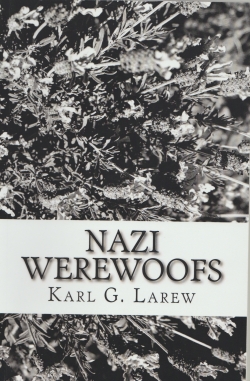
     

  • NAZI WEREWOOFS by Karl Larew — a zany and fun vampire spoof for adults

    NAZI WEREWOOFS by Karl Larew — a zany and fun vampire spoof for adults

    In Karl Larew’s second humorous and highly entertaining vampire spoof, the battle continues in which the Good Vampires seek to protect their own (and all good people) against the greedy aspirations of the power-seeking Bad Vampires.

    The Good Vampires, Lance Blodgett and sidekick Nigel, along with their normal human and gorgeously sexy girlfriends Carol and Becky, are called to action again.  The book has refreshingly laugh-out-loud humor with a smidge of the burlesque for the middle-age and over set who appreciate the irreverent early James Bond flicks, the original Wild Wild West and Star Trek series as opposed to the angst of the Twilight’s vampire and werewolf stories.  All in all, a hoot of (or should I say a “woof”) of a read to be enjoyed with your favorite cocktail.

    (If you’ve read Larew’s Bad Vampires, you already know of course that Good Vampires, while human in most respects, have a metabolic need for a periodic sip of human blood. [fusion_builder_container hundred_percent=”yes” overflow=”visible”][fusion_builder_row][fusion_builder_column type=”1_1″ background_position=”left top” background_color=”” border_size=”” border_color=”” border_style=”solid” spacing=”yes” background_image=”” background_repeat=”no-repeat” padding=”” margin_top=”0px” margin_bottom=”0px” class=”” id=”” animation_type=”” animation_speed=”0.3″ animation_direction=”left” hide_on_mobile=”no” center_content=”no” min_height=”none”][Carol has become Lance’s quite willing donor, as well as very human lover.] Bad Vampires, on the other hand, are common and uncommon criminals in every respect, not only hungering for money and power, but also cruelly biting and killing innocent humans to gorge on their blood.)  

    This second tale, an especially furry one, begins exactly where the first left off, with Lance and Carol snug in bed…that is, until they are abruptly interrupted by a pounding on their door. Lance finds a disheveled and distraught Becky, crying that she has been attacked and bitten by a Bad Vampire in Central Park. Lance and Carol get the tall, beautiful Nigerian to the Good Vampire Dr. Griswold. Seeing fleas on Becky, Dr. Griswold tells the three that he has just been informed by Arleigh Granville, head of the New York Association of Good Vampires, that a Bad Vampire in Germany has concocted a drug to turn people into werewolves (good hosts to fleas), who then infect their victims with ‘werewolfism’. Becky must be such a victim—a diagnosis immediately confirmed when she appears to be transforming into a werewolf. Becky, however, turns out looking more like a Labrador retriever and is soon recognized as a ‘werewoof’, wagging her tail. Fortunately, the good doctor Griswold has an antidote, injections of which return Becky to normal—thank goodness!

    When Mr. Granville learns what has happened, he explains to the foursome that a Bad Vampire in Bavaria, Baron Wolfgang von Verdammte, is behind the werewolf plot. He appoints the four as Good Vampire secret agents, and they are soon on their way to Europe, tasked with squelching the werewolf plot and its aim of a Bad Vampire takeover of the world!

    Starting in Paris, the action moves on to Germany, with Carol ending up at the Baron’s castle in Bavaria (perhaps Mad King Ludwig’s Summer Palace).  One incredible (believe it!) adventure follows another for the secret agents, with more human-werewolf or werewoof transformations, double agent and mole (not that little rodent) infiltrations of both the Good and Bad Vampire contingents (until neither side is sure who’s which!), a one-upmanship struggle over a coffin purportedly containing the remains of the Baron’s mentor, no other than Adolph Hitler (no kidding!), wild goose and car chases, one-sided shootouts (guess who always wins), and pussy galore (with even the werewoofs wanting their share). Be it known, however, that no matter how hard the Baron, aka Wolfie, craves Carol, both as his “little ginger snap” and as “the most Aryan uterus conceivable” (for his planned Fourth Reich), this sexy secret agent is one skillful evader whose heart belongs to Lance.

    If you’re not willing to join in this cock-eyed parody between the Vampires and cheer the Good Vamps on to victory, go find some other book (something by Mary Shelley, perhaps?). But if you’d like to laugh yourself to sleep, Larew’s zany tales—both Nazi Werewoofs and Bad Vampires—will offer you a fun and entertaining diversion.  Then you can ponder how this retired college history professor came to write these amusingly unconventional tales.  

     [/fusion_builder_column][/fusion_builder_row][/fusion_builder_container]

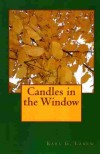
  • An Editorial Review of “Candles in the Window” by Karl G. Larew

    An Editorial Review of “Candles in the Window” by Karl G. Larew

    Candles in the Window, by Karl G. Larew, follows a group of college students as they make their way through a year of school at the University of Connecticut in the 1950s. The military draft was in full swing, young women were pursuing college degrees in more than negligible numbers,  wives still had to have their husbands sign contracts for them, and homosexuality was considered a heinous crime.

    Candles in the Window is brilliantly told in a non-traditional manner rather like the storyline of the Mad Men TV series. (Keep in mind that Mad Men script was first aired in 2007 while Candles in the Window was originally published in 1999.) There is no typical plot line of rising action, climax, and quick resolution. Rather, the story takes place over the course of one academic school year at the University of Connecticut (or UCONN as it is called throughout the novel).

    This work chronicles what happens to a group of students who attend school there. The focus of the narrative is shifted regularly between eight to ten characters. The author makes the characters come alive with spot-on dialogue and pieces of reality from this era when society’s social norms are about to experience a great upheaval.

    There is one character who serves as the axis for the story, and that is the alluring character of “Silky” (aka Susan Schreiber). However, no one really seems to know her or her whole story, in fact, no one even seems to be able to agree on what her first name is. Nevertheless, she’s beloved by everyone despite, or perhaps because of, the mystery surrounding her.  Her story comes through in bits and pieces.

    When tragedy strikes part way through the school year, the students must learn to cope and several of them find they need to reevaluate what they hold dear along with how they define relationships and love. The conversations between them often wax philosophical, as conversations between college students are wont to do.

    Readers should be aware that the novel’s prologue sets the stage and framework for the story. We get the opportunity to see Silky through the different perspectives of the other characters as the story progresses.  Be advised by this reviewer to read Candles in the Window’s epilogue for a more satisfying conclusion and for tying up most of the threads.  Again, if you are a fan of Mad Men, (which I am) and how its characters grapple with rapidly changing realities and social norms, then Candles in the Window comes highly recommended.

    The novel cleverly documents the contradictory and conservative morals of the 1950s.  Readers will experience a world where female college students have curfews and male students don’t, unmarried individuals are expected to know nothing about sex, and religious tension is often swept under the rug. This novel intelligently and authentically explores the true nature of humans against the standard of this era’s “traditional family values” that come on the heels of the two great wars.

    Candles in the Window by Karl G. Larew is a captivating and intriguing account of young people who find themselves increasingly at odds with the dictates and mores of “The Greatest Generation” as they contend with new advents just on the horizon: civil rights, war protests, equal rights, and the sexual revolution.