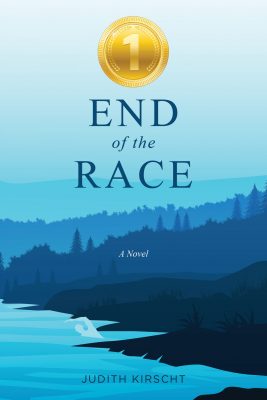
An intricate mystery set in a small fictional town in northern Michigan, End of the Race is contemporary fiction at its finest. Annika Wolfson is a young mother and accomplished swimmer that has faced adversity in many areas of her life. Growing up in the Berglund household was rarely quiet for Annika because her father struggled with mental health and his unwavering feud against the affluent Wolfson family. Despite the long feud between the two families, Brian Wolfson and Annika bond as kids over swimming and their dream of the Olympics. Fast-forward a handful of years, Brian and Annika are now married and have a daughter. Their dreams of Olympic gold have been close to reality but always just out of reach.
After facing defeat in Athens a few years prior, Annika dives back into training for one last shot at Olympic gold, but then tragedy strikes. While in a low and vulnerable place, her husband Brian leaves to go on a sailing trip with friends from college and ends up missing. As Annika tries to unravel what has happened to her husband, she begins to suspect that the Wolfsons are not all they appear on the surface. Navigating a complicated family dynamic, she races to find answers as her life comes crumbling down around her and her daughter.
Kirscht keeps readers on the edge of their seats as she delicately deepens the mystery of Brian Wolfson’s disappearance. This mystery is far from the only one within the story. What happened that caused Annika to miss the Sydney and Athens Olympics? What happened all those years ago between Tom Berglund and Karl Wolfson that has created an almost Shakespearean divide between their houses? As the story progresses, Kirscht answers these questions bit by bit as the narrative alternates between the past and present. Towards the end of the novel, the timelines catch up with one another. There are still many things left unsaid and plenty of room for interpretation after the novel’s conclusion.
The mystery is presented mostly through Annika’s eyes, so readers only learn what she does. The full picture of the Wolfson family and their secretive attitude towards any outsiders is never fully explained. Even though Annika is a Wolfson by marriage, she is an outsider to her in-laws and her own family. The frustration and confusion she feels as a result adds complexity to the story as a whole.
Journey to the rustic setting of northern Michigan, where the idea of family may not be as simple as it seems. End of the Race is a quiet and refreshing story that will have readers longing for a trip out on the water.
End of the Race won First in Category in the CIBA 2019 Somerset Awards for Literary novels.
Donna LeClair for The PROPRIETOR of the THEATRE of LIFE
A MANUSCRIPT
This is no ordinary book and the word “extraordinary” can’t begin to do it justice. It’s a gift for anyone fortunate enough to read it and libraries around the globe should add it to their collections. It should be available to everyone. Emma is a highly sympathetic character, an everywoman, in need of answers. The reader learns as much as she does about individual and universal struggles on earth, the lessons to be gleaned from suffering, and the value of sharing our stories. ~ Carrie M., Chanticleer Editorial Team
The 2019 Somerset First in Category Winners are:
Carl RobertsforThe Trial of ConnorPadget
Judith Kirscht forEnd of the Race
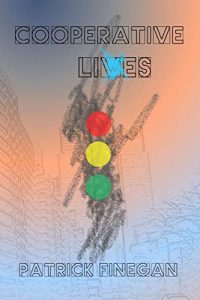
Patrick Finegan forCooperative Lives
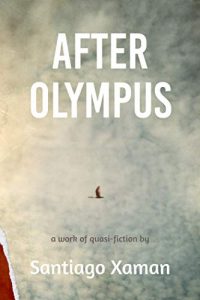
Santiago Xaman forAfter Olympus
Claire Fullerton forLittle Tea
Maggie St. Claire forMartha
Jamie Zerndt forJerkwater
R. Barber Anderson forThe Sunken Forest, Where the Forest Came out of the Earth
Here is a listing of the Somerset Book Awards Hall of Fame Grand Prize winners!
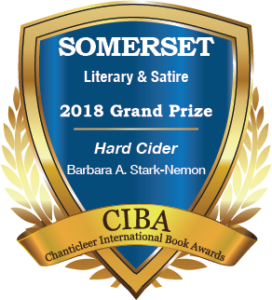
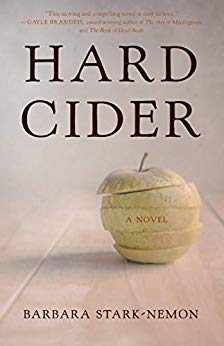
Stay at home mom turns entrepreneur, but without her husband’s support, and continunually needing to manage her three adult sons, Abbie Rose Stone’s dream of producing her own craft hard apple cider faces a world of adversity in Barbara A. Stark-Nemon’s Hard Cider.
Babylonian astrology and Jewish mysticism combine with Roman history to create a timeless story of passion and fate in Chuck Gould’s The Rabbi’s Gift. Babylonian astrology and Jewish mysticism combine with Roman history to create a timeless story of passion and fate in Chuck Gould’s The Rabbi’s Gift.
Words thrown as hard as boulders are easy to catch – if you’ve had practice. Just ask our hero, Muzhduk the Ugli the Fourth…In the great tradition of existentialism, Boldizar brings us a book that is hard to classify. It has aspects of the existential with a fair amount of satirical wordplay and a bit of theater of the absurd thrown in.
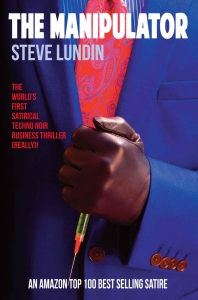
With a fast-paced storyline and a rich cast of characters, this award-winning winning novel offers a uniquely hilarious, but scary, perspective on the how the businesses of public relations and marketing can take technology to its precipice to take advantage of a media addicted public.
Individually Wrapped tells us the bizarre tale of Sam Gregory’s descent over the condensed course of a couple of days. Set in a 21st-century futuristic city, technology has permeated every aspect of the city dwellers’ lives… Self-delusion is an interesting state of mind because everyone can see it except yourself, as it propels you ever deeper into oblivion, where not even technology can save you.
We would be amiss by not featuring and recognizing Judith Kirscht, our very own Pacific Northwest Somerset inspired author. Judith specializes in family sagas and societal issues.
Judith Kirscht – Somerset Hall of Fame Author
Judith was born and educated in Chicago during the Great Depression and then WWII. She taught school during the upheavals of the Vietnam protests and the Civil Rights movement. Later in life, she found herself in California, divorced and with two daughters. Judith taught creative writing at universities of very different cultures: University of Michigan and U of California, Santa Monica. Her novels continuously are awarded CIBA First Place Category ribbons for the Somerset Book Awards for Literary and Contemporary Fiction.
In a world where too many rocks are thrown at those who represent anything other than the norm in middle-class white America, two friends decide to take matters into their own hands and stand up to the hatred with which they are targeted in order to save their home and ultimately their lives.
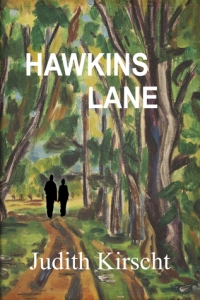
Hawkins Lane is excellent and, ultimately, a redemptive story about the heart-wrenching tragedies a family can survive, and about the healing powers of nature and friendship. The characters and the story will linger long after the last page is read and you will be captivated from the first page.
“The Inheritors” by Judith Kirscht is a novel of one woman grappling to find her cultural and personal identity. Tolerance of others and the need for communication is required from each of us is an overriding theme in this latest work of Kirscht that explores the complexities of human nature and family bonds.
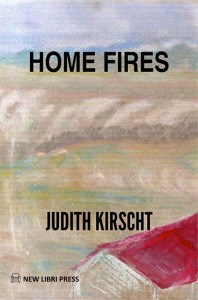
“Home Fires” is an intelligently written, fast-paced family drama that unfolds into a suspenseful page-turner. Although this novel masterfully renders the emotional hardships and tragedies that are sometimes part of dysfunctional relationships, it is not a depressing read.
The last day to submit your work is November 30, 2020. We invite you to join us, to tell us your stories, and to find out who will take home the prize at CAC21 in April.
As our deadline draws near, don’t miss this opportunity to earn the distinction your literary novel deserves! Enter today!
The winners will be announced at the CIBA Awards Ceremony on April 19, 2021, that will take place during the 2021 Chanticleer Authors Conference. All Semi-Finalists and Finalists will be recognized. The first place winners will be recognized and receive their custom ribbon, and then we will see who among them will take home the Grand Prize. It’s an exciting evening of networking and celebration!
CIBA Ribbons!
First Place category winners and Grand Prize winners will each receive an awards package. Whose works will be chosen? The excitement builds for the 2020 SOMERSET Book Awards competitions and now for the Mark Twain Book Awards.
Our Chanticleer Review Writing Contests feature more than $30,000.00 worth of cash and prizes each year!
~$1000 Overall Grand Prize Winner ~$30,000views, prizes, and promotional opportunities awarded to Category Winners
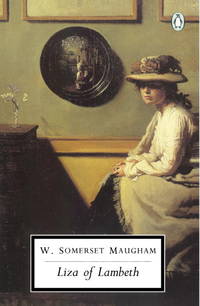
In our last Somerset Hall of Fame, we discussed the origin of the contest’s name, and mentioned the success of William Somerset Maugham’s first book Liza of Lambeth, (published 1897) which propelled him to become one of the highest paid authors of his time, but not without first finding himself struggling with poverty after leaving the medical profession as a fully qualified doctor. Somerset wrote the story while working as a medical student and obstetric clerk in working class London.
W. Somerset Maugham (1897 – age 23 years)
In the publication of this book, Somerset joined an extensivebody of work in line with manyfin de siècle authors such as Wilkie Collins, Richard Marsh, Matthew “Monk” Lewis, Bram Stoker, and Charles Dickens.
In Somerset Maugham’s story, Liza, like many women in novels of this era, has her life dictated by the men who surround her, unable to break free of the desires and expectations that surround her, ultimately leading to her death. This examination of consent and the harmfulness of denying women agency can be seen reflected in the urgency of the suffrage movement, which passed its 100 year anniversary in August 18, 2020.
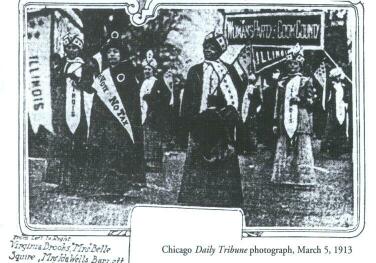
Women’s Suffragette Movement in the USA – more than 100 years in the making. The 19th Amendment was finally ratified on August 18, 1920 (at the end of WWI – 1914 – 1918)
It bears mentioning that women’s suffrage started out as only being accessible for white women, with Chinese-American women not being able to vote until 1943, native-American women until 1948, Japanese-American women until 1952, and African Americans until 1964—though the 19th Amendment wasn’t even ratified by all states until 1984! To this day, voting and voter suppression remains a contentious issue in the United States.Stories like Somerset’s showed the tension and the injustice taking place at the turn of the century in a way that made it real, accessible, and relevant to the literature published at the time and today.
Wells & Squire marching in 1913 For more information, please click here
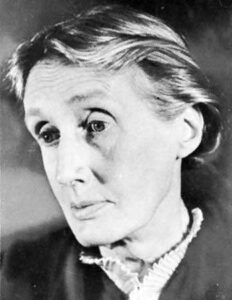
Anyone who studies the right of women to vote and writing has to come across Virginia Woolf (born January 25, 1882, London England) with her book A Room of One’s Own. (Published September 1929) In this, she talks about where do we, as authors, have space to write. What do our room’s look like, and is there even a writing room in our house? I always think of Stephen King writing in his laundry room when I first think of trying to find a space to write. Naturally, like voting, this becomes more complicated when you overlay things like ender identity, race, and orientation, causing further variation in the kinds of rooms that are allowed to be called one’s own.
In A Room of One’s Own (1929), Woolf blamed women’s absence from history not on their lack of brains and talent but on their poverty. For her 1931 talk “Professions for Women,” Woolf studied the history of women’s education and employment and argued that unequal opportunities for women negatively affect all of society. Click here to read Britannica’s biography of this extraordinary author.
Virginia Woolf, photographed by Gisele Freund, 1933
In the building of literary fiction, we reflect the world as we see it. Woolf, in her book,follows the fictional Judith Shakespeare, sister of the famous William, and his equal in terms of writing and genius. Like Somerset’s Liza, Judith finds herself beset in a world where her agency is constantly overruled by the masculine presences in her life. In the end, Shakespeare’s sister dies by suicide. In both these narratives, the death of the women provides an implicit critique of the way society tries to control them.
Today, that critique and commentary still resonate. In the last ten years we have had the first Black president ever in the United States, and now we are set to inaugurate the first woman vice president who is also the first Black, south Asian, and Caribbean vice president. This doesn’t mean that discrimination and all the problems faced by Somerset’s Liza have vanished from the world, but it does run in cultural tandem with the mood of publishing seen at the end of the 19th century. It is a longstanding tradition that we continue culturally and politically in the stories we tell.
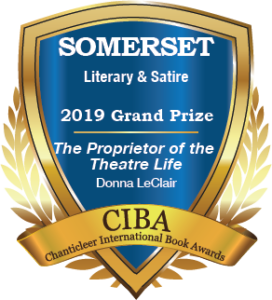
It is with great pride, in the tradition of uplifting and supporting women and the oppressed, that we award Donna LeClair’s manuscript,The Proprietor of the Theatre of Life, The Somerset Book Awards 2019 Grand Prize Award. LeClair is the first author in the Somerset Awards to have a manuscript win the Grand Prize in this highly competitive division. Huge congratulations!
Below is what our editor had to say about The Proprietor of the Theatre of Life by Donna LeClair (manuscript overview)
This is no ordinary book and the word “extraordinary” can’t begin to do it justice. It’s a gift for anyone fortunate enough to read it and libraries around the globe should add it to their collections. It should be available to everyone. Emma is a highly sympathetic character, an everywoman, in need of answers. The reader learns as much as she does about individual and universal struggles on earth, the lessons to be gleaned from suffering, and the value of sharing our stories.
Presenting these lessons in the format of a novel is ingenious; they’ll be accessible to readers who might not have had a clue how to compile, organize, and synthesize so much historical and spiritual scholarship. So many, too many, are suffering from grave, debilitating effects of PTSD; I wish this book could be gifted to them. It is literary balm. – Carrie M. Chanticleer Editorial Team
Journey as Emma does, through multiple eras, continents, and thresholds embracing the authenticity of diverse ethnicities, life conditions, and testimonies. Entrusted intuition guides storylines plaguing the world today. She encounters visionaries of faith who elevate sensibility while gifting their existence to the survival of this illusion that we call home.
Join her on an exploration of the wisdom bestowed by the existence of those who brought humankind closer to understanding one another and the sacredness of our broader story.
Donna LeClair, award-winning author, mother and grandmother, friend to the Dalai Lama, and amazing woman.
We look forward to joining LeClair on her on an exploration of the wisdom bestowed by the existence of those who brought humankind closer to understanding one another and the sacredness of our broader story. This phenomenal story is in the process of seeking representation.
Want more LeClair?
To discover more of Donna LeClair’s award-winning works, please click on the links below that will take you to our reviews:
Immunity,the latest offering by award-winning author Donna LeClair, recounts one woman’s struggles to maintain her sanity during a long nightmarish sojourn among the wealthy and powerful.
LeClair is a prodigious wordsmith who uses the writing craft to good effect. Whether it is a drug-induced temper flare-up, the destruction of a motel room, or a brief erotic interlude, the author weaves a rich tapestry. She has made fiction, it seems, of a painfully recalled set of reminiscences, changing the names to protect the innocent and avoid the wrath of the guilty. She examines the word “immunity” in its many guises: protection from penalty, entitlement of the very wealthy and well-connected, exemption from “an old love,” denial of responsibility, and “declaration protecting honorably truth.”
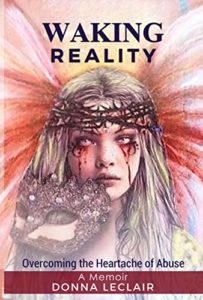
Very engrossing, well-written, engaging, suspenseful and honest. Waking Reality is recommended reading for anyone looking for an engrossing account of a woman’s courageous story growing up in the 1960s. You will want to see that she emerges through the dark tunnel of abuse.
Through engaging and well-written prose, LeClair relates the 1963 murder trial known as State of Ohio v. Bill Bush, a police sergeant who murdered three members of one family. Bush happened to be her uncle and the family he tore apart, hers. Due to the circumstances of the trial, LeClair and her sisters were in protective custody. Chanticleer Review
Three children, five lives, five stories, five human beings whose lives exploded with a pull of a trigger because of a little black book of secrets, lies, and destructions…
One thing I know for sure, for the safety of your own sanity, you must close the haunting of one chapter before you can open the infinite possibilities of another. –Donna LeClair
Want More Somerset Award Winning Novels?
Congratulations to all our 2019 first place category winners for Somerset. You can see some of the reviews for those books below.
…Rarely does a book about the law take you this close into the mindset of an attorney. Carney isn’t a criminal attorney but his ability to think “legal” demonstrates how a well-trained mind can work even in a foreign territory like criminal law. His familiarity becomes our familiarity. This is not a blockbuster case; no mob bosses will fall; no bombastic courtroom duels await. What is showcased here, however, is good lawyering, legal competence, and a writer’s commitment to sharing his love of the law with his readers. – Chanticleer Reviews
How well do people really know their neighbors? More importantly, or perhaps more sinisterly, how well do those neighbors know each other – and each other’s secrets?…this character-driven story is most definitely a work of exquisite literary fiction that uses the exploration of its characters to drive the narrative.
…Finegan does an excellent job of drawing us inside these seemingly tiny lives, and the deeper we go, the more significant these lives seem, and the greater the impact they have on each other as well as those who have been drawn into their well-written and extremely sticky web. – Chanticleer Reviews
Fantastic magic realism, uncaged and wild, and brilliant in every way! Highly recommended.
In this groundbreaking novel, what is real – and what isn’t – is always the heart of the matter. There are elements of reality in the fantastical, and there are elements of magic realism in the rather ordinary. After Olympus is a novel about characters who don’t just think outside the box; they are outside the box.
Intrigued? You should be. We don’t see novels like this every day, but this one will find its way into the hands of the most discerning readers. – Chanticleer Reviews
A captivating tale of Industrial Greed and Forest Conservation set against a thrilling backdrop of primeval forest, violence, and sex, international intrigue where one misstep may very well cost you your life.
With these award-winning titles, you will understand why the Somerset Book Awards is one of the most competitive divisions in the Chanticleer International Book Awards.
Look for the Chanticleer Reviews of these 2019 Somerset Book Awards Blue Ribbon Winners.
Judith Kirscht forEnd of the Race
Claire Fullerton forLittle Tea
Maggie St. Claire forMartha
Jamie Zerndt forJerkwater
But Wait! Where’s Satire?
Introducing the Mark Twain Book Awards for Satirical and Allegorical Fiction, a new (2020) fiction division of the Chanticleer International Book Awards (The CIBAs).
As a well-known humorist, Mark Twain employed satire to gently rib his audience and point out inconsistencies in the world as it appeared then, such as when Huck wonders why he would go to Hell for helping his friend Jim escape slavery.
Due to the huge popularity of the Somerset Awards, we’ve had to break Satirical and Allegorical fiction off into a separate division that titled The Mark Twain Book Awards.Keep an eye out on our website for our upcoming spotlight on this new Awards category and why we chose Twain!
Also, click on the Mark Twain Book Awards for classic works in Satire and Allegorical Fiction.
The last day to submit your work is November 30, 2018. We invite you to join us, to tell us your stories, and to find out who will take home the prize at CAC21 in April.
As our deadline draws near, don’t miss this opportunity to earn the distinction your literary novel deserves! Enter today!
The winners will be announced at the CIBA Awards Ceremony on April 19, 2021, that will take place during the 2021 Chanticleer Authors Conference. All Semi-Finalists and Finalists will be recognized. The first place winners will be recognized and receive their custom ribbon, and then we will see who among them will take home the Grand Prize. It’s an exciting evening of networking and celebration!
CIBA Ribbons!
First Place category winners and Grand Prize winners will each receive an awards package. Whose works will be chosen? The excitement builds for the 2020 SOMERSET Book Awards competitions and now for the Mark Twain Book Awards.
Our Chanticleer Review Writing Contests feature more than $30,000.00 worth of cash and prizes each year!
~$1000 Overall Grand Prize Winner ~$30,000views, prizes, and promotional opportunities awarded to Category Winners
Congratulations to the First Place Category Winners and the Grand Prize Winner of the Somerset Book Awards for Contemporary and Literary Novels, a division of the 2019 CIBAs.
The CIBAs Search for the Best in the Somerset Book Awards!
Chanticleer Book Reviews is celebrating the best books featuring contemporary stories, literary themes, adventure, satire, humor, magic realism, or women and family themes. We love them all.
The 2019 Somerset Book Awards First Place Category Winners and the Somerset Grand Prize Winner were announced at the Virtual Chanticleer Authors Conference that was broadcast via ZOOM webinar the week of September 8-13, 2020 from the Hotel Bellwether in Bellingham, Washington.
Michelle Rene, author of Hour Glass, Previous Laramie Grand Prize Winner and Overall Best Book Award Winner in 2017 announced the 2019 Somerset Book Award Winners.
This is the OFFICIAL 2019 LIST of the Somerset Book Awards First Place Category Winners and the Somerset Grand Prize Winner.
Congratulations to All!
Donna LeClair – The Proprietor of the Theatre of Life
Carl Roberts – The Trial of Connor Padget
Judith Kirscht – End of the Race
Patrick Finegan – Cooperative Lives
Santiago Xaman – After Olympus
Claire Fullerton – Little Tea
Maggie St. Claire – Martha
Jamie Zerndt – Jerkwater
R. Barber Anderson – The Sunken Forest, Where the Forest Came out of the Earth
HONORABLE MENTIONS:
Beth Burgmeyer – The Broken Road, ms
Bob Holt – Firebird, ms
The Somerset Book Awards
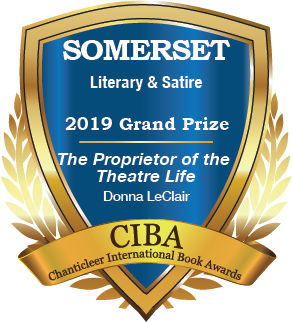
2019 Grand Prize Winner is a manuscript: The Proprietor of Theatre Life by Donna LeClair
The Somerset Grand Prize for the 2019 Award Winner.
This is the original badge for the 2018 Somerset Grand Prize Winner – Hard Ciderby Barbara A. Stark-Nemon.
How to Enter the Somerset Book Awards?
We are accepting submissions into the2020 Somerset Book Awardsuntil November 30, 2020. All submissions into this category after November 30, 2020, will automatically be entered into the 2021 Somerset Book Awards
The 2020 Somerset Book Awards winners will be announced at CAC 21 on April 17, 2021.
A Note to ALL the WINNERS: The coveted CIBA Blue Ribbons will be mailed out starting in October. We will contact you with an email to verify your mailing address and other items. We thank you for your patience and understanding.
If you have any questions, please email info@ChantiReviews.com == we will try our best to reply in 3 or 4 business days.
We are excited and honored to officially announce the Grand Prize Winner and the First Place Category Winners for the 2018 SOMERSET Book Awards at the annual Chanticleer Authors Conference and the 2018 Chanticleer International Book Awards ceremony. This year’s ceremony and banquet were held on Saturday, April 27th, 2019 at the Hotel Bellwether by beautiful Bellingham Bay, Wash.
We want to thank all of those who entered and participated in the 2018 Somerset Book Awards for Contemporary, Literary, Satire Novels, a division of the Chanticleer International Book Awards (the CIBAs).
Judith Kirscht, the author of the 2014 SOMERSET award-winning Home Firesannounced the 2018 Somerset Award Winners at the Chanticleer International Book Awards Banquet and Ceremony.
An email will go out to all First Place Category Winners and Grand Prize Winners with more information, the timing of awarded reviews, links to digital badges, and more before May 31st, 2019 (approximately four weeks after the awards ceremony). Please look for it in your email inbox.
When we receive the digital photographs from the Official CAC19 professional photographer, Dwayne Rogge of Photo Treehouse, we will post the photographs of Somerset award winners on this page.
Click here for the link to theSomerset Semi-Finalists.
This post will be updated with photos and more information. Please do visit it again!
A peaceful home in the San Juan Islands turns perilous when two women are persecuted by residents who have plenty to hide when The Camera’s Eye is turned on them. Master storyteller Judith Kirscht presents a thrilling mystery with heart, ripe for today’s environment and rich for readers.
Veronica and Charlotte considered themselves unlikely targets of hate crimes, after all, who wouldn’t like two nice white-haired ladies who share a home for economy and company on an island in Washington’s Puget Sound? Both women have tragic family histories which they thought they’d left behind, but trouble never really lies quietly for long.
Veronica has the gift of capturing the truth with her constant companion, Constance, her beloved Nikon camera. When she captures an uncomfortable truth in their new neighborhood, the eye of persecution turns and focuses on her and Charlotte. In The Camera’s Eye, the reader comes face to face with how perception encourages action, and how action can either heal or destroy.
From the beginning scene, Veronica and Charlotte are in jeopardy as a rock is thrown through their window in the middle of the night. Who would do such a thing? With pasts that cultivated their own sets of demons, the friends have their own ideas, and the field is rife with possibilities. However, when the local law enforcement shows up and suggests that their lifestyle is to blame for the attack, the women go on the defense and start their own investigation as to who and why they have suddenly become targets.
This story is not to be confused with a cozy. Kirscht opens the story with violence and forces the reader to examine the many results of hard decisions made with the best intentions, and question philosophies based on the letter of the law rather than on love. It’s a mystery, certainly, but with an unrelenting grip and careful sleuthing that feels more sinister as the plot unfolds.
Rich with superb dialogue and beautifully penned scenes, The Camera’s Eye is typical of Kirscht’s style and readers will be hard-pressed to set this book down. As one event leads to another escalating event, our characters wits and wills are tested as they struggle to make sense of the violent hatred surrounding them and the blatant disregard for their well-being at the hands of the authorities who are supposed to protect them.
A Chicago native and multi-award-winning author, Judith Kirscht makes her home on an island in the Puget Sound in Washington state where she spends her time taking her dogs for walks, discussing dinner plans with friends, and penning her next literary masterpiece. The Camera’s Eye is Kirscht’s fifth novel.
“In a world where too many rocks are thrown at those who represent anything other than the norm in middle-class white America, two friends decide to take matters into their own hands and stand up to the hatred with which they are targeted in order to save their home and ultimately their lives. Hot off the shelf from the literary award-winning author, Judith Kirscht, The Camera’s Eye will challenge the reader to focus on what they believe and how their beliefs inform their actions. A very important book for our times.”
Judith Kirscht has penned a poignant story of two good people who struggle to escape their past and carve out a fulfilling life together. At its very core, this novel asks the compelling question of whether you can overcome the influences of family, and also, whether you can survive the consequences of your own actions.
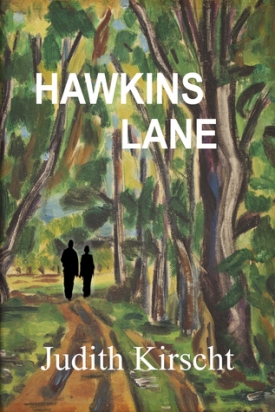
As far as the people of the small town of McKenzie Crossing are concerned, Ned Hawkins is from the wrong side of the tracks. And that’s putting it mildly—his father is a convicted murderer, his brother an alcoholic with a violent streak. Ned has spent his entire life feeling trapped and attempting to outrun his family’s legacy.
As Hawkins Lane opens, Ned has escaped on his daily trek into his beloved Cascade Mountains to find peace and solace. By chance, he comes upon a young woman, Erica Romano, fishing in a creek far from town. Erica is also escaping from the demands of her family, though their circumstances are very different: Erica is the daughter of the town’s new physician and related to the rich and powerful McDonald family, owners of the local mill.
For both, it is love at first sight. Ned has grave reservations about exposing Erica to his family and wants to protect her by keeping his distance. Erica persists, convincing him that she needs him as much as he needs her.
Unfortunately, family almost always finds a way to impact one’s life, and depending on the family, that impact can lead to tragedy. Ned’s brother, who has been spiraling out of control ever since their father was sent to prison, ends up in trouble with the law. Erica, who is by nature a risk-taker, places herself in danger far too often, and the mountains are not always a forgiving place. However, when Ned’s father is released from jail he spreads his own brand of poison, driving deep wedges and creating divided loyalties. Erica and Ned are challenged in ways that even they could not predict nor expect.
Hawkins Lane is an excellent and, ultimately, a redemptive story about the heart-wrenching tragedies a family can survive, and about the healing powers of nature and friendship. The characters and the story will linger long after the last page is read and you will be captivated from the first page.
The year is 1980, and our introduction to Alicia Barron’s life begins with tragedy. Alicia has recently returned to her childhood neighborhood to teach elementary school and her closest friend, Maria Sandoval, has died in a car crash along with her husband and their oldest child.
Growing up in a largely Latino neighborhood where the cultural and family ties were extremely strong, Alicia always had the nagging doubt that her mother didn’t belong. When she sided with the protesters against the Viet Nam Conflict, she found herself on the opposite side of many lifelong friends and family members—some who lost loved ones in the Korean War and in Viet Nam. It wasn’t long before Alicia found herself feeling ostracized even by her own mother, Carla.
When Carla dies, Alicia inherits her grandfather’s house along with keys to unlocking her family’s past. Alicia sets out to learn more about her mother’s family in an effort to achieve greater understanding of her mother and give herself the roots and family history she so desires. She has already learned and accepted that her mother was white, but what she learns next shakes the foundation of what she holds true—that family heritage may determine a large part of who we are.
Growing up Alicia craved the kind of roots and dynamics that she thought a big strong family should have–such as the ones she saw growing up. She felt that her mother was unwilling to provide these things. Whenever Alicia would question her mother about who they were her mother would tell her she had a “Latin soul” and that was all that mattered. Alicia spent the first part of her life believing she was a “Latina princess” while the other children in school whispered she was mestiza.
Some readers may be unfamiliar with the term mestiza and it is never really defined in the novel. The term mestiza roughly refers to someone of mixed racial or ethnic heritage and specifically refers to someone with mixed European and Native American heritage. Alicia is Chilean and European and therefore “mestiza” in the eyes of others, most notably the large Mexican population that makes up her neighborhood. Alicia finds herself in limbo feeling that she is not fitting in anywhere.
Alicia must overcome several hurdles in her journey to learn more about her mother and herself, one of which is her boyfriend, Ricardo Moreno. Ricardo is conflicted about Alicia’s heritage. While he loves Alicia’s passion for life and dancing and her Latina heritage, he is unable to accept her “gringa” side. This is a part of Alicia he wants to ignore completely (along with her mother) or at the very least, avoid as much as possible. But Alicia feels this is a rejection of a part of her that she cannot deny exists.
Kirscht deftly tackles the sensitive issues of racism, cultural bias, and discrimination from, what may be considered by some, a new and different perspective. She shows through The Inheritors timeline the ever changing nature of ethnicity, culture, and belonging. Readers are instantly dropped into the changing culture of Chicago under the prism of the 1960s through the 1980s with narrative flashbacks.
The Inheritors by Judith Kirscht is a novel of one woman grappling to find her cultural and personal identity. Tolerance of others and the need for communication is required from each of us is an overriding theme in this second work of Kirscht’s that explores the complexities of human nature and family bonds.
Home Fires by Judith Kirscht is a deeply emotional and dramatic story that unearths buried secrets kept by a family that spans three generations. The author unflinchingly faces the darker and often concealed sides of families and marriages and the dysfunctions that surface in a myriad of unexpected ways.
Kirscht takes the reader to sunny Goleta, California, where her protagonist, Myra, takes her morning ritual of a walk by the tide pools. Then, immediately we learn the need for the ritual. Myra is fighting to keep troubled feelings about her marriage at bay. The story takes off at breakneck speed when Myra can no longer deny her suspicions that her husband, Derek, has recently had an affair. When Myra confronts Derek, their conversation opens a Pandora’s Box of pent up feelings in her. Realizing this is not the first, nor likely will this be the last time he will cheat on her, Myra falls into a depression.
Myra finds herself on the receiving end of several differing opinions as to what she should do about Derek’s infidelity. Derek’s mother tells Myra that in Derek’s profession, that of college professor, his behavior is to be expected, but more than that, it doesn’t make their relationship less important. She tells Myra that their men will always come back home to them after they become bored with their latest dalliance.
Despite these reassurances Myra cannot bring herself to forgive Derek for what he has done. Myra decides to stay with Derek for the time being for the sake of their two teenage children, Peter and Susan.
Late one night though, dark fears arise in Myra’s mind. Accusations and suspicion abound when Myra hears her daughter cry out and catches Derek coming out of her room. He tries to convince Myra that their daughter was merely having one of her many nightmares, but she is unable to believe him.
Myra divorces Derek and begins a new life for herself. But when Derek makes a sudden reappearance, her world is turned upside down with new doubts, fears, and suspicions.
Although this novel masterfully renders the emotional hardships and tragedies that are sometimes part of dysfunctional relationships, it is not depressing to read. It is an evocative story that does not force opinions or an agenda.
Home Fires is an intelligently written, fast-paced family drama that unfolds into a suspenseful page-turner. With spot-on dialog and believable characters, Kirscht explores the complexities of human nature and family bonds that sometimes lurk beneath seemingly idyllic veneers of normalcy.
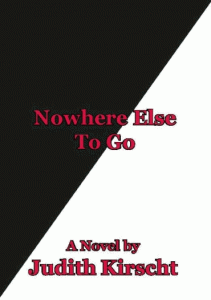
It’s the fall of 1968 and America is in the throes of rapid social change and cultural upheaval. Martin Luther King has just been assassinated and body bags filled with 18-year-olds boys are coming back from Vietnam at an alarming rate. Political unrest and race riots are turning cities into war zones while suburbanites try to buffer themselves against the tumultuous times.
Nowhere Else to Go by Judith Kirscht masterfully explores these momentous national issues by humanizing them on a personal scale in the small Midwestern college town of Norton Bluffs. The intransigence of the ruling suburbanite whites along with their fears meet head on with the anxieties of the disadvantaged blacks in the halls of education—where the effects of racial polarization are most profoundly felt and magnified in small towns.
Principal Cassie Daniels, of Red River Junior High School, relentlessly tries to carry on classes, school dances and basketball games even as she encounters the shrapnel from these social upheavals in her beloved school, in her marriage, in her relationship with her two school-aged sons, and within her professional relationships.
Principal Daniels and the RRJH faculty have already endured the difficulties brought on by racial integration and bussing. But just when they thought that they had made it past the worst and even came out somewhat ahead with a new wing of classrooms, the Board of Education has more in store for RRJH. It seems that with a bit of “redistricting,” Red River Junior High, due to its location on the edge of town, can serve as a buffer zone between disadvantaged, mostly black, neighborhoods and those of the affluent white ones.
The hoped-for, by the town’s politicians, result from this redistricting maneuver is to return a sense of “normalcy” to the town of Norton Bluffs along with the prevention of any violence like last year’s riots at the high school. And if the redistricting isn’t enough to throw RRJH into a tailspin, The School Board is dictating to use RRJH as a social experiment laboratory for testing some educational “new-think” concepts. Fresh new teachers have been hired by the School Board for RRJH –and this is where things start to get really interesting. These new teachers’ tutor in ‘advanced school room theory’ is Principal Cassie Daniels’ husband. Ben Daniels is an ivory tower burnout hoping to put a new polish on his tarnished idealistic proclivities. He’s already selected the feisty Louisa Norton as his favorite protégé.
Principal Daniels can’t help but worry that the escalating racial tensions in her schoolrooms will erupt into violence. Can she keep her divided faculty members on the same page? Will those wide-eyed kids from the Flats be able to make “the jump” from the safety of their old elementary school into the open-jawed terrors of junior high? And just what are Ben and the confrontational Louisa really up to?
If Cassie Daniels is the strength of the author’s energetic narrative, the teenage students are its pulse, a Greek chorus chanting under the noisy howl of the games adults play. As expected, a great deal of this novel is devoted to these adolescents’ emotional responses. Particularly endearing are Kirscht’s portrayals of how the kids try to cope with a world that they are too young to understand. Kirscht does an excellent job telling her story from many perspectives.
No Where Else to Go is a tenacious read that captures the grittiness of the undertow of racism and prejudice. However, some may find the first several pages a little hard to follow as you are taken instantly into the fray of the battle, but if you hang on, you will find this dense novel to be fast-paced and hard to put down. I heartily recommend Nowhere Else to Go as a tightly woven and insistently engaging novel about racial prejudice and the blackboard jungle of the 1960s.

 An intricate mystery set in a small fictional town in northern Michigan, End of the Race is contemporary fiction at its finest. Annika Wolfson is a young mother and accomplished swimmer that has faced adversity in many areas of her life. Growing up in the Berglund household was rarely quiet for Annika because her father struggled with mental health and his unwavering feud against the affluent Wolfson family. Despite the long feud between the two families, Brian Wolfson and Annika bond as kids over swimming and their dream of the Olympics. Fast-forward a handful of years, Brian and Annika are now married and have a daughter. Their dreams of Olympic gold have been close to reality but always just out of reach.




 The Rabbi’s Gift
 The Ugly
 The Alexandrite
 The Manipulator

 The Camera’s Eye by