Author: jessica-dainty

  • Celebrating INTERNATIONAL WOMEN’S DAY with a LOOK at the GENRE of WOMEN’S FICTION

    Celebrating INTERNATIONAL WOMEN’S DAY with a LOOK at the GENRE of WOMEN’S FICTION

    Appreciating International Women’s Day and looking at Women’s Fiction

    The theme for 2021’s international Women’s Day is Choose to Challenge. We thought an excellent challenge to offer to our wonderful Chanticleerians would be to read more women’s fiction. To read more about International Women’s Day, click here. To jump into it though, we first want to define the genre.

    While one might the that the Chatelaine Awards would be the location of Women’s Fiction, especially with the image of Jane Morris being used when her story could be written as an excellent example of women’s fiction. If you’re interested in entering the Chatelaine Awards you can click here, and if you want to read more about our most recent Spotlight for the Awards, click here.
    book award for Romance Novels The Chatelaine Awards

    Jane Morris’ life is often said to be the inspiration for Eliza Doolittle in George Bernard Shaw’s My Fair Lady. Morris trained herself into being a lady, learning French and Italian while reading anything she could get her hands on. She was a renowned embroiderer, even running an embroidery company that did quite well. She was also the muse of pre-Raphaelite artist Dante Rossetti (the model for our Rossetti Awards). By the end of her life, she even managed to purchase the home she lived in so that her daughters would have an inheritance to support them after her death.

    Audrey Hepburn as Eliza Doolittle dressed in a white dress with an ostentatious hat
    Audrey Hepburn as Eliza Doolittle

    While Morris could be a great subject for a book of women’s fiction, her story is often peppered with romantic narratives, even in fictional retellings like My Fair Lady. It’s true that her husband and Rossetti all rented an apartment together, which allowed for Morris and Rossetti to have an affair while her husband was in Iceland, presumably with her husband’s knowledge as the painter and the subject were considered an open secret, though it seems a painful one for William Morris.

    Surrounded by so much romance and intrigue, we couldn’t help but have Jane Morris’ portrait by her lover be the representation of the Chatelaine Awards, which leads us to the use of William Somerset Maugham as the representative of the Somerset Awards.
    The Somerset Awards focuses on:

    • Contemporary Theme
    • Adventure/Suspense
    • Literary
    • Women’s Fiction + Family Themes
    • Satire/Allegorical
    • Magic Realism
    • Action/Adventure
    • Connections
    • Social/Psychological Themes

    To read more or to enter the Somerset Awards, click here.

    Of course, here we want to focus on the women’s fiction portion of that, though there is overlap. Somerset’s first novel that won him critical acclaim was Liza of Lambeth, (1897) which propelled him to become one of the highest paid authors of the turn of the century. He was inspired to write this novel while he was working as an obstetric clerk and medical student at a hospital in a working-class district of London. Somerset is known for his “shrewd understanding of human nature.   Britannica 


    The cover of Liza of Lambeth, featuring a poor, 19th century woman

    In the novel, Liza, like many women in novels of this era, has her life dictated by the men who surround her, unable to break free of the desires and expectations that surround her, ultimately leading to her death. This examination of consent and the harmfulness of denying women agency can be seen reflected in the urgency of the suffrage movement.

    With his story of Liza, Somerset focuses on the hardships women face, especially concerning domestic violence and abuse. He highlights the lack of consequences men face for treating women like animals, and the ways in which people ignore clear signs of abuse as something that isn’t their problem or maybe even deserved. The novel Somerset writes is a critique of the time in which he lives, but is it women’s fiction?

    Almost there…

    Probably not by today’s standard.

    Women’s fiction is difficult to define. Generally, we think Amy Sue Nathan did a good job in this article here, but our take is a little more personal. First, we do think that for a book to be considered in the genre of women’s fiction, it obviously has to focus on women. The next point is that the plot progresses alongside the narrator’s self, whether that be self-discovery, self-preservation, or even perhaps self-destruction (though storylines with a negative outcome can be difficult to fit into this genre).

    Since Somerset’s telling of Liza’s story focuses on the ways in which she is denied agency rather than the ways in which she can focus on the self

    The struggle with whether or not a book is women’s fiction resolves around the fact that the protagonist must be the one who, as Nathan says, “saves herself.”

    The driving force of women’s fiction is the motivation of the main character to get herself from point A to point B to point C, learning and changing and growing and making mistakes along the way.  What makes a women’s fiction main character tick is the methods by which she learns and changes and grows and makes mistakes. – Amy Sue Nathan

    A seedling just beginning to sprout
    Even a little growth

    Since the focus of women’s fiction is often growth, unhappy endings don’t always necessarily fit. Of course, endings that aren’t unhappy won’t automatically be happy, and women’s fiction often ends up with a complex ending that leaves the reader thoughtful and reflective on their own growth as they read along with the main character.

    Of course a book that is considered women’s fiction can have many other themes, and could even fit into other Chanticleer International Book Awards (CIBAs) beyond the Somerset Awards. You can see the different genres in the books below:

    HARD CIDER by Barbara Stark-Nemon
    Women’s Literature, Literary, Women’s Fiction
    Grand Prize Winner in Somerset Awards (2018)
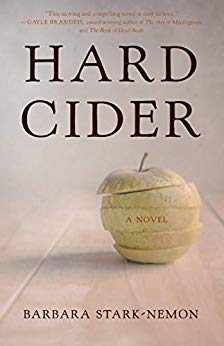
    Abbie Rose Stone is a woman determined to follow her newly discovered dream of producing her own craft hard apple cider while navigating the ups and downs of family life with her grown sons and husband.

    Abbie Rose knows how to deal with adversity, and dives headfirst into this new chapter of her life with energy and passion. She describes her early adulthood years of infertility struggles and the hardscrabble way she built her young family through invasive medical procedures, a surrogate attempt, and adoption barriers.

    Continue reading here

    FROM LIBERTY to MAGNOLIA: In SEARCH of the AMERICAN DREAM by Janice Ellis, Ph.D.
    Black History, Discrimination & Racism, Memoir, Non-Fiction
    Grand Prize Winner in Journey Awards (2019)
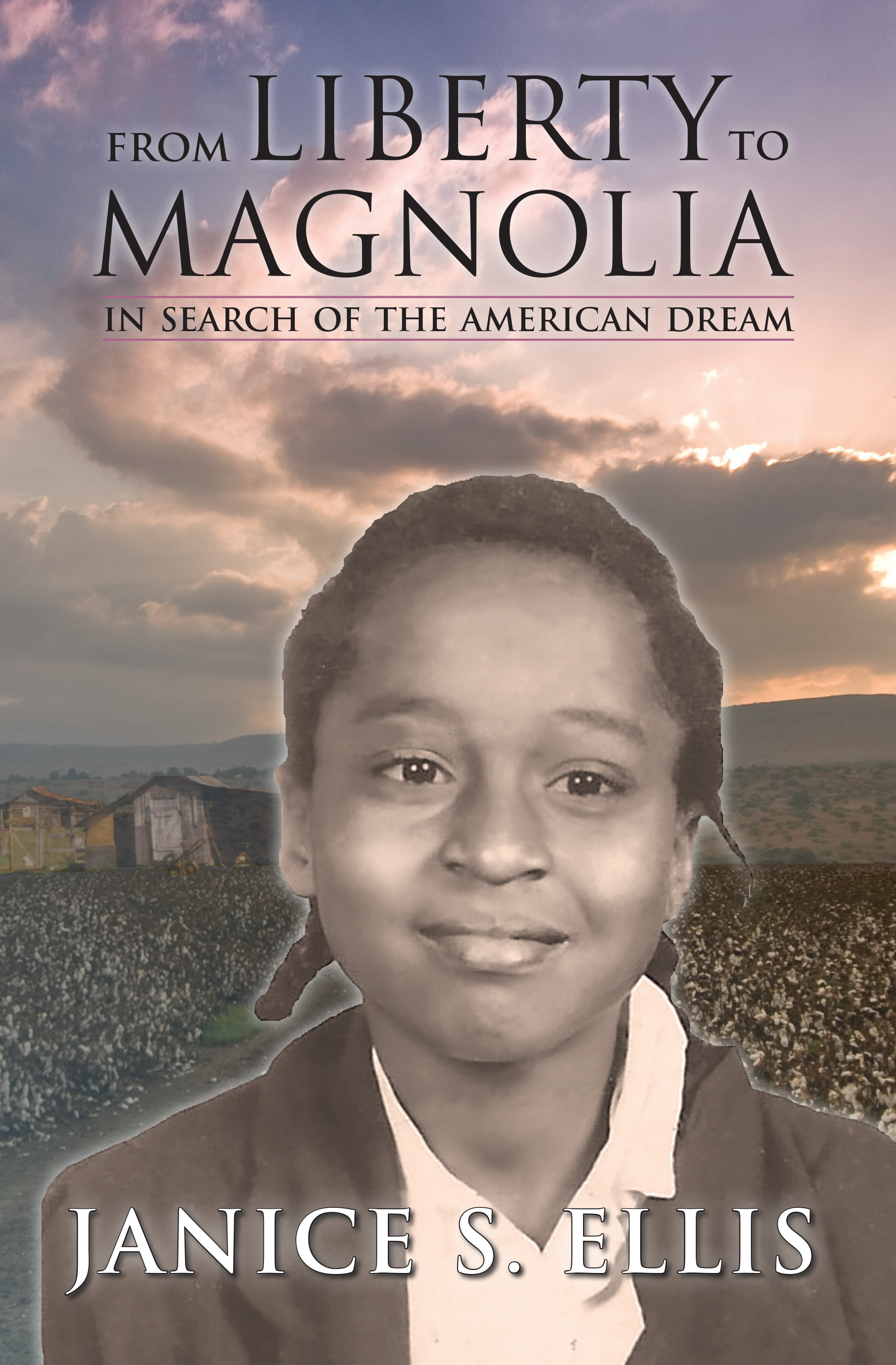
    As a black woman on a cotton farm in Mississippi in the 1960s, Janice Ellis could have resigned herself to a life full of status quo: never speaking up for herself, never speaking out against injustice or racism. Instead, she never let unsettling times define her or hold her back, even as a witness to some of the ugliest racial violence this country has seen. In her candid and thought-provoking memoir, From Liberty to Magnolia: In Search of the American Dream, Ellis vividly depicts her life in the South during the height of the Civil Rights and Women’s Rights movements.

    Through fluid and skillful writing, Ellis recounts the battles she encountered due to her skin color or due to her gender: an abusive husband, discouragement to further her education, sexual and racial discrimination in the workplace, a lack of support from friends and family when she runs for election. Despite these mounting obstacles, she goes on to earn her Ph.D., lands leadership roles and furthers her career, and even runs for mayor in a major US city. Her faith in God and her unwavering belief that the American Dream should be accessible and attainable to everyone are what lead her.

    Continue reading here

    WE DID WHAT WE COULD by Nancy H. Wynen
    Historical Fiction, WWII Women’s Fiction, Literary Fiction
    Nancy Wynen’s We Did What We Could is a well-conceived, smart, character-driven novel set across a grand European landscape. Here a formidable trio of young women groomed for mere social status demonstrates their strength, endurance, and courage as they move beyond the walls of academia to experience careers. The three must also deal with relationships, family expectations, and life issues amidst the often devastating and upending climate of war.

    Lady Archer is a widow from the Great War. As Assistant Head Mistress at St. Martin’s School, she feels girls should receive solid educations and prepare for real professions. With her high level of social ties, Archer looks for “future perfect leaders” within each new graduating class, possessing ideal traits of intelligence and creativity. In May of 1936, Archer sets her sights on three such proteges whose memorable antics foretell their potential for more significant life accomplishments.

    Continue reading here

    The SHAPE of the ATMOSPHERE by Jessica Dainty
    Literary, Psychology, Women’s Fiction
    Jessica Dainty’s, The Shape of the Atmosphere is remarkable for its startling realism, its gritty young heroine, and its hopeful conclusion.

    When Gertie’s father and sister are killed in an accident on Gertie’s sixteenth birthday in 1957, she is left with one cherished memory: viewing the heavens with her father on the night of the world-changing Sputnik flight.

    After the funerals, Gertie wounds herself as a way of coping with her inner anguish, after which her alcohol-addicted mother commits her to an insane asylum. Such institutions were considered modern and scientifically advanced for their time, but as author Jessica Dainty frankly depicts, Gertie’s new home is a combination prison and torture chamber. The naïve but intelligent girl soon becomes acquainted with such therapies as immersion in icy cold water and electroshock (both designed to calm the inmates), as she gradually gets to know her fellow patients, the women on Ward 2.

    Continue reading here

    DISOWNED – The RED-HEELED REBELS Series Novel One by Tikiri
    Women’s Adventure, Thriller/Suspense, International Crime

    Spanning three continents and taking on crucial issues of child marriage and human trafficking, Disowned features a brave teen heroine struggling against international criminality with nothing but her wits and grit.

    Asha, born in Tanzania, is still a child when her parents are tragically killed while on a family safari in Kenya. Within a short period of time she is transported to Goa, India, to live with relatives she has never met. Her grandmother is an angry, culture-bound crone, her aunt and cousin living, as Asha now must, under the old woman’s seemingly heartless sway.

    Continue reading here

    PECCADILLO at the PALACE: An Annie Oakley Mystery by Kari Bovée
    Historical Thrillers, Women’s Historical Fiction, Biographical Fiction
    Grand Prize Winner in Goethe Awards (2019)
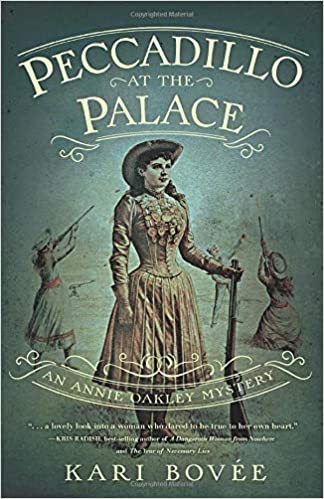
    Kari Boveé’s Peccadillo at the Palace, the second book in the Annie Oakley Mystery series, is a historical, mystery thriller extraordinaire. Fans of both genres will thrill at Boveé’s complex plot that keeps us guessing from its action-packed beginning to the satisfying reveal at the end.

    The book opens with the Honorable Colonel Buffalo Bill Cody’s Wild West Show to England on a voyage to perform for Queen Victoria. They are not on the high seas long, when Annie’s beloved horse, Buck, jumps overboard. Her husband and the Queen’s loyal servant, Mr. Bhakta, jump in to save the horse, or was Mr. Bhakta already dead before he reached the water? Thus, begins the mystery of who killed Mr. Bhakta, leaving all to wonder, is the Queen safe?

    Continue reading here

    We appreciate you spending time with us in celebration of International Women’s Day! 


    Looking to join the Chanticleer family?

    Register for VCAC 21 here! Registration will include access to video recordings of the conference. April 21- 25, 2021. Multichannel Marketing for Authors and Intermediate and Advanced Writing Craft
    See all our Chanticleer International Book Awards here.

    Sign up for an Editorial Book Review here.

    And now open, The Roost!
    Chanticleer’s own online community offering a private place to discuss craft and marketing with authors, in addition to receiving steep discounts on many Chanticleer services. Read more here.

     

  • ALL THINGS GOETHE! June 2020 SPOTLIGHT on Post-1750 Historical Fiction

    ALL THINGS GOETHE! June 2020 SPOTLIGHT on Post-1750 Historical Fiction

    Post 1750s Historical Fiction Award


    Welcome to the SPOTLIGHT on post-1750 Historical Fiction novels… in other words,
    Welcome to the GOETHE Book Awards!


    Why do we like Johann Wolfgang von Goethe so very much? It’s simple! He’s the guy who wrapped up everything we believe in with this simple sentence:


    “Whatever you can do or dream, you can begin it. Boldness has genius, power, and magic in it.” – Goethe


    Of course, this was also said about Goethe (Super Goethe by Ferdinand Mount) that “…[his] company could be exhausting. One minute he would be reciting Scottish ballads, quoting long snatches from Voltaire, or declaiming a love poem he had just made up; the next, he would be smashing the crockery or climbing the Brocken mountain through the fog.”  

    So…, moving on… Goethe was also a very cool guy. In his lifetime, he saw the beginning of the Industrial Revolution in 1750 through Mary Shelley’s publishing of Frankenstein in 1818 – and everything in between! Check out the list of what happened during those nearly seventy decades at the end of this post – you will be A-Mazed!

    Goethe Book Awards Semi-Finalist Badge


    Now, Welcome to the GOETHE Hall of Fame!

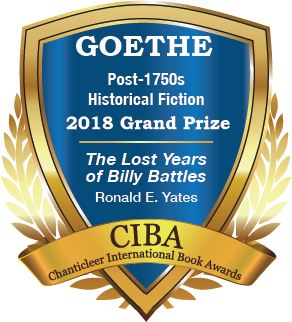
    We wish to congratulate 2018’s Goethe Book Awards Grand Prize Winner –

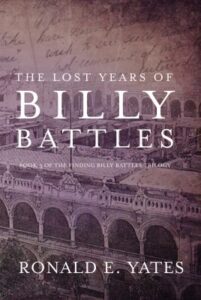
    The Lost Years of Billy Battles by Ronald E. Yates

    Billy Battles is as dear and fascinating a literary friend as I have ever encountered. I learned much about American and international history, and you will too if you read any or all of the books. Each is an independent work, but if read in relation to the others, the reader experiences that all too rare sense of complete transport to another world, one fully realized in these pages because the storytelling is so skillful and thoroughly captivating. Trust me; you’ll want to read all three volumes. Chanticleer Reviewer’s Note

    Mr. Ronald Yates not only won Grand Prize in the CIBAs 2018 GOETHE Awards – he won OVERALL GRAND PRIZE!


    To learn more about Ronald E. Yates, please click here.


    Congratulations to the 2018 Goethe Book Awards First Place Category Winners! 


    The GOETHE Book Awards for post-1750s Historical Fiction Grand Prize is awarded to:


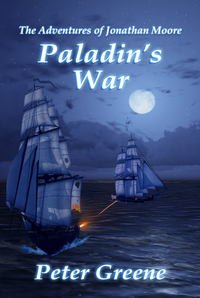
    Paladin’s War: The Adventures of Jonathan Moore by Peter Greene

    Congratulations to the 2017 Goethe Book Awards First Place Category Winners! 


    The Goethe Grand Prize Ribbon for Historical Fiction Post 1750s 2016 was awarded to:

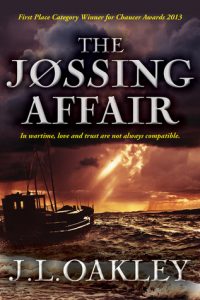
    The Jøssing Affair by J.L. Oakley

    Congratulations to the 2018 Goethe Book Awards First Place Category Winners! 

    • Women’s Historical: A Seeping Wound by Darryl Wimberley
    • Manuscript World Wars and Other Wars: In Their Finest Hour by Duncan Stewart
    • North American Turn of the Century: The Depth of Beauty by A.B. Michaels
    • Regency, Victorian, 1700s/1800s: A Woman of Note by Carol M. Cram
    • British/Europe Turn of the Century: Silent Meridian by Elizabeth Crowens
    • Historical Fiction Manuscript: Running Before the Wind by Carrie Kwiatkowski
    • 20th Century: The Boat House Cafe by Linda Cardillo


    Post 1750s Historical Fiction AwardThe deadline for entering manuscripts and recently published works into the 2020 Goethe Book Awards is coming up fast! JUNE 30, 2019 is the deadline!

    For more information, please click here!


    Submit your manuscript or recently released Historical Fiction (post-1750s) to the Chanticleer International Book Awards!


    Want to be a winner next year? The deadline to submit your book for the Goethe Awards is June 30, 2020. Enter here!

    Grand Prize and First Place Winners for 2019 will be announced during our 2020 conference, #CAC20.

    The Grand Prize and First Place for 2020 CIBA winners will be held on April 17, 2021.

    Any entries received on or after June 30, 2020, will be entered into the 2021 Goethe Book Awards that will be announced in April 2022.

     As our deadline draws near, don’t miss this opportunity to earn the distinction your historical fiction deserves!  Enter today!

    The GOETHE Book Awards is a division of the Chanticleer International Book Awards – the CIBAs.

    The 2020 winners will be announced at the CIBA  Awards Ceremony during #CAC20. All Semi-Finalists and First Place category winners will be recognized, the first-place winners will be whisked up on stage to receive their custom ribbon and wait to see who among them will take home the Grand Prize. It’s an exciting evening of dinner, networking, and celebrations! 


    Goethe

    Some events that occurred during  Goethe’s lifetime:

    1750 – The Industrial Revolution began in England
    1756 – Wolfgang Amadeus Mozart was born in Salzburg Austria
    1761 – The problem of calculating longitude while at sea  was solved by John Harrison
    1765 – James Watts perfects the steam engine
    1770 – Ludwig van Beethoven was born in Bonn, Germany
    1774 – Goethe’s romantic novel, The Sorrows of Young Werther, propels him into European fame
    1774 – Goethe’s play Gotz von Berlichingen, a definitive work of Sturm und Drang premiers in Berlin
    1776 –  America’s 13 Colonies declare independence from England. Battles ensue.
    1776 – Adam Smith publishes the Wealth of Nations (the foundation of the modern theory of economics)
    1776 –  The Boulton and Watt steam engines were put to use ushering in the Industrial Revolution
    1783 – The Hot Air Balloon was invented by the Montgolfier brothers in France.
    1786 – Le Nozze di Figaro by Mozart premiered in Vienna
    1789 – George Washington is elected the first president of the United States of America
    1780 – Antoine Lavoisier discovers the Law of Conservation of Mass
    1789 – The French Revolution started in Bastille
    1791 – Thomas Paine publishes The Rights of Man
    1792 – Napoleon begins his march to conquer Europe
    1799 – Rosetta Stone discovered in Egypt
    1802 – Beethoven created and performed The Moonlight Sonata
    1802 – A child’s workday is limited to twelve hours per day by the British parliament when they pass their first Factory Act
    1804 – Napoleon has himself proclaimed Emperor of France
    1808 – Atomic Theory paper published by John Dalton
    1811 –  Italian chemist Amedeo Avogadro publishes a hypothesis, about the number of molecules in gases, that becomes known as Avogadro’s Law
    1811 – Jane Austen’s Sense and Sensibility was published anonymously. It was critically well-received
    1814 – Steam-driven printing press was invented which allowed newspapers to become more common
    1818 – Mary Shelley publishes Frankenstein
    1832 – Goethe’s Faust, Parts 1 & 2 are published posthumously (March 22, 1832)

    In 1830, Eugene Delacroix  created Liberty Leading the People to epitomize the French Revolution. The movement officially began with the Storming of the Bastille on July 14, 1789, a day that is still celebrated in France.  The French people were rebelling against the extreme wealth of the French royal family who overtaxed and underpaid the people of France to the point where they could not even feed themselves and had nothing to lose by going to battle. They were starving to death.  The uprising of 1830 was featured in Victor Hugo’s Les Miserables (1862)

    Claude-Michel Schönberg and Alain Boublil’s (1980s) musical can look at Delacroix’s Liberty Leading the People and hear the lyrics of the song that serves as a call to revolution:
    Do you hear the people sing? Singing a song of angry men? It is the music of a people. Who will not be slaves again.
    Liberty Leading the People by Eugene Delacroix, 1830. On display at the Lourve, Paris.


    Resources 

    *Britannica Encyclopedia 

    ** Oxford Reference

    ***New Yorker Magazine

  • The SHAPE of the ATMOSPHERE by Jessica Dainty – Literary, Psychology, Women’s Fiction

    The SHAPE of the ATMOSPHERE by Jessica Dainty – Literary, Psychology, Women’s Fiction


    Jessica Dainty’s, The Shape of the Atmosphere is remarkable for its startling realism, its gritty young heroine, and its hopeful conclusion.
    When Gertie’s father and sister are killed in an accident on Gertie’s sixteenth birthday in 1957, she is left with one cherished memory: viewing the heavens with her father on the night of the world-changing Sputnik flight.

    After the funerals, Gertie wounds herself as a way of coping with her inner anguish, after which her alcohol-addicted mother commits her to an insane asylum. Such institutions were considered modern and scientifically advanced for their time, but as author Jessica Dainty frankly depicts, Gertie’s new home is a combination prison and torture chamber. The naïve but intelligent girl soon becomes acquainted with such therapies as immersion in icy cold water and electroshock (both designed to calm the inmates), as she gradually gets to know her fellow patients, the women on Ward 2.

    Gertie observes that some of her companions are not mentally ill at all: one has a speech defect that he is struggling on his own to correct, and another has Down Syndrome. Yet such people – anyone not wanted by family – are consigned to such asylums and often get lost in its labyrinthine system. Gertie slowly gains inner resolve, becomes an advocate for her rights and those of her companions, and starts an in-house newsletter that tells their stories. But when her compositions find their way outside the walls of the asylum, she is forced to take even bolder measures.

    Dainty writes this traumatizing tale as though she’d lived it, so starkly painful and remarkably poignant are her portraits of Gertie and her fellow sufferers. She portrays the doctors as caring only up to a point, mainly interested in maintaining a full house of captive mental “cases” to keep the income rolling in. One staff member is sympathetic toward Gertie, but most are cold and indifferent, strictly allowing only 3-minute bathroom breaks, a single towel at communal shower times, and almost no time spent unmonitored.

    Treatments such as electroshock (Electro Convulsive Therapy, ECT) are performed differently today for the treatment of severe depression, treatment resistant depression, severe mania, catatonia, and agitation and aggression in dementia patients (Mayo Clinic: https://www.mayoclinic.org/tests-procedures/electroconvulsive-therapy/about/pac-20393894), for example. But today, this treatment is done under general anesthesia and at reduced levels. This was not the case in the 1950s or in Dainty’s harrowing novel. ECT was conducted without any form of anesthesia and often without patient’s consent.

    Reminiscent of the less enlightened times also is the blatantly denigrating attitude shown towards people of color and other minorities. The author’s descriptions of daily life in a mental institution of the 1950s are filled with scenes of mistreatment tantamount to torture. But many readers will find the story inspiring, especially as Gertie, sustained by images of space travel, finds her own stars to aspire to and reaches out to help others. Debut novelist Dainty is a high school teacher with many points of contact with the teens she hopes to engage with this evocative coming-of-age saga.

    The Shape of Atmosphere won First Place in the 2022 Goethe Book Awards for Post-1750s Historical Fiction.