Author: j-shep

  • The 2024 Hemingway Book Awards Spotlight on 20th & 21st c. Wartime Fiction

    The 2024 Hemingway Book Awards Spotlight on 20th & 21st c. Wartime Fiction

    The History of War is always important
    Ernest Hemingway looking off to the rightEspecially in Historical Fiction

    The Hemingway Awards is our Division for Historical Fiction of 20th Century Wartime. Named for famed War Correspondent and Author Ernest Hemingway, his writings embody much of what this award covers. He didn’t write only war related content, but A Farewell to Arms and For Whom The Bell Tolls are both amazing looks into the rather tumultuous early 20th century.

    These are the categories for the 2024 Hemingway Awards for 20th and 21st century Wartime Fiction:

    • World War 1
    • World War 2
    • Women in War
    • Occupation/ Diaspora
    • Espionage
    • Love in Wartime
    • Specific Campaign/ Theater/ Battle
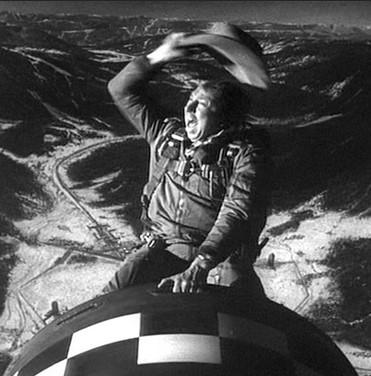
    The dropping of a nuclear bomb in Stanley Kubrik’s dark satire “Dr. Strangelove”

    Submit Your Work Today!

    We are delighted to celebrate the 2023 Winners of the Hemingway Awards!

    • J.L. Oakley – The Brisling Code
    • Kathryn Gauci – In the Shadow of the Pyrenees
    • Michael J Cooper – Crossroads of Empire
    • Ivan Luiz Hernandez – Isla Vulnerable
    • Linda Stewart Henley – Kate’s War
    • Jerena Tobiasen – Tsarina’s Crown
    • William McClain – Alice’s War

    The Grand Prize Winner for the CIBA 2023 Hemingway Book  Awards is:

    The Silver Waterfall

    A Novel of The Battle of Midway

    by Kevin Miller
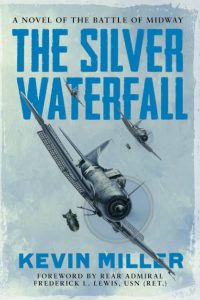
    The Silver Waterfall Cover

    blue and gold badge recognizing The Silver Waterfall by Kevin Miller for winning the 2023 Hemingway Grand Prize


    We love stories about wartime history here at Chanticleer. Here are some of the best books we’ve reviewed recently.

    AN EMPTY HOUSE DOESN’T SNEEZE
    By David Scott Richardson

    An Empty House Doesn't Sneeze Cover

    In David Scott Richardson’s YA WWII historical novel, An Empty House Doesn’t Sneeze, teenager Scott Johannsen—“Scotty” to his mom and friends—leads us on an adventure through the wartime Ravenna neighborhood in Seattle, Washington.

    Boeing manufactures B-17s, his grandparents and neighbors grow victory gardens, his parents build a bomb shelter in their basement, and mandatory blackouts occur every night. Scotty navigates a chaotic world filled with danger and wonder yet finds security with family and friends in this heartfelt story.

    Scotty runs with his pack—James, Marty, and Burr. We witness what lengths they will go to on a search for chocolate. With Ravenna Park as a backyard and Puget Sound just a short drive away, Scotty’s life is filled with exploration of the natural world. His fishing adventures with his dad in the Sound become an exciting way to supplement his family’s food rations as he dreams about netting a fighting salmon.

    Read more here!

    ROSES In DECEMBER: Hamilton Place, Book 2
    By Mark A. Gibson
    Roses in December Cover

    Roses in December is the epic conclusion to Mark A. Gibson’s compelling two-part family saga, Hamilton Place. Now focusing on the family’s next generation, James Hamilton Jr.—Jimmy—follows in the footsteps of the father he never met, a Vietnam War hero who died in battle, and ultimately finds his own path in life.

    Pressured by a conning mother-in-law only out for monetary gain, the elder Jimmy’s widow, Becca, is pushed to marry Mack Lee, her deceased husband’s older brother who proves to be a cheating and abusive husband. Trapped in this loveless marriage, Becca hopes that attending church will remove her son from the toxic influence of her new husband and set him on the right path to a good life. But it’s the discovery of young Jimmy’s superior photographic memory that opens the door to a brighter future, and he sets a course to an outstanding medical career, coupled with military service in Afghanistan.

    Gibson delivers the recent past with a great sense of immediacy, showing events that ripple into our contemporary world using pop references that are relevant in today’s world.

    Read more here!

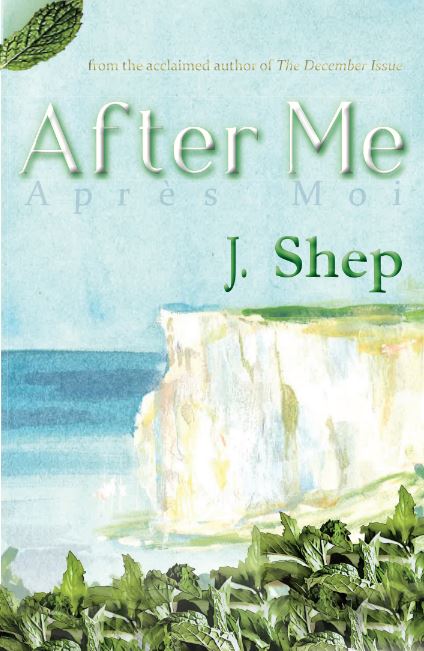
    AFTER ME
    By J. Shep

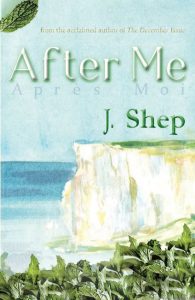
    After Me J Shep

    The arrival of a mysterious package makes for an enticing beginning in J. Shep’s After Me. Inside we find a manuscript with the same text as the book we’re about to read. This inventive start lends a sense of realism and truth to what follows and creates a vivid yet hazy quality, like memory itself.

    After Me travels back in time to rural France just after World War II. The setting appears idyllic at first—almost unbelievably so. Still, there’s a disturbing undercurrent felt from the start. Not from an unwanted presence, but rather from an absence.

    Told from the perspective of Ellande, a young boy, he recounts the summer his parents die in an accident and he and his nine-year-old little sister, Madeleine-Grace, are sent to their extended family’s summer home in France. Their care seems competent at first—but cracks in the façade gradually emerge as Ellande begins his tale.

    Read more here!

    EVERYTHING WE HAD: No Merciful War Book 1
    By Tom Burkhalter
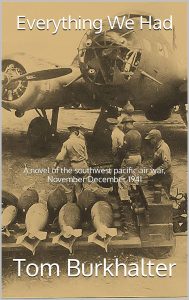
    Everything We Had Cover

    Everything We Had, book one of Tom Burkhalter’s No Merciful War series is an inexorable thrill that will grip readers tight. It starts with a poker game, through which a main character’s luck soon becomes evident. But will that luck hold out?

    Jack—the poker player—and Charlie—Jack’s older brother—have been separated by war, even though that war has yet to be declared. Everything We Had focuses more on the machinations leading up to US involvement in World War II than on actual combat. The gears of war that have so many young men caught in them move with gradual but inevitable force, and so Everything We Had takes a more thoughtful approach to a historic moment in time.

    Connecting with the characters is a gradual process as you get to know the intricacies that make up their individual personalities. This sets the reader up to feel the emotions of the characters as they face an uncertain fate, and throughout the book the author’s clear and methodical research shines with details such as specific views, locations, and—most notably—comprehensive descriptions of the airplanes Jack and Charlie pilot. This allows the reader to become deeply familiar with the motivations of the characters and the capabilities of the airplanes they fly.

    Read more here!


    These authors keep the recent past alive for us! We thank them for documenting these times and sharing their stories!

    The tiers of achievement for the CIBAs

    We hope to see your work in the 2024 Hemingway Awards!

    This is the journey from beginning to end for the CIBAs Levels of Achievement is so worthwhile! Every list you make means more promotion for you and your work as each list is posted right here on our website, on our social media, and also out in our newsletter!

    Your book deserves to be discovered

  • AFTER ME by J. Shep – Historical Fiction, Family Saga, Post World War II France

    AFTER ME by J. Shep – Historical Fiction, Family Saga, Post World War II France


    The arrival of a mysterious package makes for an enticing beginning in J. Shep’s After Me. Inside we find a manuscript with the same text as the book we’re about to read. This inventive start lends a sense of realism and truth to what follows and creates a vivid yet hazy quality, like memory itself.

    After Me travels back in time to rural France just after World War II. The setting appears idyllic at first—almost unbelievably so. Still, there’s a disturbing undercurrent felt from the start. Not from an unwanted presence, but rather from an absence.

    Told from the perspective of Ellande, a young boy, he recounts the summer his parents die in an accident and he and his nine-year-old little sister, Madeleine-Grace, are sent to their extended family’s summer home in France. Their care seems competent at first—but cracks in the façade gradually emerge as Ellande begins his tale.

    Aside from their mourning, life seems lovely in the beginning. Lavender-hued skies at sunset, and the scent of peony soap permeate the background of this tale. Ellande recalls the light-filled home’s orderly kitchen where meals are made with fresh herbs from the garden and numerous aunts, uncles, and cousins create a large roster of characters. Readers may feel a bit disoriented encountering so many new names, as well as the French words and traditions sprinkled throughout the text. But that disorientation offers the reader insight into the mental state of the children as they navigate this strange summer of loss and learning.

    The home’s idyllic nature springs almost entirely from a single character: Aunt Adèle. A tireless worker, she keeps the house beautiful and functional, doing the cooking, cleaning, gardening, and taking care of the childcare with grace and joy. As the novel progresses, her surviving siblings emerge as toxic counterpoints who are bitter, unhappy, and unwilling to pitch in around the house.

    While some of their issues and instability can be traced back to the war and its aftereffects, the family strife isn’t just a product of wartime tragedies. Instead, issues that emerge are largely ones of character. Aside from Adèle, the adults in the house share little interest in the traditions, values, and work performed for the betterment of the family. They prioritize idleness and petty feuds, and their children largely take after them.

    As the summer unfolds, the peaceful narrative slowly takes on a sinister quality.

    But Ellande and Madeleine-Grace are different. Their mother Juliette was the sibling most aligned with Adèle, and the children have inherited her sense of tradition and good values. They take pride in helping the childless Adèle around the summer house. Still, with Juliette gone, the burden on Adèle grow heavier. Adèle’s siblings are resentful of her homemaking abilities and unbreakable spirit and continually punish her for a lifetime of perceived slights.

    Though this is a modern novel, it’s written in a traditional style and slow pace, evoking novels of long ago. It has a dream-like quality, with beautifully specific descriptions that exist alongside the uncertainty of memory.

    And readers will be well-rewarded for their patience with the slow early sections. Not only do fantastic details of real traditions emerge as the story progresses—such as the harvesting of fleur de sel—but so does an intense narrative of family and intangible inheritance. As Ellande and Madeleine-Grace come of age, they’re confronted with questions of who will keep those traditions alive, why, and at what cost?

    Ultimately, After Me is a tale of breaking generational curses. A shocking turn near the end seems to suggest that even the most well-intentioned will never escape the burdens of family trauma and destruction. But this is a story within a story, and most of the main characters will find some sort of closure, though the finishing touches may take decades to emerge.

    After Me starts out as gentle and luxurious as a rolling meadow. Yet it ends up confronting some of life’s greatest questions and most haunting mysteries. This combination makes for an evocative novel whose message will linger long after the last page has been turned.


  • THE DECEMBER ISSUE by J. Shep – Journalistic Fiction, Contemporary Social Issues, Literary Fiction

    THE DECEMBER ISSUE by J. Shep – Journalistic Fiction, Contemporary Social Issues, Literary Fiction


    In The December Issue by J. Shep, a veteran columnist stands up for his controversial work, despite intense public pressure to disavow it.

    Paul, a retiring columnist, has earned vast applause for his amusing, playful, and inspiring monthly column in The Current Front. However, this renown flips on its head after the November Issue’s release, when masses of readers give a hostile retort to his article. His sentiment regarding ‘loss of class’ in American society angered both older and younger readers, as proved by the huge pile of mail on his desk.

    The firm’s management can’t help but notice the trouble their most reliable writer has caused.

    Dolefully, Paul finds himself pressed to put out a public apology and rewrite the December issue, which he had earlier submitted. But in an unlikely turn, sales of the contentious November publication begin to soar. This sudden success, ensuing shortly after news of Paul suffering a horrifying accident hit the airwaves, sends him into a state of wonder and astonishment.

    The December Issue warms up the soul from its first chapter to the last.

    Paul’s engaging arc pays homage to a thriving career in journalism, revealing its benefits and drawbacks. His distinctive point of view forms the backbone of the story, which relates to the modern writing of op-ed pieces with ingenuity.

    Worthwhile conversations, clarity of thought, defined points of view, and unique characters, all contribute to the stellar whole of this book. Author J. Shep writes with colorful, fast-moving, and provocative style, which evokes fascinating ideas in the reader’s mind.

    As Milton Glaser famously said, “There are three responses to a piece of design – yes, no, and wow!” The December Issue insists that one should always aim for ‘wow.’

    This story will inspire, particularly those readers in the featured vocation of journalism. A worthy read that illustrates how one can recognize, support, and develop the diverse talents in their organizations.

    All things considered, The December Issue is a splendid work of enormous value and imagination.

    Available for pre-order now!

    5 Stars! Best Book Chanticleer Book Reviews