The Courage to Transform Pain into Purpose

The Journey Awards Honor Stories of Resilience and Survival
The submissions for the 2025 Awards are underway, and Journey closes on August 31, 2025!
Some stories demand to be told, not because they’re easy to share, but because silence serves no one. The Journey Awards, Chanticleer’s oldest non-fiction division, honor the extraordinary courage it takes to transform personal trauma into powerful narrative, giving voice to experiences that too often remain hidden in shadows.
These are the memoirs that refuse to let suffering be meaningless, the true stories that illuminate paths forward for others walking similar roads, and the brave testimonies that demand society confront uncomfortable truths. When authors choose to share their most difficult journeys, they create lifelines for readers who need to know they’re not alone.
The Power of Survival Stories
Every Journey Award submission represents an act of tremendous courage. To transform trauma into narrative requires not just writing skill, but the strength to revisit painful experiences, the wisdom to find meaning in suffering, and the generosity to share hard-won insights with the world.
These stories matter because they break silence around experiences that too often remain hidden. They provide validation for survivors, education for supporters, and hope for those still struggling. When authors transform their most difficult experiences into compelling narrative, they perform a profound service—proving that healing is possible and that survival can become a form of advocacy.
Celebrating Our 2024 Grand Prize Winner!
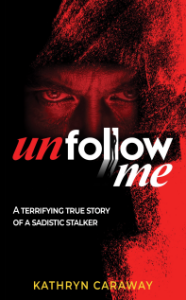
We’re honored to recognize Kathryn Caraway, whose brave memoir Unfollow Me claimed the 2024 Journey Grand Prize by shining necessary light on the devastating crime of stalking. Writing under a pseudonym to protect her identity, Caraway documented three years of terror as she fought for survival against a stalker whose escalating crimes systematically destroyed her sense of safety. As she writes, “Each day is a fight to stay alive. Even while sleeping, you must be ready.”
Despite having her concerns dismissed by law enforcement and friends, Caraway refused to remain silent. She documented hundreds of incidents and ultimately transformed her nightmare into a powerful story that brings much-needed awareness to stalking as a serious crime. Unfollow Me demonstrates how the most difficult stories can become the most important ones—transforming one person’s fight for survival into practical guidance and hope for others. In addition to ongoing promotional features, Unfollow Me will be regularly promoted throughout the year and for the next five years in our upcoming Hall of Fame posts. Kathryn Caraway will also be invited to participate in a Chanticleer 10-Question Interview and receive continued recognition across our promotional platforms.
See Our Review here:
When you’re a target of stalking, “Each day is a fight to stay alive. Even while sleeping, you must be ready.” So reveals Kathryn Caraway in Unfollow Me, a spine-tingling true crime novel tracing a life shattered by severe stalking.
Although the author uses the pseudonym “Kathryn Caraway” throughout this novel to protect her identity, her harrowing tales of being the target of a stalker and fighting for her rights to freedom and safety are a testament to the real danger she was exposed to. Caraway’s experience creates a compelling story of one woman’s brave quest for justice against her torturer.
Kathryn emotionally, mentally, and physically falls apart at the hands of a violent, ubiquitous presence. Despite the severity of the crimes committed against her, Kathryn’s concerns are routinely dismissed as irrational and hysterical by law enforcement officials, lawyers, and even long-time friends.
Before a malicious intruder targets her, Kathryn is a beloved mother, a wonderful friend, and a confident employee. But after she is introduced to Todd, he begins to slowly strip her life from her control.
Categories That Honor Every Journey
The Journey Awards recognize that trauma takes many forms, and healing happens through many different paths:
- Overcoming Adversity – Personal Journey – Individual stories of resilience against overwhelming odds
- Dysfunctional Family/Siblings – Narratives exploring complex family dynamics and their lasting impact
- Societal/Class/Race Issues – Personal accounts of confronting systemic injustice and discrimination
- Personal Journeys/Experiences/PTSD – Stories of living with and healing from post-traumatic stress
- Drug Addiction – Memoirs of addiction, recovery, and the ongoing journey of sobriety
- Sexual Abuse – Brave testimonies of survival and healing from sexual trauma
- Childhood Trauma – Stories that give voice to experiences from our most vulnerable years
Each category represents not just a literary classification, but a community of survivors whose stories deserve recognition and readers who need to hear them.
Other August Non-Fiction Opportunities
The Journey Awards are part of Chanticleer’s comprehensive celebration of narrative non-fiction, all closing at the end of August:
- Hearten Awards – Uplifting non-fiction that inspires hope and positive action
- Nellie Bly Awards – Investigative journalism and exposé works that uncover truth
- Military & Front Line Awards – Stories of military service and front-line experiences
Looking ahead to September, our prescriptive non-fiction divisions offer opportunities for instructional and guidance works: Instruction and Insight (I&I), Harvey Chute, and Mind & Spirit Awards.
Looking at Journeys of Courage
Check out some of these powerful stories we’ve celebrated recently!
Guided
By Kirsten Throneberry
A 2024 Journey First Place Winner!
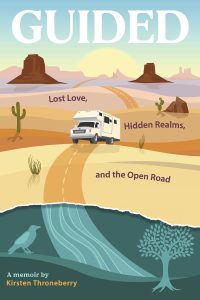
In her stunning memoir, Guided: Lost Love, Hidden Realms, and the Open Road, Kirsten Throneberry weaves together the highs and lows of a road trip packed with life wisdom, where she explores grief, spirituality, and rekindled hope.
Throneberry’s achingly vulnerable memoir splits its readers’ hearts and tenderly sews them back together.
In the aftermath of the devastating loss of her husband, Kirsten sells her home and takes her two small sons, two elderly pups, and eccentric mother on a year-long road trip around the United States in their new-to-them Bigfoot RV.
Encouraged by the same spirit guides whose earlier advice for her husband’s health left her broken and untrusting, Kirsten must learn to face the open road with an equally open heart and mind.

Dumb Girl
By Heidi Yewman
In this powerful and heart wrenching memoir Dumb Girl, Heidi Yewman confronts her past to turn the pain and shame of an abusive childhood into resilience and purposeful action. She connects with readers through her transformation and triumphantly advocates for change.
During the #MeToo Movement, Yewman attended a stage production of the well-known “Vagina Monologues.” When audience members were asked to stand if they’d been abused, Yewman felt ashamed about her past but also obligated to rise. It was there that she decided to write her story as a release from that lingering sense of guilt.
Yewman’s narrative takes us on an inspiring journey between her adulthood passion to advocate for gun control, and a traumatic childhood attempting to escape from a cycle of abuse.
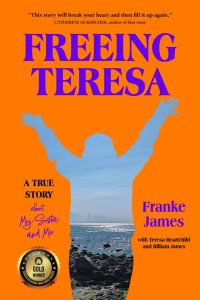
Freeing Teresa
By Franke James, Teresa Heartchild and Billiam James
“Let me speak. Let me speak,” says Teresa Heartchild, a self-talk poet, writer, and disability activist with Down Syndrome in the epigraph of the memoir, Freeing Teresa: A True Story About My Sister and Me by Franke James.
And speak she does, freeing herself from the boundaries set by other family members and the healthcare system. “In this heart-wrenching audiobook, a cast of thirteen actors recount the journey of Teresa’s unfortunately common experience. She was a victim of unjust medical treatment and nonconsensual housing placement—both by the Ontario government and her immediate family members. Actor Jackie Blackmore plays Franke James, the author and environmental activist. Teresa is played by the U.S. star Lauren Potter, and Dayleigh Nelson plays James’s husband, Bill.
By elevating Teresa’s activist voice as a prominent feature in the story, Freeing Teresa reveals how injustice and ableism can tear a family apart—but also how courageous love and the decision to listen to those who have been marginalized serves to build unbreakable bonds.
Franke James writes, “It all began with the question, ‘Where will Teresa live?’” In Toronto, Ontario, Canada 2013, six siblings wondered how to care for their youngest sister with Down Syndrome following their father’s anticipated death. Unfortunately, as is too often the case, these conversations took place without the knowledge and input of those directly involved: Teresa and her caretaker father.
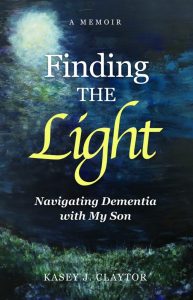
Finding The Light
By Kasey J. Claytor
Some stories are impossible to look away from, and from its very first sentence, Finding the Light, Navigating Dementia with My Son by Kasey J. Claytor proves itself one of them. “…when my 49-year-old son, Justin, was first diagnosed with a form of early-onset dementia, I was stunned.” Without hesitation, the book draws readers into a saga of family, illness, and resilience.
Although a memoir, Finding the Light is in many ways an instructional text, too. Readers don’t need similar medical situations to draw from Claytor’s lessons of improvement. The conversational, approachable writing style serves this purpose well.
Although it’s in chronological order, this is an unconventional, modern text.
Traditional scene-based paragraphs are offset by poetry, informative sidebars, and even the full text of letters sent throughout Justin’s illness. Claytor deftly shifts between these sections, building a cohesive narrative from which readers can easily learn.
The past is vibrant and immediate: Claytor chronicles events in rich yet simple prose as Justin falls deeper into frontotemporal dementia, or FTD.
These works demonstrate how personal narrative can transform individual suffering into universal understanding and hope.
See the Chanticleer Difference for Yourself!
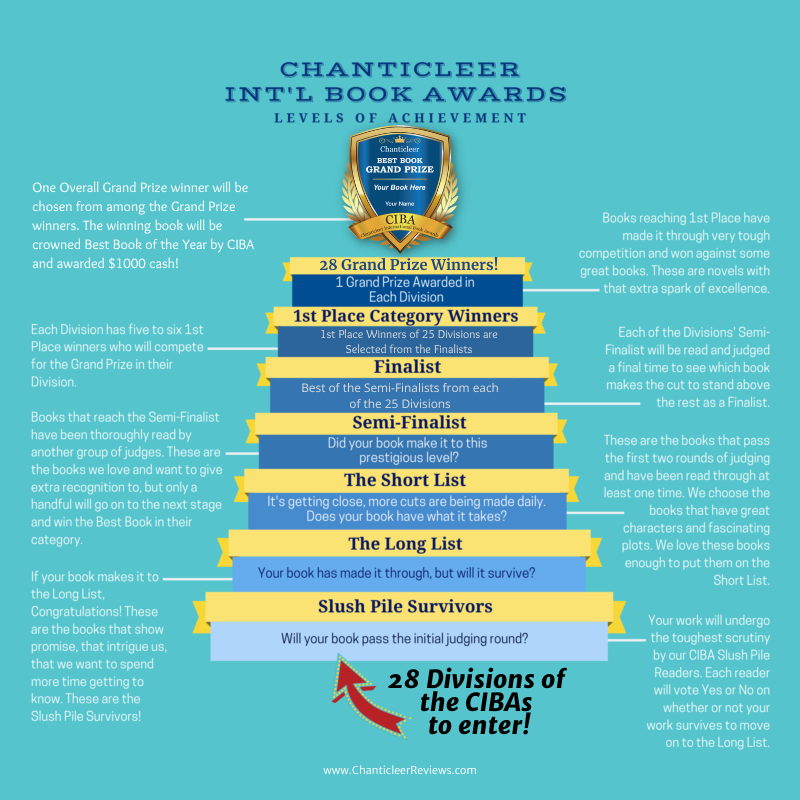
We’re honored to receive the courageous stories that authors trust us with each year. The Chanticleer International Book Awards offers an incredible $30,000 in cash, prizes, and promotion across all divisions!
The Journey Awards provide more than literary recognition—they offer validation that your story matters, that your survival has meaning, and that your courage to speak deserves to be heard. Whether you’re sharing your own journey or amplifying the voices of others, these awards celebrate the transformative power of truth-telling.
Your Story Matters
To every author considering sharing their journey: your courage to transform pain into purpose serves a vital function in our world. Your story may be the one that helps another survivor realize they’re not alone, that shows a supporter how to help, or that opens society’s eyes to injustices that must be addressed.